How to Turn Customer Service Into a Profit Center
Chatbot marketing turns customer service into a profit center by enabling instant, personalized interactions that boost engagement, streamline support and drive conversions.

Chatbot marketing turns customer service into a profit center by enabling instant, personalized interactions that boost engagement, streamline support and drive conversions.
Most companies treat customer service as a cost to minimize the highest-growth businesses have flipped that logic. Transforming customer service into a profit center means repositioning your support function to generate revenue through upsells, retention and loyalty, not just resolve complaints.
Bain & Company research shows a 5% increase in customer retention can grow profits by 25% to 95%, making this one of the most underleveraged opportunities in any business today.
This guide covers the strategies, metrics and team structures from incentive design to AI-assisted selling you need to successfully turn customer service into a profit center.
Organizations that prioritize customer service and view it as an investment rather than a pure cost often experience long-term benefits in terms of customer retention, overall business success.
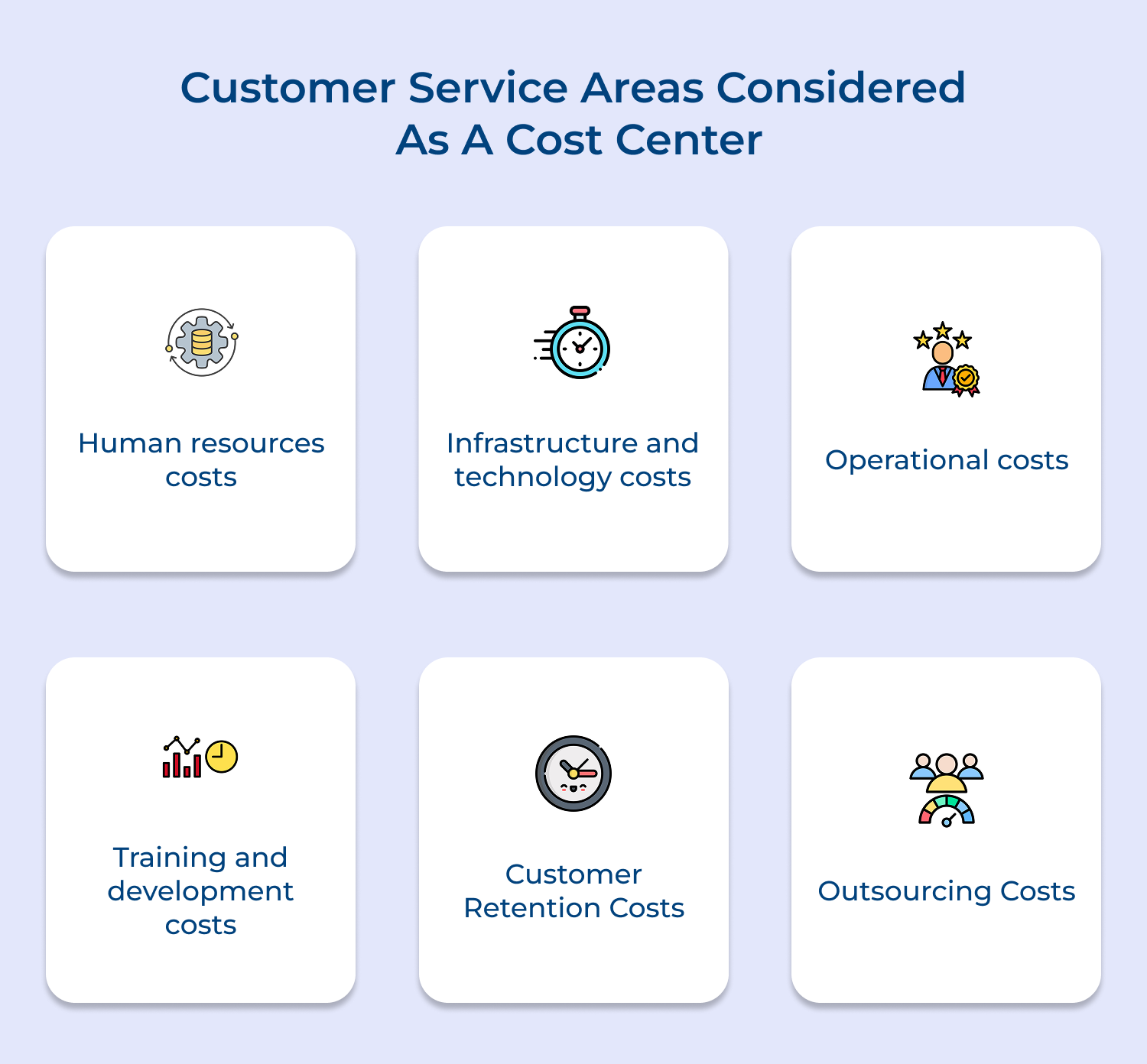
1. Human resources costs: Employing customer service representatives, supervisors and managers is a substantial financial commitment. Salaries, benefits, training and other personnel-related expenses contribute significantly to the overall cost of customer service operations.
2. Infrastructure and technology costs: Providing customer service requires investments in hardware, software and communication tools. It includes call center systems, customer relationship management (CRM) software, knowledge bases, and other technological solutions that enable efficient customer interactions.
3. Operational costs: Running a customer service department involves various operational costs, such as rent or lease expenses for physical call centers, utilities, office supplies, and other overhead expenses.
4. Training and development costs: Ensuring that customer service representatives are knowledgeable, skilled in handling customer inquiries and complaints requires ongoing training, development programs, which incur additional costs.
5. Customer retention costs: While customer service plays a crucial role in retaining existing customers through positive experiences, these efforts are often viewed as cost centers within the organization. The direct financial impact of customer service on revenue generation may not be immediately apparent.
6. Outsourcing costs: Many organizations choose to outsource their customer service operations to third-party vendors or offshore locations. While this can potentially reduce costs in some areas, it introduces additional expenses related to contract management, quality control and communication channels.
Customer service is often seen as a necessary aspect of business operations, but it is often overlooked when it comes to its impact on revenue and profitability. In reality, customer service can play a vital role in a company’s success.
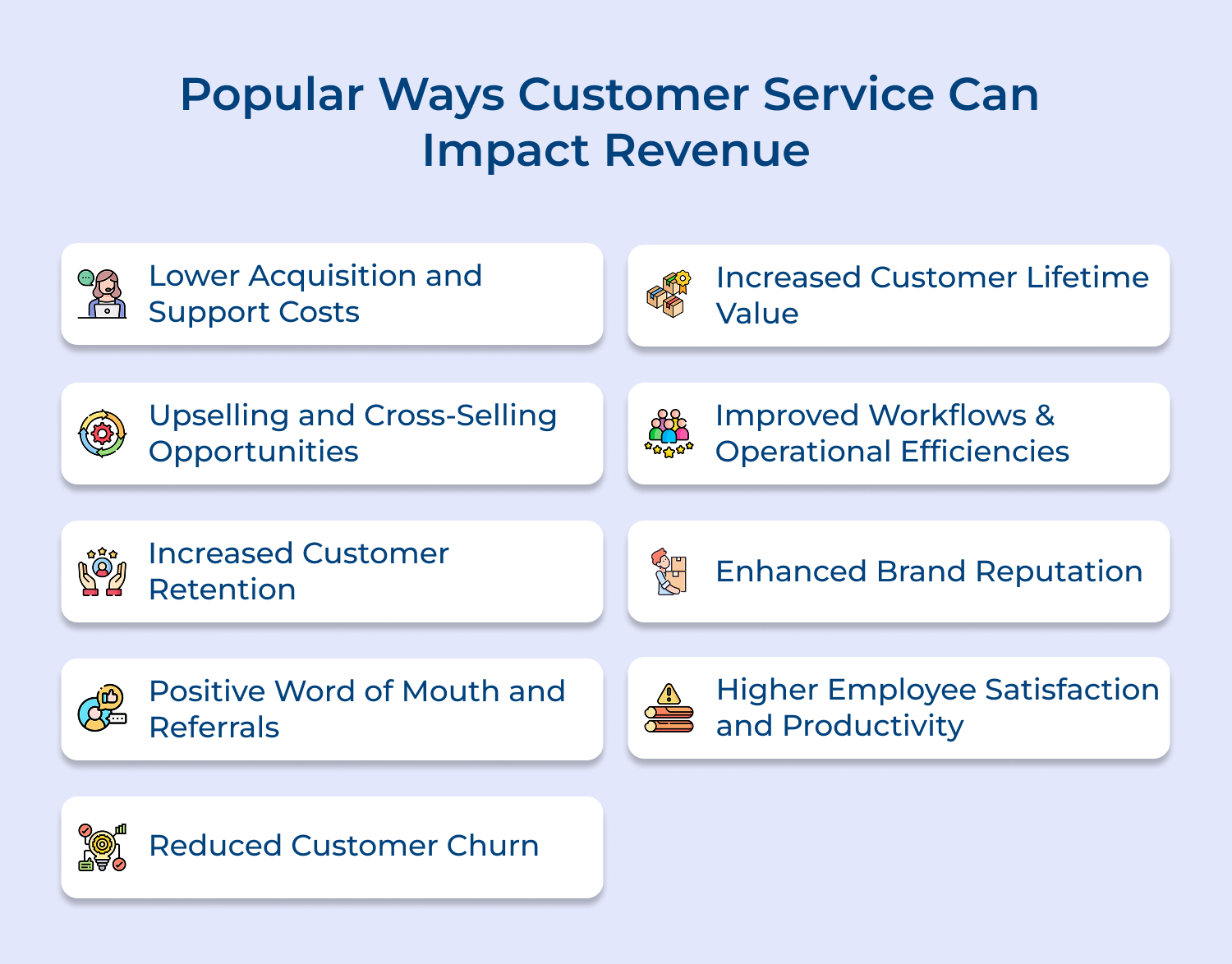
Exceptional customer service not only enhances the overall customer experience but also directly contributes to lowering acquisition and support costs, ultimately driving revenue, profitability. Hence, brands can reinvest their resource allocation in areas that drive growth, such as product development, innovation and employee training.
For customers, lower acquisition and support costs ultimately result in a better value proposition with potential cost savings. As companies optimize their operations and reduce wasteful spending, they can pass on these savings to customers in the form of competitive pricing, loyalty programs or enhanced product/service offerings.
Kaiser Permanente, a renowned healthcare provider, has implemented a robust self-service platform and invested in agent training, which resulted in reduced call volumes by 20% and increased first-call resolution rates by 15%.
How to implement:
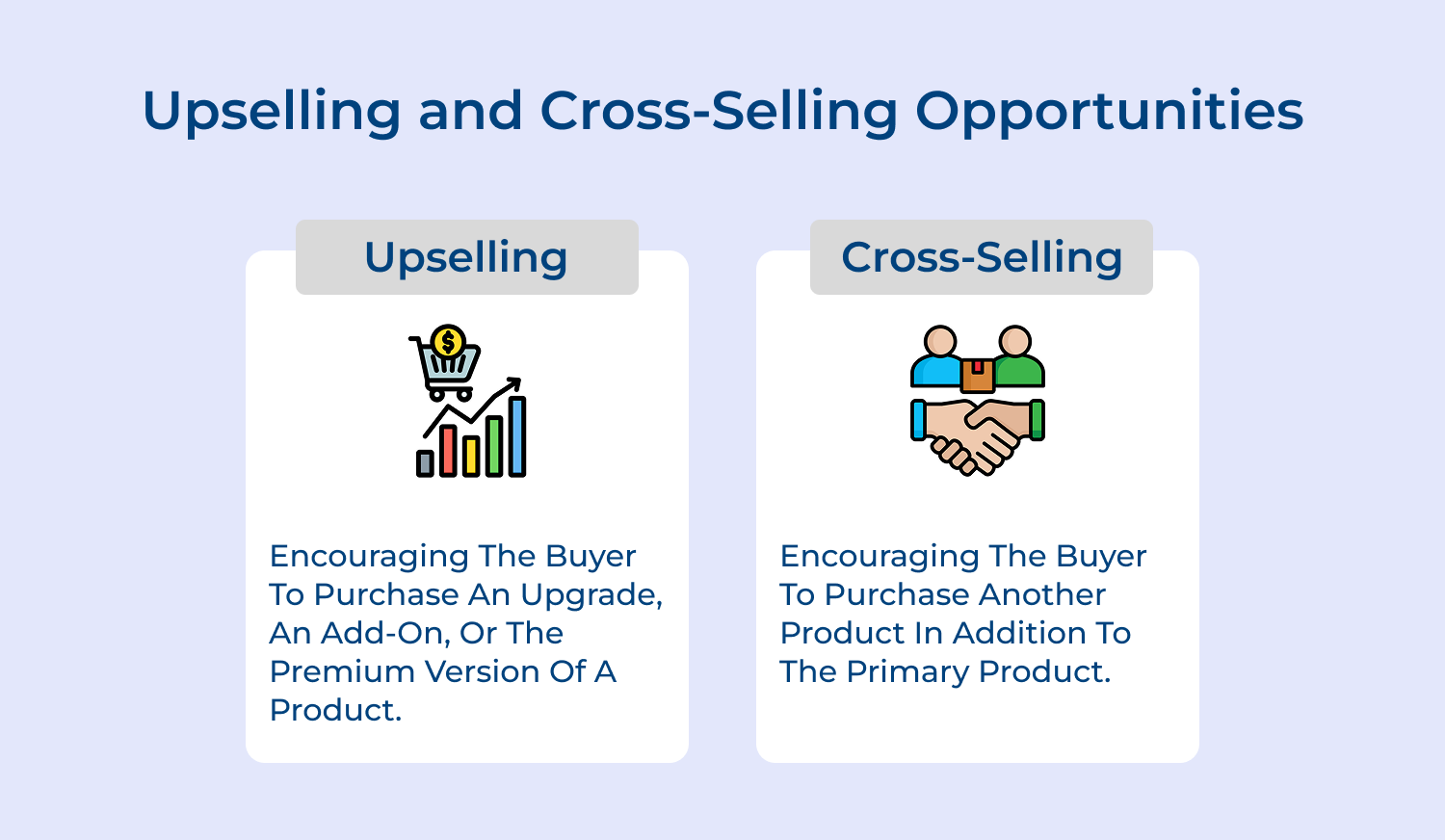
Selling opportunities allow brands to maximize the value of each customer relationship, increasing customer lifetime value and reducing the cost of acquiring new customers. It also drives a customer-centric approach by providing personalized recommendations tailored to individual needs, strengthening brand loyalty.
When presented with relevant, personalized recommendations, customers can discover products or services that complement their existing purchases, enhancing their overall experience and addressing additional needs they may have.
Best practices to follow:
Duolingo, a bilingual mobile app, analyzed user data and engagement patterns to identify learners who may benefit from additional features or premium subscriptions. The company has experienced a significant increase in revenue growth through personalized recommendations during support interactions.
Customer retention demonstrates the brand’s commitment to delivering consistently positive experiences.
Higher customer retention translates into a steady flow of recurring revenue and reduced acquisition costs. When customers remain loyal, brands need to allocate fewer resources to constantly attracting new customers, allowing them to focus on enhancing their offerings and optimizing internal processes.
Apple, known for its exceptional customer support, has implemented various initiatives, such as the Genius Bar, online support forums and personalized service through its retail stores. These efforts have built a loyal customer base with high customer retention rates and increased sales of complementary products & services.
Top tips:
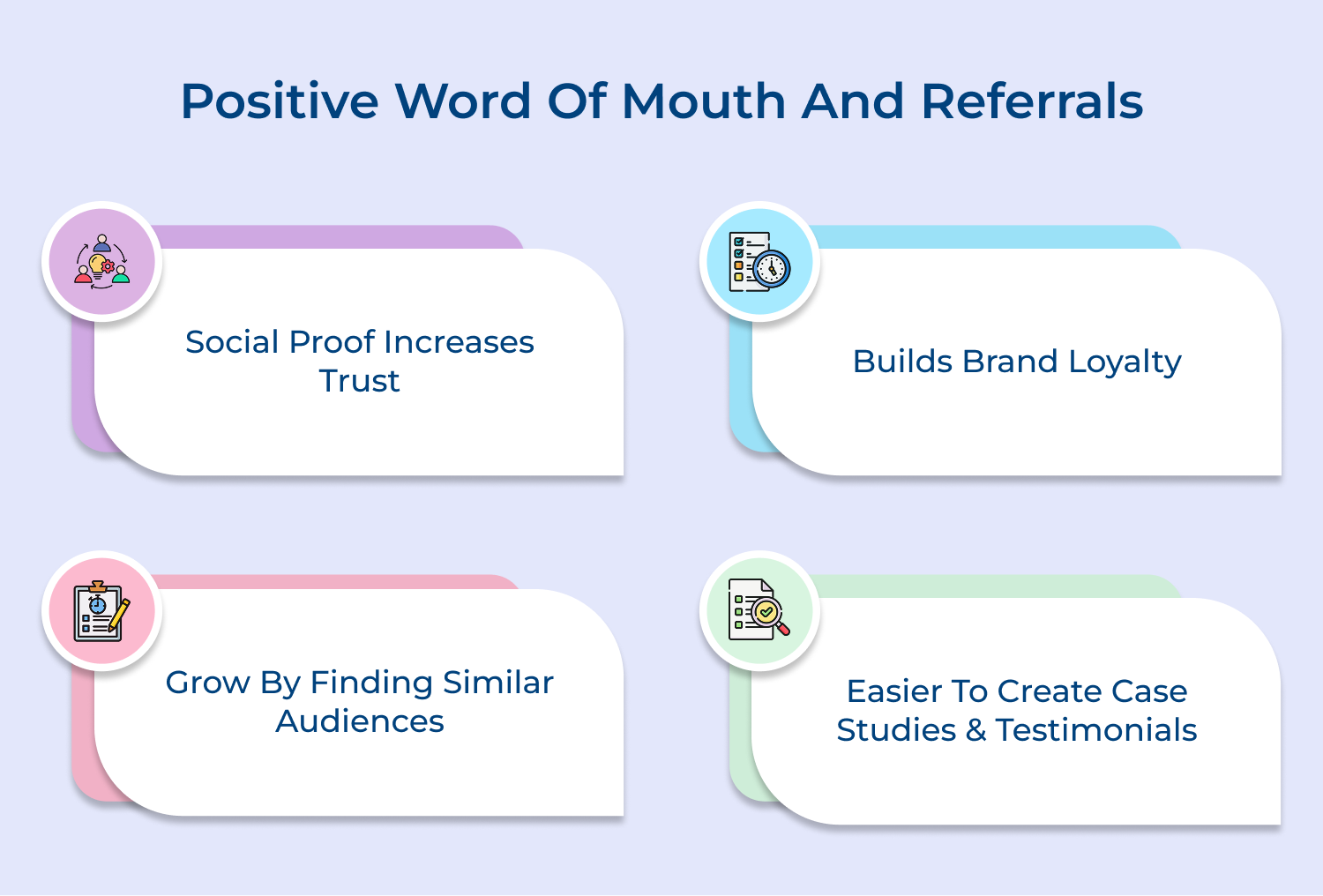
When customers receive exceptional service, they become more likely to share their positive experiences with others, organically promoting the brand and attracting new customers. The ripple effect not only drives revenue growth but also enhances brand reputation and builds customer loyalty
For organizations, positive word-of-mouth serves as a cost-effective marketing strategy, reducing the need for expensive advertising campaigns. Referrals from existing customers often have a higher lifetime value and lower acquisition costs, contributing to improved profitability.
How to implement:
Customer retention is far more cost-effective than acquiring new ones, as the costs associated with marketing, sales and onboarding are minimized. High-quality support reinforces customers to choose and remain with a particular brand.
For organizations, reduced churn translates into tangible financial benefits. A lowered churn not only improves lifetime value but also improves the bottom line, which can be directly linked to the better quality of support.
Best practices:
Customer lifetime value (CLV) is a powerful metric that demonstrates how customer service can significantly impact revenue and profitability. From an organizational perspective, increasing CLV translates into higher revenue streams, reduced customer acquisition costs and improved profitability.
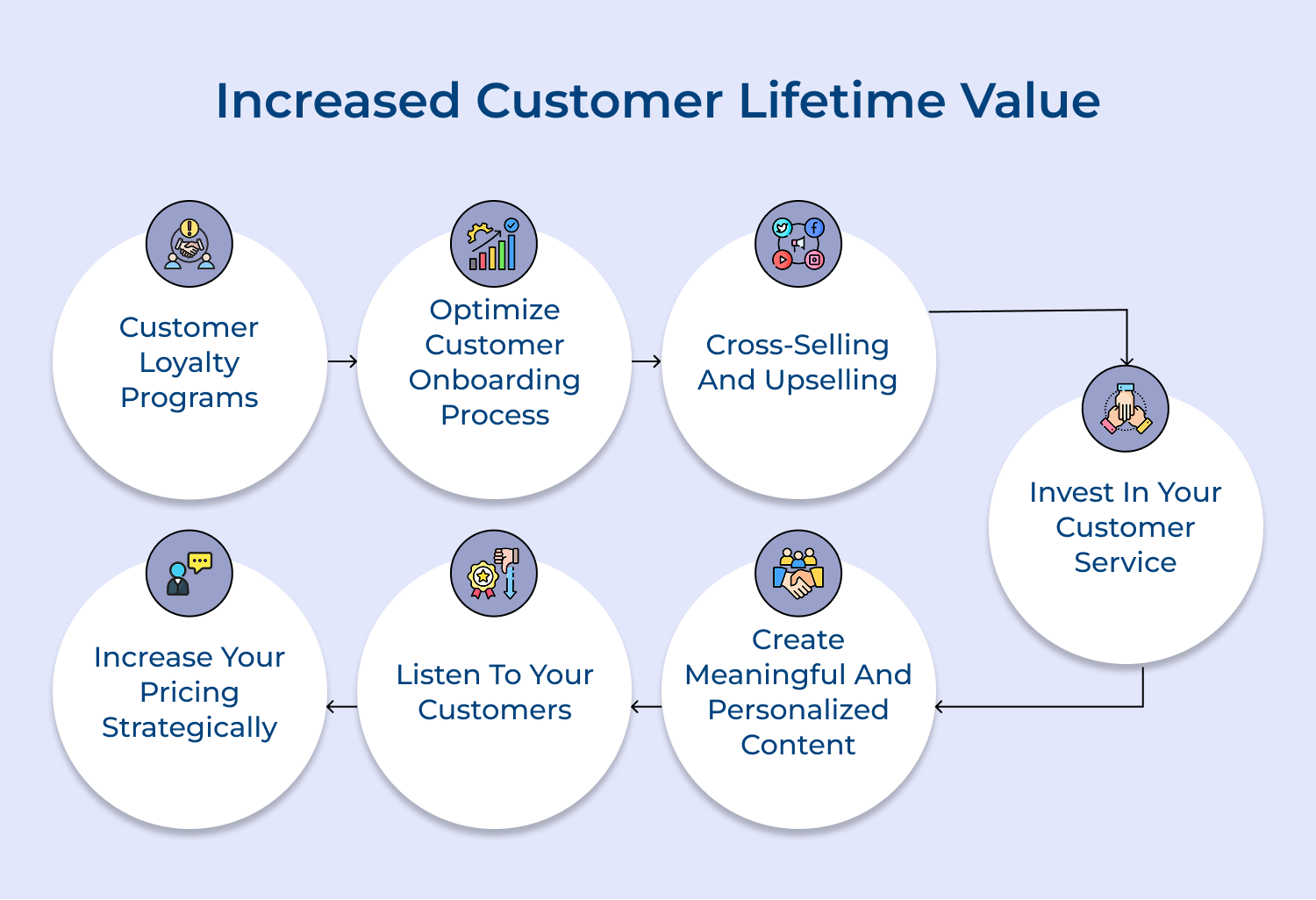
Higher CLV also reflects a positive and satisfying experience with the brand, contributing to the company’s growth & success. Organizations can optimize their marketing investments and allocate resources more efficiently towards nurturing existing customer relationships rather than constantly acquiring new ones.
Pro tips to follow:
Efficient operations and workflows enable businesses to maximize resource utilization, productivity. It translates into reduced operational expenses, optimized utilization of technology and infrastructure.
Improved operations also result in faster resolution times, consistent and seamless experiences across touchpoints & a higher level of satisfaction. Streamlined processes enable better collaboration across departments and a customer-centric approach.
How to implement:
Salesforce, the SaaS leader, improved agent productivity, enabling them to improve high customer satisfaction levels by automating routine tasks. Through these efforts, Salesforce not only enhanced customer experiences but also realized significant cost savings, contributing to a 25% increase in profit margins.
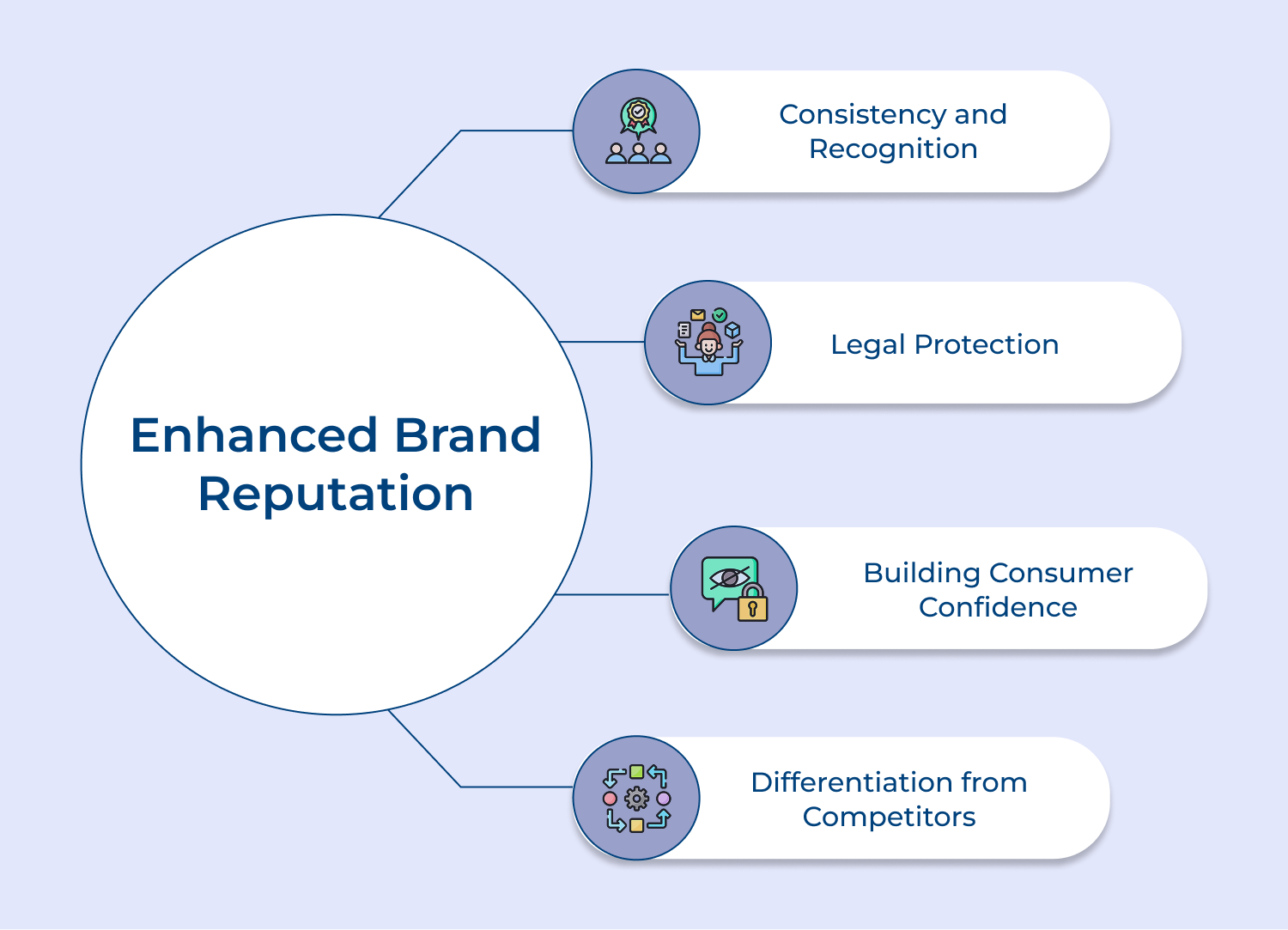
Customers are more willing to pay a premium for a brand they trust and associate with superior experiences. They feel valued and are more inclined to recommend the brand to others, fueling organic growth.
For organizations, a strong brand reputation built on exceptional customer service can lead to increased customer loyalty. A positive reputation can attract top talent, enabling brands to build a skilled and customer-centric workforce.
Zappos’ unwavering commitment to delivering outstanding experiences, including hassle-free returns and 24/7 support, has earned it a loyal customer base & a reputation as a leader in customer service. This strong brand reputation has contributed to Zappos’ sustained success and profitability in the highly competitive e-commerce industry.
How to implement:
When businesses prioritize exceptional customer service, the positive effects ripple beyond customer satisfaction and loyalty.
When employees across departments work cohesively to deliver seamless customer experiences, they develop a deeper understanding of the company’s mission and their role in achieving it, further boosting morale and productivity.
Pro tips:
Hilton Hotels & Resorts, through its “Hilton Hospitality” program, has empowered its team members to go above and beyond in delivering personalized service to guests. Hilton has cultivated a highly engaged workforce committed to creating exceptional guest experiences by providing extensive training and building a culture of ownership.
Creating a customer service experience that is a profit center rather than a cost center requires a strategic mindset and a commitment to excellence.
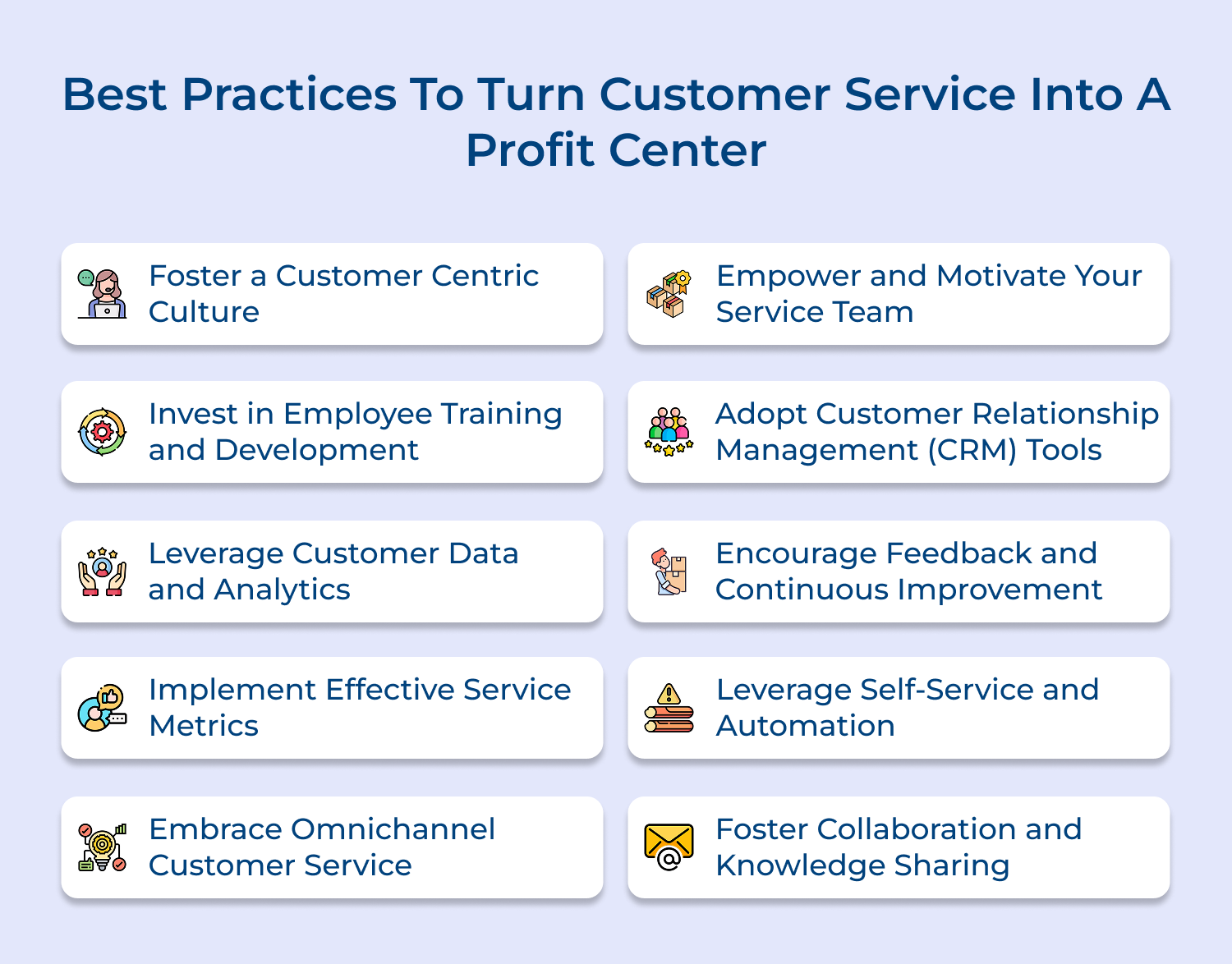
1. Foster a Customer Centric Culture
Embed a customer-centric philosophy throughout your organization, ensuring that every employee understands the importance of delivering exceptional service. Encourage a mindset of empathy, responsiveness and proactive problem-solving.
2. Invest in Employee Training and Development
Provide comprehensive training programs that equip your customer service team with the knowledge, skills and tools they need to excel. Continuously invest in their professional development, keeping them up-to-date on industry best practices and product knowledge.
3. Leverage Customer Data and Analytics
Collect and analyze customer data from various touchpoints to gain insights into preferences, pain points, and opportunities for service improvements. Use this data to drive data-driven decision-making and personalize experiences.
4. Implement Effective Service Metrics
Establish clear service metrics that align with your revenue and profitability goals. Track key performance indicators (KPIs) such as customer satisfaction scores, resolution times and revenue generated from service interactions.
5. Embrace Omnichannel Customer Service
Offer seamless service experiences across multiple channels (e.g., phone, email, chat, social media), allowing customers to choose their preferred method of communication and ensuring consistent experiences across touchpoints.
6. Empower and Motivate Your Service Team
Grant your service representatives the autonomy and resources to resolve issues effectively. Implement incentive programs that recognize and reward exceptional service, building a sense of ownership and pride.
7. Adopt Customer Relationship Management (CRM) Tools
Leverage CRM software to centralize customer data, track interactions and provide personalized experiences. This identifies cross-selling and upselling opportunities, as well as streamlining service processes.
8. Encourage Feedback and Continuous Improvement
Actively solicit customer feedback through surveys, social media and other channels. Use this feedback to identify areas for improvement and implement changes that enhance the customer experience.
9. Leverage Self-Service and Automation
Implement self-service portals, chatbots and other automated solutions to handle routine inquiries efficiently. It can reduce operational costs while freeing up your service team to focus on more complex issues.
10. Foster Collaboration and Knowledge Sharing
Promote collaboration and knowledge sharing within your service team & across departments. Encourage cross-functional communication and resource sharing to ensure consistent, high-quality service delivery.
Both B2C and B2B brands can no longer afford to neglect customer support; it’s not just a reactive function, but a proactive strategy for driving customer satisfaction, loyalty and profitability.
Brands that prioritize customer support and integrate it into their overall CX strategy will gain a competitive edge, building strong customer relationships and driving sustainable business growth. They can transform their support operations into a strategic asset that drives profitability by investing in technology, training and tools.

What are the key characteristics of a customer service profit center?
A customer service profit center is one that not only focuses on resolving customer issues and inquiries but also looks for ways to upsell or cross-sell products and services. It is proactive in engaging with customers, building relationships and maximizing the lifetime value of each customer. The team is incentivized based on metrics related to revenue generation and not just on the number of calls or tickets resolved.
What metrics are used to evaluate a customer service profit center?
Key metrics used to evaluate a customer service profit center include customer satisfaction scores, average revenue per interaction, customer retention rates, upsell and cross-sell rates & overall revenue generated by the customer service team. These metrics help assess the impact of customer service on the company’s bottom line and its contribution to overall business growth.
Why do some businesses fail to see customer service as a profit center?
Some businesses fail to see customer service as a profit center because they view it solely as a cost center that deals with complaints and issues. They may not have systems in place to track revenue generation from customer interactions or to incentivize their customer service team to drive sales.
Why should companies transform their customer service into a profit center?
Transforming customer service into a profit center can lead to increased revenue, customer loyalty and long-term business growth. By focusing on building relationships with customers, identifying upsell and cross-sell opportunities & providing exceptional service, businesses can not only retain existing customers but also attract new ones through positive word-of-mouth.
 https://omni24.io/wp-content/uploads/2026/08/AI-Customer-Service-Agents.png
1256
2400
Webvision Solution
https://omni24.io/wp-content/uploads/2023/04/Omni-Logo-1.svg
Webvision Solution2026-09-21 04:48:512026-09-21 04:48:51How to Build an AI Customer Service Agents: 8 Key Steps
https://omni24.io/wp-content/uploads/2026/08/AI-Customer-Service-Agents.png
1256
2400
Webvision Solution
https://omni24.io/wp-content/uploads/2023/04/Omni-Logo-1.svg
Webvision Solution2026-09-21 04:48:512026-09-21 04:48:51How to Build an AI Customer Service Agents: 8 Key Steps https://omni24.io/wp-content/uploads/2026/08/Omnichannel-Conversational-AI.png
1256
2400
Tushar Joshi
https://omni24.io/wp-content/uploads/2023/04/Omni-Logo-1.svg
Tushar Joshi2026-09-16 03:51:072026-09-16 03:51:07How to Build Omnichannel Conversational AI Strategy
https://omni24.io/wp-content/uploads/2026/08/Omnichannel-Conversational-AI.png
1256
2400
Tushar Joshi
https://omni24.io/wp-content/uploads/2023/04/Omni-Logo-1.svg
Tushar Joshi2026-09-16 03:51:072026-09-16 03:51:07How to Build Omnichannel Conversational AI Strategy https://omni24.io/wp-content/uploads/2026/08/Customer-Service-Teams.png
1256
2400
Tushar Joshi
https://omni24.io/wp-content/uploads/2023/04/Omni-Logo-1.svg
Tushar Joshi2026-09-15 04:01:522026-09-15 04:02:16How to Build Customer Service Teams: 6 Key Steps
https://omni24.io/wp-content/uploads/2026/08/Customer-Service-Teams.png
1256
2400
Tushar Joshi
https://omni24.io/wp-content/uploads/2023/04/Omni-Logo-1.svg
Tushar Joshi2026-09-15 04:01:522026-09-15 04:02:16How to Build Customer Service Teams: 6 Key Steps
Whether it’s about acquire, engage or support – Omni24 covers all your customer engagement needs in one complete platform.

Copyright ©2026 Veemo All rights reserved.
CA, Los Angeles, Hall Ave, 19011