7 Tips To Deliver Top-notch International Customer Service
International customer service is crucial for businesses, offering strategies, examples and insights to bridge cultures as well as excel in a global market.

International customer service is crucial for businesses, offering strategies, examples and insights to bridge cultures as well as excel in a global market.
Providing customer service across international markets can be complex and challenging for businesses.
Language barriers, cultural differences, and varying expectations often lead to misunderstandings and dissatisfaction. Poor customer support in global markets can result in lost sales and damaged brand reputation.
In this blog, we’ll explore key strategies for delivering exceptional international customer service. From understanding cultural nuances to providing multilingual support, mastering these practices helps businesses build strong relationships with customers worldwide, enhance satisfaction, and foster long-term loyalty.
International customer service is the practice of providing support and assistance to customers who are located in different countries/regions around the world. The type of customer service requires a higher level of cultural awareness, language proficiency and communication skills in order to effectively assist customers from diverse backgrounds.
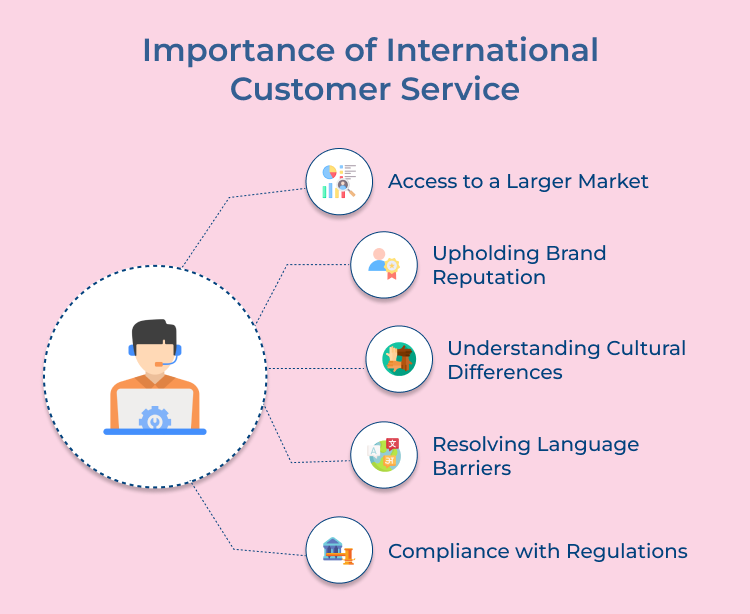
Key objectives:
71% of customer service leaders believe that having multilingual customer service increases customer satisfaction. Let’s learn more about its importance in every business.
Providing world-class service to customers from different countries and cultures requires a strategic approach. Here’s the 7-step plan to get things going efficiently and how.
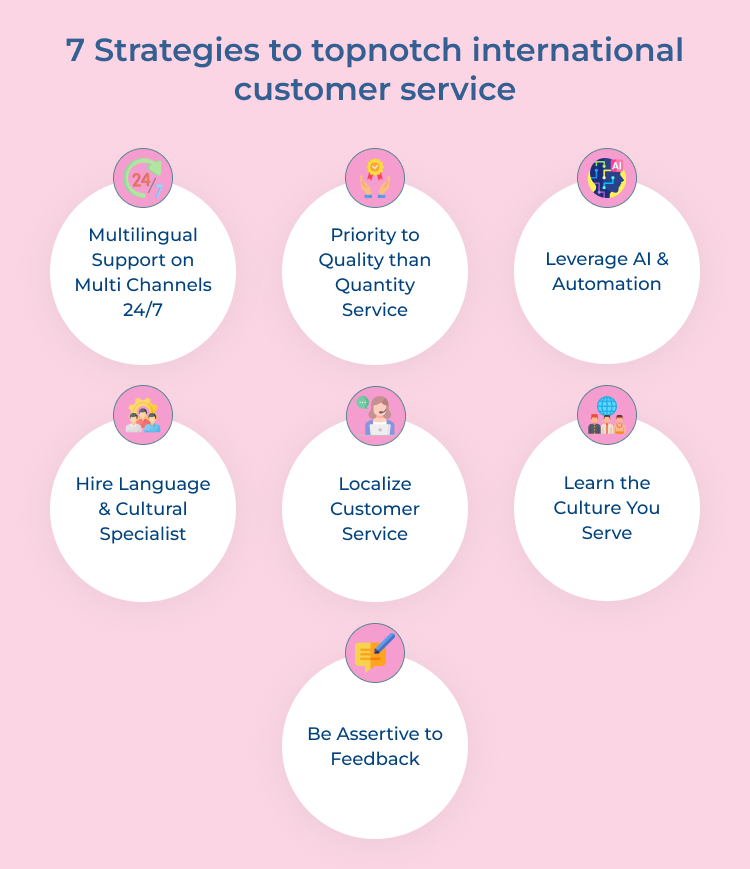
One of the most crucial aspects of international customer service is providing round-the-clock support. Different time zones and cultural norms mean that customers may require assistance at any time of day. Offering 24/7 support through various communication channels such as phone, email, and live chat shows your commitment to customer satisfaction as well as builds trust with your international clientele.
Pro tips:
Consistent high-quality service is essential for retaining international customers. Providing personalized interactions, resolving issues promptly, and exceeding customer expectations will help build long-lasting relationships while also encouraging repeat business. Investing in training programs for your customer service team can also help ensure consistent service quality across all international markets.
Pro tips:
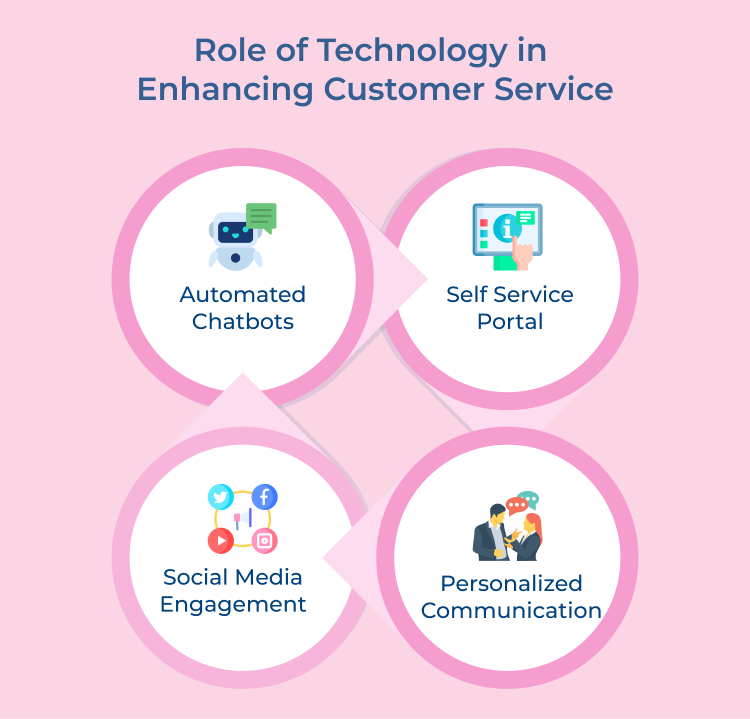
Utilize technology to streamline customer service processes and improve efficiency. Implementing a customer relationship management (CRM) system, chatbots, and automated email responses enhance communication, track customer interactions, as well as provide quick solutions to common inquiries. By leveraging technology, you offer seamless and efficient customer service to your international audience.
Pro tips:
As your business expands globally, consider hiring language and culture specialists to better cater to the diverse needs of international customers. Having customer service professionals who are fluent in multiple languages as well as familiar with various cultural nuances bridge communication gaps, build rapport with customers, and provide a personal service experience.
Tips:
Tailor your customer service approach to reflect the preferences and expectations of customers in different regions. It could include offering multilingual support, adapting communication styles, and understanding cultural norms to ensure a positive customer experience. Localizing your customer service efforts enables you to demonstrate your commitment to meeting the unique needs of international customers.
Consider following pro tips:
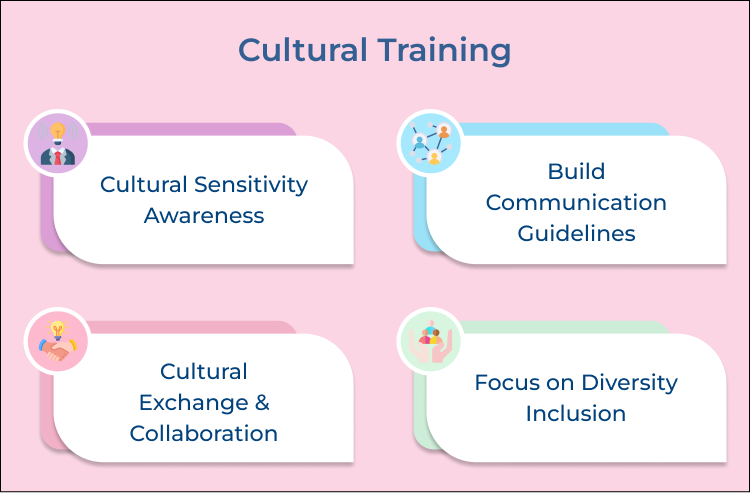
Provide cultural training for your customer service team to create awareness and understanding of different cultural practices. When you educate your staff on cultural sensitivity and diversity, you avoid potential misunderstandings, build rapport with customers from various backgrounds, while delivering more empathetic customer service.
Tips to follow:
Your international audience is different from your regular ones. So, knowing what they want lets you improve your process for the better. Actively listen to customer insights, address concerns promptly, and implement changes based on feedback to continually enhance the customer experience. Customer feedback is a valuable tool for driving innovation, forging loyalty and maintaining a competitive edge in the global marketplace.
Follow below tips:
58% of the customers are willing to wait on the line when receiving service in their native language! Our only response to this should be to deliver exceptional experience. Here’s how.
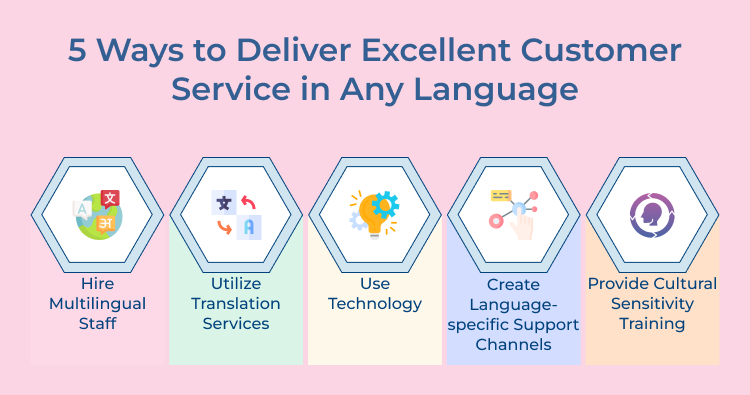
It is not uncommon that 93% of customer service teams are leveraging AI to improve their efficiency. But, the question arises for you is that, how do you intend to inculcate automation?
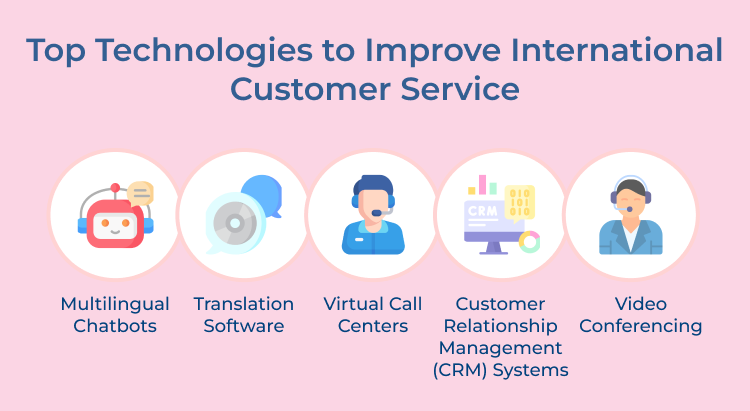
Chatbots are AI-powered tools that interact with customers in real-time and provide instant assistance. Multilingual chatbots can be programmed to communicate in multiple languages, making it easier for businesses to cater to customers from different countries. These chatbots answer frequently asked questions, provide product recommendations, offer knowledge base articles and even help with troubleshooting issues.
Communication is key in customer service, and language barriers often hinder effective communication. Translation software bridges the gap by instantly translating text messages, emails, and even phone calls in real-time. It helps businesses communicate with customers who speak different languages, providing a more personalized as well as efficient service experience.
Traditional call centers can be expensive to set up and maintain, especially for businesses looking to provide customer service on a global scale. Virtual call centers use cloud-based technology to enable agents to work remotely from anywhere in the world. It not only reduces operational costs but also allows businesses to hire multilingual agents who provide support in different languages.
CRM systems are essential tools for managing customer interactions and improving relationships with customers. These systems help businesses track customer preferences, store contact information and monitor customer feedback. By using CRM systems, businesses can better understand their customer’s needs as well as provide personalized service to each individual.
Face-to-face communication is often the best way to build trust and rapport with customers. Video conferencing technology allows businesses to connect with customers from different parts of the world in a more personal and engaging way. Whether for sales presentations, product demos, or customer support, video conferencing enables businesses to provide a more interactive customer service experience.
When it comes to international customer service, it is imperative to go above and beyond to ensure that customers from different countries feel valued as well as understood.
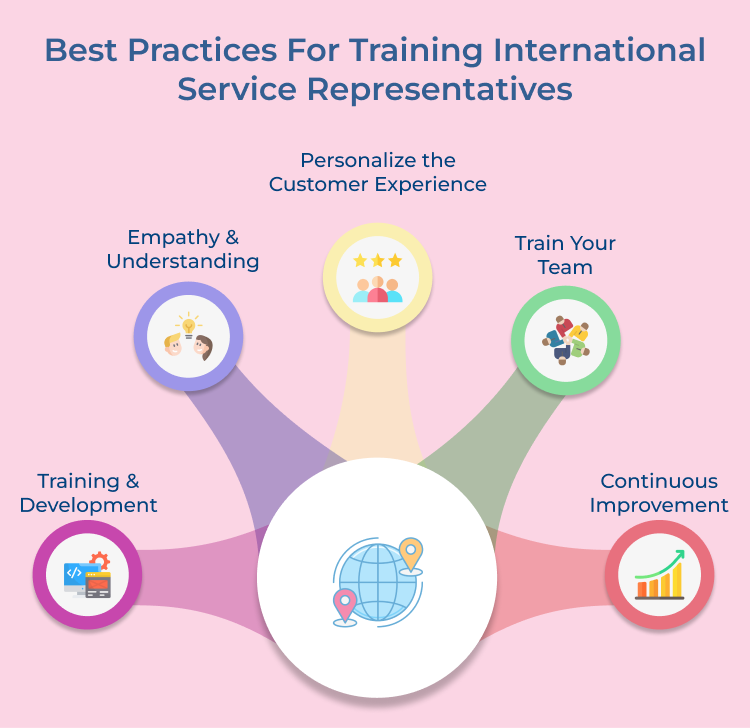
1. Training & Development
Invest in training for your customer service team to help them understand the unique needs of international customers. It includes cultural awareness training, language training and cross-cultural communication skills.
2. Empathy & Understanding
Show empathy and understanding towards international customers who may be facing challenges due to language barriers or cultural differences. Put yourself in their shoes and try to see things from their perspective.
3. Personalize the Customer Experience
Make an effort to personalize the customer experience for your international customers. It includes addressing them by name, offering personalized recommendations and showing that you value their business.
4. Train Your Team
Train your customer service team on how to deal with international customers. It includes cultural sensitivity training, language training and product knowledge training to ensure they are equipped to handle a variety of customer inquiries.
5. Continuous Improvement
Regularly review and analyze your international customer service processes to identify areas for improvement. Implement feedback from customers and employees to enhance the quality of service as well as stay competitive in the global marketplace.
Providing customer service to an international audience comes with a unique set of challenges that are not present when dealing with domestic customers. Let’s delve into a few of them.
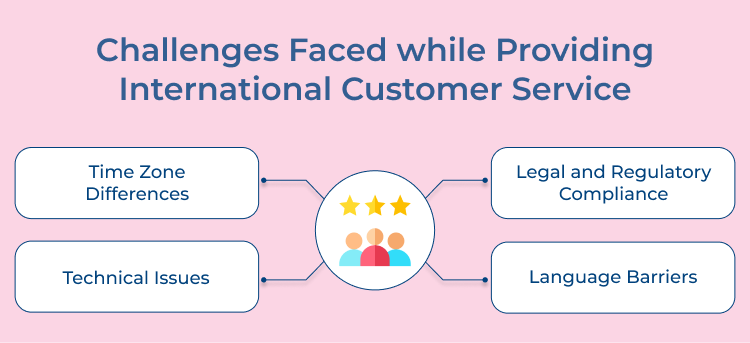
1. Time Zone Differences
Another challenge of international customer service is dealing with time zone differences. When your customer base is spread out across different countries, it can be challenging to provide round-the-clock support. Customer service representatives may need to work irregular hours or shifts to accommodate customers in different time zones.
2. Legal and Regulatory Compliance
Different countries have different laws and regulations when it comes to customer service as well as data protection. It can be challenging for companies to navigate these various legal requirements and ensure compliance when providing international customer service. Failure to comply with regulations result in legal consequences and damage to the company’s reputation.
3. Technical Issues
Providing international customer service also comes with technical challenges. Different countries may have varying levels of internet connectivity, leading to issues with call quality, chat support, or email responsiveness. It is important for companies to have robust technical infrastructure in place to ensure seamless customer service across borders.
4. Language Barriers
One of the most obvious challenges of international customer service is the language barrier. If your customer base spans across different countries and regions, you may encounter customers who speak different languages. It makes effective communication difficult, leading to misunderstandings and frustration for both the customer as well as the customer service representative.
Providing world-class international customer service is essential for businesses to thrive.
Salesforce is a leading provider of customer relationship management (CRM) software for businesses. The company is renowned for its outstanding customer service, offering 24/7 support to its clients around the world. Salesforce’s knowledgeable and responsive customer service team ensures that B2B customers receive the assistance they need to maximize the value of their CRM investment.
Mercedes-Benz is a luxury automobile manufacturer known for its high-quality vehicles and exceptional customer service. The company’s global network of dealerships provides top-notch customer support, offering personalized assistance to buyers at every stage of the car-buying process. Mercedes-Benz’s commitment to customer satisfaction has earned it a loyal following of customers who trust the brand for their automotive needs.
Samsung is a leading manufacturer of home appliances, including refrigerators, washing machines and televisions. The company’s customer service team is dedicated to providing excellent support to customers worldwide, offering timely assistance with product inquiries, troubleshooting and warranty claims. Samsung’s commitment to customer care has solidified its reputation as a trusted and reliable brand in the home appliance industry.
Coca-Cola is one of the most recognizable beverage brands in the world and they are also known for their excellent customer service. With a wide range of products and a global distribution network, Coca-Cola ensures that their customers get to easily access their favorite beverages wherever they are. The company also invests in customer feedback and research to continuously improve their products.
International customer service plays a crucial role in bridging cultures and building positive relationships between people from different parts of the world. By providing excellent customer service that is culturally sensitive and understanding, companies can not only satisfy their customers but also showcase their commitment to diversity as well as inclusion.
Through effective communication, empathy and respect, businesses get to break down barriers while also creating a more connected as well as harmonious global community. It is through embracing and celebrating our differences that we truly build a more inclusive as well as understanding world. Let’s continue to bridge cultures through international customer service and create a more united society.

Why is international customer service important?
International customer service is important because it allows businesses to connect with customers from all over the world. By providing exceptional customer service to international customers, businesses can increase customer loyalty, gain a competitive edge in the global market and ultimately improve their bottom line.
Why is translation important in international customer service?
Translation is important in international customer service because it ensures effective communication between businesses and customers who speak different languages. By translating customer inquiries, product descriptions and other important information, businesses provide a seamless customer experience as well as build trust with their international clientele.
How does international customer service work?
International customer service typically involves a combination of phone, email, live chat and social media support. Businesses may also utilize translation services, language-specific websites and cultural awareness training to better serve their international customers.
How does international customer service help in business growth?
International customer service helps in business growth by expanding a company’s customer base and increasing revenue opportunities. By providing top-notch customer service to customers around the world, businesses attract new customers, retain existing ones and build a strong reputation in the global marketplace.
What are international customer service duties?
Some common international customer service duties include answering customer inquiries, resolving complaints, providing technical support, processing orders and offering product recommendations. International customer service representatives may also be responsible for translating customer communications, conducting market research and developing customized solutions to meet the needs of diverse customers.
 https://omni24.io/wp-content/uploads/2026/08/AI-Customer-Service-Agents.png
1256
2400
Webvision Solution
https://omni24.io/wp-content/uploads/2023/04/Omni-Logo-1.svg
Webvision Solution2026-09-21 04:48:512026-09-21 04:48:51How to Build an AI Customer Service Agents: 8 Key Steps
https://omni24.io/wp-content/uploads/2026/08/AI-Customer-Service-Agents.png
1256
2400
Webvision Solution
https://omni24.io/wp-content/uploads/2023/04/Omni-Logo-1.svg
Webvision Solution2026-09-21 04:48:512026-09-21 04:48:51How to Build an AI Customer Service Agents: 8 Key Steps https://omni24.io/wp-content/uploads/2026/08/Omnichannel-Conversational-AI.png
1256
2400
Tushar Joshi
https://omni24.io/wp-content/uploads/2023/04/Omni-Logo-1.svg
Tushar Joshi2026-09-16 03:51:072026-09-16 03:51:07How to Build Omnichannel Conversational AI Strategy
https://omni24.io/wp-content/uploads/2026/08/Omnichannel-Conversational-AI.png
1256
2400
Tushar Joshi
https://omni24.io/wp-content/uploads/2023/04/Omni-Logo-1.svg
Tushar Joshi2026-09-16 03:51:072026-09-16 03:51:07How to Build Omnichannel Conversational AI Strategy https://omni24.io/wp-content/uploads/2026/08/Customer-Service-Teams.png
1256
2400
Tushar Joshi
https://omni24.io/wp-content/uploads/2023/04/Omni-Logo-1.svg
Tushar Joshi2026-09-15 04:01:522026-09-15 04:02:16How to Build Customer Service Teams: 6 Key Steps
https://omni24.io/wp-content/uploads/2026/08/Customer-Service-Teams.png
1256
2400
Tushar Joshi
https://omni24.io/wp-content/uploads/2023/04/Omni-Logo-1.svg
Tushar Joshi2026-09-15 04:01:522026-09-15 04:02:16How to Build Customer Service Teams: 6 Key Steps
Whether it’s about acquire, engage or support – Omni24 covers all your customer engagement needs in one complete platform.

Copyright ©2026 Veemo All rights reserved.
CA, Los Angeles, Hall Ave, 19011