How to Improve Customer Satisfaction: 9 Proven Strategies
Learn how to improve customer satisfaction with practical strategies, effective measurement and actionable tips to boost loyalty as well as retention.

Learn how to improve customer satisfaction with practical strategies, effective measurement and actionable tips to boost loyalty as well as retention.
Every business faces the challenge of declining satisfaction scores, increasing complaints, and customers silently switching to competitors. Despite investments in training and improvements, the gap between expectations as well as experiences grows wider.
Finding new customers costs dramatically more than keeping existing ones, while competitors who focus on satisfaction steadily increase their market share. A 5% increase in customer retention can boost profits by up to 75%.
Improve customer satisfaction systematically. By implementing specific strategies, you can transform unhappy customers into loyal advocates. This guide explores eight practical approaches that work across any industry or company size.
Customer satisfaction is the measurement of how well a company’s products, services and overall experience meet or exceed a customer’s expectations. It represents the emotional response customers feel after engaging with your business. This emotional response can range from delight to disappointment depending on whether their needs were fulfilled.
Customer satisfaction works by creating a continuous feedback loop between businesses and their customers. Companies collect insights through surveys and direct feedback to understand customer perceptions. They then use this information to identify improvement areas and implement changes that better align with customer expectations.
Key objectives:
Improving customer satisfaction in support interactions creates a powerful ripple effect throughout your entire business, affecting everything from revenue to team morale.
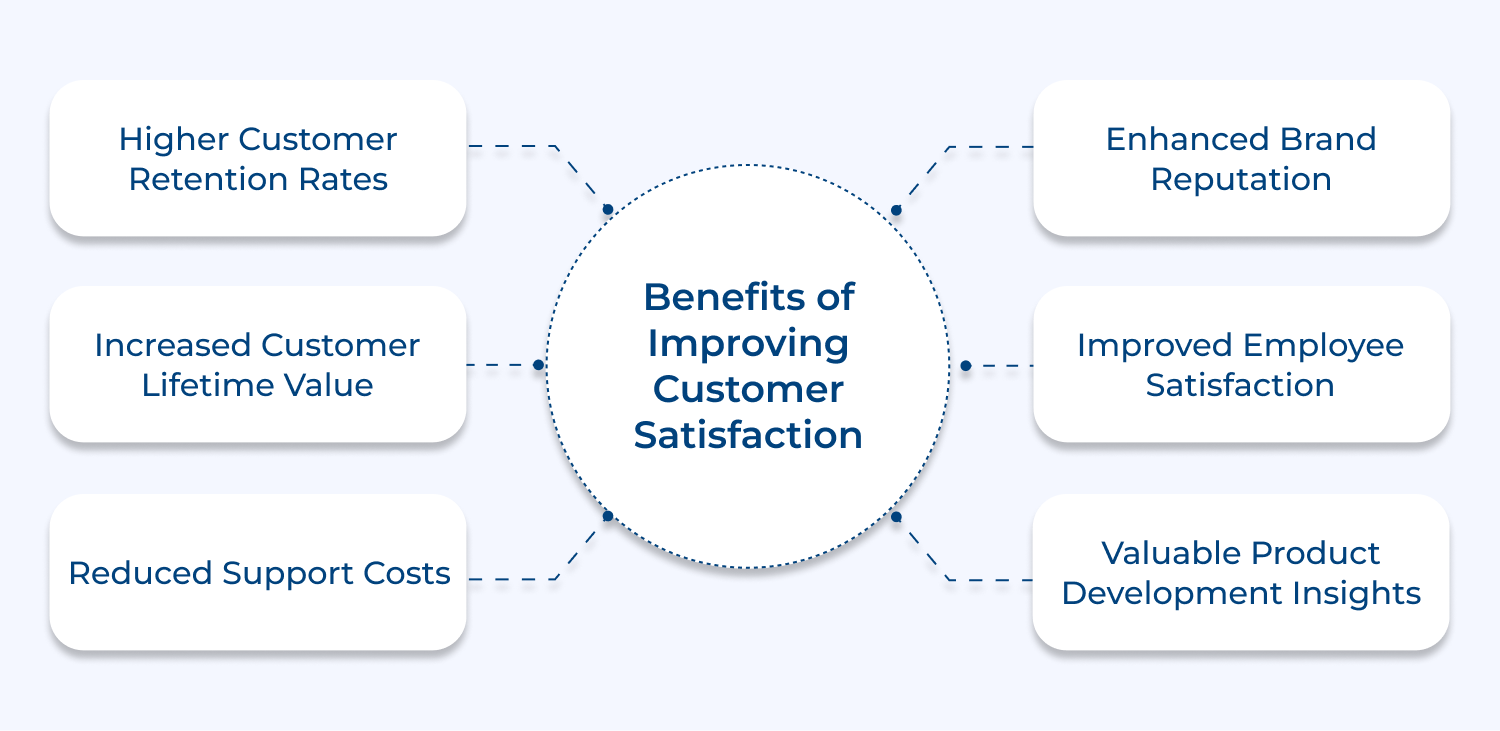
1. Higher Customer Retention Rates
Satisfied customers stay with you longer, reducing the expensive cycle of constantly acquiring new customers. Across all SaaS companies, the median net retention rate is 102% and median gross retention is 91% as of 2023.
2. Increased Customer Lifetime Value
When customers have positive support experiences, they tend to purchase more frequently and spend more per transaction. These customers also become more receptive to complementary products and premium offerings over time.
3. Reduced Support Costs
Satisfied customers create fewer repeat tickets and require less follow-up, allowing your team to operate more efficiently. They’re also more likely to use self-service options appropriately, reducing overall support volume.
4. Enhanced Brand Reputation
Customers who receive exceptional support become vocal advocates who share their experiences. These authentic testimonials reach potential customers through reviews and social media, driving new business.
5. Improved Employee Satisfaction
Support teams dealing primarily with satisfied customers experience less stress and emotional burnout. The positive feedback loop between happy customers and employees creates a healthier workplace with lower turnover rates.
6. Valuable Product Development Insights
Satisfaction-focused support teams capture detailed feedback that engineering and product teams can use to improve offerings. This customer-driven development approach ensures you build features that truly matter to your users.
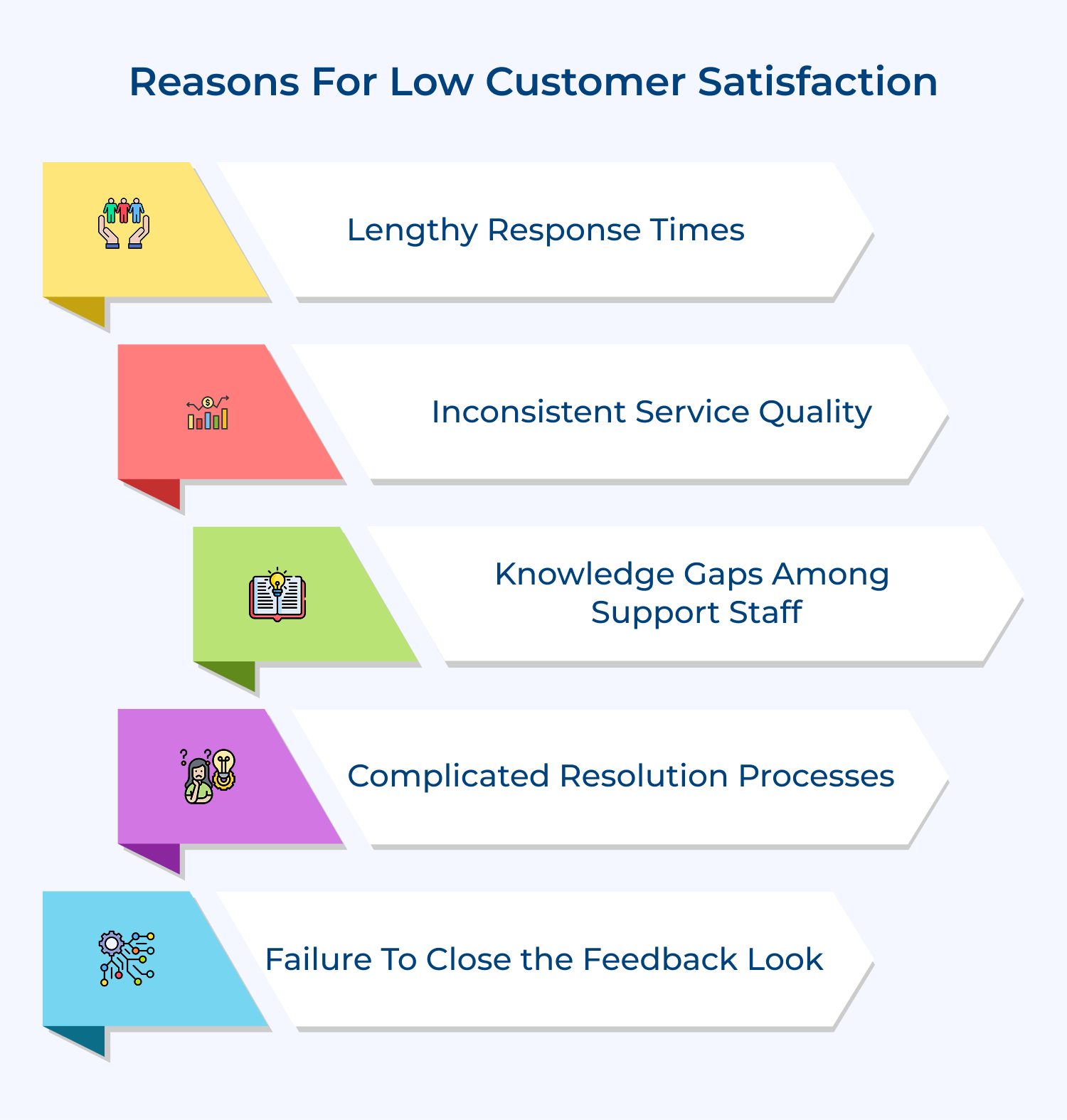
Customer satisfaction doesn’t plummet overnight but rather erodes gradually through repeated negative experiences. Let’s explore a few of its reasons.
Here are nine effective ways to cultivate an environment where customer happiness thrives, ensuring your business not only meets but exceeds expectations.
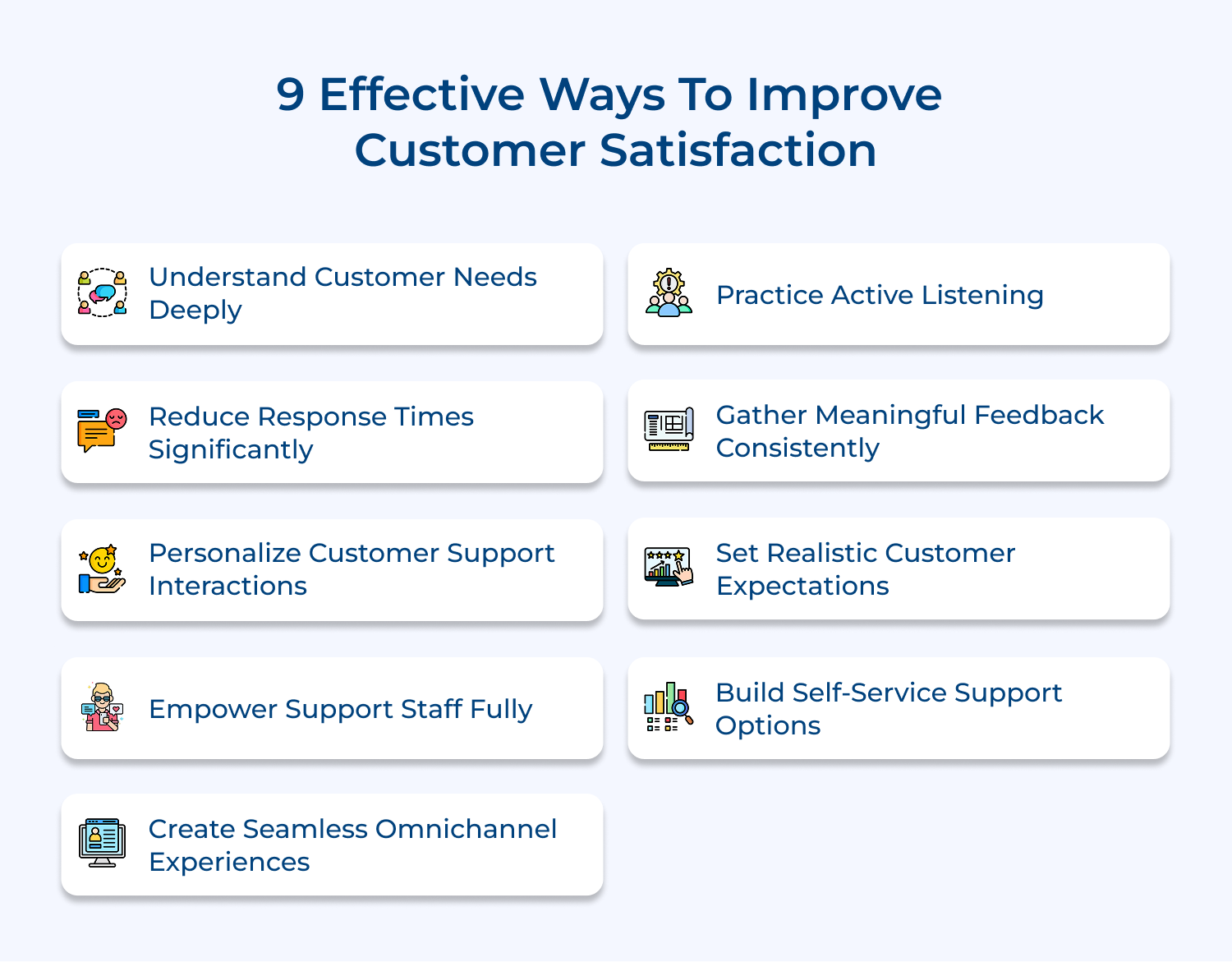
Understanding customer needs is a critical foundation for any initiative aimed at improving customer satisfaction. It requires a structured approach to identifying what customers really want, expect and value. Hence, ensuring that every business decision aligns with those insights.
Here are three proven techniques for gaining deep customer understanding:
Implementation Tip:
Start by mapping one critical journey (such as a first-time purchase) to uncover service gaps. Involve multiple teams to ensure a 360° view and address the most common friction points identified through feedback.
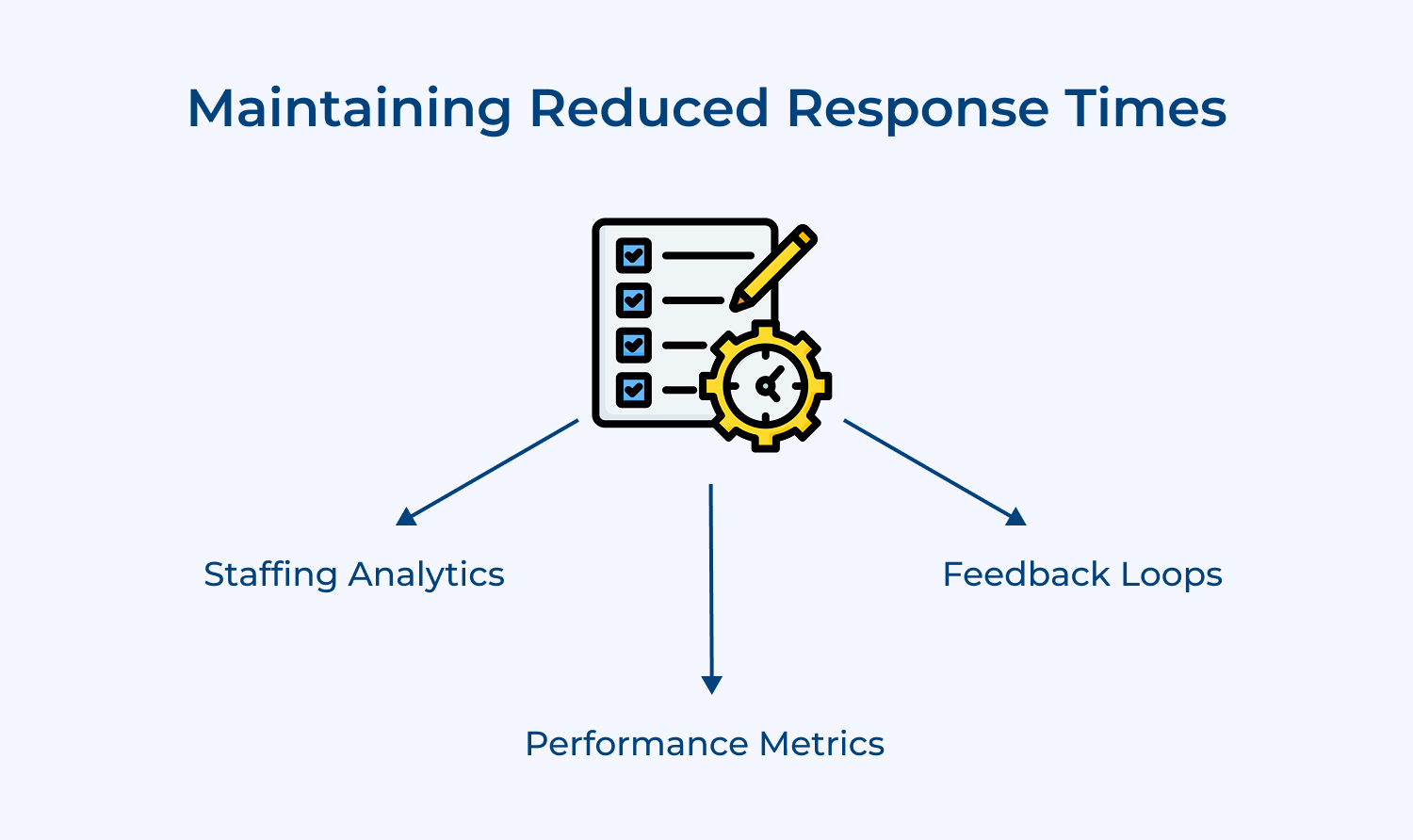
Reducing response times is a critical factor in improving customer satisfaction. Long wait times create anxiety, erode trust and signal a lack of respect for customers’ time. Fast, effective responses show customers that their concerns are valued and prioritized.
To reduce response times consistently, implement the following strategies:
Pro Tip:
One SaaS company cut response times by 62% by routing technical tickets directly to engineers, bypassing unnecessary layers and reducing customer frustration significantly.
Personalizing customer support means tailoring each interaction to acknowledge the customer’s unique situation, history and preferences. This approach transforms generic transactions into meaningful connections that make customers feel genuinely valued and understood rather than processed.
Before implementing personalization in your support interactions, consider these essential questions:
These questions help ensure your personalization efforts create authentic connections rather than awkward attempts that might come across as insincere or intrusive.
For example a regional bank implemented personalization by training phone support staff to acknowledge recent life events in their customer relationship management system. When a customer who recently opened a college savings account called about an unrelated issue, the representative briefly mentioned educational resources the bank offered.
Pro Tips:
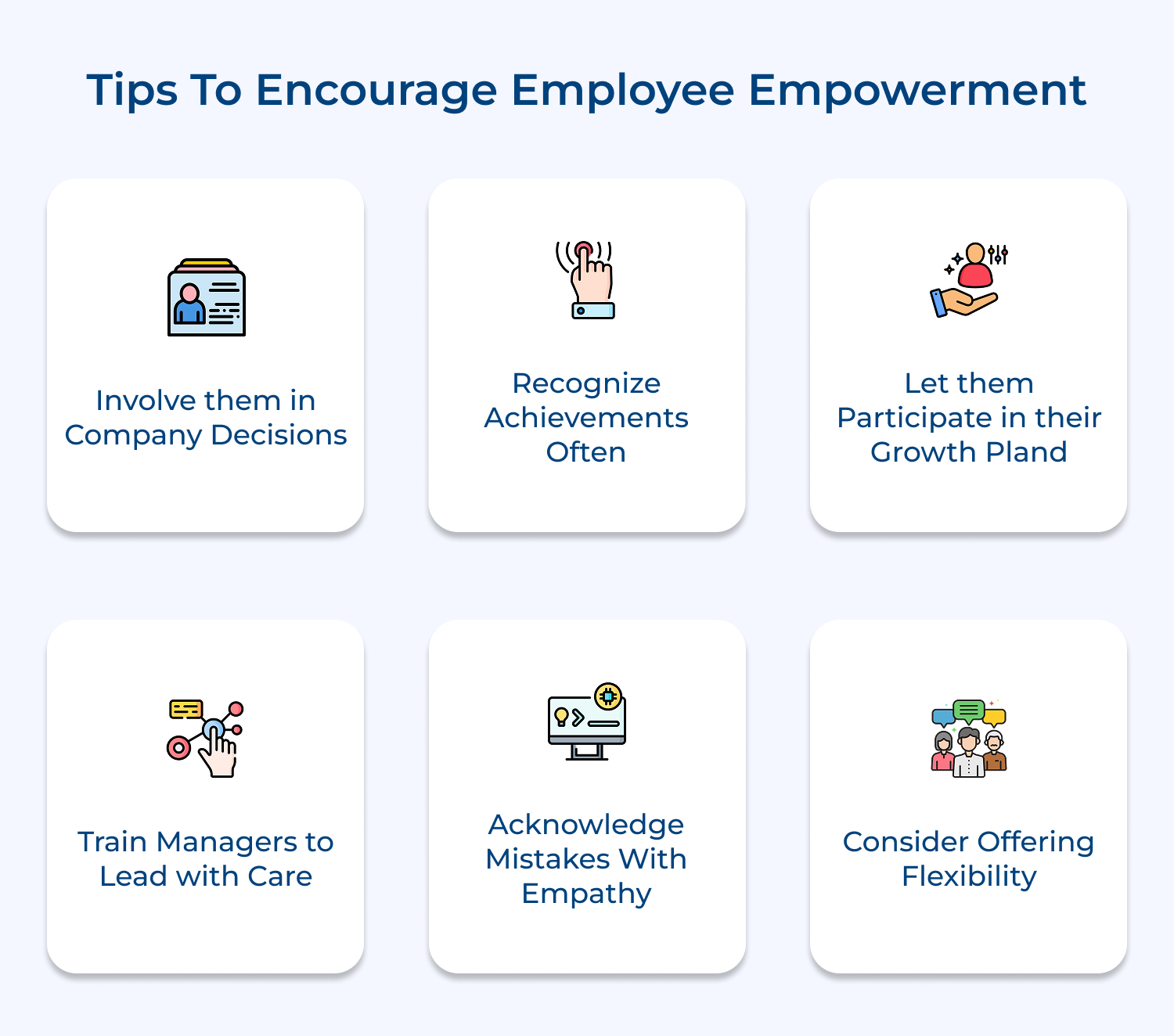
Empowering support staff means giving frontline team members the authority, tools and confidence to make decisions that benefit customers without constant management approval. This autonomy creates faster resolutions, increases employee satisfaction and demonstrates respect for both staff as well as customer time.
Creating seamless omnichannel experiences requires integrating all customer communication channels so that information flows effortlessly between them. This reduces the frustration of repeated explanations and disconnected service that result from siloed channels.
Each channel addresses unique customer needs, but they must operate as part of a unified system:
To assess your omnichannel effectiveness, ask:
Can a customer start an interaction via chat and continue it over email without repeating themselves? Can your agents view a customer’s full history across channels?
If the answer is no, your channels may be integrated in name only. True omnichannel success relies on shared context, real-time visibility and seamless transitions.
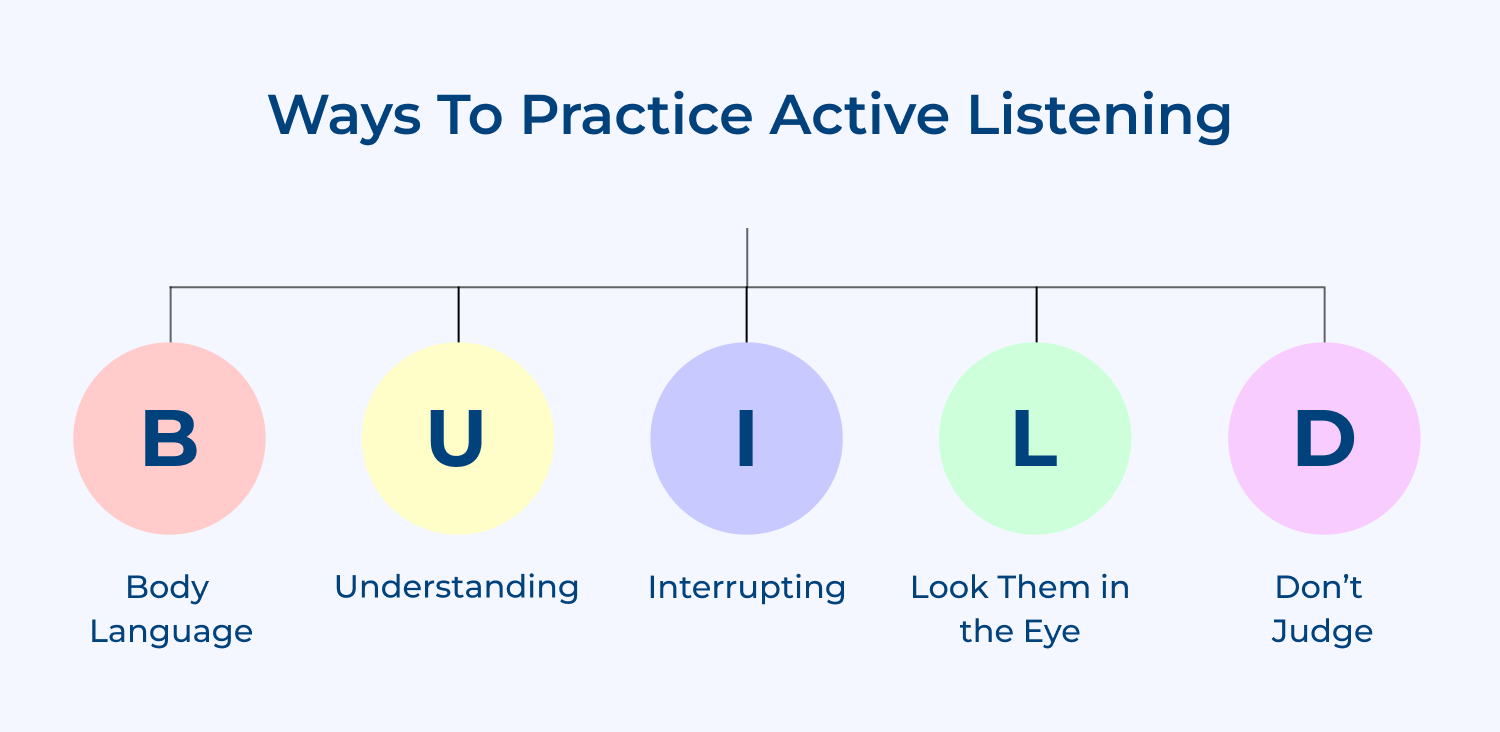
Active listening means fully concentrating on what customers are saying rather than passively hearing their words or planning responses while they speak. This deep attention demonstrates respect and helps identify underlying issues that customers may struggle to articulate directly.
When support representatives practice active listening, they catch important details that might otherwise go unnoticed – emotional cues, unstated expectations and contextual information that shapes the customer’s experience. These insights allow for more precise solutions and demonstrate genuine care that builds loyalty beyond the immediate interaction.
Best Practices:
Improving customer satisfaction begins with consistently gathering and acting on meaningful feedback. Without it, businesses risk making decisions based on assumptions rather than real customer needs.
To capture a full picture, combine multiple feedback methods:
The value lies not just in collection, but in implementation. Analyze feedback to identify patterns, then take visible action. Failure to close the loop can erode trust and diminish response rates.
Use these questions to prompt meaningful responses:
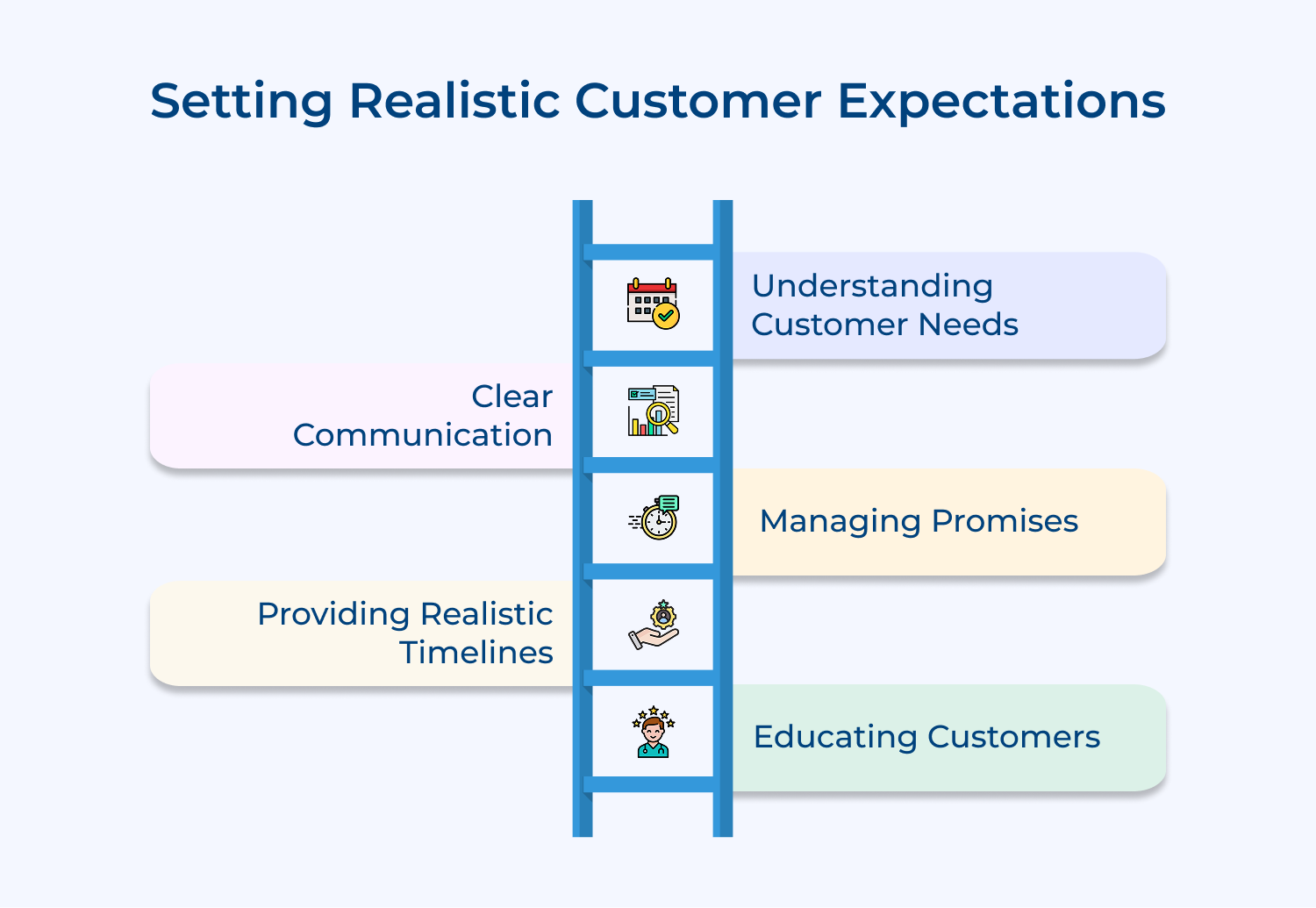
Setting realistic expectations means clearly communicating what customers can expect regarding timing, processes and outcomes. This transparency builds trust by eliminating surprises while demonstrating respect for the customer’s need to plan and prepare.
When customers understand exactly when things will happen, their anxiety decreases significantly. Provide specific time frames rather than vague promises, explain any potential delays upfront and update estimates if circumstances change. This honesty allows customers to plan accordingly and prevents the frustration of unmet expectations.
The most satisfied customers receive slightly more than promised rather than less. Set conservative expectations you can confidently exceed rather than ambitious promises you might miss. This approach creates positive surprise moments while protecting your reputation for reliability.
Building self-service support means creating resources that empower customers to find answers and solve problems independently. These tools respect customer preferences for autonomy while providing assistance exactly when needed without waiting for human intervention.
Essential self-service resources to develop. Self-service options should cover different learning styles and problem complexities:
AI enhances self-service by personalizing content recommendations based on customer history, analyzing search intent to improve results accuracy and powering chatbots that handle routine inquiries.
These five metrics provide different but complementary windows into how customers truly feel about their experiences with your brand.
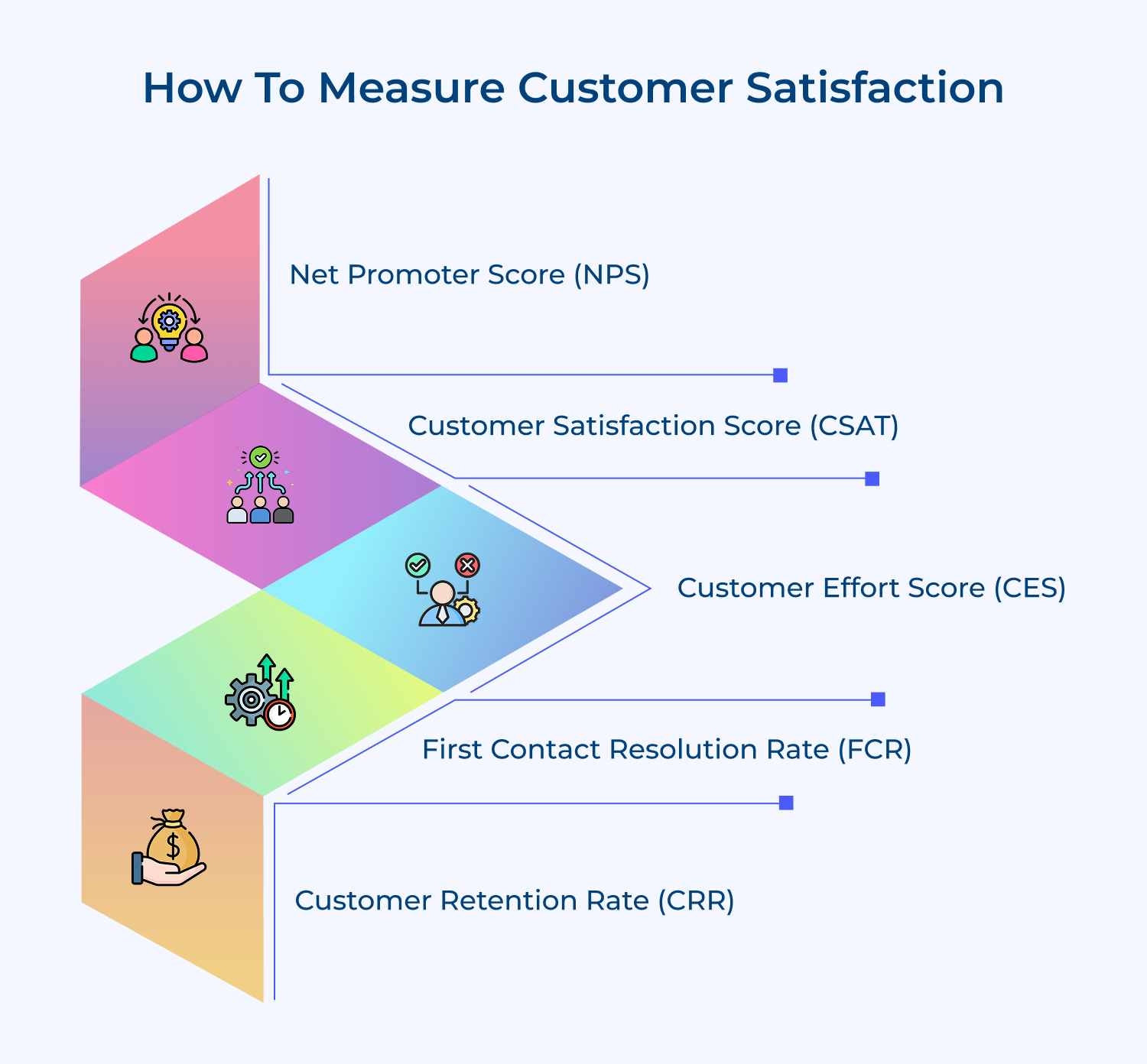
Net Promoter Score measures customer loyalty by asking one simple question: “How likely are you to recommend our company?” This single question reveals profound insights about sentiment that correlate strongly with business growth potential.
Key NPS Insights to Consider:
The power of NPS lies in its categorization system – Promoters (9-10) drive growth through enthusiasm, Passives (7-8) remain vulnerable to competitors and Detractors (0-6) can damage reputation through negative word-of-mouth. The final score ranges from -100 to +100, making progress easy to track over time.
Customer Satisfaction Score directly measures satisfaction with specific interactions by asking customers to rate their experience on a numeric scale. The score excels at capturing immediate reactions to particular touchpoints in the customer journey.
CSAT provides granular feedback about individual experiences, allowing you to pinpoint exactly where improvements are needed most urgently. This immediacy makes it invaluable for quick adjustments to processes, training, or service delivery that create immediate positive impacts.
Customer Effort Score measures how easy it was for customers to get their issues resolved by asking them to rate the required effort. This metric acknowledges that people value simplicity and efficiency more than delight in service interactions.
Critical CES Considerations:
Research consistently shows that reducing customer effort builds loyalty more effectively than exceeding expectations through elaborate service gestures. By tracking CES, companies can identify and eliminate friction points that cause unnecessary effort—like repeating information or navigating confusing interfaces.
First Contact Resolution Rate measures the percentage of customer issues resolved during the initial interaction without requiring follow-ups. It directly addresses one of the most frustrating aspects of customer service, having to repeatedly reach out.
FCR Enhancement Tactics:
High FCR rates indicate efficient support processes where agents have both the knowledge and authority to resolve issues completely. When customers get their problems solved immediately, they experience relief and develop confidence in your support capabilities.
Customer Retention Rate measures the percentage of customers who continue doing business with you over a specific time period. As the ultimate behavioral indicator of satisfaction, retention reveals whether experience efforts translate into actual business impact.
While surveys capture what customers say, retention shows what they do, making it perhaps the most important metric of all. Regular analysis of retention patterns provides invaluable insights into the effectiveness of your customer experience initiatives and their impact on your bottom line.
Customer satisfaction is a comprehensive approach that transforms relationships with your audience. By implementing the strategies we’ve explored, you create meaningful connections that transcend transactions, building loyalty that withstands market fluctuations and competitive pressures.
The companies that thrive tomorrow will be those that relentlessly pursue customer satisfaction today. Every improvement, whether in response time, personalization, or self-service options, compounds over time to create extraordinary experiences that customers eagerly share with others, becoming your most authentic and persuasive marketing force.

Which of the following would be a KPI to improve customer satisfaction?
Key performance indicators for customer satisfaction include Net Promoter Score (NPS), Customer Satisfaction Score (CSAT), Customer Effort Score (CES), First Contact Resolution Rate, and Customer Retention Rate. These metrics provide different perspectives on how customers experience your brand as well as where improvements are needed.
How will you satisfy your customers?
To satisfy customers, start by understanding their needs deeply and reducing response times. Personalize interactions, empower your support team and ensure seamless omnichannel experiences. Finally, practice active listening, gather and implement feedback, set realistic expectations as well as offer effective self-service options. The most successful approach combines multiple strategies tailored to your specific audience.
What is the meaning of improved customer satisfaction?
Improved customer satisfaction means customers experience less friction, faster resolutions, and more personalized interactions that better meet their expectations. It represents the narrowing gap between what customers expect and what they actually experience, resulting in more positive emotional responses to your brand across all touchpoints.
What is good customer satisfaction?
Good customer satisfaction occurs when customer experiences consistently meet or exceed expectations across all interactions. It’s characterized by high retention rates, positive word-of-mouth, increasing purchase frequency and strong emotional connections to your brand. Good satisfaction doesn’t require perfection but depends on how well you address issues when they arise.
How do you measure customer satisfaction?
Customer satisfaction is measured through multiple complementary metrics including surveys (NPS, CSAT, CES), behavioral indicators (retention rates, repeat purchases), support metrics (first contact resolution, average resolution time), social listening (sentiment analysis), as well as direct feedback collection through interviews and focus groups. Effective measurement combines quantitative and qualitative approaches.
 https://omni24.io/wp-content/uploads/2026/09/Social-commerce-scaled.png
1340
2560
Webvision Solution
https://omni24.io/wp-content/uploads/2023/04/Omni-Logo-1.svg
Webvision Solution2026-10-23 12:18:272026-10-23 12:18:27What is Social Commerce and Why Does It Matter?
https://omni24.io/wp-content/uploads/2026/09/Social-commerce-scaled.png
1340
2560
Webvision Solution
https://omni24.io/wp-content/uploads/2023/04/Omni-Logo-1.svg
Webvision Solution2026-10-23 12:18:272026-10-23 12:18:27What is Social Commerce and Why Does It Matter? https://omni24.io/wp-content/uploads/2026/08/AI-Customer-Service-Agents.png
1256
2400
Webvision Solution
https://omni24.io/wp-content/uploads/2023/04/Omni-Logo-1.svg
Webvision Solution2026-09-21 04:48:512026-09-21 04:48:51How to Build an AI Customer Service Agents: 8 Key Steps
https://omni24.io/wp-content/uploads/2026/08/AI-Customer-Service-Agents.png
1256
2400
Webvision Solution
https://omni24.io/wp-content/uploads/2023/04/Omni-Logo-1.svg
Webvision Solution2026-09-21 04:48:512026-09-21 04:48:51How to Build an AI Customer Service Agents: 8 Key Steps https://omni24.io/wp-content/uploads/2026/08/Omnichannel-Conversational-AI.png
1256
2400
Tushar Joshi
https://omni24.io/wp-content/uploads/2023/04/Omni-Logo-1.svg
Tushar Joshi2026-09-16 03:51:072026-09-16 03:51:07How to Build Omnichannel Conversational AI Strategy
https://omni24.io/wp-content/uploads/2026/08/Omnichannel-Conversational-AI.png
1256
2400
Tushar Joshi
https://omni24.io/wp-content/uploads/2023/04/Omni-Logo-1.svg
Tushar Joshi2026-09-16 03:51:072026-09-16 03:51:07How to Build Omnichannel Conversational AI Strategy
Whether it’s about acquire, engage or support – Omni24 covers all your customer engagement needs in one complete platform.

Copyright ©2026 Veemo All rights reserved.
CA, Los Angeles, Hall Ave, 19011