What is B2B Customer Retention & Why it Matters?
This guide highlights essential B2B customer retention tactics, offering practical steps to keep customers engaged and ensure long-term business relationships.

This guide highlights essential B2B customer retention tactics, offering practical steps to keep customers engaged and ensure long-term business relationships.
Winning new customers is a big win, but keeping them loyal is what truly drives long-term success. With tight budgets, rising expectations and constant pressure to innovate, many companies struggle to hold on to their clients.
And losing a customer? That’s not just a revenue hit, it’s tough and costly to win them back. Retention is all about building real relationships. When you engage personally, support proactively, and consistently deliver value, your clients are far more likely to stick around.
Let’s explore smart, simple strategies to help you keep your customers loyal and satisfied long-term.
B2B customer retention refers to the systematic strategies and actions that businesses employ to maintain ongoing relationships with their business clients, encouraging them to continue purchasing products or services over an extended period rather than switching to competitors. It encompasses all activities from post-sale support to relationship nurturing that help keep existing business customers engaged and satisfied with your company’s offerings.
The significance of B2B retention extends beyond immediate financial impact. Long-term business clients often become valuable references for new business, provide constructive feedback for product development, and contribute to stable revenue forecasting. These established relationships also tend to be more resilient during economic downturns, providing business stability.
Key objectives:
The importance of customer retention in B2B goes beyond just maintaining revenue, it’s about building long-term partnerships that fuel growth. Let’s explore more about the importance:
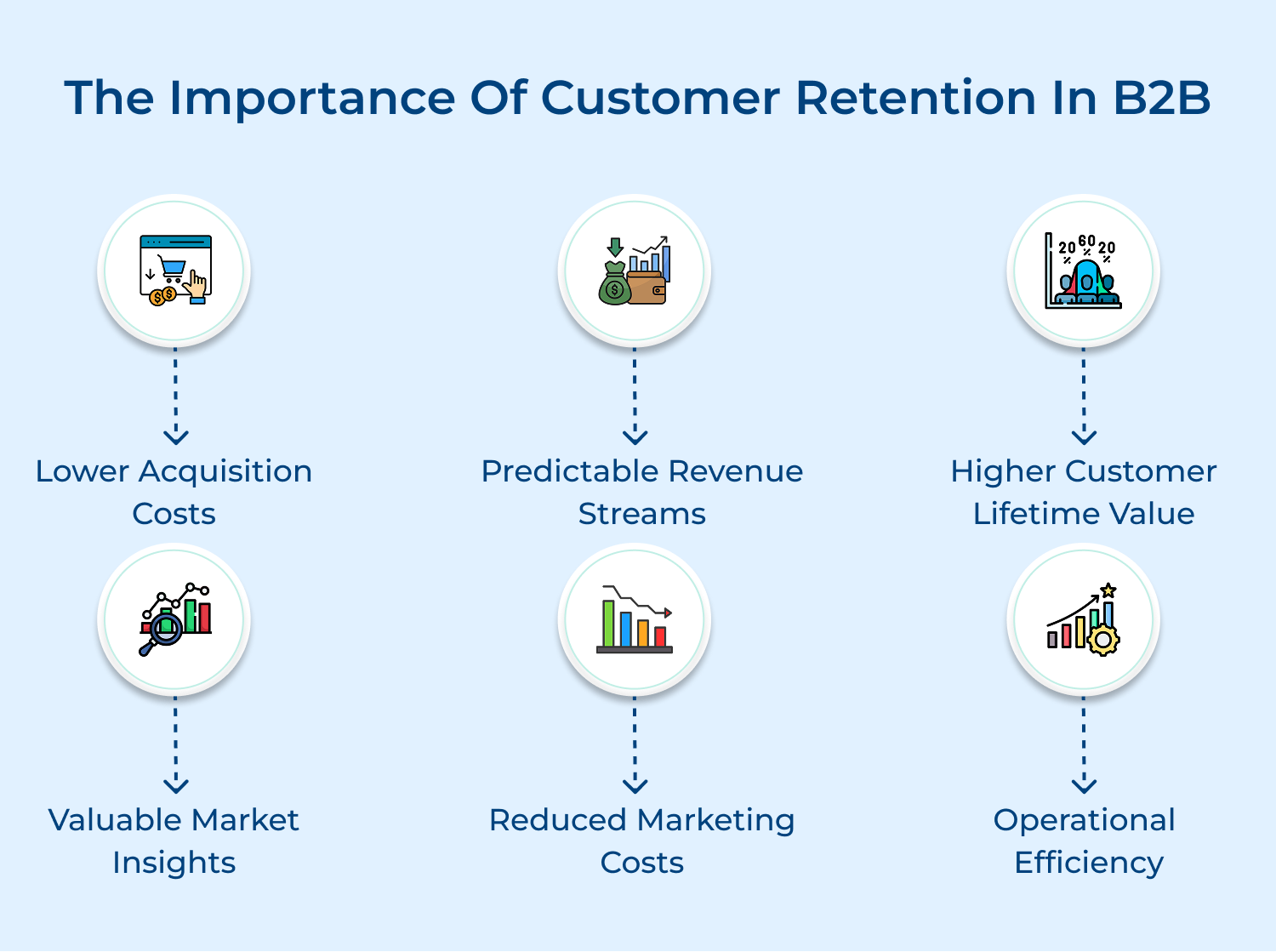
Lower Acquisition Costs
Retaining existing customers is significantly more cost-effective than acquiring new ones with studies showing it can cost up to five times more to attract a new customer than to keep an existing one. This directly impacts profitability and resource allocation.
Predictable Revenue Streams
Long-term B2B relationships create stable, predictable revenue streams through recurring orders and contracts. This reliability in income helps businesses better plan their growth strategies and manage cash flow more effectively throughout the year. Long-term B2B relationships create stable revenue streams through recurring orders and contracts.
Higher Customer Lifetime Value
Retained customers typically increase their purchasing volume over time as trust builds and relationships deepen. They’re more likely to explore additional product lines and services, leading to significant growth in customer lifetime value. Retained customers typically increase their purchasing volume over time as trust builds and relationships deepen.
Valuable Market Insights
Long-standing customers provide deep insights into market trends, product improvements and competitive positioning. Their feedback and ongoing dialogue help shape product development as well as service enhancements more effectively than sporadic new customer input.
Reduced Marketing Costs
Existing customers require less marketing investment to maintain relationships and generate sales. They’re already familiar with your offerings and processes, reducing the need for extensive marketing campaigns as well as educational content.
Operational Efficiency
Regular customers understand your processes and expectations, leading to smoother operations. This familiarity reduces service costs, minimizes misunderstandings and increases overall operational efficiency across both organizations.
Strong customer retention strategies help B2B companies build lasting relationships and reduce churn. Here are 10 proven tactics to keep your clients engaged and loyal.
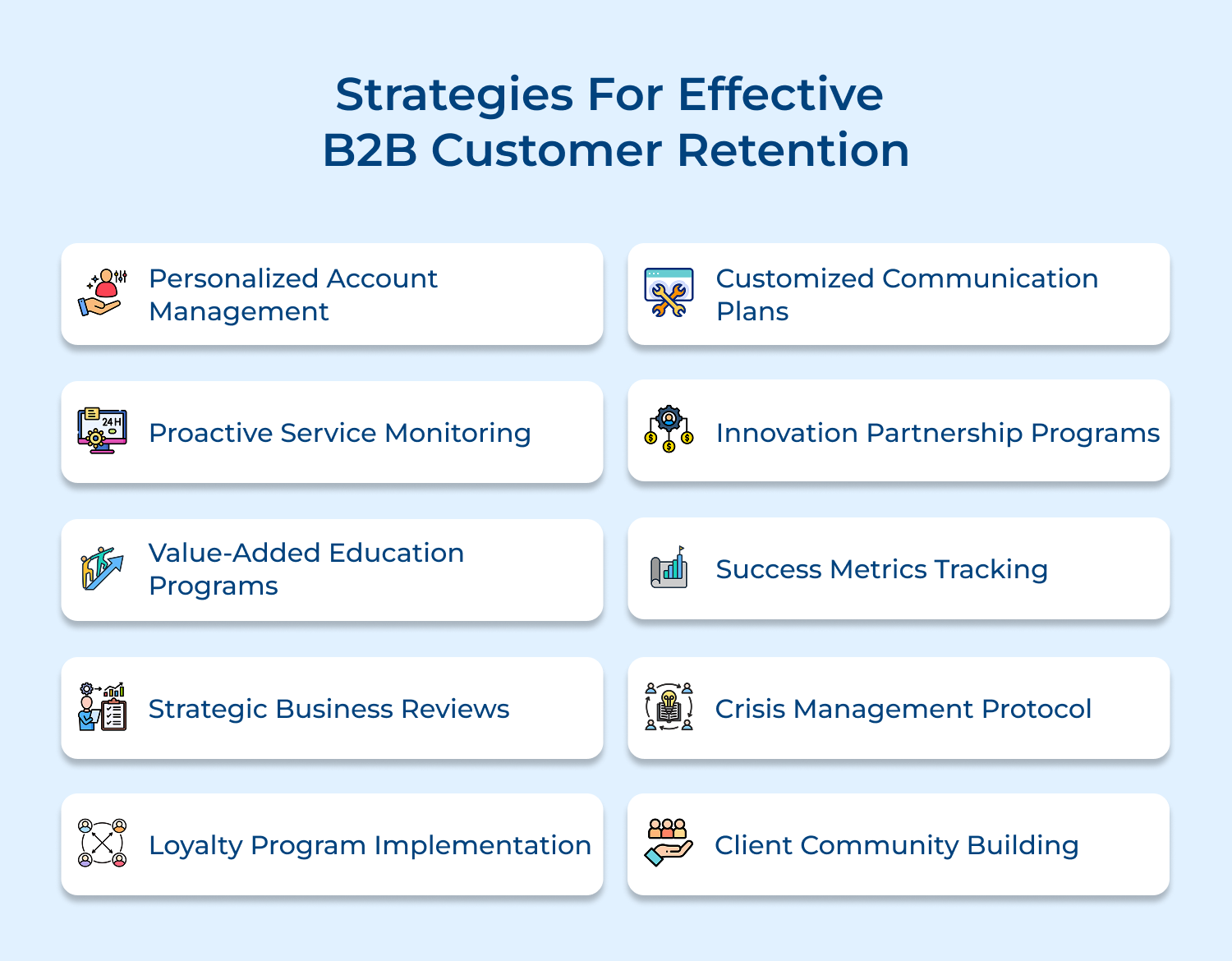
In B2B, one-size-fits-all just doesn’t work, clients want to feel seen and supported. That’s where dedicated account management comes in.
Assigning a specific account manager who truly understands the client’s goals, challenges and industry creates a deeper, more strategic relationship. This person becomes the go-to advisor, solving problems quickly and offering tailored guidance. It’s a powerful way to build trust as well as long-term loyalty.
Match managers based on industry knowledge and client scale, set up regular check-ins, QBRs, as well as planning sessions. Keep track of key insights and build custom growth plans to show clients you’re invested in their success.
Actionable Tips:
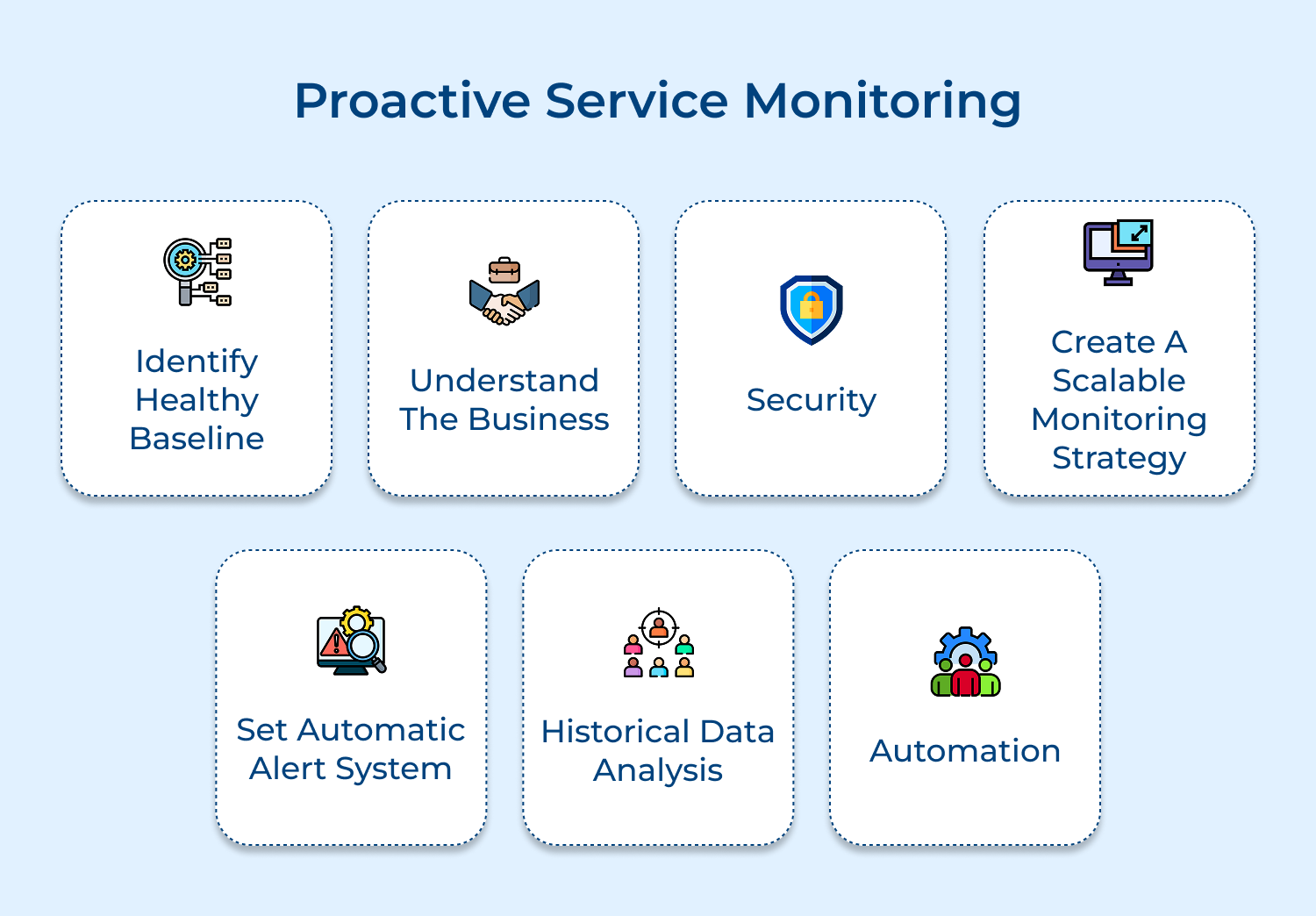
Staying ahead of problems is always better than scrambling to fix them. That’s why proactive monitoring is a game-changer for B2B retention. By keeping an eye on service usage, satisfaction levels and potential red flags, you can spot issues early before clients even notice. It shows you’re invested in their success and keeps their experience smooth.
Set up automated monitoring for key performance metrics, create alerts for unusual activity, and review usage data regularly. Most importantly, reach out with helpful insights and solutions before things go wrong. This proactive approach builds trust and keeps support costs in check.
Actionable Tips:
When clients truly understand your product as well as the industry, they get more value and they’re more likely to stick around. That’s why client education is key to strong retention.
Go beyond support by offering webinars, workshops and tailored content that helps clients sharpen their skills while fully leveraging your solution. It positions your brand as a partner, not just a provider.
Host regular webinars, build custom training for different user levels and share exclusive insights or research. Quarterly learning sessions with client teams can deepen engagement and show you’re genuinely invested in helping them succeed.
Actionable Tips:
Quarterly business reviews (QBRs) are a great way to stay aligned with your clients and show the value you’re delivering. These regular check-ins are about reviewing results, discussing goals and planning for what’s next.
Use this time to share data, highlight ROI and offer strategic ideas to help clients get even better outcomes. It’s also your chance to catch any concerns early and show you’re thinking long-term.
Prep thoroughly with usage insights, success stories and benchmarks. Most importantly, document action items as well as follow up. When done right, QBRs strengthen trust and keep the partnership moving forward.
Actionable Tips:
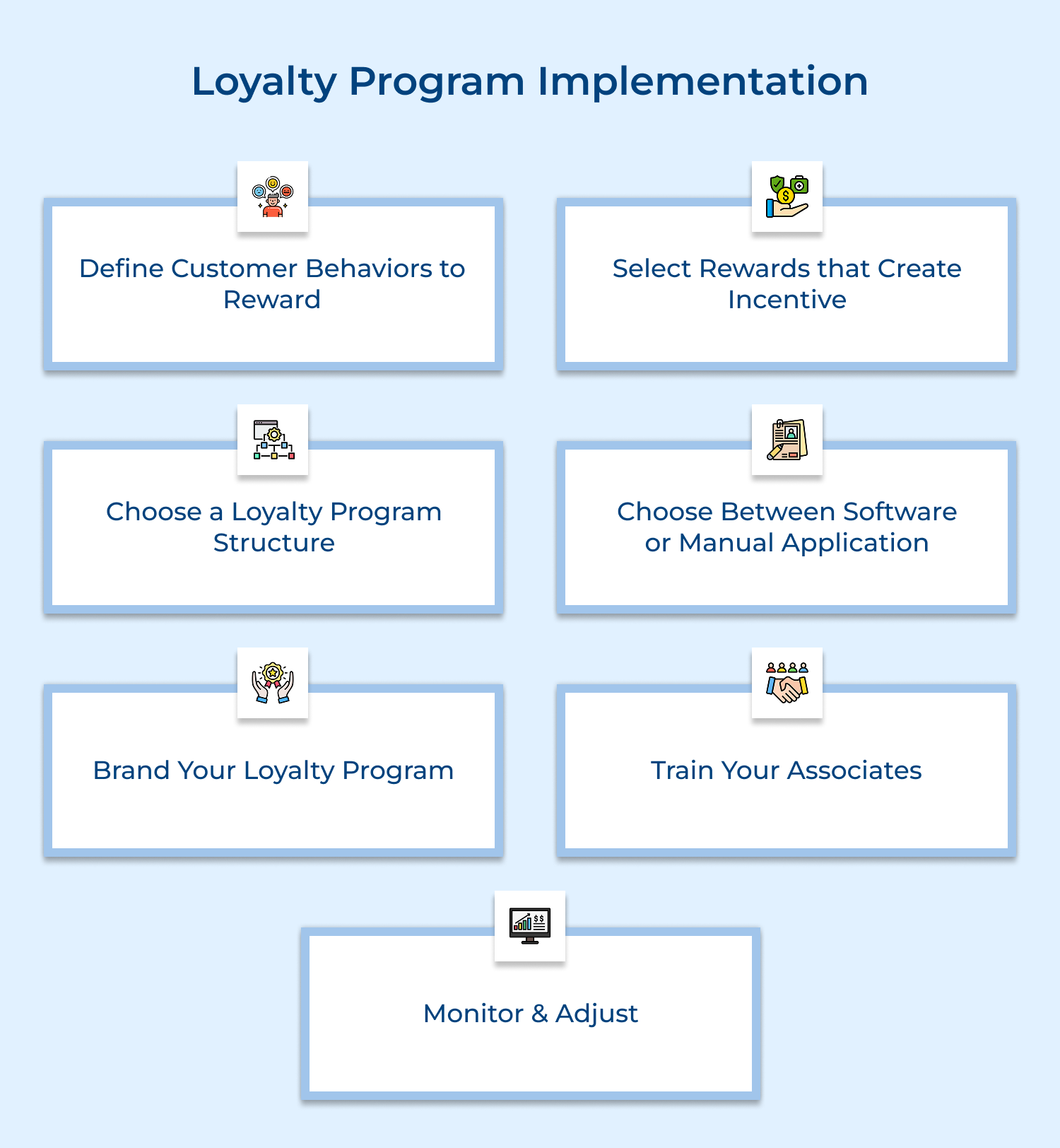
B2B loyalty programs work just as well in building stronger client relationships. By offering perks like priority support, early access to new features, or volume discounts, you give clients a clear reason to stay and grow with you.
The longer and more engaged they are, the more they get back. Hence, making your partnership harder to walk away from. Create tiered reward levels based on tenure or usage, and offer benefits that actually matter to your clients. Track engagement, share the value they’re earning and use the insights to spot upsell or expansion opportunities along the way.
Actionable Tips:
In B2B, one-size-fits-all communication just doesn’t cut it. Each client has different needs, preferences and decision-making roles. That’s why tailored communication is key to building strong, lasting relationships.
Understand who needs what, how often and through which channel, then deliver relevant reports accordingly. Whether it’s strategic updates for execs or how-to content for end users, personalized communication builds trust and keeps everyone aligned.
Maintain a communication calendar, track engagement and refine your approach based on feedback. It’s a simple but powerful way to stay connected and show clients you truly understand their world.
Actionable Tips:
Bringing clients into your innovation process not only builds stronger relationships, it helps you create better products.
When clients can share feedback, test new features early, or serve on advisory boards, they feel heard and valued. Plus, their input ensures your roadmap stays aligned with real-world needs. It’s a win-win: clients gain early access and influence, while you build more relevant, competitive offerings.
Set up clear channels for feedback, invite top clients to beta programs and involve them in strategic discussions. Don’t forget to acknowledge their contributions, recognition goes a long way in turning clients into true partners and brand advocates.
Actionable Tips:
Tracking client success is about showing real, measurable value. A well-defined system helps you clearly demonstrate ROI, goal progress and overall impact in a way that aligns with each client’s unique objectives.
When clients see proof that your solution is helping them succeed, they’re far more likely to stay and grow the partnership. Start by setting success metrics together, then track them using automated tools and share regular reports.
Use this data to guide improvements, spot risks early and back up renewal conversations with confidence. Revisit and refine these metrics annually to stay aligned as goals evolve.
Actionable Tips:
How you handle a crisis can make or break a client relationship. With the right process in place, even the toughest situations can become moments that build trust. That’s why having clear crisis management protocols is essential.
Define response steps for different issue types, set expectations around timelines and make sure your team knows exactly what to do. Keep communication clear and consistent to ensure clients are updated at every stage.
After resolving the issue, document everything and follow up to show accountability. Regularly review your process so you’re always ready to respond quickly and confidently.
Actionable Tips:
Building a strong client community adds value that goes far beyond your core offering. When clients can connect and learn from one another, it creates a sense of belonging while making your service even stickier.
Whether it’s through online forums, user groups, or in-person events, these peer networks help clients solve common challenges and build lasting relationships. Set up platforms where they can engage, host regular networking as well as knowledge-sharing sessions and recognize active contributors.
Supporting community-building efforts not only boosts loyalty but also positions your brand at the center of meaningful, client-driven conversations and collaboration.
Actionable Tips:
Understanding the common hurdles in B2B customer retention can offer valuable insights into what drives loyalty and what puts it at risk. Here are key challenges and how to overcome them.
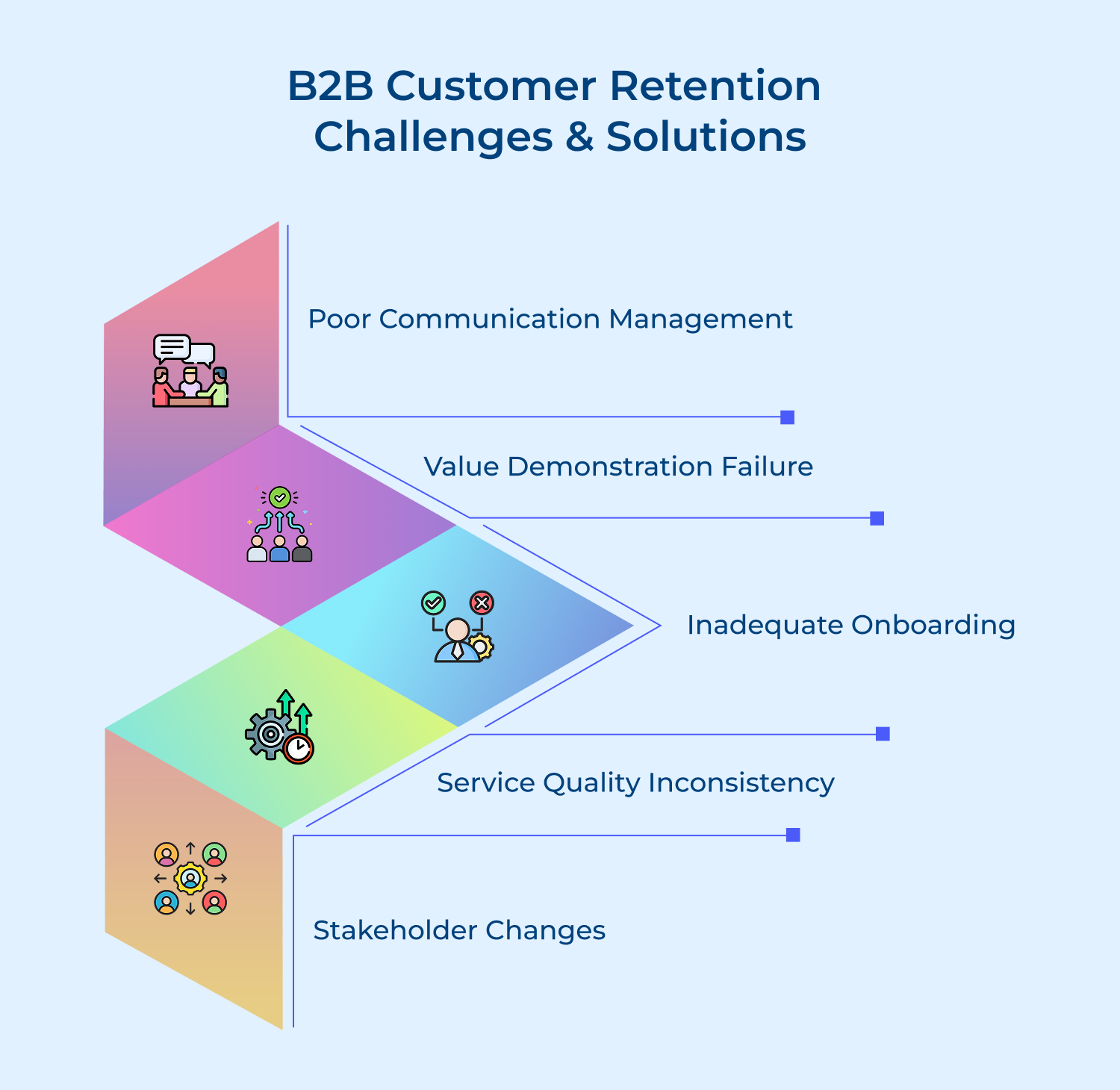
1. Poor Communication Management
Inconsistent communication, missed follow-ups and lack of proactive outreach lead to customer dissatisfaction as well as feelings of neglect. Multiple stakeholders within client organizations receive uncoordinated or conflicting messages.
How to Fix:
Implement a structured communication calendar for each client and assign dedicated communication coordinators. Create stakeholder maps with preferred communication channels. Set up automated follow-up systems and establish regular check-in schedules
Actionable Steps:
2. Value Demonstration Failure
Inability to clearly demonstrate ongoing value and ROI to clients, making it difficult for them to justify continued investment in products or services.
How to Fix:
Create customized ROI tracking dashboards and implement regular business impact reviews. Document and share success stories. Develop industry-specific value metrics and provide comparative benchmarking data
Actionable Steps:
3. Inadequate Onboarding
Poor initial setup and training lead to underutilization of products/services along with early dissatisfaction. Clients fail to realize full value due to incomplete implementation.
How to Fix:
Develop comprehensive onboarding programs and create role-specific training materials. Set clear milestones and success criteria. Provide dedicated onboarding support. Regular progress check-ins during initial period
Actionable Steps:
4. Service Quality Inconsistency
Variations in service delivery quality and response times create uncertainty as well as erode client confidence. Lack of standardized processes leads to inconsistent experiences.
How to Fix:
Establish clear service level agreements and implement quality monitoring systems.Create standard operating procedures. Regular staff training and updates on performance tracking & reporting
Actionable Steps:
5. Stakeholder Changes
Changes in key client personnel can disrupt relationships and require rebuilding trust as well as understanding. New stakeholders may have different priorities or preferred vendors.
How to Fix:
Maintain relationships at multiple levels. Create detailed account documentation and develop quick stakeholder orientation programs. Regular relationship mapping and proactive engagement with new stakeholders
Actionable Steps:
Measuring customer retention success helps you understand the true impact of your efforts and uncover areas for improvement. Here’s how to track what really matters.
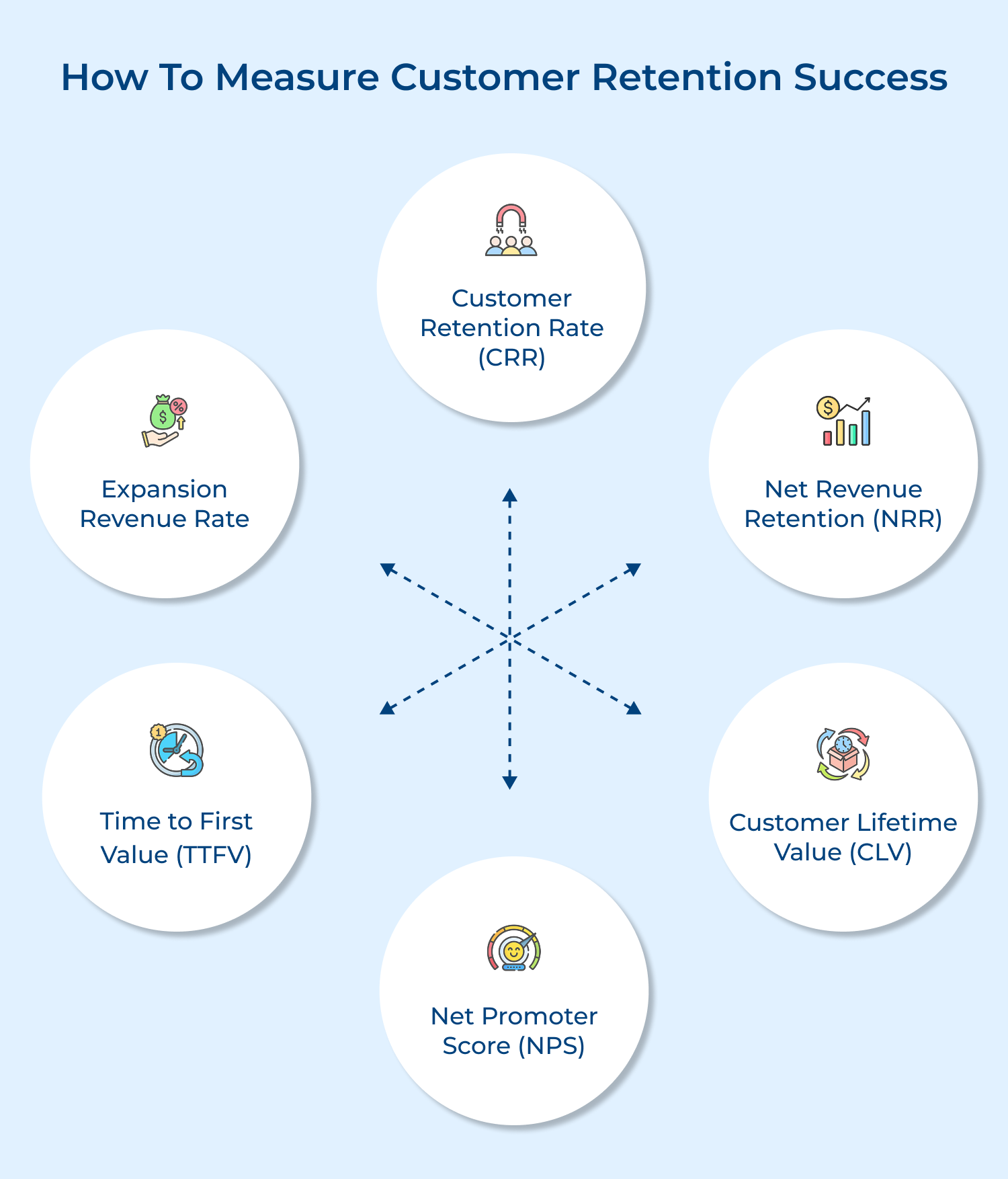
Customer Retention Rate (CRR)
A fundamental performance indicator calculating the percentage of customers staying with your business over a defined period. The formula runs: CRR = ((End Customers – New Customers) / Starting Customers) × 100. Monitoring trends reveals patterns in customer loyalty and retention strategy effectiveness. Most B2B companies measure CRR quarterly or annually to gauge long-term business health.
Net Revenue Retention (NRR)
Revenue tracking from existing customers encompasses expansions, upgrades and cross-sells, minus contractions or churn. An NRR exceeding 100% signals revenue growth from existing customers, even excluding new business. SaaS and subscription-based businesses rely on NRR to evaluate sustainable growth patterns as well as measure account expansion achievements.
Customer Lifetime Value (CLV)
Projected total revenue expected from a customer throughout their relationship with your business stands central to CLV calculations. Key factors include average purchase value, frequency and customer lifespan. CLV insights drive strategic decisions about retention investment across customer segments and justify customer success initiatives. Ongoing measurement shows the direct impact of retention strategies on customer profitability.
Net Promoter Score (NPS)
Customer loyalty measurement comes through asking clients to rate their likelihood of recommending your product or service from 0-10. NPS calculations subtract the percentage of detractors (0-6) from promoters (9-10). Periodic NPS surveys reveal early churn risk indicators and spotlight areas needing customer experience enhancement.
Time to First Value (TTFV)
Speed of customer achievement in reaching their first meaningful outcome directly correlates with retention success. Fast TTFV rates link strongly to higher retention as customers quickly seeing value tend to stay longer. TTFV monitoring guides onboarding optimization and flags at-risk customers before value realization gaps emerge.
Expansion Revenue Rate
Additional revenue generated through upsells, cross-sells, or upgrades from existing customers provides crucial growth indicators. Calculations divide new revenue from existing customers by previous period total revenue. Strong expansion rates indicate high customer satisfaction and product stickiness while demonstrating retention strategy effectiveness in driving business growth beyond baseline revenue maintenance.
B2B customer retention plays a critical role in sustaining growth and profitability. Personalized strategies, proactive support and consistent value delivery help businesses forge strong, long-lasting relationships with their clients.
Retaining customers boosts revenue, builds brand loyalty while encouraging positive word-of-mouth. Focusing on retention ensures competitiveness and builds a stable foundation for future business success.

How is B2B customer retention different from B2C?
B2B customer retention involves longer sales cycles, higher contract values and more complex relationships with multiple stakeholders within each client organization. B2B relationships often require dedicated account management, customized solutions and strategic partnerships. The focus lies on maintaining long-term business relationships rather than individual consumer transactions, making the retention process more relationship-driven and strategic.
What is B2B customer churn?
B2B customer churn represents the rate at which business customers stop using your products or services within a specific timeframe. Churn can occur through contract cancellations, non-renewals, or significant downgrades in service levels. The impact of B2B churn is typically more severe than B2C due to higher customer acquisition costs and longer sales cycles to replace lost accounts.
How to Calculate Churn Rate ?
The standard formula for calculating churn rate is: (Lost Customers during Period / Total Customers at Start of Period) × 100. For example, if you start with 200 customers and lose 10 during the quarter, your churn rate would be 5%. Many businesses track both customer churn and revenue churn separately to understand the full impact on business health.
Who should be concerned with customer retention?
Every department in a B2B organization should prioritize customer retention, from sales and marketing to product development as well as customer success teams. Leadership must champion retention initiatives while account managers maintain direct relationships. Finance teams monitor retention metrics and product teams ensure solutions continue meeting evolving customer needs. Support staff plays crucial roles in day-to-day customer satisfaction.
What is a good B2B retention rate?
Industry standards suggest B2B companies should aim for annual retention rates between 85% to 90%. Software and SaaS companies often target even higher rates of 90-95%. Top-performing enterprises achieve rates above 95%. However, acceptable retention rates vary by industry, product complexity, contract value and market maturity. Regular benchmarking against industry peers provides better context for performance evaluation.
 https://omni24.io/wp-content/uploads/2026/08/AI-Customer-Service-Agents.png
1256
2400
Webvision Solution
https://omni24.io/wp-content/uploads/2023/04/Omni-Logo-1.svg
Webvision Solution2026-09-21 04:48:512026-09-21 04:48:51How to Build an AI Customer Service Agents: 8 Key Steps
https://omni24.io/wp-content/uploads/2026/08/AI-Customer-Service-Agents.png
1256
2400
Webvision Solution
https://omni24.io/wp-content/uploads/2023/04/Omni-Logo-1.svg
Webvision Solution2026-09-21 04:48:512026-09-21 04:48:51How to Build an AI Customer Service Agents: 8 Key Steps https://omni24.io/wp-content/uploads/2026/08/Omnichannel-Conversational-AI.png
1256
2400
Tushar Joshi
https://omni24.io/wp-content/uploads/2023/04/Omni-Logo-1.svg
Tushar Joshi2026-09-16 03:51:072026-09-16 03:51:07How to Build Omnichannel Conversational AI Strategy
https://omni24.io/wp-content/uploads/2026/08/Omnichannel-Conversational-AI.png
1256
2400
Tushar Joshi
https://omni24.io/wp-content/uploads/2023/04/Omni-Logo-1.svg
Tushar Joshi2026-09-16 03:51:072026-09-16 03:51:07How to Build Omnichannel Conversational AI Strategy https://omni24.io/wp-content/uploads/2026/08/Customer-Service-Teams.png
1256
2400
Tushar Joshi
https://omni24.io/wp-content/uploads/2023/04/Omni-Logo-1.svg
Tushar Joshi2026-09-15 04:01:522026-09-15 04:02:16How to Build Customer Service Teams: 6 Key Steps
https://omni24.io/wp-content/uploads/2026/08/Customer-Service-Teams.png
1256
2400
Tushar Joshi
https://omni24.io/wp-content/uploads/2023/04/Omni-Logo-1.svg
Tushar Joshi2026-09-15 04:01:522026-09-15 04:02:16How to Build Customer Service Teams: 6 Key Steps
Whether it’s about acquire, engage or support – Omni24 covers all your customer engagement needs in one complete platform.

Copyright ©2026 Veemo All rights reserved.
CA, Los Angeles, Hall Ave, 19011