How to Implement Customer Experience (CX) Maturity Model
Discover how a customer experience maturity model helps organizations benchmark, improve, and sustain exceptional CX for long-term growth.

Discover how a customer experience maturity model helps organizations benchmark, improve, and sustain exceptional CX for long-term growth.
Many organizations face the same challenge, customer service feels disconnected. Teams operate in silos and customers get bounced between channels, leading to frustrating, inconsistent experiences.
Without a clear framework, companies end up making scattered improvements that don’t really move the needle. Meanwhile, competitors with structured customer experience strategies pull ahead. That’s where the customer experience maturity model comes in. It offers a practical roadmap to help you shift from reactive fixes to a unified, customer-first approach.
Here, we’ll walk you through how to assess your current state, understand the key stages of maturity as well as implement best practices that actually work.
A customer experience maturity model is essentially a roadmap that shows organizations where they currently stand in their journey of delivering exceptional customer experiences. These models help companies understand their current capabilities and identify specific steps needed to reach higher levels of customer-centricity.
The model typically uses assessment frameworks that evaluate your organization across multiple dimensions like strategy and leadership commitment to customer experience. Companies receive scores or ratings that place them at specific maturity stages. This creates a clear picture of strengths and gaps while providing actionable guidance for improvement efforts.
Key objectives:
Understanding the advantages helps organizations make informed decisions about implementing structured customer experience frameworks.
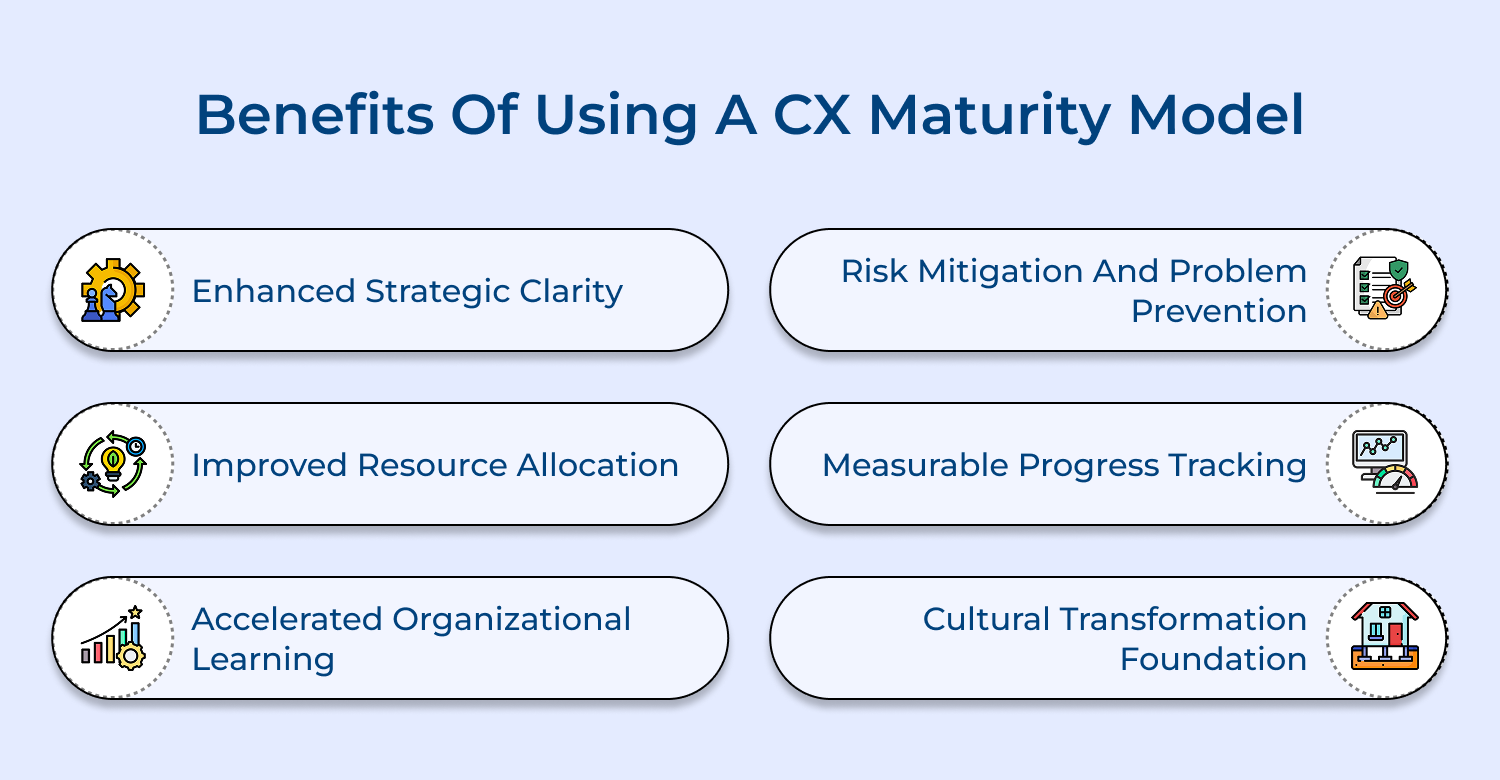
Enhanced Strategic Clarity
These models transform vague customer experience goals into concrete actionable steps. Instead of wondering what to improve next, your organization gains a clear roadmap with specific milestones and measurable outcomes that guide decision-making processes.
Improved Resource Allocation
Rather than spreading efforts across random initiatives you can focus investments where they create maximum impact. The model reveals which areas need immediate attention and which can wait helping you prioritize budget as well as human resources effectively.
Accelerated Organizational Learning
Teams develop a deeper understanding of customer experience principles through structured assessment processes. This creates shared vocabulary and common frameworks that improve collaboration between departments while building internal expertise across your entire organization.
Risk Mitigation and Problem Prevention
Early identification of gaps prevents small issues from becoming major customer experience disasters. The model acts like an early warning system that helps you address weaknesses before they impact customer satisfaction or damage your brand reputation.
Employee Engagement and Alignment
When everyone understands the current maturity level and improvement goals teams become more motivated to contribute meaningfully. The model creates shared purpose across departments while helping employees see how their individual roles connect to broader customer experience objectives.
Cultural Transformation Foundation
The structured approach gradually shifts organizational mindset from internal focus to genuine customer-centricity. Regular assessments and improvement cycles embed customer thinking into daily operations while establishing new habits that persist even when leadership changes occur.
Quick fact! 73% of consumers rank experience as the top factor influencing their buying decisions. How to identify where your company stands today? Let’s explore:
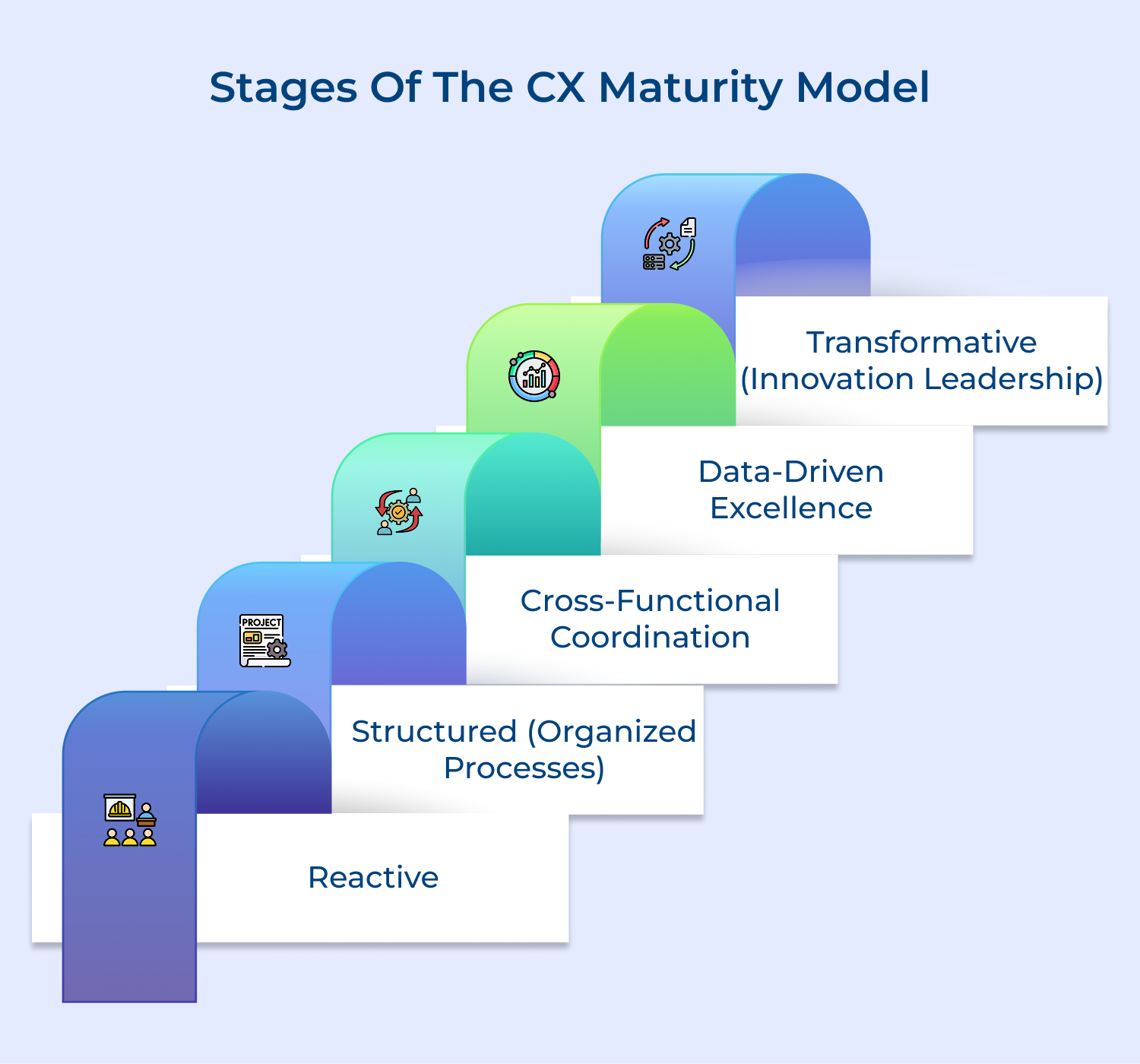
At this foundational level, organizations address customer issues only after problems occur. Teams operate in isolated departments with minimal communication and they manage customer feedback through basic support channels. Consider these critical questions to determine if your organization functions at this reactive stage.
52% of customers switch brands after just one negative experience. Companies here typically view customer service as a cost center rather than strategic advantage. Leadership focuses primarily on internal operations while customer experience happens accidentally rather than by design.
Your organization begins implementing formal customer service procedures and basic feedback collection systems. Dedicated customer service teams emerge with standardized response protocols while initial customer satisfaction surveys provide insights into performance gaps.
Consider these specific indicators that signal your organization has moved beyond reactive responses into structured approaches.
However customer experience remains largely departmental rather than company-wide priority. Different teams may still operate with conflicting approaches while leadership treats customer experience as important but not central to business strategy.
Customer experience becomes a shared responsibility across multiple departments working together toward common goals. Companies establish customer experience teams that coordinate efforts while implementing comprehensive feedback systems that capture insights from various touchpoints.
Leadership begins recognizing customer experience as a competitive differentiator rather than just operational necessity. Investment in technology platforms enables better customer data management while employee training programs focus on customer-centric thinking.
Advanced analytics drive decision-making as organizations use sophisticated tools to predict customer behavior and preferences. Companies at this stage see up to a 20% increase in customer retention and significant revenue growth. Real-time feedback systems enable immediate response to customer needs while personalization becomes standard practice across all interaction channels.
These specific capabilities distinguish organizations that have reached true optimization from those still working toward integration.
Customer experience metrics directly influence executive compensation and strategic planning decisions. The organization demonstrates consistent experience quality across all channels while continuously innovating based on emerging customer expectations.
Your company becomes an industry benchmark for customer experience innovation while consistently exceeding customer expectations through breakthrough approaches. Organizations at this level actively shape market standards and influence customer behavior patterns through exceptional service delivery.
These distinctive characteristics separate true industry leaders from companies that have simply optimized existing approaches.
These organizations view every customer interaction as an opportunity to create lasting emotional connections. Leadership demonstrates unwavering commitment to customer-centricity while culture naturally prioritizes customer success over short-term profits.
Here are eight essential steps to guide you in implementing a customer experience maturity model that will transform your company’s approach.
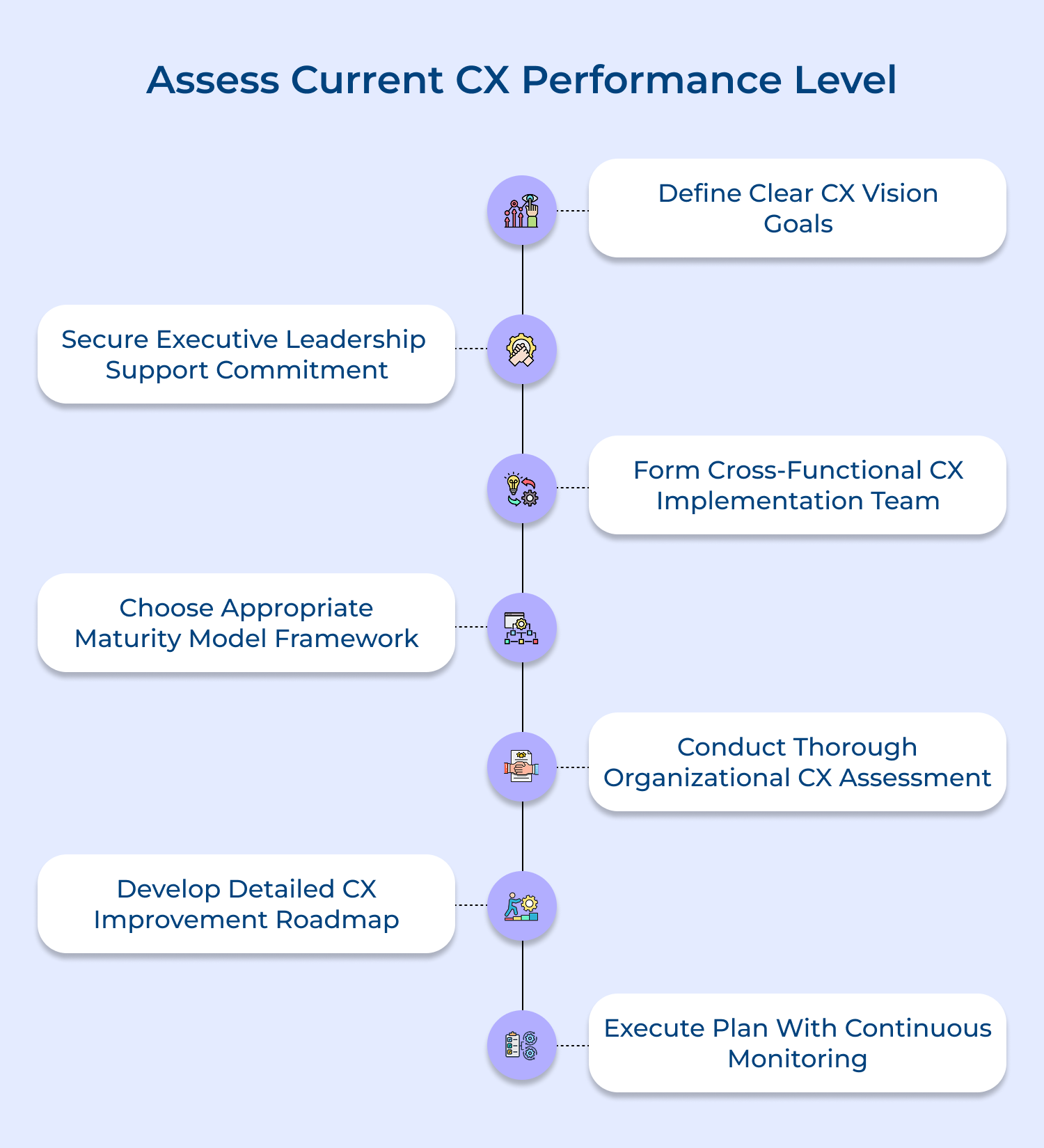
To truly improve as customer experience leaders, start by understanding where your organization stands today. Here’s how you can do it:
Once you finish this assessment, you’ll clearly see your strengths and weaknesses. Most importantly, you’ll uncover targeted opportunities to boost customer satisfaction and drive better business results as true customer experience leaders.
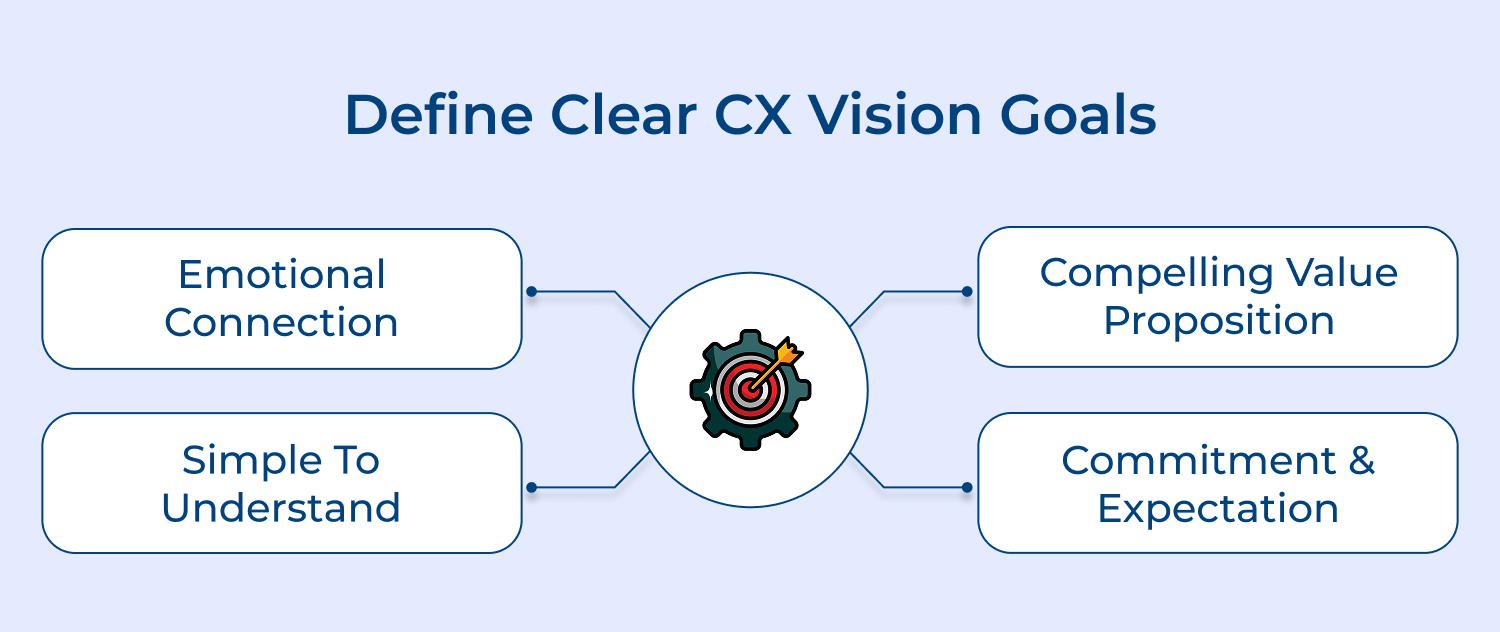
Creating a strong customer experience vision gives your team clear direction and motivation. Before you define your CX vision goals, ask yourself:
The checklist helps customer experience leaders align everyone internally and create goals that truly resonate. For inspiration, many top brands aim for:
Executive leadership support is key to making customer experience a top organizational priority. Here’s why it matters and how to secure it using a customer experience maturity assessment:
How to gain support:
This approach helps leaders see CX as a critical, high-impact business investment.
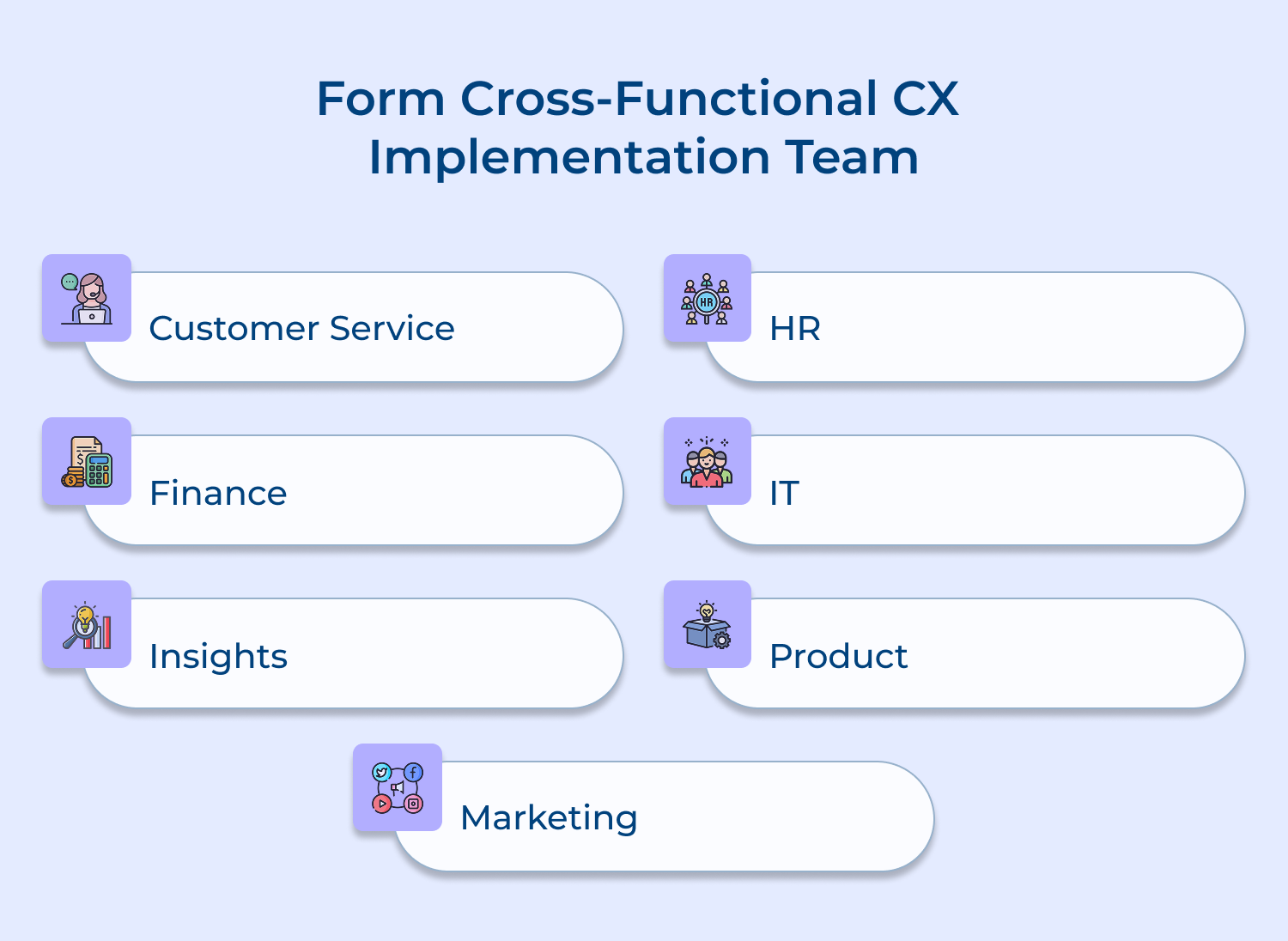
Building a diverse, cross-functional team is essential for customer experience leaders who want to break down silos and create seamless experiences. By bringing together people from different departments, you ensure every customer touchpoint is considered and no pain point is overlooked.
Think of this team as conductors, harmonizing efforts across the organization for a unified customer journey. This collaborative approach leads to well-rounded solutions, keeps everyone focused on shared CX goals and ultimately delivers better experiences for your customers.
Best practices include:
Choosing the right customer experience maturity model is crucial for boosting customer loyalty and making your CX efforts count. Here’s how customer experience leaders can make the best choice:
A well-chosen maturity model empowers you to drive real customer loyalty, not just complete another checklist.
The detailed evaluation reveals specific strengths and weaknesses across all customer experience dimensions while providing the foundation for targeted improvements.
Using multiple data collection methods ensures you capture a complete picture of customer experience performance from different perspectives and sources. Relying on single data sources creates blind spots that can lead to incomplete understanding and misguided improvement efforts.
Benchmarking against industry standards regularly helps you understand where your customer experience performance ranks compared to competitors and best-in-class organizations. This external perspective reveals whether your perceived strengths actually represent competitive advantages or merely meet basic industry expectations.
Turning your assessment insights into a structured plan is how customer experience leaders make real progress. Here’s how to build a practical roadmap:
This approach keeps everyone accountable, ensures steady progress and helps you systematically move toward higher customer experience maturity—one milestone at a time.
Executing your customer experience improvement plan takes both discipline and flexibility, especially as you work to boost your current customer experience maturity. Here’s how customer experience leaders can keep things on track:
These universal practices can accelerate your customer experience improvement journey regardless of your current maturity level. Apply them as principles that support your success.
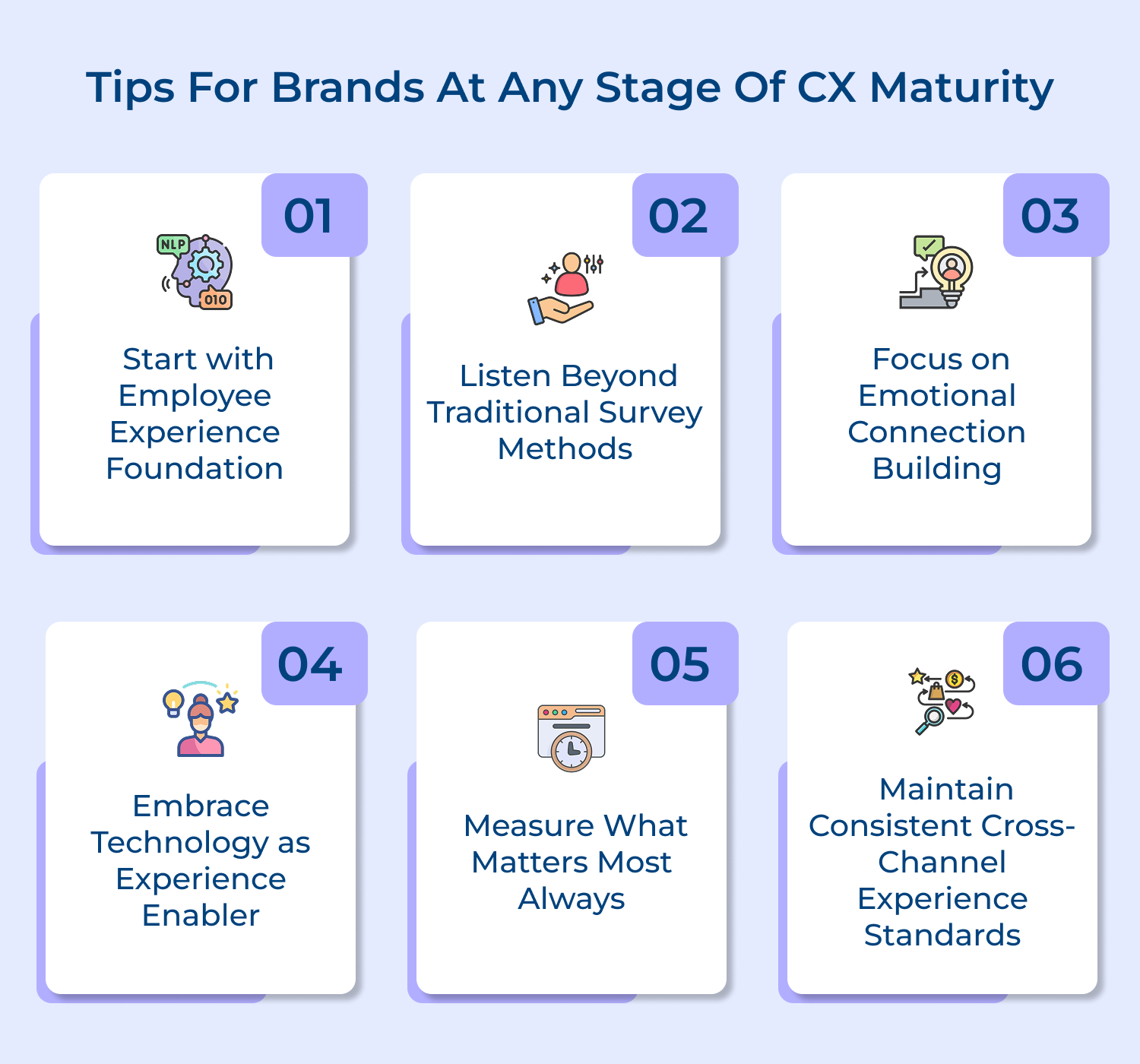
1. Start with Employee Experience Foundation
Your employees shape the customer experiences that define your brand. When they’re happy and engaged, they naturally deliver better service. Whereas, disengaged staff can undermine even the best customer experience strategies. Investing in employee satisfaction is investing in better customer outcomes.
2. Listen Beyond Traditional Survey Methods
Don’t just rely on standard satisfaction surveys. Expand your listening by monitoring social media and analyzing customer support conversations. This helps you capture authentic customer feelings and catch emerging issues in real time.
3. Focus on Emotional Connection Building
Customers remember how you made them feel more than the details of a transaction. Prioritize creating positive emotional experiences alongside solid service. Emotional bonds build loyalty and advocacy, while purely transactional relationships are easily lost to competitors.
4. Embrace Technology as Experience Enabler
Use technology to enhance human interactions, not replace them. Customers often prefer a mix of digital efficiency and personal touch. Smart tech removes friction from routine tasks and frees your team to build relationships.
5. Measure What Matters Most Always
Track metrics that impact business results, not just vanity numbers. Focus on customer lifetime value, retention rates and satisfaction scores to understand real experience impact.
6. Maintain Consistent Cross-Channel Experience Standards
Ensure customers get the same quality service whether they connect by phone, email, chat or in person. Inconsistent experiences confuse customers, while seamless omnichannel service shows professionalism and care throughout their journey.
The customer experience maturity model serves as your organization’s strategic compass, guiding transformation from reactive service approaches toward proactive customer-centric excellence. This systematic framework drives sustainable competitive advantage while creating measurable business value through enhanced customer relationships.
Success requires genuine commitment to systematic assessment, cross-functional collaboration, and continuous improvement efforts across your entire organization. Remember that customer experience maturity represents an ongoing journey rather than a final destination, demanding patience and persistence for lasting growth as well as transformation.

How to assess and prioritize progress in customer experience?
Start by conducting comprehensive baseline assessments using customer feedback surveys, employee interviews and process audits to understand your current capabilities. Then benchmark your performance against industry standards while mapping customer journey touchpoints to identify specific pain points as well as improvement opportunities for strategic prioritization.
What are the benefits of a customer experience management maturity model?
A maturity model provides structured roadmaps for systematic improvement while enabling organizations to measure progress objectively against established benchmarks. It helps prioritize resource allocation, reduces implementation risks, creates organizational alignment around customer-centric goals and demonstrates measurable business value through enhanced customer satisfaction.
What elements are part of the CXM maturity model?
Key elements include strategic leadership commitment, organizational culture assessment, customer feedback systems, technology infrastructure evaluation, employee training programs, and cross-functional collaboration processes. The model also encompasses customer journey mapping, performance measurement frameworks, governance structures and continuous improvement methodologies that work together comprehensively.
How to measure your CXM maturity?
Measurement involves evaluating multiple dimensions including customer satisfaction scores, Net Promoter Scores, employee engagement levels, process efficiency metrics and technology adoption rates. Combine quantitative data with qualitative assessments through stakeholder interviews, customer journey audits and capability evaluations to create comprehensive maturity scorecards for accurate assessment.
How to Use a Maturity Model to Guide Decision Making?
Use assessment results to identify capability gaps and prioritize improvement initiatives based on potential customer impact along with available resources. The model provides decision frameworks for technology investments, organizational restructuring, training programs and strategic planning while ensuring all choices align with your desired maturity level progression.
 https://omni24.io/wp-content/uploads/2026/08/AI-Customer-Service-Agents.png
1256
2400
Webvision Solution
https://omni24.io/wp-content/uploads/2023/04/Omni-Logo-1.svg
Webvision Solution2026-09-21 04:48:512026-09-21 04:48:51How to Build an AI Customer Service Agents: 8 Key Steps
https://omni24.io/wp-content/uploads/2026/08/AI-Customer-Service-Agents.png
1256
2400
Webvision Solution
https://omni24.io/wp-content/uploads/2023/04/Omni-Logo-1.svg
Webvision Solution2026-09-21 04:48:512026-09-21 04:48:51How to Build an AI Customer Service Agents: 8 Key Steps https://omni24.io/wp-content/uploads/2026/08/Omnichannel-Conversational-AI.png
1256
2400
Tushar Joshi
https://omni24.io/wp-content/uploads/2023/04/Omni-Logo-1.svg
Tushar Joshi2026-09-16 03:51:072026-09-16 03:51:07How to Build Omnichannel Conversational AI Strategy
https://omni24.io/wp-content/uploads/2026/08/Omnichannel-Conversational-AI.png
1256
2400
Tushar Joshi
https://omni24.io/wp-content/uploads/2023/04/Omni-Logo-1.svg
Tushar Joshi2026-09-16 03:51:072026-09-16 03:51:07How to Build Omnichannel Conversational AI Strategy https://omni24.io/wp-content/uploads/2026/08/Customer-Service-Teams.png
1256
2400
Tushar Joshi
https://omni24.io/wp-content/uploads/2023/04/Omni-Logo-1.svg
Tushar Joshi2026-09-15 04:01:522026-09-15 04:02:16How to Build Customer Service Teams: 6 Key Steps
https://omni24.io/wp-content/uploads/2026/08/Customer-Service-Teams.png
1256
2400
Tushar Joshi
https://omni24.io/wp-content/uploads/2023/04/Omni-Logo-1.svg
Tushar Joshi2026-09-15 04:01:522026-09-15 04:02:16How to Build Customer Service Teams: 6 Key Steps
Whether it’s about acquire, engage or support – Omni24 covers all your customer engagement needs in one complete platform.

Copyright ©2026 Veemo All rights reserved.
CA, Los Angeles, Hall Ave, 19011