How to Choose The Right Business Communication Channels
Strong communication channels boost customer satisfaction by offering convenience, building trust, ensuring loyalty and creating lasting business relationships.

Strong communication channels boost customer satisfaction by offering convenience, building trust, ensuring loyalty and creating lasting business relationships.
Poor communication channels create costly misunderstandings between teams while frustrating customers who cannot reach you when needed. In fact, businesses with just 100 employees lose an average of $420,000 per year due to miscommunication, severely impacting productivity and performance.
Think about miscommunication causing project delays or losing customers because they could not get timely responses. These failures happen daily without proper channel strategies, leading to decreased productivity.
Understanding the seven core business communication channels transforms how your business operates internally and serves customers externally. Each channel creates seamless communication experiences for everyone involved in your organization.
A business communication channel is the pathway or medium through which information flows between people within an organization and with external stakeholders like customers as well as partners. Consider it as the bridge that connects different parts of your business ecosystem and enables meaningful exchanges of ideas.
Effective communication channels directly fuel business growth by streamlining decision-making processes and strengthening relationships with customers. When information flows smoothly (both internally and externally) businesses can respond faster to opportunities while building deeper trust with their audience.
The beauty of well-designed communication channels lies in their ability to create a seamless flow of information. When your internal teams can share updates quickly and your customers can reach you easily you’re building the foundation for sustainable growth as well as stronger business relationships.
Key objectives:
Companies with effective internal communication are 3.5 times more likely to outperform their competitors in revenue growth. Let’s understand the importance of business communication channels.
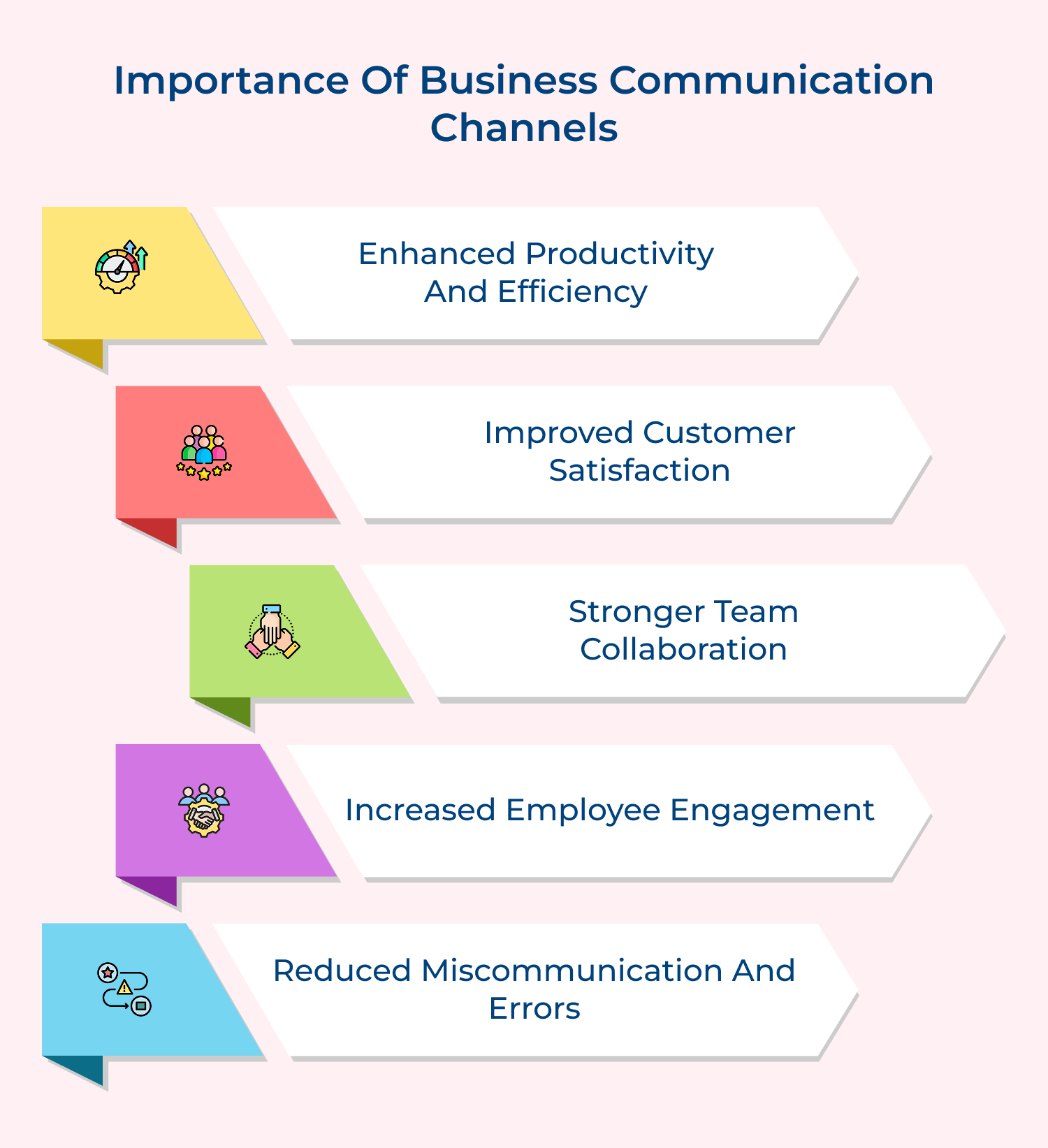
Enhanced Productivity and Efficiency
Digital communication channels streamline workflows by reducing bottlenecks and wasted time. Instant messaging platforms ensure quick updates and collaboration, allowing employees to focus on meaningful work rather than constantly searching for scattered details.
Improved Customer Satisfaction
Digital communication channels such as email, phone and chat provide customers with options to connect through their preferred method. Instant messaging platforms add convenience, creating personalized interactions that make customers feel valued and understood.
Stronger Team Collaboration
Digital communication channels improve cross-functional teamwork by breaking silos. Instant messaging platforms enable fast coordination between departments, ensuring marketing, sales and customer service collaborate seamlessly.
Increased Employee Engagement
Clear digital communication channels connect employees to company goals and values. Instant messaging platforms make interactions faster and easier, encouraging idea sharing. This transparency builds trust, making employees feel involved, motivated and more engaged overall.
Reduced Miscommunication and Errors
Structured digital communication channels minimize lost or misinterpreted updates. Instant messaging platforms provide clarity and speed, ensuring everyone follows established protocols. This consistency reduces confusion, avoids costly mistakes and builds greater organizational efficiency.
Internal and external communication channels serve different audiences and purposes which means they require distinct approaches. Let’s explore a few of them now:
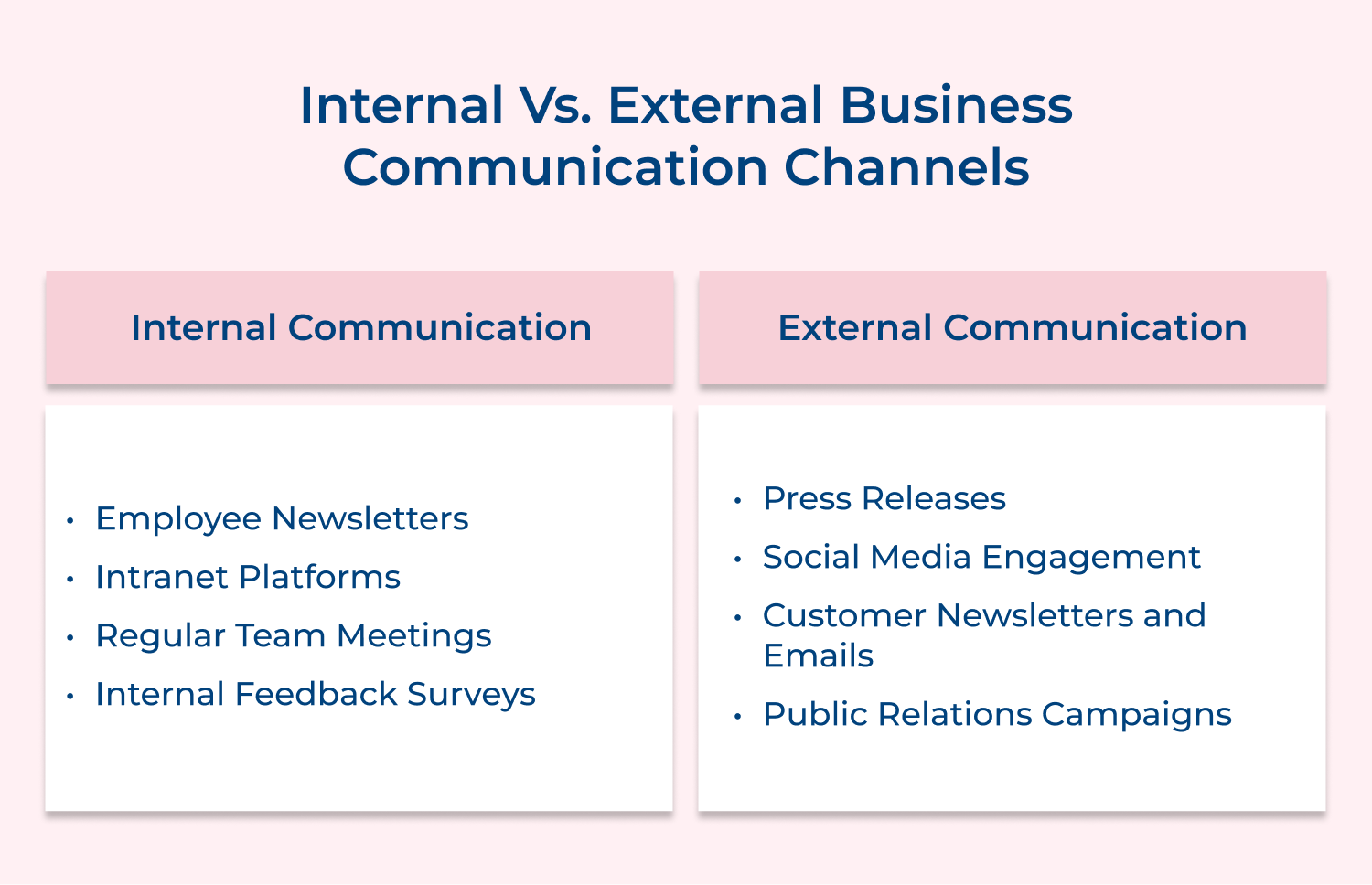
Audience and Purpose Focus
Internal communication targets employees who already understand company culture and processes. Messaging platforms help share updates and coordinate tasks quickly, ensuring teams work toward common goals efficiently without needing overly formal communication styles or external-facing detail.
External communication reaches customers and partners who require polished, informative content. Social media platforms help build trust, deliver persuasive messages and showcase brand value. Unlike internal updates, these channels focus on credibility and strengthening long-term external relationships.
Communication Tone and Style
Internal channels encourage casual, direct conversations using company jargon. Messaging platforms allow quick exchanges and informal language, which employees easily understand. This relaxed tone builds trust and strengthens workplace collaboration by keeping communication fast as well as effective.
External communication demands professionalism, consistency and polished wording. Social media platforms amplify brand reputation, so tone must remain clear and credible. Formal messages appeal to diverse audiences, protect reputation and ensure consistency across every external customer interaction.
Speed and Timing Requirements
Internal communication relies on instant access and real-time updates. Messaging platforms support immediate responses, ensuring teams can collaborate quickly. This speed prevents delays, boosts productivity and allows faster decision-making across projects as well as daily operations without unnecessary bottlenecks.
External communication is strategically timed rather than immediate. Social media platforms follow planned schedules to reach audiences at peak engagement. Careful timing maximizes visibility, builds credibility and ensures messages align with customer expectations as well as marketing objectives effectively.
Control and Message Management
Internal communication offers flexibility and control with errors corrected immediately. Messaging platforms allow instant clarifications, reducing misunderstandings. Teams can quickly adjust communication styles, ensuring updates remain clear, workflows smooth and employees aligned with shared goals consistently.
External communication requires careful review and management. Once shared on social media platforms, mistakes are public and harder to correct. Structured approval processes ensure accuracy, consistency and brand protection while maintaining audience trust.
Organizations now rely on a wide mix of channels to connect internally and externally. For example, 92% of businesses use email company-wide, while live events see 97–98% effectiveness.
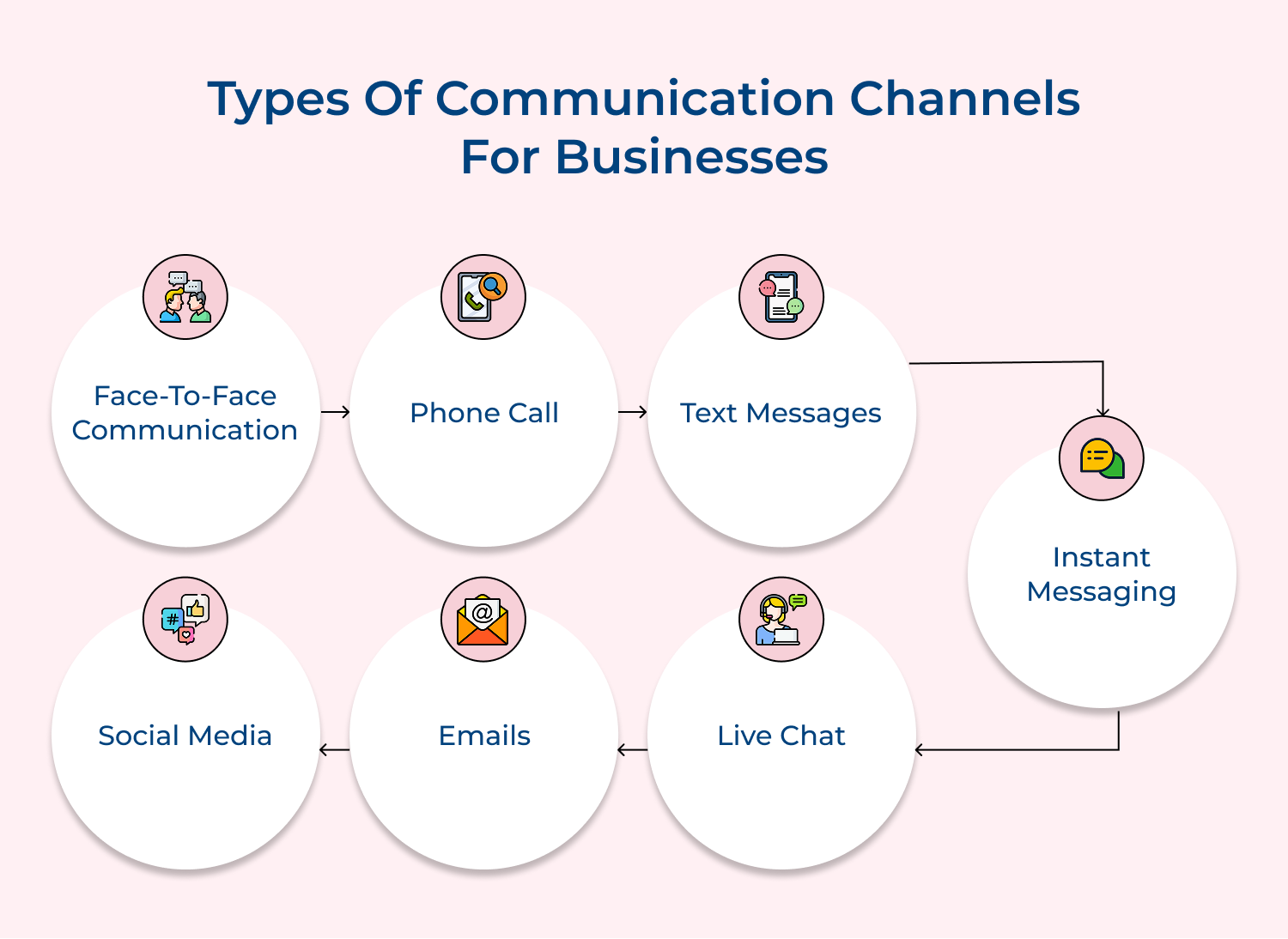
Face-to-face communication involves direct personal interaction where participants can see each other’s expressions and body language. This channel remains essential because it builds trust and enables immediate feedback through non-verbal cues.
Are you wondering whether face-to-face communication works for internal teams or external clients? The answer is both since this versatile channel helps employees collaborate effectively while allowing businesses to build stronger relationships with customers and partners.
Here are 2 optimal scenarios when face-to-face communication becomes your best choice:
How can you make face-to-face communication more effective in your business? The key lies in preparing an agenda beforehand and creating an environment where everyone feels comfortable sharing their thoughts openly.
Phone calls provide real-time voice communication that bridges geographical distances while maintaining personal connection through tone and inflection. It becomes necessary when you need immediate response or when written communication might create misunderstandings that voice clarity can prevent.
Phone calls serve as a bridge between internal coordination and external relationship building. Let me break down how this communication channel works in both contexts:
Internal phone call use cases:
External phone use cases:
Phone calls remain one of the most effective channels for building genuine business relationships regardless of distance or time constraints.
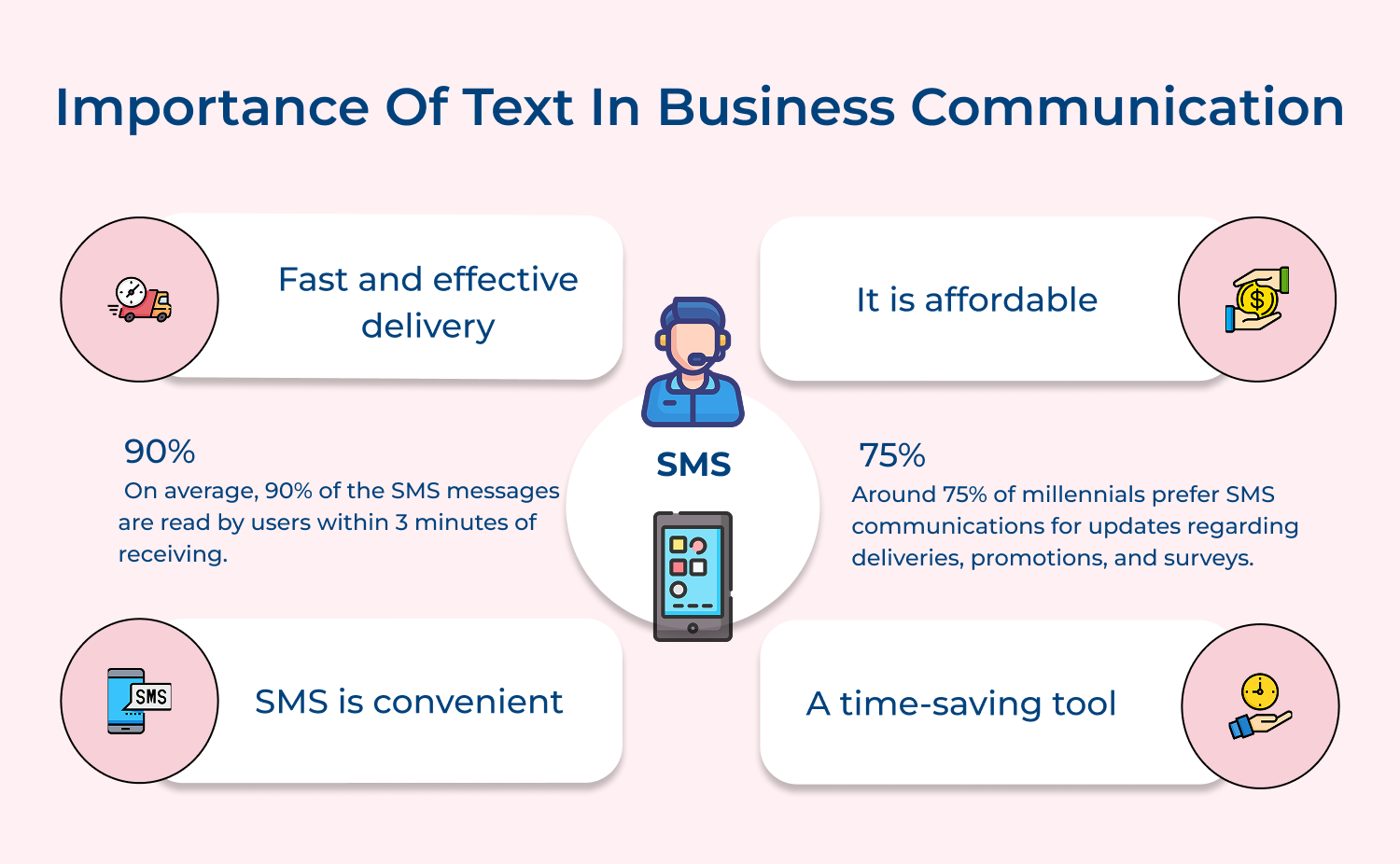
Text messaging delivers short written messages instantly to mobile devices making it perfect for time-sensitive communications that require immediate attention. This channel has become important because it reaches people wherever they are and typically gets read within minutes.
Understanding text messaging effectiveness requires answering these five key questions about business implementation:
These questions help you understand the boundaries and best practices for text messaging in professional settings. Knowing when and how to use this channel prevents miscommunication while maximizing its impact.
Consider this practical example of effective business text messaging in action. A dental office sends appointment reminders two days before scheduled visits which reduces no-shows by helping patients remember their commitments and reschedule if needed.
Pro tips:
Instant messaging enables real-time text-based conversations through platforms like Slack or Microsoft Teams where multiple people can participate simultaneously. This business messaging app creates immediate dialogue opportunities while maintaining written records of important discussions and decisions.
Pros:
Cons:
Think of instant messaging as the digital equivalent of popping your head into someone’s office for a quick question. While this convenience helps maintain momentum on projects it requires boundaries to prevent communication overload that reduces overall effectiveness.
Here are practical customer communication scenarios where instant messaging delivers exceptional value:
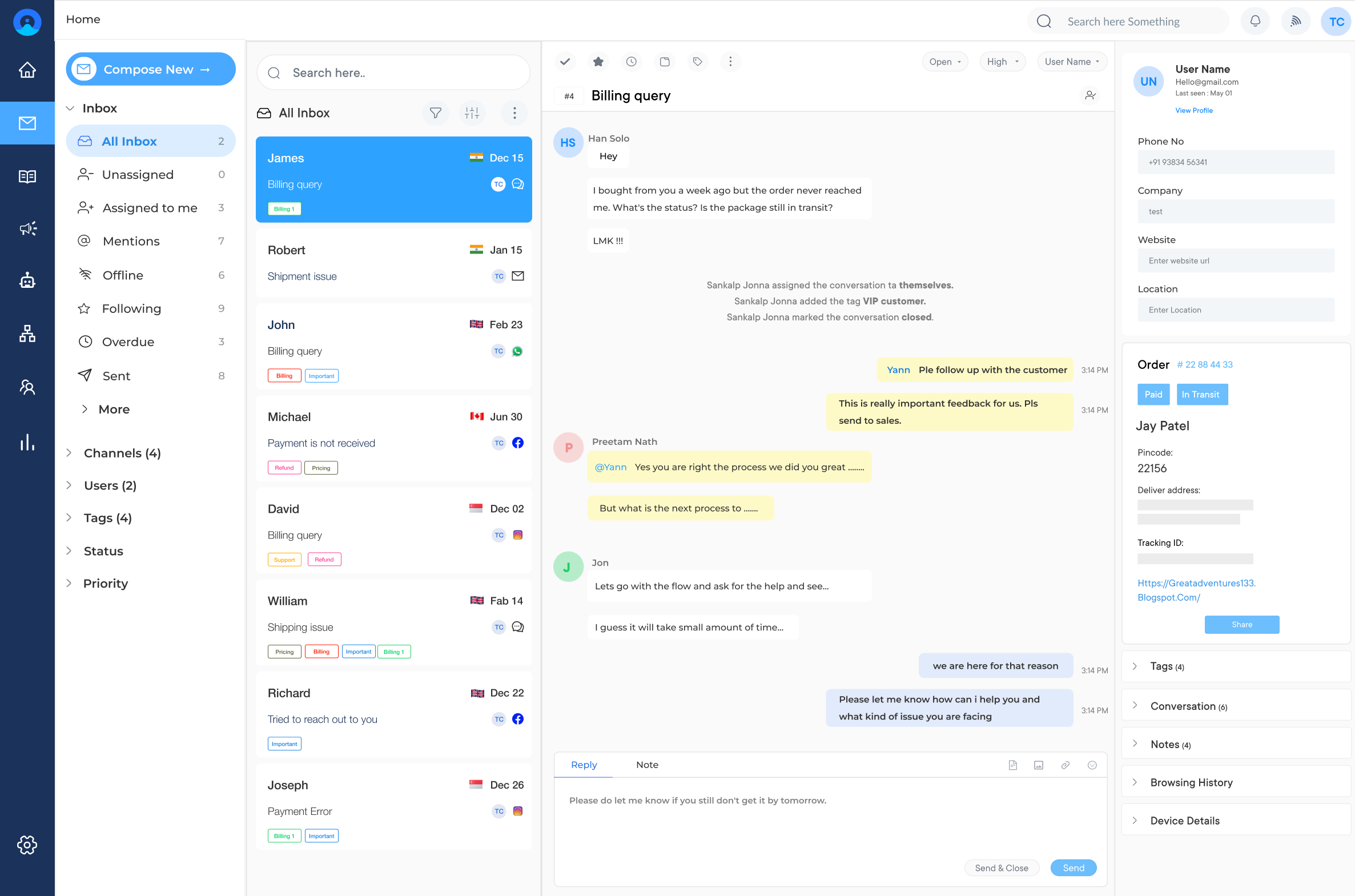
Live chat provides real-time website-based conversations between businesses and visitors through embedded chat widgets that appear on web pages. This channel stands out as one of the best communication tools because it captures potential customers at the exact moment they have questions or concerns about your products or services.
Website Customer Support Assistance
Live chat transforms website visitors into satisfied customers by providing immediate help when they encounter problems or have questions about your offerings. Support agents can guide users through complex processes while they navigate your website which creates a seamless experience that reduces frustration and abandonment rates.
Product Demonstrations and Consultations
Sales teams use live chat to offer personalized product demonstrations and consultations that address specific customer needs as well as preferences in real-time. This approach allows businesses to showcase relevant features and benefits while building trust through direct interaction that feels more personal than automated responses.
Email communication involves sending structured digital messages through electronic mail systems that allow businesses to share detailed information with customers and team members. This channel remains essential because it provides a professional documentation trail while enabling businesses to reach large audiences with personalized content that recipients can review at their convenience.
Consider these five essential questions to determine if email communication deserves priority in your business strategy:
These questions help you evaluate whether email communication aligns with your business model and customer expectations. Understanding your audience’s communication preferences ensures you invest time and resources in channels that actually drive engagement as well as conversions rather than annoying potential customers.
Essential email types:
Start with automated welcome sequences and transactional emails before expanding into complex nurture campaigns that require ongoing content creation and strategic planning.
Social media encompasses platforms like Facebook and LinkedIn where businesses can share content as well as engage with audiences through posts/comments. This channel has become necessary because it allows companies to build brand awareness while creating authentic connections with customers.
The answer depends on your target audience since younger demographics expect brands to maintain an active social presence while B2B companies often find LinkedIn more valuable than Instagram for professional networking. Proven implementation tips to maximize it effectiveness:
When should your business prioritize social media communication over other channels? The sweet spot occurs when you need to build brand awareness among specific demographics while creating opportunities for customers to share their experiences and recommend your business to their personal networks naturally.
Selecting the right communication channels for your business requires careful consideration of your audience needs and organizational goals.
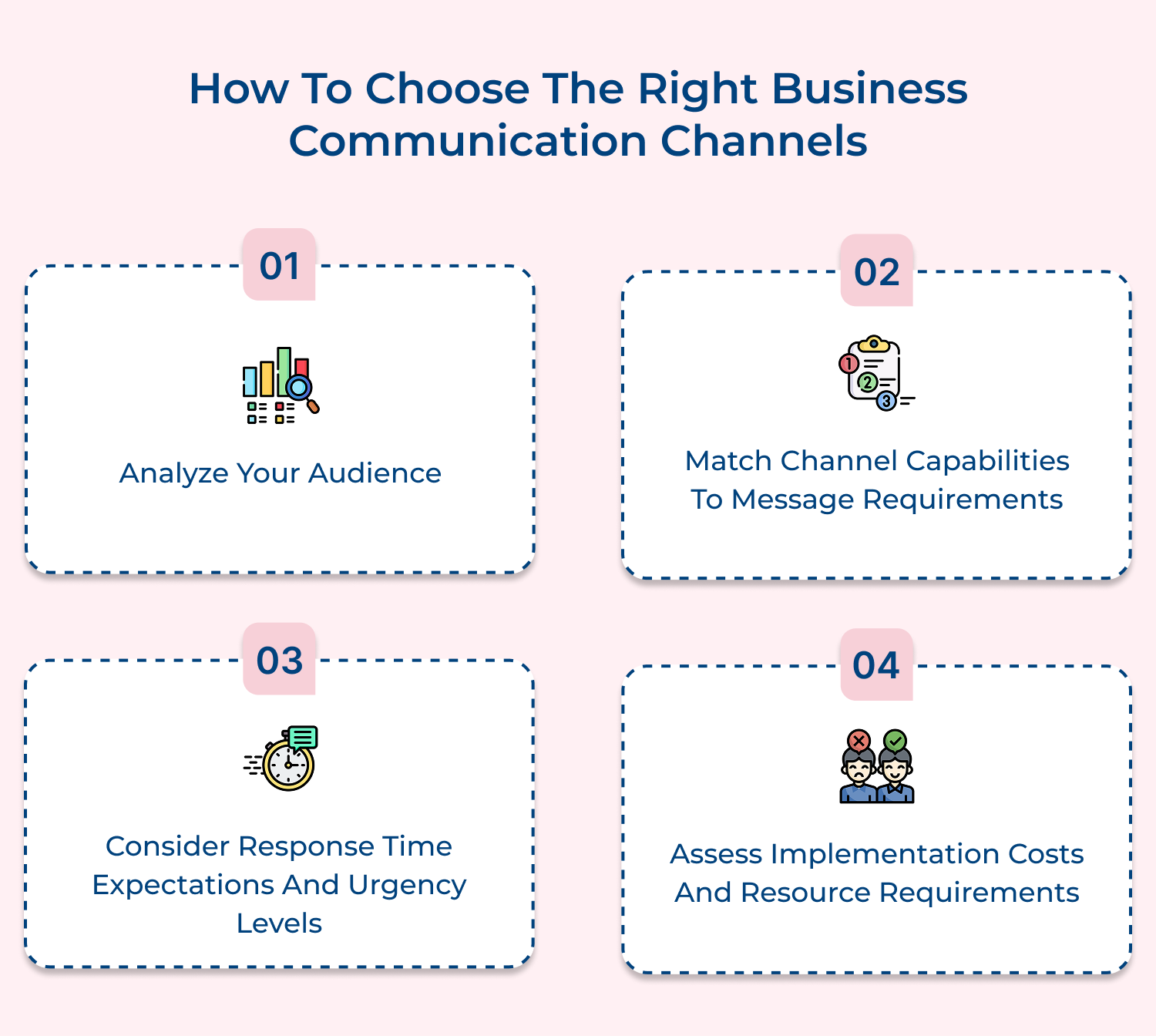
A strong communication strategy starts understanding your audience’s age, comfort with technology and preferred communication habits. Younger customers often prefer instant messaging and social media, while older professionals may lean toward phone calls, emails or video conferencing for business discussions.
An effective communication strategy matches the channel to the message. Quick updates fit well with text or chat, while detailed project files work best in email. Complex negotiations benefit from video conferencing, where non-verbal cues add clarity.
Response time plays a big role in shaping communication strategy. Urgent customer issues require live chat or phone support. Meanwhile, quarterly reports or updates can be shared by email or video conferencing, giving recipients more time to review.
Building a communication strategy means weighing costs and resources. Channels like messaging apps or video conferencing tools need subscriptions, training and management. Both direct costs and staff time should be evaluated to ensure smooth adoption as well as efficient usage.
Effective business communication improves collaboration and drives results. Following best practices ensures your communication strategy stays impactful across all channels.
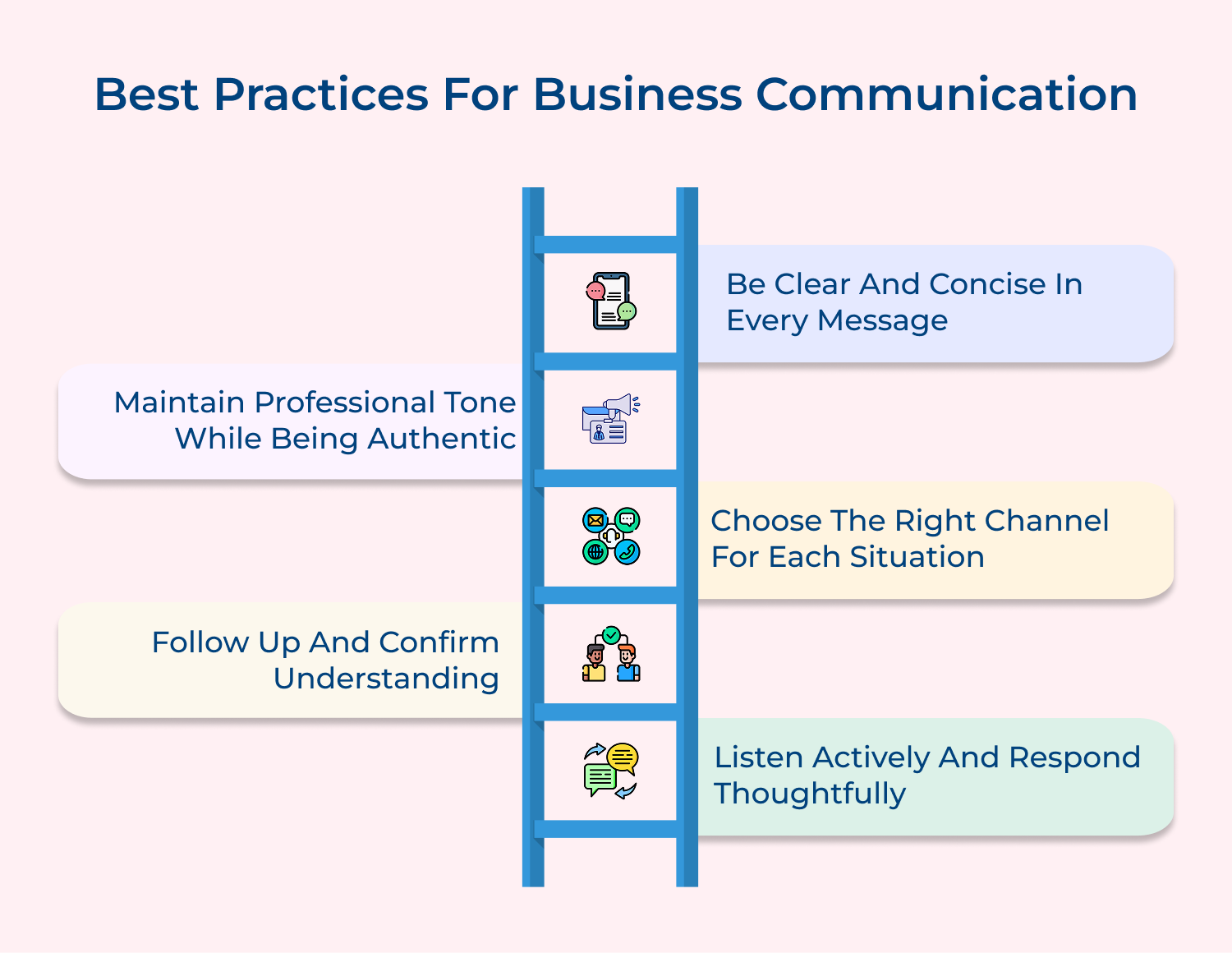
Be Clear and Concise in Every Message
Think of clarity as removing fog from a window so people can see exactly what you mean without guessing or interpretation. Avoid jargon and complex sentences that might confuse your audience, instead focus on delivering your core message using simple language that everyone can understand easily.
Choose the Right Channel for Each Situation
Just as you wouldn’t use a hammer to fix a watch, selecting the wrong communication channel can make your message ineffective or annoying. Match urgent matters with instant communication methods like phone calls while using email for detailed information that people need time to process and respond to thoughtfully.
Listen Actively and Respond Thoughtfully
Active listening means giving your full attention to understand not just the words but the emotions and concerns behind them. When you truly listen before responding you can address the real issues people are raising rather than just reacting to surface-level complaints or requests.
Maintain Professional Tone While Being Authentic
Professional communication doesn’t mean being robotic or removing all personality from your interactions with colleagues and customers. Strike a balance between being respectful and formal while letting your genuine personality shine through in ways that build rapport with others.
Follow Up and Confirm Understanding
Communication isn’t complete until you verify that your message was received and understood as intended by the recipient. Following up shows that you care about effective communication and gives people opportunities to ask questions or clarify any points that might have been unclear initially.
Effective business communication channels serve as the foundation that connects your internal teams while building meaningful relationships with external customers and partners. When you strategically select and implement the right mix of communication methods your organization can achieve seamless information flow.
Remember that successful communication requires understanding your audience preferences and matching channels to specific business needs rather than simply adopting every available platform. Start by evaluating your current communication gaps and gradually implement channels that genuinely serve your stakeholders’ needs.

Which communication channels are most effective for business use?
The most effective channels depend on your specific audience and communication goals rather than following a one-size-fits-all approach. Email works exceptionally well for detailed documentation and formal correspondence while instant messaging excels at quick team coordination as well as real-time problem solving. Face-to-face meetings remain unmatched for complex negotiations and relationship building.
How has the Internet affected business communication practices?
The Internet has fundamentally transformed business communication by enabling instant global connectivity and creating numerous digital channels that operate around the clock. Traditional barriers like geographical distance and time zones have become less significant obstacles while businesses now have access to cost-effective communication tools that were previously available only to large corporations with substantial technology budgets.
How does a company effectively manage business communications across multiple channels?
Successful communication management requires establishing clear guidelines that specify which channels to use for different types of messages and situations. Companies should implement centralized systems that integrate various communication platforms while training employees on proper channel etiquette and response time expectations to maintain consistency as well as professionalism across all touchpoints.
What are the biggest challenges businesses face with communication channels?
Information overload represents the primary challenge as employees struggle to manage notifications from multiple platforms simultaneously throughout their workday. Technical barriers and platform limitations can disrupt critical communications while inconsistent messaging across different channels often confuses customers as well as damages brand credibility when coordination between departments breaks down.
What role do communication channels play in customer satisfaction?
Communication channels affect customer satisfaction by making support and feedback easy.
When businesses provide multiple convenient options, customers feel valued. Consistent service quality builds loyalty, encourages referrals and strengthens long-term relationships.
 https://omni24.io/wp-content/uploads/2026/09/Social-commerce-scaled.png
1340
2560
Webvision Solution
https://omni24.io/wp-content/uploads/2023/04/Omni-Logo-1.svg
Webvision Solution2026-10-23 12:18:272026-10-23 12:18:27What is Social Commerce and Why Does It Matter?
https://omni24.io/wp-content/uploads/2026/09/Social-commerce-scaled.png
1340
2560
Webvision Solution
https://omni24.io/wp-content/uploads/2023/04/Omni-Logo-1.svg
Webvision Solution2026-10-23 12:18:272026-10-23 12:18:27What is Social Commerce and Why Does It Matter? https://omni24.io/wp-content/uploads/2026/08/AI-Customer-Service-Agents.png
1256
2400
Webvision Solution
https://omni24.io/wp-content/uploads/2023/04/Omni-Logo-1.svg
Webvision Solution2026-09-21 04:48:512026-09-21 04:48:51How to Build an AI Customer Service Agents: 8 Key Steps
https://omni24.io/wp-content/uploads/2026/08/AI-Customer-Service-Agents.png
1256
2400
Webvision Solution
https://omni24.io/wp-content/uploads/2023/04/Omni-Logo-1.svg
Webvision Solution2026-09-21 04:48:512026-09-21 04:48:51How to Build an AI Customer Service Agents: 8 Key Steps https://omni24.io/wp-content/uploads/2026/08/Omnichannel-Conversational-AI.png
1256
2400
Tushar Joshi
https://omni24.io/wp-content/uploads/2023/04/Omni-Logo-1.svg
Tushar Joshi2026-09-16 03:51:072026-09-16 03:51:07How to Build Omnichannel Conversational AI Strategy
https://omni24.io/wp-content/uploads/2026/08/Omnichannel-Conversational-AI.png
1256
2400
Tushar Joshi
https://omni24.io/wp-content/uploads/2023/04/Omni-Logo-1.svg
Tushar Joshi2026-09-16 03:51:072026-09-16 03:51:07How to Build Omnichannel Conversational AI Strategy
Whether it’s about acquire, engage or support – Omni24 covers all your customer engagement needs in one complete platform.

Copyright ©2026 Veemo All rights reserved.
CA, Los Angeles, Hall Ave, 19011