What is Customer Management & Why is it Important?
Unlock the secrets behind customer management. Discover how the right strategies and tools can turn every interaction into a growth opportunity.

Unlock the secrets behind customer management. Discover how the right strategies and tools can turn every interaction into a growth opportunity.
Keeping up with customer relationships can feel like a lot, especially when you’re trying to grow. Many businesses find it tough to stay personal while managing a large customer base. In fact, a positive customer care experience largely determines their loyalty to a brand.
Missed follow-ups, delayed responses, or scattered information can frustrate customers and chip away at trust. That’s where a solid customer management system comes in. The right tools don’t just organize contacts, they help you stay connected, respond faster and build lasting relationships.
Let’s dive into how customer management tools can transform the way you engage with customers and why they’re essential for long-term growth as well as satisfaction.
Customer Management, also called Customer Relationship Management (CRM), is how businesses handle their interactions with customers. It involves using strategies, tools and technology to manage customer data as well as communication at every stage of the customer journey. The main goal is to build better relationships, keep customers loyal and increase sales.
Effective customer management allows organizations to build stronger relationships with their customers by understanding their needs, preferences as well as behaviors. This understanding enables businesses to deliver personalized experiences while improving customer satisfaction.
Key objectives:
74% of users believe that customer management system has enhanced their access to customer data, improving sales and service efficiency. Here’s why this system matters to your business.
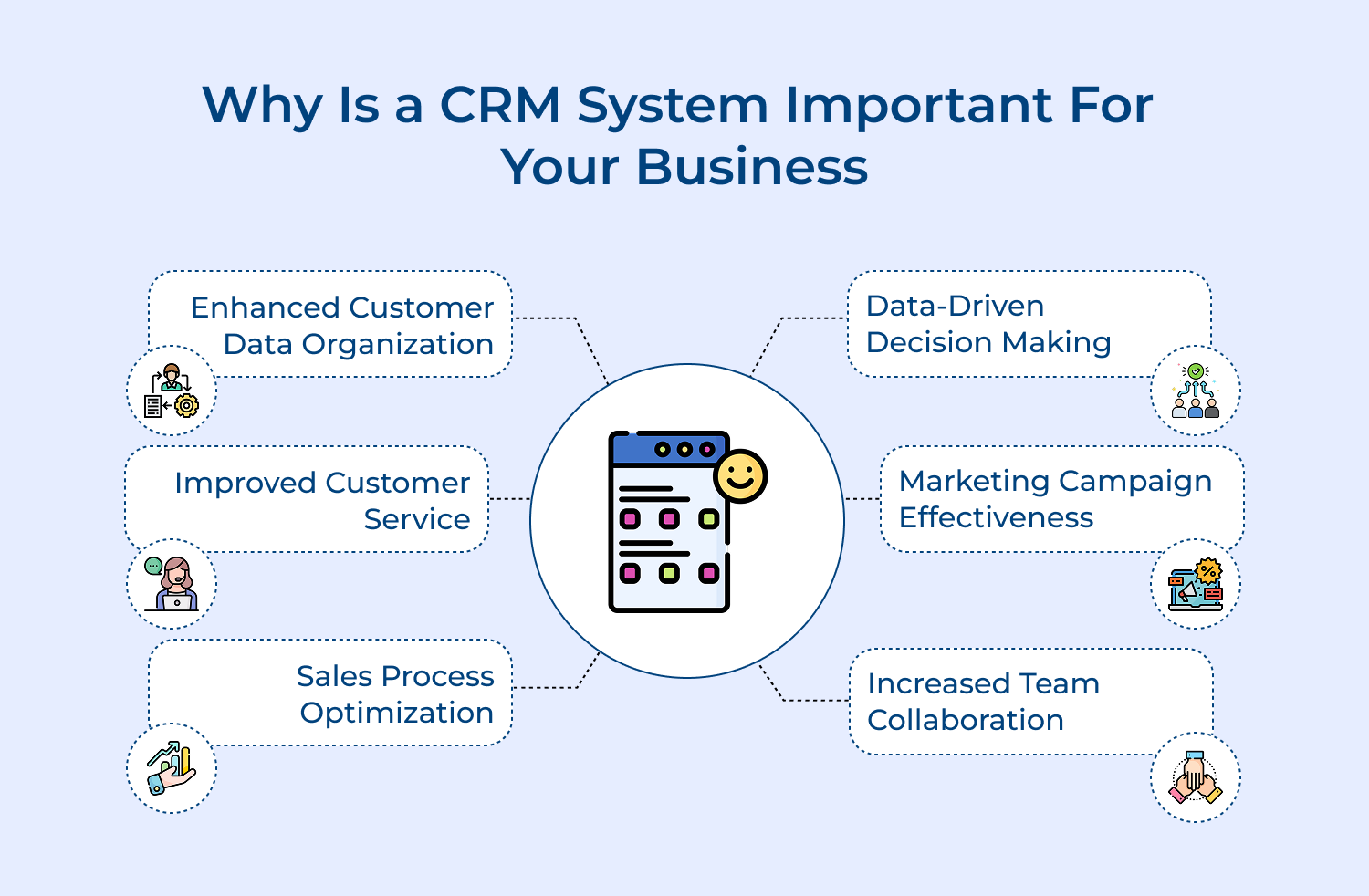
Enhanced Customer Data Organization
A CRM system stores all customer information (like contact details, purchase history and preferences) in one place. This makes it easy for any team member to quickly access accurate and up-to-date customer data as well as provide better service.
Improved Customer Service
Support teams can see a customer’s full history right away with a CRM. It offers more personalized help, avoids repeating questions and solves issues faster.
Sales Process Optimization
CRM tools help sales teams track leads and deals in real time. Automated reminders and follow-ups keep communication going, which leads to faster sales as well as higher conversions.
Data-Driven Decision Making
CRM systems offer reports and insights on customer behavior along with sales trends. Business leaders can use this data to make smart decisions about where to invest and how to grow.
Marketing Campaign Effectiveness
CRM tools let marketers target the right people using filters like past purchases or location. They can send tailored messages and track how well each campaign performs.
Increased Team Collaboration
CRM platforms let different teams share customer information easily. It ensures everyone stays on the same page and delivers a smooth, consistent experience to customers.
Keeping customers engaged is key to building lasting relationships and driving business growth. Here are 10 proven strategies to help you connect meaningfully and consistently.
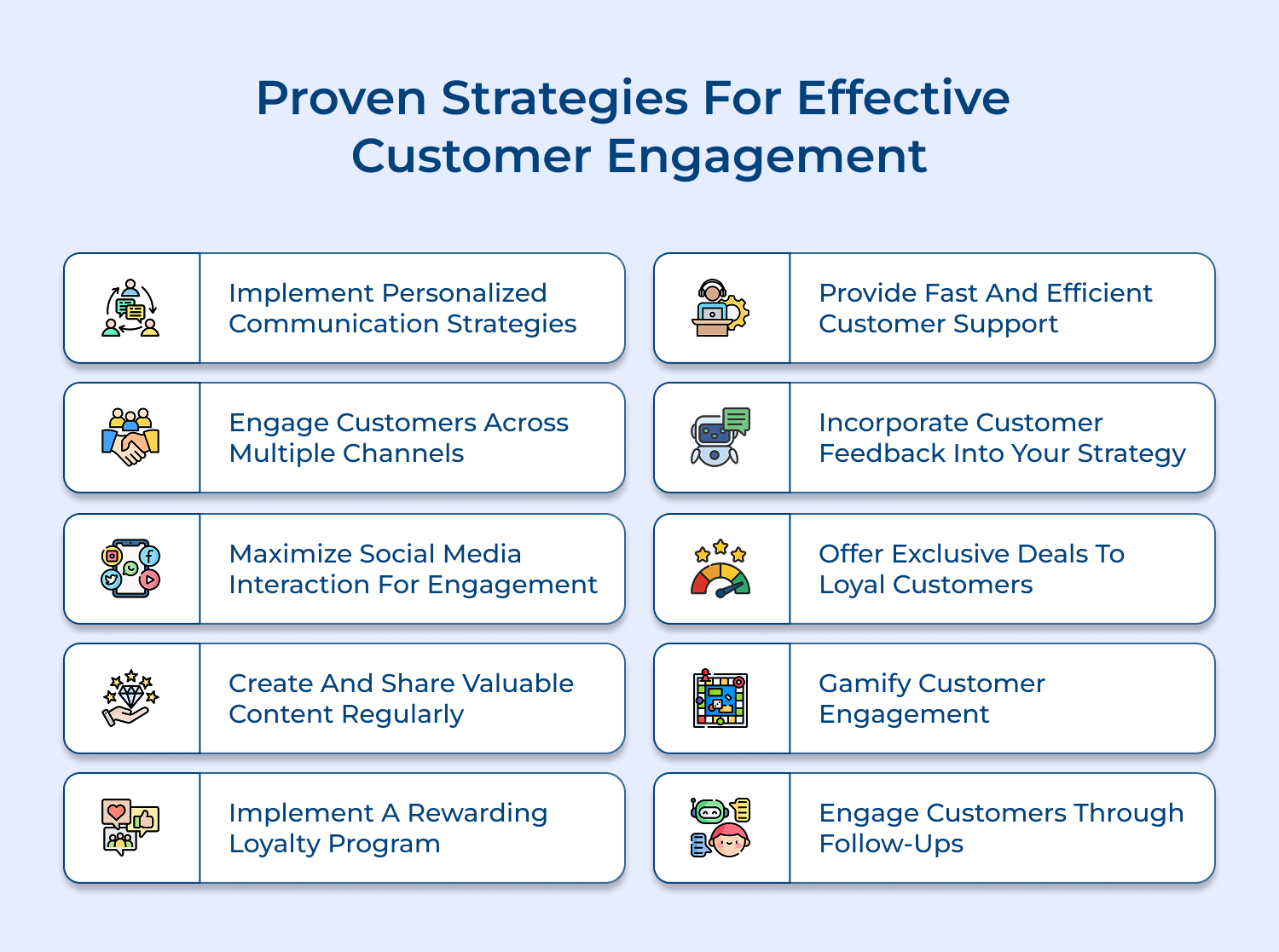
Personalized communication involves tailoring messages based on customer preferences, behavior and history, ensuring content resonates with each individual.
Personalization strengthens customer relationships and increases engagement. When customers feel recognized, they are more likely to respond while taking desired actions. Hence, improving loyalty and satisfaction.
Use customer data to send targeted emails, recommend products and offer promotions based on individual interests as well as past behavior. Segment your audience to personalize messages effectively.
Pro tips:
Multi-channel engagement means reaching customers on various platforms (like email, social media, websites and live chat) while ensuring consistent communication across all touchpoints.
Reaching customers on their preferred channels enhances accessibility, strengthens brand presence and builds trust. It provides a seamless experience no matter where the customer chooses to interact.
Maintain an active presence on multiple platforms, offering consistent messages and responses. Integrate tools that streamline communication across all channels for efficiency.
Tips:
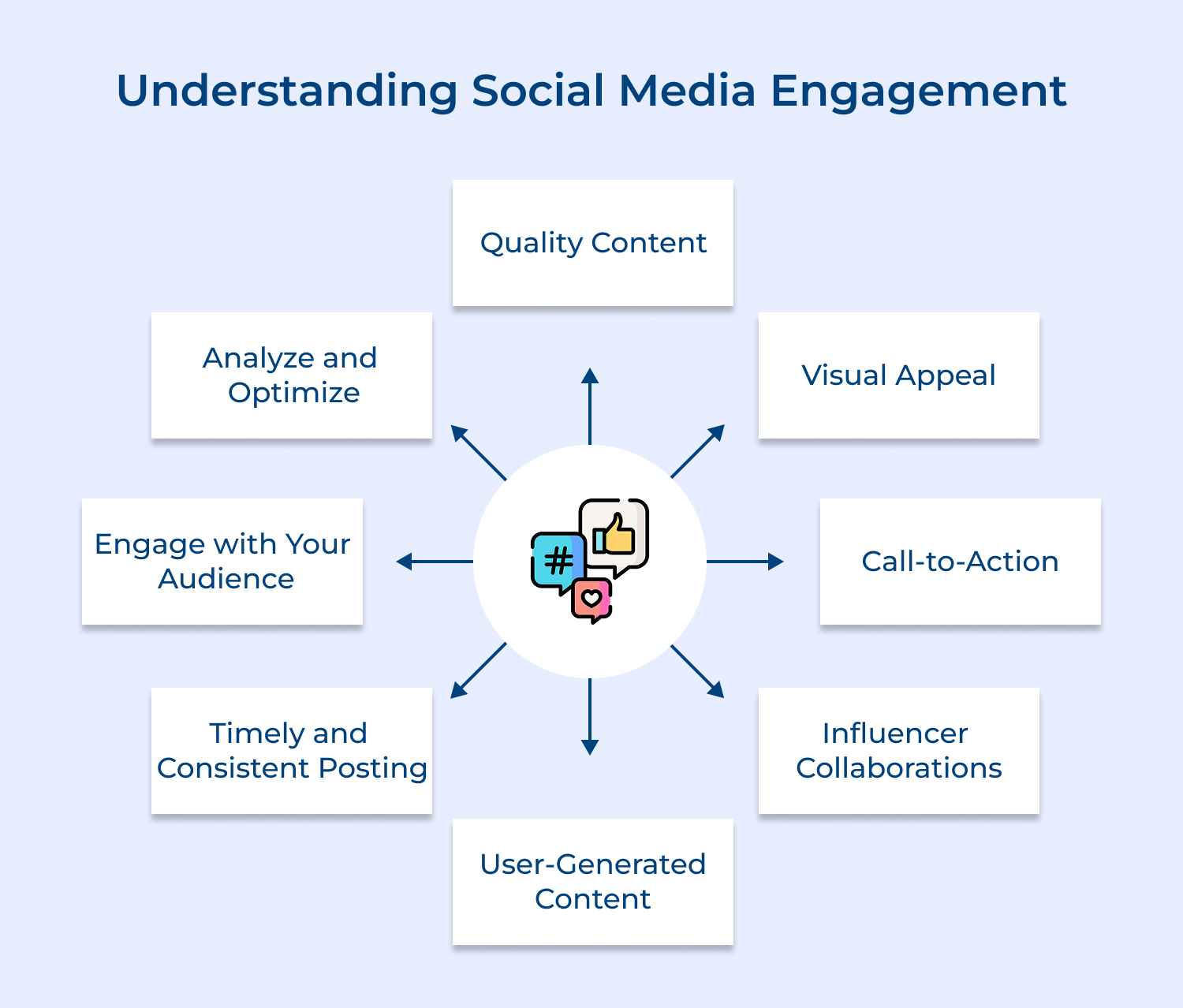
Active social media interaction involves engaging with customers through comments, share and direct messages. Thus, building conversations and community around your brand.
Social media offers a direct line of communication with customers, building trust and brand loyalty. Engaging in real-time boosts visibility and shows customers their voices are heard.
Respond promptly to customer comments, create engaging posts and ask questions to spark conversation. Use social media to offer promotions as well as gather feedback.
Pro tips:
Valuable content includes blogs, videos, guides and other helpful resources. It teaches your audience something useful or helps them understand your products better.
Sharing helpful content builds trust and shows that your brand is an expert. This keeps customers interested as well as encourages them to come back.
Create content based on what your customers struggle with or ask about. Use tutorials, case studies and how-to guides to keep them informed as well as engaged.
Tips:
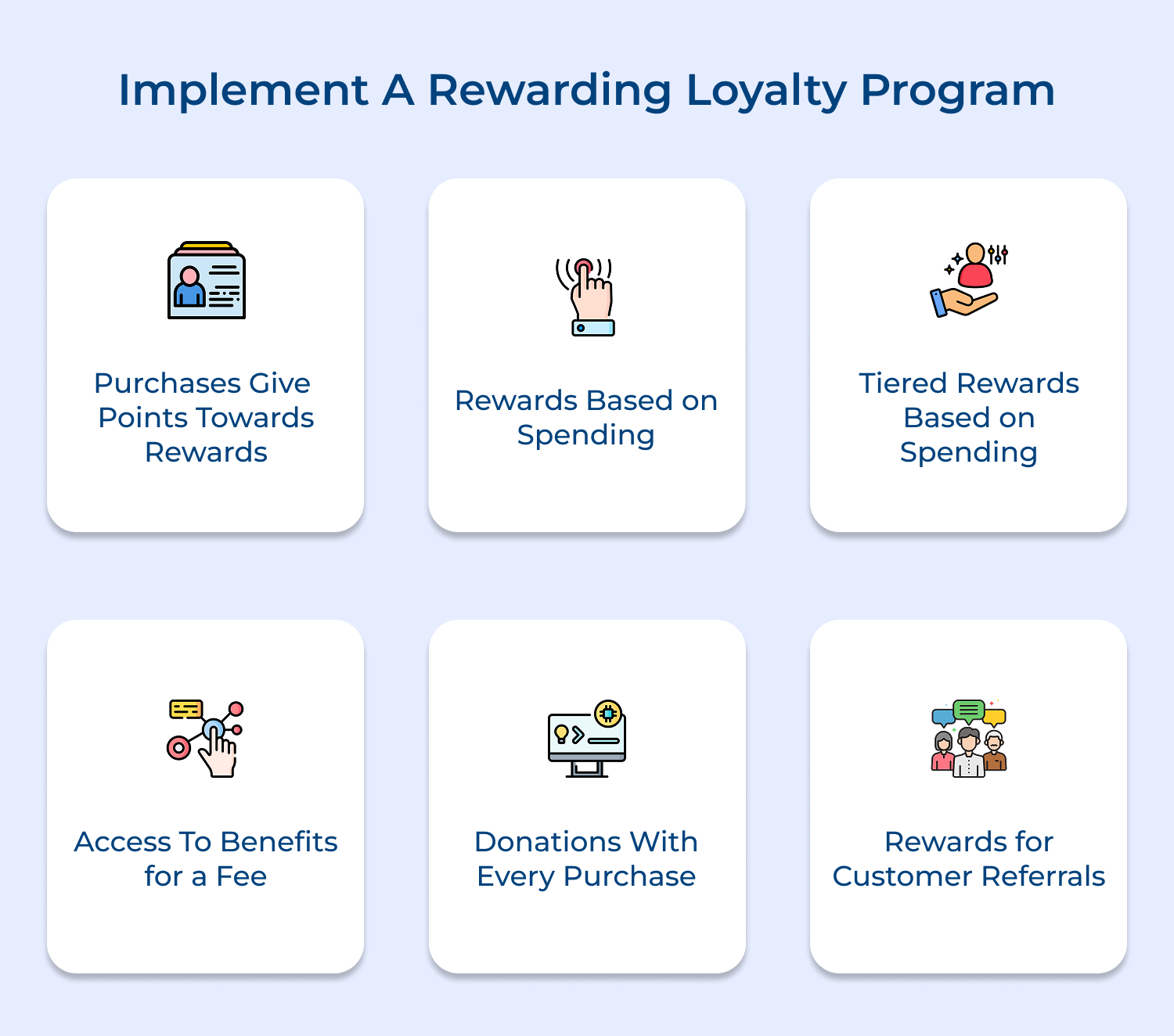
A loyalty program incentivizes customers for repeat purchases by offering rewards like discounts, exclusive access, or points that can be redeemed for future benefits.
Loyalty programs build repeat business by rewarding customers for their ongoing engagement. It doesn’t just boost retention and creates brand advocates, but drives revenue through repeat purchases.
Set up a points-based system where customers earn rewards for purchases, referrals and social media shares. Offer tiered benefits to encourage more engagement.
Tips:
Fast customer support involves offering quick, helpful assistance through multiple channels like live chat, phone, or email to resolve issues as soon as they arise.
Timely support leads to higher satisfaction and loyalty. Customers expect quick responses and providing efficient solutions builds trust as well as strengthens relationships.
Use live chat for immediate responses, automate simple inquiries with chatbots and ensure that all team members have access to the same customer data for swift problem resolution.
Pro tips:
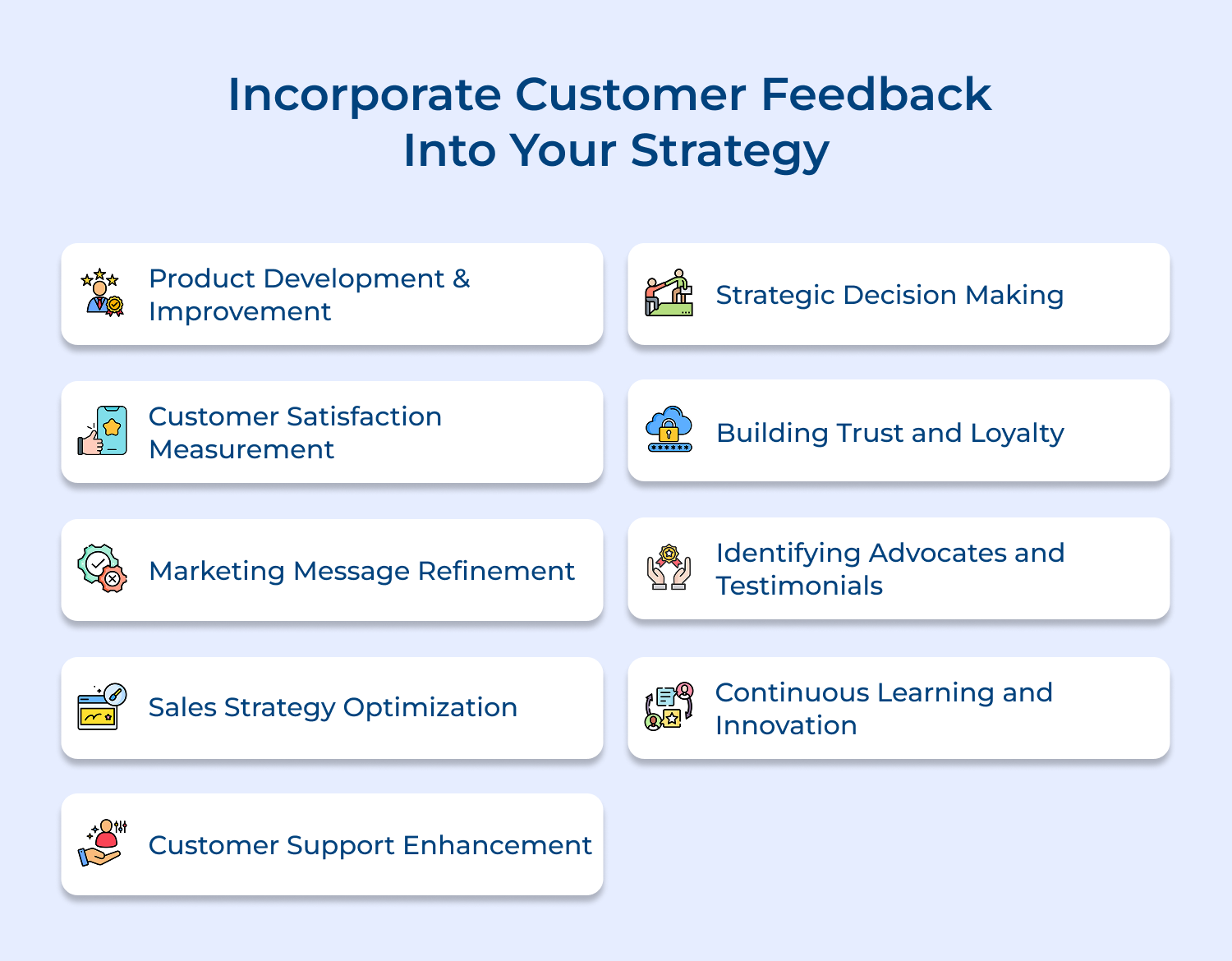
Customer feedback refers to insights gathered through surveys as well as direct comments that help businesses understand customer needs, preferences and pain points.
Feedback helps businesses improve their offerings and customer experiences. It shows customers their opinions matter, creating stronger relationships and more tailored services.
Collect feedback regularly through surveys, reviews, or social media. Analyze customer insights to identify trends and areas for improvement in your product, service or customer experience.
Tips:
Exclusive deals are special offers available only to certain customer segments, such as loyal members or frequent buyers, giving them incentives for continued engagement.
Exclusive deals make customers feel valued, encourage repeat business and enhance customer loyalty. These offers also create a sense of exclusivity, increasing the likelihood of purchases.
Create time-sensitive offers, early access to new products, or VIP-only discounts for your loyal customers. Make sure to personalize deals based on customer preferences to maximize effectiveness.
Tips:
Gamification uses game elements like points, challenges and rewards to encourage customers to engage with your brand in an interactive way.
Gamification increases participation and keeps customers engaged by offering incentives for completing actions like making purchases, sharing on social media, or referring others.
Incorporate point systems, challenges and leaderboards into your website or app. Offer rewards like discounts, badges or exclusive content for achieving certain milestones.
Pro tips:
Follow-ups involve reaching out to customers after an interaction or purchase to ensure satisfaction, provide additional assistance, or offer further products or services.
Follow-ups improve customer satisfaction by showing you care about their experience. They provide an opportunity to address issues, gather feedback and encourage repeat business.
Send follow-up emails thanking customers for their purchase, requesting feedback, or offering additional products. Use automated reminders for reviews or repeat purchases.
Tips:
Technology helps businesses stay organized, respond faster and deliver personalized experiences at scale. Let’s explore each role and how it helps your business elevate.
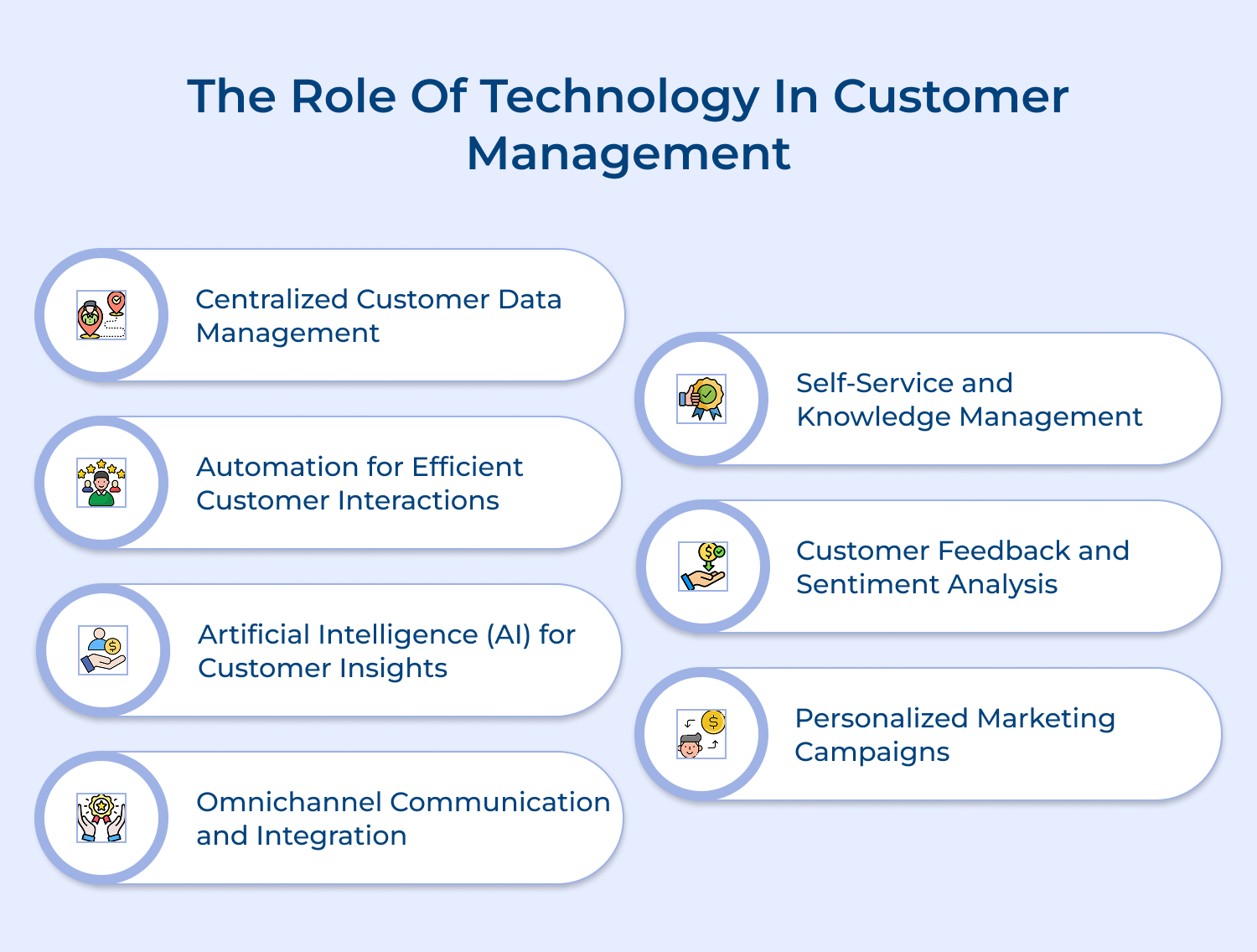
Technology enables businesses to collect and store customer data in a unified CRM system. Thus, offering a comprehensive view of customer behavior, preferences and interactions. The centralization ensures that businesses can deliver personalized experiences, predict customer needs and make data-driven decisions.
Automation tools like chatbots, email software and auto-replies help make customer communication easier. They reduce the need for manual work and ensure quick, consistent replies. By handling routine tasks automatically, these tools save time and let support teams focus on more important customer issues. It leads to a better overall experience for customers.
AI tools study customer data to find patterns and trends. This helps businesses understand what customers want, offer personalized experiences and improve engagement. With AI, companies can solve problems before they happen, keeping customers happy and loyal.
Technology connects all customer communication into one platform. Customers here get a smooth, consistent experience no matter how they reach out. So, making it easier to connect and strengthening brand trust.
Tools like FAQs, help centers and self-service portals let customers solve problems on their own. It saves time, reduces support wait times and keeps customers satisfied, while also lightening the load for support teams.
Technology collects feedback from surveys, reviews, and social media. Sentiment analysis tools figure out how customers feel as well as what issues they face. Acting on this feedback helps businesses fix problems and build stronger customer relationships.
Marketing tools use customer data to send the right messages to the right people. Companies can suggest products, send tailored emails, or offer custom discounts. Hence, making customers feel valued and more likely to buy again.
Managing customer relationships isn’t always easy. From scattered data to slow response times, these challenges can affect customer loyalty. Let’s explore how to overcome them:
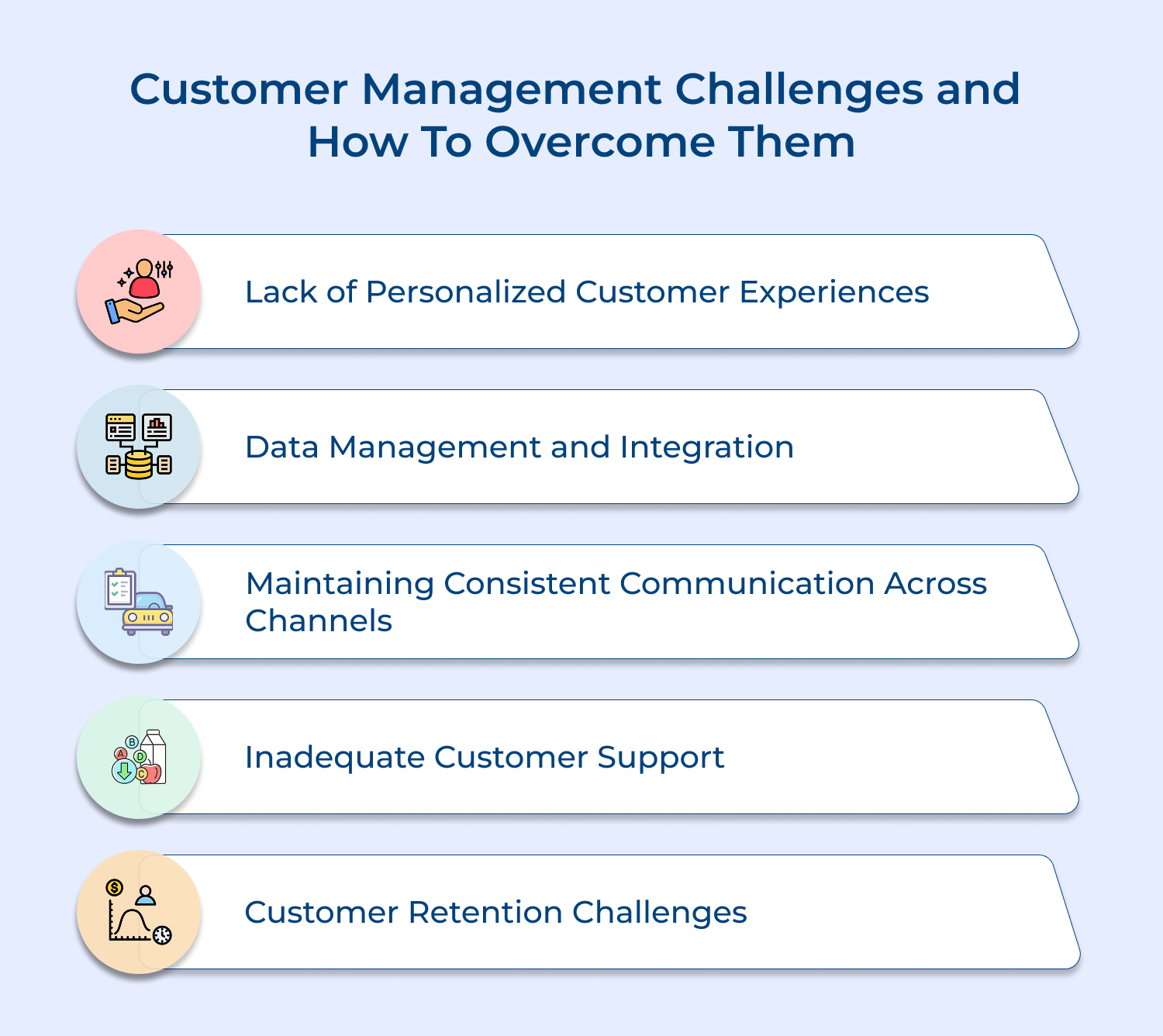
1. Lack of Personalized Customer Experiences
Challenge: Providing personalized experiences is difficult without the right data, tools, or strategies. Customers expect tailored interactions that reflect their preferences as well as needs, and failure to meet this demand can lead to dissatisfaction.
Solution: Use customer data and CRM systems to segment your audience. Leverage personalized communication, such as targeted emails and customized product recommendations, to ensure each customer feels valued.
2. Data Management and Integration
Challenge: Managing customer data across multiple platforms can be complex, leading to incomplete or inconsistent information. Disconnected systems hinder a comprehensive view of the customer journey, making it harder to deliver seamless service.
Solution: Invest in integrated CRM platforms to centralize customer data. Ensure all customer touchpoints (social media, email, support) are synced into one system. It allows you to better understand and respond to customer needs.
3. Maintaining Consistent Communication Across Channels
Challenge: Engaging customers on different communication channels can be inconsistent, causing confusion or frustration. Inconsistent messages and experiences can damage your brand’s reputation.
Solution: Implement omni channel communication tools that enable you to maintain a unified and consistent customer experience. Centralize interactions and ensure your team communicates the same message across all platforms.
4. Inadequate Customer Support
Challenge: Customers often experience long response times or inadequate solutions from support teams, leading to frustration and dissatisfaction. A lack of fast, helpful support can result in churn and negative reviews.
Solution: Provide multi-channel support options, including live chat, email and phone. Utilize AI-powered chatbots for instant responses and train support teams to handle inquiries efficiently to improve customer satisfaction.
5. Customer Retention Challenges
Challenge: Retaining customers in a competitive market can be challenging. Customers have high expectations and without effective strategies to maintain their loyalty, they may turn to competitors.
Solution: Implement loyalty programs, regular follow-ups and personalized offers to keep customers engaged. Show appreciation through rewards, exclusive discounts, or special access to new products, reinforcing your relationship with them.
To improve customer management, you need to track how well your efforts are working. Let’s delve into key metrics that show what’s working and where to adjust.
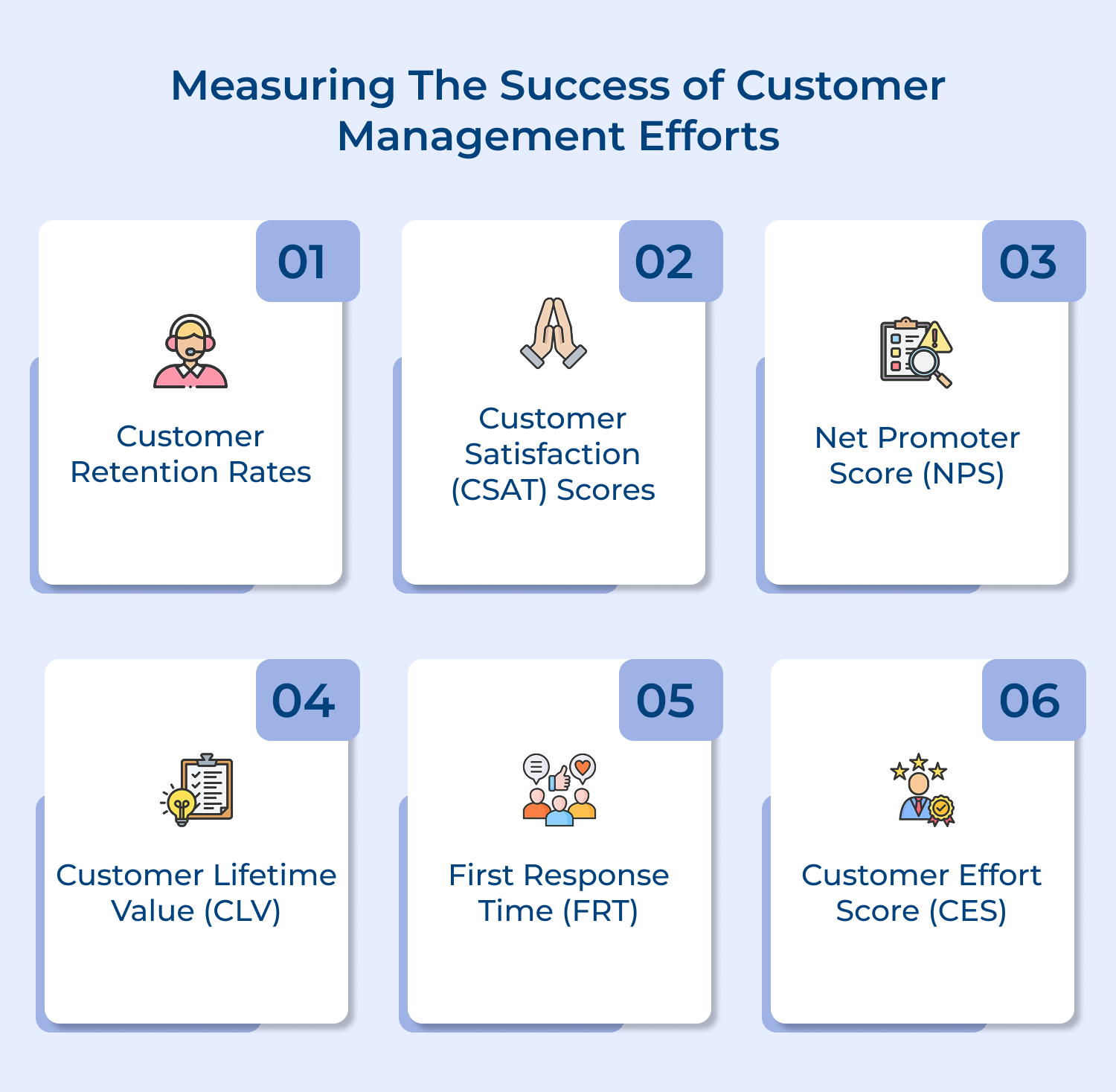
1. Customer Retention Rates
Retaining existing customers is a clear indicator of effective customer management. High retention rates suggest that customers are satisfied with the products, services and overall experience. Businesses can measure this by tracking repeat purchases, contract renewals, or subscription renewals. Consistently high retention rates point to strong customer loyalty, which is crucial for long-term success.
2. Customer Satisfaction (CSAT) Scores
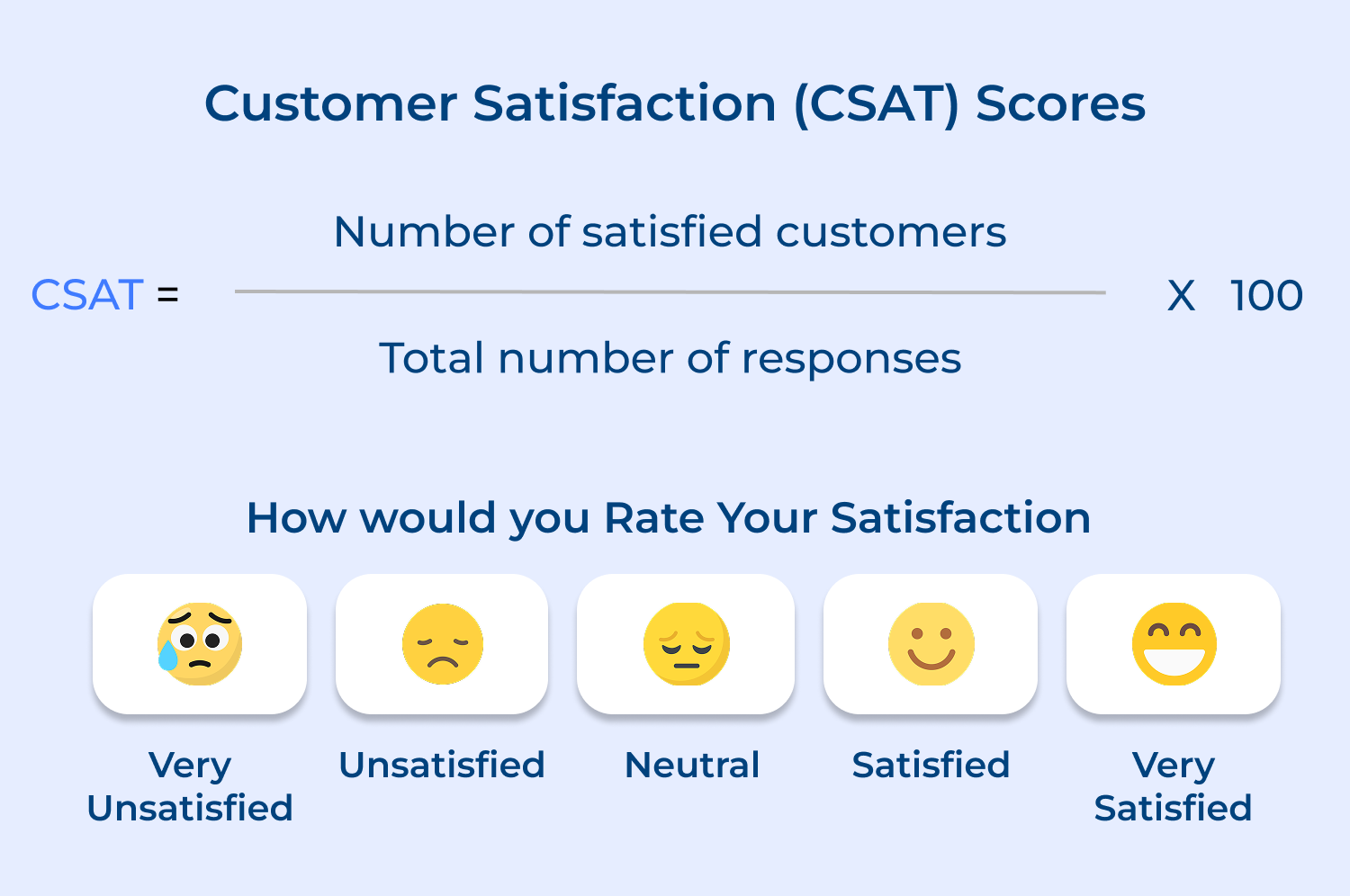
CSAT scores are a direct reflection of customer satisfaction after an interaction with a brand. These scores are typically measured through surveys that ask customers to rate their experience. High CSAT scores demonstrate that your customer management efforts are meeting customer expectations and improving overall satisfaction with your offerings.
3. Net Promoter Score (NPS)
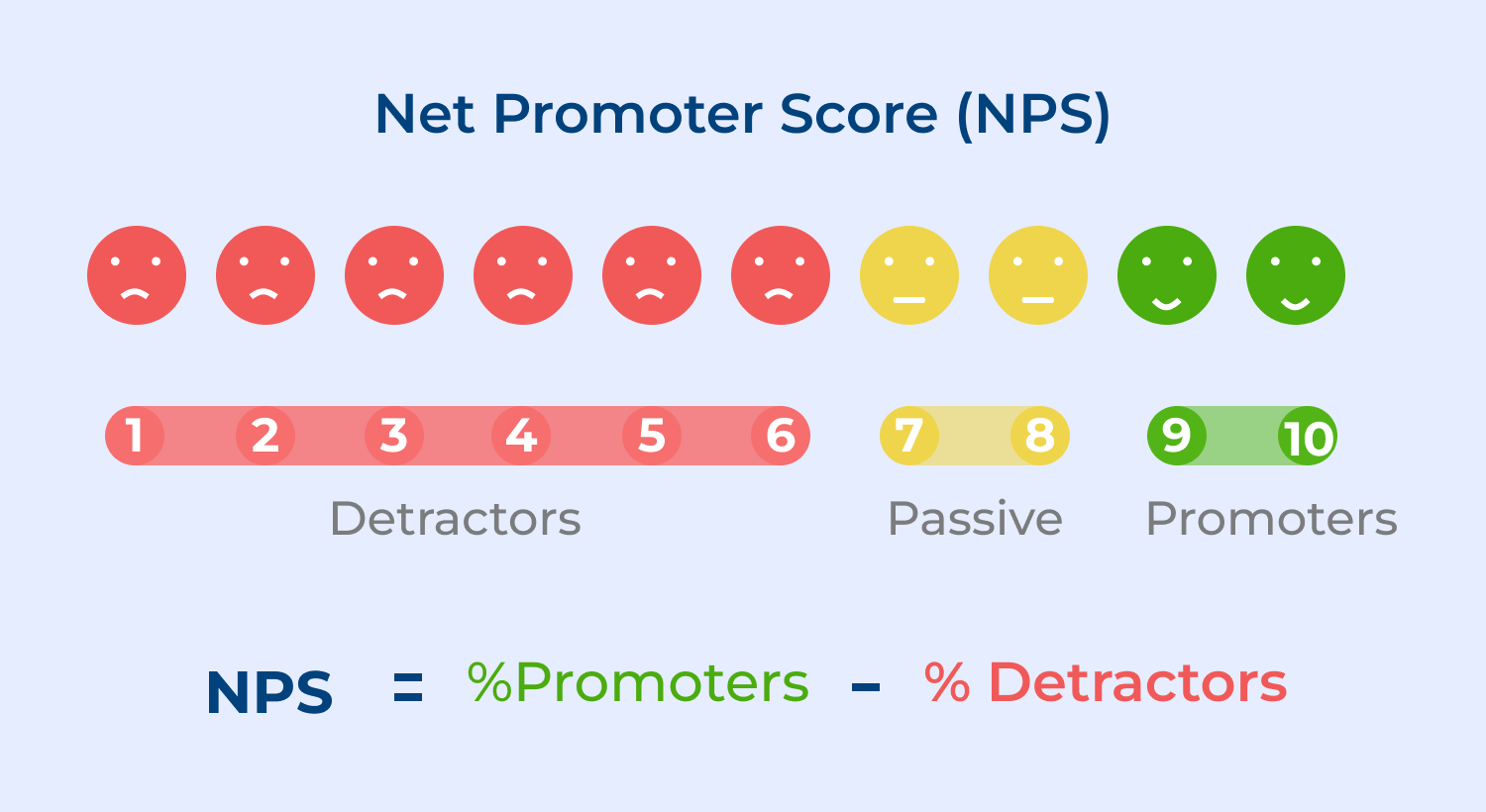
NPS measures customer loyalty by asking customers how likely they are to recommend your business to others. This score divides respondents into promoters, passives and detractors, providing insight into customer advocacy. A high NPS indicates that customers are not only satisfied but also willing to recommend your brand, a key metric of customer loyalty.
4. Customer Lifetime Value (CLV)
CLV calculates the total revenue a business can expect from a customer throughout their relationship. A high CLV suggests that your customer management efforts are leading to increased customer loyalty, repeat business and higher spending. It’s an essential metric for measuring the financial impact of customer satisfaction and engagement strategies.
5. First Response Time (FRT)
First Response Time measures how quickly your customer service team responds to an initial inquiry or issue. A shorter FRT typically leads to higher customer satisfaction. Tracking this metric helps businesses assess their responsiveness and effectiveness in handling customer inquiries, which is a direct measure of customer management success.
6. Customer Effort Score (CES)
CES measures how easy it is for customers to interact with a company, whether for making a purchase, solving an issue, or getting support. A lower score indicates that customers find it easy to get the help they need. This metric is crucial for understanding how frictionless your customer management processes are.
Effective customer management is vital for business longevity. Personalizing experiences, leveraging data and embracing modern technologies can help create meaningful connections with customers.
Engaging proactively as well as addressing customer needs consistently builds trust, loyalty, and growth. Adapting to evolving customer expectations and focusing on customer satisfaction ensures a competitive edge. Prioritizing customer success helps businesses thrive in a crowded market, reinforcing brand loyalty and encouraging repeat business.

Q1: How to conduct customer experience management?
Customer experience management requires a comprehensive approach starting with mapping customer journeys across all touchpoints. Organizations must collect and analyze customer feedback, implement measurement systems like NPS or CSAT, train employees in customer service excellence and continuously optimize processes based on data-driven insights. Regular monitoring and adjustment of strategies ensure consistent service delivery.
Q2: Are customer relationship management software (CRM) and customer management systems (CMS) the same?
No, they serve different purposes. CRM software focuses specifically on managing customer relationships, tracking interactions and sales processes. CMS is broader and typically refers to content management systems used for website management as well as digital content organization. While both support customer engagement, their core functionalities differ significantly.
Q3: Why Customer Management Is Critical?
Customer management is vital because it directly impacts business sustainability and growth. Effective customer management leads to increased customer retention, higher lifetime value, reduced acquisition costs and improved brand loyalty. It enables organizations to understand as well as meet customer needs while maintaining competitive advantage through strong relationships and data-driven decision-making.
Q4: What is the difference between CRM and customer management?
CRM is a tool or software platform used within the broader practice of customer management. Customer management includes all the strategies and processes used to build while maintaining customer relationships. While CRM is the software that helps track customer interactions, store data and manage sales activities.
Q5: What is the customer management plan?
A customer management plan is a strategic document outlining how an organization will acquire, serve and retain customers. It includes specific goals, target metrics, communication strategies, service standards, feedback mechanisms and resource allocation plans. The plan is a roadmap for delivering consistent customer experiences and achieving business objectives.
 https://omni24.io/wp-content/uploads/2026/09/Social-commerce-scaled.png
1340
2560
Webvision Solution
https://omni24.io/wp-content/uploads/2023/04/Omni-Logo-1.svg
Webvision Solution2026-10-23 12:18:272026-10-23 12:18:27What is Social Commerce and Why Does It Matter?
https://omni24.io/wp-content/uploads/2026/09/Social-commerce-scaled.png
1340
2560
Webvision Solution
https://omni24.io/wp-content/uploads/2023/04/Omni-Logo-1.svg
Webvision Solution2026-10-23 12:18:272026-10-23 12:18:27What is Social Commerce and Why Does It Matter? https://omni24.io/wp-content/uploads/2026/08/AI-Customer-Service-Agents.png
1256
2400
Webvision Solution
https://omni24.io/wp-content/uploads/2023/04/Omni-Logo-1.svg
Webvision Solution2026-09-21 04:48:512026-09-21 04:48:51How to Build an AI Customer Service Agents: 8 Key Steps
https://omni24.io/wp-content/uploads/2026/08/AI-Customer-Service-Agents.png
1256
2400
Webvision Solution
https://omni24.io/wp-content/uploads/2023/04/Omni-Logo-1.svg
Webvision Solution2026-09-21 04:48:512026-09-21 04:48:51How to Build an AI Customer Service Agents: 8 Key Steps https://omni24.io/wp-content/uploads/2026/08/Omnichannel-Conversational-AI.png
1256
2400
Tushar Joshi
https://omni24.io/wp-content/uploads/2023/04/Omni-Logo-1.svg
Tushar Joshi2026-09-16 03:51:072026-09-16 03:51:07How to Build Omnichannel Conversational AI Strategy
https://omni24.io/wp-content/uploads/2026/08/Omnichannel-Conversational-AI.png
1256
2400
Tushar Joshi
https://omni24.io/wp-content/uploads/2023/04/Omni-Logo-1.svg
Tushar Joshi2026-09-16 03:51:072026-09-16 03:51:07How to Build Omnichannel Conversational AI Strategy
Whether it’s about acquire, engage or support – Omni24 covers all your customer engagement needs in one complete platform.

Copyright ©2026 Veemo All rights reserved.
CA, Los Angeles, Hall Ave, 19011