What is 360 Degree Feedback & Why Does it Matter?
A multi-source feedback system gathering input from peers, managers and subordinates for holistic employee development.

A multi-source feedback system gathering input from peers, managers and subordinates for holistic employee development.
360-degree feedback isn’t just a buzzword—it’s proving to be a game changer. Recent stats show that organizations using 360-degree feedback see, on average, about 14.9% performance improvement. It also boosts employee engagement by 25%!
What makes it powerful is that instead of relying on one viewpoint, the feedback comes from peers, supervisors, subordinates (and sometimes even customers). It gives people a broader picture of what they’re doing well and where they could grow.
Implementing 360-degree feedback can shift overall dynamics by encouraging open communication and stronger alignment.
360-degree feedback is a performance appraisal method that collects input about an employee from various sources, including peers, subordinates, supervisors and sometimes clients. The comprehensive feedback process offers a well-rounded perspective on an individual’s skills, behaviors and performance.
The importance of 360-degree feedback lies in its holistic approach, which highlights strengths and areas for improvement from multiple viewpoints. The feedback mechanism encourages open communication, enhances teamwork and supports a culture of continuous learning. By gaining insights from diverse sources, employees can develop a more accurate self-awareness and adjust their behaviors accordingly.
Key objectives:
360-degree feedback provides a well-rounded perspective on employee performance by incorporating input from multiple sources and professional growth. Here are the benefits:
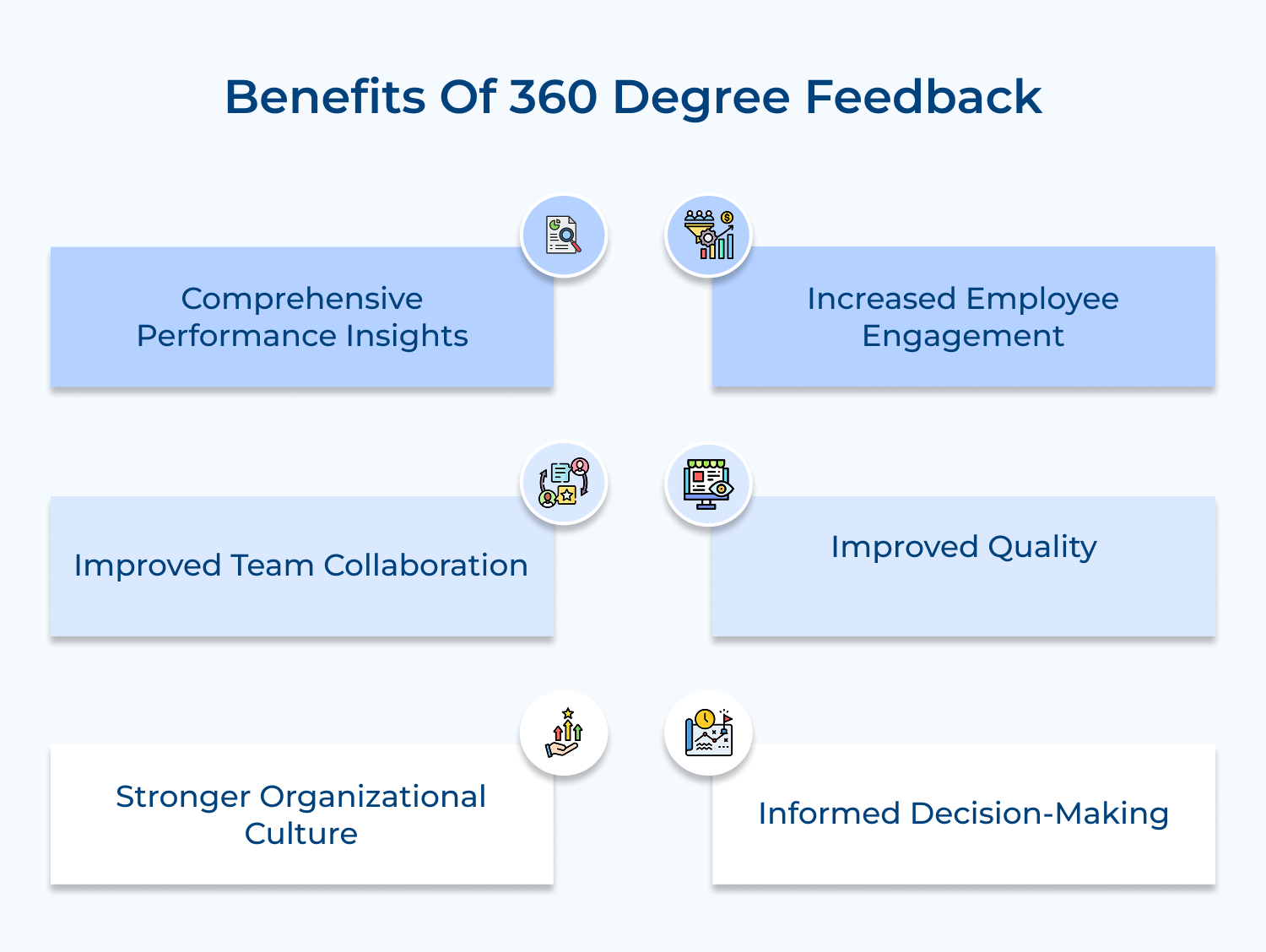
Comprehensive Performance Insights
360-degree feedback provides a well-rounded view of an employee’s performance by collecting input from peers, subordinates and supervisors. The diverse feedback illuminates strengths and weaknesses, enabling individuals to identify specific areas for improvement. Ultimately, this comprehensive insight helps employees align their skills with organizational goals, driving overall effectiveness.
Increased Employee Engagement
Receiving feedback from various sources creates a sense of belonging and validation among employees. When individuals see their contributions acknowledged, they are more likely to engage actively in their roles. The increased engagement not only boosts morale but also leads to higher productivity, creating a more dynamic and motivated workforce.
Improved Team Collaboration
360-degree feedback enhances collaboration by encouraging open communication among team members. When feedback is shared transparently, it promotes trust and understanding, enabling employees to work more effectively together. The collaborative environment allows teams to leverage diverse perspectives. Hence, leading to innovative solutions and improved project outcomes.
Improved Customer Service Quality
Organizations can gain insights into service effectiveness by incorporating customer feedback into the 360-degree process. Employees learn how their actions impact customer satisfaction and can adjust accordingly. The alignment builds a customer-centric approach, enhancing service quality and strengthening relationships with clients, ultimately driving business success.
Stronger Organizational Culture
A culture that embraces 360-degree feedback encourages continuous learning and open communication. This practice cultivates an environment where employees feel safe to express their thoughts and contribute to each other’s growth. As a result, organizations build a supportive culture that values feedback, collaboration and personal development.
Informed Decision-Making
360-degree feedback provides leaders with a wealth of data to inform decisions regarding promotions, training and development. By understanding employee strengths and weaknesses from multiple perspectives, organizations can make strategic choices that align talent with business needs. The informed decision-making leads to better resource allocation and improved organizational performance.
Deloitte’s 2024 report suggests 74% of employees are willing to seek feedback from multiple sources along with managers. Let’s explore more about how this process helps your firm:
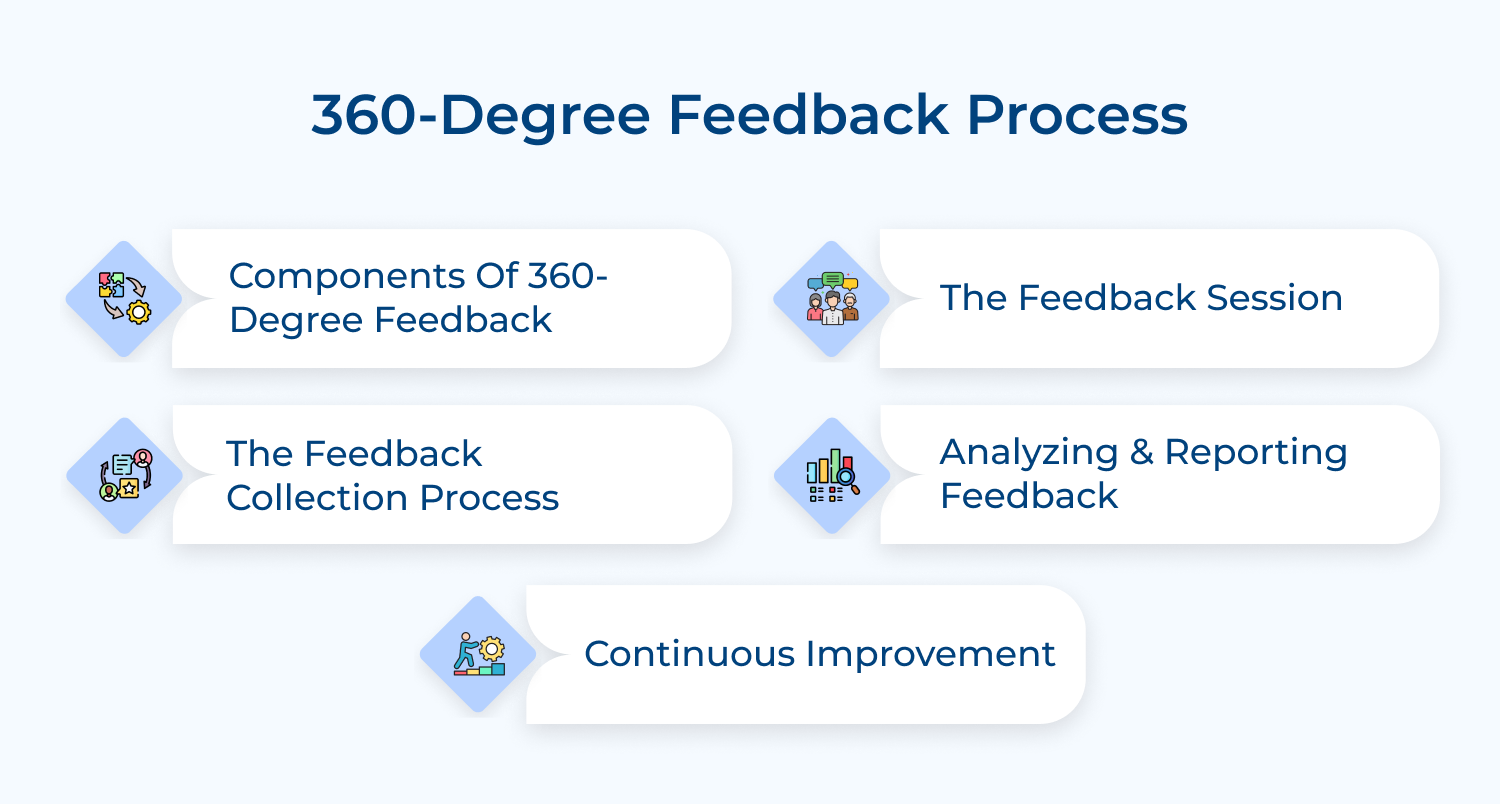
360-degree feedback includes self-assessment, peer input, subordinate feedback and supervisor reviews. Each viewpoint offers unique insights, making evaluations more accurate and fair. This well-rounded approach highlights strengths as well as areas to improve.
Organizations can then design focused development plans, helping employees grow through targeted training while aligning with business goals.
Tips
A structured feedback process ensures data is clear, reliable and objective. With defined goals and guidelines, it reduces confusion as well as improves effectiveness.
Using systematic questionnaires with both quantitative and qualitative questions, businesses capture diverse insights while protecting anonymity. This encourages honest input, making feedback more valuable for growth and improvement.
Tips
Analyzing feedback is crucial for identifying trends and patterns that may not be immediately apparent. A well-organized report highlights strengths and areas for improvement. Thus, making it easier for individuals and managers to interpret the data meaningfully.
Use data visualization tools to present feedback findings effectively, allowing for quick understanding. By summarizing key themes, the report can guide meaningful conversations about performance and development.
Tips
The feedback session is a key part of the 360-degree process, giving individuals a chance to reflect on results and ask questions. Face-to-face discussions build clarity and understanding.
Facilitator guidance helps your focus stay on constructive feedback and action steps. Therefore, creating a supportive environment that encourages learning and growth.
Tips
Follow-up is essential to reinforce learning and track progress over time. Regular check-ins ensure that individuals remain accountable for their development goals and can adjust their strategies based on ongoing feedback.
Implement a structured follow-up process to revisit feedback discussions and assess progress. The continuous engagement encourages a culture of growth and reinforces the importance of development.
Tips
A 360-degree survey offers a holistic view of an employee’s strengths and areas for improvement. Here are the key dimensions that a 360-degree survey measures:
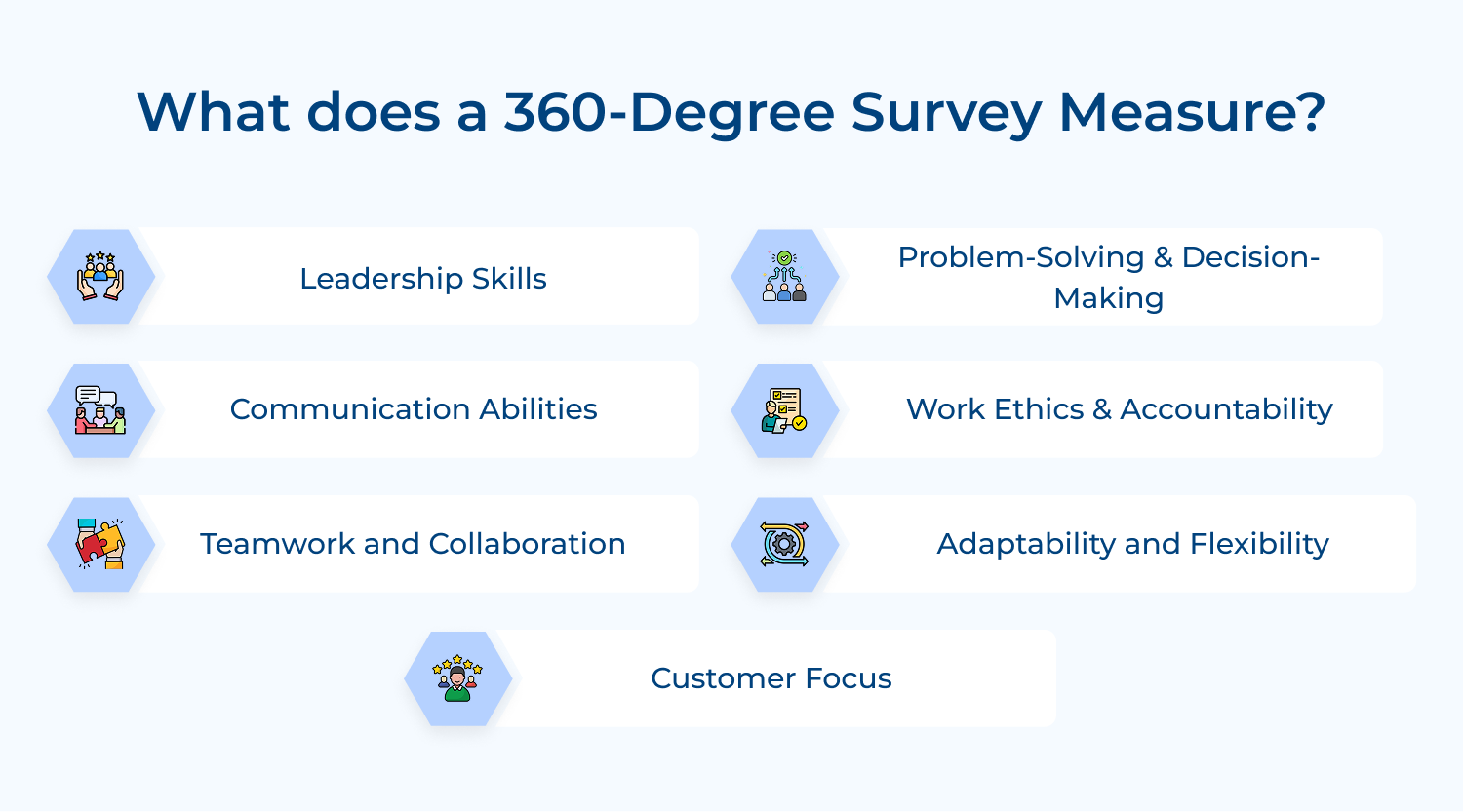
1. Leadership Skills
360-degree surveys often assess leadership skills, including decision-making, team management and the ability to inspire as well as communicate goals. They also highlight emotional intelligence like empathy, conflict resolution and relationship-building. This feedback reveals how effectively an individual leads projects while building a positive team environment.
2. Communication Abilities
Effective communication is essential in any workplace. A 360-degree survey assesses how well an employee conveys information, listens to others and adapts their communication style to different audiences. It measures verbal and written communication skills, ensuring that feedback includes insights on clarity as well as the ability to engage others in discussions.
3. Teamwork and Collaboration
Collaboration is increasingly important in modern workplaces, where cross-functional teams are common. A 360-degree survey evaluates an employee’s ability to work collaboratively with others, share credit and contribute to a team-oriented culture. Feedback in this area often highlights the individual’s role in team dynamics, including conflict management and supportiveness.
4. Problem-Solving and Decision-Making
Problem-solving skills are vital in navigating workplace challenges. A 360-degree survey measures how effectively an employee identifies issues, analyzes information and makes informed decisions. Feedback often reflects the employee’s creativity, critical thinking skills and ability to evaluate alternatives.
5. Work Ethics and Accountability
A strong work ethic is essential for individual and team success. The 360-degree survey evaluates an employee’s reliability, punctuality as well as overall accountability for their work. Feedback in this area helps organizations understand how committed an employee is to their responsibilities and how they respond to challenges.
6. Adaptability and Flexibility
A 360-degree survey assesses how well an employee responds to change, handles new situations and embraces innovative ideas. Feedback can reveal how an individual copes with stress and uncertainty, which is vital for maintaining productivity during transitions.
7. Customer Focus
For many organizations, customer satisfaction is paramount. A 360-degree survey can measure an employee’s commitment to customer service, including their ability to understand client needs and respond effectively. Feedback in this area helps gauge how well the employee builds relationships with clients while contributing to overall customer satisfaction.
360-degree feedback and traditional performance reviews are both essential tools for employee evaluation. Here are seven key differences between the two approaches:
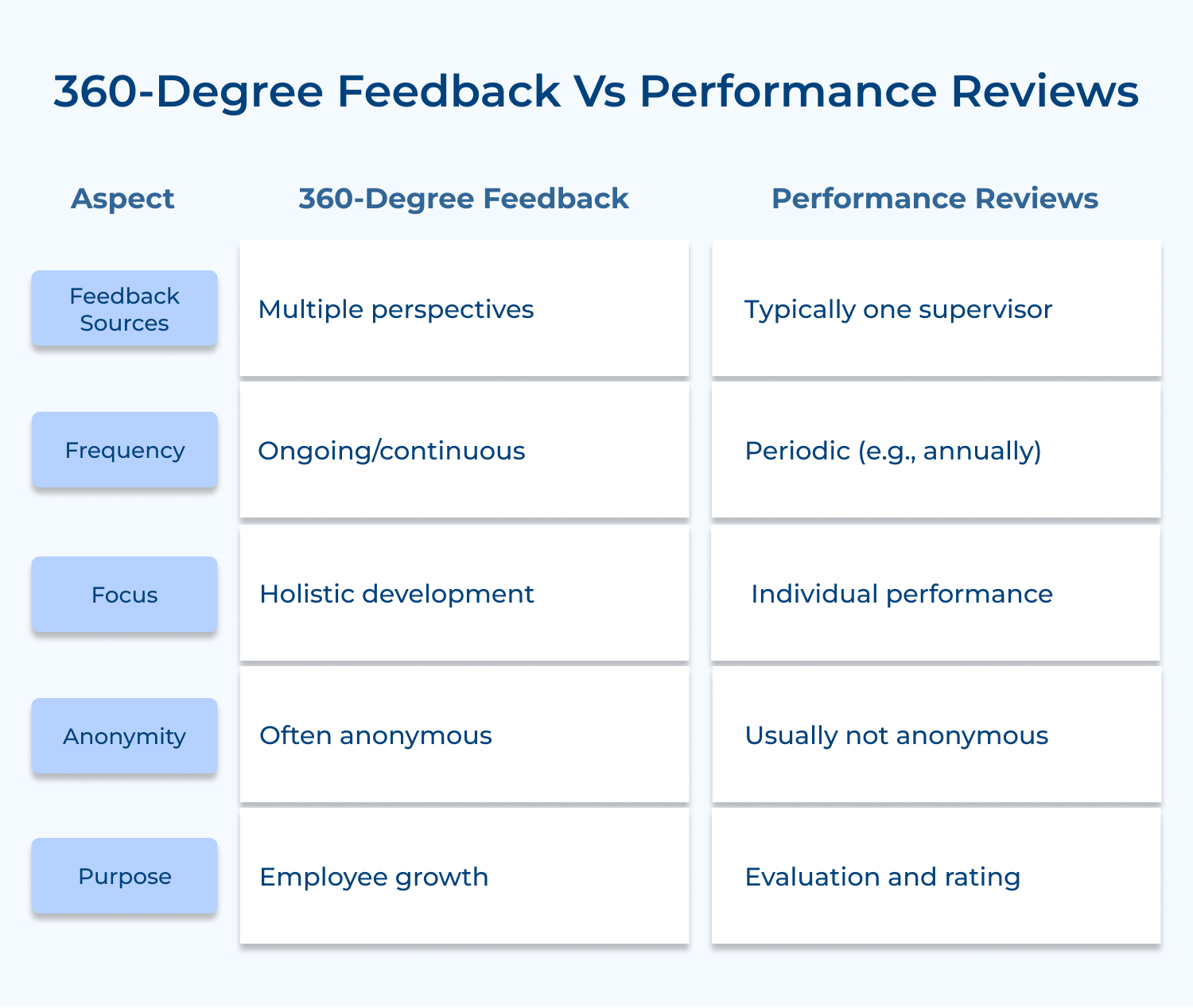
1. Feedback Sources
One of the most fundamental differences lies in the sources of feedback. 360-degree feedback gathers insights from multiple stakeholders, including peers, subordinates, supervisors and sometimes even clients. The broad range of perspectives provides a well-rounded view of an employee’s performance and behavior.
In contrast, performance reviews typically rely on feedback from a single source, usually the employee’s direct supervisor. The limited perspective can lead to a narrower evaluation, potentially overlooking important insights from colleagues and team members.
2. Frequency and Timing
Performance reviews are often conducted on a fixed schedule, such as annually or biannually. The structured timing can create pressure on both the reviewer and the employee, leading to a less dynamic assessment process.
A 360-degree feedback can be collected more frequently and flexibly, allowing for ongoing assessments as well as real-time insights. A continuous feedback loop helps employees adapt and improve more effectively over time.
3. Focus and Objectives
The focus of performance reviews is usually on evaluating past performance against specific metrics or goals set by the organization. They often aim to determine promotions, raises, or employment status.
Conversely, 360-degree feedback emphasizes personal and professional development. It aims to identify strengths and weaknesses, creating a culture of continuous improvement rather than merely assessing past performance.
4. Anonymity of Responses
Anonymity is another critical difference. 360-degree feedback often encourages anonymous responses, which can lead to more honest and candid feedback. This anonymity helps reduce fear of repercussions, promoting openness.
Meanwhile, performance reviews are typically not anonymous. Employees know who provided the feedback, which may discourage them from sharing honest evaluations due to potential conflicts or fear of damaging relationships.
5. Development vs. Evaluation
While both methods can contribute to employee growth, they serve different primary purposes. 360-degree feedback is more developmental in nature, aimed at identifying areas for improvement and facilitating professional growth. It provides constructive feedback that can guide future behavior and performance.
Performance reviews are primarily evaluative. They assess whether an employee has met established performance criteria, often resulting in a score or rating that influences decisions about compensation and promotions.
6. Outcome and Actionability
The outcomes of performance reviews often lead to administrative decisions, such as salary adjustments, promotions, or disciplinary actions. It can create a high-stakes environment that may hinder open dialogue.
360-degree feedback focuses on insights for personal and team development. The results are typically used to create individual development plans, coaching opportunities and training initiatives, promoting a more collaborative approach to improvement.
7. Cultural Impact
Finally, the cultural implications of each method are significant. 360-degree feedback builds a culture of collaboration and continuous learning. It encourages open communication as well as accountability across all levels of the organization.
Traditional performance reviews can contribute to a more hierarchical and less transparent culture. The emphasis on top-down evaluations may limit dialogue and discourage employees from engaging openly in discussions about their performance.
Implementing 360-degree feedback effectively requires careful planning and execution. Here are the best practices to maximize its impact and usefulness.
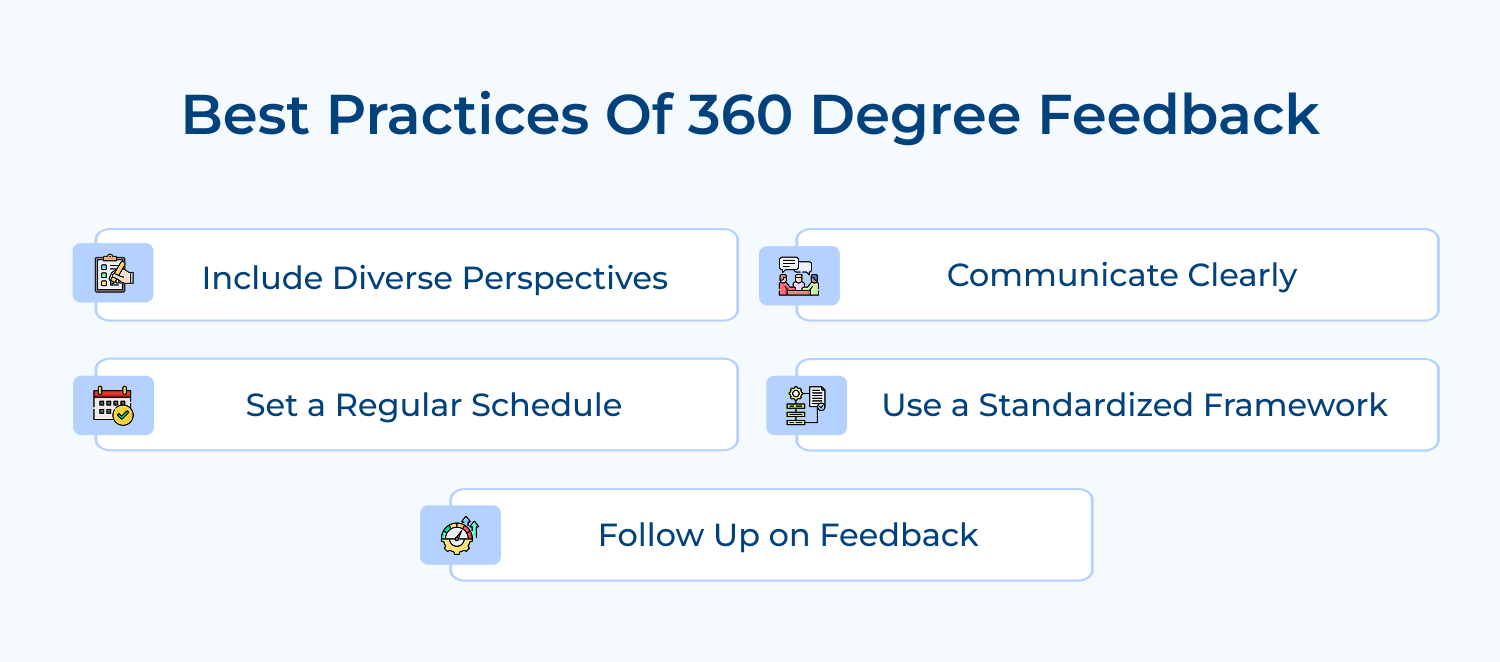
Include Diverse Perspectives
Involve a diverse range of evaluators to provide a well-rounded view of each employee’s performance. Including perspectives from peers, subordinates and clients enhances the quality of feedback. The diversity helps identify blind spots and creates a more comprehensive understanding of individual contributions.
Set a Regular Schedule
Establish a regular schedule for conducting 360-degree feedback assessments. Consistency ensures that feedback becomes an integral part of the organizational culture rather than a one-off event. Regular feedback sessions allow employees to track their progress over time and make continuous improvements.
Communicate the Purpose Clearly
Clearly communicate the purpose and benefits of the 360-degree feedback process to all participants. Understanding how feedback contributes to personal and organizational growth creates buy-in as well as participation. When employees see the value in the process, they are more likely to engage meaningfully and provide thoughtful feedback.
Use a Standardized Framework
Adopt a standardized feedback framework to ensure consistency across evaluations. A clear structure helps participants understand what to assess, making the process more efficient and easier to analyze. Standardization also enables comparisons over time, facilitating tracking of progress and areas that require attention.
Follow Up on Feedback
Establish a system for follow-up discussions after feedback is delivered. Regular check-ins allow employees to reflect on the feedback and track their progress. These discussions also provide opportunities to adjust development plans based on ongoing insights. Thus, ensuring continuous improvement and accountability.
360-degree feedback is popular in various industries, providing employees with comprehensive insights from peers and supervisors. Here are some example phrases of 360 degree feedback.
Peer feedback focuses on how colleagues at the same level experience working with someone. These examples show how peers can provide valuable insights about day-to-day interactions and collaborative work styles.
Communication feedback examines how effectively someone conveys information, listens to others and facilitates understanding across different situations as well as audiences.
Problem-solving feedback assesses how someone approaches challenges, thinks critically and develops effective solutions. This category reveals thinking processes and decision-making abilities.
Collaboration feedback examines how well someone works with others toward shared goals. This includes teamwork, conflict resolution and the ability to build productive working relationships.
In conclusion, 360-degree feedback is a powerful tool for building employee growth and enhancing organizational performance. By collecting insights from multiple sources (peers, supervisors and subordinates) this comprehensive feedback mechanism provides a well-rounded view of an individual’s strengths and areas for improvement. It promotes a culture of open communication, accountability and continuous development, ultimately leading to greater employee engagement as well as satisfaction.
As businesses adapt to an ever-changing environment, implementing 360-degree feedback can be a key strategy for nurturing talent and driving success. Thus, ensuring that both employees and organizations thrive together.

What are the four parts of 360-degree feedback?
The four parts of 360-degree feedback include self-assessment, peer feedback, subordinate feedback and supervisor evaluation. The comprehensive approach gathers diverse perspectives on an individual’s performance, skills and behaviors, providing a well-rounded view that helps identify strengths as well as areas for improvement.
How can 360-degree feedback improve employee performance?
360-degree feedback enhances employee performance by providing comprehensive insights from multiple perspectives, promoting self-awareness and accountability. It identifies skill gaps, highlights strengths and encourages open communication. The process motivates individuals to develop their competencies and align their goals with organizational objectives, leading to improved performance.
What are the challenges associated with 360 degree feedback?
Challenges of 360-degree feedback include potential bias in evaluations, the risk of a negative impact on morale and resistance to feedback. Ensuring anonymity and building a culture of trust are critical. Poorly designed questionnaires can lead to unclear or unhelpful insights, hindering the feedback process.
How can you ensure the effectiveness of 360 degree feedback?
Ensure effectiveness by clearly communicating the purpose and process to participants. Provide training on giving and receiving feedback, use well-structured questionnaires, as well as maintain anonymity. Follow up with development plans and regular check-ins to reinforce the feedback’s relevance as well as impact on performance.
How often should 360 Degree Feedback be conducted?
360-degree feedback should typically be conducted annually or biannually. This frequency allows for meaningful progress tracking and development while avoiding feedback fatigue. Organizations may adjust the schedule based on specific needs, such as during significant changes or development initiatives, ensuring it remains relevant and impactful.
What are the pros and cons of 360-degree feedback?
Pros are that 360-degree feedback offers a comprehensive view of employee performance by gathering insights from multiple sources, enhancing self-awareness and accountability. It creates open communication and encourages continuous professional development. However, the downside is that it can be time-consuming and may overwhelm employees with excessive feedback. There’s a risk of bias or negativity if the process is not managed well and concerns about anonymity can hinder honest responses.
 https://omni24.io/wp-content/uploads/2026/08/AI-Customer-Service-Agents.png
1256
2400
Webvision Solution
https://omni24.io/wp-content/uploads/2023/04/Omni-Logo-1.svg
Webvision Solution2026-09-21 04:48:512026-09-21 04:48:51How to Build an AI Customer Service Agents: 8 Key Steps
https://omni24.io/wp-content/uploads/2026/08/AI-Customer-Service-Agents.png
1256
2400
Webvision Solution
https://omni24.io/wp-content/uploads/2023/04/Omni-Logo-1.svg
Webvision Solution2026-09-21 04:48:512026-09-21 04:48:51How to Build an AI Customer Service Agents: 8 Key Steps https://omni24.io/wp-content/uploads/2026/08/Omnichannel-Conversational-AI.png
1256
2400
Tushar Joshi
https://omni24.io/wp-content/uploads/2023/04/Omni-Logo-1.svg
Tushar Joshi2026-09-16 03:51:072026-09-16 03:51:07How to Build Omnichannel Conversational AI Strategy
https://omni24.io/wp-content/uploads/2026/08/Omnichannel-Conversational-AI.png
1256
2400
Tushar Joshi
https://omni24.io/wp-content/uploads/2023/04/Omni-Logo-1.svg
Tushar Joshi2026-09-16 03:51:072026-09-16 03:51:07How to Build Omnichannel Conversational AI Strategy https://omni24.io/wp-content/uploads/2026/08/Customer-Service-Teams.png
1256
2400
Tushar Joshi
https://omni24.io/wp-content/uploads/2023/04/Omni-Logo-1.svg
Tushar Joshi2026-09-15 04:01:522026-09-15 04:02:16How to Build Customer Service Teams: 6 Key Steps
https://omni24.io/wp-content/uploads/2026/08/Customer-Service-Teams.png
1256
2400
Tushar Joshi
https://omni24.io/wp-content/uploads/2023/04/Omni-Logo-1.svg
Tushar Joshi2026-09-15 04:01:522026-09-15 04:02:16How to Build Customer Service Teams: 6 Key Steps
Whether it’s about acquire, engage or support – Omni24 covers all your customer engagement needs in one complete platform.

Copyright ©2026 Veemo All rights reserved.
CA, Los Angeles, Hall Ave, 19011