What is Customer Obsession and Why Does It Matter?
Customer obsession builds trust and loyalty. Putting customers first helps avoid Chatbot Fails while driving growth, innovation and success.

Customer obsession builds trust and loyalty. Putting customers first helps avoid Chatbot Fails while driving growth, innovation and success.
Many companies are struggling to cultivate a culture that truly puts the customer at the center of everything they do.
Customer-obsessed companies grow revenue 2.5x faster than their peers and generate 5.7x more revenue than competitors, according to Forrester & Qualtrics research.
It’s predicted that customer experience will overtake price and product as the key brand differentiator. To build a successful business, it is essential to adopt a customer-obsessed culture.
Explore the benefits and provide practical tips on how to nurture customer obsession within your organization. Let’s dive in and discover how you can transform your company into a customer-centric powerhouse.
A customer-obsessed culture is a business mindset that prioritizes the needs, wants and satisfaction of customers above all else. This type of culture focuses on building strong relationships with customers, understanding their preferences and continuously striving to exceed their expectations.
In a customer-obsessed culture, every decision and action taken by an organization is guided by the desire to create a positive experience for customers.
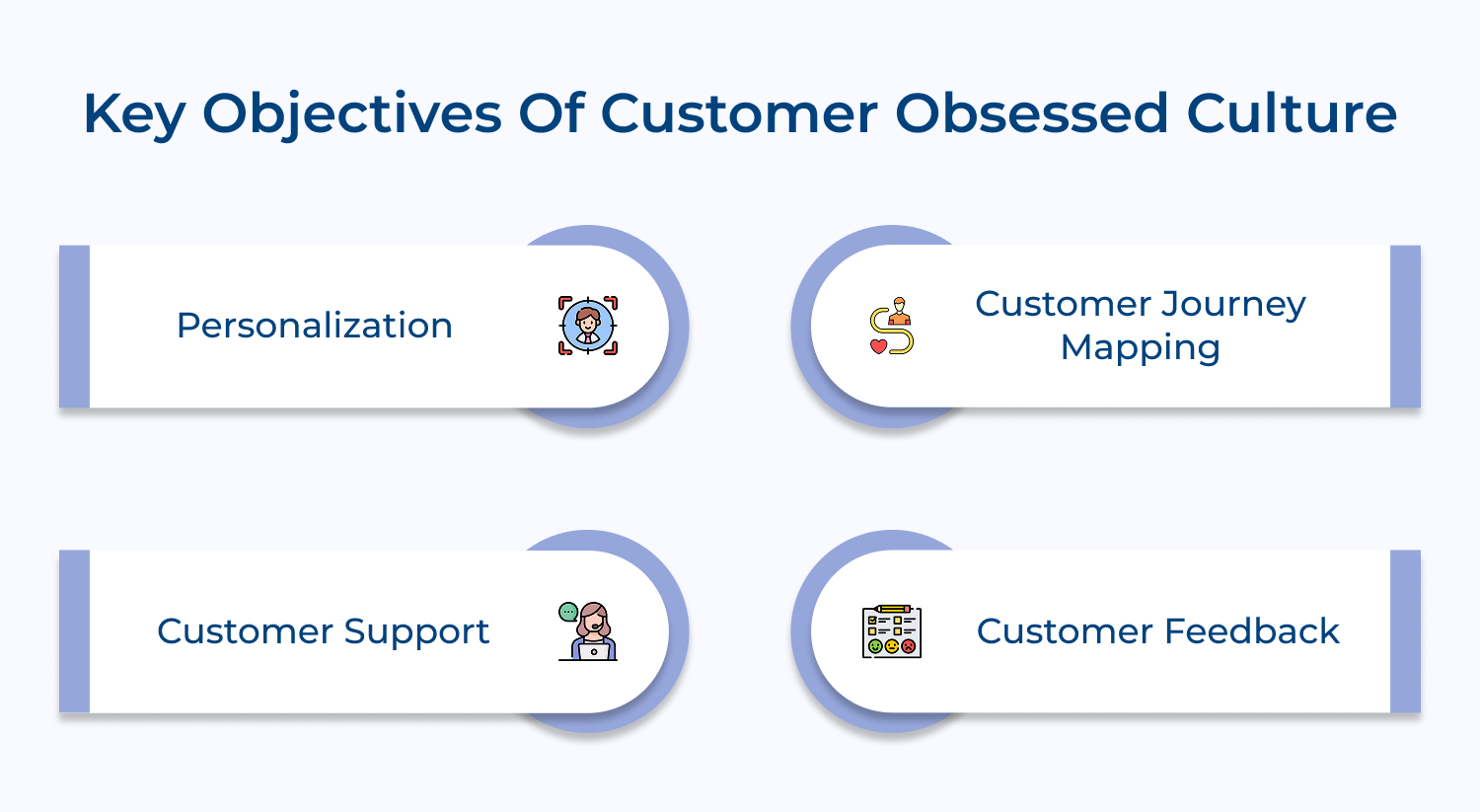
Key components:
Building a customer-obsessed culture is crucial for any organization that wants to create exceptional customer experiences.
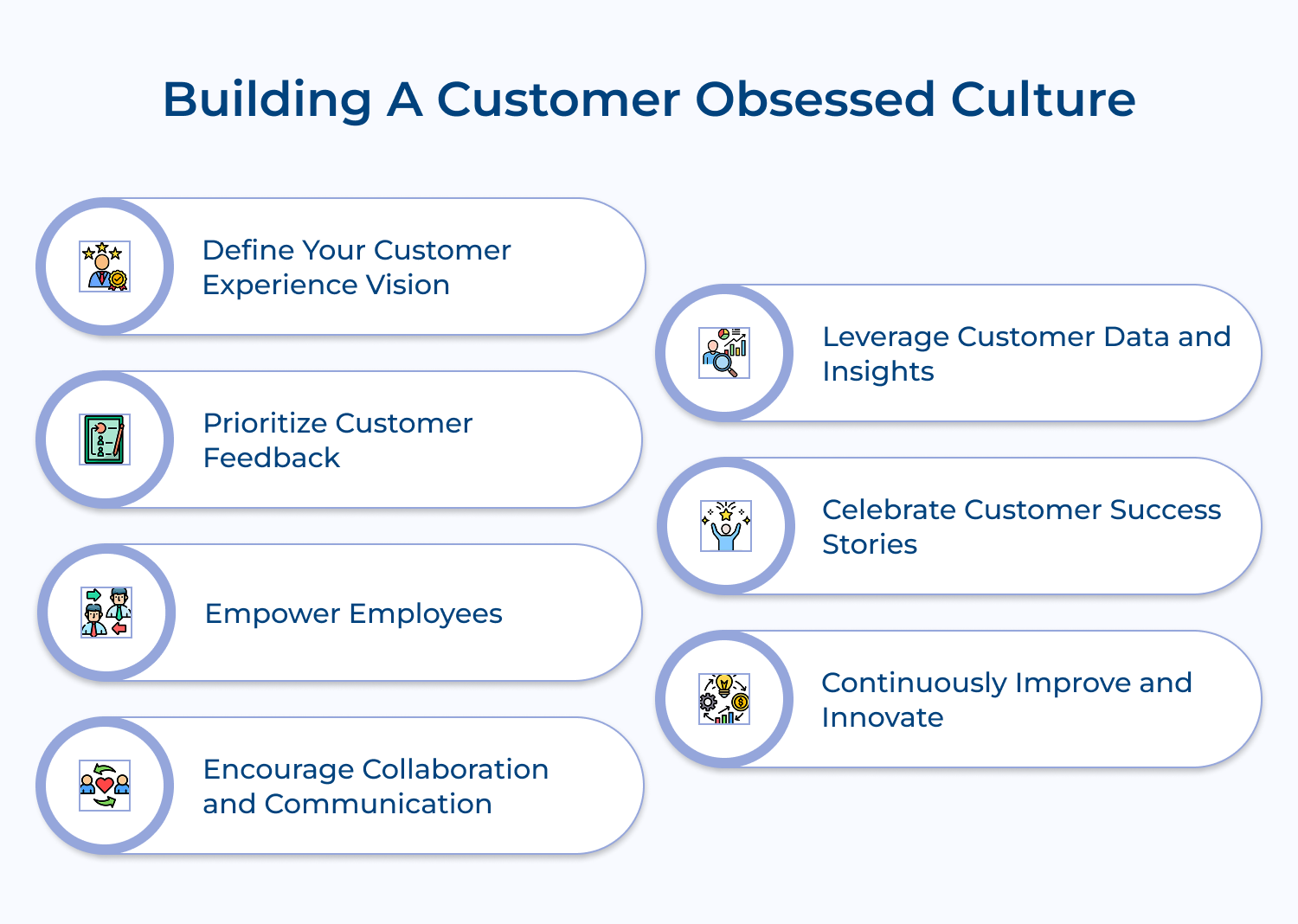
Start by clearly defining your customer experience vision and the desired customer journey. Involve employees from various departments to ensure a shared understanding of what excellent customer service means for your organization.
Encourage customers to provide feedback through various channels, such as surveys, social media, and direct communication. Actively listen to their pain points and use this feedback to drive improvements.
Provide your employees with the necessary training, tools, and autonomy to make customer-centric decisions. Encourage them to take ownership of customer issues and empower them to resolve problems promptly.
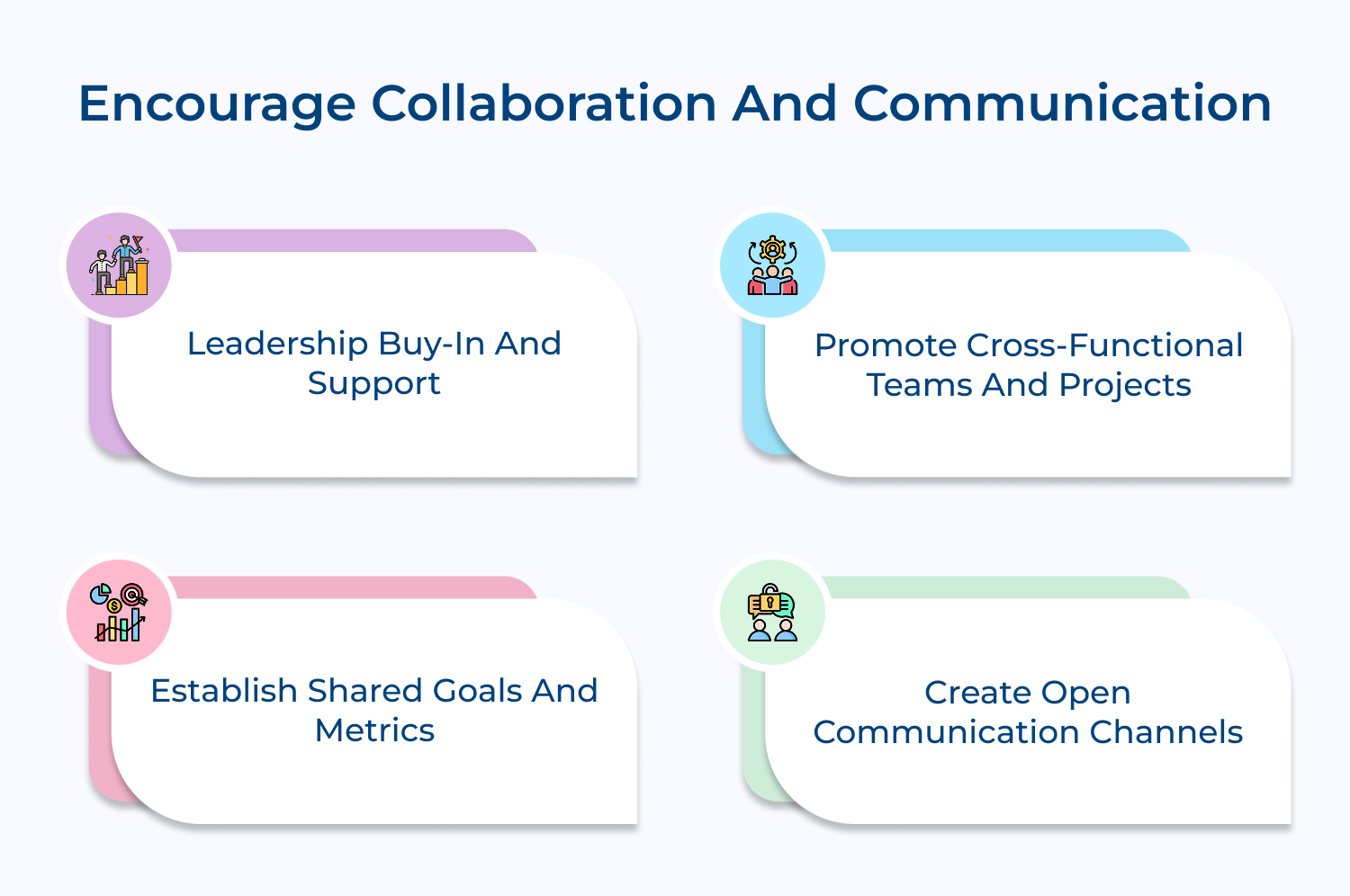
Break down silos between departments and promote cross-functional collaboration. Ensure that customer insights and feedback are shared across teams, enabling a holistic understanding of customer needs.
Collect & analyze customer data from various sources, such as sales records, customer service interactions and social media mentions. Use these insights to inform decision-making, product development and customer experience improvements.
Recognize and celebrate employees who go the extra mile to deliver exceptional customer experiences. Share customer success stories and positive feedback throughout the organization to reinforce the importance of a customer-obsessed mindset.
Embrace a mindset of continuous improvement and innovation. Regularly review and refine your customer experience strategies, processes & offerings based on customer feedback, market trends, and competitive analysis.
Customer obsession is a mindset and a set of practices that organizations adopt to put their customers at the center of everything they do.
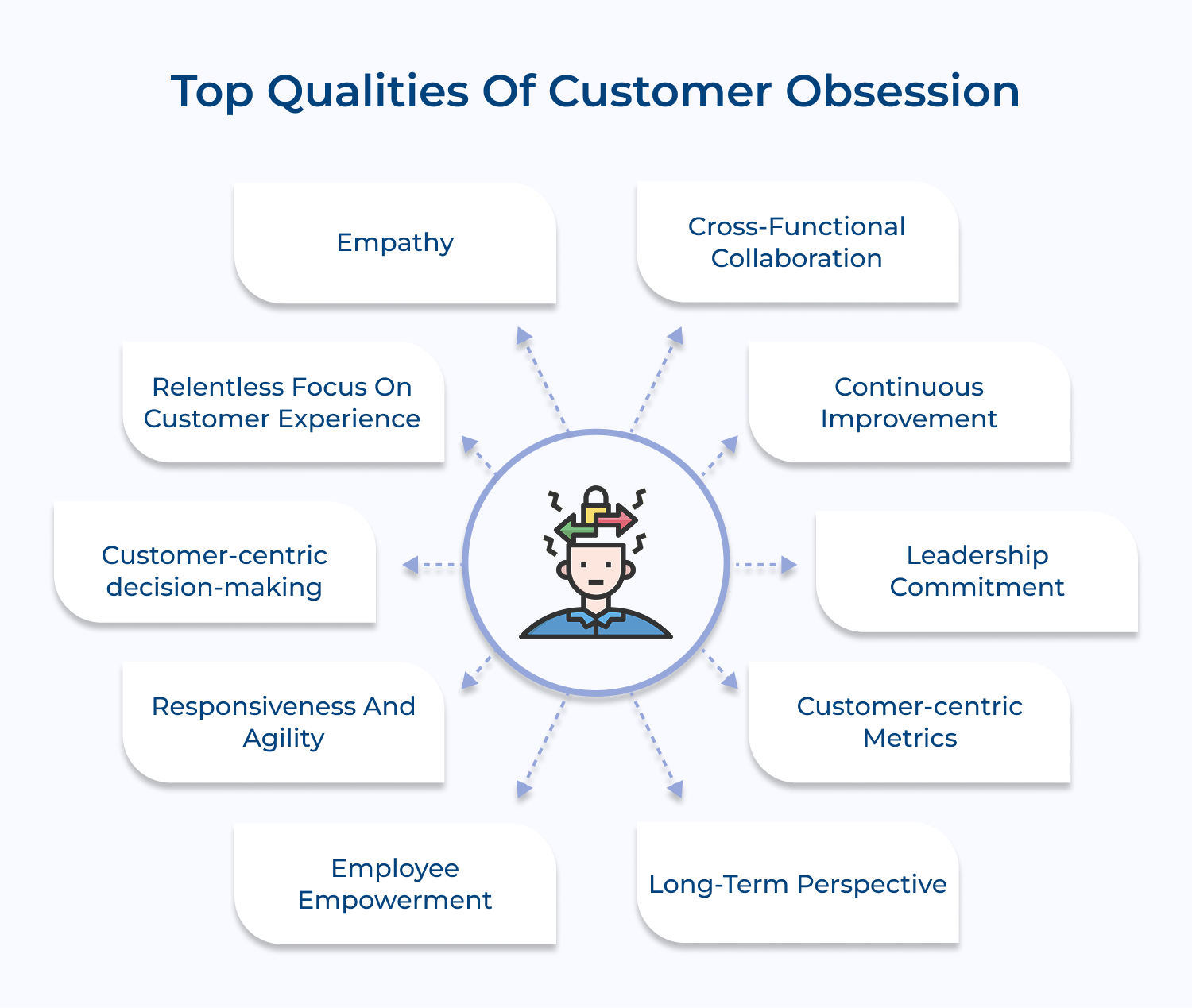
Measuring customer obsession is crucial for organizations to ensure that their efforts to prioritize customers are effective and produce desired results.
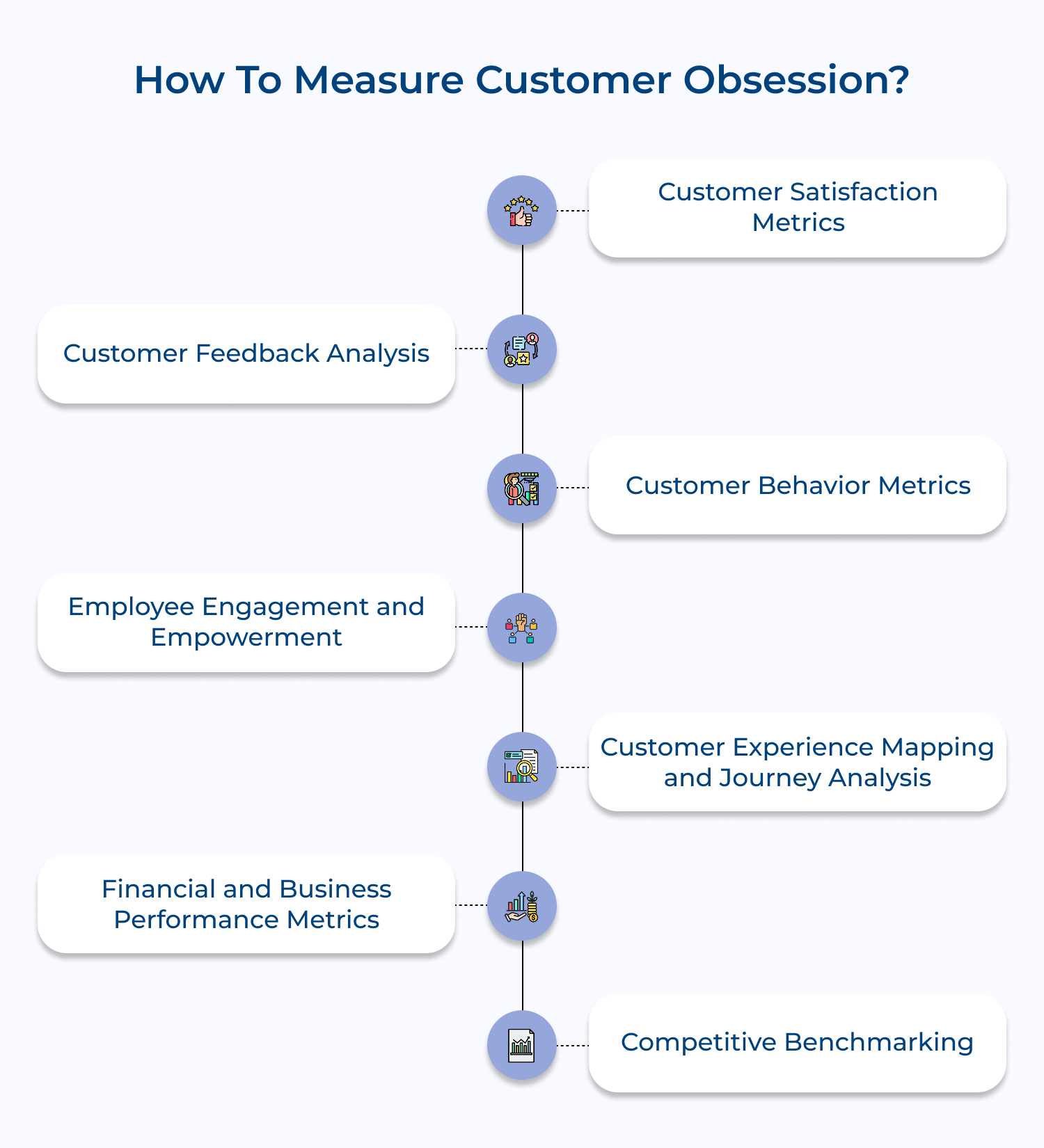
1. Customer Satisfaction Metrics
2. Customer Feedback Analysis
3. Customer Behavior Metrics
4. Employee Engagement and Empowerment
5. Customer Experience Mapping and Journey Analysis
6. Financial and Business Performance Metrics
7. Competitive Benchmarking
Customer obsession is vital for success in today’s competitive market, driving higher satisfaction and loyalty. Leading companies prove this by consistently delivering exceptional customer experiences.
1. Amazon
Amazon is renowned for its customer-obsessed culture, which has been a driving force behind its success. The company’s relentless focus on customer convenience, selection and price has set industry standards. Some key examples of Amazon’s customer-obsession include:
2. Ritz-Carlton
The Ritz-Carlton luxury hotel chain is renowned for its unwavering commitment to customer service excellence. The company’s customer-obsessed culture is ingrained in its employees through rigorous training and empowerment.
Examples include:
3. Trader Joe’s
Trader Joe’s, the grocery chain known for its unique product offerings and quirky store atmosphere, has cultivated a loyal customer following through its customer-obsessed culture.
Examples include:
Driving sustainable growth through a customer-obsessed culture is essential for businesses looking to thrive in today’s competitive market. By putting the customer at the center of all decisions and actions, organizations can build strong relationships that drive long-term success.
Focusing on delivering exceptional customer experiences helps businesses to differentiate themselves from the competition and achieve sustainable growth. Embracing a customer-obsessed culture is not just a trend, but a strategic imperative for businesses looking to succeed in the digital age.

Why is customer obsession important?
Customer obsession is crucial because it directly impacts customer satisfaction, loyalty and ultimately, the success of a company. When a business is customer obsessed, it means that they prioritize the needs and wants of their customers above all else. This includes listening to customer feedback, understanding their preferences and constantly striving to improve the customer experience.
What does customer obsession look like?
Customer obsession looks like going the extra mile to understand and meet the needs of customers. It means actively listening to customer feedback, analyzing data to identify trends and patterns and continuously improving products or services based on customer input.
What does it mean to be customer obsessed?
It means to put the customer at the center of everything you do. It means making decisions based on what is best for the customer, even if it may not be the most profitable or convenient option for the company. It involves understanding the customer journey, anticipating their needs and delivering a seamless experience every step of the way.
Why will customer obsession (CO) matter more in the future?
In the future, customer obsession will matter more than ever before. With the rise of social media and online reviews, customers have more power than ever before. A single negative review can spread like wildfire and damage a company’s reputation. On the flip side, positive reviews and word-of-mouth recommendations can have a huge impact on a company’s success.
 https://omni24.io/wp-content/uploads/2026/09/Social-commerce-scaled.png
1340
2560
Webvision Solution
https://omni24.io/wp-content/uploads/2023/04/Omni-Logo-1.svg
Webvision Solution2026-10-23 12:18:272026-10-23 12:18:27What is Social Commerce and Why Does It Matter?
https://omni24.io/wp-content/uploads/2026/09/Social-commerce-scaled.png
1340
2560
Webvision Solution
https://omni24.io/wp-content/uploads/2023/04/Omni-Logo-1.svg
Webvision Solution2026-10-23 12:18:272026-10-23 12:18:27What is Social Commerce and Why Does It Matter? https://omni24.io/wp-content/uploads/2026/08/AI-Customer-Service-Agents.png
1256
2400
Webvision Solution
https://omni24.io/wp-content/uploads/2023/04/Omni-Logo-1.svg
Webvision Solution2026-09-21 04:48:512026-09-21 04:48:51How to Build an AI Customer Service Agents: 8 Key Steps
https://omni24.io/wp-content/uploads/2026/08/AI-Customer-Service-Agents.png
1256
2400
Webvision Solution
https://omni24.io/wp-content/uploads/2023/04/Omni-Logo-1.svg
Webvision Solution2026-09-21 04:48:512026-09-21 04:48:51How to Build an AI Customer Service Agents: 8 Key Steps https://omni24.io/wp-content/uploads/2026/08/Omnichannel-Conversational-AI.png
1256
2400
Tushar Joshi
https://omni24.io/wp-content/uploads/2023/04/Omni-Logo-1.svg
Tushar Joshi2026-09-16 03:51:072026-09-16 03:51:07How to Build Omnichannel Conversational AI Strategy
https://omni24.io/wp-content/uploads/2026/08/Omnichannel-Conversational-AI.png
1256
2400
Tushar Joshi
https://omni24.io/wp-content/uploads/2023/04/Omni-Logo-1.svg
Tushar Joshi2026-09-16 03:51:072026-09-16 03:51:07How to Build Omnichannel Conversational AI Strategy
Whether it’s about acquire, engage or support – Omni24 covers all your customer engagement needs in one complete platform.

Copyright ©2026 Veemo All rights reserved.
CA, Los Angeles, Hall Ave, 19011