What are B2B Chatbots and Why is it Important?
B2B chatbots automate routine interactions, freeing teams for high-value tasks while delivering scalable support to boost client satisfaction and relationships.
B2B chatbots automate routine interactions, freeing teams for high-value tasks while delivering scalable support to boost client satisfaction and relationships.
B2B businesses face immense challenges in scaling operations efficiently while providing exceptional customer experiences. Long response times, high overhead costs and a lack of 24/7 support can hinder growth as well as client satisfaction.
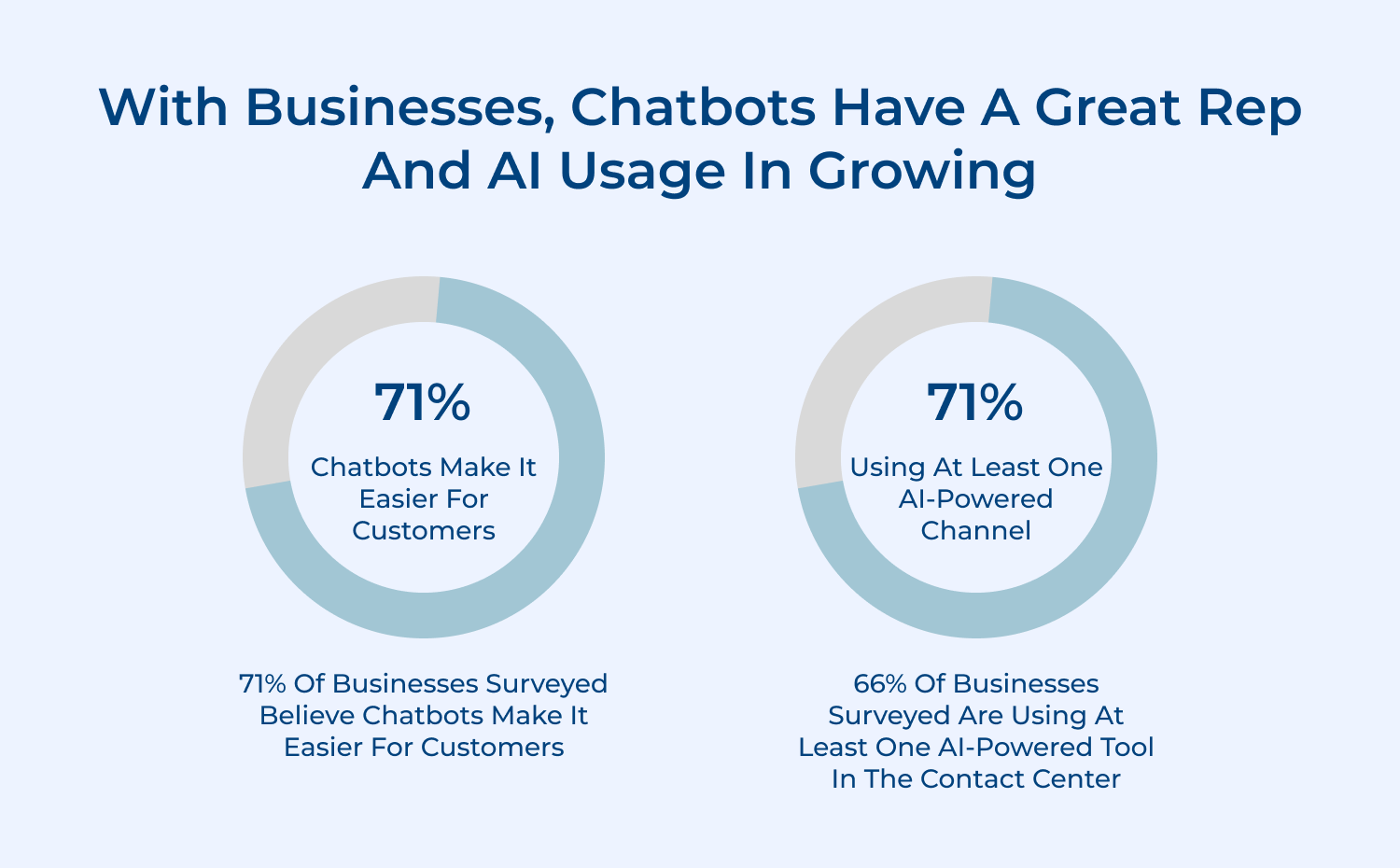
It is where B2B chatbots emerge as a game-changing solution, automating crucial processes and delivering unparalleled value. 56% of businesses call chatbots transformative for scaling B2B support, sales, or onboarding.
Explore the comprehensive guide on the transformative potential of B2B chatbots, delving into real-world use cases, practical examples and tangible benefits across various industries.
B2B chatbots are virtual assistants that leverage natural language processing (NLP) and machine learning technologies to manage inquiries, process leads or provide support to out various business related tasks. They are typically integrated into messaging platforms, websites, or other business tools to interact with their professional counterparts.
The main objectives of B2B chatbots include:
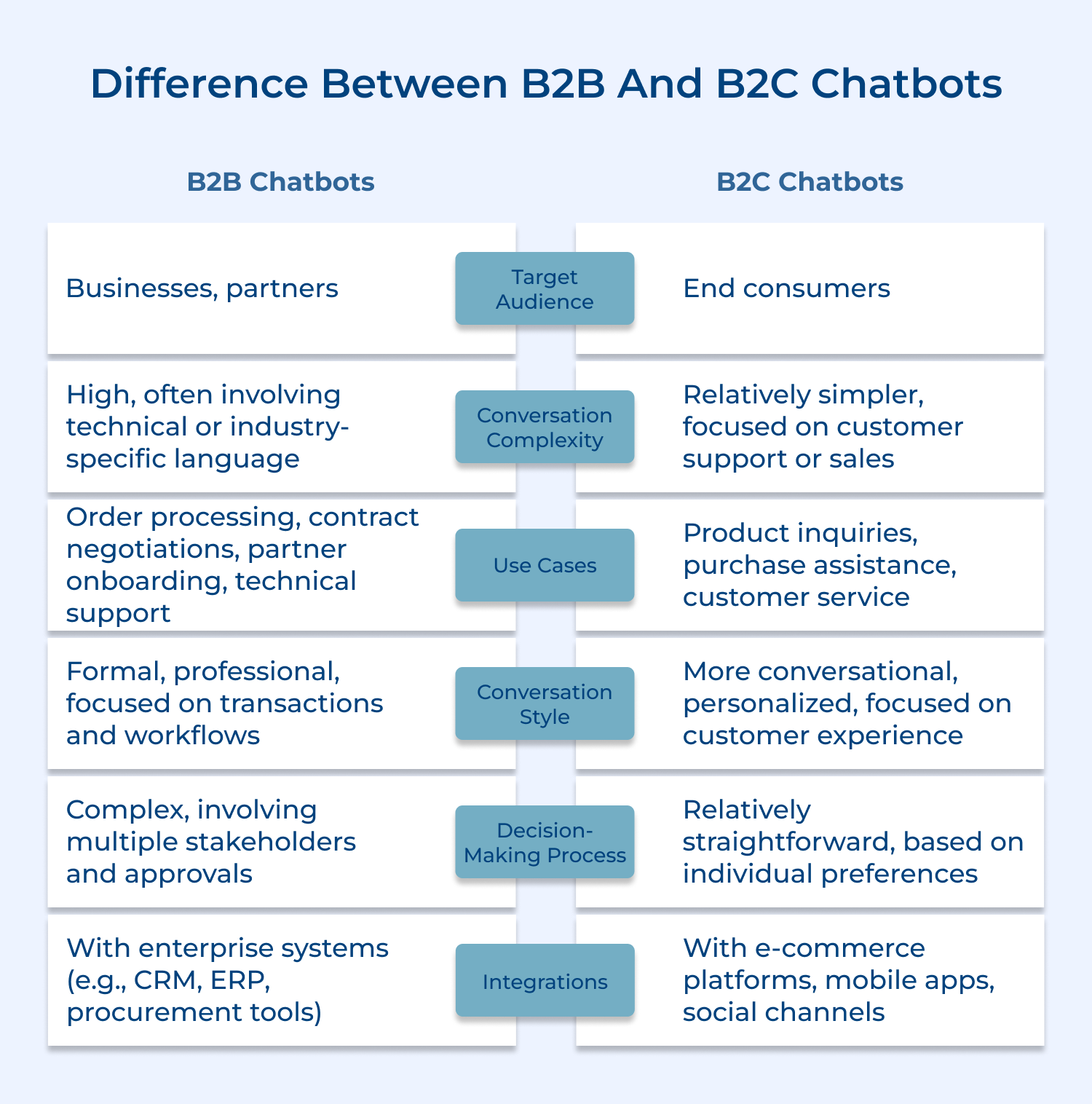
While both B2B and B2C (Business-to-Consumer) chatbots are conversational AI tools, they differ in their target audience, use cases and implementation strategies.
Implementing B2B chatbots can bring numerous benefits to businesses, helping them streamline operations, improve customer experiences and drive growth.
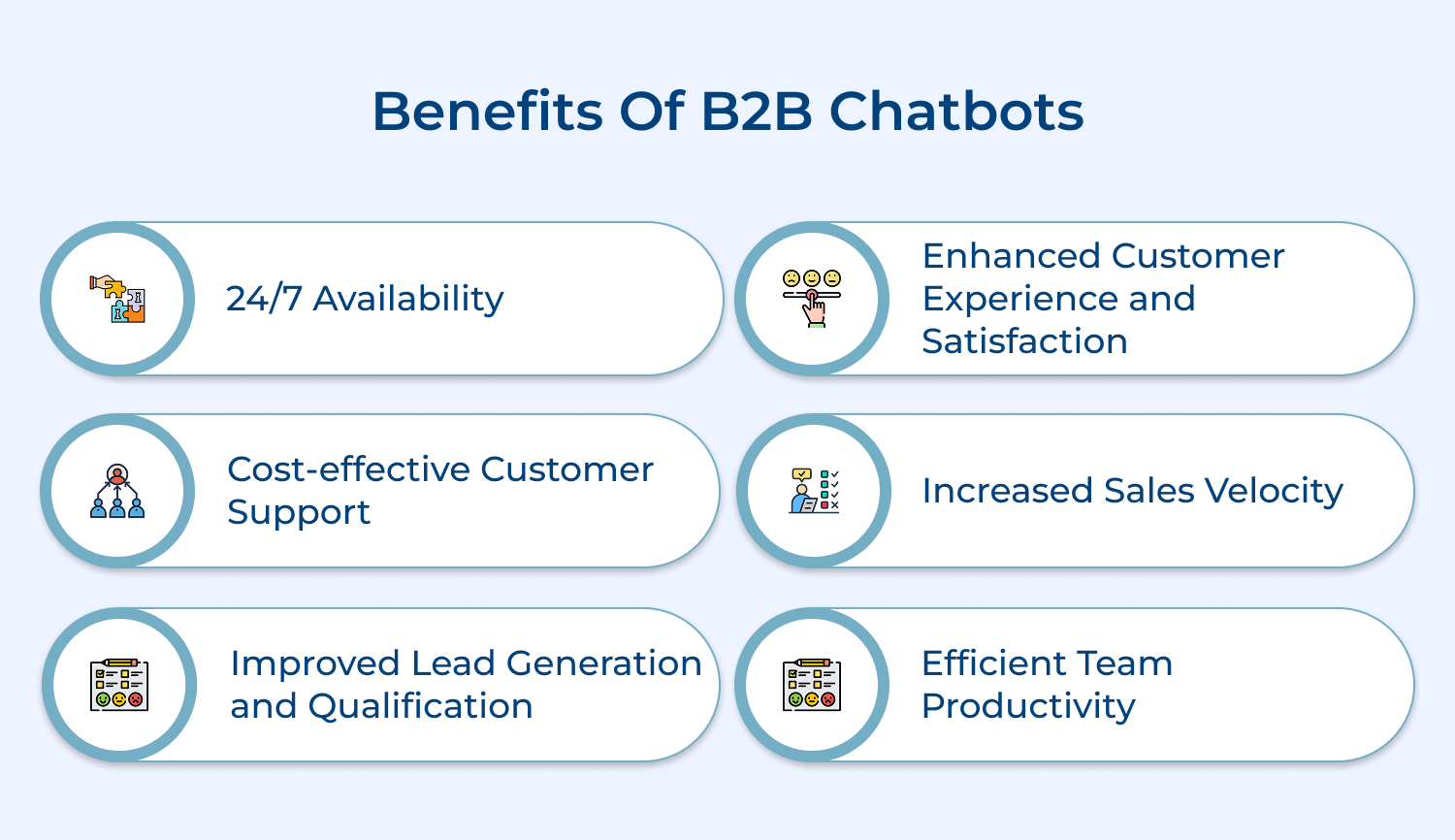
1. 24/7 Availability
B2B AI chatbots operate around the clock, providing constant availability and instant responses to inquiries or requests from partners, suppliers, or other businesses. It ensures that critical information or support is accessible at all times, regardless of time zones or business hours.
2. Cost-effective Customer Support
Traditional customer support channels, such as call centers or email support, can be resource-intensive and costly. B2B chatbots offer a cost-effective alternative by automating routine inquiries and tasks, reducing the workload on human support staff.
3. Improved Lead Generation and Qualification
B2B chatbots can be powerful tools for lead generation and qualification. By engaging with potential customers or partners through conversational interfaces, chatbots can gather relevant information, understand their specific needs and qualify leads based on predefined criteria.
4. Enhanced Customer Experience and Satisfaction
B2B AI chatbots provide a modern and convenient way for businesses to interact with their professional counterparts. By offering instant responses, personalized recommendations and seamless access to information or support, chatbots can significantly improve the overall customer experience.
5. Increased Sales Velocity
B2B chatbots can directly contribute to accelerating the sales cycle by automating various aspects of the sales process. For example, chatbots can provide product recommendations, handle order processing, answer pre-sales queries and even facilitate contract negotiations.
6. Efficient Team Productivity
B2B chatbots can significantly boost team productivity by offloading repetitive tasks, freeing up valuable human resources to focus on more strategic and high-value activities. For instance, chatbots can handle routine inquiries, gather customer data or assist with internal processes, enabling teams to dedicate their efforts to more complex tasks that require human expertise.
Chatbots are reshaping B2B operations by transforming how businesses interact and function.
They provide instant responses and streamline critical processes with greater efficiency.
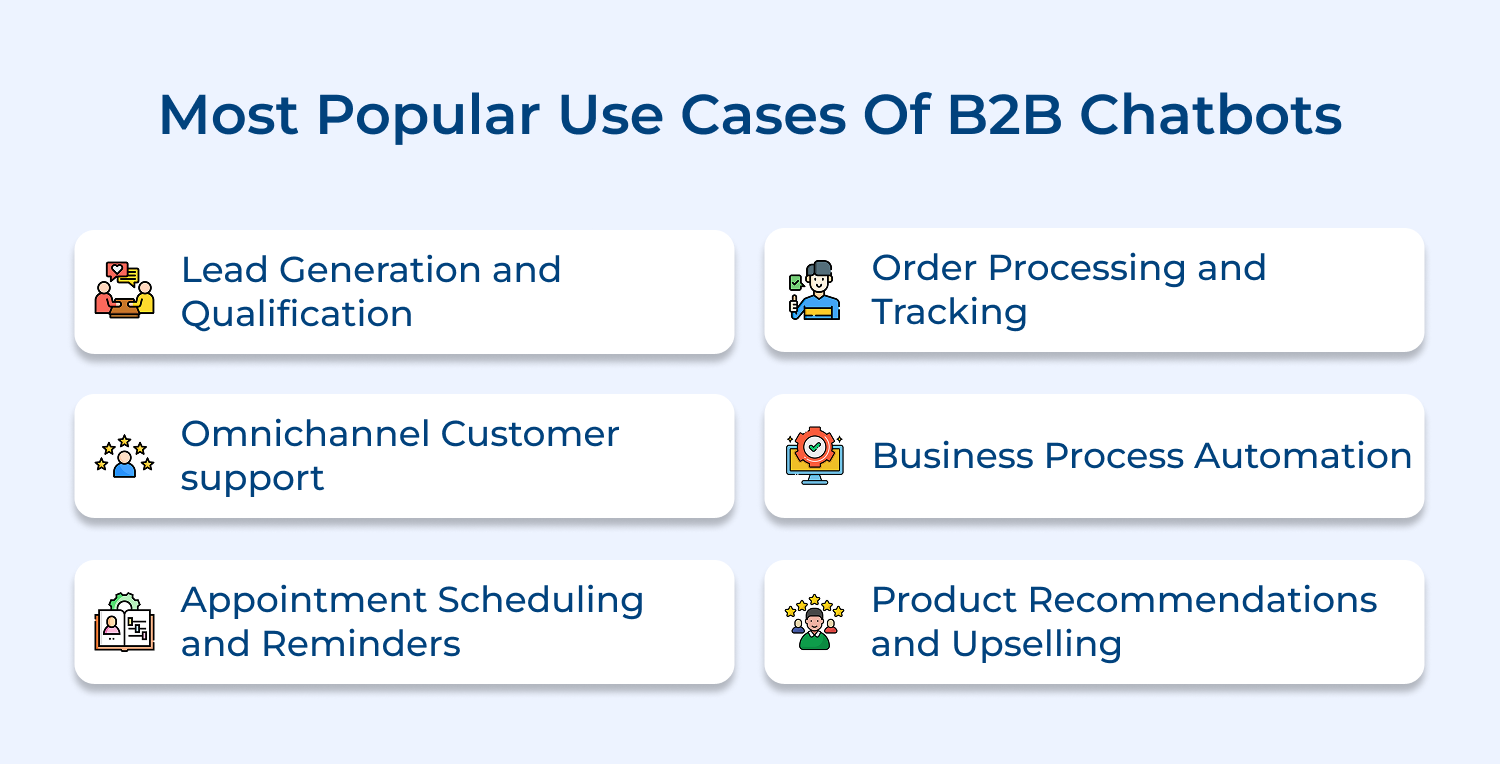
Lead generation is a critical part of business development and revenue focussed activities. Implementing AI powered chatbots allow B2B organizations to streamline their sales processes, optimize resource allocation and automate leads qualification based on predefined criteria.
It not just helps to reduce the workload on sales teams but allows them to focus on high-quality leads and maximize productivity.
How to implement:
Effective customer support can significantly impact business growth by reducing support costs and increasing customer retention rates. Satisfied customers are more likely to remain loyal, make repeat purchases, and build a virality to drive brand equity among core audience
Here is how you can implement it:
AI chatbots can handle the entire appointment scheduling process, from capturing customer preferences and availability to sync with team calendars in real time. It can significantly reduce the administrative burden on employees, freeing up valuable time and resources.
They also provide customers with a seamless and user-friendly experience, enabling them to schedule appointments at their convenience, without the constraints of business hours or waiting times. Automated reminders also help to reduce no shows, hence improving operational efficiency and customer retention.
How to implement:
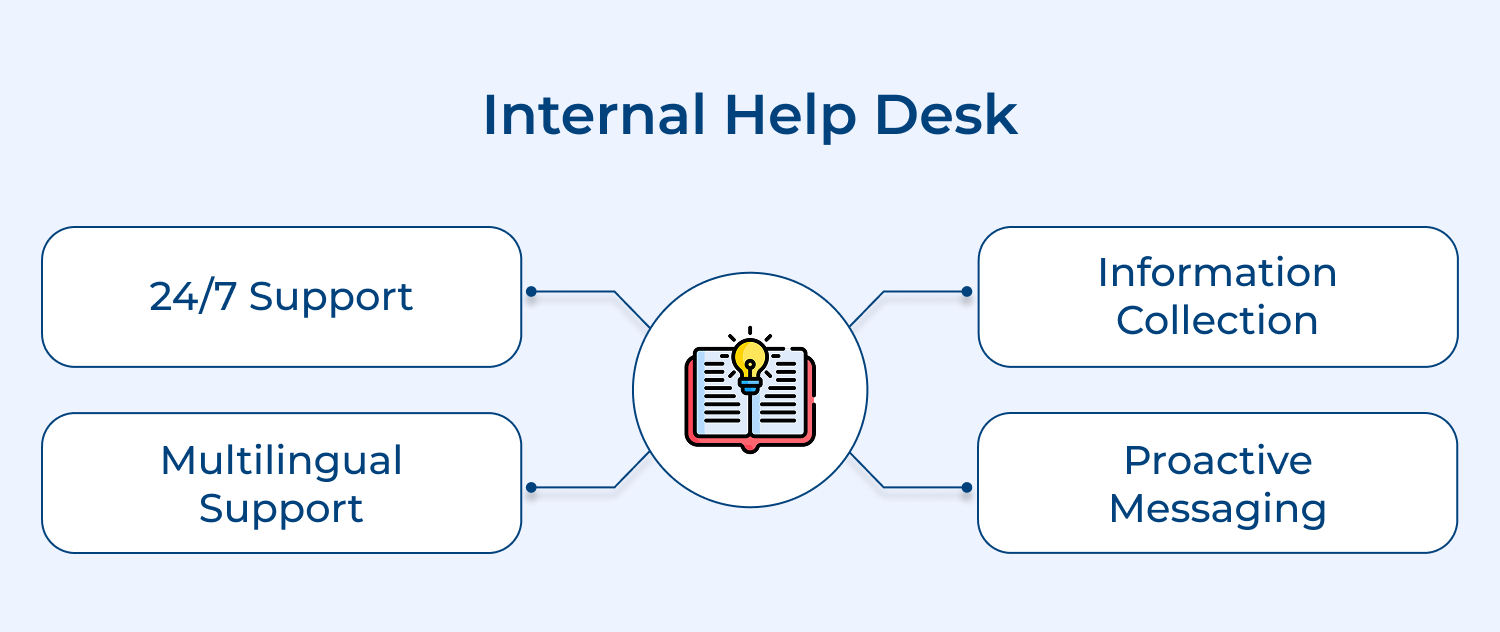
Business bots can also work as an internal service desk agent for employees to access information, resolve common issues and facilitate internal processes. It can significantly reduce the workload on human support teams, enabling them to focus on more complex and strategic initiatives.
Not just that, chatbots provide 24/7 availability, ensuring employees can access assistance at their convenience, minimizing downtime and encouraging a more productive work environment.
How to implement:
Customers appreciate the convenience and transparency of being able to place orders, track shipments & receive timely updates without the need for human intervention. By automating these crucial processes, B2B chatbots significantly improve operational efficiency, reducing the workload on customer service teams and minimizing the potential for human errors.
Chatbots also offer 24/7 availability, ensuring customers can access information and services at their convenience, fostering a superior client satisfaction.
How to implement:
Business process automation is about automating a wide range of tasks, which are laboursome and repetitive in nature. It could range from data entry, document processing or even as critical as approval workflows.
B2B chatbots can significantly improve business performance by reducing errors, minimizing delays, and freeing up valuable human resources to focus on more strategic and high-value activities. They also provide a standardized approach to process execution, ensuring compliance with organizational policies and industry regulations.
How to implement:
Chatbots can be integrated with customer data platforms to gather insights into purchasing behavior, preferences and interests for personalized recommendations. It not only increases the average order value but also fosters customer satisfaction by introducing them to relevant products they may have otherwise overlooked.
It can impact in below ways:
AI chatbots have become an integral part of various industries, revolutionizing the way businesses interact with their customers and partners.
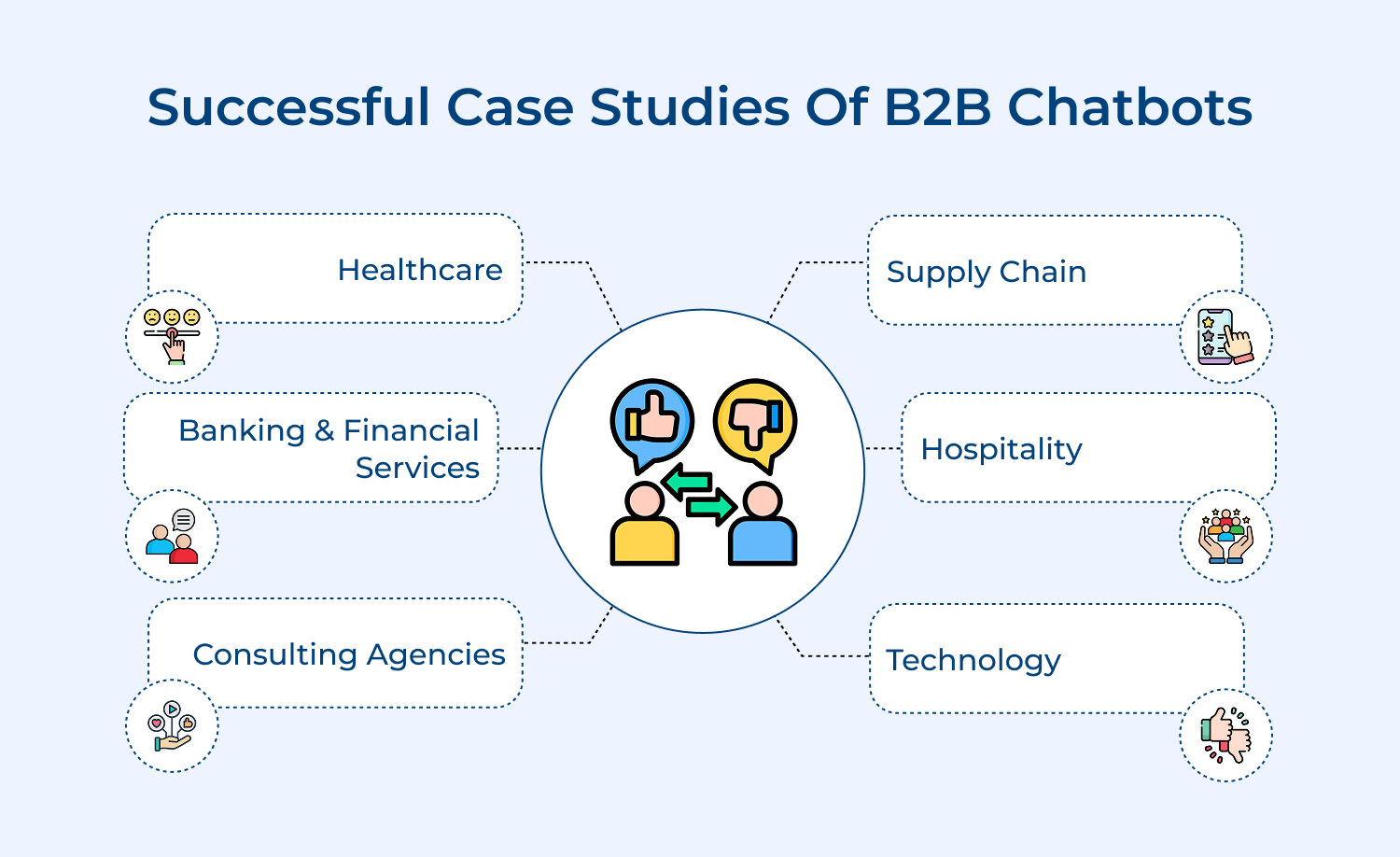
1. Healthcare
Buoy Health, a leading healthcare technology company, has developed a chatbot that assists patients in self-assessing their symptoms and providing personalized recommendations. The chatbot leverages advanced natural language processing & machine learning algorithms to understand the patient’s concerns and provide accurate guidance on whether they should seek medical attention or self-care at home.
2. Banking & Financial Services
Capital One, a major financial services provider, has implemented a chatbot named “Eno” to assist customers with various banking-related tasks. Eno can help customers check account balances, review transaction histories and even provide personalized financial insights and recommendations based on their spending patterns & financial goals.
3. Consulting Agencies
Accenture, a global professional services company, has developed a chatbot named “Amy” to streamline the process of scheduling meetings and managing calendars. Amy uses natural language processing to understand meeting requests and coordinates with attendees to find the most suitable time or location, reducing the administrative burden on employees.
4. Supply Chain
Siemens, a global powerhouse in the manufacturing and engineering sectors, has implemented a chatbot named “Siemens Assistants” to streamline its supply chain operations. This chatbot enables Siemens’ customers and partners to access real-time information on product availability, order status & delivery timelines, improving transparency among stakeholders.
5. Hospitality
Hyatt Hotels Corporation has introduced a chatbot named “Harry” to enhance the guest experience. Harry can assist guests with a wide range of tasks, including making reservations, providing local recommendations and addressing common queries related to hotel amenities & services. By leveraging natural language processing, Harry can respond to guests’ requests in a personalized and efficient manner.
6. Technology
Salesforce, a leading provider of cloud-based customer relationship management (CRM) solutions, has developed a chatbot named “Einstein” to assist its customers in navigating the vast array of features and functionalities within its platform. Einstein can answer queries and even automate repetitive tasks, enabling businesses to maximize the value from Salesforce’s solutions.
B2B chatbots are poised to bring about a significant transformation in how businesses interact with their clients, partners and internal stakeholders.
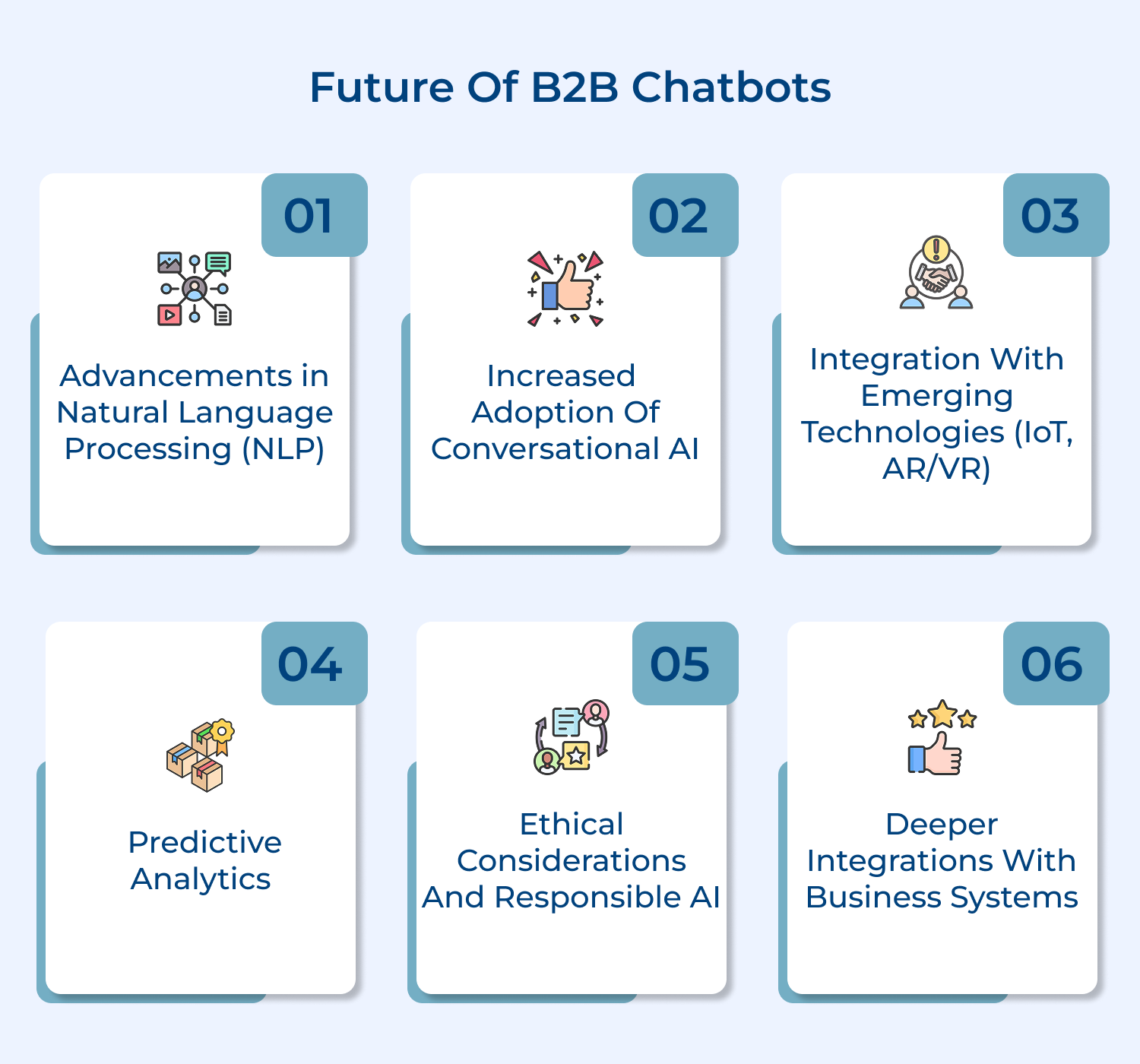
NLP advancements will enable B2B chatbots to engage in more contextual conversations, understanding complex queries and providing accurate responses. This will facilitate seamless communication between businesses and their stakeholders, improving overall efficiency.
Chatbots with advanced NLP capabilities can assist in tasks such as data extraction, sentiment analysis and language translation, enhancing cross-border collaborations.
As businesses recognize the benefits of automated and intelligent communication systems, the adoption of conversational AI, including B2B chatbots, will surge. Chatbots offer cost-effectiveness, scalability and 24/7 availability, making them an attractive solution for optimizing operations. They can be deployed in various customer facing functions, such as customer service, sales support or partner onboarding, to enhance the overall experience.
The integration of B2B chatbots with emerging technologies like the Internet of Things (IoT) and Augmented Reality/Virtual Reality (AR/VR) will unlock new possibilities for collaboration and interaction.
IoT integration will enable chatbots to interact with connected devices, facilitating remote monitoring, control and data exchange within the supply chain. AR/VR integration will pave the way for immersive & interactive experiences, such as virtual product demonstrations, training simulations and collaborative design sessions for collaborative engagement.
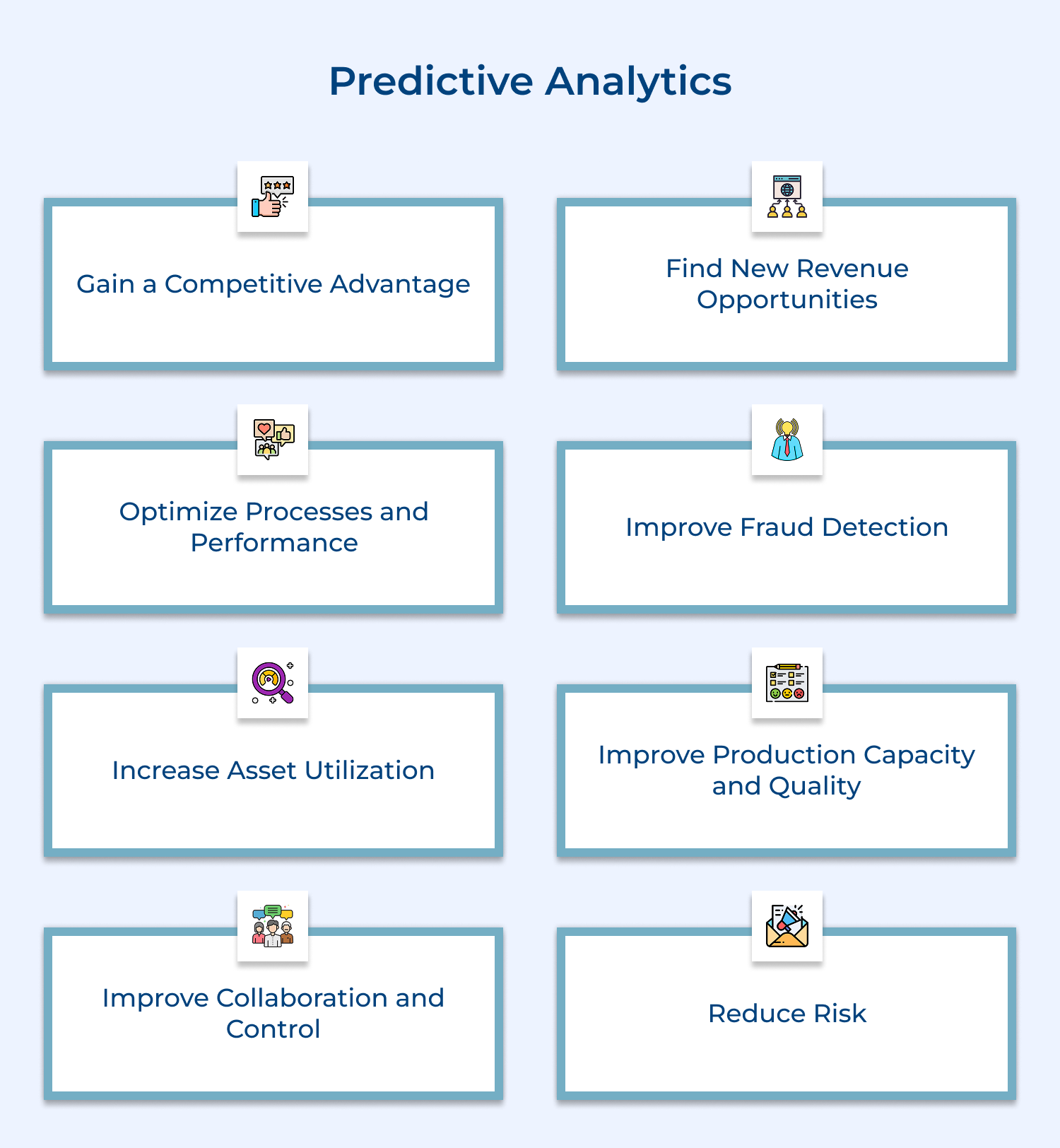
Predictive analytics will enable chatbots to anticipate needs and proactively offer solutions, driving business growth. Leveraging data analysis, B2B chatbots can deliver tailored experiences based on individual preferences, past interactions and contextual information. For instance, chatbots can analyze historical data to predict potential supply chain disruptions or suggest personalized recommendations on a client’s past behavior.
As Business chatbots become more advanced and ubiquitous, ethical considerations and responsible AI practices will be crucial. Issues surrounding data privacy, bias mitigation, transparency and accountability must be carefully addressed.
Businesses will need to prioritize the development as well as deployment of ethical AI systems that respect user privacy, promote fairness and maintain human oversight. Responsible AI practices will foster trust and ensure the long-term sustainability of B2B chatbot solutions.
Business chatbots will increasingly integrate with various internal and external systems such as customer relationship management (CRM), enterprise resource planning (ERP) & supply chain management (SCM) platforms.
Connecting the business ecosystem will enable chatbots to access and leverage data from multiple sources, providing a comprehensive view of business operations and enabling more informed & contextual responses.
Chatbot automation presents a transformative opportunity for B2B organizations to drive operational excellence while elevating customer experiences. Simultaneously, chatbots’ ability to contextualize interactions & deliver personalized recommendations enhances the customer journey, nurturing stronger relationships and brand loyalty.
Perhaps most significantly, chatbot automation empowers B2B firms to scale their conversational capabilities exponentially. Handling multiple interactions concurrently, chatbots extend organizations’ reach, facilitating seamless communication with customers, partners and stakeholders globally. This unparalleled conversational scalability positions companies to maximize their market impact and outpace competitors.

How can interactive chatbots enhance B2B consumer engagement?
Interactive chatbots are designed to engage with customers in a personalized and conversational manner. They can provide immediate responses to inquiries, offer product recommendations and even assist with purchase decisions. By using AI technology, chatbots can learn from interactions and become more efficient over time, leading to a more seamless customer experience.
What are the 4 types of chatbots?
The four main types of chatbots include
Why are businesses increasingly adopting b2b chatbots as part of their sales and customer service strategies?
Businesses are turning to B2B chatbots to streamline customer service processes, reduce response times and improve overall customer satisfaction. Chatbots can handle a large volume of inquiries simultaneously, freeing up human agents to focus on more complex tasks.
How do b2b chatbots work?
B2B chatbots use AI technology to analyze and respond to user inquiries in real-time. When a customer interacts with a chatbot, the AI system processes the message, understands the intent behind it and generates a relevant response. Chatbots can be integrated with CRM systems, databases and other backend systems to provide personalized recommendations.
How to train b2b chatbots?
Training B2B chatbots involves providing them with the necessary data and information to understand user queries and respond appropriately. It may include creating a knowledge base, defining rules & responses and continuously monitoring and optimizing the chatbot’s performance.
What’s the future of b2b chatbots?
The future of B2B chatbots is promising, with continued advancements in AI technology and natural language processing. Chatbots will become more sophisticated in understanding human language & context, leading to more personalized and efficient interactions. As businesses continue to prioritize digital transformation, B2B chatbots will play a crucial role in enhancing customer engagement and driving business growth.
 https://omni24.io/wp-content/uploads/2026/09/Social-commerce-scaled.png
1340
2560
Webvision Solution
https://omni24.io/wp-content/uploads/2023/04/Omni-Logo-1.svg
Webvision Solution2026-10-23 12:18:272026-10-23 12:18:27What is Social Commerce and Why Does It Matter?
https://omni24.io/wp-content/uploads/2026/09/Social-commerce-scaled.png
1340
2560
Webvision Solution
https://omni24.io/wp-content/uploads/2023/04/Omni-Logo-1.svg
Webvision Solution2026-10-23 12:18:272026-10-23 12:18:27What is Social Commerce and Why Does It Matter? https://omni24.io/wp-content/uploads/2026/08/AI-Customer-Service-Agents.png
1256
2400
Webvision Solution
https://omni24.io/wp-content/uploads/2023/04/Omni-Logo-1.svg
Webvision Solution2026-09-21 04:48:512026-09-21 04:48:51How to Build an AI Customer Service Agents: 8 Key Steps
https://omni24.io/wp-content/uploads/2026/08/AI-Customer-Service-Agents.png
1256
2400
Webvision Solution
https://omni24.io/wp-content/uploads/2023/04/Omni-Logo-1.svg
Webvision Solution2026-09-21 04:48:512026-09-21 04:48:51How to Build an AI Customer Service Agents: 8 Key Steps https://omni24.io/wp-content/uploads/2026/08/Omnichannel-Conversational-AI.png
1256
2400
Tushar Joshi
https://omni24.io/wp-content/uploads/2023/04/Omni-Logo-1.svg
Tushar Joshi2026-09-16 03:51:072026-09-16 03:51:07How to Build Omnichannel Conversational AI Strategy
https://omni24.io/wp-content/uploads/2026/08/Omnichannel-Conversational-AI.png
1256
2400
Tushar Joshi
https://omni24.io/wp-content/uploads/2023/04/Omni-Logo-1.svg
Tushar Joshi2026-09-16 03:51:072026-09-16 03:51:07How to Build Omnichannel Conversational AI Strategy
Whether it’s about acquire, engage or support – Omni24 covers all your customer engagement needs in one complete platform.

Copyright ©2026 Veemo All rights reserved.
CA, Los Angeles, Hall Ave, 19011