Top 12 Types Of Customer Service Survey Questions to Ask Clients
Customer service survey questions reveal insights, improve satisfaction, build loyalty, reduce churn and strengthen brand image through actionable feedback.

Customer service survey questions reveal insights, improve satisfaction, build loyalty, reduce churn and strengthen brand image through actionable feedback.
Businesses often lack clear insights into customer satisfaction and the effectiveness of their service, leading to unresolved issues.
74% of customers feel loyal to a particular brand or company and 52% report going out of their way to buy from their favorite brands. Without proper feedback, businesses risk overlooking critical areas for improvement, resulting in lost customer loyalty and declining revenue.
Customer service surveys provide an efficient way to gather honest feedback, helping businesses pinpoint weaknesses and strengthen customer relationships. In this blog, we’ll explore the importance of customer service surveys and share key questions to help boost your results.
A customer service survey is a structured tool designed to collect feedback from customers about their experiences with a company’s service or support. These surveys typically ask specific questions about customer satisfaction, service quality, problem resolution efficiency, and areas for improvement.
Customer service surveys provide invaluable insights that help businesses understand their customers’ needs and expectations. They serve as a direct line of communication between customers and companies, revealing pain points that might otherwise go unnoticed.
Key objectives
73% of consumers say experience is a key factor in purchasing decisions, second only to price and product. Here’s why these surveys are important for your business’s ROI:
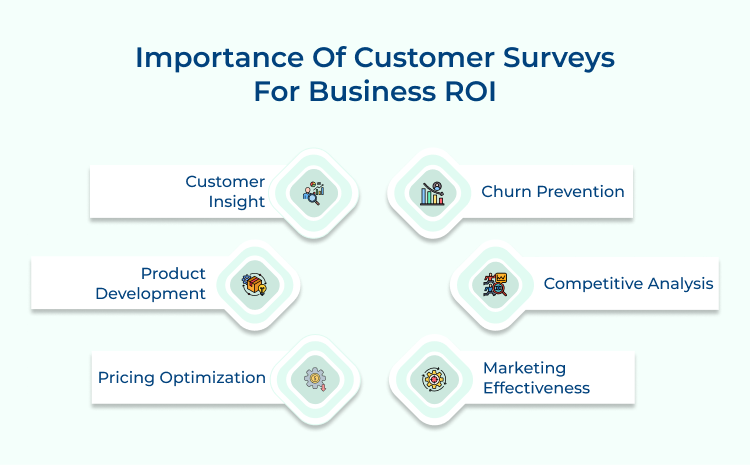
Customer Insight
Customer surveys reveal hidden pain points and preferences that data analytics alone might miss, enabling targeted improvements that directly impact conversion rates. These qualitative insights help businesses understand the “why” behind customer behaviors, creating opportunities to address unmet needs.
Product Development
Surveys identify which features customers truly value, helping businesses allocate development resources to innovations with the highest potential return. This customer-driven approach reduces costly development mistakes and increases adoption rates of new products or features.
Pricing Optimization
Survey feedback on perceived value helps establish optimal price points that maximize revenue without alienating customers. Understanding willingness-to-pay across different customer segments allows for strategic pricing models that capture more market value.
Churn Prevention
Regular surveys catch dissatisfaction early, allowing intervention before customers leave, protecting revenue streams and avoiding acquisition costs. Establishing an early warning system helps businesses to resolve issues proactively as well as strengthen relationships with at-risk customers.
Competitive Analysis
Surveys uncover how customers compare your offerings to competitors, revealing actionable differentiators to leverage in marketing. This competitive intelligence helps businesses position themselves effectively and identify gaps in the market that present growth opportunities.
Marketing Effectiveness
Surveys measure campaign impact beyond clicks, showing which messages genuinely resonate and deserve increased investment. The feedback loop allows marketing teams to refine messaging and channel strategies for improved ROI on advertising spend.
Conducting an in-depth customer satisfaction survey helps businesses understand their customers and identify areas for improvement. Here’s a step-by-step process for how-to:
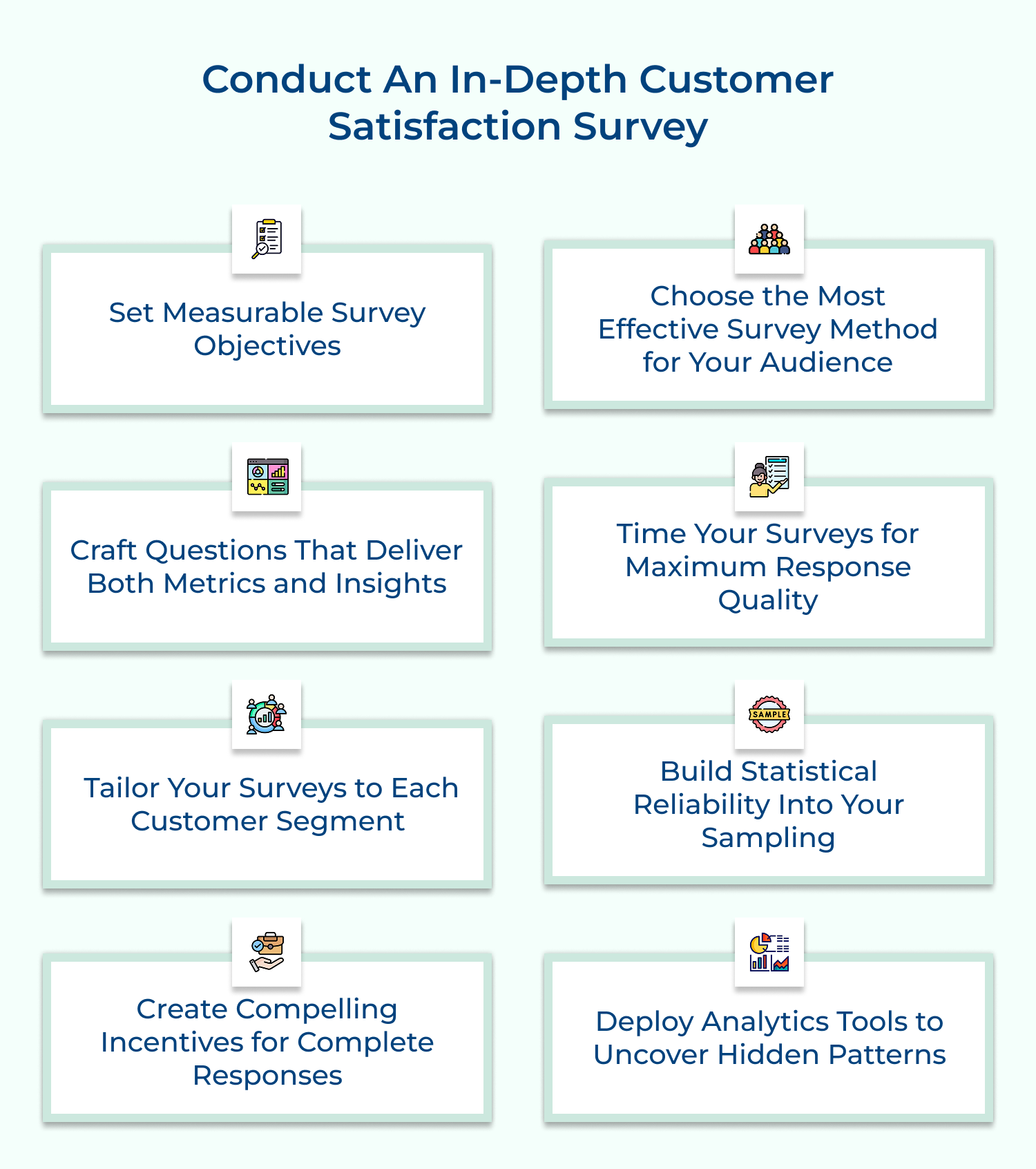
Defining specific goals for your survey with measurable outcomes that align to business objectives and determine what specific insights you need to gather from customers.
Specific objectives ensure you collect relevant information that can directly inform decisions and improvements, maximizing the return on your survey investment.
Create objective statements like “Determine why our NPS dropped 5 points last quarter” or “Identify the top three barriers to subscription renewals.” These focused goals shape your question design and analysis approach, ensuring insights directly address business needs.
Actionable tips:
Selecting the optimal survey distribution channel as well as format based on your target customers’ preferences, behaviors and the type of feedback you’re seeking.
Different survey methods yield varying response rates and data quality depending on your audience. Choosing methods that match customer preferences increases participation and ensures representative data, preventing skewed results from reaching only certain customer segments.
Match high-value customers with more personal methods like phone interviews, use in-app surveys for immediate reaction to specific features, deploy email for comprehensive feedback, and leverage SMS for quick pulse checks with mobile-first customers.
Actionable tips:
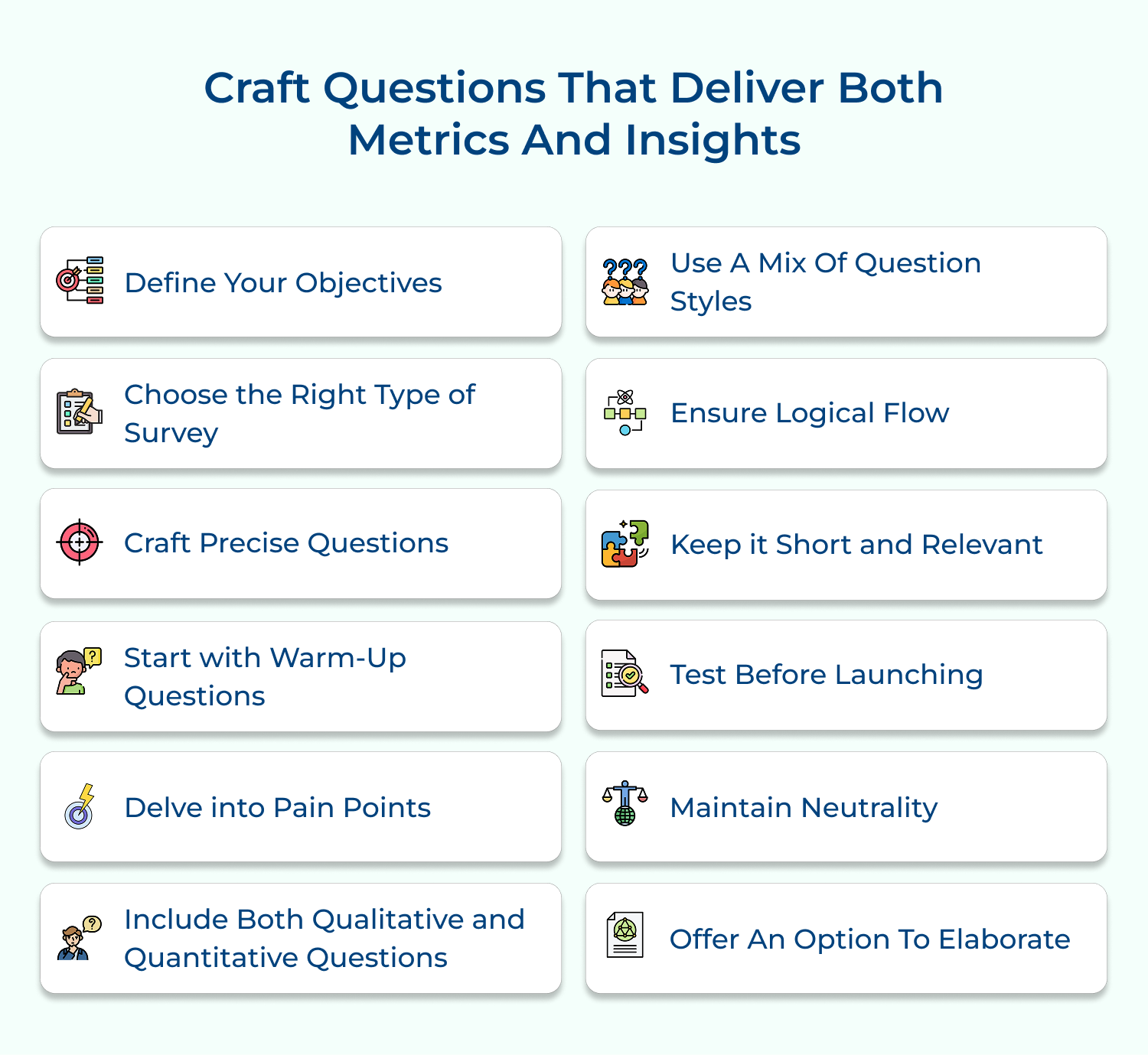
Designing a strategic mix of quantitative questions that generate measurable metrics and qualitative questions that reveal deeper context, motivations as well as emotional responses.
Numbers alone can tell you what is happening but not why; conversely, purely qualitative data lacks measurability. A balanced approach provides both trackable metrics to monitor performance and rich explanatory insights to guide improvement strategies.
Use Likert scales and NPS questions to track satisfaction trends over time, while adding targeted open-ended follow-ups like “What specifically caused you to give this rating?” to uncover the reasoning behind the numbers.
Actionable tips:
Strategically scheduling survey distribution to coincide with significant moments in the customer journey when feedback will be most relevant and memories freshest.
Timing dramatically affects both response rates and data accuracy. Surveys sent too late capture faded memories, while poorly timed requests may interrupt critical customer activities, causing abandonment or hasty responses.
Send transaction surveys within 24 hours of purchase, support interaction surveys immediately after resolution, relationship surveys at consistent intervals and feature-specific surveys after multiple usage occasions to ensure informed feedback.
Actionable tips:
Customizing survey content, questions and references based on customer data, purchase history as well as previous interactions to create relevant survey experiences.
Generic, one-size-fits-all surveys often ask irrelevant questions and miss segment-specific issues. Personalized surveys demonstrate respect for customers’ time, increase completion rates and gather more accurate insights about specific experiences.
Dynamically insert product names customers have purchased, reference their usage patterns, skip irrelevant questions and adjust language to match the customer’s expertise level or relationship duration with your company.
Actionable tips:
Implementing scientific sampling methods that ensure your survey respondents accurately represent your entire customer base with enough participants to provide statistically valid conclusions.
Statistical reliability ensures that insights can be confidently applied to improve experiences for all customers.
Calculate required sample sizes for different customer segments using confidence level calculators, implement stratified sampling to ensure proportional representation and track response demographics to identify as well as correct underrepresented groups.
Actionable tips:
Offering appropriate rewards or benefits that motivate customers to complete surveys fully and thoughtfully, without creating incentives for dishonest or rushed responses.
Customers have limited time and attention with survey fatigue becoming increasingly common. Strategic incentives acknowledge the value of their feedback, increase response rates among less engaged segments and encourage more detailed answers.
Align incentives with survey length and customer value—offer small rewards for short surveys as well as meaningful benefits, like early access or donations, for detailed feedback.
Actionable tips:
Utilizing specialized survey analysis software to identify statistically significant correlations, sentiment patterns and unexpected relationships within your survey data.
Manual analysis often misses complex patterns or unconsciously focuses on expected results. Advanced analytics reveal non-obvious connections between different aspects of customer experience and satisfaction drivers that wouldn’t be apparent in basic reporting.
Use text analytics to find common themes in open-ended responses. Conduct regression analysis to identify key predictors of NPS and segmentation analysis to see how satisfaction drivers vary by customer group.
Actionable tips:
Choosing the right survey questions helps gather meaningful insights about customer experiences. Different question types reveal satisfaction levels and opportunities.
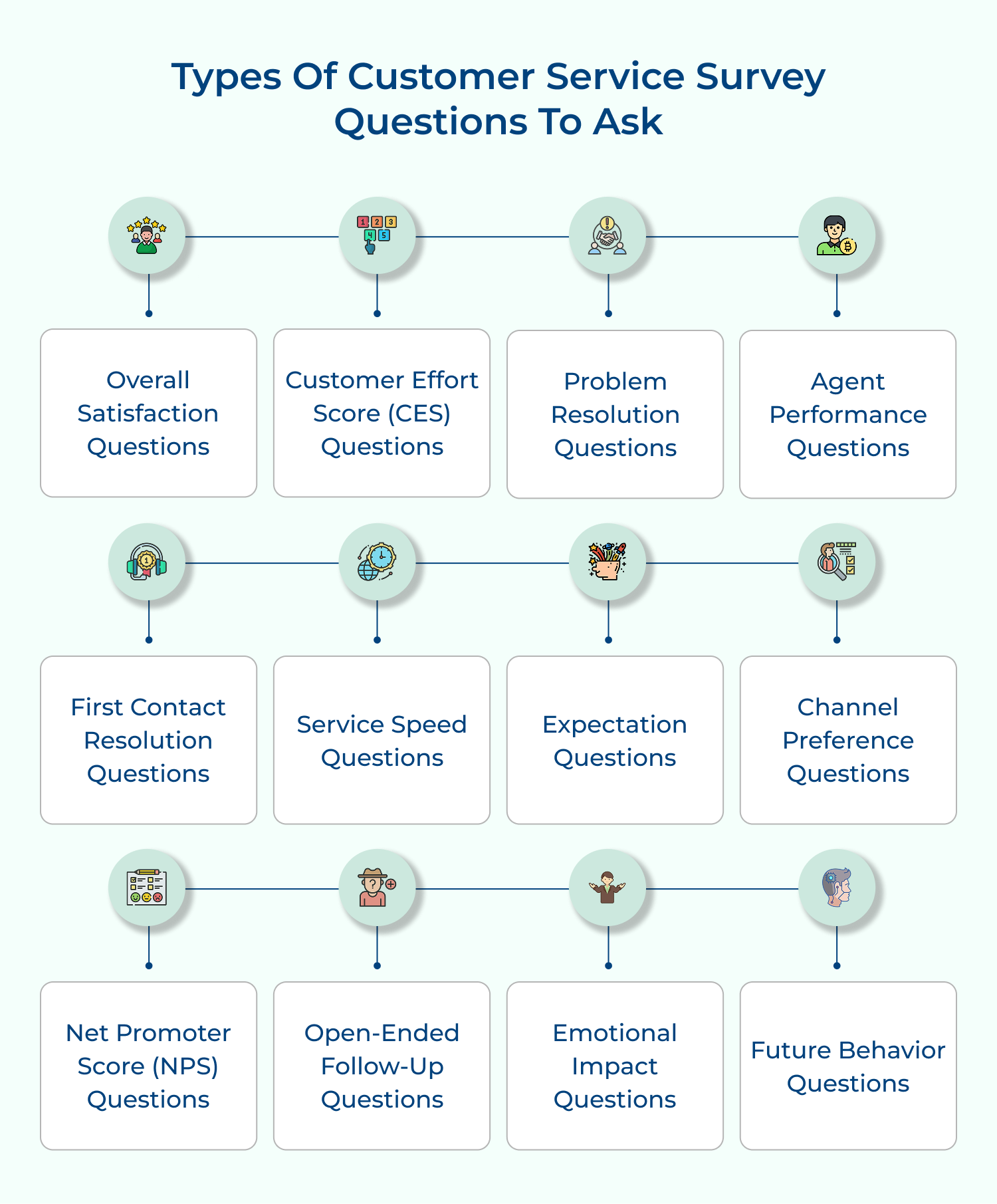
Questions that measure the customer’s general sentiment about their entire service experience, typically using numerical rating scales to quantify overall happiness with the interaction.
They provide a quick temperature check that helps identify sudden shifts in service quality and offer a simple benchmark for comparing performance across different time periods.
Track CSAT scores monthly to identify service trends and set improvement targets. Use overall satisfaction as a first-level filter to segment responses for deeper analysis, giving priority attention to understanding both extremely satisfied and dissatisfied customers.
Actionable tips:
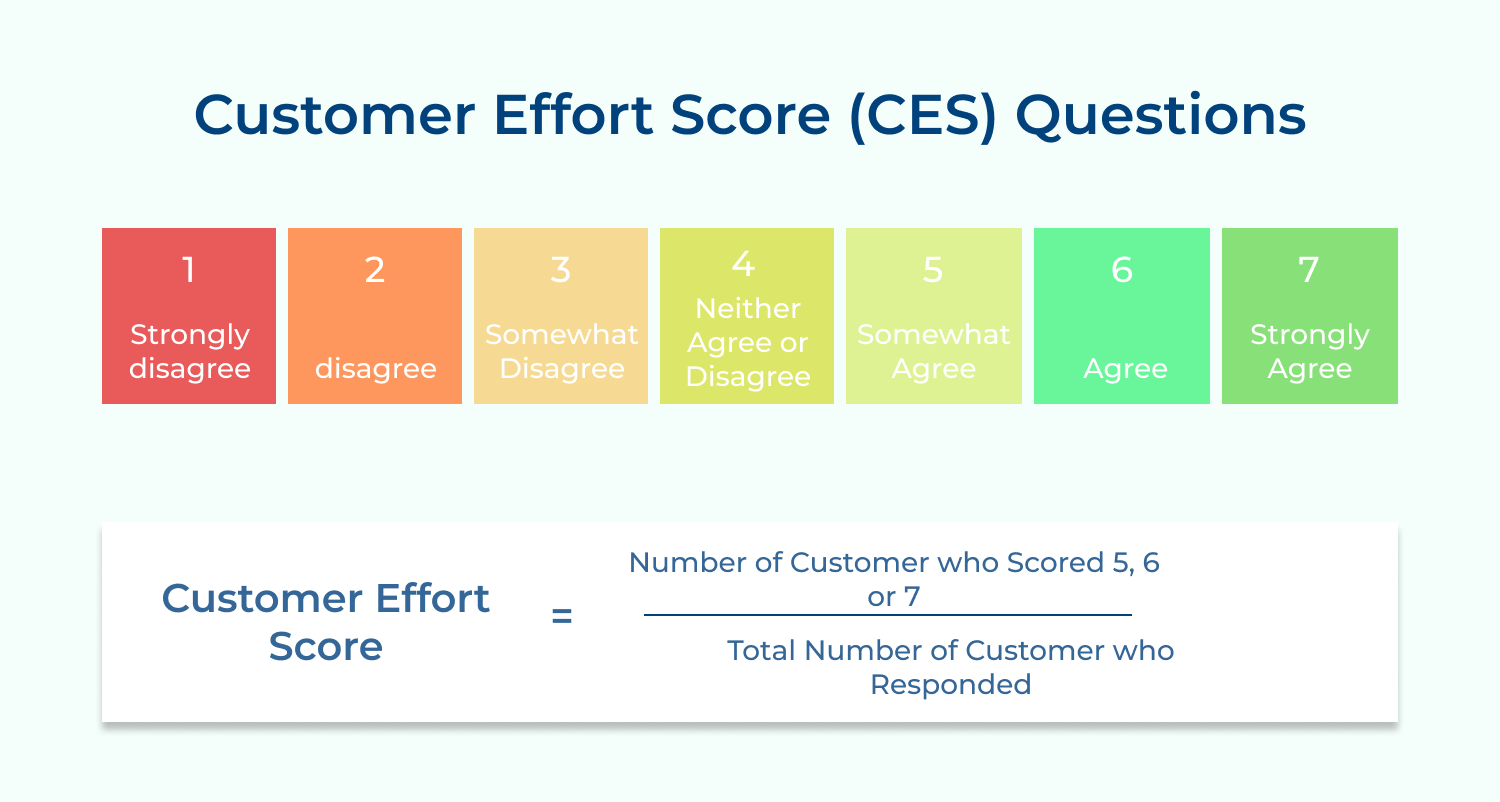
Questions that measure how easy or difficult customers found it to get their issue resolved, focusing on the amount of effort required rather than satisfaction alone.
Research shows effort is a stronger predictor of loyalty than satisfaction. High-effort experiences drive churn regardless of outcome, while low-effort interactions build loyalty even when the news delivered isn’t what customers hoped for.
Track CES across different issue types to identify which problems consistently require the most customer effort. Use results to prioritize process improvements, simplify high-friction touchpoints and design self-service options for common high-effort scenarios.
Actionable tips:
Direct questions that determine whether the customer’s issue was actually fixed, regardless of how pleasant the interaction may have been or how hard the agent tried.
The fundamental purpose of customer service is resolving problems. Metrics can be misleading without confirming resolution—customers might rate agents positively for effort but still leave with unresolved issues, causing repeat contacts and frustration.
Calculate your true resolution rate by issue type to identify problematic products or policies. For unresolved issues, implement immediate follow-up protocols to address them before they escalate to complaints or cancellations.
Actionable tips:
Questions that evaluate specific aspects of the service representative’s performance, including knowledge, communication skills, empathy and professionalism during the interaction.
Individual agent behavior significantly impacts customer perception of your entire brand. These questions identify specific skill gaps for training, recognize top performers for best practices and ensure consistent service quality across your team.
Create individual agent scorecards based on customer feedback rather than just supervisor evaluations. Use top-performing agents’ techniques as training materials and develop personalized coaching plans addressing specific skills each agent needs to improve.
Actionable tips:
Questions that determine whether customers needed to make multiple contacts about the same issue or if their problem was completely resolved during the initial interaction.
Every additional contact multiplies customer effort, operational costs and frustration. FCR is directly linked to customer satisfaction, while also being a key efficiency metric that affects staffing requirements as well as support costs.
Track FCR rates by issue type, agent and customer segment to identify knowledge gaps or process problems. Create dedicated initiatives to improve first-contact resolution for your most common or complex customer issues.
Actionable tips:
Questions that assess customer perceptions about response and resolution timeframes, including wait times, time to first response as well as total time to resolution.
Different customers and situations have varying speed expectations. These questions help you understand when speed truly matters versus when thoroughness is more important, preventing wasted resources on unnecessary rush treatment.
Compare perceived speed satisfaction against actual response times to identify expectation gaps. Develop channel-specific speed standards based on customer feedback rather than arbitrary internal targets.
Actionable tips:
Questions that assess whether the service experience met, fell below or exceeded what the customer anticipated, focusing on the gap between expectations and actual delivery.
Customer satisfaction is largely determined by the expectation gap, not absolute service quality. These questions reveal when you’re over-delivering in areas customers don’t value or under-delivering on critical expectations, helping optimize resource allocation.
Identify services where you consistently exceed expectations to use in marketing materials. For areas where you routinely fall short, either improve delivery or reset expectations through clearer communication about service limitations.
Actionable tips:
Questions that identify which support channels (phone, email, chat, self-service) customers prefer for different types of issues and why they choose specific channels.
Channel preferences vary dramatically by customer segment and issue type. Understanding these preferences helps optimize your channel mix, staff appropriately and avoid investing in channels your customers don’t want to use.
Develop channel routing strategies that direct customers to their preferred channels for specific issues. Create segment-specific communication plans that prioritize channels favored by different customer groups.
Actionable tips:
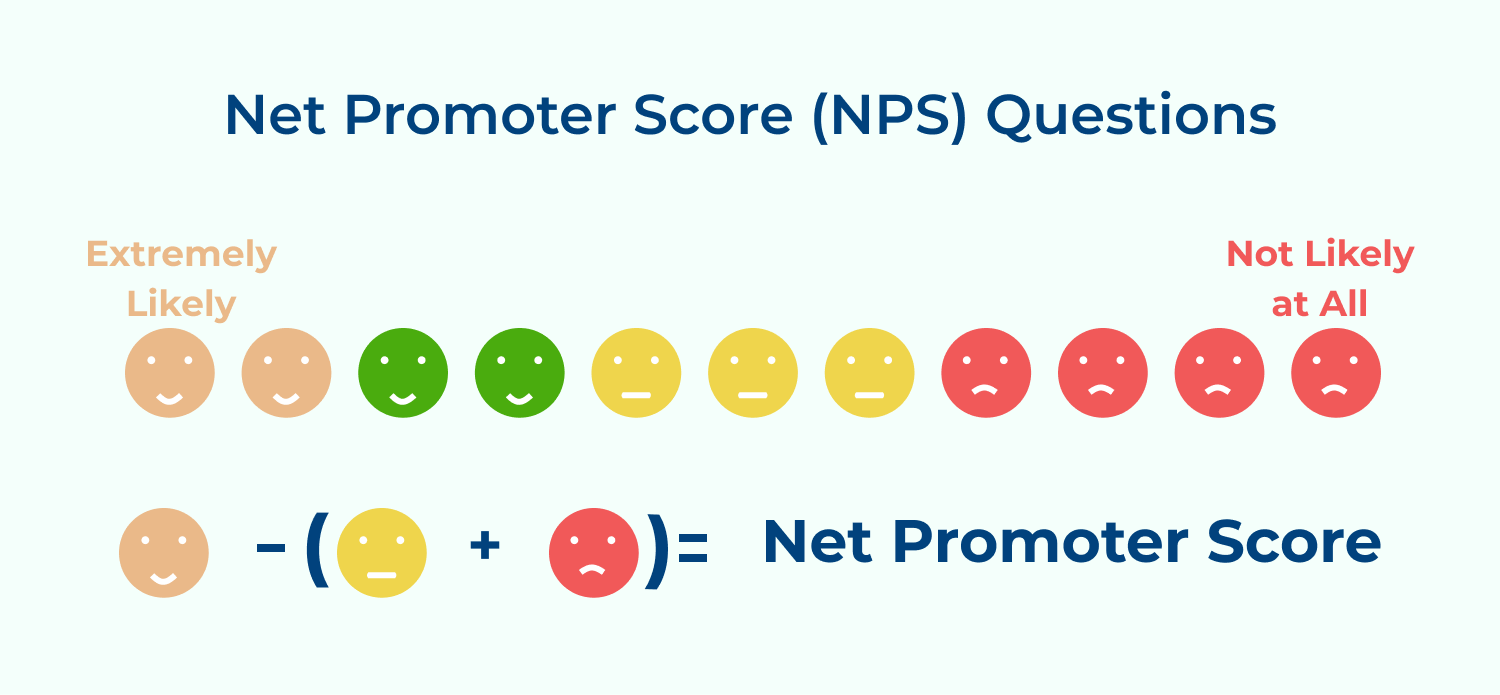
Questions that measure how likely customers are to recommend your company based on their service experience, typically using a 0-10 scale with detailed follow-up.
NPS connects service experiences directly to business growth through referrals. It provides a standardized metric that can be benchmarked against competitors and across industries, while identifying promoters who can become brand advocates.
Track transactional NPS after service interactions to identify which issues or experiences most impact willingness to recommend. Create recovery processes for detractors and activation programs for promoters to maximize the business impact of each group.
Actionable tips:
Non-structured questions that invite customers to explain their ratings or provide additional context about their experience in their own words without predetermined response options.
Rating scales tell you what customers think but not why. Open-ended questions reveal unexpected issues, capture emotional aspects of experiences and provide specific, actionable feedback that quantitative questions often miss.
Analyze common themes in responses using text analytics to identify emerging issues. Use direct customer language from these responses in training materials and internal communications to build empathy as well as understanding.
Actionable tips:
Questions that specifically assess how the service experience made customers feel emotionally, focusing on sentiments like valued, frustrated, understood, or disappointed.
Emotional responses drive long-term loyalty beyond rational satisfaction. These questions help identify interactions that create strong emotional connections or damage them, which may not be captured by traditional satisfaction measures.
Map emotional responses to specific service behaviors to train agents in creating positive emotional outcomes. Develop special handling procedures for emotionally charged scenarios like billing disputes or service outages.
Actionable tips:
Questions that ask customers to predict how their service experience will affect their future actions, such as continued purchases, contract renewals, or expanded usage.
These questions establish a direct link between service quality and business outcomes. They help quantify the revenue impact of service experiences while building financial justification for service improvements.
Track responses by customer value segment to prioritize retention efforts for at-risk high-value customers. Create predictive models that use stated intentions to forecast actual retention rates and proactively address customers with negative intent.
Actionable tips:
Collecting customer feedback effectively requires thoughtful planning and clear strategies. Following best practices ensures insights are actionable and valuable for improving experiences.
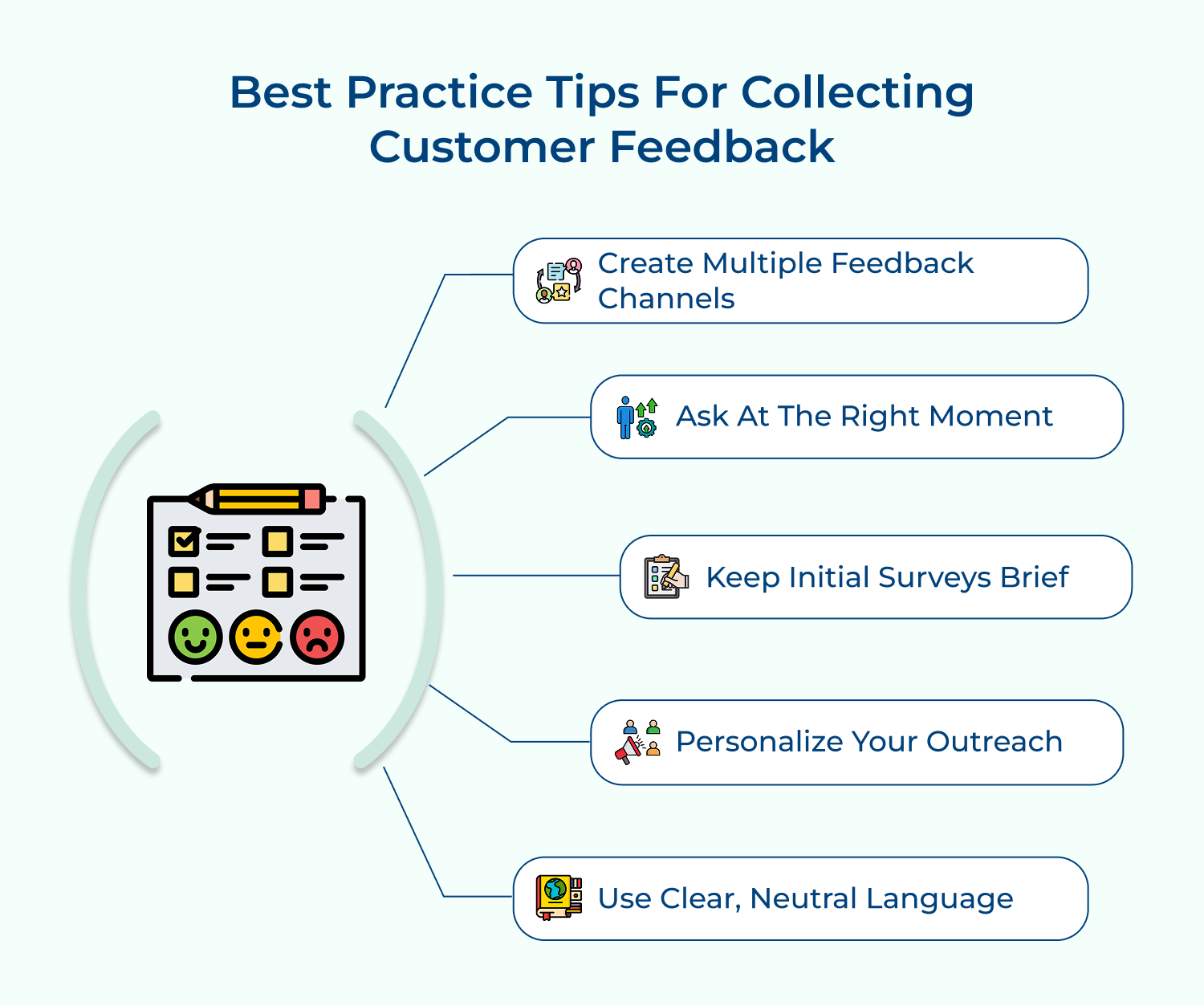
Create Multiple Feedback Channels
Offer diverse ways for customers to share their thoughts, including surveys, social media monitoring, focus groups and in-app feedback tools. Different customers prefer different communication methods as well as multiple channels ensure you capture insights from all segments.
Ask at the Right Moment
Time your feedback requests strategically within the customer journey. Seek input immediately after purchases, following customer service interactions, or after key feature usage. Catching customers when experiences are fresh yields more accurate insights.
Keep Initial Surveys Brief
Respect customers’ time by starting with short, focused surveys (3-5 minutes maximum). Reserve longer, in-depth questionnaires for customers who indicate willingness to provide more detailed feedback or offer appropriate incentives.
Personalize Your Outreach
Tailor feedback requests based on the customer’s history with your brand. Reference specific purchases or interactions to demonstrate that you value their unique perspective and aren’t sending generic requests.
Use Clear, Neutral Language
Phrase questions objectively to avoid leading customers toward particular responses. Test survey questions with a small group first to identify any unintentional bias or confusing terminology.
Well-crafted survey questions provide clear insights into customer satisfaction and service quality. Using effective examples helps businesses gather actionable feedback.
1. Overall Satisfaction
“How satisfied are you with your recent experience with our customer service team?”
This question provides a clear measure of the customer’s overall experience. It helps businesses gauge whether their service met customer expectations and highlights potential areas for improvement.
2. Problem Resolution
“Was your issue resolved to your satisfaction during your interaction with our customer service team?”
The question helps assess the effectiveness of customer service in solving problems. It gives insight into whether customers felt their concerns were addressed properly and efficiently.
3. Service Speed
“How would you rate the speed of the service you received?”
Service speed is a key factor in customer satisfaction. This question helps businesses understand if wait times were appropriate or if improvements are needed to offer quicker resolutions.
4. Representative Knowledge
“How knowledgeable did you find our customer service representative in addressing your issue?”
Understanding the competence of customer service representatives is essential. This question assesses whether the representative had the right information to solve the customer’s problem effectively.
5. Likelihood to Recommend
“On a scale from 1 to 10, how likely are you to recommend our customer service to others?”
The Net Promoter Score (NPS) question gauges customer loyalty and satisfaction. A high score indicates strong customer advocacy, while a low score reveals areas where service can be improved to foster better recommendations.
The effectiveness of a survey depends on asking the right questions. Customer service survey questions should address key aspects of service, such as wait times, customer support effectiveness and the overall experience.
Asking about customer expectations and whether they were met can reveal important insights for service improvement. Thoughtfully designed survey questions lead to valuable feedback, enabling businesses to refine their service offerings, improve customer experiences and build stronger customer loyalty over time.

How many questions should a customer survey include?
Keep surveys focused with 5-10 questions for transactional surveys and 10-15 for relationship surveys. Shorter surveys increase completion rates significantly—research shows each additional question reduces completion rates by about 3%. Match survey length to the customer’s investment in your relationship.
When is the best time to send a customer satisfaction survey?
Send transactional surveys within 24 hours of an interaction while the experience is fresh. For relationship surveys, quarterly or bi-annual timing works best for most businesses. Avoid sending during extremely busy periods or holidays when response rates typically plummet.
Is it better to use open-ended or closed-ended questions?
Use both types strategically. Closed-ended questions (scales, multiple-choice) provide trackable metrics and require less effort. Open-ended questions reveal unexpected insights but demand more customer effort. A balanced approach with 80% closed and 20% open-ended questions works best.
How can businesses increase survey response rates?
Boost response rates by clearly stating the survey’s purpose and length upfront, personalizing the invitation, optimizing for mobile devices while offering appropriate incentives. Follow up with non-respondents once and demonstrate how previous survey feedback has led to actual improvements.
How should companies handle negative survey feedback?
Address negative feedback promptly by acknowledging the issue, thanking the customer for their honesty and explaining plans to resolve the problem. Follow up personally with highly dissatisfied customers, as the recovery experience often creates stronger loyalty than an initially perfect experience.
How often should the same customers receive surveys?
Survey frequency should match relationship intensity—quarterly for active customers with frequent interactions, semi-annually for moderate users and annually for occasional customers. Track each customer’s survey participation to prevent survey fatigue by limiting total annual survey requests.
 https://omni24.io/wp-content/uploads/2026/08/AI-Customer-Service-Agents.png
1256
2400
Webvision Solution
https://omni24.io/wp-content/uploads/2023/04/Omni-Logo-1.svg
Webvision Solution2026-09-21 04:48:512026-09-21 04:48:51How to Build an AI Customer Service Agents: 8 Key Steps
https://omni24.io/wp-content/uploads/2026/08/AI-Customer-Service-Agents.png
1256
2400
Webvision Solution
https://omni24.io/wp-content/uploads/2023/04/Omni-Logo-1.svg
Webvision Solution2026-09-21 04:48:512026-09-21 04:48:51How to Build an AI Customer Service Agents: 8 Key Steps https://omni24.io/wp-content/uploads/2026/08/Omnichannel-Conversational-AI.png
1256
2400
Tushar Joshi
https://omni24.io/wp-content/uploads/2023/04/Omni-Logo-1.svg
Tushar Joshi2026-09-16 03:51:072026-09-16 03:51:07How to Build Omnichannel Conversational AI Strategy
https://omni24.io/wp-content/uploads/2026/08/Omnichannel-Conversational-AI.png
1256
2400
Tushar Joshi
https://omni24.io/wp-content/uploads/2023/04/Omni-Logo-1.svg
Tushar Joshi2026-09-16 03:51:072026-09-16 03:51:07How to Build Omnichannel Conversational AI Strategy https://omni24.io/wp-content/uploads/2026/08/Customer-Service-Teams.png
1256
2400
Tushar Joshi
https://omni24.io/wp-content/uploads/2023/04/Omni-Logo-1.svg
Tushar Joshi2026-09-15 04:01:522026-09-15 04:02:16How to Build Customer Service Teams: 6 Key Steps
https://omni24.io/wp-content/uploads/2026/08/Customer-Service-Teams.png
1256
2400
Tushar Joshi
https://omni24.io/wp-content/uploads/2023/04/Omni-Logo-1.svg
Tushar Joshi2026-09-15 04:01:522026-09-15 04:02:16How to Build Customer Service Teams: 6 Key Steps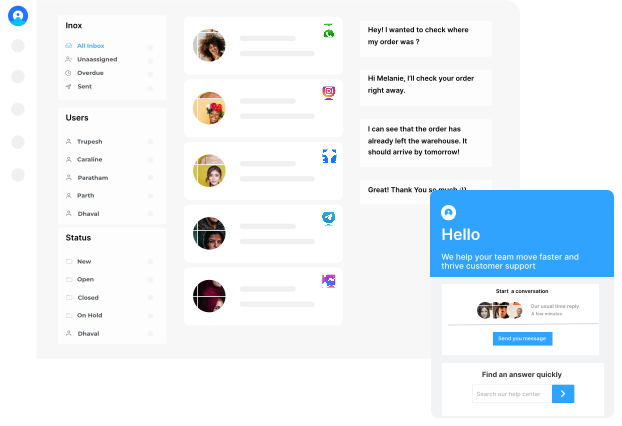
Whether it’s about acquire, engage or support – Omni24 covers all your customer engagement needs in one complete platform.

Copyright ©2026 Veemo All rights reserved.
CA, Los Angeles, Hall Ave, 19011