What is Chatbot Customer Engagement & How to Leverage it?
Chatbots enhance customer engagement by offering 24/7 instant support, improving responsiveness, and building stronger relationships.

Chatbots enhance customer engagement by offering 24/7 instant support, improving responsiveness, and building stronger relationships.
Customers expect instant responses and personalized interactions, yet many businesses struggle to meet these demands. This gap can lead to frustration and a decline in loyalty.
The challenge of engaging customers effectively can be overcome by deploying chatbots for customer engagement. More than 50% customers prefer chatbots over calling support, primarily for faster answers.
Chatbots can provide real-time assistance and deliver personalized experiences, all while freeing up human agents for more complex tasks.
Explore how chatbot customer engagement can enhance satisfaction and drive growth, empowering businesses to connect with their customers like never before.
A customer engagement chatbot is an automated software program designed to interact with customers in real-time through chat interfaces. These chatbots utilize artificial intelligence (AI) and natural language processing (NLP) to respond to customer inquiries, providing assistance around the clock.
The significance of customer engagement chatbots lies in their ability to enhance user experience, streamline customer service and drive engagement. They can handle multiple inquiries simultaneously, reducing wait times and increasing overall satisfaction.
Key objectives:
Chatbots are transforming customer interactions, making communication more efficient and responsive. Here are the key reasons their role is essential.
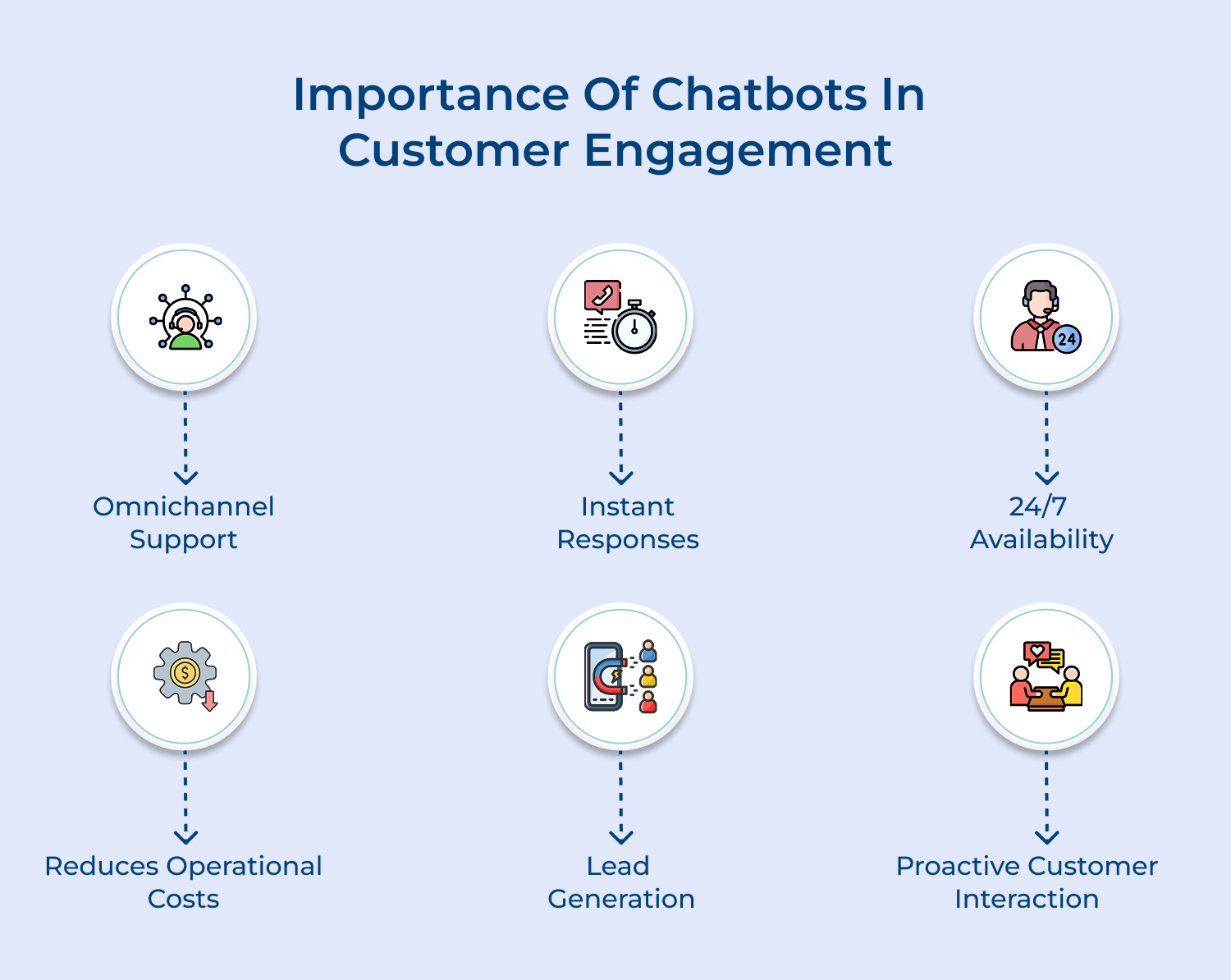
1. Omnichannel support: Chatbots seamlessly integrate across various platforms, providing consistent support whether customers interact via websites, mobile apps, or social media. This omni channel presence ensures a unified customer experience, allowing businesses to meet customers where they are.
2. Instant responses: Customers expect quick solutions and chatbots excel at providing immediate responses to inquiries, significantly reducing wait times. The instant gratification improves customer satisfaction and increases the likelihood of successful query resolution.
3. 24/7 availability: Chatbots offer round-the-clock support, catering to customers across different time zones and those with unconventional schedules. The constant availability ensures that customer needs are addressed promptly, regardless of the time or day.
4. Reduces operational costs: Automating routine inquiries and tasks with chatbots significantly cuts down operational expenses. Chatbots can handle multiple conversations simultaneously, reducing the need for support teams. The cost-efficiency allows businesses to allocate resources to more complex issues.
5. Lead generation: Chatbots serve as effective lead generation tools, engaging website visitors, qualifying potential customers and collecting valuable contact information. Through personalized interactions, they identify sales opportunities and guide users through the sales funnel.
6. Proactive customer interaction: Customer engagement chatbots enable businesses to initiate conversations, offering personalized recommendations. This proactive approach enhances customer engagement, builds stronger relationships and demonstrates a commitment to customer success.
Maximizing customer engagement with chatbots requires strategic implementation. Here are effective ways to leverage their capabilities for optimal results.
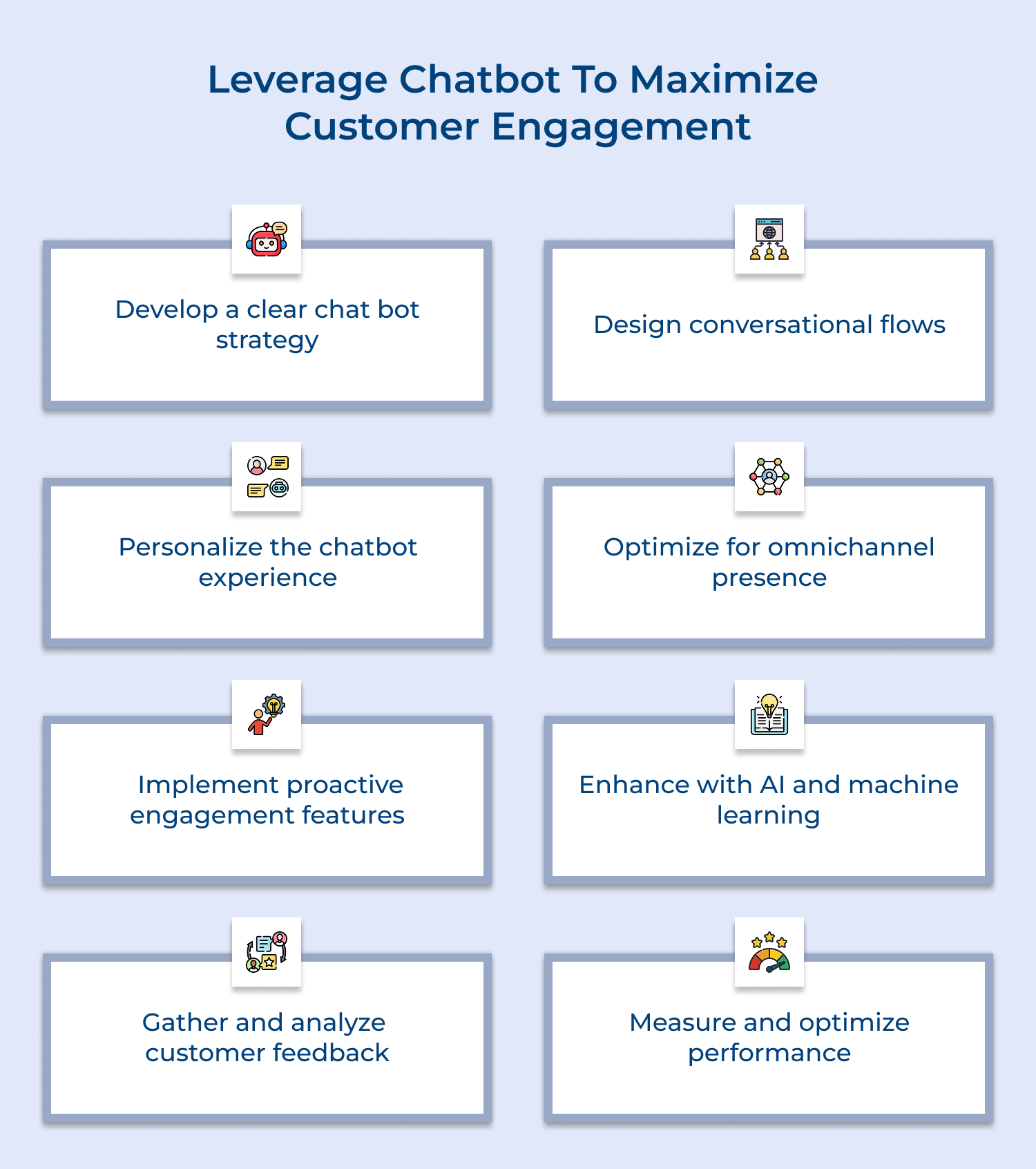
Without a strategy, chatbots may fail to meet objectives, leading to wasted resources and missed opportunities for improving customer engagement. Hence, having a clear strategy ensures that your chatbot aligns with business goals and customer needs.
Define specific goals for your chatbot, such as reducing response time or increasing lead generation. Identify key performance indicators (KPIs) to measure success. Outline the chatbot’s role in the overall customer journey and how it complements other support channels.
Best practices:
1. Involve stakeholders from various departments to ensure the strategy addresses diverse business needs.
2. Regularly update the strategy based on performance data and evolving customer expectations to maintain relevance.
Well-designed conversational flows ensure smooth, natural interactions between users and chatbots. They help guide users towards their goals efficiently, reducing frustration and abandonment.
Businesses need to map out common user intents and create decision trees for various scenarios. Design natural conversation scripts and align with your brand voice. Include options for users to clarify their needs or redirect the conversation. Implement fallback responses for situations where the chatbot can’t understand.
Best practices:
1. Use data from customer support interactions & website analytics to identify common user intents and pain points when designing flows.
2. Regularly refine conversational flows based on user feedback and interaction data to continuously improve the user experience.
Personalization enhances customer engagement by making interactions more relevant and meaningful. It shows that you understand and value individual customer needs, leading to increased satisfaction. Personalized experiences can also improve conversion rates and average order values by providing tailored recommendations.
Integrate the chatbot with your CRM and other data sources to access customer information. Use this data to tailor greetings, recommendations and responses based on factors like purchase history, browsing behavior, or customer segment. Implement dynamic conversation flows that adapt to individual user preferences and needs.
Best practices:
1. Implement robust data protection measures and be transparent about data usage to build trust with users.
2. Use machine learning algorithms to continuously improve personalization based on user interactions and feedback.
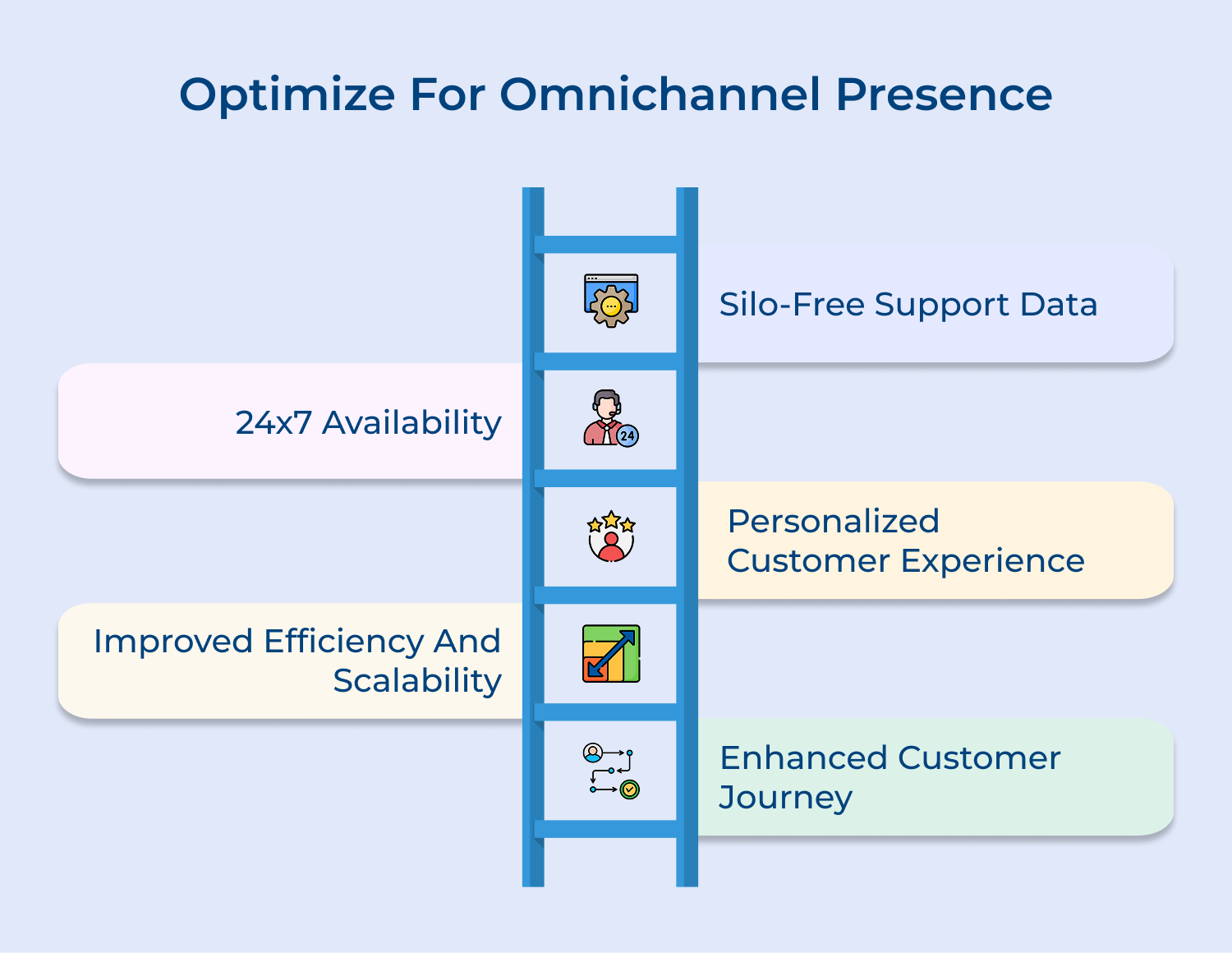
An omnichannel presence ensures consistent customer experiences across all touchpoints. It allows customers to engage with your brand on their preferred platforms seamlessly. This approach increases accessibility, improves customer satisfaction and provides a unified brand experience.
Integrate your chatbot across various channels such as website, mobile app, social media platforms and messaging apps. Ensure consistent functionality and information across all channels. Implement features that allow conversations to transition smoothly between channels, maintaining context and history to provide a seamless experience.
Best practices:
1. Use a centralized knowledge base to ensure consistent information and responses across all channels.
2. Implement analytics tools that track user journeys across channels to identify and optimize cross-channel experiences.
Proactive engagement helps businesses anticipate customer needs and address them before they become issues. It demonstrates attentiveness enhancing customer satisfaction. By initiating relevant interactions, proactive features can increase engagement, reduce support ticket volume and create upselling or cross-selling opportunities.
Trigger chatbot interactions based on user behavior, such as time spent on a page or items in a shopping cart. Implement welcome messages for new visitors or returning customers. Use push notifications or in-app messages to share relevant updates, offers, or reminders. Proactively offer assistance during key moments in the customer journey.
Best practices:
1. Carefully balance proactive engagement with user privacy and preferences to avoid being intrusive or annoying.
2. Use A/B testing to optimize the timing, frequency, and content of proactive messages for maximum effectiveness.
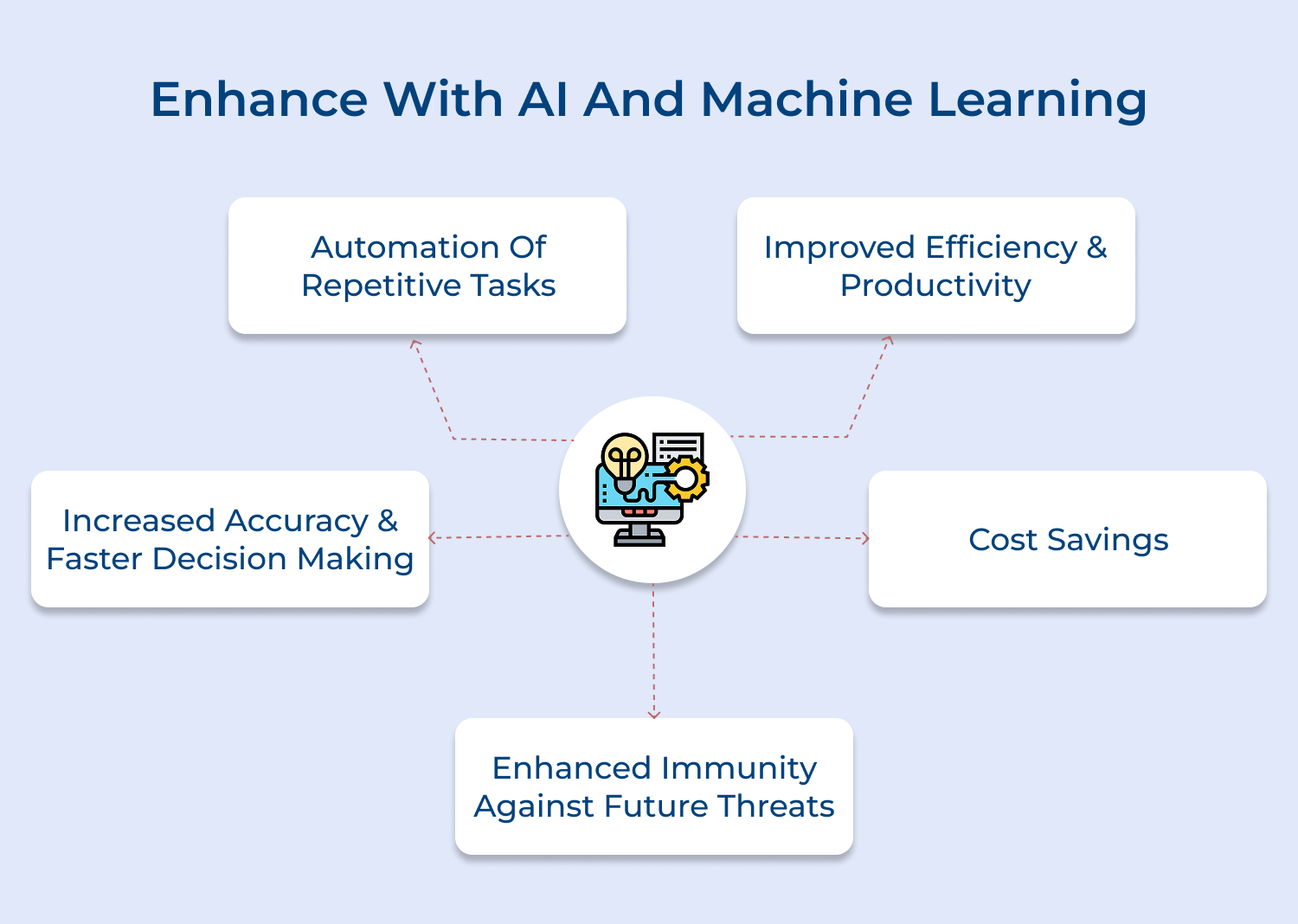
AI and machine learning capabilities enable chatbots to understand complex queries, learn from interactions, and provide more accurate responses over time. This enhancement improves the chatbot’s ability to handle a wider range of customer needs, resulting in higher resolution rates.
Implement natural language processing (NLP) to better understand user intent and context. Use machine learning algorithms to analyze past interactions and improve response accuracy. Implement sentiment analysis to detect user emotions and adjust responses accordingly. Utilize predictive analytics to anticipate user needs and offer proactive solutions.
Best practices:
1. Continuously train the AI model with new data to improve accuracy and keep up with changing customer needs and language trends.
2. Implement a human-in-the-loop system to review AI decisions, ensuring quality and building trust in the system.
Customer feedback provides invaluable insights into the effectiveness of your chatbot and areas for improvement. It helps identify pain points, unmet needs and opportunities for enhancement. Regular feedback collection and analysis ensure that your chatbot remains aligned with customer expectations.
Implement post-interaction surveys to gather immediate feedback. Analyze conversation logs to identify common issues or unresolved queries. Use sentiment analysis to gauge overall customer satisfaction. Create feedback loops that incorporate user suggestions into chatbot improvements.
Best practices:
1. Use a mix of quantitative (e.g., ratings) and qualitative (e.g., open-ended questions) feedback methods to get comprehensive insights.
2. Establish a cross-functional team to regularly review feedback and implement improvements based on customer insights.
Measuring performance ensures that your chatbot continues to meet business objectives and customer needs. It helps identify areas of success and opportunities for improvement. Regular performance analysis allows you to make data-driven decisions, allocate resources effectively and demonstrate the ROI of your chatbot investment.
Define key performance indicators (KPIs) such as resolution rate, customer satisfaction scores and conversion rates. Use analytics tools to monitor chatbot usage patterns and identify bottlenecks. Conduct A/B tests to optimize conversation flows and messages. Regularly review performance metrics and make data-driven improvements to enhance effectiveness.
Best practices:
1. Establish a baseline for performance metrics and set realistic, incremental goals for improvement over time.
2. Use both quantitative metrics and qualitative feedback to get a holistic view of chatbot performance.
Enhancing customer engagement through chatbots involves thoughtful strategies and best practices. Here are essential tips to elevate your chatbot interactions.
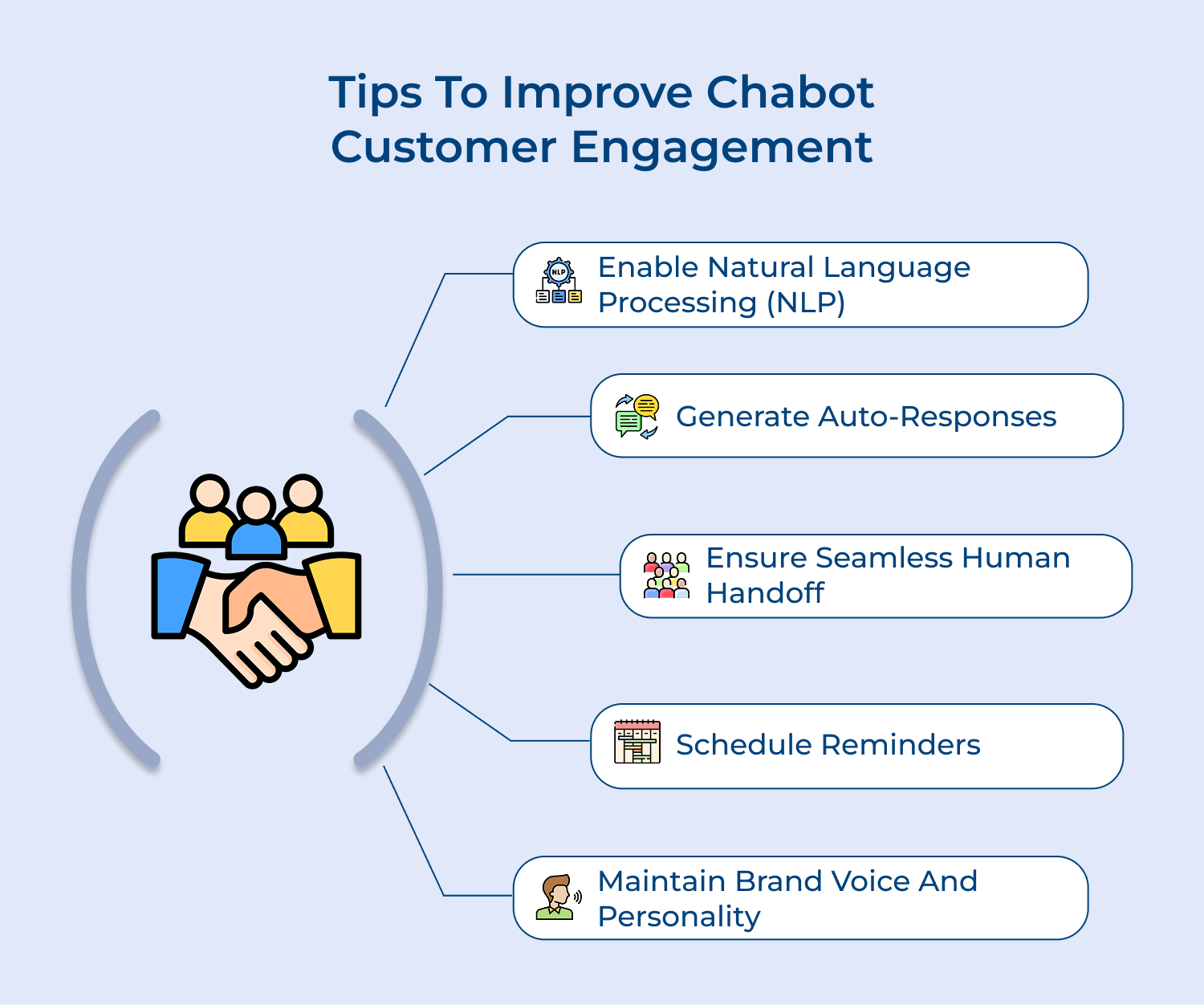
Chatbots are being utilized across various industries to improve customer interactions. Here are real-world applications showcasing their effectiveness in engagement.
1. E-commerce Product Recommendations
Many online retailers use chatbots to provide personalized product recommendations. These chatbots engage customers by asking about their preferences, style, or needs, then suggest relevant items from the store’s inventory. For example, fashion retailer H&M’s chatbot on Kik messenger helps customers create outfits and make purchase decisions by understanding their style preferences through a series of questions.
2. Banking and Financial Services
Banks often employ chatbots to assist customers with account inquiries, transaction histories, and basic financial advice. For instance, Bank of America’s chatbot, Erica, helps customers check balances, transfer money and even provides personalized financial insights.
Erica can understand natural language queries and provide tailored responses, enhancing customer engagement in personal finance management.
3. Travel and Hospitality Bookings
Many airlines as well as hotels use chatbots to streamline the booking process and provide customer support. Kayak’s chatbot, available on Facebook Messenger or Slack, allows users to search for flights, hotels, and rental cars through conversational interactions.
It can also provide travel recommendations based on budget and preferences, making trip planning more engaging.
4. Healthcare Appointment Scheduling and Symptom Checking
Healthcare providers increasingly use chatbots to engage patients and streamline services. For example, Babylon Health’s chatbot conducts initial symptom assessments by asking users a series of questions about their health concerns.
It can then provide general health information or recommend booking an appointment with a healthcare professional, improving patient engagement and triaging urgent cases.
5. Food Ordering and Restaurant Reservations
Restaurant chains and food delivery services often implement chatbots to simplify the ordering process. Domino’s Pizza’s chatbot, Dom, allows customers to place orders, track deliveries, and even reorder previous meals through various platforms including Facebook Messenger and Amazon Alexa.
This enhances customer engagement by providing a convenient, conversational interface for food ordering and delivery tracking.
Chatbot customer engagement is transforming the way businesses interact with their clients, offering immediate support and personalized experiences. As consumer expectations rise for instant communication, chatbots effectively bridge the gap, enhancing satisfaction and loyalty.
Automating routine inquiries allows businesses to improve operational efficiency and allocate resources to more complex tasks. Increased profitability follows through higher sales conversions. Embracing chatbot technology encourages strong customer relationships and positions companies to thrive in a competitive landscape.

How does a customer engagement chatbot work?
A customer engagement chatbot uses artificial intelligence and natural language processing to interact with users. It interprets user queries, accesses a knowledge base or connected systems for information and provides relevant responses. The chatbot can handle multiple conversations simultaneously, offer personalized recommendations and escalate complex issues to human agents when necessary.
How are chatbots changing customer engagement?
Chatbots are transforming customer engagement by providing instant, 24/7 support across multiple channels. They offer personalized interactions at scale, reduce wait times and free up human agents for complex issues. Chatbots enable proactive engagement, streamline processes like bookings and purchases and gather valuable customer insights. This leads to improved customer satisfaction.
How to build your customer engagement?
To build customer engagement, start by understanding your audience’s needs and preferences. Develop a multi-channel strategy that includes chatbots, social media, and personalized communication. Offer valuable content and interactive experiences. Implement loyalty programs and gather customer feedback regularly. Use data analytics to personalize interactions and continuously improve your engagement strategies.
Can Chatbots Help Improve Customer Engagement?
Yes, chatbots can significantly improve customer engagement. They provide instant responses, personalized interactions, and 24/7 availability, enhancing customer satisfaction. Chatbots can handle routine queries efficiently, freeing up human agents for complex issues. They also gather valuable customer data, enabling businesses to tailor their offerings and communication, ultimately encouraging stronger customer relationships.
How AI Chatbots Are Revolutionizing Customer Engagement?
AI chatbots are revolutionizing customer engagement by offering hyper-personalized, context-aware interactions at scale. They use machine learning to continuously improve responses and predict customer needs. AI chatbots can understand complex queries, offer proactive support, and seamlessly integrate with various business systems. This leads to more efficient, satisfying customer experiences and deeper insights into customer behavior.
 https://omni24.io/wp-content/uploads/2026/08/Omnichannel-Chatbots.png
1256
2400
Tushar Joshi
https://omni24.io/wp-content/uploads/2023/04/Omni-Logo-1.svg
Tushar Joshi2026-08-13 04:43:302026-08-24 09:02:01How Omnichannel Chatbots Improve Your Customer Experience
https://omni24.io/wp-content/uploads/2026/08/Omnichannel-Chatbots.png
1256
2400
Tushar Joshi
https://omni24.io/wp-content/uploads/2023/04/Omni-Logo-1.svg
Tushar Joshi2026-08-13 04:43:302026-08-24 09:02:01How Omnichannel Chatbots Improve Your Customer Experience https://omni24.io/wp-content/uploads/2026/08/Ecommerce-Chatbots-1.png
1256
2400
Tushar Joshi
https://omni24.io/wp-content/uploads/2023/04/Omni-Logo-1.svg
Tushar Joshi2026-08-12 03:57:552026-08-24 09:03:22Ecommerce Chatbots: What are They and Their Use Cases
https://omni24.io/wp-content/uploads/2026/08/Ecommerce-Chatbots-1.png
1256
2400
Tushar Joshi
https://omni24.io/wp-content/uploads/2023/04/Omni-Logo-1.svg
Tushar Joshi2026-08-12 03:57:552026-08-24 09:03:22Ecommerce Chatbots: What are They and Their Use Cases https://omni24.io/wp-content/uploads/2026/08/Omnichannel-Ecommerce.png
1256
2400
Tushar Joshi
https://omni24.io/wp-content/uploads/2023/04/Omni-Logo-1.svg
Tushar Joshi2026-08-11 04:50:362026-08-24 09:00:45How to Create an Omnichannel Ecommerce Strategy: 7 Best Ways
https://omni24.io/wp-content/uploads/2026/08/Omnichannel-Ecommerce.png
1256
2400
Tushar Joshi
https://omni24.io/wp-content/uploads/2023/04/Omni-Logo-1.svg
Tushar Joshi2026-08-11 04:50:362026-08-24 09:00:45How to Create an Omnichannel Ecommerce Strategy: 7 Best Ways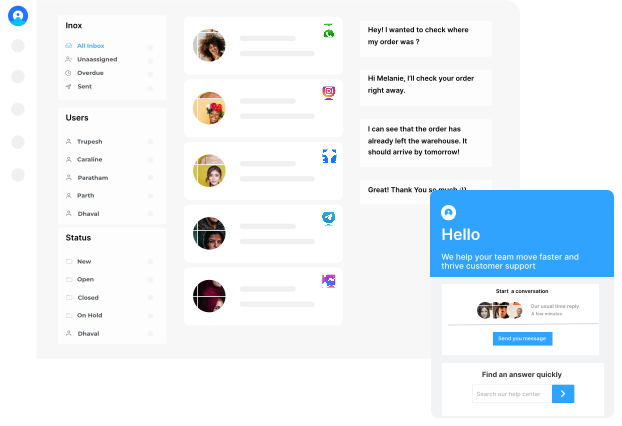
Whether it’s about acquire, engage or support – Omni24 covers all your customer engagement needs in one complete platform.

Copyright ©2026 Veemo All rights reserved.
CA, Los Angeles, Hall Ave, 19011