Brand Experience vs Customer Experience: What’s the Difference?
Brand experience and customer experience work hand in hand to shape how people connect with a business. When both are aligned, they strengthen loyalty and drive lasting brand success.

Brand experience and customer experience work hand in hand to shape how people connect with a business. When both are aligned, they strengthen loyalty and drive lasting brand success.
Businesses face the challenge of distinguishing themselves from the competition. Many organizations struggle to differentiate between brand experience and customer experience, resulting in missed opportunities for engagement.
89% of businesses compete primarily on CX, surpassing product and price.
Brand experience encompasses how customers perceive and interact with a brand overall, influenced by marketing. In contrast, customer experience focuses on the specific interactions a customer has with products or services throughout their journey.
Recognizing these differences enables businesses to develop targeted strategies that enhance both experiences, ultimately driving customer loyalty and growth. Emphasizing both aspects can significantly elevate a brand’s position in the market.
Brand experience refers to the holistic perception and emotional response that consumers have when interacting with a brand across various touchpoints. It includes every encounter, from advertising and social media to product usage. A positive brand experience encourages strong connections between consumers and brands, shaping overall brand perception.
The significance of brand experience lies in its ability to influence customer loyalty and advocacy. When consumers have memorable interactions, they are more likely to choose that brand over competitors and share their positive experiences with others.
Key objectives:
Customer experience (CX) refers to the overall impression and feelings a customer has while interacting with a brand throughout their entire journey. It includes every touchpoint, from initial awareness to post-purchase support and follow-up. A positive customer experience is crucial for building long-term relationships and encouraging loyalty.
The significance of customer experience lies in its direct impact on customer satisfaction and retention. When customers feel valued and understood, they are more likely to become repeat buyers. In a competitive market, exceptional CX can differentiate a brand and drive sustainable growth.
Key objectives:
The significance of brand experience and customer experience cannot be overstated. They play crucial roles in driving customer loyalty and encouraging meaningful relationships.
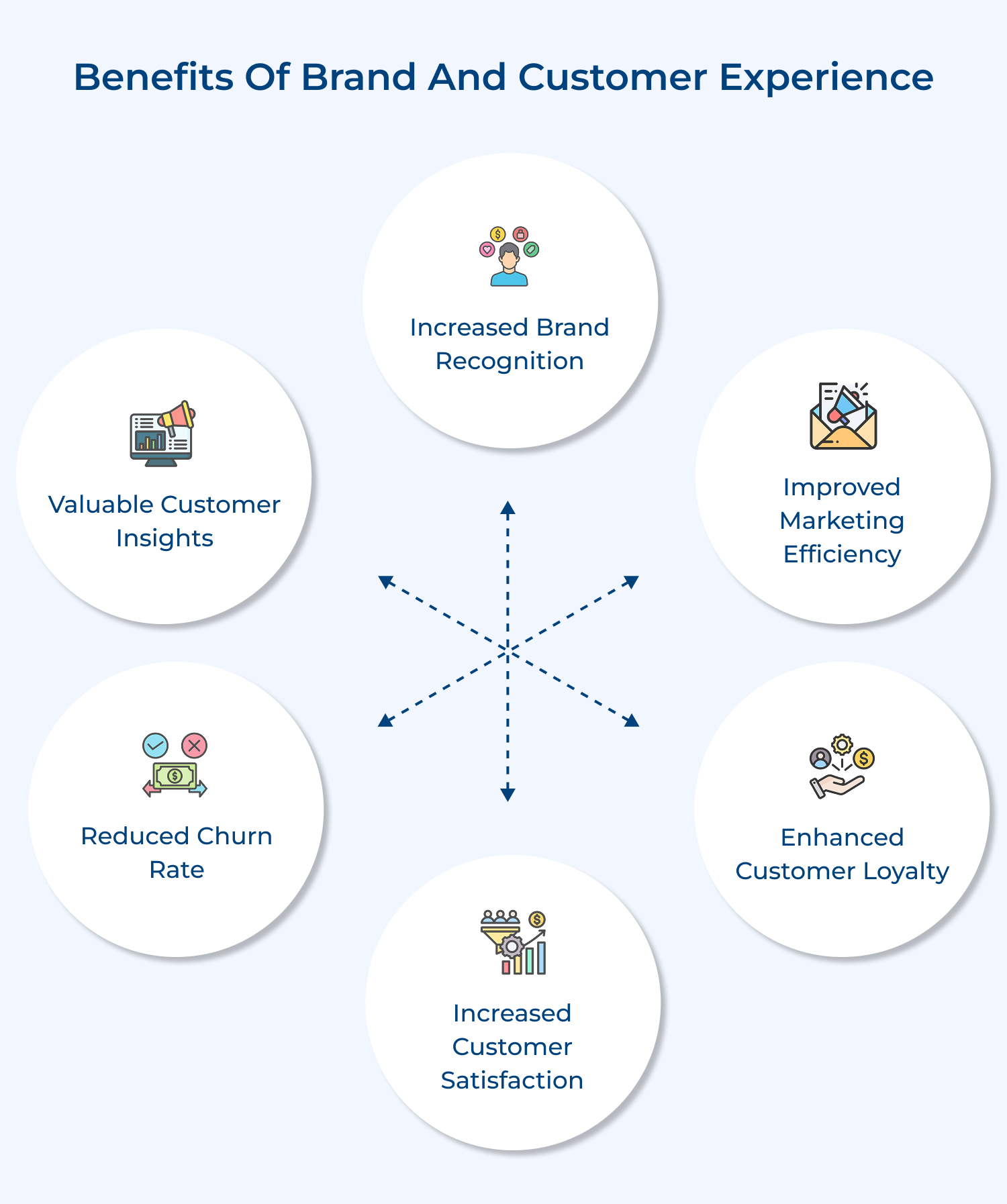
Understanding the difference between brand experience vs customer experience is essential for effective marketing strategies. Each impacts consumer behavior differently.
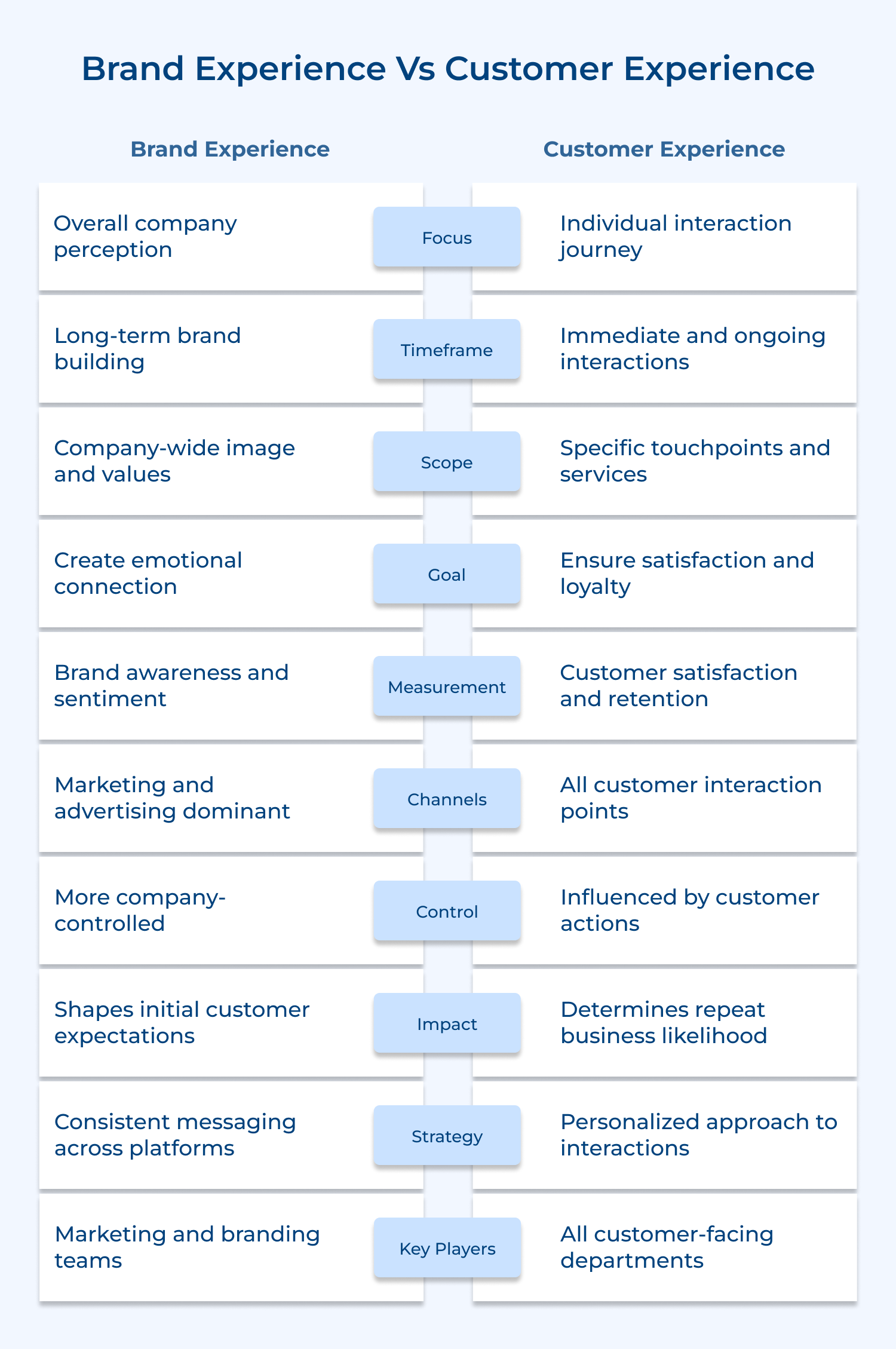
Brand Experience encompasses the overall perception and feelings a person has about a brand, including its identity or values. It’s shaped by all interactions with the brand, even those not directly related to purchases. This experience is cumulative and evolves through various touch points like advertising, social media presence.
Customer Experience focuses specifically on the journey and interactions a customer has when engaging with a company’s products or services. It relates directly to the process of considering, purchasing and using a product or service.
Brand Experience is persistent, existing before, during and after any direct interaction with the company. It’s a continuous narrative that shapes people’s perceptions and expectations of the brand, even if they’ve never been customers. The experience can be influenced by word-of-mouth and cultural presence.
Customer Experience is more episodic and tied to specific interactions or transactions. It has a clear beginning (when a customer starts considering a purchase) and end (post-purchase support or product disposal), though these experiences can accumulate over time to influence overall customer satisfaction and loyalty.
Brand Experience tends to have a stronger emotional and psychological impact. It’s about creating a connection and affinity with the brand, often appealing to aspirational desires or personal values. This experience can evoke feelings of trust, admiration or belonging, which may not be directly tied to product usage.
Customer Experience, while it can certainly have emotional components, is generally more practical and functional. It focuses on how well the company meets the customer’s needs and expectations in terms of product quality, service efficiency, problem resolution and overall satisfaction with the purchase.
Brand Experience reaches a broader audience, including potential customers, stakeholders and the general public. It influences public perception and can attract people to the brand before they become customers. The wide reach means brand experience management often involves broader marketing and PR strategies.
Customer Experience is more targeted, focusing specifically on individuals who are actively engaging with the company as prospects or customers. It’s about managing and optimizing the journey of people who are directly interacting with the company’s products or services, from initial interest through to post-purchase support.
Brand Experience is typically measured through broader, long-term metrics such as brand awareness, brand equity and brand sentiment. These measurements often involve surveys, social listening and market research to gauge public perception and emotional connection to the brand.
Customer Experience is measured more directly through specific, often transaction-related metrics like customer satisfaction scores (CSAT), Net Promoter Score (NPS), customer effort score and churn rate. These metrics are usually tied to particular touchpoints or overall satisfaction with the product or service experience.
Brand Experience is less directly controllable by the company. While it can be shaped through marketing, communications and consistent delivery of brand promises, it’s also significantly influenced by external factors like media coverage, cultural trends, and consumer-to-consumer communications.
Customer Experience, on the other hand, is more directly under the company’s control. It can be managed and optimized through careful design of customer journeys, training of customer-facing staff, and implementation of customer service processes. Companies have more immediate influence over the quality and consistency of customer interactions.
Brand Experience often operates at a more surface level, creating general impressions and associations. It’s about the overall image and reputation of the brand in the public consciousness. This experience can be formed without deep engagement with the company’s products or services.
Customer Experience involves a deeper level of engagement, where individuals interact directly with the company’s offerings. It encompasses the nitty-gritty details of how products work, how services are delivered and how issues are resolved. This experience is based on first-hand interactions and actual usage of the company’s products or services.
Combining brand and customer experiences can enhance overall engagement. This synergy can lead to stronger customer loyalty and retention. Here are effective strategies.
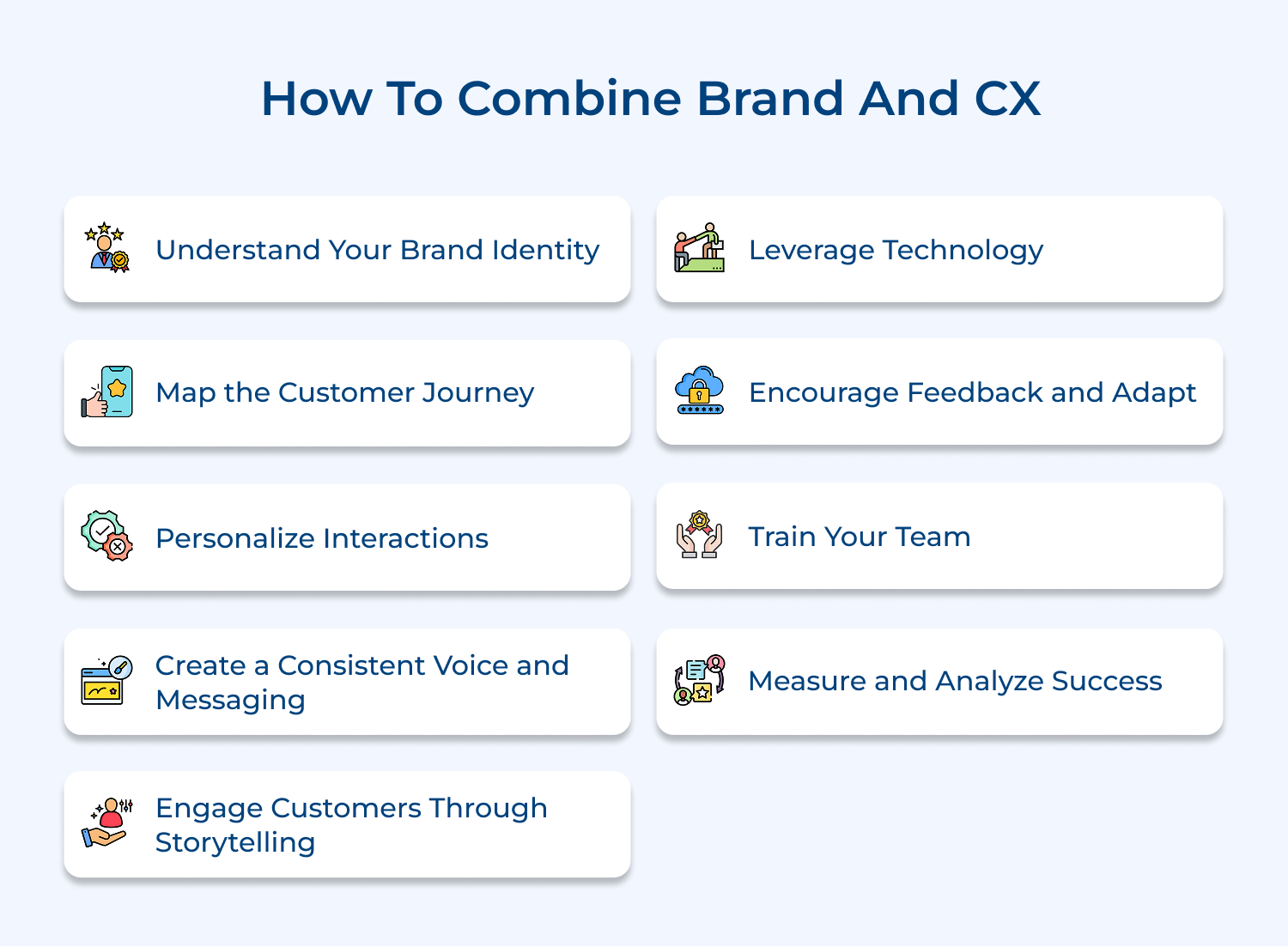
Before merging experiences, it’s essential to have a clear understanding of your brand identity. What values, mission and vision does your brand represent? This clarity will serve as a foundation for how you want customers to perceive your brand. Develop a brand persona that reflects your identity, ensuring that every customer interaction aligns with this persona.
To effectively combine brand and customer experiences, it’s vital to map the customer journey. Identify all touchpoints where customers interact with your brand, from initial awareness to post-purchase follow-up. Understanding these touchpoints will help you identify opportunities to weave your brand identity into each interaction, ensuring a consistent and engaging experience.
Personalization plays a key role in merging brand and customer experiences. Use data analytics to gather insights into customer preferences and behaviors. Tailor communications, offers and services to meet individual needs, creating a unique experience that resonates with customers. This personalization reinforces your brand’s commitment to understanding and valuing each customer.
Consistency is crucial when combining brand and customer experiences. Ensure that your brand voice and messaging remain uniform across all platforms, whether it’s social media, email marketing, or customer service interactions. A cohesive voice helps customers feel more connected to your brand, enhancing their overall experience.
Storytelling is a powerful tool for merging brand and customer experiences. Share stories that highlight your brand values and mission while illustrating how customers have benefited from your products or services. This approach not only encourages an emotional connection but also helps customers see themselves as part of your brand’s journey.
Utilize technology to facilitate seamless interactions. Invest in customer relationship management (CRM) tools, chatbots and other digital solutions to create a smooth experience across all touchpoints. Technology can enhance personalization, streamline communication and ensure that customers receive timely support, all of which contribute to a unified experience.
Customer feedback is invaluable for understanding how well your brand and customer experiences align. Regularly solicit feedback through surveys, reviews and direct conversations. Use this information to adapt your approach, ensuring that both brand and customer experiences continually evolve to meet changing expectations.
Your employees are the frontline ambassadors of your brand. Provide training that emphasizes the importance of combining brand and customer experiences. Equip them with the tools and knowledge needed to deliver exceptional service while embodying your brand values. A well-trained team can effectively reinforce the brand experience through every customer interaction.
To understand the effectiveness of your combined approach, establish metrics to measure success. Monitor customer satisfaction scores, Net Promoter Scores (NPS) and other relevant KPIs. Analyzing this data will help you identify areas for improvement and celebrate successes, allowing you to continually refine your strategy.
Improving brand and customer experiences is vital for business success. Implementing the right strategies can encourage deeper connections with customers.
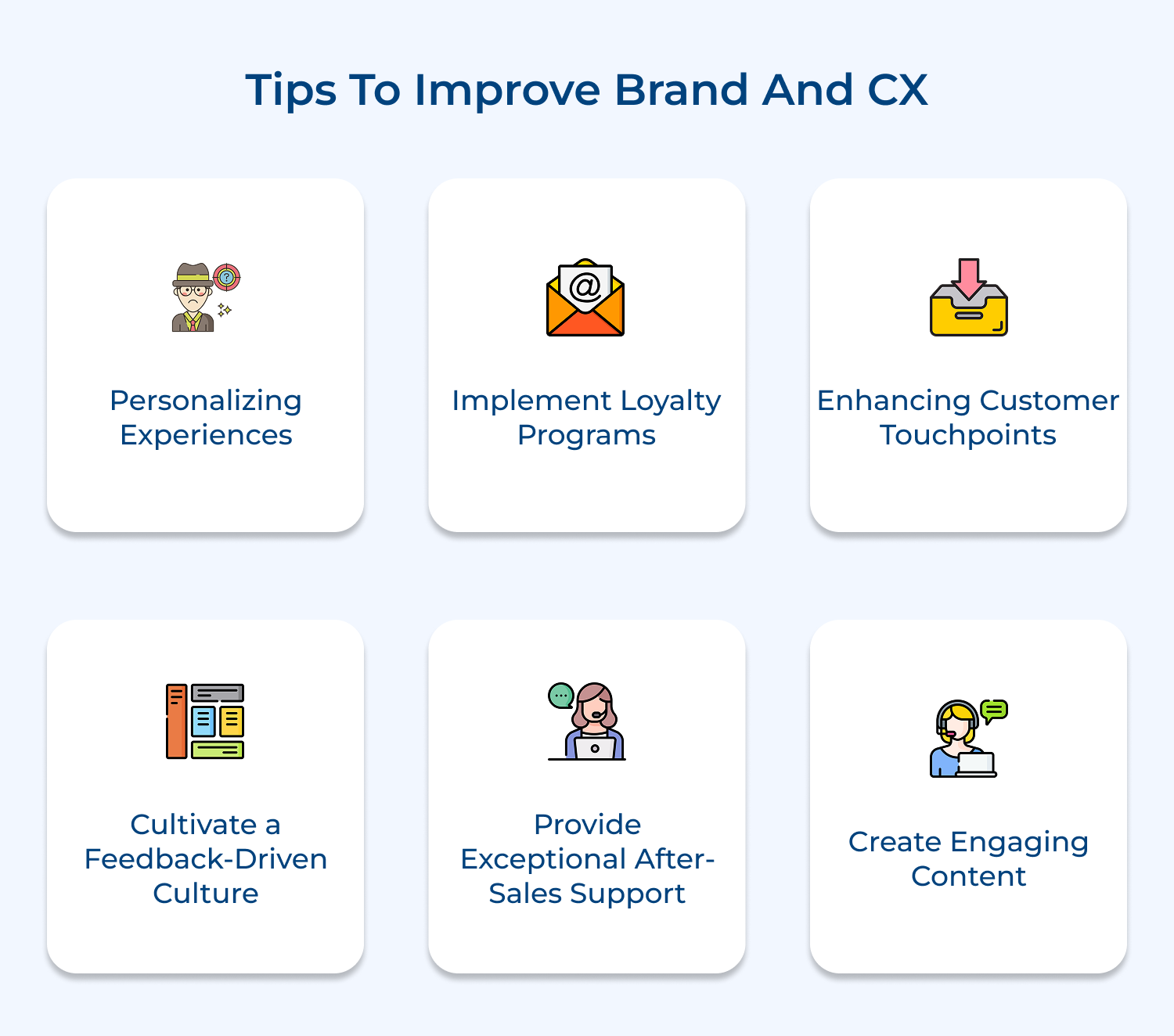
1. Personalizing Experiences
Leverage data analytics to understand individual customer preferences and behaviors. Use this information to tailor interactions, product recommendations and communications. Implement AI-driven personalization tools on your website and in email marketing.
Create personalized packaging or follow-up messages for a unique touch. Remember, personalization should feel helpful, not intrusive, to align with your brand values and enhance the customer experience.
2. Implement Loyalty Programs
Design a loyalty program that reflects your brand’s unique value proposition. Offer rewards that go beyond discounts, such as exclusive experiences or early access to new products. Use tiered systems to encourage ongoing engagement.
Personalize rewards based on individual customer preferences and purchase history. Ensure the program is easy to understand and use across all channels, reinforcing a seamless brand experience.
3. Enhancing Customer Touchpoints
Map out all customer touchpoints and ensure each aligns with your brand identity. Optimize digital interfaces for user-friendliness and visual brand consistency. Train staff to embody brand values in face-to-face interactions.
Create branded packaging that delights customers. Develop a consistent tone of voice for all communications. Regular audits of these touchpoints will help maintain a cohesive brand and customer experience.
4. Cultivate a Feedback-Driven Culture
Implement robust feedback collection mechanisms across all channels. Encourage customers to share their experiences through surveys, reviews and social media. Actively listen to and acknowledge all feedback, positive or negative.
Use insights to drive continuous improvements in products, services and processes. Share customer feedback throughout the organization to encourage a customer-centric culture that aligns with your brand values.
5. Provide Exceptional After-Sales Support
Develop a comprehensive after-sales support strategy that aligns with your brand promise. Offer multiple channels for support, including self-service options and direct assistance. Ensure support staff are well-trained in both technical knowledge and brand values.
Proactively reach out to customers post-purchase to address any issues. Use after-sales interactions as opportunities to reinforce brand loyalty and gather valuable feedback.
6. Create Engaging Content
Develop a content strategy that reflects your brand’s personality and values while addressing customer needs. Use a mix of formats including blog posts, videos, podcasts and interactive content. Ensure all content provides value, whether it’s educational, entertaining, or inspiring.
Encourage user-generated content to encourage community and authenticity. Consistently share content across all relevant platforms to strengthen brand presence and enhance customer engagement.
Understanding the differences between brand experience and customer experience is essential for businesses seeking to thrive in today’s competitive landscape. Brand experience encompasses the overall perception of a brand, shaped by marketing, design and messaging. In contrast, customer experience focuses specifically on the interactions customers have with products and services.
Combining these two aspects can lead to enhanced customer loyalty and satisfaction. Integrating brand identity into every customer touchpoint and personalizing interactions allows businesses to create a cohesive experience that resonates with their audience, ultimately driving growth.

How do you measure brand experience and customer experience?
Brand experience is typically measured through metrics like brand awareness, brand equity and brand sentiment. Tools include surveys, social listening and market research. Customer experience is measured using metrics such as Net Promoter Score (NPS), Customer Satisfaction (CSAT), Customer Effort Score (CES) and churn rate. These are often gathered through post-interaction surveys, customer feedback and analysis of customer behavior data.
How does branding affect customer experience?
Branding significantly influences customer experience by setting expectations and shaping perceptions. A strong brand creates a promise of what customers can expect, influencing their interactions with the company. Consistent branding across all touchpoints helps create a cohesive, recognizable experience. When brand values align with customer experience delivery, it reinforces positive associations and can lead to increased customer loyalty.
Is a brand defined by the customer’s experience?
While customer experience greatly influences brand perception, a brand isn’t solely defined by it. A brand is a complex entity shaped by various factors including marketing, product quality, company values and public image. Customer experiences play a crucial role in bringing the brand to life and validating (or challenging) the brand promise. Consistently positive customer experiences can significantly strengthen a brand’s reputation and value.
What are the best examples of brand experience?
Notable brand experience examples include Apple’s sleek, minimalist design aesthetic carried through products, packaging as well as retail stores; Disney’s immersive, magical experiences in theme parks and media; Starbucks’ consistent ambiance & personalized service across locations; Nike’s inspirational messaging and community-building initiatives; and Amazon’s customer-centric approach with features like one-click ordering. These brands create cohesive, memorable experiences that reinforce their unique brand identities.
 https://omni24.io/wp-content/uploads/2026/07/Customer-Data-Platform.png
1256
2400
Tushar Joshi
https://omni24.io/wp-content/uploads/2023/04/Omni-Logo-1.svg
Tushar Joshi2026-07-08 03:58:592026-07-08 03:58:59How a Customer Data Platform Unlocks Unified Customer Insights
https://omni24.io/wp-content/uploads/2026/07/Customer-Data-Platform.png
1256
2400
Tushar Joshi
https://omni24.io/wp-content/uploads/2023/04/Omni-Logo-1.svg
Tushar Joshi2026-07-08 03:58:592026-07-08 03:58:59How a Customer Data Platform Unlocks Unified Customer Insights https://omni24.io/wp-content/uploads/2026/07/Unified-Customer-View.png
1256
2400
Tushar Joshi
https://omni24.io/wp-content/uploads/2023/04/Omni-Logo-1.svg
Tushar Joshi2026-07-07 03:37:342026-07-07 03:37:34How a Unified Customer View Transforms Customer Experience
https://omni24.io/wp-content/uploads/2026/07/Unified-Customer-View.png
1256
2400
Tushar Joshi
https://omni24.io/wp-content/uploads/2023/04/Omni-Logo-1.svg
Tushar Joshi2026-07-07 03:37:342026-07-07 03:37:34How a Unified Customer View Transforms Customer Experience https://omni24.io/wp-content/uploads/2026/06/Omnichannel-CRM.png
1256
2400
Tushar Joshi
https://omni24.io/wp-content/uploads/2023/04/Omni-Logo-1.svg
Tushar Joshi2026-07-06 03:49:012026-07-06 04:00:22How to Implement Omnichannel CRM Strategy: 7 Key Steps
https://omni24.io/wp-content/uploads/2026/06/Omnichannel-CRM.png
1256
2400
Tushar Joshi
https://omni24.io/wp-content/uploads/2023/04/Omni-Logo-1.svg
Tushar Joshi2026-07-06 03:49:012026-07-06 04:00:22How to Implement Omnichannel CRM Strategy: 7 Key Steps
Whether it’s about acquire, engage or support – Omni24 covers all your customer engagement needs in one complete platform.

Copyright ©2026 Veemo All rights reserved.
CA, Los Angeles, Hall Ave, 19011