How to Meet Customer Service Expectations: 6 Effective Tips
Understand shifting customer service expectations and implement structured strategies that close service gaps before customers switch brands.

Understand shifting customer service expectations and implement structured strategies that close service gaps before customers switch brands.
Your customers expect more than ever, and falling short doesn’t just disappoint — it pushes them straight into your competitors’ hands. In fact, 72% of customers will leave a brand they love after just one bad experience and 60% choose brands based on the service they expect.
As technology evolves as well as expectations rise, the gap between what customers want and what companies deliver keeps widening. Nearly 82% of customers now expect an immediate response when they reach out, meaning brands that lag risk losing loyalty and retention.
Understanding and meeting these shifting expectations can turn your support from reactive to proactive, building stronger relationships at every touchpoint.
Customer service expectations are the standards and experiences customers anticipate when they interact with a company. These expectations are based on past experiences, brand promises and what competitors offer. They shape how customers judge whether the service they receive is satisfactory or disappointing.
Meeting customer service expectations directly influences satisfaction and loyalty. When companies exceed these expectations, they create memorable positive experiences that turn customers into advocates. Falling short damages trust and pushes customers toward competitors who better understand their needs.
Key objectives:
Understanding what customers expect from your service is essential for building a thriving business that people want to stick with.
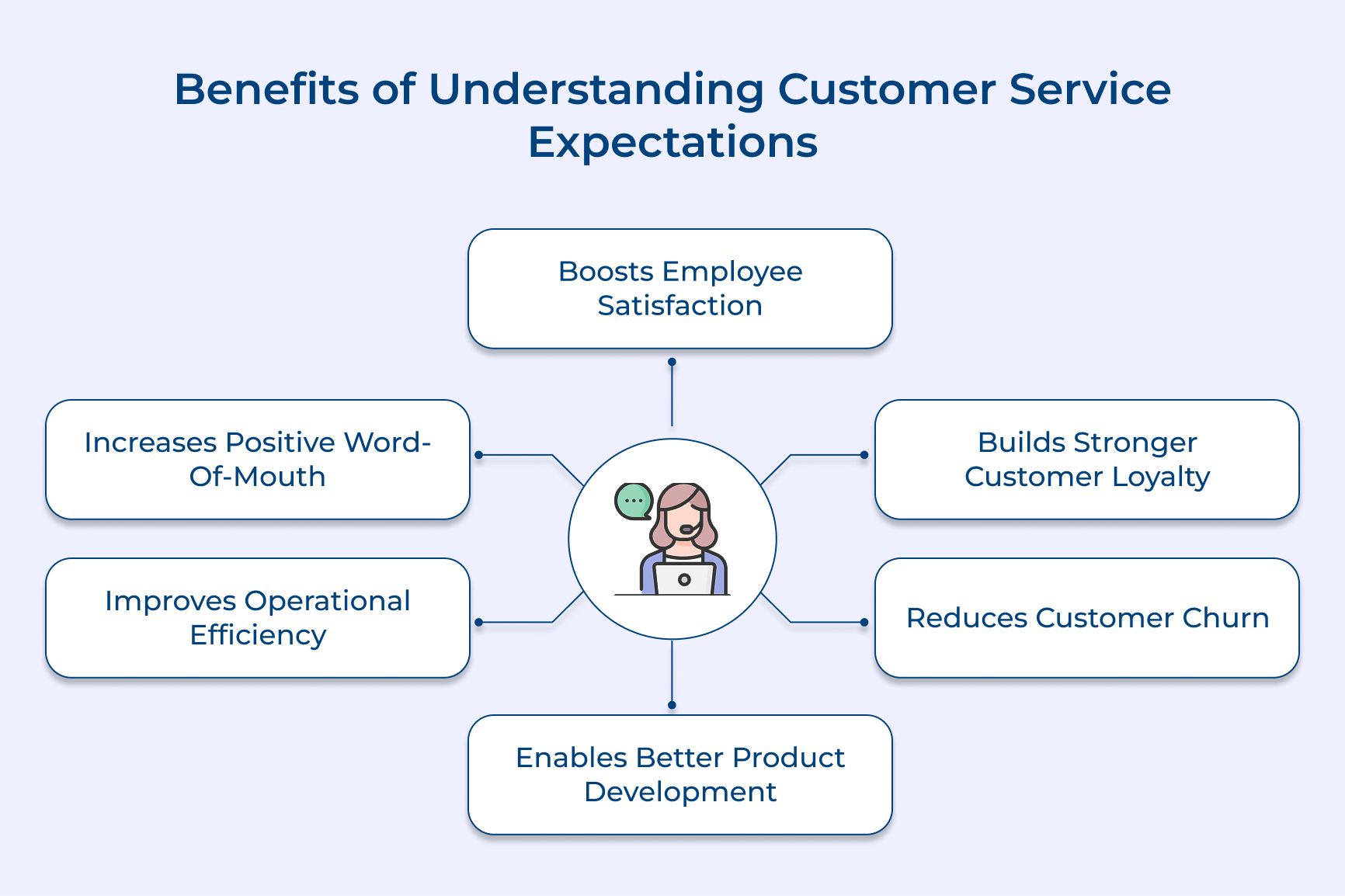
1. Builds Stronger Customer Loyalty
When you consistently meet expectations, customers learn they can rely on you. That reliability builds trust over time, and trust keeps them coming back.
2. Reduces Customer Churn
Clear expectations help you spot gaps early. Fixing issues before frustration builds prevents customers from quietly switching to competitors.
3. Increases Positive Word-Of-Mouth
Customers who get what they expect (or better) naturally share their experiences with others. They become voluntary ambassadors for your brand. This organic promotion is more credible and valuable than any paid advertising campaign.
4. Improves Operational Efficiency
Knowing what matters most helps you focus resources wisely. You stop investing in low-impact efforts and streamline what truly drives satisfaction.
5. Enables Better Product Development
Customer expectations highlight what people genuinely want. That insight guides smarter feature development based on real demand, not assumptions.
6. Boosts Employee Satisfaction
Clear standards give teams direction and confidence. When employees know what success looks like, they perform better — and happier teams deliver better service.
Customer service expectations come in different forms that shape how people judge their interactions with your business. Recognizing these types helps you design better CX strategies.
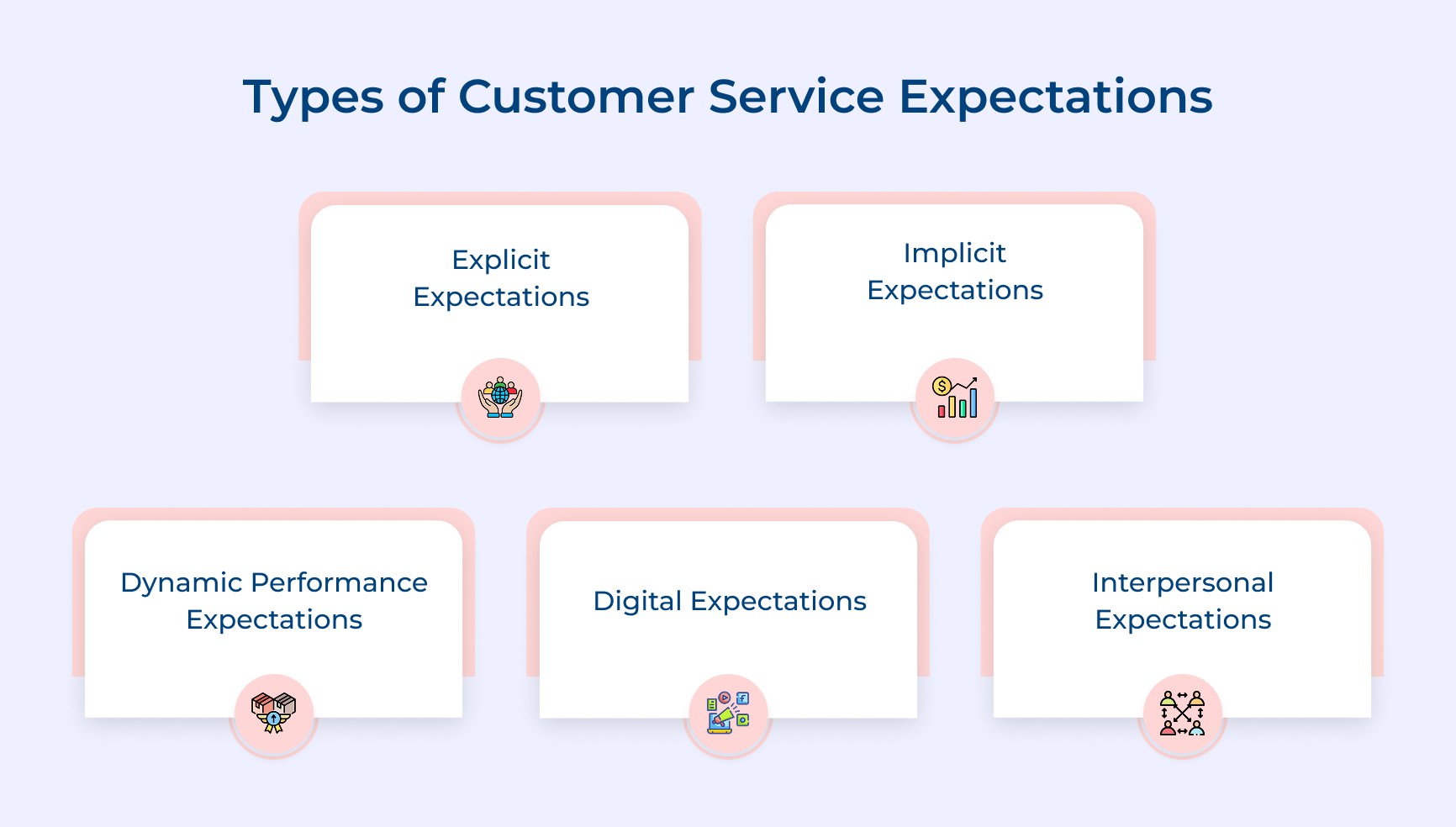
1. Explicit Expectations
These are the promises you openly make — in ads, contracts, or direct conversations. If you guarantee 24-hour shipping or 24/7 support, customers expect exactly that. When explicit promises aren’t met, trust erodes quickly.
2. Implicit Expectations
These are unspoken assumptions shaped by industry norms. Customers expect courtesy, professionalism, and smooth service without asking. Strong CX anticipates these basics while delivering them consistently.
3. Dynamic Performance Expectations
Standards constantly shift. If customers experience instant service elsewhere, they expect the same from you. Staying competitive means continuously raising your bar.
4. Digital Expectations
Customers expect fast, seamless experiences across websites, apps, and social platforms. They want easy navigation, quick resolutions and reliable self-service options without technical issues or unnecessary friction.
5. Interpersonal Expectations
Customers expect empathy, respect, and genuine listening in every interaction. Feeling heard and valued often matters as much as the solution itself in building long-term loyalty.
In this piece, we spotlight the top 8 customer service expectations essential for success in enterprise-level interactions, paving the way for stronger relationships and enhanced loyalty.
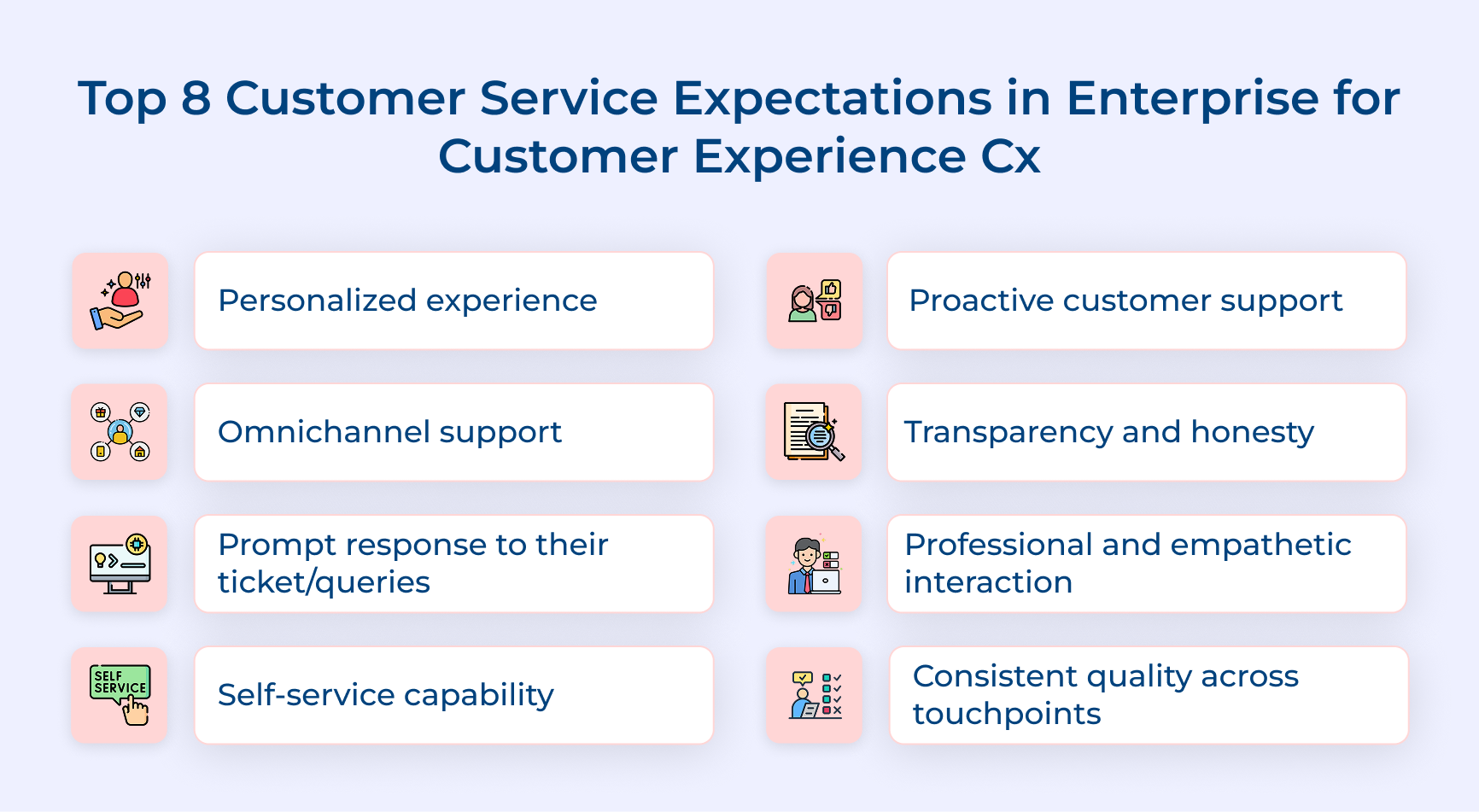
Customers don’t want to feel like ticket numbers. They expect you to recognize who they are, what they’ve bought and what they’ve already discussed with your team. A personalized experience makes people feel valued.
Here’s how to deliver it effectively:
For example, when a customer reaches out about billing, the agent already sees their recent order and greets them by name. No unnecessary questions. No friction.
When personalization feels natural and helpful, it builds trust while trust keeps customers coming back.
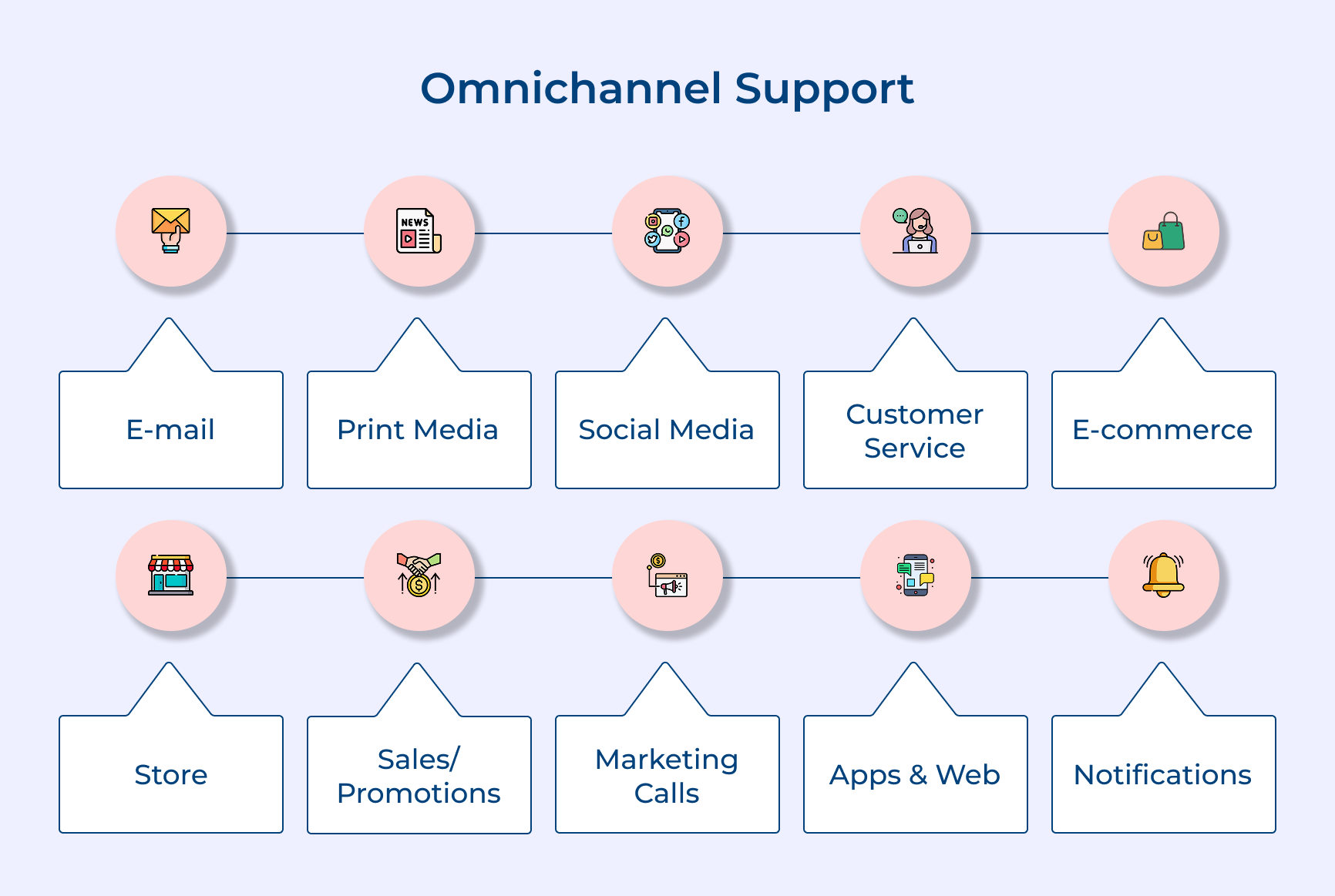
Customers don’t think in channels. They just want help whether that’s through chat, email, phone, or social media. Omnichannel support ensures their experience feels connected, not fragmented. The key is seamless continuity.
Here’s how to make that happen:
When channels don’t “talk” to each other, customers notice immediately and it feels unprofessional.
Omnichannel support isn’t about being everywhere. It’s about being seamlessly connected everywhere.
No one likes waiting. Especially when there’s a problem involved. Customers expect quick acknowledgment and timely resolution. Even a great solution feels frustrating if it takes too long.
Speed builds confidence. Silence builds anxiety.
Here’s what prompt support should include:
The real challenge is about maintaining speed without sacrificing quality. The solution is smart automation for repetitive tasks and reserving human expertise for complex issues. Quick, clear communication shows respect and that’s what customers remember.
Self-service capability gives customers the tools and resources to solve problems independently without waiting for agent assistance. When businesses ignore this expectation, they create bottlenecks where simple questions clog support queues and frustrated customers wait unnecessarily.
Your knowledge base should answer common questions thoroughly with clear instructions and visual aids when helpful. Articles need regular updates to reflect product changes and new customer concerns that emerge over time.
Search tools must understand natural language and return relevant results even when customers use different terminology or phrases. Poor search forces customers into support channels unnecessarily and wastes everyone’s time.
Provide calculators, configurators and diagnostic wizards that guide customers through complex processes step by step with clarity. These tools reduce cognitive load and prevent errors that would otherwise require agent intervention to fix.
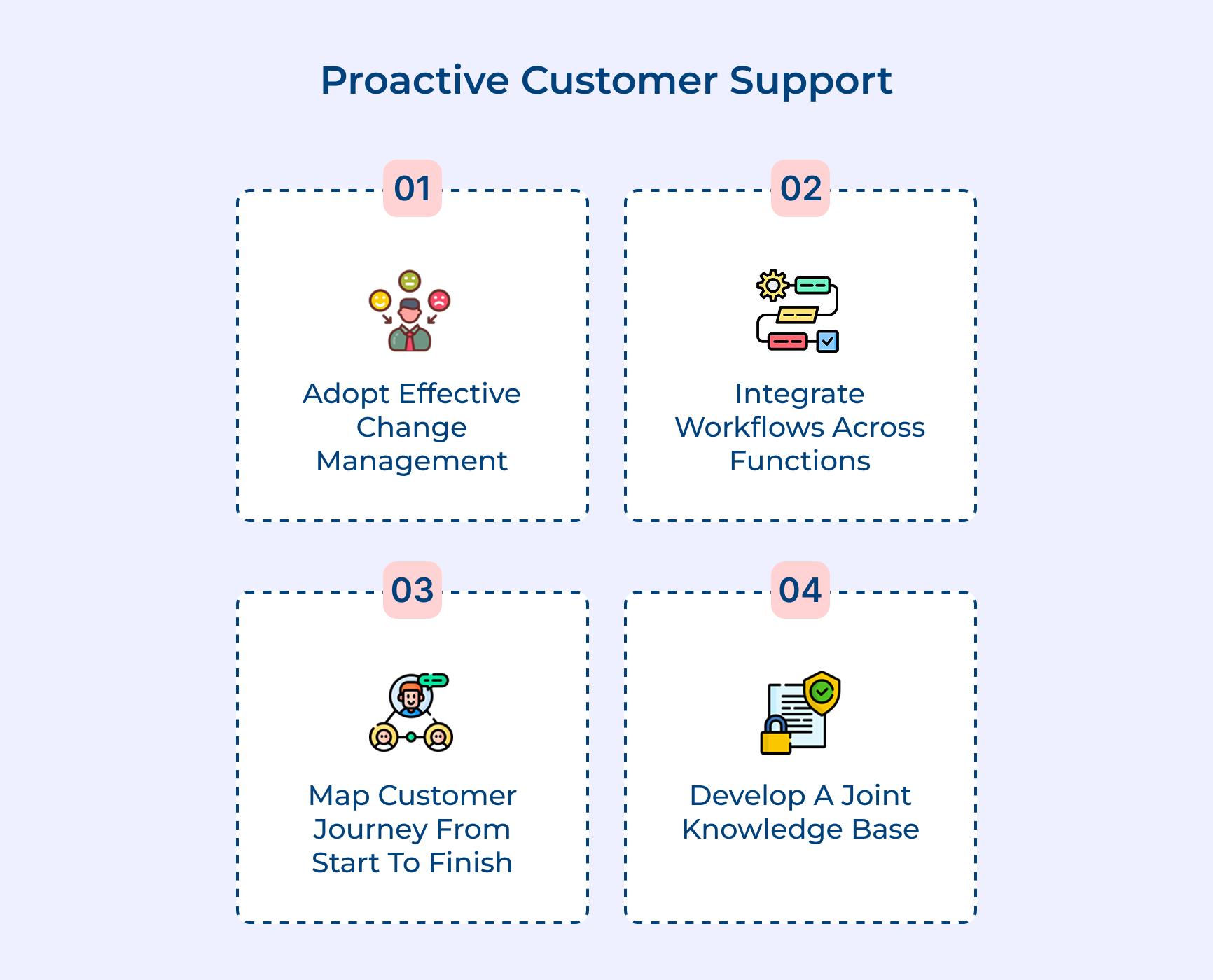
Great support doesn’t always wait for a complaint. Customers now expect you to spot issues early and step in before problems escalate. Proactive support shows you care about their success, not just fixing what breaks. It shifts the relationship from reactive to collaborative.
Here’s how to stay ahead:
For example, if unusual activity suggests access issues, sending guidance before a disruption builds trust instantly.
Proactive support signals commitment. It tells customers you’re invested in their experience, not just their ticket.
Transparency and honesty means communicating openly about pricing, policies, limitations and mistakes without hiding information or making false promises to customers. This expectation is critical because trust forms relationships, and deception destroys that faster than any other failure.
Transparency works by setting accurate expectations from the start so customers can make informed decisions without unpleasant surprises appearing later. When problems occur, honest communication about what went wrong maintains credibility.
How to Meet?
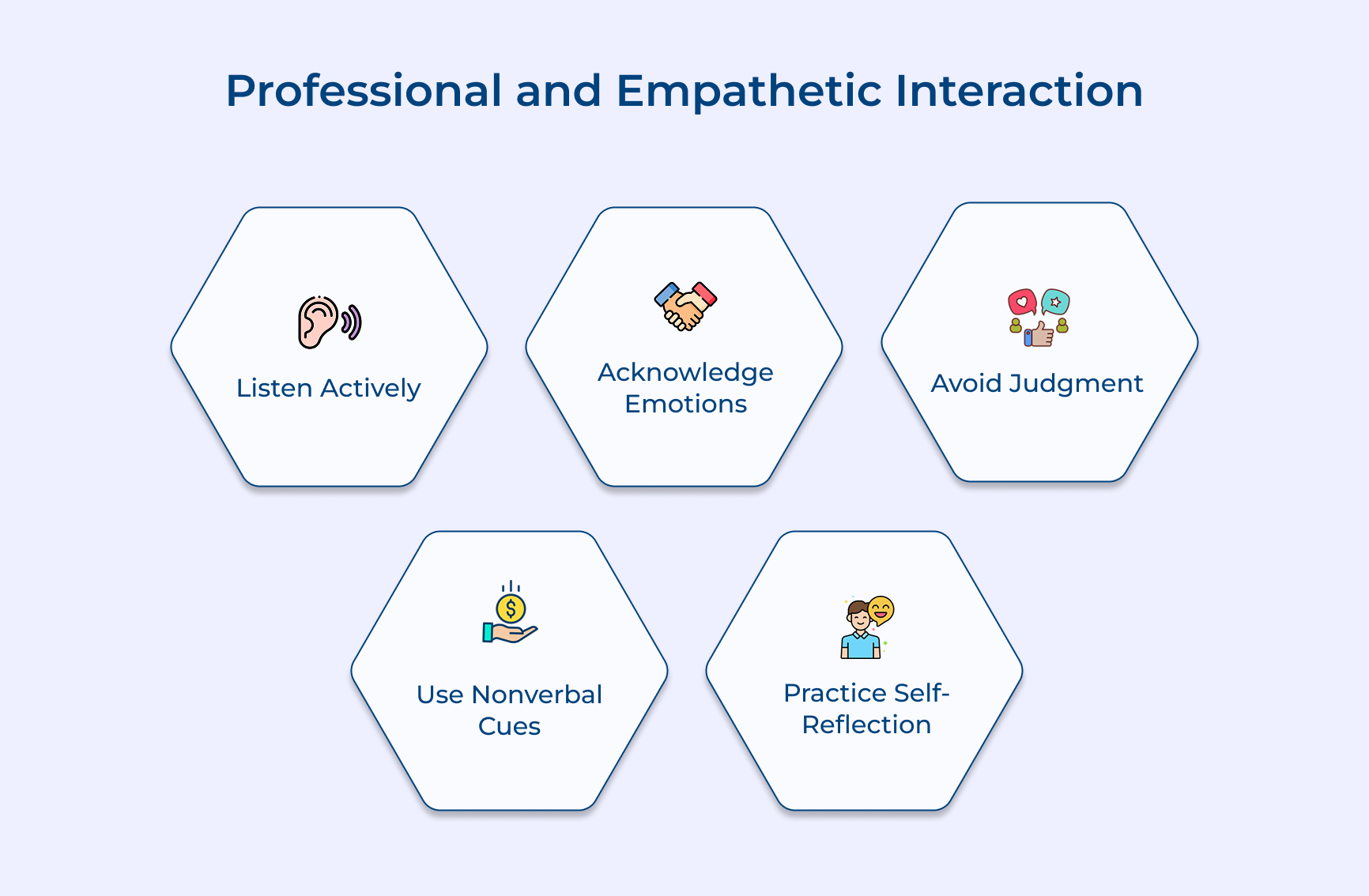
Professional and empathetic interaction combines technical competence with emotional intelligence to make customers feel heard and respected throughout every conversation. The significance lies in how you solve problems, often mattering as much as actually solving them for CX.
Struggling to balance professionalism with empathy? Consider these five questions:
These questions help you identify gaps between your current approach and what customers actually experience. They reveal whether your focus stays on processes or shifts appropriately to people.
Consistent quality across touchpoints means delivering the same high standard regardless of when customers contact you or which team member assists them. This expectation matters because inconsistency creates confusion and erodes trust you’ve worked hard to build through other experiences.
Consistency works by establishing clear protocols that every team member follows without deviation. Customers should receive equally knowledgeable support whether they reach you Monday morning or Saturday evening.
How to Meet?
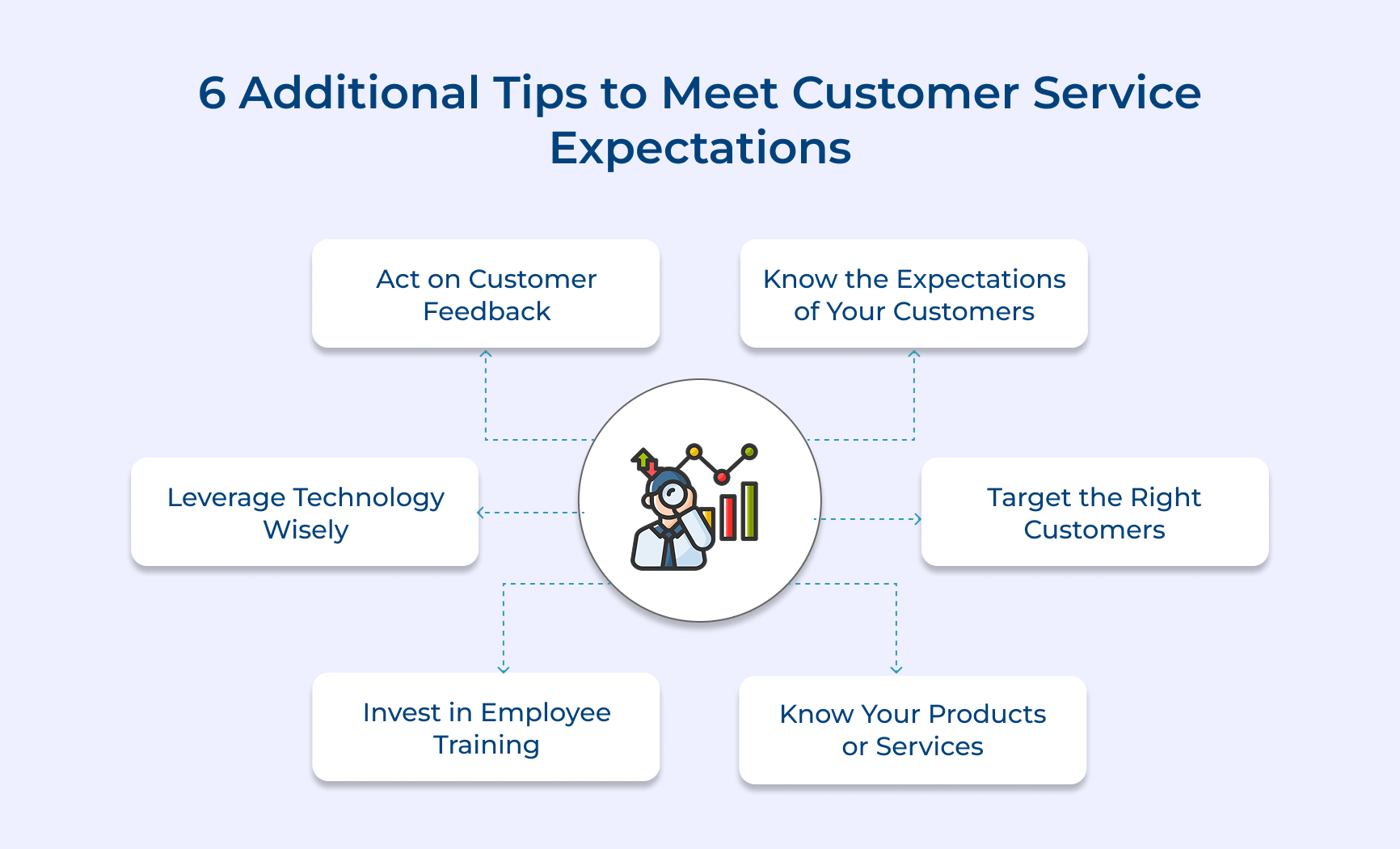
Meeting customer expectations demands strategic actions that align your operations with what customers truly value. Here are six practical tips to strengthen your service delivery.
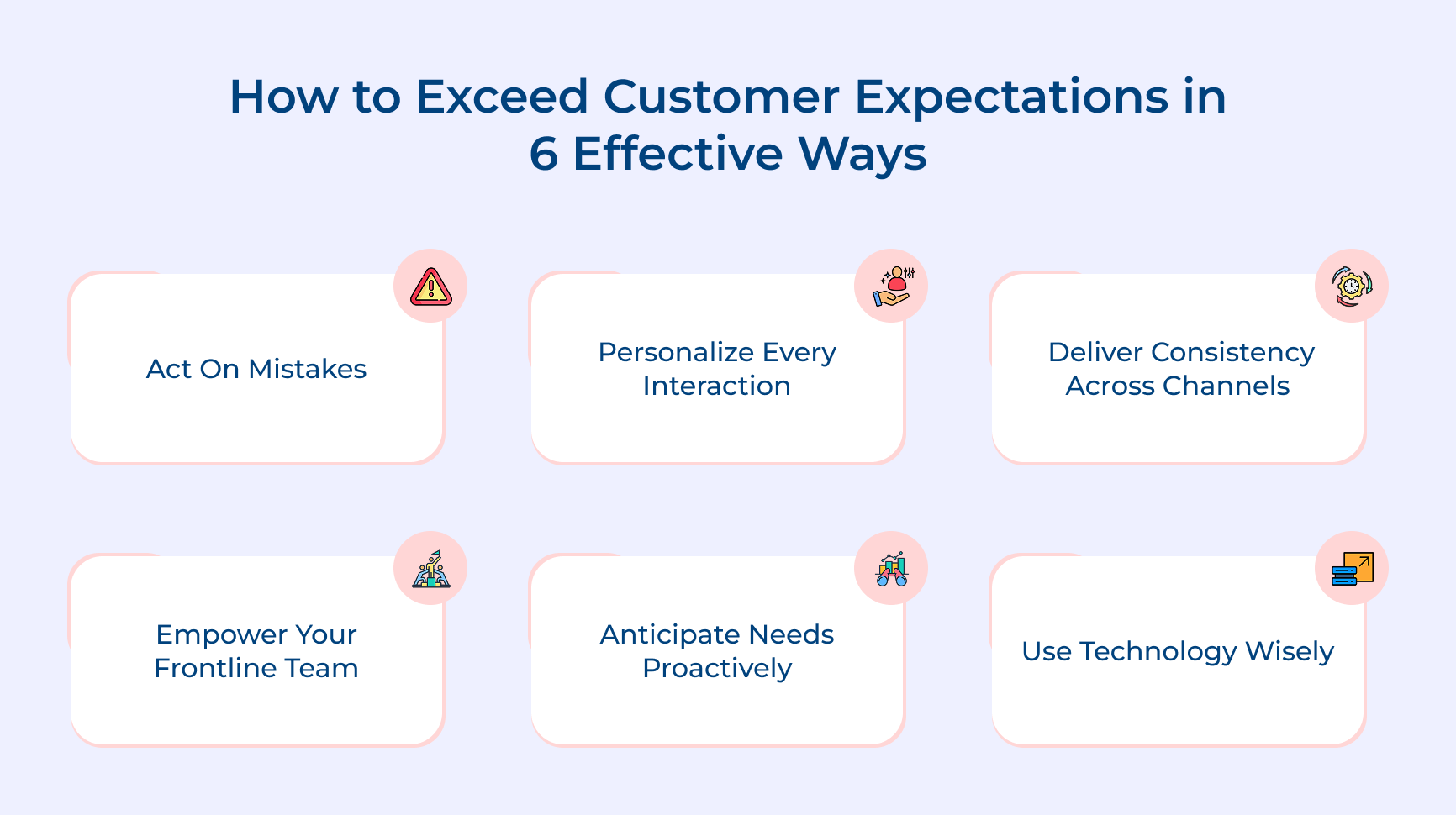
Exceeding customer expectations transforms satisfied clients into enthusiastic advocates. Here are six powerful strategies enterprises can implement to deliver outstanding experience.
1. Act on Mistakes
When errors occur, acknowledge them immediately and take ownership without making excuses or shifting blame to other departments. Speed matters because delayed responses allow frustration to build and damage trust that becomes increasingly difficult to repair over time.
Consider these essential steps when handling mistakes:
Transform mistakes into opportunities by implementing changes that prevent similar issues from recurring in the future. Customers remember how you handled problems more vividly than they remember the problems themselves when recovery is exceptional.
2. Personalize Every Interaction
Use customer data intelligently to tailor conversations and recommendations based on individual preferences, purchase history as well as previous interactions. Generic communication feels impersonal and transactional while personalization demonstrates that you recognize customers as unique individuals deserving special attention.
Train your team to reference past conversations naturally and anticipate needs before customers articulate them explicitly. This proactive personalization creates delightful moments that exceed expectations because customers feel truly understood and valued by your organization.
3. Deliver Consistency Across Channels
Ensure customers receive the same quality of service whether they contact you via phone, email, chat or social media platforms. Inconsistency creates confusion and forces customers to repeat information unnecessarily, which frustrates them as well as wastes their valuable time.
Key elements for maintaining channel consistency:
Build systems that allow conversations to flow naturally from one channel to another without losing context or requiring customers to restart. Consistency demonstrates professionalism and respect for how customers choose to engage with your business on their preferred platforms.
4. Empower Your Frontline Team
Give customer-facing employees the authority to make decisions and resolve issues without endless approval chains or bureaucratic delays. Empowered teams respond faster and create personalized solutions that rigid policies would never allow through standard procedures.
Trust your employees to use good judgment when exceptions make sense for maintaining positive customer relationships and building loyalty. When team members feel trusted, they take ownership of outcomes and deliver more creative solutions to complex problems.
5. Anticipate Needs Proactively
Monitor customer behavior patterns and usage data to identify potential issues or opportunities before customers recognize them independently. Proactive outreach with solutions or helpful suggestions exceeds expectations because customers don’t expect you to care beyond responding to complaints.
Ways to implement proactive service effectively:
Create a culture where anticipating customer needs becomes standard practice rather than an occasional surprise that only happens sporadically. Consistent proactivity separates exceptional enterprises from merely adequate competitors in crowded markets where differentiation matters significantly.
6. Use Technology Wisely
Implement tools that enhance human service rather than replacing personal connection with cold automation that frustrates customers seeking help. Technology should eliminate friction points and create convenience while keeping genuine human support easily accessible when situations require empathy.
Strategic technology applications for exceeding expectations:
Balance efficiency gains from technology with the irreplaceable value of human judgment and emotional intelligence in difficult situations. The goal is augmenting your team’s capabilities rather than minimizing human interaction to reduce costs at the expense of quality.
Meeting customer service expectations is the foundation of business survival and growth in competitive markets. Understanding what customers want and consistently delivering on those expectations builds the trust that turns one-time buyers into lifelong advocates.
Start by listening to your customers and implementing changes based on their feedback as well as behavior patterns. Combine proactive support with transparency and empower your team to solve problems quickly while using technology to enhance rather than replace human connection.

What happens if customer service expectations are not met?
Customers lose trust and actively seek alternatives when expectations aren’t met consistently over time. They share negative experiences through reviews and social media, damaging your reputation while making customer acquisition increasingly expensive as well as difficult.
How have customer service expectations changed over time?
Expectations have shifted from accepting slow responses to demanding instant support across multiple channels at any hour. Customers now expect personalization and proactive communication that were considered luxuries just a decade ago but are standard today.
What response times meet customer service expectations?
Most customers expect acknowledgment within minutes for chat and social media while tolerating hours for emails. Phone calls should connect immediately without lengthy holds and complex issues require regular updates even when full resolution takes longer.
How do digital channels impact customer service expectations?
Digital channels raised expectations for speed and convenience since customers can reach businesses instantly from anywhere using preferred platforms. They expect the same quality across all channels with conversations that continue seamlessly when switching between platforms.?
How can businesses meet rising customer service expectations?
Why is understanding customer service expectations crucial for business success?
Understanding expectations allows you to allocate resources effectively and prevent problems before they escalate into complaints or churn. It helps you differentiate from competitors by consistently delivering what matters most to customers rather than guessing what they value.
 https://omni24.io/wp-content/uploads/2026/07/Customer-Data-Platform.png
1256
2400
Tushar Joshi
https://omni24.io/wp-content/uploads/2023/04/Omni-Logo-1.svg
Tushar Joshi2026-07-08 03:58:592026-07-08 03:58:59How a Customer Data Platform Unlocks Unified Customer Insights
https://omni24.io/wp-content/uploads/2026/07/Customer-Data-Platform.png
1256
2400
Tushar Joshi
https://omni24.io/wp-content/uploads/2023/04/Omni-Logo-1.svg
Tushar Joshi2026-07-08 03:58:592026-07-08 03:58:59How a Customer Data Platform Unlocks Unified Customer Insights https://omni24.io/wp-content/uploads/2026/07/Unified-Customer-View.png
1256
2400
Tushar Joshi
https://omni24.io/wp-content/uploads/2023/04/Omni-Logo-1.svg
Tushar Joshi2026-07-07 03:37:342026-07-08 10:10:24How a Unified Customer View Transforms Customer Experience
https://omni24.io/wp-content/uploads/2026/07/Unified-Customer-View.png
1256
2400
Tushar Joshi
https://omni24.io/wp-content/uploads/2023/04/Omni-Logo-1.svg
Tushar Joshi2026-07-07 03:37:342026-07-08 10:10:24How a Unified Customer View Transforms Customer Experience https://omni24.io/wp-content/uploads/2026/06/Omnichannel-CRM.png
1256
2400
Tushar Joshi
https://omni24.io/wp-content/uploads/2023/04/Omni-Logo-1.svg
Tushar Joshi2026-07-06 03:49:012026-07-06 04:00:22How to Implement Omnichannel CRM Strategy: 7 Key Steps
https://omni24.io/wp-content/uploads/2026/06/Omnichannel-CRM.png
1256
2400
Tushar Joshi
https://omni24.io/wp-content/uploads/2023/04/Omni-Logo-1.svg
Tushar Joshi2026-07-06 03:49:012026-07-06 04:00:22How to Implement Omnichannel CRM Strategy: 7 Key Steps
Whether it’s about acquire, engage or support – Omni24 covers all your customer engagement needs in one complete platform.

Copyright ©2026 Veemo All rights reserved.
CA, Los Angeles, Hall Ave, 19011