How a Customer Data Platform Unlocks Unified Customer Insights
A customer data platform delivers accurate, unified customer views across all touchpoints to enable personalized experiences and better outcomes.
A customer data platform delivers accurate, unified customer views across all touchpoints to enable personalized experiences and better outcomes.
Most businesses are sitting on mountains of customer data, yet struggling to understand it. Data lives scattered across CRMs, marketing tools and support systems with nothing connecting them.
That disconnection has a real cost, missed personalization, wasted ad spend and customer experiences that feel completely irrelevant. Every team is working from a different and incomplete version of customer reality.
A Customer Data Platform fixes this by unifying every customer signal into one actionable profile. CDP revenue is expected to surpass $5.7 billion by 2026 with CAGRs of 17.9-34.2% through 2029-2031 amid exploding data volumes.
Explore the guide that breaks down what a CDP is and why businesses that implement it correctly gain a lasting advantage.
A Customer Data Platform is a centralized system that collects customer data from multiple sources to build a single persistent customer profile. Unlike a CRM or a DMP a CDP is designed to handle both known and anonymous customer data across every interaction your business has with a customer.
A CDP pulls data from every touchpoint starting from your website, mobile app, CRM, and offline channels. Thereafter stitches it together under one unified customer identity. The process eliminates data silos that quietly kill personalization efforts in most mid-to-large organizations.
Once the data is unified, the CDP makes it accessible to other tools like marketing automation, analytics and customer support platforms in real time. This is what separates a CDP from a traditional data warehouse it’s built for activation, not just storage.
Key Purposes of a CDP:
Let me walk you through what actually goes inside a well-built CDP.
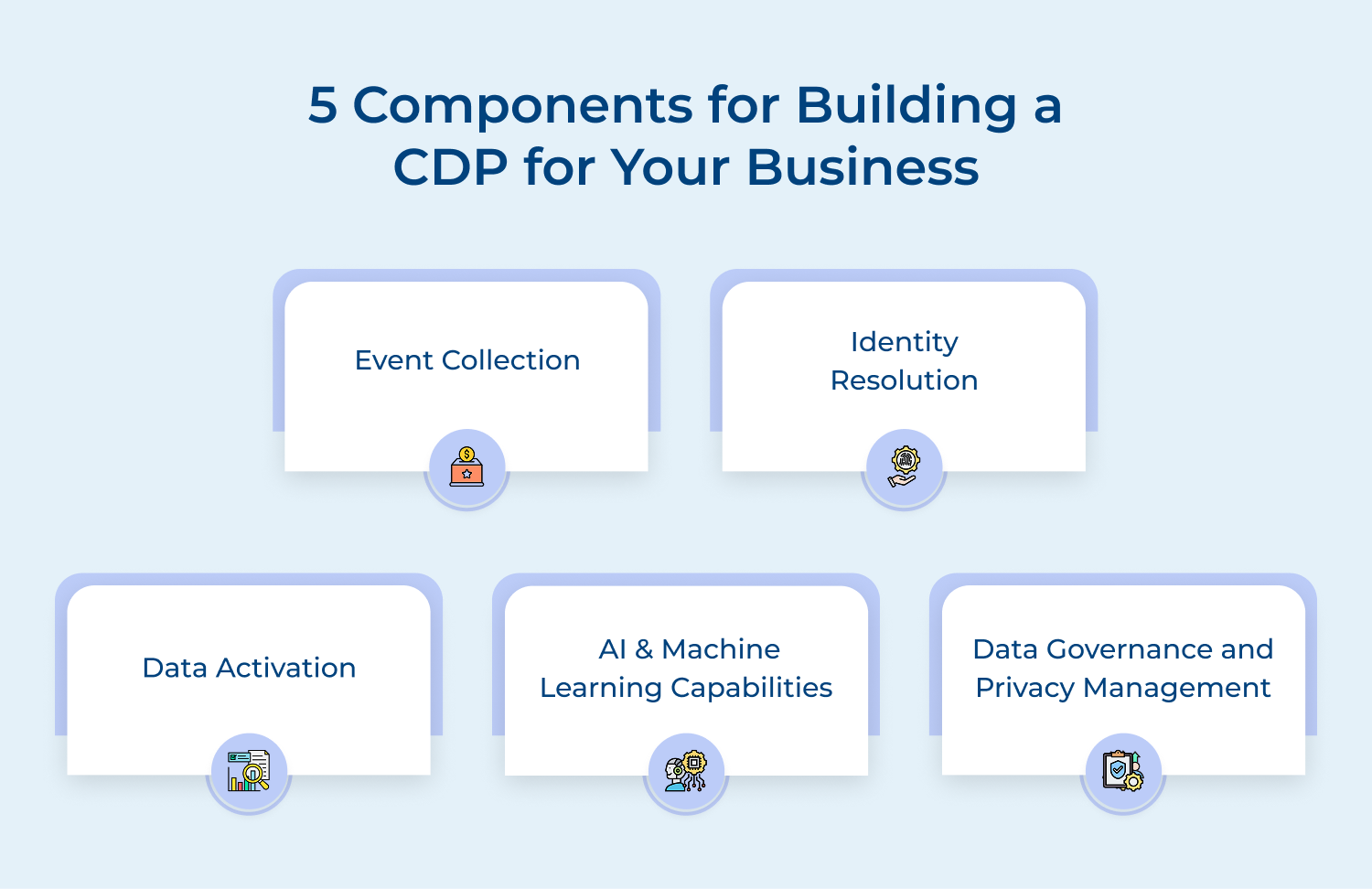
Event collection is the nervous system of your CDP, and if it misses key signals, everything built on top becomes unreliable. Every click, form fill, and purchase carries customer intent that your CDP must capture consistently across every channel.
Where most businesses get event collection wrong:
A customer browses anonymously, signs up via email, then purchases on mobile without identity resolution your CDP sees three different people. That fragmented view corrupts every insight and every personalization decision your business makes from that point forward.
Identity resolution stitches these touchpoints together using deterministic matching through known identifiers and probabilistic matching through behavioral patterns. The stronger your identity graph, the more accurate every downstream decision becomes.
Unified data sitting inside a CDP with nowhere to go is just expensive storage. Value is created only when that data flows into the platforms where your teams make decisions every single day.
What makes data activation genuinely powerful in practice:
Knowing what a customer did last week is useful but predicting what they will do next week is where real competitive advantage lives. AI inside a CDP shifts your entire operation from reactive to predictive and that changes everything.
Businesses that act on churn propensity scores weeks before customers show obvious leaving signals consistently outperform on retention. That kind of early intelligence is something no manual reporting process can ever replicate.
Key AI capabilities worth prioritizing inside your CDP:
Every component above generates and moves sensitive customer data that too without governance, your CDP quietly becomes a compliance liability. Treating consent management as an afterthought is one of the most expensive mistakes a growing business can make.
A strong governance framework doesn’t slow your CDP down; it makes the data more trustworthy for every team using it. When teams trust the data, adoption improves and the entire system delivers more value.
Let’s explore the essential practices that can help your organization successfully implement a Customer Data Platform and unlock its full potential.
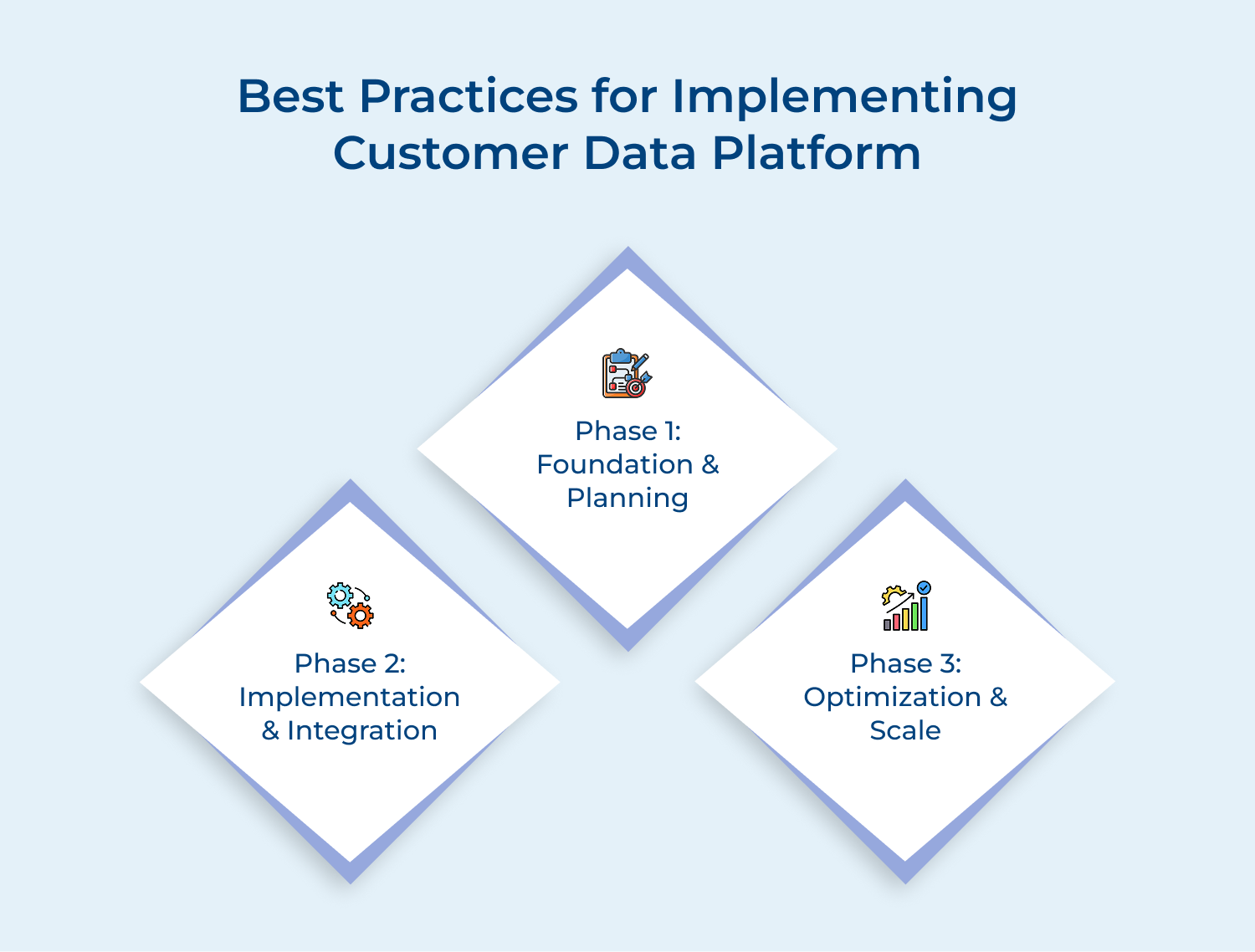
Most businesses entering a CDP project don’t know how many data sources they have accumulated across teams. That unknown is dangerous because your CDP can only unify what it can actually find.
Some questions to ask during your data audit are: Which teams own which data sources? Which sources capture real-time behavioral signals versus only periodic transactional snapshots? Which data sources have consistent customer identifiers that will support profile building?
A structured audit gives you a clear map of your data landscape before any vendor conversation begins. Without this map you risk building your CDP on sources that are incomplete or simply unreliable.
How to implement your data audit effectively:
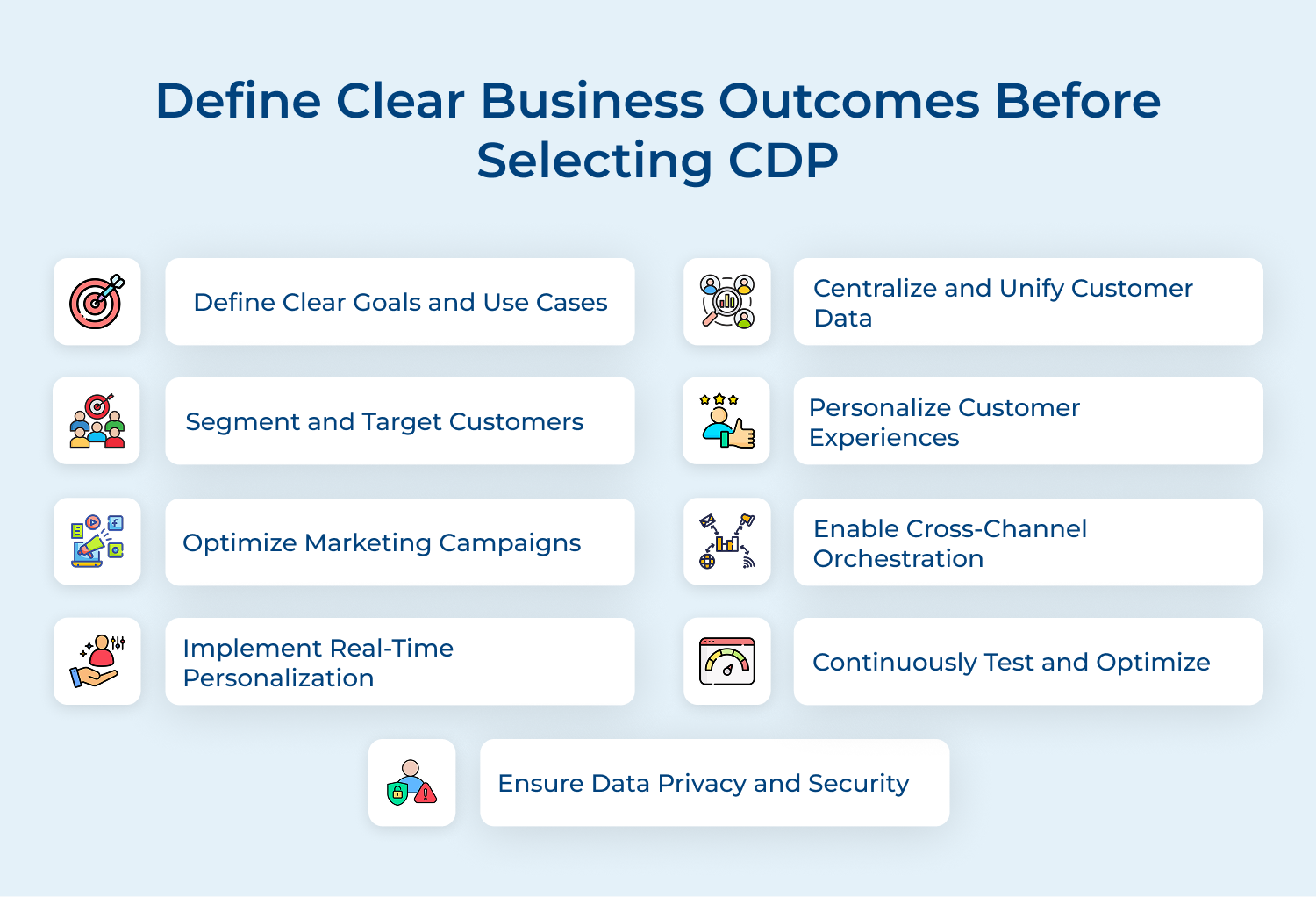
Businesses that evaluate CDP vendors before defining their core problem almost always select on features rather than fit. That misalignment shows up painfully six months into implementation when real gaps appear.
What specific outcomes should you define before evaluating any CDP:
– Are you trying to reduce churn by identifying at-risk customers earlier in their journey?
– Do you need better segmentation to improve campaign ROI across paid channels?
– Is your primary goal connecting anonymous behavioral data to known customer profiles?
Converting each outcome into a measurable KPI keeps your vendor evaluation grounded in business reality. A platform solving your specific problem will always outperform a technically superior tool selected without direction.
A CDP owned by only one team will face quiet resistance from every other team it was supposed to serve. Marketing wants speed, and without early alignment these priorities pull implementation in different directions.
Run a joint workshop where each team presents their biggest customer data frustration out loud. That conversation almost always reveals fragmented data as everyone’s shared problem and that shared pain becomes the foundation for genuine buy-in.
What your cross-functional alignment workshop must produce:
Maintain that alignment throughout implementation by scheduling monthly cross-functional reviews. A shared dashboard showing progress against each team’s defined outcomes keeps everyone focused and accountable.
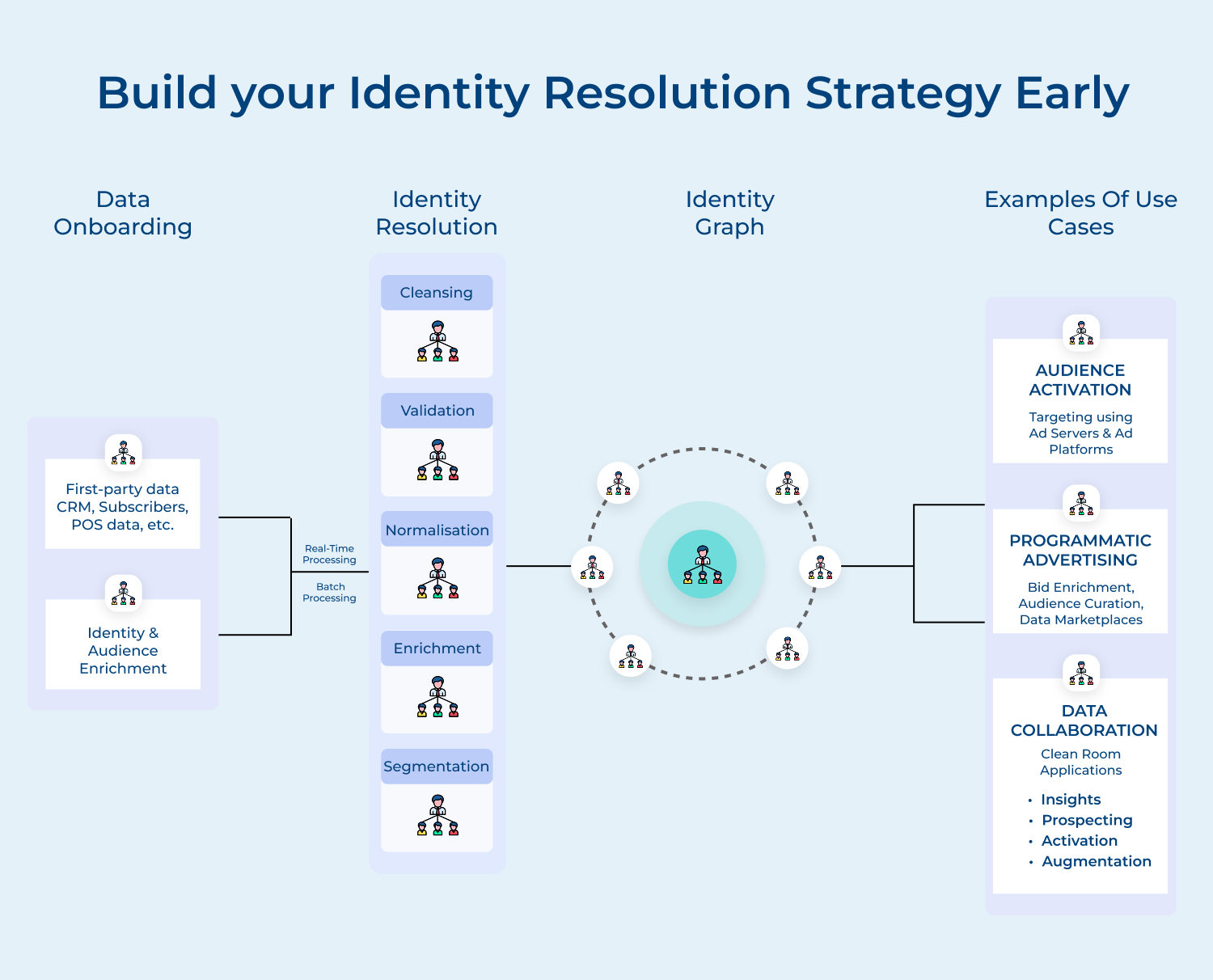
Identity resolution is where most CDP implementations quietly start failing without anyone noticing immediately. Every unresolved duplicate profile corrupts your segmentation and makes personalization feel random rather than relevant.
The resolution also needs a clear strategy before implementation to ensure accuracy. Deterministic matching relies on consistent identifiers, while probabilistic matching must be carefully tuned to avoid errors. A defined hierarchy is also crucial to resolve data conflicts across sources.
Start by listing every customer identifier your business collects and map how they connect across systems. That mapping exercise alone typically reveals more profile fragmentation than most teams expected to find.
How to implement identity resolution correctly from day one:
Connecting every data source simultaneously is the fastest way to turn a CDP project into an eighteen month struggle. A phased approach starting with highest-value sources creates early momentum and builds team confidence.
Which data sources should you prioritize in your first integration wave:
Once your first wave is live, verify that profiles are forming accurately and data refresh rates match your activation needs. Moving to the second integration wave before this validation creates compounding data quality problems that are difficult to unwind.
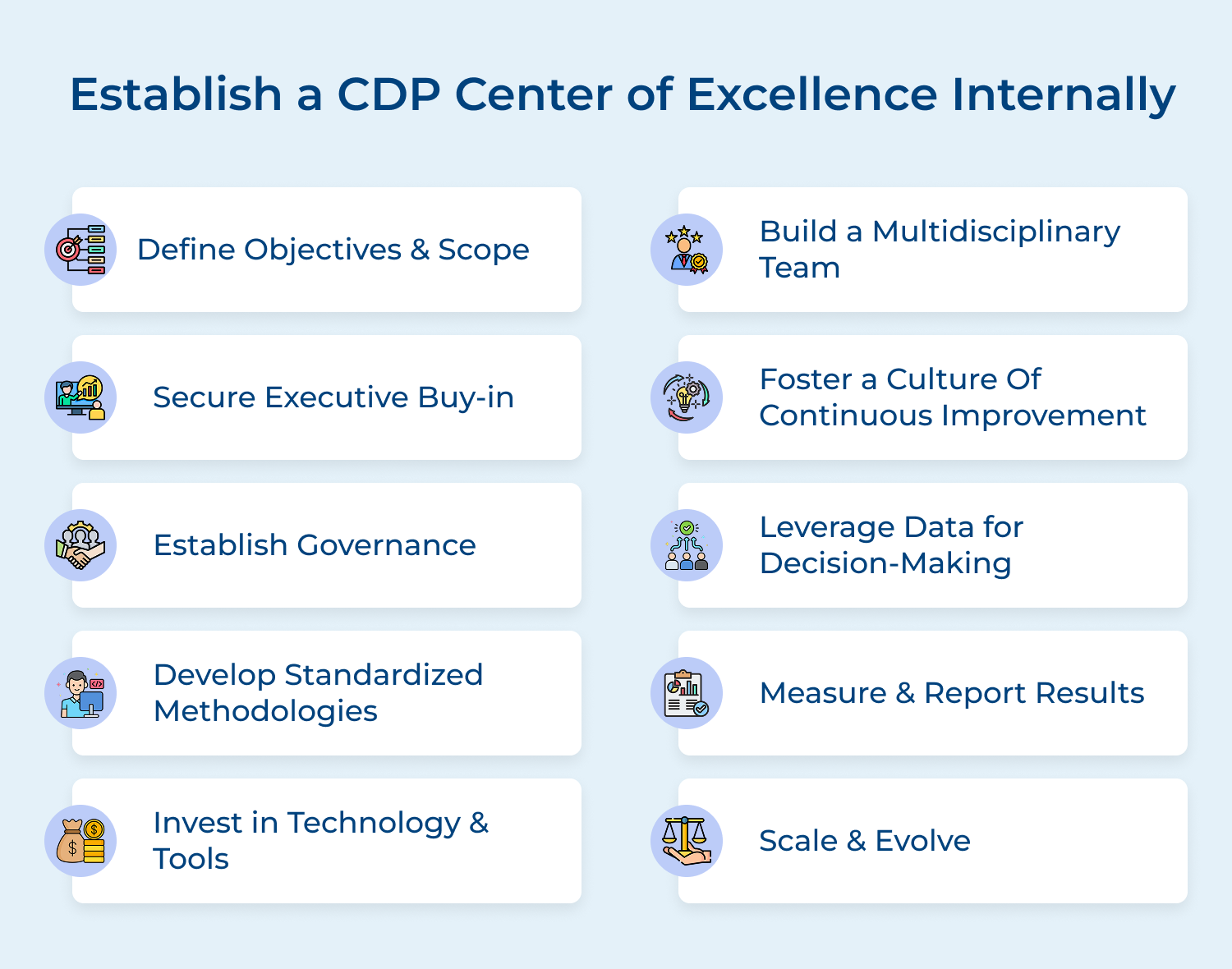
A CDP without dedicated internal ownership degrades faster than most teams expect within the first twelve months. A Center of Excellence keeps your CDP delivering compounding value rather than becoming an expensive and underused platform.
This team is typically two to four people from marketing, data engineering and IT with dedicated time as well as a clear mandate. Their role is to be the internal consultancy every team approaches when they want to do something new with customer data.
Practical milestones your Center of Excellence should hit in the first six months:
Starting activation across every journey simultaneously spreads your team too thin and makes measuring real impact nearly impossible. Focus first on journeys where behavioral data is richest and business impact is most direct.
Which customer journeys should you prioritize for first activation:
Once your first activation journeys are live uses those results to build internal confidence across teams. A proven cart abandonment journey delivering measurable revenue recovery is the strongest internal business case for expanding activation further.
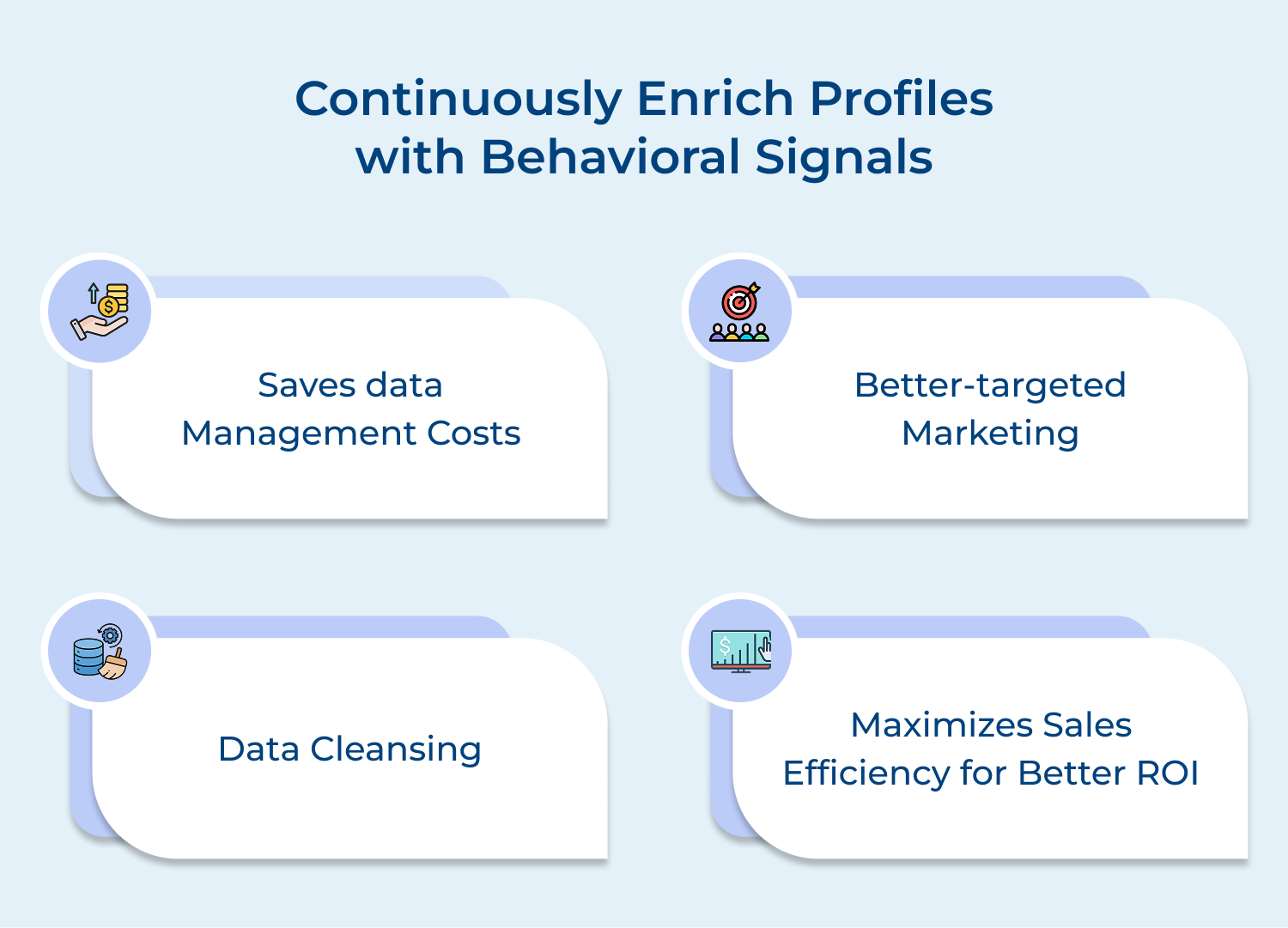
A customer profile that stops growing in richness quickly becomes a liability for your personalization efforts. Businesses that treat profile enrichment as an ongoing discipline consistently outperform those that treat it as a setup task.
What does continuous profile enrichment actually look like in practice? Every new behavioral signal should automatically update the unified profile and trigger reassessment of that customer’s segment membership. That continuous reassessment keeps personalization relevant as customer needs evolve over time.
Behavioral signals worth prioritizing for continuous profile enrichment:
Enrichment without a clear governance rule around data freshness creates a different problem entirely. Set a defined expiry window for behavioral signals so older irrelevant data does not distort your current segmentation accuracy.
As someone who has seen businesses struggle with fragmented customer data, I can tell you that a CDP doesn’t just organize data it transforms how businesses make decisions and build relationships.
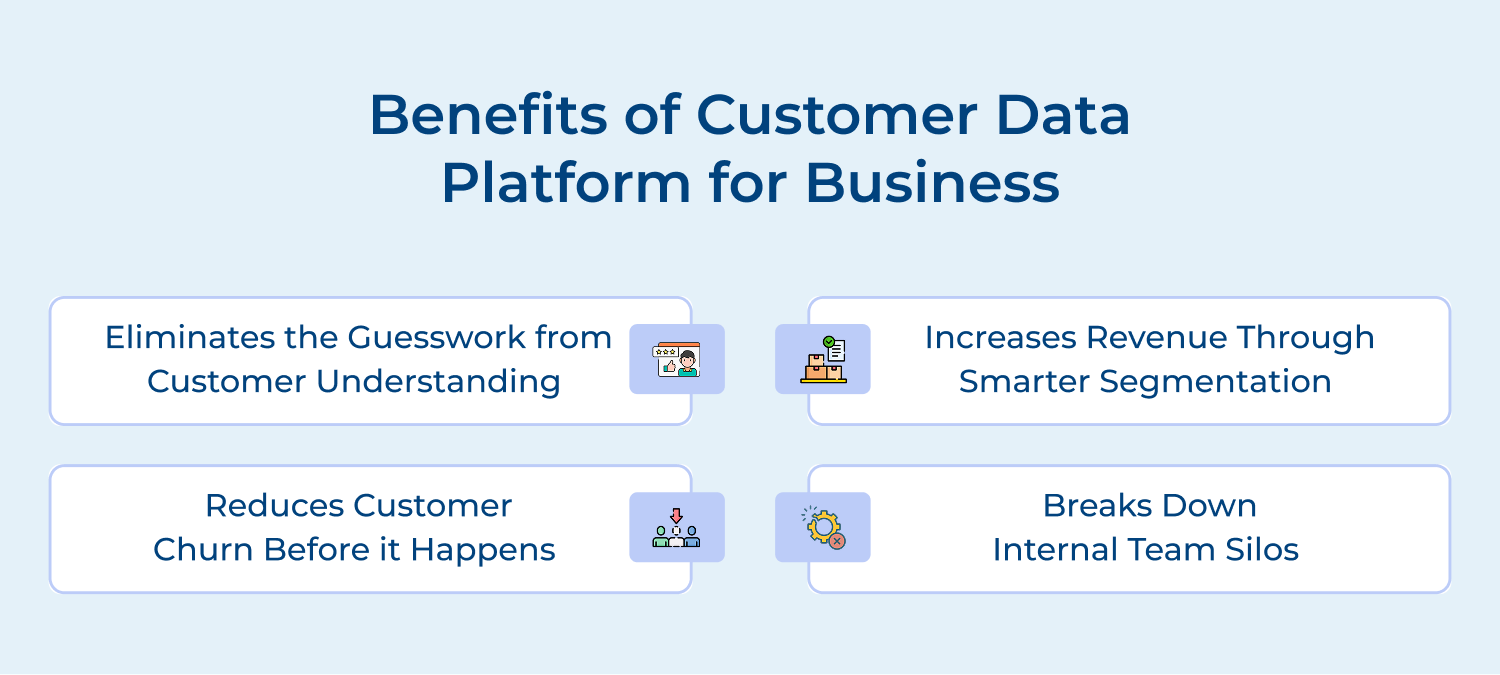
1. Eliminates the Guesswork From Customer Understanding
Businesses that rely on scattered data sources are essentially making expensive decisions in the dark. Bringing all customer touchpoints into one unified view means your teams finally see the full story behind every customer interaction and not just fragments of it.
2. Increases Revenue Through Smarter Segmentation
Think about how much budget gets wasted pushing the same message to audiences with completely different needs and intentions. With behavioral and transactional data unified in one place, your segmentation becomes sharp enough to speak directly to what each customer actually wants right now.
3. Reduces Customer Churn Before It Happens
Losing a customer is always more expensive than retaining one and yet most businesses only realize a customer is leaving after they are already gone. Behavioral patterns like declining purchase frequency or reduced email engagement become visible early inside a CDP giving your retention teams the window they need to act.
4. Breaks Down Internal Team Silos
There is a real operational cost when marketing believes a customer is highly engaged while support is handling their third complaint this month. A CDP puts every team marketing, sales, and support on the same page with the same data so the customer experience stays consistent across every interaction.
Not every CDP is built the same way and choosing the wrong type for your business architecture can cost you. Understanding these four types will help you make a far more informed decision.
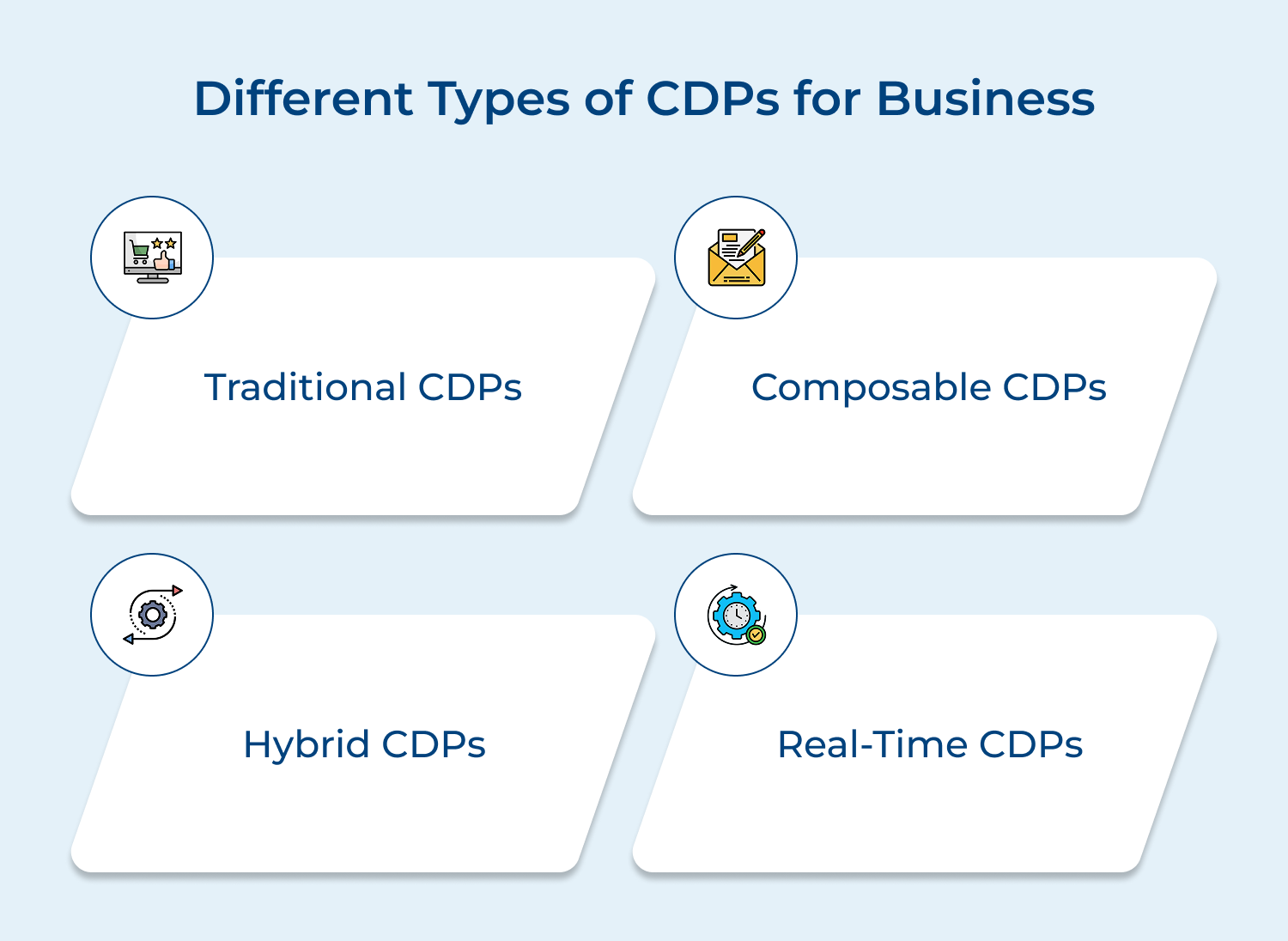
1. Traditional CDPs
Traditional CDPs manage data collection, unification or activation inside one closed environment and work best for businesses without heavy engineering resources. As data volumes scale, their rigid architecture starts creating bottlenecks that directly slow down the teams depending on accurate customer data daily.
2. Composable CDPs
A composable CDP builds the customer data layer directly on your existing warehouse instead of pulling data into another platform. This keeps your customer data inside an environment your team already governs and eliminates the compliance risks that come with unnecessary data movement.
3. Hybrid CDPs
A hybrid CDP delivers the operational speed of a traditional CDP while keeping core data processing inside your own infrastructure. This model works best for organizations that have outgrown traditional CDPs but are not yet fully positioned for a composable architecture.
4. Real-Time CDPs
Real-time CDPs process customer signals and trigger responses within milliseconds that speed directly impacts revenue in retention-sensitive businesses. In sectors like e-commerce or financial services, closing the gap between a customer action and business response is what separates top performers from the rest.
Both tools deal with customer data but they serve fundamentally different purposes in your business. Understanding where each one begins and ends will save you from a costly technology decision.
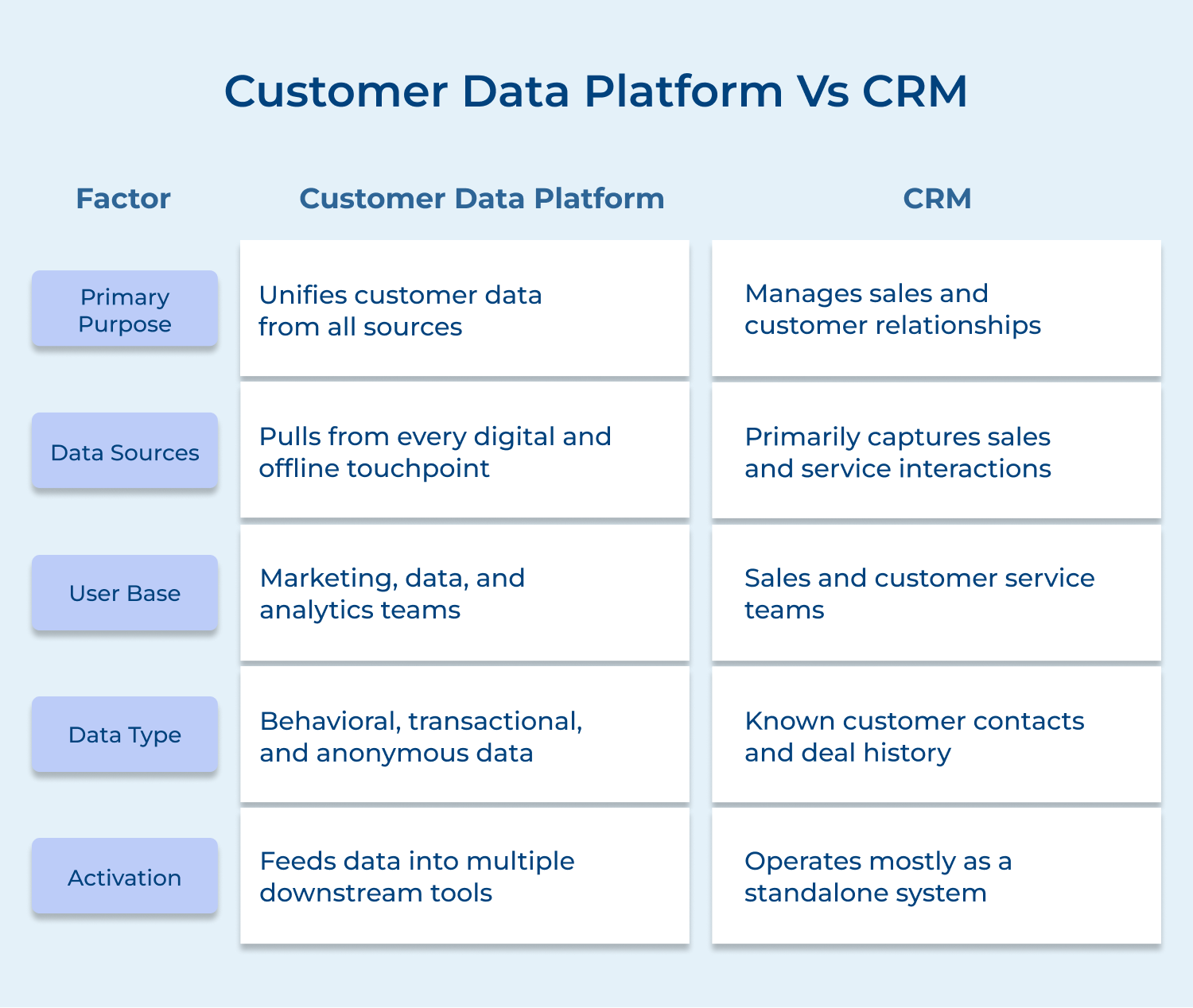
1. Primary Purpose
A CDP unifies every customer signal into one persistent profile every team can act on. It exists to eliminate the fragmented customer view that damages personalization efforts.
A CRM manages relationships and pipelines between your sales team and known contacts. It is a relationship tool and not a data unification engine, a distinction most businesses overlook.
2. Data Sources
A CDP automatically ingests data from websites, mobile apps, offline transactions and third-party sources. This automated ingestion builds a complete and real-time customer profile without manual effort.
A CRM only captures what sales and support teams manually log into it. That dependency on human data entry means your CRM always works with an incomplete customer reality.
3. User Base
A CDP serves marketing and data teams who need behavioral insights to drive personalization at scale. Its architecture is designed to enable data-driven decisions across multiple teams simultaneously.
A CRM is purpose-built for sales reps who need contact history and pipeline visibility. Extracting marketing insights from a CRM is like asking a tool to do a job it was never built for.
4. Data Type
A CDP captures anonymous behavioral data before a customer ever identifies themselves to your business. That early signal is often the richest intelligence about a customer’s true intent.
A CRM only records data once a contact is manually created inside the system. The entire pre-conversion journey stays completely invisible and that blind spot costs businesses more than they realize.
Choosing a CDP without a clear evaluation framework leads to expensive mismatches that are difficult to reverse. These five factors will help you make a decision grounded in business reality.
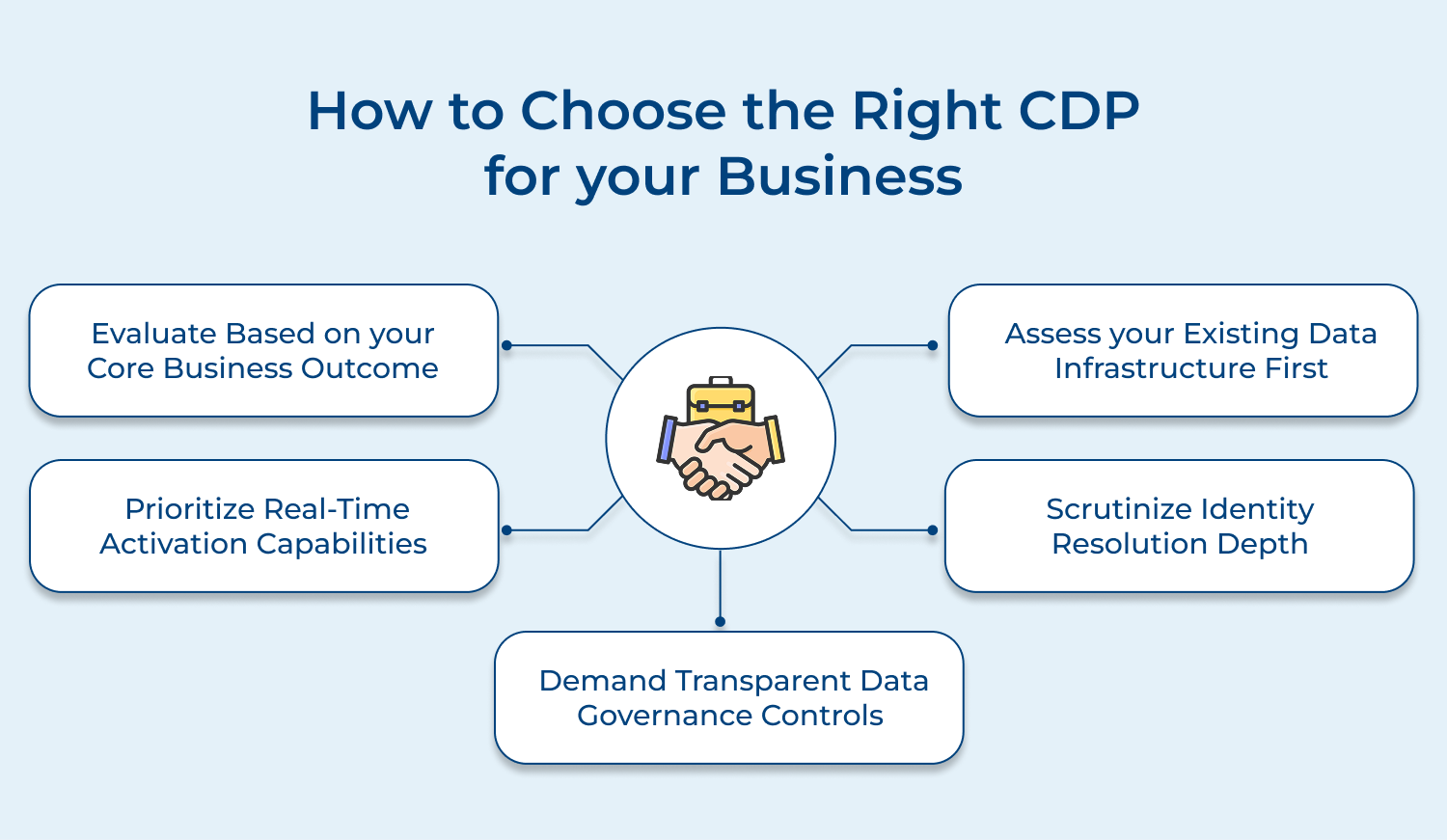
1. Evaluate Based on Your Core Business Outcome
Never start a CDP evaluation with features starting from the specific business problem you are solving. The right CDP is the one that most directly addresses your defined outcome and not the one with the longest feature list.
2. Assess Your Existing Data Infrastructure First
Your CDP must work with the data infrastructure you already have and not against it. A composable CDP suits mature data engineering teams while a traditional CDP works better for businesses without heavy technical resources.
3. Prioritize Real-Time Activation Capabilities
Batch data processing was acceptable five years ago but today your customers expect responses at the moment. Evaluate how quickly each CDP can process an incoming customer signal and push it into your activation channels.
4. Scrutinize Identity Resolution Depth
A CDP’s identity resolution capability determines the accuracy of every single audience segment you will ever build. Push vendors hard on how they handle anonymous to known profile stitching and what happens when conflicting data exists across sources.
5. Demand Transparent Data Governance Controls
Privacy regulations are tightening globally and your CDP must handle consent management without requiring manual intervention from your team. Evaluate how each platform manages consent capture, preference syncing and audit trail creation across every connected data source.
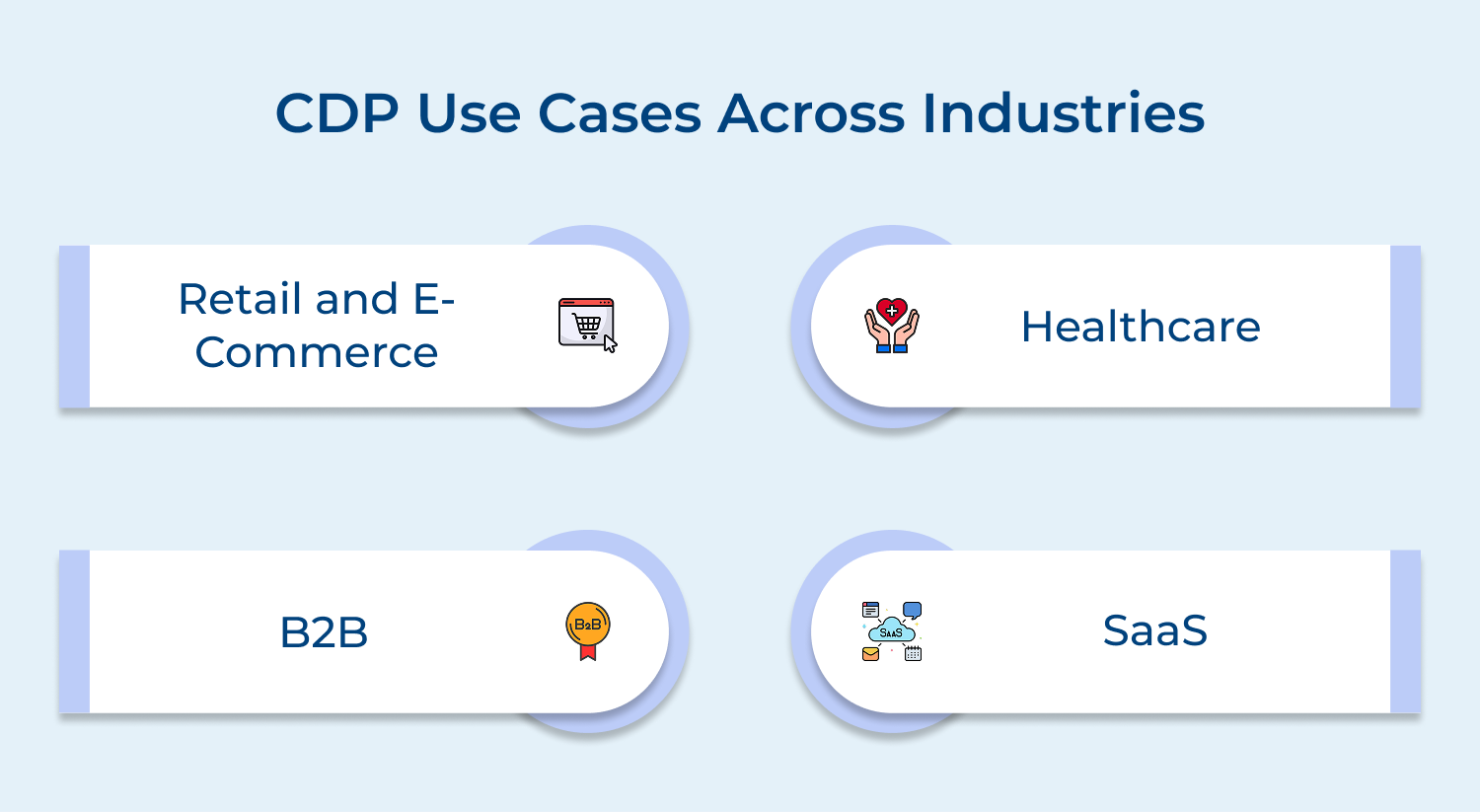
A CDP delivers different but equally powerful values depending on the industry it operates in. Here is how businesses across four key sectors are putting customer data to work.
Businesses that treat customer data as a strategic asset consistently outperform those that treat it as an operational byproduct. A CDP gives you the unified intelligence needed to move from guessing what customers want to knowing it with confidence.
The businesses winning on customer experience today are not doing anything magical they simply have better data working harder across every team and every channel. A CDP is what makes that possible at scale and that is the clearest competitive advantage any customer-focused business can build right now.

Who Needs a Customer Data Platform?
Any business managing customer data across multiple touchpoints and struggling with fragmented or inconsistent customer insights needs a CDP. It is particularly critical for businesses where personalization, retention and cross-channel consistency directly impact revenue growth.
What Kind of Data Does a CDP Collect?
A CDP collects behavioral data like website visits and app interactions, transactional data like purchases/returns/demographic data like location and preferences. It also captures anonymous pre-conversion data that most other platforms completely miss during the customer journey.
Why Do Businesses Need a Customer Data Platform?
Businesses need a CDP because disconnected data across CRM, marketing, and support systems creates blind spots that directly damage customer experience. A CDP eliminates those blind spots by building one unified and continuously updated customer profile every team can trust.
Is a Customer Data Platform Secure for Customer Data?
Enterprise-grade CDPs are built with robust security protocols including encryption, role-based access controls & compliance frameworks for regulations like GDPR and CCPA. The centralized nature of a CDP actually improves data security by eliminating the scattered and ungoverned data storage that creates most security vulnerabilities.
Can a Customer Data Platform Support Real-Time Data Updates?
Modern CDPs are specifically engineered to process incoming customer signals and update unified profiles within milliseconds of an event occurring. That real-time capability is what allows businesses to trigger relevant responses at the exact moment a customer shows intent rather than hours later.
 https://omni24.io/wp-content/uploads/2026/08/AI-Customer-Service-Agents.png
1256
2400
Webvision Solution
https://omni24.io/wp-content/uploads/2023/04/Omni-Logo-1.svg
Webvision Solution2026-09-21 04:48:512026-09-21 04:48:51How to Build an AI Customer Service Agents: 8 Key Steps
https://omni24.io/wp-content/uploads/2026/08/AI-Customer-Service-Agents.png
1256
2400
Webvision Solution
https://omni24.io/wp-content/uploads/2023/04/Omni-Logo-1.svg
Webvision Solution2026-09-21 04:48:512026-09-21 04:48:51How to Build an AI Customer Service Agents: 8 Key Steps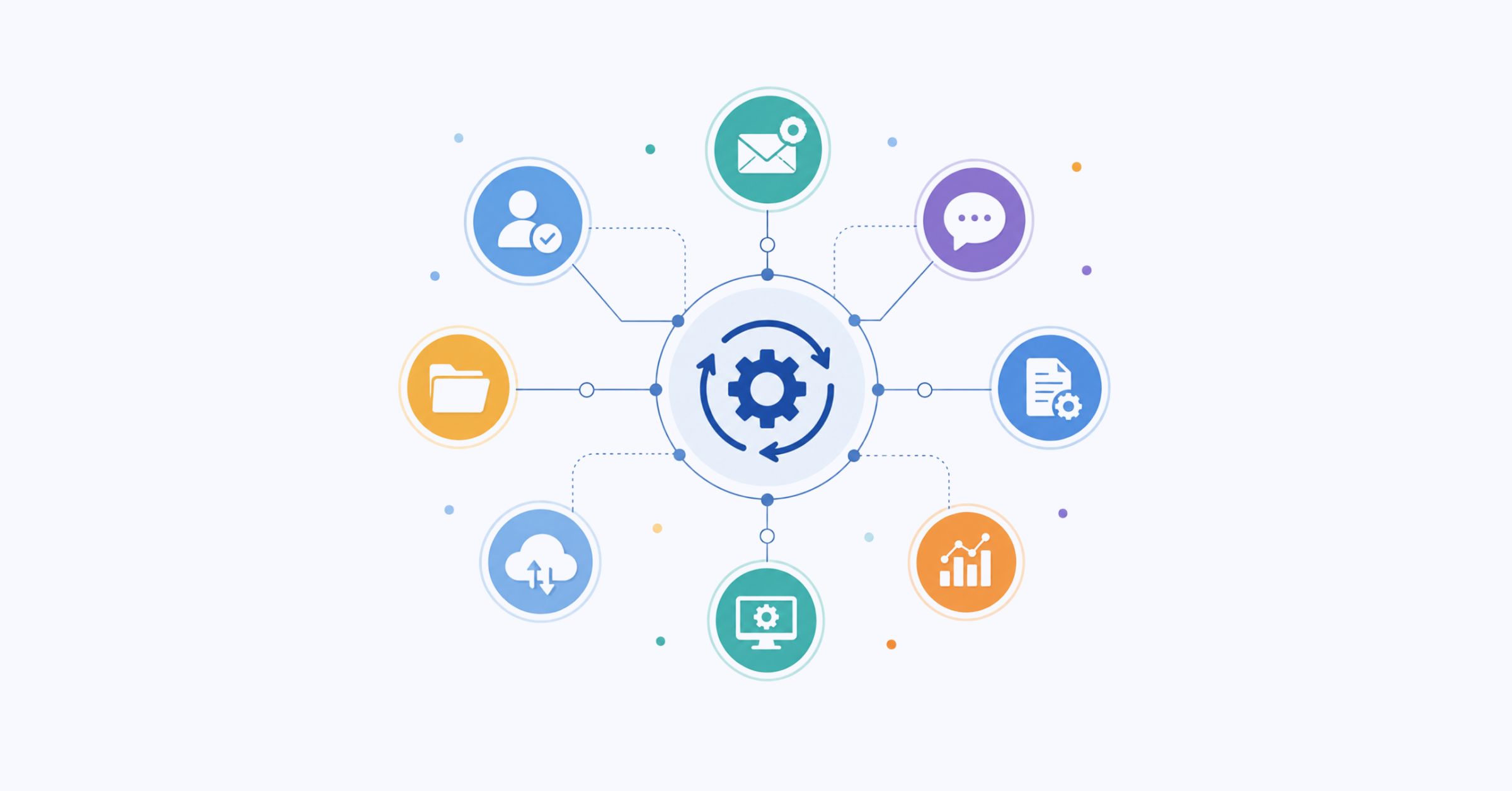 https://omni24.io/wp-content/uploads/2026/08/Omnichannel-Conversational-AI.png
1256
2400
Tushar Joshi
https://omni24.io/wp-content/uploads/2023/04/Omni-Logo-1.svg
Tushar Joshi2026-09-16 03:51:072026-09-16 03:51:07How to Build Omnichannel Conversational AI Strategy
https://omni24.io/wp-content/uploads/2026/08/Omnichannel-Conversational-AI.png
1256
2400
Tushar Joshi
https://omni24.io/wp-content/uploads/2023/04/Omni-Logo-1.svg
Tushar Joshi2026-09-16 03:51:072026-09-16 03:51:07How to Build Omnichannel Conversational AI Strategy https://omni24.io/wp-content/uploads/2026/08/Customer-Service-Teams.png
1256
2400
Tushar Joshi
https://omni24.io/wp-content/uploads/2023/04/Omni-Logo-1.svg
Tushar Joshi2026-09-15 04:01:522026-09-15 04:02:16How to Build Customer Service Teams: 6 Key Steps
https://omni24.io/wp-content/uploads/2026/08/Customer-Service-Teams.png
1256
2400
Tushar Joshi
https://omni24.io/wp-content/uploads/2023/04/Omni-Logo-1.svg
Tushar Joshi2026-09-15 04:01:522026-09-15 04:02:16How to Build Customer Service Teams: 6 Key Steps
Whether it’s about acquire, engage or support – Omni24 covers all your customer engagement needs in one complete platform.

Copyright ©2026 Veemo All rights reserved.
CA, Los Angeles, Hall Ave, 19011