How to Create an Effective B2B Customer Journey: 10 Key Steps
A complete guide to mapping the B2B customer journey with benefits and best practices to improve engagement as well as conversions.
A complete guide to mapping the B2B customer journey with benefits and best practices to improve engagement as well as conversions.
In the current competitive market, businesses struggle to effectively engage B2B clients through long and complex sales cycles.
When you align marketing, sales and support around how customers actually think as well as move, you create a seamless experience. For example, some firms have seen up to a 40% boost in conversion rates just by personalizing touchpoints based on journey insights.
Mapping also helps your teams work better together: companies that align their sales and marketing around a journey map report 32% more revenue growth. In this blog, we’ll explore how mapping this journey can boost conversions while driving long-term growth.
The B2B (Business-to-Business) customer journey refers to the process through which businesses interact with potential suppliers or service providers, from the initial awareness stage to the final purchase decision and beyond.
Understanding the B2B customer journey is crucial for gaining valuable insights into customer behavior, preferences and decision-making processes. Engaging effectively at every stage of the journey helps address customer needs, guide them toward the right decisions and build long-term partnerships.
Key objectives:
Understanding your B2B customer journey isn’t just a nice-to-have — it’s a growth driver. Here are six key benefits that show why mapping it matters more than ever.
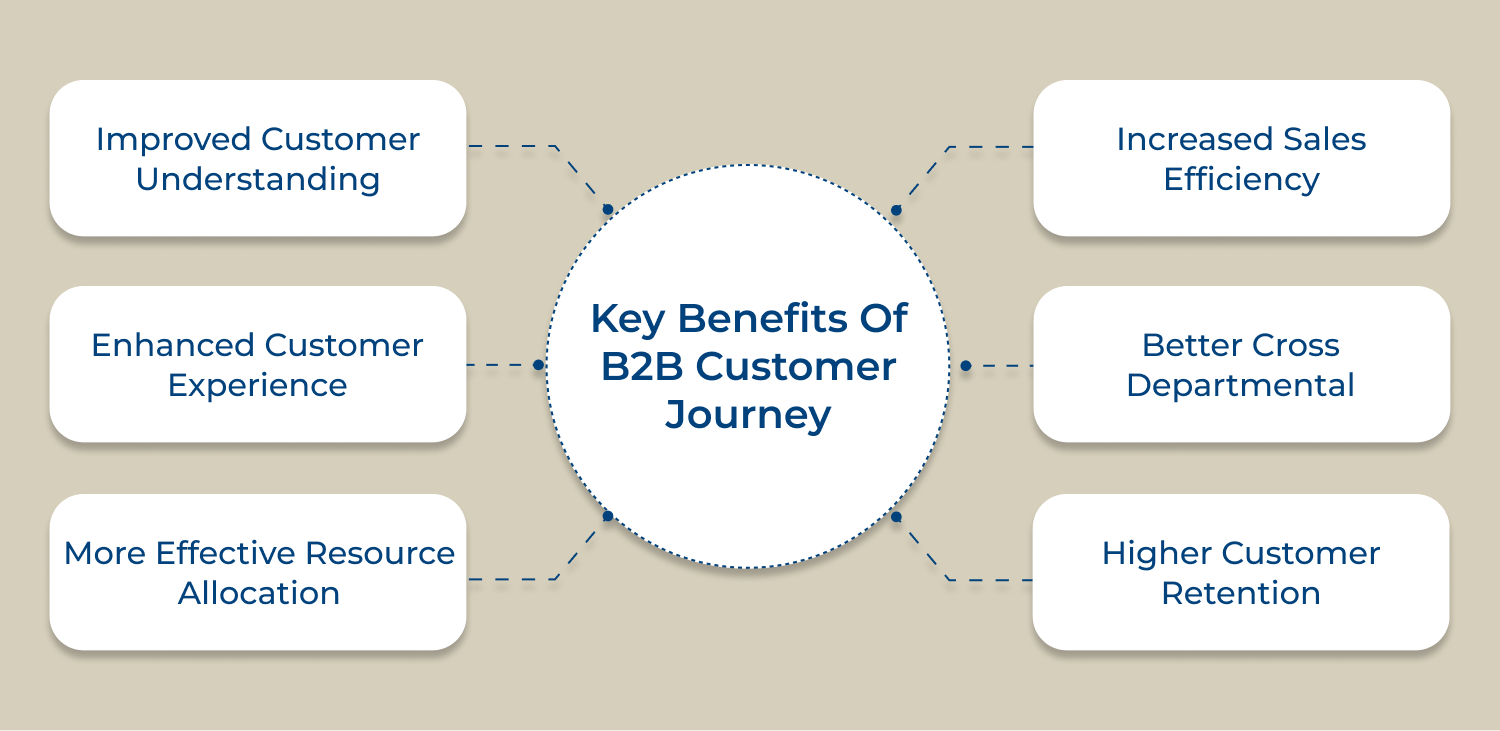
Improved Customer Understanding
B2B customer journey maps help companies understand what potential customers need at every step. By knowing their pain points and decision triggers, teams can anticipate requirements while creating solutions that solve real business challenges.
Enhanced Customer Experience
A mapped journey makes it easy to spot friction across different customer touch points. This helps organizations remove barriers, streamline interactions and deliver a smoother experience that keeps a B2B customer engaged throughout all journey stages.
More Effective Resource Allocation
When companies clearly see how customers move through their journey stages, they can invest resources more wisely. Teams focus on the touch points that matter most, reducing wasted spend while increasing ROI across marketing and sales.
Increased Sales Efficiency
Journey mapping gives sales teams the clarity to speak to buyer needs at the right time. With better visibility, they can have more meaningful conversations, shorten the sales cycle and convert potential customers more effectively.
Better Cross-Departmental
B2B customer journey maps create a shared view of how customers interact with the business. This helps marketing, sales, support and product teams work together smoothly with consistent messaging as well as better handoffs.
Higher Customer Retention
Understanding the full journey stages allows companies to spot churn risks early. By responding quickly to customer needs, businesses can improve satisfaction, strengthen loyalty and uncover more upsell as well as cross-sell opportunities.
Creating an effective B2B customer journey starts with understanding how your buyers move from awareness to decision.
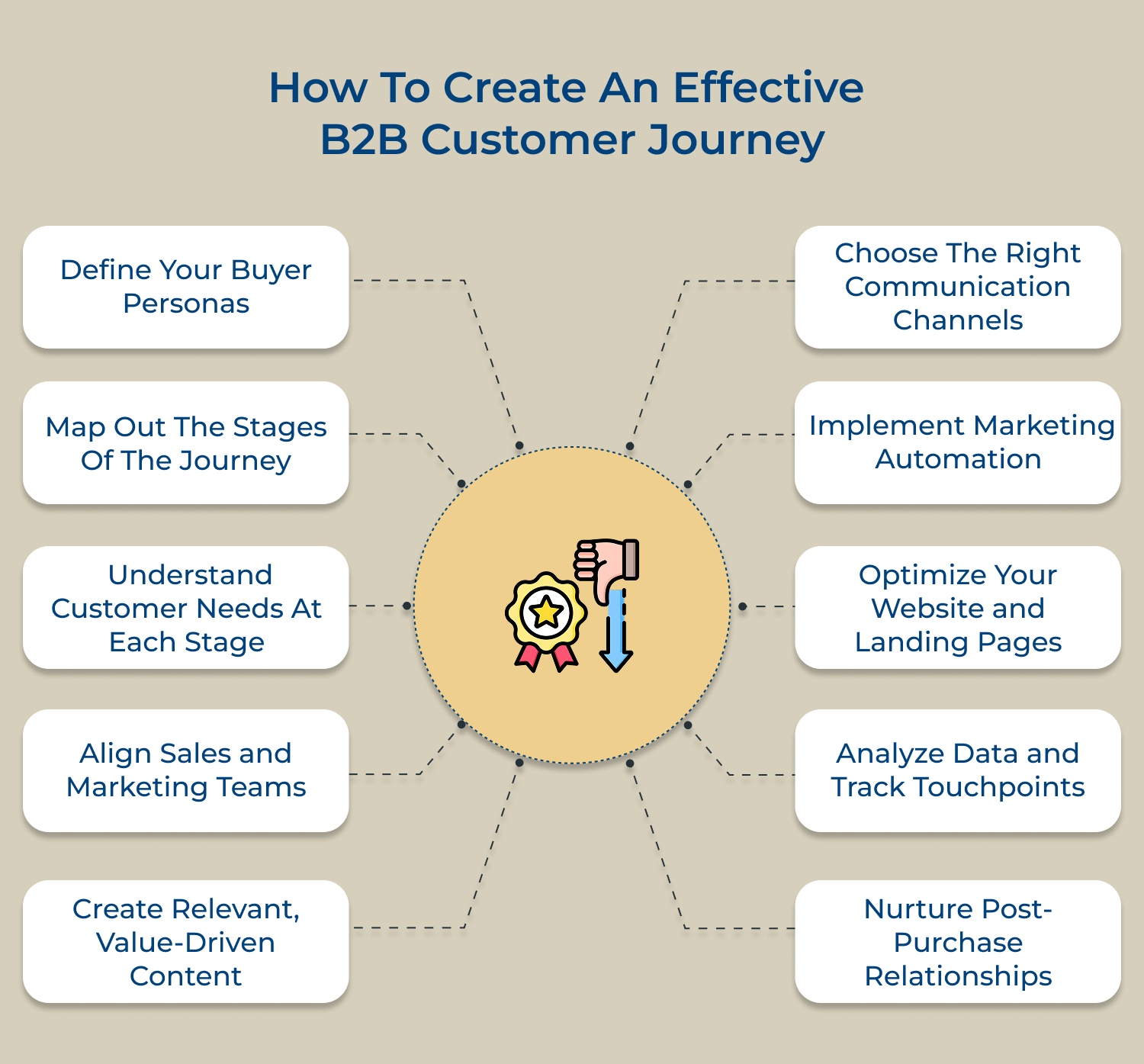
Buyer personas are detailed, semi-fictional representations of ideal customers. They include insights on demographics, behaviors, goals, challenges and decision-making processes, which help businesses understand as well as target specific customer segments effectively.
Buyer personas provide a clear understanding of the audience’s motivations, pain points and needs. They help businesses create more relevant content and marketing strategies, ensuring targeted messaging that resonates with the right people.
Develop personas to inform marketing strategies and optimize customer interactions. These profiles ensure content and communications match the expectations of each persona. Thus, enhancing customer engagement and guiding prospects through the journey effectively.
Tips:
Mapping the stages of the B2B customer journey means breaking down how a buyer moves through the process—from Awareness to Consideration, Decision and Post-purchase. Each stage gives your business a chance to engage, educate and support potential customers in a meaningful way.
When you understand the journey, you can share content that actually fits what the customer needs at that moment. This keeps them from feeling confused or ignored and ensures they get the right information at the right time to move confidently toward a purchase.
Here’s what helps:
Actionable Tips:
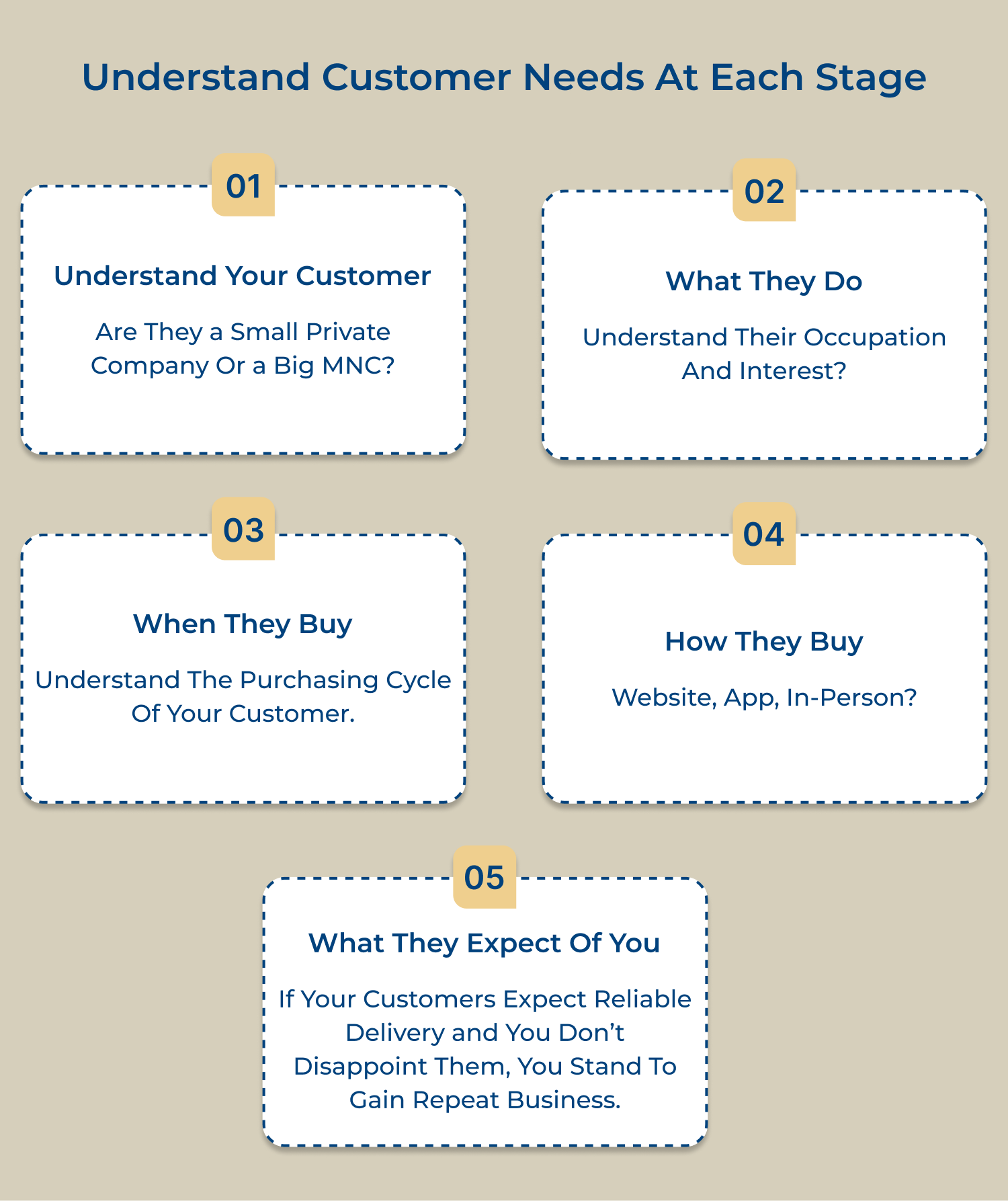
Identifying customer needs at each stage means understanding what information or support buyers look for as they discover your brand, compare options and decide. Meeting these needs builds trust, reduces friction and keeps prospects moving forward smoothly. Use stage-specific content to guide them effectively:
This targeted approach boosts engagement, conversions and overall satisfaction.
Tips:
Aligning sales and marketing teams means making sure both groups work together toward the same goals. When they use unified messaging, shared customer data and aligned strategies, prospects move through the funnel more smoothly.
A unified approach avoids miscommunication and creates a consistent customer experience. When both teams are in sync, lead nurturing gets better, response times improve and conversions increase.
To make this work:
This coordination helps deliver a seamless, high-quality experience for every customer.
Actionable Tips:
Creating value-driven content means sharing helpful, relevant information that solves customer problems at every stage of their journey. This type of content builds trust, positions your business as an expert and guides prospects toward confident decisions. It also nurtures leads and strengthens long-term loyalty.
Make your content effective by tailoring it to each stage: educational blogs for Awareness, detailed guides for Consideration and case studies or demos for the Decision stage. This ensures your message connects at every touchpoint.
Actionable Tips:
Choosing the right communication channels involves selecting platforms that align with your customer’s preferences at each stage.
Customers interact with brands through various touchpoints. Using the right channels helps ensure your message reaches the right audience at the right time, increasing engagement, reducing friction and improving the overall customer experience throughout their journey.
Analyze where your target audience spends their time and tailor communication efforts to those platforms. For example, use email for nurturing leads and LinkedIn for professional engagement, ensuring content as well as messaging are aligned with the medium.
Tips:
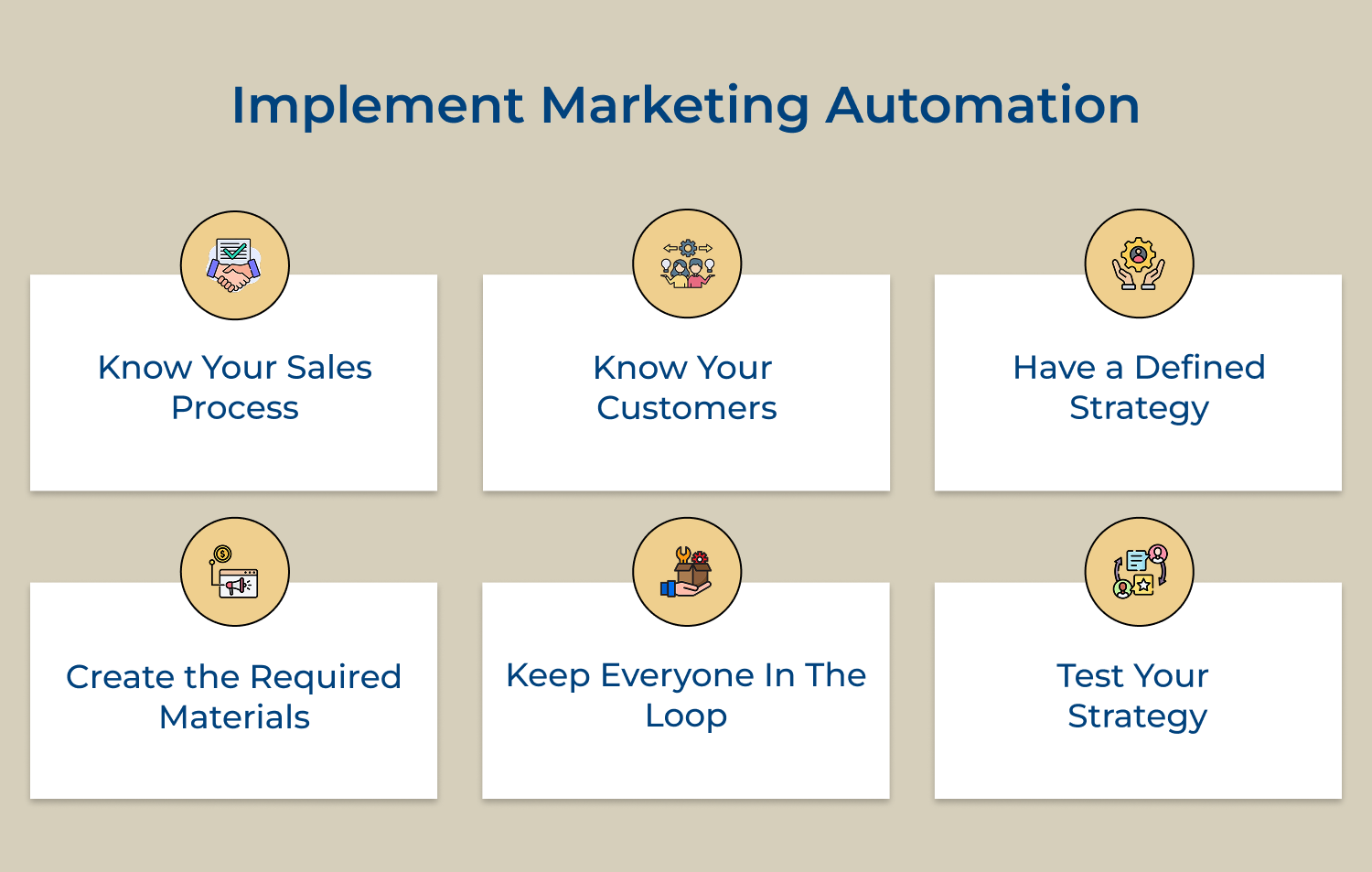
Marketing automation refers to using technology to automate repetitive tasks, such as email marketing, social media posts and lead nurturing workflows. It helps deliver personalized messages based on customer behavior and stage in the journey.
Automation improves efficiency, reduces human error and ensures timely communication. It allows businesses to engage leads at scale, providing relevant content and interactions at the right moment.
Set up automated workflows that trigger based on customer actions, such as sending a follow-up email when a lead downloads a white paper or offering a discount after a specific number of interactions. Tailor these triggers to customer behaviors for maximum impact.
Actionable Tips:
Optimizing your website and landing pages means ensuring they’re user-friendly, mobile-responsive, as well as aligned with the customer journey.
A well-optimized site boosts engagement, lowers bounce rates and increases conversions by giving visitors exactly what they need at each stage. Make this effective by:
This creates a smoother, more efficient path to conversion.
Tips:
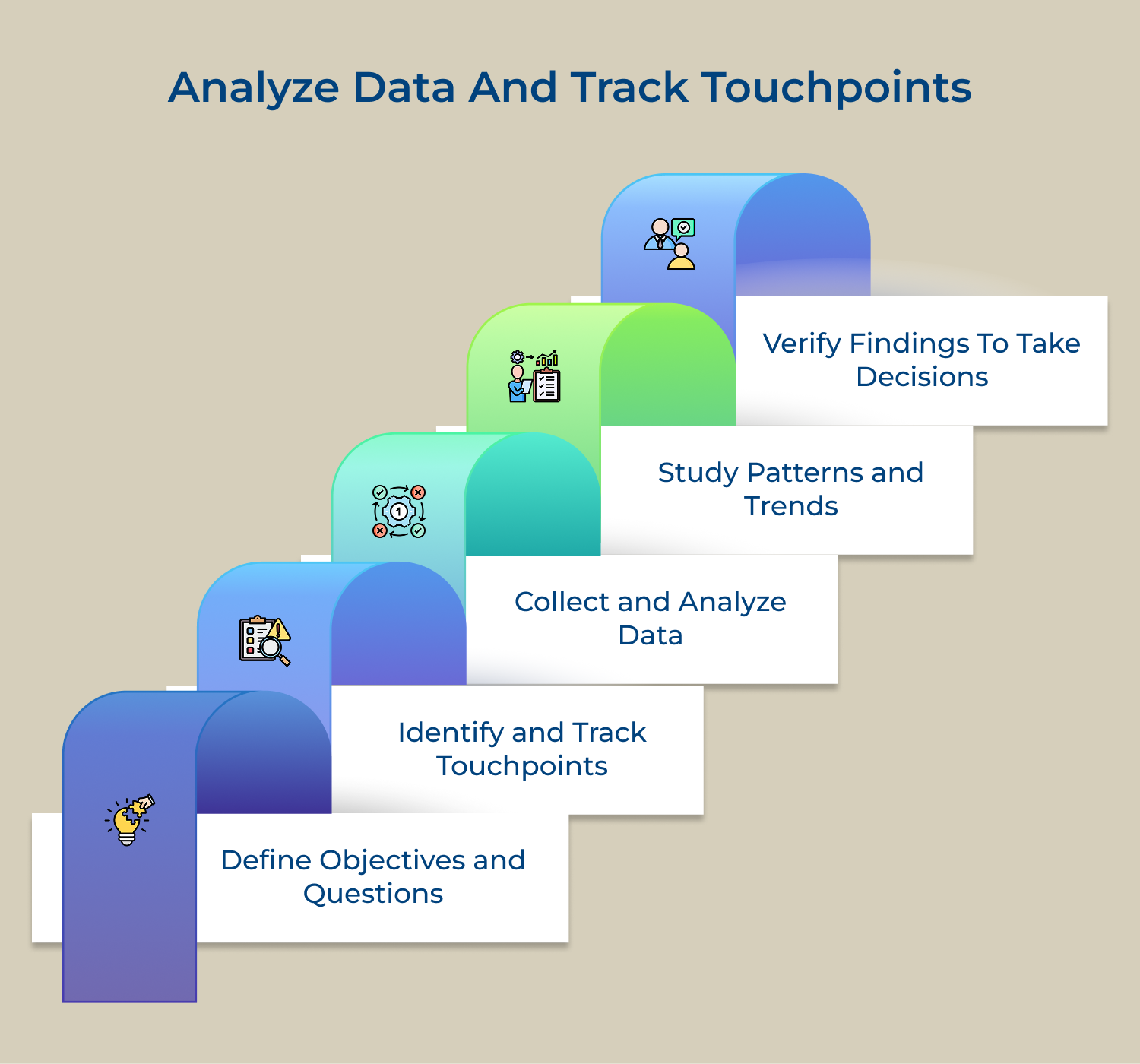
Tracking touchpoints and analyzing data means studying how customers interact across your website, social media, email, as well as other channels.
These insights help you understand behavior at each journey stage and reveal what’s working—or where friction exists. By using data, businesses can refine strategies, improve experiences and boost conversions.
Tips:
Nurturing post-purchase relationships involves staying engaged with customers after the sale, providing support, asking for feedback and offering opportunities for upselling or cross-selling to enhance the customer experience.
Post-purchase engagement builds customer loyalty and encourages repeat business. Satisfied customers are more likely to recommend your business to others and continue purchasing, which leads to a sustainable as well as profitable long-term relationship.
Offer ongoing support and resources to customers post-purchase. Send follow-up emails, provide useful tips as well as encourage feedback. Hence, ensuring customers feel valued and supported beyond the transaction.
Actionable Tips:
If you want your B2B customers to move through the journey without confusion, you need the right approach. These best practices improve every stage and build stronger relationships.
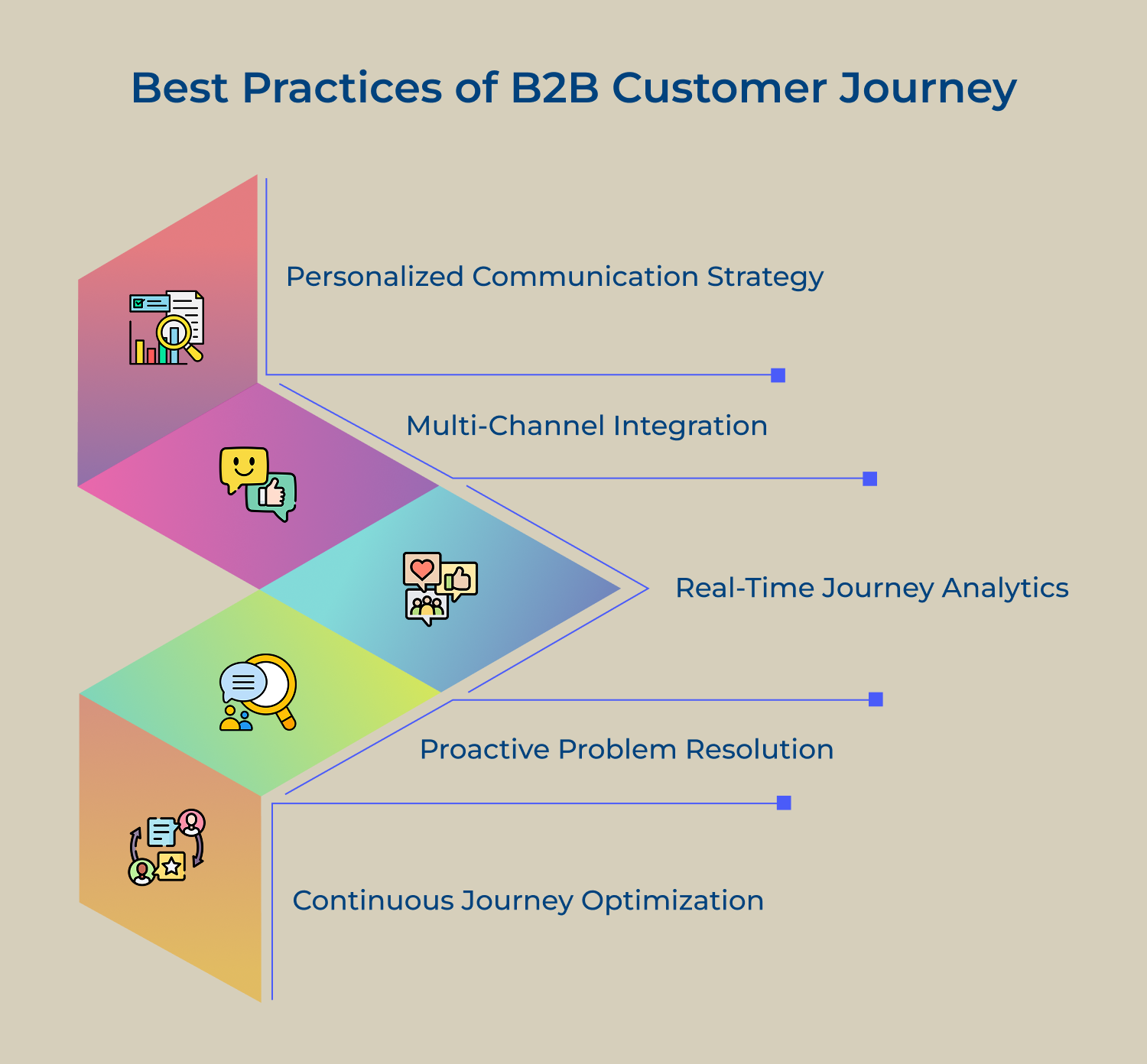
Personalized Communication Strategy
Marketing and sales teams should deliver tailored messages to different stakeholders within buying organizations. Messages must align with specific roles, industry challenges and decision-making stages while maintaining consistency across all communication channels.
Multi-Channel Integration
Organizations need seamless integration across digital platforms, in-person interactions and support channels. Consistent experiences across websites, mobile apps, sales meetings and customer service ensure smooth transitions between different touch points throughout the journey.
Real-Time Journey Analytics
Implementation of sophisticated tracking systems enables immediate insight into customer behavior and journey progression. Live dashboards, automated alerts and performance metrics help teams respond quickly to customer needs while optimizing experiences in real-time.
Proactive Problem Resolution
Companies should anticipate potential issues before they impact customer relationships. Regular monitoring of engagement patterns, early warning systems and preventive support measures help maintain positive experiences throughout the customer lifecycle.
Continuous Journey Optimization
Regular assessment and refinement of journey touchpoints keep experiences relevant. Organizations must adapt to changing customer needs, market conditions and technological advances while maintaining focus on delivering consistent value.
B2B buyers have complex needs and that can create roadblocks at different stages of the journey. Here are the key challenges that companies struggle with most.
Complex Decision-Making Process
Multiple stakeholders with different priorities and concerns slow down decisions.
Create stakeholder-specific content and communication channels. Develop decision-making frameworks and ROI tools that address each stakeholder’s concerns. Assign dedicated account managers to coordinate with different decision-makers and maintain clear communication channels.
Long Sales Cycles
Extended evaluation periods and multiple approval stages delay conversions.
Implement milestone-based nurturing programs with targeted content for each stage. Use automation to maintain consistent engagement. Provide case studies and social proof to build confidence. Create urgency through time-limited offers and demonstrate clear value propositions.
Inconsistent Customer Experience
Disconnected touchpoints and departmental silos create fragmented experiences.
Establish unified customer data platforms to share information across departments. Implement standardized processes for handoffs between teams. Create cross-functional teams responsible for maintaining consistency. Develop comprehensive onboarding and training programs.
Data Management and Integration
Scattered customer data across multiple systems hinders effective decision-making.
Invest in integrated CRM and customer data platforms. Implement data governance policies. Create automated data collection and synchronization processes. Establish regular data cleaning and validation procedures.
Scale and Personalization Balance
Difficulty maintaining personalized experiences while serving numerous accounts.
Segment customers based on value as well as needs. Use AI and automation for basic personalization. Develop modular content that can be customized efficiently. Create tiered service models based on account value and complexity.
Post-Purchase Engagement
Maintaining strong relationships and preventing churn after initial sale.
Develop structured customer success programs. Create regular business review meetings. Implement early warning systems for churn risk. Design clear upgrade and expansion paths. Provide ongoing training and support resources.
A mapped B2B customer journey provides your business with the tools to achieve new heights. Understanding customer needs at each touchpoint creates opportunities to engage, build trust and convert.
Optimizing the experience boosts satisfaction and loyalty, driving growth. Embrace this strategy to create stronger, meaningful relationships, ensuring success for the future of your business. Focused optimization leads to growth and strengthens client connections, ensuring sustainable success for your business.

What is the difference between the customer journey and the buyer journey?
The buyer journey focuses specifically on the path to purchase, covering awareness, consideration and decision stages before a sale. The customer journey is more comprehensive, encompassing the entire relationship with a business, including post-purchase experiences, ongoing support, renewals and additional purchases over time. Customer journey mapping considers long-term relationship development as well as value creation.
How do I create a customer journey map for B2B?
Start by gathering comprehensive customer data through interviews, surveys and analytics. Identify key stakeholders as well as their roles. Map out all touchpoints across different stages. Document pain points and opportunities. Create detailed personas. Include emotional factors and decision drivers. Validate the map with actual customers as well as internal teams. Regularly update based on feedback and changing needs.
What Are The 5 A’s Used For Building A B2B Customer Journey?
The 5 A’s framework includes Awareness (discovering the brand/solution), Assessment (evaluating options and fit), Adoption (implementing the solution), Advocacy (recommending to others), as well as Allegiance (maintaining long-term loyalty). Each stage requires specific strategies and tactics to move customers forward while creating lasting relationships that generate mutual value.
What metrics are crucial for evaluating the success of a B2B customer journey strategy?
Key metrics include customer acquisition cost, time-to-purchase, conversion rates between stages, customer lifetime value, net promoter score, customer satisfaction ratings, retention rates expansion revenue. Also track engagement metrics across touchpoints, response times, resolution rates and stakeholder satisfaction at different journey stages.
In what ways does the sales cycle length impact B2B customer journey design?
Longer sales cycles require more robust nurturing strategies, sophisticated content mapping and stronger relationship-building mechanisms. Journey design must account for multiple touchpoints, stakeholder changes, while evolving needs over time. Content and engagement strategies need careful pacing to maintain momentum while respecting decision-making timeframes.
 https://omni24.io/wp-content/uploads/2026/08/Omnichannel-Chatbots.png
1256
2400
Tushar Joshi
https://omni24.io/wp-content/uploads/2023/04/Omni-Logo-1.svg
Tushar Joshi2026-08-13 04:43:302026-08-24 09:02:01How Omnichannel Chatbots Improve Your Customer Experience
https://omni24.io/wp-content/uploads/2026/08/Omnichannel-Chatbots.png
1256
2400
Tushar Joshi
https://omni24.io/wp-content/uploads/2023/04/Omni-Logo-1.svg
Tushar Joshi2026-08-13 04:43:302026-08-24 09:02:01How Omnichannel Chatbots Improve Your Customer Experience https://omni24.io/wp-content/uploads/2026/08/Ecommerce-Chatbots-1.png
1256
2400
Tushar Joshi
https://omni24.io/wp-content/uploads/2023/04/Omni-Logo-1.svg
Tushar Joshi2026-08-12 03:57:552026-08-24 09:03:22Ecommerce Chatbots: What are They and Their Use Cases
https://omni24.io/wp-content/uploads/2026/08/Ecommerce-Chatbots-1.png
1256
2400
Tushar Joshi
https://omni24.io/wp-content/uploads/2023/04/Omni-Logo-1.svg
Tushar Joshi2026-08-12 03:57:552026-08-24 09:03:22Ecommerce Chatbots: What are They and Their Use Cases https://omni24.io/wp-content/uploads/2026/08/Omnichannel-Ecommerce.png
1256
2400
Tushar Joshi
https://omni24.io/wp-content/uploads/2023/04/Omni-Logo-1.svg
Tushar Joshi2026-08-11 04:50:362026-08-24 09:00:45How to Create an Omnichannel Ecommerce Strategy: 7 Best Ways
https://omni24.io/wp-content/uploads/2026/08/Omnichannel-Ecommerce.png
1256
2400
Tushar Joshi
https://omni24.io/wp-content/uploads/2023/04/Omni-Logo-1.svg
Tushar Joshi2026-08-11 04:50:362026-08-24 09:00:45How to Create an Omnichannel Ecommerce Strategy: 7 Best Ways
Whether it’s about acquire, engage or support – Omni24 covers all your customer engagement needs in one complete platform.

Copyright ©2026 Veemo All rights reserved.
CA, Los Angeles, Hall Ave, 19011