How to Enhance B2C Customer Experience (CX): 10 Best Strategies
B2C customer experience focuses on creating seamless, personalized interactions that build trust and loyalty. A strong CX strategy drives higher satisfaction and business growth.

B2C customer experience focuses on creating seamless, personalized interactions that build trust and loyalty. A strong CX strategy drives higher satisfaction and business growth.
The way consumers shop and interact with brands has undergone significant changes in recent years. Businesses that fail to meet these evolving customer expectations risk losing out on valuable opportunities and falling behind their competitors.
80% of businesses plan to increase investment in customer experience—most believing that CX drives revenue and long-term growth.
To succeed in B2C commerce, businesses must prioritize delivering exceptional customer experiences at every touch point. From the initial point of contact to post-purchase support, every interaction with a customer is an opportunity to build loyalty.
Explore the key strategies and best practices for delivering unparalleled B2C customer experiences.
B2C Customer Experience, also known as Business-to-Consumer Customer Experience, is the interaction between a company and its customers in the context of selling products or services directly to consumers.
The goal of B2C customer experience is to create a seamless experience for customers at every touchpoint, from the initial point of contact to the final purchase and beyond.
Key components:
1. Personalization: Tailoring marketing messages and product recommendations to the individual preferences of customers.
2. Omnichannel experience: Providing a consistent experience across all channels, including online, mobile, social media, and in-store.
3. Customer service: Offering responsive and helpful customer service to address any issues or questions that customers may have.
4. User experience: Ensuring that the functionality of a company’s website and digital platforms are user-friendly.
Enhancing B2C customer experience is essential for building loyalty and driving growth. In today’s competitive market, clients expect exceptional service and seamless interactions across all touchpoints.
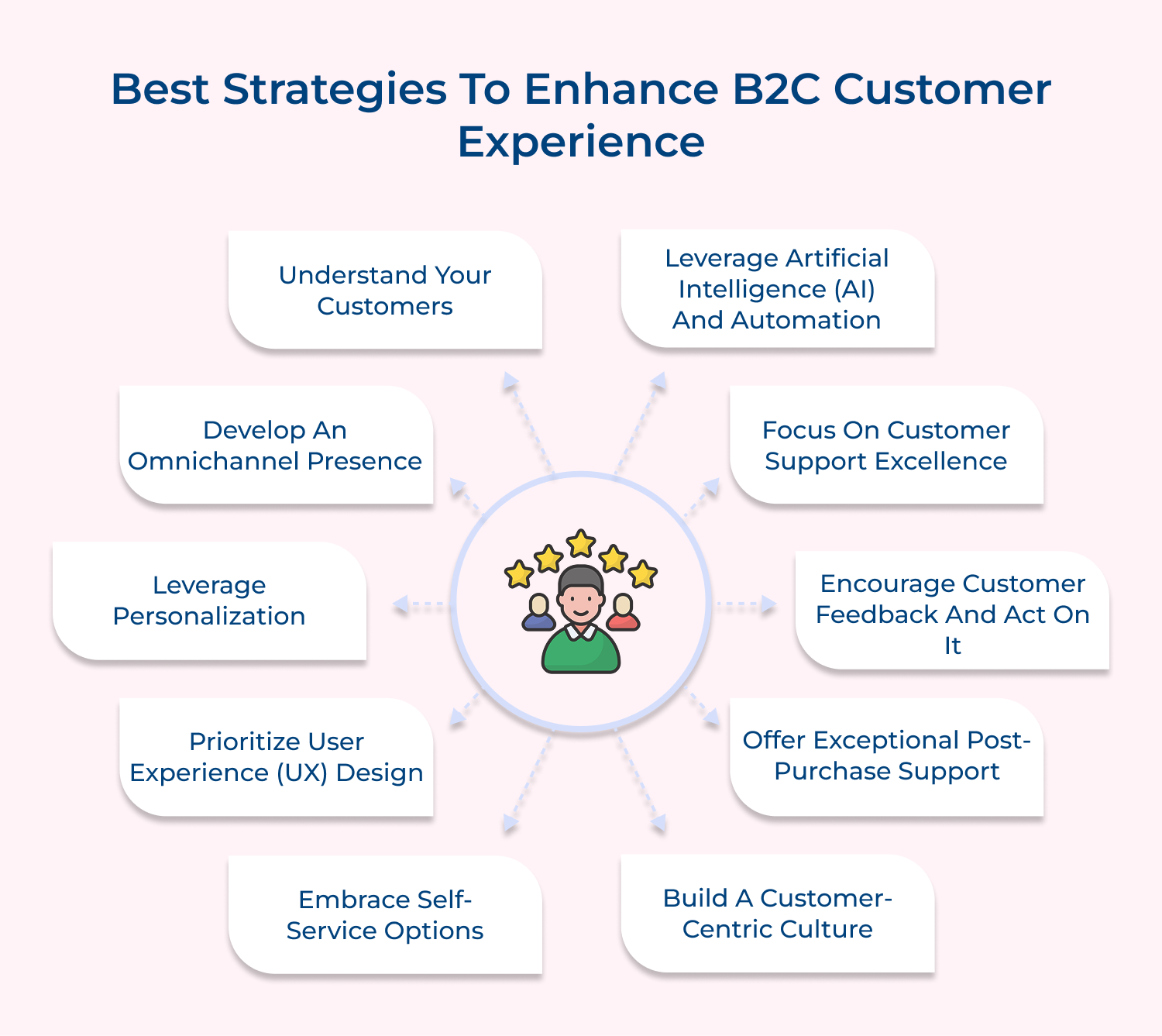
The foundation of an outstanding customer experience is a deep understanding of your target audience.
Conduct market research, gather customer feedback and analyze customer data to gain insights into their preferences and behavior patterns. The knowledge will help you tailor your products, services and interactions to meet their specific needs.
Customers expect seamless experiences across multiple channels, including websites, mobile apps, social media and physical stores.
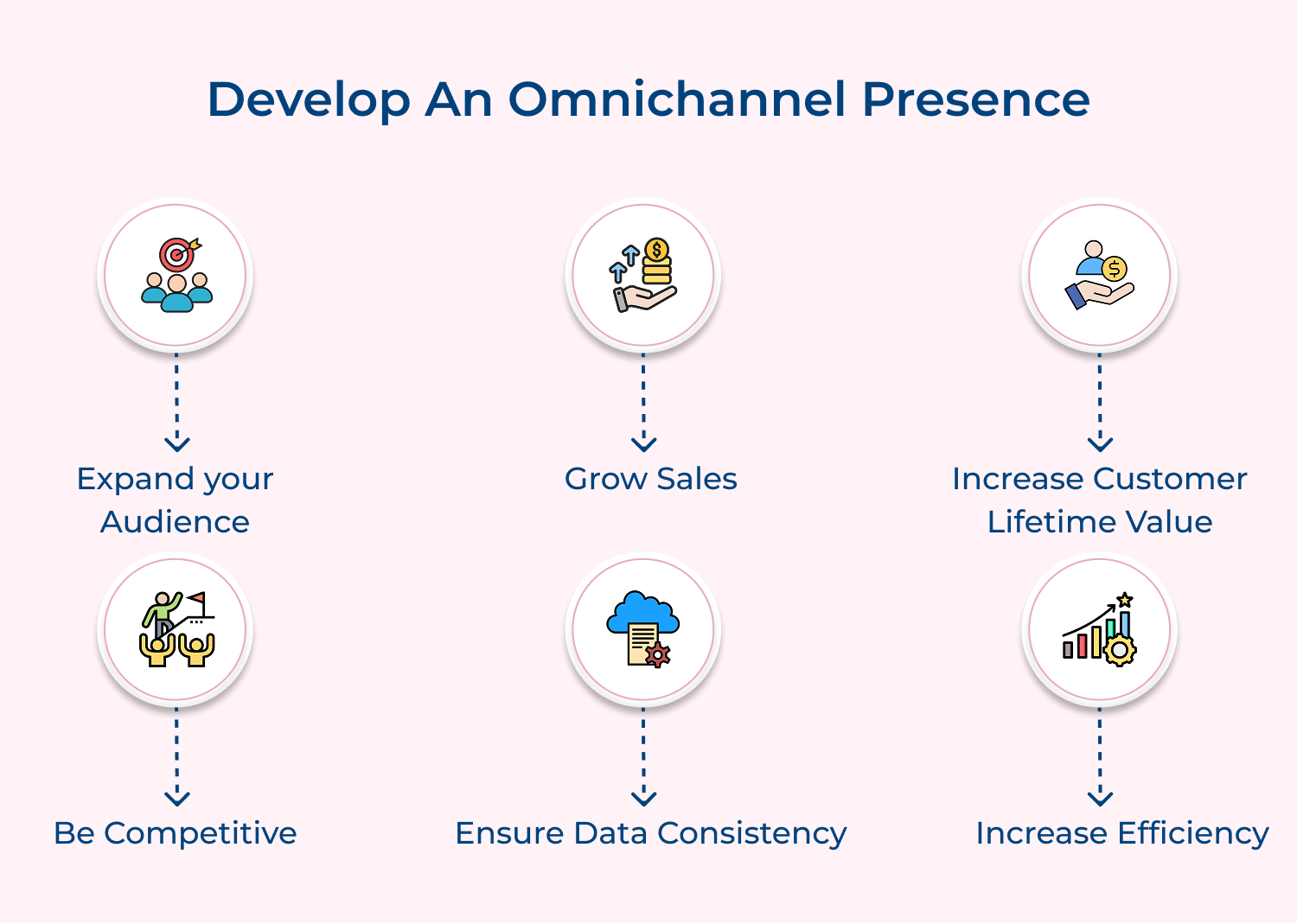
Implementing an omnichannel strategy ensures consistency in branding, messaging and customer interactions across all channels, regardless of the channel chosen. This approach eliminates frustration and creates a cohesive, integrated experience for customers.
In the B2C space, personalization is key to delivering a memorable and tailored experience. Utilize customer data and advanced analytics to segment your customer base. Personalization not only enhances the customer experience but also increases engagement, conversions and customer loyalty.
The user experience plays a crucial role in shaping customer perception and satisfaction. Invest in user-centric design principles, ensuring that your digital platforms, mobile apps and physical touchpoints are intuitive and easy to navigate. Conduct usability testing and continuously optimize your UX based on customer feedback.
Customers value convenience and want to be able to find information plus resolve issues independently. Implement self-service options such as comprehensive knowledge bases, chatbots and interactive voice response (IVR) systems.
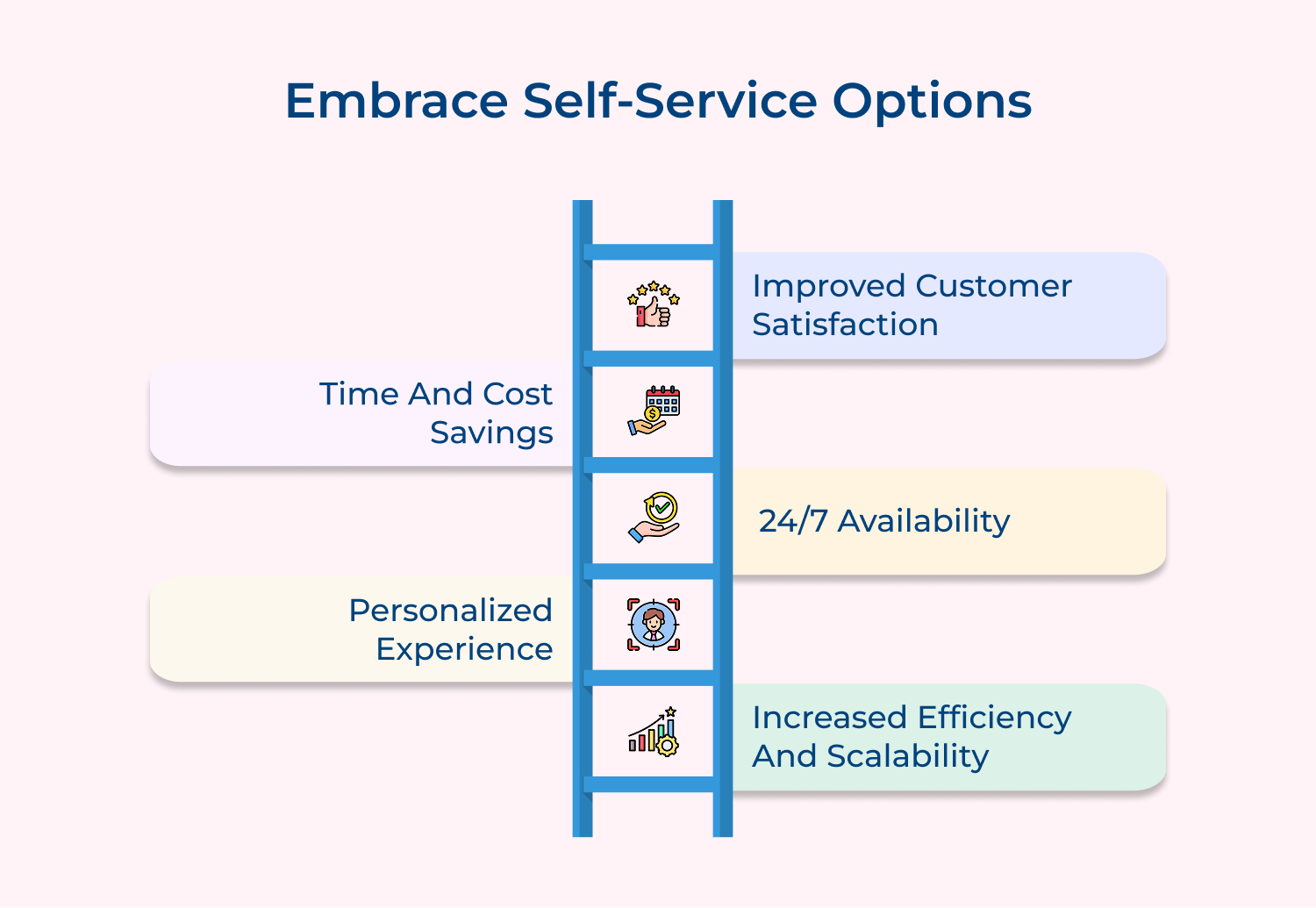
These tools empower customers to find solutions quickly, reducing frustration and the need for direct customer support interactions.
AI and automation technologies can significantly enhance the customer experience by enabling personalized interactions, predictive analytics and efficient service delivery. Chatbots powered by natural language processing (NLP) can provide instant responses and handle routine inquiries. Predictive analytics can anticipate customer needs and proactively offer solutions.
Despite the availability of self-service options, customers still value human interaction, especially for complex issues. Invest in high-quality customer support by training your representatives in problem-solving skills. Implement efficient escalation processes and ensure that customer support channels are readily available.
Continuously seek feedback from customers through surveys, social media and other channels. Analyze this feedback to identify areas for improvement and implement changes accordingly. Demonstrating that you value customer input and are willing to make changes based on their feedback fosters trust.
The customer experience doesn’t end with the purchase; it extends to the post-purchase phase. Provide comprehensive product support, easy returns and exchanges and exceptional after-sales service. The approach builds customer confidence and increases the likelihood of repeat business.
Enhancing the customer experience requires a company-wide commitment and a customer-centric mindset. Encourage employees at all levels to prioritize customer needs and continuously seek ways to improve the customer journey. Provide training, incentives and resources to empower employees to deliver exceptional customer experiences consistently.
The customer experience (CX) in the business-to-consumer (B2C) and business-to-business (B2B) contexts differs significantly due to the distinct nature of the target audience, decision-making processes and buying behaviors.
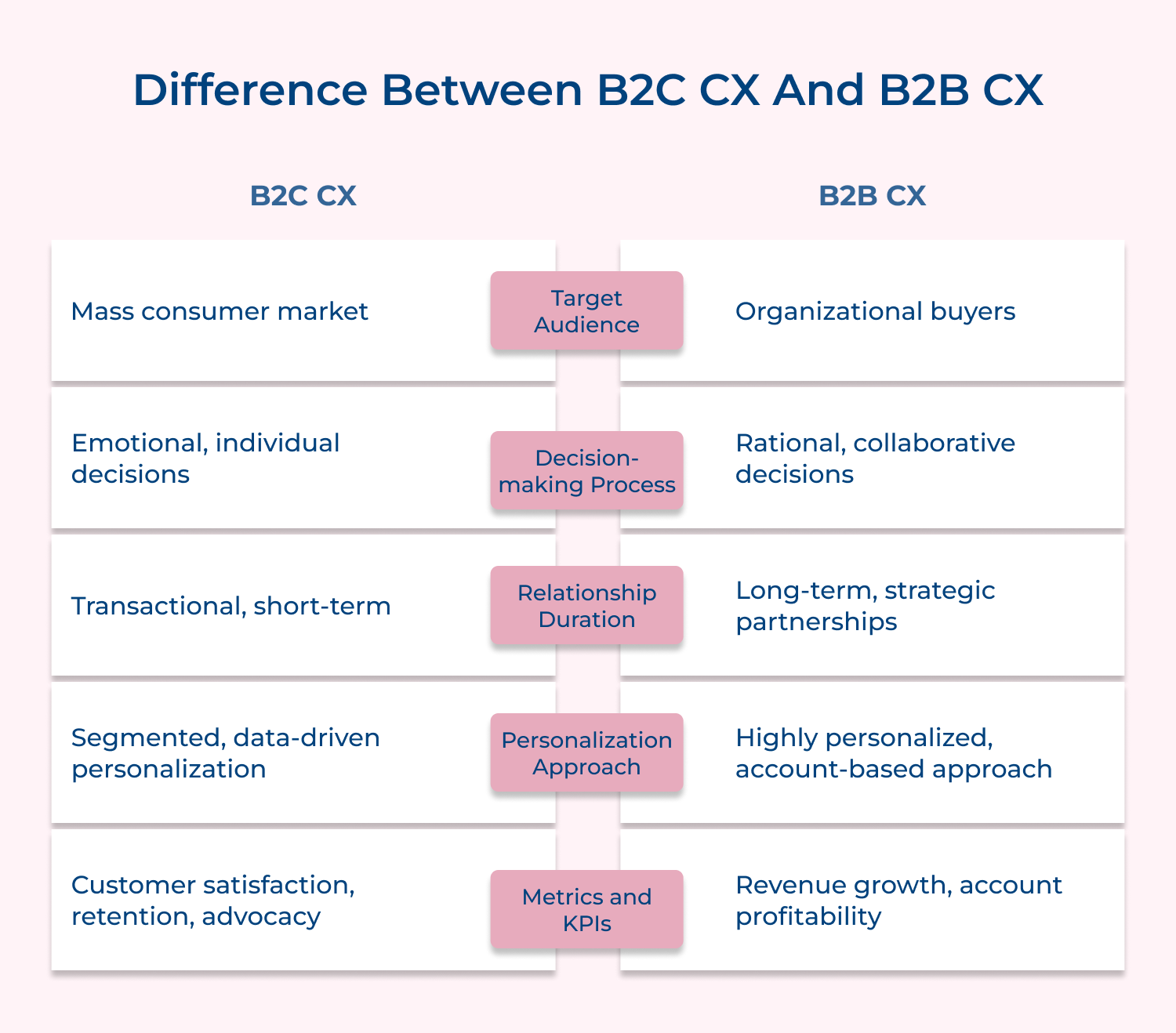
1. Decision-Making Process
2. Buyer Motivation
3. Relationship Dynamics
4. Buyer Journey Complexity
5. Customer Support and Service Expectations
In B2C customer experience, many companies stand out by delivering exceptional service. By exceeding expectations, they create lasting impressions and foster strong customer loyalty.
Apple is renowned for its exceptional customer experience, both in its retail stores and through its digital channels. The company’s “Genius Bar” concept, where customers can receive personalized support and troubleshooting assistance, has become a hallmark of its in-store experience.
Apple’s sleek and intuitive product design, coupled with its user-friendly software and seamless integration across devices, contributes to a superior customer experience. The company’s commitment to customer privacy and data security has fostered trust and loyalty among its customer base.
The online shoe and clothing retailer, Zappos, has built a reputation for outstanding customer service. The company’s customer-centric culture is evident in its policies, such as free shipping, free returns, and 24/7 customer support.
Zappos empowers its customer service representatives to go above and beyond to resolve customer issues, sometimes even sending customers gifts or handwritten notes. This level of personalized attention has earned Zappos a loyal following and has set a benchmark for exceptional customer experience in the e-commerce industry.
Starbucks has mastered the art of creating a consistent and enjoyable customer experience across its global network of coffee shops. The company’s focus on providing a “third place” between home and work, with a warm and inviting atmosphere.
Starbucks also leverages technology to enhance the customer experience with its mobile app allowing for easy ordering, payment and rewards tracking. The company’s commitment to sustainability and ethical sourcing aligns with the values of its environmentally conscious customer base.
The Walt Disney Company is renowned for its ability to create magical experiences for its customers, whether at its theme parks, resorts, or through its various entertainment offerings. The company’s attention to detail, immersive storytelling and commitment to exceptional customer service have made its theme parks a beloved destination for families worldwide.
From the meticulously designed attractions to the friendly and knowledgeable cast members, Disney consistently delivers a seamless and memorable customer experience.
Delivering exceptional B2C customer experience is not just a nice-to-have, but a competitive imperative in a business landscape. By putting the customer at the center of everything you do, businesses can differentiate themselves from competitors, increase customer loyalty and drive growth.
From personalized communication to seamless omni-channel experiences, every touchpoint with the customer is an opportunity to make a lasting impression. By continuously measuring, analyzing and optimizing the customer experience, businesses can stay ahead of the curve and exceed customer expectations. In a world where customer experience is king, prioritizing exceptional B2C CX is essential for long-term success.

How does B2C customer experience differ from B2B?
B2C customer experience focuses on the individual consumer and is typically more transactional in nature. B2C companies often prioritize factors like user-friendly websites, efficient checkout processes and personalized marketing strategies to attract & retain customers.
While B2B customer experience is centered around building long-term relationships with other businesses. B2B companies often focus on factors like account management, customer support and custom solutions tailored to the needs of each business client.
What are the key elements of a successful B2C customer experience?
Some key elements of a successful B2C customer experience include:
How can businesses improve their B2C customer experience?
Businesses can improve their B2C customer experience by implementing the following strategies:
Why is B2C customer experience important for businesses?
B2C customer experience is crucial for businesses because it directly impacts customer satisfaction, loyalty and retention. A positive customer experience can lead to increased sales, brand advocacy and positive word-of-mouth recommendations. On the other hand, a negative customer experience can result in lost sales, damaged reputation and high customer churn rates.
 https://omni24.io/wp-content/uploads/2026/08/AI-Customer-Service-Agents.png
1256
2400
Webvision Solution
https://omni24.io/wp-content/uploads/2023/04/Omni-Logo-1.svg
Webvision Solution2026-09-21 04:48:512026-09-21 04:48:51How to Build an AI Customer Service Agents: 8 Key Steps
https://omni24.io/wp-content/uploads/2026/08/AI-Customer-Service-Agents.png
1256
2400
Webvision Solution
https://omni24.io/wp-content/uploads/2023/04/Omni-Logo-1.svg
Webvision Solution2026-09-21 04:48:512026-09-21 04:48:51How to Build an AI Customer Service Agents: 8 Key Steps https://omni24.io/wp-content/uploads/2026/08/Omnichannel-Conversational-AI.png
1256
2400
Tushar Joshi
https://omni24.io/wp-content/uploads/2023/04/Omni-Logo-1.svg
Tushar Joshi2026-09-16 03:51:072026-09-16 03:51:07How to Build Omnichannel Conversational AI Strategy
https://omni24.io/wp-content/uploads/2026/08/Omnichannel-Conversational-AI.png
1256
2400
Tushar Joshi
https://omni24.io/wp-content/uploads/2023/04/Omni-Logo-1.svg
Tushar Joshi2026-09-16 03:51:072026-09-16 03:51:07How to Build Omnichannel Conversational AI Strategy https://omni24.io/wp-content/uploads/2026/08/Customer-Service-Teams.png
1256
2400
Tushar Joshi
https://omni24.io/wp-content/uploads/2023/04/Omni-Logo-1.svg
Tushar Joshi2026-09-15 04:01:522026-09-15 04:02:16How to Build Customer Service Teams: 6 Key Steps
https://omni24.io/wp-content/uploads/2026/08/Customer-Service-Teams.png
1256
2400
Tushar Joshi
https://omni24.io/wp-content/uploads/2023/04/Omni-Logo-1.svg
Tushar Joshi2026-09-15 04:01:522026-09-15 04:02:16How to Build Customer Service Teams: 6 Key Steps
Whether it’s about acquire, engage or support – Omni24 covers all your customer engagement needs in one complete platform.

Copyright ©2026 Veemo All rights reserved.
CA, Los Angeles, Hall Ave, 19011