Chatbots vs Conversational AI: What You Need to Know
Understanding chatbots vs conversational AI boosts customer satisfaction and business efficiency by exploring their differences and functionalities.
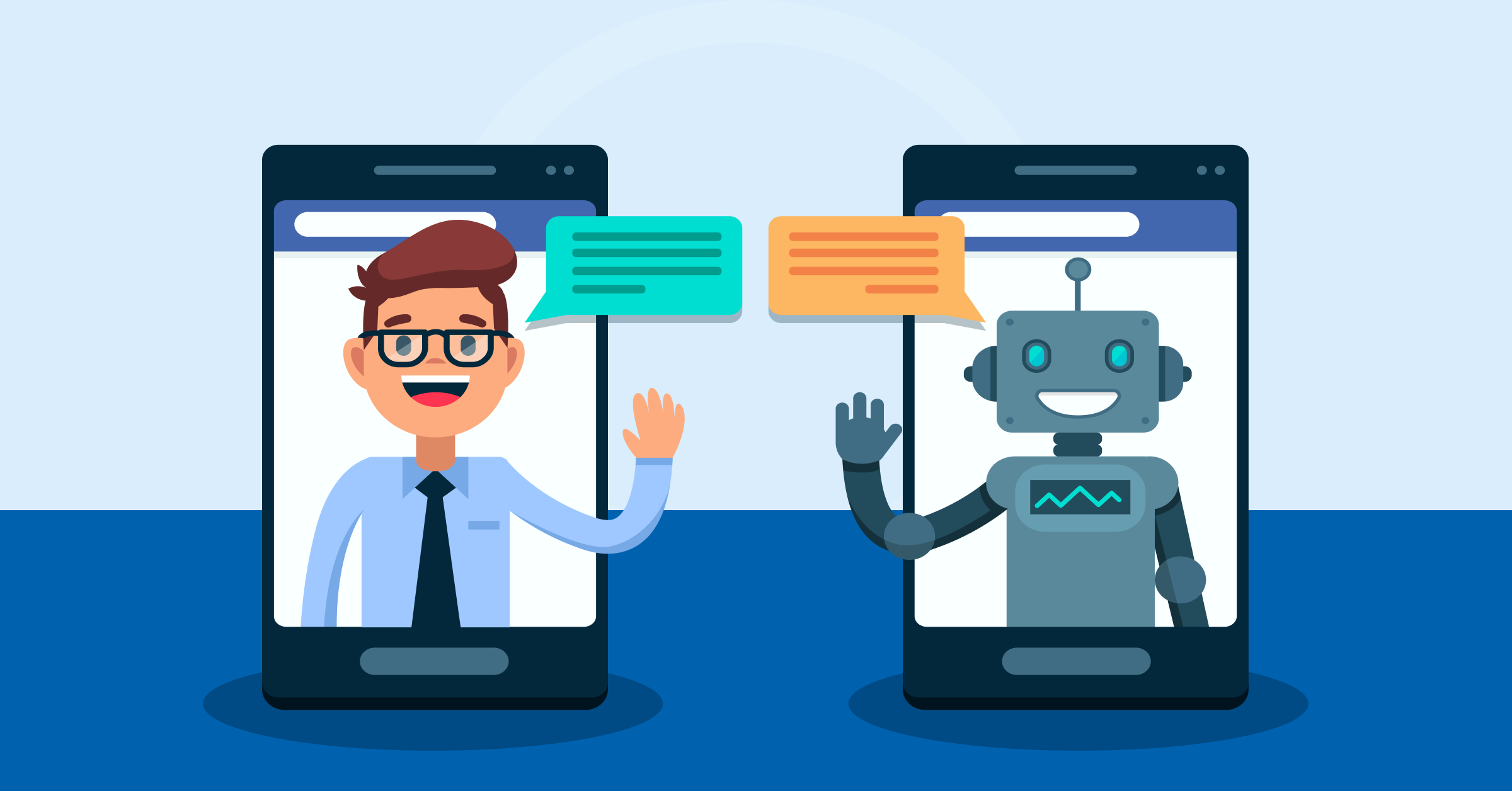
Understanding chatbots vs conversational AI boosts customer satisfaction and business efficiency by exploring their differences and functionalities.
As technology continues to advance, the lines between chatbots and conversational AI can often become blurred. According to a recent study 70% of white-collar workers will interact with conversational platforms regularly day-in day-out. The increasing reliance on these technologies, I believe, is becoming imminent to understand the nuanced differences between chatbots vs conversational AI.
In this blog post, we will delve into the disparities, highlighting their unique features and functionalities. By the end of this article, you will have a clear understanding of which technology is best suited for your specific needs and how they can enhance your business as well as customer satisfaction.
Chatbots are becoming increasingly popular in the world of digital marketing and customer service. But what exactly are chatbots and what are their components?
Chatbots are computer programs that simulate conversations with human users through text or voice commands. They are designed to interact with users in a natural, conversational way to provide information, answer questions and even complete tasks.
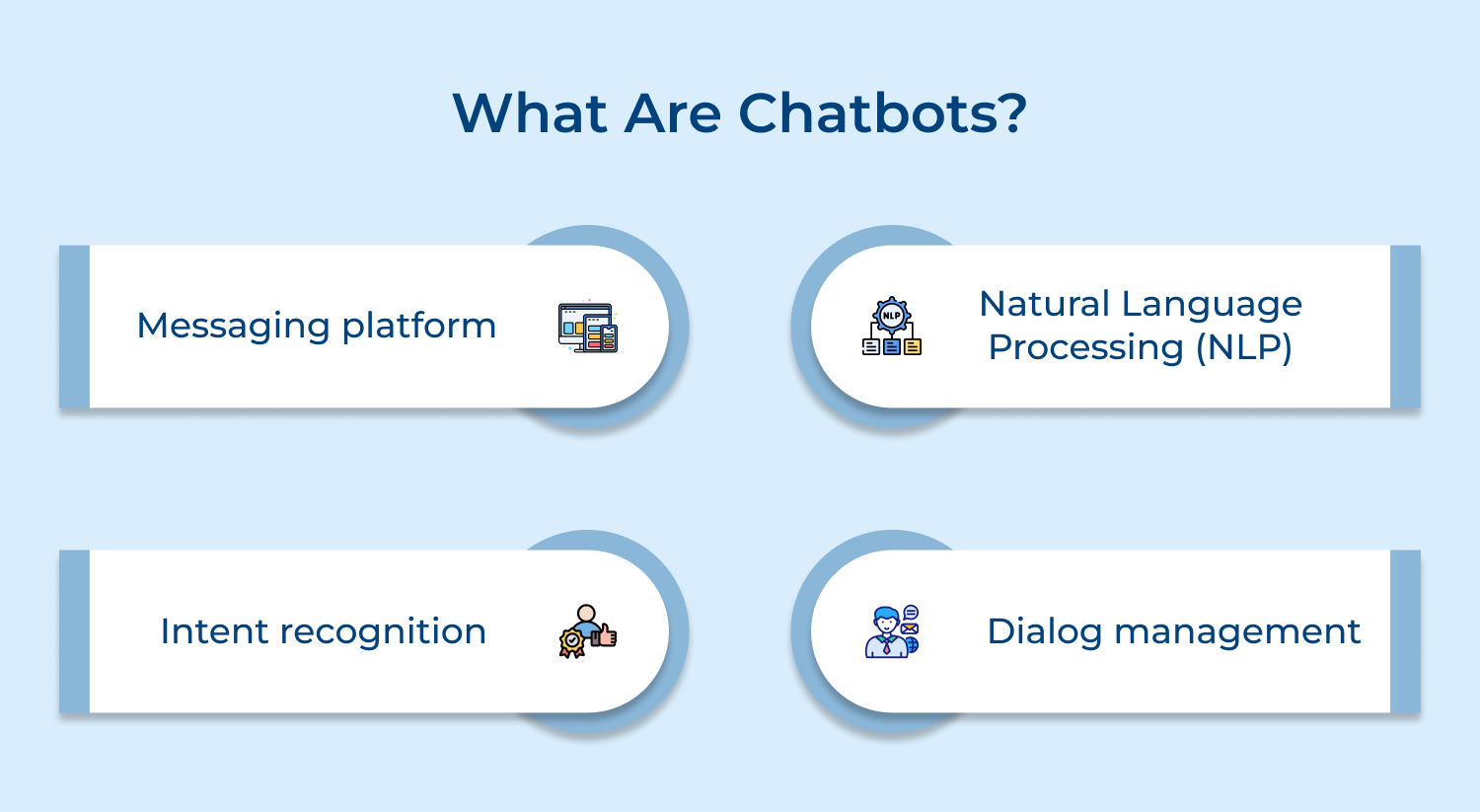
Key components:
1. Messaging platform: An interface that initiates human interactions that sound natural. It can be a website chat window, a messaging app like Facebook Messenger or WhatsApp, or a voice-controlled device like Amazon Echo or Google Home.
2. Natural Language Processing (NLP): NLP is a technology that enables chatbots to understand and interpret human language. It allows chatbots to recognize and respond to user inputs in a way that feels conversational.
3. Intent recognition: Intent recognition is the ability of a chatbot to understand the purpose or goal behind a user’s message. By analyzing the context and language of the user’s input, the chatbot can determine the user’s intent as well as provide an appropriate response.
4. Dialog management: Dialog management manages the flow of conversation between the user and the chatbot. It involves keeping track of the context of the conversation, remembering previous interactions and guiding the conversation towards a successful outcome.
5. Integration with backend systems: Chatbots are often connected to backend systems like customer databases, e-commerce platforms or CRM systems. This integration allows chatbots to access and retrieve relevant information to provide personalized responses to users.
6. Machine learning algorithms: Machine learning algorithms enable chatbots to learn and improve their responses over time. Interpreting user interactions as well as feedback really helps chatbots to optimize their performance and provide more accurate responses.
Conversational AI is a more sophisticated term for what we call chatbots or virtual agents. It is an emerging technology that uses artificial intelligence to enable seamless conversations between humans and machines.
This technology is reshaping how customer service, e-commerce and many other industries work by providing personalized, real-time assistance to users.

Key components:
1. Natural language processing (NLP): NLP is a branch of artificial intelligence that helps computers understand, interpret and generate human language. It enables chatbots to understand user input, regardless of how it is phrased or structured.
2. Machine learning (ML): ML algorithms allow chatbots to learn from past interactions and improve over time. From the prompts it receives, chatbots tailor responses to individual preferences and provide more accurate information.
3. Speech recognition: Speech recognition technology enables chatbots to understand and respond to spoken language. Users here get to interact with chatbots using voice commands, making the conversation more intuitive.
4. Natural language generation (NLG): NLG technology is where chatbots generate human-like responses in natural language. Conversations become more meaningful with NLG providing personalized recommendations, answering complex questions and engaging users.
5. Context management: Context management is essential for maintaining a coherent conversation between the user and the chatbot. Chatbots need to keep track of the context of the conversation, understand user intent and remember past interactions to provide relevant responses.
Chatbots and conversational AI are both tools used everywhere. While these terms are often used interchangeably, they actually have some key differences that set them apart.

The evolution of conversational interfaces from chatbots to conversational AI has significantly transformed the way we interact with technology. These advancements have enabled more natural, seamless conversations between humans and machines, ultimately enhancing user experiences while also driving business efficiency.
As technology continues to progress, we can expect to see even more sophisticated conversational AI systems that can understand context, emotions and nuances in human communication.
I believe the future of conversational interfaces is exciting and it will undoubtedly continue to revolutionize the way we engage with technology in the years to come.

Chatbot vs. Conversational AI – Which is best for your business?
Chatbots are typically rule-based programs that are designed to respond to specific keywords or phrases with predefined responses. They are often used to answer simple questions or provide basic information to users. Conversational AI is a more advanced form of artificial intelligence that can understand and respond to natural language input. This allows for more engaging and personalized interactions with users.
Are chatbots limited to predefined responses, while conversational AI offers more flexibility?
The answer to this question really depends on the specific needs and goals of your business. If you are looking for a simple and cost-effective way to automate basic customer interactions, a chatbot may be a good option. But, if you want to provide a more dynamic and engaging experience for your customers, conversational AI may be the better choice.
How chatbots relate to conversational AI
Yes, chatbots are generally limited to predefined responses based on specific keywords or phrases. Conversational AI can understand natural language input and provide more personalized as well as flexible responses. This allows for more engaging and human-like interactions with users.
What Makes a Chatbot Conversational?
Chatbots can be seen as a subset of conversational AI. While chatbots are typically rule-based and limited in their responses, conversational AI uses more advanced artificial intelligence techniques to provide a more interactive as well as personalized experience for users.
 https://omni24.io/wp-content/uploads/2026/07/Customer-Data-Platform.png
1256
2400
Tushar Joshi
https://omni24.io/wp-content/uploads/2023/04/Omni-Logo-1.svg
Tushar Joshi2026-07-08 03:58:592026-07-08 03:58:59How a Customer Data Platform Unlocks Unified Customer Insights
https://omni24.io/wp-content/uploads/2026/07/Customer-Data-Platform.png
1256
2400
Tushar Joshi
https://omni24.io/wp-content/uploads/2023/04/Omni-Logo-1.svg
Tushar Joshi2026-07-08 03:58:592026-07-08 03:58:59How a Customer Data Platform Unlocks Unified Customer Insights https://omni24.io/wp-content/uploads/2026/07/Unified-Customer-View.png
1256
2400
Tushar Joshi
https://omni24.io/wp-content/uploads/2023/04/Omni-Logo-1.svg
Tushar Joshi2026-07-07 03:37:342026-07-07 03:37:34How a Unified Customer View Transforms Customer Experience
https://omni24.io/wp-content/uploads/2026/07/Unified-Customer-View.png
1256
2400
Tushar Joshi
https://omni24.io/wp-content/uploads/2023/04/Omni-Logo-1.svg
Tushar Joshi2026-07-07 03:37:342026-07-07 03:37:34How a Unified Customer View Transforms Customer Experience https://omni24.io/wp-content/uploads/2026/06/Omnichannel-CRM.png
1256
2400
Tushar Joshi
https://omni24.io/wp-content/uploads/2023/04/Omni-Logo-1.svg
Tushar Joshi2026-07-06 03:49:012026-07-06 04:00:22How to Implement Omnichannel CRM Strategy: 7 Key Steps
https://omni24.io/wp-content/uploads/2026/06/Omnichannel-CRM.png
1256
2400
Tushar Joshi
https://omni24.io/wp-content/uploads/2023/04/Omni-Logo-1.svg
Tushar Joshi2026-07-06 03:49:012026-07-06 04:00:22How to Implement Omnichannel CRM Strategy: 7 Key Steps
Whether it’s about acquire, engage or support – Omni24 covers all your customer engagement needs in one complete platform.

Copyright ©2026 Veemo All rights reserved.
CA, Los Angeles, Hall Ave, 19011