How to Handle Complaints on Social Media Effectively
Master social media complaint handling with quick, empathetic responses that turn customer grievances into loyalty and strengthen brand reputation.

Master social media complaint handling with quick, empathetic responses that turn customer grievances into loyalty and strengthen brand reputation.
When a customer publicly complains on social media, their frustration reaches hundreds or thousands of potential customers instantly. These visible grievances can quickly spiral into reputation damage if mishandled, with 71% of affected businesses viewing negative social media as the top threat to their brand, creating lasting negative impressions that drive away business and erode trust.
Many companies make complaints worse by responding slowly, using generic replies, or reacting defensively – turning small issues into viral crises.
Effective social media complaint management turns criticism into an opportunity to showcase great service. With the right strategy, brands can resolve problems quickly and even turn unhappy customers into loyal advocates.
Social media complaints are public expressions of dissatisfaction that customers share on platforms like Twitter, Facebook or Instagram when they experience problems with products or services. These digital grievances can quickly reach wide audiences and often demand faster responses than traditional customer service channels. This is because of their visibility to other current and potential customers.
When customers encounter issues, they often turn to social media for immediate attention rather than calling support lines. Companies typically monitor these platforms using specialized software that flags mentions of their brand name. Customer service teams then respond publicly to resolve issues while demonstrating their commitment to service quality for everyone watching the interaction.
Key objectives:
84% of U.S. consumers who sent service requests via social media reported getting a response. Let’s learn how managing customer complaints is important especially on social media:
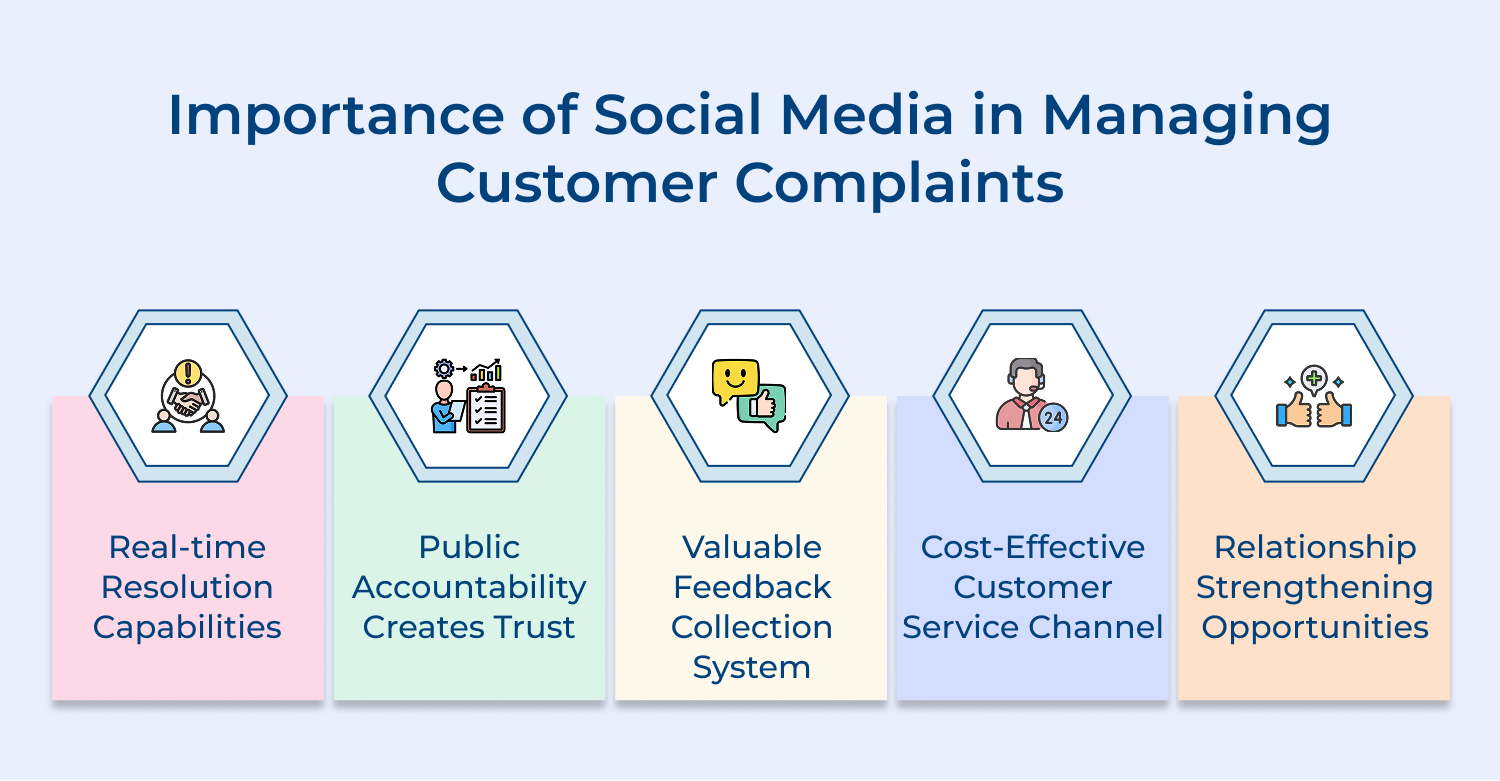
1. Real-time Resolution Capabilities
Social media platforms allow companies to address issues immediately as they unfold rather than waiting for escalation. This rapid response capability can transform a negative experience into a positive one before the situation worsens and helps prevent customer frustration from building up unnecessarily.
2. Public Accountability Creates Trust
When companies resolve complaints publicly on social media, they demonstrate transparency to everyone watching. The visible problem-solving builds credibility with both the dissatisfied customer and the broader audience of potential customers who witness how the company handles difficulties.
3. Valuable Feedback Collection System
Social platforms naturally gather customer sentiment in an unfiltered and authentic manner. These spontaneous expressions of dissatisfaction often reveal systemic problems or improvement opportunities that formal surveys might miss because customers express their genuine reactions without the constraints of structured feedback forms.
4. Cost-Effective Customer Service Channel
Handling complaints through social media typically requires fewer resources than traditional call centers. A single social media response can simultaneously address the original complainant while informing many others with similar questions or concerns which reduces repetitive inquiries and allows staff to focus on complex issues.
5. Relationship Strengthening Opportunities
Successfully resolving complaints on social media can actually enhance customer loyalty beyond pre-complaint levels. When customers feel heard and valued during a difficult moment they often develop stronger emotional connections to brands that demonstrate genuine care in their responses.
Discover the eight best practices that can help you effectively navigate this challenging landscape and build stronger, more trusting relationships with your audience.
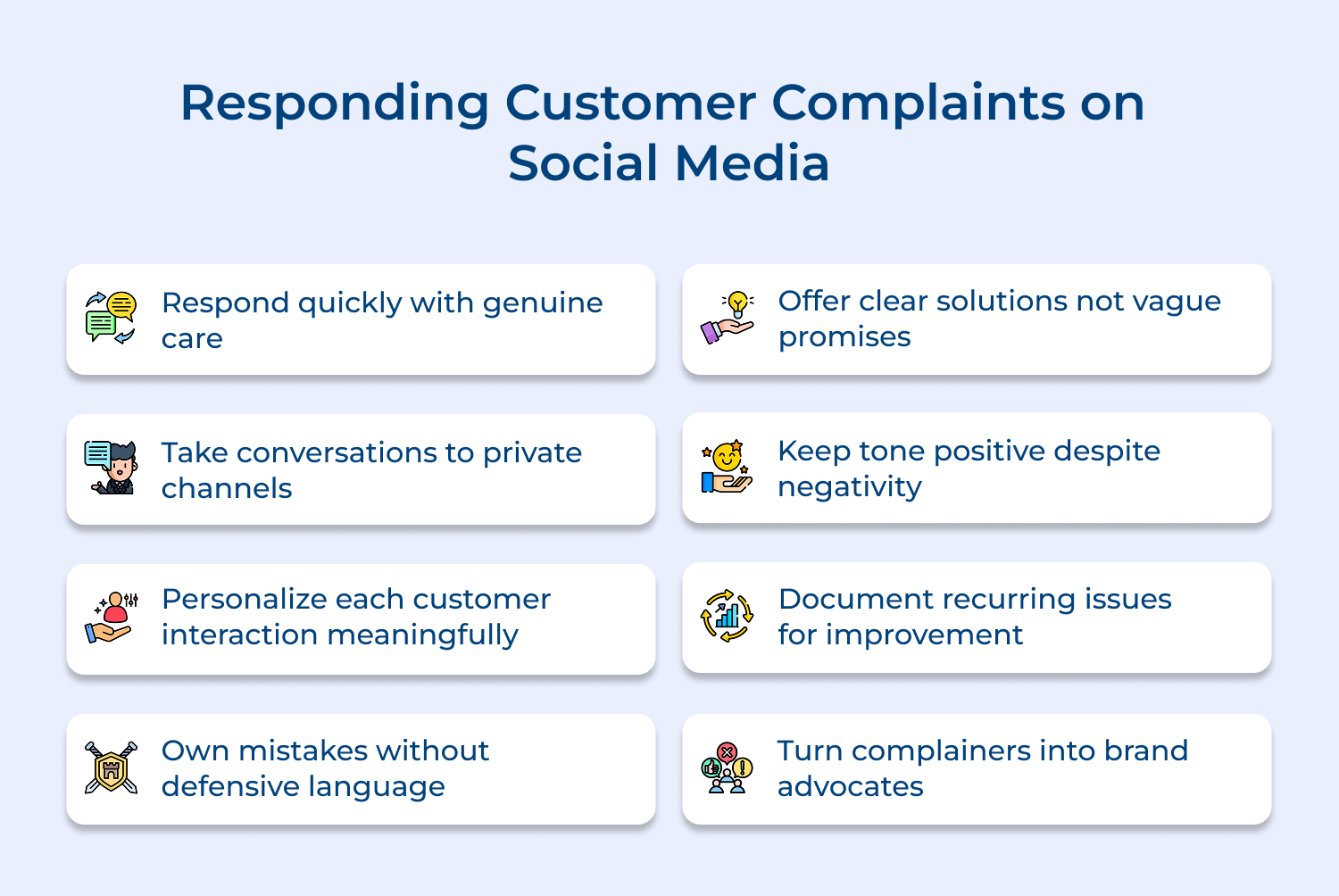
Speed matters tremendously when handling social media complaints because customers expect near-immediate acknowledgment of their issues in these channels.
When a customer takes to social media with a complaint, they’re often already frustrated after unsuccessful attempts to resolve their issue through other channels.
Examples of phrases that showcase quick response with genuine care:
The quality of your initial response matters as much as its speed because templated replies often backfire by seeming insincere. While aiming for quick acknowledgment, take an extra moment to personalize your message and demonstrate genuine understanding of the specific problem rather than pushing generic customer service language.
Public complaints require acknowledgment but often need private resolution spaces where sensitive account details and complex issues can be addressed thoroughly without the constraint of character limits or public scrutiny.
Below checklist ensures you transition conversations appropriately while maintaining trust and demonstrating responsiveness both publicly and privately to resolve issues effectively.
To take conversations to private channels, begin with public acknowledgment then smoothly transition by saying “I’d like to help resolve this for you directly. Could we continue in DMs so I can get the specific details needed?” Provide a clear call-to-action like “Please message us” or “I’ve sent you a direct message.”
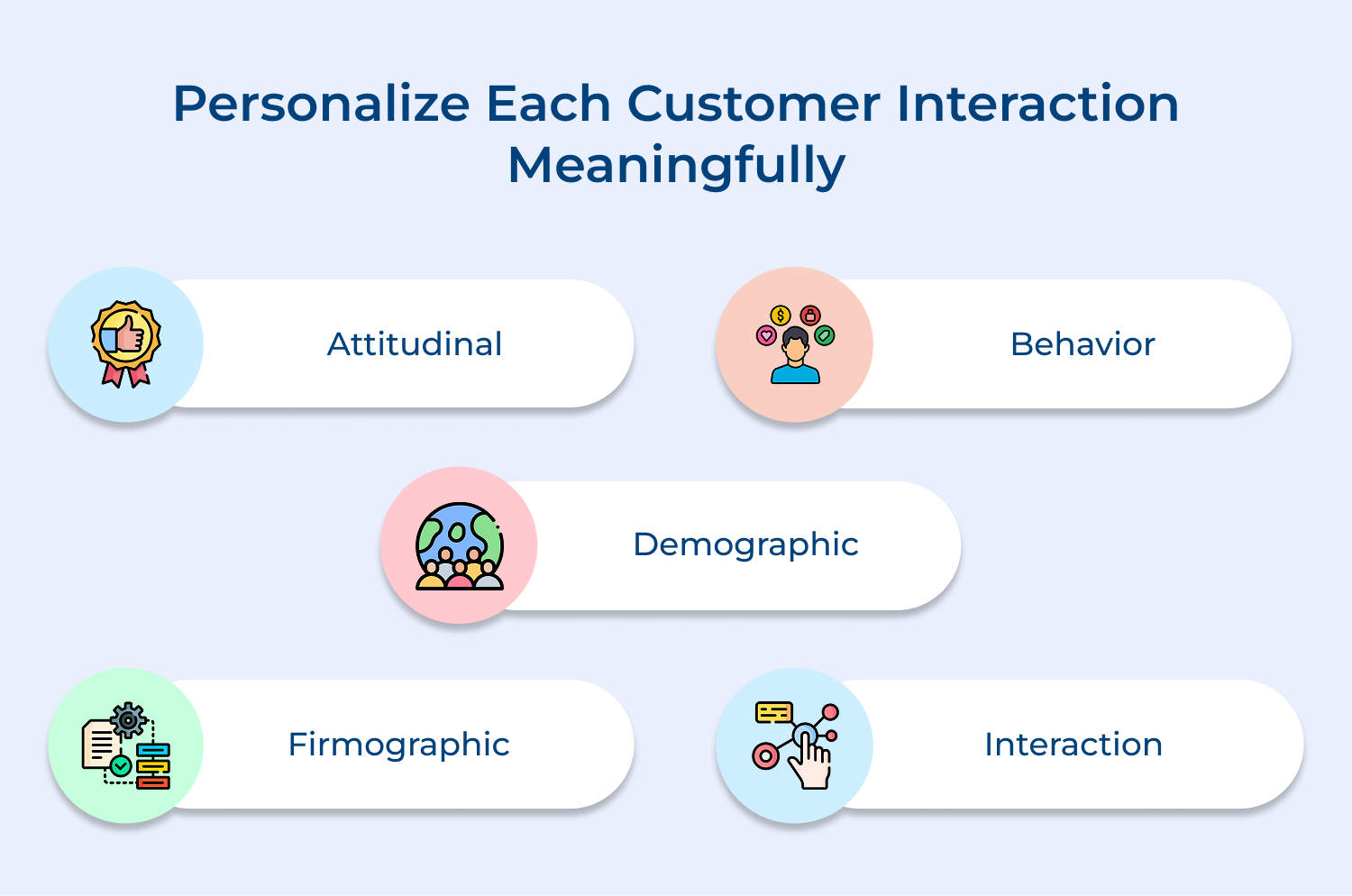
Personalization transforms generic customer service into memorable human connections that make customers feel truly seen and valued during difficult moments.
When customers complain publicly, they’re seeking validation that their individual experience matters to your company beyond just being another ticket number in your system. Things you can personalize in each customer interaction:
Meaningful personalization requires extra effort but delivers extraordinary returns in customer loyalty and positive sentiment.
Accepting responsibility directly rather than deflecting blame is crucial for rebuilding customer trust after a negative experience. The approach disarms anger by showing humility and creates space for constructive resolution instead of escalating into argumentative exchanges that damage relationships as well as brand reputation further.
When something goes wrong, plainly state “We made a mistake” or “We got this wrong” without qualifying language that diminishes responsibility.
This straightforward acknowledgment feels refreshingly honest to customers who can sense when companies are trying to minimize failures or soften admissions through carefully crafted corporate language that sounds evasive.
Avoid phrases like “this happened because” or “our system wasn’t designed to” which attempt to justify failures rather than address them.
Customers don’t want explanations that sound like deflections when they’re upset and focusing on reasons rather than solutions can make them feel you’re more interested in protecting your reputation.
Accepting responsibility for errors without excuses demonstrates integrity and builds trust with both the affected customer as well as everyone watching the interaction. This honest approach prevents escalation by validating customer frustrations rather than dismissing them and creates space for productive problem-solving.
Skip excuses that shift responsibility elsewhere
Avoid tempting deflections like blaming systems, third parties, or unusual circumstances even when technically true. These explanations often sound like excuses to frustrated customers and suggest you’re more concerned with protecting your reputation than fixing their problem.
Express specific plans for improvement
Move beyond apologies by explaining concrete steps you’re taking to prevent similar issues in the future. This forward-looking approach transforms complaints into opportunities for visible improvement and demonstrates that you value the feedback enough to make meaningful changes because of it.
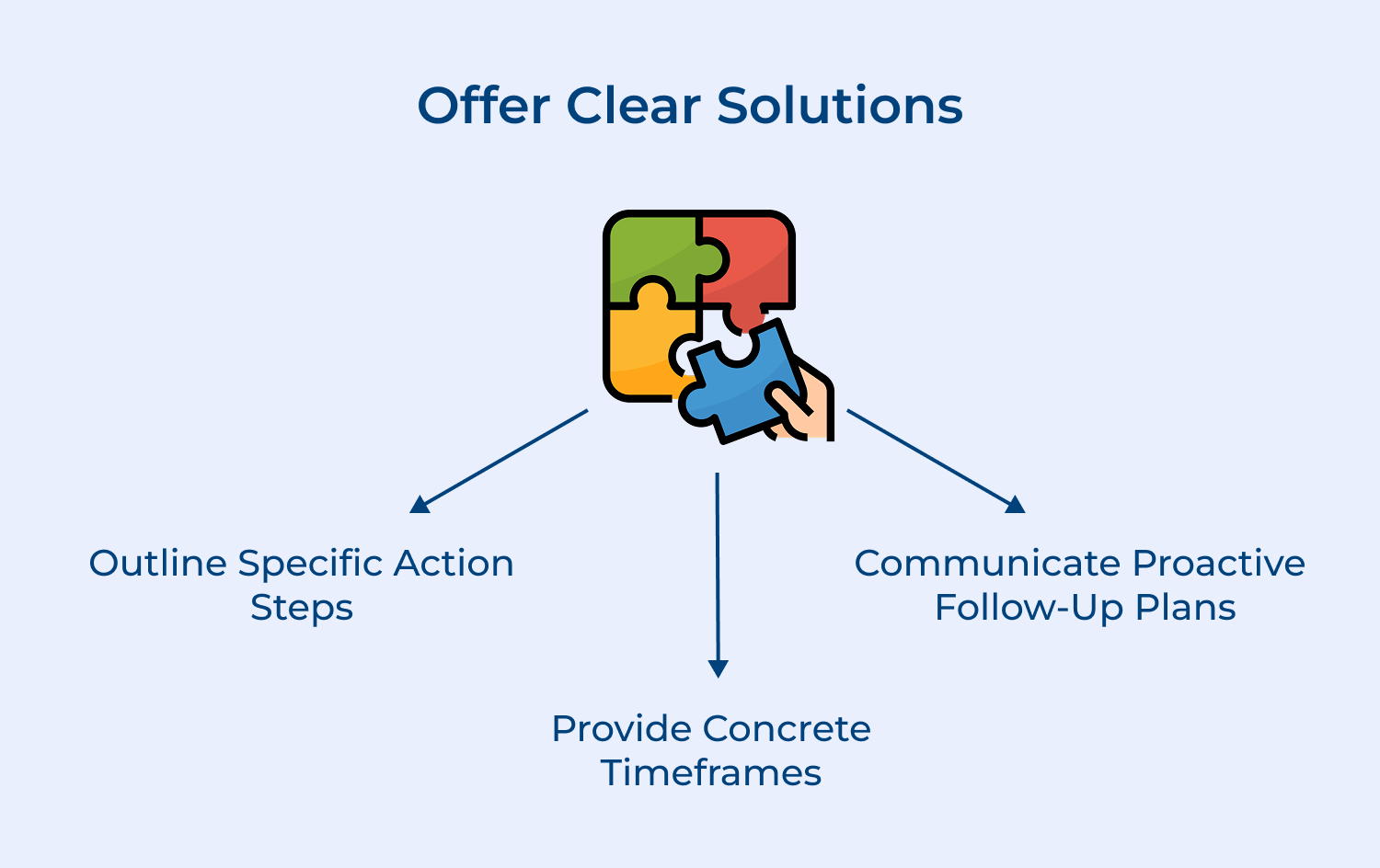
Specific actionable solutions demonstrate genuine commitment to resolving issues while vague promises only increase customer frustration. Clear resolution paths with defined steps create confidence in your follow-through and give customers realistic expectations about outcomes.
These approaches ensure customers know exactly what to expect.
Solutions with specificity transform customer support from frustrating to satisfying. When customers know exactly what will happen and when they can mentally close loops while redirecting their attention elsewhere while trusting your team will handle their concerns according to the clear plan you’ve established together.
Maintaining professionalism when facing angry complaints prevents escalation and demonstrates emotional stability that calms frustrated customers. Your positive tone sets the interaction trajectory and often leads customers to mirror your constructive approach.
Professional language creates psychological safety during heated exchanges by signaling rationality and respect. This deliberate communication approach prevents defensive reactions and creates space for understanding the underlying issue.
factors to consider:
For example when a customer posted an all-caps rant about a delayed delivery that ruined a birthday surprise, the company responded: “I’m truly sorry your daughter’s gift didn’t arrive in time for her birthday celebration. Thank you for letting us know about this disappointing experience. Let’s focus on making this right for both of you.”
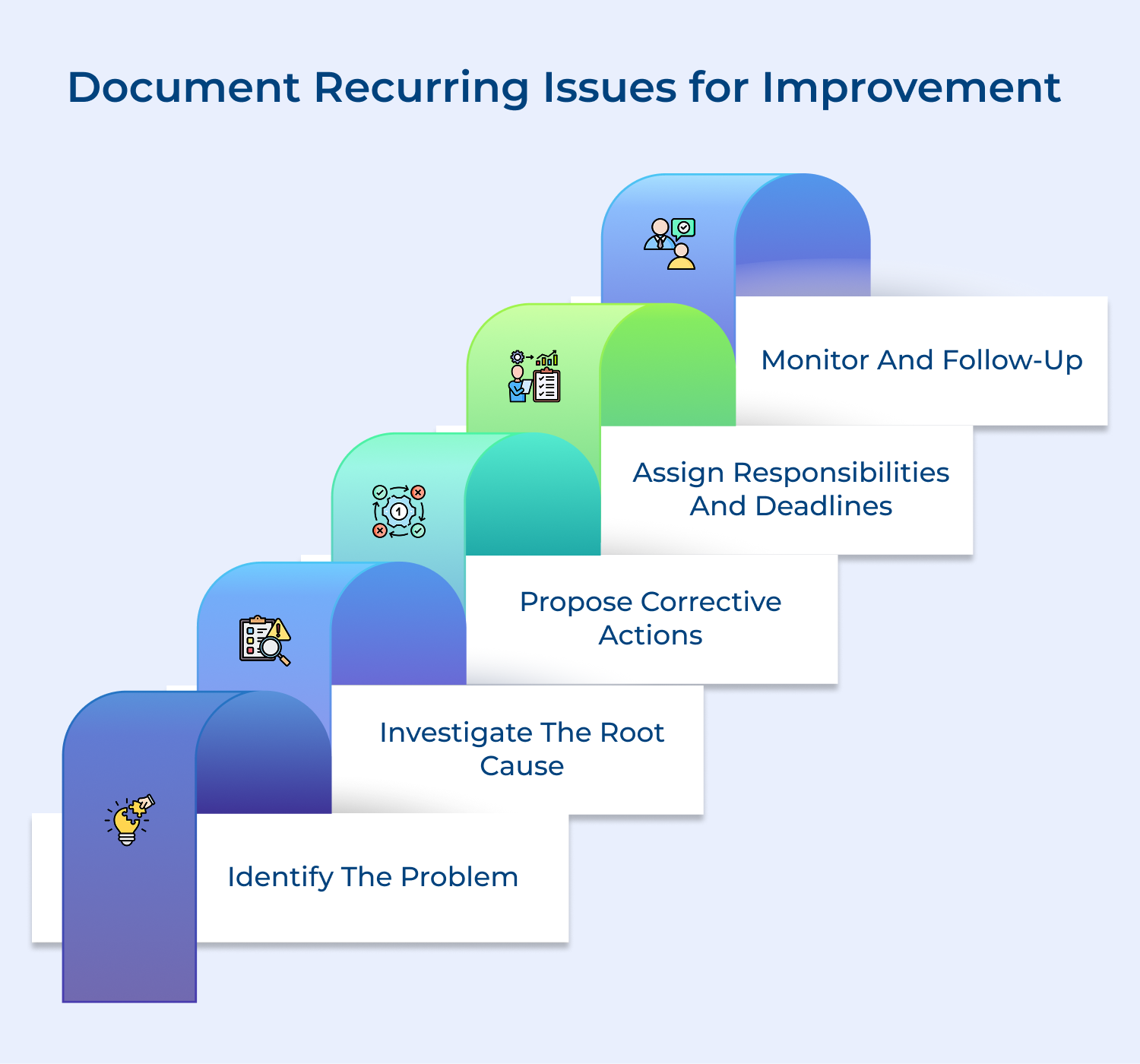
Documentation transforms individual complaints into valuable organizational intelligence by revealing systemic problems that require attention. This practice shifts perspective from reactive firefighting to proactive improvement by connecting individual customer frustrations to broader operational or product challenges that affect customer satisfaction at scale.
5 questions to answer before documenting recurring issues
When properly cataloged, complaint patterns reveal priority improvement opportunities that individual feedback might miss.
Converting dissatisfied customers into loyal supporters transforms potential detractors into authentic promoters. This happens when exceptional service recovery creates positive experiences that overshadow the original disappointment, giving customers compelling stories to share about your company’s handling of mistakes.
Effective ways to turn complainers into brand advocates
Converting complainants into advocates yields exceptional returns as these customers become powerful marketing assets. Their authentic recovery stories carry unique credibility since they’ve experienced both your mistakes and commitment to making things right, making their endorsements particularly influential to potential customers.
Let’s delve into the most frequent missteps and learn how to turn potential crises into opportunities for building lasting customer relationships.
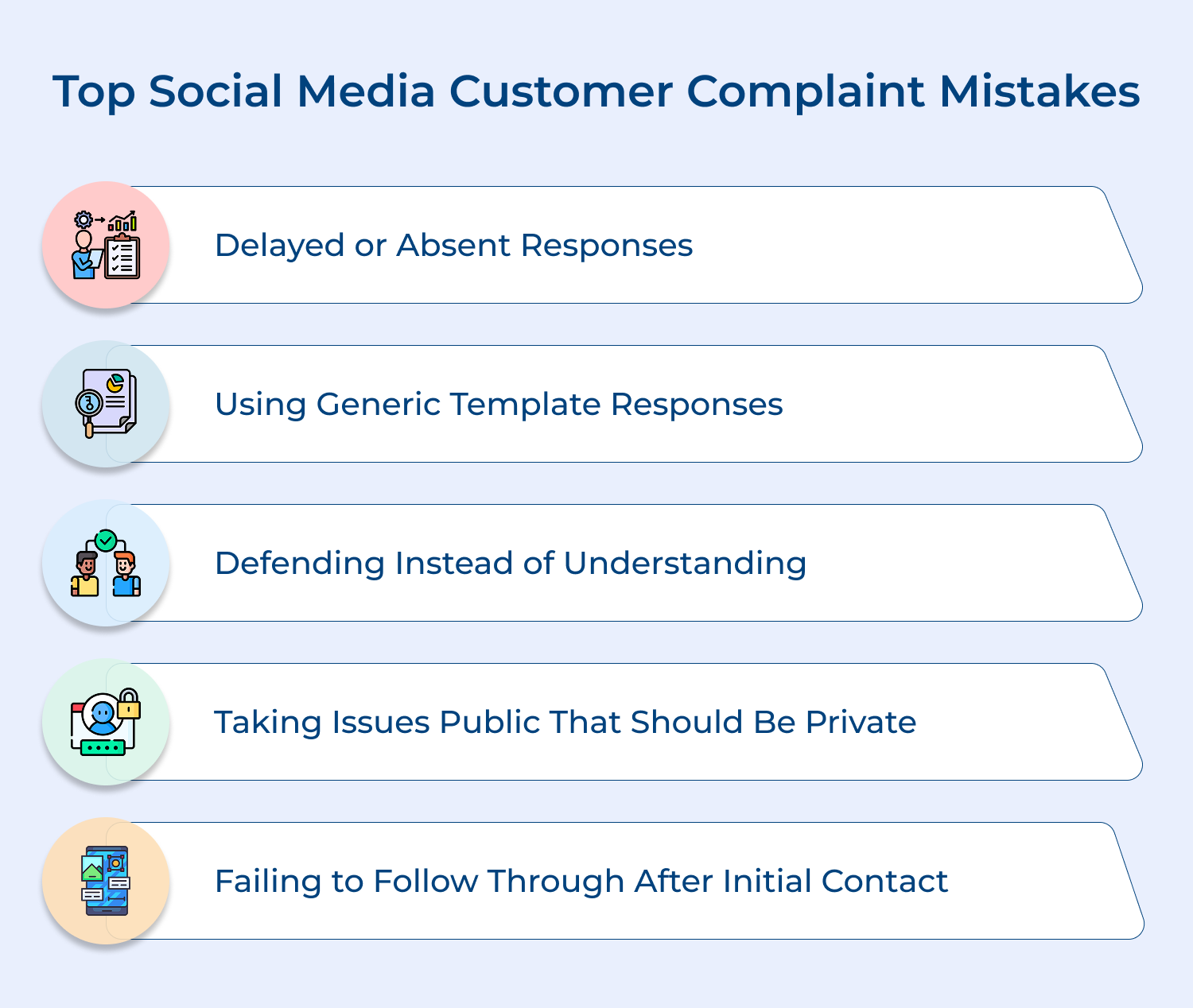
1. Delayed or Absent Responses
Many companies fail to monitor social platforms consistently or take too long to acknowledge complaints, leaving customers feeling ignored and increasingly frustrated. This response gap often leads to escalation as customers interpret silence as indifference, causing them to post repeatedly with growing anger or share their negative experience more widely to force acknowledgement.
2. Using Generic Template Responses
Copying and pasting standardized messages to different complaints signals laziness as well as lack of genuine concern to already upset customers. These cookie-cutter responses fail to address specific concerns raised and often contain inappropriate elements that demonstrate the company didn’t actually read the complaint, which compounds customer frustration rather than alleviating it.
3. Defending Instead of Understanding
Companies frequently rush to protect their reputation by explaining policies or justifying actions rather than first acknowledging customer feelings. The defensive stance creates adversarial dynamics where customers feel they must prove their complaint legitimate, shifting the interaction from problem-solving to argument and deepening the customer’s negative perception of the company.
4. Taking Issues Public That Should Be Private
Attempting to resolve complex problems entirely in public comments sections often leads to lengthy exchanges that expose sensitive information or reveal internal processes. This approach frustrates customers waiting for resolution through fragmented communication and creates public records of difficulties that potential customers might encounter when researching the company.
5. Failing to Follow Through After Initial Contact
Many companies make promising initial responses but then disappear without providing updates or confirming resolution. This abandonment leaves customers in uncertainty about whether their issue is being addressed and forces them to follow up repeatedly. Hence, creating additional friction points while demonstrating that the company prioritizes appearance of service over actual problem resolution.
To effectively address these common mistakes, companies should implement systematic approaches that transform complaint handling from reputation risk to relationship-building opportunity.
Examining how leading companies handle social media complaints reveals valuable strategies that transform potential crises into brand-building opportunities.
1. Starbucks
Starbucks responds to drink quality complaints by immediately offering specific replacement options through their app rather than requiring store returns. Their social team can instantly issue mobile credits while still actively participating in the conversation.
This frictionless recovery approach has significantly increased repeat business from previously disappointed customers. The immediate mobile compensation transforms potential lost customers into repeat visitors who appreciate the effortless resolution process.
2. Airbnb
Airbnb assigns dedicated case managers with names and photos when responding to accommodation complaints. These representatives can offer immediate alternative bookings or compensation while maintaining continuous contact until travelers are safely situated in new accommodations.
This personalized crisis management approach has preserved trust during potentially devastating travel disruptions. Travelers who experience Airbnb’s complaint resolution often become more loyal than those who never encountered problems.
3. Chewy
Chewy responds to product dissatisfaction by immediately sending replacements without requiring returns, often with personalized notes. Their representatives communicate with genuine pet-lover empathy that acknowledges the emotional connection customers have towards their animals.
This customer-first approach has created remarkable brand loyalty in the competitive pet supply market. Recipients of Chewy’s generous problem resolution frequently share their experiences through content that functions as powerful organic marketing.RetryClaude can make mistakes. Please double-check responses.
Handling complaints on social media can turn a brand crisis into a chance to build loyalty. Respond quickly and show genuine care. Move conversations to the right channels and personalize your replies. Admit mistakes openly as well as focus on solutions to show real commitment to customer satisfaction.
Smart brands see complaints as useful feedback, not threats. By offering clear solutions, keeping a positive tone and tracking every issue, they turn unhappy customers into loyal advocates. These interactions also help improve products and services over time.

How do you handle a social media complaint?
Address social media complaints by responding promptly (ideally within an hour), acknowledging the specific issue with empathy and offering a clear path to resolution. Begin with a public response that shows you’re listening, then move to private channels for detailed problem-solving while maintaining a professional tone throughout the interaction.
How do I escalate a social media complaint?
To escalate your complaint effectively, first attempt direct communication with the company’s main social account. If unsuccessful, tag senior executives or the CEO in your post, use relevant hashtags to increase visibility, contact them on multiple platforms simultaneously and consider sharing your experience with consumer advocacy groups that might amplify your concern.
Does complaining on social media work?
Yes, complaining on social media often yields faster results than traditional channels because companies prioritize publicly visible issues to protect their reputation. Research shows that 47% of consumers who complain on social media expect responses within an hour and businesses typically resolve these complaints 20% faster than those submitted through email or phone.
How can you use social media to prevent customer complaints?
Prevent complaints by establishing proactive communication channels that address potential issues before they escalate. Regularly share product updates, known issues and their timelines for resolution, create educational content that helps customers use products correctly, monitor conversations about your brand and engage with customer questions before they transform into complaints.
What’s the difference between public and private responses to complaints?
Public responses demonstrate accountability to both the complainant and everyone watching the interaction, while private conversations allow for detailed problem-solving involving sensitive information. The most effective approach combines both: a thoughtful public acknowledgment followed by personalized resolution through direct messages to balance transparency with privacy considerations.
 https://omni24.io/wp-content/uploads/2026/07/Customer-Data-Platform.png
1256
2400
Tushar Joshi
https://omni24.io/wp-content/uploads/2023/04/Omni-Logo-1.svg
Tushar Joshi2026-07-08 03:58:592026-07-08 03:58:59How a Customer Data Platform Unlocks Unified Customer Insights
https://omni24.io/wp-content/uploads/2026/07/Customer-Data-Platform.png
1256
2400
Tushar Joshi
https://omni24.io/wp-content/uploads/2023/04/Omni-Logo-1.svg
Tushar Joshi2026-07-08 03:58:592026-07-08 03:58:59How a Customer Data Platform Unlocks Unified Customer Insights https://omni24.io/wp-content/uploads/2026/07/Unified-Customer-View.png
1256
2400
Tushar Joshi
https://omni24.io/wp-content/uploads/2023/04/Omni-Logo-1.svg
Tushar Joshi2026-07-07 03:37:342026-07-07 03:37:34How a Unified Customer View Transforms Customer Experience
https://omni24.io/wp-content/uploads/2026/07/Unified-Customer-View.png
1256
2400
Tushar Joshi
https://omni24.io/wp-content/uploads/2023/04/Omni-Logo-1.svg
Tushar Joshi2026-07-07 03:37:342026-07-07 03:37:34How a Unified Customer View Transforms Customer Experience https://omni24.io/wp-content/uploads/2026/06/Omnichannel-CRM.png
1256
2400
Tushar Joshi
https://omni24.io/wp-content/uploads/2023/04/Omni-Logo-1.svg
Tushar Joshi2026-07-06 03:49:012026-07-06 04:00:22How to Implement Omnichannel CRM Strategy: 7 Key Steps
https://omni24.io/wp-content/uploads/2026/06/Omnichannel-CRM.png
1256
2400
Tushar Joshi
https://omni24.io/wp-content/uploads/2023/04/Omni-Logo-1.svg
Tushar Joshi2026-07-06 03:49:012026-07-06 04:00:22How to Implement Omnichannel CRM Strategy: 7 Key Steps
Whether it’s about acquire, engage or support – Omni24 covers all your customer engagement needs in one complete platform.

Copyright ©2026 Veemo All rights reserved.
CA, Los Angeles, Hall Ave, 19011