How to Increase Customer Advocacy: 9 Effective Strategies
Customer advocacy is crucial as it builds trust and credibility through genuine customer voices. It not only fuels brand growth but also strengthens long-term relationships and loyalty.

Customer advocacy is crucial as it builds trust and credibility through genuine customer voices. It not only fuels brand growth but also strengthens long-term relationships and loyalty.
Customer advocacy is more than just satisfied customers; it involves loyal customers who actively promote and support a brand. Companies that prioritize customer advocacy are more likely to experience long-term success and growth in an ever-changing market.
“Customer-obsessed” organizations that prioritize customer advocacy see 49% faster profit growth and 51% better retention compared to their competitors.
Let us dive into the importance of customer advocacy as the cornerstone of sustainable business growth. Explore the benefits of building a community of loyal advocates and tips on how businesses can leverage customer advocacy to drive success.
Customer advocacy is defined as a crucial aspect of any successful business. It involves customers promoting and recommending a product or service to others. It is the act of customers speaking out in favor of a brand, product or service and sharing their positive experiences with others.
Customer advocacy can take many forms, including testimonials, reviews, word-of-mouth recommendations, social media posts and more. When customers advocate for a brand, they are essentially acting as brand ambassadors, helping to spread awareness and generate new business through their positive feedback.
Key features:
Customer advocacy is powerful word-of-mouth marketing that promotes trusted brands and fuels business growth.
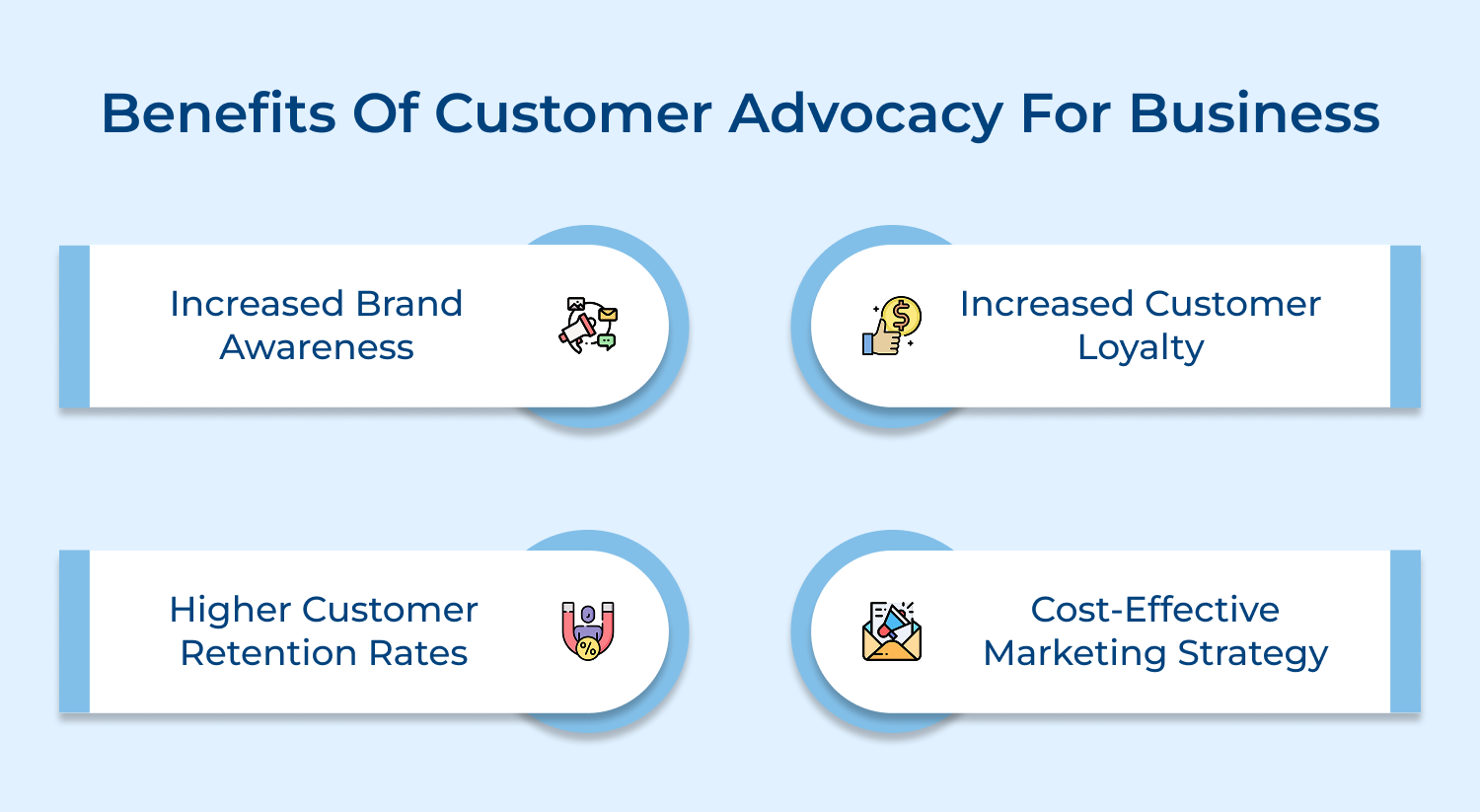
Customer advocacy strengthens brand reputation, driving growth with loyal customers who promote and boost retention
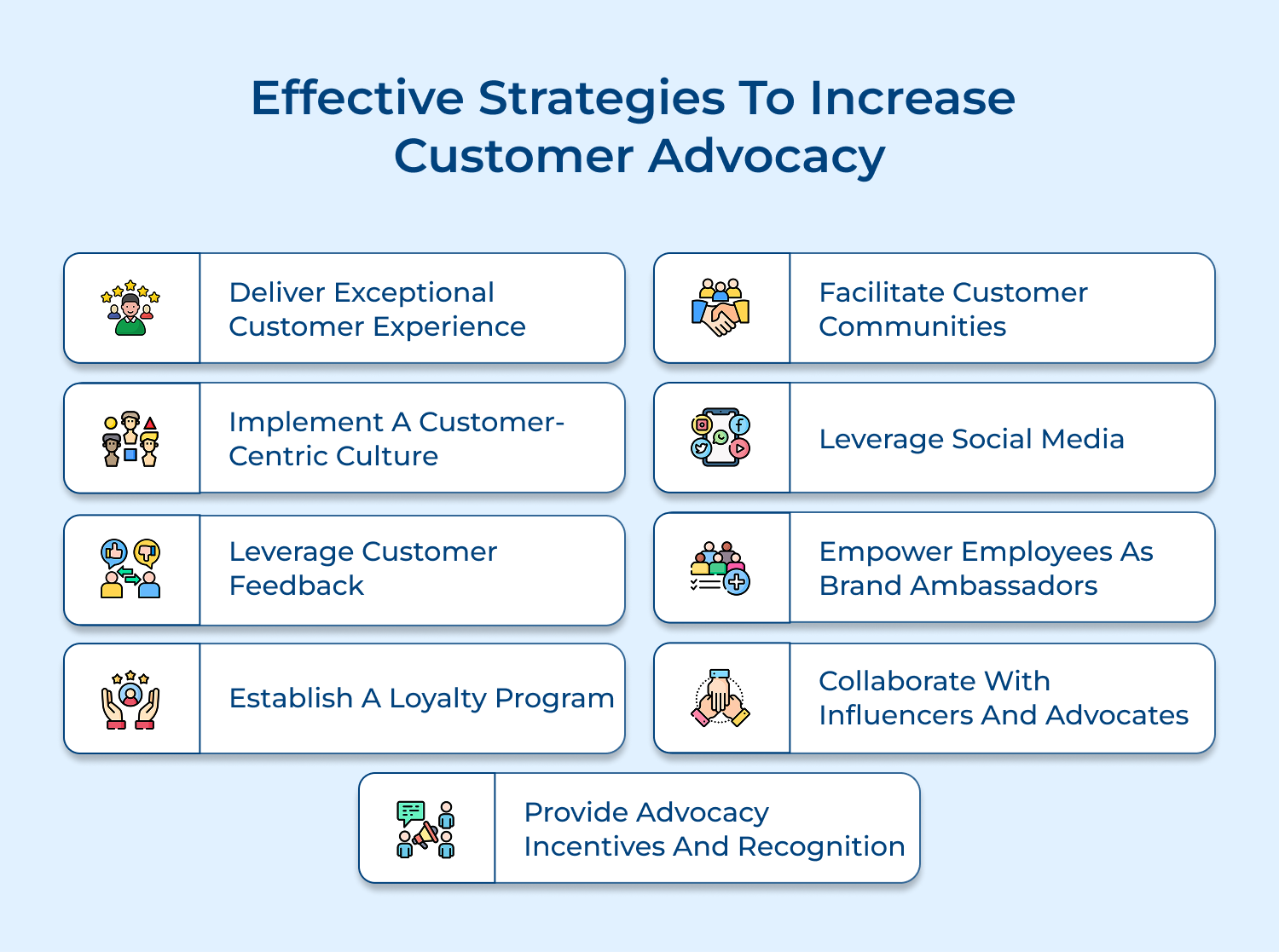
The foundation of customer advocacy lies in consistently delivering exceptional customer experiences. Prioritize customer satisfaction by understanding their needs, exceeding their expectations and providing outstanding service at every touchpoint.
Ensure that your products or services are of high quality and address any issues or concerns promptly and effectively. Positive experiences create a strong emotional connection with your brand, fostering loyalty and advocacy.
Cultivate a customer-centric culture within your organization, where every employee understands the importance of customer advocacy and is committed to delivering exceptional experiences. Encourage empathy, active listening and a genuine desire to solve customer problems.
Empower your employees to go the extra mile in creating memorable interactions that leave a lasting positive impression.
Actively seek customer feedback through surveys, social media and other channels. Engage with customers, listen to their opinions and act on their suggestions. Demonstrate that their input is valued and implemented, fostering a sense of involvement and ownership.
Addressing customer concerns and continuously improving based on their feedback can significantly enhance advocacy.
Implementing a well-designed loyalty program can incentivize customers to become advocates. Reward them for their repeat business, referrals and positive reviews.
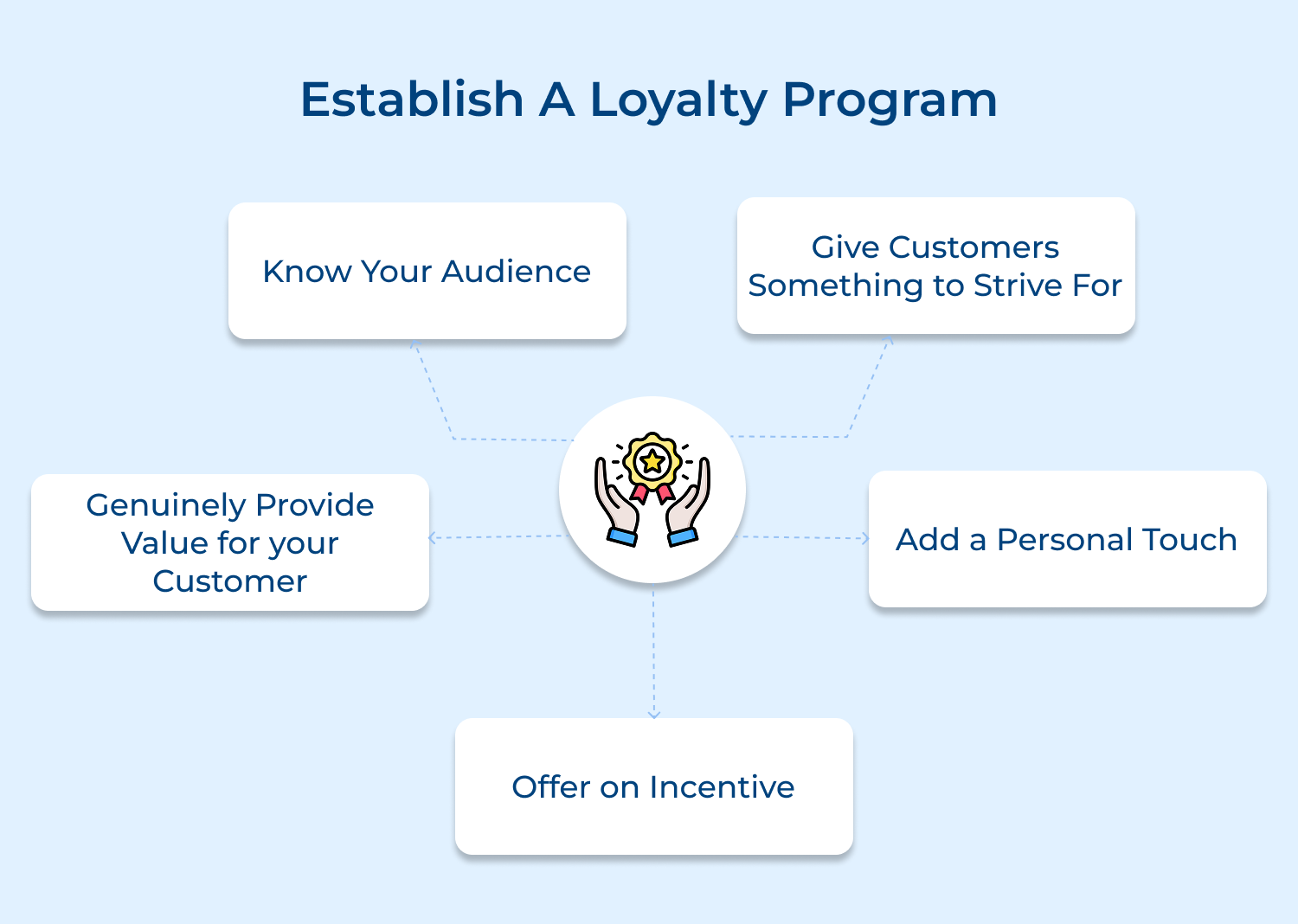
Offer exclusive benefits, discounts, or early access to new products or services. These incentives not only encourage loyalty but also motivate customers to actively promote your brand to their networks.
Create online communities or forums where customers can interact, share experiences and support one another. These communities foster a sense of belonging and allow customers to connect with like-minded individuals.
Encourage active participation by providing valuable content, hosting engaging discussions and facilitating knowledge-sharing. Engaged communities can lead to increased advocacy as members become brand evangelists.
Utilize social media platforms to amplify customer advocacy. Encourage satisfied customers to share their positive experiences, leave reviews and engage with your brand on various channels.
Respond promptly to positive feedback, thank customers for their support and share their content to showcase their advocacy. Social proof from existing advocates can influence potential customers and drive further advocacy.
Your employees can be powerful advocates for your brand. Invest in employee training, recognition and development programs to foster a sense of pride and ownership.
Encourage them to share their experiences and insights with customers and equip them with the tools and resources to effectively represent your brand. Engaged and motivated employees can positively influence customer perceptions and advocacy.
Identify influential individuals or passionate advocates within your customer base or industry. Collaborate with them to create authentic content, share their experiences and amplify their advocacy efforts.
Influencer marketing and user-generated content can significantly boost brand credibility and resonate with potential customers, driving further advocacy.
Acknowledge and incentivize customer advocacy efforts. Offer rewards, discounts, or exclusive perks for customers who leave positive reviews, refer new customers or actively promote your brand.
Publicly recognize and celebrate your most loyal advocates, fostering a sense of appreciation and encouraging continued advocacy.
Customer advocacy can take various forms and businesses can leverage different types to promote their brand and build stronger relationships with customers.
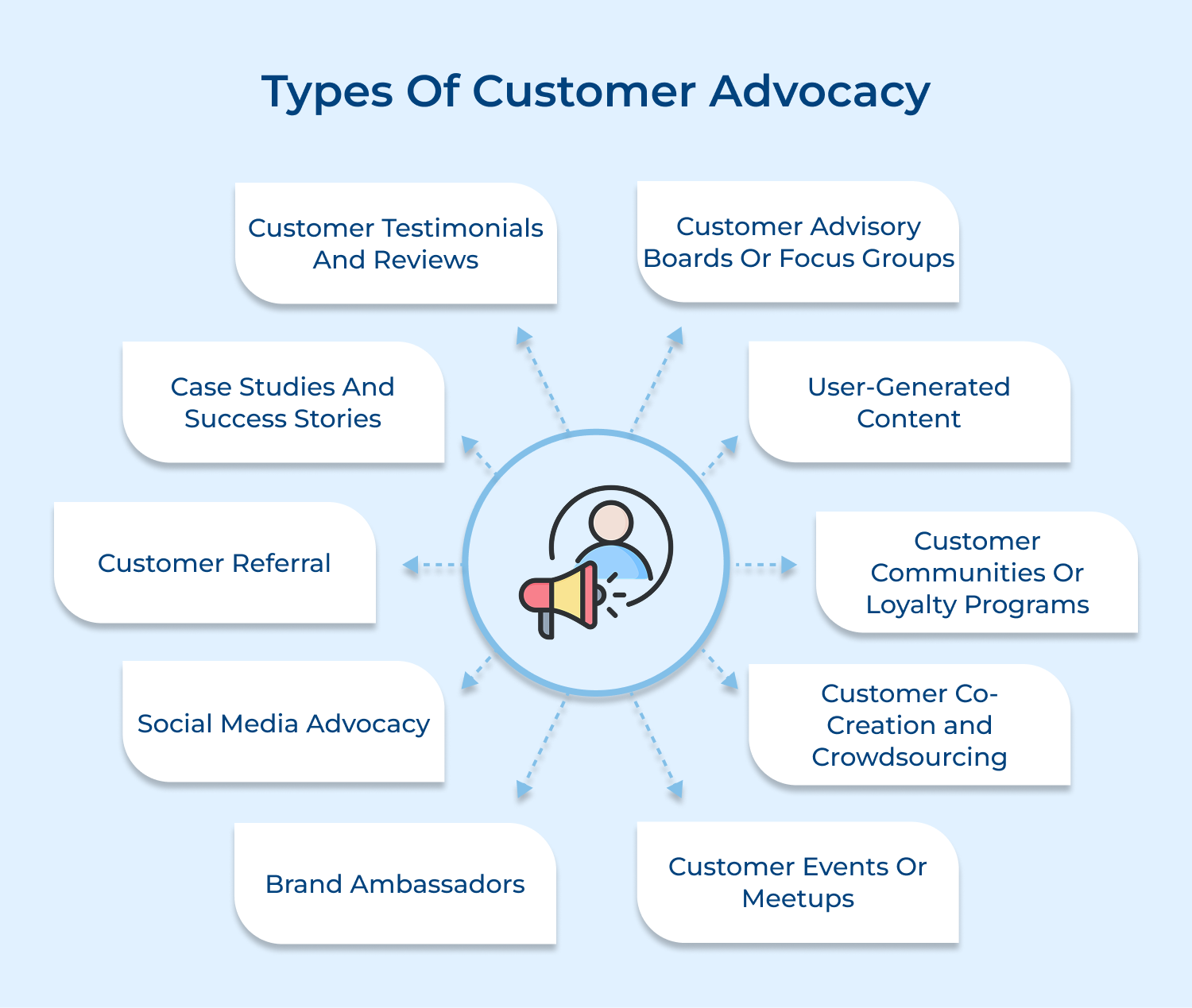
1. Customer Testimonials and Reviews
2. Case Studies and Success Stories
3. Customer Referral
4. Social Media Advocacy
5. Brand Ambassadors
6. Customer Advisory Boards or Focus Groups
7. User-Generated Content
8. Customer Communities or Loyalty Programs
9. Customer Co-Creation and Crowdsourcing
10. Customer Events or Meetups
Implementing a successful customer advocacy program requires a strategic and well-structured approach. Here are the key steps to effectively implement a customer advocacy program:
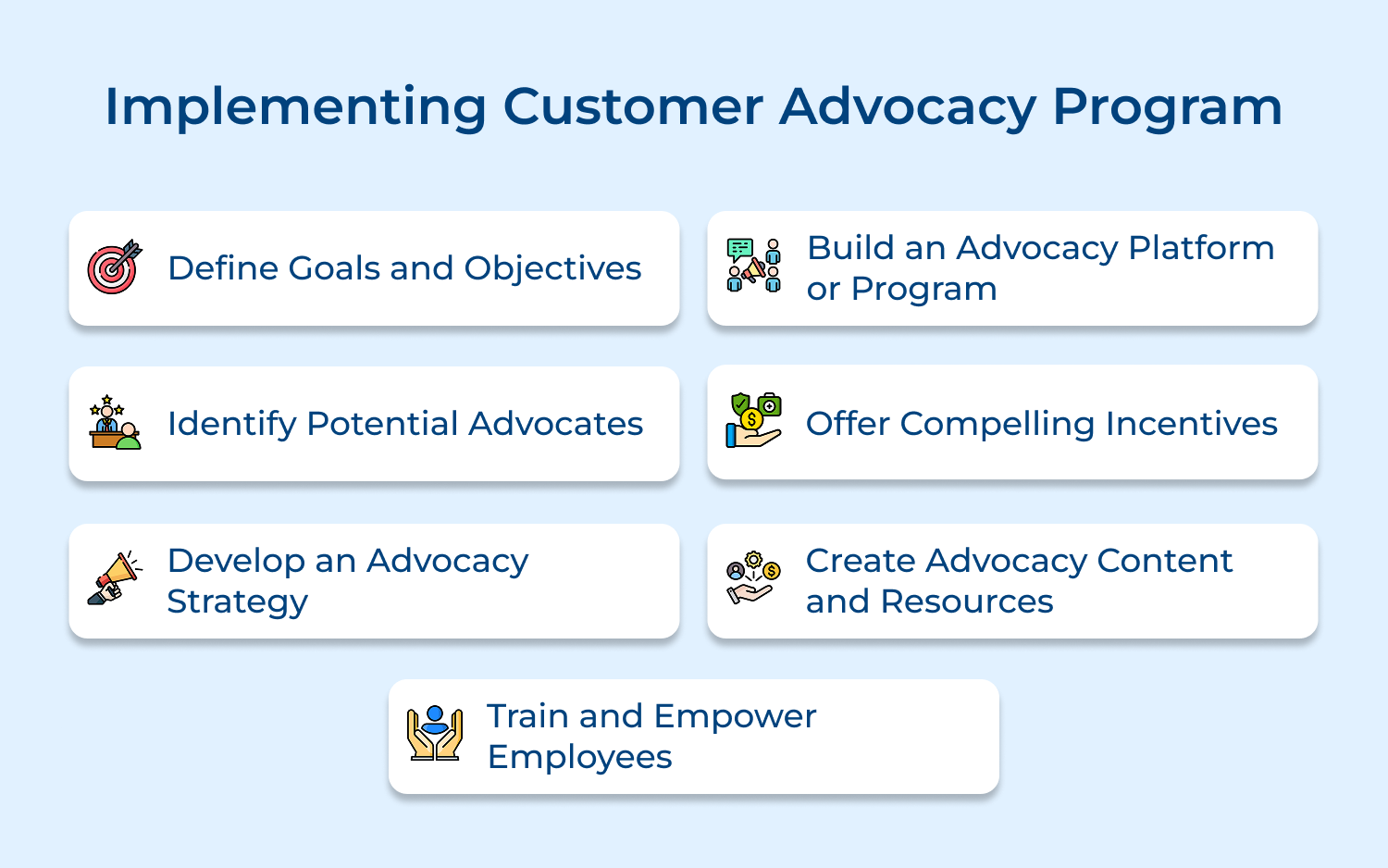
Clearly define the goals and objectives of your customer advocacy program. It could include increasing brand awareness, driving customer acquisition, boosting customer retention, or improving customer satisfaction. Having clear goals will help you measure the success of your program and make data-driven decisions.
Determine the characteristics and behaviors that define your ideal customer advocates. These could be customers who frequently purchase your products or services, leave positive reviews, or actively engage with your brand on social media. Analyze your customer data and feedback to identify customers who are likely to become advocates.
Create a comprehensive strategy that outlines how you will engage with potential advocates, incentivize advocacy and measure success. Your strategy should include tactics such as customer referral programs, social media campaigns, exclusive events or communities and personalized communication channels.
Implement a dedicated platform or program to manage your customer advocacy efforts. This could be a custom-built solution or a third-party advocacy management platform. The platform should enable you to engage with advocates, track their activities and provide incentives or rewards.
Develop a compelling incentive program to motivate customers to become advocates. This could include exclusive discounts, early access to new products or services, loyalty points, or special recognition. Tailor the incentives to your target audience and align them with your overall business objectives.
Provide your advocates with the necessary resources and content to effectively promote your brand. This could include branded marketing materials, product samples, social media toolkits and guidelines for creating user-generated content or reviews.
Ensure that your employees, especially those in customer-facing roles, are trained and empowered to identify and cultivate potential advocates. Provide them with the necessary knowledge, tools and resources to effectively engage with advocates and represent your brand.
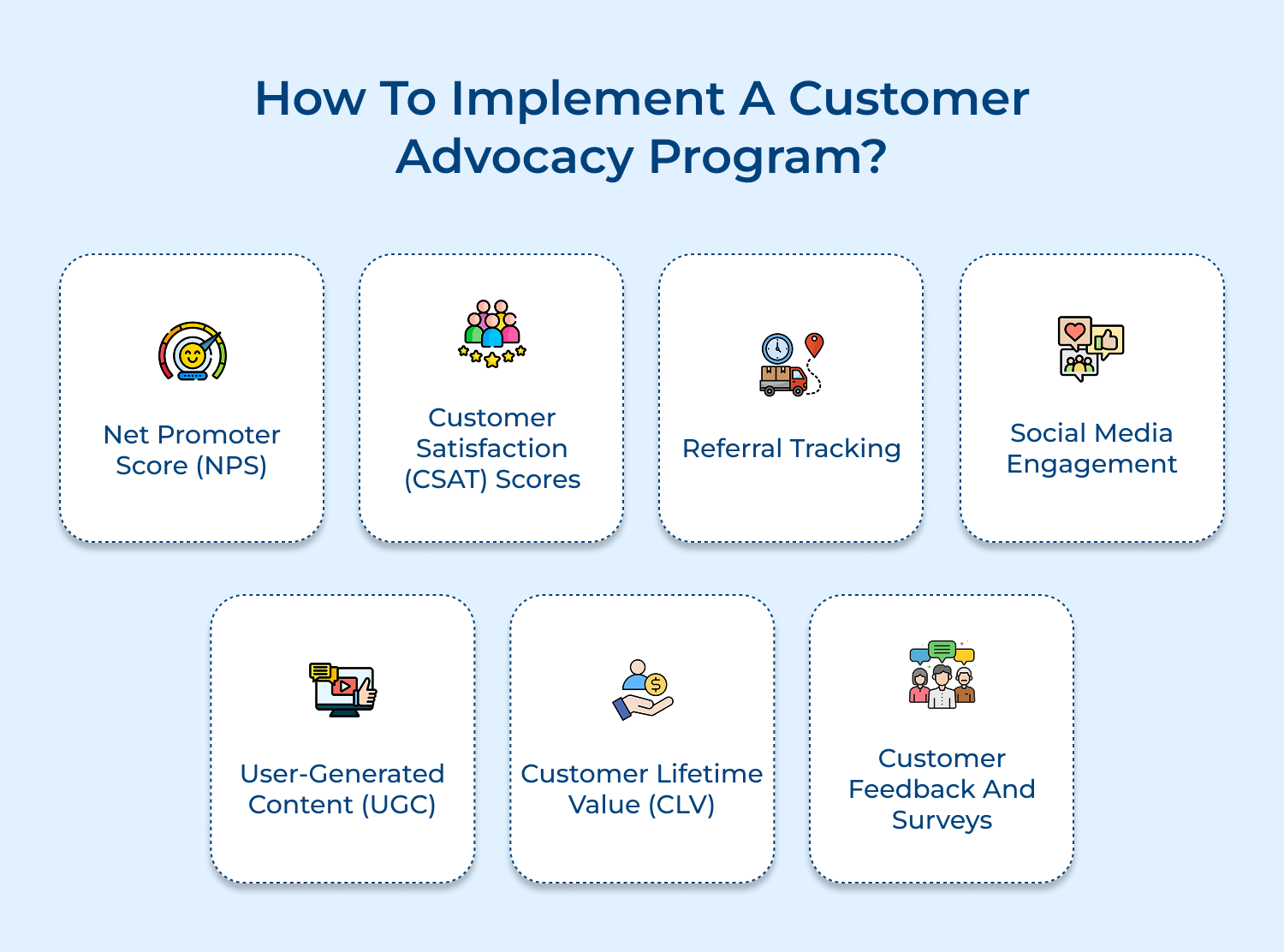
Measuring customer advocacy is crucial for evaluating the effectiveness of your advocacy program and making data-driven decisions.
Customer advocacy is essential for sustainable business growth. By creating strong relationships with customers and providing exceptional experiences, businesses can cultivate loyal advocates who will not only continue to support the company but also spread positive word-of-mouth recommendations.
These advocates can help attract new customers, drive sales and ultimately contribute to the long-term success of the business. It is crucial for companies to prioritize customer advocacy initiatives and consistently strive to exceed customer expectations to thrive in a competitive market environment.

What Makes A Customer An Advocate?
A customer becomes an advocate when they are not only satisfied with your product or service but also feel a strong emotional connection to your brand. They are loyal, engaged and have a genuine desire to share their positive experiences with others.
What Does A Customer Advocate Do? / What is the role of a customer advocate?
A customer advocate acts as a brand ambassador for your business. They spread positive word-of-mouth, write testimonials and reviews, refer new customers and provide valuable feedback to help improve the customer experience.
Why is Customer Advocacy Important?
Customer advocacy is important because it helps increase customer retention, drive customer acquisition and build brand credibility. Advocates can significantly impact your business’s success by serving as trusted sources of information and influencing others to choose your brand.
How can social media listening increase customer advocacy?
Social media listening allows businesses to monitor and analyze customer conversations on social media platforms. By actively listening to customer feedback, businesses can identify advocates, engage with them, address their concerns and encourage them to share their positive experiences with a wider audience.
What is a customer advocacy program?
A customer advocacy program is a structured initiative designed to identify, nurture and leverage customer advocates. It involves engaging with happy customers, rewarding them for their loyalty and empowering them to promote the brand.
Why should customer advocacy matter?
Customer advocacy matters because it can significantly impact business growth and success. Advocates are more likely to make repeat purchases, refer others to your business and provide valuable insights that can help improve products and services.
 https://omni24.io/wp-content/uploads/2026/07/Customer-Data-Platform.png
1256
2400
Tushar Joshi
https://omni24.io/wp-content/uploads/2023/04/Omni-Logo-1.svg
Tushar Joshi2026-07-08 03:58:592026-07-08 03:58:59How a Customer Data Platform Unlocks Unified Customer Insights
https://omni24.io/wp-content/uploads/2026/07/Customer-Data-Platform.png
1256
2400
Tushar Joshi
https://omni24.io/wp-content/uploads/2023/04/Omni-Logo-1.svg
Tushar Joshi2026-07-08 03:58:592026-07-08 03:58:59How a Customer Data Platform Unlocks Unified Customer Insights https://omni24.io/wp-content/uploads/2026/07/Unified-Customer-View.png
1256
2400
Tushar Joshi
https://omni24.io/wp-content/uploads/2023/04/Omni-Logo-1.svg
Tushar Joshi2026-07-07 03:37:342026-07-07 03:37:34How a Unified Customer View Transforms Customer Experience
https://omni24.io/wp-content/uploads/2026/07/Unified-Customer-View.png
1256
2400
Tushar Joshi
https://omni24.io/wp-content/uploads/2023/04/Omni-Logo-1.svg
Tushar Joshi2026-07-07 03:37:342026-07-07 03:37:34How a Unified Customer View Transforms Customer Experience https://omni24.io/wp-content/uploads/2026/06/Omnichannel-CRM.png
1256
2400
Tushar Joshi
https://omni24.io/wp-content/uploads/2023/04/Omni-Logo-1.svg
Tushar Joshi2026-07-06 03:49:012026-07-06 04:00:22How to Implement Omnichannel CRM Strategy: 7 Key Steps
https://omni24.io/wp-content/uploads/2026/06/Omnichannel-CRM.png
1256
2400
Tushar Joshi
https://omni24.io/wp-content/uploads/2023/04/Omni-Logo-1.svg
Tushar Joshi2026-07-06 03:49:012026-07-06 04:00:22How to Implement Omnichannel CRM Strategy: 7 Key Steps
Whether it’s about acquire, engage or support – Omni24 covers all your customer engagement needs in one complete platform.

Copyright ©2026 Veemo All rights reserved.
CA, Los Angeles, Hall Ave, 19011