How to Build a Closed Loop Feedback System: 8 Key Steps
Closed Loop Feedback boosts customer satisfaction by turning insights into improvements, showing customers their voices matter and building long-term trust.

Closed Loop Feedback boosts customer satisfaction by turning insights into improvements, showing customers their voices matter and building long-term trust.
Closed loop customer feedback is a powerful strategy that transforms the way businesses connect with their customers. The approach involves collecting feedback, actively responding to insights and implementing improvements based on their suggestions.
Closing the feedback loop demonstrates to customers that their opinions matter, building loyalty and trust, which are essential for long-term success. Closing the feedback loop can add $234 million to the bottom line by reducing churn.
Let us explore the key components of closed loop feedback, its benefits for businesses and practical strategies for implementing it effectively. Discover how this approach enhances the customer experience and drives customer satisfaction.
Closed-loop feedback is a continuous process of gathering, analyzing and acting on customer input to improve products, services or experiences. It is a systematic approach that involves interpreting feedback data and then reassessing the results to ensure the desired outcomes are achieved.
Closed-loop feedback enables organizations to adapt quickly to changing needs, identify areas for improvement and build stronger relationships with their audience. By consistently seeking and responding to feedback, companies can enhance product quality, streamline processes and create more personalized experiences.
Key objectives:
Implementing closed-loop feedback offers numerous benefits for businesses seeking to improve customer engagement and satisfaction. Here are the key benefits:
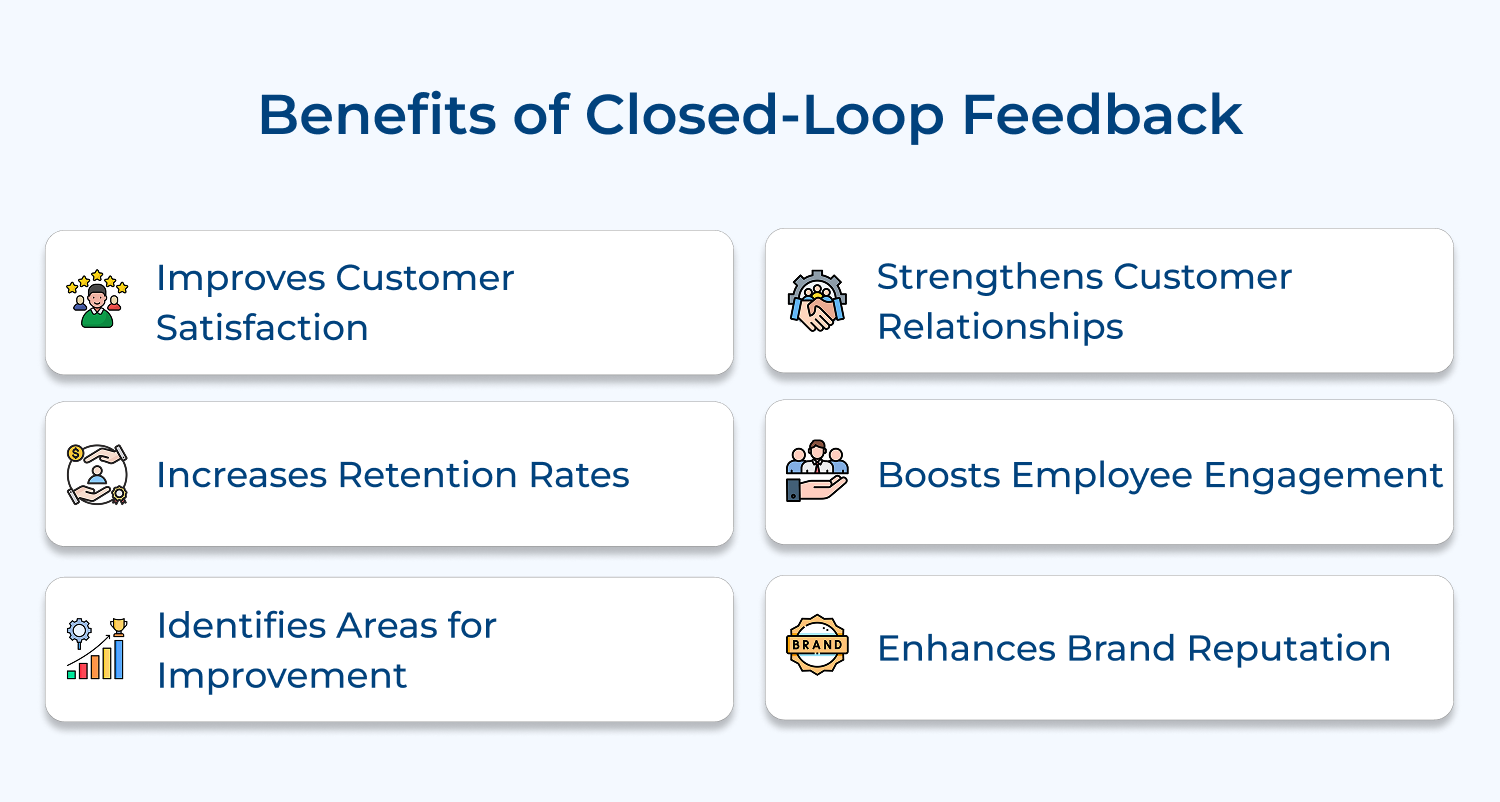
1. Improves customer satisfaction: Closed-loop feedback demonstrates to customers that their opinions are valued and acted upon. By actively implementing suggestions, businesses can significantly enhance the overall customer experience. The proactive approach resolves immediate issues but also shows a commitment to continuous improvement.
2. Increases retention rates: When customers feel heard and see their feedback implemented, they’re more likely to remain loyal to a brand. Closed-loop feedback creates a sense of investment in the company’s success, as customers recognize their role in shaping the products or services they use.
3. Identifies areas for improvement: Closed-loop feedback provides invaluable insights into customer pain points. By analyzing feedback, businesses can identify recurring issues and opportunities for enhancement across various aspects of their operations. The data-driven approach prioritizes improvements that will have a significant impact on customer satisfaction.
4. Strengthens customer relationships: The process of soliciting feedback and taking action creates a dialogue between the company and its customers. The ongoing communication builds a sense of partnership. Customers feel valued when their opinions are sought leading to stronger emotional connections with the brand.
5. Boosts employee engagement: When staff members see that customer feedback is being actively used to improve products, services and processes, they feel more connected to the company’s mission. The involvement in the improvement process can increase job satisfaction and motivation.
6. Enhances brand reputation: A company that actively responds to customer feedback is often perceived as more transparent, customer-centric and trustworthy. A positive reputation can be a significant differentiator in competitive markets. As satisfied customers share their experiences, it creates positive word-of-mouth and can attract new customers.
Creating an effective closed-loop feedback system is essential for enhancing customer relationships. Here are the key steps to implement:

Clear objectives provide direction for your feedback system, ensuring it aligns with overall business goals. They help you focus on acting on the most relevant feedback. Well-defined objectives make it easier to measure the success of your closed-loop feedback efforts.
Use objectives to guide the design of your feedback collection methods, determine which metrics to track and decide how to prioritize responses. They can help in selecting appropriate tools, allocating resources effectively and demonstrating the value of the feedback system to stakeholders across the organization.
Pro Tips:
1. Align feedback system objectives with key performance indicators (KPIs) for customer experience and overall business performance.
2. Involve stakeholders from different departments in setting objectives to ensure broad organizational alignment and support.
Selecting appropriate feedback collection methods ensures you’re gathering input that is both relevant and actionable. The right methods increase response rates and provide more accurate, timely feedback. They also make it easier for customers to share their thoughts, enhancing the overall customer experience and increasing engagement with your feedback system.
Implement a mix of methods such as surveys, interviews, social media monitoring and in-app feedback tools. Use real-time methods for immediate service issues and periodic surveys for broader satisfaction measurement. Tailor the method to the type of feedback you’re seeking and your customers’ preferences for communication.
Pro Tips:
1. Implement omnichannel feedback collection to capture insights across various touchpoints in the customer journey.
2. Use short, targeted surveys at key interaction points to gather specific, actionable feedback without overwhelming customers.
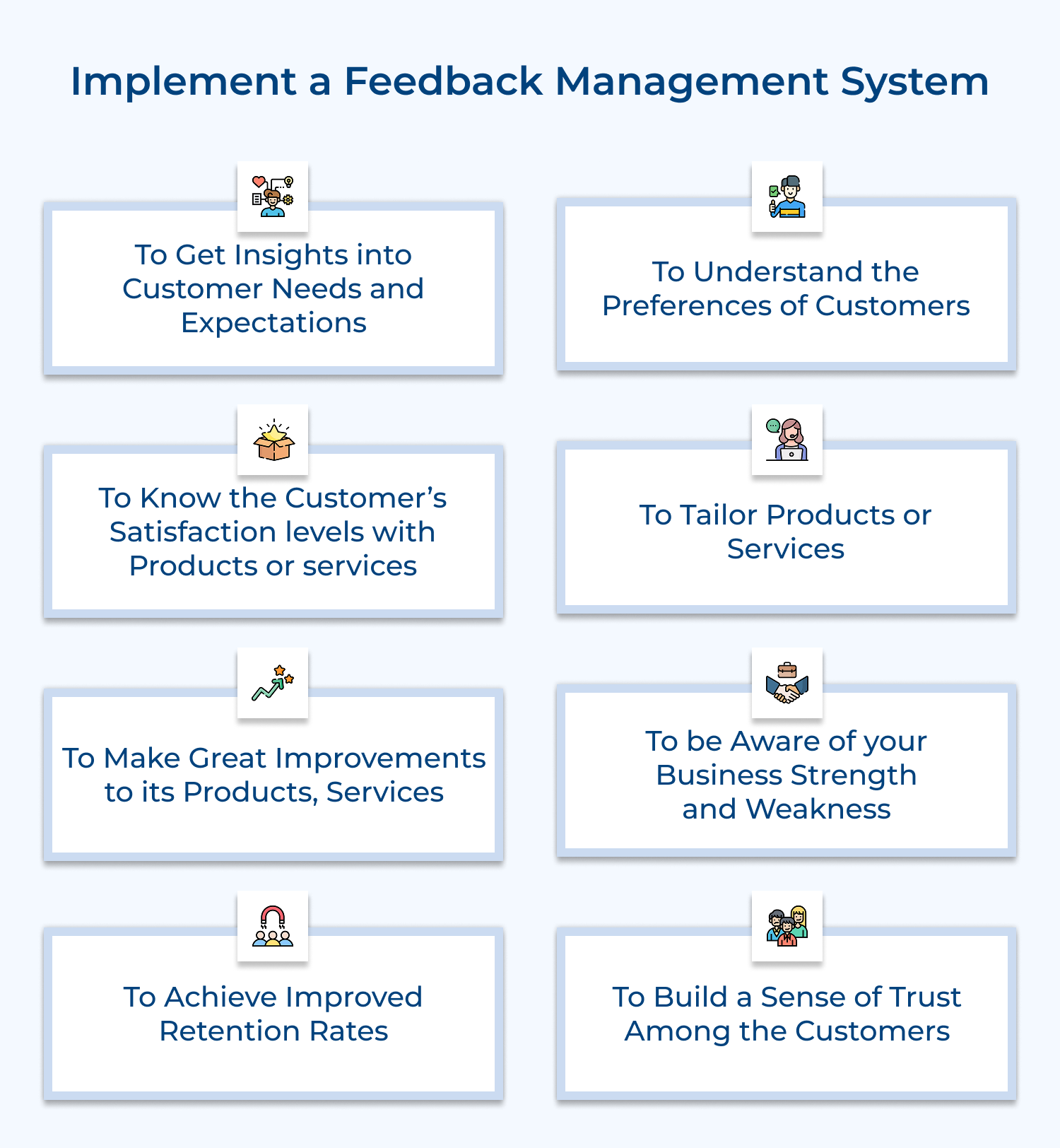
A feedback management system organizes all customer feedback, making it easier to analyze and act upon. It ensures that no feedback falls through the cracks and provides a single source of truth for customer insights. The system is crucial for efficiently managing large volumes of feedback and identifying trends over time.
Use the system to automatically categorize and route feedback to relevant teams. Implement features for tracking response times and resolution status. Use built-in analytics tools to identify trends. Integrate the feedback management system with other business tools like CRM and help desk software for a holistic view of customer interactions.
Pro Tips:
1. Choose a feedback management system that offers robust integration capabilities with your existing tech stack.
2. Set up automated alerts for high-priority feedback to ensure rapid response to urgent issues.
Clear response protocols ensure that feedback is addressed consistently and promptly. They help close the loop with customers, demonstrating that their input is valued and acted upon.
Well-defined protocols also make it easier to track response times and quality and to scale your feedback program as it grows. Create standard operating procedures for different types of feedback. Define who is responsible for responding, what actions should be taken and expected timeframes.
Develop templates for common responses while allowing for personalization. Establish escalation procedures for critical issues. Use these protocols to train staff and ensure consistent, high-quality responses.
Pro Tips:
1. Create a tiered response system based on the urgency and impact of the feedback to prioritize actions effectively.
2. Develop a knowledge base of common issues and solutions to help staff respond quickly and consistently.
Acting on feedback is the core of a closed-loop system. It demonstrates to customers that their input leads to real changes, encouraging future engagement. Taking action based on feedback can lead to significant improvements in products, services and overall customer experience. It also helps justify the investment in collecting feedback.
Implement a process for reviewing feedback regularly and identifying actionable insights. Create cross-functional teams to address systemic issues identified through feedback.
Use feedback to inform product development, service improvements and strategic decision-making. Develop a system for tracking and reporting on actions taken in response to feedback.
Pro Tips:
1. Implement a regular “feedback review” meeting with key stakeholders to discuss insights and plan actions.
2. Create a feedback-driven innovation program to encourage employees to develop solutions based on customer input.
Closing the loop is the critical step that differentiates a closed-loop system from traditional feedback collection. It involves directly responding to customers about their feedback, actions taken and outcomes.
The step ensures customers feel heard, valued and informed about how their input has made a difference, encouraging ongoing engagement and loyalty. Implement a systematic process for following up with customers who provided feedback.
It can involve personalized emails, phone calls, or in-app notifications detailing the actions taken in response to their input. For broader issues, communicate changes to your entire customer base through newsletters, social media, or product updates.
Pro Tips:
1. Set up automated triggers to prompt follow-up communications once actions have been taken in response to feedback.
2. Train your team on effective communication techniques for closing the loop, emphasizing empathy and clarity in explaining outcomes.
Communicating actions taken in response to feedback completes the closed-loop process. It shows customers that their input is valued and impactful, encouraging future participation. The communication builds trust, improves customer satisfaction and can turn detractors into promoters.
Develop a system for tracking and reporting on actions taken in response to feedback. Use various channels to communicate changes, such as personalized follow-ups, email newsletters or in-app notifications.
Share both individual resolutions and broader improvements stemming from aggregated feedback. Celebrate successes and acknowledge the role of customer input in driving changes.
Pro Tips:
1. Create a dedicated section on your website or in your app to highlight improvements made based on customer feedback.
2. Implement a follow-up survey after communicating actions taken to gauge customer satisfaction with the resolution.
Continuous monitoring relevant over time. Regular review helps identify trends, assess the impact of changes made and uncover new opportunities for improvement. It also allows you to adapt the system to changing customer expectations and business needs.
Implement analytics tools to track key metrics like response rates, resolution times and customer satisfaction scores.
Regularly review feedback data to identify recurring issues and long-term trends. Conduct periodic audits of your feedback processes. Use insights to refine your survey questions, update prioritization criteria and improve response processes.
Pro Tips:
1. Set up a dashboard to monitor key performance indicators (KPIs) for your closed-loop feedback system in real time.
2. Conduct regular training sessions for staff involved in the feedback process to share best practices and address any challenges.
Enhancing your closed-loop feedback system can significantly boost customer satisfaction and engagement. Here are the best practices to consider:
1. Provide Timely Response
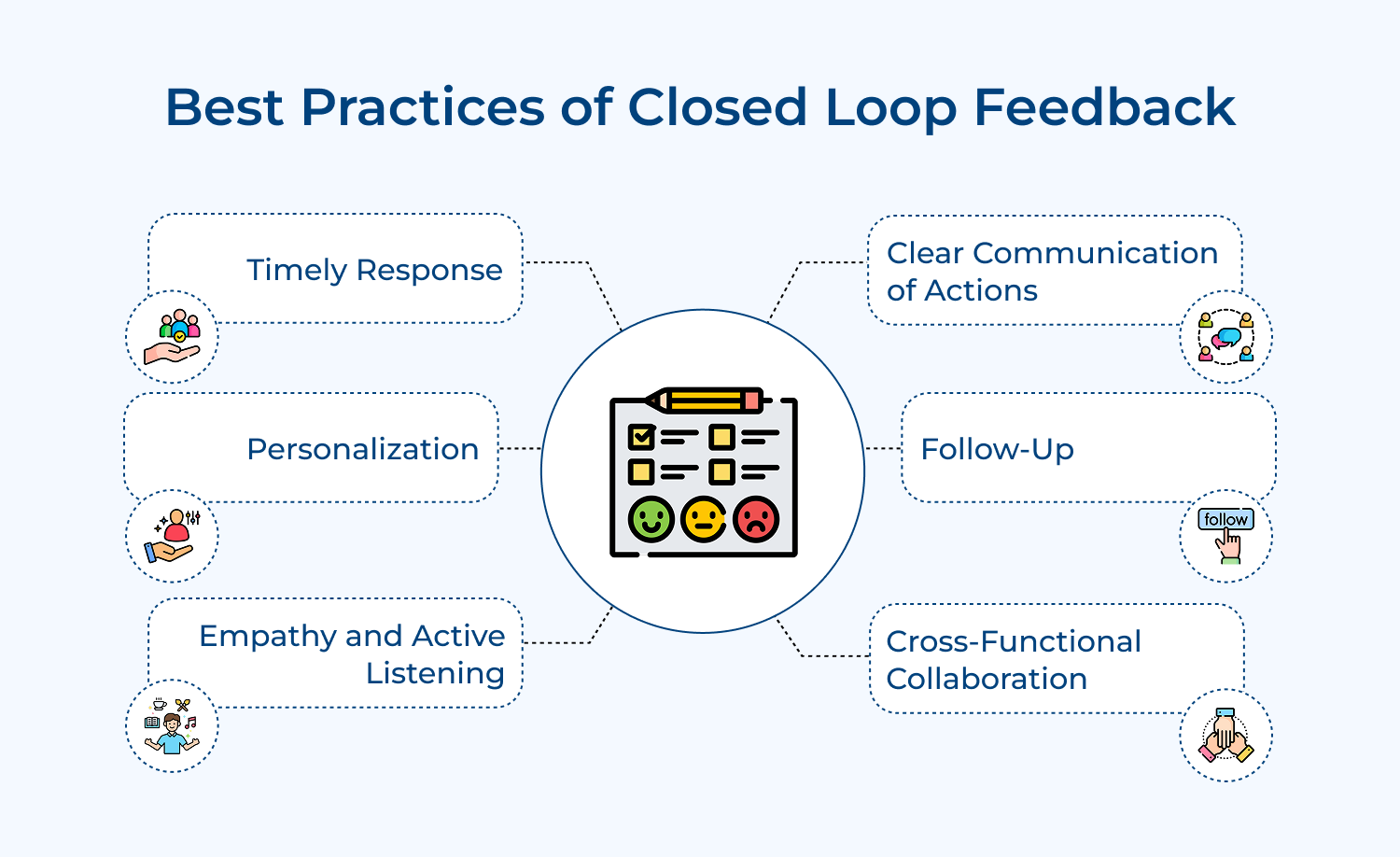
Respond to feedback as quickly as possible, especially for urgent issues. Set clear response time targets and monitor performance against these targets. Quick responses show customers that their input is valued and can prevent small issues from escalating. Implement automated acknowledgments for immediate reassurance while a full response is being prepared.
2. Follow Personalization
Tailor your responses to each customer’s specific feedback. Address them by name and reference the particular issues they raised. Avoid generic, templated responses that can feel impersonal. Show that you’ve understood their unique situation and are providing a thoughtful, individualized response. This personalization helps build stronger customer relationships and increases satisfaction with the feedback process.
3. Empathy and Active Listening
Train your team to respond with empathy, especially to negative feedback. Acknowledge the customer’s feelings and perspective before addressing the issue. Use active listening techniques in verbal feedback scenarios and reflect this understanding in written responses. Empathetic responses can turn frustrated customers into loyal advocates by showing that you genuinely care about their experience.
4. Clear Communication of Actions
Clearly explain what actions you’re taking in response to the feedback. Be specific about changes being made, timelines for implementation and how these changes address the customer’s concerns. If no action is possible, explain why and offer alternatives if available. Transparency in your communication builds trust and shows customers the tangible impact of their feedback.
5. Regular Follow-Up
Don’t just respond once and consider the loop closed. Implement a system for following up with customers after changes have been made or issues have been resolved. This follow-up ensures the solution was satisfactory and provides another opportunity for feedback. It demonstrates your commitment to customer satisfaction beyond the initial interaction.
6. Cross-Functional Collaboration
Involve teams across the organization in the feedback process. Share insights from customer feedback with relevant departments, from product development to marketing. Create channels for different teams to collaborate on addressing feedback. This cross-functional approach ensures a holistic response to customer issues and can lead to more comprehensive improvements.
Implementing a closed-loop feedback system empowers businesses to cultivate stronger relationships with their customers. By actively seeking and responding to customer insights, organizations can enhance their products and services, ultimately leading to improved customer satisfaction.
The commitment to listening fosters loyalty, encouraging repeat business and positive word-of-mouth referrals. As customers feel valued and heard, their engagement deepens, which directly impacts sales and revenue growth. Embracing closed-loop feedback not only drives continuous improvement but also positions businesses to thrive in a competitive market, ensuring long-term success and resilience.

Why use closed-loop feedback?
Closed-loop feedback is essential for improving customer satisfaction and business performance. It allows companies to address customer concerns directly, identify recurring issues and implement meaningful improvements. This process demonstrates that the company values customer input, enhances products or services based on real user experiences and ultimately leads to increased customer loyalty and better business outcomes.
Who benefits from closed-loop customer feedback?
Closed-loop customer feedback benefits multiple parties. Customers gain a voice in shaping products and services, leading to improved experiences. Businesses benefit from increased customer satisfaction, loyalty and valuable insights for improvement. Employees benefit through increased engagement and the ability to directly impact customer satisfaction. The overall market benefits from companies that are more responsive and aligned with customer needs.
How Does Closed-Loop Feedback Work?
Closed-loop feedback operates in a cyclical process. It begins with collecting customer feedback through various channels like surveys or direct communication. The feedback is then analyzed to identify trends and areas for improvement. Action plans are developed and implemented based on these insights. Finally, the loop is closed by informing customers about the actions taken and seeking further feedback on the improvements made.
What is a closed-loop call?
A closed-loop call is a follow-up communication made to a customer after they’ve provided feedback, typically negative or critical. During this call, a company representative acknowledges the feedback, discusses the issue in detail, explains any actions taken or planned in response and seeks additional input. This process aims to resolve concerns, demonstrate attentiveness and turn potentially dissatisfied customers into loyal ones.
 https://omni24.io/wp-content/uploads/2026/08/Omnichannel-Chatbots.png
1256
2400
Tushar Joshi
https://omni24.io/wp-content/uploads/2023/04/Omni-Logo-1.svg
Tushar Joshi2026-08-13 04:43:302026-08-24 09:02:01How Omnichannel Chatbots Improve Your Customer Experience
https://omni24.io/wp-content/uploads/2026/08/Omnichannel-Chatbots.png
1256
2400
Tushar Joshi
https://omni24.io/wp-content/uploads/2023/04/Omni-Logo-1.svg
Tushar Joshi2026-08-13 04:43:302026-08-24 09:02:01How Omnichannel Chatbots Improve Your Customer Experience https://omni24.io/wp-content/uploads/2026/08/Ecommerce-Chatbots-1.png
1256
2400
Tushar Joshi
https://omni24.io/wp-content/uploads/2023/04/Omni-Logo-1.svg
Tushar Joshi2026-08-12 03:57:552026-08-24 09:03:22Ecommerce Chatbots: What are They and Their Use Cases
https://omni24.io/wp-content/uploads/2026/08/Ecommerce-Chatbots-1.png
1256
2400
Tushar Joshi
https://omni24.io/wp-content/uploads/2023/04/Omni-Logo-1.svg
Tushar Joshi2026-08-12 03:57:552026-08-24 09:03:22Ecommerce Chatbots: What are They and Their Use Cases https://omni24.io/wp-content/uploads/2026/08/Omnichannel-Ecommerce.png
1256
2400
Tushar Joshi
https://omni24.io/wp-content/uploads/2023/04/Omni-Logo-1.svg
Tushar Joshi2026-08-11 04:50:362026-08-24 09:00:45How to Create an Omnichannel Ecommerce Strategy: 7 Best Ways
https://omni24.io/wp-content/uploads/2026/08/Omnichannel-Ecommerce.png
1256
2400
Tushar Joshi
https://omni24.io/wp-content/uploads/2023/04/Omni-Logo-1.svg
Tushar Joshi2026-08-11 04:50:362026-08-24 09:00:45How to Create an Omnichannel Ecommerce Strategy: 7 Best Ways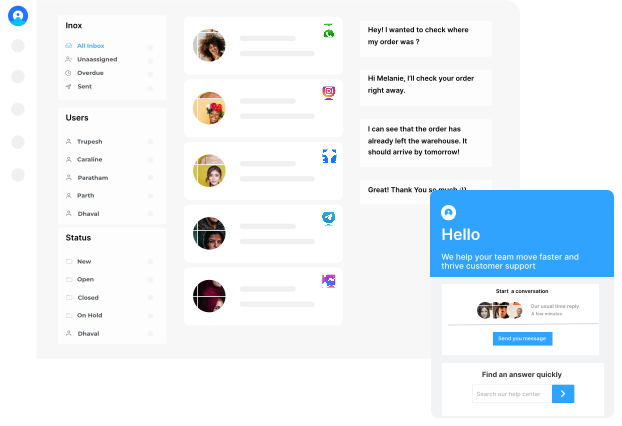
Whether it’s about acquire, engage or support – Omni24 covers all your customer engagement needs in one complete platform.

Copyright ©2026 Veemo All rights reserved.
CA, Los Angeles, Hall Ave, 19011