How to Use Social Media Feedback to Strengthen Your CX Strategy
Learn how to use social media to gather feedback, improve products, engage customers, while strengthening brand loyalty and satisfaction.

Learn how to use social media to gather feedback, improve products, engage customers, while strengthening brand loyalty and satisfaction.
Social media has become a game-changer for collecting customer feedback. With over 4.9 billion active users worldwide, these platforms give businesses direct access to real-time opinions and experiences.
42% of customers have reached out to brands through social media for support and nearly 48% expect a response within 24 hours. This growing demand for instant communication highlights why listening to customers online is no longer optional.
Explore how leveraging social media customer feedback can enhance engagement, uncover insights and strengthen customer relationships. Let’s dive into how social media can transform your feedback process!
Social media for customer feedback refers to the practice of utilizing social media platforms to gather insights as well as evaluations from customers about products, services and overall brand experience. This approach allows businesses to engage with their audience directly and understand their preferences in real-time.
Leveraging social media for customer feedback is essential for fostering open communication and building trust. It provides a platform for customers to voice their thoughts, enabling brands to respond swiftly to concerns and celebrate positive experiences. This interaction not only enhances customer satisfaction but also helps businesses stay attuned to market trends and consumer sentiments.
Key objectives :
Understanding the significance of social media customer feedback is essential for business growth. Here are key reasons it makes a difference:
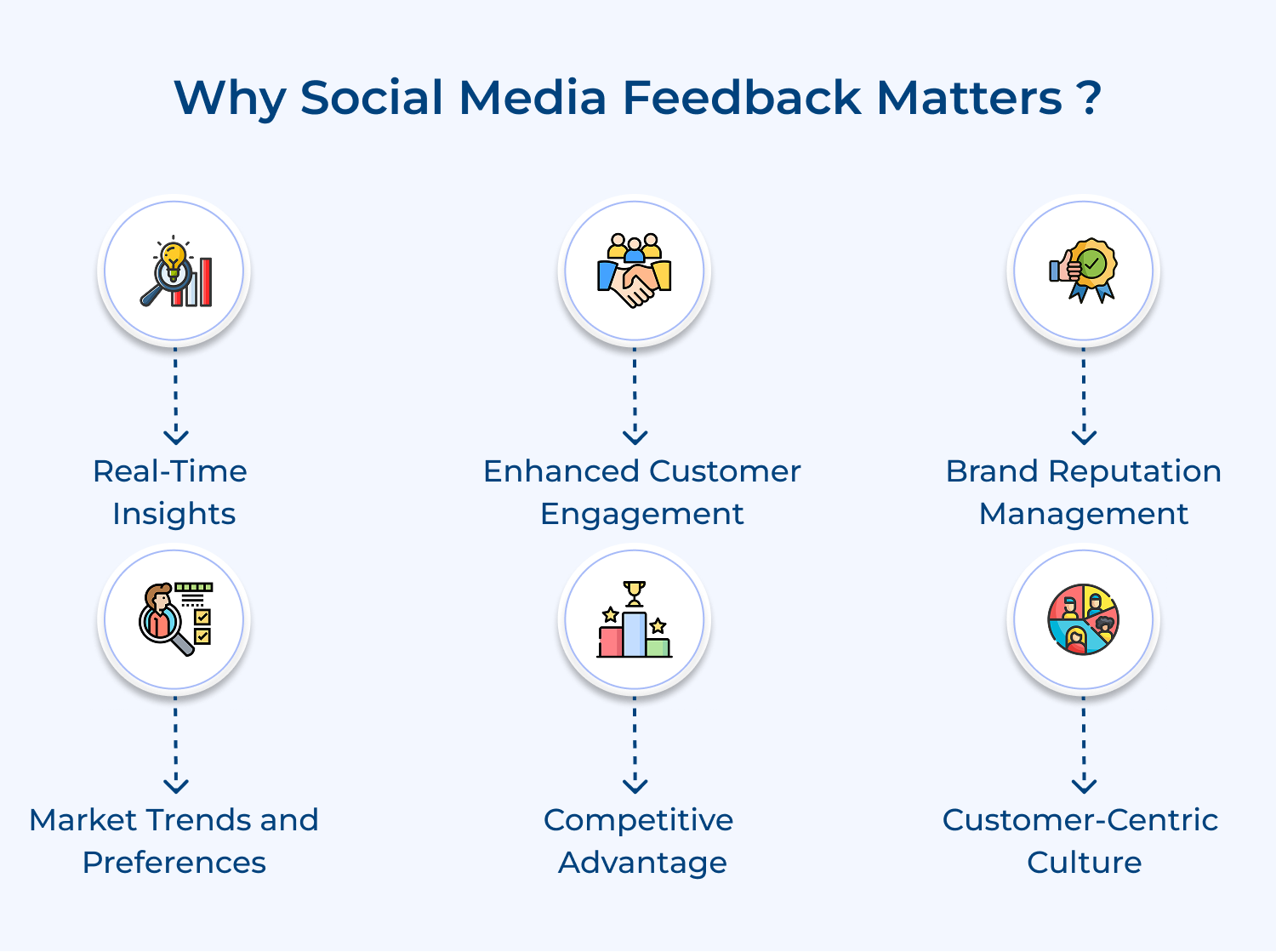
Real-time insights: Social media gives businesses instant access to what customers think and feel. This real-time feedback helps teams spot issues quickly and respond before they escalate. It’s like having a live customer satisfaction survey running 24/7.
Enhanced customer engagement: When brands ask for feedback and actually reply, customers feel heard. This two-way interaction builds trust and boosts loyalty – key goals for any strong social media strategy.
Brand reputation management: Monitoring comments and mentions online helps businesses protect their image. Positive posts can strengthen your brand, while negative ones create a chance to show you care and fix problems fast.
Market trends and preferences: Customer feedback on social media reveals what people like, dislike and expect. These insights help shape product updates, marketing campaigns and future strategies.
Competitive advantage: Listening closely to customers gives companies an edge. You can adapt faster, improve services and meet changing needs better than competitors.
Customer-centric culture: Using social media feedback makes teams more customer-focused. It aligns everyone around one goal-improving experiences and satisfaction at every step.
Harnessing the power of social media to collect customer feedback can elevate your business strategy. Here are some engaging methods to gather valuable insights:
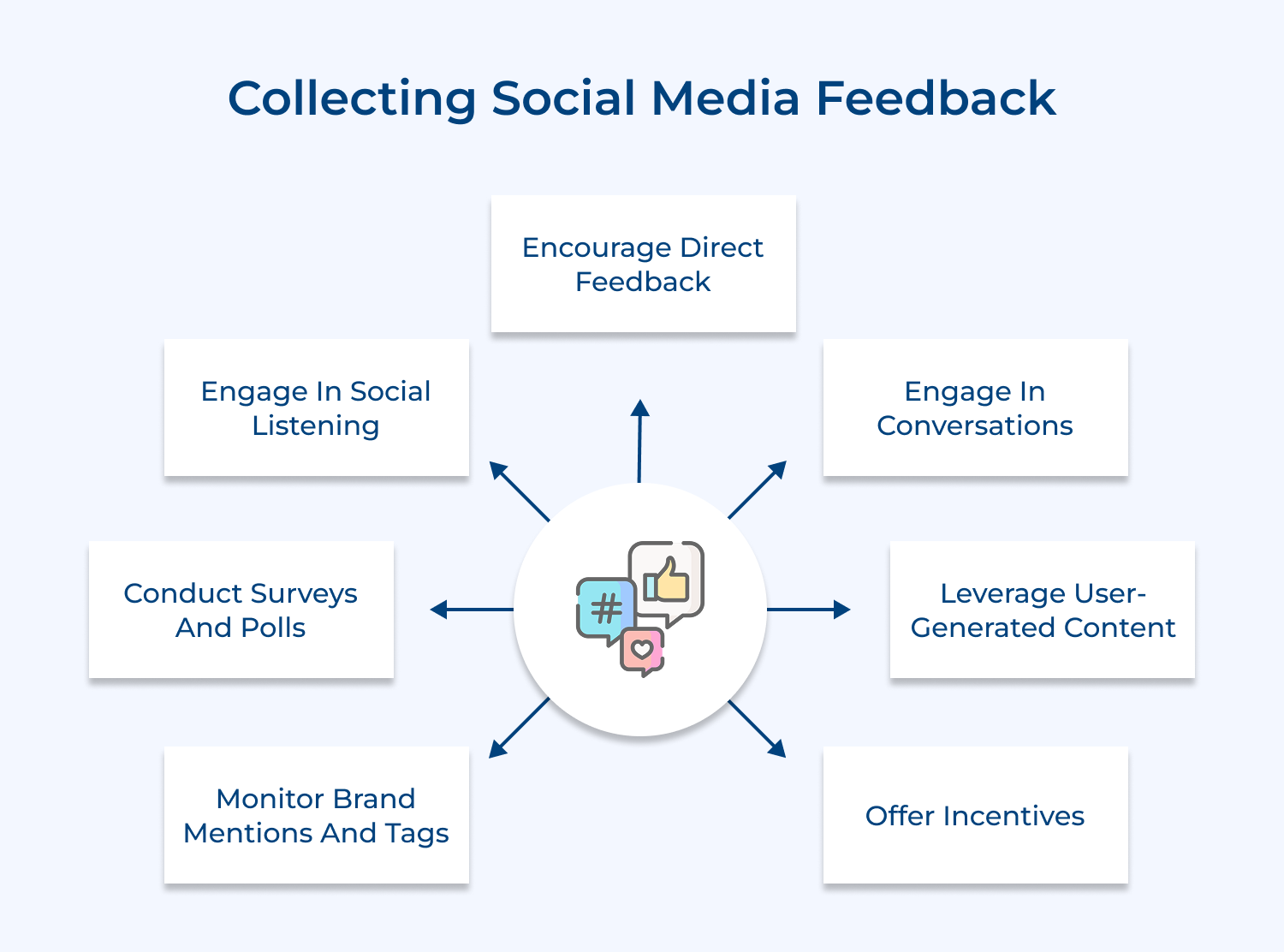
Monitoring brand mentions and tags helps businesses understand customer opinions as well as experiences in real time. It allows teams to spot issues early, track sentiment and find ways to engage or improve. Using a social media management platform makes this easier – track hashtags, mentions and comments across channels.
Analyze trends, respond quickly to feedback and use insights to enhance products as well as marketing strategies. This proactive approach shows customers their opinions truly matter.
Tips:
1. Set up alerts for your brand name, products and relevant hashtags using tools like Hootsuite or Mention.
2. Create a response protocol to ensure timely and consistent engagement with customers who mention your brand.
3. Regularly analyze mention data to identify patterns and trends, then share insights with relevant teams for action.
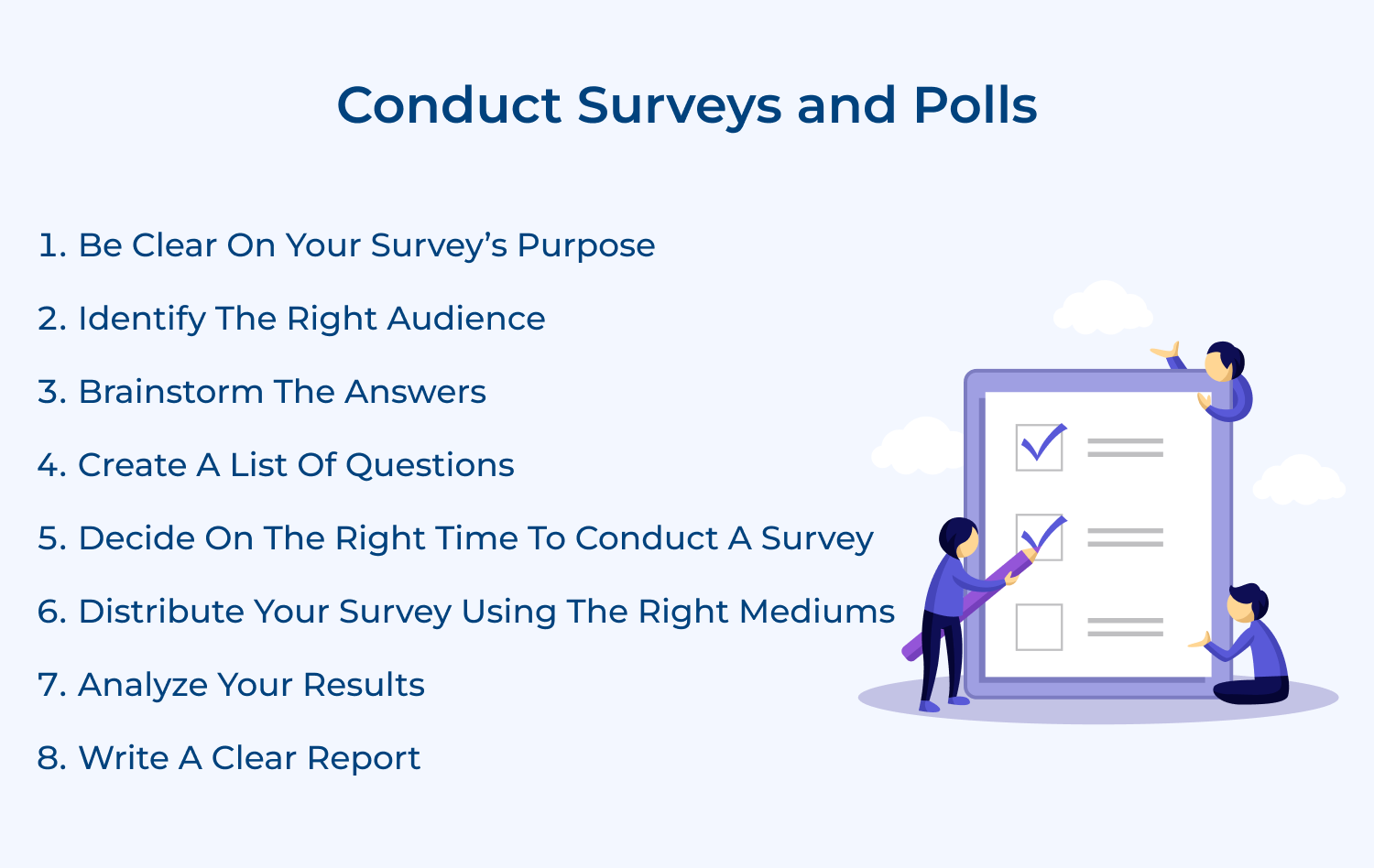
Surveys and polls are simple yet powerful tools for collecting targeted customer feedback. They let businesses ask specific questions, measure responses and make data-driven decisions. Using features on a social media management platform – like Instagram Stories polls or X (Twitter) polls – makes it easy to engage your audience.
Keep surveys short and focused on products, services, or experiences. Analyze the results to guide improvements while showing customers that their input directly shapes your business actions.
Tips:
1. Keep surveys short and focused, ideally with 5 questions or fewer to encourage completion.
2. Use a mix of question types (multiple choice, rating scales, open-ended) to gather diverse insights.
3. Share survey results and actions taken based on feedback to close the loop with participants.
Social listening helps brands go beyond direct mentions to understand broader conversations, industry trends and competitor activity. It uncovers hidden customer needs, pain points and emerging opportunities.
Track relevant keywords, topics and discussions to gather insights about what your audience truly cares about. Use this data to refine products, improve marketing efforts and enhance customer service. Engaging authentically in these conversations helps build stronger relationships and keeps your brand in tune with customer expectations.
Tips:
1. Define clear objectives for your social listening efforts, such as identifying product improvement opportunities or understanding competitor strengths.
2. Use advanced search operators and boolean logic to refine your social listening queries for more relevant results.
3. Regularly review and update your keyword lists to ensure you’re capturing evolving trends as well as language used by customers.
Encouraging direct feedback opens clear communication between brands and customers. It helps build trust, strengthen relationships and increase loyalty. Direct feedback often provides richer insights than surveys or comments alone.
Create posts or campaigns that invite customers to share their experiences and use direct messages for private conversations. Respond quickly as well as personally to show you value their input. Use the feedback to improve products, enhance services and guide decisions that align with customer expectations.
Tips:
1. Create a branded hashtag for customers to use when sharing feedback, making it easier to track and respond.
2. Train social media team members on how to effectively solicit, receive and respond to various types of feedback.
3. Regularly feature customer feedback in your social media content to show that you value and act on input.
Engaging in conversations makes your brand feel more human and approachable. It helps build stronger connections while offering chances to gather informal feedback and address concerns instantly. These real-time interactions often reveal insights that structured surveys may miss.
Stay active in comment sections, respond to customer posts and join industry discussions. Ask follow-up questions to better understand customer experiences. Share the insights you gather with your team to improve products, resolve issues and strengthen customer satisfaction.
Tips:
1. Create a “social media voice guide” to ensure all team members engage consistently and align with brand values.
2. Use social media management tools to track and prioritize conversations requiring responses.
3. Regularly host “Ask Me Anything” sessions or live Q&As to encourage direct engagement and gather real-time feedback.
User-generated content (UGC) offers authentic feedback directly from customers, showing how products or services are used in real life. It provides social proof and can reveal unexpected insights about customer satisfaction as well as product value.
Encourage users to share photos, videos, or stories featuring your products. Analyze this content to identify trends, usage patterns and areas for improvement. With permission, repost UGC to showcase real experiences and use the insights to guide product development as well as marketing strategies.
Tips:
1. Create a branded hashtag for customers to use when sharing content, making it easier to find and engage with UGC.
2. Implement a system to obtain proper permissions before reposting customer content on your channels.
3. Analyze UGC for common themes or unexpected use cases that could inform product improvements or new offerings.
Offering incentives encourages more customers to share their feedback, helping you get a broader and more representative view of opinions. It shows you value their time, which can boost engagement and loyalty, while helping reach quieter customer segments.
Provide rewards like discounts, exclusive content, or prize entries for participating in feedback initiatives. Use these campaigns to gather insights on specific topics or target groups. Keep incentives fair to ensure feedback remains honest and unbiased.
Tips:
1. Vary the types of incentives offered to appeal to different customer segments and prevent survey fatigue.
2. Clearly communicate the terms of the incentive, including how and when it will be delivered.
3. Analyze participation rates and feedback quality with different incentives to optimize future campaigns.
Collecting customer feedback via social media offers valuable insights, but it comes with its own set of challenges. Here are five key challenges and strategies to overcome them:
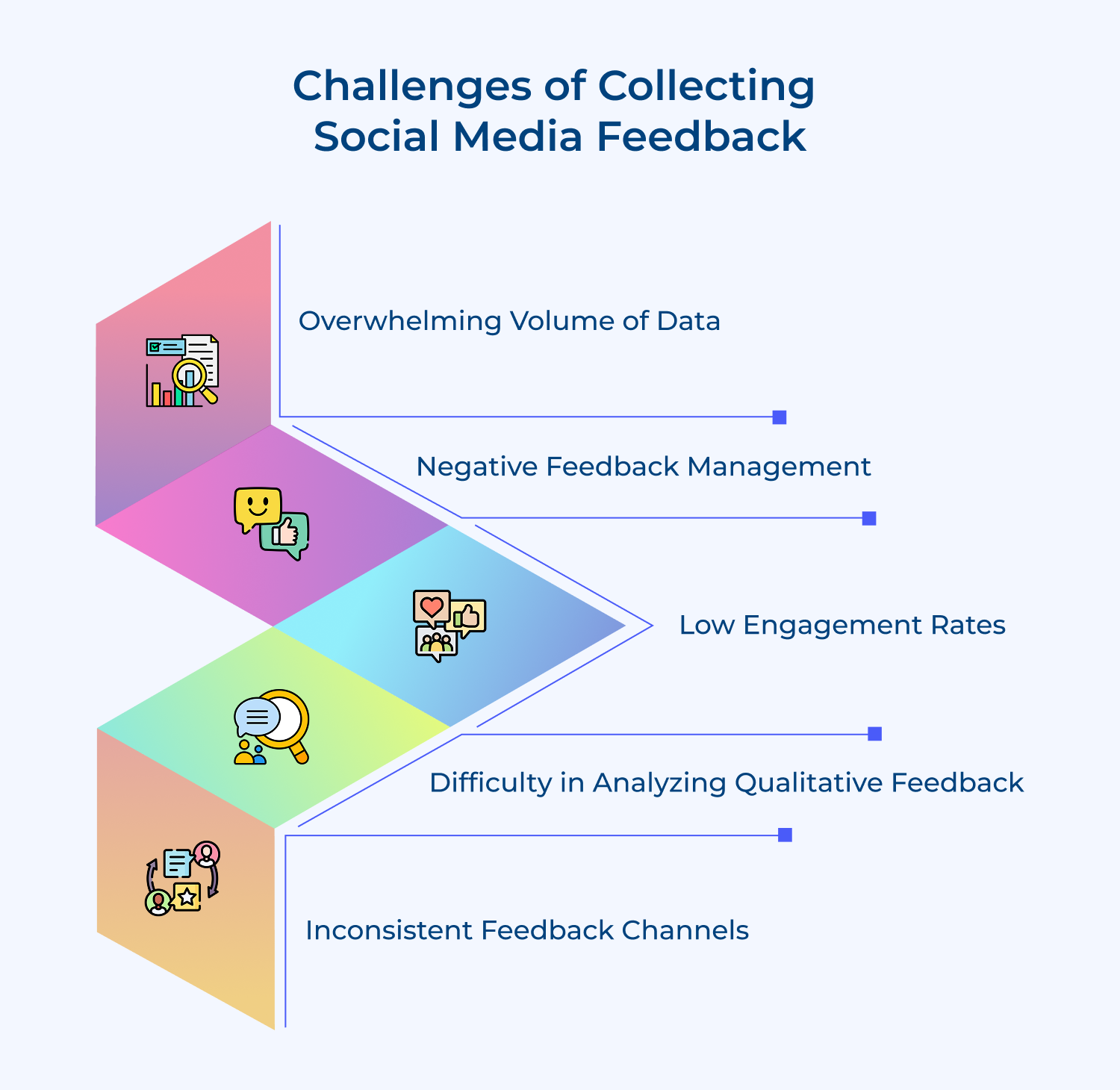
1. Overwhelming Volume of Data
Challenge: Social media generates vast amounts of data daily, making it difficult to filter through noise and identify meaningful feedback.
Strategy: Implement social listening tools that utilize AI and machine learning to categorize as well as analyze comments. Prioritize relevant keywords and hashtags to streamline the feedback collection process. Regularly review and adjust your filtering criteria to ensure you’re capturing the most pertinent insights.
2. Negative Feedback Management
Challenge: Negative comments can be more vocal and visible, potentially damaging your brand’s reputation if not handled properly.
Strategy: Establish a clear response protocol for addressing negative feedback promptly and professionally. Train your team on conflict resolution techniques and maintain transparency. Responding positively can turn a dissatisfied customer into a brand advocate as well as showcase your commitment to customer satisfaction.
3. Low Engagement Rates
Challenge: Not all followers engage with posts or provide feedback, leading to skewed data that may not represent the broader customer base.
Strategy: Enhance engagement by using interactive content such as polls, quizzes and questions that invite participation. Regularly update followers about how their feedback is being utilized and consider offering incentives, like discounts or exclusive content, to encourage more responses.
4. Difficulty in Analyzing Qualitative Feedback
Challenge: While quantitative data is straightforward, qualitative feedback can be subjective and challenging to analyze effectively.
Strategy: Use sentiment analysis tools to gauge the overall tone of comments and categorize feedback. Train your team to identify common themes and trends within qualitative responses, creating structured summaries to facilitate easier analysis as well as reporting.
5. Inconsistent Feedback Channels
Challenge: Customers may provide feedback across multiple platforms, making it hard to consolidate insights into a single view.
Strategy: Integrate various social media channels using a centralized dashboard or customer relationship management (CRM) system. This allows for comprehensive data collection and analysis from all sources. Regularly update your feedback collection process to include new platforms where customers may engage.
Utilizing social media for customer feedback is essential for businesses aiming to enhance their products and services. By actively listening to customers on these platforms, organizations can gain valuable insights that drive innovation and improve customer satisfaction. The immediacy of social media allows for real-time responses to concerns, fostering stronger relationships with clients.
Encouraging open dialogue not only builds trust but also cultivates a community around your brand. As businesses continue to navigate an increasingly digital landscape, embracing social media as a feedback tool will be key to staying competitive and responsive to customer needs.
Read more: Check out our guide to social media customer experience for actionable customer feedback.

Why promote positive customer reviews on social media matters?
Promoting positive customer reviews on social media builds trust and credibility with potential customers. It provides social proof, enhancing brand reputation and influencing purchase decisions. Shared reviews increase visibility, potentially reaching new audiences. They also boost engagement, encourage more customers to leave reviews and can improve search engine rankings, ultimately driving business growth.
How to respond to customer feedback on social media?
Respond promptly and personally to all feedback. For positive comments, express gratitude and share enthusiasm. For negative feedback, apologize sincerely, empathize and offer to resolve the issue, preferably offline. Always maintain a professional tone. Use feedback as an opportunity to showcase your customer service. Where appropriate, explain how you’ll use the feedback to improve. Follow up to ensure customer satisfaction.
How much information should a brand request from consumers?
Brands should request only essential information to minimize friction and protect privacy. Focus on data directly relevant to your feedback goals. For basic surveys, name and email may suffice. For more detailed feedback, consider adding age range, location, or product usage. Always explain why you’re collecting data and how it will be used. Offer opt-out options for non-essential information.
How to close the feedback loop on social media?
To close the feedback loop, acknowledge all feedback received. Inform customers how their input will be used. Share aggregated results of feedback campaigns. Highlight changes or improvements made based on customer suggestions. Follow up with individuals who provided significant feedback. Regularly post updates on how customer input has influenced your business. This demonstrates that you value and act on customer opinions.
What role does customer intent play in search engine optimization (SEO)?
Customer intent plays a significant role in search engine optimization (SEO) because search engines aim to deliver relevant and useful results to users based on their search queries. By understanding customer intent, businesses can optimize their website content to align with what their target audience. It improves their visibility in search engine results.
 https://omni24.io/wp-content/uploads/2026/09/Social-commerce-scaled.png
1340
2560
Webvision Solution
https://omni24.io/wp-content/uploads/2023/04/Omni-Logo-1.svg
Webvision Solution2026-10-23 12:18:272026-10-23 12:18:27What is Social Commerce and Why Does It Matter?
https://omni24.io/wp-content/uploads/2026/09/Social-commerce-scaled.png
1340
2560
Webvision Solution
https://omni24.io/wp-content/uploads/2023/04/Omni-Logo-1.svg
Webvision Solution2026-10-23 12:18:272026-10-23 12:18:27What is Social Commerce and Why Does It Matter? https://omni24.io/wp-content/uploads/2026/08/AI-Customer-Service-Agents.png
1256
2400
Webvision Solution
https://omni24.io/wp-content/uploads/2023/04/Omni-Logo-1.svg
Webvision Solution2026-09-21 04:48:512026-09-21 04:48:51How to Build an AI Customer Service Agents: 8 Key Steps
https://omni24.io/wp-content/uploads/2026/08/AI-Customer-Service-Agents.png
1256
2400
Webvision Solution
https://omni24.io/wp-content/uploads/2023/04/Omni-Logo-1.svg
Webvision Solution2026-09-21 04:48:512026-09-21 04:48:51How to Build an AI Customer Service Agents: 8 Key Steps https://omni24.io/wp-content/uploads/2026/08/Omnichannel-Conversational-AI.png
1256
2400
Tushar Joshi
https://omni24.io/wp-content/uploads/2023/04/Omni-Logo-1.svg
Tushar Joshi2026-09-16 03:51:072026-09-16 03:51:07How to Build Omnichannel Conversational AI Strategy
https://omni24.io/wp-content/uploads/2026/08/Omnichannel-Conversational-AI.png
1256
2400
Tushar Joshi
https://omni24.io/wp-content/uploads/2023/04/Omni-Logo-1.svg
Tushar Joshi2026-09-16 03:51:072026-09-16 03:51:07How to Build Omnichannel Conversational AI Strategy
Whether it’s about acquire, engage or support – Omni24 covers all your customer engagement needs in one complete platform.

Copyright ©2026 Veemo All rights reserved.
CA, Los Angeles, Hall Ave, 19011