What is Customer Engagement Automation & How it Works?
Customer engagement automation helps brands deliver personalized interactions. It also improves efficiency, boosts satisfaction, increases retention and supports business growth.
Customer engagement automation helps brands deliver personalized interactions. It also improves efficiency, boosts satisfaction, increases retention and supports business growth.
Customers engage with brands across countless digital touchpoints, creating overwhelming personalization challenges. Businesses struggle to deliver consistent experiences manually, often resulting in delays and fractured customer relationships, with industries facing 22-25% churn rates and 56% abandoning over bad service.
Customer engagement automation offers a powerful solution by enabling personalized interactions at scale. This technology uses customer data to send relevant messages based on behavior. It keeps experiences seamless across all channels. The result is higher efficiency and better effectiveness.
This guide provides essential strategies for maximizing automation’s potential in customer engagement. We’ll explore everything from goal-setting and metrics to omnichannel strategies while maintaining human connections.
Customer Engagement Automation refers to using technology systems that interact with customers without human intervention. These tools can respond to customer actions in real time while delivering personalized experiences at scale across multiple touchpoints. The goal is creating meaningful connections that feel human despite being automated.
While every brand wishes to deliver superior customer experience, in practical terms, it’s not possible to do it effectively as most brands are not well versed enough about how to do it.
Customer engagement automation typically involves the following components and processes,
1. Data collection and integration: Customer data, such as preferences, behaviors, and interactions, are collected from various sources (e.g., website, CRM, social media) as well as integrated into a centralized platform.
2. Segmentation and personalization: Customer data is analyzed to segment customers based on various attributes, behaviors, or lifecycle stages. This segmentation allows for personalized messaging, content, and offers tailored to each customer’s unique preferences.
3. Automated workflows and triggers: Automated workflows and triggers are set up to initiate specific actions or communications based on predefined rules, customer behaviors, or lifecycle events. For example, an abandoned cart trigger could send a personalized email reminder to encourage the customer to complete their purchase.
4. Multi-channel delivery: Automated customer interactions and communications are delivered across multiple channels such as email, SMS, push notifications, chatbots, social media, etc. This approach ensures a consistent and seamless customer experience.
5. Analytics and optimization: Customer engagement data is continuously tracked and analyzed to measure the effectiveness of automation campaigns. It also helps identify improvements and optimize future interactions based on customer feedback and behavior.
Let’s delve into the significant benefits of customer engagement automation and how it can transform the way you do business.
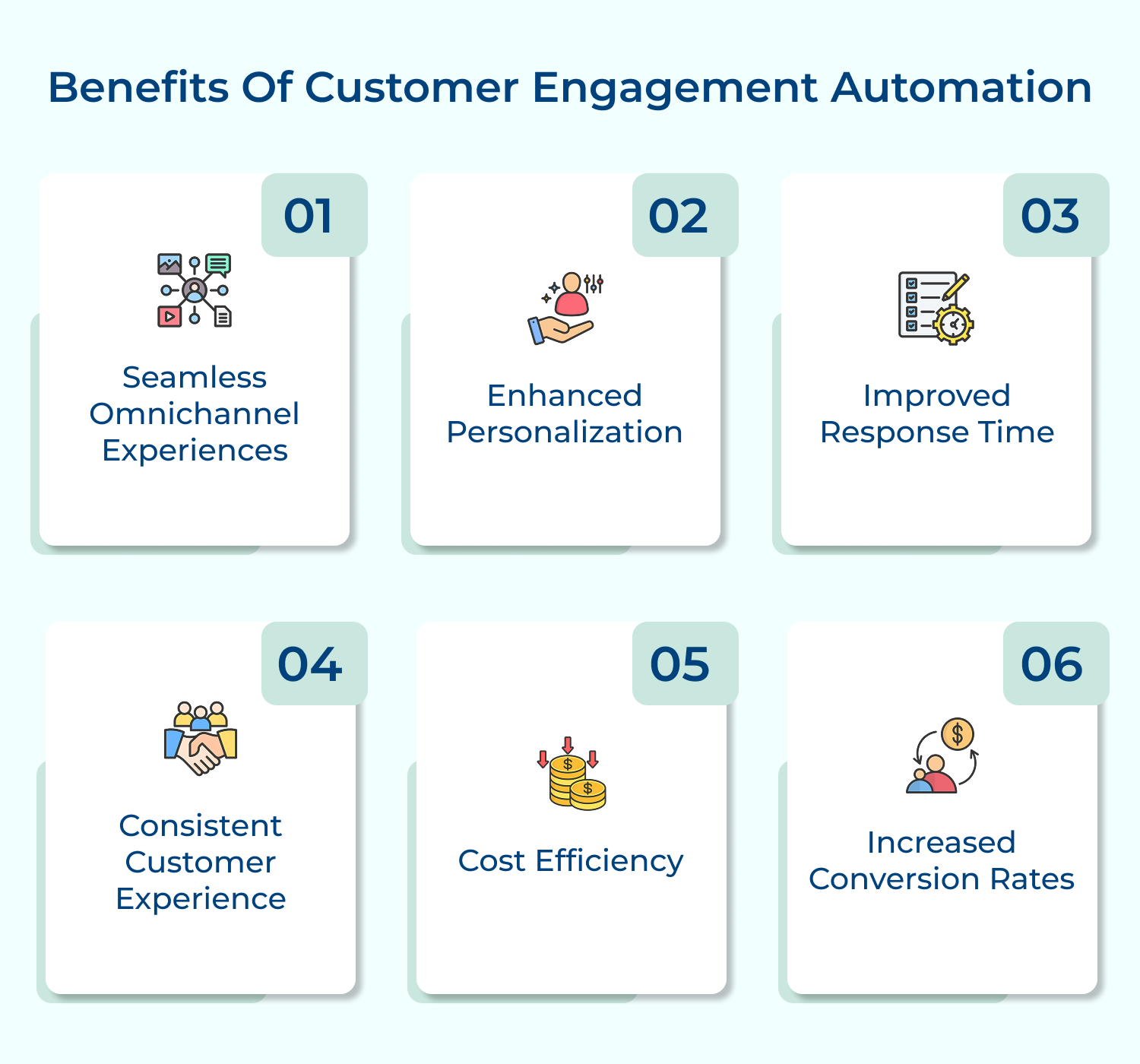
Automation enables businesses to provide consistent and seamless experiences across multiple channels, such as websites, mobile apps, social media as well as in-person interactions. Customers can seamlessly transition between touchpoints, enhancing their overall experience with the brand.
Automation tools analyze customer data from multiple touchpoints to create truly personalized experiences. This goes beyond simply using someone’s name, it means sending relevant content based on their specific behaviors and previous interactions with your brand.
Automated systems respond instantly to customer inquiries or actions, eliminating frustrating wait times. The immediate engagement satisfies customers’ expectations for quick service while showing them their time is valued, which builds trust and reduces the likelihood they’ll look elsewhere.
Automation ensures every customer receives the same high-quality experience regardless of when they engage with your business. The consistency builds reliability in your brand image and helps establish expectations that you can consistently meet or exceed.
Businesses dramatically reduce operational costs while maintaining service quality by handling routine inquiries and interactions automatically. The technology allows companies to scale their customer engagement efforts without proportionally increasing staff, creating significant savings over time.
Well-timed automated messages can guide customers through their buying journey with relevant information exactly when needed. This strategic engagement removes friction from the purchase process and provides gentle nudges that help transform interested browsers into satisfied buyers..
We’ve compiled a list of 7 best practices for customer engagement automation that will help you transform casual interactions into lasting relationships.
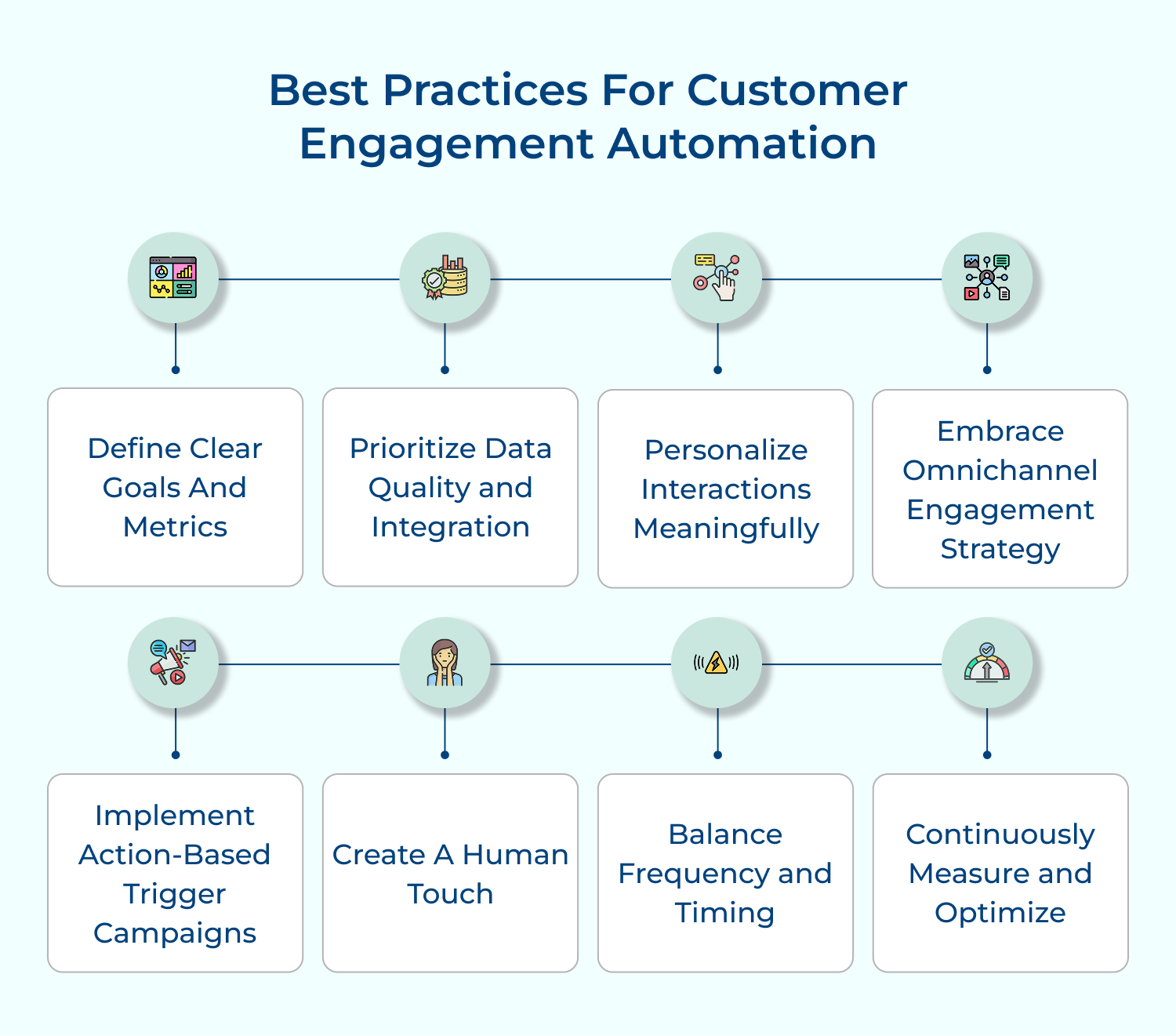
Customer engagement automation needs direction to succeed. This means establishing specific objectives that align with your broader business strategy and creating ways to measure progress toward those goals over time.
Aligning automation with business objectives creates focus and prevents wasted resources. Your engagement systems should directly support key business priorities like customer retention, satisfaction scores, or revenue growth rather than simply automating for automation’s sake.
Setting specific measurable outcomes allows you to evaluate success objectively. Four outcomes to consider:
A regional bank implemented automation for their mortgage refinancing outreach. They set clear goals around application completion rates and used automated follow-ups at key decision points. This focused approach doubled their conversion rate compared to their previous generic email campaigns.
Effective automation depends on clean and connected customer data. Without accurate information flowing between systems, your engagement efforts will miss the mark and potentially damage relationships through irrelevant or disjointed communications.
Effective methods for maintaining high-quality integrated data:
Quality data integration creates the foundation for everything else in your engagement strategy. When your systems can seamlessly share accurate customer information, your automation becomes more relevant and effective at building lasting relationships.
Meaningful personalization goes beyond inserting a customer’s name into messages. It involves creating unique experiences based on individual preferences and behaviors that make customers feel truly understood and valued by your brand.
Examples of effective personalization:
The biggest challenge with personalization is avoiding the “creepy factor” where customers feel their privacy is violated. When personalization feels intrusive rather than helpful, it can damage trust and create negative associations with your brand instead of positive engagement.
To overcome this challenge, practice transparent data collection and give customers control over their information. Always explain why you’re collecting data and how it benefits them, then provide simple ways for customers to adjust their preferences or opt out entirely.
An omnichannel strategy creates unified customer experiences across all platforms and devices. This approach recognizes that modern customers move between channels frequently and expect their interactions to follow them seamlessly without repetition or contradiction.
Maintain Consistent Cross-Channel Messaging
Your brand voice and key messages should remain consistent whether a customer engages on social media, email, or your website. This consistency builds trust and reinforces your brand identity. Customers should feel they’re talking to the same company regardless of how they choose to connect.
Meet Customers on Preferred Platforms
Different customer segments prefer different communication channels. Some respond best to SMS while others prefer email or in-app messages. Your automation should respect these preferences and deliver content through channels where each customer is most likely to engage.
Action-based trigger campaigns automatically respond to specific customer behaviors in real time. These automated responses create timely engagement opportunities when customers are actively showing interest rather than interrupting them with irrelevant messages at random times.
When someone abandons a shopping cart, the system might send a reminder email. If they download a resource, it could trigger a follow-up sequence with related content. These behavior-driven communications feel more relevant because they directly connect to what the customer is already doing.
Pro tips:
Even the best automation needs human elements to create genuine connections. Finding the right balance between efficient automated systems and authentic human interaction prevents your customer experience from feeling robotic. This balance also helps build emotional connections that drive customer loyalty.
To create balance between human touch and automation do:
A subscription box company added recorded thank-you videos from their packaging team into their automated shipping confirmation emails. This simple human element received positive feedback from customers who felt more connected to the people behind the brand and increased their unboxing video shares by 40%.
Finding the right cadence for automated communications prevents customer fatigue. Too many messages feel invasive while too few can lead to disengagement. Striking this balance respects your customers’ attention and builds a sustainable relationship.
Effective frequency balancing requires analyzing engagement patterns and customer behavior. Monitor open rates, response times and engagement metrics at different times as well as days. This helps identify the best windows when your audience is most receptive. Then, adjust automation schedules accordingly.
Pro tips for balancing frequency and timing:
Ongoing measurement and optimization keep your automation strategy effective over time. Without regular evaluation, even the best automation systems gradually lose relevance as customer preferences evolve and market conditions change.
Questions to consider for measuring customer engagement automation:
It’s also recommended to optimize the process based on customer feedback. Direct input from customers provides insights that metrics alone might miss, revealing friction points or opportunities that would otherwise remain hidden behind seemingly positive performance numbers. Key metrics used for continuously tracking engagement performance:
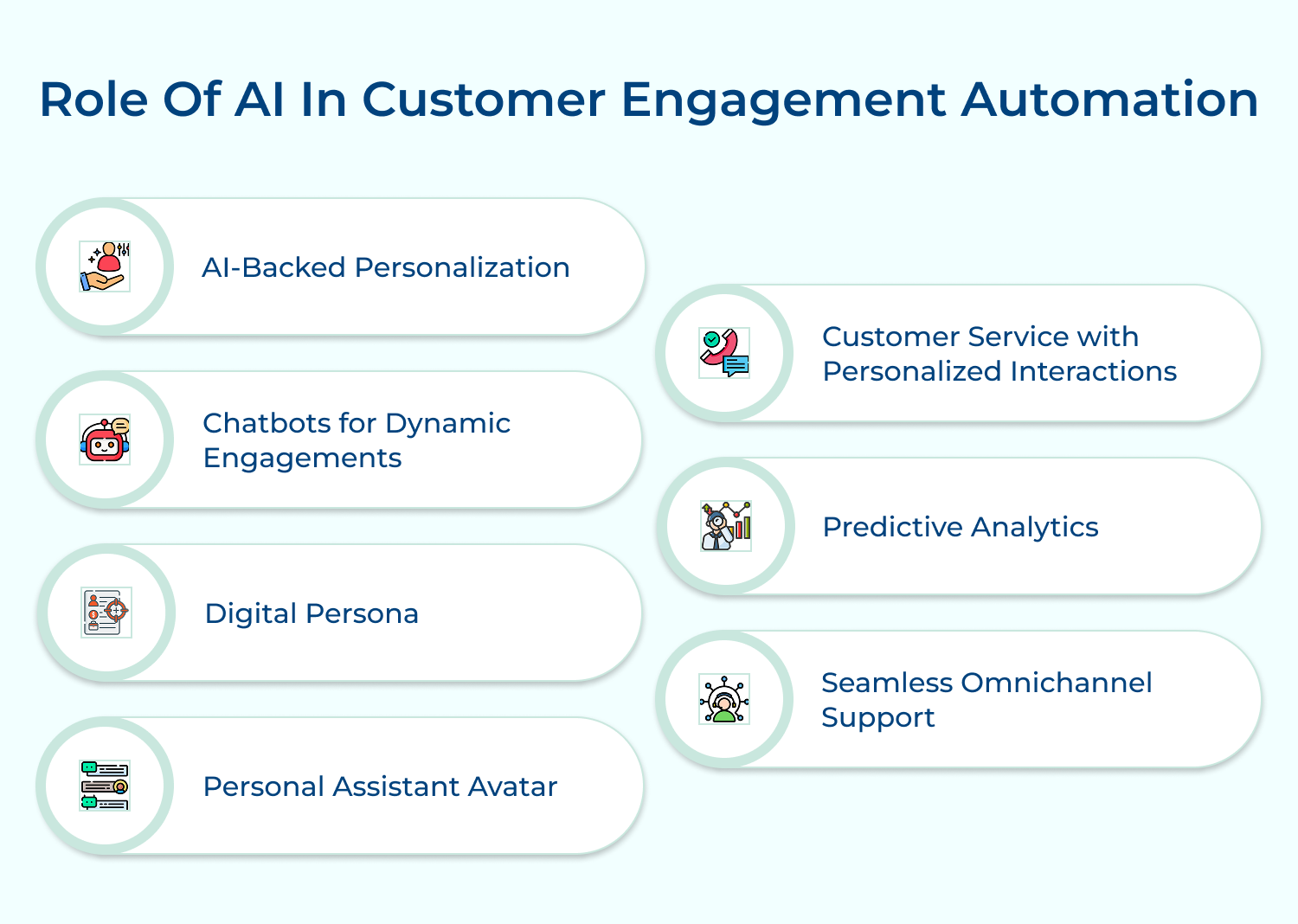
Let’s learn how AI is revolutionizing customer engagement practices, offering insights into the ways it enhances efficiency, creates loyalty and drives growth.
Dive into our curated list of top customer engagement automation tools that can help your business stay ahead in the rapidly evolving digital landscape.
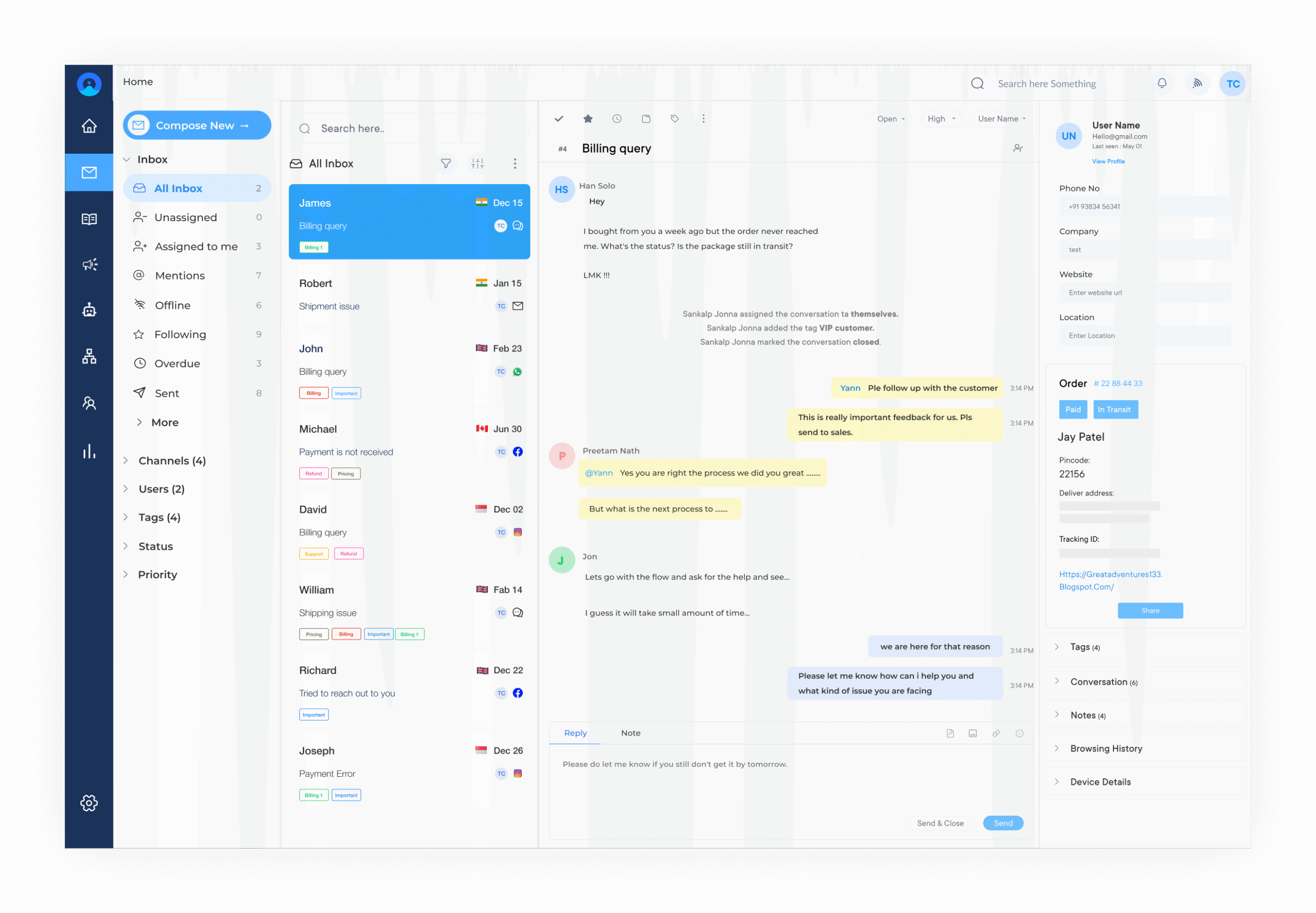
Omni24 is a cloud-based customer experience platform that unifies all communication channels under one system. It empowers businesses to deliver seamless customer engagement by combining live agent interactions with powerful automation capabilities. The platform helps teams increase efficiency while maintaining personalized service across every customer touchpoint.
Key Features:
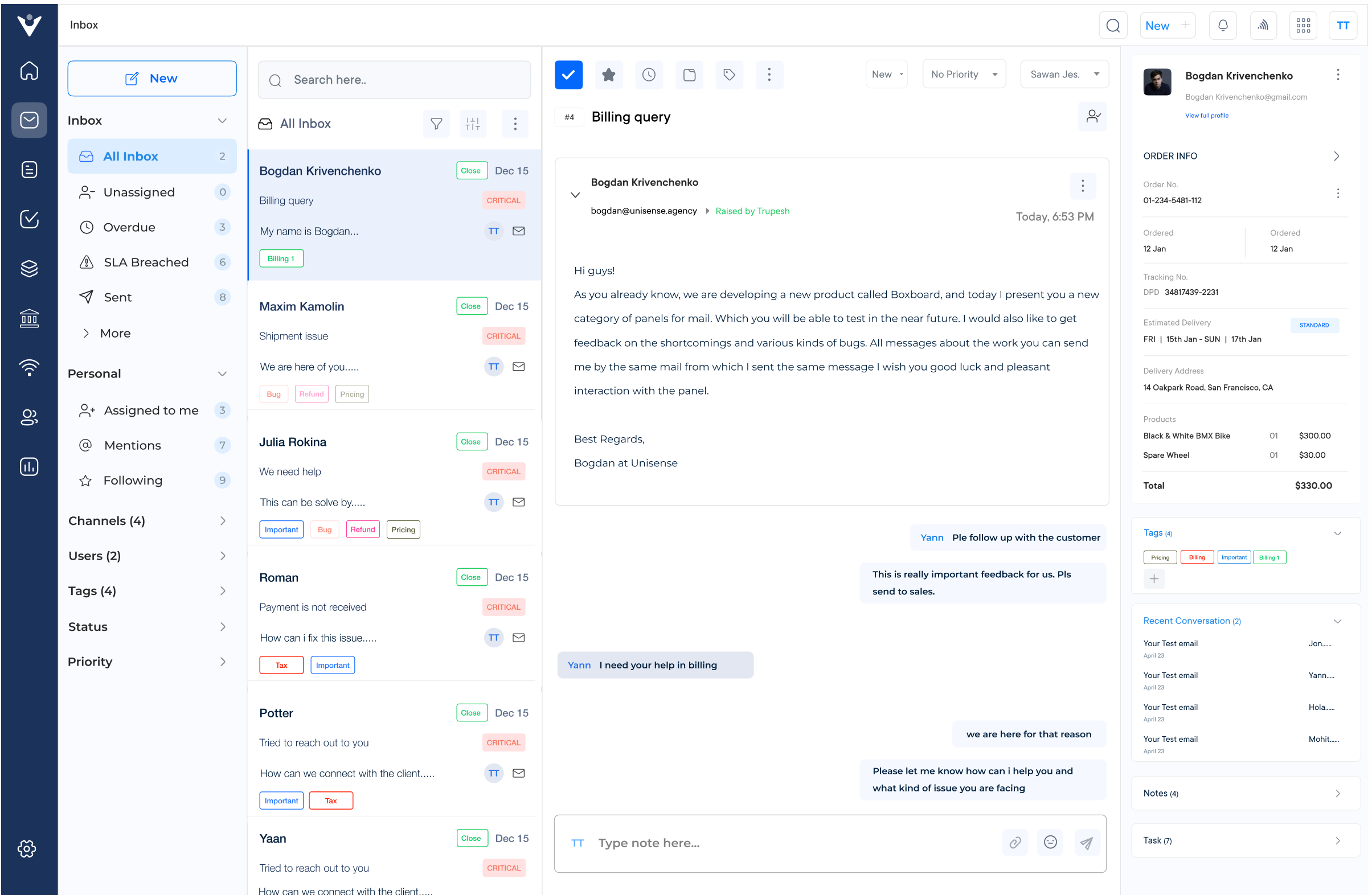
Veemo a suite of customer engagement products to engage, support and retain customers across their lifecycle. Veemo’s powerful platform helps businesses build personalized, cross-channel experiences through data-driven customer engagement automation. The platform helps companies strengthen relationships with customers through timely, relevant interactions at every touchpoint.
Key features:
Braze delivers a comprehensive customer engagement tool that unifies all customer interactions across channels. The system enables personalized communications through intelligent automation while providing real-time insights. Businesses can create cohesive customer experiences that adapt based on individual behaviors and preferences, allowing marketing teams to build stronger customer relationships with less manual effort.
Twilio serves as a cloud communications infrastructure provider that enables developers to integrate messaging, voice and video capabilities directly into applications. The platform offers programmable APIs that power communication across various channels from SMS to popular messaging apps. Twilio’s solutions extend beyond basic communication tools to include complete contact center functionality and marketing automation capabilities.
Below are some examples of customer engagement automation that businesses can implement:
1. Retail
Sephora, a leading beauty retailer, has embraced automated email campaigns and personalized product recommendations based on customers’ preferences as well as purchase histories. These targeted communications have increased cross-selling and upselling opportunities, leading to higher average order values along with customer lifetime value.
2. ECommerce
Amazon, the e-commerce giant, has employed automated personalized product recommendations, abandoned cart reminders and targeted promotions based on customer behavior as well as purchase patterns. These automated tactics have significantly improved customer engagement, driving sales and creating customer loyalty.
3. Technology
Salesforce, a leading customer relationship management (CRM) platform,utilizes automated lead nurturing campaigns, personalized content delivery and targeted upsell offers based on account data as well as usage patterns. This approach has streamlined the sales process, improved conversion rates and increased customer lifetime value.
4. Financial Services
Capital One, a prominent financial services company, has employed chatbots and virtual assistants for automated customer support, account inquiries as well as personalized financial advice. This approach has improved customer satisfaction by providing 24/7 assistance and reducing response times.
5. Healthcare
Cleveland Clinic, a renowned healthcare organization, has utilized automated appointment reminders, post-visit follow-ups and personalized health education materials based on patients’ medical conditions. This approach has resulted in increased patient satisfaction, better adherence to treatment regimens and improved health outcomes.
Brands can significantly elevate their customer experience (CX) and operational performance by striking the right balance between customer engagement automation as well as human support.
Customer engagement automation streamlines routine tasks, enhances efficiency and ensures consistent service delivery, while human support provides the empathy, personalization and problem-solving capabilities that build strong customer relationships. The synergy between automation and human support empowers brands to stay agile, responsive as well as customer-centric.

What are the challenges or considerations when implementing automated customer engagement?
One of the main challenges when implementing automated customer engagement is ensuring that the technology accurately reflects the brand’s voice and values. It’s important to strike a balance between automation and personalization to avoid coming off as impersonal or robotic.
How does automated customer engagement differ from manual customer interactions?
Automated customer engagement uses technology to streamline and personalize interactions with customers, whereas manual interactions require human intervention. Automated customer engagement can reach a larger audience more efficiently, but it may lack the personal touch that comes with direct human interaction.
What role does personalization play in automated customer engagement?
Personalization is key in automated customer engagement because it allows businesses to tailor their messaging and interactions to the individual preferences as well as behavior of each customer. By personalizing communication, businesses can create a more engaging and relevant experience for their customers.
How can customer engagement automation improve customer satisfaction?
Customer engagement automation can improve customer satisfaction by providing timely and relevant communication, anticipating customer needs while offering personalized experiences. By automating routine tasks and providing proactive support, businesses can enhance the overall customer experience as well as build stronger relationships with their customers.
What types of businesses can benefit from customer engagement automation?
Any business that interacts with customers on a regular basis can benefit from customer engagement automation. This includes e-commerce businesses, service-based businesses, retail stores and B2B companies. By using automation to streamline communication and improve customer interactions, businesses can save time as well as resources while increasing customer satisfaction.
How does customer engagement automation enhance marketing strategies?
Customer engagement automation can enhance marketing strategies by allowing businesses to deliver targeted messages at the right time and through the right channels. By automating customer interactions, businesses can nurture leads, drive sales and increase customer loyalty more effectively than with manual marketing efforts.
What are the key features to look for in a customer engagement automation platform?
When choosing a customer engagement automation platform, businesses should look for features such as personalized messaging capabilities, multi-channel integration, real-time tracking, segmentation/targeting options as well as easy customization. These features will help businesses create a more engaging and effective customer experience.
Why should small businesses consider customer engagement automation?
Small businesses can benefit from customer engagement automation by maximizing their resources, improving efficiency, and enhancing customer relationships. By automating routine tasks and leveraging technology to personalize communication, small businesses can compete with larger companies while providing a higher level of service to their customers.
 https://omni24.io/wp-content/uploads/2026/08/AI-Customer-Service-Agents.png
1256
2400
Webvision Solution
https://omni24.io/wp-content/uploads/2023/04/Omni-Logo-1.svg
Webvision Solution2026-09-21 04:48:512026-09-21 04:48:51How to Build an AI Customer Service Agents: 8 Key Steps
https://omni24.io/wp-content/uploads/2026/08/AI-Customer-Service-Agents.png
1256
2400
Webvision Solution
https://omni24.io/wp-content/uploads/2023/04/Omni-Logo-1.svg
Webvision Solution2026-09-21 04:48:512026-09-21 04:48:51How to Build an AI Customer Service Agents: 8 Key Steps https://omni24.io/wp-content/uploads/2026/08/Omnichannel-Conversational-AI.png
1256
2400
Tushar Joshi
https://omni24.io/wp-content/uploads/2023/04/Omni-Logo-1.svg
Tushar Joshi2026-09-16 03:51:072026-09-16 03:51:07How to Build Omnichannel Conversational AI Strategy
https://omni24.io/wp-content/uploads/2026/08/Omnichannel-Conversational-AI.png
1256
2400
Tushar Joshi
https://omni24.io/wp-content/uploads/2023/04/Omni-Logo-1.svg
Tushar Joshi2026-09-16 03:51:072026-09-16 03:51:07How to Build Omnichannel Conversational AI Strategy https://omni24.io/wp-content/uploads/2026/08/Customer-Service-Teams.png
1256
2400
Tushar Joshi
https://omni24.io/wp-content/uploads/2023/04/Omni-Logo-1.svg
Tushar Joshi2026-09-15 04:01:522026-09-15 04:02:16How to Build Customer Service Teams: 6 Key Steps
https://omni24.io/wp-content/uploads/2026/08/Customer-Service-Teams.png
1256
2400
Tushar Joshi
https://omni24.io/wp-content/uploads/2023/04/Omni-Logo-1.svg
Tushar Joshi2026-09-15 04:01:522026-09-15 04:02:16How to Build Customer Service Teams: 6 Key Steps
Whether it’s about acquire, engage or support – Omni24 covers all your customer engagement needs in one complete platform.

Copyright ©2026 Veemo All rights reserved.
CA, Los Angeles, Hall Ave, 19011