How Customer Engagement Center Improve CX : 10 Best Ways
A customer engagement center unifies all customer interactions, boosts satisfaction, improves efficiency and enables proactive, personalized service across every channel.

A customer engagement center unifies all customer interactions, boosts satisfaction, improves efficiency and enables proactive, personalized service across every channel.
Customers now expect fast, personalized service across all channels — and they aren’t shy about walking away when companies can’t deliver.
More than 46% of customers expect a response within four hours and many define “fast” as within minutes.
A customer engagement center (CEC) solves this by unifying email, chat, social media, phone and other touchpoints — so support teams see the full customer history while delivering real-time, consistent as well as personalized service.
That seamless, omnichannel approach boosts satisfaction, builds trust and helps businesses retain customers even as expectations rise.
A customer engagement center (CEC) is a modern evolution of the traditional contact center, representing a comprehensive, omnichannel approach to customer service and engagement. It integrates various communication channels, customer data and advanced technologies to provide seamless interactions across the entire customer journey.
A well-implemented CEC helps businesses build stronger relationships with customers by providing contextual, personalized interactions that drive loyalty and satisfaction. It enables organizations to shift from reactive problem-solving to proactive engagement, anticipating customer needs and addressing issues before they escalate.
Key objectives :
A Customer Engagement Center (CEC) gives businesses the clarity and control they need to manage every customer touchpoint in one place. Here are the key benefits to consider.
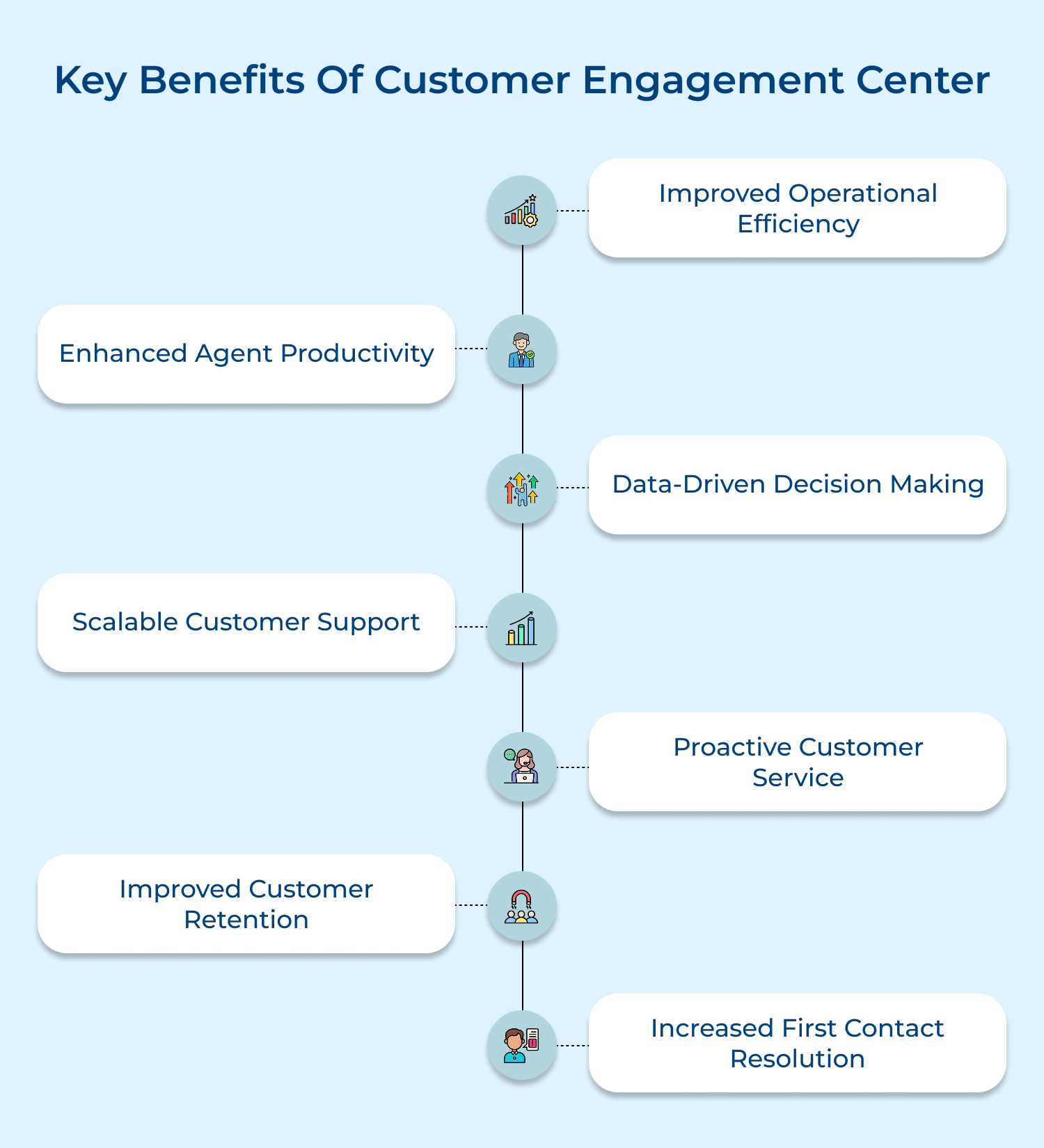
Improved Operational Efficiency
A CEC makes everyday work smoother with automated routing, AI assistance and smart workflows. Your customer service agents can manage more inquiries without feeling overwhelmed, keeping quality high while reducing costs.
Data-Driven Decision Making
By pulling all customer interactions into one place, you get clear insights into preferences and pain points. This helps you make better decisions about products, services and resource planning through stronger customer relationship management.
Proactive Customer Service
Predictive analytics and real-time monitoring enables CEC spot issues early. You can resolve problems faster, reduce complaints and show customers you genuinely care.
Increased First Contact Resolution
When agents have complete context and history, they solve issues on the first attempt more often. This cuts down on back-and-forth as well as leads to happier customers.
Enhanced Agent Productivity
Unified dashboards and automated tools give teams everything they need in one place. This reduces stress, boosts confidence and results in better service delivery.
Scalable Customer Support
A CEC grows with your business. You can easily scale support during busy seasons and streamline operations when demand drops, maintaining consistent service quality.
Improved Customer Retention
Fast, personalized service across every touchpoint builds trust. With stronger customer service management, you keep customers satisfied and increase long-term loyalty.
A CEC brings all customer interactions into one connected system, making every experience smoother and personalized. Here’s how CECs elevate customer experience in ten ways.
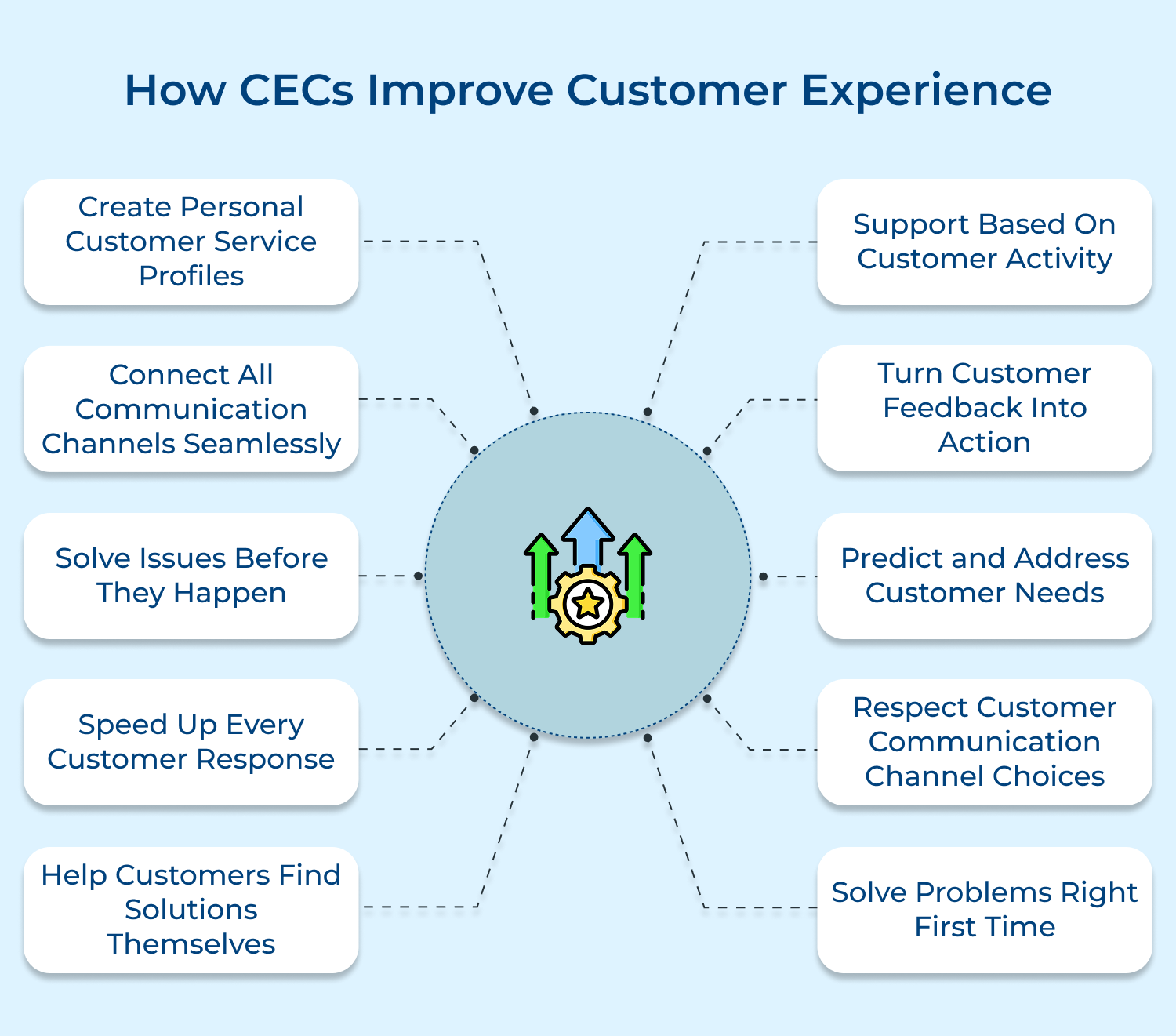
Personalized interactions mean using customer data, past conversations and preferences to tailor every experience. Today’s customers expect companies to know their history and understand their needs without repeating information. This approach builds trust, improves satisfaction and helps resolve issues faster.
Using a CRM system, teams can access complete customer profiles, including previous questions and behavior patterns. With this context, agents can greet customers personally, suggest relevant solutions and anticipate what they may need next. Hence, making every interaction feel more thoughtful and efficient.
Actionable Tips:
A unified approach to customer service that maintains seamless continuity across all communication channels, ensuring conversations and context flow naturally between platforms without information loss or repetition.
Customers frequently switch between channels during their service journey. Maintaining consistency prevents frustration, reduces resolution time and creates a more professional impression by eliminating the need to repeat information.
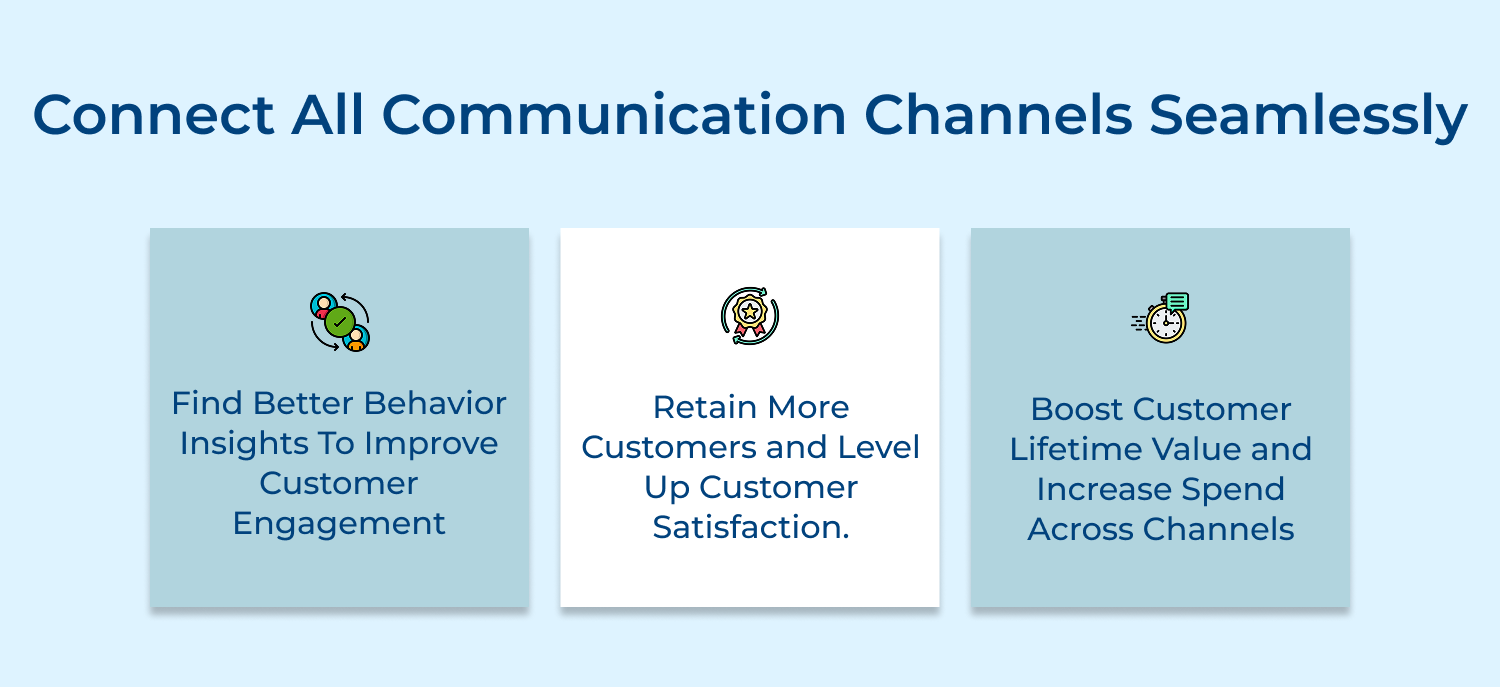
Deploy integrated communication platforms that sync customer interactions across all channels in real-time. Ensure all customer-facing teams have access to the same information and maintain consistent service standards regardless of channel.
Actionable Tips:
Proactive service means spotting issues early and fixing them before customers even notice. With predictive analytics and monitoring tools, teams can identify patterns, detect risks while acting fast. This approach cuts support volume, saves costs and keeps customers happier because problems are prevented, not just solved.
Set up monitoring systems to track performance and behavior trends, as well as use automated alerts to flag potential issues. You can also send pre-emptive messages to customers when known problems are likely to occur.
Actionable Tips:
A strategic focus on minimizing the time between customer inquiry and resolution through efficient routing, automated responses as well as optimized support processes.
Quick response times directly correlate with customer satisfaction and loyalty. Fast, effective service reduces customer frustration, increases trust while improving operational efficiency.
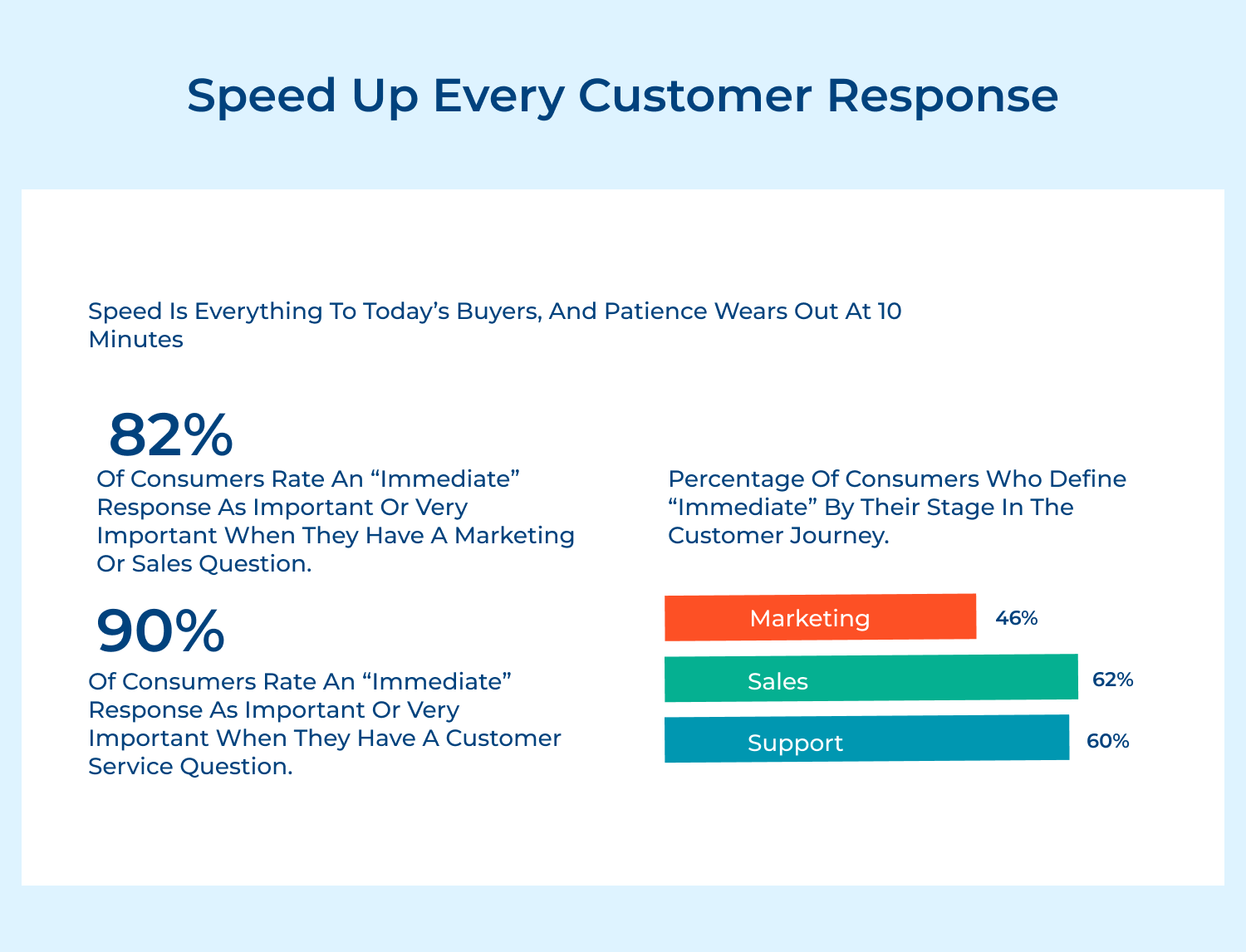
Deploy AI-powered routing systems and chatbots for immediate response to common inquiries. Establish clear SLAs as well as monitor real-time response metrics across all channels.
Actionable Tips:
A comprehensive system of tools and resources that enables customers to find answers as well as resolve issues independently, supported by easy access to additional help when needed.
Many customers prefer solving simple problems themselves. Self-service options reduce support costs, provide 24/7 assistance and free up representatives to handle more complex issues.
Develop a searchable knowledge base, video tutorials and interactive guides. Track usage patterns to continuously improve content and identify gaps in self-service resources.
Actionable Tips:
Real-time support system that provides assistance based on customers’ current activities, webpage location or app usage, enabling representatives to understand and address immediate customer needs.
Understanding customer context eliminates confusion and speeds up problem resolution. Contextual awareness allows representatives to provide more relevant assistance as well as anticipate potential challenges during customer interactions.
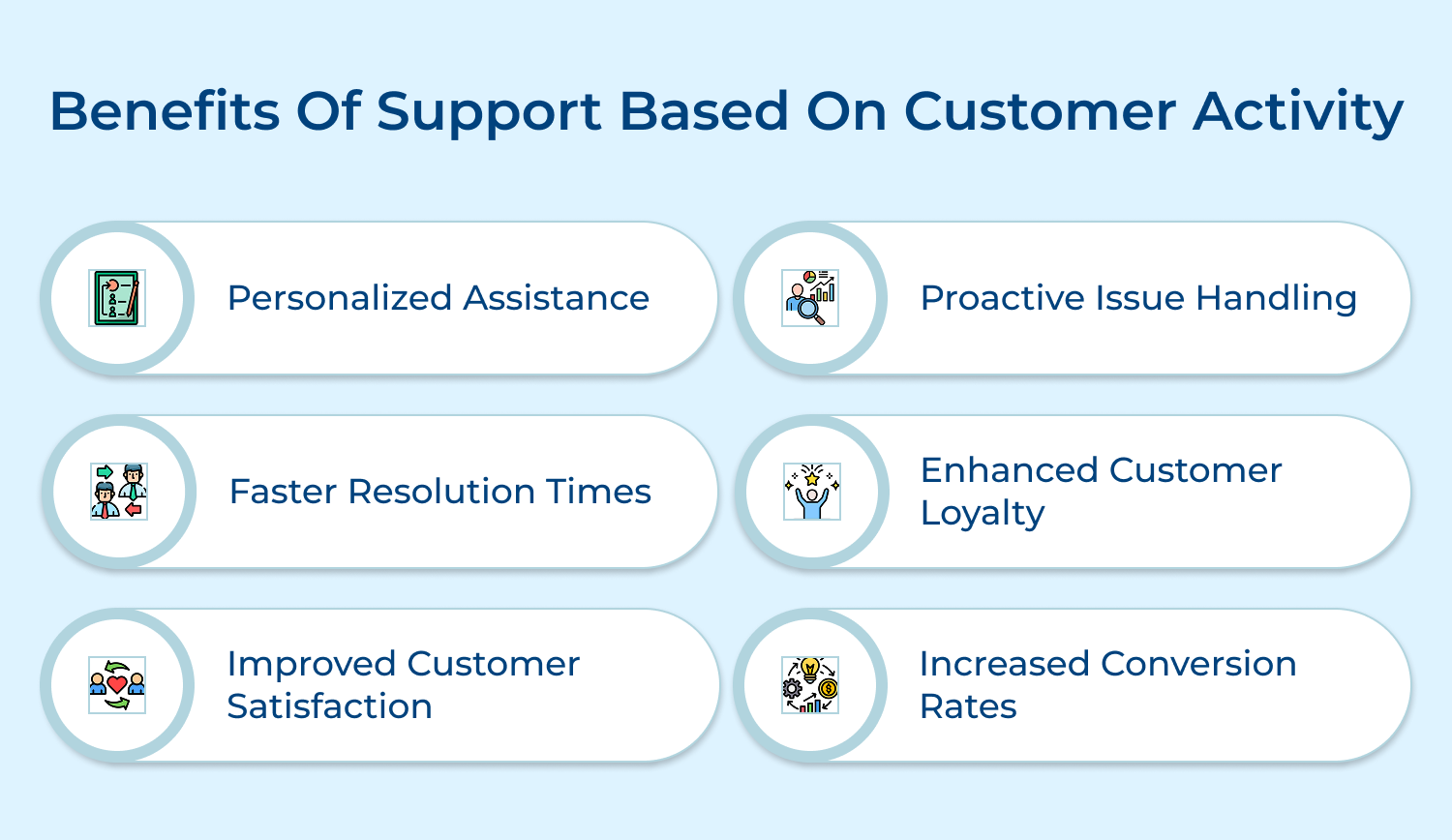
Implement co-browsing tools and real-time activity monitoring. Enable screen sharing capabilities and integrate website analytics with customer service platforms to provide context-aware support.
Actionable Tips:
A systematic process of collecting, analyzing and acting on customer feedback across all touchpoints to continuously improve service quality as well as customer experience.
Direct customer feedback provides invaluable insights for service improvement. Regular feedback collection and implementation demonstrates commitment to customer satisfaction while helping identify emerging issues.
Implement automated feedback collection after interactions. Create closed-loop processes to ensure feedback reaches relevant teams and leads to actionable improvements in products as well as services.
Actionable Tips:
Advanced analytics system that anticipates customer needs and potential issues before they arise, enabling proactive outreach as well as support based on behavioral patterns.
Anticipating customer needs creates a more personalized experience and prevents problems. Predictive service reduces support costs while increasing customer satisfaction by addressing issues proactively.
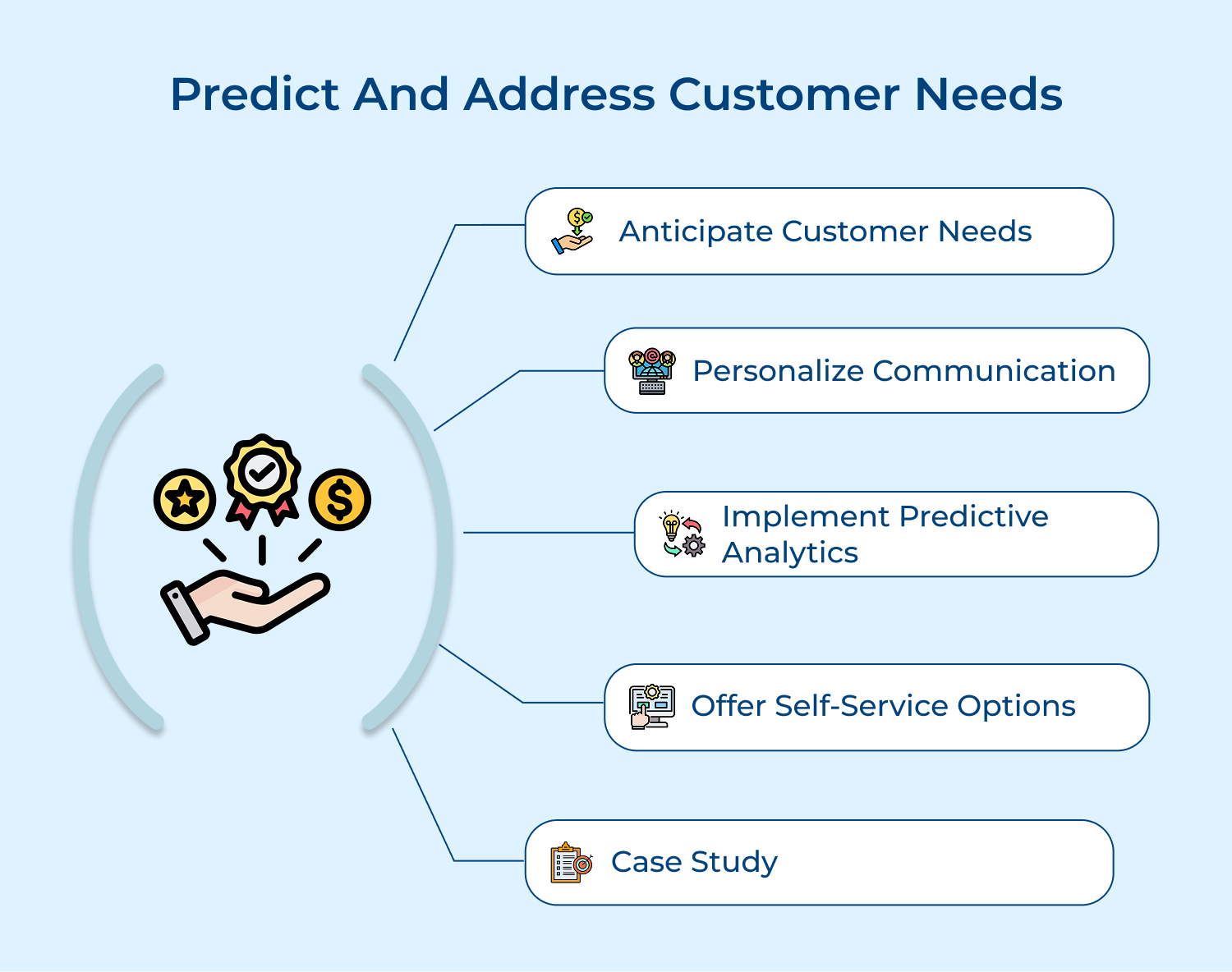
Utilize machine learning algorithms to analyze customer behavior patterns. Create automated triggers for proactive outreach based on predicted customer needs or potential issues.
Actionable Tips:
A strategic approach to customer communication that respects individual preferences for contact methods, timing and frequency across different types of interactions.
Customers expect companies to communicate through their preferred channels. Respecting communication preferences increases engagement rates and customer satisfaction while reducing ignored messages.
Track customer response rates across different channels. Allow customers to set explicit preferences for different types of communications and honor these choices consistently.
Actionable Tips:
A focus on resolving customer issues completely during the first interaction by equipping representatives with comprehensive resources and authority to address problems effectively.
First contact resolution significantly impacts customer satisfaction and reduces operational costs. Solving issues immediately prevents customer frustration while reducing follow-up contacts.
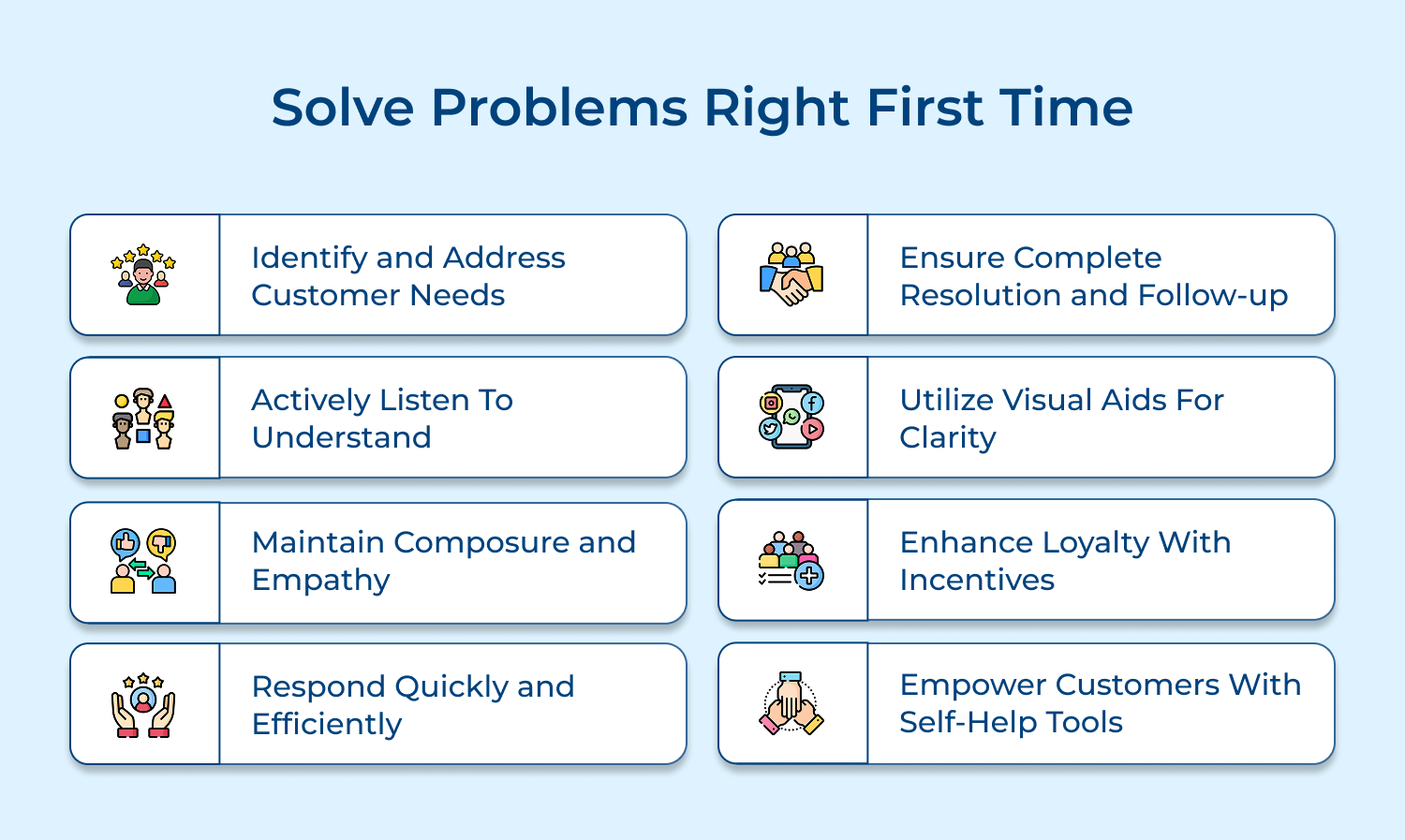
Provide representatives with extensive training and access to comprehensive knowledge bases. Empower agents with appropriate authority levels to make decisions and offer solutions.
Actionable Tips:
Implementing a Customer Engagement Center can transform service quality. Here’s a quick look at the common challenges businesses face and practical ways to overcome them.
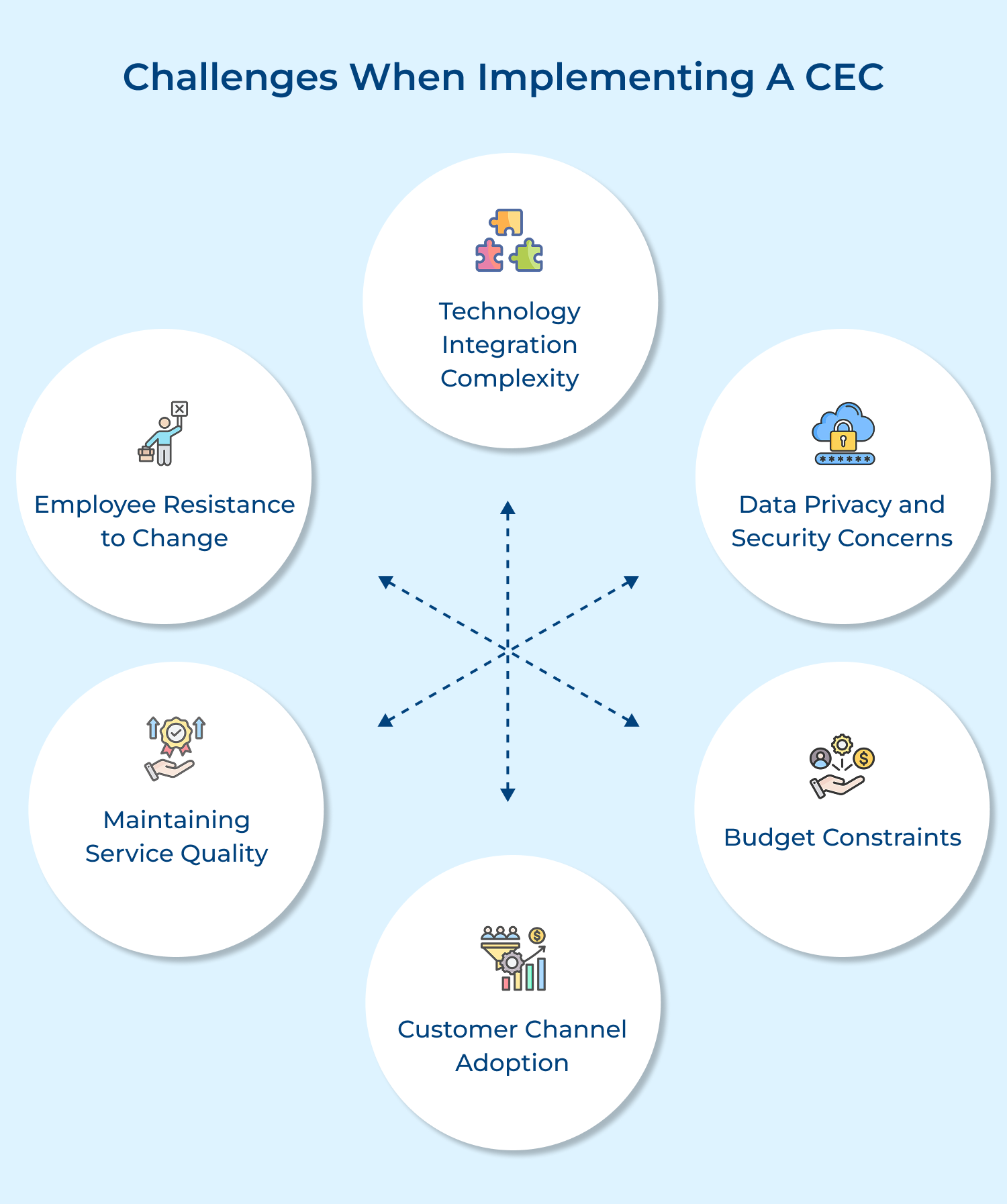
Technology Integration Complexity
Legacy systems often struggle to integrate with modern CEC platforms, creating data silos and fragmented customer experiences.
Resolution:
Employee Resistance to Change
Staff may resist new technologies and processes, fearing job displacement or struggling with new workflows.
Resolution:
Data Privacy and Security Concerns
Managing sensitive customer data across multiple channels while maintaining compliance with privacy regulations.
Resolution:
Budget Constraints
High initial investment costs and ongoing maintenance expenses can strain organizational resources.
Resolution:
Customer Channel Adoption
Customers may be reluctant to adopt new engagement channels or self-service options.
Resolution:
Maintaining Service Quality
Ensuring consistent service quality across all channels while handling increased interaction volume.
Resolution:
Customer engagement centers create dedicated touchpoints that strengthen connections through personalization, community building and smooth interactions. Here are examples:
Nike: Building Community Through Shared Passion
Nike uses its customer engagement center through the Nike Run Club and Nike Training Club apps. These platforms help people connect, join local running groups, attend coaching sessions and share their fitness progress with others.
This community-first approach turns Nike into more than a brand that sells products. It positions Nike as a lifestyle partner. People build emotional connections with others in the community, and this naturally keeps them engaged through shared experiences as well as support.
Sephora: Personalization That Anticipates Individual Needs
Sephora’s engagement center is powered by its Beauty Insider program, which gathers customer preferences to offer personalized product recommendations and exclusive experiences. Everything—from emails to in-store consultations—is customized to match each person’s unique beauty needs.
This level of personalization makes customers see Sephora as a trusted beauty advisor, not just a store. It encourages them to come back, strengthens loyalty and builds long-term trust.
FabIndia: Seamless Omnichannel Engagement
FabIndia’s customer engagement center brings together its stores, website and mobile app to create a smooth, unified experience. Customers can browse online, check product availability on the app and then buy in-store—while earning loyalty points across all channels.
The omnichannel setup removes friction and meets customers wherever they prefer to shop. It encourages them to engage more often because the journey feels easy, flexible and completely on their terms.
GoPro: Harnessing User-Generated Content
GoPro’s engagement center is built around user-generated content. Customers upload their adventure videos and the brand features the best ones across its channels, turning everyday users into storytellers who showcase what the product can truly do.
It creates strong word-of-mouth because people see real footage from real users. It also keeps existing customers motivated to keep creating and sharing, hoping their videos get featured, which fuels a continuous cycle of engagement.
A Customer Engagement Center revolutionizes how businesses interact with customers by shifting from reactive service to proactive engagement. It empowers agents with real-time data to offer tailored solutions that meet customer needs. This leads to improved communication and builds stronger customer loyalty.
Adopting a CEC increases operational efficiency and helps businesses stay competitive. It also strengthens brand perception as well as builds long-term customer relationships.

Q: What ROI can we expect from a CEC?
A: Organizations typically see ROI through reduced operational costs, increased customer satisfaction and improved retention rates. Most companies report 15-30% reduction in support costs, 20-40% improvement in first contact resolution and 10-25% increase in customer satisfaction scores.
Q: What technology infrastructure is needed?
A: Essential infrastructure includes cloud-based or on-premise CRM system, omnichannel communication platform, analytics tools and integration capabilities. Organizations need reliable internet connectivity, secure data storage and compatible hardware for agents.
Q: How does a CEC improve customer satisfaction?
A: CECs enhance satisfaction by providing personalized interactions, faster response times and consistent experiences across channels. They enable proactive problem resolution, self-service options and data-driven insights to better understand as well as meet customer needs.
Q: What training do employees need?
A: Employees require training in system operations, customer service skills, channel-specific communication, data privacy and security protocols. Ongoing training includes new feature updates, best practices and regular refresher courses on customer engagement strategies.
Q: How can we measure CEC success?
A: Key metrics include customer satisfaction scores, first contact resolution rates, average response time, channel adoption rates and customer lifetime value. Additional metrics cover operational efficiency, agent productivity and revenue impact from improved customer engagement.
 https://omni24.io/wp-content/uploads/2026/09/Social-commerce-scaled.png
1340
2560
Webvision Solution
https://omni24.io/wp-content/uploads/2023/04/Omni-Logo-1.svg
Webvision Solution2026-10-23 12:18:272026-10-23 12:18:27What is Social Commerce and Why Does It Matter?
https://omni24.io/wp-content/uploads/2026/09/Social-commerce-scaled.png
1340
2560
Webvision Solution
https://omni24.io/wp-content/uploads/2023/04/Omni-Logo-1.svg
Webvision Solution2026-10-23 12:18:272026-10-23 12:18:27What is Social Commerce and Why Does It Matter? https://omni24.io/wp-content/uploads/2026/08/AI-Customer-Service-Agents.png
1256
2400
Webvision Solution
https://omni24.io/wp-content/uploads/2023/04/Omni-Logo-1.svg
Webvision Solution2026-09-21 04:48:512026-09-21 04:48:51How to Build an AI Customer Service Agents: 8 Key Steps
https://omni24.io/wp-content/uploads/2026/08/AI-Customer-Service-Agents.png
1256
2400
Webvision Solution
https://omni24.io/wp-content/uploads/2023/04/Omni-Logo-1.svg
Webvision Solution2026-09-21 04:48:512026-09-21 04:48:51How to Build an AI Customer Service Agents: 8 Key Steps https://omni24.io/wp-content/uploads/2026/08/Omnichannel-Conversational-AI.png
1256
2400
Tushar Joshi
https://omni24.io/wp-content/uploads/2023/04/Omni-Logo-1.svg
Tushar Joshi2026-09-16 03:51:072026-09-16 03:51:07How to Build Omnichannel Conversational AI Strategy
https://omni24.io/wp-content/uploads/2026/08/Omnichannel-Conversational-AI.png
1256
2400
Tushar Joshi
https://omni24.io/wp-content/uploads/2023/04/Omni-Logo-1.svg
Tushar Joshi2026-09-16 03:51:072026-09-16 03:51:07How to Build Omnichannel Conversational AI Strategy
Whether it’s about acquire, engage or support – Omni24 covers all your customer engagement needs in one complete platform.

Copyright ©2026 Veemo All rights reserved.
CA, Los Angeles, Hall Ave, 19011