How to Build Customer Feedback Forms? 6 Key Steps
Feedback reveals strengths and weaknesses for improvement and customer feedback forms are the easiest way to collect it.

Feedback reveals strengths and weaknesses for improvement and customer feedback forms are the easiest way to collect it.
Customer feedback is a goldmine of insights—if you know how to get it and use it well. Incorporating the feedback into your continuous improvement process enhances customer satisfaction and drives business success.
Businesses that know how others view them or how they want to be perceived need to ask for their feedback or suggestions. That’s where feedback forms come in.
Customers who receive outstanding customer service from businesses are 93% more likely to make additional purchases. A customer feedback form is a way to gather customer feedback in a structured way. They give you the best chance of understanding the overall customer experience and improving your product.
Let us explore the importance of leveraging customer feedback forms for continuous improvement and provide practical tips on how to build feedback forms to improve the gaps.
A customer feedback form is defined as a tool implemented by businesses to gather suggestions/opinions from customers about their experiences with their products/services. The form typically includes questions about the customer’s overall satisfaction, specific aspects of the product or service and suggestions for improvement.
Feedback forms are crucial for businesses because they request genuine opinions you may not know without input from others. These opinions could be related to product or customer service. The feedback is used to gauge how people feel and to inform business decisions for improvements.
Key features:
Customer feedback provides valuable insight into the customer experience and helps improve products/services. Feedback forms are the best way to collect customer feedback.
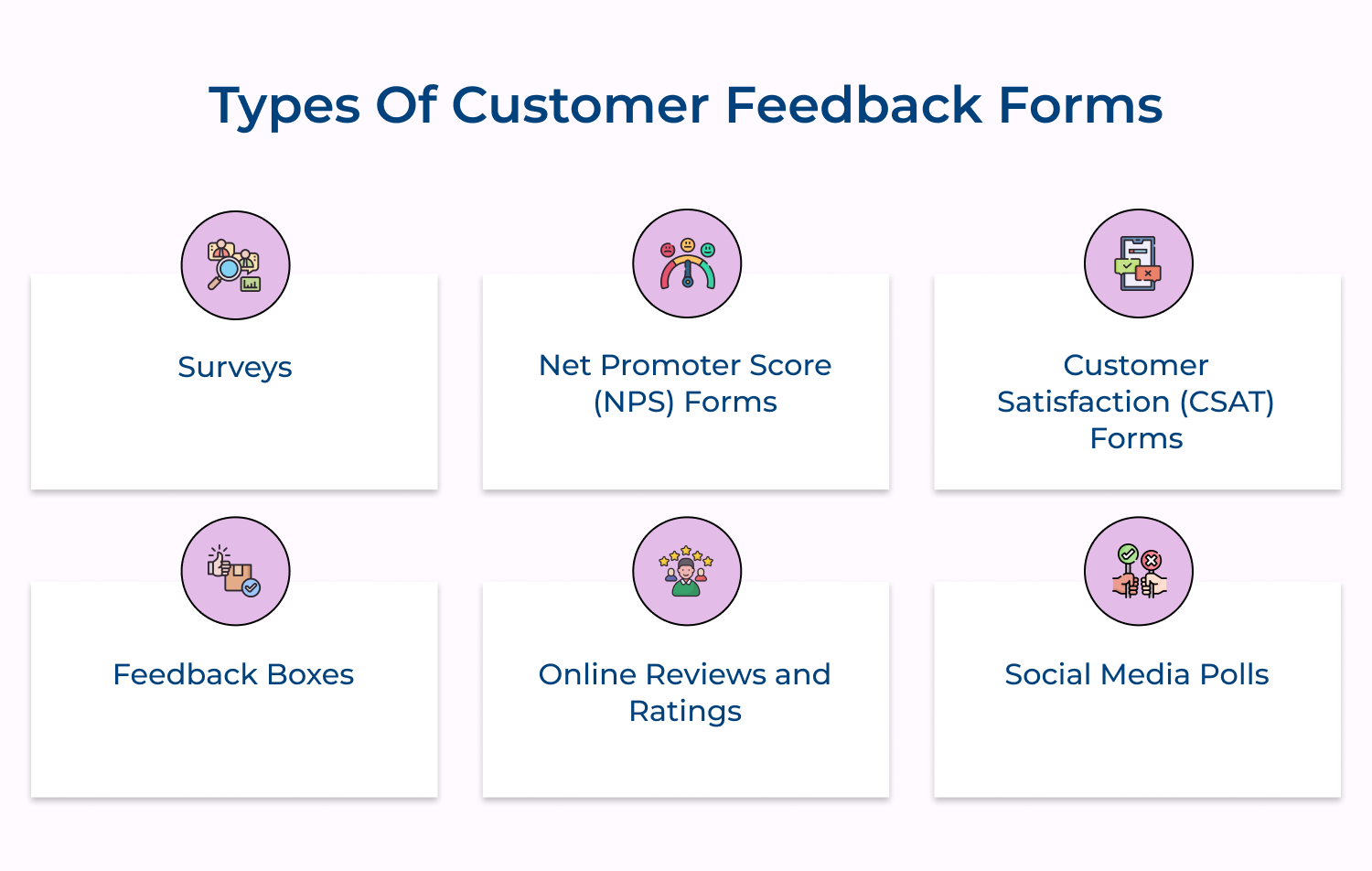
Surveys are one of the most popular types of customer feedback forms. They can be emailed, embedded on a website or distributed in person. Customer surveys typically consist of a series of questions that customers can answer to provide feedback on their experience with a product or service.
NPS forms are designed to measure customer loyalty and satisfaction. Customers are asked to rate their likelihood of recommending a product or service to others on a scale of 0-10. Customers are categorized into promoters, passives, or detractors based on their responses.
CSAT forms measure customer satisfaction with a specific interaction, product, or service. Customers are typically asked to rate their satisfaction on a scale of 1-5 or 1-10. This feedback form can provide insights into how customers feel about a particular aspect of the business.
Feedback boxes are tangible boxes or containers placed in a physical location, such as a store or restaurant, where customers can drop in their feedback. This feedback form allows customers to provide quick and anonymous feedback on their experience.
Online reviews and ratings are another type of customer feedback form businesses can use to gather feedback. Customers can leave reviews or ratings on websites such as Yelp, Google, or Facebook, which can be valuable for businesses to understand customer sentiment and improve their offerings.
Social media polls are a quick and easy way for businesses to gather feedback from their followers on platforms like Twitter, Instagram or Facebook. Businesses can ask specific questions and gather responses in real-time to gain insights into customer preferences.
As feedback is an essential aspect of any business let us discuss how to build a customer feedback form. Creating a form provides valuable insights and makes informed decisions in real time.
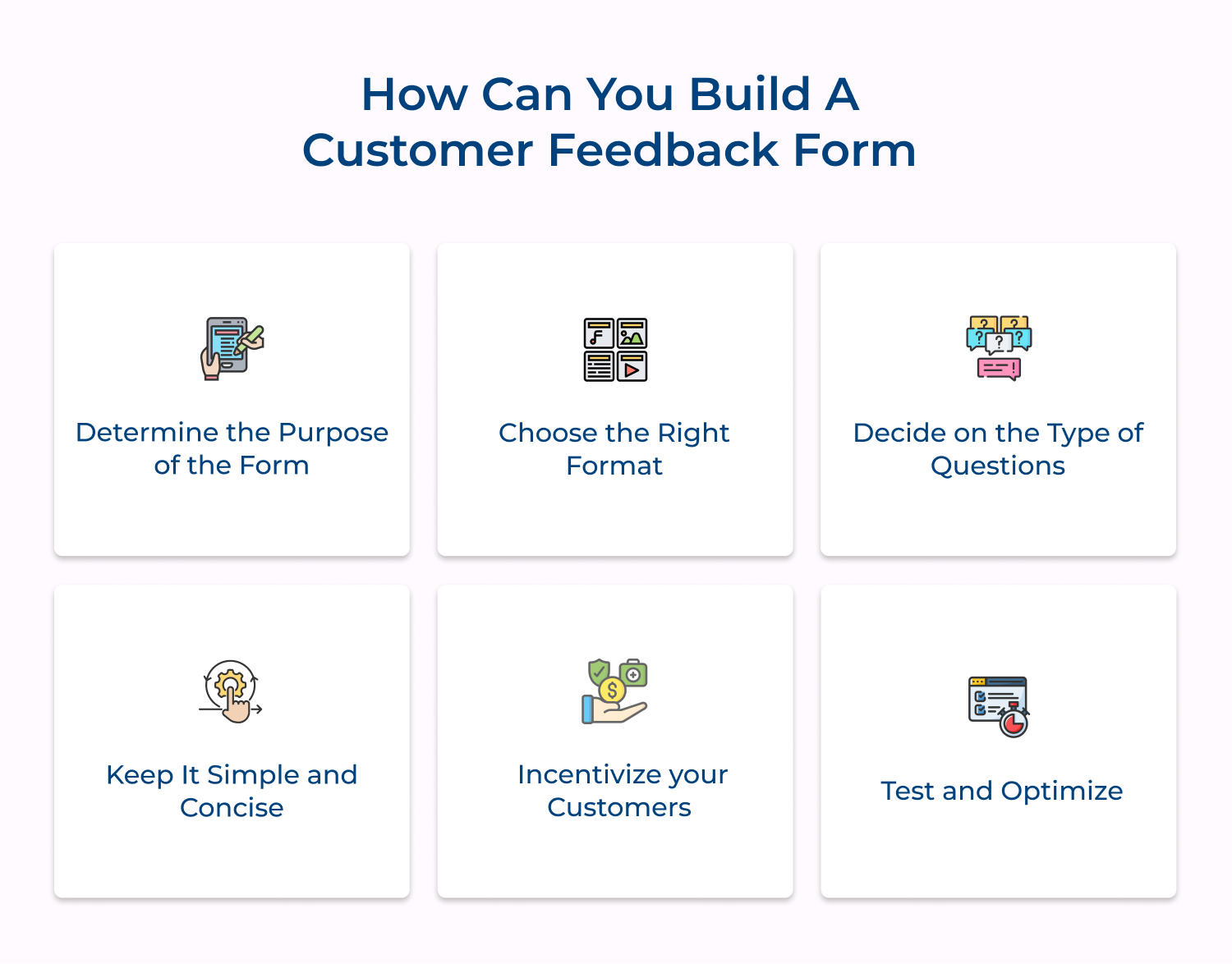
Before you start creating your customer feedback form, you need to establish why you are collecting feedback in the first place.
Knowing your goal will help you tailor your questions to gather relevant information.
Best practices:
Customer feedback forms can come in various formats, including online surveys, email questionnaires, or physical forms.
Consider your target audience and how they are most likely to respond. Online surveys are often convenient and cost-effective, while email questionnaires allow for more personalized follow-up.
Best practices:
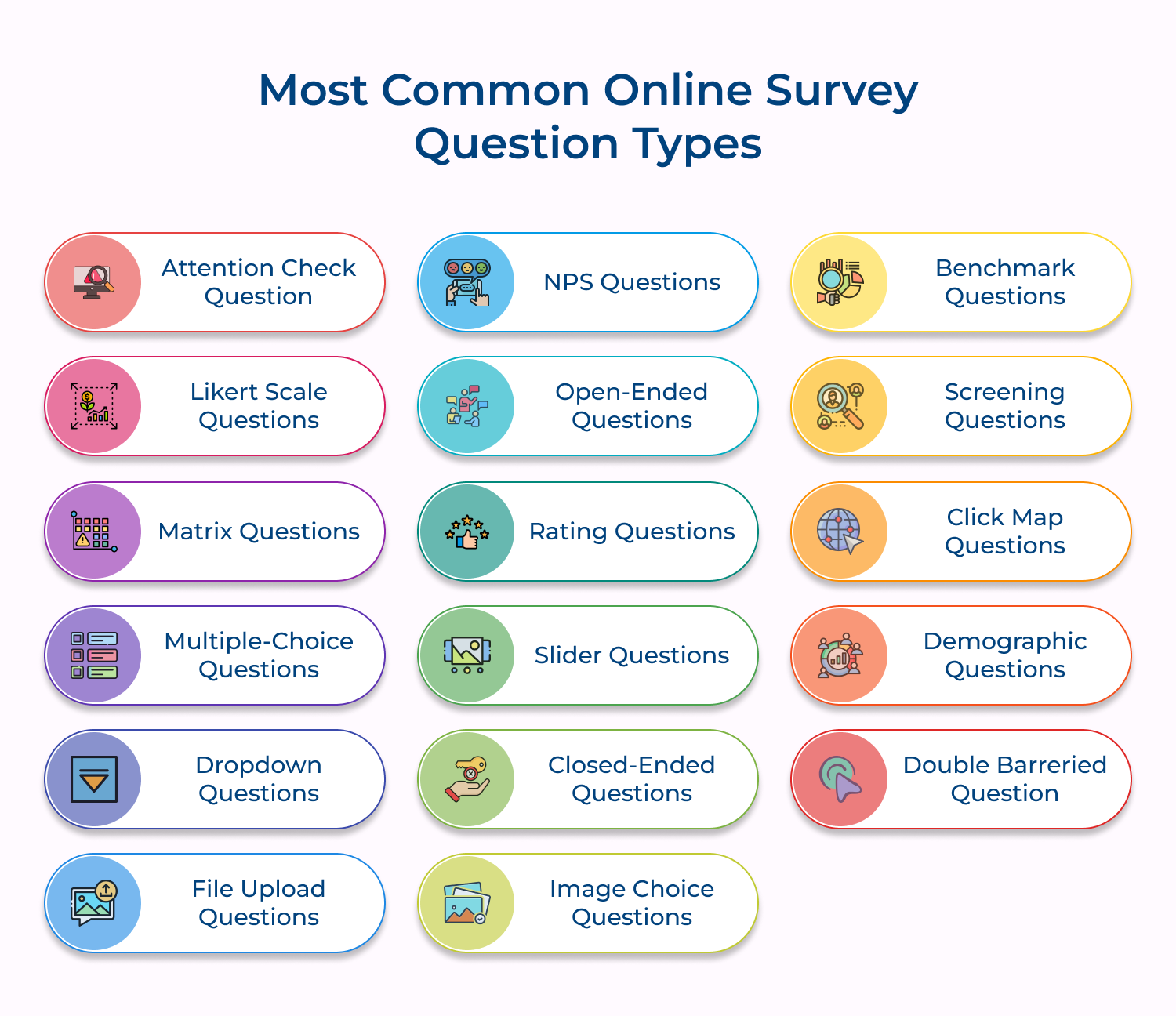
The type of questions that you decide to include in your customer feedback form depends on your business goals. Closed-ended questions, such as multiple-choice or rating scale questions, are easy to analyze but may limit the depth of responses.
Open-ended questions on the other hand, offer more insight but can be harder to analyze.
Best practices:
People are more busy these days. If they find feedback complex to understand or take time they will not show interest in going through it. Customers are more likely to complete a customer feedback form if it is simple and concise.
Best practices:
Who does not like gifts and surprises? Customers are very fond of extra discounts and you can use them to your advantage. One of the best ways to encourage customers to complete your feedback form is by offering incentives to them such as discounts, freebies, or entries into a prize draw.
Best practices:
Before launching your customer feedback form, it is very important to test it with a small group of customers to identify any potential issues or confusing questions.
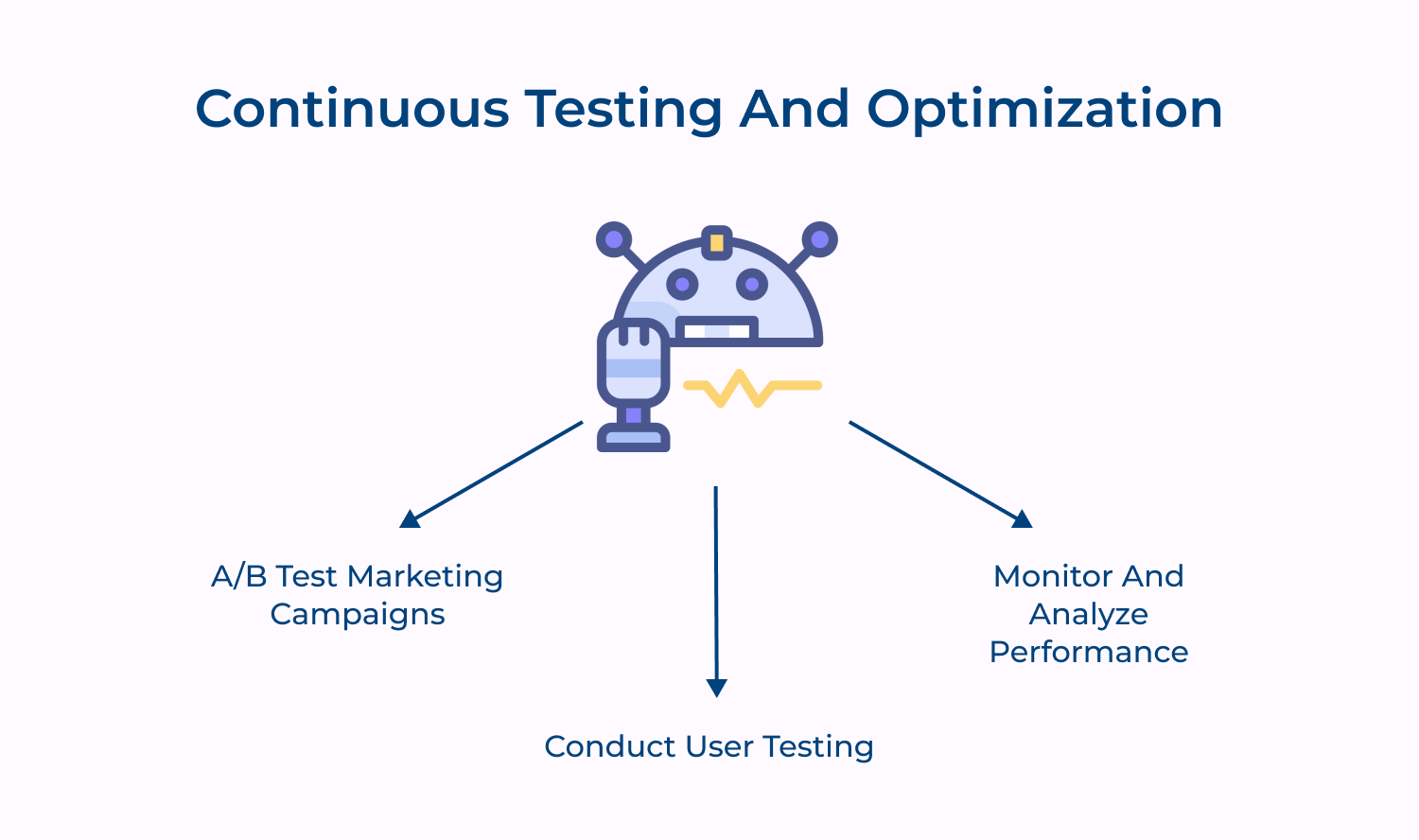
Example: The restaurant sends out the feedback form to a small group of customers first to gather feedback on the form itself, then makes adjustments based on their suggestions before rolling it out to all customers.
Best practices:
Feedback forms provide a quick route to acquire customers’ perceptions on your products/services/solutions. For gathering the information you need, it is important to create a feedback form that is well-designed and easy to use.
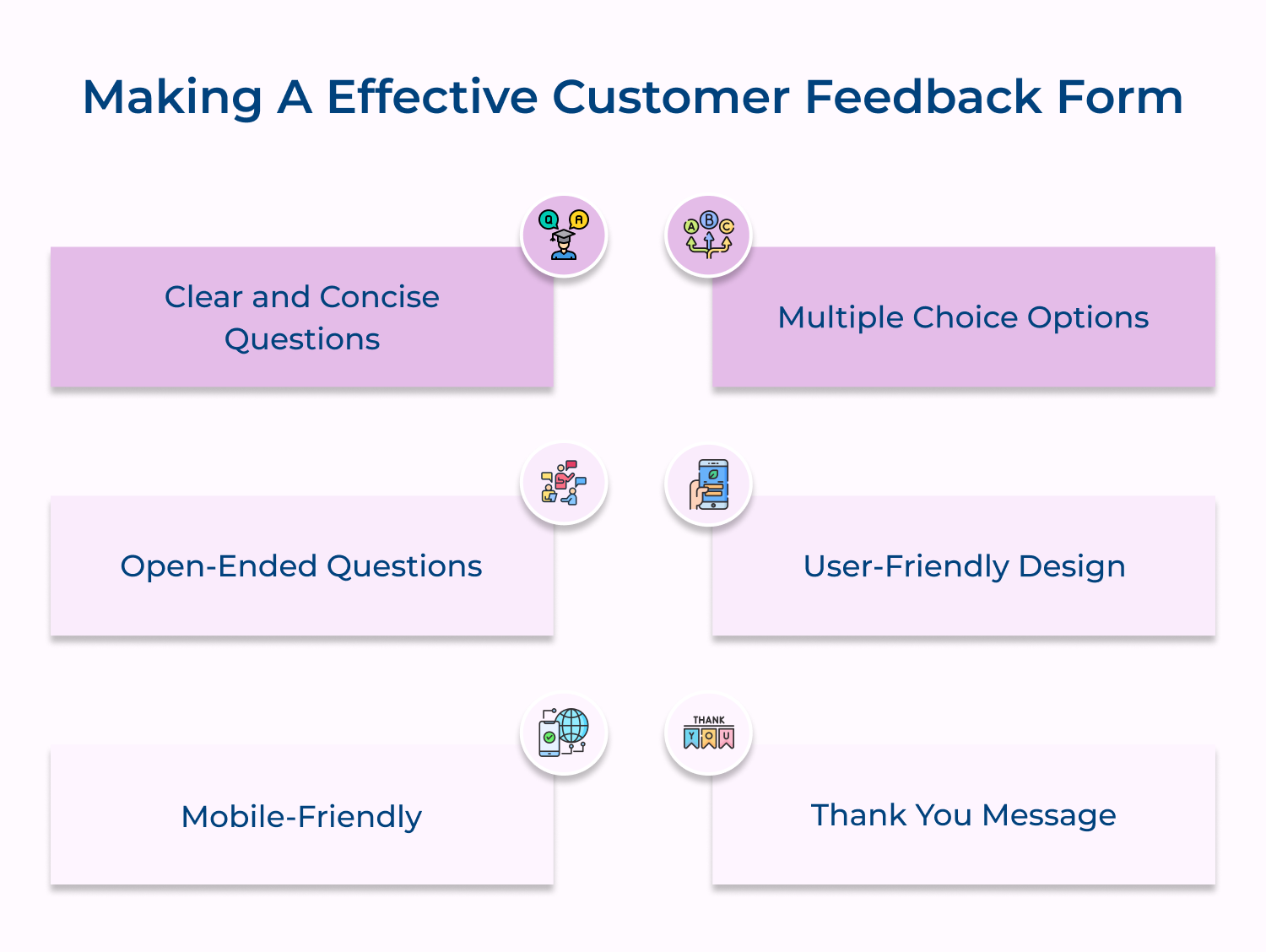
Ensure the questions on your feedback form are clear, specific and easy to understand. Avoid technical jargon or complex language and keep the questions concise to encourage respondents to provide detailed answers.
Providing multiple-choice options can make it easier for respondents to provide feedback quickly and efficiently. It also makes it easier for you to analyze the data later on.
Include open-ended questions that allow respondents to provide more detailed feedback in their own words. It can provide valuable insights and allow respondents to express their opinions more fully.
A customer feedback form that is well-designed and easy to navigate will encourage more people to complete it. Ensure the form is visually appealing with clear instructions and easy-to-use fields for respondents to fill out.
More and more people are using smartphones and tablets to access the internet hence it is important to ensure that your feedback form is mobile-friendly. It should be easy to use on a smaller screen, with easy fields to tap and fill out.
After someone completes a feedback form, it is a good practice to send a thank you message to show appreciation for their time and input. It can also encourage people to provide feedback in the future.
Creating customer feedback forms is an essential part of any business strategy. Gathering client feedback, understanding their needs and enhancing the overall customer experience.
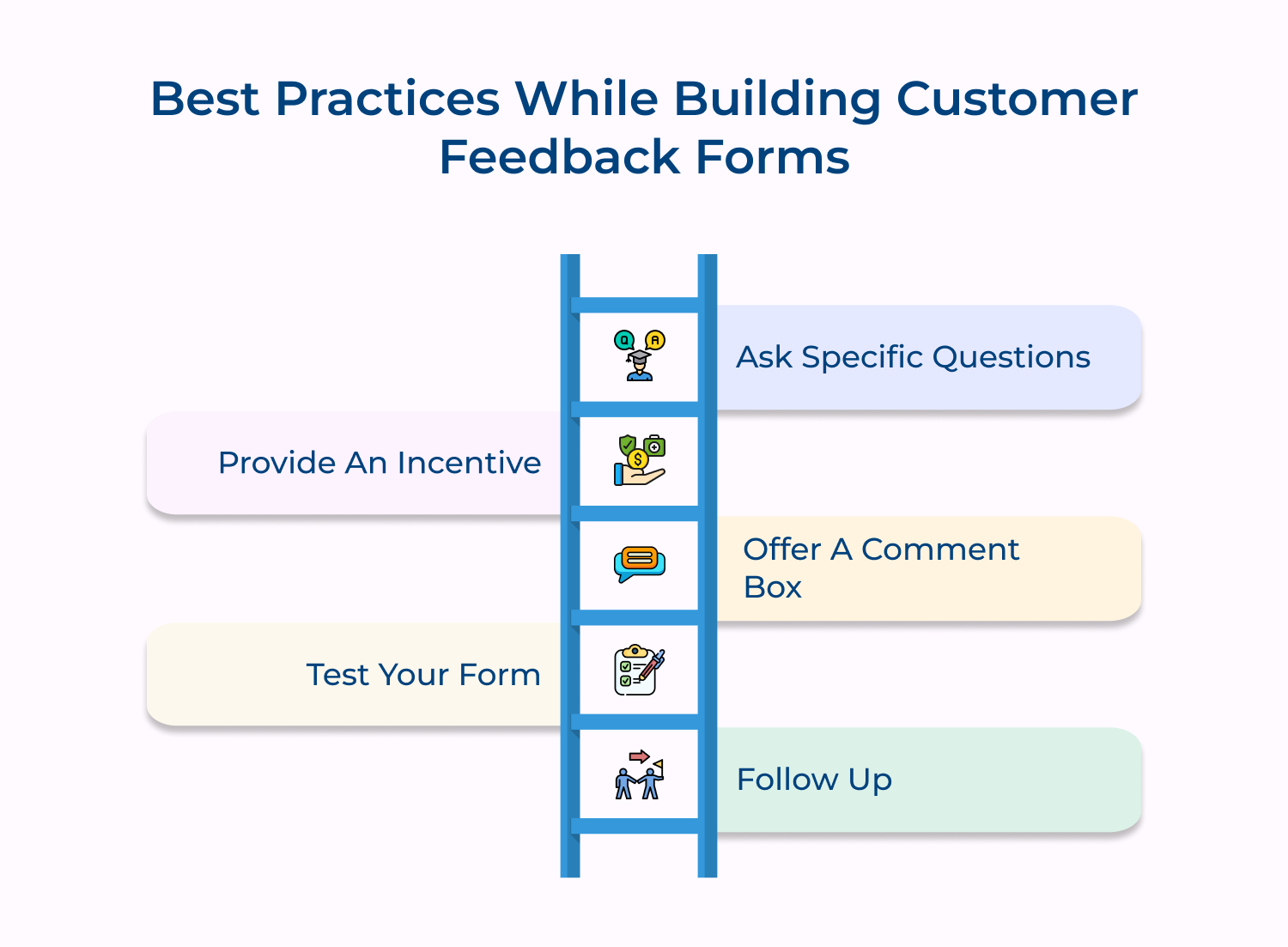
Here are the best practices to keep in mind when creating customer feedback forms:
Avoid vague questions and instead ask specific questions that will give you actionable insights. For example, instead of asking “How was your experience?”, ask “What specifically did you like or dislike about our product/service?”.
Encourage customers to fill out your feedback form by offering a small incentive, such as a discount or entry into a giveaway. It can increase the response rate and provide you with more valuable feedback.
Provide customers with a comment box where they can provide additional feedback or elaborate on their responses. It can give you more context and valuable insights into their opinions.
Before launching your feedback form, test it thoroughly to ensure that it functions correctly on all devices and browsers. It will help prevent any technical issues that might prevent customers from submitting their feedback.
Once you have received feedback from customers, ensure to follow up with them to let them know that their feedback is valued and to communicate any changes or improvements that have been made as a result of their input.
Customer feedback forms are an essential tool for businesses to collect valuable information from their customers. By understanding what customers like or dislike about a product or service, businesses can make necessary improvements to better meet their customer’s needs.
1. Uber Ride Rating
At the end of every Uber ride, passengers and drivers are asked to rate each other on a scale of 1 to 5 stars. Passengers can also provide comments about their ride experience, which Uber uses for quality control and driver training.
2. TripAdvisor Hotel Reviews
Travelers can leave detailed reviews about hotels they’ve stayed at, including ratings for various categories like location and service. These reviews help potential guests make informed decisions and allow hotels to address any issues or concerns.
3. Airbnb Host and Guest Reviews
After an Airbnb stay, both hosts & guests can leave public reviews and ratings for each other, covering aspects like communication or accuracy of listing details. These reviews help build trust and accountability within the Airbnb community.
4. Best Buy Customer Satisfaction Survey
After purchasing at Best Buy, customers may receive an email or SMS survey asking about their in-store or online experience, including staff helpfulness, product selection and checkout process. The feedback helps Best Buy improve its customer service and overall shopping experience.
Building a feedback-driven culture is essential for long-term success in any organization. By actively seeking feedback, teams can continuously improve, innovate, and adapt to changing market conditions. Encouraging open communication and a growth mindset within the organization will encourage a learning & development culture.
Embracing feedback as a tool for improvement rather than criticism will ultimately lead to increased productivity, employee satisfaction, and overall success. So, remember to prioritize feedback and incorporate it into your daily operations to ensure sustained growth.

1. Why is it so important to gather customer feedback?
Customer feedback allows businesses to understand their customers’ needs and expectations. It helps in improving products or services, enhancing customer experience and building long-term customer relationships.
2. Who can benefit from a customer feedback form?
Any business, big or small, can benefit from gathering customer feedback. It is particularly useful for companies that want to improve their products or services, maintain customer loyalty and attract new customers.
3. Should I respond to a customer feedback form when it comes in?
Yes, it is essential to respond to customer feedback promptly. Whether the feedback is positive or negative, acknowledging it shows that you value your customer’s opinions. Responding to feedback also provides an opportunity to address any issues, offer solutions and show your commitment to customer satisfaction.
4. Why should I use surveys and forms for my business?
Surveys and feedback forms are effective tools for collecting customer feedback in a structured manner. They allow businesses to gather specific information, analyze responses, and identify trends or patterns. Surveys and forms can be customized to target specific areas of interest, making it easier to assess customer satisfaction.
5. When is the best time to use feedback forms?
Feedback forms can be used at various stages of the customer journey, including before, during, and after a purchase. For example, businesses can use feedback forms to gather initial impressions, assess customer satisfaction during interactions and request feedback after a transaction is completed.
 https://omni24.io/wp-content/uploads/2026/09/Social-commerce-scaled.png
1340
2560
Webvision Solution
https://omni24.io/wp-content/uploads/2023/04/Omni-Logo-1.svg
Webvision Solution2026-10-23 12:18:272026-10-23 12:18:27What is Social Commerce and Why Does It Matter?
https://omni24.io/wp-content/uploads/2026/09/Social-commerce-scaled.png
1340
2560
Webvision Solution
https://omni24.io/wp-content/uploads/2023/04/Omni-Logo-1.svg
Webvision Solution2026-10-23 12:18:272026-10-23 12:18:27What is Social Commerce and Why Does It Matter? https://omni24.io/wp-content/uploads/2026/08/AI-Customer-Service-Agents.png
1256
2400
Webvision Solution
https://omni24.io/wp-content/uploads/2023/04/Omni-Logo-1.svg
Webvision Solution2026-09-21 04:48:512026-09-21 04:48:51How to Build an AI Customer Service Agents: 8 Key Steps
https://omni24.io/wp-content/uploads/2026/08/AI-Customer-Service-Agents.png
1256
2400
Webvision Solution
https://omni24.io/wp-content/uploads/2023/04/Omni-Logo-1.svg
Webvision Solution2026-09-21 04:48:512026-09-21 04:48:51How to Build an AI Customer Service Agents: 8 Key Steps https://omni24.io/wp-content/uploads/2026/08/Omnichannel-Conversational-AI.png
1256
2400
Tushar Joshi
https://omni24.io/wp-content/uploads/2023/04/Omni-Logo-1.svg
Tushar Joshi2026-09-16 03:51:072026-09-16 03:51:07How to Build Omnichannel Conversational AI Strategy
https://omni24.io/wp-content/uploads/2026/08/Omnichannel-Conversational-AI.png
1256
2400
Tushar Joshi
https://omni24.io/wp-content/uploads/2023/04/Omni-Logo-1.svg
Tushar Joshi2026-09-16 03:51:072026-09-16 03:51:07How to Build Omnichannel Conversational AI Strategy
Whether it’s about acquire, engage or support – Omni24 covers all your customer engagement needs in one complete platform.

Copyright ©2026 Veemo All rights reserved.
CA, Los Angeles, Hall Ave, 19011