How to Create an Impactful Customer Feedback Program: 8 Key Steps
Customer feedback programs reveal true needs, guide improvements, boost satisfaction and drive business growth.

Customer feedback programs reveal true needs, guide improvements, boost satisfaction and drive business growth.
Are you tired of guessing what customers want or feeling frustrated by lost sales? Your business may be missing a crucial element: a customer feedback program. Implementing a well-structured client feedback program can transform your business.
Companies effectively managing feedback report a 10x boost in customer satisfaction
Actively listening to customers uncovers invaluable insights and reveals untapped opportunities. A powerful customer feedback tool allows you to make data-driven decisions and boost customer satisfaction.
Let us explore how to create an effective customer feedback program that will propel your business growth.
A customer feedback program is a structured approach of collecting, analyzing and acting on customer insights regarding their experiences with a company’s products or services. This initiative helps businesses understand customer needs, preferences and pain points.
A customer feedback program provides actionable insights that enhance satisfaction and business performance. Actively engaging customers and soliciting their opinions allows companies to identify areas for improvement.
Key objectives:
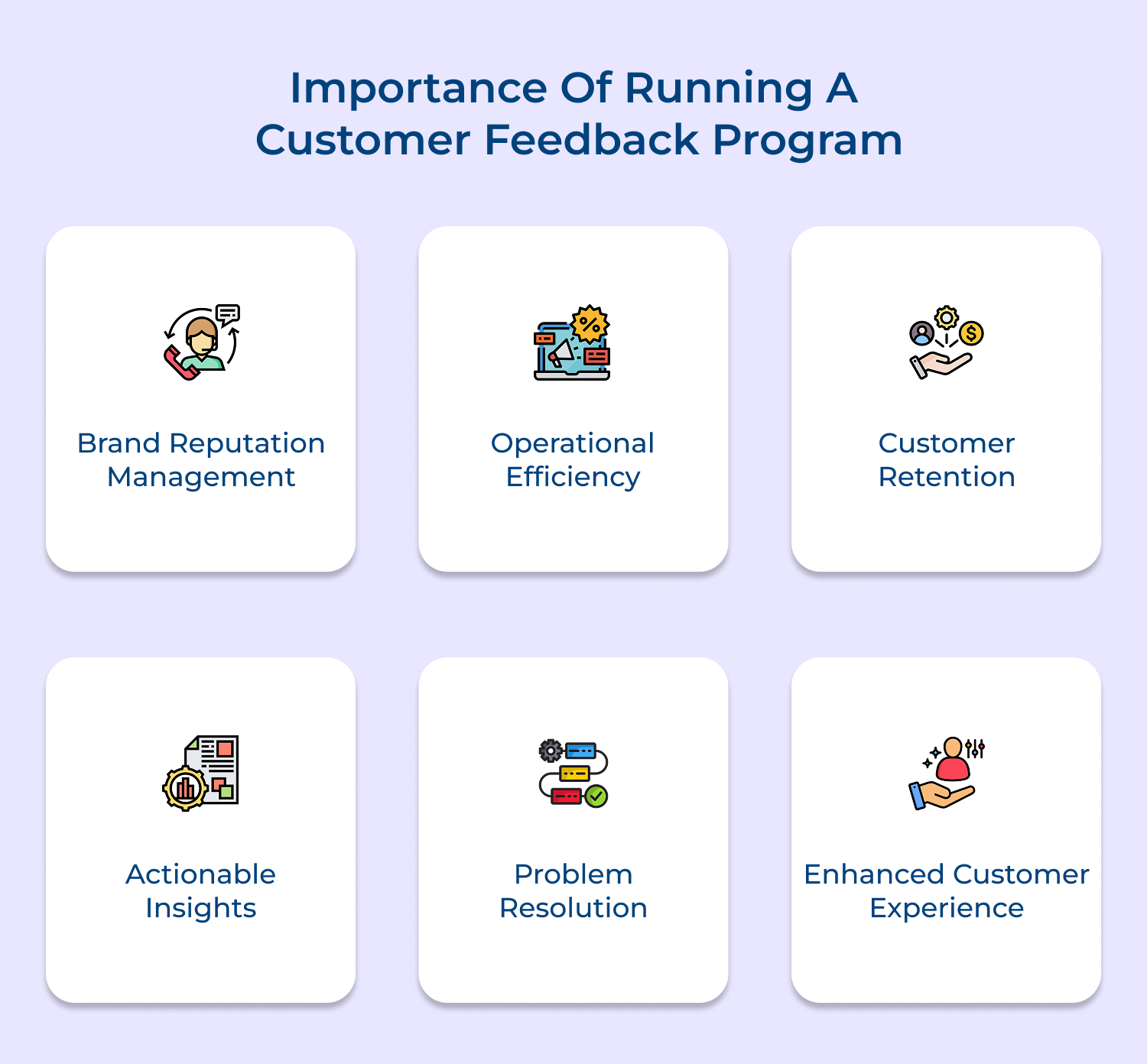
Running a customer feedback program is essential for understanding customer needs, improving satisfaction, and driving business success.
Developing a robust customer feedback program is crucial for business success. Here’s a list of essential steps to create a program that drives meaningful improvements.
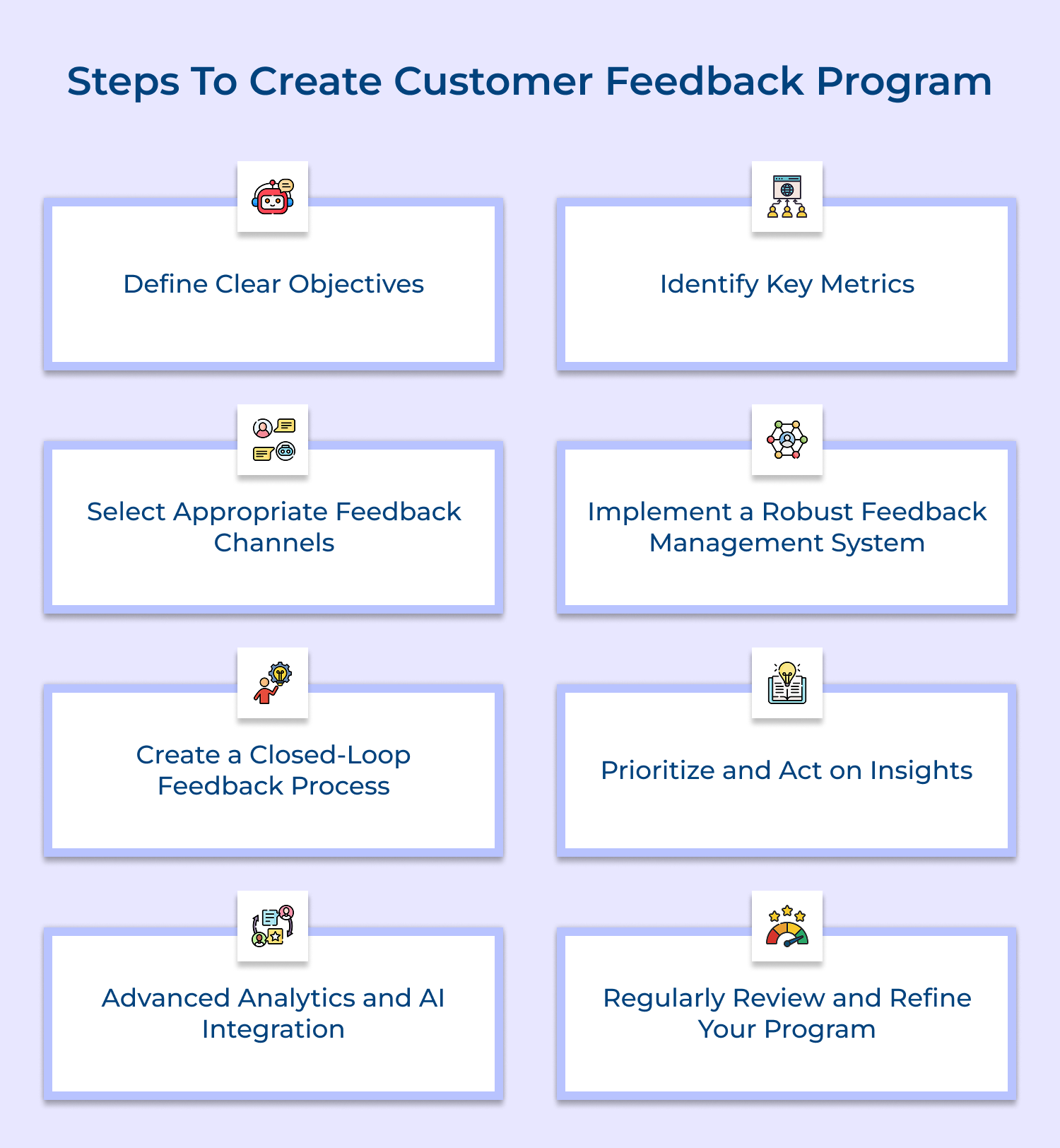
Defining clear objectives for your customer feedback program provides direction and purpose. It ensures that all efforts are aligned with your business goals and customer needs. Without clear objectives, you risk collecting data that doesn’t drive meaningful improvements or support your overall business strategy.
Use objectives to guide the design of your feedback program, including what questions to ask, which channels to use and how to analyze the data. Clear objectives help prioritize actions based on feedback and measure the program’s success. They also facilitate communication of the program’s importance to stakeholders across the organization.
Tips:
1. Involve key stakeholders from different departments to ensure objectives align with overall business goals and cover various aspects of customer experience.
2. Use the SMART framework (Specific, Measurable, Achievable, Relevant, Time-bound) to create well-defined objectives that can be effectively tracked and evaluated.
Key metrics provide quantifiable measures of your feedback program’s effectiveness and impact on customer satisfaction. They allow you to track progress, identify trends and demonstrate the value of the program to leadership. Without defined metrics, it’s challenging to assess whether your efforts are yielding positive results or require adjustment.
Use key metrics to set benchmarks, track improvements over time and compare performance across different customer segments or business units. These metrics can be used in regular reports to leadership, helping inform strategic decisions. They also provide a basis for setting targets and motivating teams to enhance customer experience.
Tips:
1. Choose a mix of customer-centric metrics (e.g., Net Promoter Score, Customer Satisfaction Score) and business performance metrics (e.g., customer retention rate, average order value) to get a comprehensive view.
2. Regularly review your metrics to ensure they remain relevant and aligned with your evolving business objectives and customer expectations.
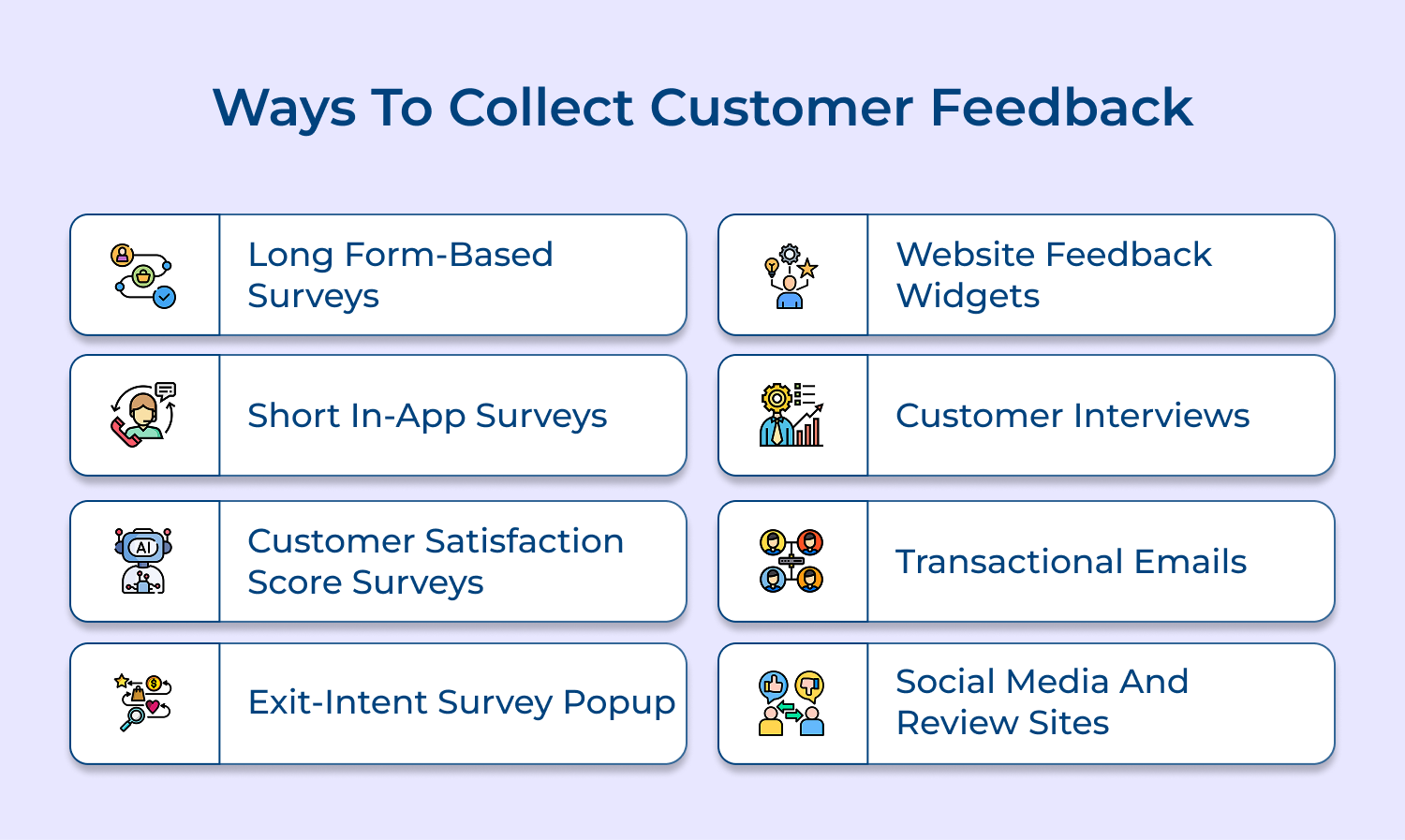
Different feedback channels cater to various customer preferences and capture diverse types of feedback. A multi-channel approach ensures you reach a wider audience and gather more comprehensive insights.
Use a mix of channels such as surveys, social media monitoring, customer interviews and in-app feedback tools. Tailor the channel to the type of feedback you’re seeking and the customer segment you’re targeting.
Tips:
1. Map your chosen feedback channels to different stages of the customer journey to ensure comprehensive coverage and relevant insights at each touchpoint.
2. Regularly assess the performance of each channel in terms of response rates, data quality and actionable insights, adjusting your channel mix as needed.
A robust feedback management system centralizes data collection, analysis and reporting. It ensures that feedback from various channels is consolidated, making it easier to identify trends and insights.
Use the system to automate feedback collection, route feedback to relevant teams and generate real-time reports. It can help prioritize issues based on urgency or impact, track resolution progress and measure the effectiveness of actions taken.
Tips:
1. Choose a feedback management system that integrates well with your existing tech stack and offers customization options to fit your specific needs.
2. Provide thorough training to all users of the system and establish clear processes for handling different types of feedback.
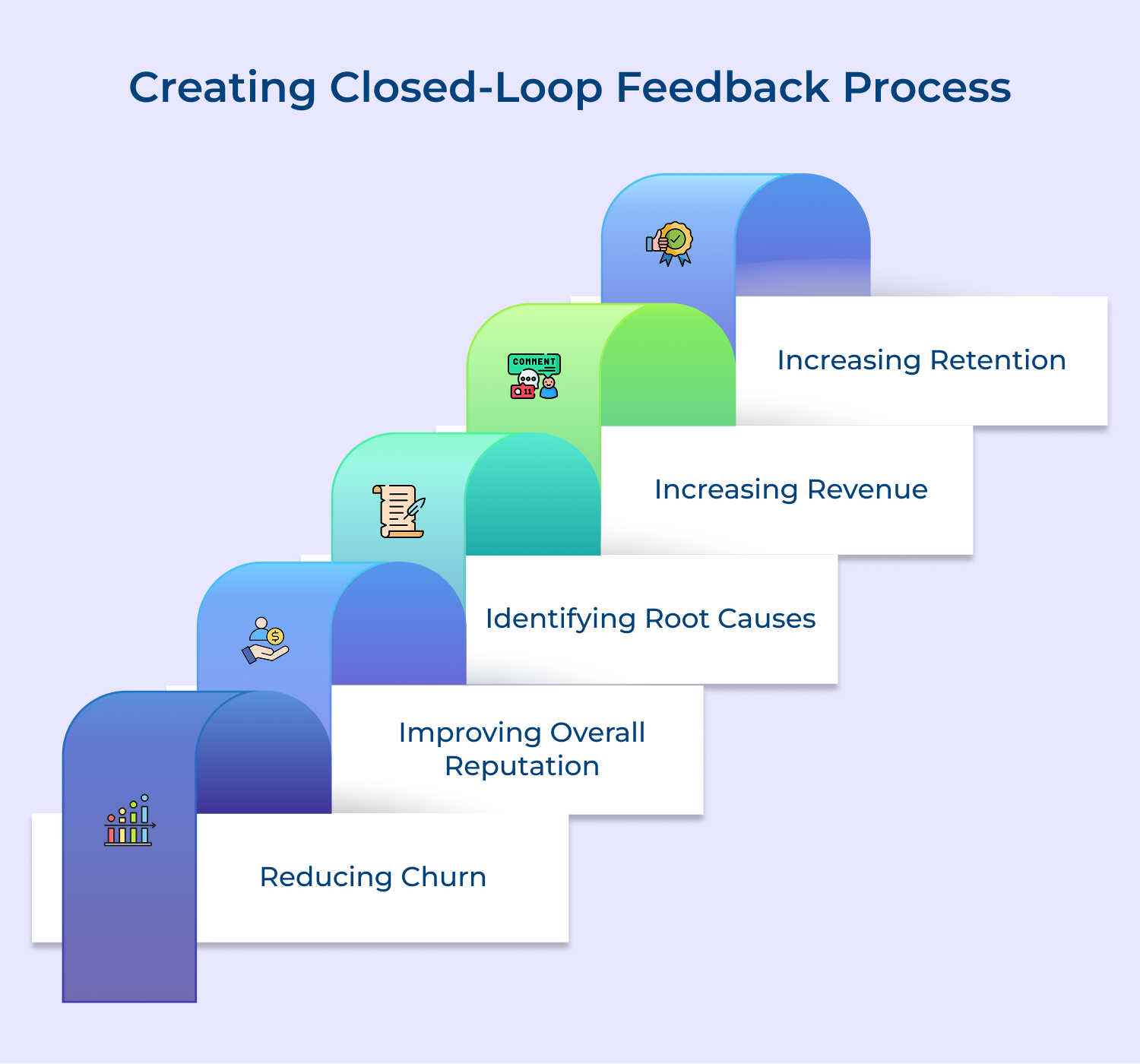
A closed-loop feedback process ensures that customer feedback doesn’t just get collected but actually leads to action and improvement. It demonstrates to customers that their input is valued and acted upon, increasing their engagement with the feedback process.
Implement a system where feedback is reviewed, categorized and assigned to relevant teams for action. Follow up with customers to inform them of actions taken based on their feedback. Use this process to identify systemic issues that require broader changes and to track the impact of improvements made in response to feedback.
Tips:
1. Set clear timelines for responding to and acting on different types of feedback, ensuring that high-priority issues are addressed promptly.
2. Regularly share success stories of improvements made based on customer feedback to motivate teams and demonstrate the value of the feedback program.
Not all feedback carries equal weight or urgency. Prioritizing insights ensures that resources are allocated efficiently to address the most critical issues or greatest opportunities. It helps balance quick wins with long-term strategic improvements.
Develop a framework for assessing the impact and feasibility of potential actions. Use this to create a prioritized list of improvements. Implement a system for tracking the progress and impact of actions taken.
Tips:
1. Create a cross-functional team to review and prioritize insights, ensuring diverse perspectives are considered in decision-making.
2. Develop a simple but effective scoring system to rate potential actions based on factors like customer impact, business value and implementation effort.
Advanced analytics and AI can uncover deeper insights from large volumes of feedback data, including unstructured text. These technologies can identify subtle patterns and trends that might be missed by manual analysis.
Implement text analytics to automatically categorize and sentiment-analyze open-ended feedback. Use predictive analytics to anticipate customer needs or potential issues. Employ AI-powered chatbots for real-time feedback collection and initial response.
Tips:
1. Start with a pilot project focusing on a specific use case (e.g., analyzing social media comments) to demonstrate the value of advanced analytics before scaling up.
2. Ensure you have a team with the right skills to interpret and act on the insights generated by advanced analytics & AI tools.
Regular review ensure your feedback program remains effective and aligned with evolving business needs and customer expectations. It helps identify what’s working well and what needs improvement in your approach.
Conduct periodic audits of your feedback program, assessing its effectiveness against your defined objectives and metrics. Gather feedback on the feedback process itself from both customers and internal stakeholders.
Tips:
1. Schedule quarterly reviews of your feedback program, involving representatives from different departments to get a holistic perspective on its performance and impact.
2. Create a continuous improvement log to track suggestions for program enhancements and prioritize these for implementation in future iterations.
Selecting the right tools can streamline your feedback process and enhance insights. Here’s a list of powerful solutions that can elevate your customer feedback program.
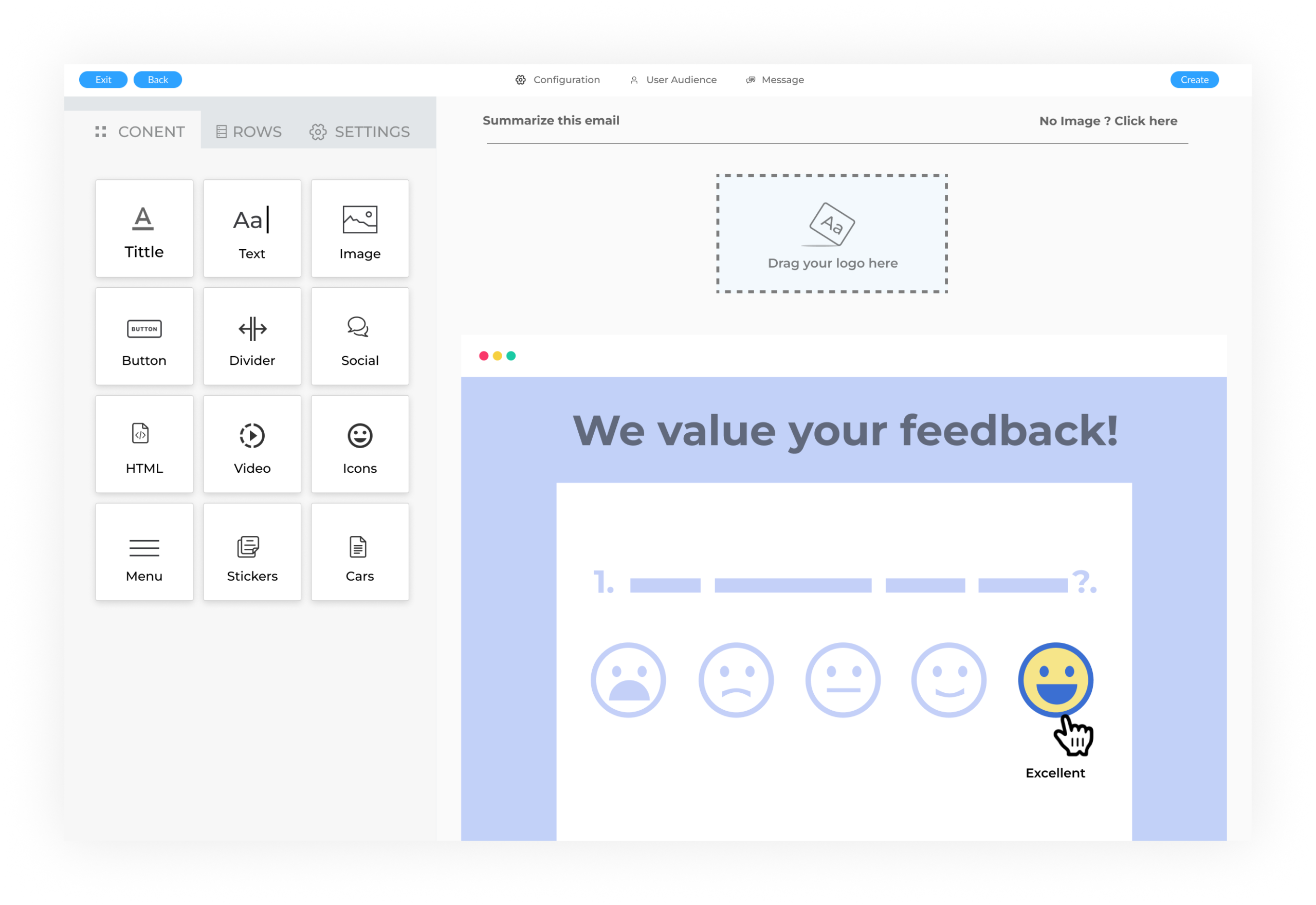
Omni24 is an omnichannel consumer experience platform that goes beyond simple surveys. It offers advanced research tools, customer experience management and employee insights. The software is known for its robust features and is often used by all size enterprises for in-depth market research as well as customer analysis.
Key features:
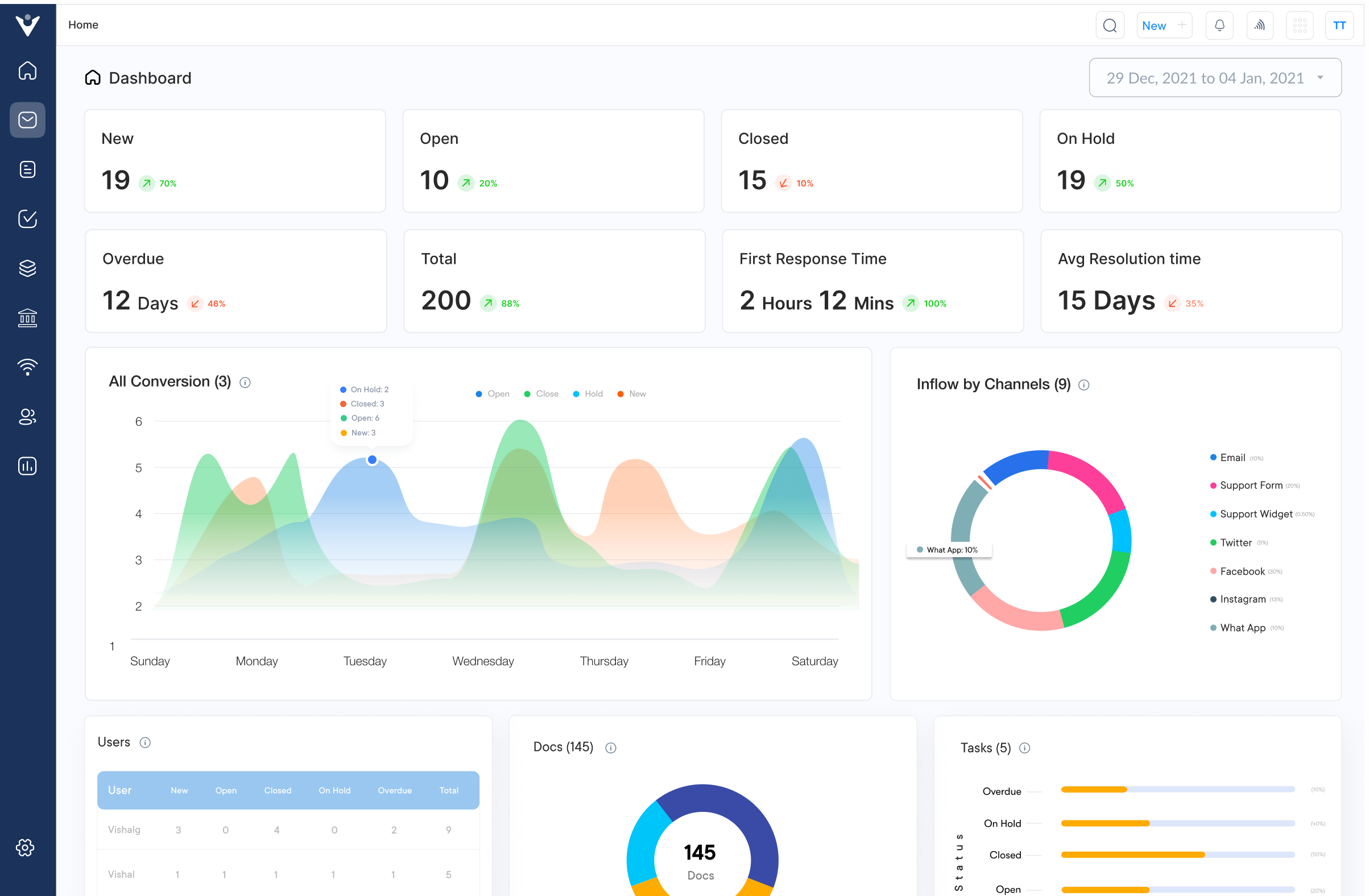
Veemo Survey is a customer engagement platform that offers engaging surveys and collects feedback across various touchpoints. The software is a part of Veemo’s customer engagement suite of products designed to streamline and enhance various aspects of business operations. It provides conversational interface that improves survey completion rates and gives actionable insights for better decision-making
Key features:
SurveyMonkey is a user-friendly, versatile online survey tool suitable for businesses of all sizes. While it’s known for its ease of use in creating and distributing surveys, it also offers more advanced features for customer feedback programs. SurveyMonkey provides a cost-effective solution for collecting, analyzing and acting on customer insights.
SurveyMonkey offers customizable survey templates, multiple question types and skip logic. It provides real-time results, basic analytics and data visualization tools. The platform includes features for team collaboration, data export and integration with other business tools. It also offers a panel service for reaching specific audiences.
Zendesk is primarily known as a customer service platform, but it also offers robust tools for customer feedback. Its feedback features are deeply integrated with its customer support functionalities, allowing businesses to seamlessly collect, analyze and act on customer feedback within the context of their overall customer service operations.
Zendesk provides multi-channel feedback collection, including email, chat and social media. It offers customizable surveys, ticket-based feedback management and automated workflows. The platform includes analytics & reporting features, integration with CRM systems and a knowledge base for self-service. It also supports community forums for peer-to-peer support.
Uservoice is a product feedback and customer engagement platform designed primarily for software companies. It focuses on helping businesses collect, prioritize and act on customer feedback for product development. Uservoice bridges the gap between customer needs and product roadmaps, enabling data-driven product decisions.
Uservoice offers idea management boards, feature request tracking and customer feedback portals. It provides prioritization tools, roadmap planning features and stakeholder management capabilities. The platform includes analytics for measuring feature impact, integration with development tools and customizable widgets for in-app feedback collection.
Real-world examples provide valuable insights into successful feedback strategies. Here’s a list of how leading companies have implemented impactful customer feedback programs.
Starbucks: My Starbucks Idea
Starbucks launched “My Starbucks Idea” in 2008, an online community where customers could share, vote and discuss ideas to improve the Starbucks experience. This platform allowed direct engagement between customers and the company, encouraging a sense of ownership.
Customers submitted over 150,000 ideas, ranging from new product suggestions to store improvements. Starbucks implemented numerous customer ideas, including mobile payment options, free WiFi in stores and the creation of new beverages like Hazelnut Macchiato. The program not only improved customer satisfaction but also drove innovation within the company.
Dell: IdeaStorm
Dell’s IdeaStorm platform, launched in 2007, allows customers to submit ideas, vote on suggestions and engage in discussions about Dell products or services. The company has implemented over 550 ideas from this program, demonstrating its commitment to customer-driven innovation.
Notable outcomes include the introduction of Linux-based systems, improvements in packaging and enhanced customization options for Dell products. This program has helped Dell maintain relevance in a competitive market by directly addressing customer needs and preferences.
Airbnb: Customer Experience Team
Airbnb’s customer feedback program is integrated into its overall customer service strategy. The company has a dedicated Customer Experience team that not only resolves issues but also collects and analyzes feedback to improve the platform.
Airbnb uses various channels for feedback collection, including post-stay surveys, host feedback and direct customer support interactions. This comprehensive approach has led to numerous improvements, such as enhanced safety features, more transparent pricing and the introduction of Airbnb Plus for high-quality listings.
Amazon: Customer Reviews and Q&A
Amazon’s customer feedback program is primarily centered around its robust review system and Q&A feature. These allow customers to share their experiences with products and get answers to their questions directly from other customers or sellers.
This user-generated content not only helps other customers make informed decisions but also provides valuable insights for Amazon and its sellers. Amazon uses this feedback to improve its algorithms, enhance product listings and identify problematic sellers or products.
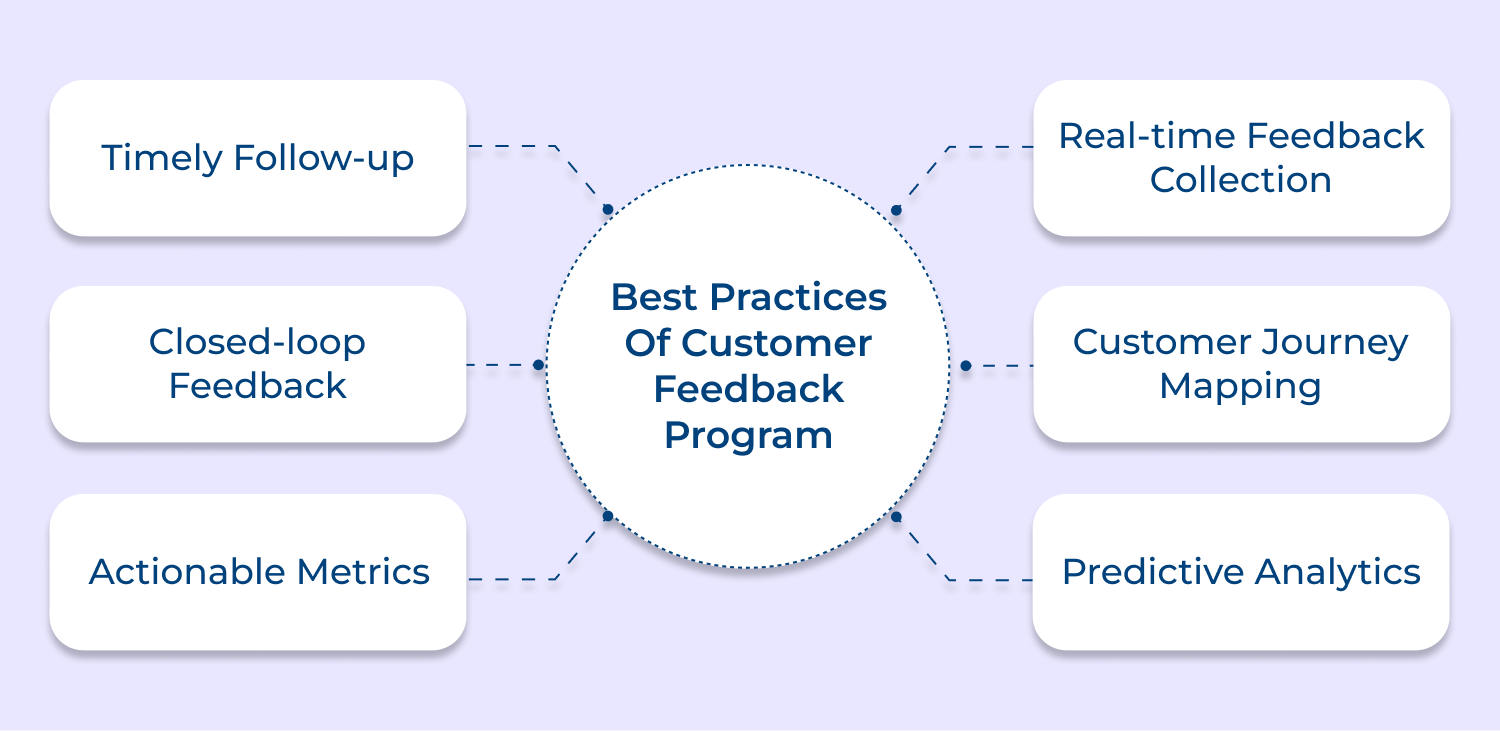
Optimizing your feedback program ensures maximum value from customer insights. Here’s a list of key best practices to enhance the effectiveness of your customer feedback initiatives.
In conclusion, a well-implemented customer feedback program encourages strong customer relationships and drives business success. Actively seeking and responding to customer insights allows companies to enhance their products and services, leading to improved satisfaction and loyalty. This ongoing dialogue helps identify areas for improvement and empowers customers, making them feel valued.
As businesses evolve in a competitive landscape, leveraging customer feedback is crucial for staying relevant and adapting to changing preferences. Ultimately, prioritizing customer feedback serves as a key strategy for sustainable growth and long-term success.

1. What types of feedback can be collected in a Customer Feedback Program?
A Customer Feedback Program can collect various types of feedback, including quantitative (e.g., ratings, scores) and qualitative (e.g., open-ended comments) data. Common types include product feedback, service experience feedback, Net Promoter Score (NPS), Customer Satisfaction (CSAT) ratings, feature requests, user experience feedback and post-purchase evaluations. Programs can also gather behavioral data and unsolicited feedback from social media.
2. How do you measure the success of a Customer Feedback Program?
The success of a Customer Feedback Program can be measured through various metrics. These include response rates, completion rates for surveys, changes in key customer metrics (like NPS or CSAT scores), the number of actionable insights generated and the rate of implementing improvements based on feedback. Other indicators include customer retention rates, reduced churn, increased sales and improved product ratings. The program’s impact on overall business KPIs is also a crucial measure of success.
3. How do you analyze and act upon the feedback collected from a customer feedback program?
Analyzing and acting on feedback involves several steps. First, consolidate and categorize feedback from various sources. Use text analytics and sentiment analysis for qualitative data. Identify trends, patterns and priority issues. Create action plans for addressing key concerns and share insights with relevant teams. Implement changes based on feedback, communicate actions to customers and monitor the impact of these changes. Continuously refine your approach based on outcomes.
4. What are the challenges in managing a customer feedback program?
Managing a customer feedback program comes with several challenges. These include ensuring representative sampling, avoiding survey fatigue, dealing with low response rates and managing large volumes of unstructured data. Other challenges involve breaking down silos between departments, securing buy-in from leadership, balancing quick wins with long-term improvements and measuring the ROI of the program. Closing the feedback loop consistently and managing customer expectations can be demanding.
 https://omni24.io/wp-content/uploads/2026/09/Social-commerce-scaled.png
1340
2560
Webvision Solution
https://omni24.io/wp-content/uploads/2023/04/Omni-Logo-1.svg
Webvision Solution2026-10-23 12:18:272026-10-23 12:18:27What is Social Commerce and Why Does It Matter?
https://omni24.io/wp-content/uploads/2026/09/Social-commerce-scaled.png
1340
2560
Webvision Solution
https://omni24.io/wp-content/uploads/2023/04/Omni-Logo-1.svg
Webvision Solution2026-10-23 12:18:272026-10-23 12:18:27What is Social Commerce and Why Does It Matter? https://omni24.io/wp-content/uploads/2026/08/AI-Customer-Service-Agents.png
1256
2400
Webvision Solution
https://omni24.io/wp-content/uploads/2023/04/Omni-Logo-1.svg
Webvision Solution2026-09-21 04:48:512026-09-21 04:48:51How to Build an AI Customer Service Agents: 8 Key Steps
https://omni24.io/wp-content/uploads/2026/08/AI-Customer-Service-Agents.png
1256
2400
Webvision Solution
https://omni24.io/wp-content/uploads/2023/04/Omni-Logo-1.svg
Webvision Solution2026-09-21 04:48:512026-09-21 04:48:51How to Build an AI Customer Service Agents: 8 Key Steps https://omni24.io/wp-content/uploads/2026/08/Omnichannel-Conversational-AI.png
1256
2400
Tushar Joshi
https://omni24.io/wp-content/uploads/2023/04/Omni-Logo-1.svg
Tushar Joshi2026-09-16 03:51:072026-09-16 03:51:07How to Build Omnichannel Conversational AI Strategy
https://omni24.io/wp-content/uploads/2026/08/Omnichannel-Conversational-AI.png
1256
2400
Tushar Joshi
https://omni24.io/wp-content/uploads/2023/04/Omni-Logo-1.svg
Tushar Joshi2026-09-16 03:51:072026-09-16 03:51:07How to Build Omnichannel Conversational AI Strategy
Whether it’s about acquire, engage or support – Omni24 covers all your customer engagement needs in one complete platform.

Copyright ©2026 Veemo All rights reserved.
CA, Los Angeles, Hall Ave, 19011