What is Customer Journey Optimization and How to Do It?
Customer journey optimization is key to enhancing experiences, reducing friction and building stronger customer relationships that drive business growth.
Customer journey optimization is key to enhancing experiences, reducing friction and building stronger customer relationships that drive business growth.
Businesses evolve and adapt to changing consumer behaviors because it is essential to prioritize customer journey optimization. By analyzing every touchpoint a customer has with your brand, you can identify areas for improvement and create a seamless personalized experience.
80% of companies believe customer journey analytics is critical for business success.
To stay ahead of the competition and build a loyal customer base, companies must prioritize customer journey optimization. By mapping out their journeys, businesses can identify pain points, improve interactions and drive growth.
Let’s explore the significance of Customer Journey Optimization and how your business will thrive in a market.
Customer journey optimization is a crucial aspect of digital marketing that focuses on enhancing the overall CX while interacting with a brand. It involves improving every touchpoint that a customer goes through, from the initial awareness of a product or service to the final purchase decision and post-purchase support.
The customer journey typically involves multiple channels & devices, such as social media, websites, email and mobile apps. By optimizing each step of the journey, businesses can ensure that customers have a positive experience, leading to increased loyalty, satisfaction and higher conversion rates.
Key objectives:
Optimizing the customer journey ensures seamless, personalized interactions across all touchpoints. It leads to higher satisfaction conversions for long-term business success.
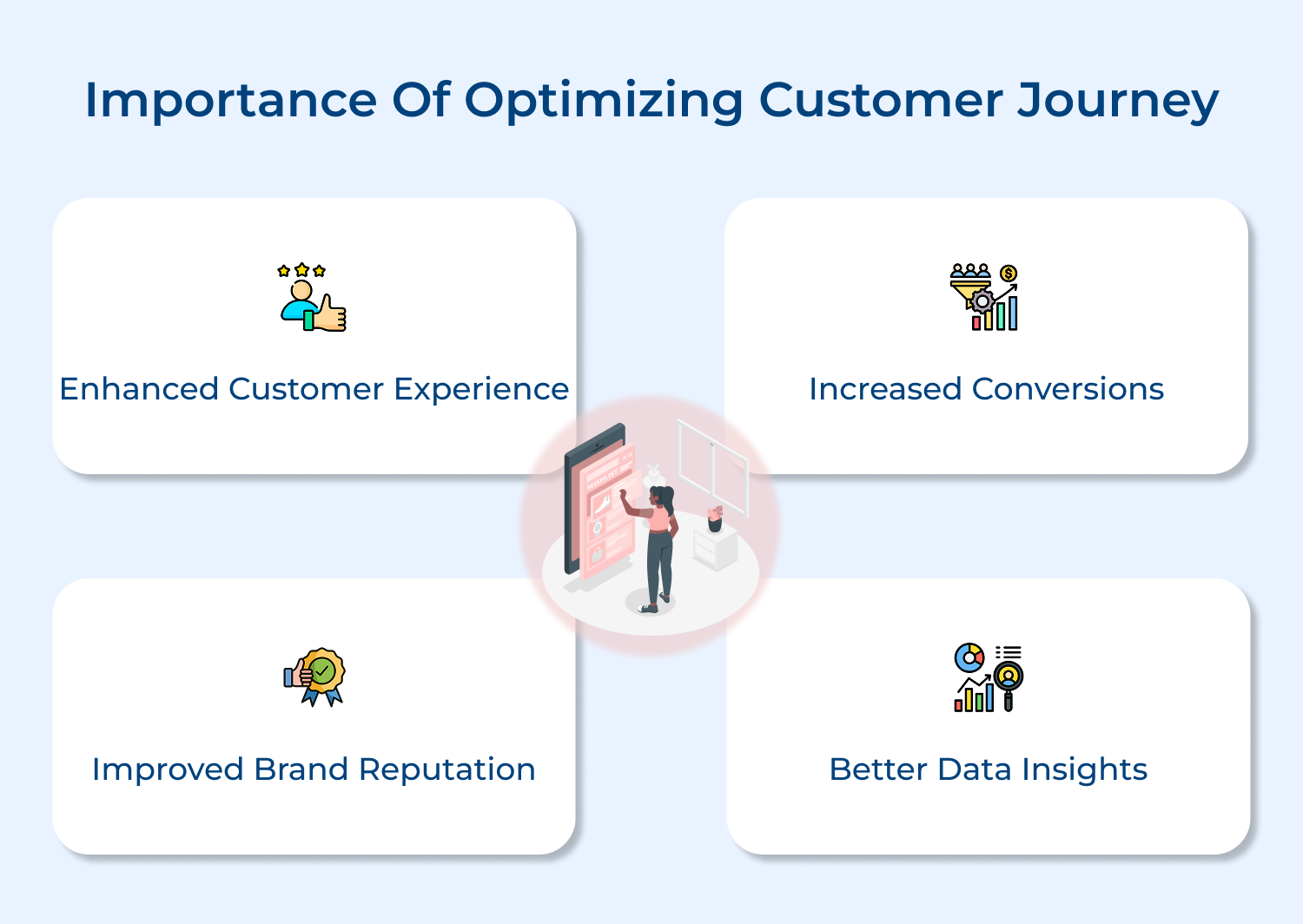
1. Enhanced customer experience: By optimizing the customer journey, you can provide a personalized customer experience. It can lead to increased customer satisfaction, which motivates them to return to a brand that provides a positive experience.
2. Increased conversions: A well-optimized customer journey guides customers through the sales funnel and leads to more conversions. By understanding your customers’ needs at each touchpoint, you can tailor your messaging and offerings to drive them towards making a purchase.
3. Improved brand reputation: A positive customer journey enhances your brand reputation. Customers are more likely to recommend your brand to others if they have had a positive experience, leading to increased word-of-mouth referrals and potentially more customers in the future.
4. Better data insights: By analyzing the customer journey, you can gather valuable data and insights into your customers’ preferences. This data makes more informed decisions about your marketing strategies or product offerings, leading to better results and a more successful business overall.
Optimizing the customer journey is crucial for attracting and retaining customers. A seamless customer journey not only enhances customer satisfaction but also boosts brand loyalty and increases sales.
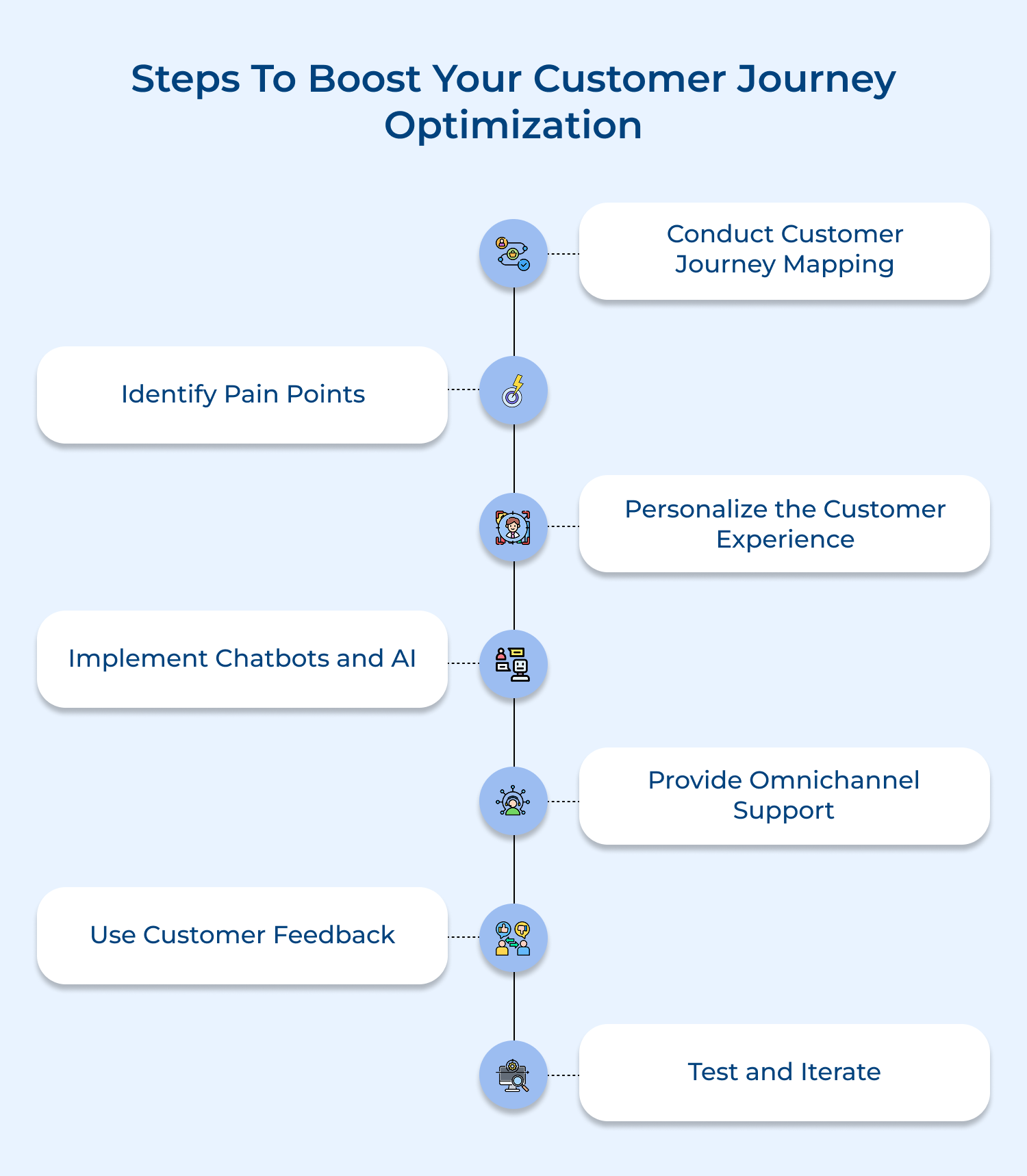
The first step to optimizing the customer journey is to map out the entire journey from the initial interaction to post-purchase support. Understanding the various touchpoints and experiences that customers have with your brand will help identify areas for improvement.
Here are few tips to consider:
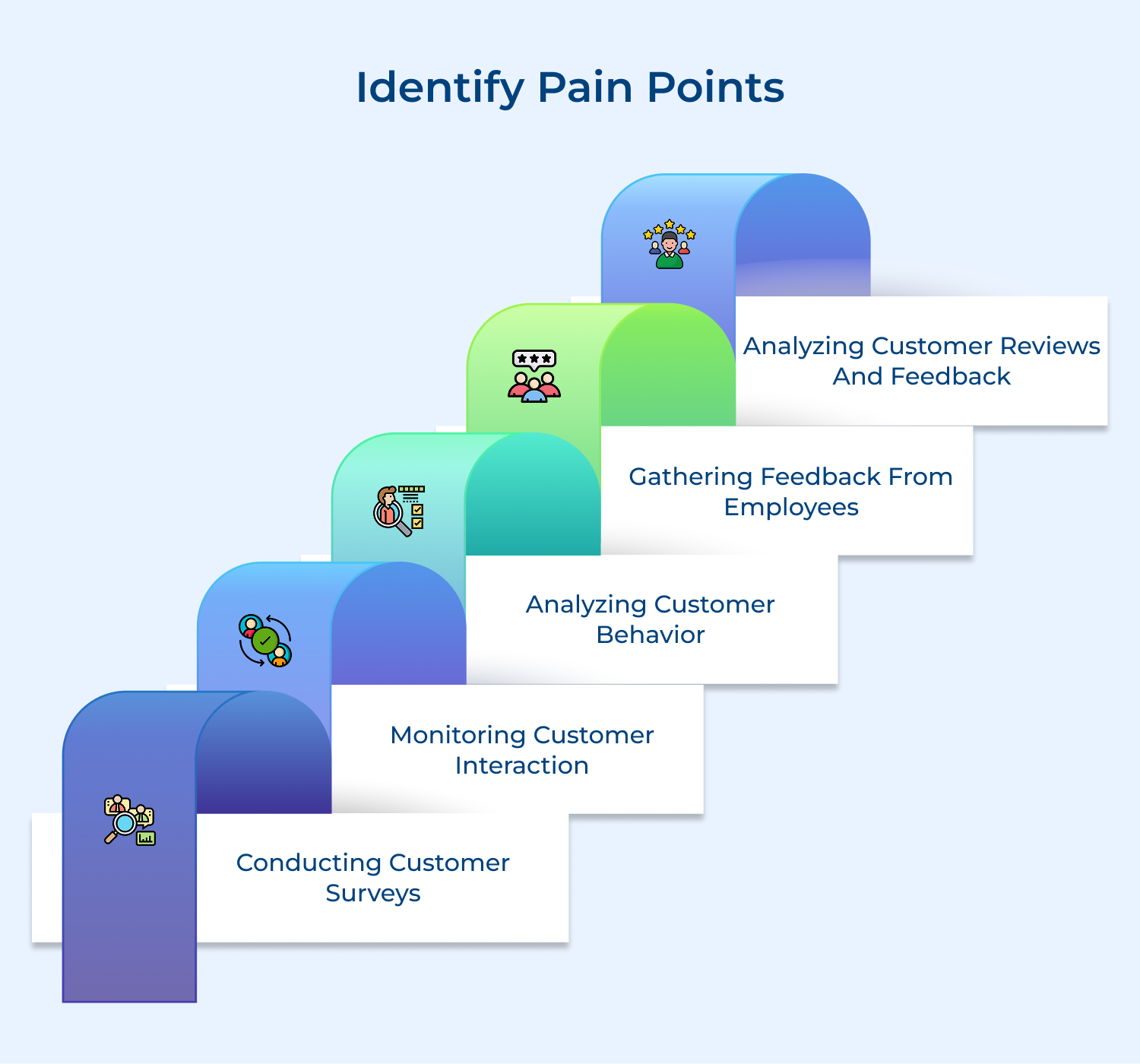
Once you have mapped out the customer journey, identify pain points that customers may encounter. These could be delays in response times, confusing website navigation or lack of personalized communication. Addressing these pain points will help streamline the customer journey and improve overall satisfaction.
Pro tips to follow:
Personalization is key to optimizing the customer journey. Use customer data & insights to tailor communications to individual preferences and behaviors. Personalized experiences make customers feel valued and enhance their overall journey with your brand.
Here are few tips to consider:
Incorporating chatbots and artificial intelligence (AI) technology can streamline the customer journey by providing efficient responses to customer queries. Chatbots can assist customers with basic inquiries, freeing up human agents to focus on more complex issues.
Pro tips to follow:
Customers expect seamless experiences across various channels, whether it’s social media, email, or in-store interactions. Providing omnichannel support ensures that customers can engage with your brand consistently and cohesively, regardless of the channel they choose.
Here are few tips to consider:
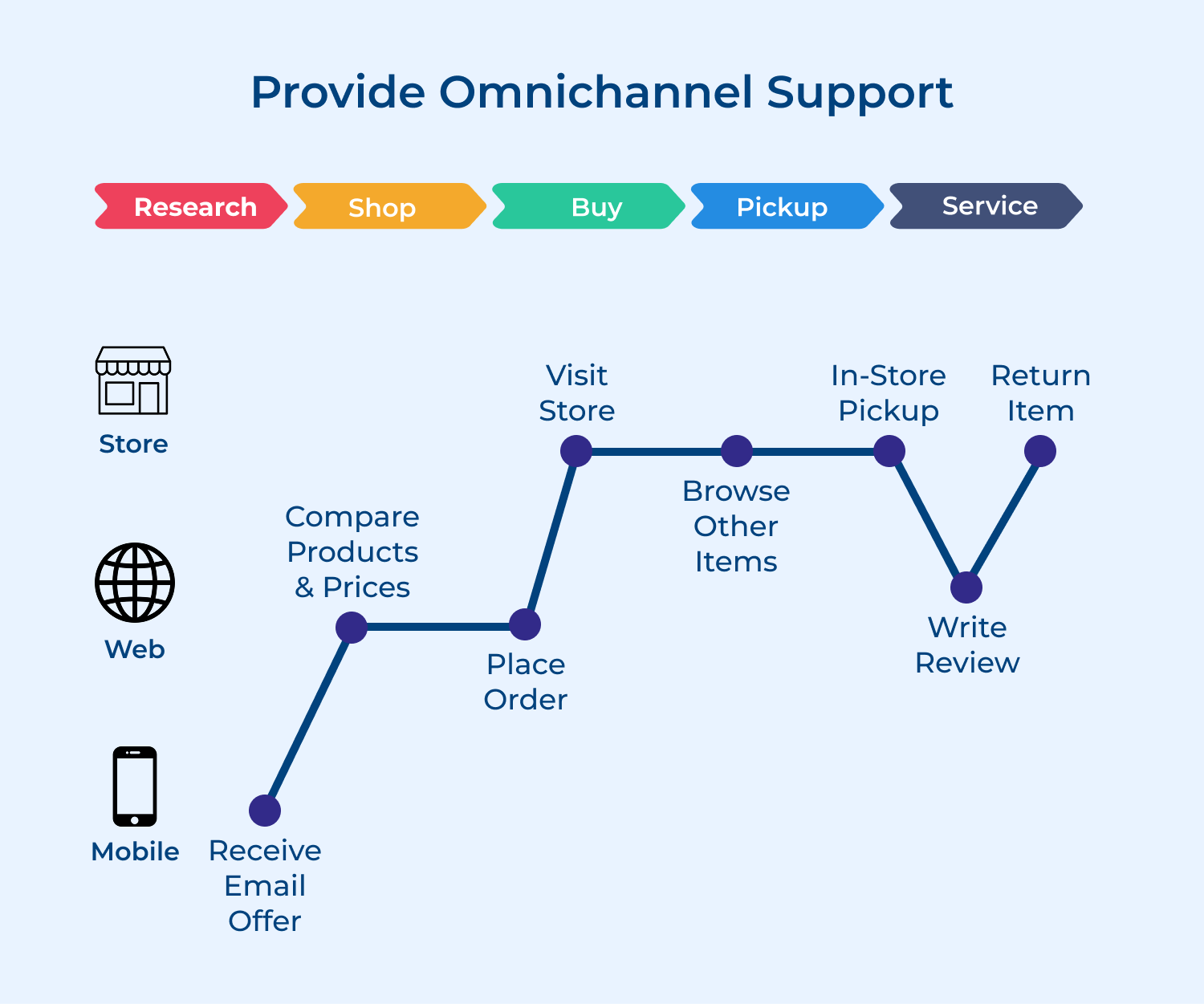
Collecting and analyzing customer feedback is essential for optimizing the customer journey. Use surveys, reviews and social media monitoring to gather insights into customer pain points. Implementing changes based on customer feedback will help enhance the overall customer experience.
Pro tips to follow:
Customer preferences and behavior evolve over time, so it’s essential to continuously test and iterate on your customer journey optimization strategies. A/B testing, user testing and analytics identify areas for improvement at the same time refine your approach to better meet customer needs.
Here are few tips to consider:
The customer journey is vital to any marketing strategy, helping businesses understand buyer behavior and improve satisfaction. Using the 4 A’s—Awareness, Attraction, Action and Advocacy—provides a clear framework to guide and optimize this journey.
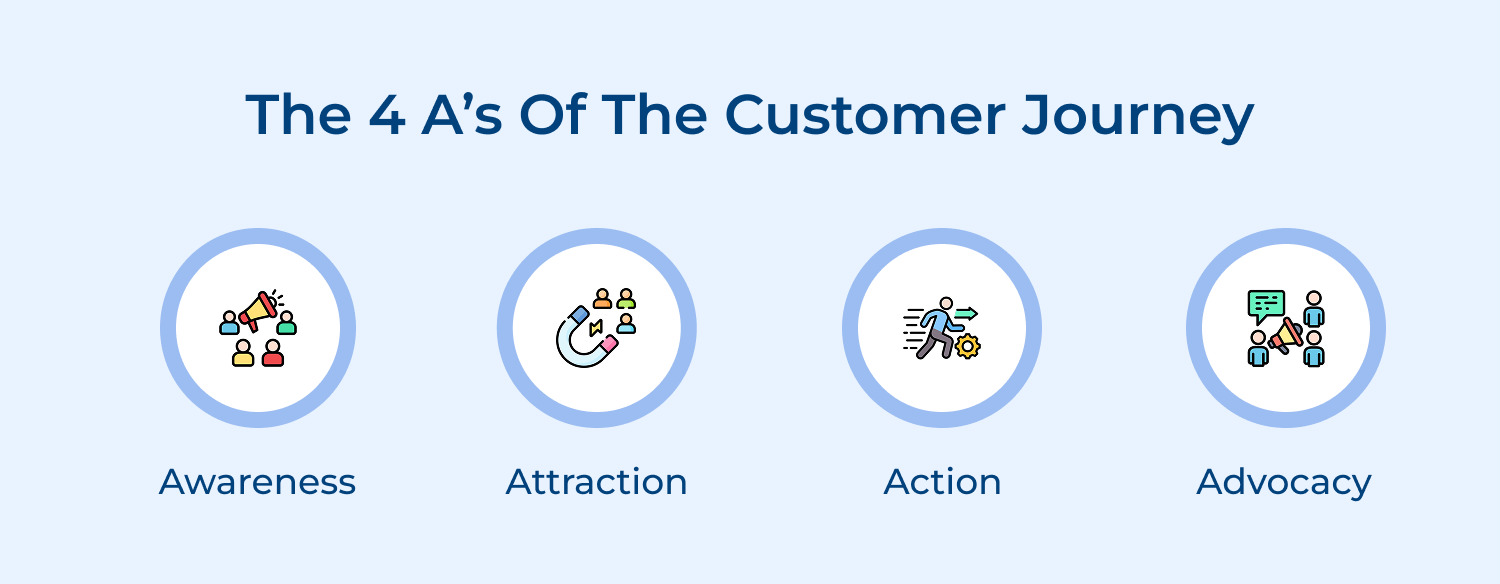
The first step in the customer journey is awareness. It is when a potential customer becomes aware of your brand, product or service. It could happen through various channels such as social media, advertising, word-of-mouth or search engines. At this stage, it is important to create a strong brand presence and ensure that your target audience knows who you are & what you offer.
Once a customer is aware of your brand, the next step is to attract them to consider your product or service. It is where you need to differentiate yourself from your competitors and showcase the value that you can provide. This could include offering promotions, creating engaging content or providing personalized recommendations to cater to the customer’s needs.
The action stage is where the customer makes a purchase decision. It could be online, in-store, or through a sales representative. It is crucial to make the purchasing process as seamless as possible and provide excellent customer service to ensure a positive buying experience. This stage is also an opportunity to upsell or cross-sell additional products or services to increase the customer’s lifetime value.
The final stage of the customer journey is advocacy. It is when a satisfied customer becomes a loyal advocate for your brand via positive word-of-mouth. Customers who have a positive experience are more likely to recommend your brand to others, write positive reviews, or engage with your content on social media. Building a community of brand advocates drives long-term success and increases customer retention.
Customer journey optimization helps businesses enhance experiences across touchpoints, boosting satisfaction and conversions. Measuring its effectiveness is key to refining strategies and driving long-term growth.
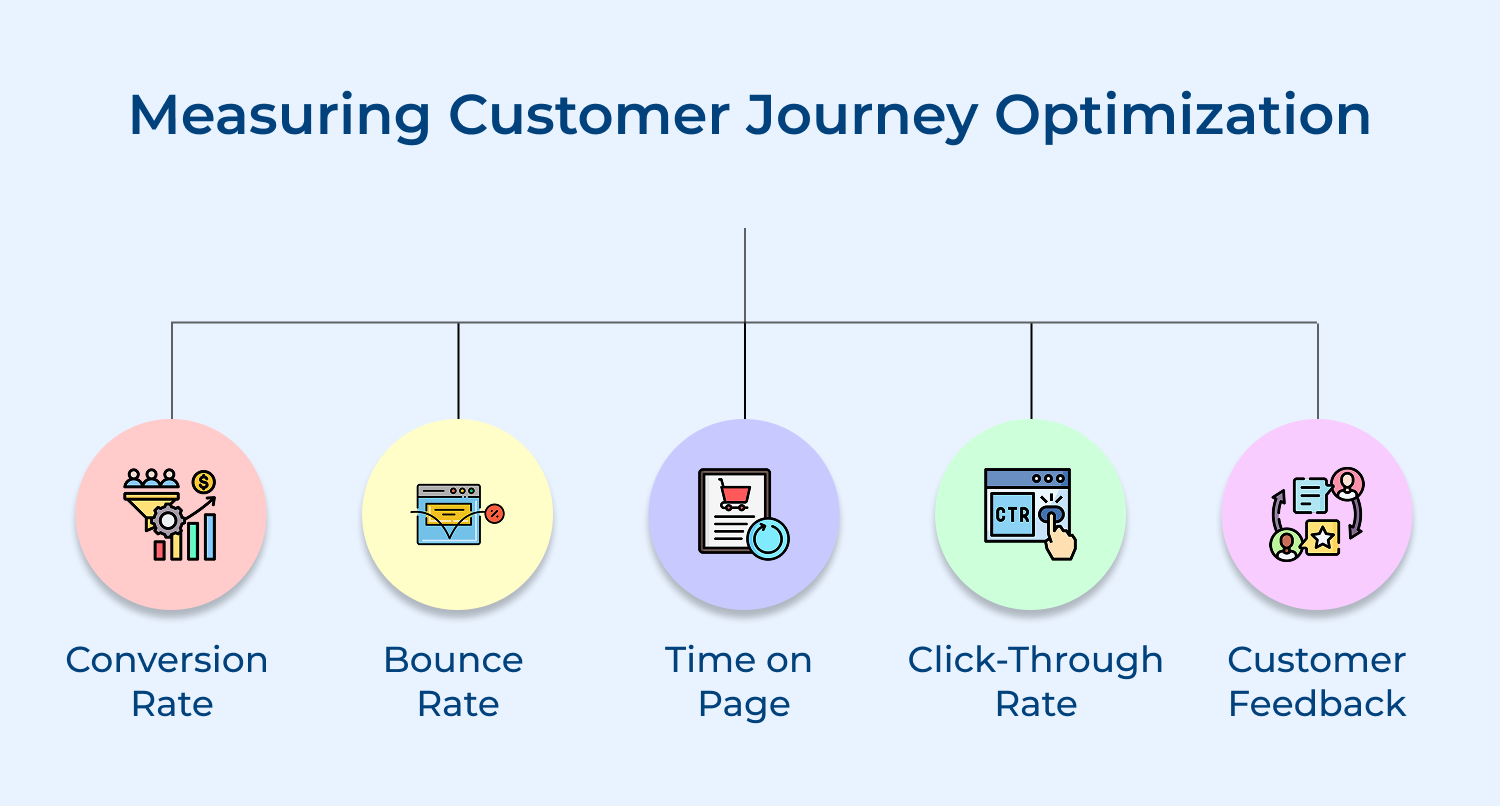
A seamless customer journey is vital in the digital age, as unmet needs can quickly drive customers away. Businesses must focus on enhancing every touchpoint to build loyalty and long-term success.
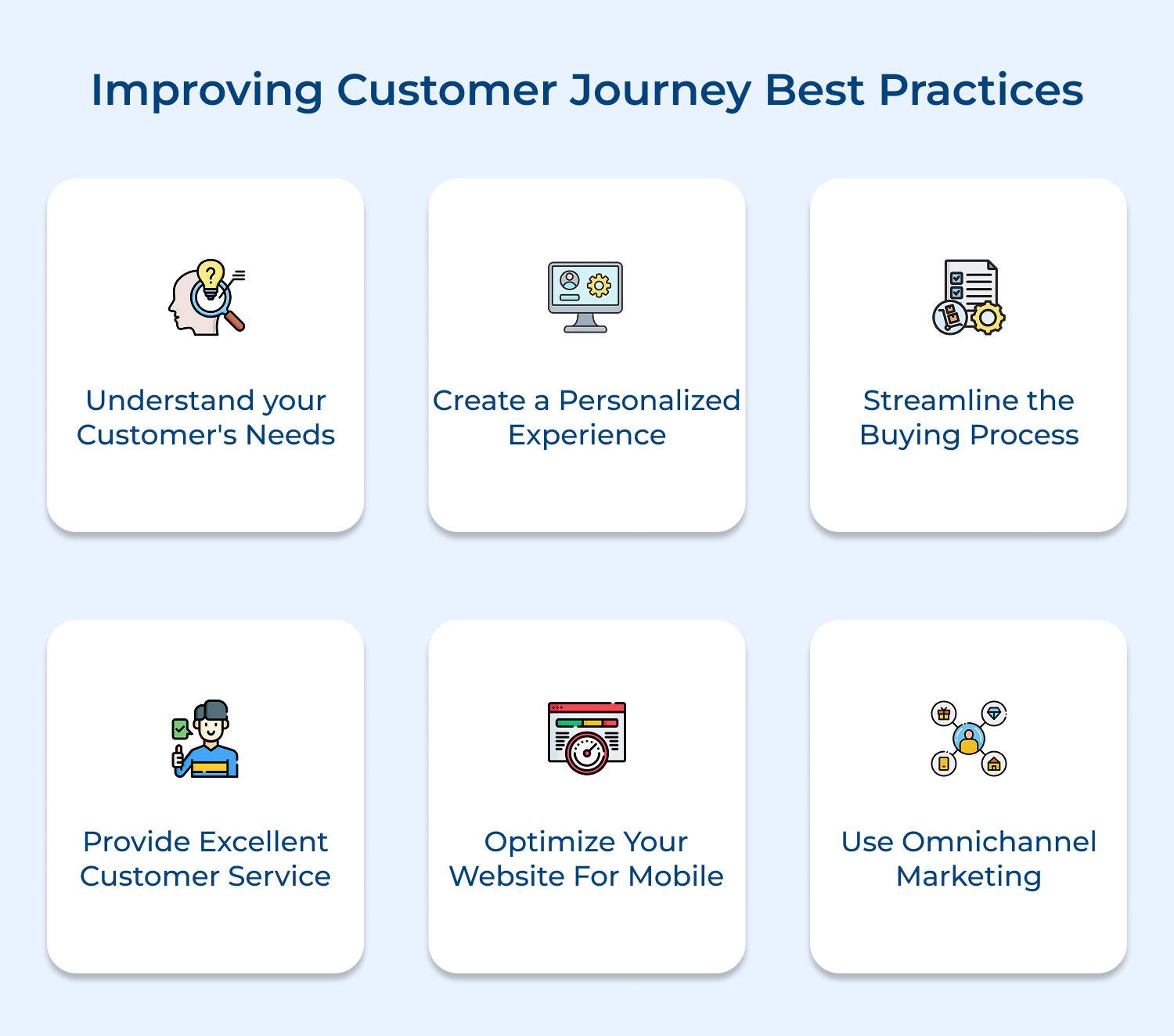
Customer journey optimization helps businesses boost satisfaction and sales by refining every CX touchpoint. Real-life examples across industries showcase how a seamless, personalized journey drives stronger engagement and loyalty.
Marriott International is known for its customer-centric approach to hospitality. With the Marriott Bonvoy loyalty program, the company rewards loyal customers with exclusive perks and personalized experiences. By tracking customer preferences, Marriott can offer customized recommendations and promotions to enhance the overall guest experience.
ASOS, an online fashion retailer, utilizes data-driven insights to optimize the customer journey. By analyzing customer browsing behavior and purchase history, ASOS is able to recommend products that are relevant to each customer. Additionally, ASOS offers multiple payment options to streamline the checkout process and improve customer satisfaction.
Chase Bank focuses on customer journey optimization to provide a seamless banking experience for customers. By offering online and mobile banking options, customers can easily manage their finances from anywhere. Additionally, Chase Bank provides personalized recommendations for financial products based on individual customer needs.
T-Mobile has revolutionized the customer experience in the telecommunications industry with its Un-carrier approach. By eliminating traditional fees, T-Mobile has simplified the customer journey and improved transparency. Additionally, T-Mobile offers personalized deals and promotions based on each customer’s usage patterns, resulting in higher customer satisfaction.
Customer Journey Optimization is essential for driving business growth in a competitive market. By understanding and improving the various touchpoints that customers interact with throughout their journey, businesses can create a more seamless and satisfying customer experience.
Such experience can lead to increased satisfaction, loyalty and higher revenue. By continuously optimizing the customer journey, businesses can stay ahead of the competition. It’s crucial for businesses to prioritize Customer Journey Optimization as a key strategy for growth and success in the digital age.

How does CJO enhance business performance?
Customer Journey Optimization helps businesses improve their overall performance by optimizing each touchpoint of the customer’s journey. By understanding how customers interact with your brand at every stage of the buying process, businesses can identify areas for improvement as well as implement strategies to increase customer satisfaction, loyalty, and revenue.
Why is understanding the customer important in CJO?
Understanding the customer is essential in CJO because it allows businesses to create personalized and targeted marketing campaigns that resonate with their audience. By knowing your customer preferences, you can tailor your messaging and offerings to better meet their needs and drive engagement.
How to Implement Customer Journey Optimization in Your Business?
To implement Customer Journey Optimization in your business, start by mapping out the customer’s journey from discovery to purchase and beyond. Identify key touchpoints and moments of interaction and evaluate the customer experience at each stage. Use data and analytics to track customer behavior and preferences and use this information to optimize your marketing strategies.
How can customer journey optimization be achieved?
Customer Journey Optimization can be achieved through a combination of research, data analysis and strategic planning. By understanding your customer’s needs, preferences and behaviors, you can create personalized and targeted marketing campaigns that guide them through the buying process. Use customer feedback, data analytics and A/B testing to continually refine and improve your strategies for optimal results.
 https://omni24.io/wp-content/uploads/2026/08/Omnichannel-Chatbots.png
1256
2400
Tushar Joshi
https://omni24.io/wp-content/uploads/2023/04/Omni-Logo-1.svg
Tushar Joshi2026-08-13 04:43:302026-08-24 09:02:01How Omnichannel Chatbots Improve Your Customer Experience
https://omni24.io/wp-content/uploads/2026/08/Omnichannel-Chatbots.png
1256
2400
Tushar Joshi
https://omni24.io/wp-content/uploads/2023/04/Omni-Logo-1.svg
Tushar Joshi2026-08-13 04:43:302026-08-24 09:02:01How Omnichannel Chatbots Improve Your Customer Experience https://omni24.io/wp-content/uploads/2026/08/Ecommerce-Chatbots-1.png
1256
2400
Tushar Joshi
https://omni24.io/wp-content/uploads/2023/04/Omni-Logo-1.svg
Tushar Joshi2026-08-12 03:57:552026-08-24 09:03:22Ecommerce Chatbots: What are They and Their Use Cases
https://omni24.io/wp-content/uploads/2026/08/Ecommerce-Chatbots-1.png
1256
2400
Tushar Joshi
https://omni24.io/wp-content/uploads/2023/04/Omni-Logo-1.svg
Tushar Joshi2026-08-12 03:57:552026-08-24 09:03:22Ecommerce Chatbots: What are They and Their Use Cases https://omni24.io/wp-content/uploads/2026/08/Omnichannel-Ecommerce.png
1256
2400
Tushar Joshi
https://omni24.io/wp-content/uploads/2023/04/Omni-Logo-1.svg
Tushar Joshi2026-08-11 04:50:362026-08-24 09:00:45How to Create an Omnichannel Ecommerce Strategy: 7 Best Ways
https://omni24.io/wp-content/uploads/2026/08/Omnichannel-Ecommerce.png
1256
2400
Tushar Joshi
https://omni24.io/wp-content/uploads/2023/04/Omni-Logo-1.svg
Tushar Joshi2026-08-11 04:50:362026-08-24 09:00:45How to Create an Omnichannel Ecommerce Strategy: 7 Best Ways
Whether it’s about acquire, engage or support – Omni24 covers all your customer engagement needs in one complete platform.

Copyright ©2026 Veemo All rights reserved.
CA, Los Angeles, Hall Ave, 19011