What are Customer Needs & How to Identify Them?
Handling customer needs means proactively anticipating desires and delivering personalized, value‑driven solutions that build trust, loyalty and sustainable business growth.

Handling customer needs means proactively anticipating desires and delivering personalized, value‑driven solutions that build trust, loyalty and sustainable business growth.
Understanding customer needs is crucial for business growth and success. Modern customers have endless options to choose from.
Approximately 73% of customers want companies to understand their unique needs and expectations, reinforcing the importance of personalized service strategies.
To stand out from the competition, businesses must have a deep understanding of what their customers want and need. Identifying and fulfilling these needs helps businesses to build strong relationships with their customers.
Let’s explore the importance of recognizing and fulfilling customer needs, as well as strategies for effectively meeting the demands of your target audience.
Customer needs are defined as desires that customers have when they seek a solution to their problems or when they look for a product or service. Understanding customer needs is crucial for businesses as it allows them to tailor their products or services to meet those needs, leading to higher customer satisfaction index.
Customer needs extend beyond just product or service offerings. They include the entire customer experience, including pre-purchase research, the buying process, after-sales support and ongoing relationship management.
Key objectives:
Understanding customer needs is key to long-term success of any business. It helps shape products or services as per customer expectations, which boosts their satisfaction.
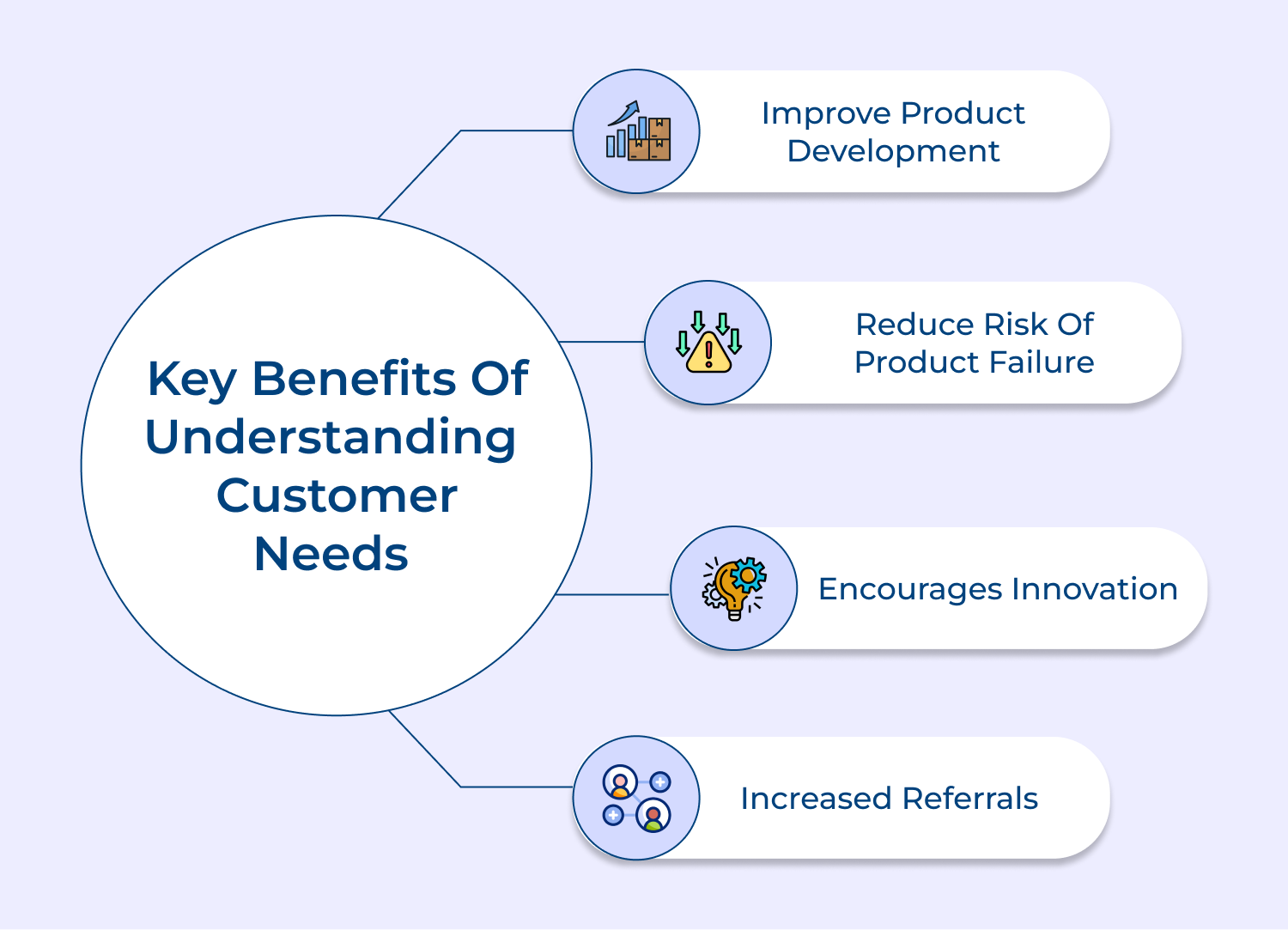
Being aware of customers’ needs helps businesses to improve customer satisfaction and loyalty. The common types of customer needs that every business owner should be aware of are:
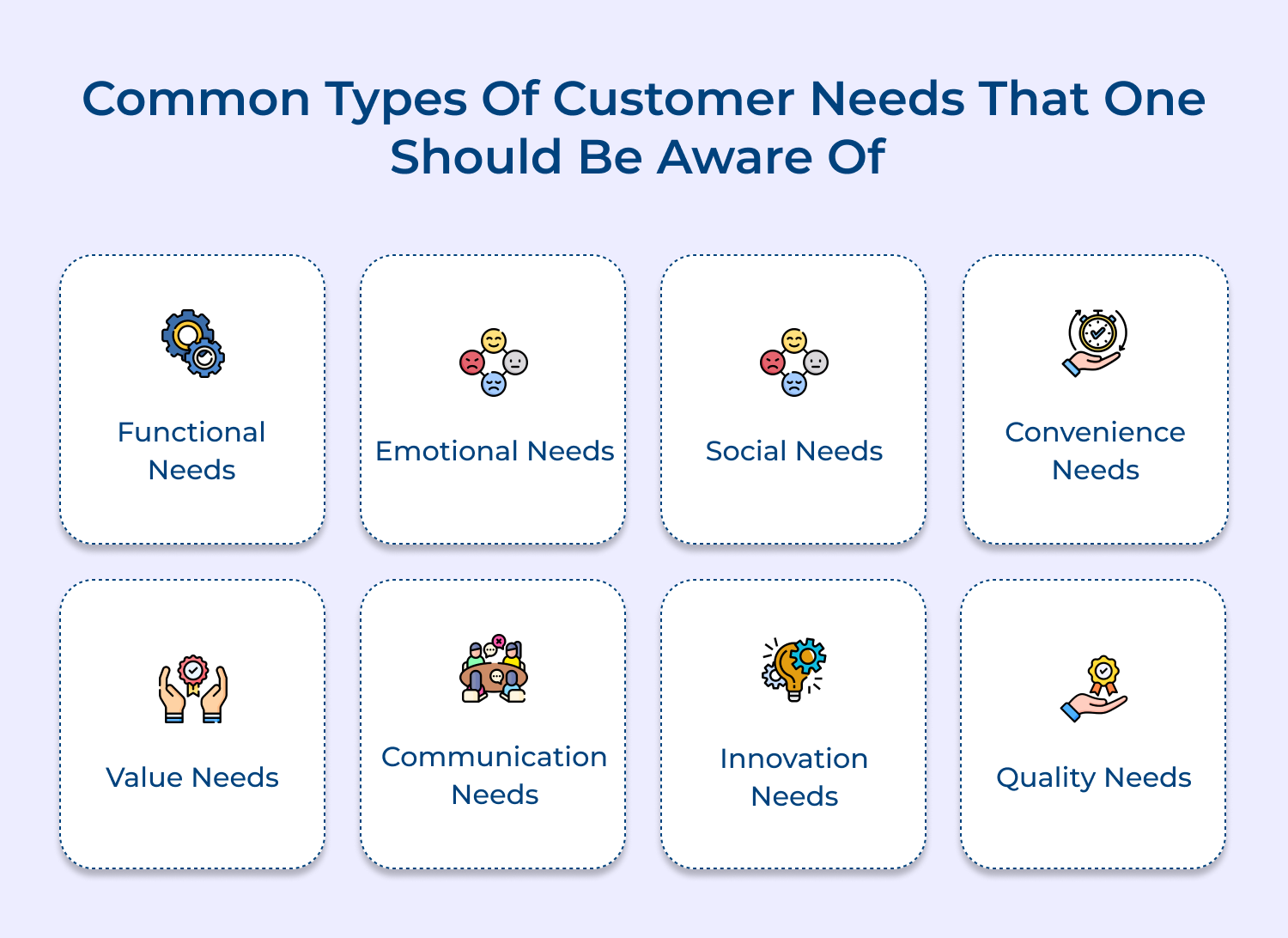
Functional needs are the basic requirements that customers have when purchasing a product or service. These needs are related to the core functionality of the product or service and are generally non-negotiable. For example, a customer buying a smartphone would expect it to have basic features such as calling, texting and internet access.
Best practices:
Emotional needs are related to how a customer feels when using a product or service. It can include aspects such as feeling valued, appreciated, or understood by the company. Businesses that are able to connect with their customers on an emotional level are often able to build strong brand loyalty and repeat business.
Best practices:
Social needs refer to the desire for connection and belonging. Customers often look for products or services that help them fit in with their social group or express their identity. For example, someone purchasing a luxury handbag may be motivated by the desire to impress their peers or demonstrate their status.
Best practices:
Convenience needs relate to how easy it is for customers to access and use a product or service. Customers value simplicity and businesses that can offer convenient solutions are likely to attract as well as retain customers. It could include offering fast delivery options, user-friendly interfaces or hassle-free returns.
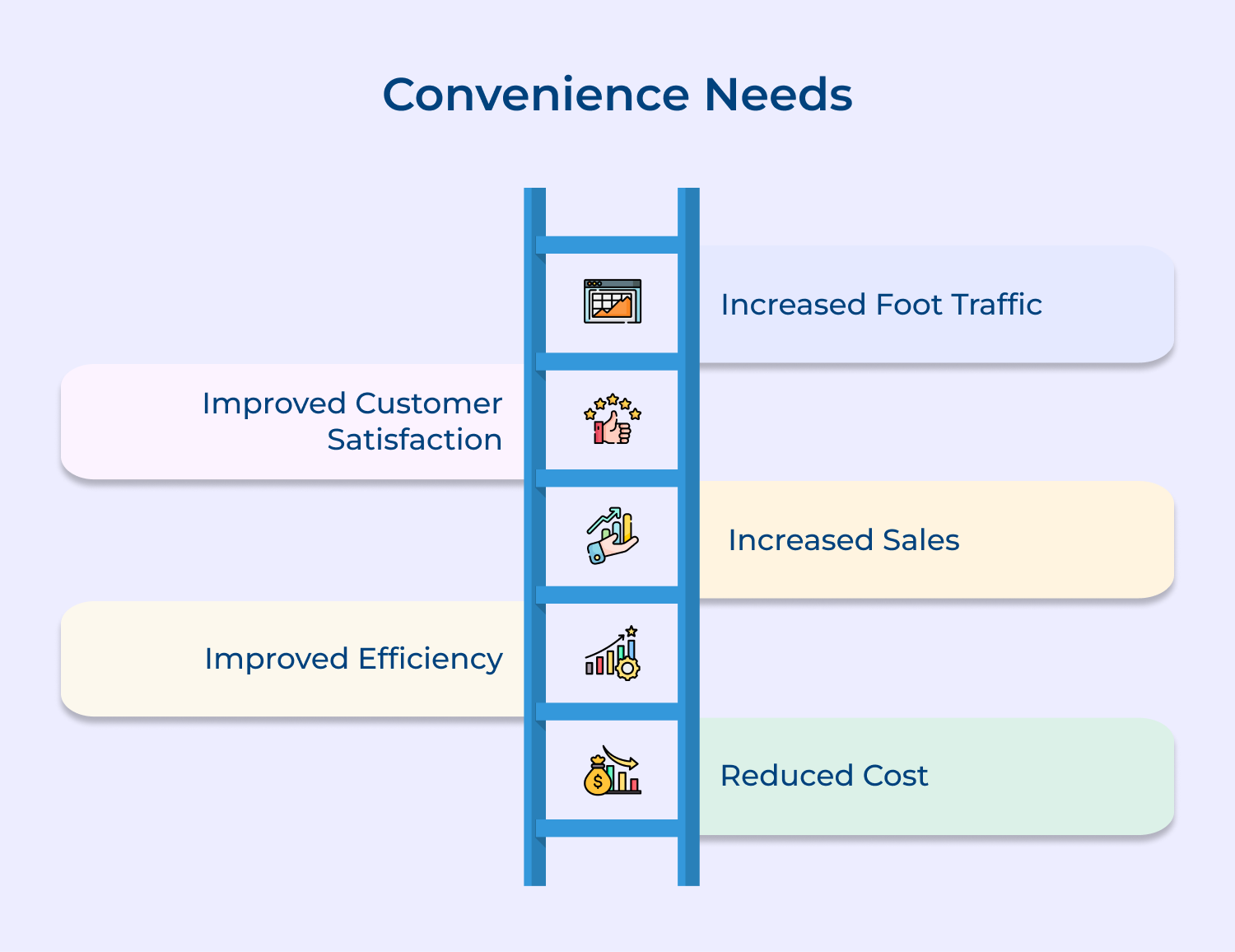
Best practices:
Value needs are related to the perceived worth of a product or service in relation to its price. Customers want to feel that they are getting good value for their money, whether that means high quality, durability, or functionality. Businesses that can demonstrate the value of their offerings are more likely to win over customers and encourage repeat purchases.
Best practices:
Communication is key in any business relationship and customers often have specific communication needs that must be met in order to ensure satisfaction. Some customers may prefer to communicate via email, while others may prefer phone calls or in-person meetings. It is important for businesses to be flexible and adaptable in their communication methods in order to meet the diverse needs of their customers.
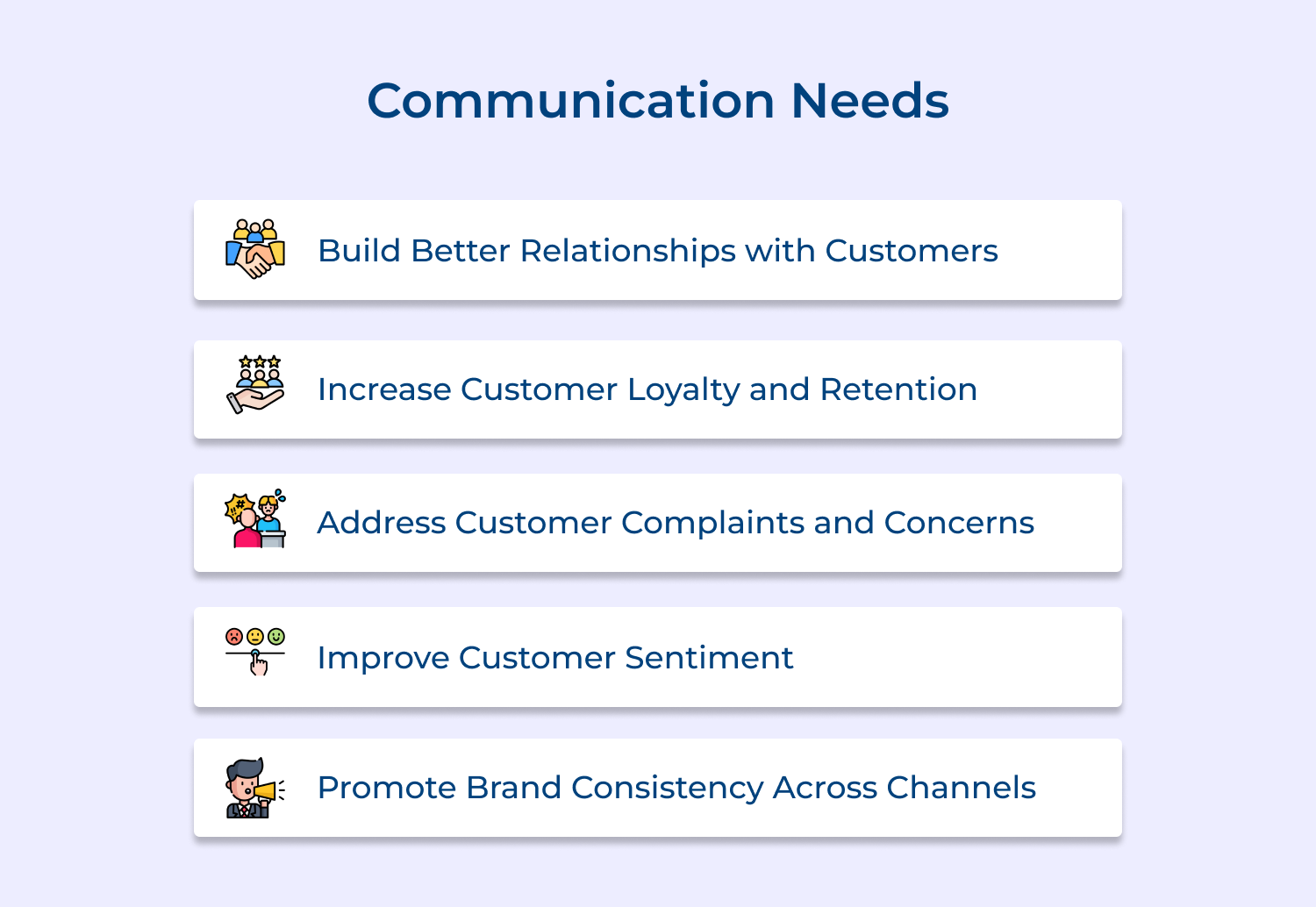
Best practices:
Customers are constantly seeking new and innovative products & services that can make their lives easier or more enjoyable. Businesses that are able to anticipate and meet this need for innovation are often the ones that succeed in today’s competitive market. Innovation can take many forms, from new product features to entirely new product lines.
Best practices:
One of the most fundamental customer needs is the need for quality. Customers want products/services that are reliable, durable, and meet their expectations. Businesses that prioritize quality in their offerings are more likely to build strong relationships with customers and create loyal customers who return again.
Best practices:
Identifying what your customers want and need can help you tailor your products or services to better serve them, leading to increased customer satisfaction and loyalty.
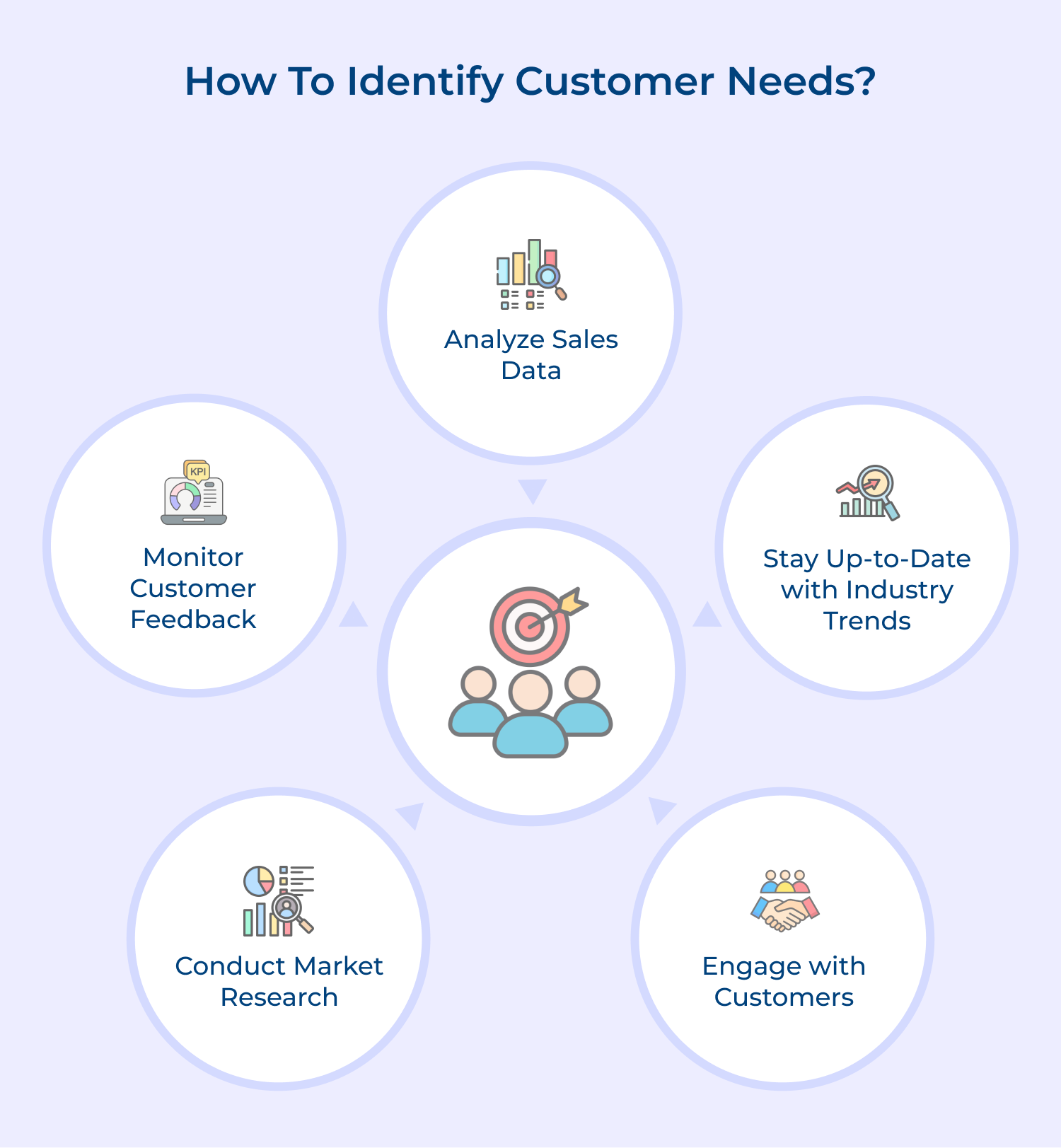
One of the most effective ways to identify customer needs is through market research. It can include surveys, focus groups, interviews and analyzing trends or data. Gathering information directly from your target audience can gain valuable insights into their preferences, behaviors and challenges.
Tips to follow:
Pay attention to customer feedback, whether it be through reviews, comments on social media, or direct communication. Customers will often voice their opinions or share their experiences, giving you valuable information on what they like, dislike, and what improvements they would like to see.
Tips to follow:
Analyzing sales data can also provide valuable information about customer needs. Tracking sales trends, popular products, and customer buying patterns can gain a better understanding of what customers are looking for. The data can help you make informed decisions about product development, marketing strategies and customer communication.
Tips to follow:
Staying informed about industry trends and developments is essential for identifying customer needs. Keeping an eye on what competitors are doing and changes in consumer behavior can adapt to evolving customer needs. The proactive approach can help you stay ahead of the curve and meet customer expectations.
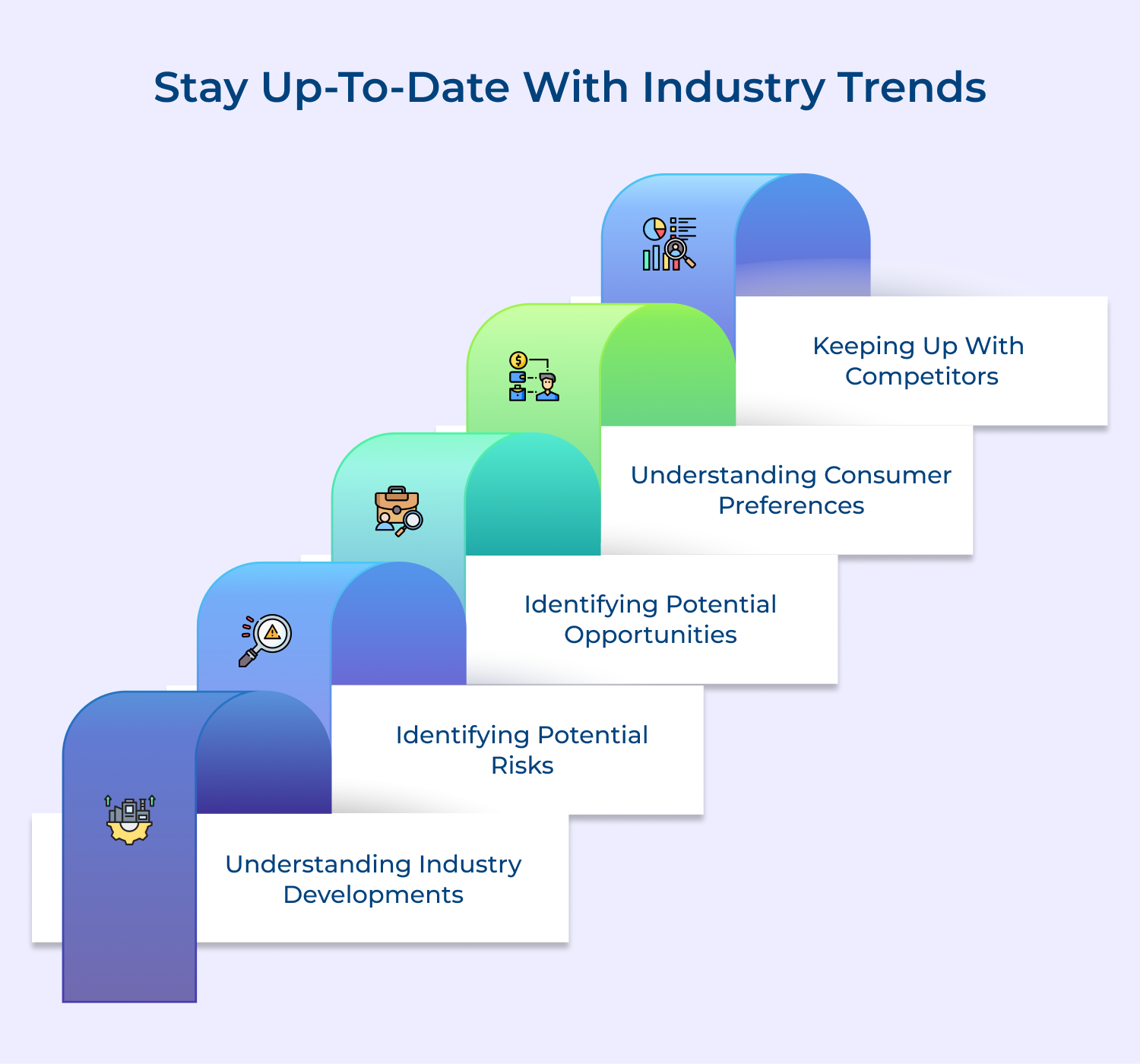
Tips to follow:
Building relationships with your customers through regular communication and engagement can help you better understand their needs. Whether it be through social media interactions, email surveys or personalized interactions, taking the time to listen to your customers can provide valuable insights into how you can better serve them.
Tips to follow:
Understanding what your customers want and delivering it to them in a timely and effective manner can build a loyal customer base and grow your business.
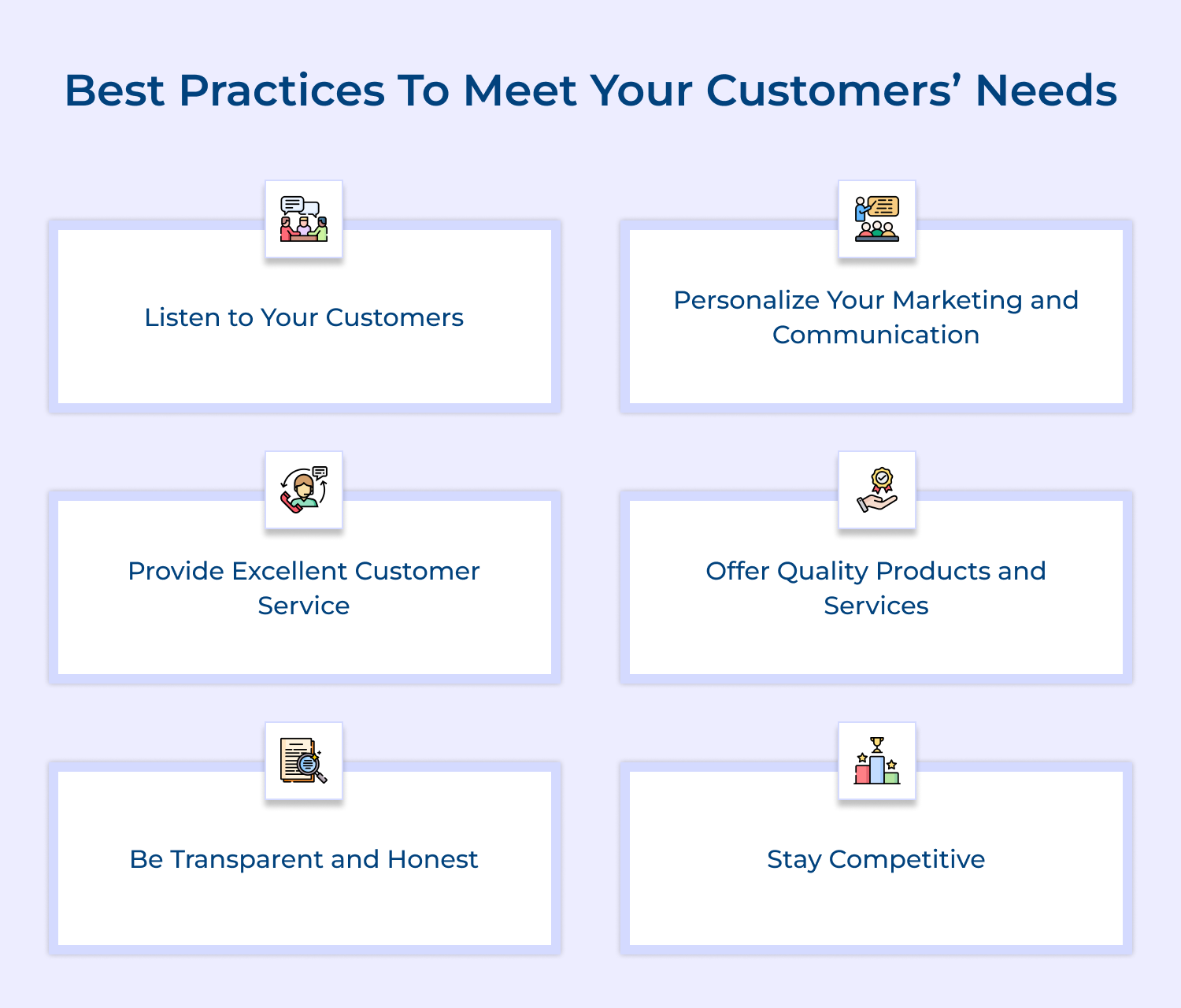
1. Listen to Your Customers
The first step in meeting your customers’ needs is to listen to them. Pay attention to their feedback, whether it’s through customer surveys, online reviews, or social media interactions. Take their suggestions or complaints seriously and use the information to improve your products or services.
2. Personalize Your Marketing and Communication
Customers appreciate personalized experiences. Use data analytics and customer relationship management tools to understand your customers’ preferences or behaviors. Tailor your marketing campaigns and communication to cater to their specific needs.
3. Provide Excellent Customer Service
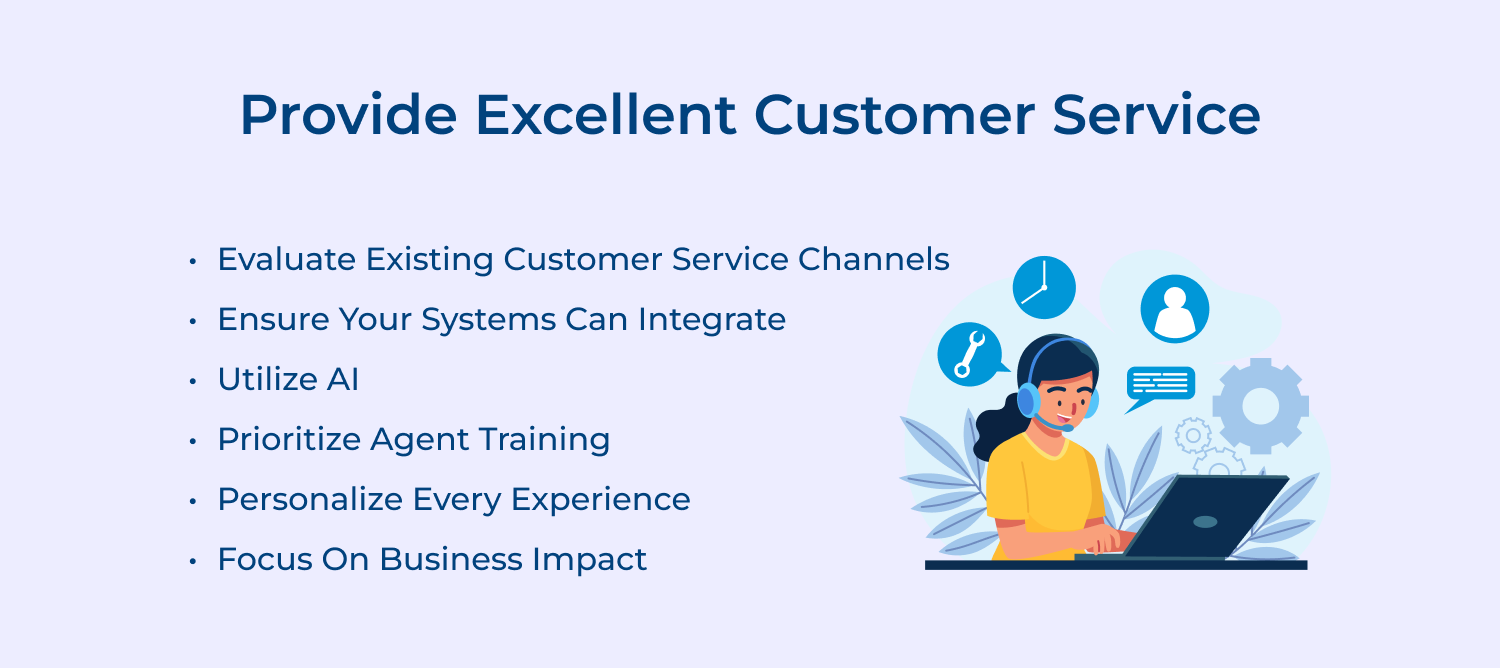
Good customer service is key to meeting your customers’ needs. Ensure that your customer service team is well-trained and equipped to handle any inquiries or issues that may arise. Be responsive to customer complaints and strive to resolve them in a timely and satisfactory manner.
4. Offer Quality Products and Services
The most important way to meet your customers’ needs is to offer high-quality products and services. Invest in product development & innovation to stay ahead of the competition and consistently deliver value to your customers.
5. Be Transparent and Honest
Building trust with your customers is crucial for meeting their needs. Be transparent in your business practices, pricing and communication. Customers appreciate honesty, and are more likely to repeat business with a company they trust.
6. Stay Competitive
Keep an eye on industry trends and your competitors to stay competitive in the market. Offer promotions, discounts or incentives to attract and retain customers. Stay ahead of the curve by constantly improving your products and services to meet changing customer needs.
Truly understanding what your customers want and need can tailor your products as well as services to meet those needs and ultimately drive customer satisfaction and loyalty.
Amazon is a prime example of a company that understands and anticipates customer needs. Through their vast data collection and analysis, Amazon can recommend products that customers might be interested in based on their previous purchases or browsing history. They also offer fast shipping options, easy returns and excellent customer service, all of which cater to the preferences of their customers.
Apple is known for its sleek designs and user-friendly interfaces, but what really sets them apart is their focus on meeting customer needs. Continuously innovating new products that address the changing needs of consumers, such as the iPhone, iPad and Apple Watch, Apple has secured a loyal customer base that values quality, functionality, and aesthetics.
Netflix revolutionized the entertainment industry by catering to the evolving needs of viewers who prefer to consume content on-demand. Offering a vast library of TV shows, movies and original content that can be accessed anytime, anywhere, Netflix has become a go-to source of entertainment for millions of subscribers worldwide.
Starbucks is another great example of a company that understands customer needs. With a focus on providing a welcoming environment, high-quality coffee drinks, and personalized service, Starbucks has created a loyal following of customers who appreciate the overall experience of visiting a Starbucks store, not just the products they offer.
Tesla is a leader in the electric vehicle market, largely due to their focus on meeting the needs of environmentally-conscious consumers who value sustainability and cutting-edge technology. Offering high-performance electric cars with long-range capabilities and an extensive network of charging stations, Tesla has captured a niche market of customers who prioritize eco-friendly transportation options.
Addressing customer needs is crucial for boosting customer retention. Understanding meeting the needs and expectations of your customer not only improves their satisfaction but also builds loyalty and trust. It leads to repeat business, positive word of mouth and ultimately, increased revenue for your company.
While it is important to consistently communicate with customers and gather feedback it is also vital to make necessary adjustments to ensure that their needs are being met. Putting your customers first and prioritizing their needs can create long-lasting relationships that benefit both parties in the long run. Remember, happy customers are loyal customers.

How can understanding customer needs help improve business success?
Understanding customer needs is crucial for businesses looking to improve their success. Truly understanding what their customers are looking for can tailor their products/ services to meet those needs, ultimately leading to increased customer satisfaction.
What strategies can businesses use to identify and prioritize customer needs?
Businesses can use a variety of strategies to identify and prioritize customer needs. It can include market research, surveys, focus groups, customer feedback and data analysis. Gathering information from these sources helps businesses gain insights into what their customers value most and prioritize those needs in their business strategy.
How do customer needs differ from customer wants and why is this distinction important?
Customer needs are essential requirements that customers must have met in order to solve a problem or fulfill a desire. Customer wants, on the other hand, are desires or preferences that are nice to have but not essential. Understanding the difference is important because businesses need to focus on meeting customer needs first in order to provide value and build loyalty.
How can feedback mechanisms be utilized to gather insights into customer needs?
Feedback mechanisms, such as surveys, reviews and customer support interactions, can be valuable tools for gathering insights into customer needs. Actively listening to customer feedback helps businesses gain a better understanding of what their customers value and where there may be opportunities for improvement. The information can then be used to make informed decisions about product development, marketing strategies and customer service initiatives.
 https://omni24.io/wp-content/uploads/2026/02/AI-customer-analytics.png
1257
2400
Tushar Joshi
https://omni24.io/wp-content/uploads/2023/04/Omni-Logo-1.svg
Tushar Joshi2026-03-31 05:17:522026-03-31 05:17:52How to Use AI Customer Analytics in Your Business: 10 Key Steps
https://omni24.io/wp-content/uploads/2026/02/AI-customer-analytics.png
1257
2400
Tushar Joshi
https://omni24.io/wp-content/uploads/2023/04/Omni-Logo-1.svg
Tushar Joshi2026-03-31 05:17:522026-03-31 05:17:52How to Use AI Customer Analytics in Your Business: 10 Key Steps https://omni24.io/wp-content/uploads/2026/02/ecommerce-analytics.png
1257
2400
Tushar Joshi
https://omni24.io/wp-content/uploads/2023/04/Omni-Logo-1.svg
Tushar Joshi2026-03-30 04:03:352026-03-30 04:03:35How to Use Ecommerce Analytics for Business Growth
https://omni24.io/wp-content/uploads/2026/02/ecommerce-analytics.png
1257
2400
Tushar Joshi
https://omni24.io/wp-content/uploads/2023/04/Omni-Logo-1.svg
Tushar Joshi2026-03-30 04:03:352026-03-30 04:03:35How to Use Ecommerce Analytics for Business Growth https://omni24.io/wp-content/uploads/2026/02/buying-experience.png
1257
2400
Tushar Joshi
https://omni24.io/wp-content/uploads/2023/04/Omni-Logo-1.svg
Tushar Joshi2026-03-27 04:04:082026-03-27 04:04:08How to Improve Buying Experience: 10 Best Strategies
https://omni24.io/wp-content/uploads/2026/02/buying-experience.png
1257
2400
Tushar Joshi
https://omni24.io/wp-content/uploads/2023/04/Omni-Logo-1.svg
Tushar Joshi2026-03-27 04:04:082026-03-27 04:04:08How to Improve Buying Experience: 10 Best Strategies
Whether it’s about acquire, engage or support – Omni24 covers all your customer engagement needs in one complete platform.

Copyright ©2026 Veemo All rights reserved.
CA, Los Angeles, Hall Ave, 19011
