How to Manage Customer Service Queues: 10 Effective Ways
Explore key benefits and best practices for managing customer service queues to improve efficiency as well as elevate customer experience.

Explore key benefits and best practices for managing customer service queues to improve efficiency as well as elevate customer experience.
Long wait times and inefficient management of customer service queues often lead to frustrated customers as well as decreased satisfaction.
If not addressed, poor queue management can result in high customer churn, negative reviews and a loss of customer loyalty, harming a business’s reputation. Around 63% of customers are likely to switch companies after a poor service experience and many abandon calls after just one or two bad interactions.
Efficient customer service queue management ensures timely responses and improves overall customer experience. Let’s discuss the importance of managing customer service queues effectively and share strategies to optimize them for better results.
A customer service queue is a system that organizes incoming customer inquiries, requests and issues in a sequential order to be addressed by service representatives. It functions as a virtual waiting line that manages the flow of customer interactions across various channels such as phone calls, emails, live chats and social media messages.
A well-managed queue system prevents customer frustration by establishing clear expectations about wait times and ensuring fair treatment. It allows organizations to prioritize urgent matters, allocate resources effectively and maintain consistent service quality even during high-volume periods.
Key Objectives:
A well-managed customer service queue does more than reduce wait times, it strengthens the overall customer experience. Here’s a quick look at the key benefits:
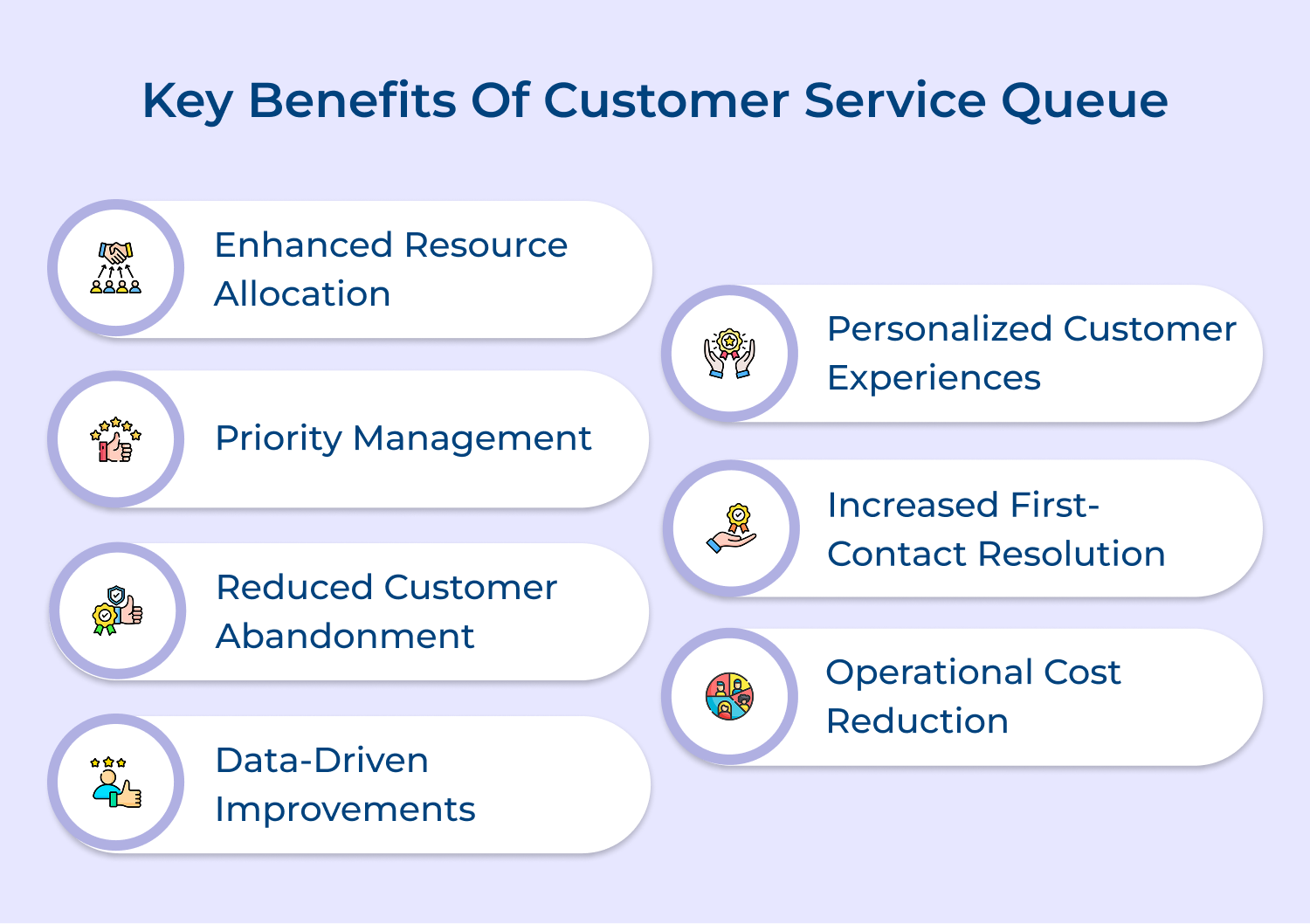
Enhanced Resource Allocation
Smart queue systems help managers match the right tasks with the right agents based on skill and availability. This keeps workloads balanced, reduces burnout and ensures customers connect with someone who can solve their issue quickly as well as confidently.
Priority Management
Modern queue tools let businesses rank queries by urgency, customer type, or complexity. This way, time-sensitive issues get handled first while standard requests still move smoothly through the system without long delays.
Reduced Customer Abandonment
Giving customers real-time updates on wait times and queue positions sets clear expectations. When people know what to expect, they’re far less likely to drop off or feel ignored while waiting for support.
Data-Driven Improvements
Queue platforms generate insights on peak hours, wait times and resolution speed. These analytics help teams spot bottlenecks, plan staffing better and continuously fine-tune processes to improve service quality.
Personalized Customer Experiences
By capturing customer history and preferences, queue systems equip agents with the info they need the moment a conversation starts. It leads to more personal, meaningful interactions that feel genuinely tailored.
Increased First-Contact Resolution
Intelligent routing sends customers directly to agents best suited to handle their specific issues. It boosts first-contact resolution, prevents unnecessary transfers and cuts down the need for customers to repeat themselves.
Operational Cost Reduction
More efficient routing and better staffing alignment enables businesses to reduce handling time as well as avoid overstaffing. These improvements lower operational costs without compromising service quality—often improving it in the process.
When wait times shrink and support flows smoothly, customers experience faster resolutions as well as a more positive overall journey. Here are 10 ways for you to improve your CX.
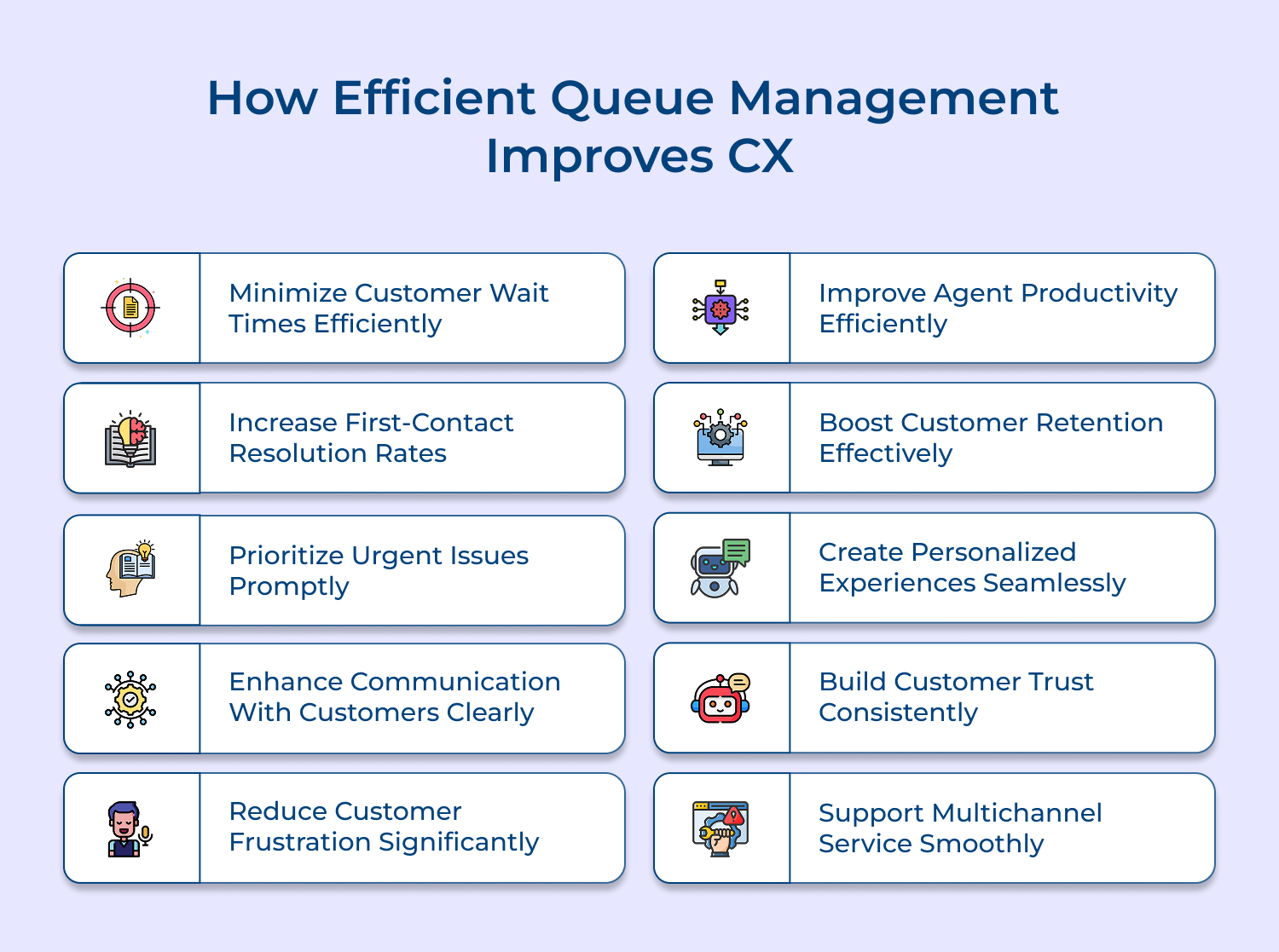
Reducing customer wait times is crucial across all channels—calls, chat or in-person. Long waits frustrate customers, increase abandonment and damage brand perception. Streamlining processes ensures faster response and quicker issue resolution.
Implementing queuing software helps route customers efficiently to the right agent, while AI chatbots can handle initial queries to cut the wait. Providing real-time updates on queue positions sets clear expectations.
Additionally, analyzing historical data allows businesses to anticipate peak periods and staff appropriately. Together, these strategies improve satisfaction, lower churn and create a smoother customer experience. Hence, reinforcing loyalty and trust over time.
Actionable tips:
First-contact resolution (FCR) is about solving a customer’s issue during their first interaction without follow-ups. Customers highly value immediate solutions, which build trust and reduce frustration.
Higher FCR also improves operational efficiency, as fewer repeat calls or tickets save time and resources. To achieve this, agents should have access to integrated systems that provide complete customer histories and relevant knowledge.
Training agents to handle diverse issues, empowering them to make decisions without constant escalation and using standardized processes ensure problems are resolved quickly. Effective FCR not only enhances satisfaction but strengthens long-term loyalty and brand reputation.
Actionable tips:
Not all customer inquiries are equal—some require immediate attention. Prioritizing urgent issues ensures high-impact problems are addressed quickly, minimizing dissatisfaction and preventing escalation.
Delays in handling critical matters can damage trust and hurt customer relationships. Implementing priority tags in queue management systems helps agents identify high-priority cases instantly. Training staff to evaluate urgency based on customer impact and issue complexity ensures appropriate escalation.
Rapid handling of urgent inquiries demonstrates that the brand values its customers’ time and concerns, creating confidence as well as loyalty. Effective prioritization reduces risks, keeps customers satisfied and prevents small issues from turning into bigger problems.
Actionable tips:
Clear, consistent communication reduces confusion and improves customer experience. Customers want transparency about wait times, resolution progress and next steps. Providing regular updates (automated or agent-led) keeps them informed and reduces frustration.
When agents explain processes clearly, confirm understanding and set realistic expectations, customers feel valued. Automated notifications for queue position or estimated wait times are particularly effective in managing expectations during high-volume periods.
By improving communication, businesses can reduce anxiety, prevent miscommunication and strengthen trust. Ultimately, clear messaging makes the service experience feel professional and empathetic.
Actionable tips:
Customer frustration often stems from long waits, repeated explanations, or inefficient processes. Reducing these pain points improves satisfaction and encourages loyalty.
Streamlining support steps, providing self-service options like FAQs or knowledge bases and equipping agents with the right tools ensures smoother interactions. Addressing problems at the first point of contact prevents customers from repeating themselves and reduces stress.
Proactively identifying potential frustrations, like technical glitches or bottlenecks, allows businesses to implement fixes before customers are impacted. Lowering frustration strengthens emotional connections with the brand, promotes positive word-of-mouth and minimizes churn, making the customer experience more enjoyable as well as rewarding for both parties.
Actionable tips:
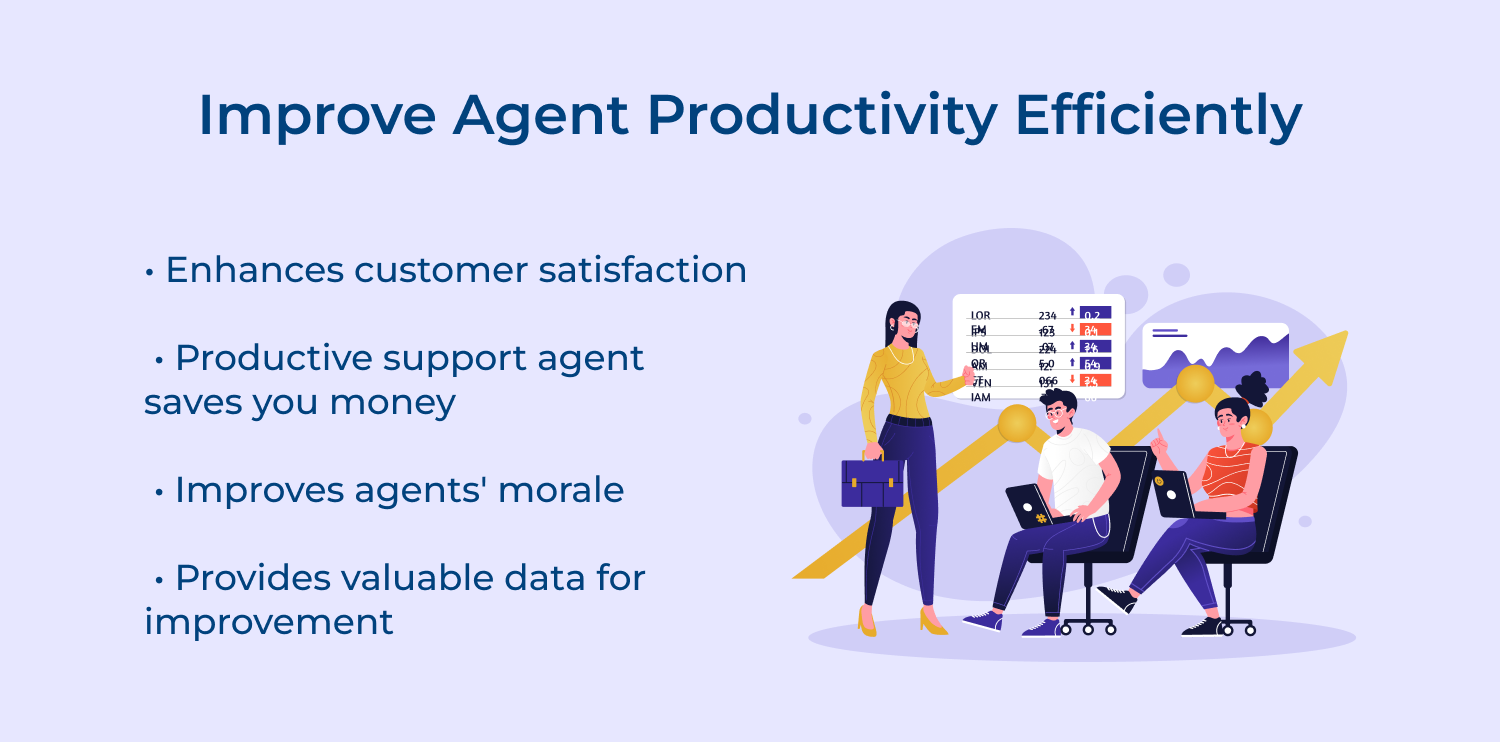
Improving agent productivity involves optimizing how customer service representatives handle inquiries and tasks, ensuring they can manage more cases efficiently without sacrificing quality.
Higher productivity leads to faster resolution times, reduced wait times and a better customer experience. Efficient agents help reduce operational costs and ensure customer satisfaction, leading to more positive outcomes for the business.
Equip agents with the right tools, training and clear processes. Implement systems that help streamline workflows while reducing the time spent on repetitive tasks, allowing them to focus on solving customer issues.
Actionable tips:
Boosting customer retention focuses on keeping existing customers engaged, satisfied and loyal to the brand by providing excellent service while addressing their needs effectively.
Customer retention is often more cost-effective than acquiring new customers. Loyal customers are more likely to make repeat purchases, refer others and offer valuable feedback, leading to better long-term business performance.
Create personalized customer experiences, follow up after issue resolution and reward loyal customers with exclusive benefits. Consistently delivering excellent service ensures customers remain satisfied and choose to return.
Actionable tips:
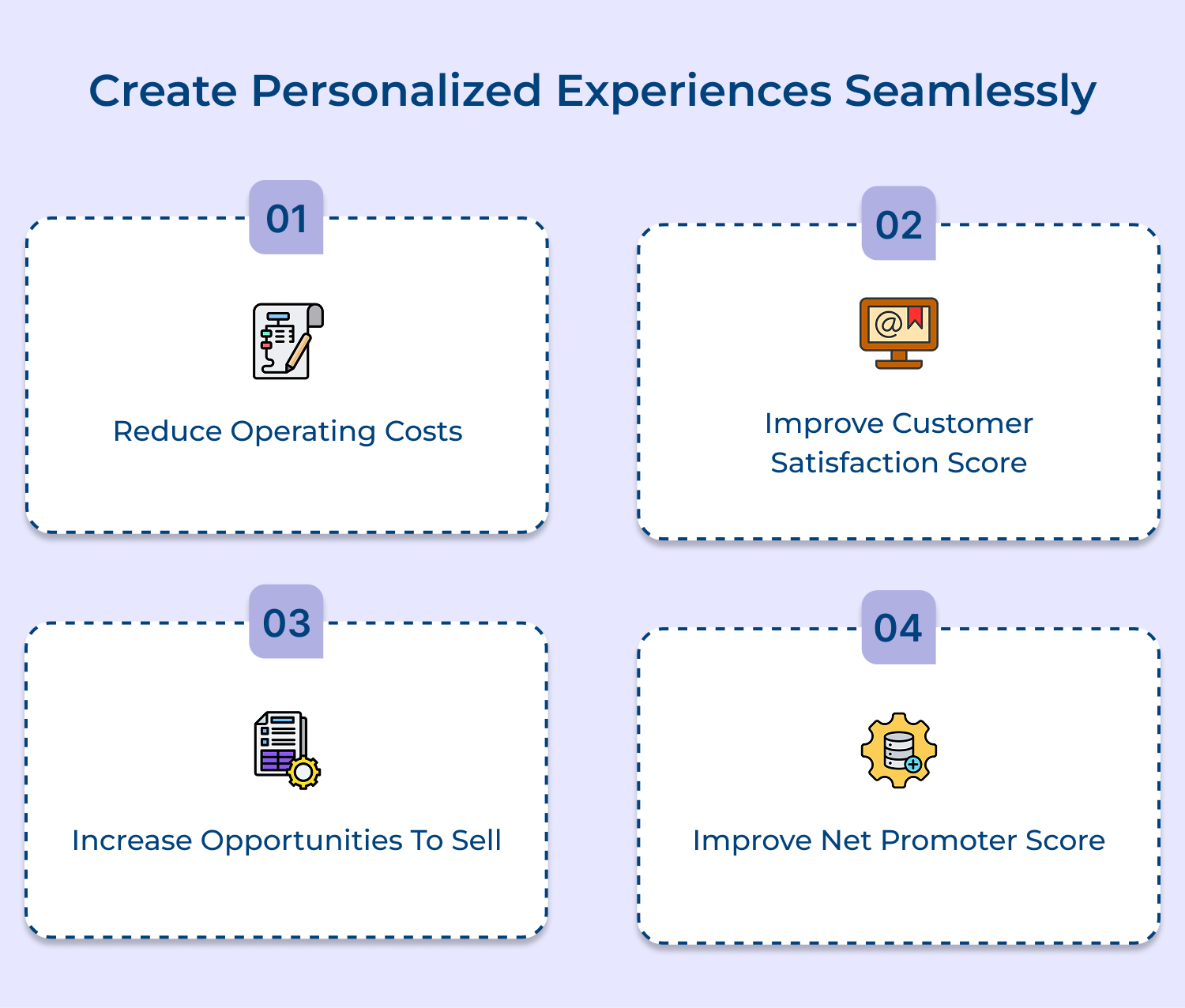
Creating personalized experiences means tailoring the service or interaction to each customer’s unique preferences, history and needs, enhancing the overall experience.
Personalization increases customer satisfaction and loyalty. When customers feel their specific needs are understood and addressed, they are more likely to return, recommend the service, as well as become long-term supporters.
Use customer data (e.g., past interactions, preferences) to personalize future service. Provide agents with information about the customer’s history so they can offer tailored solutions and communication.
Actionable tips:
Trust is the foundation of lasting customer relationships. Transparent communication, consistent service quality and prompt problem resolution build confidence in the brand. Customers are more likely to return, forgive occasional mistakes and recommend a trustworthy company.
Clear expectations, honesty about delays or limitations and follow-through on commitments demonstrate reliability. By maintaining high standards across all touchpoints, businesses reinforce credibility and create a sense of security for their customers.
A trustworthy experience encourages loyalty, repeat engagement and advocacy, which directly impacts revenue as well as growth. Trust transforms transactional interactions into long-term partnerships between customers and brands.
Actionable tips:
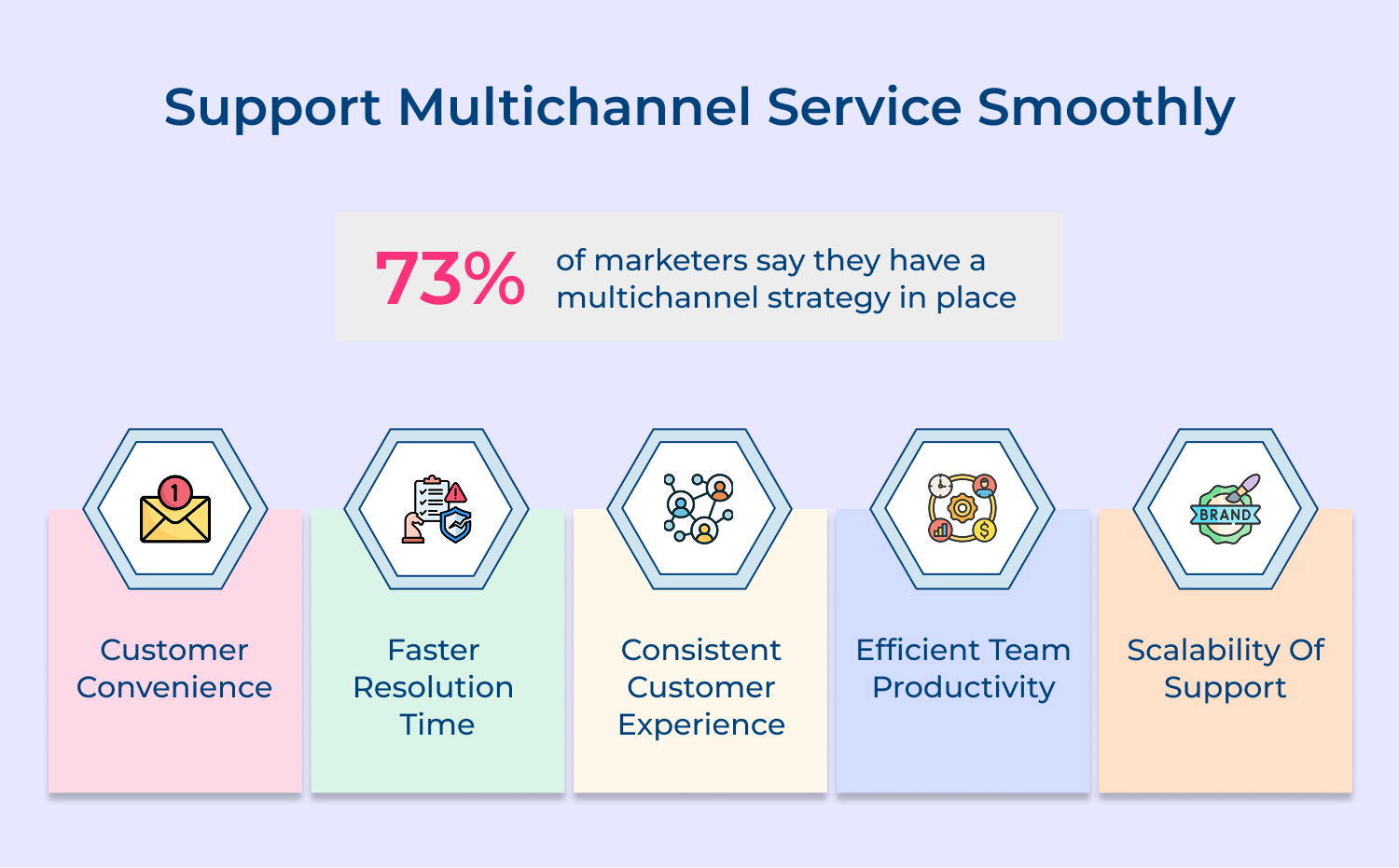
Customers expect to reach brands across multiple channels—phone, email, chat and social media. Multichannel support ensures convenience, accessibility and a seamless experience.
Integrating all channels into a unified system allows agents to view customer history and provide consistent service regardless of touchpoint. Cross-training agents to handle inquiries from different channels maintains quality and speeds up resolution.
Seamless multichannel support reduces frustration, increases satisfaction and encourages customers to engage through their preferred medium. Delivering a consistent, high-quality experience across channels enhances brand perception, strengthens loyalty and ensures customers feel valued at every stage of their journey.
Actionable tips:
Measuring the effectiveness of your customer service queue management is key to improving operations. Let’s learn about the right metrics that evaluate your overall CX success.
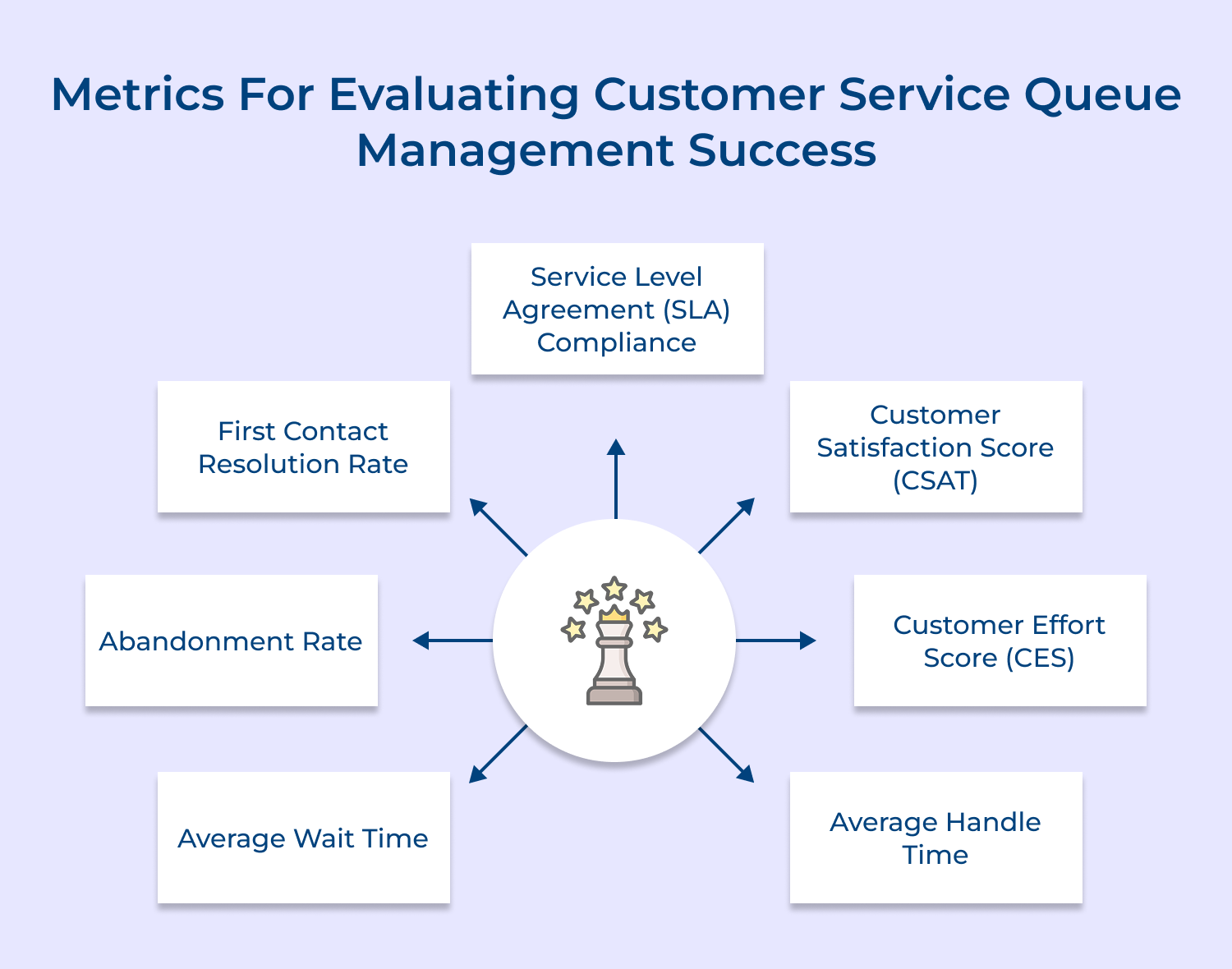
Average Wait Time
The typical duration customers spend in the queue before receiving service serves as a fundamental performance indicator. Lower average wait times generally correlate with higher satisfaction levels. Organizations should track variations across different time periods, channels and customer segments to identify patterns as well as improvement opportunities.
Abandonment Rate
Customers who leave the queue before receiving service represent a percentage that indicates serious friction points in the customer experience. High abandonment rates signal potential revenue loss and customer dissatisfaction. Quantifying business impact through this metric helps justify investment in queue management improvements.
First Contact Resolution Rate
The percentage of customer issues resolved during the initial interaction without transfers or follow-ups reveals routing efficiency and agent capabilities. Higher FCR rates result in shorter overall queue times and improved customer satisfaction, creating a virtuous cycle of service improvement.
Service Level Agreement (SLA) Compliance
Consistency in meeting promised response time targets demonstrates organizational reliability and commitment to customer care. Examples include answering 80% of calls within 30 seconds or responding to 95% of emails within 4 hours. Regular SLA monitoring ensures accountability and service consistency throughout customer interactions.
Customer Satisfaction Score (CSAT)
Direct customer feedback gathered through post-interaction surveys measures satisfaction with queue management specifically. Scores help correlate wait times and queue experiences with overall perception of service quality, providing actionable insights for continuous improvement.
Customer Effort Score (CES)
Effort required for customers to get issues resolved often predicts loyalty more accurately than satisfaction metrics alone. Lower effort scores indicate smoother queue experiences and reflect effective system design from the customer perspective.
Average Handle Time
Duration of each customer interaction impacts overall queue efficiency and capacity. Complex issues require adequate attention, so shorter times aren’t always better, but tracking handle time helps identify process inefficiencies and training opportunities for service representatives.
Managing customer service queues comes with its own set of obstacles. Let’s identify these common challenges to implement smarter solutions and smoother workflows.
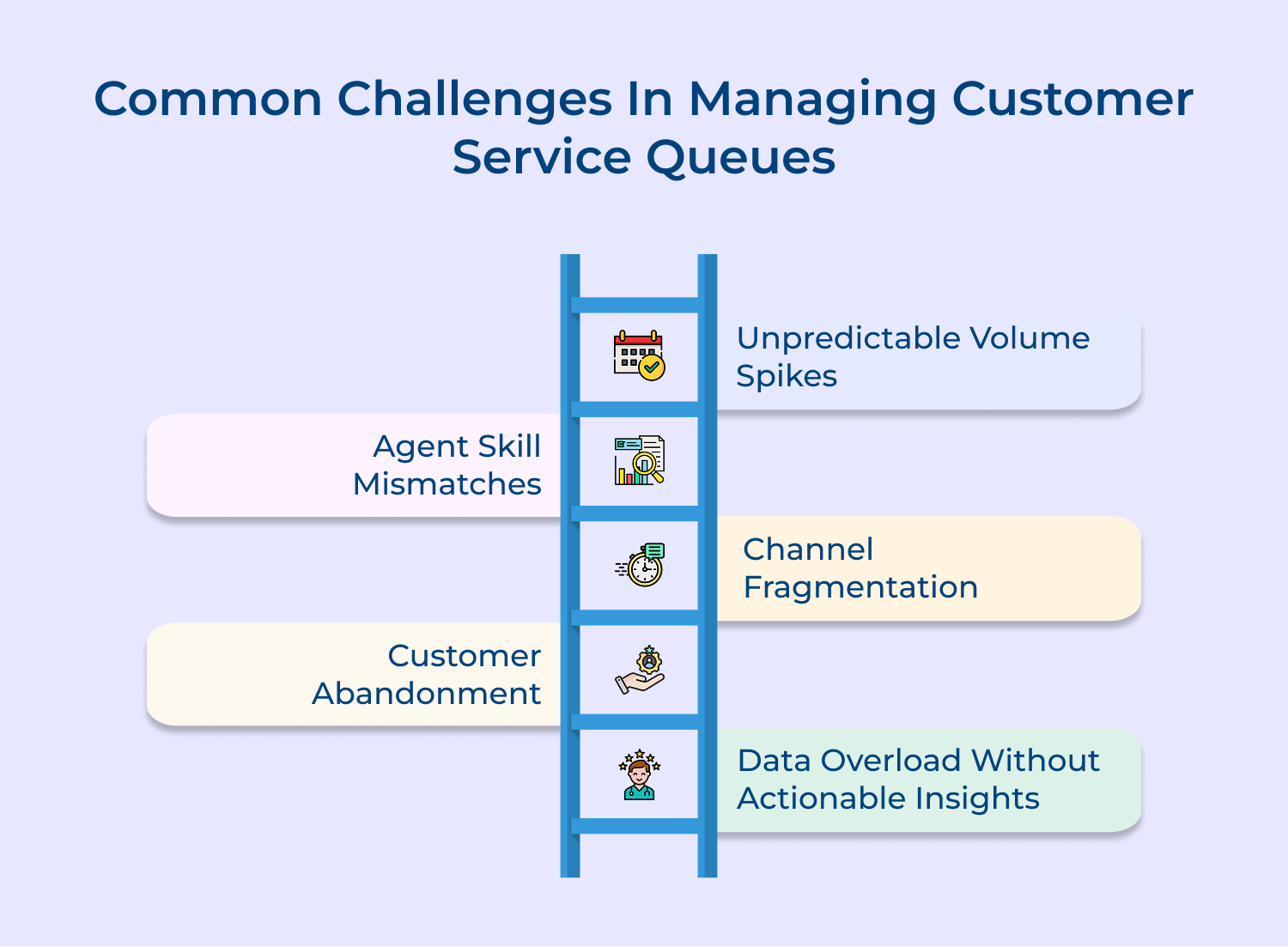
Unpredictable Volume Spikes
Customer service queues often face sudden, unexpected surges in volume that overwhelm available resources. These spikes may result from product launches, service outages, seasonal demands or viral social media incidents.
Solution: Implement predictive analytics to forecast potential volume spikes based on historical data patterns. Develop flexible staffing models with cross-trained employees and on-call representatives who can quickly respond during emergencies. Create automated triage systems that prioritize urgent issues during high-volume periods while offering self-service alternatives for routine inquiries.
Agent Skill Mismatches
Queue inefficiencies frequently stem from routing customer issues to agents lacking appropriate expertise, resulting in longer resolution times, multiple transfers and customer frustration.
Solution: Develop comprehensive skill profiles for all service representatives and implement skills-based routing technology. Map customer inquiries to required expertise levels automatically. Create ongoing training programs to expand agent capabilities strategically based on common queue bottlenecks. Consider specialized teams for complex technical issues while maintaining a core of versatile generalists.
Channel Fragmentation
Organizations struggle with disjointed queue management across different communication channels, leading to inconsistent service levels and resource allocation inefficiencies.
Solution: Adopt unified omnichannel queue management platforms that provide visibility across all customer touchpoints. Establish consistent service level agreements regardless of contact method. Train representatives to handle multiple channels effectively. Analyze channel performance metrics together rather than in silos. Guide customers to optimal channels based on issue complexity and current queue conditions.
Customer Abandonment
High abandonment rates indicate serious problems with queue management, representing lost revenue opportunities and damaged customer relationships.
Solution: Offer transparent wait time estimates updated in real-time. Implement callback options that maintain queue position without requiring customers to stay on hold. Provide engaging queue content like service tips or product information during wait periods. Set up proactive monitoring to identify customers approaching abandonment thresholds. Follow up with customers who abandon queues to recover relationships and gather improvement feedback.
Data Overload Without Actionable Insights
Many organizations collect extensive queue metrics but struggle to translate raw data into meaningful service improvements.
Solution: Establish a focused set of key performance indicators directly tied to business objectives. Create visualization dashboards accessible to frontline managers for real-time decision-making. Implement regular review sessions to analyze trends and exceptions. Connect queue metrics with customer satisfaction scores to prioritize high-impact improvements.
Effective queue management requires more than software—it demands strategy, consistency and customer-centric processes. Following best practices ensures optimized team performance.
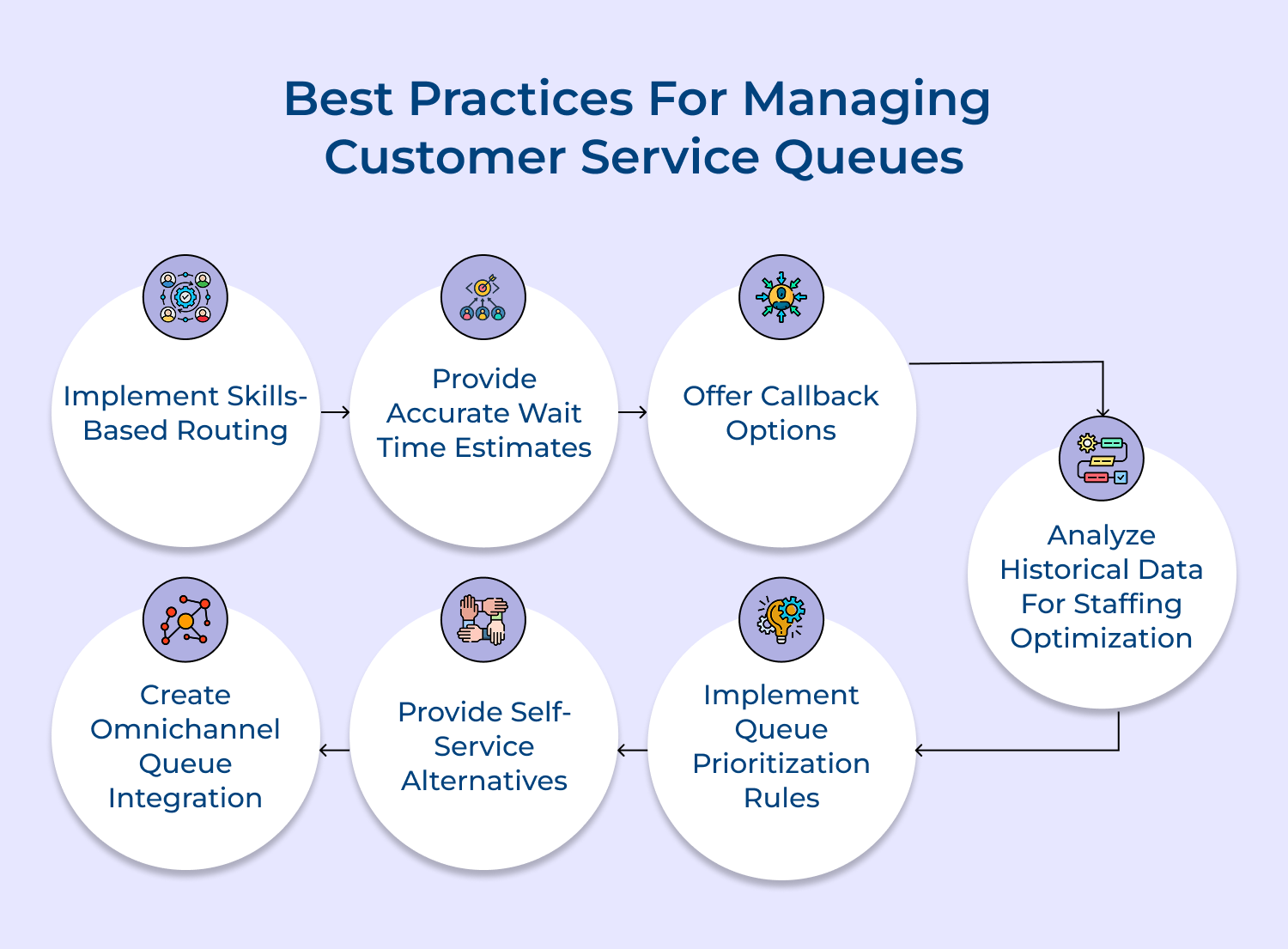
1. Implement Skills-Based Routing
Connect customers to agents with the right expertise for their issues. This reduces resolution time, limits transfers and boosts first-contact resolution. Modern routing tools can factor in agent skills, customer value and past success to match inquiries efficiently.
2. Provide Accurate Wait Time Estimates
Give customers realistic, updated wait times and queue positions. Transparency reduces abandonment and anxiety. Advanced algorithms can refine predictions in real-time based on current traffic and historical patterns.
3. Offer Callback Options
Let customers hold their queue spot without staying on the line. Callback systems flatten peak demand, improve efficiency and enhance satisfaction by respecting customer time.
4. Analyze Historical Data for Staffing Optimization
Track traffic patterns daily, weekly and seasonally to forecast volumes. Predictive analytics can also consider campaigns, product launches or weather, helping staff appropriately during peaks and avoid overstaffing.
5. Implement Queue Prioritization Rules
Set clear criteria for high-priority cases, like urgency or customer tier. Transparent rules ensure critical issues are handled quickly while maintaining fairness while preventing favoritism.
6. Provide Self-Service Alternatives
Offer knowledge bases, automated solutions, or guided troubleshooting to let customers resolve simple issues themselves. Intelligent systems can recommend resources tailored to each inquiry, reducing queue load.
7. Create Omnichannel Queue Integration
Unify all channels—phone, chat, email, social media—into one system. Cross-channel history tracking preserves context and prevents bottlenecks, giving customers a smooth, consistent experience.
Let’s explore how leading companies implement these strategies to enhance customer experience and operational efficiency.
Capital One
Capital One manages queues through intelligent routing that directs customers to specialized teams based on banking needs. The system analyzes inquiry type and account history to connect customers with qualified representatives, reducing transfers while ensuring efficient resolution of disputes, loan inquiries or account issues.
This streamlined approach translates to higher satisfaction scores and improved retention rates, as minimized wait times strengthen customer trust in the competitive financial services landscape.
Chewy
Chewy approaches queue management with empathy at the center. Instead of rushing conversations, the system gives customer care teams the flexibility to spend time on pet health questions, product suggestions and emotional reassurance. Workloads are balanced behind the scenes so customers never feel like “just another ticket.”
Thoughtful follow-ups after each interaction turn simple support calls into meaningful moments. This human-first experience builds trust, encourages repeat purchases and creates loyal customers who happily recommend Chewy to fellow pet parents.
Nahdi Pharmacy
Nahdi Pharmacy blends in-store and digital queues to make healthcare interactions smoother. Customers can collect digital queue numbers via kiosks or apps and use their waiting time productively, while online users book virtual consultations with pharmacists. This flexible setup keeps lines moving during busy hours and reduces unnecessary waiting.
More importantly, it supports better medication adherence and patient confidence. The result is a calmer experience that boosts transaction value as well as reinforces Nahdi’s image as a pharmacy that genuinely prioritizes patient care.
Etihad Airways
Etihad Airways uses a unified queue management system to coordinate airport counters, call centers and mobile app support. Urgent issues like tight connections or flight disruptions are fast-tracked, while routine questions are handled efficiently across digital channels, often by AI.
This smart prioritization keeps operations lean without compromising service quality. By resolving high-impact problems quickly, Etihad maintains its premium service promise, improves customer satisfaction and stays ahead in a highly competitive airline market.
Efficient management of the customer service queue directly impacts the overall customer experience. A structured queue system ensures that all customer inquiries are addressed promptly and appropriately, minimizing wait times while improving service quality.
Businesses can prioritize urgent issues or high-value customers while ensuring fairness. Properly handling the queue boosts efficiency, reduces stress for both customers and agents, as well as increases satisfaction. This streamlined process helps build trust with customers, leading to better retention and stronger long-term relationships.

How can you effectively communicate with customers waiting in a queue?
Effective queue communication involves providing clear wait time estimates, sending periodic updates about queue position and explaining reasons for delays. Use multiple channels like SMS, app notifications, or digital displays. Personalize messages when possible, acknowledge waiting inconvenience and offer self-service alternatives. Always maintain a friendly, empathetic tone that values customers’ time.
What tools are used to manage a customer service queue?
Customer queue management tools include virtual queue systems, ticket dispensers, automated callback technology and real-time analytics dashboards. Modern solutions incorporate AI-powered chatbots for initial screening, workforce management software for agent scheduling, CRM integration for customer history access and omnichannel platforms that unify queue management across various channels.
Why do customers often experience long wait times in a customer service queue?
Customers experience long wait times due to understaffing, unpredicted volume surges and inefficient agent scheduling. Complex issues requiring extended handling time create bottlenecks, while inadequate self-service options force simple inquiries into queues. Outdated queue technologies, poor forecasting methods and insufficient agent training contribute to delays. Cross-departmental dependencies and approval processes can further extend resolution times.
Why should businesses invest in advanced customer service queue management systems?
Businesses should invest in advanced queue systems because they significantly improve customer satisfaction while reducing operational costs. These systems provide valuable analytics for staffing optimization and process improvement. They enhance brand reputation through professional service experiences and increase customer loyalty through reduced wait times. Modern queue solutions can drive additional revenue through relevant upselling opportunities during wait periods.
How can businesses reduce wait times in a customer service queue?
Businesses can reduce wait times by implementing callback options, optimizing staff scheduling based on historical traffic patterns and offering comprehensive self-service solutions. Employ skills-based routing to match customers with appropriate agents faster. Use AI chatbots to handle routine inquiries and qualify complex ones before human intervention. Cross-train agents and continuously analyze queue data to identify as well as address bottlenecks.
 https://omni24.io/wp-content/uploads/2026/08/Omnichannel-Chatbots.png
1256
2400
Tushar Joshi
https://omni24.io/wp-content/uploads/2023/04/Omni-Logo-1.svg
Tushar Joshi2026-08-13 04:43:302026-08-24 09:02:01How Omnichannel Chatbots Improve Your Customer Experience
https://omni24.io/wp-content/uploads/2026/08/Omnichannel-Chatbots.png
1256
2400
Tushar Joshi
https://omni24.io/wp-content/uploads/2023/04/Omni-Logo-1.svg
Tushar Joshi2026-08-13 04:43:302026-08-24 09:02:01How Omnichannel Chatbots Improve Your Customer Experience https://omni24.io/wp-content/uploads/2026/08/Ecommerce-Chatbots-1.png
1256
2400
Tushar Joshi
https://omni24.io/wp-content/uploads/2023/04/Omni-Logo-1.svg
Tushar Joshi2026-08-12 03:57:552026-08-24 09:03:22Ecommerce Chatbots: What are They and Their Use Cases
https://omni24.io/wp-content/uploads/2026/08/Ecommerce-Chatbots-1.png
1256
2400
Tushar Joshi
https://omni24.io/wp-content/uploads/2023/04/Omni-Logo-1.svg
Tushar Joshi2026-08-12 03:57:552026-08-24 09:03:22Ecommerce Chatbots: What are They and Their Use Cases https://omni24.io/wp-content/uploads/2026/08/Omnichannel-Ecommerce.png
1256
2400
Tushar Joshi
https://omni24.io/wp-content/uploads/2023/04/Omni-Logo-1.svg
Tushar Joshi2026-08-11 04:50:362026-08-24 09:00:45How to Create an Omnichannel Ecommerce Strategy: 7 Best Ways
https://omni24.io/wp-content/uploads/2026/08/Omnichannel-Ecommerce.png
1256
2400
Tushar Joshi
https://omni24.io/wp-content/uploads/2023/04/Omni-Logo-1.svg
Tushar Joshi2026-08-11 04:50:362026-08-24 09:00:45How to Create an Omnichannel Ecommerce Strategy: 7 Best Ways
Whether it’s about acquire, engage or support – Omni24 covers all your customer engagement needs in one complete platform.

Copyright ©2026 Veemo All rights reserved.
CA, Los Angeles, Hall Ave, 19011