How to Prevent Customer Service Burnout: 5 Key Signs & Solutions
A practical guide to recognizing, preventing, and managing customer service burnout while improving agent wellbeing as well as overall customer experience.
A practical guide to recognizing, preventing, and managing customer service burnout while improving agent wellbeing as well as overall customer experience.
Your best customer service agents might look fine on the surface, but burnout often builds quietly through stress, fatigue, and declining motivation. In fact, around 74% of contact center agents say they’re at risk of burnout, and industry turnover can reach 30–45% annually, showing how quickly exhaustion turns into resignations.
Some studies even show over half of highly stressed agents consider leaving within six months, creating a damaging cycle for teams and customers alike.
This guide helps you spot early warning signs, support recovery, and protect both employee wellbeing as well as the consistent service your customers expect.
Customer service burnout happens when support agents become emotionally and physically exhausted from their work. It develops through constant exposure to difficult interactions, high-pressure targets and repetitive problems.
Burnout builds gradually as agents absorb negative emotions from frustrated customers day after day. The combination of emotional labor, strict performance metrics, and lack of control creates overwhelming stress. Eventually their capacity to care diminishes and they become disengaged or leave entirely.
Key Objectives:
Addressing burnout isn’t just good for employees. It transforms your entire support operation and creates measurable improvements across multiple business areas.
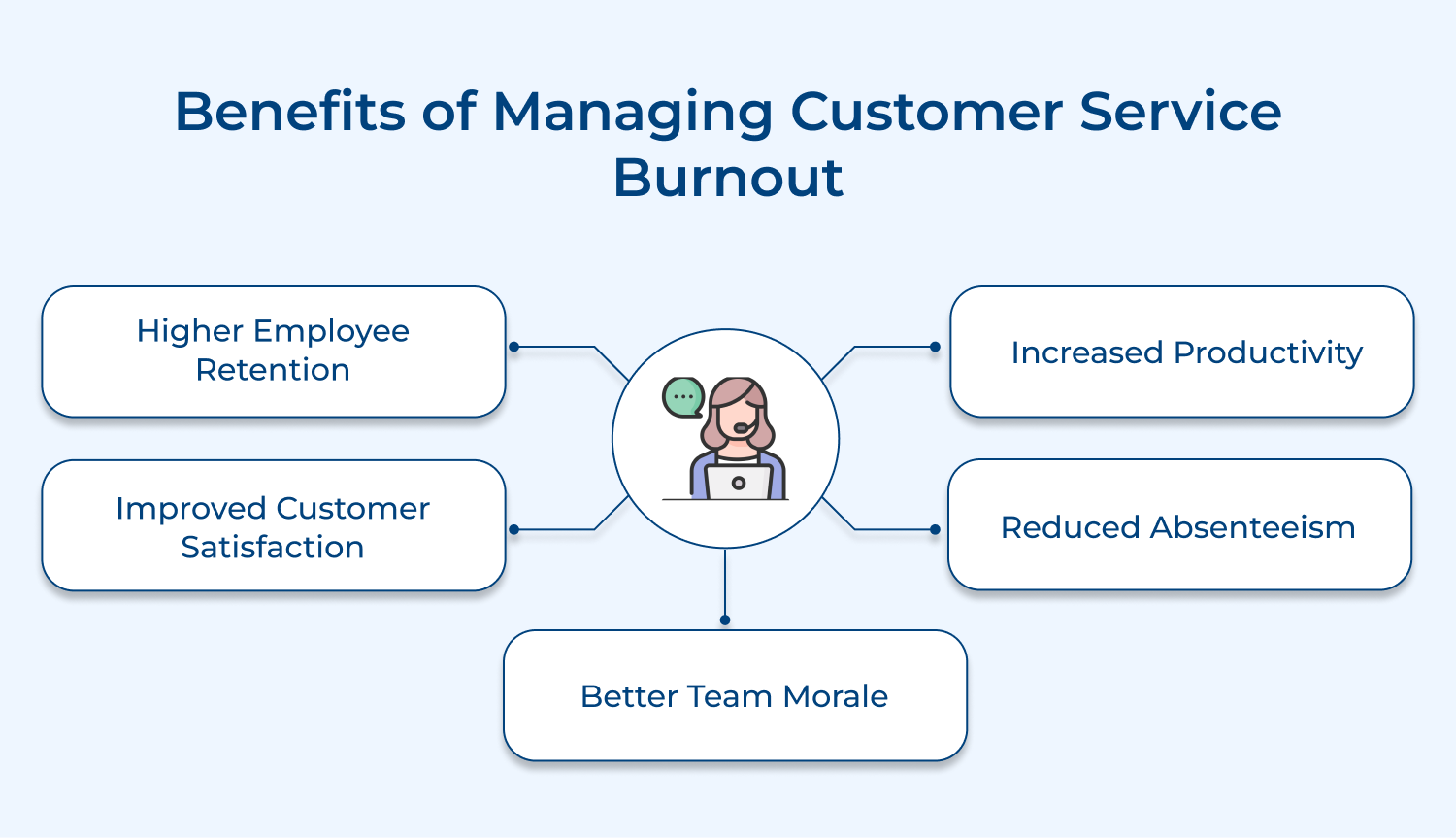
1. Higher Employee Retention
When you actively manage burnout, agents stay longer with your company. This reduces costly turnover expenses and preserves valuable institutional knowledge that takes years to develop.
2. Improved Customer Satisfaction
Energized agents deliver better service experiences because they have the emotional capacity to empathize. Customers notice the difference and respond with higher satisfaction ratings and loyalty.
3. Increased Productivity
Well-rested employees handle tickets more efficiently and make fewer mistakes. They can focus on solving problems rather than just surviving their shift or counting down the hours.
4. Reduced Absenteeism
Burnout prevention decreases stress-related sick days and unexpected absences. Your team becomes more reliable and scheduling becomes predictable, which improves overall workflow along with team morale.
5. Better Team Morale
A healthy work environment creates positive energy that spreads throughout the team. Colleagues support each other and collaboration improves, making the workplace somewhere people actually want to be.
Burnout doesn’t appear randomly. Specific workplace conditions create the perfect storm for exhaustion and learning these triggers helps organizations address them proactively.
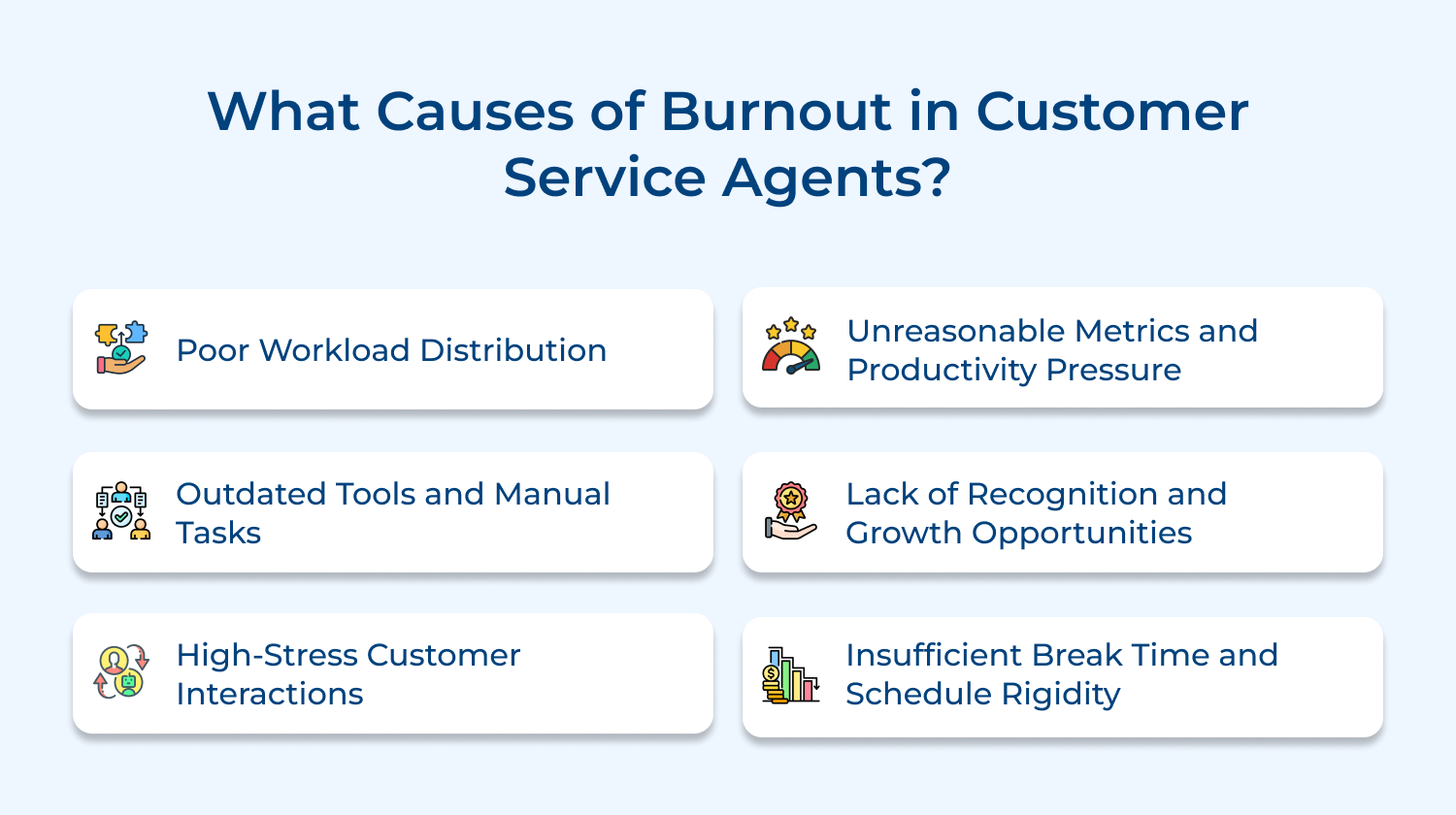
When some agents consistently handle twice as many tickets as others, resentment builds quickly. Uneven distribution creates unfair pressure on certain team members while others coast through easier workloads.
Common distribution problems include:
Imbalanced workloads also prevent skill development across the team. Agents stuck with routine tasks never grow while overburdened colleagues have no time to mentor or share expertise properly.
Fighting against clunky software wastes hours every single day and drains agent patience. When simple tasks require five different screens or manual data entry, frustration compounds with each interaction throughout the shift.
Technology gaps that create unnecessary friction:
Agents spend more time wrestling with tools than actually helping customers. This technical burden makes them feel incompetent even when the real problem is inadequate infrastructure and outdated systems.
Dealing with angry or abusive customers takes a genuine emotional toll that accumulates over time. Agents absorb negativity all day without adequate recovery time, which depletes their mental reserves and compassion capacity.
Interaction stressors that compound over time:
The expectation to remain cheerful despite mistreatment creates emotional dissonance. Suppressing authentic reactions to protect customers’ feelings while ignoring their own wellbeing becomes exhausting and unsustainable long-term.
Measuring success purely by speed ignores the quality of human connection customers actually need. Watching the clock during every conversation creates anxiety and prevents agents from building genuine rapport or solving problems thoroughly.
Metrics that are problematic rather than productive:
These metrics force agents to choose between hitting targets and actually helping people. The constant pressure to work faster creates a factory mentality that strips away the human element customers deserve and agents need.
Doing excellent work without acknowledgment makes agents feel invisible and undervalued over time. When promotions seem impossible and good performance goes unnoticed, motivation evaporates and people start questioning why they bother trying.
Common recognition gaps:
Stagnation breeds apathy faster than almost any other workplace condition. Agents need to see that their investment in the role leads somewhere beyond just handling more tickets tomorrow.
Back-to-back calls without breathing room creates relentless pressure that prevents emotional processing. Agents need moments to reset between difficult interactions, but many schedules eliminate even basic recovery time throughout shifts.
Scheduling practices that accelerate burnout:
Treating humans like machines that can run continuously eventually breaks them down. The body and mind require rest to maintain performance, yet many support centers operate as if breaks represent lost productivity.
Burnout rarely announces itself clearly. Instead it shows up through subtle behavioral changes and performance shifts that managers need to recognize before it becomes irreversible.
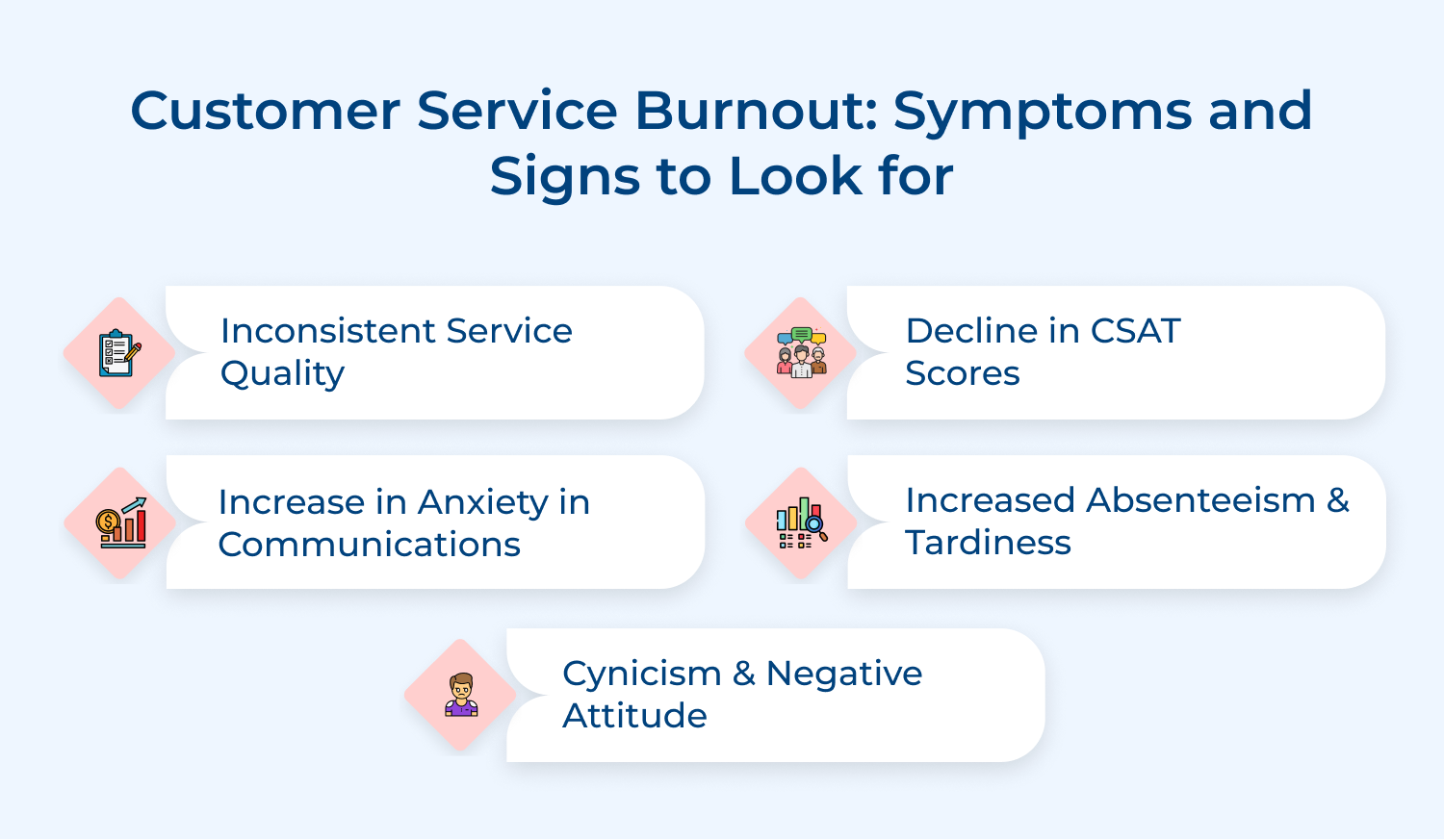
1. Inconsistent Service Quality
An agent who once delivered thoughtful, accurate support may start sending rushed or incomplete responses. Small details get missed, and performance feels unpredictable from one shift to the next.
This usually isn’t about skill or effort. Burnout drains mental focus, making it harder to stay sharp and maintain the level of customer experience your team is known for.
2. Decline in CSAT Scores
Customer satisfaction can slip even when your product, pricing, or policies stay the same. Conversations feel less warm, empathy sounds forced, and customers sense emotional distance.
Over time, customer feedback reflects this disconnect. Exhausted agents focus on closing tickets quickly instead of building real connection, which quietly weakens trust and loyalty.
3. Increase in Anxiety in Communications
Some agents begin hesitating before replying, double-checking simple answers, or seeking constant reassurance from supervisors. Calls that once felt routine suddenly feel stressful.
The anxiety often comes from fading confidence and pressure to meet performance goals without enough emotional energy to manage uncertainty in fast-moving help desks.
4. Increased Absenteeism and Tardiness
Frequent sick days, late logins, or sudden schedule issues can signal deeper strain. What looks like disengagement may actually be emotional overload.
When work begins to trigger stress or dread, avoidance becomes a coping mechanism—one that can quietly disrupt team stability and long-term CX strategy.
5. Cynicism and Negative Attitude
Positive team members may start complaining about customers, processes, or leadership. Optimism fades, and conversations feel heavier.
This shift often marks deeper burnout, where emotional exhaustion turns into detachment. Left unaddressed, that mindset can spread quickly and affect the morale of the entire support team.
Let’s now explore seven effective strategies to prevent customer service burnout, ensuring your team remains both productive and satisfied.
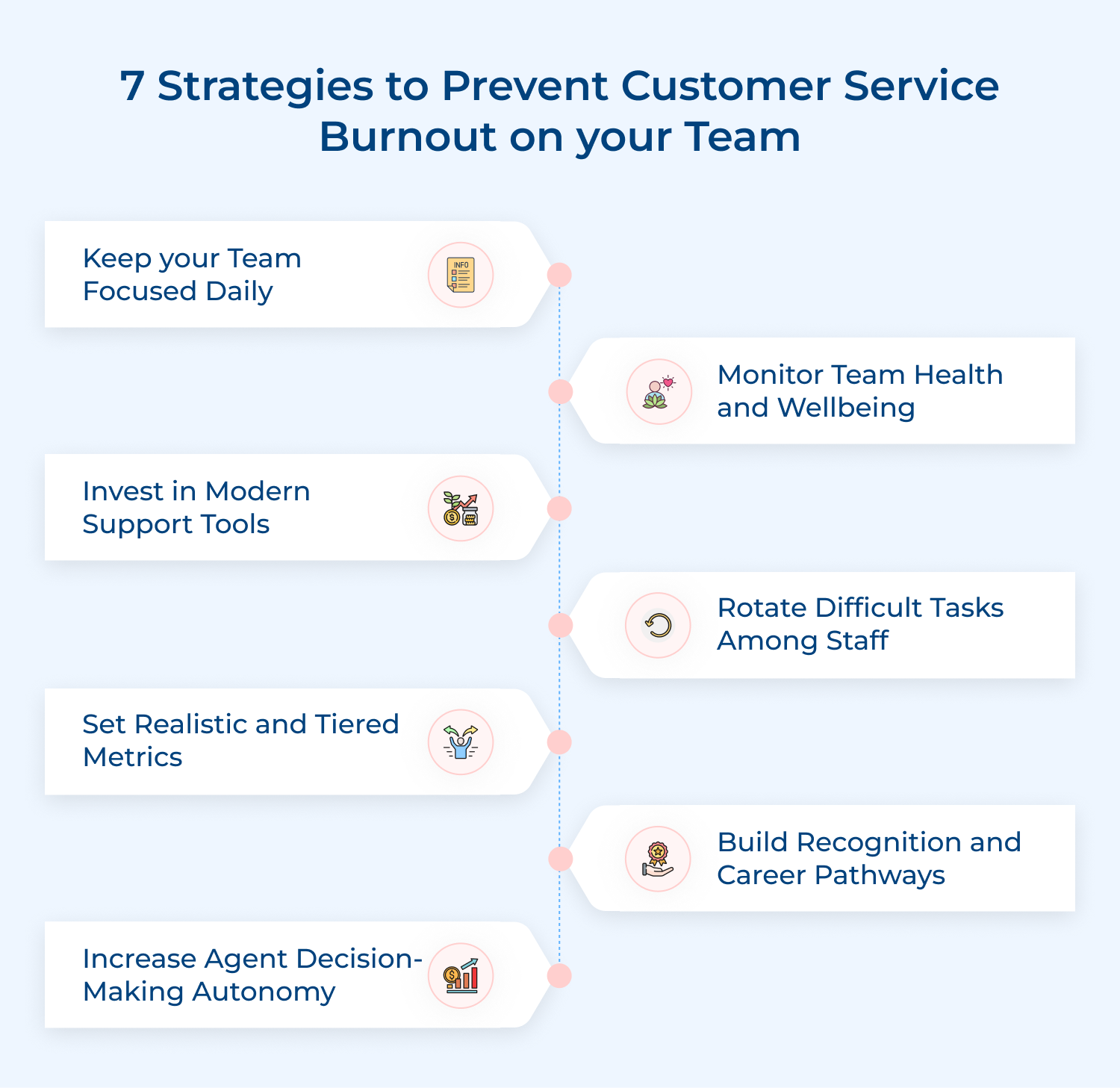
Constant context-switching between tasks drains mental energy faster than the actual work itself. When agents can focus on meaningful customer interactions without interruptions, they maintain better energy levels and feel more accomplished at day’s end.
Here are three ways to maintain daily focus:
For example a software support team eliminated their daily standup meetings and created two-hour focus blocks each morning. Agents reported feeling less frazzled and resolved 30% more complex technical issues because they could think deeply without constant interruptions.
Outdated technology makes agents work harder, increases frustration, and pulls attention away from meaningful customer interactions. The right tools remove friction so teams can focus on solving problems instead of fighting slow or disconnected systems.
When evaluating support technology, prioritize:
Tool quality directly affects burnout. Constantly switching systems or copying data makes capable agents feel ineffective, while efficient tools restore confidence and productivity.
Key burnout-reducing solutions include unified inbox platforms for all channels, AI chatbots that resolve basic requests, knowledge management systems for instant answers, and workflow automation that handles routine processes – freeing agents to focus on complex issues as well as real human connection.
Measuring only speed creates constant pressure that prevents quality service and genuine customer relationships. Balanced metrics acknowledge that some tickets deserve more time and recognize the complexity differences that make simple averages meaningless.
Here are realistic benchmarks for common support metrics:
Track metrics by ticket complexity or customer type instead of applying blanket standards to everyone. An agent spending 20 minutes with a frustrated enterprise client deserves recognition, not penalties for exceeding arbitrary time limits designed around simple password resets.
Pro tips:
Empowering agents to solve problems without constant approval makes them feel trusted and competent. When every decision requires supervisor sign-off, agents become dependent and disengaged because they can’t actually help customers in the moment when it matters most.
Allow Refunds and Service Exceptions
Give agents spending limits and authority to issue refunds or waive fees for reasonable customer requests. Waiting for manager approval during every call wastes time and frustrates both the agent as well as the customer who just wants their problem resolved quickly.
Let Agents Personalize Communication Style
Trust agents to adapt their tone and approach based on each customer’s personality along with the situation. Rigid scripts prevent authentic connection and make agents feel like robots reading lines instead of professionals using their judgment as well as interpersonal skills.
Trust Experienced Agents on Escalations
Allow seasoned team members to decide when issues truly need escalation versus when they can handle things independently. Micromanaging escalation decisions signals you don’t trust their expertise and wastes their knowledge by forcing unnecessary handoffs to supervisors.
Regular monitoring helps you catch burnout early before agents reach the breaking point. Proactive check-ins show you care about people beyond productivity numbers and create space for honest conversations.
Schedule consistent one-on-ones where you actually listen rather than just reviewing metrics. Track patterns like increased sick days and follow up with genuine concern instead of disciplinary action.
Best Practices:
Fair distribution prevents individual agents from bearing disproportionate burdens. When the same people always handle angry customers, they burn out while others never develop resilience.
Ask yourself these four key questions:
These questions expose hidden patterns where certain agents carry unfair loads. Awareness of imbalances is the first step toward equitable distribution. Map out who handles what types of difficult work each week. Then create a rotation schedule where everyone takes turns with challenging customers and undesirable shifts.
Without growth opportunities or appreciation, even passionate agents eventually feel stuck. When people see no future beyond their current role, motivation dies and they start job hunting.
Here are three ways to build meaningful recognition:
Focus on lateral moves and public recognition that costs nothing but means everything. You can rotate people through projects or give them mentorship roles that demonstrate trust.
Leading companies recognize that preventing burnout isn’t optional. Here’s how four brands actively protect their support teams while maintaining excellent customer service.
1. Zappos
Zappos removes strict average handle time targets and lets agents spend as long as needed to truly help customers. This freedom encourages real conversations instead of rushed resolutions.
Rather than tracking speed alone, they focus on satisfaction signals from help desk reports to understand what meaningful service looks like. You can apply the same idea by reducing time pressure and trusting agents to manage conversations at a pace that leads to better outcomes.
2. Patagonia
Patagonia invests heavily in training so agents feel confident handling different situations. They rotate staff across channels to prevent monotony and connect everyday work to a larger mission.
Cross-training teams to manage varied support tickets (while giving them easy access to a shared knowledge base) keeps learning continuous and work more engaging.
3. Ritz-Carlton
Ritz-Carlton empowers employees with discretionary budgets to solve problems instantly, reducing stress caused by constant approvals. Pairing autonomy with peer recognition builds confidence, motivation, and a culture where great service feels valued.
Customer service burnout destroys teams silently until your best agents quit or disengage completely. Recognizing symptoms early and implementing preventive strategies protects both employee wellbeing as well as customer satisfaction simultaneously.
Start with small changes like better tools or flexible schedules and build from there. Your support team’s mental health directly impacts every customer interaction, so investing in burnout prevention isn’t optional anymore, it’s essential for sustainable success.

What is the impact of customer service burnout on employees?
Burnout causes physical exhaustion, anxiety, and depression that affect agents beyond work hours. It destroys job satisfaction and leads to cynicism, decreased performance, as well as eventually resignation as employees seek healthier work environments elsewhere.
Why does customer service burnout occur and what are its contributing factors?
Burnout develops from constant emotional labor combined with high-pressure metrics and lack of control over outcomes. Poor workload distribution, outdated tools, repetitive tasks, and dealing with angry customers without adequate support all accelerate exhaustion.
How can organizations identify signs of customer service burnout among their staff?
Watch for declining performance quality, increased absenteeism, and negative attitude changes in previously positive employees. Anxiety during customer interactions, cynical comments about work, and reluctance to engage with team activities signal growing burnout.
What strategies can be implemented to prevent customer service burnout in a team?
Invest in modern tools, set realistic tiered metrics, and give agents decision-making autonomy to reduce unnecessary stress. Rotate difficult tasks fairly, monitor team wellbeing regularly, and create clear recognition programs with genuine career advancement opportunities.
What steps can individuals take to prevent customer service burnout?
Set boundaries between work and personal life by not checking messages after hours or obsessing over difficult interactions. Practice stress management through exercise or hobbies, seek support from colleagues or professionals, and communicate workload concerns to managers before reaching crisis point.
 https://omni24.io/wp-content/uploads/2026/08/AI-Customer-Service-Agents.png
1256
2400
Webvision Solution
https://omni24.io/wp-content/uploads/2023/04/Omni-Logo-1.svg
Webvision Solution2026-09-21 04:48:512026-09-21 04:48:51How to Build an AI Customer Service Agents: 8 Key Steps
https://omni24.io/wp-content/uploads/2026/08/AI-Customer-Service-Agents.png
1256
2400
Webvision Solution
https://omni24.io/wp-content/uploads/2023/04/Omni-Logo-1.svg
Webvision Solution2026-09-21 04:48:512026-09-21 04:48:51How to Build an AI Customer Service Agents: 8 Key Steps https://omni24.io/wp-content/uploads/2026/08/Omnichannel-Conversational-AI.png
1256
2400
Tushar Joshi
https://omni24.io/wp-content/uploads/2023/04/Omni-Logo-1.svg
Tushar Joshi2026-09-16 03:51:072026-09-16 03:51:07How to Build Omnichannel Conversational AI Strategy
https://omni24.io/wp-content/uploads/2026/08/Omnichannel-Conversational-AI.png
1256
2400
Tushar Joshi
https://omni24.io/wp-content/uploads/2023/04/Omni-Logo-1.svg
Tushar Joshi2026-09-16 03:51:072026-09-16 03:51:07How to Build Omnichannel Conversational AI Strategy https://omni24.io/wp-content/uploads/2026/08/Customer-Service-Teams.png
1256
2400
Tushar Joshi
https://omni24.io/wp-content/uploads/2023/04/Omni-Logo-1.svg
Tushar Joshi2026-09-15 04:01:522026-09-15 04:02:16How to Build Customer Service Teams: 6 Key Steps
https://omni24.io/wp-content/uploads/2026/08/Customer-Service-Teams.png
1256
2400
Tushar Joshi
https://omni24.io/wp-content/uploads/2023/04/Omni-Logo-1.svg
Tushar Joshi2026-09-15 04:01:522026-09-15 04:02:16How to Build Customer Service Teams: 6 Key Steps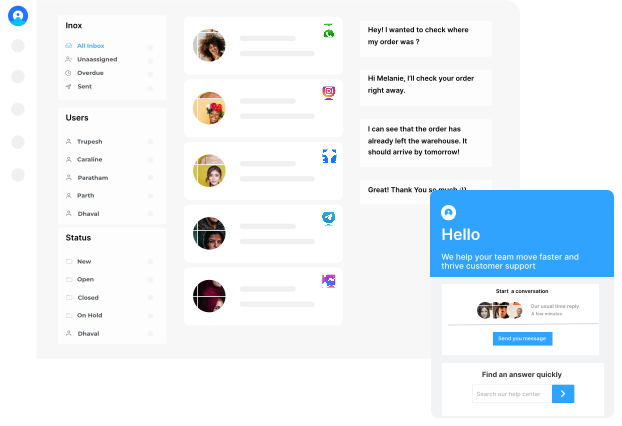
Whether it’s about acquire, engage or support – Omni24 covers all your customer engagement needs in one complete platform.

Copyright ©2026 Veemo All rights reserved.
CA, Los Angeles, Hall Ave, 19011