Top 10 Customer Service Email Templates to Improve CX
Well-crafted customer service email templates streamline responses, boost efficiency, save time and ensure consistency at scale.

Well-crafted customer service email templates streamline responses, boost efficiency, save time and ensure consistency at scale.
Clients expect fast and reliable service that meets their expectations. A simple way of providing better support is by using tried-and-trusted customer service email templates.
Templates help businesses provide consistent and high-quality responses to customers, which is essential for building trust as well as maintaining positive relationships.
62% of customers will switch to a different brand after one poor customer experience. It proves the importance of providing impeccable customer service. Email templates help companies save time, provide fast responses and ensure consistency in their communication process.
We will provide you with a selection of email templates that you can use to enhance your communication and improve their overall experience with your brand.
Customer service emails are defined as messages sent to customers to address their issues related to products/services. These emails serve as a direct communication channel between the customer and the company. They are an essential part of maintaining good customer relationships.
Key objectives of a customer service email include:
Customer service emails are a crucial aspect of maintaining positive relationships with customers. They not only provide assistance and support to customers but also reflect the professionalism as well as tone of the company.
Here are some key objectives and tips on how to write effective customer service emails.
Customer service response templates can be a lifesaver for businesses looking to provide effective customer support. These templates are pre-written responses that can be quickly customized and sent to customers to address their queries, complaints or feedback.
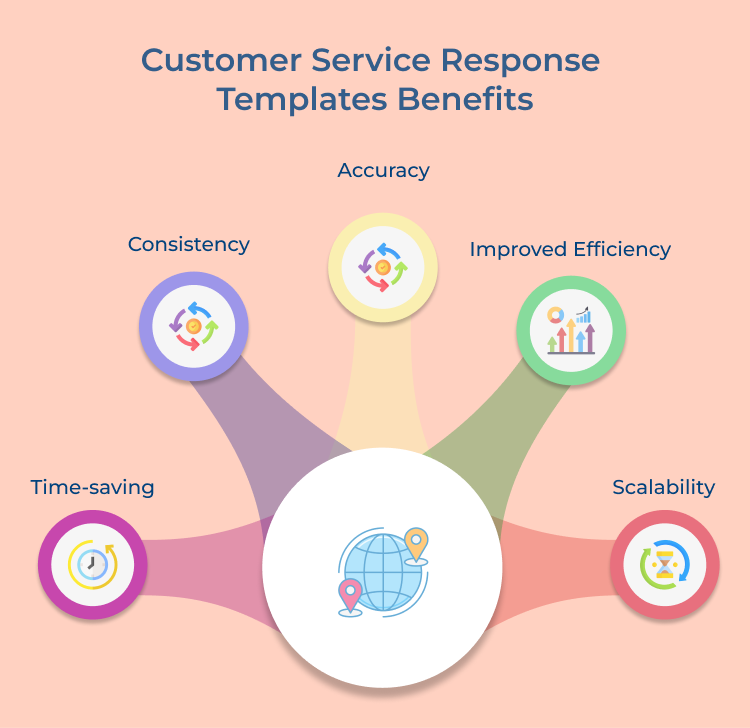
There are many benefits to utilizing these templates, some of which are outlined below:
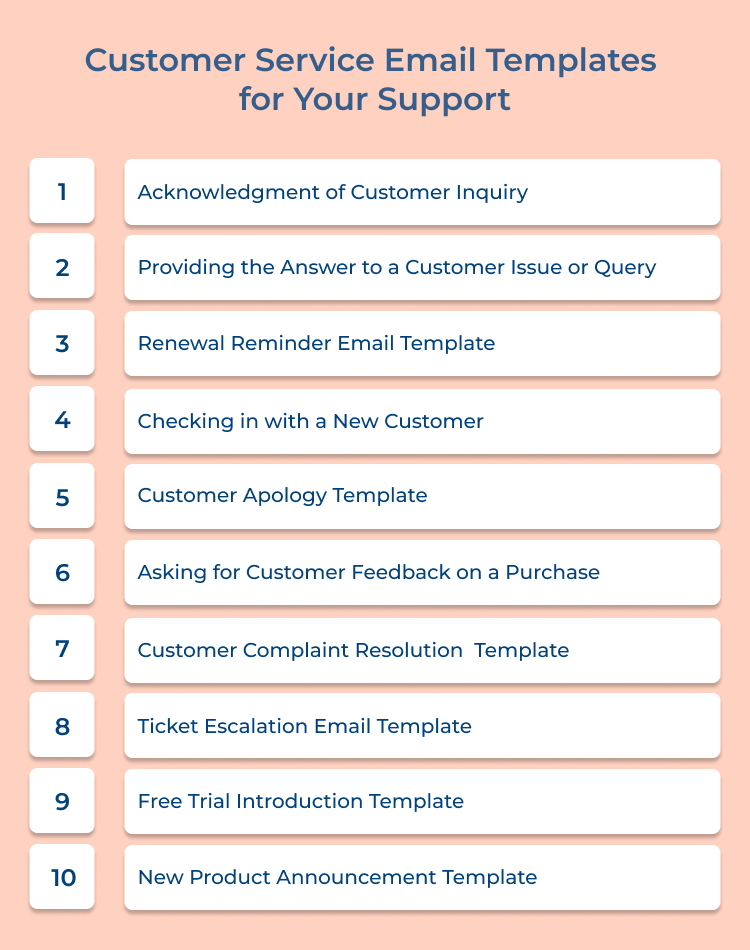
The advancement of online shopping and social media has surged customers’ expectations of efficient support whenever they have an issue. One of the most common ways businesses communicate with their customers is via email. But, crafting the perfect customer service email can be tricky.
That’s why we’ve put together some helpful templates to level up your support game.
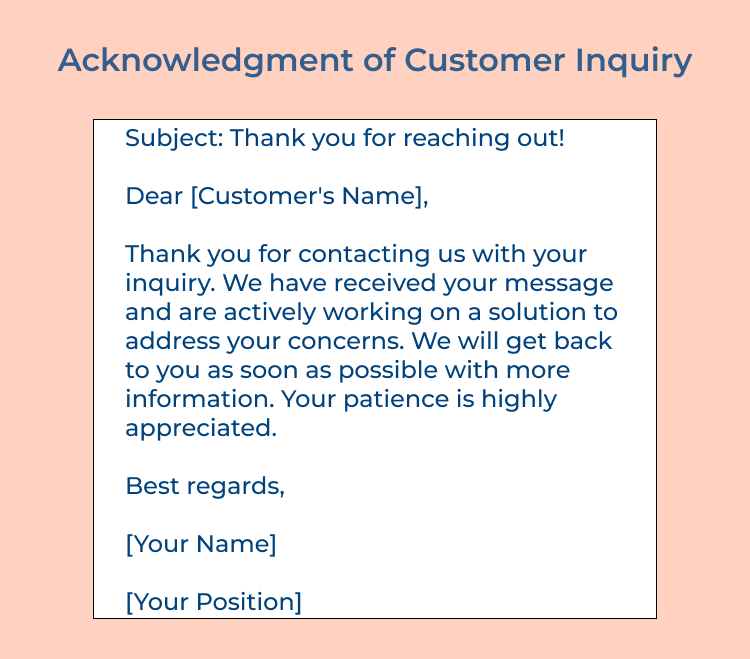
When a customer reaches out to your company with a question or concern, it is important to acknowledge their inquiry promptly.
An acknowledgment email template can be personalized with the customer’s name and details of their inquiry. It shows the customer that you are attentive to their needs and are working to address their issue.
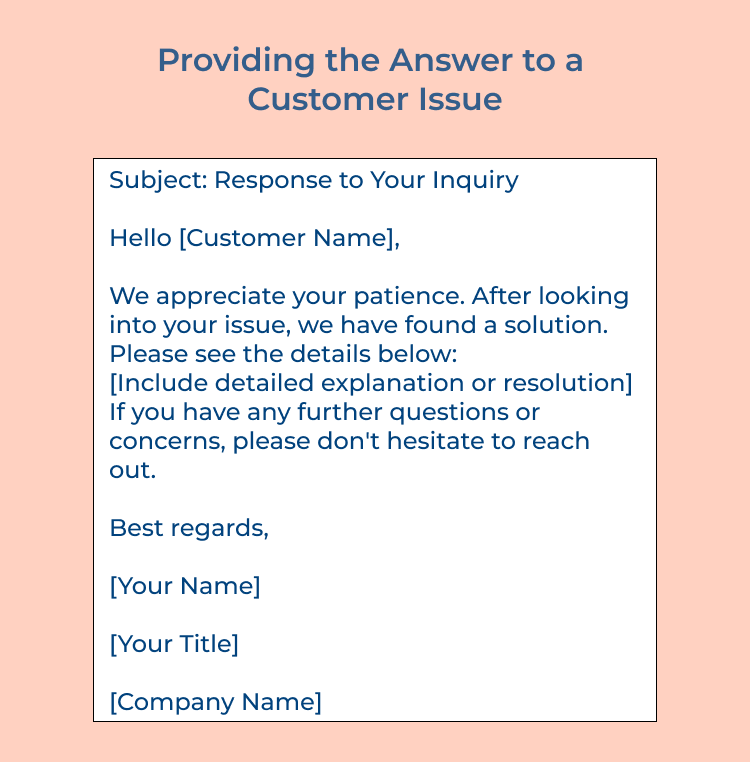
Once you have resolved a customer’s inquiry or issue, it is essential to provide them with a clear and concise answer. Using a pre-written email template can help ensure your response is thorough and professional. Include all relevant information and offer additional assistance if needed.
For businesses that offer subscription-based services or products, renewal reminder emails can help improve customer retention rates.
When you send out a personalized reminder to customers it means their subscription is near to expiration.
Businesses can increase the likelihood of renewal and maintain a strong customer relationship.
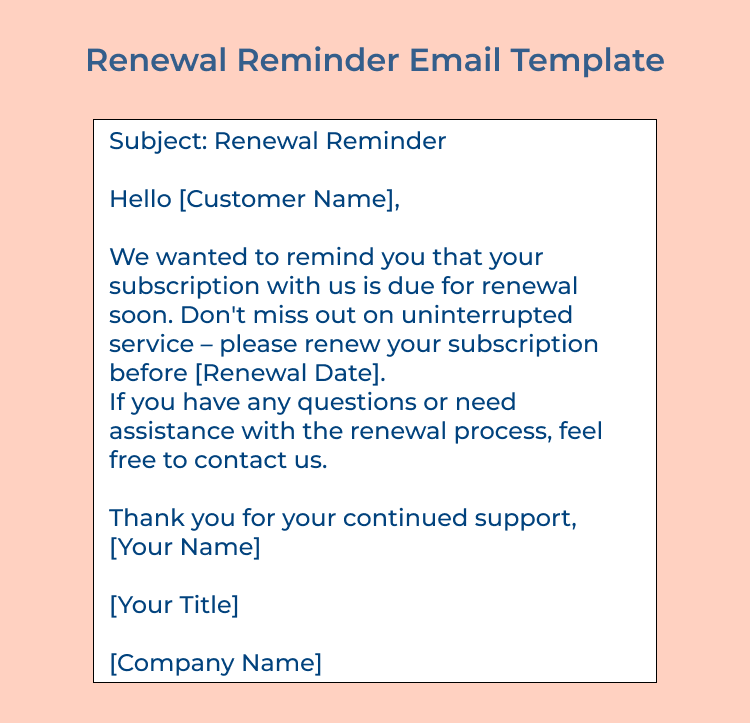
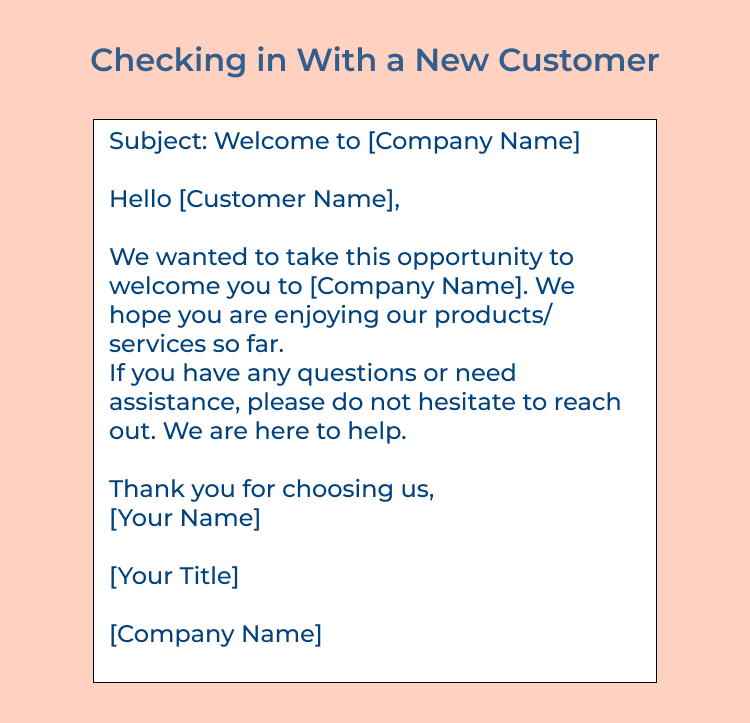
After a customer makes a purchase or signs up for your services, it is important to follow up with them to ensure their satisfaction and address any questions or concerns they may have.
A checking-in email template can be used to thank the customer for their business, provide additional information or resources and encourage them to reach out if they need assistance.
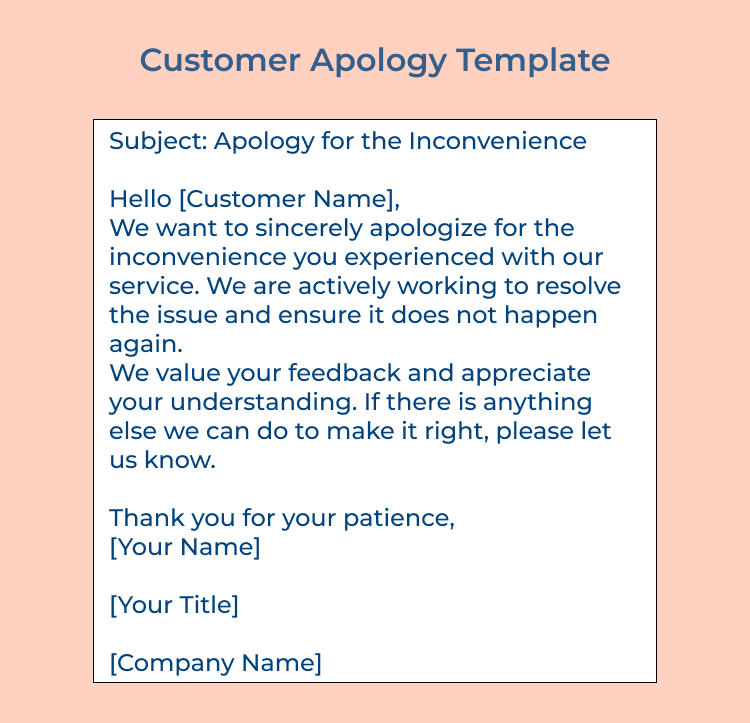
Mistakes happen, and when they do, it’s important to apologize to the customer as well as take steps to resolve the issue.
A customer apology email template can help businesses communicate effectively, take responsibility for any errors, and offer a solution or compensation. By addressing the problem promptly and professionally, businesses can mitigate any negative impact on the customer relationship.
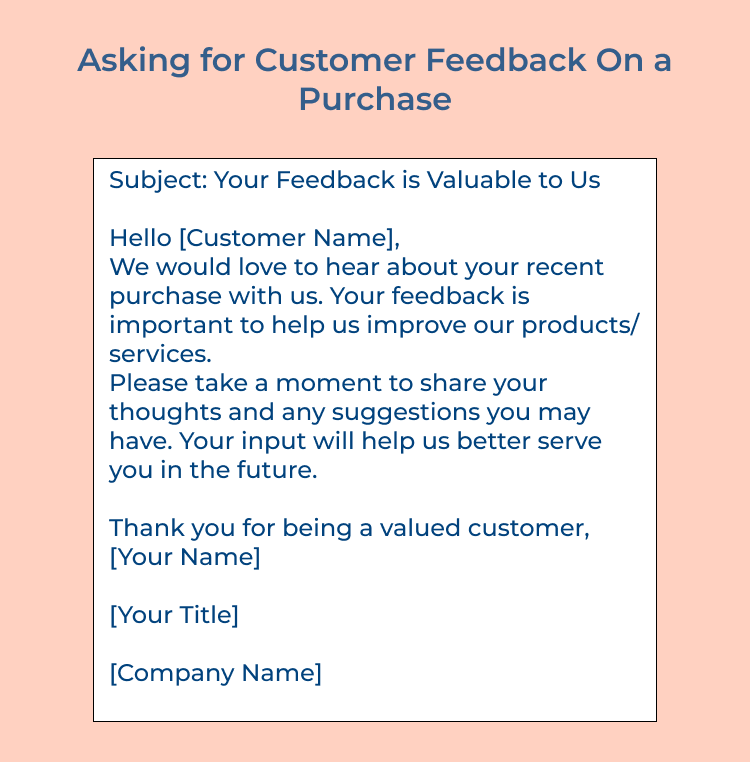
Customer feedback is essential for improving your products or services and understanding the needs of your customers.
A feedback request email template can be used to solicit feedback from customers after they have made a purchase. Include a link to a survey or feedback form and encourage customers to share their thoughts.
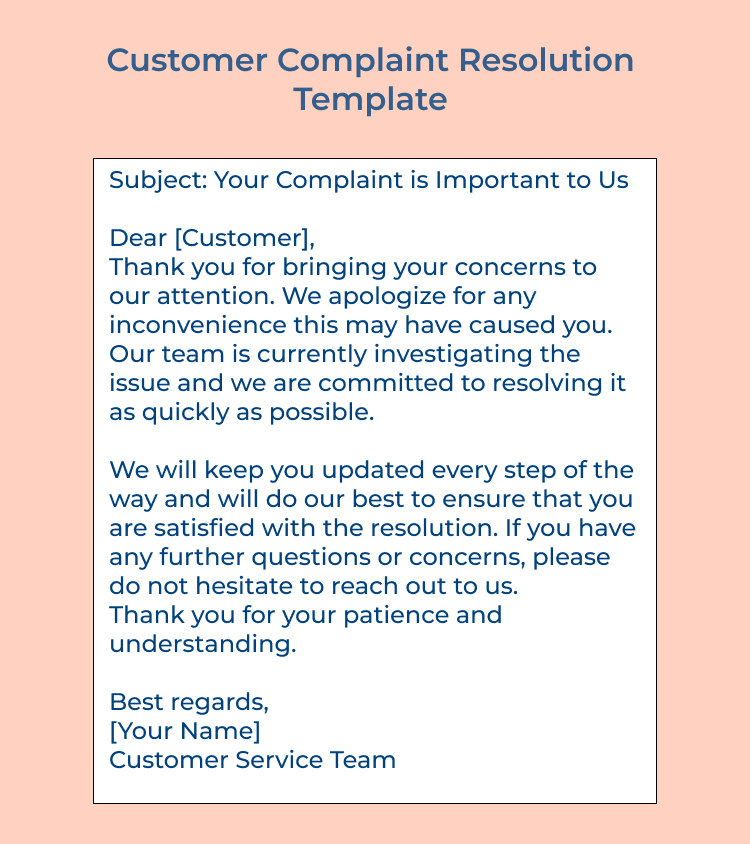
When a customer reaches out with an issue , it’s important to respond promptly. In your email response, acknowledge the customer’s concerns, apologize for any inconvenience and provide a clear plan of action for resolving the issue.
Be sure to include any relevant contact information or next steps to ensure the customer feels heard and valued.
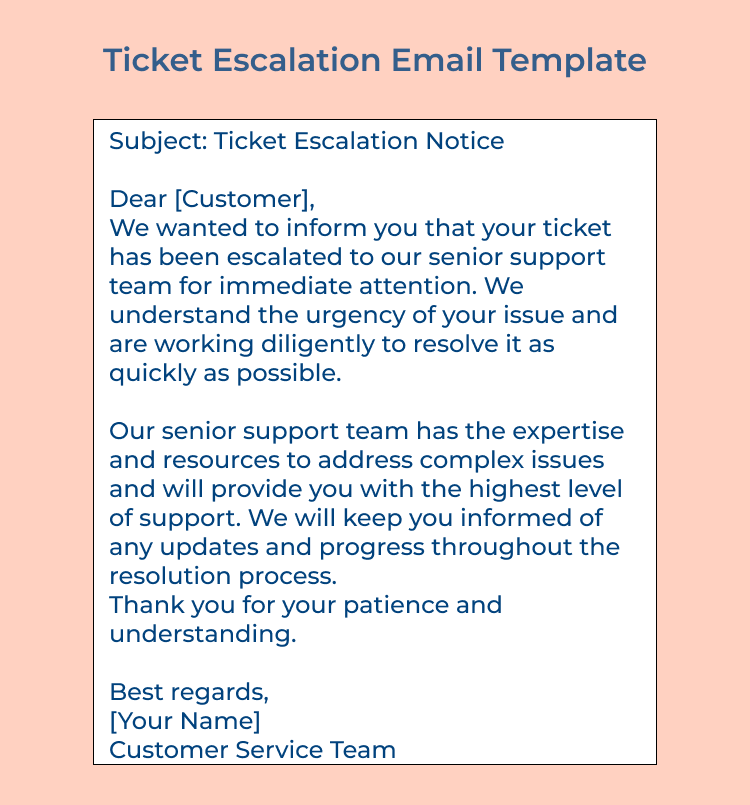
In cases where a customer concern requires further investigation from a higher level of support, a ticket escalation email can help streamline the process.
In such a customer service email template, clearly outline the reason for the escalation, provide any relevant background information or context and ensure the customer is kept informed of the progress.
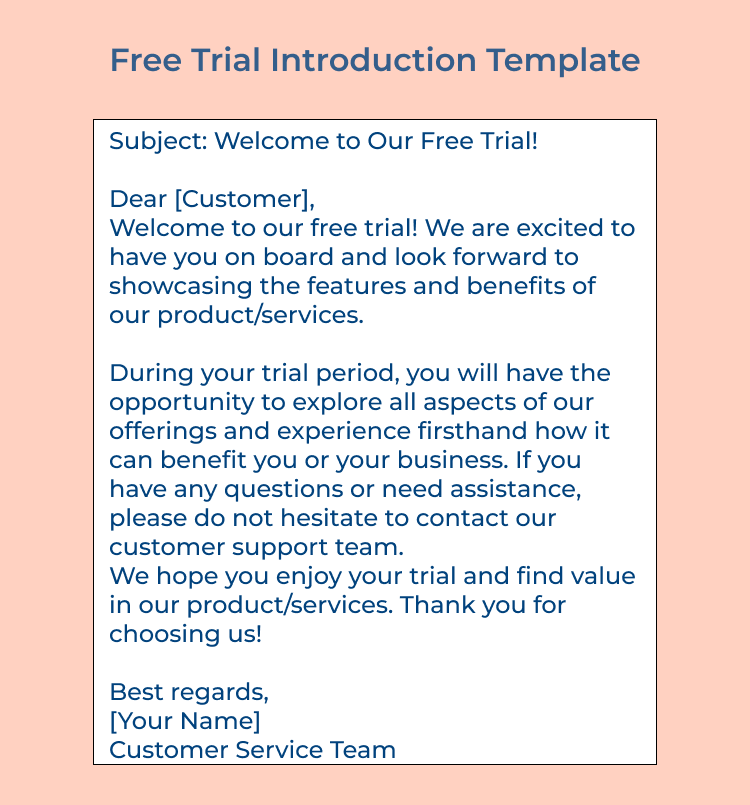
For customers who are new to your product or service, a free trial introduction email can provide valuable information and support to help them get started.
Such support email templates include step-by-step instructions for accessing the free trial, highlighting key features and benefits. It also offers additional resources or support options for any questions or concerns.
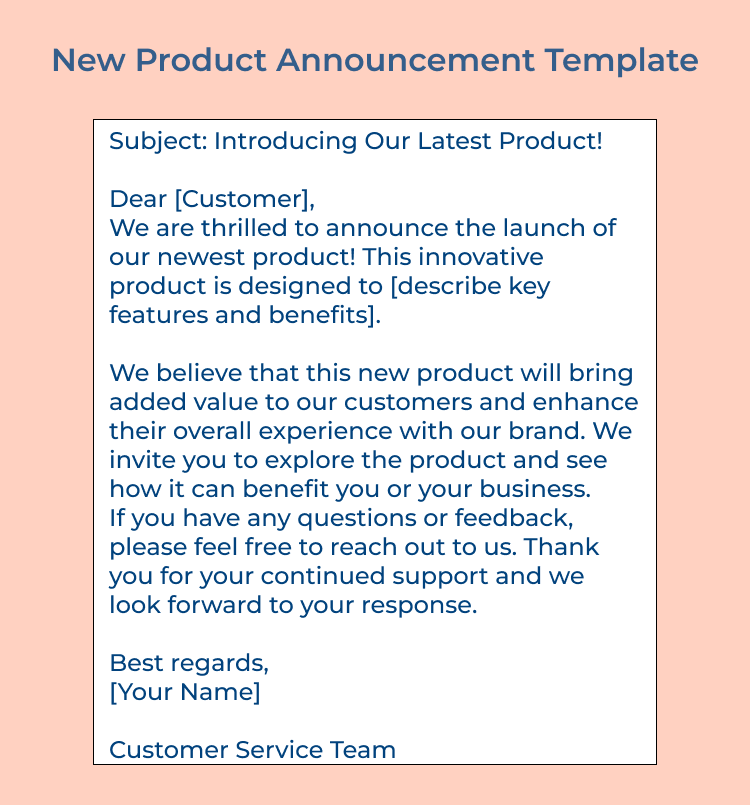
When launching a new product or service, a well-crafted email announcement can generate excitement and interest from your customer base. This customer service email template gives you the opportunity to showcase the unique features and benefits of the new product, including special promotions or discounts.
These emails also provide clear calls to action for customers to learn more or make a purchase. Be sure to also address any potential customer questions or concerns to ensure a positive response.
Customer service email templates help businesses to address inquiries, resolve issues and provide assistance to ensure customer satisfaction. There are several types of customer service email templates that can be used to effectively communicate with customers.
Here are a few commonly used types:
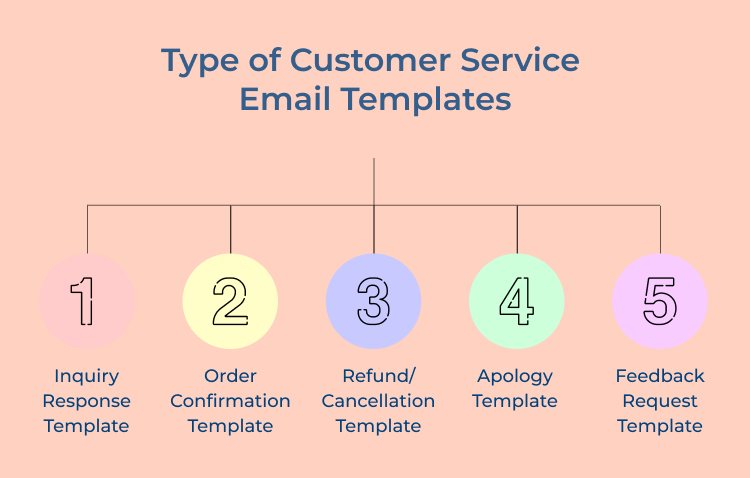
The template is used to respond to general inquiries from customers. It should include a friendly greeting, acknowledgment of the inquiry, relevant information or answers to the questions asked and a closing statement thanking the customer for reaching out.
When a customer makes a purchase, an order confirmation email is sent to confirm the order details and provide any necessary information about the transaction. The template should include order details, shipping information and contact information for customer service if the customer has any questions or concerns.
The template is used to respond to customers who are requesting a refund or cancellation of their order. It should include a polite explanation of the refund or cancellation process, any relevant policies or terms, and instructions on how the customer can proceed with the request.
When a customer has had a negative experience or encountered an issue with your product /service, an apology email can help to address the situation and show that you value their feedback. The template should include a sincere apology, an explanation of the issue and a resolution or plan to prevent similar issues in the future.
Gathering feedback from customers is crucial for improving your products/ services. A feedback request email template should include a friendly request for feedback, a brief explanation of why their input is valuable and a call to action for them to provide feedback through a survey or review platform.
Providing exceptional customer service is essential for any business and one of the most common ways to communicate with customers is through emails. Writing effective customer service emails can make a huge difference in how your customers perceive your brand.
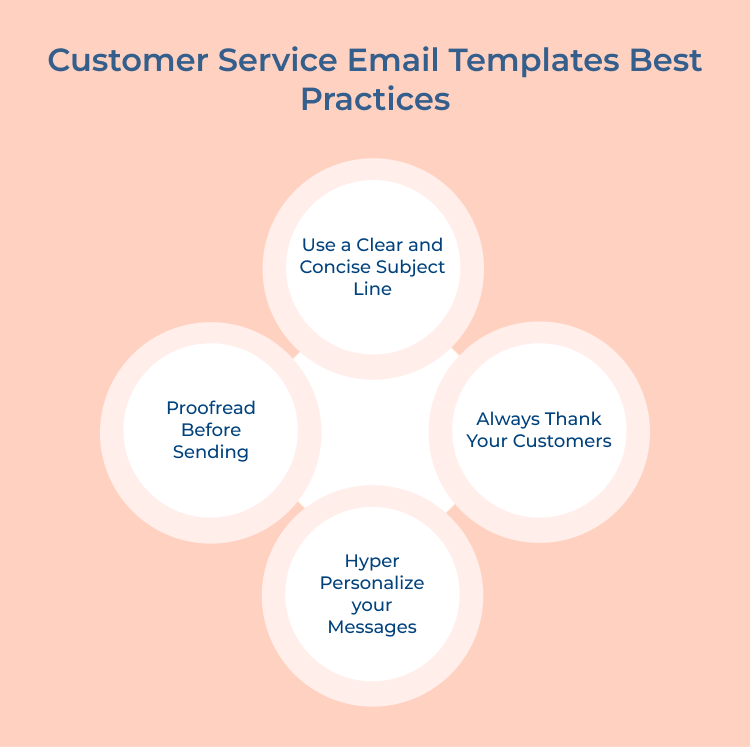
Here are some best practices for writing customer service emails:
1. Use a Clear and Concise Subject Line
The subject line of your email is the first thing your customer will see, so it’s important to make it clear and concise. Include relevant keywords that address the customer’s issue or request to make it easier for them to understand the purpose of the email.
2. Always Thank Your Customers
Regardless of the nature of the email, always remember to thank your customers for reaching out to you. Expressing gratitude shows appreciation for their time and effort in contacting your customer service team. A simple “thank you for contacting us” can go a long way in building rapport with your customers.
3. Hyper Personalize your messages
Personalization is key in customer service email templates. Address your customers by their names and tailor your responses to their specific needs. Use customer data or past interactions to personalize your messages and make customers feel like you understand about them as individuals.
4. Proofread Before Sending
Before hitting the send button, ensure to proofread your email for any spelling or grammatical errors. A well-written error-free email reflects professionalism and attention to detail. Take the time to review your message to ensure clarity and accuracy before sending it out to your customers.
Leveraging email templates is a powerful way to improve service efficiency in your business. By streamlining your communication process and ensuring consistency in your messaging, you can effectively save time as well as resources while providing a professional image to your customers.
The wide range of customizable templates available can help you to tailor your emails to suit different purposes and audiences, enhancing customer satisfaction. So, take advantage of this valuable tool and start maximizing your service efficiency today with the use of email templates. Your business will thank you for it.

How do you respond to a new customer via email?
When responding to a new customer via email, it’s important to make a good first impression. Start by thanking them for choosing your company and introduce yourself or your team. Provide any necessary information or instructions related to their inquiry or purchase. Be sure to personalize the email and make the customer feel valued.
How do you respond to an angry customer email?
When responding to an angry customer email, it’s crucial to remain calm, empathetic and professional. Acknowledge the customer’s concerns, apologize for any inconvenience and offer a solution or resolution to their issue. It’s important to address their emotions and assure them that you are taking their feedback seriously.
Why is customer service email etiquette so important?
Customer service email etiquette is important because it reflects the professionalism and values of your company. It helps build trust and loyalty with customers, resolves issues effectively, and enhances your brand reputation. Proper email etiquette shows respect for the customer and can lead to better relationships.
What’s the best way to conclude a customer service email?
The best way to conclude a customer service email is to thank the customer for reaching out, reiterate any important information or instructions and offer assistance if needed. End the email with a friendly closing, such as “Best regards” or “Thank you for your business.” Be sure to include your contact information in case the customer needs further assistance.
How to respond to a frustrated customer by email?
When responding to a frustrated customer by email, it’s important to address their concerns promptly and professionally. Acknowledge their frustration, apologize for any inconvenience and reassure them that you are working to resolve the issue. Offer a solution or alternative and provide clear and concise information to help alleviate their frustration.
 https://omni24.io/wp-content/uploads/2026/08/Omnichannel-Chatbots.png
1256
2400
Tushar Joshi
https://omni24.io/wp-content/uploads/2023/04/Omni-Logo-1.svg
Tushar Joshi2026-08-13 04:43:302026-08-24 09:02:01How Omnichannel Chatbots Improve Your Customer Experience
https://omni24.io/wp-content/uploads/2026/08/Omnichannel-Chatbots.png
1256
2400
Tushar Joshi
https://omni24.io/wp-content/uploads/2023/04/Omni-Logo-1.svg
Tushar Joshi2026-08-13 04:43:302026-08-24 09:02:01How Omnichannel Chatbots Improve Your Customer Experience https://omni24.io/wp-content/uploads/2026/08/Ecommerce-Chatbots-1.png
1256
2400
Tushar Joshi
https://omni24.io/wp-content/uploads/2023/04/Omni-Logo-1.svg
Tushar Joshi2026-08-12 03:57:552026-08-24 09:03:22Ecommerce Chatbots: What are They and Their Use Cases
https://omni24.io/wp-content/uploads/2026/08/Ecommerce-Chatbots-1.png
1256
2400
Tushar Joshi
https://omni24.io/wp-content/uploads/2023/04/Omni-Logo-1.svg
Tushar Joshi2026-08-12 03:57:552026-08-24 09:03:22Ecommerce Chatbots: What are They and Their Use Cases https://omni24.io/wp-content/uploads/2026/08/Omnichannel-Ecommerce.png
1256
2400
Tushar Joshi
https://omni24.io/wp-content/uploads/2023/04/Omni-Logo-1.svg
Tushar Joshi2026-08-11 04:50:362026-08-24 09:00:45How to Create an Omnichannel Ecommerce Strategy: 7 Best Ways
https://omni24.io/wp-content/uploads/2026/08/Omnichannel-Ecommerce.png
1256
2400
Tushar Joshi
https://omni24.io/wp-content/uploads/2023/04/Omni-Logo-1.svg
Tushar Joshi2026-08-11 04:50:362026-08-24 09:00:45How to Create an Omnichannel Ecommerce Strategy: 7 Best Ways
Whether it’s about acquire, engage or support – Omni24 covers all your customer engagement needs in one complete platform.

Copyright ©2026 Veemo All rights reserved.
CA, Los Angeles, Hall Ave, 19011