What is First Contact Resolution & How to Improve it
Nearly 9 in 10 customers prefer advanced support for interactive engagement, app integration and improved First Contact Resolution.

Nearly 9 in 10 customers prefer advanced support for interactive engagement, app integration and improved First Contact Resolution.
Have you ever contacted customer service with an issue only to have it resolved on your first attempt?
Probably Yes. This seamless experience is known as First Contact Resolution (FCR) and can impact customer satisfaction as well as loyalty.
79% of customers choose advanced communication such as live chat because of the instant support. Providing excellent customer service is crucial for maintaining a loyal customer base.
First contact resolution is a key metric that measures the ability of a customer service team to resolve an issue during the initial contact with a customer. Businesses that excel in FCR often see higher customer satisfaction rates and repeat business.
Let us explore the benefits of FCR and discuss strategies for achieving high levels of First Contact Resolution.
First contact resolution is a standard set to measure customer satisfaction in the customer service industry. The higher the FCR rate, the higher the customer satisfaction level. The metric is essential in evaluating the efficiency of customer support operations and overall customer satisfaction.
The key goal of the FCR metric is to ensure that customers have their issues resolved during their first contact with the support team. By achieving a high FCR rate, companies can improve customer loyalty, reduce customer frustration and enhance the overall customer experience.
Key objectives:
FCR measures how often customer issues are resolved in the first chat, eliminating the need for repeat contact.
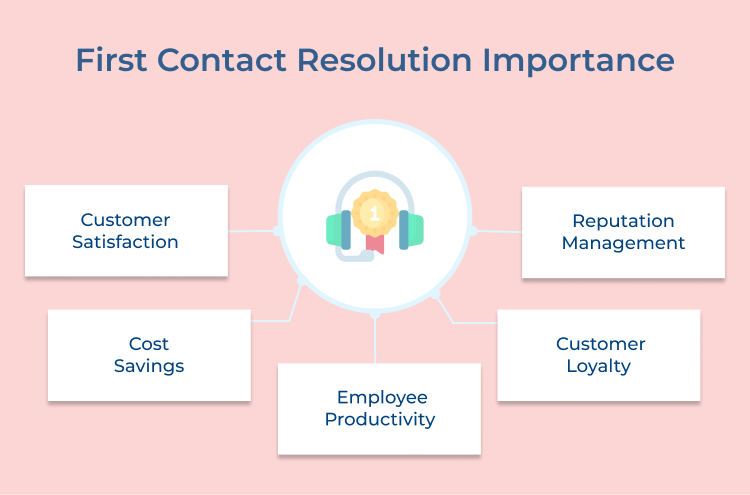
FCR measures the percentage of customer inquiries or issues that are resolved during the first interaction with a customer.
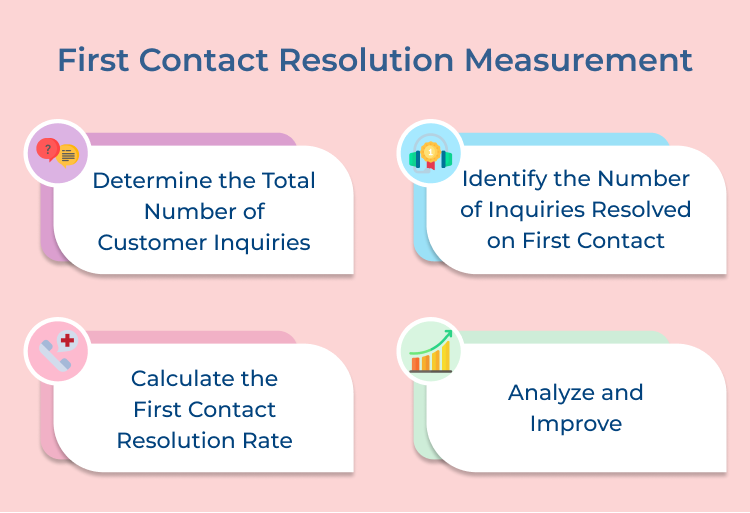
To calculate FCR, you first need to determine the total number of customer inquiries or issues that were received during a specific period, such as a day, week or month. This includes phone calls, emails, live chats or any other communication channel where customers reach out for support.
Tips:
Find the number of customer inquiries that were resolved during the initial contact. It means that the customer’s issue was resolved without the need for follow-up interactions or escalations.
Tips to follow:
Once you have the total number of customer inquiries and the number of inquiries resolved on first contact, you can calculate the first contact resolution rate using the following formula:
First Contact Resolution Rate = (Number of Inquiries Resolved on First Contact / Total Number of Customer Inquiries) x 100
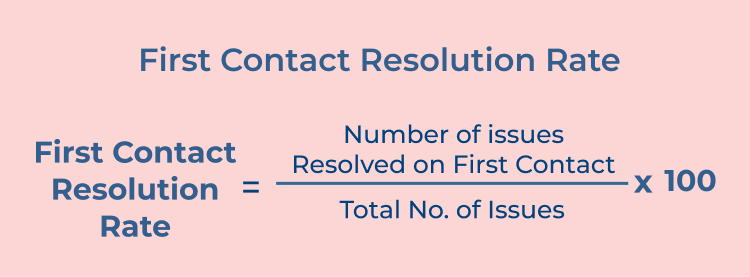
For example, if you received 100 customer inquiries and were able to resolve 70 of them during the first interaction, your FCR rate would be:
FCR Rate = (70 / 100) x 100 = 70%
Tips:
Monitoring your FCR rate regularly is essential to identify trends, areas for improvement and potential issues that may be hindering your team’s ability to resolve customer problems efficiently. By analyzing the data and feedback, you can implement strategies or training programs to improve your FCR rate over time.
Tips to follow:
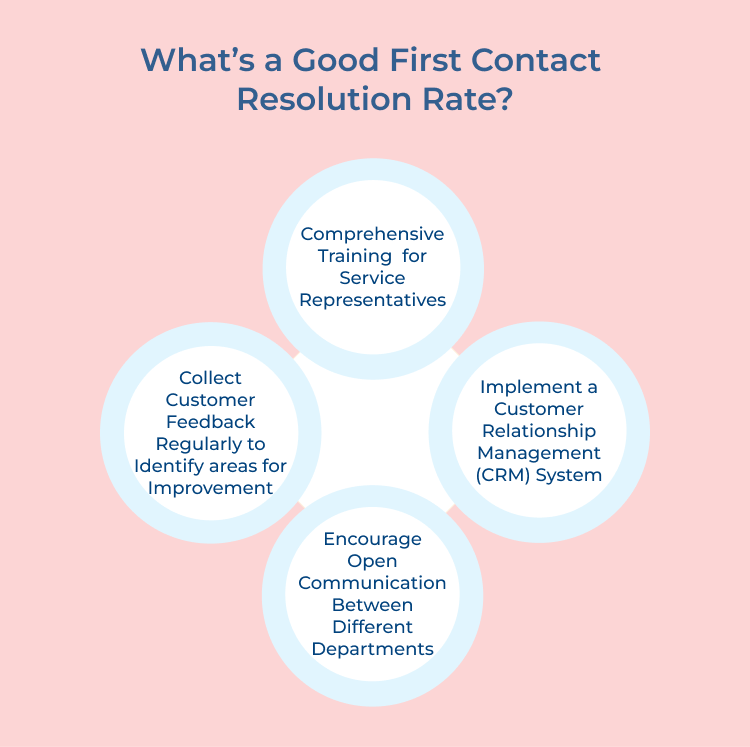
The answer to this question can vary depending on the industry, the complexity of the products or services being offered and the size of the organization. A good FCR rate is typically considered to be around 70-80%.
Why is a high FCR rate important?
For starters, it’s a good indicator of customer satisfaction. When customers’ issues are resolved quickly on the first try, they are more likely to have a positive experience and remain loyal to the brand. A high FCR rate can also help businesses save time or resources by reducing the need for multiple follow-up interactions and minimizing customer frustration.
To improve your FCR rate, consider implementing the following strategies:
First call resolution (FCR) is a key metric that measures the ability of a customer service representative to resolve a customer’s issue on the first contact.
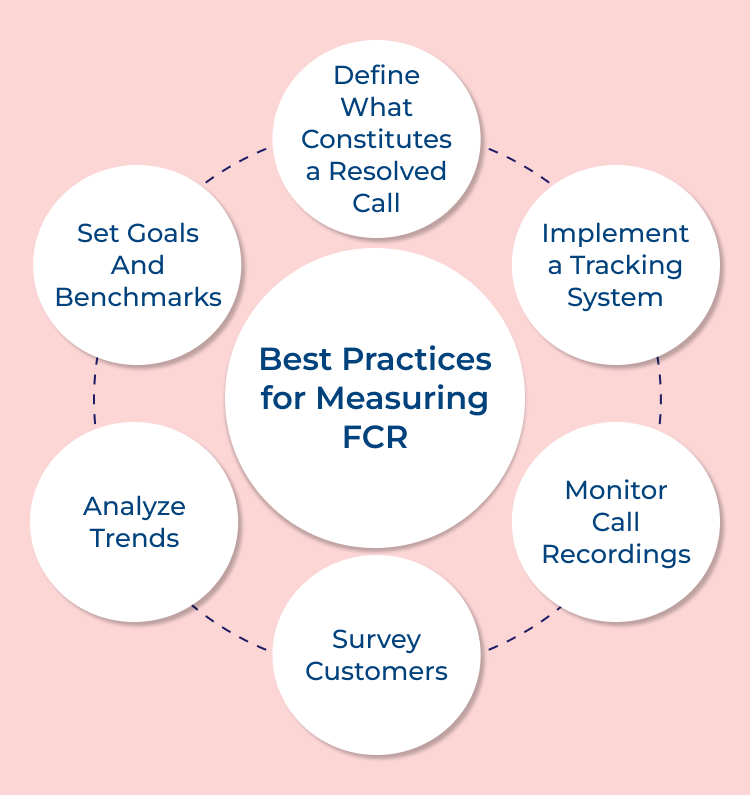
Monitoring FCR is crucial for assessing the efficiency and effectiveness of your customer service team.
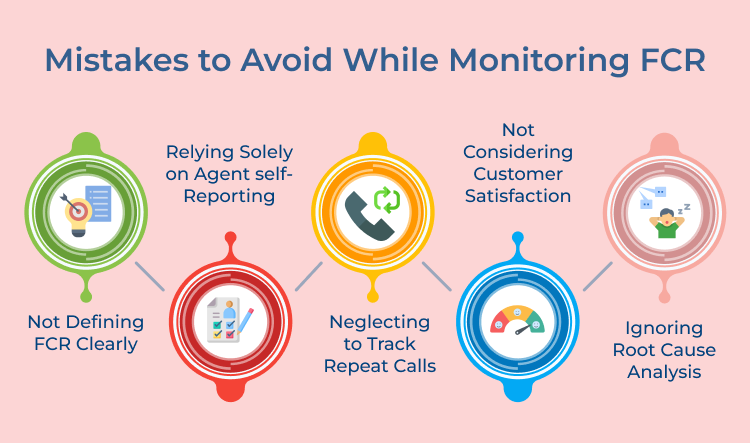
Deploying a first contact resolution rate can significantly boost your dashboard and improve customer satisfaction. By resolving customer issues efficiently on the first contact, you can reduce costs, increase productivity and enhance the overall customer experience.
Monitoring your FCR can provide valuable insights into areas for improvement and help you streamline your customer service processes. Focusing on improving this key performance indicator, you can create a more successful customer service strategy that will benefit customers as well as business.

Why is first contact resolution an important metric?
First contact resolution is important because it directly impacts customer satisfaction. When customers have their issues resolved quickly on the first try, they are more likely to be satisfied with the service they receive. It can lead to increased customer loyalty, positive word-of-mouth referrals and ultimately, higher revenue for the business.
How do you measure the first contact resolution rate?
To calculate the first contact resolution rate, you divide the number of customer inquiries or issues that were resolved on the first contact by the total number of customer inquiries or issues received and then multiply by 100 to get a percentage. This calculation provides you with a clear picture of how well your customer service team is performing in terms of resolving issues on the first interaction.
What’s the difference between first contact resolution rate vs. first response time?
While first contact resolution rate focuses on resolving customer issues in the first interaction, first response time measures how quickly a customer receives an initial response from a customer service representative. Both metrics are important in evaluating the efficiency and effectiveness of a customer service team, but they address different aspects of the customer service experience.
How do you improve first contact resolution?
To improve first contact resolution, businesses can invest in training & development for their customer service team and provide access to comprehensive knowledge bases or resources. It streamlines processes to ensure quick resolution of issues and implements customer feedback systems to continuously improve service quality.
What is a good benchmark first contact resolution rate?
A good benchmark for first contact resolution rate can vary depending on the industry and the complexity of the issues being handled. But, generally speaking, a first contact resolution rate above 70% is considered to be a strong indicator of effective customer service.
How is the first contact resolution rate calculated?
First contact resolution rate is calculated by taking the total number of customer inquiries or issues that were resolved on the first interaction dividing it by the total number of customer inquiries or issues received and then multiplying by 100. This formula provides businesses with a clear percentage of how often customer issues are successfully resolved on the first contact.
 https://omni24.io/wp-content/uploads/2026/09/Social-commerce-scaled.png
1340
2560
Webvision Solution
https://omni24.io/wp-content/uploads/2023/04/Omni-Logo-1.svg
Webvision Solution2026-10-23 12:18:272026-10-23 12:18:27What is Social Commerce and Why Does It Matter?
https://omni24.io/wp-content/uploads/2026/09/Social-commerce-scaled.png
1340
2560
Webvision Solution
https://omni24.io/wp-content/uploads/2023/04/Omni-Logo-1.svg
Webvision Solution2026-10-23 12:18:272026-10-23 12:18:27What is Social Commerce and Why Does It Matter? https://omni24.io/wp-content/uploads/2026/08/AI-Customer-Service-Agents.png
1256
2400
Webvision Solution
https://omni24.io/wp-content/uploads/2023/04/Omni-Logo-1.svg
Webvision Solution2026-09-21 04:48:512026-09-21 04:48:51How to Build an AI Customer Service Agents: 8 Key Steps
https://omni24.io/wp-content/uploads/2026/08/AI-Customer-Service-Agents.png
1256
2400
Webvision Solution
https://omni24.io/wp-content/uploads/2023/04/Omni-Logo-1.svg
Webvision Solution2026-09-21 04:48:512026-09-21 04:48:51How to Build an AI Customer Service Agents: 8 Key Steps https://omni24.io/wp-content/uploads/2026/08/Omnichannel-Conversational-AI.png
1256
2400
Tushar Joshi
https://omni24.io/wp-content/uploads/2023/04/Omni-Logo-1.svg
Tushar Joshi2026-09-16 03:51:072026-09-16 03:51:07How to Build Omnichannel Conversational AI Strategy
https://omni24.io/wp-content/uploads/2026/08/Omnichannel-Conversational-AI.png
1256
2400
Tushar Joshi
https://omni24.io/wp-content/uploads/2023/04/Omni-Logo-1.svg
Tushar Joshi2026-09-16 03:51:072026-09-16 03:51:07How to Build Omnichannel Conversational AI Strategy
Whether it’s about acquire, engage or support – Omni24 covers all your customer engagement needs in one complete platform.

Copyright ©2026 Veemo All rights reserved.
CA, Los Angeles, Hall Ave, 19011