How Customer Engagement Drives Brand Loyalty
Discover strategies to boost customer engagement and loyalty. Increase retention with personalization, trust, community and consistent brand experiences.

Discover strategies to boost customer engagement and loyalty. Increase retention with personalization, trust, community and consistent brand experiences.
Every brand faces fierce competition from each other as the customer has an array of choices.
In such a scenario, brands are grappling with the question: How can we create a deep, lasting connection with our customers?
The answer lies in the power of customer engagement. Understanding how customer engagement drives brand loyalty has become a critical focus for modern businesses, as brands that prioritize customer engagement strategies experience a staggering increase in customer lifetime value. It underscores the profound impact that effective engagement can have on cultivating brand loyalty and driving long-term success.
Let’s delve into the innovative strategies and best practices that enable businesses to create personalized, memorable customer experiences.
Customer engagement refers to the ongoing interactions between a company and its customers across multiple touchpoints. It encompasses all communications, experiences as well as relationships that connect customers with a brand throughout their journey. Effective customer engagement goes beyond mere transactions, creating meaningful interactions that build emotional connections and drive customer loyalty.
When customers feel genuinely engaged with a brand, they develop stronger emotional connections. Hence, leading to increased loyalty and reduced churn. Engaged customers are more likely to make repeat purchases, spend more per transaction and become brand advocates who refer others.
Key objectives
Brand loyalty is the deep-rooted commitment and preference that customers have for a particular brand. Loyal customers consistently choose a brand over its competitors, even in the face of alternative offerings or pricing differences. They become advocates, promoting the brand to others and contributing to its long-term success.
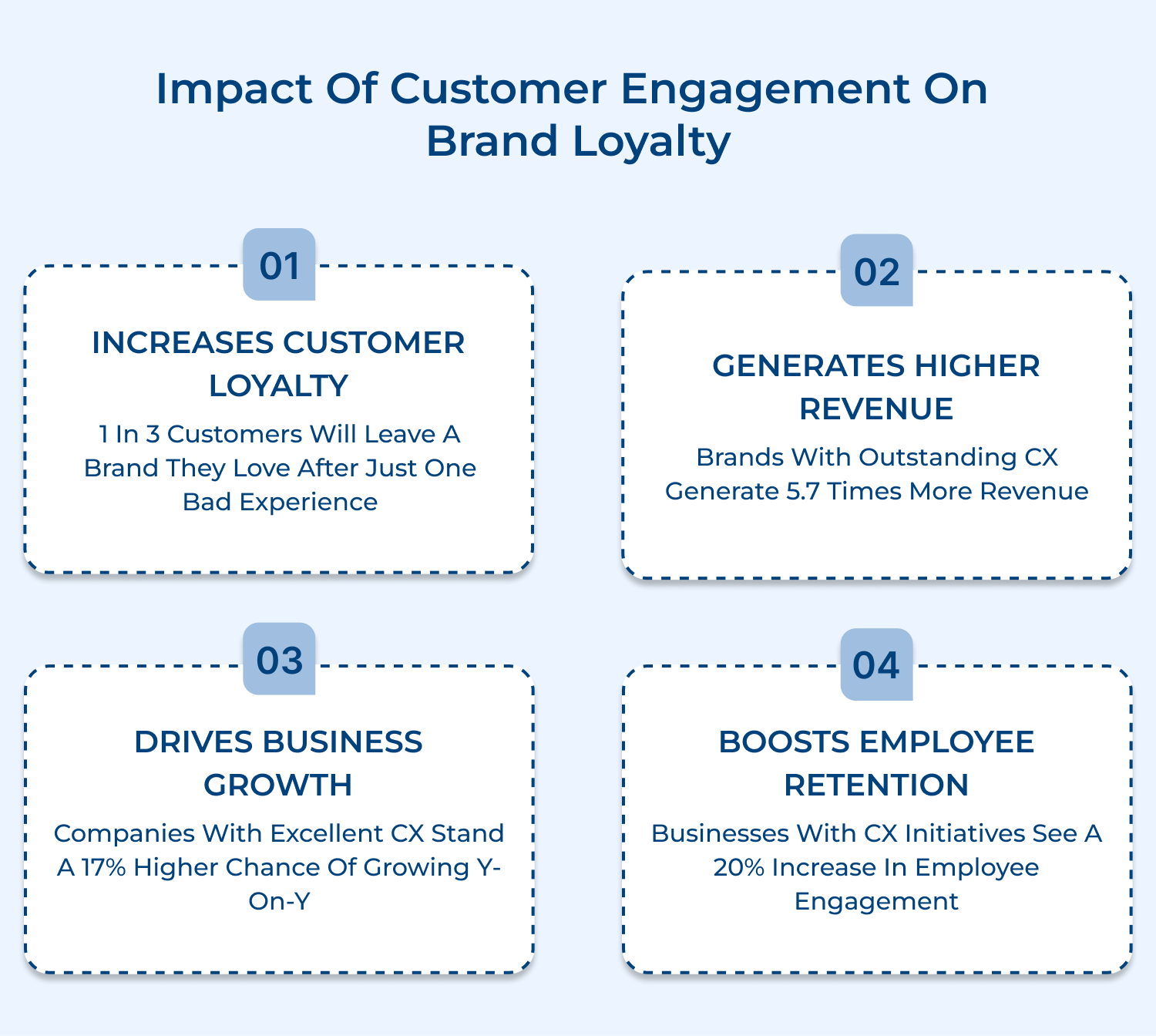
Brand loyalty is vital for businesses as it creates a stable customer base that generates predictable revenue streams. Loyal customers spend more, are less price-sensitive and are more likely to try new products from brands they trust. Building brand loyalty is more cost-effective than acquiring new customers with studies showing that retaining existing customers costs 5-7 times less than attracting new ones.
Key objectives
Customer engagement and brand loyalty are closely connected, each playing a vital role in building long-term relationships. Here’s how they are interlinked:
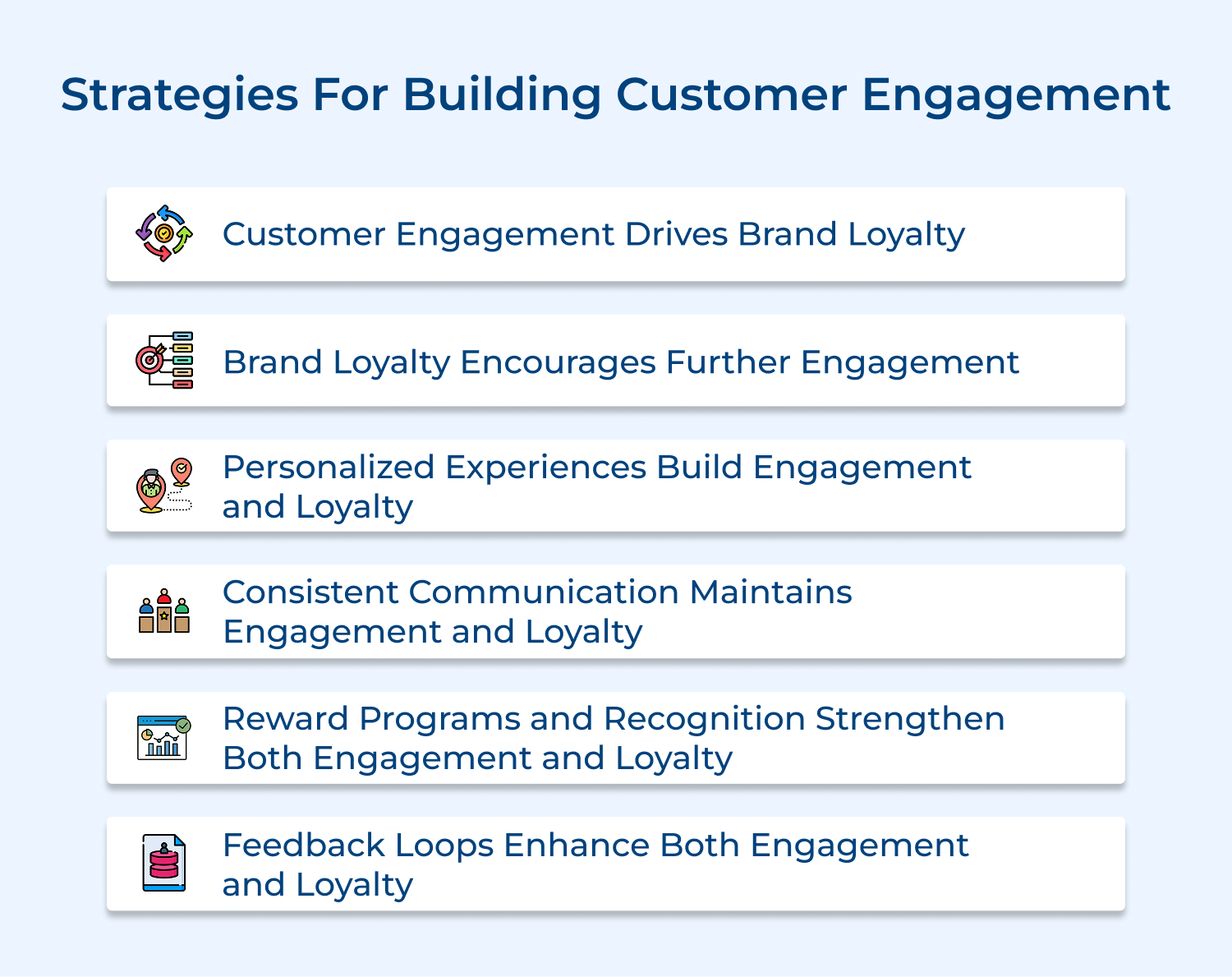
Customer Engagement Drives Brand Loyalty
When customers interact with a brand through social media, feedback, or personalized experiences, they form emotional connections. As these connections grow, loyalty increases because customers feel valued and understood.
Brand Loyalty Encourages Further Engagement
Loyal customers go beyond making repeat purchases, they advocate for the brand. They share reviews, participate in surveys, and spread positive word-of-mouth. Their trust attracts new customers while increasing engagement and interaction with your business.
Personalized Experiences Build Engagement and Loyalty
Personalized content, product recommendations, and exclusive offers create stronger emotional connections. When customers feel valued and understood, their satisfaction grows. This personal touch encourages them to engage frequently and strengthens brand loyalty over time.
Consistent Communication Maintains Engagement and Loyalty
Regular communication through email, social media, and loyalty programs ensures your brand remains visible. Customers feel informed, appreciated, and connected, which helps them stay engaged consistently while creating lasting brand loyalty.
Reward Programs and Recognition Strengthen Both Engagement and Loyalty
Rewarding customers for purchases, referrals, or feedback motivates repeat interaction. Recognition (through exclusive offers or acknowledgment) deepens customer bonds. These efforts make customers feel valued, increasing both their loyalty and willingness to engage regularly.
Feedback Loops Enhance Both Engagement and Loyalty
Actively seeking and responding to feedback shows customers they are heard and respected. This transparency builds trust, demonstrates genuine care, and encourages ongoing engagement. Ultimately, it transforms satisfied customers into loyal advocates for your brand.
Customer engagement is one of the key factors that can lead to brand loyalty. Here are some effective strategies to implement for improving customer engagement and driving brand loyalty:
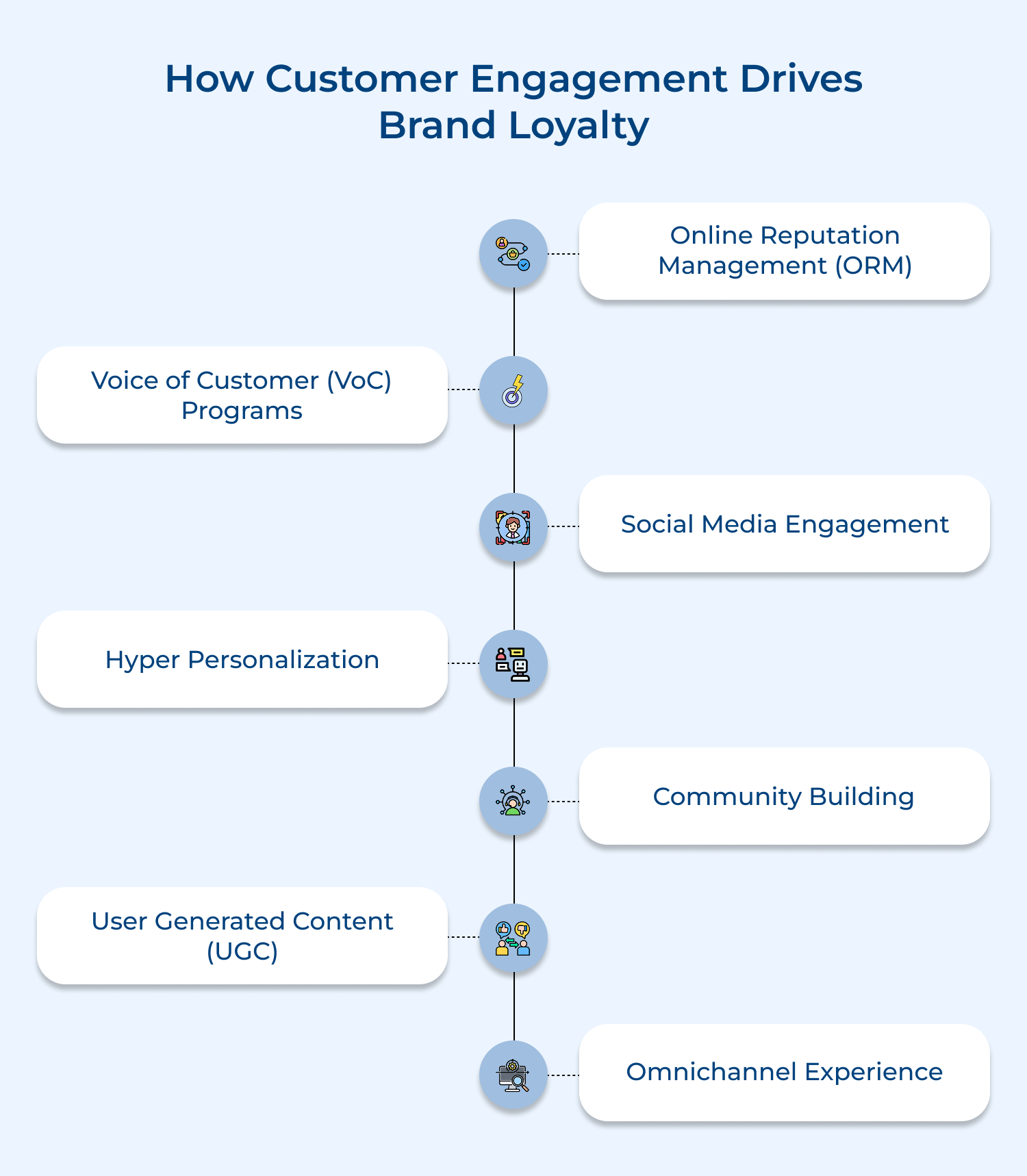
Voice of Customer (VOC) programs enable brands to gather valuable feedback and preferences directly from their customers, allowing them to tailor their brand strategies accordingly. Such valuable data can then be analyzed to identify areas for improvement, develop personalized marketing campaigns and enhance the overall customer experience.
Brands that excel in customer experience outperform their competitors by nearly 80% in terms of customer retention and loyalty. Incorporating customer feedback into product development and marketing strategies, businesses can create offerings that resonate with their target audience, leading to increased customer advocacy.
Best practices:
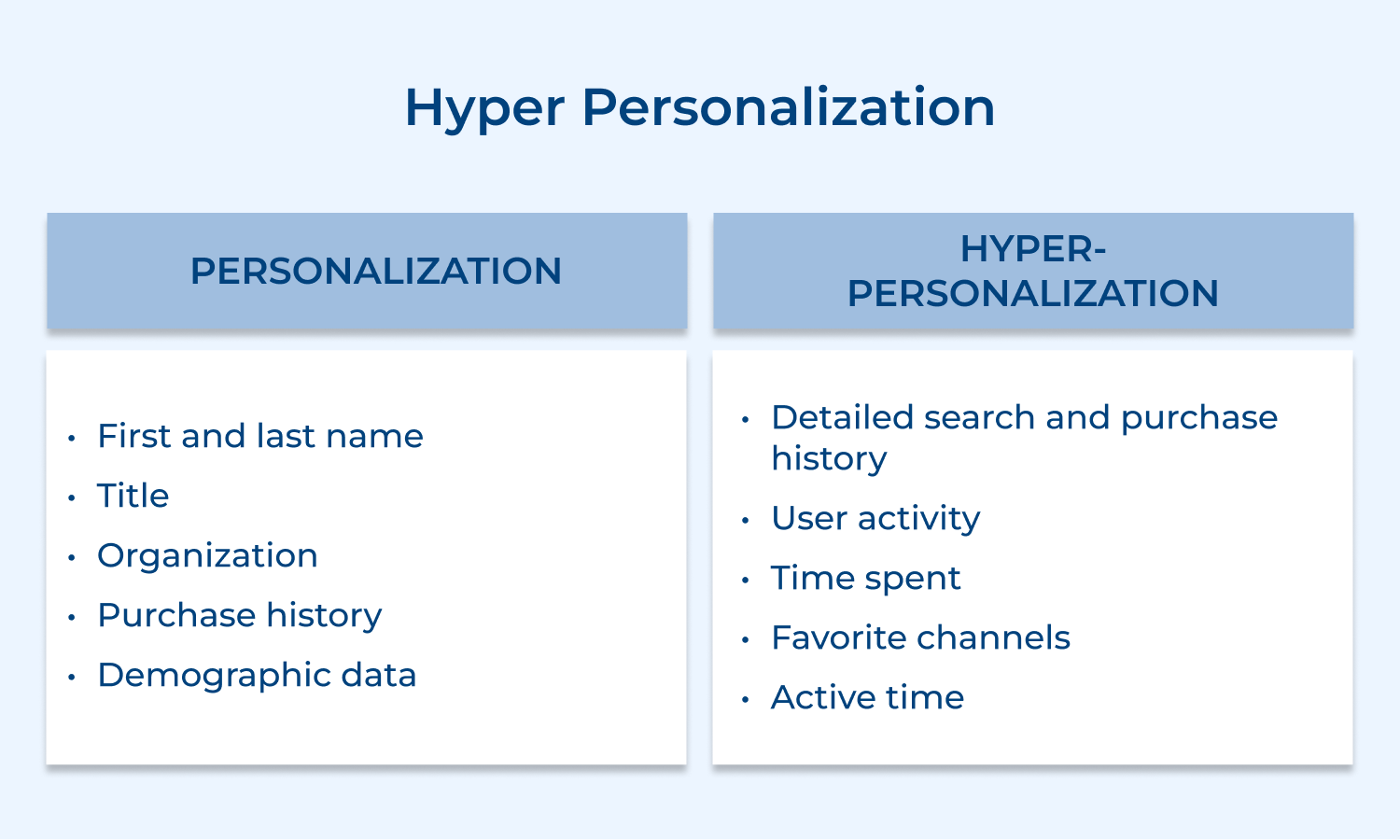
Hyper-personalization, the practice of tailoring experiences to individual customer preferences, has become a key driver of brand loyalty. Brands can create deeper connections with their customers, creating a sense of exclusivity and emotional attachment that strengthens loyalty.
Personalization empowers brands with:
Customers are more likely to trust the experiences of their peers, which can influence their decision making. User generated content (UGC) include customer reviews, testimonials and social media posts helps businesses build trust as well as credibility with their target audience. A survey found that 79% of consumers view UGC as a significant factor in their purchasing decisions.
Best practices:
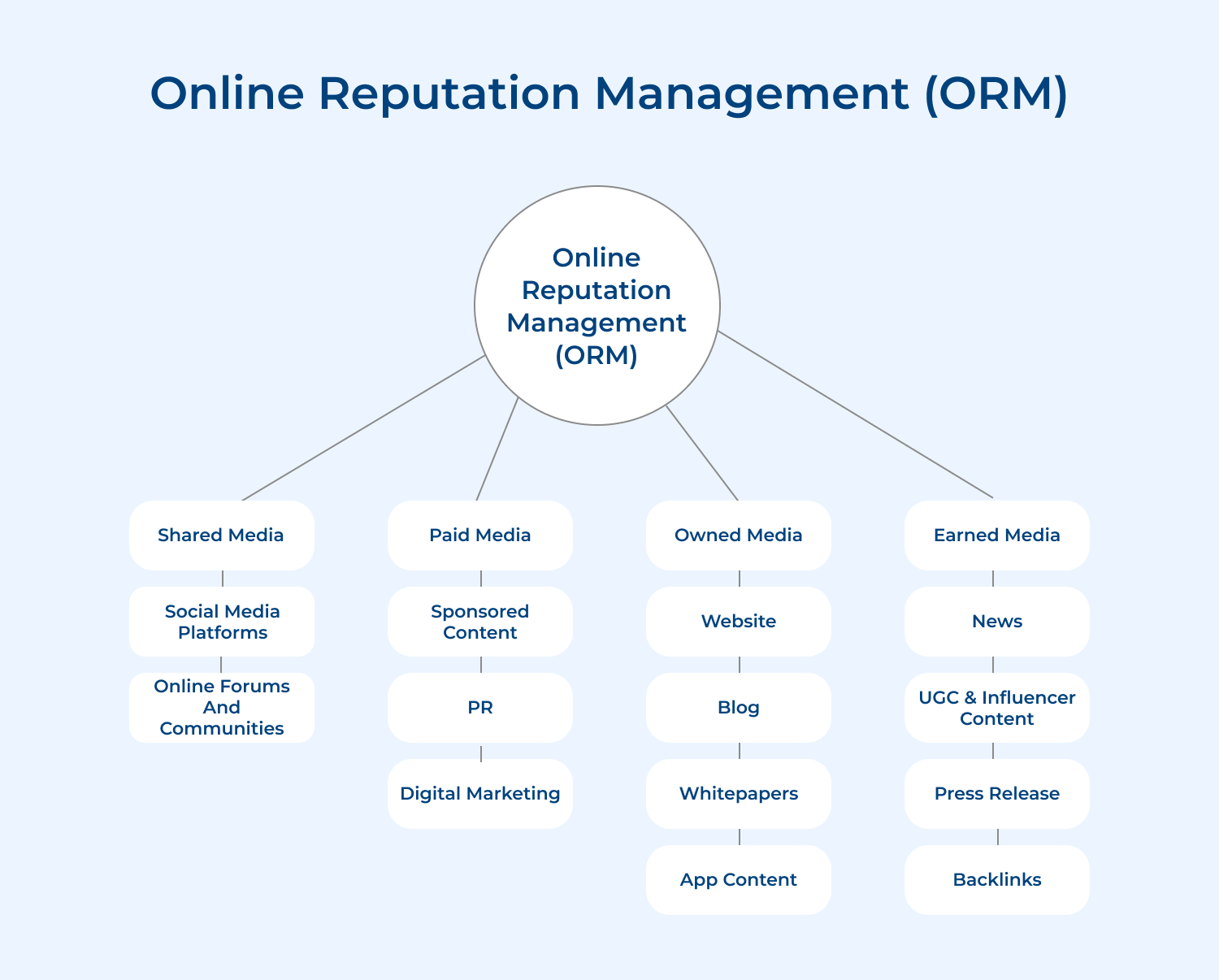
Online Reputation Management (ORM) is a critical component in driving brand loyalty in the digital age. Brands prioritizing ORM will see a significant increase in customer lifetime value, highlighting the importance of this approach in driving long-term brand loyalty.
The measurable impact of effective ORM can be observed through:
Social media is widely used, making a brand’s online presence very important. Online reviews shape consumer opinions. They also play a big role in influencing purchasing decisions.
As a brand, you should;
Social media platforms provide brands an opportunity to connect with their customers, and build a sense of community around their brand.
Businesses can work with social media influencers and use user-generated content to boost reach as well as authenticity. They can also run targeted campaigns and contests to encourage customer participation as well as engagement.
Effective social media engagement can be achieved through several strategies:
When customers feel part of a community, they are more likely to remain loyal to the brand and advocate for it. Community building helps businesses establish a strong emotional connection with their customers, creating a sense of camaraderie and shared identity.
Brands can create a powerful force of brand advocates who not only remain loyal but also actively promote and recommend the brand to others. This word-of-mouth marketing is invaluable in driving long-term brand growth.
The role of community building:
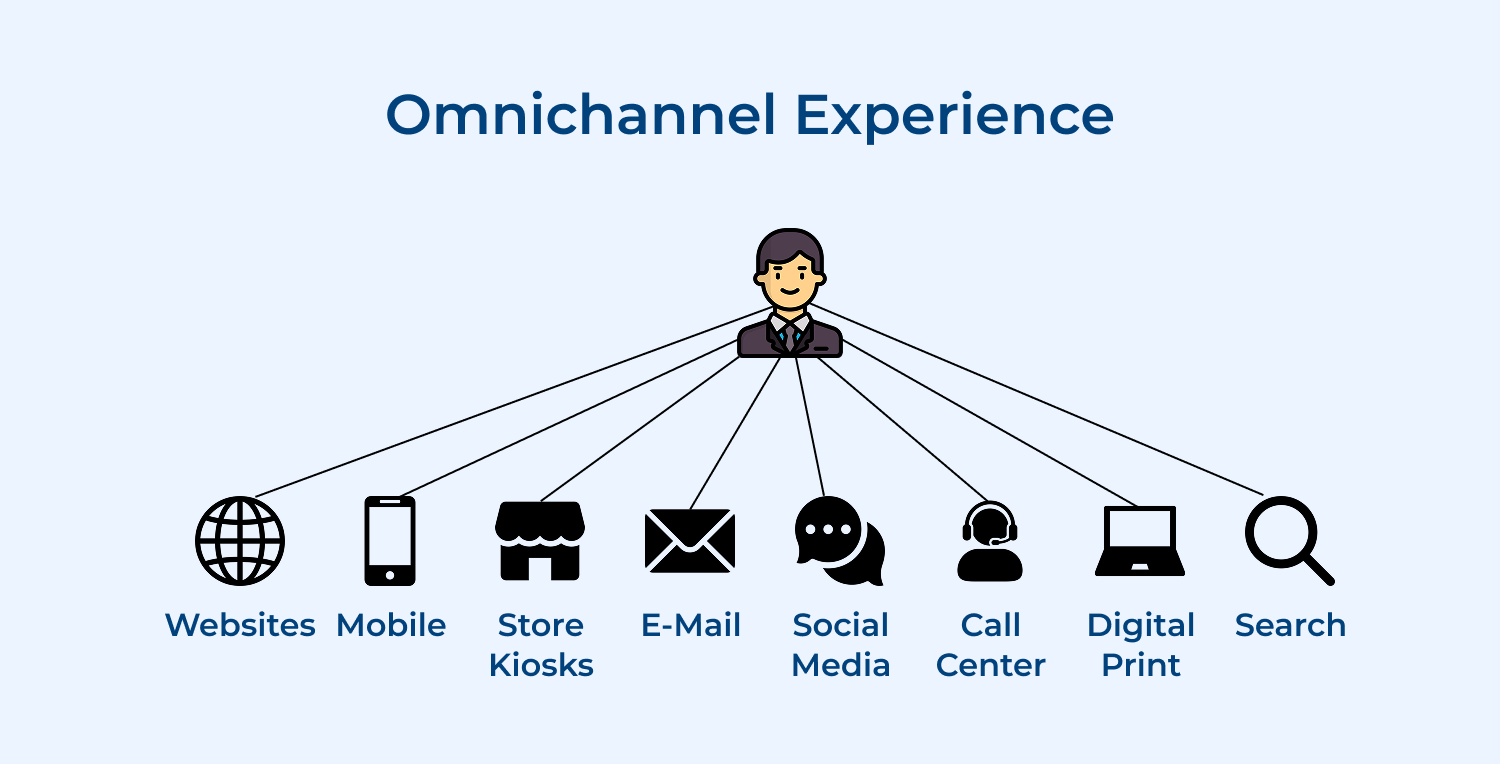
A unified omnichannel experience helps create a cohesive and personalized customer journey, creating a strong emotional connection with the brand. Customers appreciate the convenience and consistency of interactions across channels, leading to increased loyalty.
Brands that prioritize omnichannel customer experience strategies achieve a 25% increased revenue and a 35% higher customer retention. An omnichannel approach provides businesses with a comprehensive view of customer behavior, enabling them to make data-driven decisions and optimize their marketing strategies.
Why it matters:
Measuring the impact of customer engagement on brand loyalty is crucial for businesses to understand the effectiveness of their strategies and make data-driven decisions.
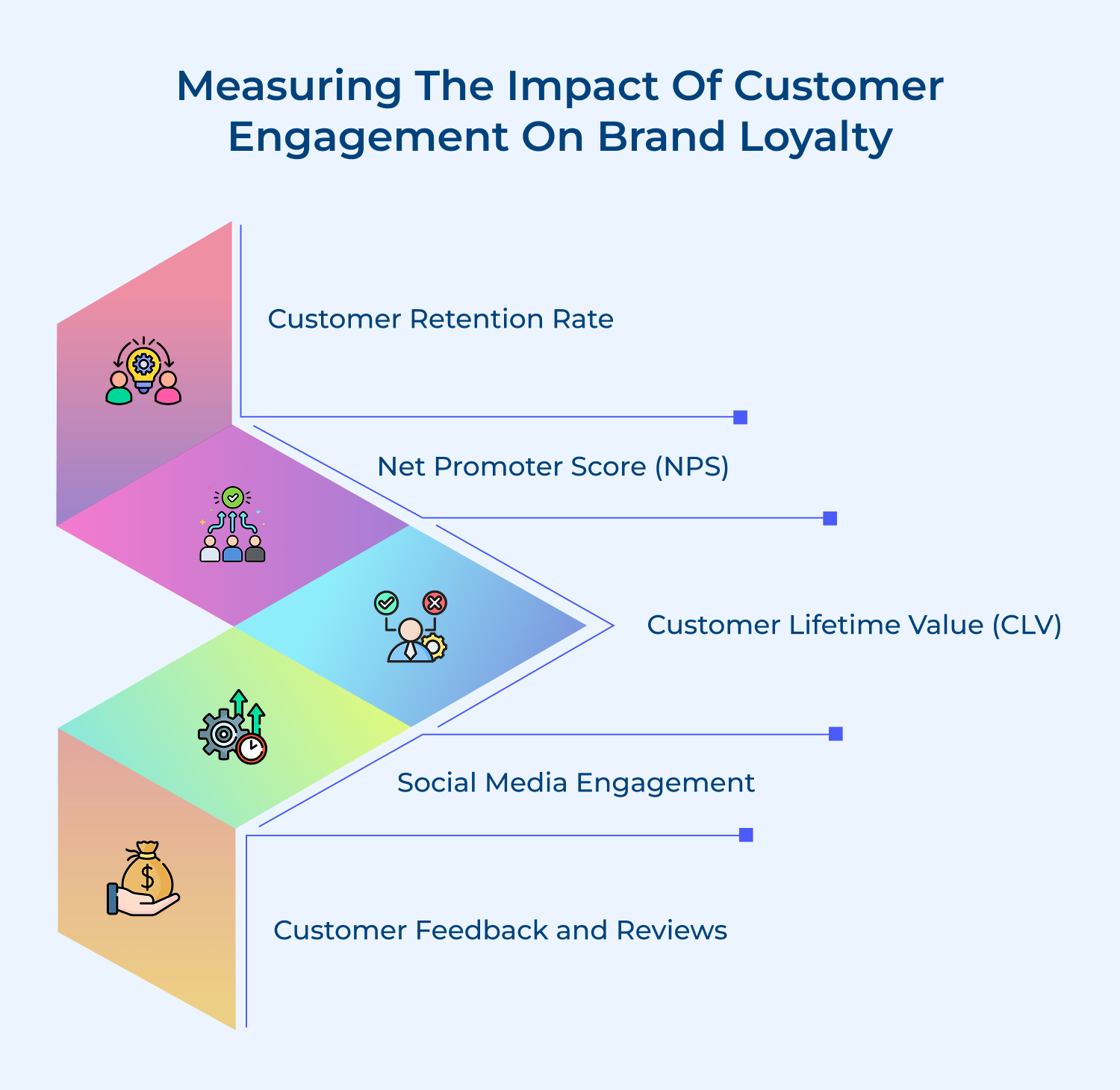
1. Customer retention rate: This metric measures the percentage of customers who continue to do business with a brand over a specific period. A high customer retention rate indicates strong brand loyalty and successful customer engagement efforts.
2. Net promoter score (NPS): NPS measures customer loyalty and satisfaction by asking customers how likely they are to recommend the brand to others. A high NPS score suggests strong brand loyalty among engaged customers.
3. Customer lifetime value (CLV): CLV calculates the total revenue a customer generates for a brand over the course of their relationship. Engaged and loyal customers typically have higher CLV, as they make repeat purchases while remaining with the brand for longer periods.
4. Social media engagement: Measuring metrics such as likes, shares, comments, and mentions on social media platforms can provide insights into customer engagement levels and brand advocacy.
5. Customer feedback and reviews: Monitoring customer feedback, ratings, and reviews across various channels can reveal valuable insights into customer satisfaction, loyalty and areas for improvement.
Customer engagement creates the foundation for lasting brand loyalty. Emotional connections made through interactions build trust and satisfaction, encouraging customers to remain loyal. Engaged customers actively advocate for the brand. Hence, driving positive word-of-mouth and continued engagement.
Rewarding loyalty and providing personalized experiences enhance the customer’s connection to the brand. Consistent engagement strategies help cultivate a loyal customer base, resulting in sustainable growth and a competitive edge in the market.

How does customer engagement influence brand loyalty?
Customer engagement is the emotional connection that a customer has with a brand. When customers are engaged with a brand, they are more likely to be loyal and repeat customers. By engaging customers through personalized experiences, excellent customer service, and consistent communication, brands can build trust as well as loyalty with their customers.
What are the key factors of customer engagement?
Key factors of customer engagement include personalized experiences, excellent customer service, consistent communication and creating a sense of community around the brand. By understanding the needs and preferences of customers, brands can tailor their interactions to create meaningful engagements that build loyalty.
Why is customer engagement important for brands?
Customer engagement is important for brands because it helps to build trust and loyalty with customers. Engaged customers are more likely to make repeat purchases, refer friends and family to the brand as well as become brand advocates.
How can businesses improve customer engagement?
Businesses can improve customer engagement by personalizing their interactions with customers while providing excellent customer service. They can also use multiple communication channels to engage with customers and create opportunities for customers to provide feedback.
What role does social media play in customer engagement?
Social media plays a significant role in customer engagement by providing brands a platform to interact with customers, share content and create a sense of community. By engaging with customers on social media, brands can build relationships, gather feedback and create memorable experiences that keep customers coming back.
How can customer feedback enhance engagement and loyalty?
Customer feedback is essential for enhancing engagement and loyalty because it provides brands with valuable insights into customer preferences, needs as well as pain points. By actively seeking / listening to customer feedback, brands can make improvements to their products, provide better customer service while creating more meaningful engagements that build loyalty over time.
 https://omni24.io/wp-content/uploads/2026/09/Social-commerce-scaled.png
1340
2560
Webvision Solution
https://omni24.io/wp-content/uploads/2023/04/Omni-Logo-1.svg
Webvision Solution2026-10-23 12:18:272026-10-23 12:18:27What is Social Commerce and Why Does It Matter?
https://omni24.io/wp-content/uploads/2026/09/Social-commerce-scaled.png
1340
2560
Webvision Solution
https://omni24.io/wp-content/uploads/2023/04/Omni-Logo-1.svg
Webvision Solution2026-10-23 12:18:272026-10-23 12:18:27What is Social Commerce and Why Does It Matter? https://omni24.io/wp-content/uploads/2026/08/AI-Customer-Service-Agents.png
1256
2400
Webvision Solution
https://omni24.io/wp-content/uploads/2023/04/Omni-Logo-1.svg
Webvision Solution2026-09-21 04:48:512026-09-21 04:48:51How to Build an AI Customer Service Agents: 8 Key Steps
https://omni24.io/wp-content/uploads/2026/08/AI-Customer-Service-Agents.png
1256
2400
Webvision Solution
https://omni24.io/wp-content/uploads/2023/04/Omni-Logo-1.svg
Webvision Solution2026-09-21 04:48:512026-09-21 04:48:51How to Build an AI Customer Service Agents: 8 Key Steps https://omni24.io/wp-content/uploads/2026/08/Omnichannel-Conversational-AI.png
1256
2400
Tushar Joshi
https://omni24.io/wp-content/uploads/2023/04/Omni-Logo-1.svg
Tushar Joshi2026-09-16 03:51:072026-09-16 03:51:07How to Build Omnichannel Conversational AI Strategy
https://omni24.io/wp-content/uploads/2026/08/Omnichannel-Conversational-AI.png
1256
2400
Tushar Joshi
https://omni24.io/wp-content/uploads/2023/04/Omni-Logo-1.svg
Tushar Joshi2026-09-16 03:51:072026-09-16 03:51:07How to Build Omnichannel Conversational AI Strategy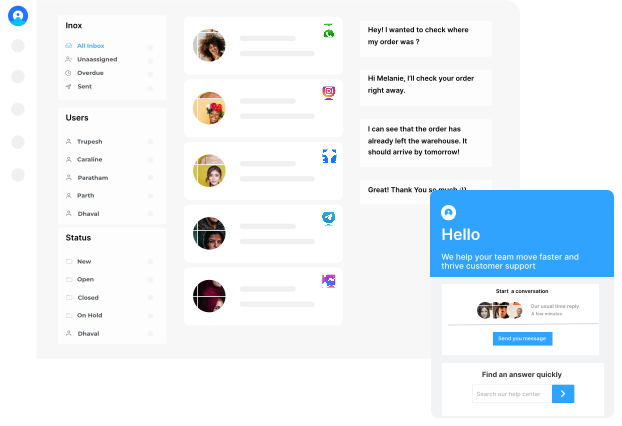
Whether it’s about acquire, engage or support – Omni24 covers all your customer engagement needs in one complete platform.

Copyright ©2026 Veemo All rights reserved.
CA, Los Angeles, Hall Ave, 19011