What is Knowledge Based Systems & How It Functions?
Knowledge based systems use structured information and rules to improve business efficiency, accuracy, decision-making, and overall performance.
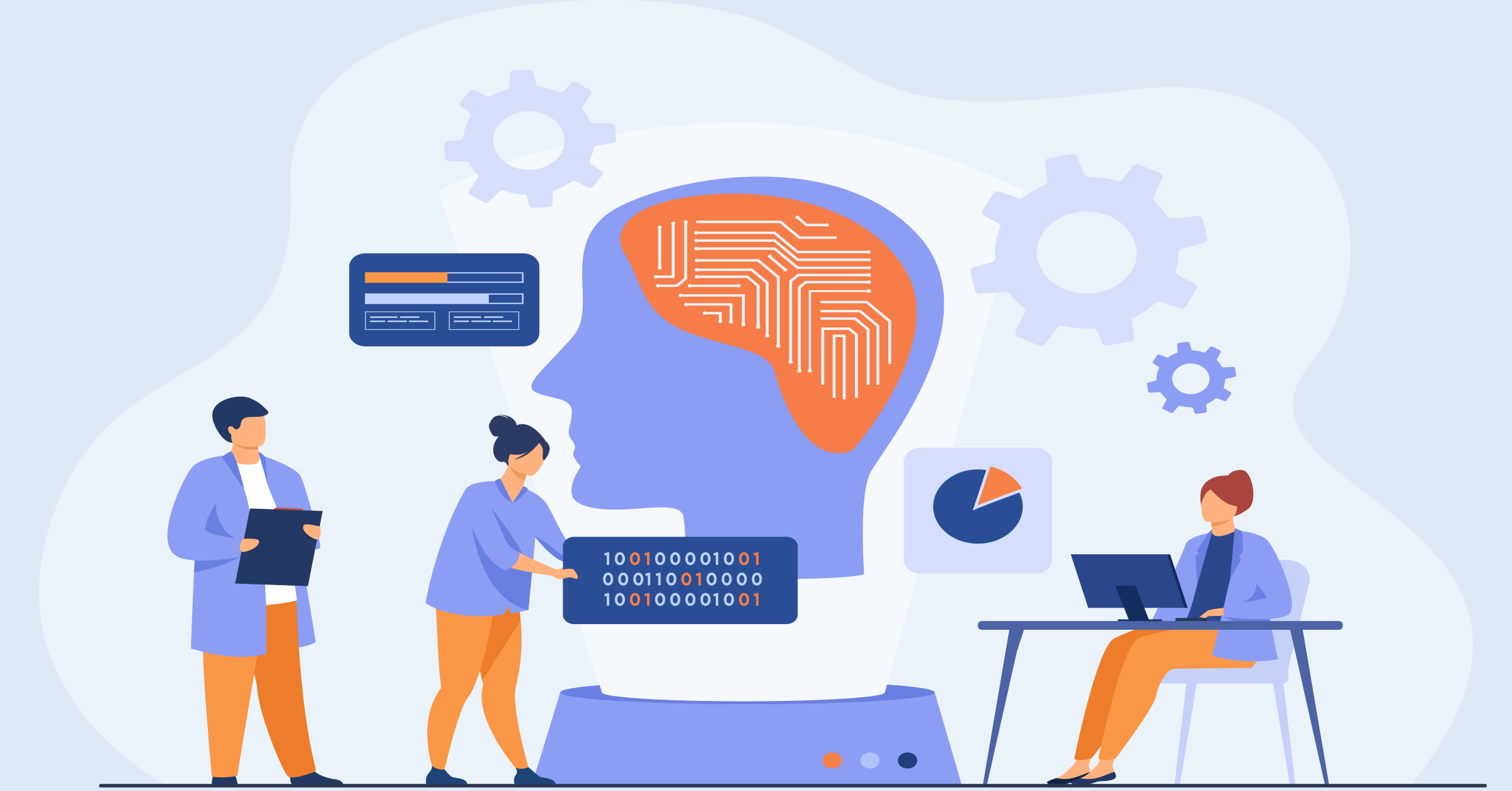
Knowledge based systems use structured information and rules to improve business efficiency, accuracy, decision-making, and overall performance.
Organizations are inundated with vast amounts of data, often struggling to extract meaningful insights and make informed decisions.
85% of customer interactions are expected to be handled without a human agent by knowledge-based systems and AI-powered chatbots.
Enter knowledge-based systems – a sophisticated approach to leveraging data to facilitate decision-making and problem-solving. These systems integrate advanced technologies such as artificial intelligence and machine learning to not only process data but also extract actionable insights, transforming raw information into valuable knowledge.
Explore the knowledge-based systems, how they work, their applications across various industries, and the pivotal role they play in shaping the future of business intelligence.
Knowledge-based systems (KBS) are computer programs that use encoded human knowledge to solve complex problems and make decisions within a specific domain. They consist of a knowledge base that stores relevant information, an inference engine that applies reasoning techniques to the knowledge, and a user interface.
KBS aims to leverage human expertise, provide consistent decision-making, and support rapid problem-solving processes. Examples include medical diagnosis systems, financial analysis tools and engineering design applications.
Key objectives:
Knowledge-based systems are a type of artificial intelligence that relies on a knowledge base to make decisions and solve problems. These systems can be incredibly beneficial for businesses and individuals in a variety of industries.

The core components of knowledge-based systems (KBS) function include a knowledge base, an inference engine and a user interface. Here’s a detailed explanation of how knowledge-based systems function, along with examples for each type:
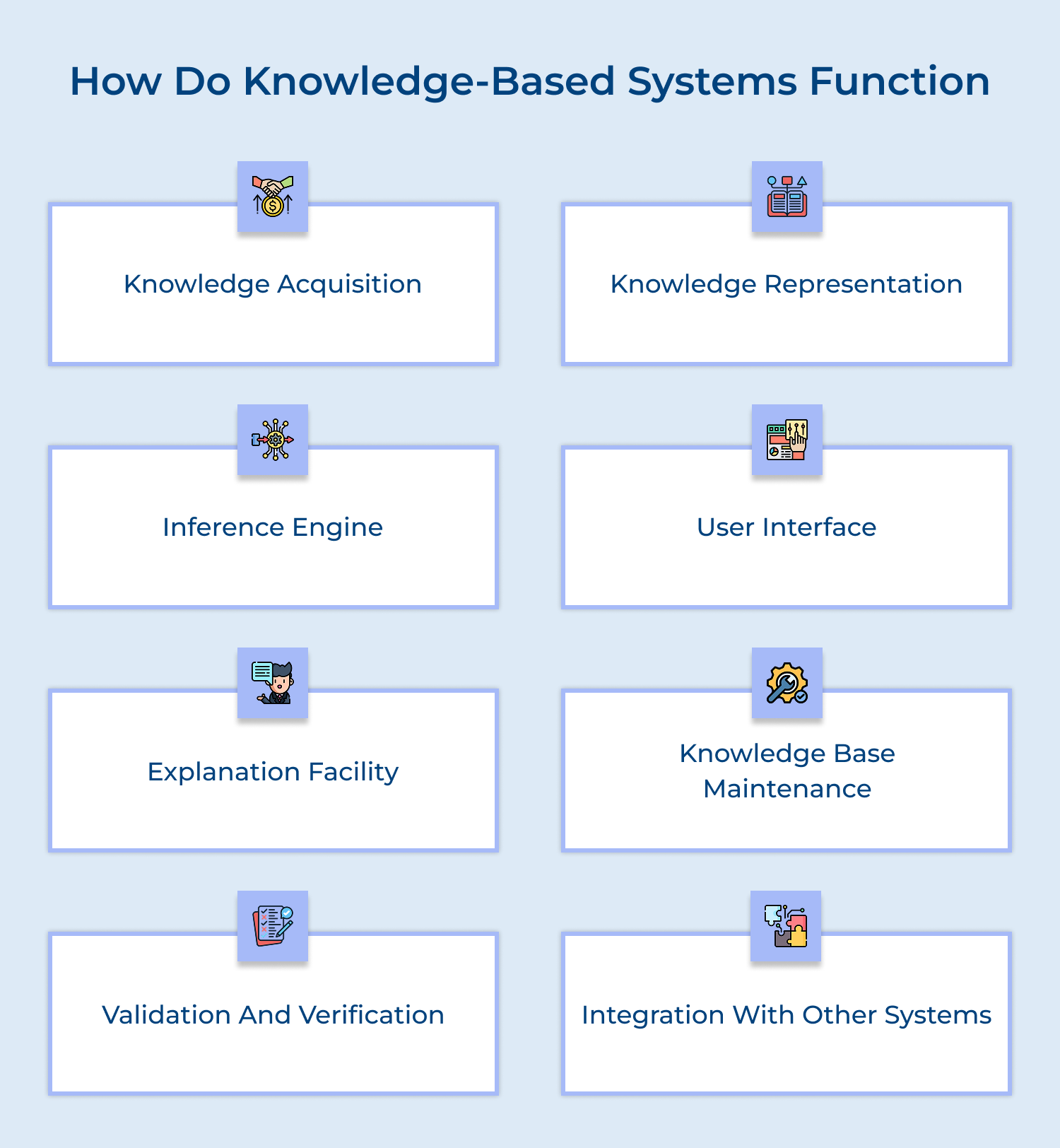
The first step in creating a knowledge-based system is acquiring expert knowledge from human experts in a specific domain. This knowledge can be gathered through interviews, documentation, or other sources. Once the knowledge is acquired, it needs to be encoded into a format that the system can understand.
When acquiring knowledge for a knowledge-based system, it is crucial to involve subject matter experts in the process. Experts can provide valuable insights and ensure that the system’s knowledge is accurate.
After acquiring the knowledge, it needs to be represented in a structured format within the system. It can be done using various techniques such as rules, frames, semantic networks, or ontologies. The chosen representation method will determine how the system processes and utilizes the knowledge.
Selecting the appropriate knowledge representation method is crucial for the efficiency and effectiveness of the system. Choose a method that best suits the nature of the domain and the requirements of the system.
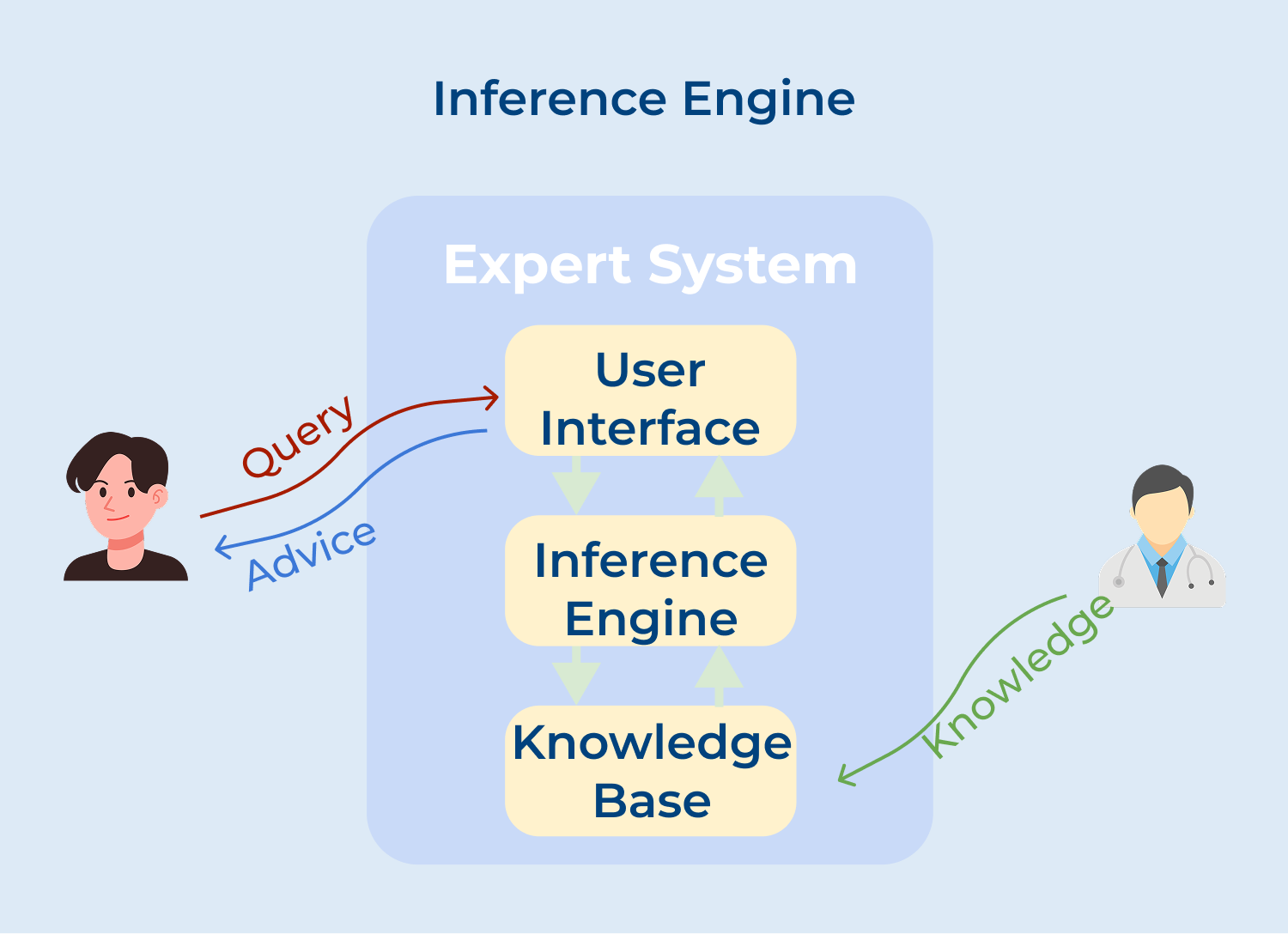
The inference engine is the brain of the knowledge-based system. It is responsible for reasoning and making decisions based on the knowledge stored in the system. The engine uses algorithms & rules to deduce conclusions from the available information and provide solutions to the user.
Here are some tips:
The inference engine in a knowledge-based system often relies on rule-based reasoning. Optimize the rules to improve the efficiency and accuracy of the system’s decision-making process.
Incorporating machine learning algorithms into the inference engine can enhance the system’s ability to learn from data and improve its decision-making capabilities.
The user interface is the bridge between the knowledge-based system and the user. The user interface allows users to interact with the knowledge-based system, input data or queries and receive outputs or recommendations. A well-designed user interface is crucial for making the system accessible and user-friendly.
Use visual aids such as charts, graphs and diagrams to help users better understand the information presented by the system. Visualizations can make complex concepts easier to grasp and facilitate decision-making.
Knowledge-based systems often include an explanation facility that can explain the reasoning behind a particular decision or solution. This feature enhances transparency and helps users understand how the system arrived at its conclusions.
A strong explanation facility is essential for knowledge-based systems to be transparent and trustworthy. Provide detailed explanations of how the system arrived at a particular decision or recommendation, including the underlying reasoning and evidence.
Knowledge-based systems require regular maintenance to keep the knowledge base up to date. This includes adding new knowledge, updating existing knowledge and removing outdated information. Maintenance is essential for ensuring the system remains accurate and effective.
Perform regular quality assurance checks to ensure the accuracy and consistency of the knowledge base. This could involve verifying the sources of information, resolving conflicts between rules and eliminating errors or redundancies.

Before deploying a knowledge-based system, it needs to be validated to ensure its accuracy and reliability. The process involves testing the system with different scenarios and benchmarking its performance against known standards.
Implement rigorous testing procedures to validate the functionality and performance of the knowledge-based system. This could involve running test cases, simulations or experiments to assess the system’s ability to generate accurate results and handle different scenarios.
Knowledge-based systems are often integrated with other systems to enhance their functionality and capabilities. This integration can involve connecting the system with databases, external APIs or other software applications to access additional information or resources.
Establish mechanisms for synchronizing data between the knowledge-based system and other systems to maintain consistency. This could involve automated data migration, data replication or data transformation processes.
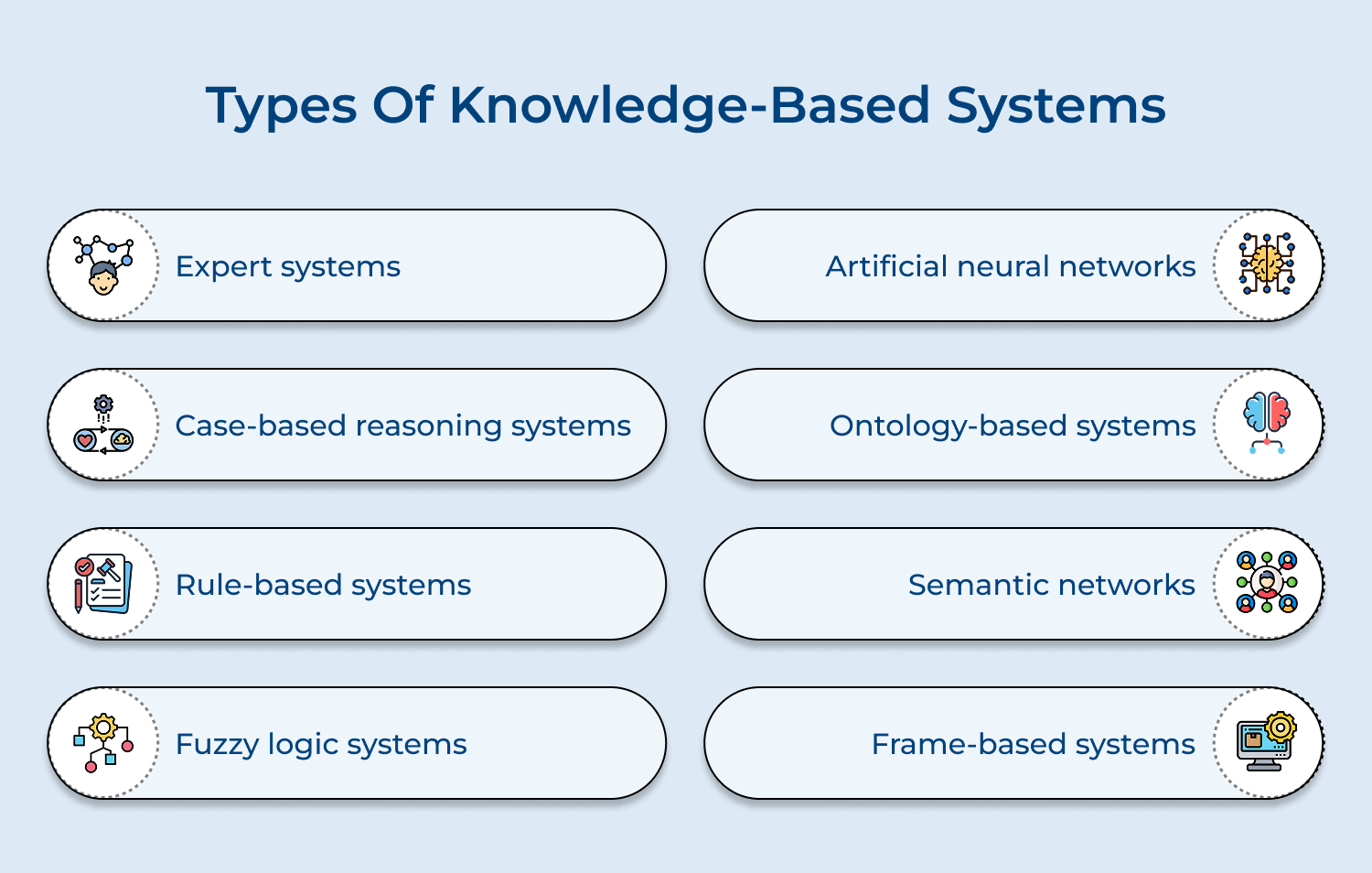
Knowledge-based systems (KBS) are computer programs that use knowledge represented in a database to solve complex problems. They are designed to mimic human reasoning and decision-making processes. There are several types of knowledge-based systems, including:
Knowledge-based systems (KBS) offer several advantages but also come with some challenges. Here are some key advantages and challenges of knowledge-based systems:
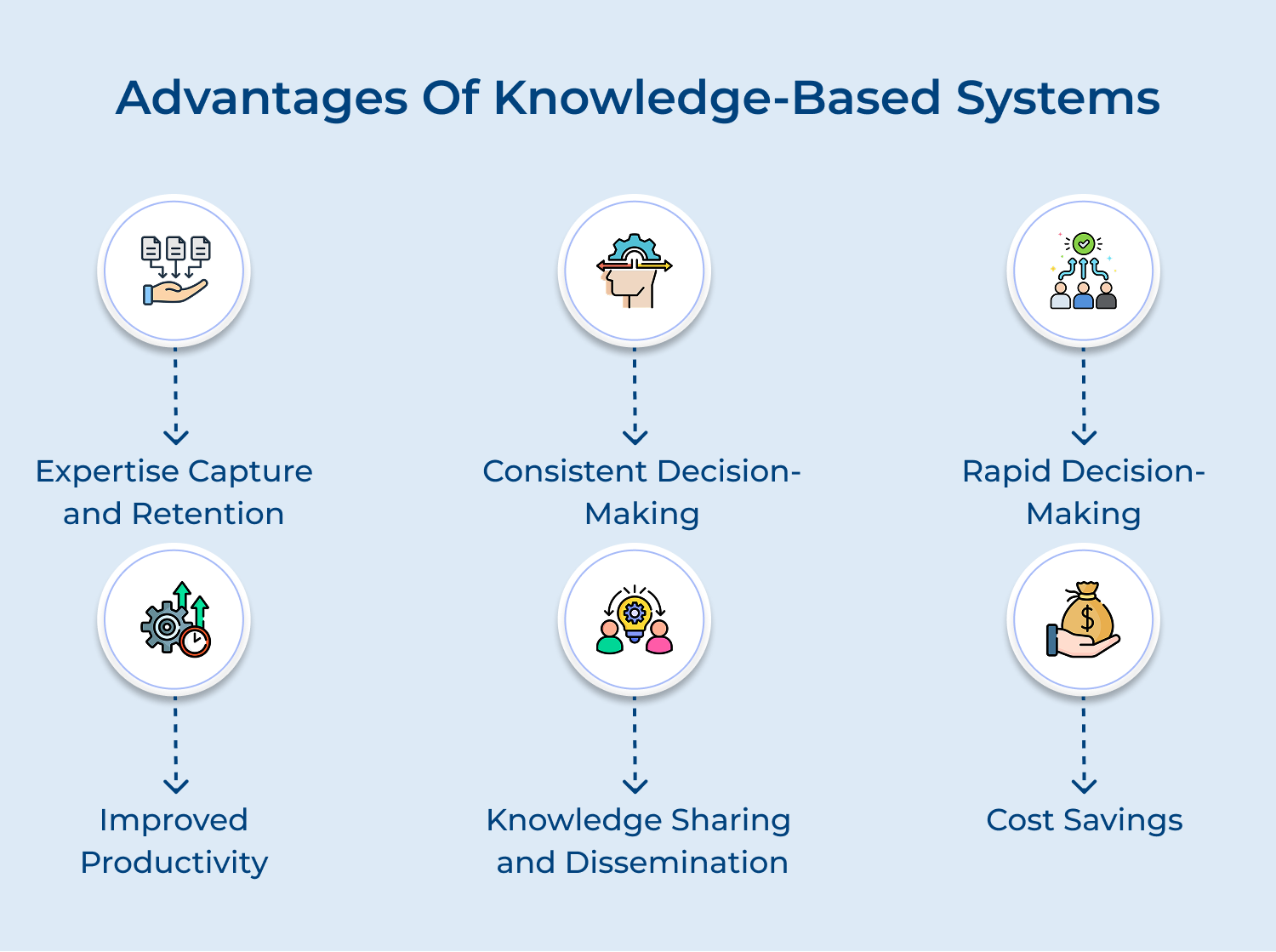
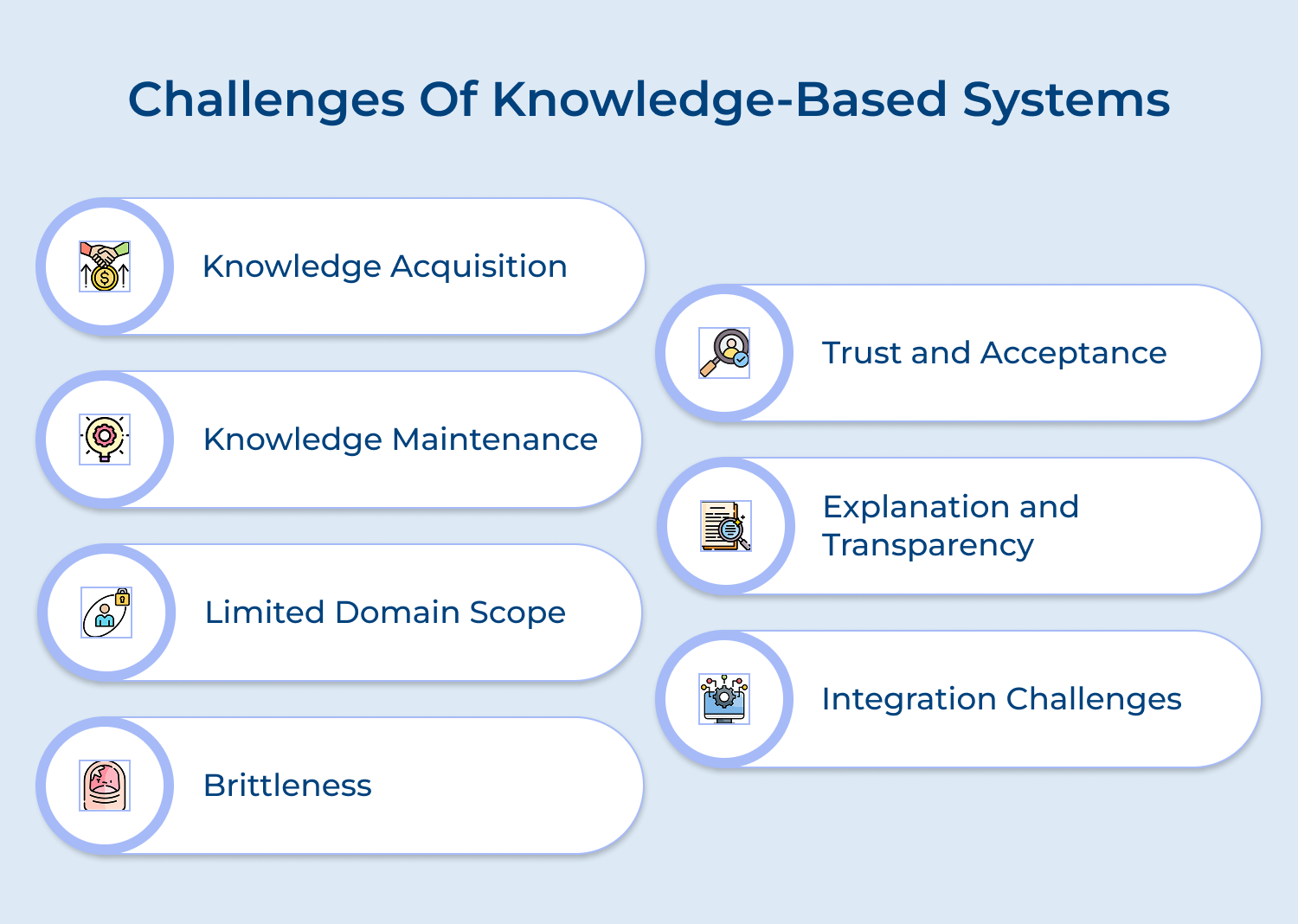
Despite these challenges, knowledge-based systems continue to be valuable tools in various domains, such as medical diagnosis, financial analysis, engineering design and decision support systems. Addressing the challenges through ongoing research, improved knowledge engineering techniques & user-centric design can further enhance the effectiveness and adoption of knowledge-based systems.
Knowledge-based systems are a type of artificial intelligence software that uses a knowledge base of expert information to support decision-making. These systems can be used in a wide range of industries and applications to help automate tasks, solve complex problems as well as improve efficiency.
Here are some examples of knowledge-based systems across various domains:
1. Medical Diagnosis Systems:
2. Financial and Investment Analysis Systems:
3. Engineering and Design Systems:
4. Manufacturing and Production Systems:
5. Security and Surveillance Systems:
6. Natural Language Processing Systems:
Harnessing intelligence through knowledge-based systems has the potential to revolutionize how we approach problem-solving and decision-making. By leveraging data and expertise to create efficient and effective solutions, organizations can unlock new opportunities for growth.
As technology continues to advance, it is imperative that we continue to invest in developing and utilizing knowledge-based systems to stay ahead in a rapidly evolving digital landscape. With the right tools and strategies in place, the possibilities are endless for those who seek to harness the power of intelligence in their work.

What are the three components of a knowledge-based system?
The three main components of a knowledge-based system are
What are the four parts of a knowledge-based system?
The four main parts of a knowledge-based system are
What are the main features of a knowledge-based system?
The main features of a knowledge-based system include the ability to reason and make decisions based on stored knowledge, the ability to improve over time, the ability to handle complex problems, and the ability to provide explanations for its decisions.
What are the uses of knowledge-based systems?
Knowledge-based systems are used in a variety of industries and applications, including healthcare, finance, manufacturing, and customer service. They can be used to diagnose medical conditions, predict stock market trends, optimize production processes, and provide personalized recommendations to customers.
What is the role of knowledge-based systems in group technology?
In group technology, knowledge-based systems can be used to categorize and organize similar products or processes into groups based on their similarities. This can help streamline production processes, reduce waste, and improve overall efficiency in manufacturing operations. Knowledge-based systems can also be used to create rules and algorithms for automated decision-making in group technology applications.
 https://omni24.io/wp-content/uploads/2026/08/AI-Customer-Service-Agents.png
1256
2400
Webvision Solution
https://omni24.io/wp-content/uploads/2023/04/Omni-Logo-1.svg
Webvision Solution2026-09-21 04:48:512026-09-21 04:48:51How to Build an AI Customer Service Agents: 8 Key Steps
https://omni24.io/wp-content/uploads/2026/08/AI-Customer-Service-Agents.png
1256
2400
Webvision Solution
https://omni24.io/wp-content/uploads/2023/04/Omni-Logo-1.svg
Webvision Solution2026-09-21 04:48:512026-09-21 04:48:51How to Build an AI Customer Service Agents: 8 Key Steps https://omni24.io/wp-content/uploads/2026/08/Omnichannel-Conversational-AI.png
1256
2400
Tushar Joshi
https://omni24.io/wp-content/uploads/2023/04/Omni-Logo-1.svg
Tushar Joshi2026-09-16 03:51:072026-09-16 03:51:07How to Build Omnichannel Conversational AI Strategy
https://omni24.io/wp-content/uploads/2026/08/Omnichannel-Conversational-AI.png
1256
2400
Tushar Joshi
https://omni24.io/wp-content/uploads/2023/04/Omni-Logo-1.svg
Tushar Joshi2026-09-16 03:51:072026-09-16 03:51:07How to Build Omnichannel Conversational AI Strategy https://omni24.io/wp-content/uploads/2026/08/Customer-Service-Teams.png
1256
2400
Tushar Joshi
https://omni24.io/wp-content/uploads/2023/04/Omni-Logo-1.svg
Tushar Joshi2026-09-15 04:01:522026-09-15 04:02:16How to Build Customer Service Teams: 6 Key Steps
https://omni24.io/wp-content/uploads/2026/08/Customer-Service-Teams.png
1256
2400
Tushar Joshi
https://omni24.io/wp-content/uploads/2023/04/Omni-Logo-1.svg
Tushar Joshi2026-09-15 04:01:522026-09-15 04:02:16How to Build Customer Service Teams: 6 Key Steps
Whether it’s about acquire, engage or support – Omni24 covers all your customer engagement needs in one complete platform.

Copyright ©2026 Veemo All rights reserved.
CA, Los Angeles, Hall Ave, 19011