How to Design Omnichannel Retailing Strategy: 8 Best Practices
Omnichannel retailing connects online and offline channels to deliver seamless customer experiences that drive loyalty, sales as well as long-term growth.
Omnichannel retailing connects online and offline channels to deliver seamless customer experiences that drive loyalty, sales as well as long-term growth.
Your customers might start browsing on their phones during lunch, switch to a laptop at home, and walk into your store on the weekend — all while expecting you to recognize them at every step.
But many retailers still treat web, app and in-store channels as separate islands, forcing people to repeat info or start over. That frustration makes them abandon carts and shop with brands that do remember them.
These days, about 73% of shoppers use multiple channels and 80% use multiple channels to complete a purchase. So, seamless experiences aren’t a nice-to-have – they’re essential.
Omnichannel retailing is a customer experience strategy that lets customers interact with a brand on their preferred channels. Customers can switch between channels seamlessly as the retailer retains their information when they move from one touchpoint to another.
Omnichannel retailing functions through connected systems that synchronize customer information and inventory data across every channel in real time. When a customer adds items to their cart on a mobile app, those selections automatically appear when they switch to the desktop website.
Key Objectives:
These benefits transform how people interact with brands and create stronger relationships that drive long-term success.
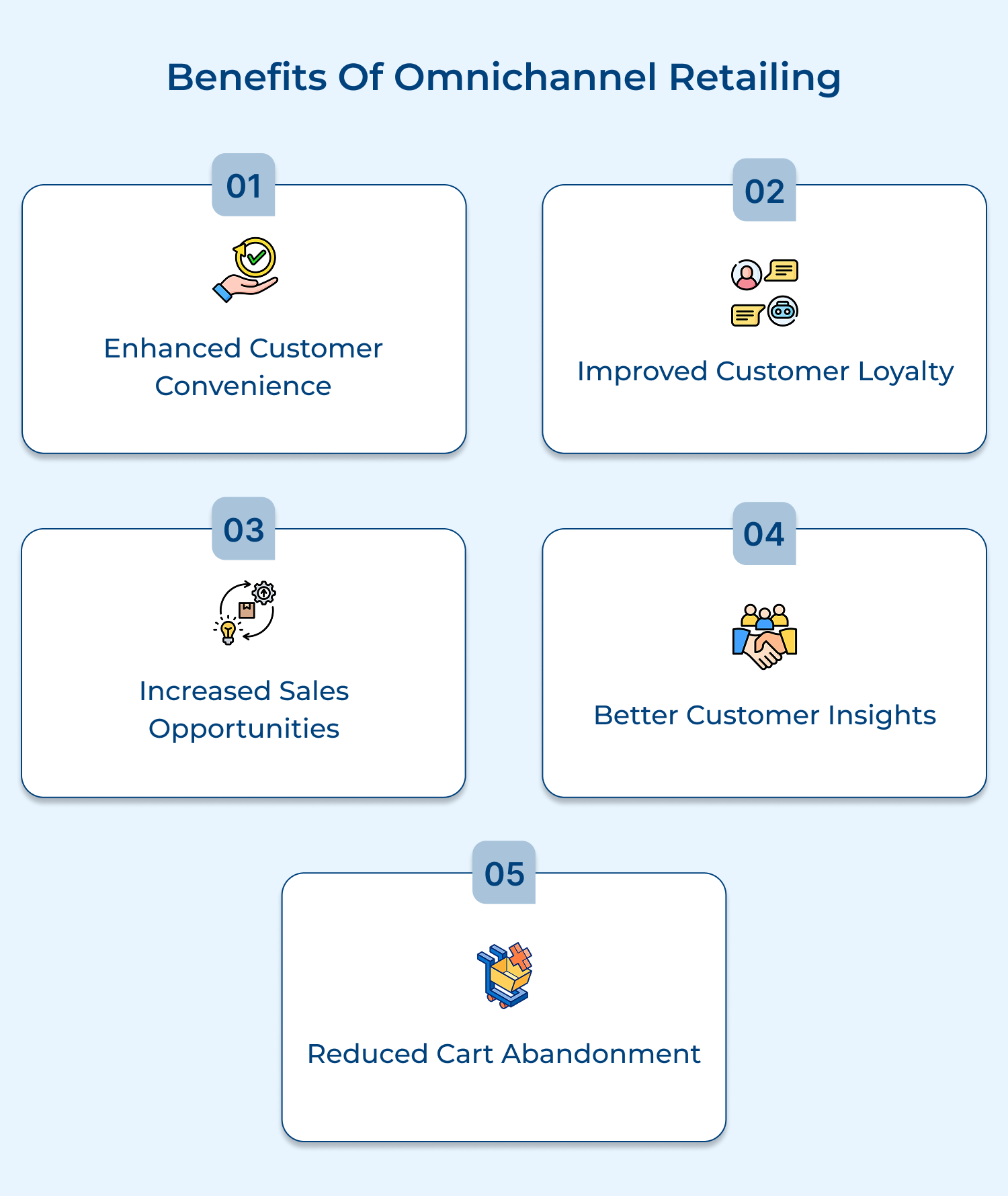
1. Enhanced Customer Convenience
Customers gain the freedom to engage with your brand whenever and wherever they prefer without facing any restrictions. They can browse products online, check availability through mobile apps, as well as complete purchases in physical stores seamlessly. This flexibility removes friction and respects how modern customers actually make purchasing decisions today.
2. Improved Customer Loyalty
Consistent experiences across channels build trust because customers know exactly what to expect from your brand every time. When they receive the same quality service whether online or offline, they feel valued and understood clearly. This reliability encourages them to return repeatedly rather than exploring competitor options.
3. Increased Sales Opportunities
Multiple touchpoints create more chances to connect with customers at different stages of their decision-making journey. A customer might discover your brand on social media, research on your website and purchase in-store. Each interaction serves as a potential conversion point that moves them closer to buying.
4. Better Customer Insights
Integrated data from all channels provides a complete picture of customer behavior, preferences and pain points. You can see which channels they prefer, what products interest them and where obstacles occur. These insights allow you to refine your strategy based on actual patterns rather than assumptions.
5. Reduced Cart Abandonment
Customers can save their selections and return to complete purchases later on a different device. Someone who adds items on mobile during their commute can finalize the order on desktop. This continuity eliminates frustration and removes a common barrier to conversion completion.
While both approaches use multiple channels, the way they connect those channels creates fundamentally different outcomes for customers. Here’s how you understand key differences:
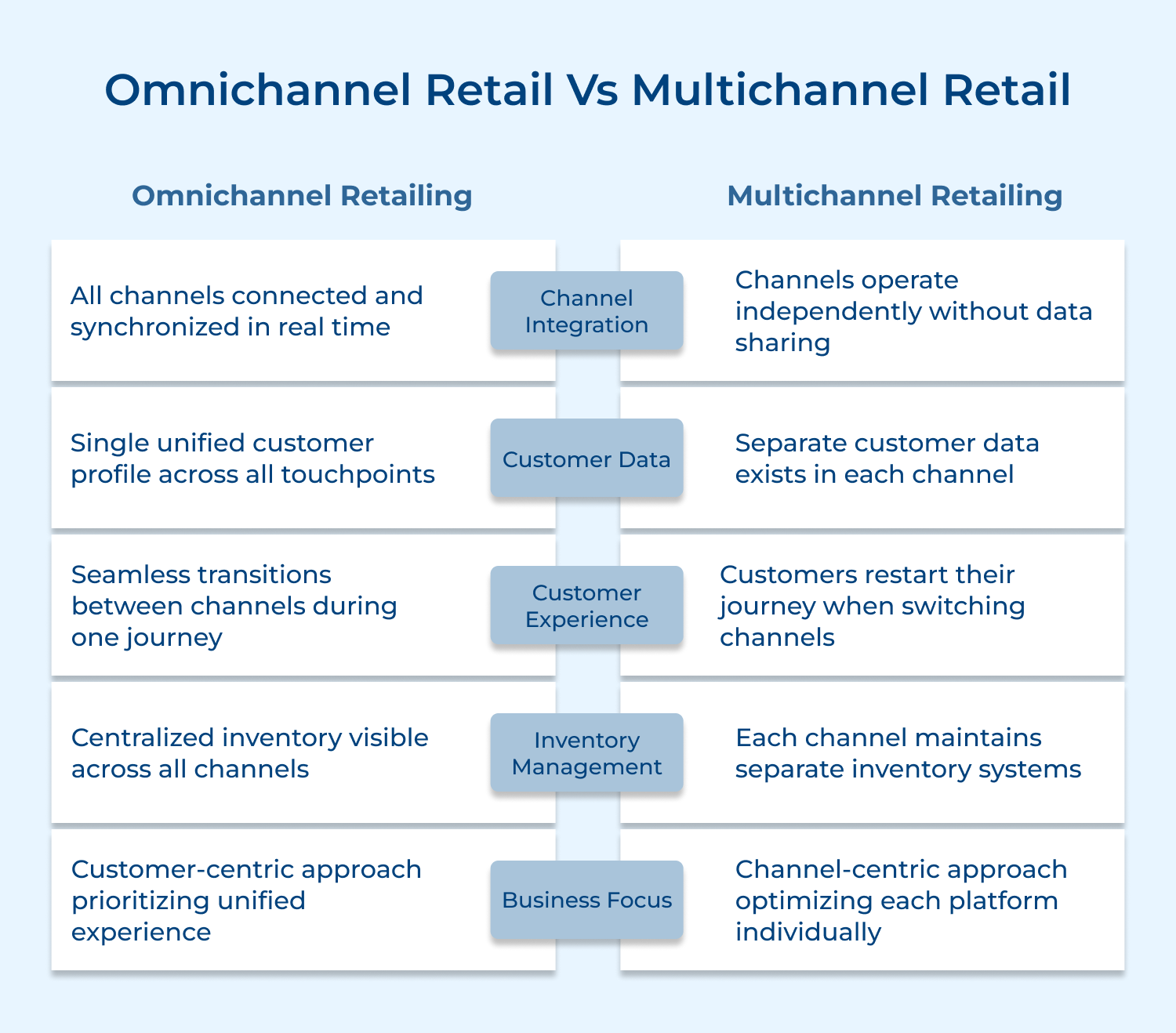
1. Channel Integration
Omnichannel retail brings all your channels together so they work like one system. When a customer browses on mobile, that information instantly carries over to the website, store and customer service teams.
Multichannel retail runs each platform in isolation. Your website, app and physical store don’t talk to each other, creating gaps that disrupt the customer journey.
2. Customer Data
Omnichannel provides one unified customer profile that updates everywhere. This makes customer journey mapping easier and helps brands understand consumer behavior across touchpoints.
In a multichannel setup, data is scattered. The same customer ends up with multiple profiles, making personalization and loyalty programs harder to manage.
3. Customer Experience
Omnichannel lets customers move smoothly between channels without starting over. They can browse on mobile, ask questions via customer service and complete purchases in-store effortlessly.
Multichannel forces customers to repeat actions and information every time they switch platforms, leading to frustration as well as drop-offs.
4. Inventory Management
Omnichannel uses centralized inventory, showing real-time stock across stores and digital channels. Customers always know what’s available and where.
Multichannel keeps inventory siloed, increasing the risk of stockouts and disappointing experiences.
5. Business Focus
Omnichannel focuses on the entire customer journey, optimizing convenience, consistency and long-term loyalty.
Multichannel measures success channel by channel, often missing the bigger picture of how customers actually shop.
Let’s explore best practices that can guide you in designing an effective omnichannel retailing strategy. Hence, ensuring you stay ahead of the competition.
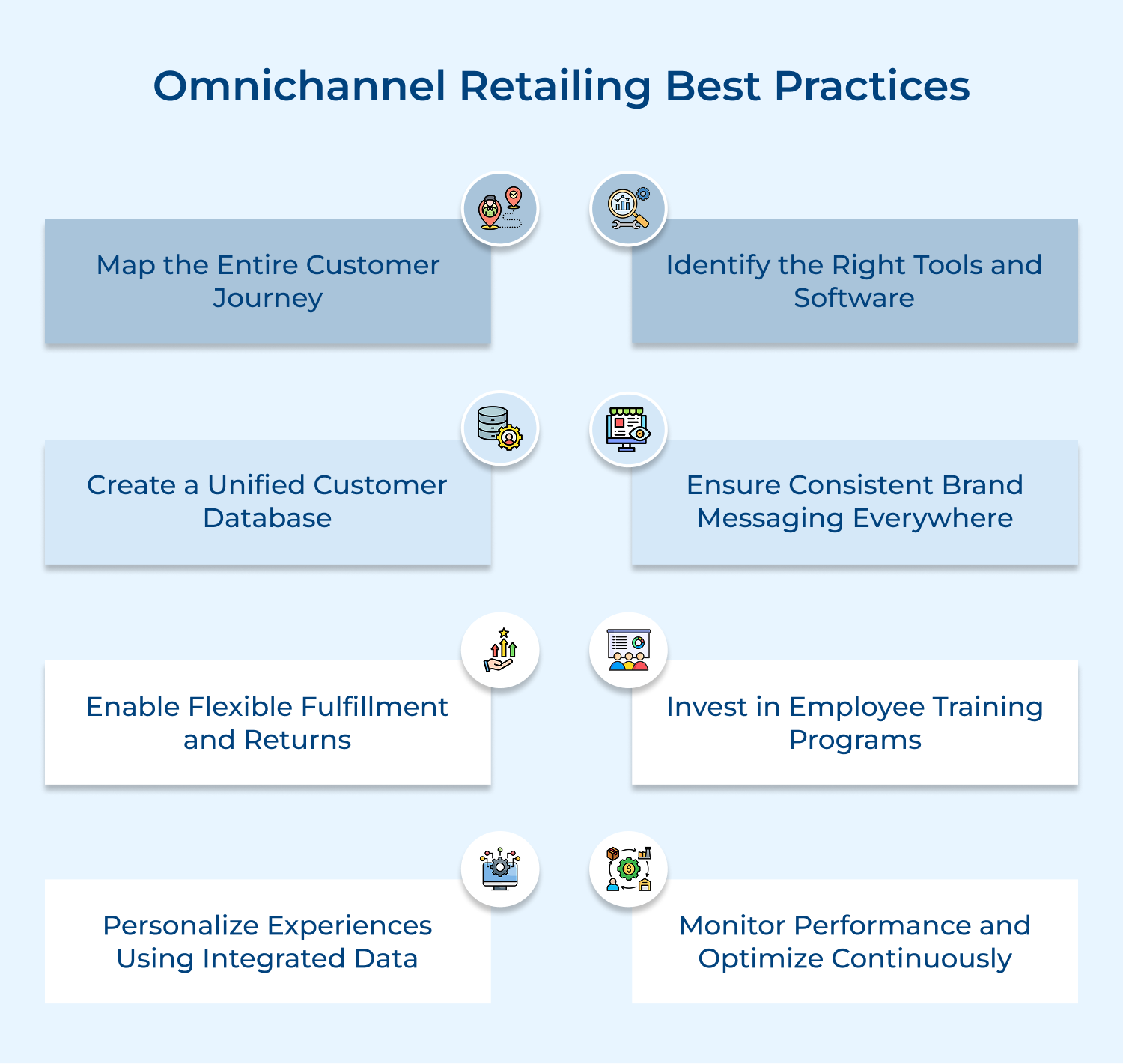
Understanding customer journeys is critical because you need to see where people interact with your brand. Mapping reveals how customers move between channels and helps you design smoother transitions between touchpoints.
Here are three effective ways to map customer journeys comprehensively:
Consider a furniture retailer that mapped their customer journey and discovered something surprising. Most customers browsed collections on Instagram, researched dimensions and reviews on the website, then visited stores to test comfort before purchasing online for home delivery. This insight helped them optimize each channel for its specific role in the journey.
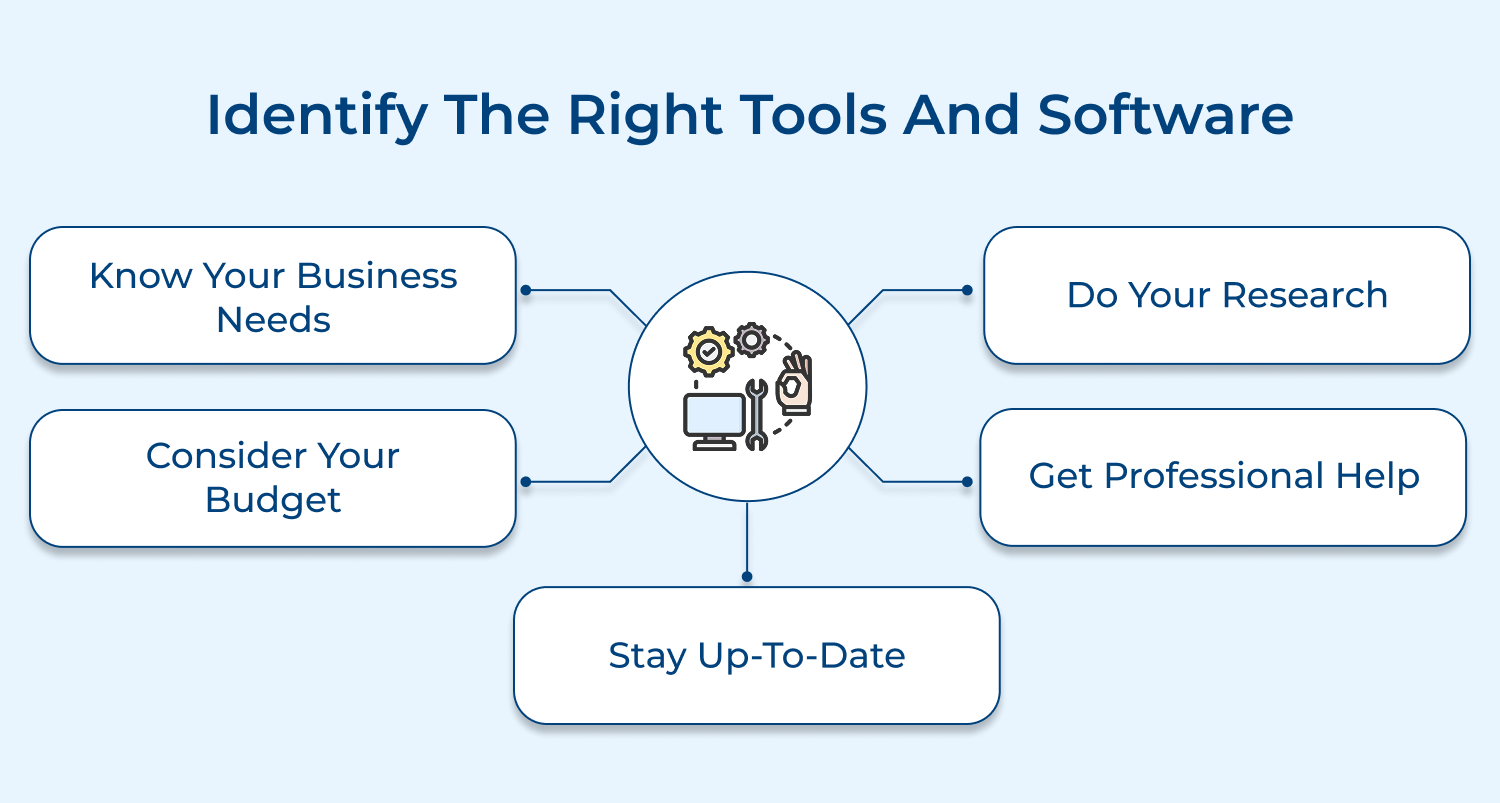
The right technology stack determines whether your channels can actually communicate with each other effectively. Tools must integrate seamlessly because disconnected systems create the exact fragmented experience you’re trying to eliminate. Choosing platforms that share data in real time transforms separate channels into one cohesive system.
Consider these four key factors when evaluating technology solutions:
The best tools enable your team to deliver seamless experiences rather than creating technical barriers. When employees struggle with complicated interfaces they can’t focus on serving customers effectively. Simple and powerful tools empower your staff to solve problems across channels.
Here are five essential tool categories for omnichannel success:
Selecting the right combination creates a foundation where customer data flows freely and teams access accurate information instantly. Your technology should make omnichannel retailing easier to execute rather than adding complexity that slows down decision-making.
A unified customer database gives you one clear, shared view of every customer across your brand. Whether someone chats with customer service, walks into a store or browses online, they’re recognized as the same person — not a stranger starting over.
Creating this database means pulling scattered data from different systems into one master profile. By connecting identities across devices and emails, every channel can access complete customer histories. It includes purchases, preferences, support interactions as well as browsing behavior.
Pro tips:
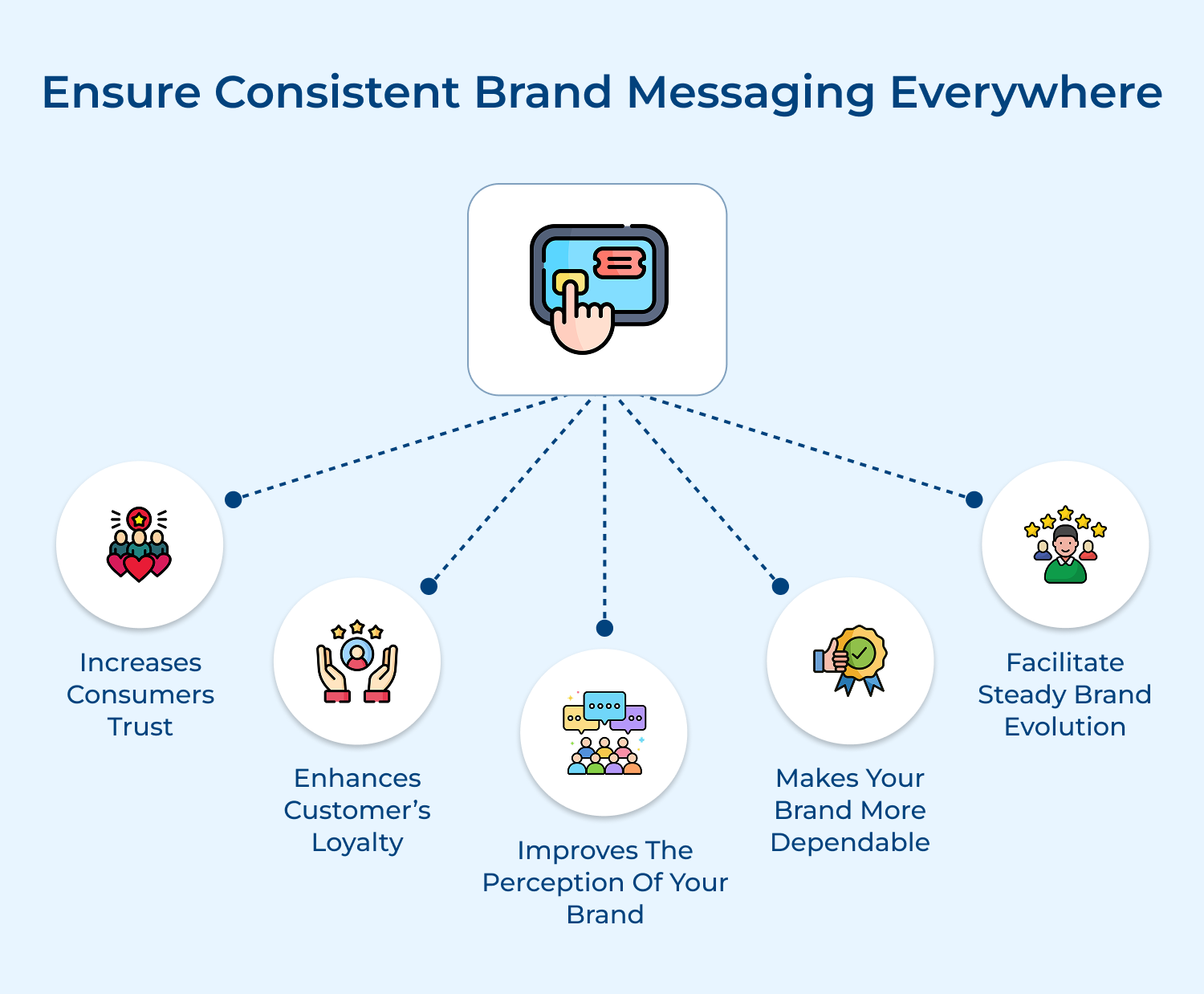
Consistent messaging builds trust because customers develop clear expectations about who you are as a brand. When your tone shifts dramatically between channels or your visual identity looks different across platforms customers feel confused. This best practice ensures that regardless of where someone encounters your brand they receive the same core message.
Develop Unified Tone and Visual Standards
Create comprehensive brand guidelines that define your voice, personality, color palette and design elements clearly. Document examples of approved messaging and imagery so teams understand what represents your brand accurately.
Train Teams on Brand Communication Guidelines
Equip every employee who communicates with customers to deliver messages that align to your established standards. Provide regular refreshers and real examples of both effective as well as inconsistent messaging from actual interactions.
Monitor Message Consistency Across All Touchpoints
Regularly review content across channels including social media posts, email campaigns, website copy and in-store signage. Identify deviations from your guidelines and correct them before they confuse customers or dilute identity.
Flexible fulfillment gives customers control over how they receive products and return unwanted items seamlessly. The flexibility removes barriers that prevent people from completing purchases.
Before implementing flexible fulfillment, consider asking yourself these four questions:
These questions help you identify gaps in your current fulfillment capabilities and prioritize improvements. The answers guide your implementation roadmap so you build the most valuable fulfillment options first.
So how do you actually implement this? Start by asking what customers value most in your specific business context. Connect your inventory systems so store staff can process online orders and see real-time stock across locations. Then train teams on new fulfillment workflows so customers can pick up online orders or return items without confusion.
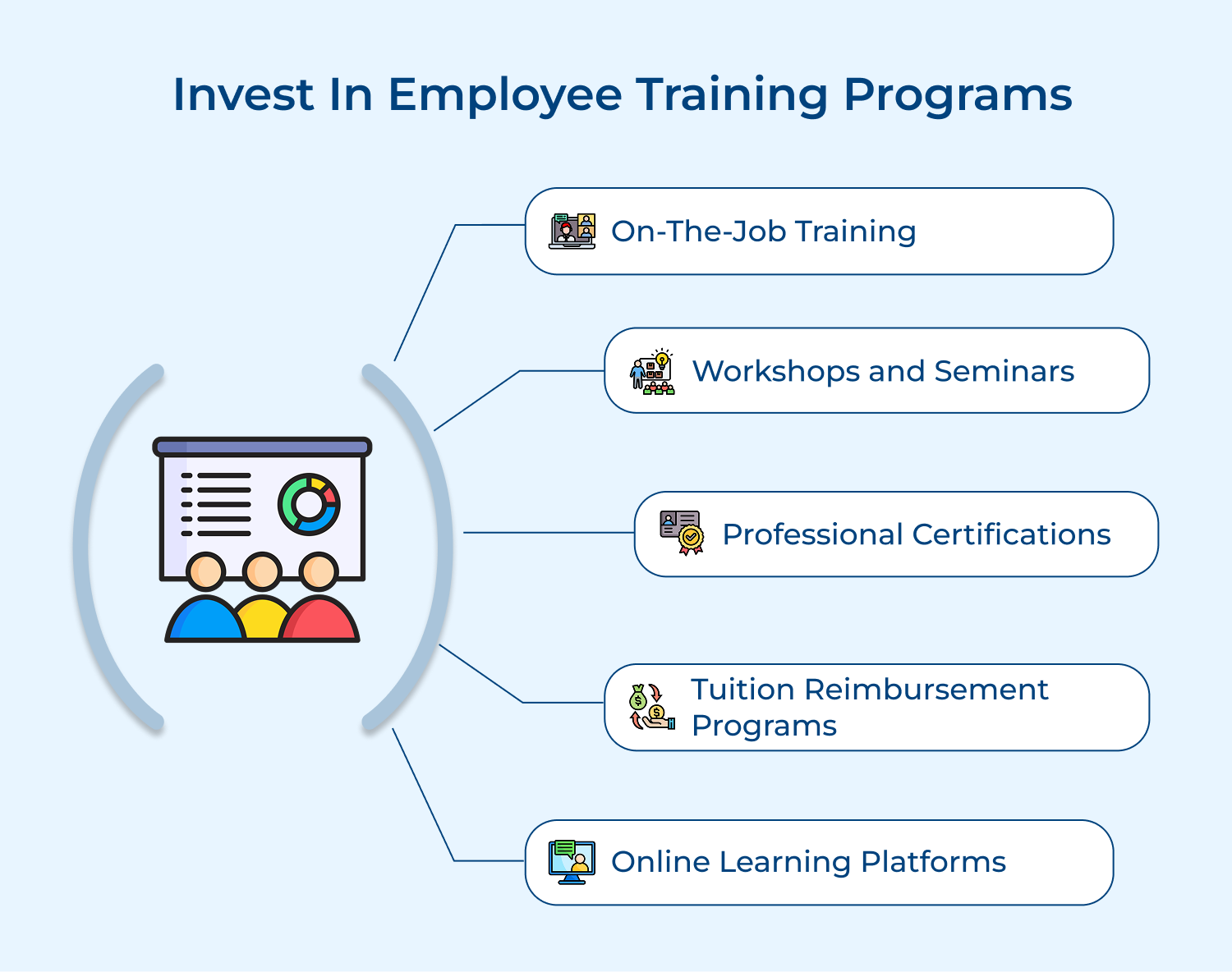
Employee training ensures your team understands how omnichannel retailing changes their daily interactions with B2B customers fundamentally. Your staff must know how to serve customers who start conversations with one representative and continue to another.
Training begins with educating staff on omnichannel customer expectations because B2B buyers now expect seamless experiences. Business customers research extensively online before contacting sales, so your team needs to understand that prospects arrive informed..
Here are the key areas to cover:
You need to provide tools access and system training that enables staff to deliver effectively. A sales representative taking a call should see the prospect’s website activity and previous email exchanges instantly. This requires training on your CRM platform as well as any other tools containing relevant customer information.
Empowering teams to solve cross-channel issues means giving them authority to fix problems immediately. When a customer reports an issue from a different channel, your employee should resolve it themselves.
Personalization uses customer data from all touchpoints to deliver relevant experiences tailored to individual business needs. In B2B omnichannel retailing this matters because business customers expect you to understand their unique requirements. Generic experiences waste their time and suggest you don’t value the relationship.
Here are three key areas in B2B that can be personalized using integrated data:
Consider a B2B industrial equipment supplier that integrated data from their website and service interactions. When a purchasing manager logged in, they saw maintenance parts for equipment they already owned. The system recommended reorder timing based on actual usage patterns and suggested compatible upgrades when relevant.
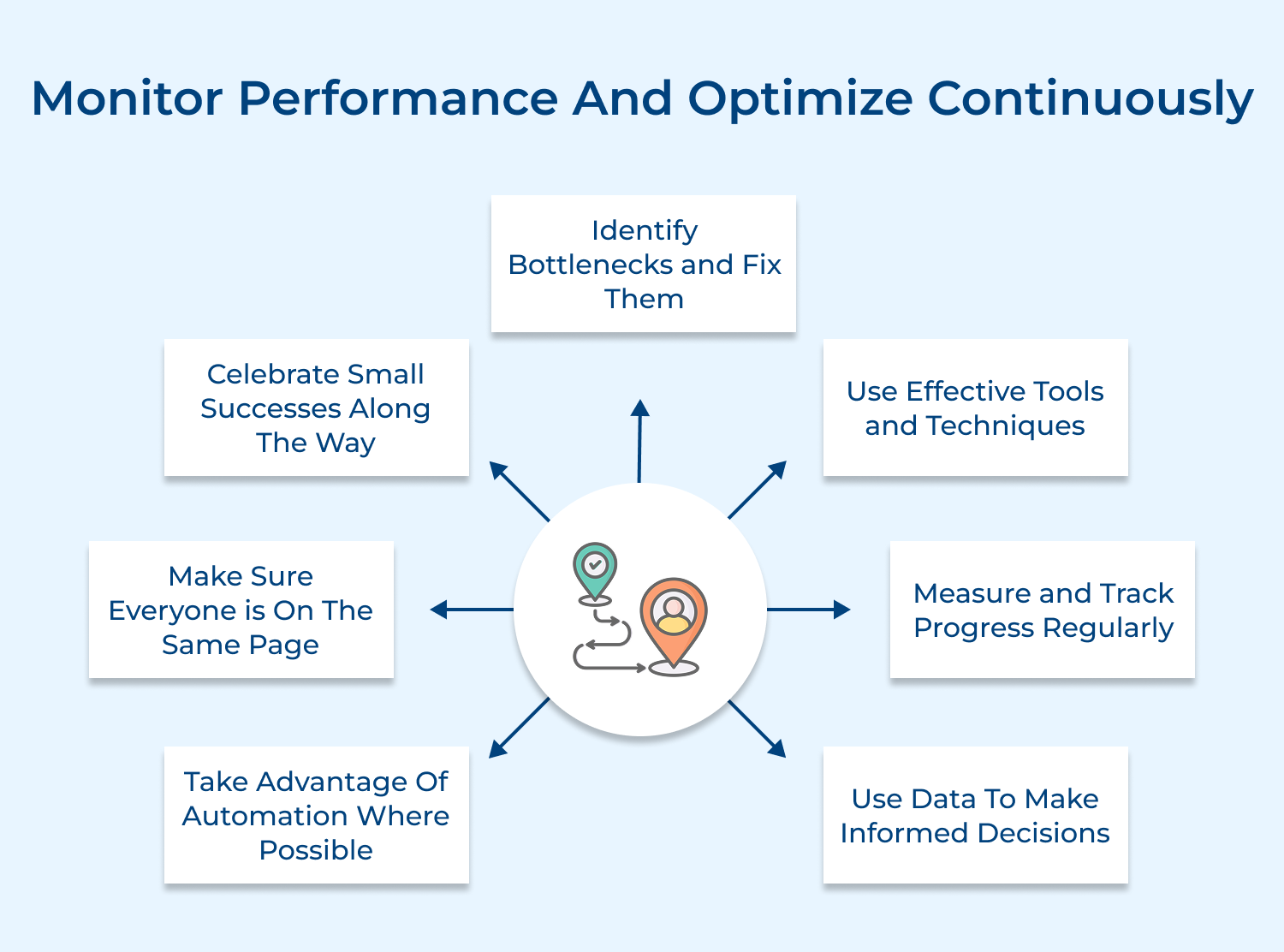
Continuous monitoring means regularly measuring how well your omnichannel strategy performs and making improvements based on results. This practice ensures your strategy evolves as customer behaviors change over time.
Establish clear metrics that track customer experience across the entire journey from awareness through post-purchase. Set up dashboards showing real-time performance including conversion rates and customer satisfaction scores. Review this data regularly to spot trends and identify where customers encounter obstacles.
Pro tips:
While omnichannel retail sounds ideal, making it work isn’t always easy. Here are a few challenges and how to overcome them:
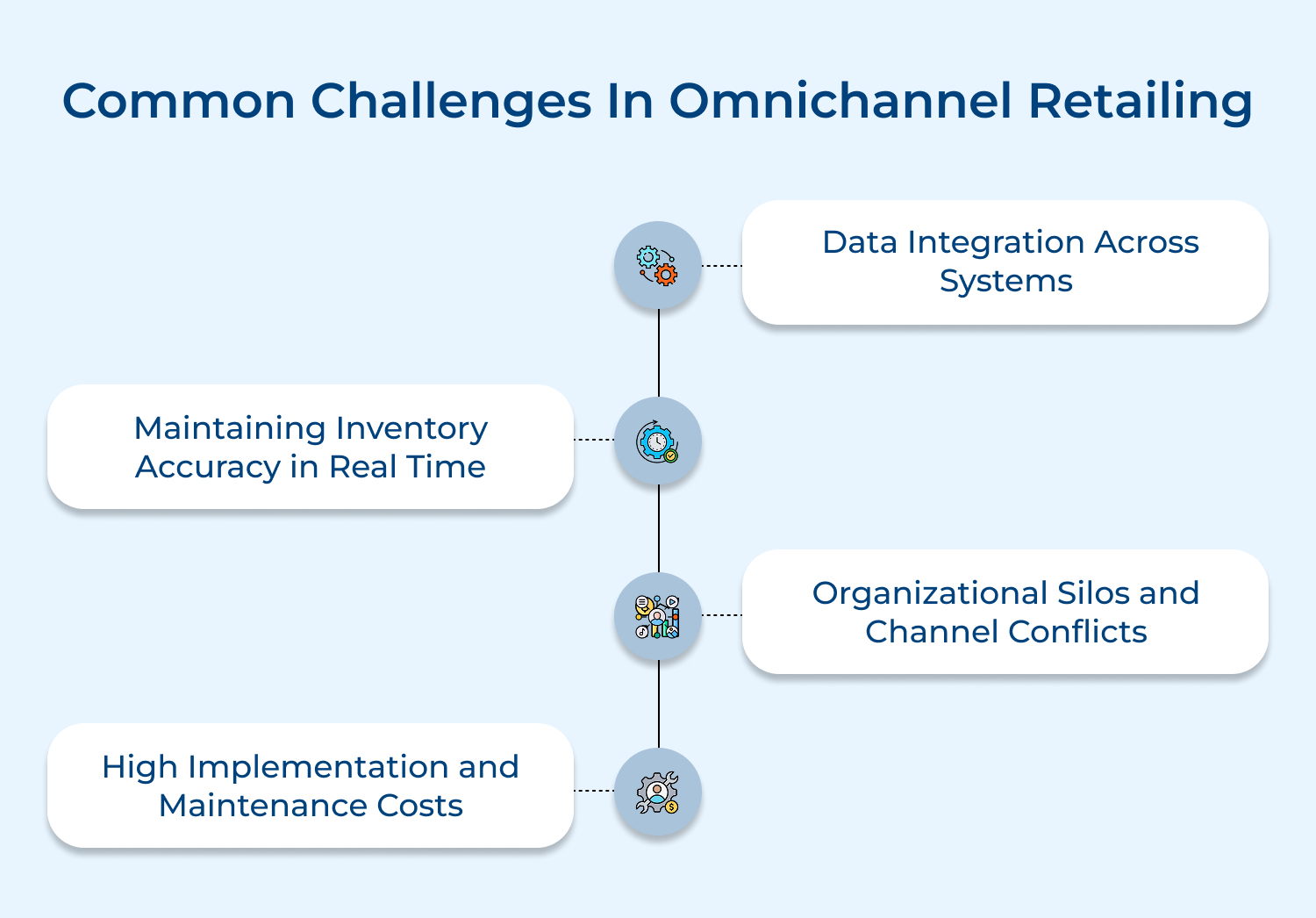
1. Data Integration Across Systems
Connecting data from different systems poses major difficulties because platforms were built independently without integration in mind. Legacy software uses incompatible formats and cannot communicate with modern cloud-based tools effectively. This creates silos where customer information exists in fragments rather than one profile.
2. Maintaining Inventory Accuracy in Real Time
Keeping inventory synchronized across channels becomes challenging when multiple locations sell and fulfill orders simultaneously. A product might show as available online but actually be sold out already. These discrepancies frustrate customers who expect accurate information and damage trust.
3. Organizational Silos and Channel Conflicts
Different departments often operate with separate goals that create internal competition rather than collaboration. The online team focuses solely on digital sales while store managers worry only about foot traffic. This leads to conflicts where teams protect their metrics instead of optimizing journeys.
4. High Implementation and Maintenance Costs
Building an omnichannel infrastructure requires substantial upfront investment in technology and training that strains budgets. Small businesses especially struggle to justify these costs when returns take time to materialize. Ongoing maintenance adds continuous expenses as systems need updates.
Here are practical solutions to overcome these challenges:
The omnichannel retail landscape continues evolving as new technologies emerge and customer expectations shift. These trends shape how businesses design their strategies:
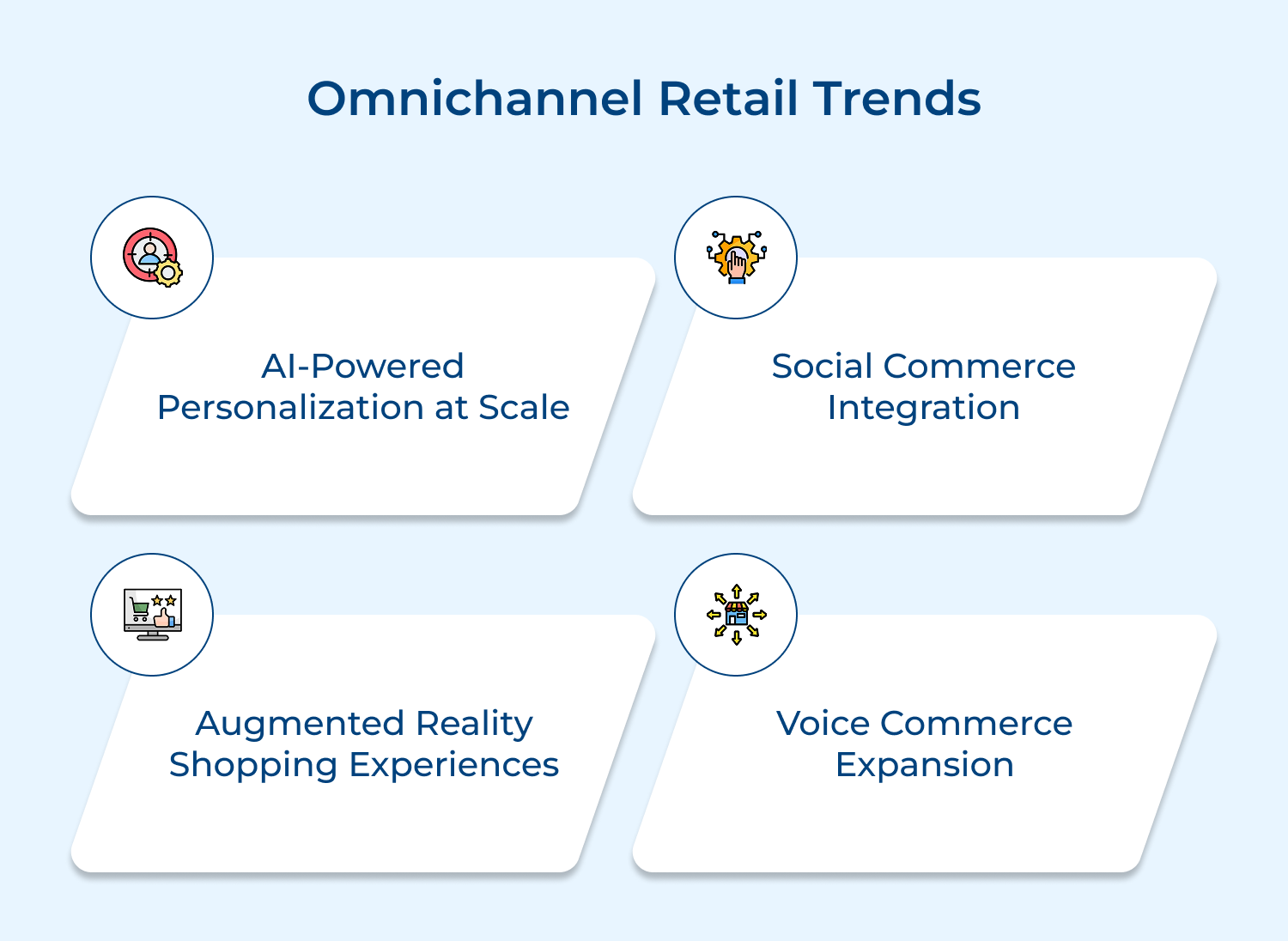
1. AI-Powered Personalization at Scale
Artificial intelligence enables retailers to deliver personalized recommendations to millions of customers simultaneously across all channels. Machine learning algorithms analyze browsing patterns to predict what each customer wants next. This makes personalization economically feasible even for businesses with large customer bases.
2. Social Commerce Integration
Social media platforms are transforming into direct sales channels where customers discover and purchase without leaving the app. Instagram and TikTok now offer native checkout features that blend content with immediate buying opportunities. Retailers integrate these platforms to meet customers where they spend time.
3. Augmented Reality Shopping Experiences
Augmented reality allows customers to visualize products in their own space before purchasing through smartphone cameras. Furniture retailers let shoppers see how a sofa looks in their living room digitally. It bridges the gap between online convenience and physical store experiences.
4. Voice Commerce Expansion
Voice assistants like Alexa are becoming viable channels for researching products and placing orders through conversational commands. Customers can reorder frequently purchased items using only their voice naturally. Retailers optimize systems to handle voice queries and process orders through this channel.
Omnichannel retailing is no longer optional for businesses that want to stay competitive in today’s market. Customers expect seamless experiences across every touchpoint and brands that deliver this consistency build stronger loyalty while driving higher sales.
Start by mapping your customer journey and investing in the right tools to connect your channels effectively. Focus on small improvements first and gradually expand your capabilities as you learn what works best for your specific customers as well as business model.

What are the three elements of omnichannel retailing?
The three core elements are integrated technology systems, unified customer data and consistent brand experience across touchpoints. Technology connects your channels so they share information in real time. Unified data ensures every channel recognizes the same person and maintains their history consistently.
How does omnichannel retail improve business operations for retailers?
Omnichannel retailing streamlines operations by centralizing inventory management and eliminating duplicate processes that waste resources. Retailers gain better visibility into customer behavior and can make smarter decisions about stock allocation. This efficiency reduces costs while improving customer satisfaction.
Why is Omnichannel Retailing important for modern retailers?
Modern customers expect flexibility to switch between channels seamlessly during their purchasing journey without starting over. Retailers who cannot provide this connected experience lose sales to competitors who meet these expectations. Omnichannel retailing also builds loyalty because people return to brands that remember them.
How does Omnichannel Retailing connect online and offline stores?
Omnichannel retailing connects online and offline through shared systems that synchronize inventory as well as customer data instantly. A customer can browse products online and see if items are available at nearby physical locations. They can also purchase online and pick up in store seamlessly.
What channels are included in Omnichannel Retailing?
Omnichannel retailing includes physical stores, e-commerce websites, mobile apps, social media platforms and customer service centers. Some retailers also incorporate marketplaces and voice assistants as additional touchpoints in their strategy. The specific channels depend on where your target customers prefer to interact most frequently.
 https://omni24.io/wp-content/uploads/2026/09/Social-commerce-scaled.png
1340
2560
Webvision Solution
https://omni24.io/wp-content/uploads/2023/04/Omni-Logo-1.svg
Webvision Solution2026-10-23 12:18:272026-10-23 12:18:27What is Social Commerce and Why Does It Matter?
https://omni24.io/wp-content/uploads/2026/09/Social-commerce-scaled.png
1340
2560
Webvision Solution
https://omni24.io/wp-content/uploads/2023/04/Omni-Logo-1.svg
Webvision Solution2026-10-23 12:18:272026-10-23 12:18:27What is Social Commerce and Why Does It Matter? https://omni24.io/wp-content/uploads/2026/08/AI-Customer-Service-Agents.png
1256
2400
Webvision Solution
https://omni24.io/wp-content/uploads/2023/04/Omni-Logo-1.svg
Webvision Solution2026-09-21 04:48:512026-09-21 04:48:51How to Build an AI Customer Service Agents: 8 Key Steps
https://omni24.io/wp-content/uploads/2026/08/AI-Customer-Service-Agents.png
1256
2400
Webvision Solution
https://omni24.io/wp-content/uploads/2023/04/Omni-Logo-1.svg
Webvision Solution2026-09-21 04:48:512026-09-21 04:48:51How to Build an AI Customer Service Agents: 8 Key Steps https://omni24.io/wp-content/uploads/2026/08/Omnichannel-Conversational-AI.png
1256
2400
Tushar Joshi
https://omni24.io/wp-content/uploads/2023/04/Omni-Logo-1.svg
Tushar Joshi2026-09-16 03:51:072026-09-16 03:51:07How to Build Omnichannel Conversational AI Strategy
https://omni24.io/wp-content/uploads/2026/08/Omnichannel-Conversational-AI.png
1256
2400
Tushar Joshi
https://omni24.io/wp-content/uploads/2023/04/Omni-Logo-1.svg
Tushar Joshi2026-09-16 03:51:072026-09-16 03:51:07How to Build Omnichannel Conversational AI Strategy
Whether it’s about acquire, engage or support – Omni24 covers all your customer engagement needs in one complete platform.

Copyright ©2026 Veemo All rights reserved.
CA, Los Angeles, Hall Ave, 19011