How to Provide The Best Real Time Customer Service in 2026
Real-time customer service delivers instant support, boosts satisfaction, reduces churn while helping businesses build stronger and more reliable customer experiences.

Real-time customer service delivers instant support, boosts satisfaction, reduces churn while helping businesses build stronger and more reliable customer experiences.
In today’s fast-paced world, customers expect instant responses — and when businesses miss that mark, it leads to frustration as well as lost opportunities. Real-time customer service fixes this by offering immediate support through live chat, SMS or messaging apps.
Quick responses help companies boost customer satisfaction, build brand loyalty and reduce churn. In fact, 90% of customers now expect an “immediate” response with many defining that as within 2 minutes.
In this blog, we’ll explore how implementing real-time customer service can elevate the chat experience, drive long-term loyalty and fuel business growth.
Real-time customer service refers to the immediate and interactive support provided to customers through various channels, enabling instant communication as well as problem-solving. This approach allows businesses to address customer inquiries, concerns and issues as they arise, without significant delays.
The importance of real-time customer service lies in its ability to enhance customer satisfaction, build brand loyalty and improve overall business performance. By offering real-time support, companies can meet these expectations, differentiate themselves from competitors and create positive customer experiences.
Key objectives:
Real-time customer support gives customers the instant solution they expect while helping businesses stay agile. Let’s explore how its benefits your customer service team in the long run:
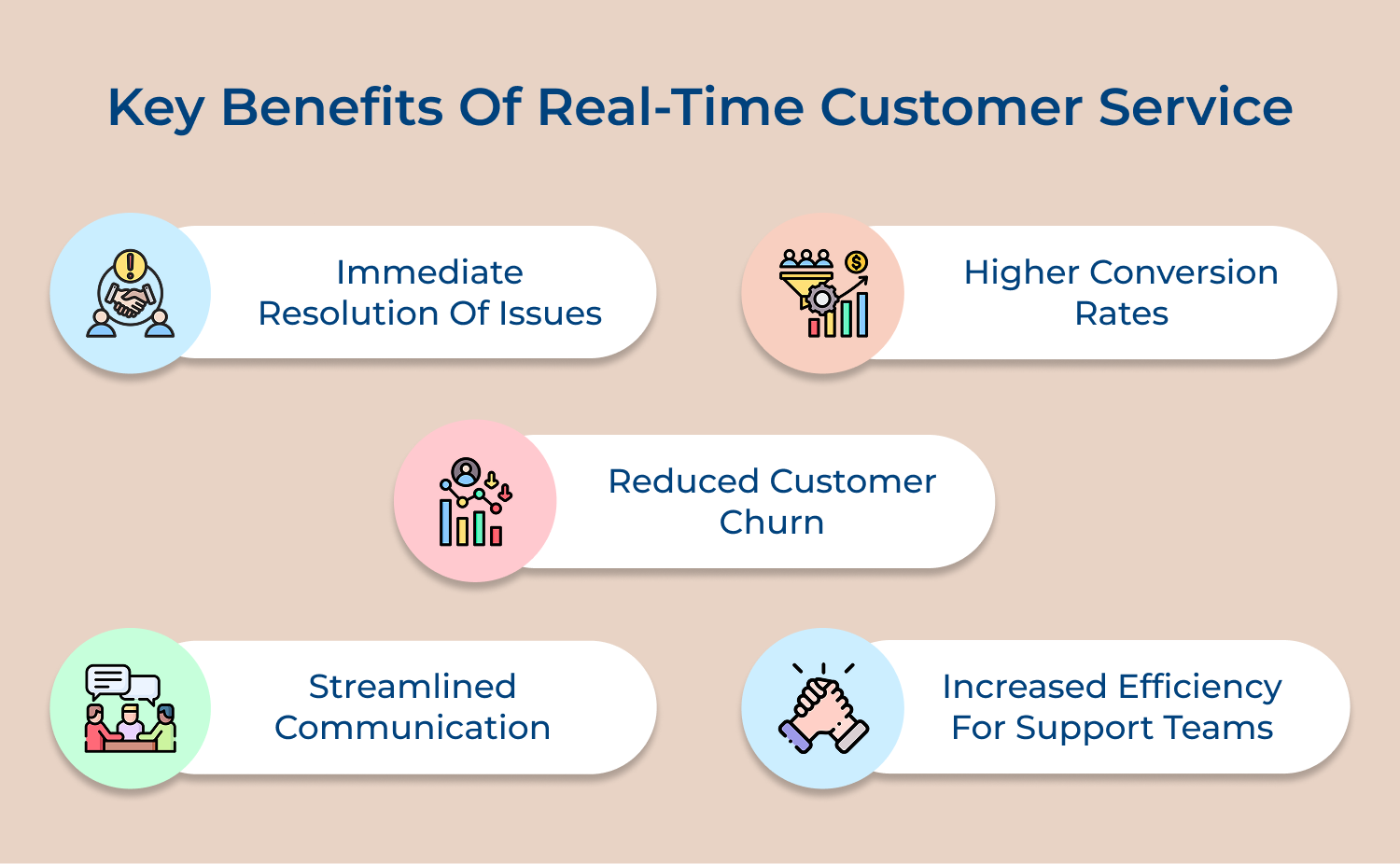
Immediate Resolution of Issues
Real-time customer service allows businesses to address problems as they arise, preventing small issues from escalating into major concerns. This swift response not only resolves customer problems quickly but also demonstrates a company’s commitment to customer satisfaction.
Higher Conversion Rates
Offering real-time support during the purchasing process significantly increases conversion rates. Immediate assistance helps potential customers overcome doubts, answer questions and navigate any obstacles they might encounter.
Reduced Customer Churn
When customers receive immediate attention and solutions to their problems, they’re less likely to become frustrated or seek alternatives. This rapid response helps maintain customer satisfaction, builds stronger relationships and increases customer retention rates. Hence, securing long-term business success.
Streamlined Communication
Real-time customer service facilitates seamless and efficient communication between businesses as well as their customers. Instant messaging, live chat or phone support enable direct, immediate conversations.
Increased Efficiency for Support Teams
Real-time customer service enhances the efficiency of support teams, allowing them to handle multiple inquiries simultaneously and resolve issues more quickly. This approach reduces backlogs, minimizes the need for follow-ups and enables support staff to assist more customers in less time.
Implementing real-time customer service starts with the right tools, clear processes and a team trained to respond quickly. Let’s explore one aspect at a time:
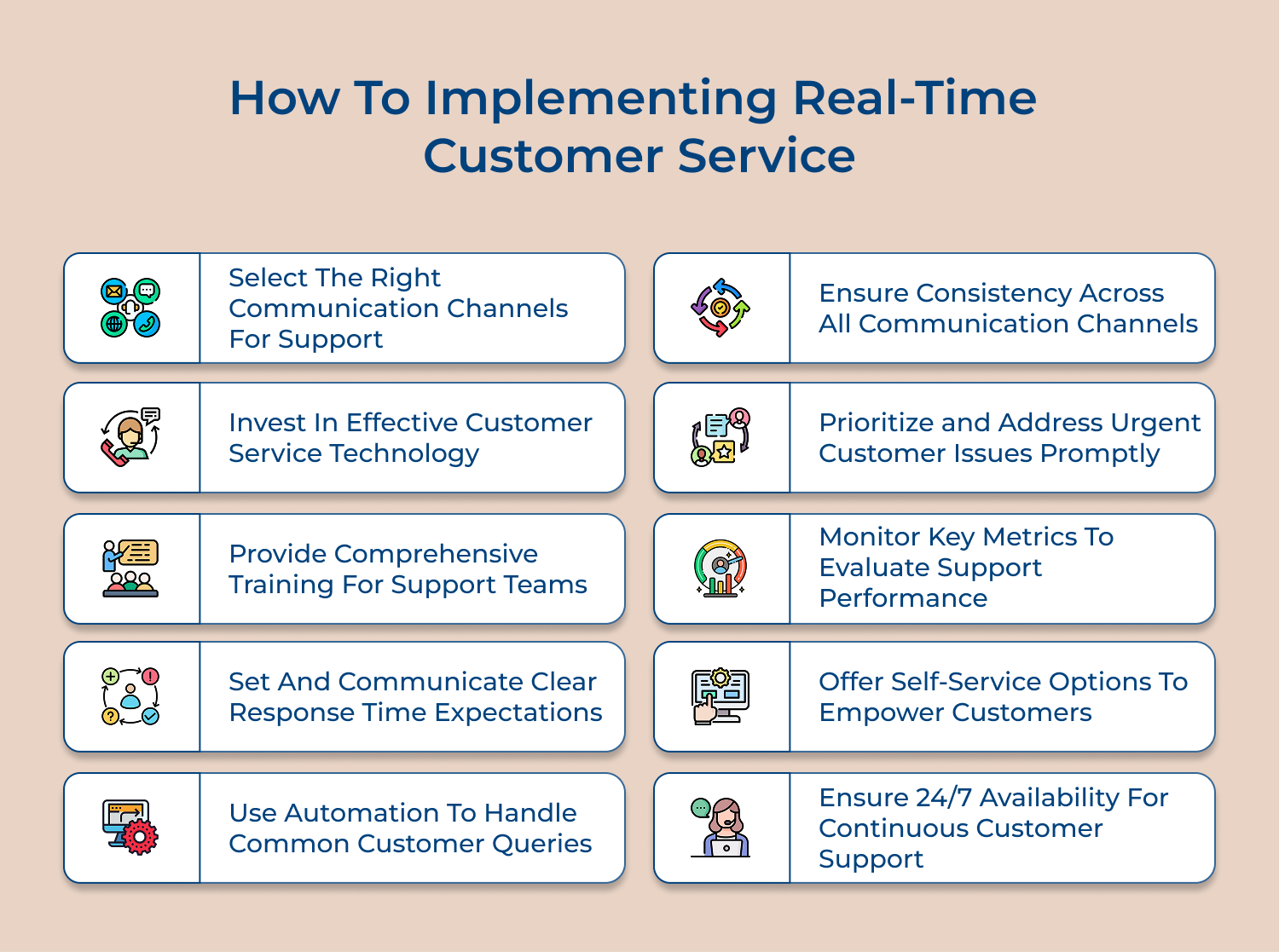
Choosing the right communication channels starts with understanding where your customers naturally reach out – whether it’s live chat, social media, email or messaging apps. Different people prefer different touchpoints, so offering multiple options makes your support more accessible and delivers a more personalized experience.
Begin by identifying the channels your customers use most, then integrate them into your support system. Make sure your team is trained to handle conversations across all platforms. This flexibility makes it easier for customers to contact you, speeds up resolutions and ultimately creates a smoother, more satisfying support experience.
Actionable Tips:
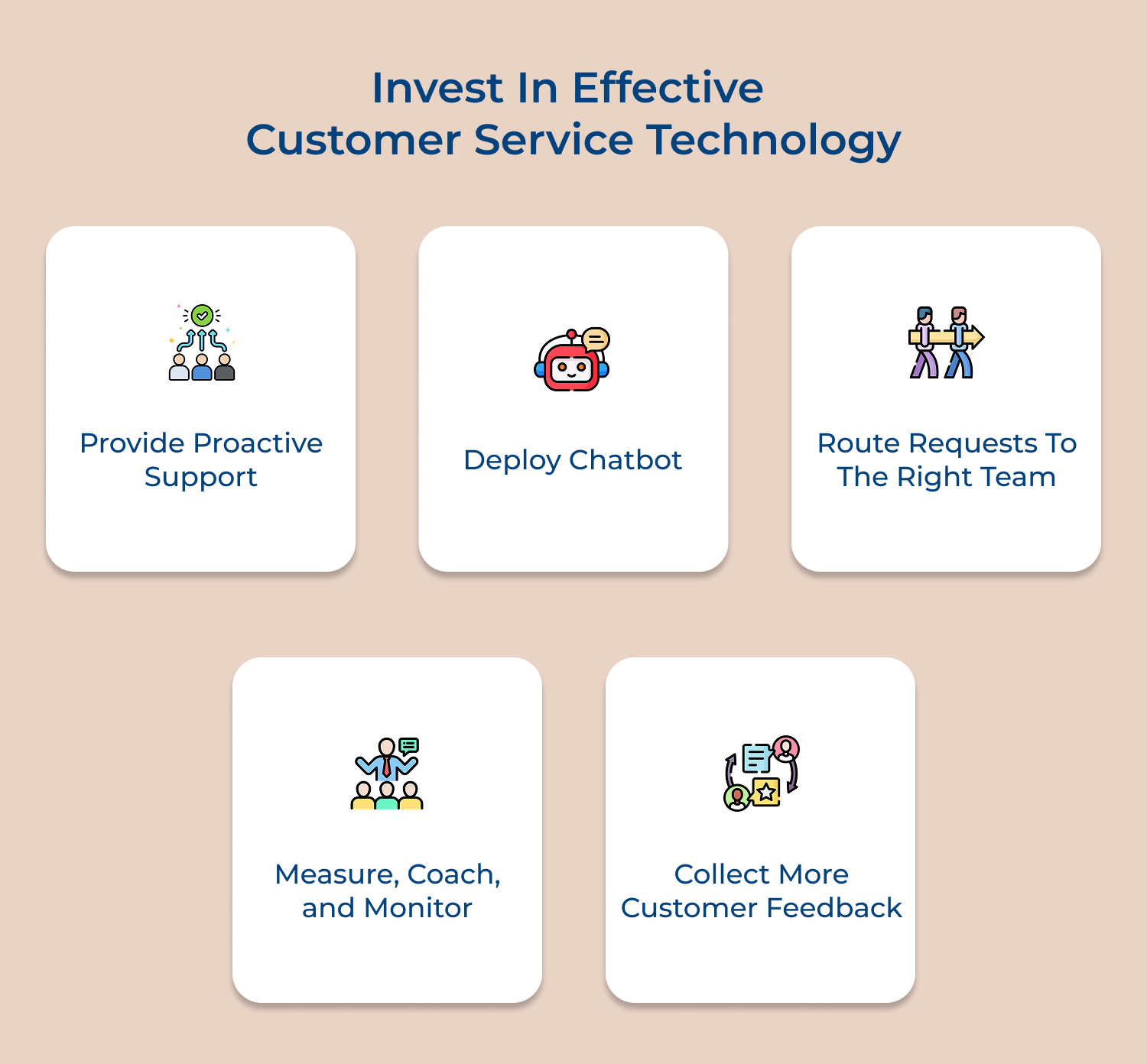
Investing in the right technology starts with choosing tools that enable fast, efficient support like live chat software, AI chatbots and a solid CRM system. These tools help you respond instantly, keep conversations organized and give agents the context they need to solve issues quickly.
Use live chat for immediate responses, rely on chatbots to handle common questions and connect everything to your CRM for a smoother workflow. With the right tech setup, agents can focus on complex issues while routine tasks are automated, resulting in faster, more reliable real-time customer service.
Tips:
Training your support team means preparing them to handle real-time inquiries with confidence. When agents understand your products, services and communication standards, they can resolve issues faster as well as more professionally.
Real-time support demands quick, accurate responses and well-trained agents consistently deliver both. Regular training on product updates, customer service best practices and soft skills helps them improve judgment along with speed. Incorporate role-plays and real-time simulations to mirror actual customer scenarios.
Actionable Tips:
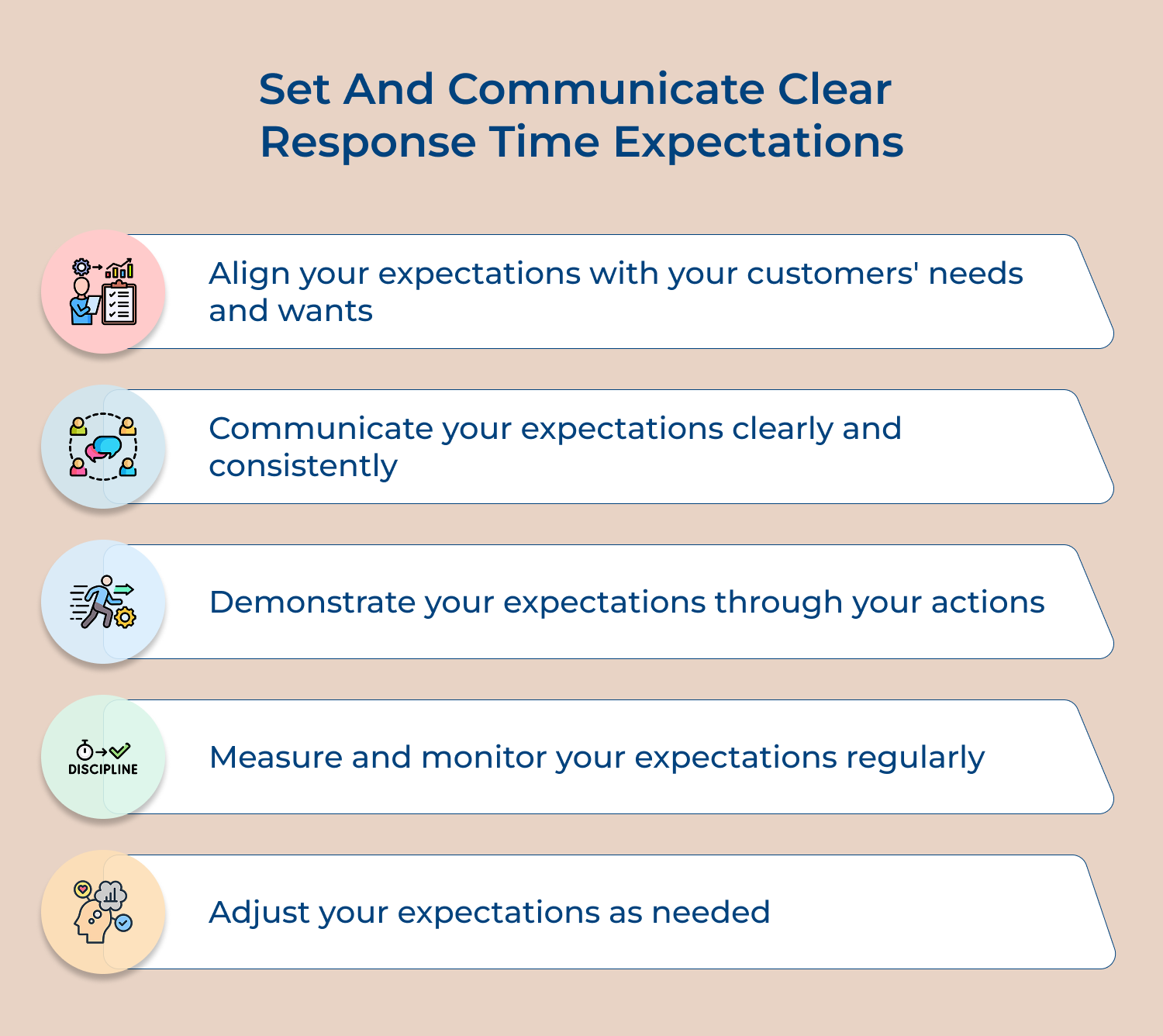
Setting clear response time goals means defining how quickly your team should respond on each support channel. This creates consistency and helps customers know what to expect when they reach out.
Clear targets build trust and reduce frustration because customers feel prioritized. When goals are realistic, teams stay focused and deliver more reliable service.
You can set standards like replying to live chat within 30 seconds or emails within an hour. Share these expectations with your team, track performance regularly and adjust goals as needed to keep improving speed as well as overall customer experience.
Tips:
Using automation for common issues means letting tools like chatbots or automated responses handle routine questions. This speeds up support, reduces wait times and takes repetitive tasks off your agents’ plates.
Automation can manage high volumes of simple requests instantly, so human agents can focus on more complex problems. It improves efficiency, keeps customers from waiting and ensures quick, consistent answers for basic inquiries.
You can set up chatbots to respond to FAQs or use automated routing systems to send tickets to the right team. This keeps your support process smooth and helps agents spend their time where it matters most.
Actionable Tips:
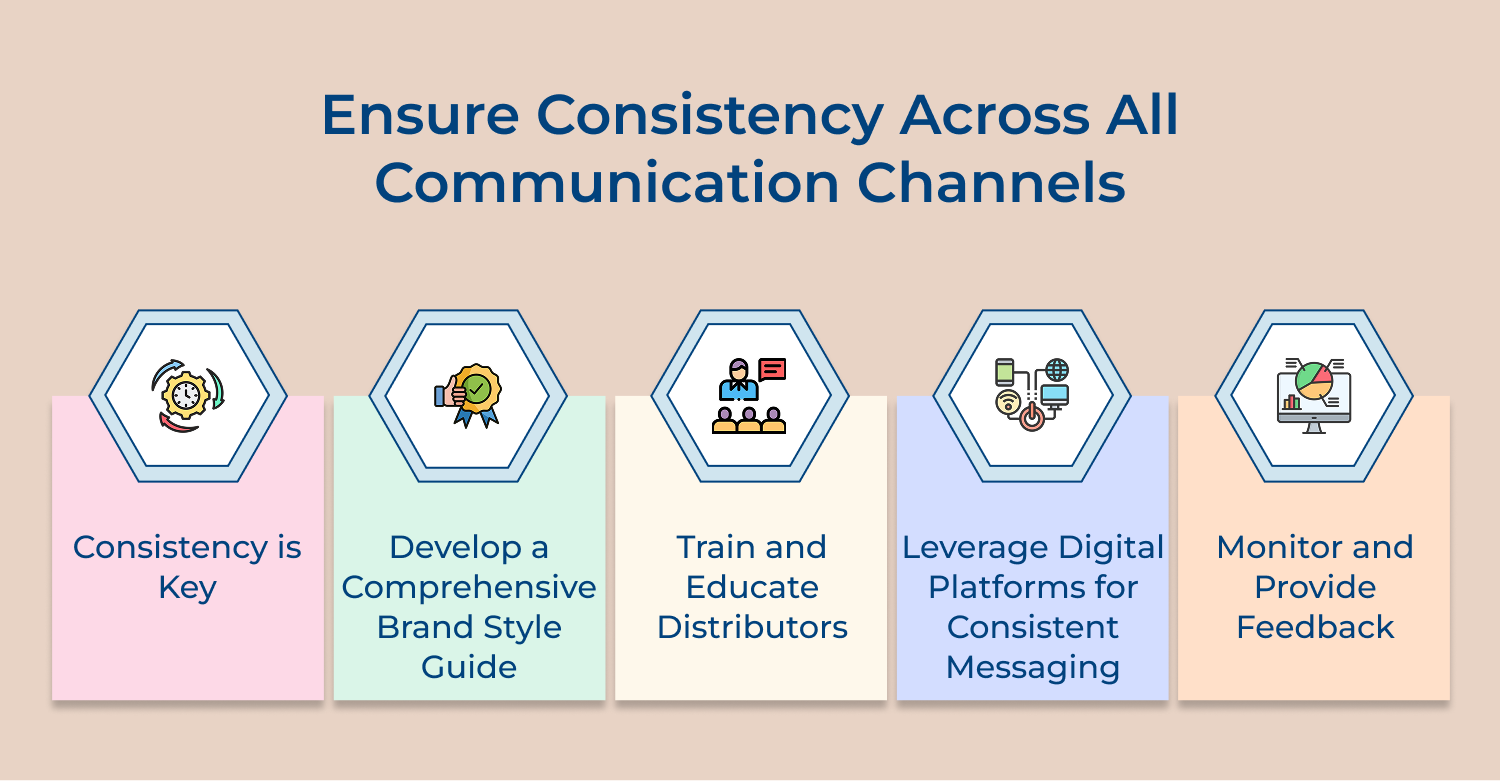
Ensuring consistency across channels means providing the same level of service and delivering a uniform brand experience, regardless of which platform customers use to contact support.
Customers expect a consistent experience, whether they’re chatting on your website, messaging on social media, or calling on the phone. Inconsistent responses or service quality can lead to confusion and frustration, harming customer trust as well as loyalty.
Standardize support processes and communication guidelines across all channels to ensure that agents provide consistent support. Regularly monitor each channel to ensure the quality of service remains the same, no matter the platform used.
Tips:
Prioritizing urgent issues means quickly identifying problems that need immediate attention and resolving them before they escalate. This keeps customers calm, protects your brand reputation and prevents small issues from turning into bigger frustrations.
Urgent cases require fast action to maintain trust and satisfaction. When you address them first, you show customers that their most critical concerns truly matter.
Set up a priority system in your support software to flag high-urgency tickets. Train agents to assess severity, escalate when needed and route critical issues to the right teams for faster resolution.
Actionable Tips:
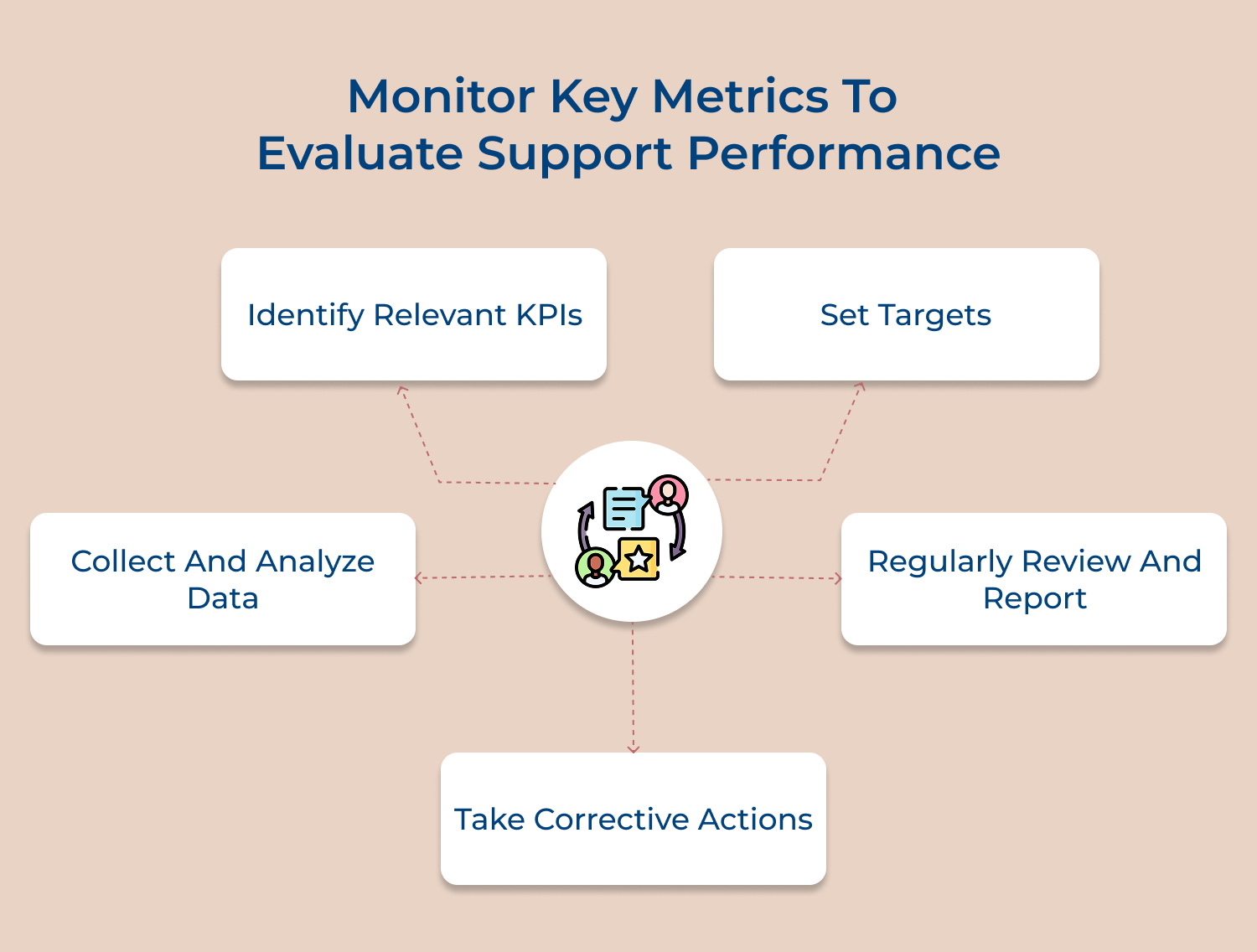
Monitoring and measuring performance means tracking metrics such as response times, resolution times as well as customer satisfaction scores to assess how well your real-time customer service is functioning.
Regular performance monitoring helps identify areas for improvement and ensures that support teams are meeting expectations. It allows businesses to make data-driven decisions that improve customer satisfaction and service quality over time.
Use customer service analytics tools to track response times, resolution times and customer feedback. Regularly review these metrics to identify trends and adjust your strategy, ensuring that customer service standards are consistently met.
Actionable Tips:
Providing self-service options means offering customers the ability to resolve issues independently through resources like FAQs, knowledge bases and instructional videos.
Self-service options allow customers to find solutions quickly without waiting for agent assistance. This improves efficiency, reduces workload on support teams and provides customers with a more convenient, on-demand support experience.
Create a comprehensive knowledge base or FAQ section on your website and ensure it’s easy to navigate. Include common troubleshooting steps, how-to guides and video tutorials to empower customers to solve problems on their own.
Tips:
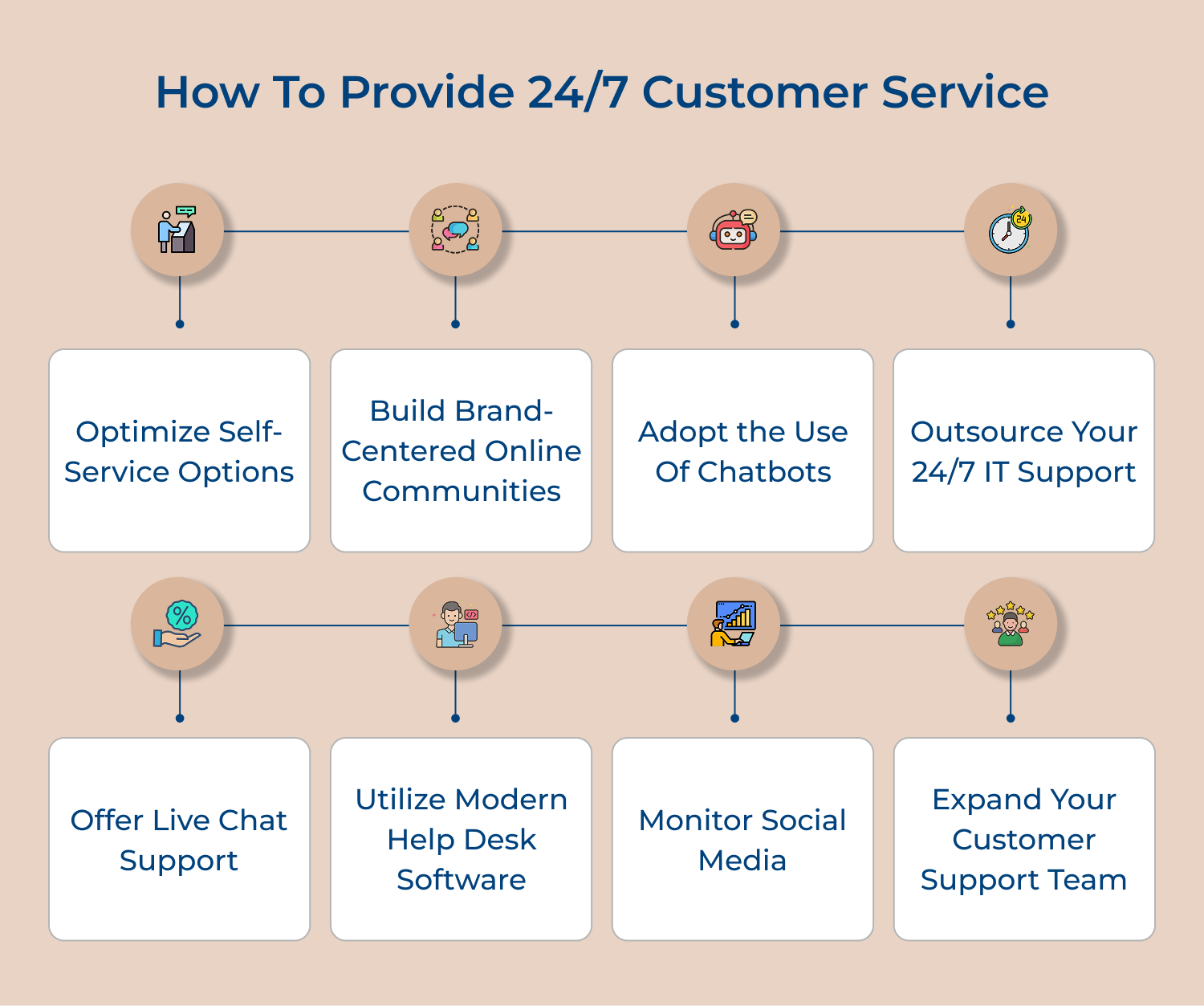
Being available 24/7 means providing round-the-clock support so customers can get help anytime, whether they’re in another time zone or dealing with an urgent issue after hours. This constant availability reassures customers that they’ll never be left waiting.
Customers appreciate support that fits their schedule, not the other way around. Offering 24/7 help boosts satisfaction, builds loyalty and ensures important issues are handled promptly.
Use chatbots or automated responses to cover after-hours inquiries and schedule agents through flexible shifts or outsourcing for live support. This ensures customers always have someone ready to assist them.
Tips:
Delivering great real-time support is all about being fast, clear and genuinely helpful when customers need you most. These best practices will make sure you win in your game:
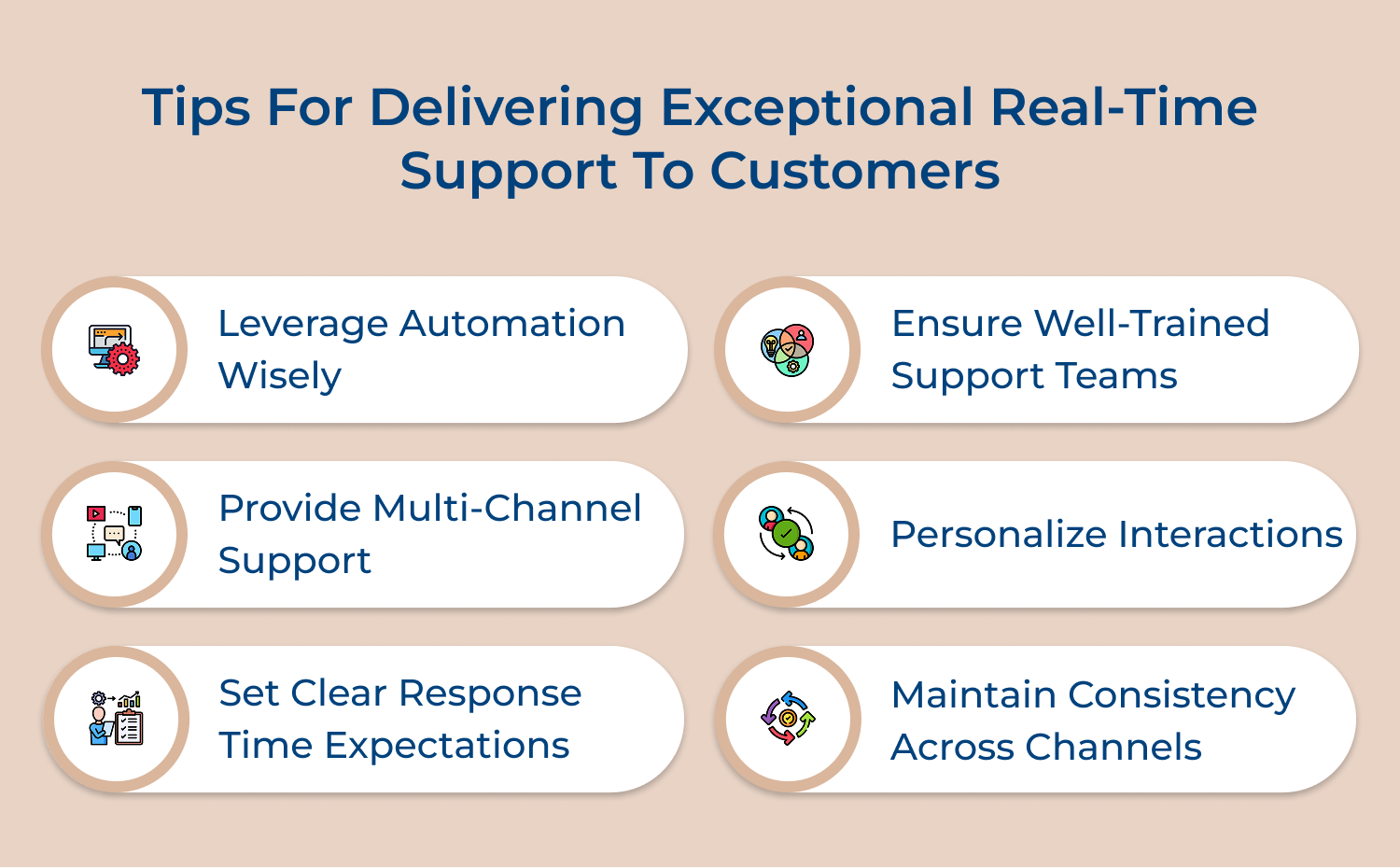
1. Leverage Automation Wisely
Use chatbots and automated responses to quickly address common queries. Automation handles routine requests efficiently, allowing human agents to focus on more complex issues. This ensures faster support without sacrificing quality.
2. Provide Multi-Channel Support
Offer real-time support across various platforms such as live chat, social media platforms and messaging apps. Customers should be able to contact you through their preferred channels, ensuring convenience and accessibility at all times.
3. Set Clear Response Time Expectations
Be transparent with customers about expected response times. Display estimated wait times or let them know how long it will take to resolve an issue. This helps customers feel informed and valued during the process.
4. Ensure Well-Trained Support Teams
Train your support agents thoroughly in both product knowledge and communication skills. Well-prepared agents can offer accurate, efficient solutions. This builds customer confidence while enhancing their overall experience.
5. Personalize Interactions
Address customers by name and refer to their previous interactions. Personalizing responses makes customers feel valued and strengthens their connection with your brand, leading to a more positive support experience.
6. Maintain Consistency Across Channels
Make sure the support experience remains consistent across all communication channels. Customers should receive the same quality of service whether they are using live chat, messaging on social media, or talking to an agent on the phone.
Real-time customer service plays a crucial role in meeting the high expectations of today’s consumers. Offering fast and efficient support across multiple channels leads to improved customer satisfaction as well as loyalty.
When businesses integrate the right technologies and strategies, they create seamless customer experiences. Real-time support not only resolves issues quickly but also strengthens customer relationships, paving the way for long-term success and growth in an increasingly competitive, customer-driven market.

How can real-time customer service improve customer satisfaction?
Real-time customer service addresses customer concerns immediately, reducing frustration and wait times. Quick and efficient responses lead to higher satisfaction as customers feel heard as well as valued, which strengthens their relationship with the brand.
What technologies enable real-time customer service?
Technologies like live chat software, AI-powered chatbots and CRM systems enable real-time support. These tools allow businesses to manage and respond to customer inquiries instantly, improving overall service efficiency.
How can businesses maintain quality in real-time support?
Businesses can maintain quality by training support teams effectively, using automated systems for routine queries and monitoring customer feedback regularly. Balancing technology and personalized support ensures high-quality customer experiences.
What are the challenges of providing real-time customer service?
Some challenges include handling high volumes of customer inquiries, maintaining response times during peak hours, while ensuring consistent service quality across channels. Businesses may also struggle to integrate various tools and technologies effectively.
How do businesses measure the success of real-time customer service?
Success can be measured through metrics like response time, resolution time, customer satisfaction scores, Net Promoter Score (NPS) and customer feedback. Monitoring these helps businesses improve service delivery as well as customer experiences.
Can real-time customer service be automated?
Yes, real-time customer service can be automated using AI-powered chatbots and automated systems for frequently asked questions. While automation speeds up responses, it should be complemented with human support for complex or personalized inquiries.
 https://omni24.io/wp-content/uploads/2026/08/Omnichannel-Chatbots.png
1256
2400
Tushar Joshi
https://omni24.io/wp-content/uploads/2023/04/Omni-Logo-1.svg
Tushar Joshi2026-08-13 04:43:302026-08-24 09:02:01How Omnichannel Chatbots Improve Your Customer Experience
https://omni24.io/wp-content/uploads/2026/08/Omnichannel-Chatbots.png
1256
2400
Tushar Joshi
https://omni24.io/wp-content/uploads/2023/04/Omni-Logo-1.svg
Tushar Joshi2026-08-13 04:43:302026-08-24 09:02:01How Omnichannel Chatbots Improve Your Customer Experience https://omni24.io/wp-content/uploads/2026/08/Ecommerce-Chatbots-1.png
1256
2400
Tushar Joshi
https://omni24.io/wp-content/uploads/2023/04/Omni-Logo-1.svg
Tushar Joshi2026-08-12 03:57:552026-08-24 09:03:22Ecommerce Chatbots: What are They and Their Use Cases
https://omni24.io/wp-content/uploads/2026/08/Ecommerce-Chatbots-1.png
1256
2400
Tushar Joshi
https://omni24.io/wp-content/uploads/2023/04/Omni-Logo-1.svg
Tushar Joshi2026-08-12 03:57:552026-08-24 09:03:22Ecommerce Chatbots: What are They and Their Use Cases https://omni24.io/wp-content/uploads/2026/08/Omnichannel-Ecommerce.png
1256
2400
Tushar Joshi
https://omni24.io/wp-content/uploads/2023/04/Omni-Logo-1.svg
Tushar Joshi2026-08-11 04:50:362026-08-24 09:00:45How to Create an Omnichannel Ecommerce Strategy: 7 Best Ways
https://omni24.io/wp-content/uploads/2026/08/Omnichannel-Ecommerce.png
1256
2400
Tushar Joshi
https://omni24.io/wp-content/uploads/2023/04/Omni-Logo-1.svg
Tushar Joshi2026-08-11 04:50:362026-08-24 09:00:45How to Create an Omnichannel Ecommerce Strategy: 7 Best Ways
Whether it’s about acquire, engage or support – Omni24 covers all your customer engagement needs in one complete platform.

Copyright ©2026 Veemo All rights reserved.
CA, Los Angeles, Hall Ave, 19011