What is User Feedback and How to Collect it?
Have you ever wanted to ask users what they think of your website, why they behave as they do or why they don’t convert? User feedback can reveal all.

Have you ever wanted to ask users what they think of your website, why they behave as they do or why they don’t convert? User feedback can reveal all.
The voice of the user reigns supreme in the digital ecosystem. But how can businesses truly tune in to this valuable chorus of opinions, experiences, and insights?
Only one out of every 26 customers is likely to bring up their complaints. The other 25 customers will simply take their business elsewhere without a word. It means that it is important that you let a customer know they have a voice and that you will listen.
Enter user feedback: the golden key to unlocking customer satisfaction and driving product evolution. It’s more than just a suggestion box; it’s a powerful tool that can reshape your entire business strategy.
Let us explore its transformative potential, uncover the secrets to gathering it effectively and reveal how it can be the catalyst for innovation in your organization.
User feedback is defined as the information, opinions, or insights provided by users about their experience with a product/service/solution. It encompasses both qualitative and quantitative data collected through various methods. The valuable input reflects user’s perceptions, preferences and pain points, offering organizations crucial insights into how their offerings are received and used in real-world scenarios.
The importance of user feedback cannot be overstated. It serves as a direct line of communication between users and developers or service providers, enabling continuous improvement and innovation. By leveraging user feedback, businesses can identify areas for enhancement, and align their products or services closely with user needs. The user-centric approach leads to increased customer satisfaction.
Key objectives:
User feedback is a crucial driver of product success, offering invaluable insights that shape development, improve experience and encourage customer loyalty.
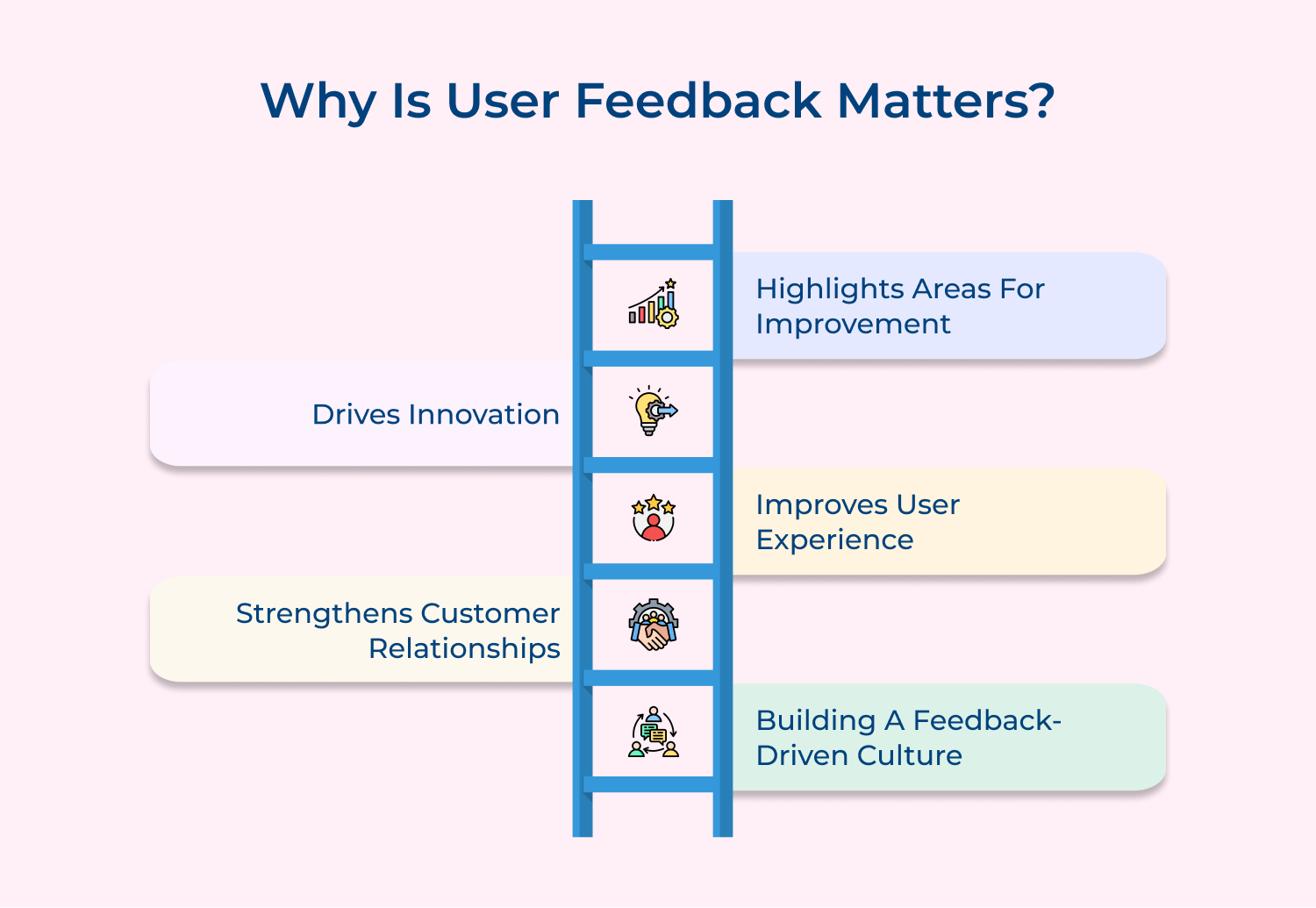
User feedback serves as a direct line to understanding where your product or service falls short. It reveals pain points, usability issues, and features that may not be meeting user expectations. The information is invaluable for prioritizing improvements and allocating resources effectively. By addressing these identified areas, companies can significantly enhance their offerings and stay competitive in the market.
Feedback often contains nuggets of inspiration that can spark innovative ideas. Users may suggest new features or use cases that the development team hadn’t considered. The outside perspective can lead to breakthrough improvements or entirely new product lines. By actively listening to and analyzing user feedback, companies can stay ahead of market trends and continuously evolve their offerings to meet changing user needs.
At its core, user feedback is about enhancing the overall user experience. It provides insights into how users interact with your product, what they find intuitive, and where they struggle. The information is crucial for refining user interfaces, streamlining workflows and creating more intuitive designs. A better user experience leads to higher satisfaction, increased usage and ultimately, greater user retention.
Actively seeking and responding to feedback shows users that their opinions are valued. The open communication encourages a sense of partnership between the company and its customers. When users see their suggestions implemented or their concerns addressed, it builds trust and loyalty. The strengthened relationship can lead to increased customer retention, positive word-of-mouth marketing and a more engaged user base.
Embracing user feedback goes beyond just collecting and analyzing data. It involves creating a company culture that values and acts on user input. The mindset encourages teams across the organization to be more user-centric in their approach. It promotes collaboration between departments, aligns everyone towards common user-driven goals and encourages a continuous improvement mentality.
Discover effective methods for gathering user feedback, essential for improving products, services and customer experiences to drive business success.
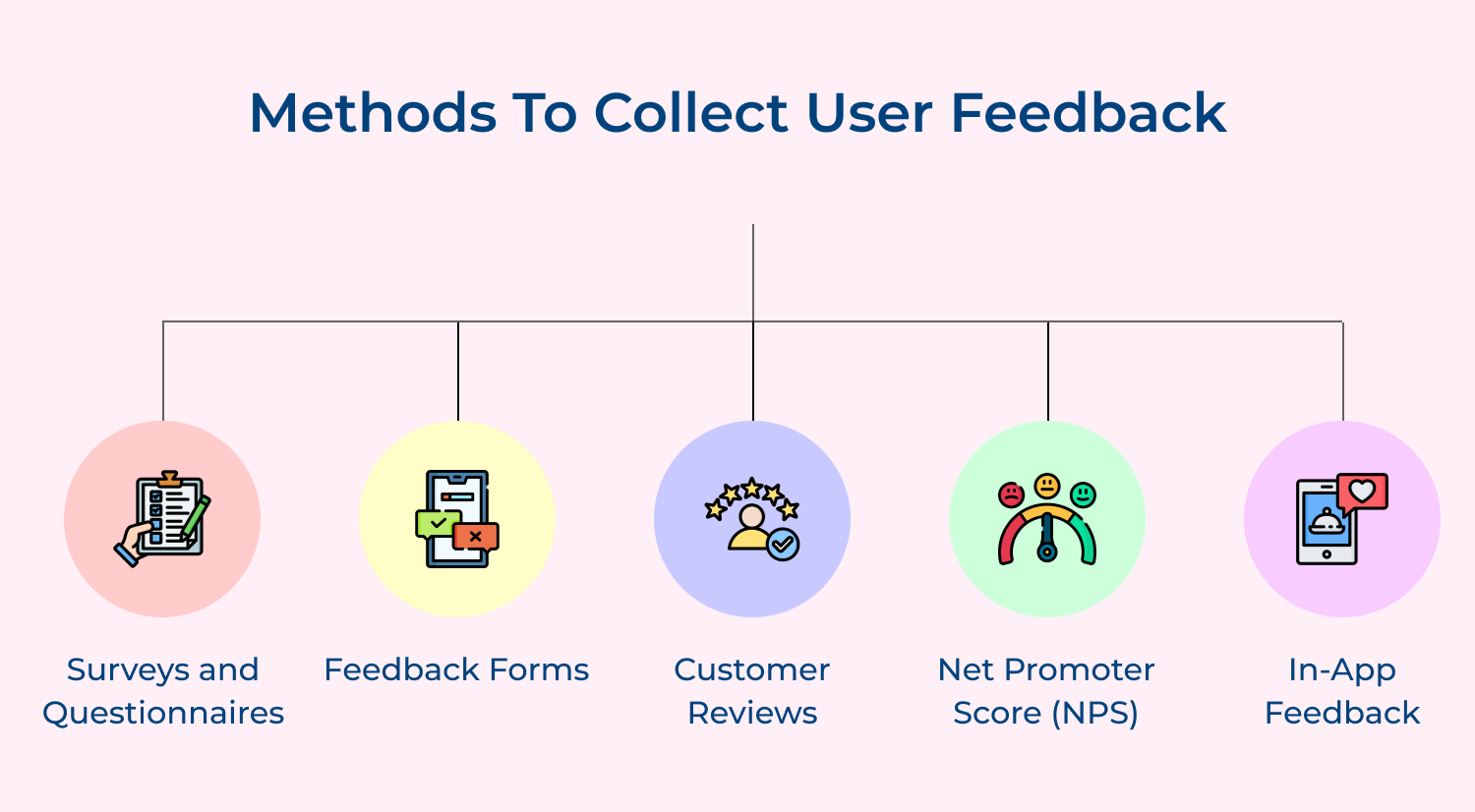
Surveys and questionnaires provide structured insights into user opinions and experiences.
83% of all consumers had completed at least one survey in the past year. Out of those who completed more than one, most of them had completed several surveys within a short period.
Surveys help gather quantitative and qualitative data, enabling businesses to understand customer needs, measure satisfaction and identify areas for improvement.
Analyze survey results to identify trends, pain points and preferences. Use this data to prioritize changes, develop new features and tailor marketing strategies to better meet user expectations and enhance overall satisfaction.
Pro Tips
Feedback forms allow users to provide input on their experience in a structured manner. They are crucial for capturing detailed, specific feedback and identifying areas where immediate improvements are needed.
Review feedback from submissions to pinpoint issues, track recurring problems, and gather suggestions. Use this information to make targeted improvements and address user concerns effectively.
Pro Tips
Customer reviews offer valuable insights into user experiences and satisfaction levels. They help identify strengths and weaknesses in products or services and influence potential customers’ decisions.
66% of customers stated that they’re more likely to trust a brand with many reviews.
Monitor and analyze reviews to understand common issues/pain points at the same time areas for improvement. Use positive feedback to highlight strengths and address negative reviews to improve product quality and customer service.
Pro Tips
NPS measures customer loyalty and satisfaction by asking how likely users are to recommend your product or service. It provides a clear metric for gauging overall customer sentiment and identifying promoters and detractors.
Use NPS scores to track customer loyalty over time and identify areas needing improvement. Analyze feedback from detractors to address issues and leverage positive feedback to enhance customer retention strategies.
Pro Tips
In-app feedback allows users to provide immediate, contextual input while using your product. It captures real-time experiences and issues, helping to identify and resolve problems quickly.
Review in-app feedback to understand user pain points and areas where they encounter difficulties. Use this information to make real-time improvements, enhance user experience, and refine app features.
Pro Tips
Several tools are designed to streamline the collection, analysis and utilization of user feedback. Here’s a comprehensive look at the five best user feedback software:
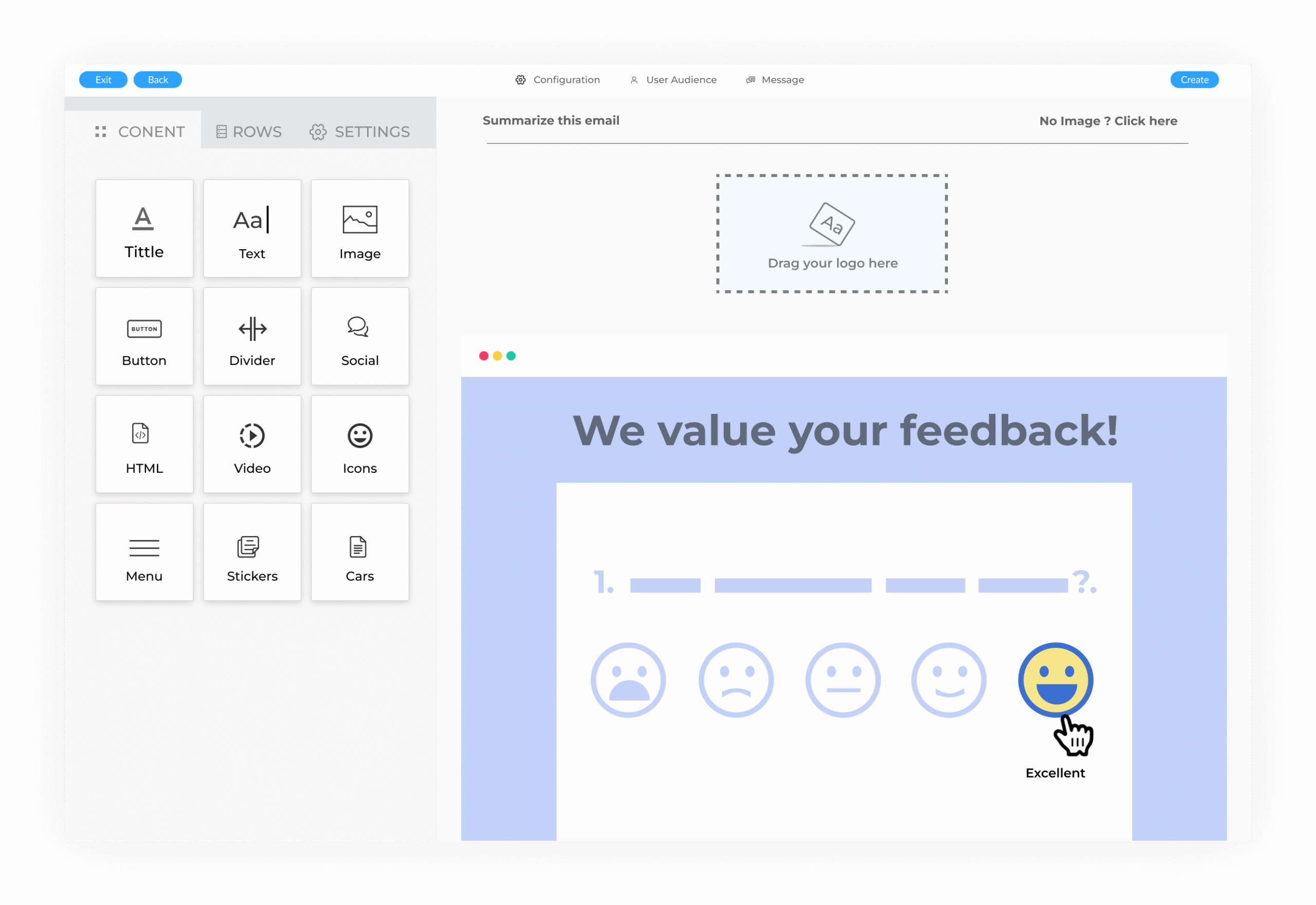
Omni24 is an omnichannel customer experience software. The platform offers comprehensive feedback management that helps businesses collect, analyze, and act on user feedback. It’s particularly well-suited for all-size businesses looking to make data-driven decisions.
Key features:
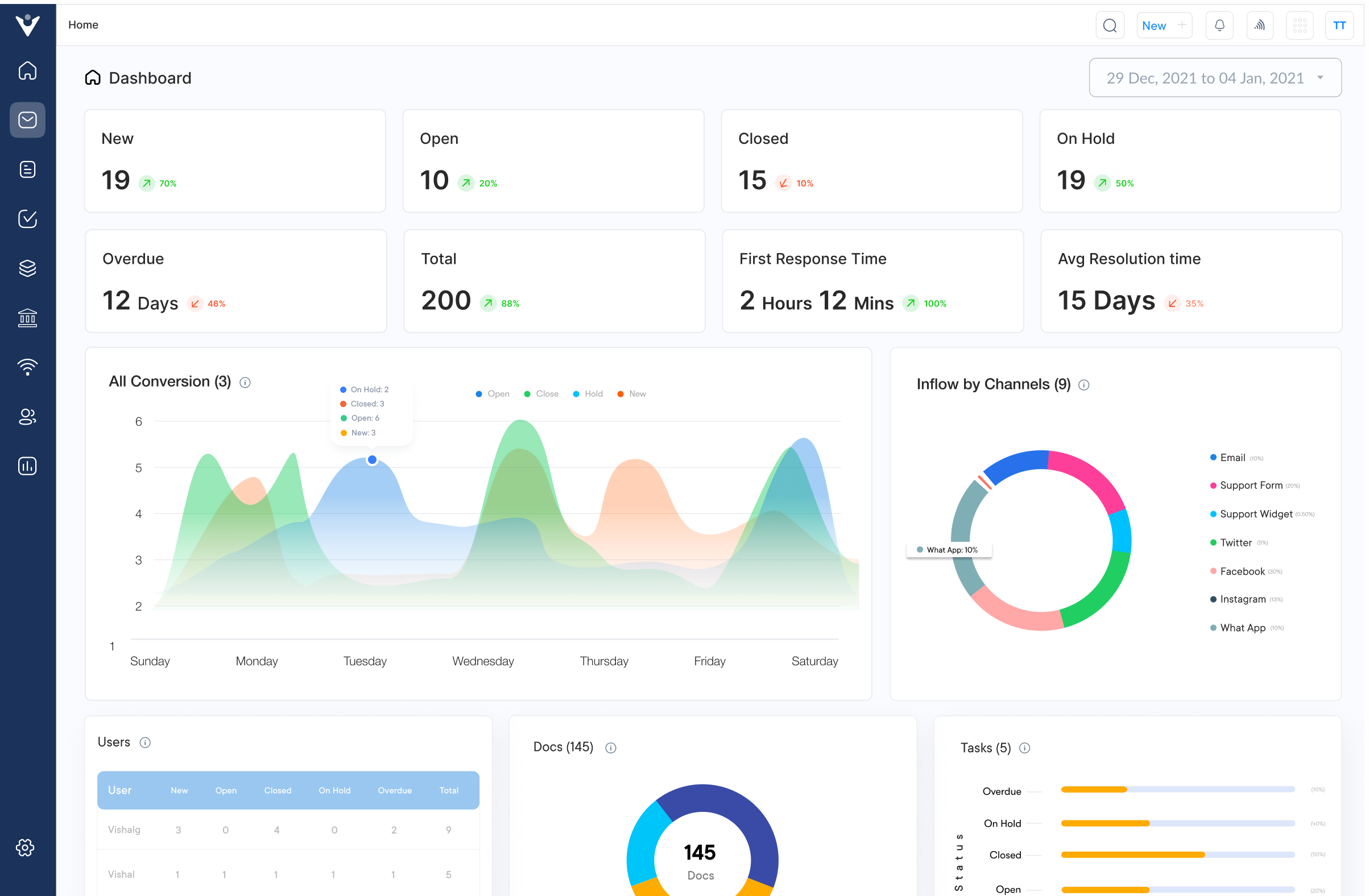
Veemo is a customer engagement platform that offers a suite of products Chat, Survey and Support. Veemo Survey combines feedback collection with user behavior analytics, providing a holistic view of the user experience. The tool is accessible for businesses of all sizes. It’s particularly useful for companies looking to combine user feedback with detailed behavioral insights.
Key Features:
Typeform is a versatile survey and form-building tool known for its beautiful, user-friendly designs that encourage higher completion rates. It offers a wide range of question types for versatile feedback collection and provides robust data export options for further analysis. This tool is ideal for companies looking to create engaging, in-depth surveys for user feedback.
Key features: Customizable design offers a wide range of templates and design options. Allows for dynamic surveys that change based on user responses. Integration capabilities connect with numerous third-party tools for data analysis and management.
Usabilla, now part of SurveyMonkey, specializes in collecting real-time, visual feedback from websites, apps and emails. Its visual feedback feature provides actionable insights and it’s relatively easy to implement with minimal coding required. This tool is particularly suitable for organizations looking for a comprehensive, multi-channel feedback solution.
Key features allow you to trigger surveys based on user behavior. Enables users to highlight specific areas of a web page or app when giving feedback. Collects emotional responses to enhance qualitative data. And Campaign Scheduling helps manage multiple feedback campaigns across different channels.
Canny is a user feedback tool designed to help product teams prioritize feature requests and bug reports. It helps reduce duplicate feature requests and facilitates better communication between product teams and users. This tool is particularly beneficial for product-focused companies looking to streamline feature requests and user feedback.
Key Features: Allows users to submit and vote on ideas. The software helps communicate product plans to users and enables teams to announce new features and updates. Keeps users informed about the progress of their requests.
User feedback is a crucial component of understanding customer experience and enhancing overall satisfaction. Here’s a look at the different types of user feedback and their significance:
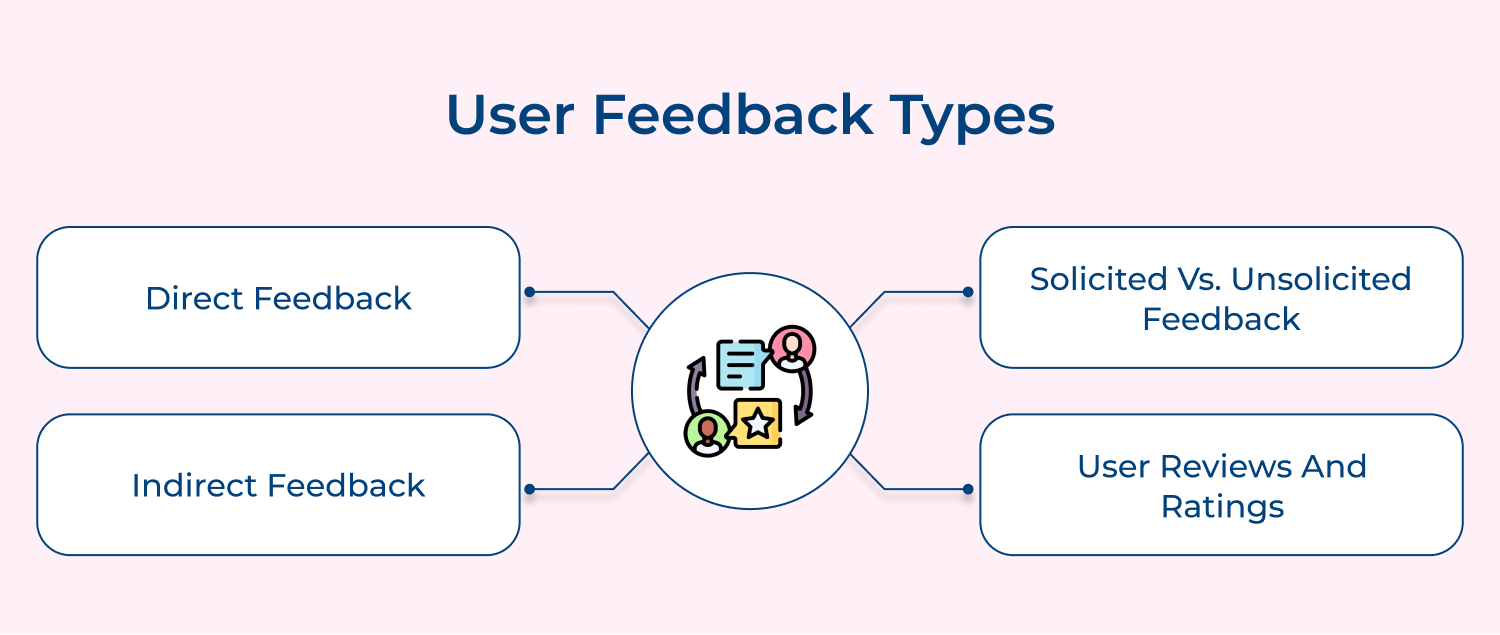
1. Surveys and questionnaires: They act as structured tools that can be distributed through email, embedded in websites, or presented within apps. Such type of feedback is valuable for collecting quantitative data on user satisfaction, preferences, and pain points. Well-designed surveys can provide actionable insights into customer opinions and guide product improvements.
2. Interviews and focus groups: Interviews involve one-on-one interactions where users provide detailed feedback on their experiences, while focus groups consist of moderated discussions with multiple users. Both methods offer qualitative insights into user attitudes, motivations and experiences. These in-depth interactions help uncover underlying issues and explore users’ thought processes.
3. Analytics: It acts as a tool to track user behavior and interactions with products or services. By analyzing metrics such as page views, click-through rates and usage patterns, businesses can infer user preferences and identify areas for improvement.
4. User behavior tracking: It includes heatmaps, session recordings, and funnel analysis, which provide insights into how users interact with a product. Heatmaps show where users click or hover, while session recordings capture their navigation paths. These tools help identify usability problems and optimize the user experience based on actual behavior.
5. Solicited feedback: Solicited feedback is actively requested by businesses through surveys, feedback forms, or direct outreach. It is typically structured and focused on specific areas of interest. It’s useful for obtaining targeted insights and measuring customer satisfaction with particular aspects of a product or service.
6. Unsolicited feedback: Unsolicited feedback comes from users spontaneously sharing their opinions without a direct prompt. It can occur through social media comments, online reviews, or customer service interactions. While less structured, unsolicited feedback can provide authentic and honest perspectives on user experiences and highlight issues that might not be captured through formal channels.
7. Online reviews: Reviews on platforms like Google, Yelp, or industry-specific sites offer valuable feedback on customer experiences. They often include detailed comments and ratings that can highlight strengths and areas for improvement.
8. App store ratings: For mobile applications, ratings and reviews on app stores provide insights into user satisfaction, feature requests and bugs. Monitoring and responding to these reviews can help address concerns and improve app performance.
Implementing effective user feedback practices is crucial for product improvement and customer satisfaction. Here are key strategies to optimize your feedback process.
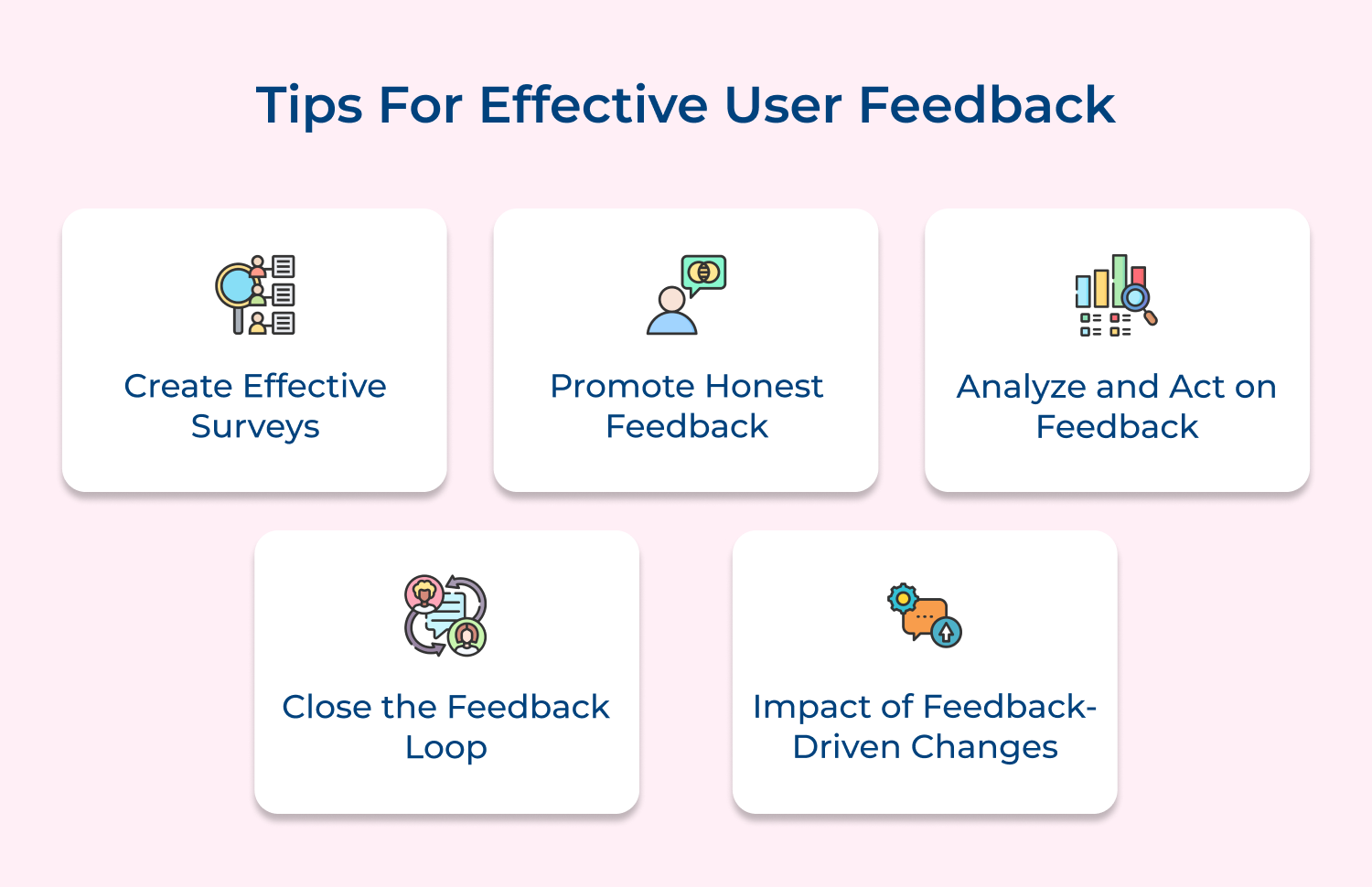
1. Create Effective Surveys
Crafting well-designed surveys is essential for gathering meaningful feedback. Keep surveys concise and focused to prevent survey fatigue. Use a mix of question types, including multiple choice, rating scales, and open-ended questions, to gather both quantitative and qualitative data.
Ensure questions are clear, unbiased, and directly related to your objectives. Consider the timing of your surveys – for instance, sending a satisfaction survey immediately after a customer service interaction or a feature usage survey after sufficient time for the user to experience the product.
2. Promote Honest Feedback
Encouraging honest, unfiltered feedback is crucial for gaining actionable insights. Create an environment where users feel comfortable sharing their true opinions, even if they’re negative.
Assure users that their feedback is anonymous when applicable and explain how their input will be used to improve the product or service. Avoid leading questions that might bias responses. Consider offering incentives for detailed feedback, but be cautious not to influence the content of the feedback itself.
3. Analyze and Act on Feedback
Collecting feedback is only the first step; the real value comes from analysis and action. Implement a systematic process for reviewing and categorizing feedback. Look for patterns and trends in the data, and prioritize issues based on their frequency.
Use both quantitative analysis for numerical data and qualitative analysis for open-ended responses. Involve cross-functional teams in the analysis process to gain diverse perspectives. Most importantly, create action plans based on the insights gained and allocate resources to implement necessary changes.
4. Close the Feedback Loop
Closing the feedback loop is critical for maintaining user engagement and trust. Acknowledge receipt of feedback promptly, even if it’s through an automated response. Keep users informed about how their feedback is being used – whether it’s influencing product roadmaps, being considered for future updates, or has led to immediate changes.
When significant changes are made based on user feedback, communicate this back to your user base. It not only shows that you value their input but also encourages continued engagement in the feedback process.
5. Measure the Impact of Feedback-Driven Changes
To validate the effectiveness of your feedback process, measure the impact of changes implemented based on user input. Track relevant metrics before and after implementing feedback-driven changes. It could include user satisfaction scores, feature adoption rates, customer retention, or other KPIs relevant to your specific goals.
Use A/B testing when possible to directly compare the impact of changes. Regularly review these metrics to ensure that feedback-driven changes are genuinely improving the user experience and contributing to business objectives.
User feedback is a valuable resource for any organization, but managing it effectively comes with its own set of challenges. Here are some common hurdles and strategies to overcome them:
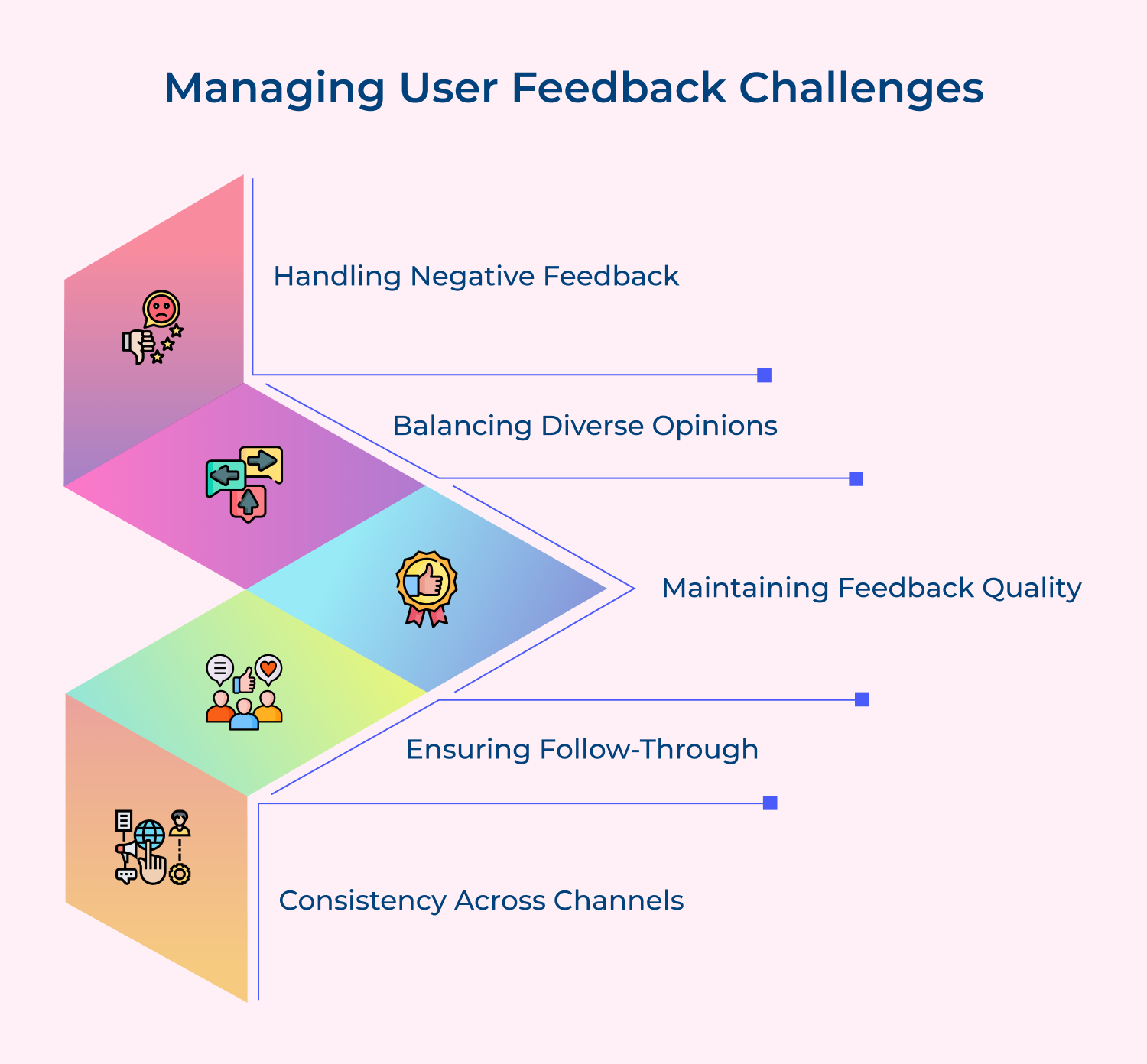
Challenge: Negative feedback can be discouraging and may sometimes feel personal or unfair. It often contains the most valuable insights for improvement.
How to handle:
Challenge: Users often have conflicting opinions about features or changes, making it difficult to decide which feedback to prioritize.
How to handle:
Challenge: As your user base grows, maintaining the quality and relevance of feedback can become increasingly difficult.
How to handle:
Challenge: With a constant influx of feedback, it’s easy to collect information without taking action, leading to a backlog of unaddressed issues.
How to handle:
Challenge: Users provide feedback through various channels (e.g., email, social media, in-app), making it difficult to maintain a consistent approach to feedback management.
How to handle:
User feedback is a powerful driver of change and innovation in many industries. Real-life examples illustrate how businesses have successfully harnessed feedback to refine their products, improve services and enhance customer experiences.
1. Starbucks and the “My Starbucks Idea” Platform
Overview: Starbucks launched “My Starbucks Idea,” a platform where customers could submit and vote on ideas for new products and improvements.
Impact: The initiative led to the creation of several popular products and changes, including the introduction of the Starbucks Rewards program and the “Try Before You Buy” sampling initiative. The platform allowed Starbucks to tap directly into customer preferences and innovate based on real consumer input. By incorporating popular ideas, Starbucks not only enhanced customer satisfaction but also demonstrated its commitment to listening to its patrons.
2. Netflix’s Content Recommendations
Overview: Netflix uses sophisticated algorithms and user feedback to tailor its content recommendations. Users provide implicit feedback through their viewing habits and explicit feedback via ratings or reviews.
Impact: The recommendations engine is continually refined based on this feedback, which helps Netflix personalize viewing suggestions and improve user engagement. The personalized approach has been a significant factor in Netflix’s success, as it ensures that users are presented with content that aligns closely with their interests, leading to increased user satisfaction and retention.
3. Amazon’s Customer Reviews
Overview: Amazon’s customer review system allows users to leave feedback on products they have purchased. The feedback is crucial in shaping purchasing decisions for other customers.
Impact: The reviews often drive significant changes in product features and quality. For instance, negative feedback about a product can prompt manufacturers to make improvements, while positive reviews can highlight successful features that should be emphasized or expanded. The system not only helps potential buyers make informed choices but also influences product development and inventory decisions based on customer preferences.
4. Airbnb’s User Experience Enhancements
Overview: Airbnb regularly collects feedback from both hosts and guests to improve its platform. Feedback is gathered through surveys, reviews, and direct communications.
Impact: User feedback has led to several key enhancements, including improved search functionalities, more accurate pricing tools and better support systems for both hosts or guests. For example, feedback about booking issues led to the introduction of the “Superhost” program, which recognizes and rewards top-performing hosts, thereby improving the overall quality of accommodations on the platform.
5. Microsoft’s Windows Insider Program
Overview: The Windows Insider Program invites users to test pre-release versions of Windows and provide feedback on their experiences.
Impact: The feedback loop allows Microsoft to identify plus fix bugs, refine features, and improve the overall user experience before the official release. For instance, feedback from the program helped shape the development of Windows 10, leading to the integration of features like the Start Menu and virtual desktops based on user preferences.
User feedback is essential for driving meaningful improvements and innovation. By actively incorporating feedback, businesses gain valuable insights that help refine products, enhance services and boost customer satisfaction. The continuous dialogue with users enables companies to address pain points, prioritize features and make data-driven decisions.
Embracing feedback encourages a customer-centric approach, strengthens relationships and ensures that offerings remain relevant. Leveraging user feedback is crucial for adapting to changing needs, achieving business success and maintaining a competitive edge in the marketplace.

Who is responsible for gathering user feedback?
Gathering user feedback is typically a collaborative effort involving multiple teams. Product managers often lead the initiative, working closely with UX researchers, customer support teams and marketing departments. Developers may also be involved in implementing feedback collection tools. Ultimately, it’s a company-wide responsibility to ensure customer voices are heard and acted upon.
How can user feedback improve product development?
User feedback drives product development by identifying pain points, revealing feature gaps, and validating assumptions. It helps prioritize improvements, uncovers unexpected use cases, and informs decision-making. Feedback ensures products align with user needs, enhancing satisfaction and adoption rates. It also reduces development risks by providing real-world insights, leading to more successful and user-centric products.
What are some common methods for gathering user feedback?
Common methods include surveys (online, email, in-app), interviews (one-on-one or focus groups), usability testing and analytics tracking. User feedback can also be gathered through social media monitoring, customer support interactions and product reviews. Beta testing, feature request forums and NPS (Net Promoter Score) surveys are also popular techniques for collecting valuable user insights.
How do you analyze and interpret user feedback?
Analyzing user feedback involves categorizing responses, identifying patterns and quantifying qualitative data. Use sentiment analysis to gauge overall satisfaction. Look for recurring themes in open-ended responses. Prioritize issues based on frequency and impact. Cross-reference feedback with user demographics and behavior data. Use statistical analysis for quantitative data and thematic analysis for qualitative insights.
What tools can be used for collecting user feedback?
Popular tools include SurveyMonkey, Typeform and Google Forms for surveys; UserTesting and Hotjar for usability testing and heatmaps; Intercom and Zendesk for in-app feedback; and UserVoice for feature requests. Analytics tools like Google Analytics provide usage data. Social listening tools like Mention or Hootsuite capture social media feedback. Specialized platforms like Qualtrics offer comprehensive feedback management solutions.
 https://omni24.io/wp-content/uploads/2026/09/Social-commerce-scaled.png
1340
2560
Webvision Solution
https://omni24.io/wp-content/uploads/2023/04/Omni-Logo-1.svg
Webvision Solution2026-10-23 12:18:272026-10-23 12:18:27What is Social Commerce and Why Does It Matter?
https://omni24.io/wp-content/uploads/2026/09/Social-commerce-scaled.png
1340
2560
Webvision Solution
https://omni24.io/wp-content/uploads/2023/04/Omni-Logo-1.svg
Webvision Solution2026-10-23 12:18:272026-10-23 12:18:27What is Social Commerce and Why Does It Matter? https://omni24.io/wp-content/uploads/2026/08/AI-Customer-Service-Agents.png
1256
2400
Webvision Solution
https://omni24.io/wp-content/uploads/2023/04/Omni-Logo-1.svg
Webvision Solution2026-09-21 04:48:512026-09-21 04:48:51How to Build an AI Customer Service Agents: 8 Key Steps
https://omni24.io/wp-content/uploads/2026/08/AI-Customer-Service-Agents.png
1256
2400
Webvision Solution
https://omni24.io/wp-content/uploads/2023/04/Omni-Logo-1.svg
Webvision Solution2026-09-21 04:48:512026-09-21 04:48:51How to Build an AI Customer Service Agents: 8 Key Steps https://omni24.io/wp-content/uploads/2026/08/Omnichannel-Conversational-AI.png
1256
2400
Tushar Joshi
https://omni24.io/wp-content/uploads/2023/04/Omni-Logo-1.svg
Tushar Joshi2026-09-16 03:51:072026-09-16 03:51:07How to Build Omnichannel Conversational AI Strategy
https://omni24.io/wp-content/uploads/2026/08/Omnichannel-Conversational-AI.png
1256
2400
Tushar Joshi
https://omni24.io/wp-content/uploads/2023/04/Omni-Logo-1.svg
Tushar Joshi2026-09-16 03:51:072026-09-16 03:51:07How to Build Omnichannel Conversational AI Strategy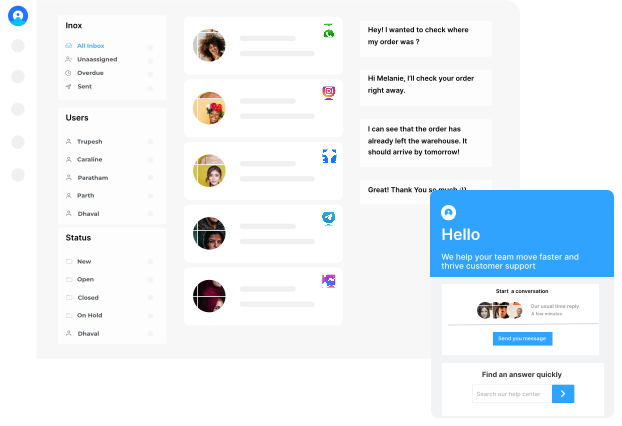
Whether it’s about acquire, engage or support – Omni24 covers all your customer engagement needs in one complete platform.

Copyright ©2026 Veemo All rights reserved.
CA, Los Angeles, Hall Ave, 19011