What is Customer Service Management & Why You Need It?
Customer service management delivers seamless support, efficient operations and data-driven decisions for customer satisfaction, revenue growth and strong brand reputation.

Customer service management delivers seamless support, efficient operations and data-driven decisions for customer satisfaction, revenue growth and strong brand reputation.
68% of customers are likely to make additional purchases if they receive excellent customer service. On the other hand, 78% of them will repeat the business despite the mistake when they receive exceptional customer service!
Customer service management involves implementing strategies to ensure that customers receive the best possible service, from the moment they first interact with a company to long after they make a purchase. Let’s take a closer look at what customer service management entails and why it’s crucial for creating a positive customer experience.
Customer service management involves the organization as well as coordination of all resources and activities surrounding customer-related issues. It includes providing customer support, handling customer complaints, managing customer feedback and maintaining relationships with customers.
Effective CSM directly influences customer retention, brand reputation, and ultimately, the company’s bottom line. In an era where customers have numerous alternatives and can easily share their experiences on social media and review platforms, exceptional customer service has become a key differentiator.
Core Principles:
Focusing on providing a positive customer experience can reap numerous benefits from increased revenue to improved brand reputation.
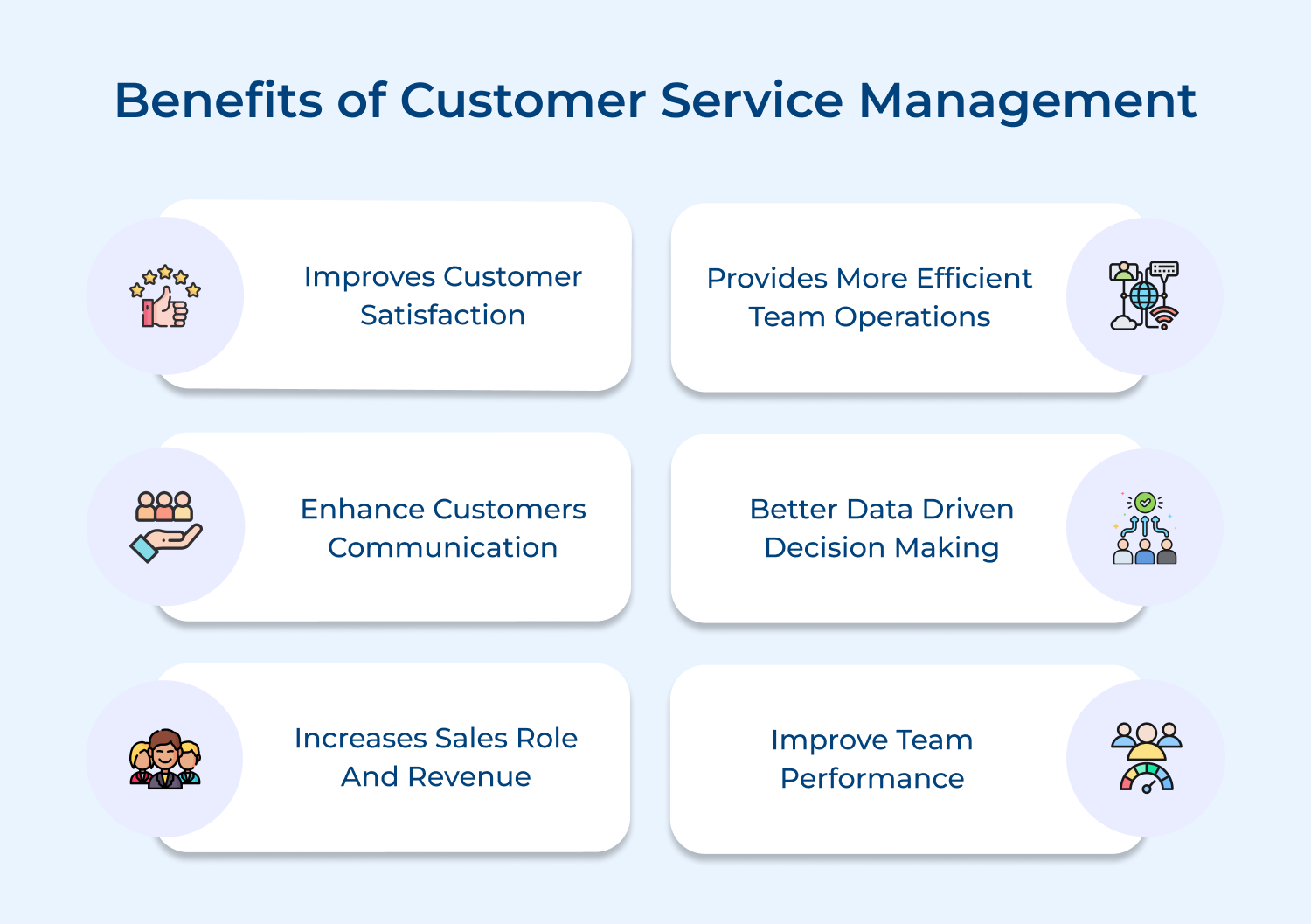
One of the primary functions of customer service management software is to address customer inquiries quickly and efficiently. As a result, customers receive timely responses to their issues leading to improved satisfaction levels. Feeling unappreciated is the number reason for customers to switch between brands. Happy customers are more likely to remain loyal and even recommend your business to others.
Customer service management software streamlines your team’s operations by automating certain tasks. The software enables customer service professionals to prioritize issues, allocate tasks and collaborate with colleagues. As a result, teams work more efficiently increasing their productivity.
Excellent communication with customers is key to delivering high-quality service. Customer service management software enables reps to communicate with customers across multiple channels—email, phone, social media or chat. The capability allows the team to be proactive, providing the best possible customer service experience.
Customer service management software captures valuable data regarding customer inquiries, complaints and feedback. With the information the management team can analyze trends, identify areas for improvement or make informed decisions that benefit the company as well as customers.
Enhanced customer experience often leads to repeat business and increased sales. Customers that receive excellent service are more likely to make additional purchases, leading to a boost in revenue. Customer service management software helps track customer interactions, allowing sales reps to identify upsell and cross-selling opportunities.
Customer service management software allows managers to monitor team performance and adherence to established policies or procedures. Managers can track customer satisfaction ratings for individual reps and use that information to improve their reps’ performance.
Automating tasks and streamlining operations enables customer service management software to significantly reduce operational costs. It also helps to enhance staff productivity, minimizes errors and improves response time resulting in fewer operational needs.
Building effective customer service processes is not a one-time effort, but rather an ongoing process that needs to be reviewed and refined regularly.
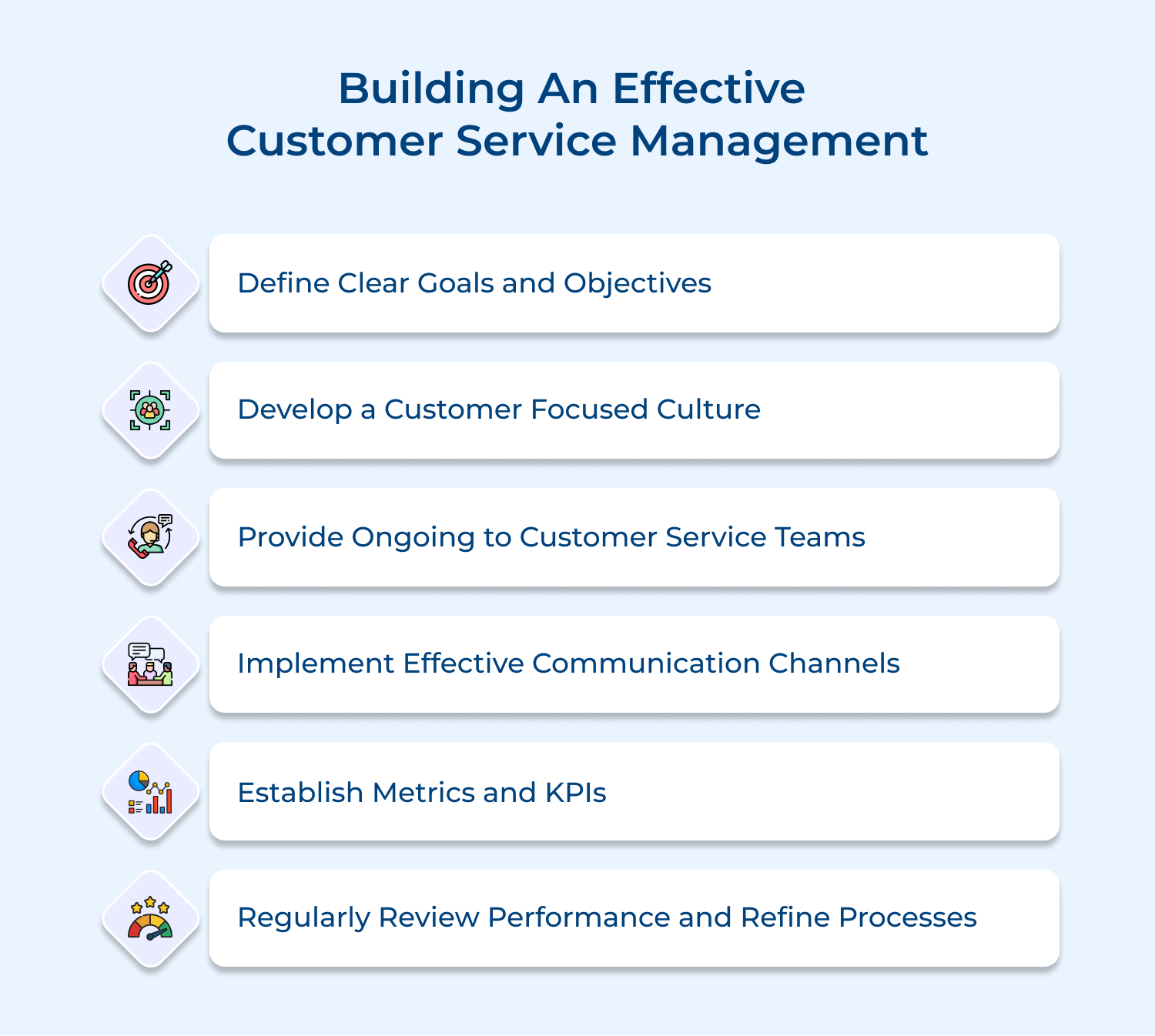
Well defined objectives will help your team understand their roles, responsibilities and expectations. Clear goals also empower in measuring the success of the customer service process and identifying areas for improvement.
Here are some best practices to consider when defining clear goals and objectives:
Leadership should build a customer-focused culture throughout the organization. It means that everyone in the organization should understand the importance of customer service and how it impacts the business. The customer-focused culture should be ingrained in the organization’s values and employees should be trained or rewarded for delivering excellent customer service.
Below are some best practices to help develop a customer-focused culture:
Ongoing training is essential for customer service teams to stay up-to-date with the latest trends, technologies, and techniques in customer service management. Regular training sessions help improve skills, increase knowledge and build confidence among customer service representatives. Continued training also helps employees understand how their performance impacts the overall business goals.
Below are some best practices to help in training service teams:
Effective communication channels are essential to building strong relationships with customers. Implementing channels such as phone, email, chat and social media can help improve response times as well as overall customer satisfaction. Businesses should also closely monitor these channels and respond promptly to all customer concerns.
Below are some best practices to help implement effective communication:
Measuring the effectiveness of the customer service management process is crucial. It helps businesses identify areas for improvement, optimize processes and track performance. Establishing metrics and key performance indicators (KPIs) such as response time as well as first contact resolution rate are crucial in measuring the effectiveness of the customer service process.
Below are some best practices to measure performance of support management:
Resolution time: Monitor how long it takes to resolve customer issues. The metric measures the effectiveness and speed of your customer service efforts. Strive to minimize resolution times without compromising the quality of the solutions provided.
Customer retention rate: Measures how successful your customer service efforts are in retaining customers. Calculate the percentage of customers who continue to do business with your company over a specific timeframe. A high retention rate indicates effective customer service management
Customer service management processes are not static. They need to be reviewed as well as refined regularly to keep up with changing customer needs and industry trends. Regularly reviewing performance, soliciting feedback from customers and using data to make informed decisions can help businesses stay ahead while also providing excellent customer service.
Below are some best practices to help review and refine service processes:
Customer service management is crucial for any business that wants to enhance its customer experience.
1. Streamlining Customer Support
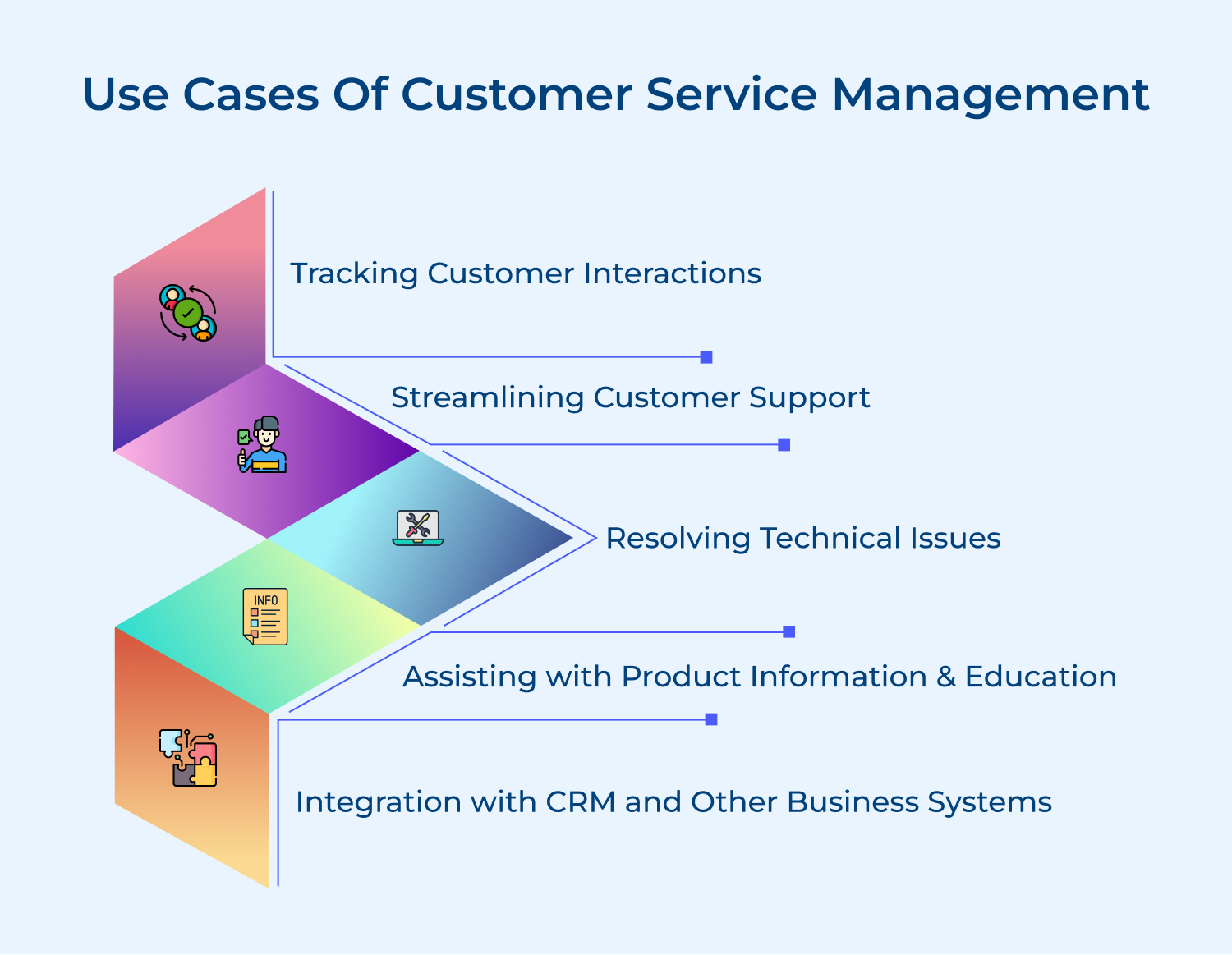
CSM software allows businesses to centralize and manage customer support requests efficiently. It enables customer service agents to easily track and prioritize support tickets. It ensures that each customer query is addressed promptly.
Streamlining customer support processes provides timely resolutions and enhances customer satisfaction. It also improves efficiency of the employees ensuring an increase in the overall productivity.
2. Resolving Technical Issues
Many customer inquiries involve technical issues with products or services. Whether it’s a malfunctioning device, a software bug or a connectivity problem, prompt resolution is vital.
CSM teams provide technical support to troubleshoot problems and guide customers through the issue resolution process, ensuring that customer frustrations are minimized while their problems are resolved satisfactorily.
3. Assisting with Product Information and Education
One of the key responsibilities of CSM is to educate customers about the company’s products or services. Teams assist customers in understanding product features, capabilities and benefits.
CSM provides product demos, user guides and tutorials to help customers make the most of their purchases. Empowering customers with knowledge enhances overall experience as well as loyalty.
4. Integration with CRM and Other Business Systems
CSM software often integrates with Customer Relationship Management (CRM) systems and other business tools. The integration allows for the seamless flow of customer data and information between various departments within an organization.
Having a holistic view of customer interactions or data, businesses can provide consistent as well as personalized customer experiences, improving customer loyalty and retention.
5. Tracking Customer Interactions
CSM software enables businesses to track as well as manage customer interactions across different channels such as phone calls, emails, chatbots and social media.
The comprehensive view helps agents understand each customer’s history and previous interactions, which allows them to provide personalized as well as contextually relevant support. Efficient tracking of customer interactions also facilitates efficient team collaboration and ensures a seamless customer experience.
A good customer service management software should provide an end-to-end solution for managing customer support across multiple channels. Let’s help you find the right one here:
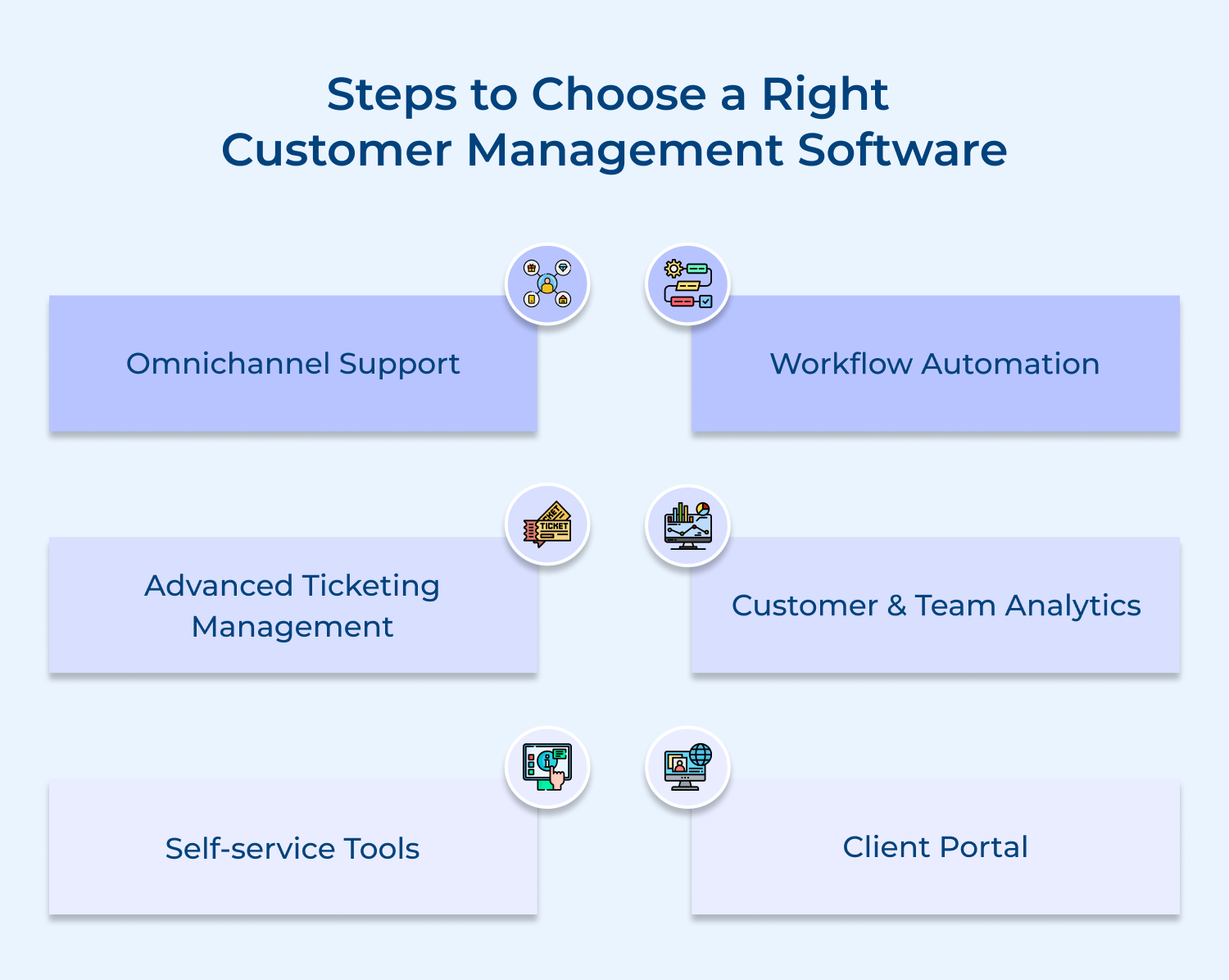
Customers today expect immediate support via multiple channels, including phone, email, chat, social, and self-service portals. A customer service management software with omnichannel support allows businesses to provide a consistent, seamless experience across all channels.
Key features:
An efficient ticketing management system is crucial to track and resolve customer issues efficiently. A good customer service management software should provide tools to manage, prioritize and assign tickets, track resolution times as well as automate follow-up reminders.
Key features:
Self-service portals can save time and reduce workload for customer support teams by allowing customers to find answers to their queries via a knowledge base, FAQs or community forums. A customer service management software should provide tools to manage self-service portals or integrate with existing ones.
Key features:
Automation can help streamline repetitive, time-consuming processes and improve efficiency. 81% of the customers use online chat support for communicating with the company. A customer service management software with workflow automation can automate responses to common queries, initiate follow-up actions and escalate issues to higher levels automatically.
Key features:
Analytics can provide insights into customer behavior and preferences, team performance as well as areas of improvement. A customer service management software with built-in analytics can track important metrics, generate reports or provide real-time insights into customer and team performance.
Key features:
A client portal is a secure platform that allows customers to access their data, manage payments, raise tickets and access support. A customer service management software with a client portal can provide a personalized, user-friendly experience for customers and improve customer satisfaction.
Key features:
Customer service plays a crucial role in building the reputation of a company. Here are some examples of how effective customer service management will help businesses improve their efficiency.
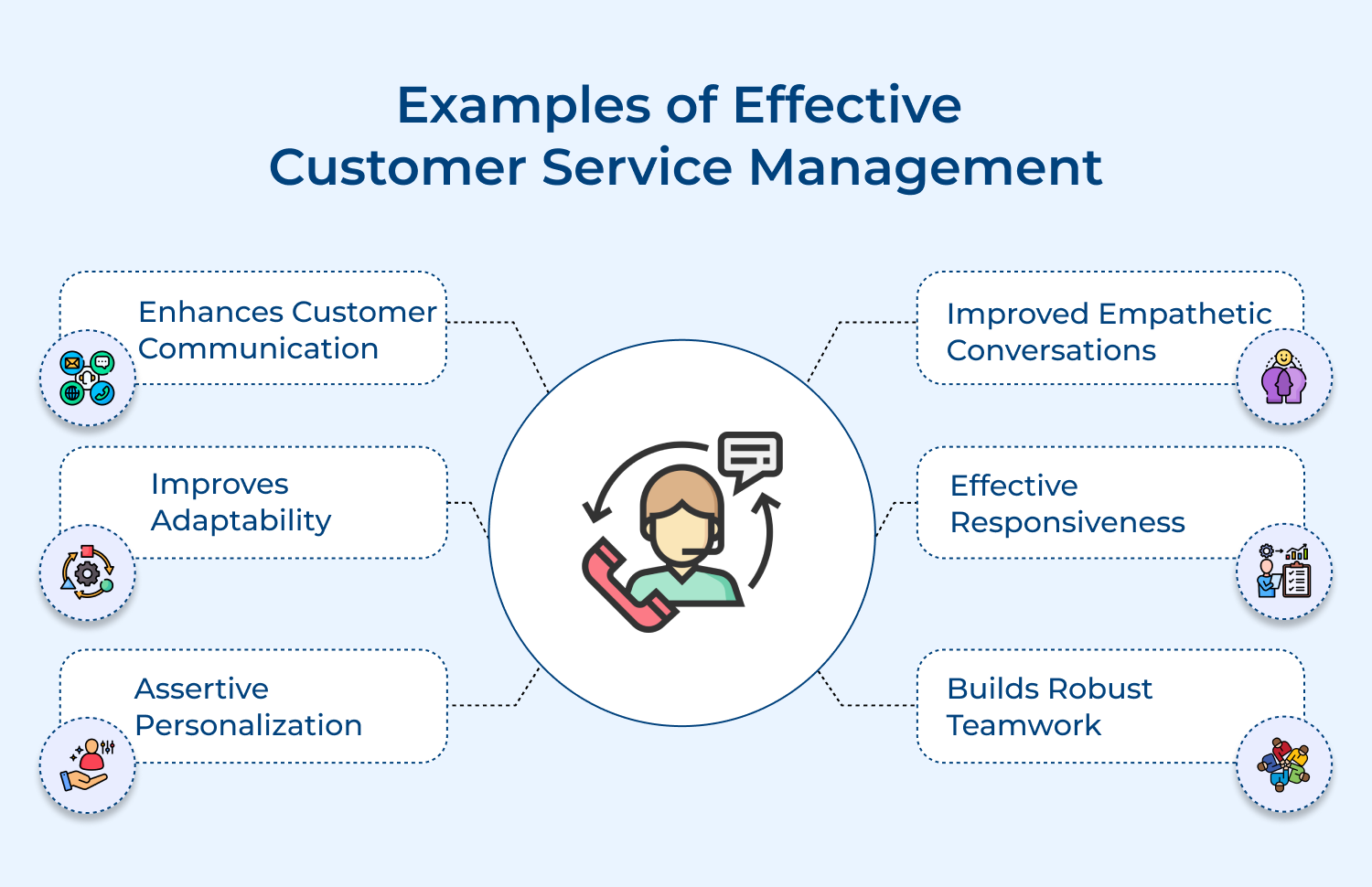
Customer service management is a vital aspect of any business. It involves handling customer interactions, addressing their needs, and ensuring their satisfaction. Businesses can provide exceptional customer service and build long-lasting relationships with their customers by focusing on effective communication, empathy, as well as personalization.
Investing in customer service management is an investment in the growth and success of any brand. With Omni24, not only will you enhance your customer service, but it will also improve employee productivity and lead to happier customers. From easy integration with other platforms to simple interface for analytics, Omni24 has got you covered for everything related to customer service.

Why is customer service management important?
Customer service management is important because it helps businesses build strong relationships with their customers. By providing excellent customer service, businesses can differentiate themselves from competitors and create a positive reputation. Good customer service management also leads to customer loyalty, repeat sales and positive word-of-mouth referrals
How does customer service management impact customer satisfaction?
Customer service management directly impacts customer satisfaction by ensuring that customers’ needs and expectations are met. It involves addressing customer inquiries, resolving issues and providing support throughout the customer journey. When customers receive prompt or personalized service, they are more likely to feel valued and satisfied with their overall experience.
How can customer service management help improve brand loyalty?
Effective customer service management can improve brand loyalty by creating positive customer experiences. When customers receive excellent service, they develop trust in the brand and feel more connected to it. It leads to increased loyalty and a higher likelihood of repeat purchases. Satisfied customers are more likely to become brand advocates, recommending the business to others and further enhancing brand loyalty.
Why is effective communication crucial in customer service management?
Effective communication is crucial in customer service management because it enables clear as well as efficient interactions between businesses and customers. Clear communication helps in understanding the customers’ needs, resolving their issues promptly and conveying information accurately. It also ensures that customers receive the right information, updates, or solutions, leading to improved satisfaction and loyalty.
Why should businesses prioritize continuous training and development for customer service management teams?
Continuous training or development for customer service management teams are essential. It ensures that they stay updated with industry trends, customer expectations and evolving technologies. Ongoing training helps employees enhance their skills, problem-solving abilities, and product knowledge. Investing in employee training shows a commitment to delivering exceptional customer service.
 https://omni24.io/wp-content/uploads/2026/08/Omnichannel-Conversational-AI.png
1256
2400
Tushar Joshi
https://omni24.io/wp-content/uploads/2023/04/Omni-Logo-1.svg
Tushar Joshi2026-09-16 03:51:072026-09-16 03:51:07How to Build Omnichannel Conversational AI Strategy
https://omni24.io/wp-content/uploads/2026/08/Omnichannel-Conversational-AI.png
1256
2400
Tushar Joshi
https://omni24.io/wp-content/uploads/2023/04/Omni-Logo-1.svg
Tushar Joshi2026-09-16 03:51:072026-09-16 03:51:07How to Build Omnichannel Conversational AI Strategy https://omni24.io/wp-content/uploads/2026/08/Customer-Service-Teams.png
1256
2400
Tushar Joshi
https://omni24.io/wp-content/uploads/2023/04/Omni-Logo-1.svg
Tushar Joshi2026-09-15 04:01:522026-09-15 04:02:16How to Build Customer Service Teams: 6 Key Steps
https://omni24.io/wp-content/uploads/2026/08/Customer-Service-Teams.png
1256
2400
Tushar Joshi
https://omni24.io/wp-content/uploads/2023/04/Omni-Logo-1.svg
Tushar Joshi2026-09-15 04:01:522026-09-15 04:02:16How to Build Customer Service Teams: 6 Key Steps https://omni24.io/wp-content/uploads/2026/08/conversational-ai-ecommerce.png
1256
2400
Webvision Solution
https://omni24.io/wp-content/uploads/2023/04/Omni-Logo-1.svg
Webvision Solution2026-09-08 04:06:222026-09-08 04:06:22How Conversational AI for Ecommerce Boosts Sales in 2026
https://omni24.io/wp-content/uploads/2026/08/conversational-ai-ecommerce.png
1256
2400
Webvision Solution
https://omni24.io/wp-content/uploads/2023/04/Omni-Logo-1.svg
Webvision Solution2026-09-08 04:06:222026-09-08 04:06:22How Conversational AI for Ecommerce Boosts Sales in 2026
Whether it’s about acquire, engage or support – Omni24 covers all your customer engagement needs in one complete platform.

Copyright ©2026 Veemo All rights reserved.
CA, Los Angeles, Hall Ave, 19011