A Definitive Guide to Customer Service SLA & Best Practices
Customer service SLA implementation boosts business success via better communication, efficiency and satisfaction; key components and examples explained.

Customer service SLA implementation boosts business success via better communication, efficiency and satisfaction; key components and examples explained.
Are you struggling to meet the customer service expectations of your clients? Are you finding it difficult to improve your customer satisfaction scores? The key to providing exceptional customer service lies in implementing a well-defined Service Level Agreement (SLA).
Do you know? 80% of customers stop doing business with a company due to poor customer service experiences. Companies can enhance customer satisfaction, loyalty, and their bottom line.
Today, let’s explore the importance of a customer service SLA as well as provide valuable insights on how to create an effective one to meet the ever-growing demands of today’s consumers.
A Customer Service Service Level Agreement (SLA) is a formal commitment between a service provider and customer that defines the expected level of service delivery. It establishes measurable standards for response times and resolution timeframes along with clear expectations for both parties. These agreements serve as accountability frameworks that help maintain service quality and build customer trust.
Customer Service SLAs work by setting specific benchmarks that service teams must meet when handling customer issues. When a customer submits a request, the SLA automatically triggers a countdown based on priority level. Service teams then work to address the issue within the agreed timeframe while tracking performance against these standards.
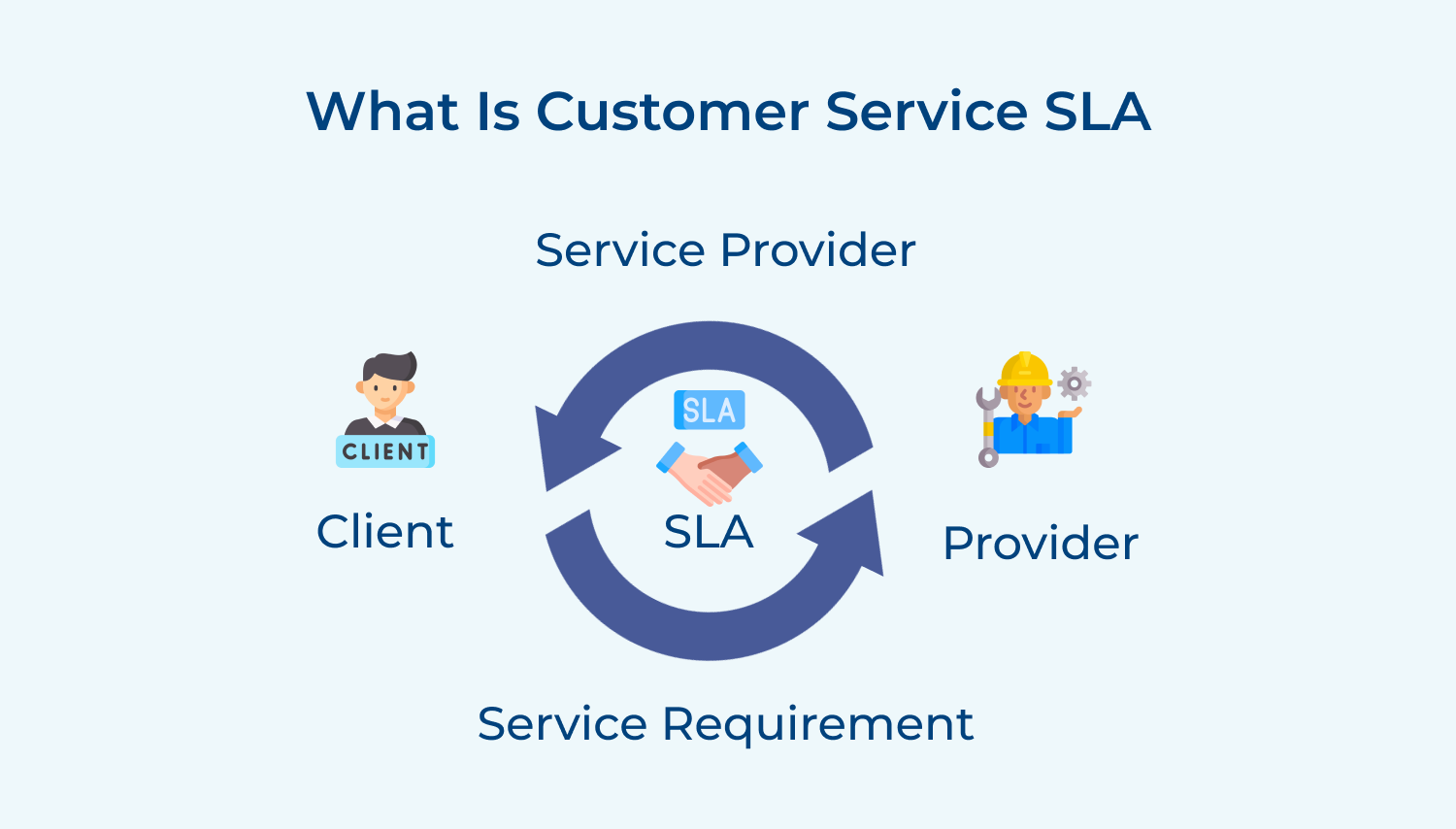
Key features included:
Having a customer service Service Level Agreement (SLA) can greatly benefit your business’s day-to-day operations. Here are some of the top benefits of having an SLA in place:
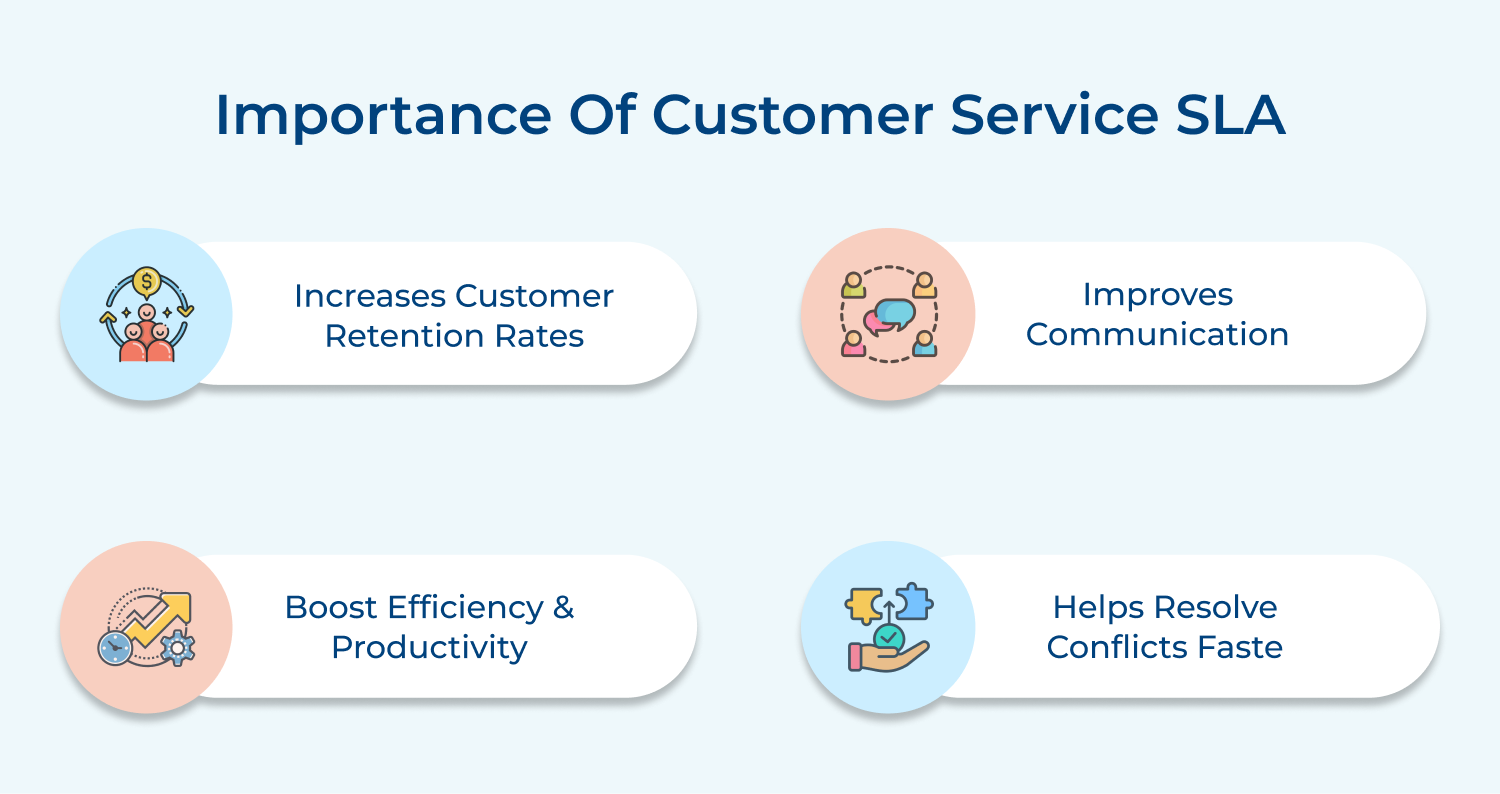
It takes 12 positive customer experiences to negate one negative customer experience! An SLA helps to create trust between you and your customers by ensuring that you will remain accountable for any gaps in services or missed deadlines. It allows your customers to know what to expect from you and strengthens your relationship which always leads to increased customer retention rates.
Establishing a Service Level Agreement (SLA) enables you to have clear expectations outlined, providing a framework for both parties involved in the project. It fosters transparency as well as facilitates ongoing feedback mechanisms, ensuring that any deviations from the agreed-upon standards can be promptly addressed. Effective SLA contributes to a more collaborative and successful project outcome for both you and the customer.
By cutting out guesswork on either side and clearly calling out processes for dealing with issues arising during the course of a project, an SLA helps improve efficiency as well as productivity levels within a company. It provides clear directives both internally and externally. A well-defined SLA establishes a foundation for accountability, as it outlines responsibilities, timelines, and performance metrics, promoting a proactive approach to issue resolution within the organization.
SLAs provide clarity on how disputes should be handled when things go wrong which makes resolution much easier, helping resolve conflicts faster before they get serious or threaten long-term mutual relationships. The inclusion of dispute resolution mechanisms in SLAs not only accelerates conflict resolution but also cultivates a sense of trust between parties.
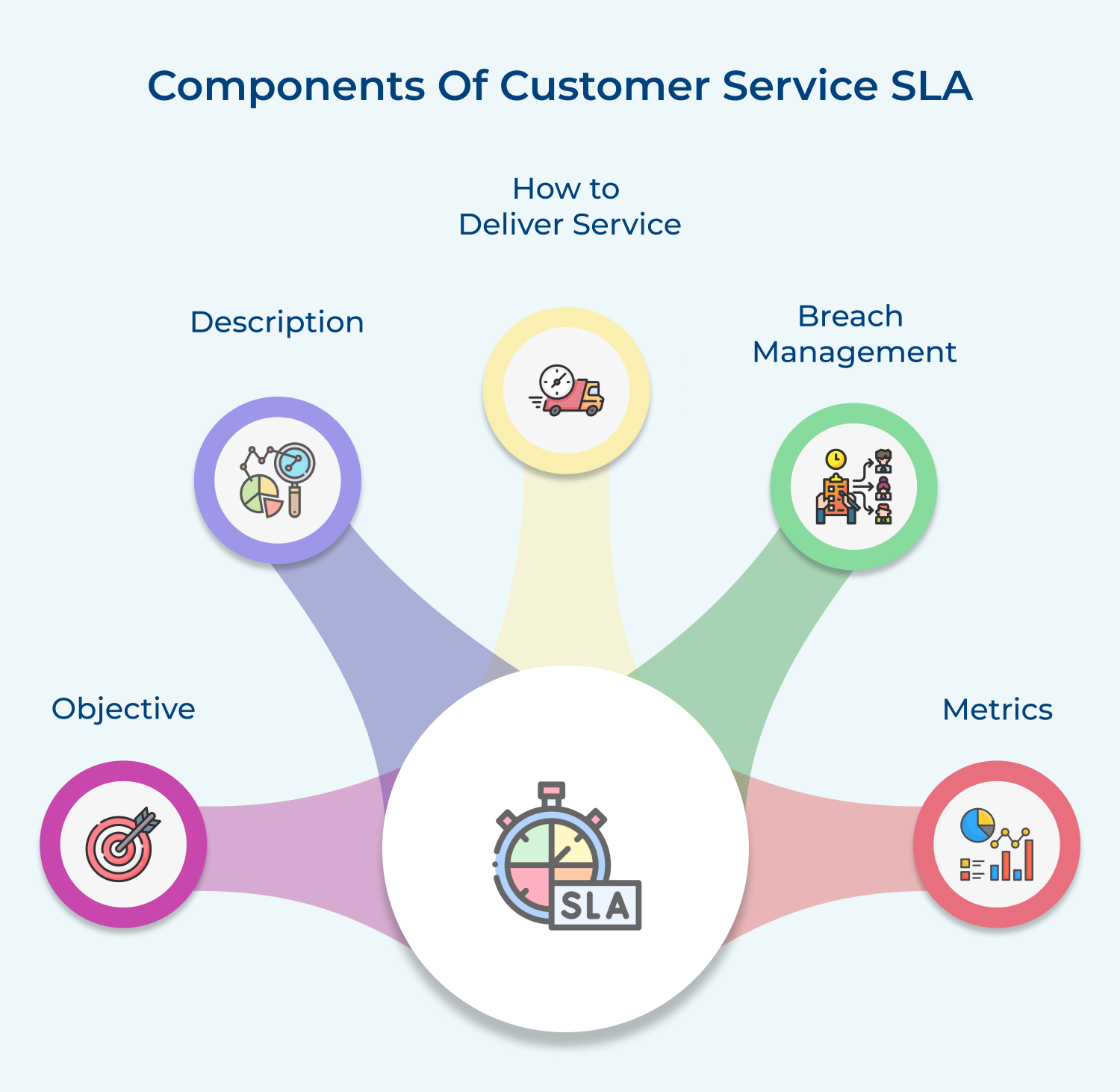
A customer SLA is a contract between a business and its customers that outlines the minimum standards of customer service they can expect to receive. Here are five important components:
Customer-based SLAs serve as a foundation for delivering quality support and ensuring customer satisfaction. Here are some customer service SLA examples to consider:
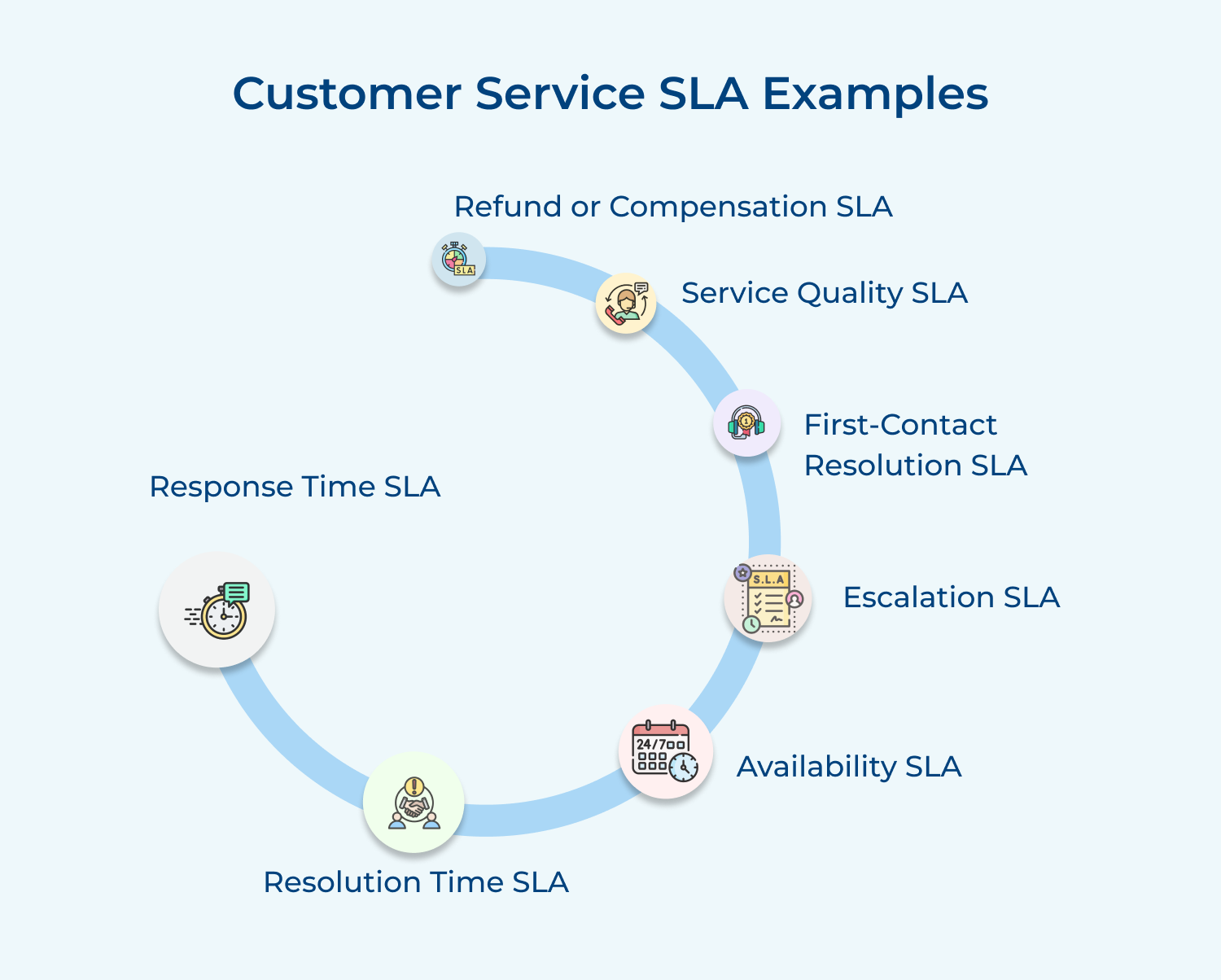
Response time SLA focuses on the time it takes for a customer to receive an initial response from a support agent. For example, a company could set a target of responding to customer inquiries within 24 hours, ensuring that customers feel heard and valued.
There are three key steps to implement Response Time SLAs effectively:
Do you know? 90% of the customers worldwide consider issue resolution as one of the most critical factors for customer service! The resolution time SLA measures the time it takes for a customer’s issue to be fully resolved. For example, a company may set a target of resolving customer issues within 48 hours. It ensures that customers receive timely solutions to their problems, enhancing their overall experience.
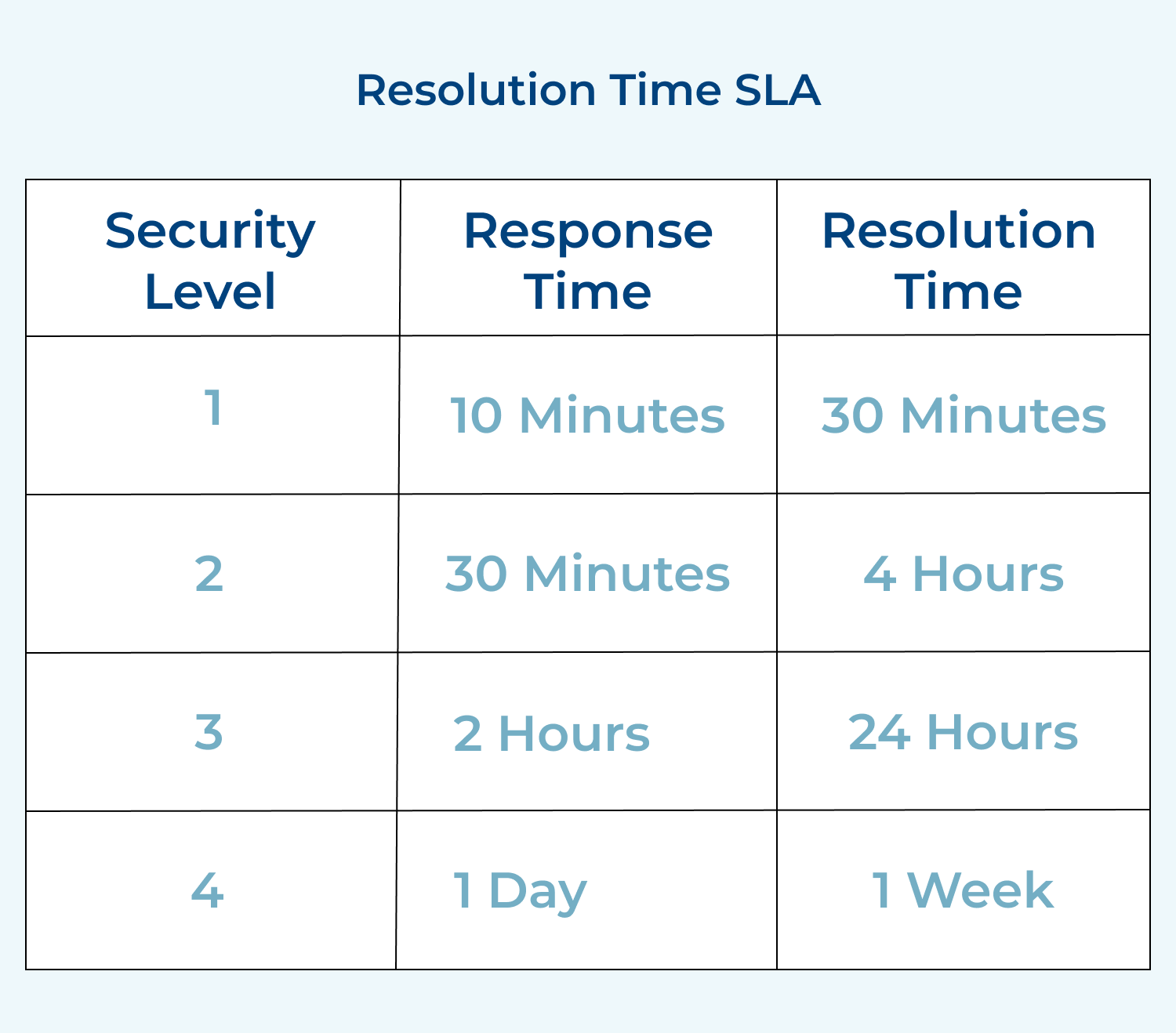
Here are three ways to implement this Resolution time SLA:
The availability SLA guarantees that customer service channels are accessible during specific hours or days of the week. Let’s say, a company could state that its support team will be available for assistance from 9 am to 5 pm, Monday to Friday. It lets the customers know when they can reach out for help.
Implementing Availability SLAs within customer service SLA examples can further enhance service reliability. Here are three ways to do it:
The escalation SLA outlines the procedures for handling complex or unresolved customer issues. It defines the steps involved in escalating problems to higher levels of support or management. Companies ensure that customer issues are addressed promptly and efficiently, regardless of their complexity.
Here are three ways to do it:
The first-contact resolution SLA aims to resolve customer inquiries or issues in a single interaction. The metric emphasizes the importance of efficiency and expertise in providing immediate solutions. For example, a company could set a target of resolving 80% of customer inquiries during the first contact.
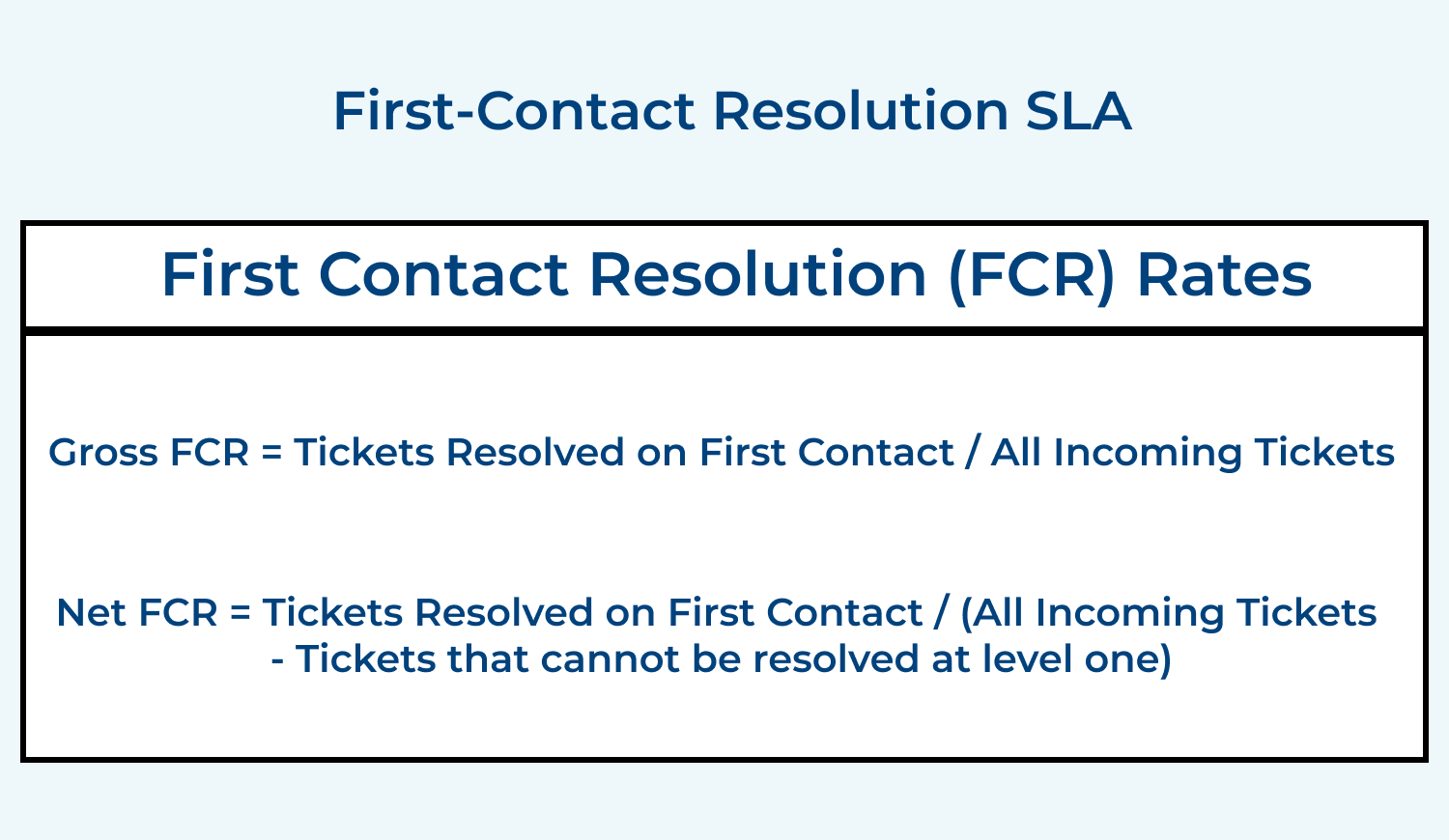
If you want to implement FCR as part of your Service Level Agreement (SLA), here are three ways to do it:
The service quality SLA focuses on maintaining a certain level of support quality. It may include parameters such as agent politeness, product knowledge, and adherence to company guidelines. Businesses ensure consistent as well as satisfactory customer interactions by setting this SLA.
Service Level Agreements (SLAs) are essential for ensuring service quality in customer service. Here are three ways to implement SLAs effectively:
In cases where customers experience significant inconveniences or dissatisfaction, the refund or compensation SLA would apply. The refund SLA determines the conditions under which customers are eligible for refunds or compensations, providing them with a sense of fairness and resolution.
Implementing a Refund or Compensation Service Level Agreement (SLA) in customer service can provide a structured approach to resolving issues and ensuring customer satisfaction:
Best practice standards should be established in order to maintain a positive customer experience. Here are five customer service SLA best practices that you should adopt:
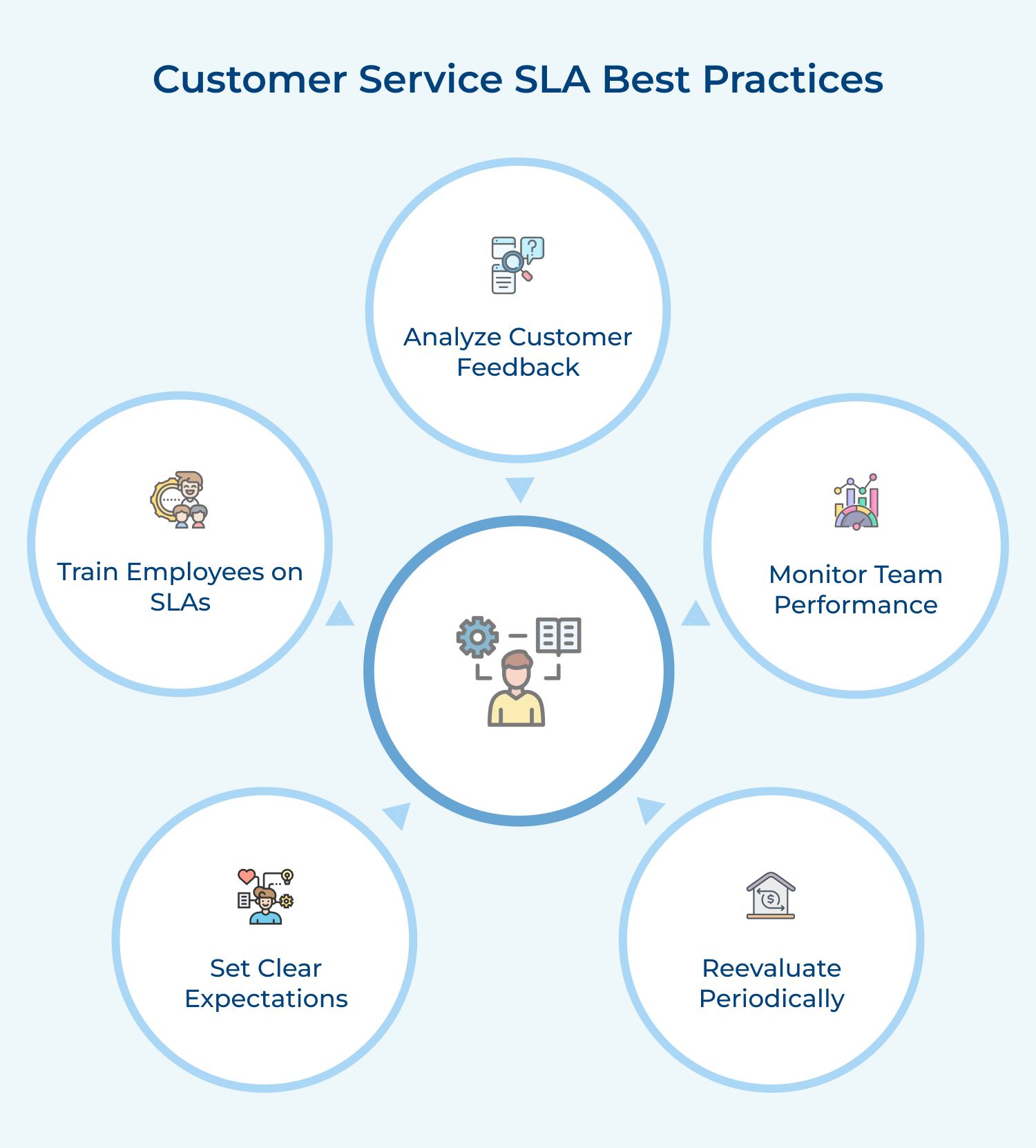
Customer service SLAs should clearly define expectations around response as well as resolution times for different types of inquiries. Customers will know when they can expect a response and when their issue has been resolved by making the SLA’s time frames explicitly clear.
Setting clear expectations is crucial for effectively managing customer service SLAs. It ensures both parties understand the agreed-upon standards and prevents misunderstandings. Clear expectations help build trust, maintain accountability, as well as improve customer satisfaction.
Takeaway: Proper communication along with documentation of these expectations are key to achieving high-quality service and meeting SLA targets.
It’s important that employees understand their responsibilities as outlined by their company’s customer service SLA in order to provide excellence in customer service. Regular training sessions can go a long way in reinforcing SLAs expectations to employees over time.
When it comes to managing customer service SLAs effectively, training employees is of utmost importance. They will gain a better understanding of customer expectations and the importance of meeting targets by educating your team on SLAs.
Takeaway: Efficient employee training ensures effective communication, improved customer satisfaction, and helps your business maintain a strong reputation in the market.
Gathering feedback from your customers will help you better measure whether or not they’re satisfied with your level of service and if it meets industry benchmarks or falls short due to unavoidable factors like technical difficulties or staffing levels .
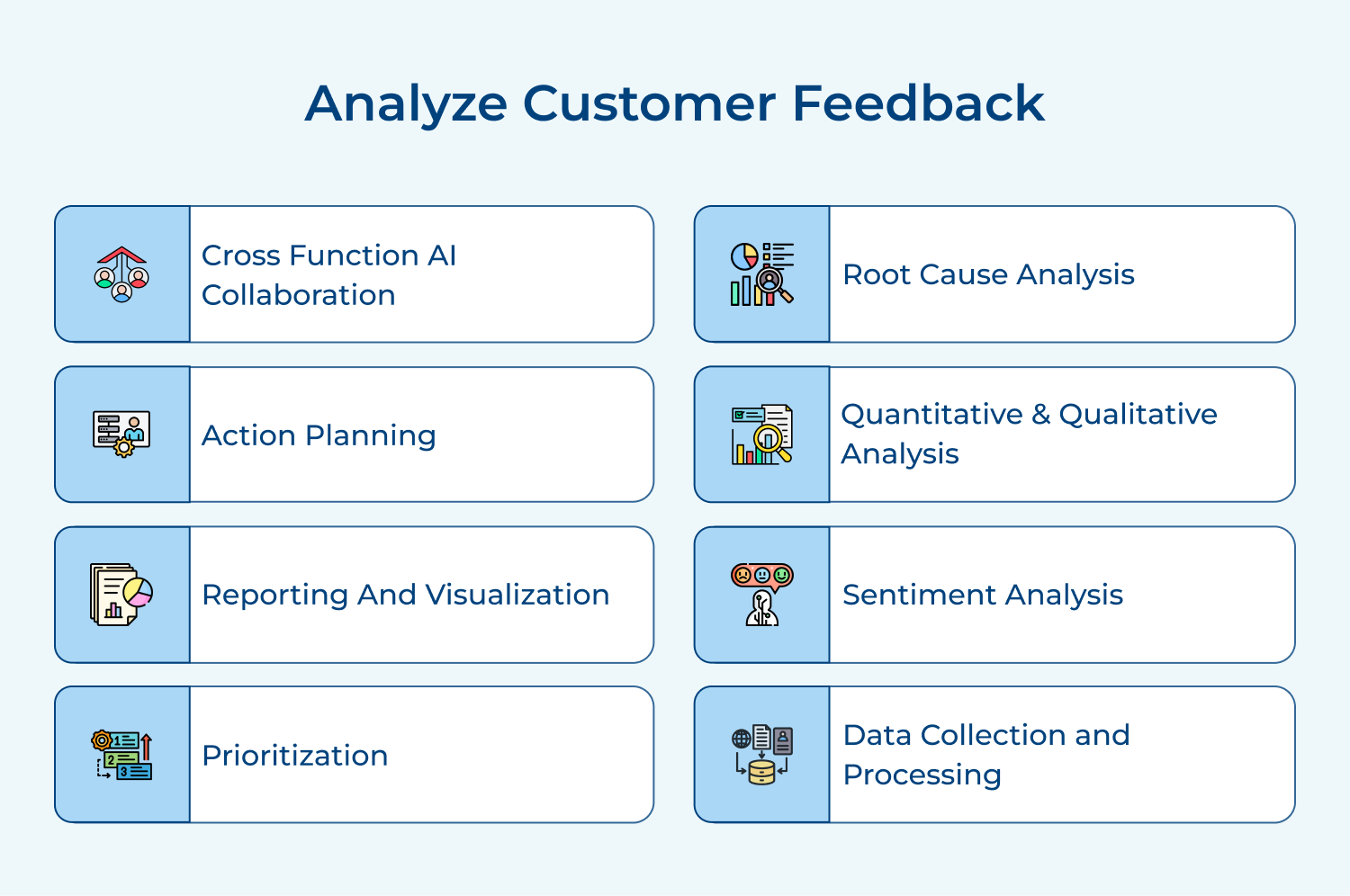
Analyzing customer feedback is crucial for effectively managing customer service SLAs. It provides invaluable insights into customer satisfaction, identifies areas of improvement, and helps fulfill service level agreements.
Takeaway: Businesses can enhance their service quality, retain customers, and boost overall customer satisfaction by listening to customer opinions while addressing their concerns.
Tracking performance metrics related to customer satisfaction, such as ticket resolution rates and average handling time, provides insight into how well your team is upholding the demands set by the SLA agreement. Make sure your team has access to this information so they can monitor progress on an ongoing basis.
Monitoring team performance is crucial for effectively managing customer service SLAs. It ensures that service levels are met, identifies areas for improvement, and enables timely interventions.
Takeaway: Managers can make informed decisions, optimize workflows, as well as maintain customer loyalty by tracking metrics such as response time, customer satisfaction, and resolution rate.
As new technologies come out and industry best practices evolve, review your customer service SLAs regularly so you stay current with modern standards while also providing superior experiences for customers. Evaluating these policies periodically will allow them to remain both competitive and relevant while also allowing you some time to fix any areas that need improvement before they become bigger issues down the line!
Reevaluating customer service SLAs is crucial for businesses to ensure they’re meeting their customers’ needs. Periodic assessments help identify areas for improvement, measure performance against set benchmarks, and adapt strategies accordingly.
Takeaway: The ongoing process enables companies to maintain high customer satisfaction, retain loyalty, and stay competitive in today’s rapidly evolving market.
SLA breaches can have serious consequences, so it’s important to know how to effectively address them when they arise. Here are four key steps on how to effectively manage them:
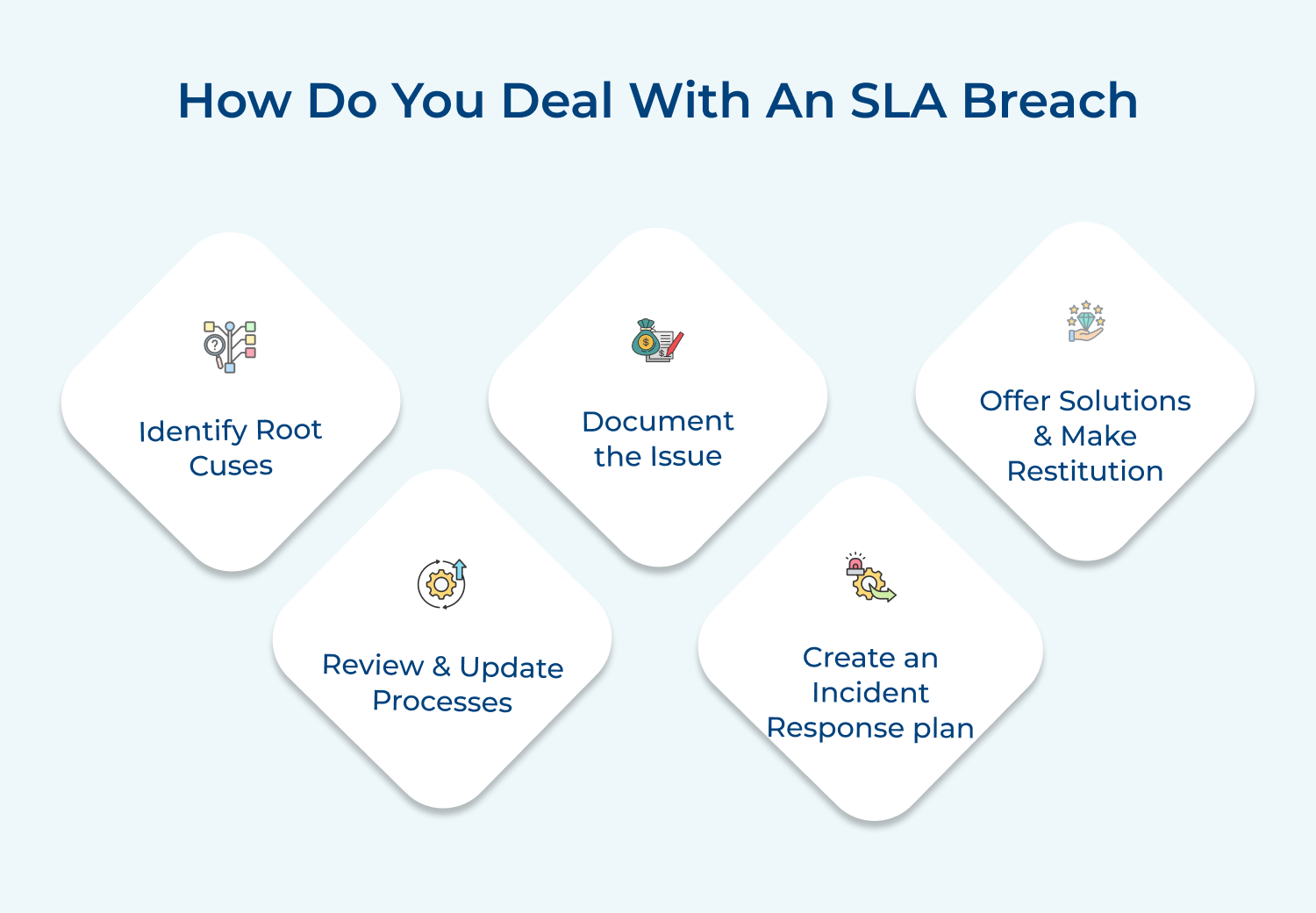
Service Level Agreements transform aspirational service quality into contractual commitments. By establishing clear performance metrics and resolution standards, organizations create accountability frameworks that align customer expectations with operational capabilities. SLAs bridge the gap between service promises and delivery, providing the structural foundation for high-quality customer experiences.
Effective SLA implementation requires ongoing monitoring, regular review cycles, and a commitment to continuous improvement. Organizations that excel with SLAs view them not merely as compliance documents but as strategic tools that drive operational excellence.

How can a Customer Service SLA help in setting customer expectations?
A Customer Service SLA (Service Level Agreement) is a crucial tool in setting customer expectations. It helps customers understand what to expect in terms of response times, problem resolution, and overall customer support by clearly outlining the level of service that a company is committed to providing. It not only helps manage customer expectations but also fosters transparency and accountability. Customer Service Agreements SLA ensures a positive customer experience, builds trust, aligns customer expectations with the agreed-upon service standards.
What factors should be considered when defining the response and resolution times in a Customer Service SLA?
Here are some of the factors to consider when you’re defining the response as well as resolution times. Begin with the complexity of the issue and how it impacts on the customer’s business. Check the availability as well as capacity of the customer service team. The nature of the industry and customer expectations should also be considered, including any regulatory requirements. The goal is to set realistic and achievable targets that prioritize customer satisfaction along with timely problem resolution.
How can a Customer Service SLA contribute to improving customer satisfaction?
A Customer Service SLA (Service Level Agreement) can contribute to improving customer satisfaction in several ways. First, it sets clear expectations and standards for customer support, ensuring prompt service. It helps prioritize and allocate resources effectively, reducing response times as well as resolving issues quickly. The SLA promotes accountability and transparency, as both the customer as well as the service provider are aware of the agreed-upon service levels.
What are the consequences of not meeting the service level agreements outlined in a Customer Service SLA?
When a company fails to meet the service level agreements (SLAs) outlined in a customer service-based SLA, it can lead to customer dissatisfaction and a loss of trust, damaging the company’s reputation. When the SLA requirements are not met, it may also incur penalties or fines, depending on the terms agreed upon.
How can a Customer Service SLA be effectively monitored and measured?
Being one of the crucial factors for meeting customer’s expectations, there are several methods to effectively monitor and measure a SLA. A regular performance review, tracking key metrics like response time & customer satisfaction, conducting customer surveys, analyzing customer feedback, as well as implementing quality assurance processes. Businesses can identify areas of improvement, make necessary adjustments, as well as provide excellent customer service by consistently monitoring and measuring the SLA.
 https://omni24.io/wp-content/uploads/2026/07/Web-Self-Service.png
1257
2400
Webvision Solution
https://omni24.io/wp-content/uploads/2023/04/Omni-Logo-1.svg
Webvision Solution2026-07-23 05:39:582026-07-23 05:39:58Web Self Service: What it is, Features and its Benefits
https://omni24.io/wp-content/uploads/2026/07/Web-Self-Service.png
1257
2400
Webvision Solution
https://omni24.io/wp-content/uploads/2023/04/Omni-Logo-1.svg
Webvision Solution2026-07-23 05:39:582026-07-23 05:39:58Web Self Service: What it is, Features and its Benefits https://omni24.io/wp-content/uploads/2026/07/Knowledge-Base-SEO-1.png
1396
2400
Webvision Solution
https://omni24.io/wp-content/uploads/2023/04/Omni-Logo-1.svg
Webvision Solution2026-07-22 09:44:572026-07-23 06:16:41What is Knowledge Base SEO & How to Create it?
https://omni24.io/wp-content/uploads/2026/07/Knowledge-Base-SEO-1.png
1396
2400
Webvision Solution
https://omni24.io/wp-content/uploads/2023/04/Omni-Logo-1.svg
Webvision Solution2026-07-22 09:44:572026-07-23 06:16:41What is Knowledge Base SEO & How to Create it? https://omni24.io/wp-content/uploads/2026/07/customer-experience-benefits.png
1257
2400
Tushar Joshi
https://omni24.io/wp-content/uploads/2023/04/Omni-Logo-1.svg
Tushar Joshi2026-07-20 06:28:322026-07-20 06:28:32What are the Benefits of Customer Experience for Business?
https://omni24.io/wp-content/uploads/2026/07/customer-experience-benefits.png
1257
2400
Tushar Joshi
https://omni24.io/wp-content/uploads/2023/04/Omni-Logo-1.svg
Tushar Joshi2026-07-20 06:28:322026-07-20 06:28:32What are the Benefits of Customer Experience for Business?
Whether it’s about acquire, engage or support – Omni24 covers all your customer engagement needs in one complete platform.

Copyright ©2026 Veemo All rights reserved.
CA, Los Angeles, Hall Ave, 19011