How to Collect B2B Customer Feedback to Improve your CX
B2B customer feedback helps identify needs, improve products, strengthen relationships and guide business growth through actionable insights.

B2B customer feedback helps identify needs, improve products, strengthen relationships and guide business growth through actionable insights.
76% of B2B buyers expect companies to “know their unique needs and expectations”! Yet, many companies in the B2B space struggle to fully understand their customers’ needs and pain points. Gathering actionable feedback becomes difficult, making it challenging to improve products, services and customer relationships.
Effective B2B customer feedback strategies provide the solution. Gathering insights from clients allows businesses to pinpoint areas for improvement, increase customer satisfaction and drive growth. We will discuss how to collect, analyze and use feedback to enhance your B2B success.
B2B customer feedback refers to the process of collecting, analyzing and acting upon insights provided by business clients about their experiences with your company’s products, services, or overall relationship.
Unlike B2C feedback, which comes from individual consumers, B2B feedback originates from organizational buyers who often represent complex buying committees with multiple stakeholders and longer, more considered purchasing cycles.
B2B customer feedback encompasses all information, opinions and suggestions shared by business customers regarding their interactions with your organization. This can include structured data from surveys and NPS scores as well as unstructured feedback from customers.
Key objectives
Customer feedback is a powerful tool for B2B companies aiming to strengthen client relationships and refine offerings. Here’s how the feedback benefits the company’s growth.
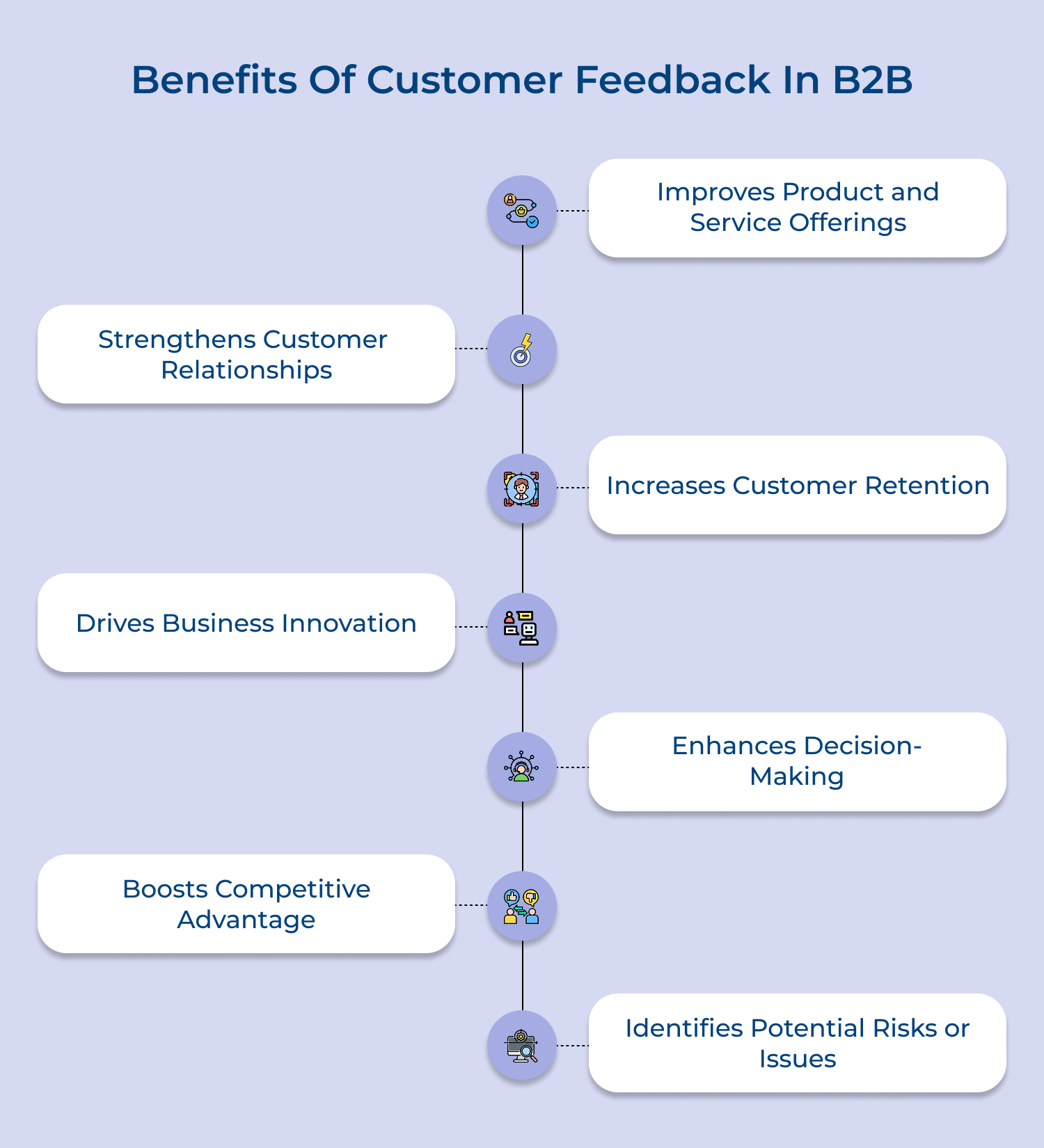
Improves Product and Service Offerings
Customer feedback highlights how products and services are performing, helping businesses identify areas for improvement. Using these insights allows companies to refine offerings to better align with client needs and expectations.
Strengthens Customer Relationships
Engaging with customers and acting on their feedback builds stronger relationships. Demonstrating that customer opinions are valued builds trust and a deeper connection with the business.
Increases Customer Retention
When businesses act on feedback, customers are more likely to stay loyal. Addressing concerns and evolving offerings based on client input increases retention, which is typically more cost-effective than attracting new clients.
Drives Business Innovation
One of the benefits of customer feedback is that it often uncovers unmet needs or emerging trends, sparking innovation. This insight can drive new product development or service improvements, helping companies stay competitive and meet market demands.
Enhances Decision-Making
Direct input from customers provides valuable data for making informed decisions. Whether adjusting products, services, or exploring new opportunities, customer feedback serves as a reliable guide for strategic choices.
Boosts Competitive Advantage
Collecting and responding to feedback differentiates businesses from competitors. It highlights the company’s commitment to continuous improvement, making it more appealing to both current and potential customers.
Identifies Potential Risks or Issues
Regular feedback reveals problems or risks early, such as service gaps or product flaws. Identifying these issues before they escalate allows businesses to take corrective actions, safeguarding their reputation.
Collecting feedback from B2B customers requires intentional, well-timed methods tailored to professional decision-makers. Here are 7 ways to collect feedback effectively.
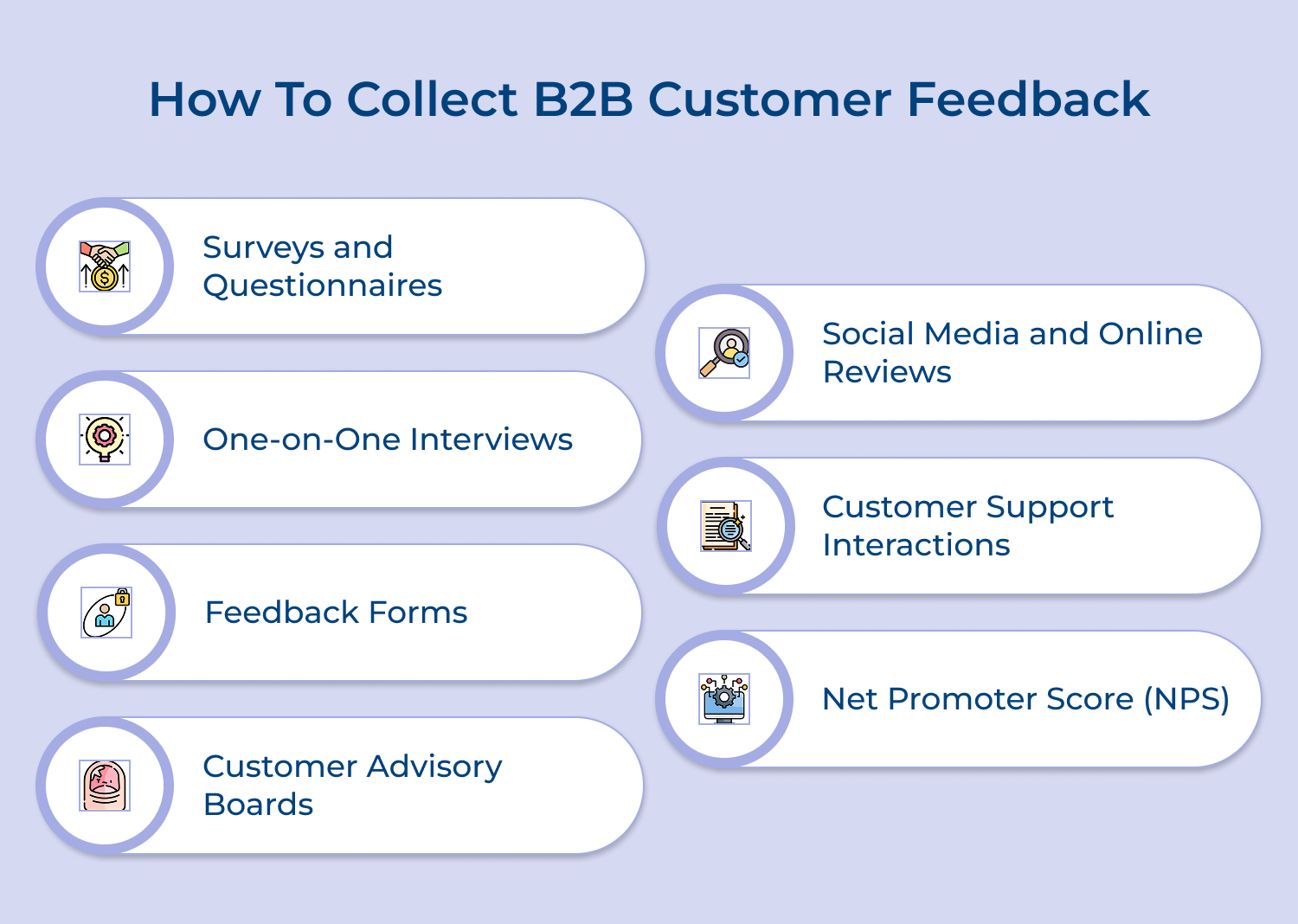
Surveys and questionnaires are a great way to gather direct feedback from your B2B customers. By asking targeted questions through email, website pop-ups, or chat tools, you can learn what’s working and what’s not.
These tools help you collect measurable insights on things like customer satisfaction, product performance, or service quality. Sending surveys after key touchpoints or at regular intervals helps you track customer sentiment over time.
Get the most value by keeping the questions focused and relevant to specific areas, whether it’s your product, support experience or onboarding. The more tailored your survey, the better the insights you’ll get.
Actionable Tips:
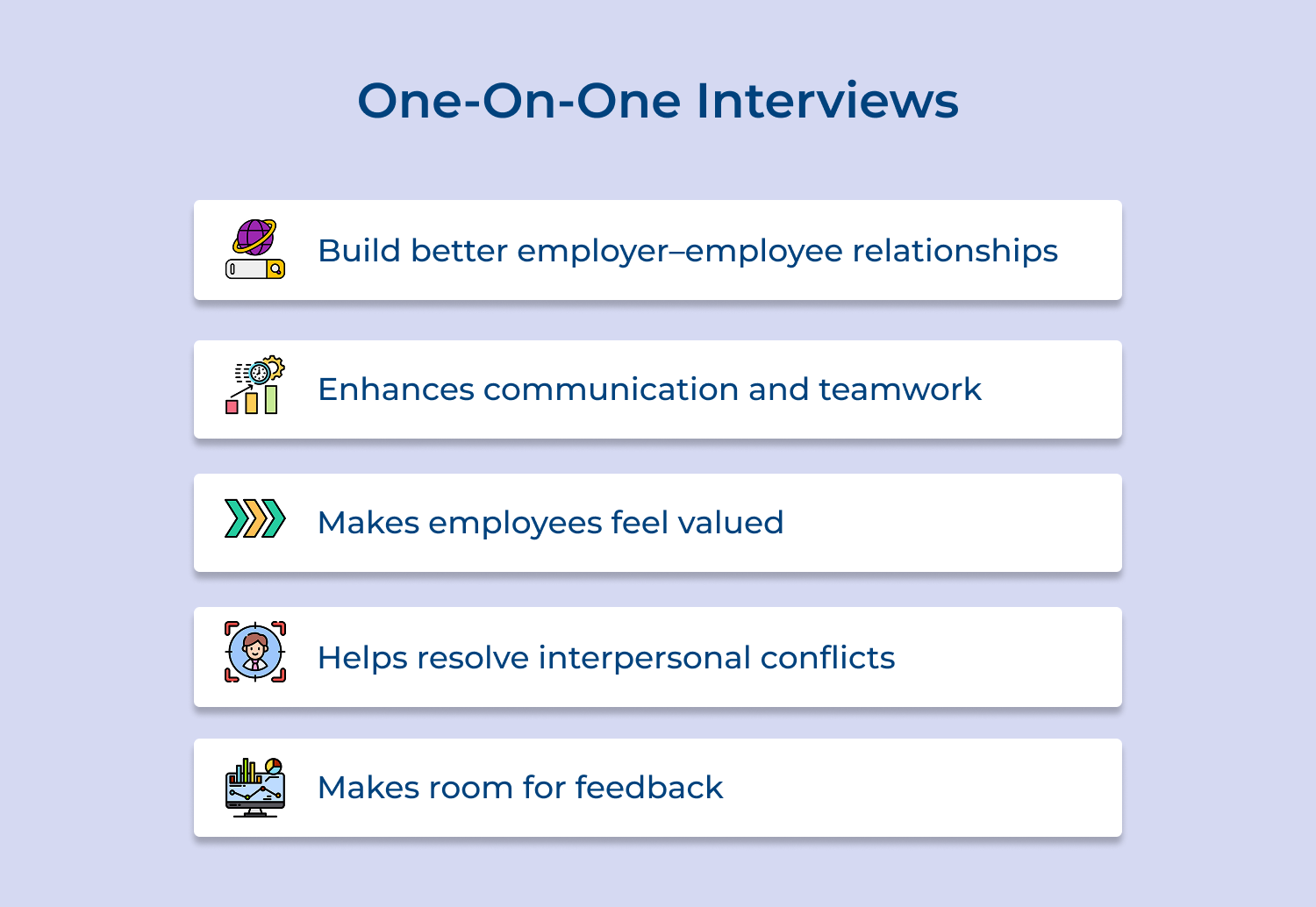
One-on-one interviews are personal conversations with your customers that help uncover deeper, more detailed insights. Whether done in person, over a call, or via video, interviews let clients openly share their thoughts and challenges, often revealing things surveys miss.
The given method gives you a clearer picture of what matters most to your customers and helps build stronger relationships.
It’s especially useful when you need feedback on strategic initiatives, major product updates, or service quality. Focus on key clients or partners, ask open-ended questions and listen closely – you’ll gain valuable input you can’t get from data alone.
Pro tips:
Feedback forms are quick, easy tools to capture customer thoughts right after key interactions like a purchase or support chat. They give you instant insights into how a client feels about a specific part of your service, helping you spot issues early and act fast.
Whether it’s a short form on your website or a follow-up email, feedback forms make it simple for customers to share their opinions.
Use them consistently across different touchpoints to track satisfaction trends, uncover recurring issues and fine-tune your offerings based on real-time input.
Tips:
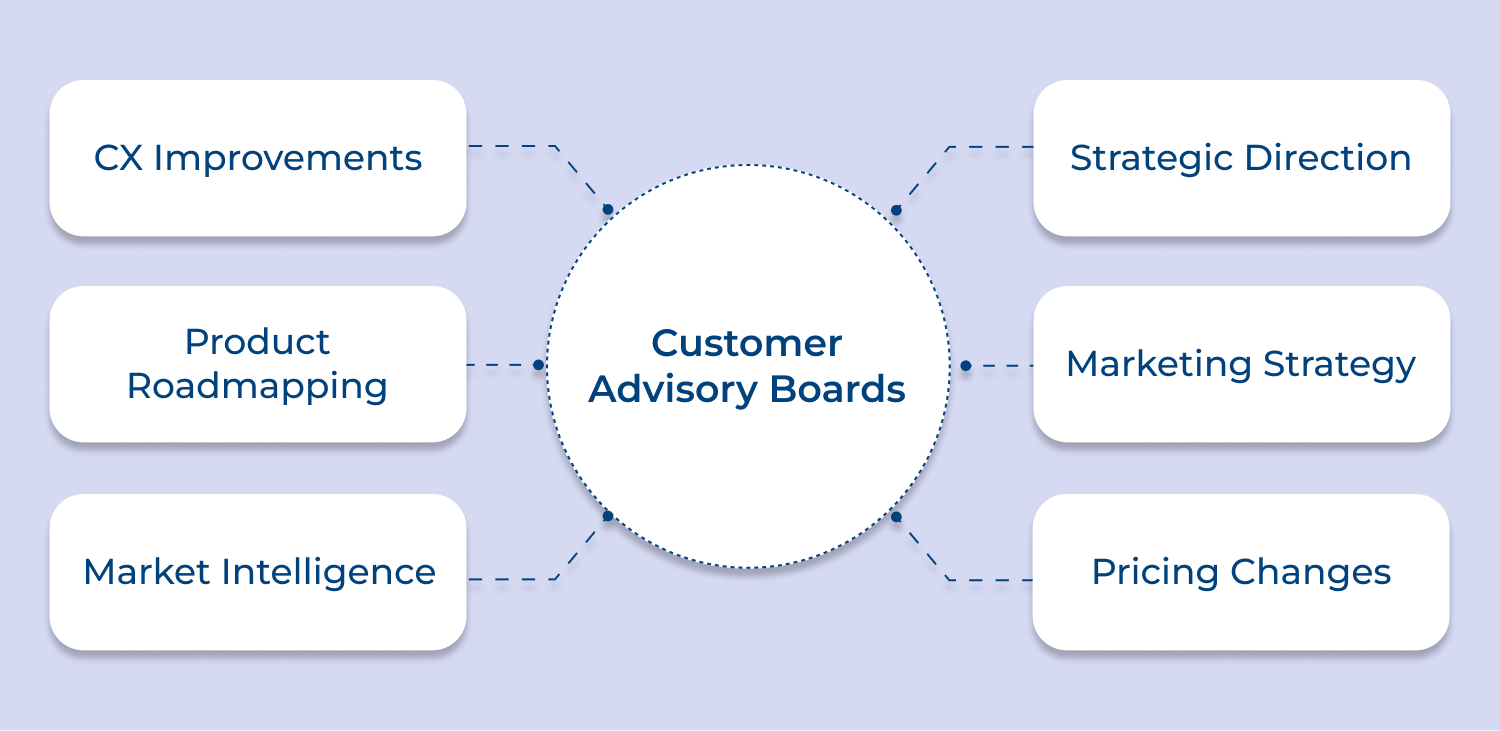
A customer advisory board brings together key clients or industry experts to offer ongoing feedback on your products, services and overall direction. These trusted voices provide strategic insights that help ensure your business stays aligned with client needs and market trends.
Beyond product input, advisory boards strengthen relationships and build customer loyalty. Invite your top clients to join and meet regularly to discuss upcoming initiatives or challenges.
Their perspective can guide smarter decisions, uncover blind spots and help shape your long-term growth. It’s a powerful way to turn customer relationships into a collaborative advantage.
Actionable Tips:
Social media and online reviews are rich sources of unfiltered customer feedback. Platforms like LinkedIn, Facebook and review sites give you a real-time look at how customers feel about your brand, products or services.
Monitoring these channels will help you spot recurring issues, track sentiment trends and even turn negative experiences into positive ones through quick responses.
Use social listening tools to stay on top of mentions and reviews, as well as make it a habit to engage, whether it’s addressing concerns or simply thanking someone for a good review. It’s a smart way to stay connected and build trust publicly.
Tips:
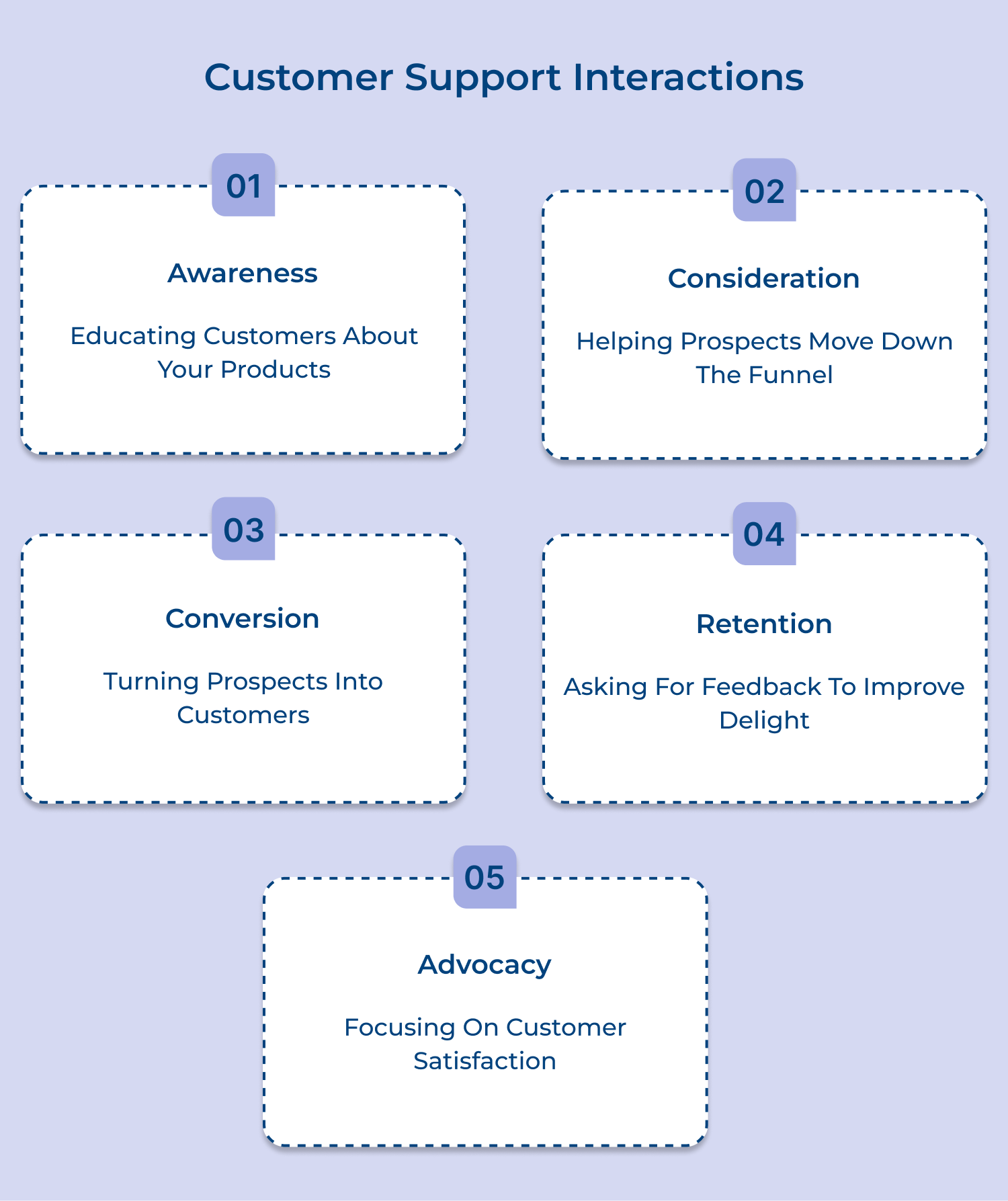
Customer support interactions are a goldmine for feedback, as they often highlight real-time frustrations or questions. Whether it’s through calls, emails or chat, these touchpoints reveal where customers are getting stuck.
Gathering feedback during or after these exchanges helps you spot patterns, fix recurring issues, and improve your support process. Encourage quick feedback after every interaction like a short rating or comment form.
Then, review the data regularly to identify trends and areas for improvement, whether that’s updating product features, refining help content, or training your support team more effectively.
Pro tips:
Net Promoter Score (NPS) is a simple yet powerful way to measure customer loyalty. By asking customers how likely they are to recommend your business on a scale of 0–10, you can quickly gauge satisfaction levels.
Based on their responses, customers are grouped into promoters, passives, or detractors. Hence, giving you clear direction on who loves your brand and who needs attention. Send NPS surveys regularly to track trends while also gathering insights.
Leverage the results to improve the experience for detractors, nurture relationships with promoters and fine-tune your offerings based on what different customer segments need.
Tips:
Collecting feedback is only half the battle, what you do with it matters most. These best practices will help you turn B2B customer insights into meaningful action.
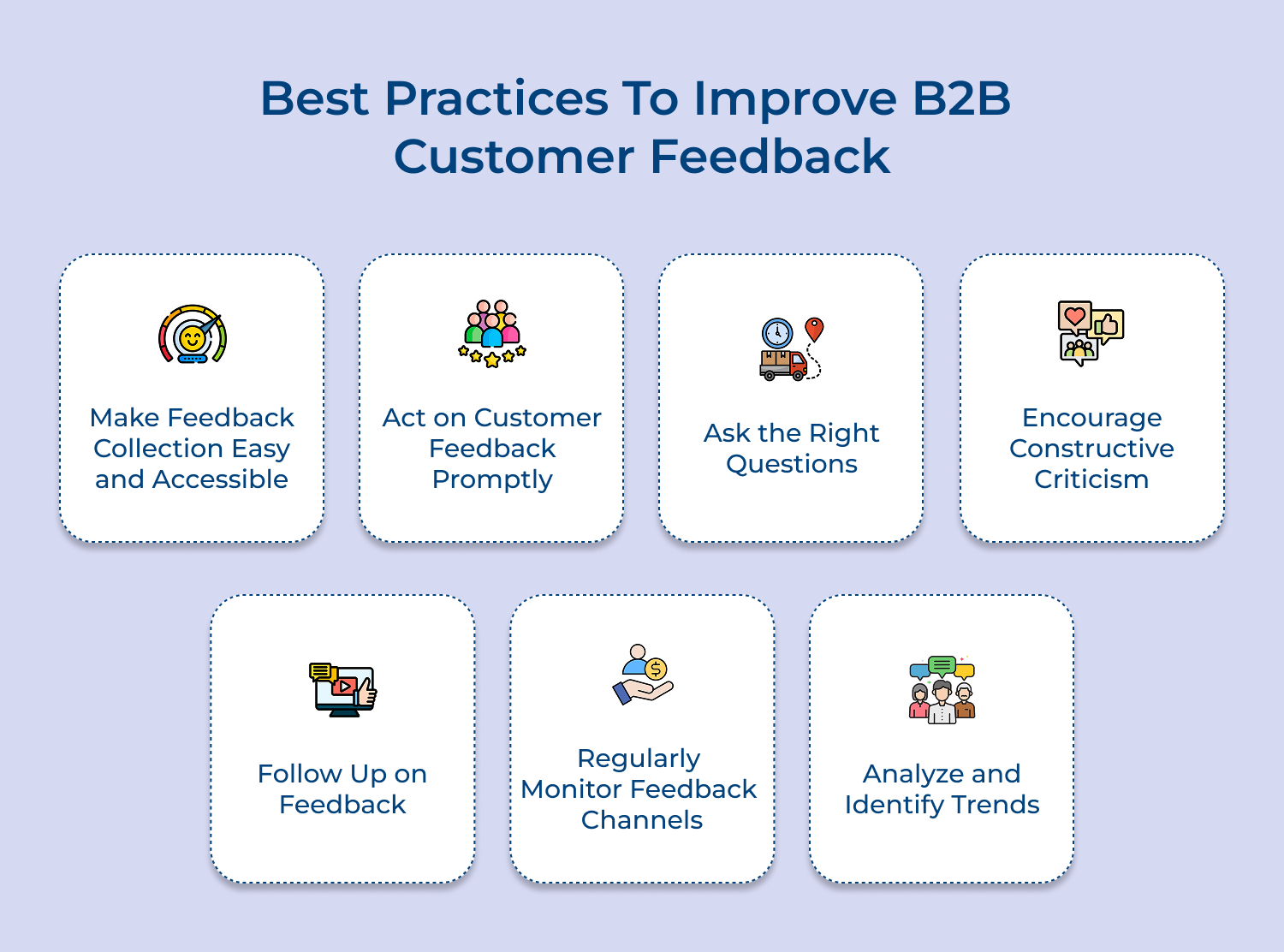
Make Feedback Collection Easy and Accessible
Don’t make your clients jump through hoops. Offer simple, quick options like short surveys, feedback forms, or prompts during support chats.
Act on Customer Feedback Promptly
When customers take the time to share feedback, show them it matters. Respond quickly and make visible changes when possible, it builds trust.
Ask the Right Questions
Be clear and specific. Mix open-ended questions for depth and closed-ended ones for quick data. Focus on areas you truly want to improve.
Encourage Constructive Criticism
Let clients know you want their honest take, even the tough stuff. Constructive feedback helps you catch issues early and grow stronger.
Follow Up on Feedback
Let customers know their input led to real changes. A simple “Thanks to your feedback, we’ve…” goes a long way in building loyalty.
Regularly Monitor Feedback Channels
Keep an eye on where conversations happen: sales calls, product use, support tickets. Regularly checking in helps you stay ahead of issues.
Analyze and Identify Trends
Don’t just read feedback, analyze it. Spot recurring themes or concerns so you can take meaningful, strategic action that drives long-term impact.
Collecting B2B feedback isn’t always straightforward, there are hurdles that can get in the way of getting useful insights. Here are some common challenges and how to overcome them.
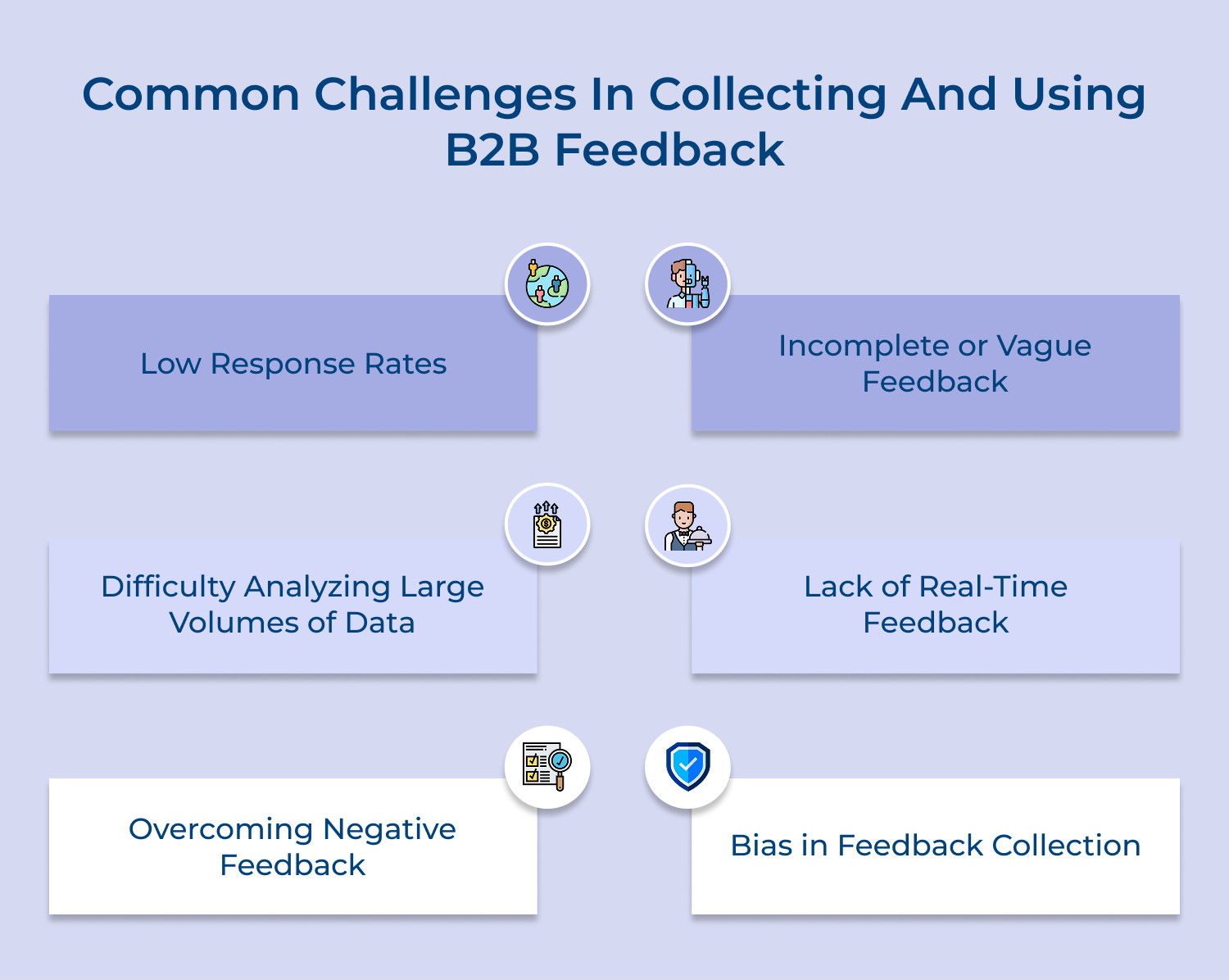
1. Low Response Rates
Challenge:
B2B customers are often busy and many may ignore feedback requests due to time constraints or lack of interest. Low response rates can limit the effectiveness of feedback collection.
Solution:
2. Incomplete or Vague Feedback
Challenge:
Customers may provide unclear or incomplete feedback, making it difficult to derive actionable insights. Open-ended questions can sometimes lead to ambiguous answers that don’t fully address the key areas of concern.
Solution:
3. Difficulty Analyzing Large Volumes of Data
Challenge:
Collecting feedback through surveys, interviews and other methods can generate large amounts of data, making it challenging to analyze as well as extract actionable insights.
Solution:
4. Lack of Real-Time Feedback
Challenge:
Gathering feedback too infrequently or with long delays can result in outdated insights. Businesses may miss the opportunity to act on time-sensitive customer concerns.
Solution:
5. Overcoming Negative Feedback
Challenge:
Negative feedback can be difficult to process and act upon, especially when it involves critical issues with products or services. It may be uncomfortable for teams to address.
Solution:
6. Bias in Feedback Collection
Challenge:
Feedback might be skewed if only certain customer segments are responding or if the feedback collection process isn’t representative of your entire customer base.
Solution:
Real-world examples show how businesses turn feedback into action. Here are a few B2B companies that used customer insights to drive meaningful improvements and results.
Slack
Slack built their feedback program around in-app surveys that appear after specific user actions. They focus on measuring Net Promoter Score (NPS) and customer satisfaction at key touchpoints. What made their approach successful was translating feedback directly into product improvements, such as thread-based messaging and advanced search capabilities, which were directly requested by enterprise customers.
Salesforce
Salesforce created the Idea Exchange platform where B2B customers can submit feature requests and vote on others’ suggestions. This transparent approach has led to over 50,000 customer ideas being implemented. Their success came from closing the feedback loop – customers who submit ideas receive updates as their suggestions move through development stages.
HubSpot
HubSpot combines regular customer advisory boards with targeted feedback campaigns for specific segments of their B2B customer base. They focus on collecting both quantitative data through surveys and qualitative insights through interviews. HubSpot’s approach stands out because they share feedback metrics publicly in quarterly reports, creating accountability.
Atlassian
Atlassian’s “Customer Pulse” program continuously gathers feedback throughout the customer journey rather than at isolated points. They successfully implemented a scoring system that prioritizes feedback based on customer size, revenue impact and strategic alignment, ensuring resources are allocated to the most impactful improvements.
B2B customer feedback offers valuable insights into client needs and expectations, helping businesses enhance product offerings as well as relationships. Gathering and analyzing feedback regularly enables companies to adapt to changing demands while improving overall customer satisfaction.
Acting on feedback fosters deeper client connections, leading to long-term loyalty and sustainable growth. Staying committed to listening and refining based on customer input is key to staying competitive in the B2B landscape.

What’s the difference between B2B and B2C customer feedback?
B2B feedback involves multiple stakeholders making collective decisions, longer evaluation periods, and complex implementation processes. Unlike B2C customers who provide individual opinions quickly, B2B clients represent organizational perspectives that require consensus-building. B2B feedback focuses heavily on ROI, integration capabilities, and long-term strategic value rather than emotional satisfaction alone.
How often should we collect B2B customer feedback?
Collect B2B feedback quarterly through formal surveys, supplemented by ongoing touchpoints during key moments like onboarding, renewals, and project milestones. Monthly pulse checks work well for active accounts, while annual comprehensive reviews capture strategic insights. The key is balancing frequency with respect for your clients’ time constraints and busy schedules.
What metrics should we track for B2B customer feedback?
Track Net Promoter Score for loyalty, Customer Satisfaction Score for service quality, and Customer Effort Score for ease of doing business. Monitor renewal rates, expansion revenue, and support ticket resolution times. Include qualitative metrics like feature adoption rates, time-to-value achievement, and stakeholder engagement levels across different departments within client organizations.
How can we encourage honest feedback from B2B customers?
Create safe spaces for candid feedback by ensuring confidentiality and demonstrating genuine commitment to improvement. Use third-party surveys when sensitive topics arise, offer multiple feedback channels including anonymous options, and always close the loop by sharing how their input drives actual changes. Executive-level conversations often yield more strategic, honest insights.
How do we prioritize which feedback to act on?
Prioritize feedback that affects multiple high-value customers, aligns with strategic business objectives, and addresses critical functionality gaps. Weight input from your most profitable accounts more heavily, but don’t ignore patterns from smaller clients that might indicate broader market needs. Consider implementation feasibility, resource requirements, and potential impact on customer retention when ranking priorities.
 https://omni24.io/wp-content/uploads/2026/09/Social-commerce-scaled.png
1340
2560
Webvision Solution
https://omni24.io/wp-content/uploads/2023/04/Omni-Logo-1.svg
Webvision Solution2026-10-23 12:18:272026-10-23 12:18:27What is Social Commerce and Why Does It Matter?
https://omni24.io/wp-content/uploads/2026/09/Social-commerce-scaled.png
1340
2560
Webvision Solution
https://omni24.io/wp-content/uploads/2023/04/Omni-Logo-1.svg
Webvision Solution2026-10-23 12:18:272026-10-23 12:18:27What is Social Commerce and Why Does It Matter? https://omni24.io/wp-content/uploads/2026/08/AI-Customer-Service-Agents.png
1256
2400
Webvision Solution
https://omni24.io/wp-content/uploads/2023/04/Omni-Logo-1.svg
Webvision Solution2026-09-21 04:48:512026-09-21 04:48:51How to Build an AI Customer Service Agents: 8 Key Steps
https://omni24.io/wp-content/uploads/2026/08/AI-Customer-Service-Agents.png
1256
2400
Webvision Solution
https://omni24.io/wp-content/uploads/2023/04/Omni-Logo-1.svg
Webvision Solution2026-09-21 04:48:512026-09-21 04:48:51How to Build an AI Customer Service Agents: 8 Key Steps https://omni24.io/wp-content/uploads/2026/08/Omnichannel-Conversational-AI.png
1256
2400
Tushar Joshi
https://omni24.io/wp-content/uploads/2023/04/Omni-Logo-1.svg
Tushar Joshi2026-09-16 03:51:072026-09-16 03:51:07How to Build Omnichannel Conversational AI Strategy
https://omni24.io/wp-content/uploads/2026/08/Omnichannel-Conversational-AI.png
1256
2400
Tushar Joshi
https://omni24.io/wp-content/uploads/2023/04/Omni-Logo-1.svg
Tushar Joshi2026-09-16 03:51:072026-09-16 03:51:07How to Build Omnichannel Conversational AI Strategy
Whether it’s about acquire, engage or support – Omni24 covers all your customer engagement needs in one complete platform.

Copyright ©2026 Veemo All rights reserved.
CA, Los Angeles, Hall Ave, 19011