Chatbot vs Live Chat: Which is Right for Your Business?
Chatbots vs live chat: Both deliver unique customer experiences with quick answers, avoiding email waits or phone calls.
Chatbots vs live chat: Both deliver unique customer experiences with quick answers, avoiding email waits or phone calls.
Artificial intelligence (AI) has transformed the way businesses interact and engage with customers. The emergence of chatbots empowers businesses with innovative ways of strengthening customer relationships.
Marketing experts predict that “85% of consumers will be able to manage their relationships with brands without human interaction.”
Businesses are beginning to see the benefits of using chatbots for their customer-facing products. So, if given a choice between chatbot vs live chat, what would you choose to deliver superior customer service?
Let us explore the key differences between chatbots and live chat, helping you determine which option is best suited for your business.
Chatbots are computer programs designed to simulate conversation with human users through text or voice interfaces. They use natural language processing to understand user queries and provide relevant responses. Chatbots range from simple rule-based systems to sophisticated AI-powered assistants capable of handling complex interactions and learning from conversations.
AI enabled chatbots analyze user input using natural language processing algorithms to identify intent and extract key information. They then generate appropriate responses based on programmed rules or machine learning models trained on conversation data. Advanced chatbots continually improve their responses through ongoing interactions with users.
Key Objectives:
Bots can engage customers across websites and messaging apps such as Facebook Messenger. Bots offer numerous benefits that can enhance customer experience and streamline business operations.
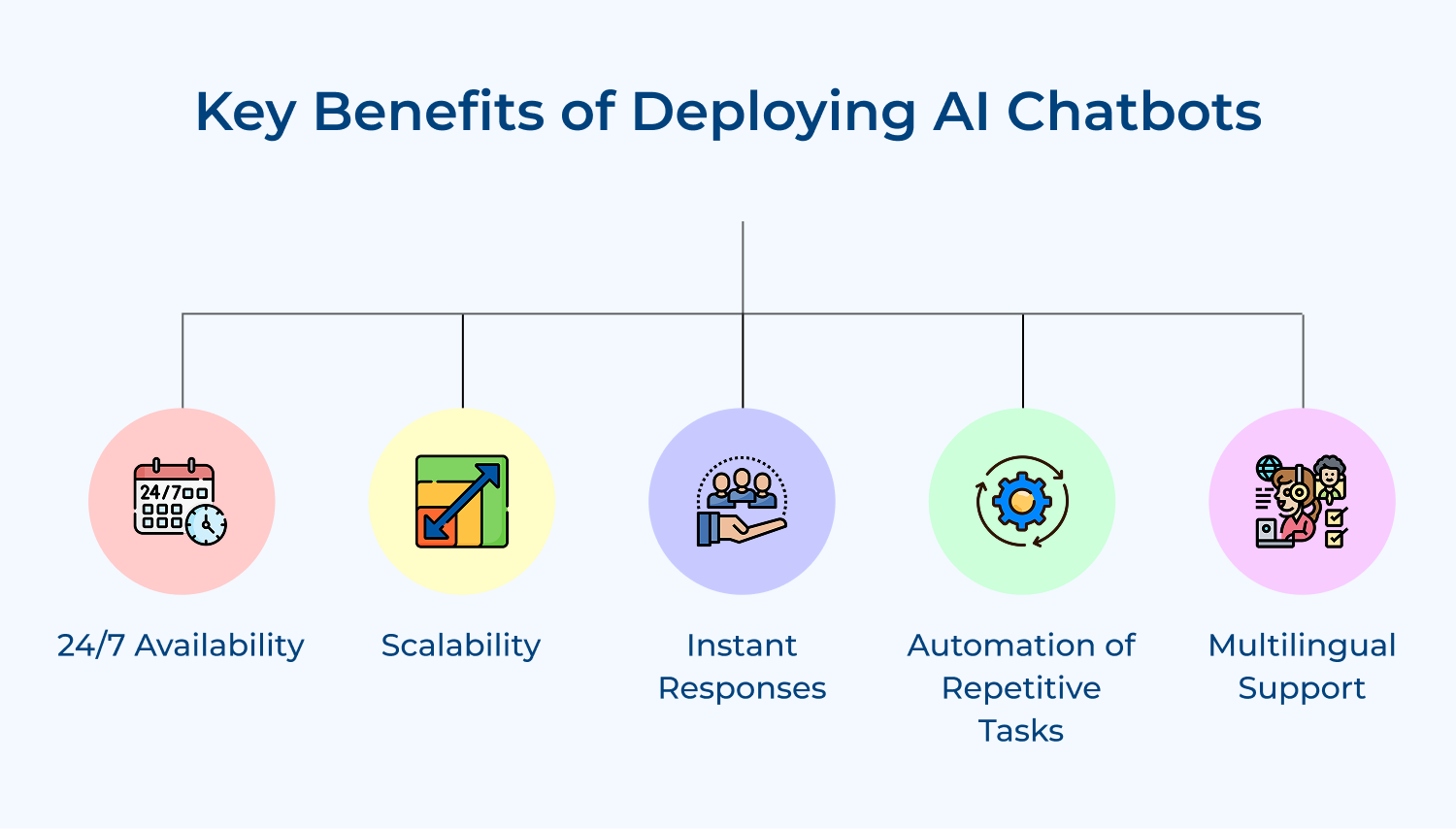
Chatbots deliver uninterrupted customer service regardless of time zones or holidays, eliminating operational hour limitations. The constant accessibility meets modern consumer expectations. The persistent presence significantly reduces customer frustration from waiting and improves overall satisfaction.
Chatbots handle unlimited simultaneous conversations without quality degradation, automatically adjusting to traffic fluctuations during seasonal peaks or promotional campaigns. The elasticity eliminates the resource planning challenges associated with human staffing models.
Chatbots deliver immediate answers within milliseconds, eliminating hold times that frustrate customers. The instantaneous engagement satisfies the growing consumer expectation for speed in digital interactions. The consistent responsiveness creates a frictionless experience.
Chatbots efficiently manage high-volume routine inquiries about shipping, returns, or product specifications without human intervention. The automation dramatically reduces operational costs while maintaining service consistency.
Chatbots seamlessly switch between languages without the hiring complexities of multilingual staff. This linguistic flexibility removes geographical barriers to market expansion and customer acquisition. Providing native-language support creates more inclusive and personalized experiences for international customers.
Live chat refers to the real-time communication platform that allows businesses to engage with their customers directly through their website or application. It enables instant messaging between customers and support reps, providing an efficient way to address queries.
Unlike email or phone support, live chat creates a seamless conversational experience that feels both personal and immediate. The technology bridges the gap between digital convenience and human connection, enabling businesses to maintain the warmth of person-to-person interaction within the digital landscape where customers increasingly spend their time.
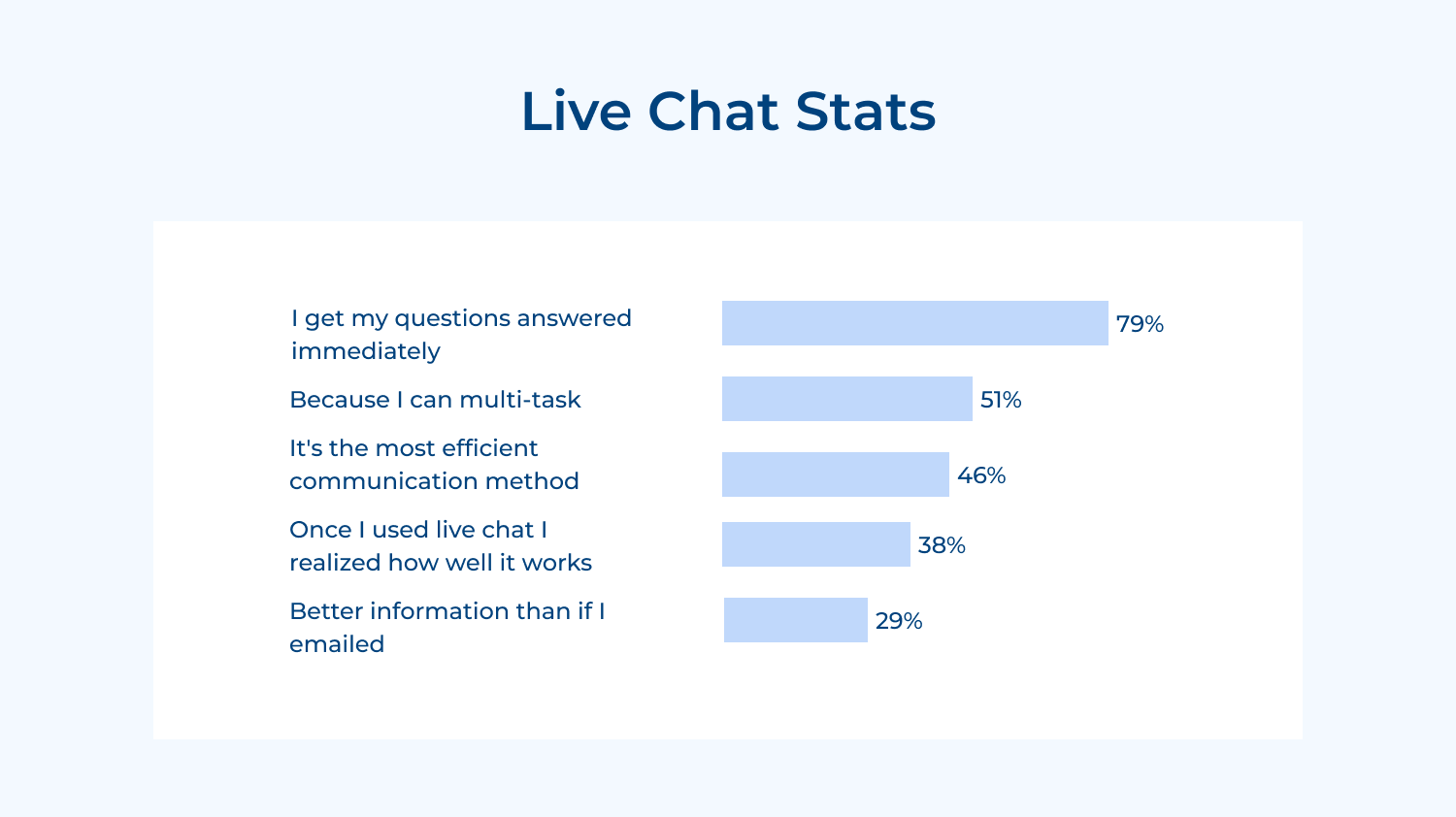
Live chat is becoming an increasingly popular feature on websites and for good reason. It offers a convenient and efficient way for businesses to connect with their customers in real-time.
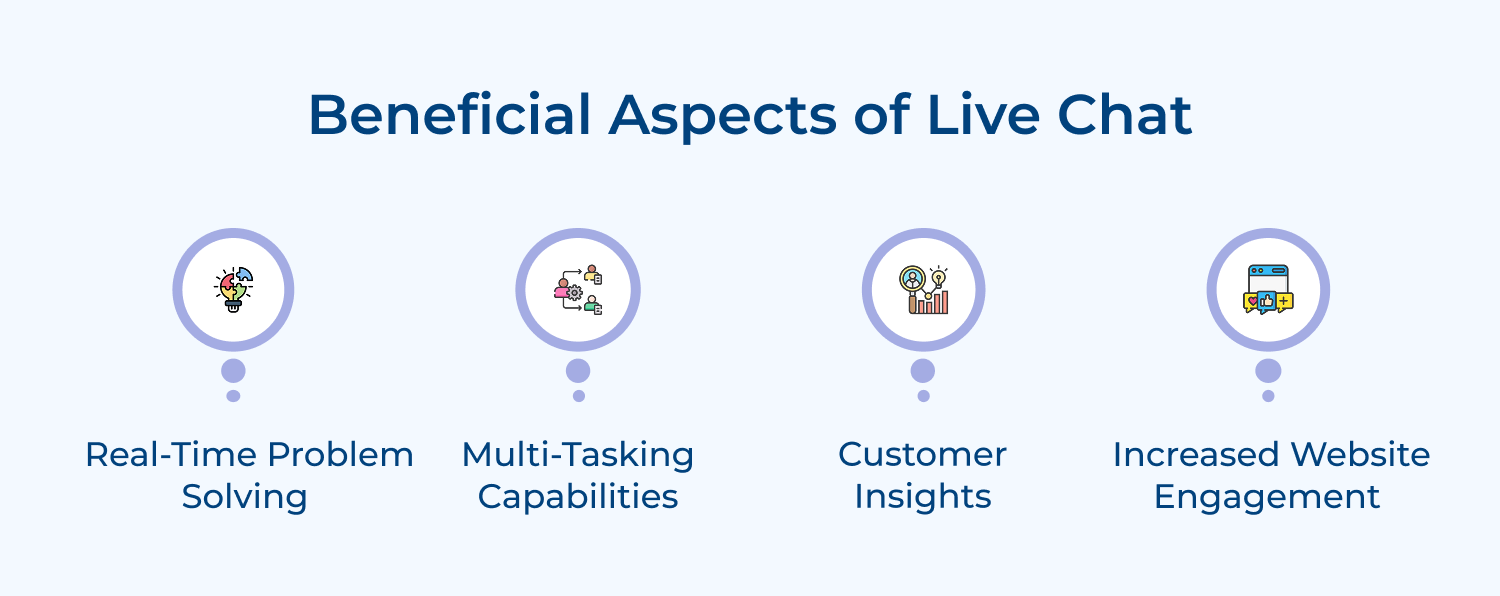
Live chat enables immediate troubleshooting from knowledgeable agents who can diagnose issues as they happen. The ability to share screens and exchange files creates a collaborative environment where complex problems become manageable through visual demonstration rather than just text descriptions.
Customer service representatives can efficiently manage several conversations simultaneously through live chat platforms, dramatically increasing productivity compared to phone support. This concurrent handling of inquiries eliminates customer queue frustration while maintaining personalized attention.
Every live chat conversation generates valuable data about customer needs, challenges, and behavior patterns that would otherwise remain hidden. These transcripts reveal trending issues, preference patterns, and unaddressed pain points when analyzed systematically. Businesses can leverage these insights to refine products and proactively address common concerns.
Proactive chat invitations strategically triggered based on visitor behavior create opportunities for meaningful interaction before potential customers leave your site. This timely engagement transforms passive browsing into active conversation, significantly reducing bounce rates and abandonment.
Chatbot vs live chat: the two popular options that have revolutionized how businesses interact with customers. Both software serve as valuable tools but they possess significant differences that are important to understand.
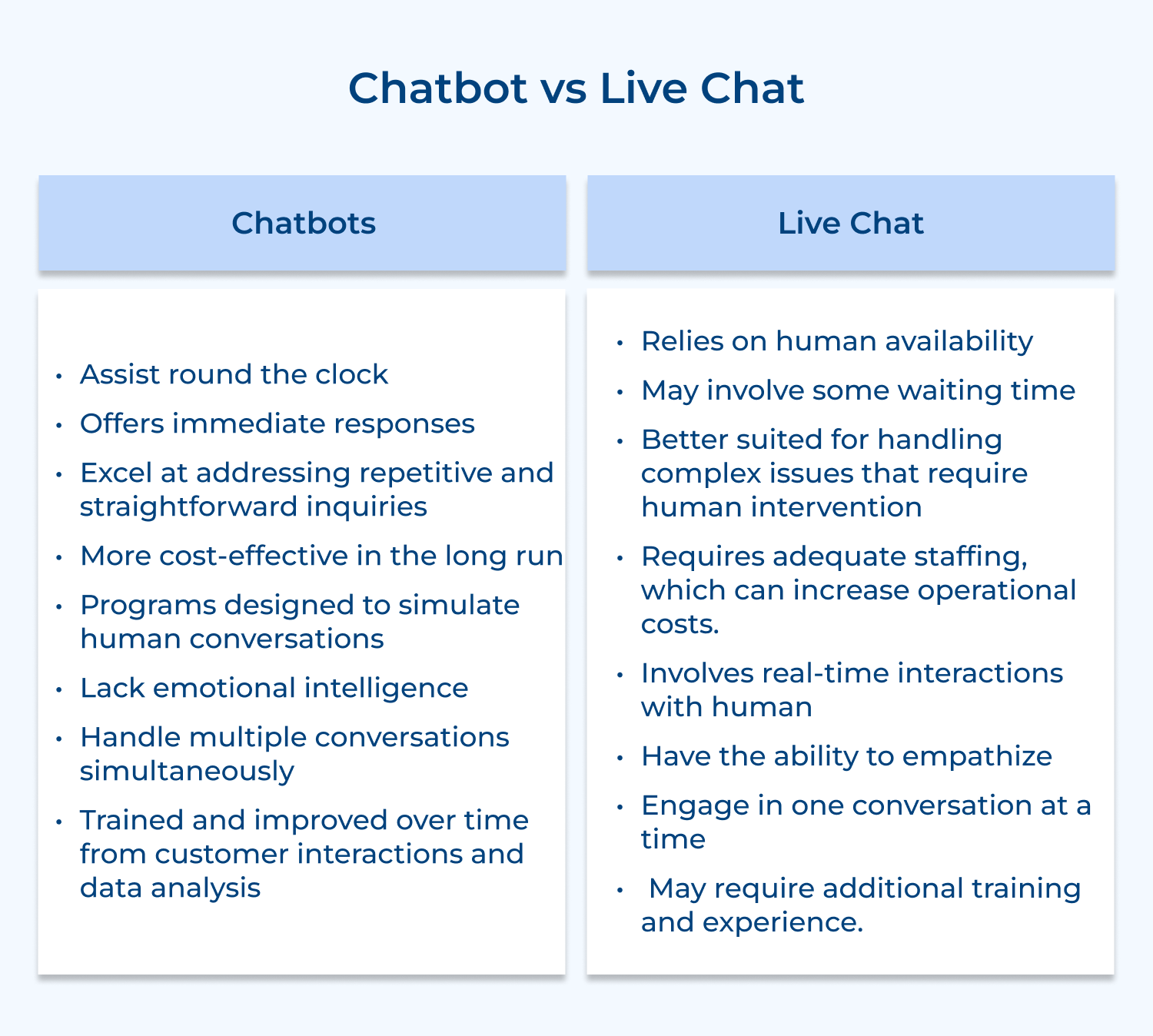
Live chat relies on human availability, which means it may not be available 24/7. Chatbots can provide assistance around the clock, ensuring constant availability and faster responses.
AI chatbots offer immediate responses, using pre-programmed answers to address common queries. While live chat involves waiting time, as representatives handle one conversation at a time.
Live chat is better suited for handling complex issues that require human intervention and problem-solving skills. Chatbots excel at addressing repetitive and straightforward inquiries, eliminating the need for human intervention in routine tasks.
Chatbots can be more cost-effective in the long run, as businesses do not have to employ a team of customer service representatives. Live chat requires adequate staffing, which can increase operational costs.
The fundamental difference between chatbots and live chat is the level of automation. Chatbots are computer programs designed to simulate human conversations, while live chat involves real-time interactions with human customer service representatives.
While chatbots are constantly evolving, they may still struggle with understanding slang, contextual nuances, or complex queries. Live chat offers the advantage of human language comprehension, allowing for more effective communication.
Human staff have the ability to empathize, understand emotions, and provide personalized support based on the customer’s sentiments. Chatbots lack emotional intelligence and fail to provide the same level of understanding & empathy.
Chatbots can handle multiple conversations simultaneously, making them ideal for businesses with high customer volume. Live chat requires human representatives to engage in one conversation at a time, limiting scalability.
Live chat allows for personalized interactions as human agents can tailor their responses based on the specific needs and preferences of the user. Chatbots are capable of basic personalization but lack the human touch to understand complex emotions or contexts.
Chatbots can be trained and improved over time as they learn from customer interactions and data analysis. It enables them to become more efficient in responding to queries. Live chat agents can also learn and improve, but it may require additional training and experience.
User preference is a crucial factor to consider. Some users prefer the convenience and speed of chatbots, while others appreciate the human touch and personalized assistance provided by live chat. Understanding your target audience and their preferences will help you make an informed choice.
Both live chat and chatbot are predominant channels used by businesses to assist and engage customers. Choosing between both the software for your business can be a challenging decision.
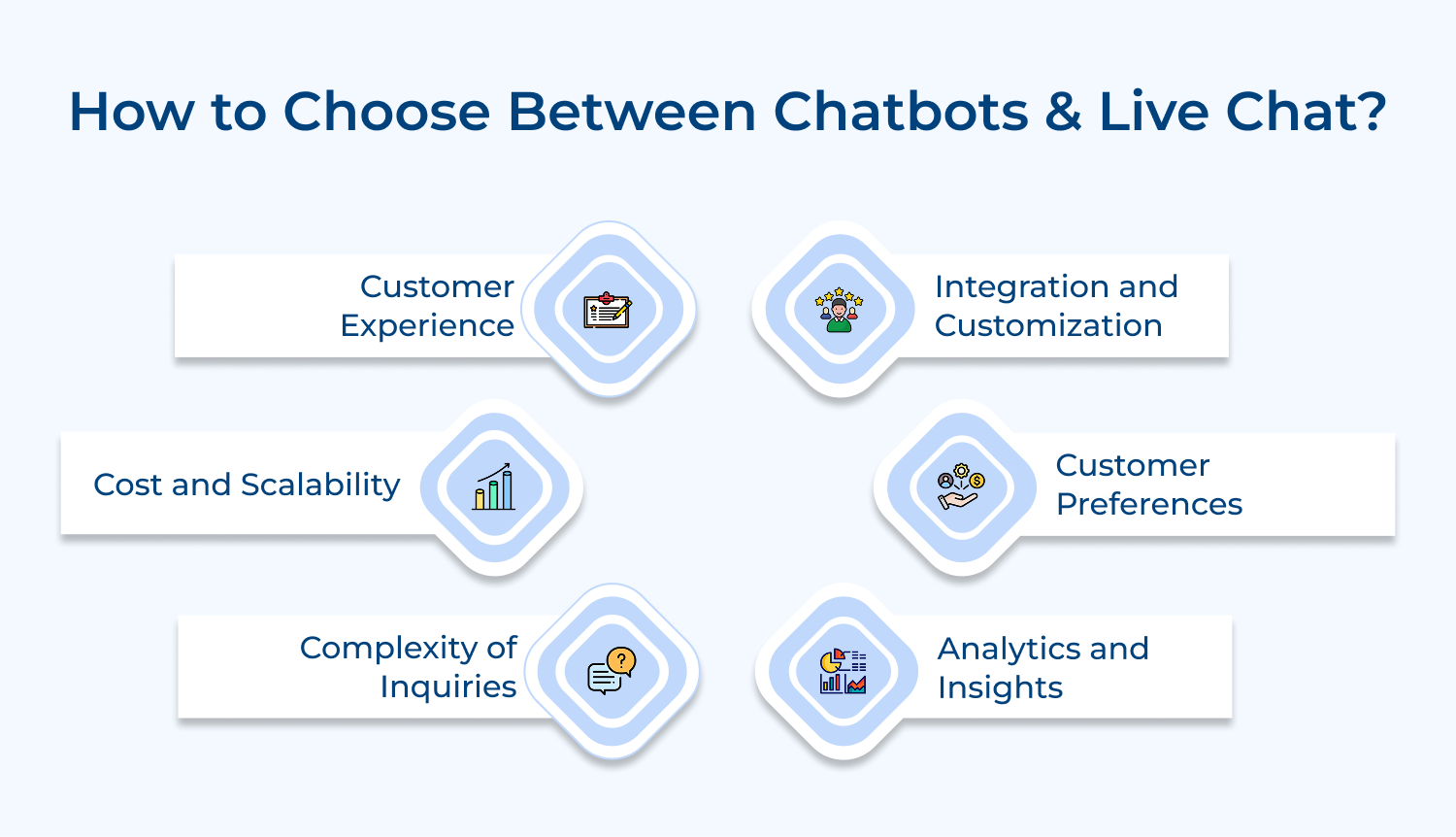
Consider the type of experience you want to provide to your customers.
Live chat allows for real-time, personalized interactions with a human representative, which can create a more engaging and dynamic experience. Chatbots offer 24/7 availability and quick responses, which can be convenient for customers who prefer self-service.
Here are some pro tips for making the choice:
Chatbots are generally more cost-effective and scalable compared to live chat. Once a chatbot is set up, it requires minimal maintenance and can handle multiple customer inquiries simultaneously.
Live chat requires human resources to be available around the clock and may become expensive as your business grows.
Here are some pro tips for making the choice:
Consider the complexity of the inquiries that your customers typically have. If your business deals with simple and straightforward queries, a chatbot can efficiently handle these repetitive tasks.
Customers often have complex or unique questions, live chat with trained representatives may be better equipped to provide accurate and personalized solutions.
Here are some pro tips for making the choice:
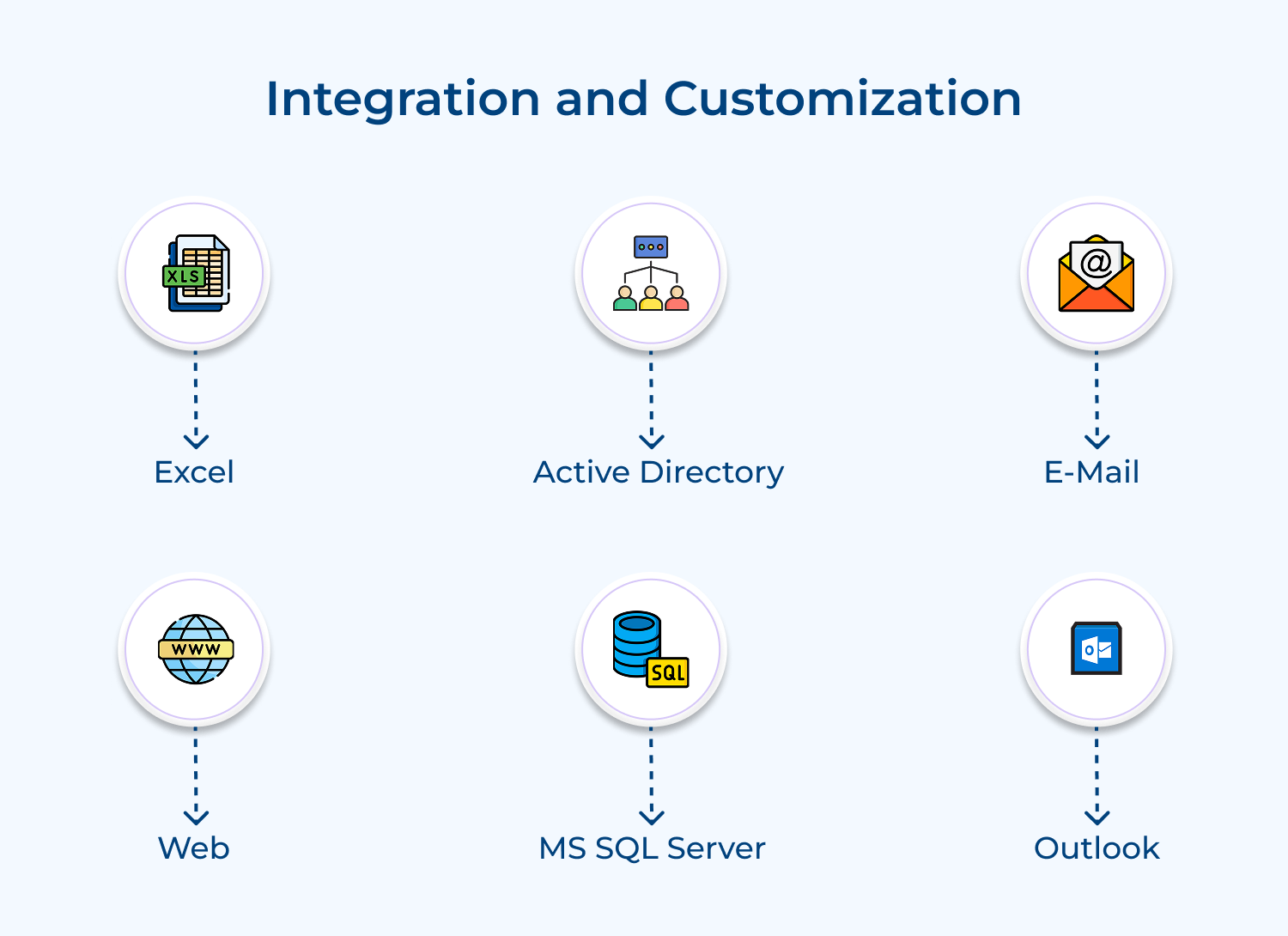
Evaluate your business systems to determine how well chatbots and live chat can integrate with your existing platforms. Chatbots can be seamlessly integrated with various channels &CRMs to facilitate automated responses and data collection.
Live chat may require more complex integrations and customization to align with your existing workflows.
Here are some pro tips for making the choice:
Consider your target audience and their preferences. Some customers may prefer convenience and speed, while others may value the human touch & personalized assistance.
Conducting surveys or collecting feedback can help you understand your customers’ preferences and make an informed decision. Understanding your target audience: Analyze their preferences and align your customer service channel accordingly.
Here are some pro tips for making the choice:
Both chatbots and live chat provide valuable data & insights that can help improve your customer service and marketing strategies.
Chatbots can generate reports on frequently asked questions and customer behavior. But live chat can provide real-time feedback and qualitative insights. Consider which type of data is most important for your business and choose accordingly.
Here are some pro tips for making the choice:
Chatbots and live chat are both essential tools in the world of customer service and support. While chatbots offer convenience and automation, live chat provides a human touch and personalized assistance. Finding the right balance between chatbots and live chat is crucial for businesses aiming to deliver exceptional customer support.
Understanding the strengths & limitations of each tool, analyzing customer preferences and designing an intuitive user experience helps businesses strike that delicate balance and provide a personalized, efficient & satisfying customer experience.

Why are Chatbots Important?
Chatbots have become essential business tools because they enable 24/7 customer service without human limitations. They efficiently handle repetitive inquiries, freeing staff for complex issues while collecting valuable customer data. Modern AI-powered chatbots continuously improve through interaction, reducing operational costs and providing consistent service experiences across all customer touchpoints.
Why do some businesses prefer to use chatbots instead of live chat systems?
Businesses often choose chatbots over live chat for cost efficiency—they eliminate staffing expenses for round-the-clock support. Chatbots excel at handling high volumes of simultaneous conversations without quality degradation. They provide instant responses without queues, maintain complete conversation records automatically, and scale effortlessly during traffic spikes, all while delivering consistent messaging across every customer interaction.
What are the advantages of using live chat over chatbots in customer service?
Live chat excels with human empathy and nuanced understanding that AI cannot fully replicate. Human agents can detect emotional cues, handle complex or unusual requests, and build authentic relationships through personalized interactions. They can exercise judgment in sensitive situations, use creative problem-solving for unique challenges, and seamlessly transition between multiple topics within a single conversation.
Why is chatbot better than live chat?
Chatbots are better than live chat in certain situations. They offer instant responses and can handle a large number of inquiries simultaneously, providing immediate assistance to customers. Chatbots also eliminate human error in responses and provide consistent information to customers. Bots can be programmed to remember customer preferences and history, offering a personalized experience.
Are chatbots accurate?
Chatbots are only as accurate as the information and programming they are provided with. They rely on pre-set responses and algorithms to provide answers to inquiries. While they can handle simple and frequently asked questions accurately, they may struggle with complex or unexpected queries. Advancements in technology, such as natural language processing, have significantly improved chatbot accuracy and capability to understand and respond to customer queries.
 https://omni24.io/wp-content/uploads/2026/08/AI-Customer-Service-Agents.png
1256
2400
Webvision Solution
https://omni24.io/wp-content/uploads/2023/04/Omni-Logo-1.svg
Webvision Solution2026-09-21 04:48:512026-09-21 04:48:51How to Build an AI Customer Service Agents: 8 Key Steps
https://omni24.io/wp-content/uploads/2026/08/AI-Customer-Service-Agents.png
1256
2400
Webvision Solution
https://omni24.io/wp-content/uploads/2023/04/Omni-Logo-1.svg
Webvision Solution2026-09-21 04:48:512026-09-21 04:48:51How to Build an AI Customer Service Agents: 8 Key Steps https://omni24.io/wp-content/uploads/2026/08/Omnichannel-Conversational-AI.png
1256
2400
Tushar Joshi
https://omni24.io/wp-content/uploads/2023/04/Omni-Logo-1.svg
Tushar Joshi2026-09-16 03:51:072026-09-16 03:51:07How to Build Omnichannel Conversational AI Strategy
https://omni24.io/wp-content/uploads/2026/08/Omnichannel-Conversational-AI.png
1256
2400
Tushar Joshi
https://omni24.io/wp-content/uploads/2023/04/Omni-Logo-1.svg
Tushar Joshi2026-09-16 03:51:072026-09-16 03:51:07How to Build Omnichannel Conversational AI Strategy https://omni24.io/wp-content/uploads/2026/08/Customer-Service-Teams.png
1256
2400
Tushar Joshi
https://omni24.io/wp-content/uploads/2023/04/Omni-Logo-1.svg
Tushar Joshi2026-09-15 04:01:522026-09-15 04:02:16How to Build Customer Service Teams: 6 Key Steps
https://omni24.io/wp-content/uploads/2026/08/Customer-Service-Teams.png
1256
2400
Tushar Joshi
https://omni24.io/wp-content/uploads/2023/04/Omni-Logo-1.svg
Tushar Joshi2026-09-15 04:01:522026-09-15 04:02:16How to Build Customer Service Teams: 6 Key Steps
Whether it’s about acquire, engage or support – Omni24 covers all your customer engagement needs in one complete platform.

Copyright ©2026 Veemo All rights reserved.
CA, Los Angeles, Hall Ave, 19011