How to Map Consumer Decision Journey: 6 Key Strategies
Navigate the modern consumer decision journey to optimize touchpoints, personalize marketing and drive conversions effectively.

Navigate the modern consumer decision journey to optimize touchpoints, personalize marketing and drive conversions effectively.
Understanding your customers’ decision journey matters more today than ever. Shoppers no longer follow a straight line from A to B—they jump between online reviews, social media, store visits and more before buying.
According to a 2026 multichannel marketing report, 73% of consumers prefer using multiple channels before making a purchase. Another study showed businesses employing 3+ channels retain 89% of their customers, thanks to seamless experiences.
This journey is full of touchpoints, influences and feedback loops. Let’s explore this concept by getting to know what customers really want, where they hesitate and how to communicate better.
The consumer decision journey represents the process customers go through when considering, purchasing, using and developing loyalty to a product or service. The model replaces the traditional sales funnel concept, acknowledging that modern consumers interact with brands through multiple touchpoints and channels before making a purchase decision.
Understanding the consumer decision journey is crucial for businesses to effectively engage with potential customers at each stage of their buying process. It allows companies to tailor their marketing strategies, improve customer experiences and ultimately drive sales as well as brand loyalty.
Key objectives:
Understanding the consumer decision journey is vital for effective marketing. Here are key reasons why it matters:
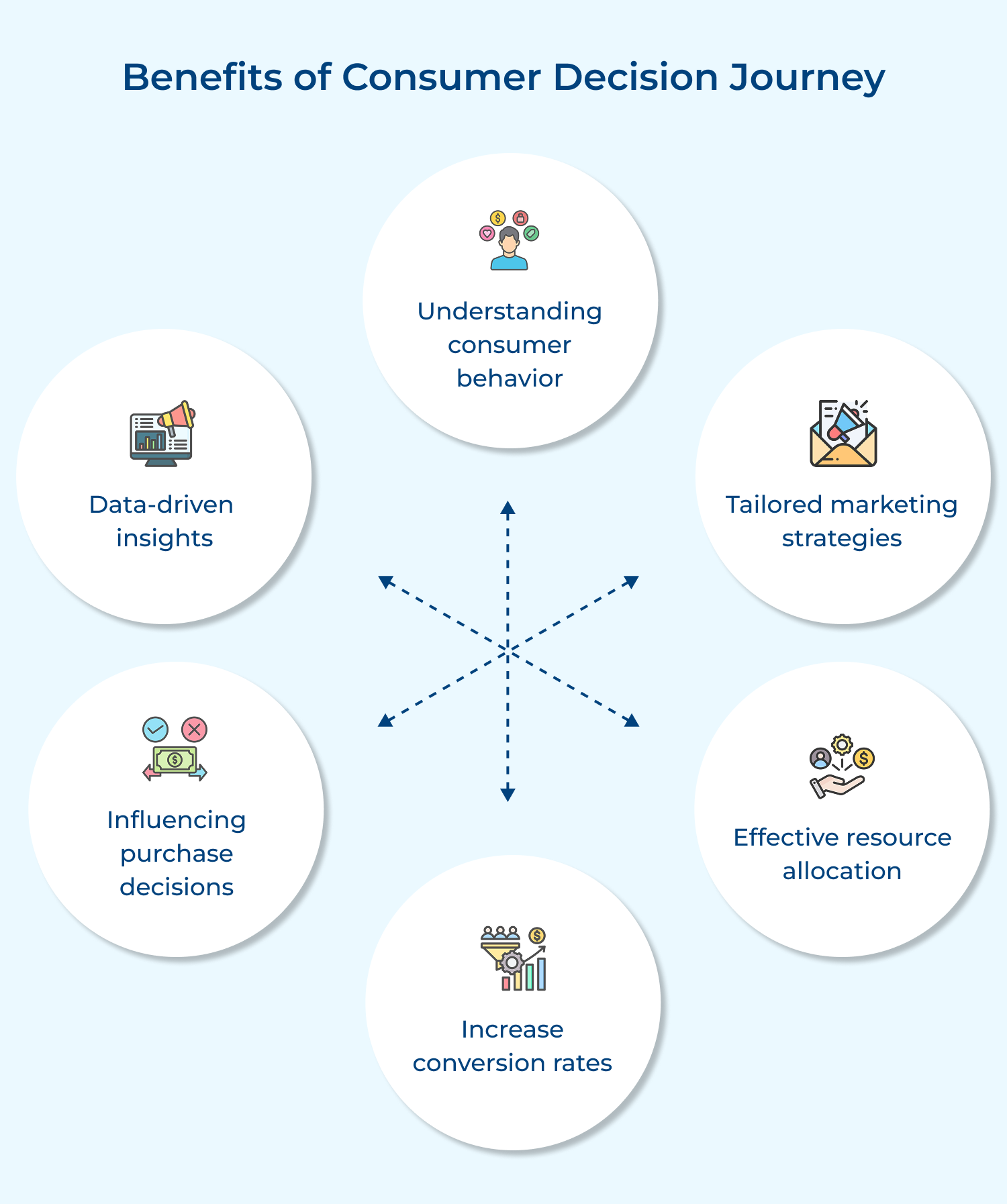
Understanding consumer behavior: The Consumer Decision Journey shows how customers interact with brands—from awareness to post-purchase. Mapping this journey helps identify key touchpoints, pain points and engagement opportunities. Hence, leading to smarter customer service strategies.
Tailored marketing strategies: These strategies enable businesses to design targeted campaigns for each stage of the journey. Personalized messaging resonates more, boosts engagement and strengthens customer relationships.
Effective resource allocation: Spotting the most impactful touchpoints can help businesses focus resources where they matter most. This ensures marketing budgets drive real influence and maximize ROI.
Increase conversion rates: The journey highlights moments that shape buying decisions. Addressing concerns, removing barriers, while providing timely info at these points can significantly lift conversions and sales.
Influencing purchase decisions: When businesses know where to step in, they can guide choices with the right incentives or information – gaining market share and staying ahead of competitors.
Data-driven insights: Collecting data across touchpoints uncovers patterns in behavior and preferences. These insights refine strategies, improve products and enhance experiences, fueling long-term growth as well as loyalty.
Mapping the consumer decision journey helps optimize marketing efforts. Here are key steps to effectively create your journey map:
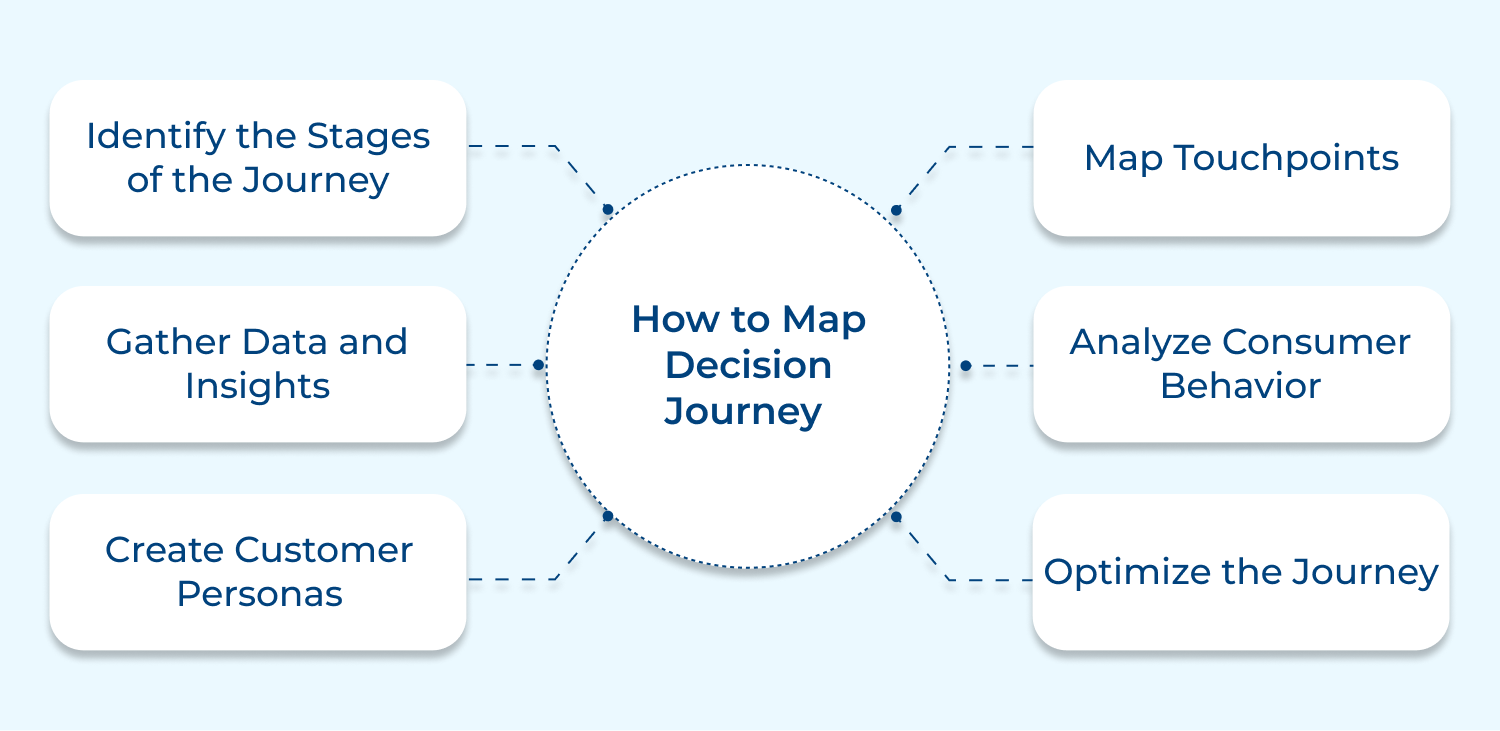
Identifying the stages of the customer journey gives a clear view of how customers move from awareness to post-purchase.
Businesses can use these stages to align content, touchpoints and marketing efforts, set stage-specific KPIs as well as measure effectiveness accurately. This approach also enables personalized communication that meets customers’ needs at each point in their journey.
Actionable tips:
Data and insights are key to understanding how customers truly behave. They show real patterns, not assumptions, helping businesses make smarter decisions on marketing, products and customer experience.
Use this data to refine your journey map, spot trends and pain points, guide personalization, prioritize improvements, allocate resources as well as predict future customer behavior.
Actionable tips:
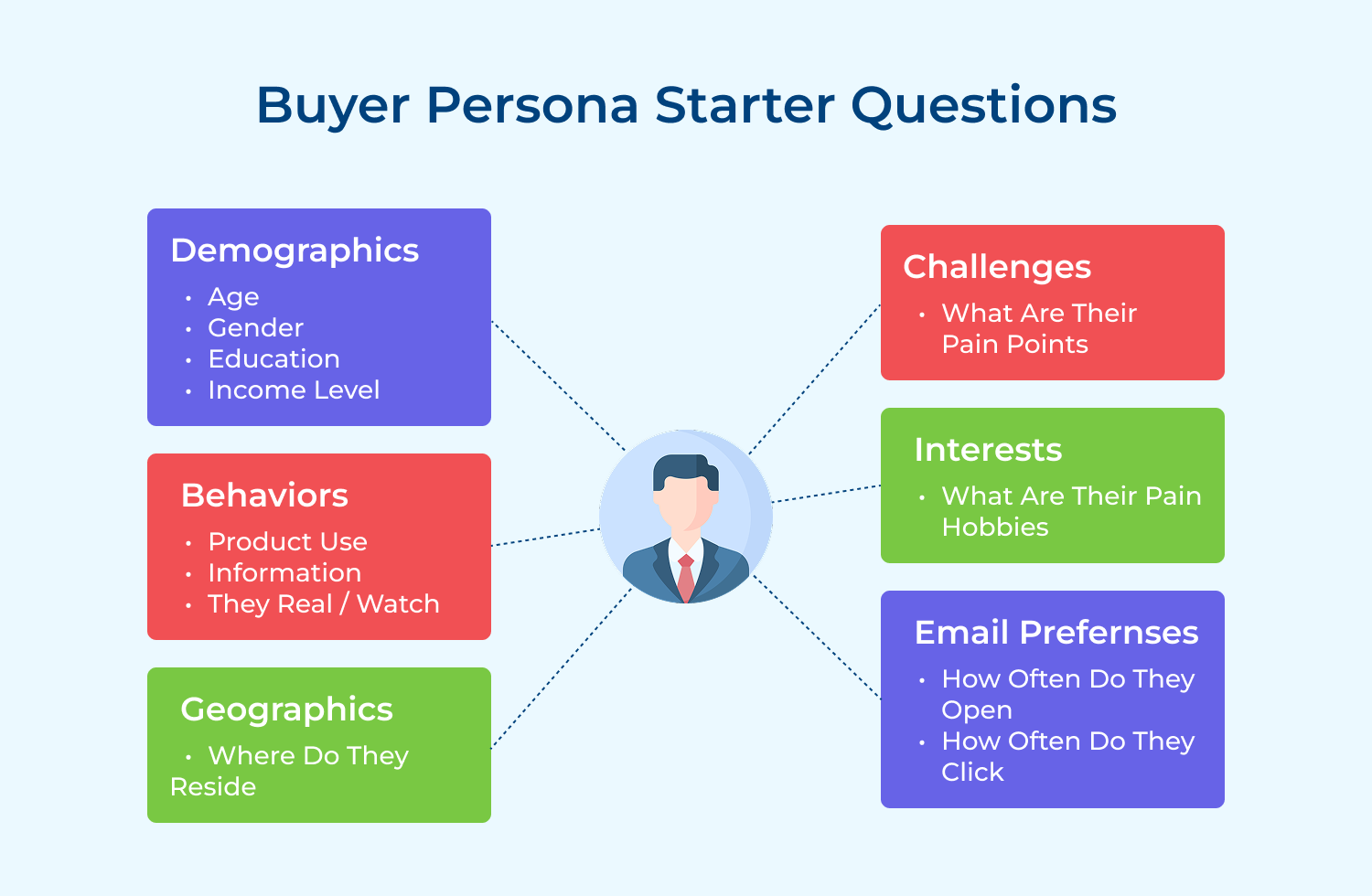
Customer personas put a human face on data, helping teams understand and empathize with different customer segments. They capture key traits, motivations and behaviors, making it easier to tailor strategies as well as communications.
Use personas to craft targeted campaigns, personalize experiences, guide content, product development and customer service. They also help anticipate customer needs at each journey stage, supporting more customer-focused decisions across the organization.
Actionable tips:
Mapping touchpoints gives a clear view of every interaction customers have with your brand. It highlights key moments that influence decisions and shows how channels/teams connect to shape the journey.
Use the map to spot gaps, eliminate redundancies and improve the overall experience. It also ensures consistent messaging and service across all touchpoints, creating a seamless omnichannel journey.
Actionable tips:
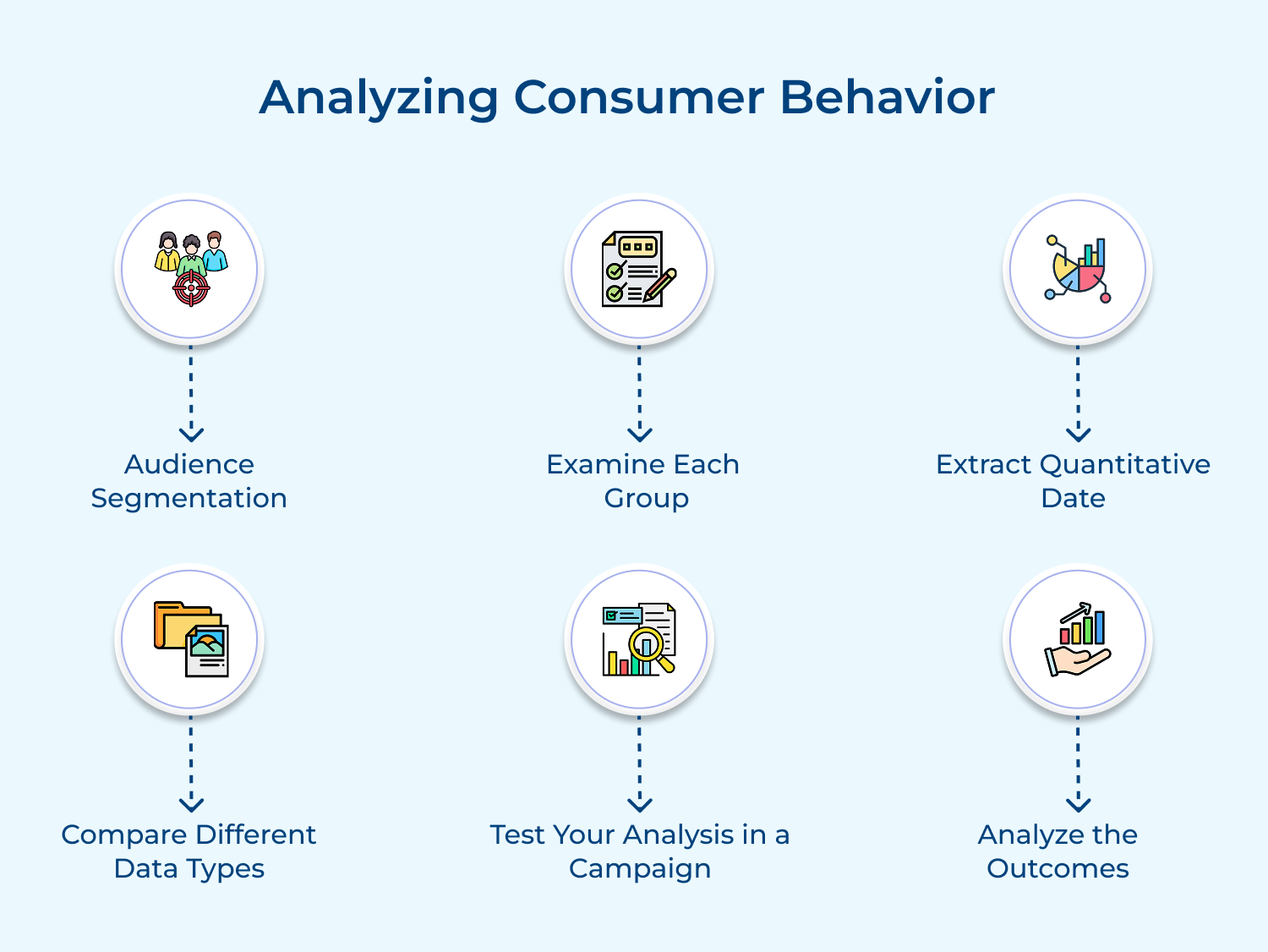
Analyzing consumer behavior reveals why customers make certain decisions. It uncovers motivations, barriers and triggers that influence their journey while showing how well current strategies are working.
Use these insights to optimize the journey, remove friction and enhance experiences. Behavioral analysis also supports nudge strategies, improves conversions and helps predict customer lifetime value as well as churn risk more accurately.
Actionable tips:
Optimization keeps the customer journey evolving based on data and insights. It helps businesses adapt to changing expectations, market trends and new technologies, boosting satisfaction, conversions as well as loyalty.
Use optimization to streamline processes, personalize experiences and fix pain points. This might include redesigning touchpoints, adopting new tools or retraining teams. Continuous improvement ensures the journey stays relevant, effective and delivers better business results.
Actionable tips:
Mapping the stages of the consumer decision journey is essential for targeted marketing. Here are the key stages to consider:
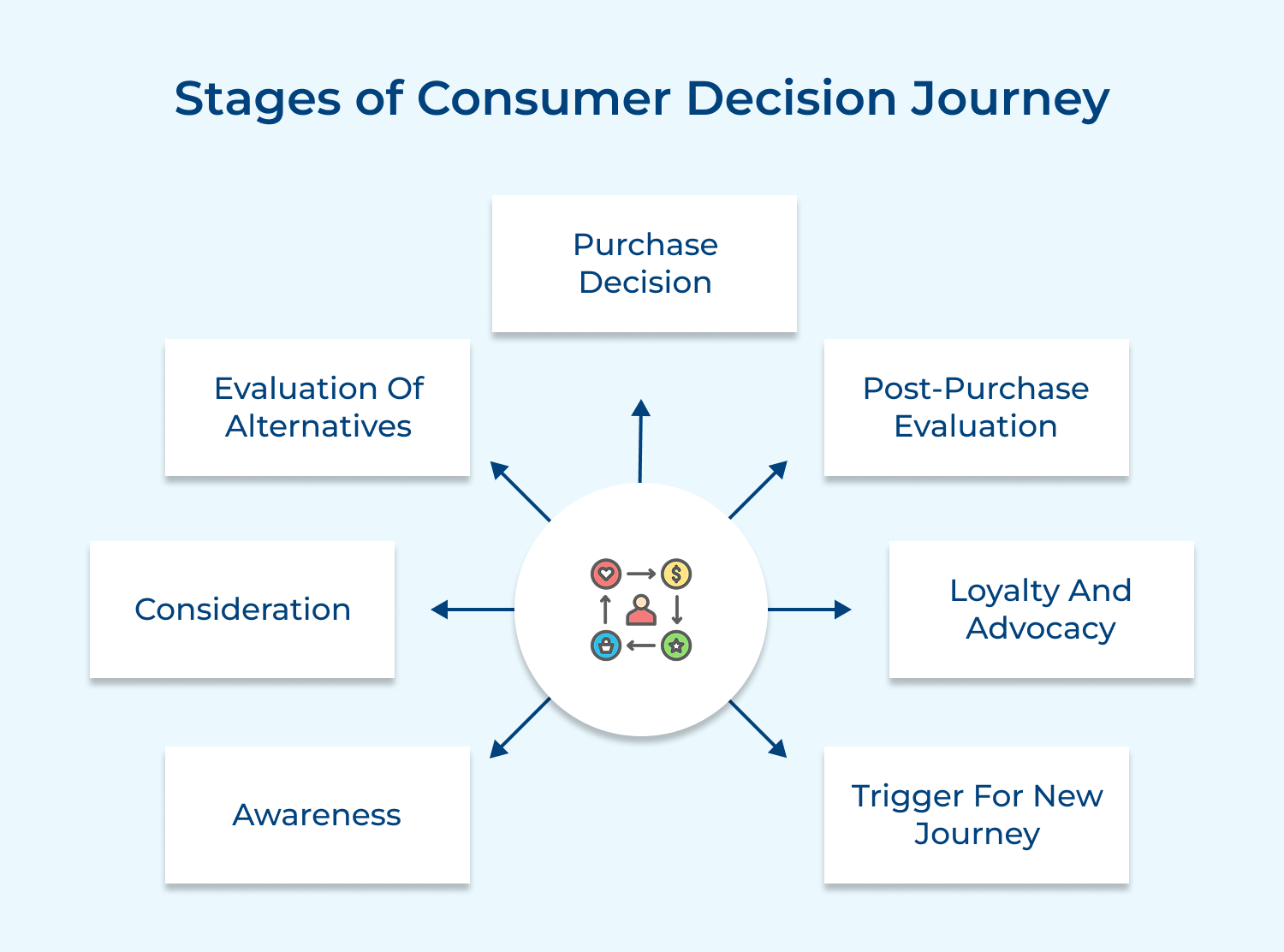
Awareness
The journey begins when a consumer becomes aware of a need or desire. The awareness can be triggered by various factors, such as personal circumstances, marketing messages, or social influences.
During this stage, consumers start to recognize that they have a problem that needs to be solved or a want that needs to be fulfilled.
Aim to capture attention and create initial interest in their products or services. Effective marketing strategies at this stage often involve broad-reach advertising, content marketing and social media presence to increase brand visibility as well as spark interest.
Consideration
Once aware of their need, consumers enter the consideration stage. They begin to research potential solutions and gather information about various options. The stage involves active information seeking, where consumers explore different brands, products and services that might meet their needs. They may consult online reviews, ask for recommendations from friends and family, or compare features as well as prices across multiple options.
Brands focus on providing detailed information about their offerings, highlighting unique selling points and positioning themselves as viable solutions to the consumer’s problem or desire.
Evaluation of Alternatives
In this stage, consumers narrow down their choices and critically evaluate the alternatives they’ve identified. They compare the pros and cons of each option, considering factors such as price, quality, features, brand reputation along with personal preferences. The stage often involves in-depth research, such as reading product comparisons, watching demo videos, or visiting stores for hands-on experience.
Businesses strive to differentiate themselves from competitors and address potential concerns or objections. Providing clear, compelling information and facilitating easy comparisons can significantly influence consumer decisions at this stage.
Purchase Decision
After evaluating alternatives, consumers make their purchase decision. The stage involves choosing the product or service that best meets their needs while aligning with their preferences and budget. The decision can be influenced by various factors, including availability, special offers, financing options or the purchasing experience itself.
Brands focus on making the purchase process as smooth and convenient as possible, addressing any last-minute concerns as well as providing reassurance about the choice. Effective strategies might include offering incentives, streamlining the checkout process, or providing excellent customer support.
Post Purchase Evaluation
The journey doesn’t end with the purchase. In the post-purchase stage, consumers evaluate their satisfaction with the product or service. They assess whether the purchase has met their expectations and solved their initial problem or fulfilled their desire.
The stage is critical for brands as it influences customer satisfaction, likelihood of repeat purchases and potential word-of-mouth recommendations.
Companies often implement strategies to enhance the post-purchase experience, such as follow-up communications, user guides, or customer support to ensure product satisfaction and address any issues promptly.
Loyalty and Advocacy
If consumers are satisfied with their purchase and overall experience, they may enter the loyalty and advocacy stage. Loyal customers are more likely to make repeat purchases, try new products from the same brand and become brand advocates.
Brands focus on nurturing these relationships through loyalty programs, personalized communications and exclusive offers to maintain and strengthen customer loyalty.
Trigger for New Journey
The consumer decision journey is cyclical and various factors can trigger a new journey. These triggers might include the need for a replacement product, desire for an upgrade, changes in personal circumstances, or exposure to new marketing messages.
Satisfied customers may start a new journey with the same brand, while dissatisfied ones might explore alternatives. Brands aim to stay top-of-mind and relevant to their customers, anticipating future needs while providing timely offers or information to initiate new decision journeys.
Leveraging the consumer decision journey can enhance marketing effectiveness. Here are actionable strategies to implement in your campaigns:
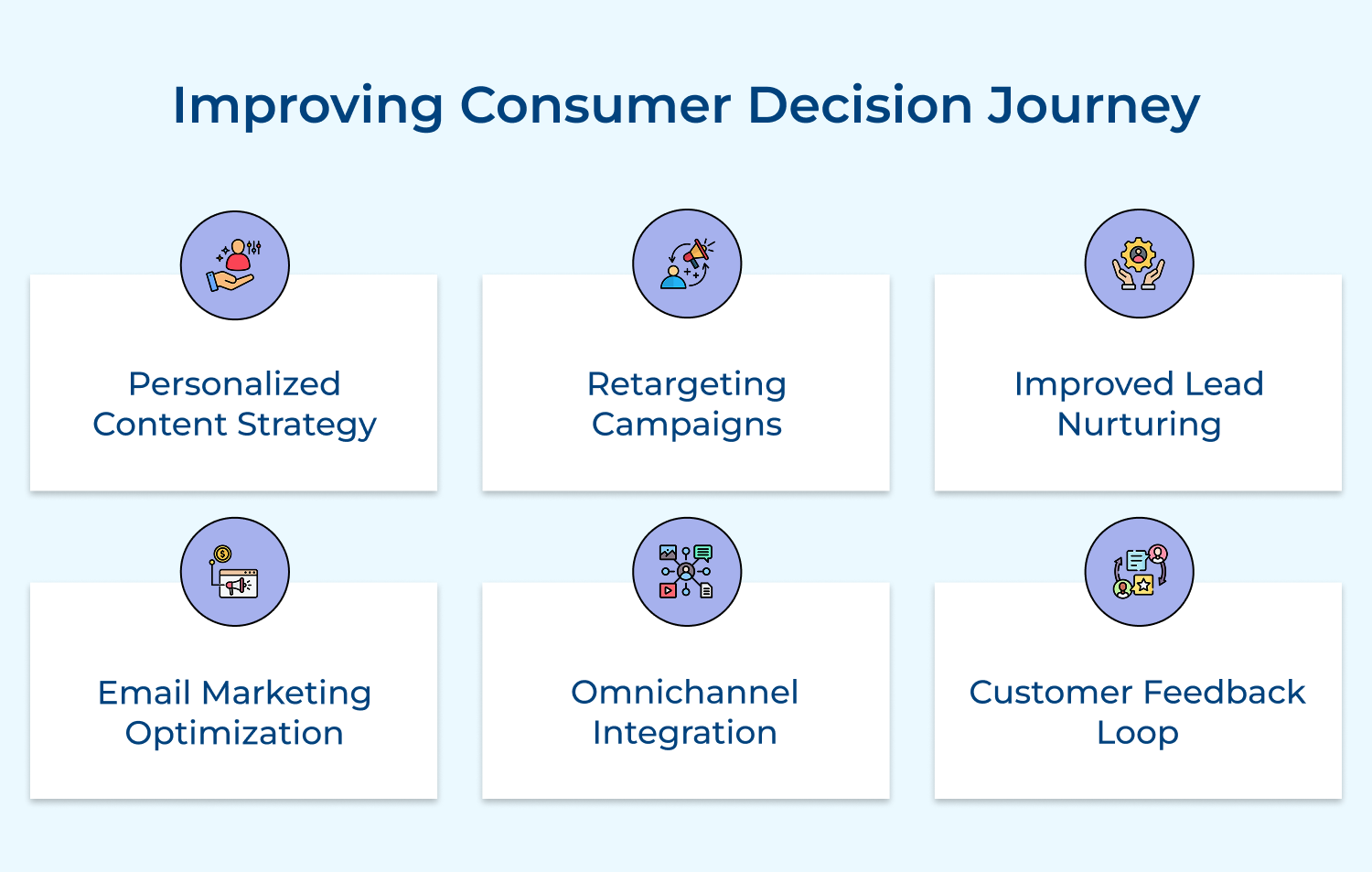
Personalized Content Strategy
Use insights from the consumer decision journey to create content for each stage. Address pain points at awareness, highlight value in consideration and provide detailed info at the decision stage. Tailor messaging to customer personas for maximum relevance.
Retargeting Campaigns
Identify where customers drop off and re-engage them with tailored ads. Target abandoned carts with product-specific messages or offer incentives to interested users. Dynamic retargeting shows products they’ve viewed, increasing chances of conversion.
Improved Lead Nurturing
Align lead nurturing with journey stages. Send educational content early, case studies mid-stage and demos or offers later. Automated, timely messages keep communication relevant and guide leads smoothly through the funnel.
Email Marketing Optimization
Segment emails based on journey stages and needs. Use behavioral triggers for actions like abandoned carts or post-purchase follow-ups. Personalize content and subject lines to boost open rates, engagement, as well as overall email performance.
Omnichannel Integration
Create a seamless experience across all channels. Ensure consistent messaging and branding, while letting customers move between devices effortlessly. Combine data from all channels to build unified profiles and deliver personalized experiences.
Customer Feedback Loop
Collect feedback at key journey points via surveys, reviews and social media. Analyze insights to improve strategies and experiences. Act on feedback and communicate changes back to customers to show commitment as well as build trust.
Implementing best practices can streamline the customer decision journey. Here are essential strategies to guide your approach effectively:
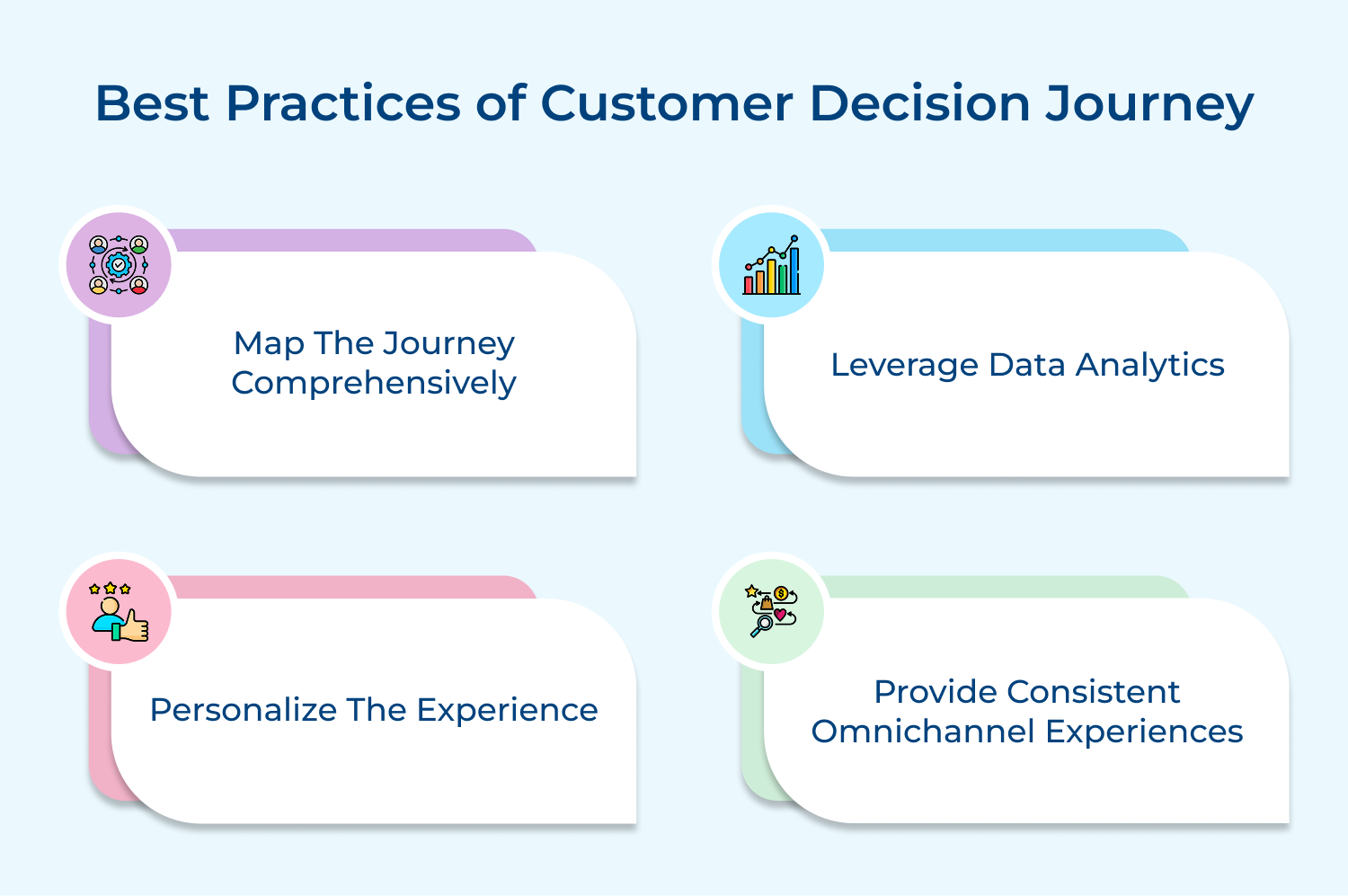
The consumer decision journey represents a paradigm shift in how businesses approach marketing and customer engagement. By recognizing the complexity and non-linear nature of modern purchasing behaviors, companies can adapt their strategies to meet evolving consumer needs.
Mapping the journey, from awareness to post-purchase advocacy, provides invaluable insights that drive personalized experiences, targeted content and optimized touchpoints. As technology continues to reshape consumer interactions, staying attuned to the nuances of the decision journey becomes increasingly critical.
Businesses that successfully navigate this landscape will foster stronger customer relationships, enhance brand loyalty and gain a competitive edge. Ultimately, embracing the consumer decision journey is about creating meaningful connections that drive long-term business success.

How do consumers make decisions?
Consumers make decisions through a complex process involving multiple stages. They typically start with recognizing a need or desire, then search for information about potential solutions. They evaluate alternatives based on various criteria, including price, quality and brand reputation. Emotions, personal experiences and social influences also play significant roles. Consumers choose the option that best aligns with their needs, preferences and perceived value.
How to guide a good customer decision journey?
Businesses should focus on providing relevant, timely information at each stage. Create awareness through targeted marketing, offer detailed product information for consideration and provide comparison tools for evaluation. Make the purchase process seamless and offer post-purchase support. Use personalization to tailor experiences and ensure consistency across all touchpoints. Regularly gather and act on customer feedback to continuously improve the journey.
Why is understanding the consumer decision journey so important?
Understanding the consumer decision journey is crucial because it allows businesses to align their strategies with customer needs and behaviors. It helps identify key touchpoints and moments of influence, enabling more effective marketing as well as customer experience design. The understanding facilitates personalized communication, targeted interventions and improved product development. It also helps in predicting customer behavior, reducing friction in the buying process and increasing conversions as well as customer satisfaction.
Why is understanding customer intent crucial for effective marketing strategies?
Understanding customer intent is crucial for effective marketing strategies because it allows businesses to tailor their messaging to meet the specific needs and desires of their target audience. By recognizing and responding to customer intent, businesses can increase their chances of converting leads into customers.
How psychology factors into consumer decision journey mapping?
Psychology plays a significant role in consumer decision journey mapping. It helps explain motivations, emotions and cognitive biases that influence decisions. Understanding concepts like loss aversion, social proof and choice overload can inform strategy development. Psychological insights can reveal why customers behave certain ways at different stages, helping businesses design more compelling experiences. It also aids in creating persuasive messaging and identifying potential barriers or triggers in the decision-making process.
How do consumers make purchasing decisions?
Consumers make purchasing decisions through a process that involves recognizing a need, gathering information, evaluating options and making a final choice. They consider factors like price, quality, brand reputation and personal preferences. Social influences, including reviews and recommendations, often play a role. Emotions and past experiences also impact decisions. The process can vary in complexity depending on the product or service, with higher-value purchases typically involving more deliberation.
What affects the decision-making process?
Multiple factors affect the decision-making process, including personal characteristics like age, income and lifestyle. External influences such as cultural norms, social trends and economic conditions play a role. Marketing efforts, including advertising and promotions, can sway decisions. Product attributes, price and availability are crucial factors. Psychological elements like perception, motivation and attitudes significantly impact choices. The buying context, including time pressure and purchase environment, also affects decision-making.
 https://omni24.io/wp-content/uploads/2026/08/Omnichannel-Chatbots.png
1256
2400
Tushar Joshi
https://omni24.io/wp-content/uploads/2023/04/Omni-Logo-1.svg
Tushar Joshi2026-08-13 04:43:302026-08-24 09:02:01How Omnichannel Chatbots Improve Your Customer Experience
https://omni24.io/wp-content/uploads/2026/08/Omnichannel-Chatbots.png
1256
2400
Tushar Joshi
https://omni24.io/wp-content/uploads/2023/04/Omni-Logo-1.svg
Tushar Joshi2026-08-13 04:43:302026-08-24 09:02:01How Omnichannel Chatbots Improve Your Customer Experience https://omni24.io/wp-content/uploads/2026/08/Ecommerce-Chatbots-1.png
1256
2400
Tushar Joshi
https://omni24.io/wp-content/uploads/2023/04/Omni-Logo-1.svg
Tushar Joshi2026-08-12 03:57:552026-08-24 09:03:22Ecommerce Chatbots: What are They and Their Use Cases
https://omni24.io/wp-content/uploads/2026/08/Ecommerce-Chatbots-1.png
1256
2400
Tushar Joshi
https://omni24.io/wp-content/uploads/2023/04/Omni-Logo-1.svg
Tushar Joshi2026-08-12 03:57:552026-08-24 09:03:22Ecommerce Chatbots: What are They and Their Use Cases https://omni24.io/wp-content/uploads/2026/08/Omnichannel-Ecommerce.png
1256
2400
Tushar Joshi
https://omni24.io/wp-content/uploads/2023/04/Omni-Logo-1.svg
Tushar Joshi2026-08-11 04:50:362026-08-24 09:00:45How to Create an Omnichannel Ecommerce Strategy: 7 Best Ways
https://omni24.io/wp-content/uploads/2026/08/Omnichannel-Ecommerce.png
1256
2400
Tushar Joshi
https://omni24.io/wp-content/uploads/2023/04/Omni-Logo-1.svg
Tushar Joshi2026-08-11 04:50:362026-08-24 09:00:45How to Create an Omnichannel Ecommerce Strategy: 7 Best Ways
Whether it’s about acquire, engage or support – Omni24 covers all your customer engagement needs in one complete platform.

Copyright ©2026 Veemo All rights reserved.
CA, Los Angeles, Hall Ave, 19011