What is Customer Experience CRM? Why Does it Matters?
Every brand interaction matters; customer experience CRM delivers a 360-degree customer view for customized, interest-based offers today.
Every brand interaction matters; customer experience CRM delivers a 360-degree customer view for customized, interest-based offers today.
Customer experience (CX) has become a key competitive differentiator across many industries. Every successful business offers positive customer experiences – a key to making your business thrive.
According to a study by PwC, 73% of all consumers point to customer experience as an important factor in their purchasing decisions.
Customer relationship management (CRM) is the key to a better customer experience. Businesses cannot afford to overlook the importance of delivering exceptional customer service in this highly competitive market.
CRM systems help businesses to manage and improve their customer interactions, from initial contact to after-sales support.
Let us explore the concept of customer experience CRM and why businesses need to prioritize it.
Customer Experience in CRM (Customer Relationship Management) refers to the overall interaction a customer has with a business throughout their purchasing journey. It confines all touchpoints a customer has with a company, including pre-sales, post-sales, and ongoing customer support.
The impact of effective customer experience management extends far beyond individual transactions, fundamentally transforming how businesses operate and grow. When companies prioritize customer experience through their CRM systems, they create a ripple effect that influences employee motivation, operational efficiency, and market positioning.
Key objectives:
CX and CRM are integral components for any business. Prioritizing CX and effectively managing customer relationships help businesses to attract customers.
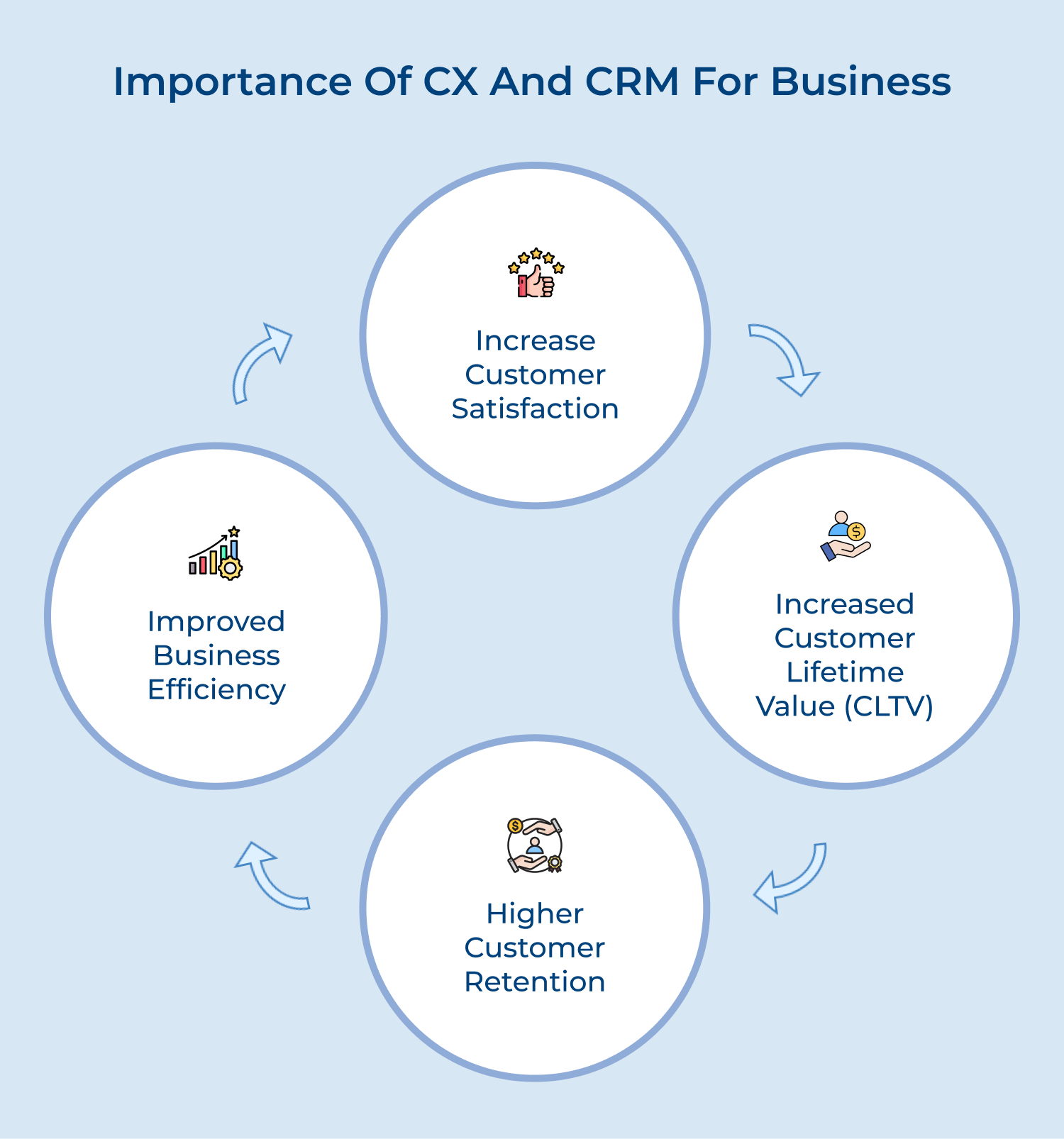
When customers experience positive interactions across all touchpoints, they develop genuine happiness and trust in your brand. The satisfaction creates a natural momentum that drives customers to continue choosing your business over competitors. Satisfied customers become voluntary advocates who share positive recommendations with friends, family, etc.
Effective CX and CRM strategies concentrate on nurturing long-term customer relationships rather than pursuing short-term transactional gains. By developing a deeper understanding of individual customer needs, preferences, and behaviors, businesses can strategically increase each customer’s total lifetime value.
Retaining existing customers proves significantly more cost-effective than constantly acquiring new ones through expensive marketing and sales efforts. Customer experience and CRM systems enable businesses to identify at-risk customers early through behavioral patterns and engagement metrics.
CRM software creates a centralized platform that consolidates customer data management and automates complex workflows across departments. The centralization eliminates redundant processes, reduces time-consuming manual tasks, and improves overall operational efficiency throughout the organization.
CRM (Customer Relationship Management) systems have become a vital tool for businesses. These platforms offer a wide range of benefits that can greatly enhance a company’s CX.
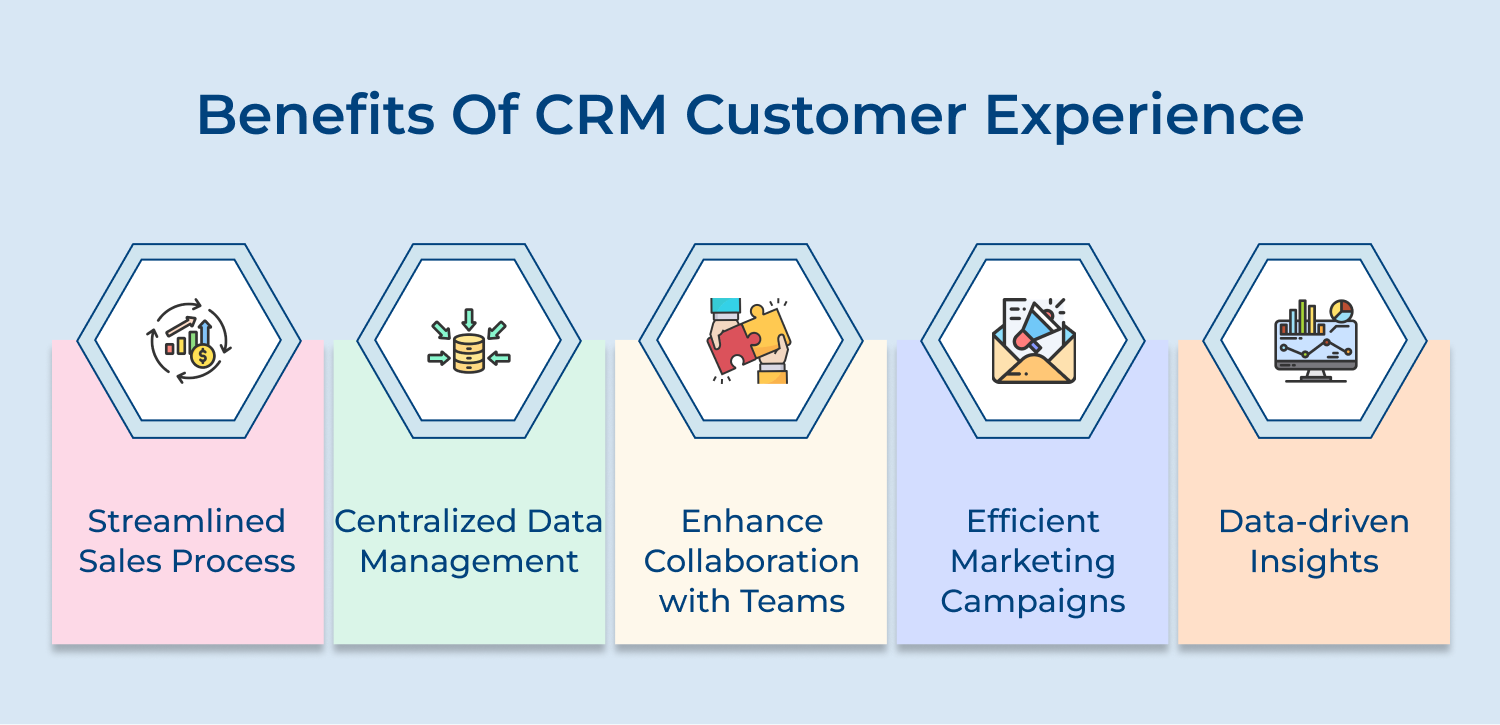
CRM platforms automate essential sales processes including lead generation, tracking, and systematic follow-ups for improved efficiency. The automation significantly reduces manual work while accelerating the entire sales cycle from prospect to closure. Sales teams can focus on relationship building rather than administrative tasks.
Quality CRM platforms consolidate customer data from multiple sources into one comprehensive central database system. This centralization ensures complete data accuracy while eliminating duplicate entries and scattered information across departments. Every team member accesses the same updated customer information instantly.
CRM systems facilitate seamless collaboration by providing shared platforms for customer information and internal communication channels. Sales, marketing, and customer service teams work together using the same data and communication tools. The unified approach ensures consistent customer experiences across all business touchpoints and interactions.
CRM systems provide detailed customer data enabling businesses to segment audiences and target specific groups strategically. This segmentation allows for tailored marketing campaigns that resonate with distinct customer preferences and behaviors. Targeted approaches lead to significantly higher campaign success rates and improved marketing resource allocation.
CRM systems offer powerful analytics and comprehensive reporting capabilities for measuring business performance and strategy effectiveness. Businesses can track key performance indicators while measuring the success of their implemented strategies accurately. These insights provide valuable information for improving decision-making processes and identifying growth opportunities.
Customer experience (CX) and customer relationship management (CRM) may sound similar but it’s important to understand the difference between the two and how they contribute to a successful business.
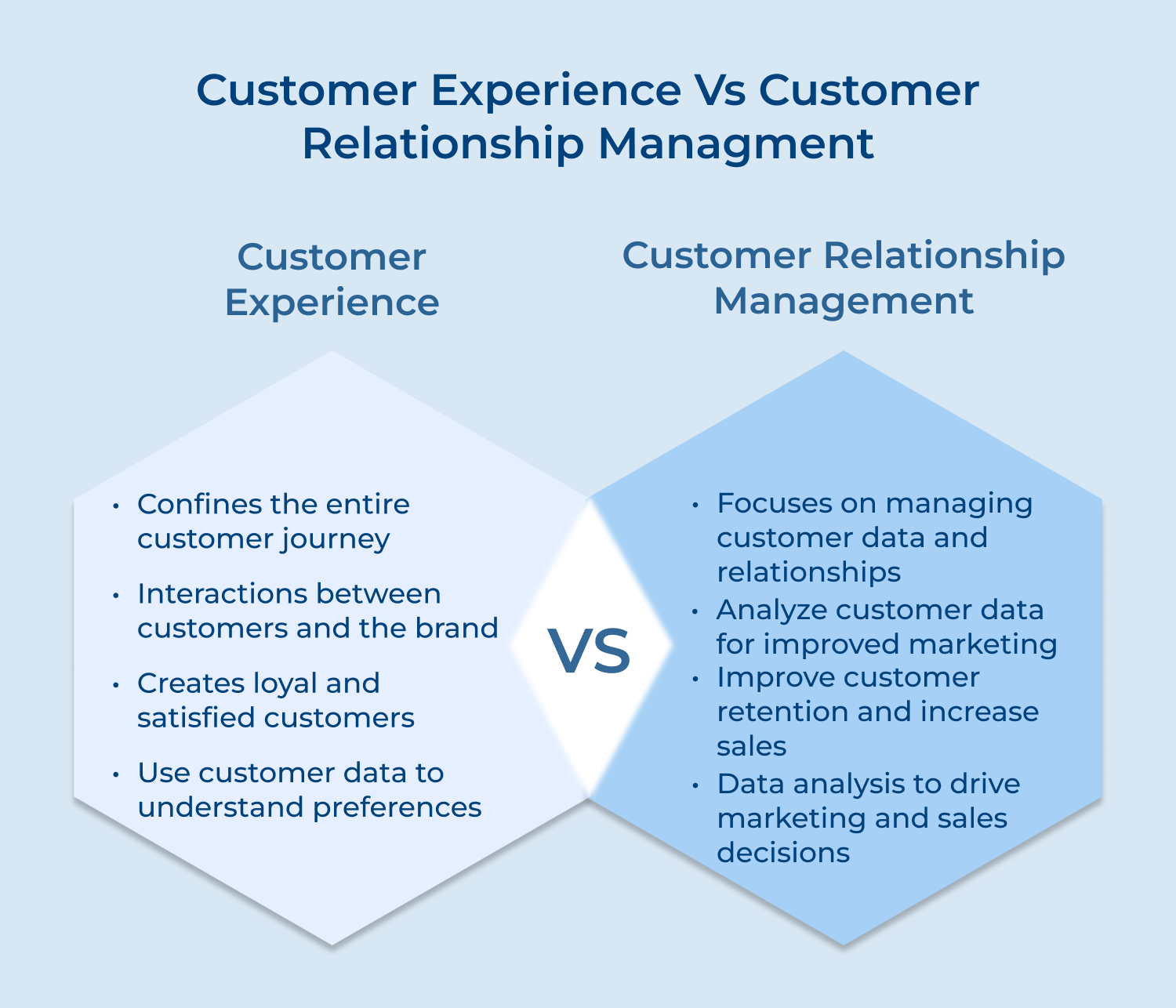
Customer experience encloses the entire customer journey and focuses on providing a positive experience at every touchpoint, while CRM mainly focuses on managing customer data & relationships.
CX emphasizes the quality of interactions between customers & the brand, including customer service, website usability and product experience. CRM on the other hand, focuses on analyzing customer data for improved marketing and sales strategies.
The goal of CX is to create loyal and satisfied customers who become brand advocates, while CRM aims to improve customer retention and increase sales through targeted marketing efforts.
CX may use customer data to understand preferences and tailor experiences, but it emphasizes the overall experience rather than just data analysis. CRM on the other hand, relies heavily on data analysis to drive marketing and sales decisions.
Choosing the right CRM depends on your business requirements and objectives. Understanding the different types of CRMs will help you make an informed decision and harness the power of these systems to boost your business’s success.
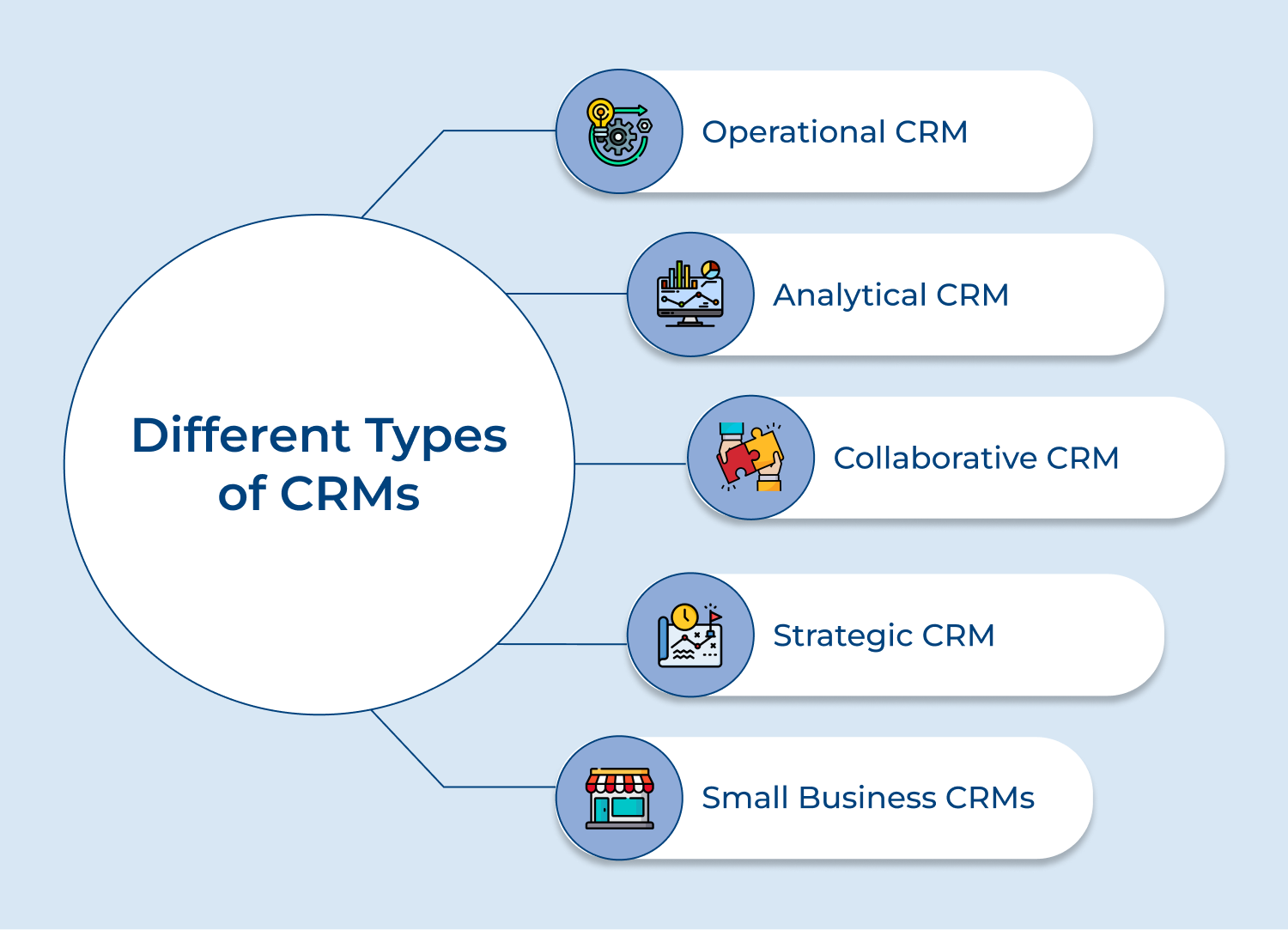
Operational CRM focuses on automating key business processes, primarily in the areas of sales, marketing and customer service. It helps businesses to manage their day-to-day interactions efficiently. The key features of operational CRMs include contact management, lead management, sales pipeline tracking, customer support ticketing and email marketing automation.
Analytical CRM is all about data analysis and generating insights from customer data. It helps businesses understand their customers better, identify trends and make data-driven decisions. The main features of analytical CRMs include data mining, customer segmentation analysis, predictive modeling, customer behavior analysis and performance reporting.
Collaborative CRM focuses on improving collaboration and communication among different departments within an organization. It helps in sharing customer information and streamlining internal processes. The key features of collaborative CRMs include document management, project management, team collaboration tools and customer communication tracking.
Strategic CRM is designed to align the company’s overall business strategy with its customer relationship management efforts. It focuses on long-term customer retention and loyalty. The main features of strategic CRMs include customer satisfaction surveys, loyalty program management, customer feedback management and customer lifetime value analysis.
Small business CRMs are specifically designed for the needs of small businesses with limited resources and budgets. They offer basic CRM functionalities such as contact management, task management and email integration at an affordable price. The key features of these CRMs are user-friendly and provide a simplified interface, making them ideal for small businesses without dedicated IT teams.
Customer Relationship Management (CRM) software has become a vital tool for businesses to improve their relationships with customers. With numerous options available in the market, it can be overwhelming to choose the right CRM software for your business needs.
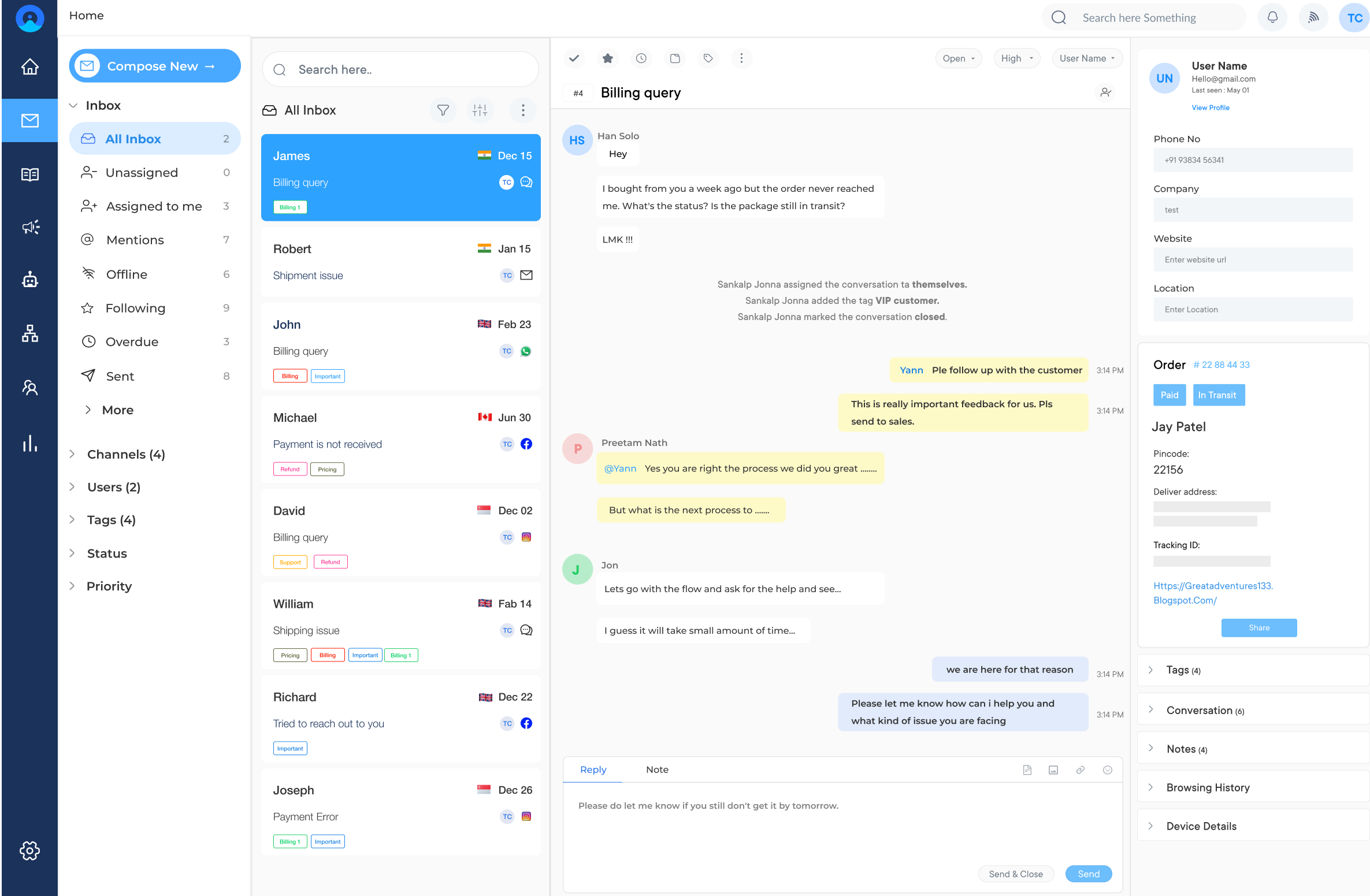
Omni24 is one of the leading CRM software platforms used by businesses of all sizes across industries. It offers a comprehensive set of features, including lead management, sales forecasting, customer service and marketing automation. it also provides customizable solutions and integrations with other business tools, making it a versatile choice for any organization.
Key features:
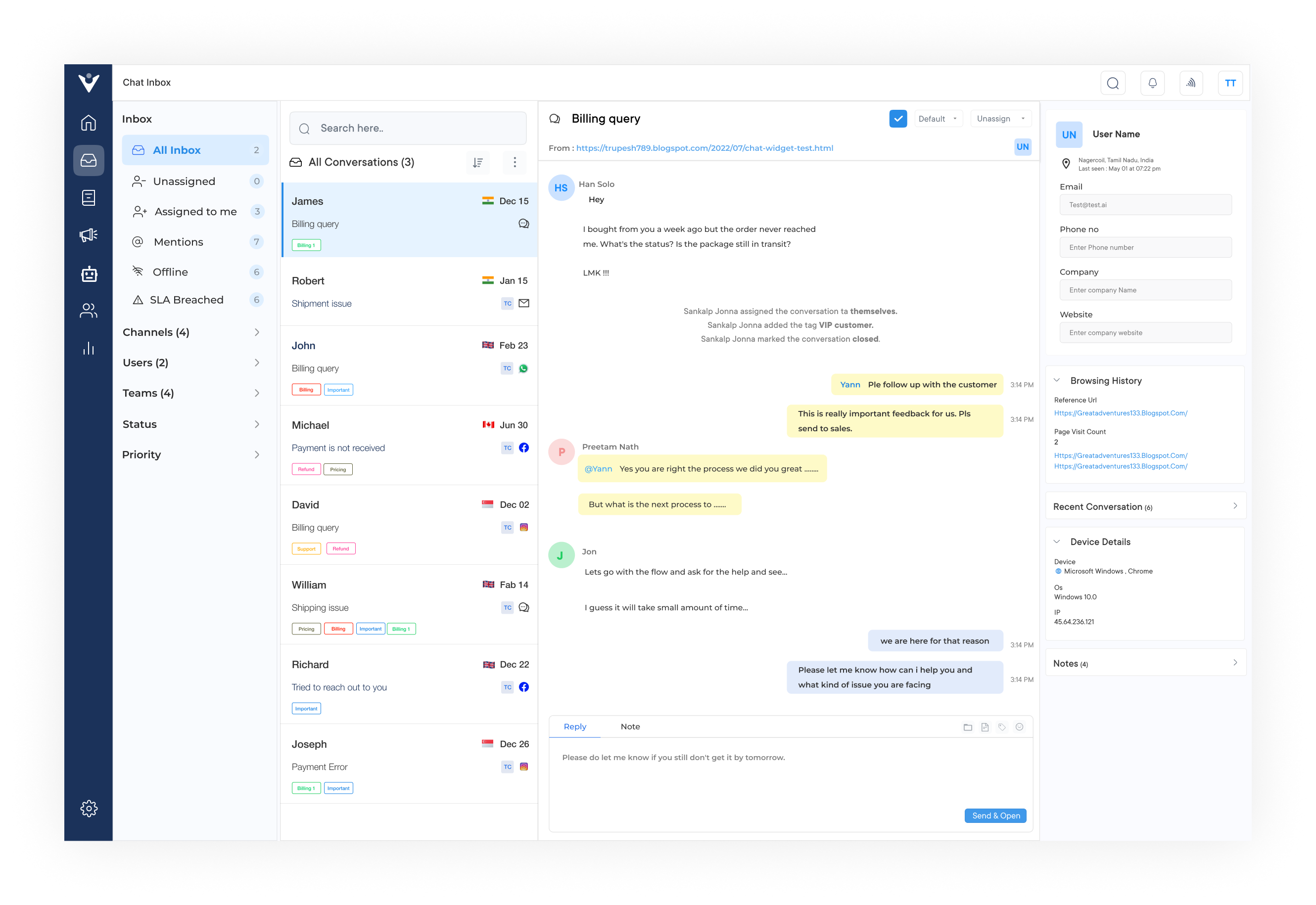
Veemo is a popular CRM platform known for its user-friendly interface and robust features. It offers features like contact management, email marketing, lead generation and customer support. The CRM software also integrates seamlessly with their marketing and sales tools, providing a complete inbound marketing solution.
Key features:
Zoho CRM is a cloud-based CRM software that provides a wide range of functionalities to help businesses streamline their sales processes. It offers modules for contact management, lead generation, sales pipeline management and analytics.
Key feature: Zoho CRM also provides integration options with other Zoho applications, making it a comprehensive solution for small and medium-sized businesses.
Microsoft Dynamics 365 is a CRM software platform that offers a range of applications to meet various business needs. It provides features like sales automation, customer service, marketing and field service management.
Key feature: Its seamless integration with Microsoft Office and Power BI, businesses can leverage their existing tools for a more cohesive workflow.
Pipedrive is a CRM software designed specifically for sales teams. It offers a visual sales pipeline to help manage and track leads effectively.
Key features: Features include contact management, deal tracking, activity management and email integration. It is a user-friendly platform suitable for small businesses and startups looking to streamline their sales processes.
CRM is a powerful tool that offers several core functionalities to effectively manage customer relationships. Harnessing these functionalities help businesses to enhance their marketing efforts, improve customer satisfaction and drive overall growth.
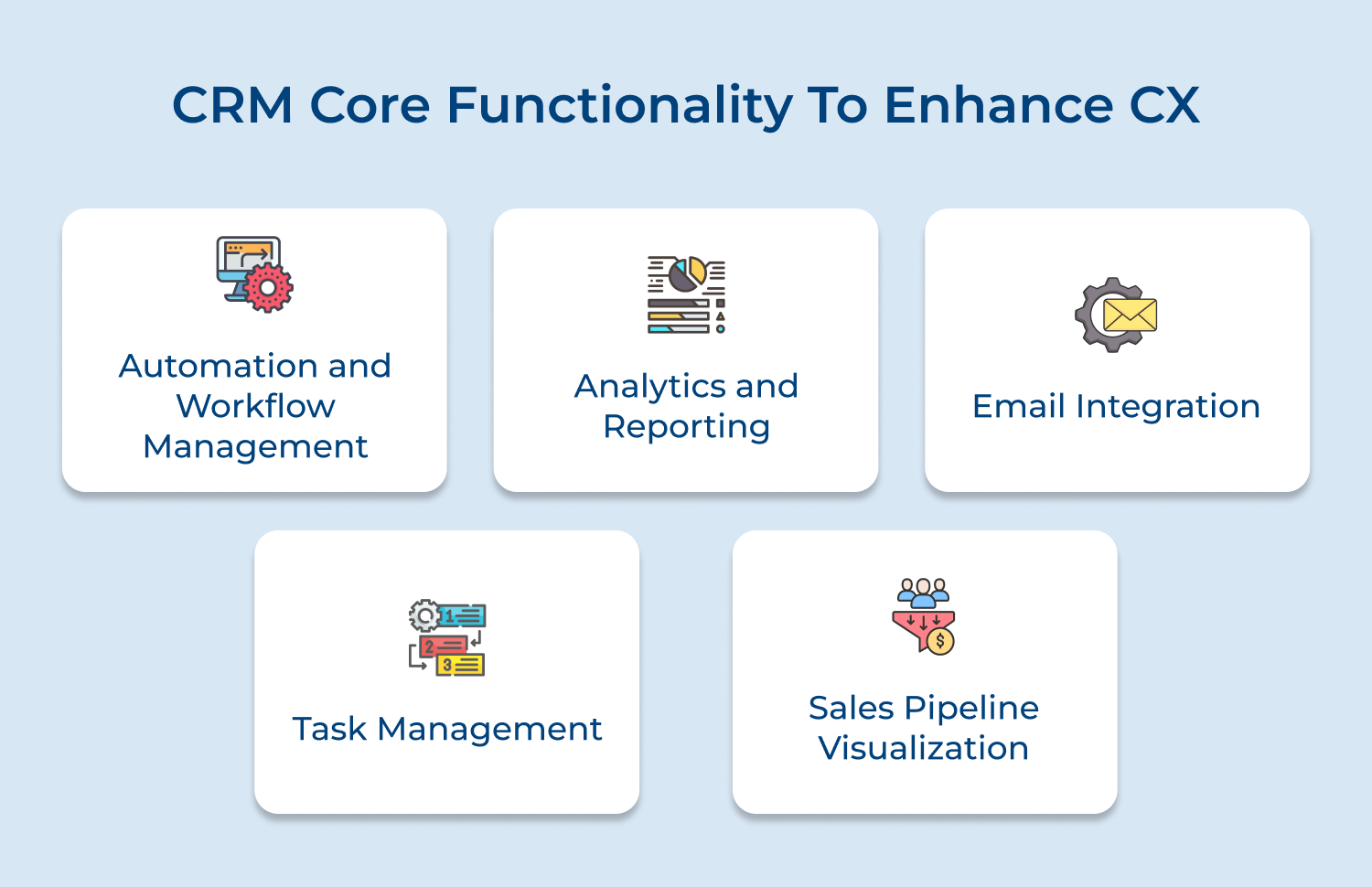
CRM automates repetitive tasks and streamlines business processes for increased efficiency. Workflow management creates customized automated actions based on predefined criteria. It includes automated lead assignment, follow-up reminders, and escalation protocols.
CRM offers robust analytics to track key performance indicators and generate insightful reports effectively. Businesses analyze sales trends, customer behavior, and marketing campaign performance for data-driven decisions. Custom dashboards display real-time metrics and predictive analytics.
Email platform integration allows sending and receiving emails directly within your CRM system seamlessly. All email interactions automatically log to appropriate customer records for complete communication history. Email templates streamline common scenarios while tracking open rates provides engagement insights.
CRM provides comprehensive task management capabilities for creating, assigning, and tracking customer-related activities efficiently. The system prioritizes activities and ensures timely follow-ups through automated reminders and notifications. Recurring tasks generate automatically for regular customer check-ins and relationship maintenance.
CRM systems provide visual sales pipeline representation showing deal stages and opportunity status clearly. Sales teams focus on promising opportunities using drag-and-drop functionality for stage progression. Pipeline views identify revenue gaps and process bottlenecks requiring management attention. This enables targeted coaching and improvements.
Companies are constantly looking for ways to gain an edge over their rivals. One area where businesses can truly differentiate themselves is by effectively managing their relationships with customers. CRM tools are designed to help businesses manage and analyze customer interactions.
Investing in CRM software is not only about gaining a competitive advantage but also about building long-lasting, profitable relationships with customers. So, leverage CRM software today and see the positive impact it can have on your business.

1. How does a CRM system improve customer experience?
A CRM system is designed to help businesses manage and analyze customer interactions throughout the customer lifecycle. It provides a centralized database of customer information, enabling businesses to track customer interactions, preferences and purchase history. With the valuable data, businesses can personalize their communication and tailor their products or services according to customer needs. The level of personalization enhances the customer experience and fosters stronger customer relationships.
2. Why is customer experience and CRM important for your business?
Customer experience and CRM are essential for businesses for various reasons. Firstly, a positive customer experience leads to customer satisfaction, loyalty and advocacy. Satisfied customers are more likely to become repeat customers and refer your business to others. Secondly, a CRM system helps businesses understand their customers better, leading to more effective marketing campaigns, targeted communication and improved customer service. Lastly, customer experience and CRM contribute to long-term business growth.
3. Different tools for measuring CRM or customer experience?
Measuring CRM or customer experience involves analyzing various metrics and feedback mechanisms. Here are some commonly used tools:
 https://omni24.io/wp-content/uploads/2026/08/AI-Customer-Service-Agents.png
1256
2400
Webvision Solution
https://omni24.io/wp-content/uploads/2023/04/Omni-Logo-1.svg
Webvision Solution2026-09-21 04:48:512026-09-21 04:48:51How to Build an AI Customer Service Agents: 8 Key Steps
https://omni24.io/wp-content/uploads/2026/08/AI-Customer-Service-Agents.png
1256
2400
Webvision Solution
https://omni24.io/wp-content/uploads/2023/04/Omni-Logo-1.svg
Webvision Solution2026-09-21 04:48:512026-09-21 04:48:51How to Build an AI Customer Service Agents: 8 Key Steps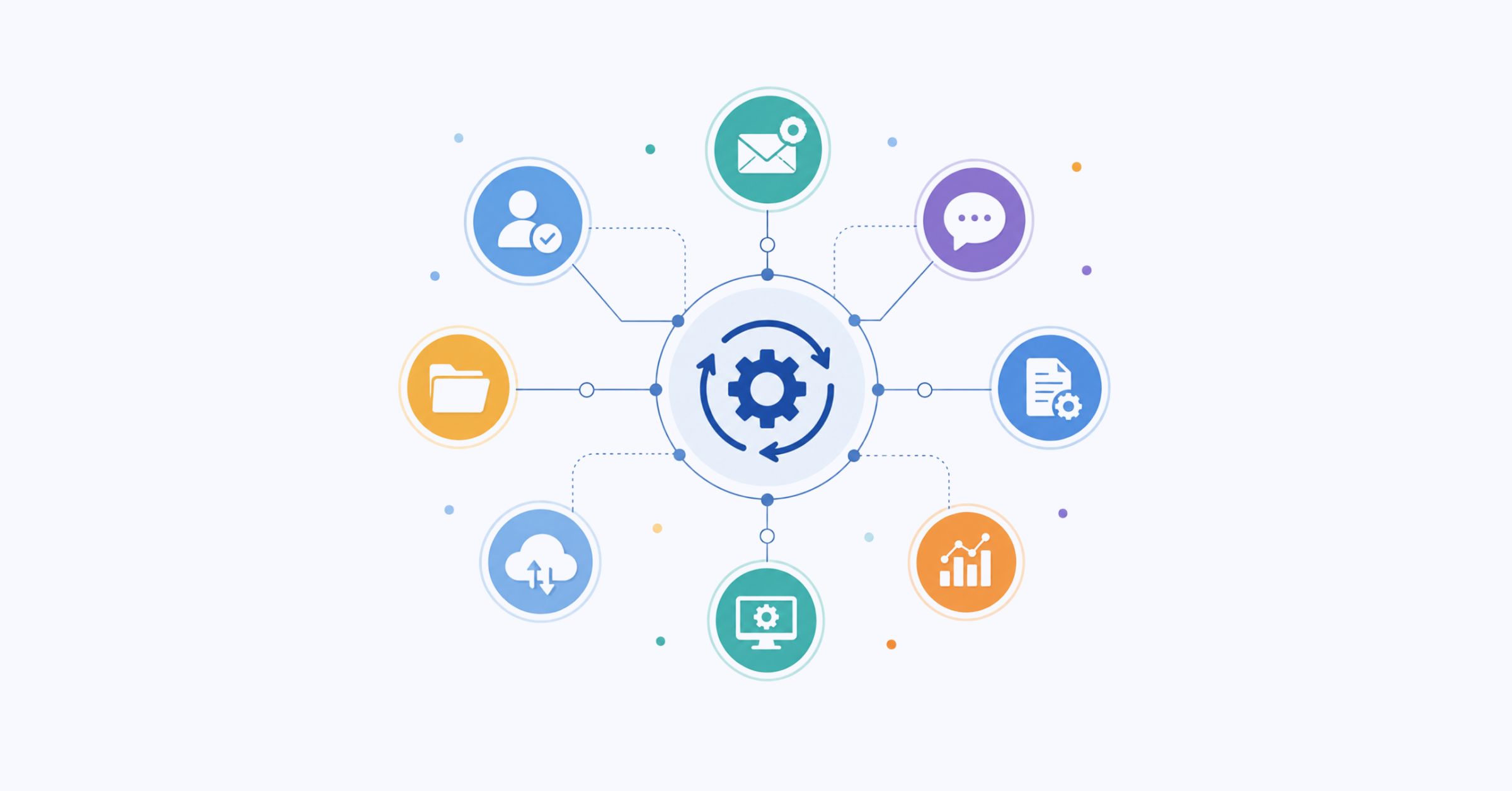 https://omni24.io/wp-content/uploads/2026/08/Omnichannel-Conversational-AI.png
1256
2400
Tushar Joshi
https://omni24.io/wp-content/uploads/2023/04/Omni-Logo-1.svg
Tushar Joshi2026-09-16 03:51:072026-09-16 03:51:07How to Build Omnichannel Conversational AI Strategy
https://omni24.io/wp-content/uploads/2026/08/Omnichannel-Conversational-AI.png
1256
2400
Tushar Joshi
https://omni24.io/wp-content/uploads/2023/04/Omni-Logo-1.svg
Tushar Joshi2026-09-16 03:51:072026-09-16 03:51:07How to Build Omnichannel Conversational AI Strategy https://omni24.io/wp-content/uploads/2026/08/Customer-Service-Teams.png
1256
2400
Tushar Joshi
https://omni24.io/wp-content/uploads/2023/04/Omni-Logo-1.svg
Tushar Joshi2026-09-15 04:01:522026-09-15 04:02:16How to Build Customer Service Teams: 6 Key Steps
https://omni24.io/wp-content/uploads/2026/08/Customer-Service-Teams.png
1256
2400
Tushar Joshi
https://omni24.io/wp-content/uploads/2023/04/Omni-Logo-1.svg
Tushar Joshi2026-09-15 04:01:522026-09-15 04:02:16How to Build Customer Service Teams: 6 Key Steps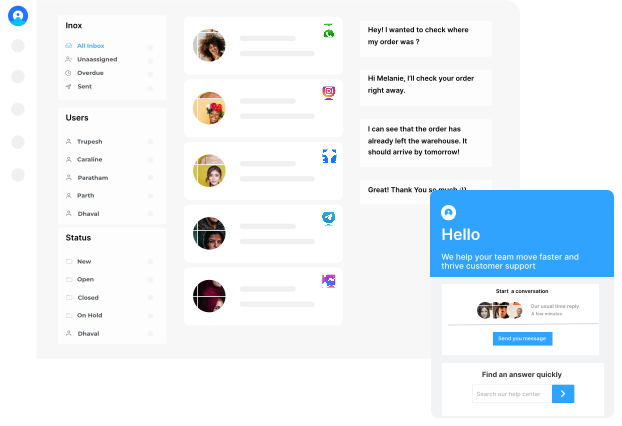
Whether it’s about acquire, engage or support – Omni24 covers all your customer engagement needs in one complete platform.

Copyright ©2026 Veemo All rights reserved.
CA, Los Angeles, Hall Ave, 19011