How to Develop a Customer Feedback Strategy?
Customer feedback helps businesses understand customers, gain product insights and guide goals with innovative ideas via a solid plan.

Customer feedback helps businesses understand customers, gain product insights and guide goals with innovative ideas via a solid plan.
Customer feedback is a fundamental pillar of success. And without a strong customer feedback loop, your customer service strategy is incomplete.
93% of customers are likely to make repeat purchases with companies that offer excellent customer service.
A solid customer feedback strategy is crucial for the success of any business. It can help you build strong customer relationships, increase customer loyalty, and ultimately drive business growth.
Let us explore the importance of a consumer feedback strategy and provide tips on how to develop an effective one for your business.
Consumer feedback strategy refers to an essential component of any customer service plan. It involves gathering feedback to understand their preferences, needs, and overall satisfaction with your products or services. Implementing a well-designed client feedback strategy helps businesses gain valuable insights that can help them improve their offerings.
A business needs to devise robust customer feedback planning to understand how customers perceive their offerings and what improvements are needed. Such planning is a vital prerequisite for boosting the overall customer experience in the long run.
A customer feedback strategy is a structured approach that businesses employ to gather, manage, and analyze customer feedback. Such planning is essential for collecting insights into customer experiences and preferences. Using a customer feedback template is widespread in gauging customer’s satisfaction levels. It also helps businesses make informed decisions and improve their products or services.
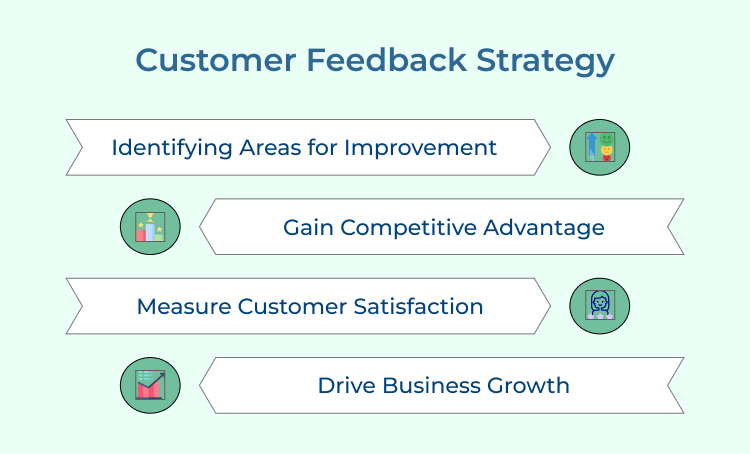
Implementing a customer feedback strategy can have several benefits for businesses of all sizes.
Creating a consumer feedback strategy is something that cuts across industry verticals as it has huge importance for businesses. More so, it can potentially contribute to your business’s overall success and sustainability.
Let us explore how to build a customer feedback strategy that will enhance your business performance.
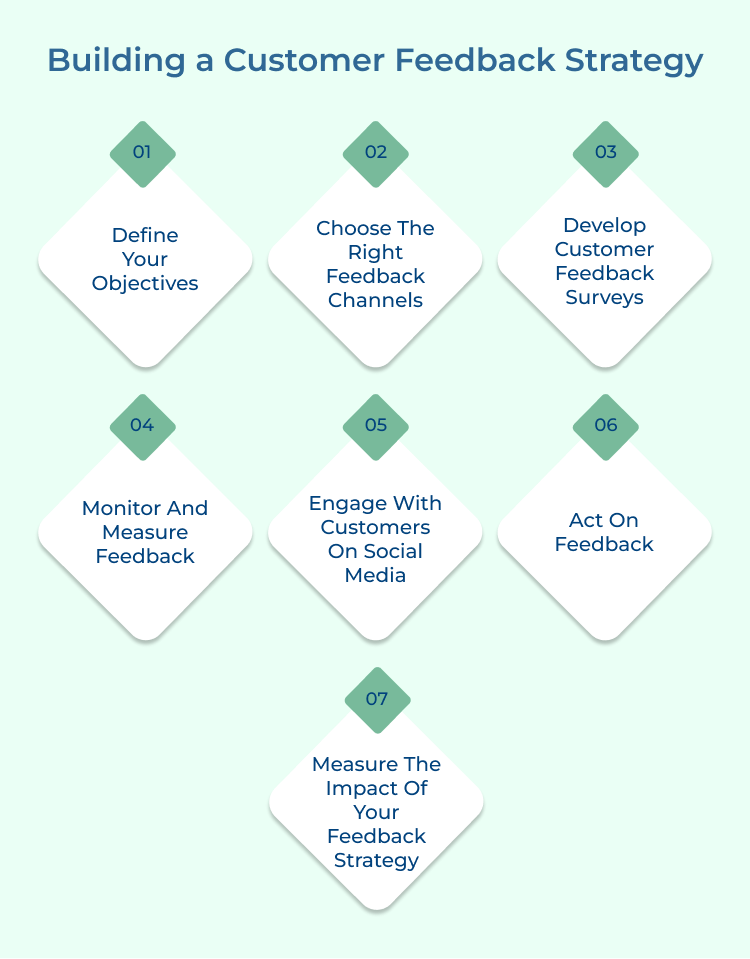
When you set out to create a customer feedback strategy, the first step is to define the goals you want to achieve clearly. The goals you aim to achieve should align with your overall business objectives. They should answer the below questions:
Outlining business objectives helps to tailor feedback strategies to focus on areas that will have the most significant impact on your business goals.
Pro tips:
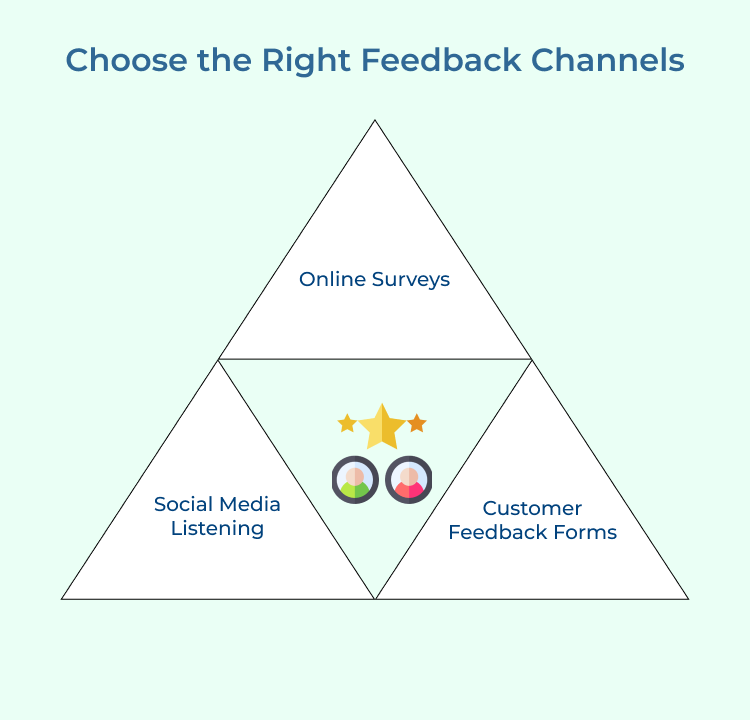
There are many channels for collecting customer feedback and you should choose them based on your business goals or priorities. Surveys, online reviews, social platforms and feedback forms are some of the channels you can use.
For example, if you have a younger demographic, social media may be a more effective channel for gathering feedback than traditional surveys.
Pro tips:
When designing surveys, the key is to combine a good mix of quantitative and qualitative questions. The main focus of your surveys should be on collecting data on the customer experience and service quality.
The survey questionnaire should include questions that will provide actionable insights, such as how satisfied customers are with your products or services, what improvements they would like to see and how likely they are to recommend your company to others.
Pro tips:
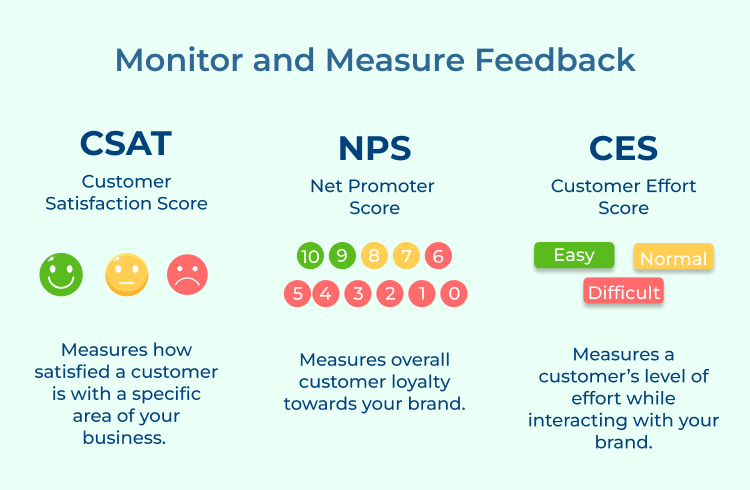
Building a customer feedback strategy is an ongoing process that requires continuous monitoring and measurement.
Set up regular feedback loops to gather feedback at various touchpoints in the customer journey, such as after a purchase or customer service interaction. Use key performance indicators (KPIs) like Net Promoter Score (NPS) or Customer Satisfaction (CSAT) to track customer sentiment and measure the impact of your feedback strategy over time.
Pro tips:
Social media is a valuable tool for collecting customer feedback in real time.
Monitor your social media channels regularly for mentions, comments, and direct messages from customers. Respond to their feedback promptly and use their comments to identify trends or areas for improvement.
Pro tips:
Collecting feedback is only one part of the customer feedback strategy. The real value comes from acting on that feedback to make meaningful improvements to your products or services.
Use the insights gathered from customer feedback to drive decision-making, prioritize areas for improvement and implement changes that will enhance the customer experience.
Pro tips:
Measurement is a crucial part of any client feedback strategy. It is important to measure the impact of your feedback strategy to ensure that it is achieving your objectives.
Track key performance indicators like customer satisfaction scores, customer retention rates and product adoption rates to see how customer feedback is influencing these metrics. Use this data to fine-tune your feedback strategy and continue to improve your products and services.
Pro tips:
Customer feedback is essential to the success of any business. It provides valuable insights into customer satisfaction, preferences, and areas for improvement. Simply collecting feedback is not enough – you must have an effective strategy in place to ensure that the feedback is being utilized constructively.
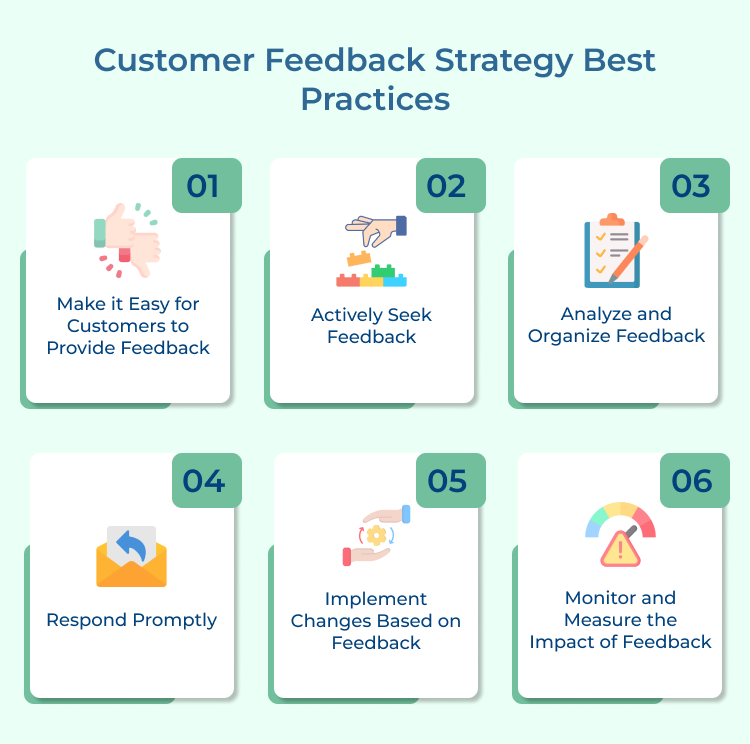
Here are some best practices for implementing an effective customer feedback strategy:
Acquiring feedback is crucial for any business looking to improve its products and services. Implementing effective customer feedback strategies can help businesses identify areas for improvement, enhance customer satisfaction, and increase customer loyalty.
Here are some real-life examples of companies that have excelled in their customer feedback strategies:
1. Apple
Apple is known for its excellent customer feedback strategies, particularly through its Net Promoter Score (NPS) program. Apple regularly collects feedback through surveys and forms, asking them to rate their likelihood of recommending Apple products to others. It is used to measure customer satisfaction and loyalty, allowing Apple to make informed decisions on how to improve its products and services.
2. Airbnb
Airbnb places a strong emphasis on customer feedback. The company regularly sends out surveys to guests and hosts to gather feedback on their experiences and suggestions for improvement. Airbnb has a dedicated customer support team that responds to feedback promptly, addressing any concerns or issues raised by customers.
3. Amazon
Amazon is known for its customer-centric approach, which is evident in its feedback system. Amazon encourages customers to leave reviews and ratings for products they have purchased, helping other customers make informed purchasing decisions. The company also uses customer feedback to continuously improve its website, product offerings, and customer service.
4. Starbucks
Starbucks is another example of a company that values customer feedback. The coffee chain regularly collects feedback through its My Starbucks Idea platform, where customers can submit suggestions for new products, services, or improvements. Starbucks also listens to customer feedback on social media platforms and uses this information to make changes to its menu or store layouts.
Implementing an effective customer feedback system is crucial for driving business growth. By gathering insights from your customers, you can identify areas for improvement, enhance customer satisfaction, and increase sales.
Remember to listen to your customers, respond to their feedback, and take action on their suggestions. Continuously seeking feedback and making adjustments based on customer inputs can build stronger client relationships. Invest in a robust customer feedback system today and watch your business thrive.

1. Which feedback channels should I prioritize?
When determining which feedback channels to prioritize, it’s important to consider your target audience and their preferred communication methods. Some common feedback channels include online surveys, social media, email and customer reviews. It’s also a good idea to offer multiple channels to accommodate different preferences.
2. How can technology be used to enhance customer feedback collection?
Technology can greatly enhance the process of collecting customer feedback. There are various tools available that can automate feedback collection, analyze data and generate reports. Additionally, technologies such as sentiment analysis and artificial intelligence can help you gain deeper insights from customer feedback.
3. How do you categorize customer feedback?
Customer feedback can be categorized into various groups based on themes or topics. Some common categories include product quality, customer service, pricing and user experience. By categorizing feedback, you can identify recurring issues and prioritize areas for improvement.
4. How can a customer feedback strategy benefit my company?
A customer feedback strategy can provide numerous benefits to your company. It can help you understand customer needs, identify opportunities for product or service improvements, enhance customer satisfaction and differentiate your brand from competitors. A well-planned feedback strategy can lead to increased sales and business growth.
5. How do you gather customer feedback effectively?
\There are several ways to gather customer feedback effectively. One approach is to regularly solicit feedback through surveys, feedback forms and online reviews. Another option is to proactively reach out to customers for feedback after a purchase or interaction with your company. Monitoring social media mentions and customer support interactions can provide valuable insights into customer sentiment.
 https://omni24.io/wp-content/uploads/2026/02/AI-customer-analytics.png
1257
2400
Tushar Joshi
https://omni24.io/wp-content/uploads/2023/04/Omni-Logo-1.svg
Tushar Joshi2026-03-31 05:17:522026-03-31 05:17:52How to Use AI Customer Analytics in Your Business: 10 Key Steps
https://omni24.io/wp-content/uploads/2026/02/AI-customer-analytics.png
1257
2400
Tushar Joshi
https://omni24.io/wp-content/uploads/2023/04/Omni-Logo-1.svg
Tushar Joshi2026-03-31 05:17:522026-03-31 05:17:52How to Use AI Customer Analytics in Your Business: 10 Key Steps https://omni24.io/wp-content/uploads/2026/02/ecommerce-analytics.png
1257
2400
Tushar Joshi
https://omni24.io/wp-content/uploads/2023/04/Omni-Logo-1.svg
Tushar Joshi2026-03-30 04:03:352026-03-30 04:03:35How to Use Ecommerce Analytics for Business Growth
https://omni24.io/wp-content/uploads/2026/02/ecommerce-analytics.png
1257
2400
Tushar Joshi
https://omni24.io/wp-content/uploads/2023/04/Omni-Logo-1.svg
Tushar Joshi2026-03-30 04:03:352026-03-30 04:03:35How to Use Ecommerce Analytics for Business Growth https://omni24.io/wp-content/uploads/2026/02/buying-experience.png
1257
2400
Tushar Joshi
https://omni24.io/wp-content/uploads/2023/04/Omni-Logo-1.svg
Tushar Joshi2026-03-27 04:04:082026-03-27 04:04:08How to Improve Buying Experience: 10 Best Strategies
https://omni24.io/wp-content/uploads/2026/02/buying-experience.png
1257
2400
Tushar Joshi
https://omni24.io/wp-content/uploads/2023/04/Omni-Logo-1.svg
Tushar Joshi2026-03-27 04:04:082026-03-27 04:04:08How to Improve Buying Experience: 10 Best Strategies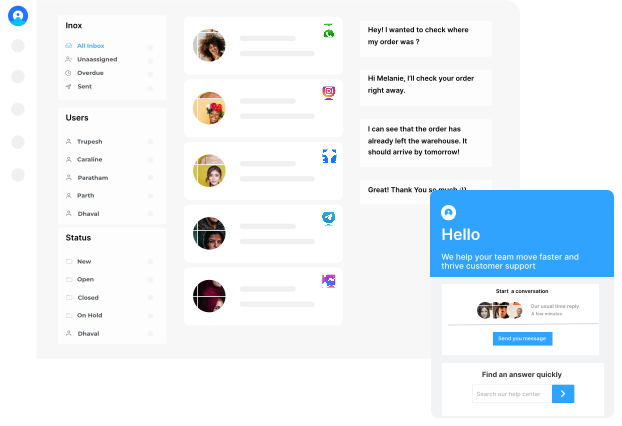
Whether it’s about acquire, engage or support – Omni24 covers all your customer engagement needs in one complete platform.

Copyright ©2026 Veemo All rights reserved.
CA, Los Angeles, Hall Ave, 19011
