What is Customer Lifetime Value (CLV) & How to Calculate it?
Customer Lifetime Value (CLV) measures total revenue a customer brings over their relationship, guiding retention and boosting long‑term profitability.

Customer Lifetime Value (CLV) measures total revenue a customer brings over their relationship, guiding retention and boosting long‑term profitability.
It is more important than ever for companies to focus on building long-term relationships with their customers in order to build loyalty and drive sustainable growth. By shifting the perspective from short-term profits to long-term value, businesses can create a solid foundation for success.
Approximately, 67.7% of companies plan to increase their investment in customer retention efforts, recognizing that enhancing CLV is essential for sustainable growth during economic fluctuations.
Customer Lifetime Value is not just a metric, but an investment in the future success and sustainability of your business. By calculating the CLV of your customers, you can make informed decisions about how to allocate resources, tailor your marketing strategies and prioritize customer satisfaction.
Explore the significance of CLV and how it can help you achieve lasting success in the ever-evolving business world.
Customer Lifetime Value (CLV) is defined as a crucial metric that every business should understand and monitor. CLV refers to the predicted revenue that a customer will generate over the entirety of their relationship with a business.
The customer service metric helps businesses understand the long-term value of their customers to make more informed decisions for marketing and customer acquisition strategies.
Key objectives:
Customer Lifetime Value (CLV) is a key metric for businesses to measure. It represents the total revenue a customer will bring to a business over their entire relationship with that business.
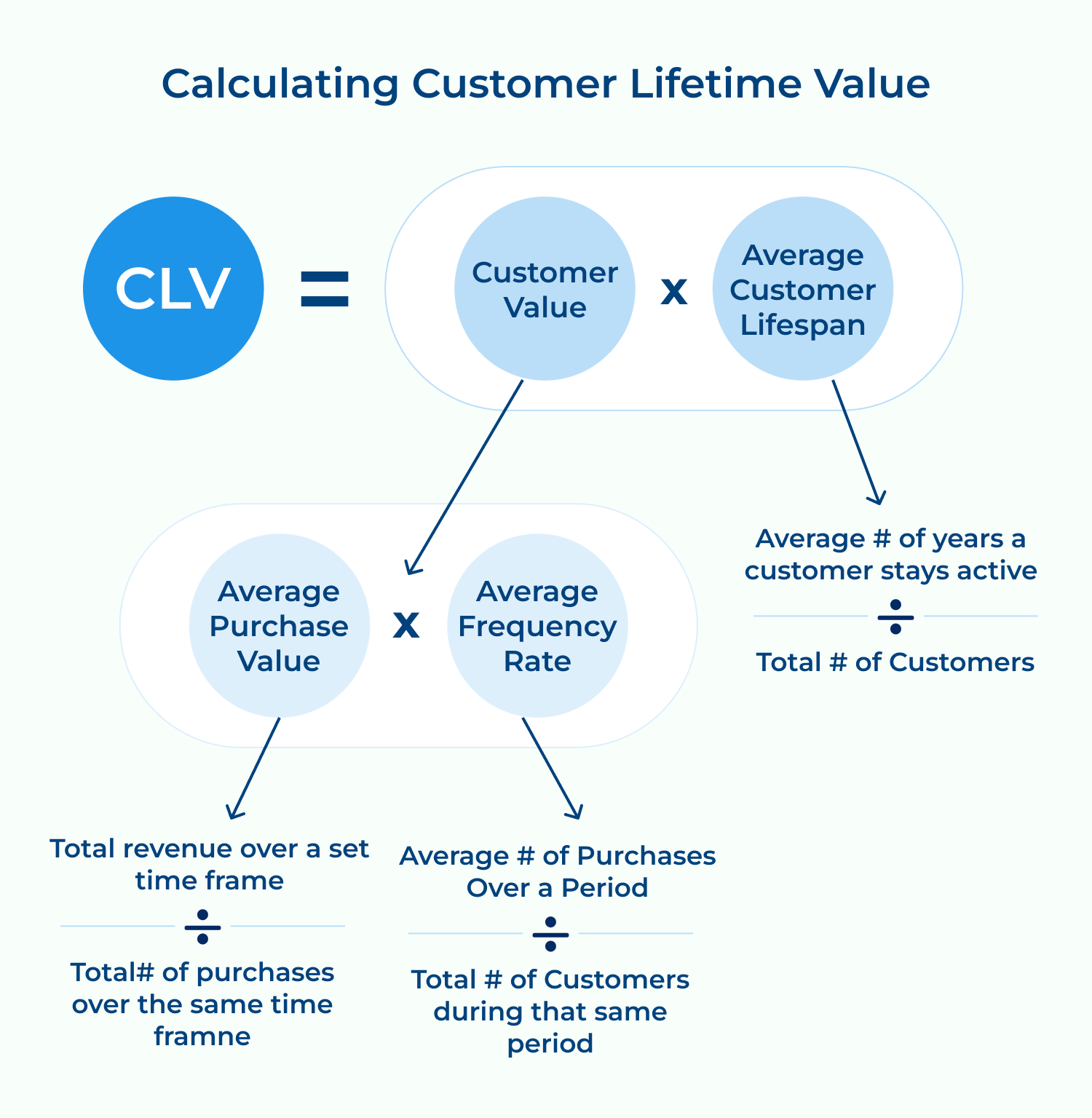
CLV = (Average Purchase Value per Year) x (Average Customer Lifespan) x (Average Profit Margin)
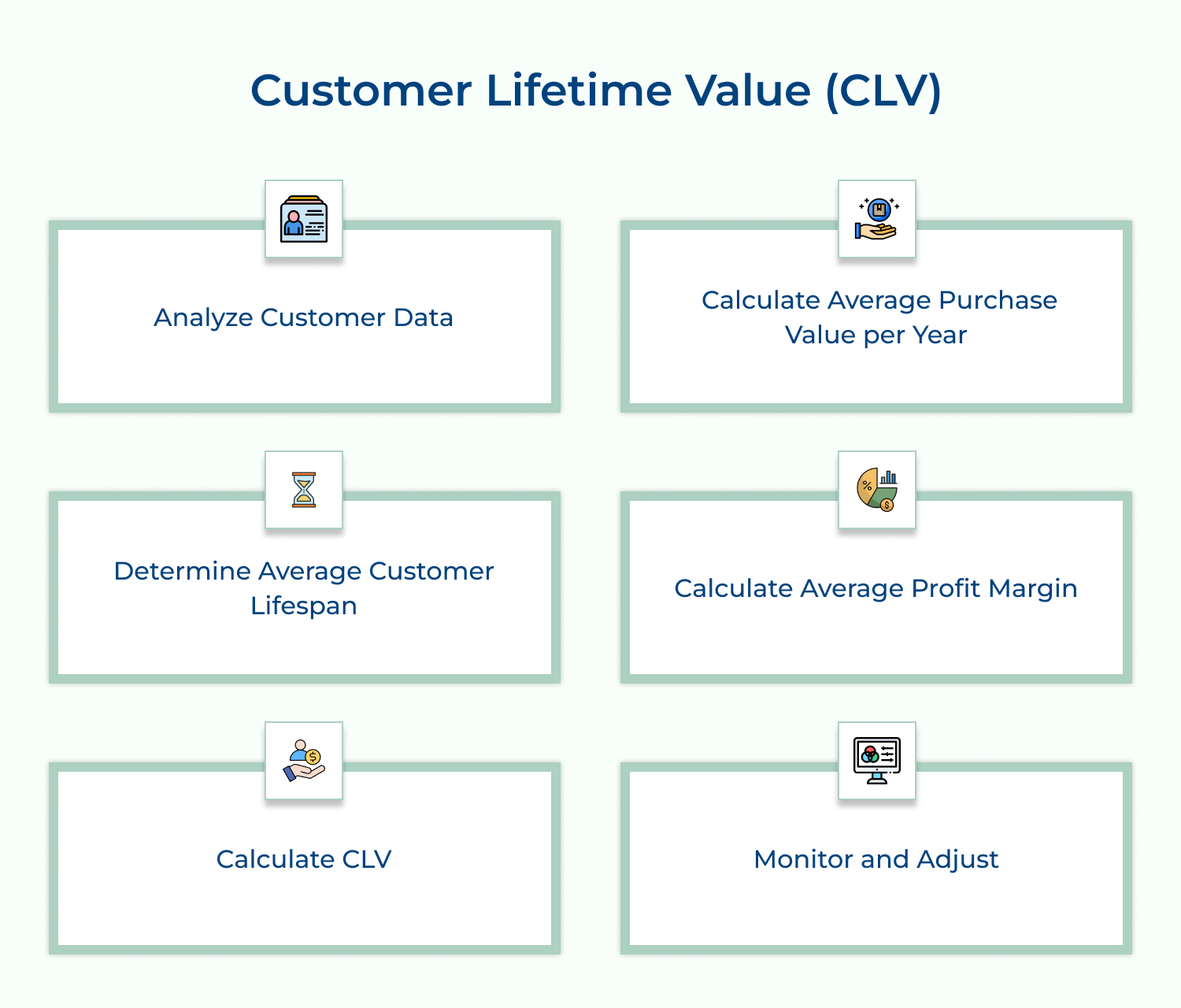
The first step in calculating CLV is to analyze customer data. You will need information such as total revenue generated from customers, number of customers, average purchase value and average customer lifespan. This data can be obtained from sales records, customer databases or customer surveys.
Follow the tips:
To calculate the average purchase value per year, divide the total revenue generated from all customers in a year by the number of customers. This will give you an idea of how much each customer contributes to your business in a year.
Follow the tips:
The average customer lifespan can be determined by analyzing customer retention rates and purchase frequency. For example, if a customer makes purchases from your business for an average of 5 years, then the average customer lifespan would be 5 years.
Follow the tips:
Determine the profit margin for your business by subtracting total expenses from total revenue and then dividing the result by total revenue. It will give you the percentage of revenue that is kept as profit.
Consider including indirect costs, such as marketing and overhead expenses, in your profit margin calculations for a more comprehensive view of profitability.
Follow the pro tip:
Using the formula mentioned earlier, calculate the CLV for your business. Multiply the average purchase value per year by the average customer lifespan and the average profit margin. It will give you an estimate of the total revenue a customer will generate over their relationship with your business.
Follow the tips:
Once you have calculated the CLV for your business, it is essential to monitor this metric regularly and make adjustments as needed. Analyze customer behavior, market trends and business performance to ensure that your CLV remains accurate.
Here are few tips:
Measuring customer lifetime value is also crucial for businesses. It involves tracking CLV over time to understand changes in customer behavior and the effectiveness of marketing strategies.
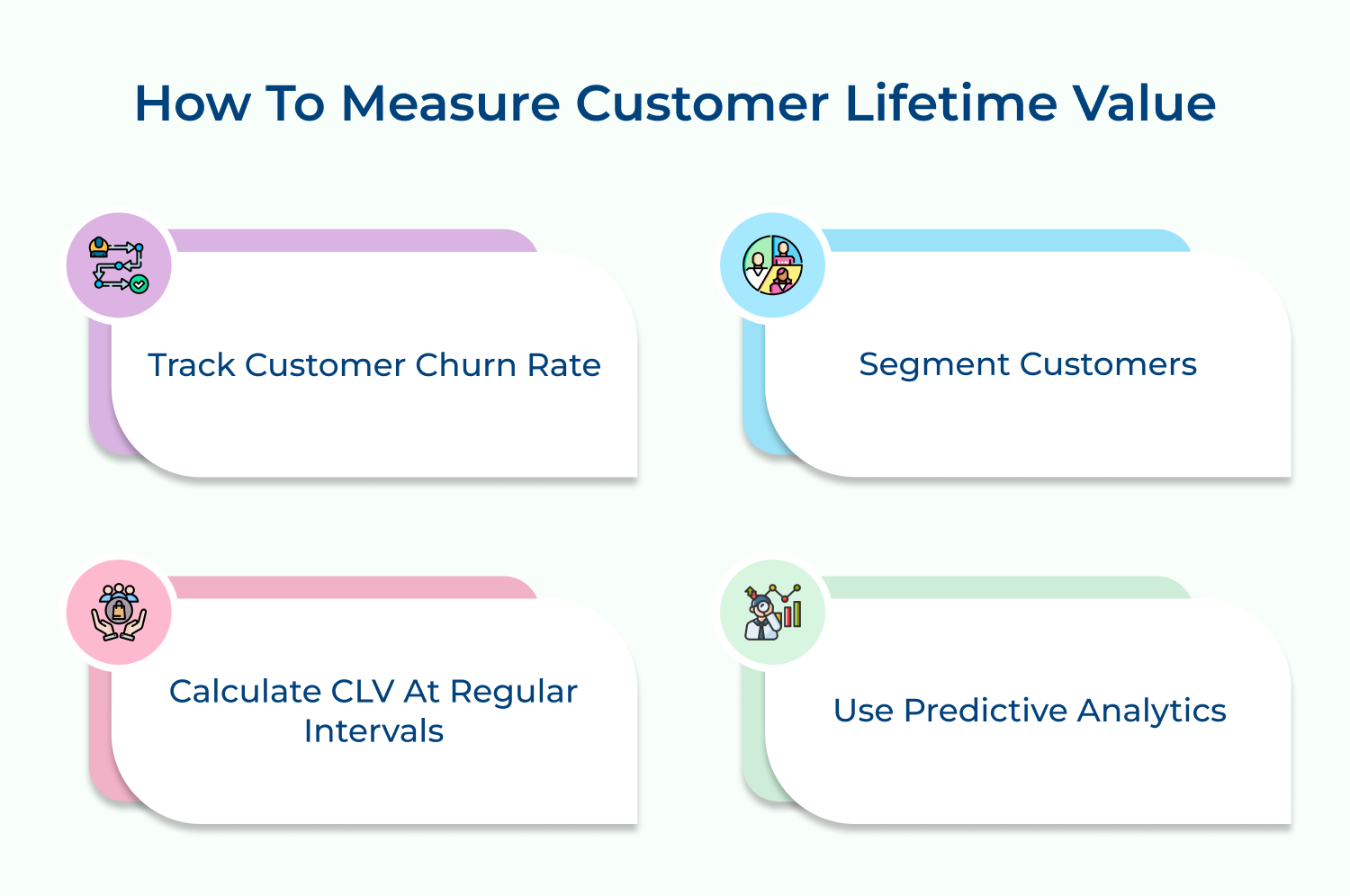
Here are some key ways to measure CLV effectively:
1. Track customer churn rate: Customer churn rate refers to the percentage of customers who stop purchasing from your business over a specific period. By monitoring customer churn rate, you can assess customer retention and its impact on CLV.
2. Segment customers: Divide your customers into different segments based on buying behavior, demographics, or other factors. This will help you analyze CLV for each customer segment and tailor marketing strategies accordingly.
3. Calculate CLV at regular intervals: Measure CLV at regular intervals, such as quarterly or annually, to track changes and trends in customer value. This will provide valuable insights for improving customer relationships and business performance.
4. Use predictive analytics: Utilize predictive analytics to forecast CLV for individual customers or customer segments. This can help you identify high-value customers and develop targeted marketing campaigns to maximize their lifetime value.
CLV is the total revenue a business can expect to earn from a customer throughout their entire relationship with the company. The metric takes initial purchase into account a customer makes along with future purchases and loyalty.
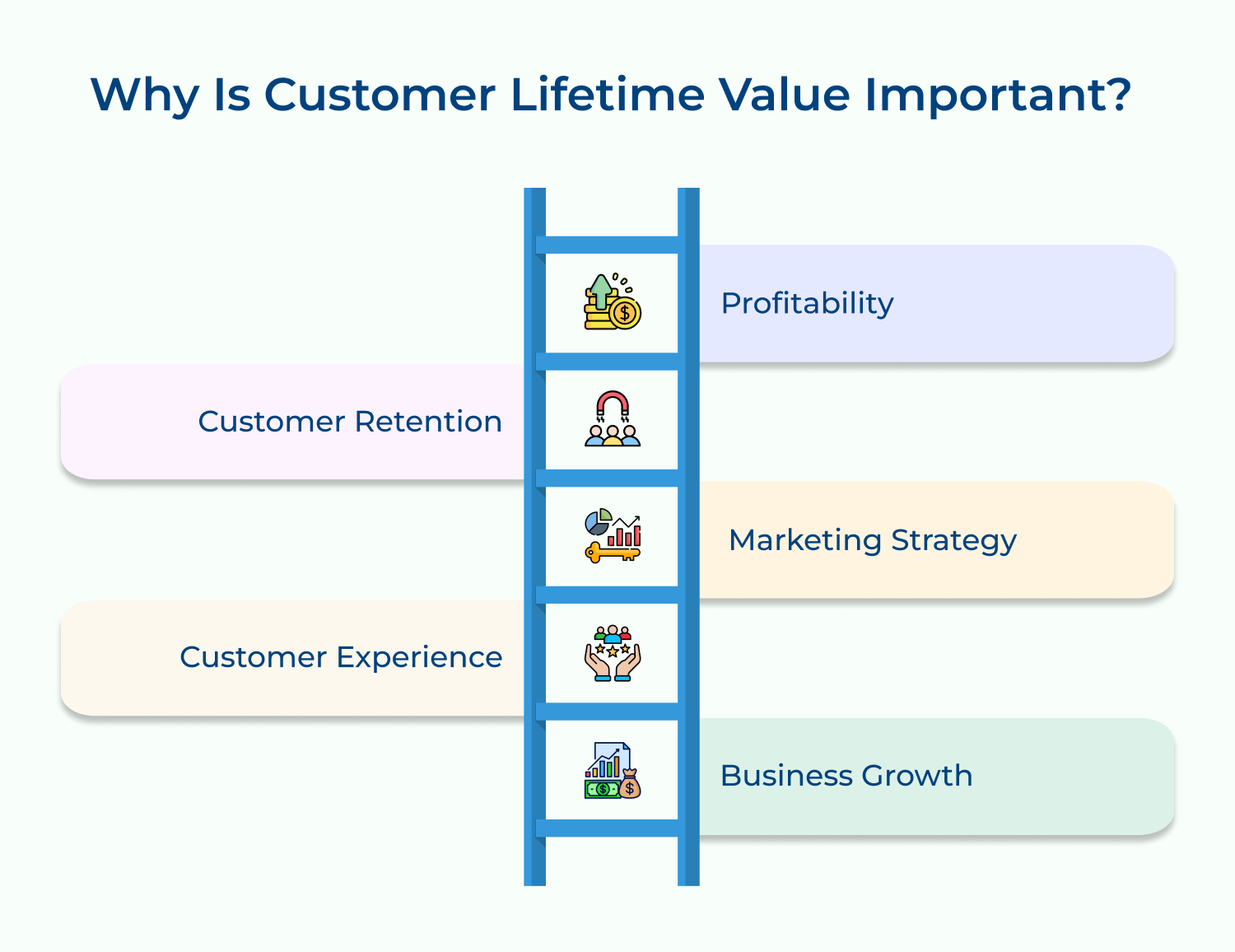
1. Profitability: Understanding the lifetime value of a customer allows businesses to focus their marketing & sales efforts on acquiring and retaining high-value customers. By investing in these customers, businesses can increase their revenue and profitability.
2. Customer retention: CLV highlights the importance of building long-term relationships with customers. By nurturing relationships with high-value customers, businesses can improve customer retention rates and reduce churn. This can lead to increased customer satisfaction and loyalty, as well as lower costs associated with acquiring new customers.
3. Marketing strategy: Knowing the lifetime value of a customer enables businesses to tailor their marketing strategies to target high-value customers. By segmenting customers based on their CLV, businesses can personalize marketing campaigns, offers and communication to better meet the needs of their most valuable customers.
4. Customer experience: Understanding CLV can also help businesses improve the overall customer experience. By identifying high-value customers, businesses can provide personalized service, rewards and incentives to enhance customer satisfaction. This can lead to increased customer engagement and repeat purchases.
5. Business growth: Increasing customer lifetime value can drive business growth and long-term success. By focusing on building relationships with high-value customers, businesses can not only increase revenue but also create advocates who can help attract new customers through referrals and recommendations.
Customer Lifetime Value (CLV) is a crucial metric for businesses to understand, as it helps determine the long-term value each customer brings to the company. By analyzing CLV, businesses can make informed decisions regarding marketing strategies, customer retention efforts and overall profitability.
Costco
Costco’s membership model encourages customer loyalty and repeat visits. By offering exclusive deals and discounts to members, Costco incentivizes customers to renew their memberships year after year, resulting in a high CLV.
Lululemon
Lululemon’s focus on building a strong brand community and providing high-quality athletic apparel has cultivated a loyal customer base. The company’s in-store experiences and commitment to customer service contribute to a high CLV.
Tesla
Tesla’s innovative electric vehicles, coupled with its over-the-air software updates and unique brand appeal, have created a loyal customer base. The company’s focus on customer experience and long-term ownership costs contribute to a high CLV.
Netflix
Netflix’s subscription-based model and continuous addition of new content help retain customers for extended periods. The company’s personalized recommendations and user experience also contribute to customer satisfaction and a high CLV.
CLV measures the total worth a customer brings over the course of their relationship with a business. Focusing on CLV helps boost profitability and foster long-term customer loyalty.
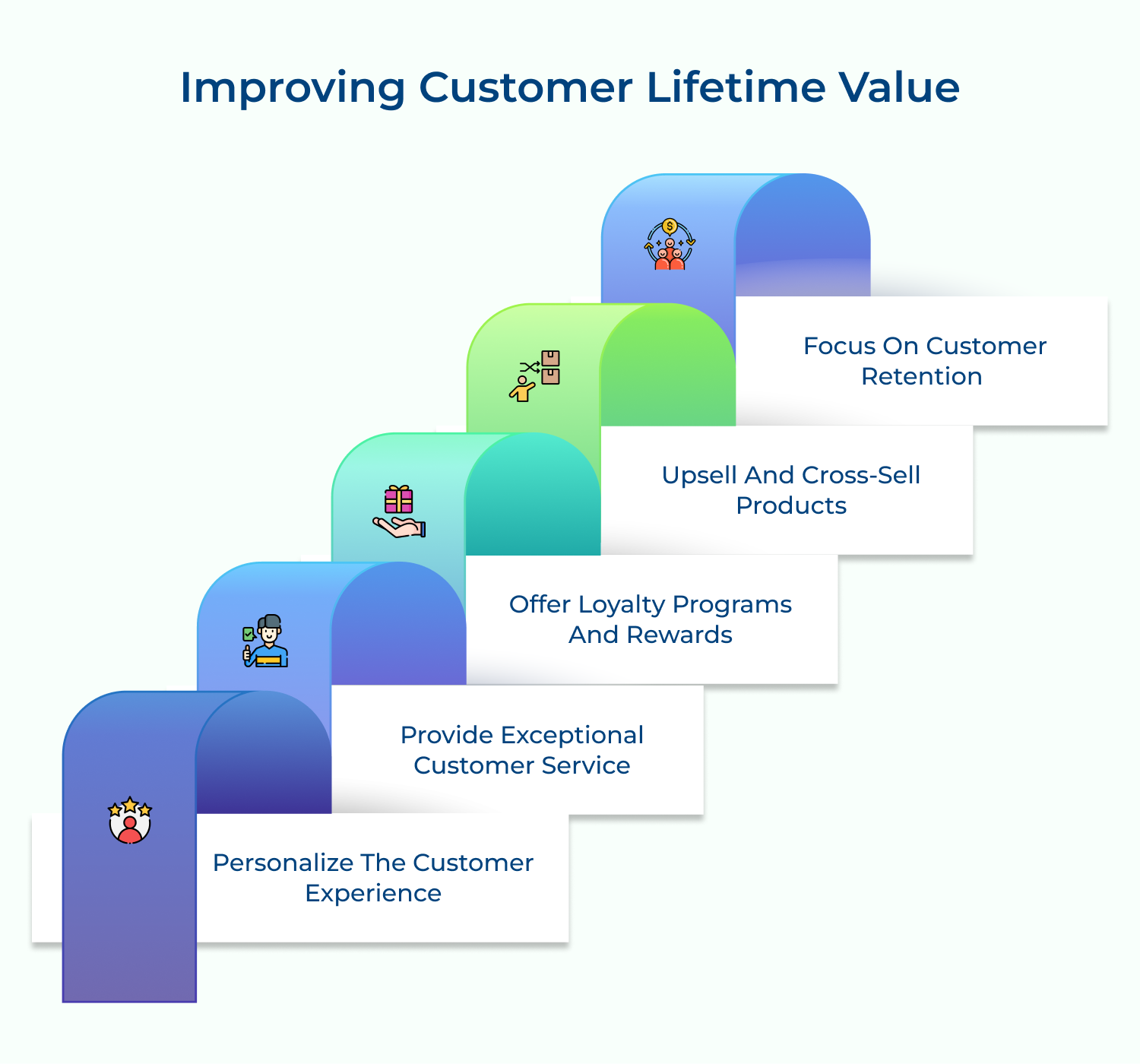
1. Personalize the customer experience: Personalization is key to building strong relationships with customers. Use data & analytics to create personalized marketing campaigns, product recommendations, and communication tailored to the individual needs of your customers.
2. Provide exceptional customer service: Excellent customer service can go a long way in improving CLV. Make sure to respond promptly to customer inquiries, resolve issues effectively, and provide a positive experience for every customer interaction.
3. Offer loyalty programs and rewards: Rewarding customers for their loyalty can incentivize them to continue purchasing from your business. Implement loyalty programs, discounts, exclusive offers and other incentives to encourage repeat purchases to increase CLV.
4. Upsell and cross-sell products: Upselling and cross-selling can help increase the average order value to drive additional revenue from existing customers. Identify opportunities to recommend complementary products or upgrades to customers based on their previous purchases and preferences.
5. Focus on customer retention: Retaining existing customers is often more cost-effective than acquiring new ones. Invest in strategies to retain customers, such as personalized follow-up communications, customer feedback surveys and ongoing engagement initiatives.
CLV helps businesses understand the long-term worth of their customers. It enables marketers to allocate resources wisely, target key segments, and maximize profitability.
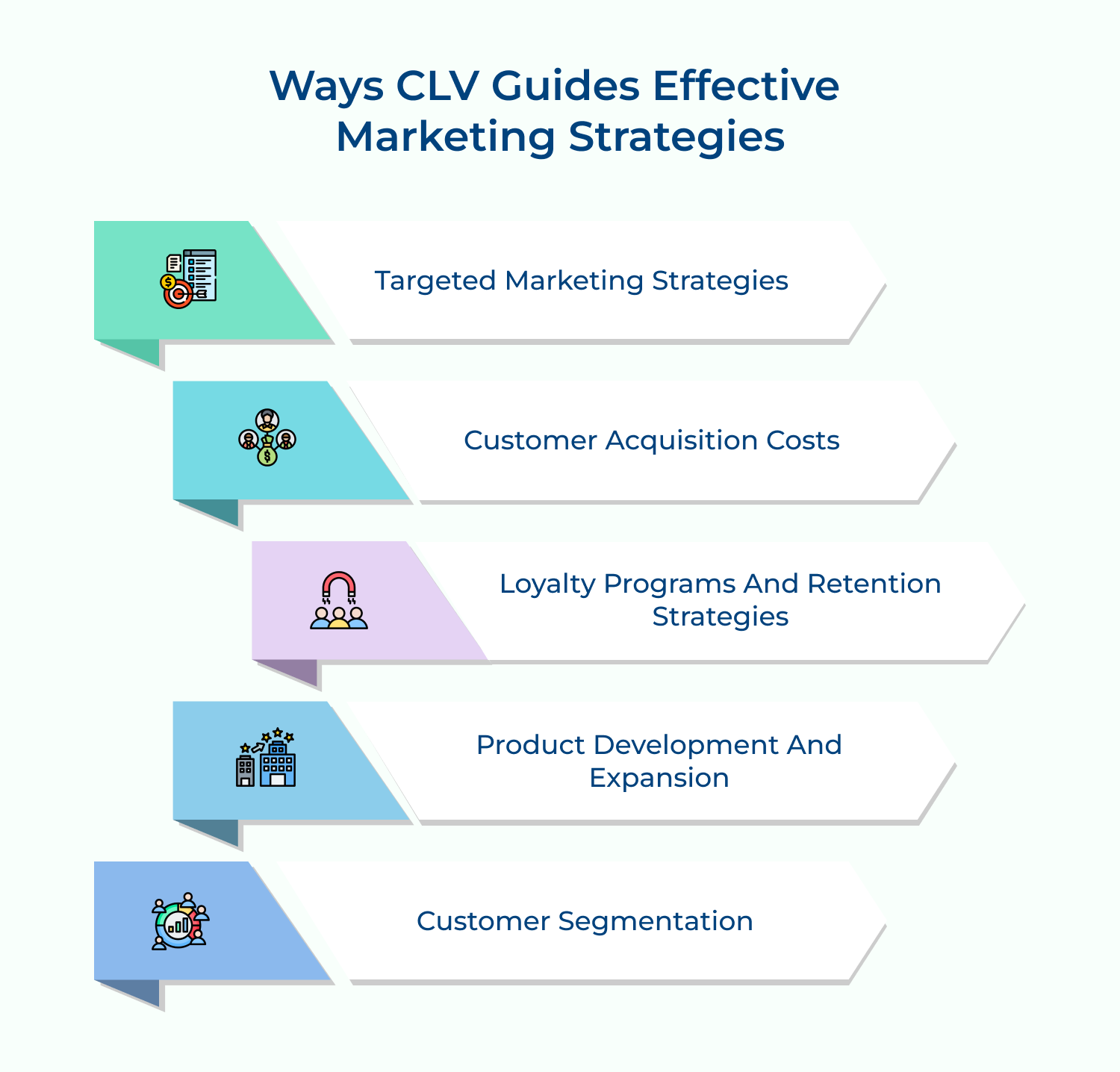
1. Targeted Marketing Strategies
CLV allows marketers to identify high-value customers and tailor their marketing strategies towards these individuals. For example, if a customer has a high CLV, marketers may choose to offer personalized discounts or incentives to encourage repeat purchases and loyalty. On the other hand, customers with a low CLV may not receive as much attention in marketing campaigns.
2. Customer Acquisition Costs
CLV helps marketers determine the appropriate amount to spend on acquiring new customers. By understanding the lifetime value of a customer, businesses can calculate the maximum amount they are willing to spend on marketing and advertising efforts to acquire a new customer. This information is crucial in optimizing marketing budgets and ensuring a positive return on investment.
3. Loyalty Programs and Retention Strategies
By analyzing CLV, marketers can identify trends and behaviors that lead to customer churn. This information can help businesses develop effective loyalty programs and retention strategies to keep high-value customers engaged. For example, businesses may offer exclusive perks or rewards to customers with a high CLV to encourage continued patronage.
4. Product Development and Expansion
CLV can also inform product development and expansion decisions. By understanding the value that different customer segments bring to the business, marketers can prioritize product enhancements or expansions that cater to the needs and preferences of high-value customers. This targeted approach can result in increased sales and customer satisfaction.
5. Customer Segmentation
CLV allows marketers to segment customers based on their value to the business. By categorizing customers into different groups based on their CLV, businesses can tailor marketing messages, promotions and communication channels to effectively reach each segment. This personalized approach can lead to higher engagement and conversion rates.
Tracking Customer Lifetime Value (CLV) is essential for businesses looking to maximize the potential value of their customer base. By understanding how much each customer is worth over the course of their relationship with your business, you can tailor your marketing strategies, customer service efforts and product offerings to better meet their preferences.
Investing in tools to track and analyze CLV can lead to increased customer loyalty, higher retention rates and greater profitability for your business in the long run. It’s time to start focusing on CLV and unlocking the full potential of your customer base.

How is customer lifetime value different from other customer metrics?
Customer lifetime value (CLV) is a crucial metric for businesses to understand the long-term value of their customers. It differs from other customer metrics, such as customer acquisition cost or retention rate, because it takes into account the total revenue a customer will generate over their entire relationship with the business.
Why is customer lifetime value important to your business?
CLV is important to your business because it helps you make strategic decisions on how much to spend on acquiring new customers, how to allocate resources to retain current customers and how to maximize the overall profitability of your customer base. Understanding CLV can also help you identify high-value customers and customer service efforts to meet their needs.
What are the other important factors for your customer lifetime value calculation?
In addition to customer spend, other important factors for calculating CLV include the frequency of purchases, the average purchase value and the length of the customer relationship. By analyzing these metrics, you can estimate how much revenue each customer will generate over time and prioritize your marketing efforts accordingly.
How do you calculate the lifetime value of a customer?
Calculating the lifetime value of a customer can be done using a simple formula: CLV = average purchase value x purchase frequency x customer lifespan. By plugging in these values, you can get a rough estimate of how much each customer is worth to your business.
Which industries have the highest customer lifetime value?
When it comes to industries with the highest customer lifetime value, sectors like luxury fashion, automotive and financial services typically lead the way. These industries often have higher-priced products or services, longer customer relationships and opportunities for upselling or cross-selling, which can contribute to a higher CLV.
 https://omni24.io/wp-content/uploads/2026/08/Omnichannel-Chatbots.png
1256
2400
Tushar Joshi
https://omni24.io/wp-content/uploads/2023/04/Omni-Logo-1.svg
Tushar Joshi2026-08-13 04:43:302026-08-13 04:43:30How Omnichannel Chatbots Improve Your Customer Experience
https://omni24.io/wp-content/uploads/2026/08/Omnichannel-Chatbots.png
1256
2400
Tushar Joshi
https://omni24.io/wp-content/uploads/2023/04/Omni-Logo-1.svg
Tushar Joshi2026-08-13 04:43:302026-08-13 04:43:30How Omnichannel Chatbots Improve Your Customer Experience https://omni24.io/wp-content/uploads/2026/08/Ecommerce-Chatbots-1.png
1256
2400
Tushar Joshi
https://omni24.io/wp-content/uploads/2023/04/Omni-Logo-1.svg
Tushar Joshi2026-08-12 03:57:552026-08-13 04:37:30Ecommerce Chatbots: What are They and Their Use Cases
https://omni24.io/wp-content/uploads/2026/08/Ecommerce-Chatbots-1.png
1256
2400
Tushar Joshi
https://omni24.io/wp-content/uploads/2023/04/Omni-Logo-1.svg
Tushar Joshi2026-08-12 03:57:552026-08-13 04:37:30Ecommerce Chatbots: What are They and Their Use Cases https://omni24.io/wp-content/uploads/2026/08/Omnichannel-Ecommerce.png
1256
2400
Tushar Joshi
https://omni24.io/wp-content/uploads/2023/04/Omni-Logo-1.svg
Tushar Joshi2026-08-11 04:50:362026-08-11 04:50:36How to Create an Omnichannel Ecommerce Strategy: 7 Best Ways
https://omni24.io/wp-content/uploads/2026/08/Omnichannel-Ecommerce.png
1256
2400
Tushar Joshi
https://omni24.io/wp-content/uploads/2023/04/Omni-Logo-1.svg
Tushar Joshi2026-08-11 04:50:362026-08-11 04:50:36How to Create an Omnichannel Ecommerce Strategy: 7 Best Ways
Whether it’s about acquire, engage or support – Omni24 covers all your customer engagement needs in one complete platform.

Copyright ©2026 Veemo All rights reserved.
CA, Los Angeles, Hall Ave, 19011