Customer Loyalty vs Brand Loyalty: What’s the Difference?
Customer loyalty drives repeat purchases and trust. Brand loyalty builds emotional bonds that help businesses achieve sustainable long-term growth.
Customer loyalty drives repeat purchases and trust. Brand loyalty builds emotional bonds that help businesses achieve sustainable long-term growth.
In business and marketing, two concepts often take center stage: customer loyalty as well as brand loyalty. While these terms are frequently used interchangeably, they represent distinct aspects of consumer behavior that can significantly impact a company’s success.
Understanding the nuances between customer loyalty and brand loyalty is crucial for businesses. Especially, if you’re aiming to build lasting relationships with audiences and secure a competitive edge.
This blog post delves into the key differences between these two forms and explores their unique characteristics. Join us as we unravel the complexities of customer and brand loyalty, discover how mastering both can drive sustainable growth.
Customer loyalty refers to the tendency of customers to continue doing business with a brand over time due to positive experiences, satisfaction and trust. Loyal customers repeatedly choose the same brand for their needs and are often more engaged, making them valuable assets for any business.
Loyal customers are more likely to make repeat purchases, offer valuable referrals and engage with the brand on multiple levels. High customer loyalty reduces churn rates and lowers acquisition costs, as retaining existing customers is generally more cost-effective than acquiring new ones.
Key objectives:
Brand loyalty refers to a consumer’s tendency to consistently choose and purchase products or services from a specific brand over its competitors. It’s characterized by repeated buying behavior, positive emotional connections and a preference for the brand regardless of price or convenience factors.
Loyal customers provide a stable revenue stream, often spending more and making frequent purchases. Moreover, brand loyalty acts as a barrier to entry for competitors, protecting market share while allowing companies to maintain higher profit margins.
Key objectives:
Customer loyalty and brand loyalty are the cornerstones of sustainable business growth. They go beyond mere transactions, building deep connections. Let’s learn why it matters:
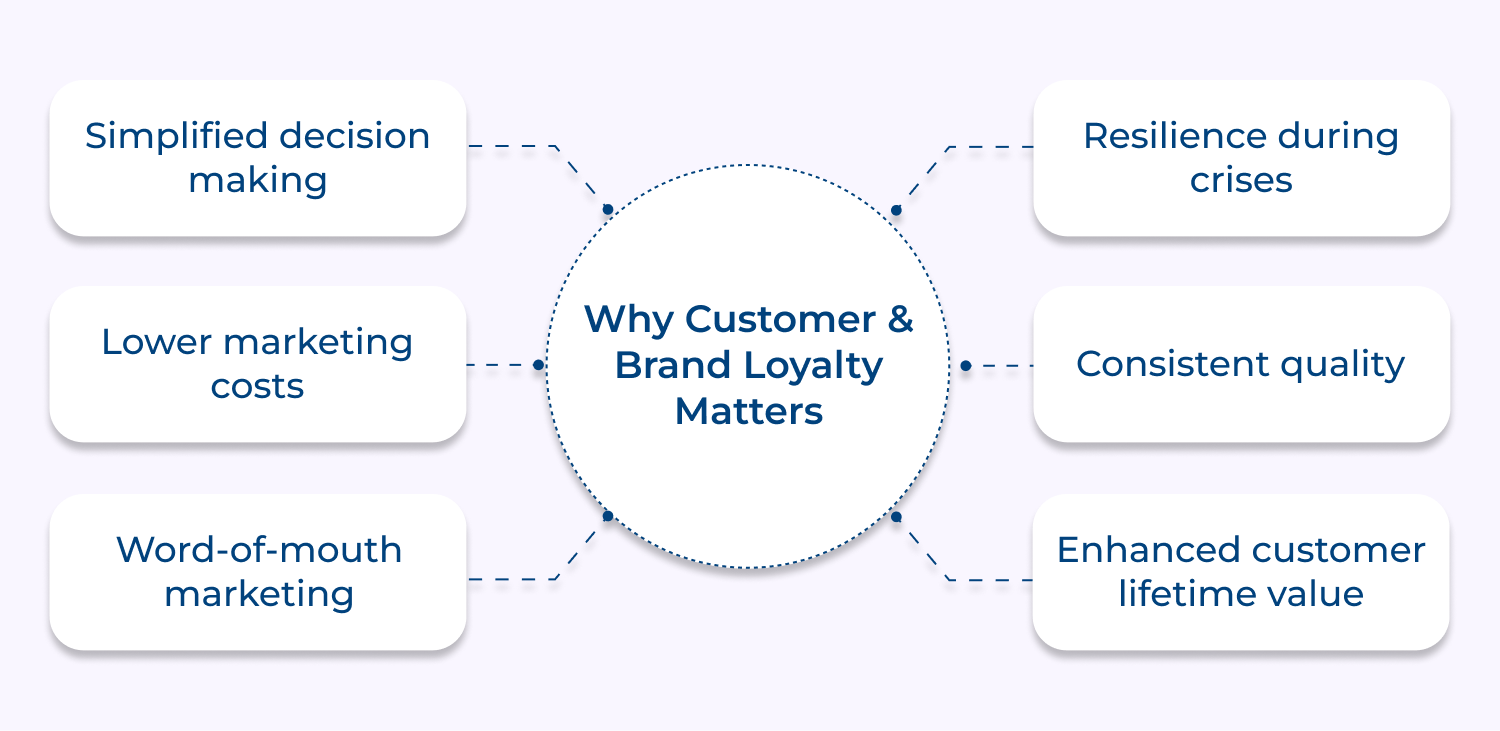
Simplified decision making: Customer and brand loyalty significantly simplify the decision-making process for consumers. When customers are loyal to a brand, they don’t need to spend time and energy evaluating multiple options every time they make a purchase.
The cognitive shortcut reduces decision fatigue and creates a sense of comfort as well as familiarity. For businesses, this means more predictable sales and a stable customer base, allowing for better resource allocation along with long-term planning.
Lower marketing costs: Loyal customers require less convincing to make repeat purchases, which translates to lower marketing costs for businesses.
Instead of constantly trying to acquire new customers, companies can focus on nurturing relationships with their loyal customer base. This shift not only reduces marketing expenses but also allows for more targeted and effective marketing strategies.
Word-of-mouth marketing: Loyal customers become brand advocates, engaging in organic word-of-mouth marketing. They’re more likely to recommend the brand to friends, family and colleagues, providing a form of advertising that’s both free as well as highly credible.
Social media amplifies this effect, with loyal customers sharing their positive experiences online, potentially reaching thousands of potential new customers. The organic growth is particularly valuable as consumers increasingly trust peer recommendations over traditional advertising.
Resilience during crises: Brand loyalty acts as a buffer during challenging times, whether it’s economic downturns, PR crises or increased competition.
Loyal customers are more likely to stick to a brand they trust, even when faced with cheaper alternatives or negative publicity. The resilience provides businesses with a stable revenue stream and the time to address issues or adapt to changing market conditions without experiencing a dramatic drop in sales.
Consistent quality: Brands that build loyalty typically do so by consistently delivering high-quality products or services. The commitment to quality benefits both the business and the customer.
Customers enjoy reliable experiences, reducing the risk and disappointment associated with trying new products. For businesses, maintaining this quality standard drives continuous improvement and innovation, helping them stay ahead of competitors as well as justify premium pricing.
Enhanced customer lifetime value: Loyal customers tend to have a higher lifetime value. They’re more likely to make repeat purchases, try new product lines and opt for premium offerings.
Over time, this translates to increased revenue per customer without the high costs associated with new customer acquisition. Long-term customers often provide valuable feedback, helping businesses refine their offerings and identify new market opportunities.
Customer loyalty and brand loyalty, while interconnected, differ in focus. Understanding these distinctions helps tailor strategies for deeper, more effective connections.
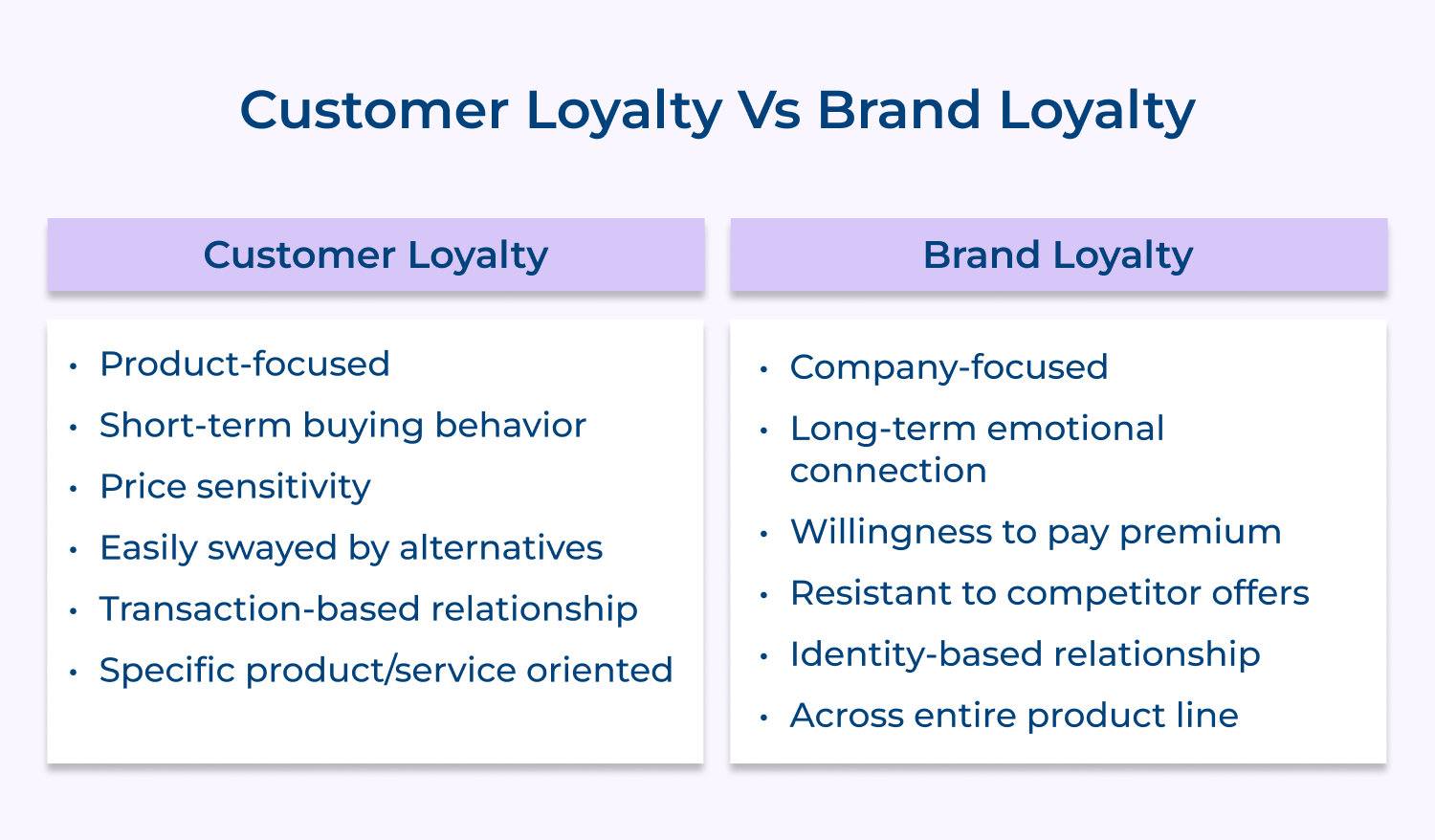
Customer loyalty is centered on the repeated transactions and satisfaction with a company’s products or services. It emphasizes the customer’s ongoing relationship with the specific offerings of the company, focusing on factors like product quality and service reliability.
Brand loyalty centers on the emotional attachment and preference for a brand’s identity as well as values. It reflects a deeper, personal commitment to the brand itself rather than just its products or services.
Customer Loyalty is driven primarily by satisfaction with the product or service experience, including quality, reliability and customer service. Factors like convenience and value for money play significant roles in fostering loyalty to a company.
Brand Loyalty is influenced by emotional connection, brand identity and alignment with personal values. Customers are drawn to the brand’s overall image and consistent messaging, beyond just the functional aspects of the products or services.
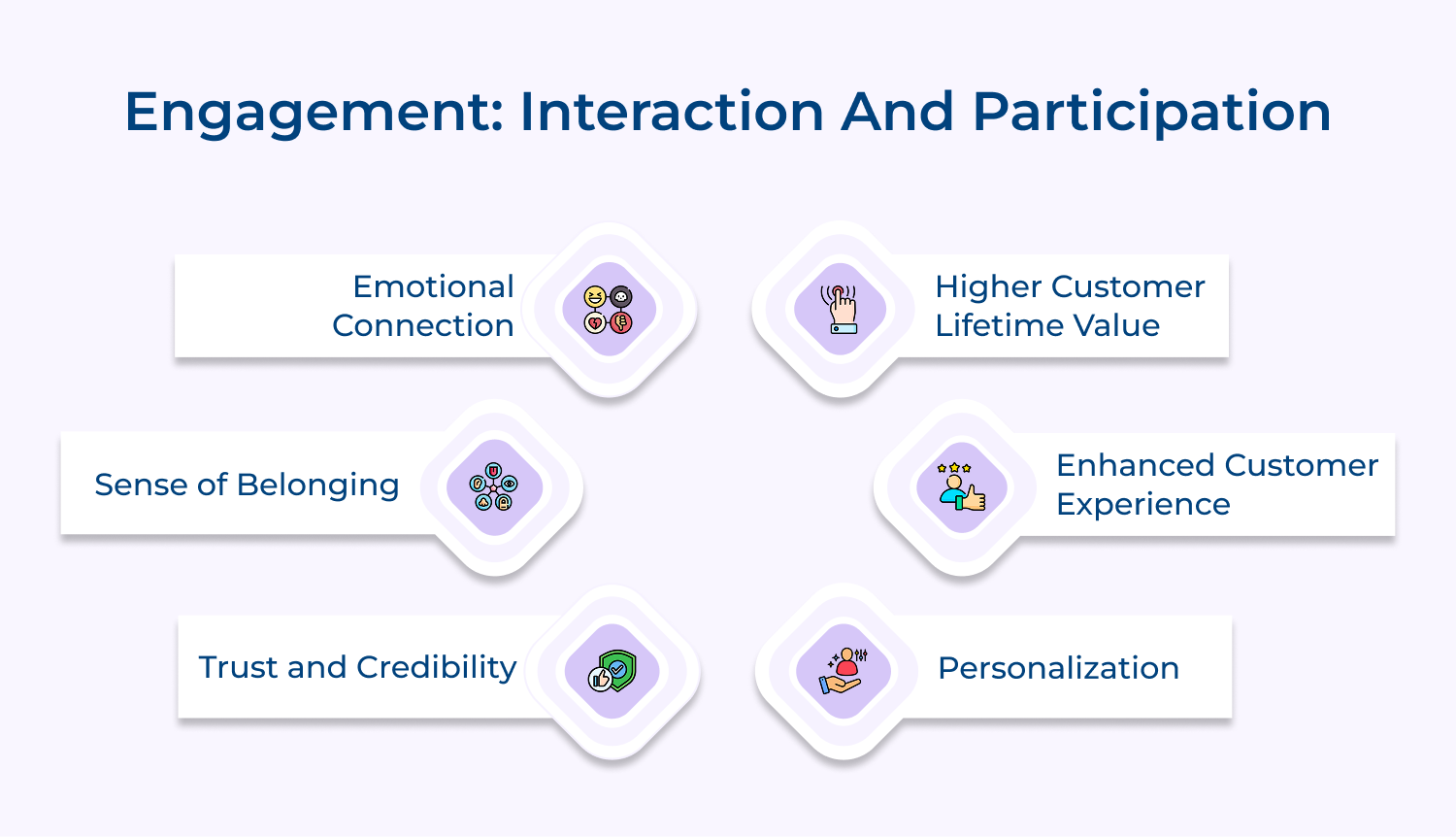
Engagement is generally through repeat purchases, loyalty programs and interactions focused on transactions. Loyal customers frequently engage with the company to gain benefits like discounts, rewards, or personalized offers.
Brand Loyalty involves a deeper engagement where customers advocate for the brand, share positive experiences and exhibit a strong emotional connection. Brand-loyal customers are more likely to promote the brand to others as well as participate in brand communities.
This typically results in stable revenue through repeat transactions but doesn’t necessarily affect pricing power. Loyal customers might expect consistent value but may be sensitive to price changes.
Brand Loyalty can lead to premium pricing, as loyal customers are often willing to pay more for a brand they trust and identify with. Strong brand loyalty enhances a brand’s ability to command higher prices due to perceived value.
Customers may switch to competitors if they offer better deals or improved products. Customer loyalty is more transactional and can be influenced by changes in product offerings or pricing.
Brand Loyalty provides resilience against competitors, as brand-loyal customers are less likely to switch even when presented with alternatives. Their emotional attachment to the brand makes them more resistant to competitive pressures.
Customer Loyalty is measured through metrics like repeat purchase rates, customer retention rates and satisfaction surveys. Metrics focus on the frequency and consistency of customer interactions as well as transactions.
Brand Loyalty is evaluated through brand affinity studies, brand equity assessments and tracking advocacy behaviors. Measurement includes understanding emotional attachment, brand perception and overall brand commitment.
Customer Loyalty strategies include offering loyalty rewards, ensuring high-quality customer service and personalizing offers based on purchase history. Focused on enhancing the transactional experience to encourage repeat business.
Brand Loyalty strategies involve creating strong brand experiences, consistent messaging and emotional engagement campaigns. Efforts are directed at building a compelling brand identity that resonates deeply with customers and fosters long-term commitment.
Often varies with customer satisfaction and experience; can be short-term if not continuously nurtured. Customer Loyalty is dependent on maintaining high standards and meeting customer needs effectively.
Brand Loyalty tends to be more enduring due to its emotional basis. Brand-loyal customers exhibit long-term commitment and are less likely to be swayed by transient factors, leading to sustained brand allegiance over time.
Brand loyalty goes beyond customer satisfaction; it involves cultivating an emotional connection with your customers. Here are key strategies to enhance brand loyalty effectively:
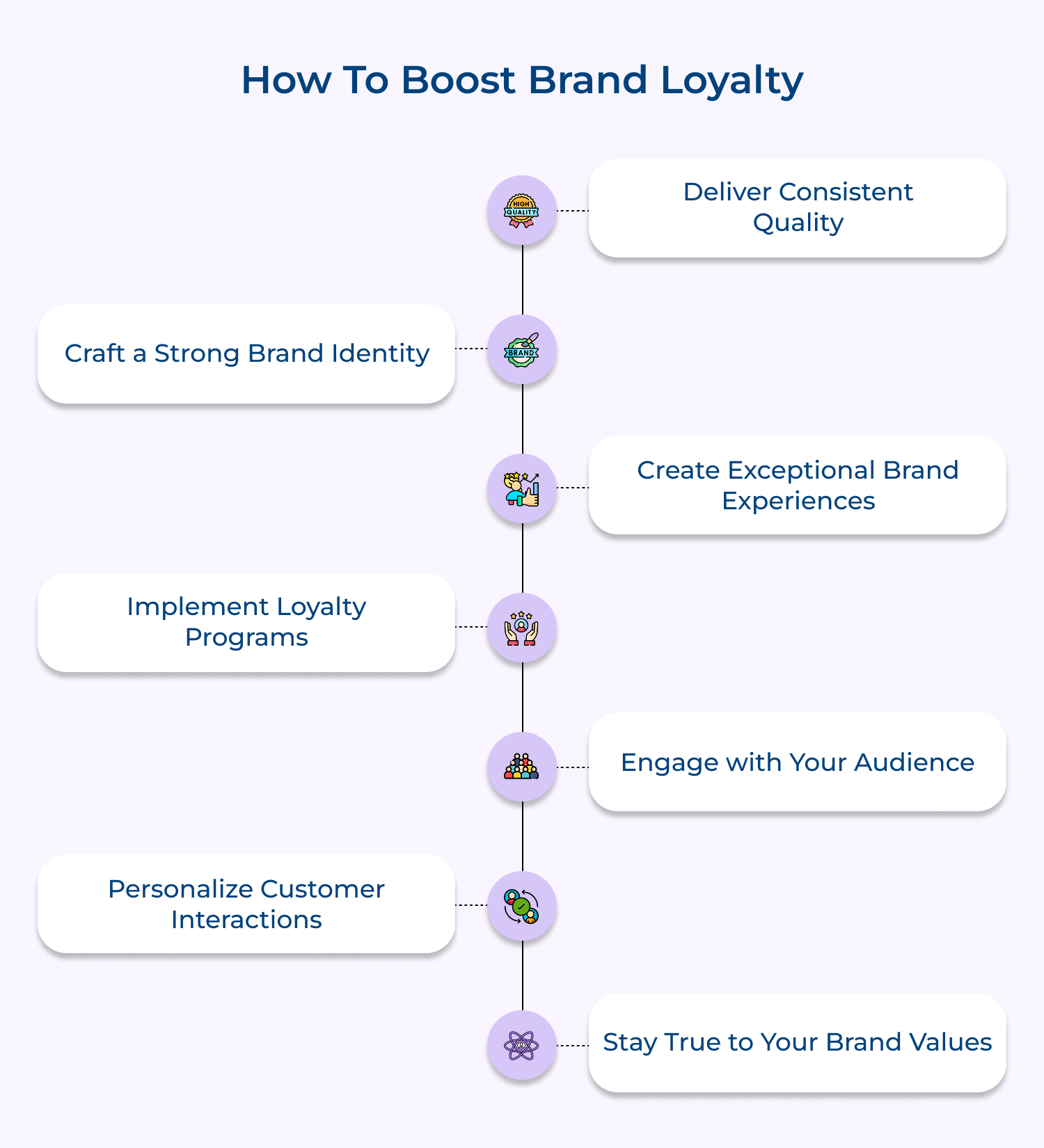
1. Deliver Consistent Quality
Consistency in quality builds trust and loyalty. Customers expect the same high standards every time. When your product or service meets expectations regularly, it shows reliability. Dependability is key for building lasting brand loyalty.
2. Craft a Strong Brand Identity
A clear brand identity connects with customers emotionally. Define your voice, visuals and messaging to reflect your values as well as mission. Keep this identity consistent across advertising, social media, packaging and customer service. A strong identity helps customers relate to your brand’s vision.
3. Create Exceptional Brand Experiences
Go beyond the product and create memorable experiences. Offer events, personalized services, or unique interactions that delight customers. For example, host special gatherings or give recommendations based on past purchases. These experiences deepen emotional bonds with your brand.
4. Implement Loyalty Programs
Loyalty programs reward repeat customers. Offer points, discounts, or exclusive access that feel valuable. Keep the program simple and easy to join. Rewarding customers makes them feel valued while encouraging them to buy again.
5. Engage with Your Audience
Active engagement builds loyalty. Use social media and other channels to connect, answer questions as well as collect feedback. Show that you care about their opinions. Share useful updates and thank customers for their support.
6. Personalize Customer Interactions
Personalization makes experiences meaningful. Use customer data to send tailored offers, messages and product suggestions. Personalized interactions show you understand their needs and strengthen loyalty.
7. Stay True to Your Brand Values
Authenticity drives long-term loyalty. Stay aligned with your core values and mission in every action. Customers trust brands that show honesty and responsibility. Transparency and ethical practices create a strong as well as positive image.
Maintaining customer loyalty is crucial for the long-term success of business. It ensures consistent revenue & serves as brand advocates. Here are key tips to consider:
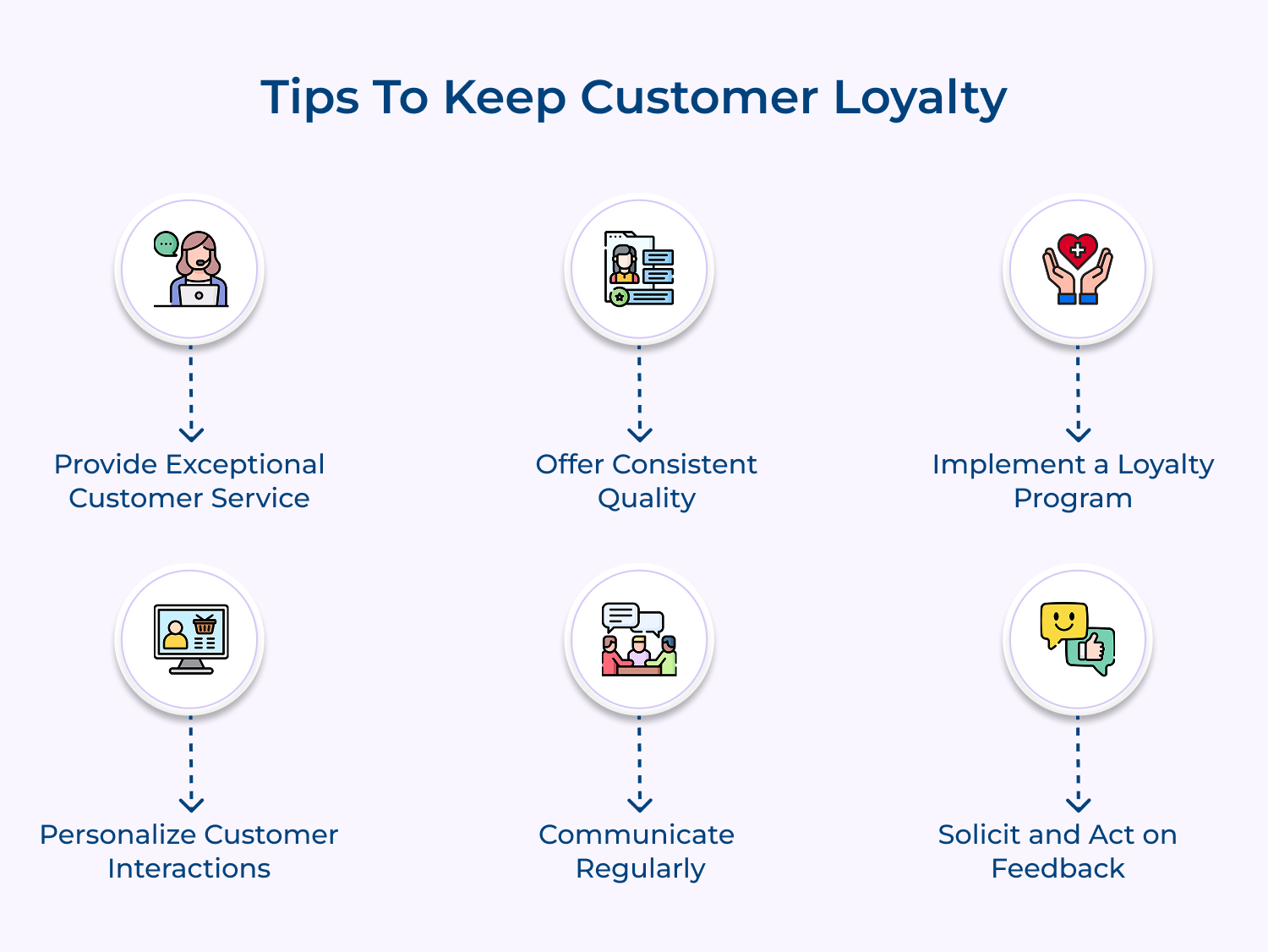
1. Provide Exceptional Customer Service
Exceptional customer service is the cornerstone of maintaining loyalty. Ensure that your team is trained to handle inquiries and resolve issues efficiently as well as courteously.
Fast response times, empathetic interactions and effective problem-solving build trust. An excellent service experience can turn a one-time customer into a loyal advocate.
2. Offer Consistent Quality
Consistency in product or service quality reinforces customer trust and satisfaction. Customers return to businesses where they know they can expect the same high standards every time.
Regularly review and enhance your offerings to ensure they meet or exceed customer expectations. A reputation for reliability is a significant factor in creating loyalty.
3. Implement a Loyalty Program
Loyalty programs reward repeat business and make customers feel valued. Design a program that provides meaningful incentives, such as discounts, exclusive offers, or points that can be redeemed for rewards.
Ensure the program is easy to understand and regularly update it to keep it fresh as well as appealing.
4. Personalize Customer Interactions
Personalization enhances the customer experience and makes interactions more meaningful. Use customer data to tailor communications, product recommendations as well as offers to individual preferences.
Personalized interactions show customers that you understand their needs and appreciate their business, which strengthens their connection to your brand.
5. Communicate Regularly
Regular communication keeps your brand top-of-mind and reinforces the relationship with customers.
Use email newsletters, social media and other channels to keep customers informed about new products as well as updates. Ensure that communications are relevant and provide value, avoiding excessive messaging that could be perceived as spam.
6. Solicit and Act on Feedback
Actively seek customer feedback through surveys, reviews and direct interactions. Listening to customer opinions and addressing their concerns shows that you value their input as well as are committed to improvement.
Implementing feedback demonstrates responsiveness and helps to refine your products, services along with overall customer experience.
In conclusion, while customer loyalty and brand loyalty are closely related, they represent different dimensions of consumer commitment. Customer loyalty focuses on repeated transactions and satisfaction with a company’s products or services, driven by reliability as well as value. In contrast, brand loyalty involves a deeper emotional connection to the brand’s identity, values and overall image.
Understanding these differences helps businesses tailor their strategies to enhance both types of loyalty. Companies handle the transactional side through great service and rewards. They build emotional connections through consistent branding and customer engagement. These combined efforts create loyal customers and a lasting brand.

What is the difference between brand awareness and customer loyalty?
Brand awareness refers to how familiar consumers are with a brand’s identity, products, or services. It’s about recognition and recall. Customer loyalty goes beyond awareness and involves repeated purchases as well as a preference for a brand over competitors. While brand awareness is a crucial first step, customer loyalty indicates a deeper connection and commitment to the brand, often resulting in long-term customer relationships.
What is the connection between brand loyalty and customer relationships?
Brand loyalty and customer relationships are closely intertwined. Strong customer relationships often lead to brand loyalty, as customers develop trust and emotional connections with the brand through positive interactions. Conversely, brand loyalty can strengthen customer relationships by fostering a sense of belonging and shared values. This symbiotic relationship creates a cycle where loyal customers engage more deeply with the brand, leading to even stronger relationships and increased loyalty over time.
How can businesses measure customer loyalty versus brand loyalty?
Customer loyalty can be measured through metrics like repeat purchase rate, customer retention rate and Net Promoter Score (NPS). Brand loyalty, being more emotional, is often gauged through brand equity studies, emotional connection scores, as well as willingness to pay price premiums. Customer loyalty focuses on behavioral metrics, while brand loyalty measurements often involve attitudinal surveys. Both can be assessed through customer feedback, social media sentiment analysis and long-term purchasing patterns.
What strategies can businesses implement to enhance customer loyalty?
Businesses can implement strategies such as personalized customer experiences, quality customer service, loyalty programs with meaningful rewards, consistent product quality and effective communication. Other tactics include gathering and acting on customer feedback, providing exclusive offers or early access to loyal customers, while creating a seamless omnichannel experience. Regular engagement through valuable content and community-building initiatives can also strengthen customer loyalty over time.
How does brand loyalty influence customer retention?
Brand loyalty significantly impacts customer retention by creating a strong emotional bond between the customer and the brand. Loyal customers are less likely to switch to competitors, even when faced with attractive alternatives. They’re more forgiving of occasional mistakes and more resistant to price sensitivity. Brand loyalty also encourages customers to explore a wider range of products or services from the brand, increasing their overall engagement and making them less likely to churn.
 https://omni24.io/wp-content/uploads/2026/08/AI-Customer-Service-Agents.png
1256
2400
Webvision Solution
https://omni24.io/wp-content/uploads/2023/04/Omni-Logo-1.svg
Webvision Solution2026-09-21 04:48:512026-09-21 04:48:51How to Build an AI Customer Service Agents: 8 Key Steps
https://omni24.io/wp-content/uploads/2026/08/AI-Customer-Service-Agents.png
1256
2400
Webvision Solution
https://omni24.io/wp-content/uploads/2023/04/Omni-Logo-1.svg
Webvision Solution2026-09-21 04:48:512026-09-21 04:48:51How to Build an AI Customer Service Agents: 8 Key Steps https://omni24.io/wp-content/uploads/2026/08/Omnichannel-Conversational-AI.png
1256
2400
Tushar Joshi
https://omni24.io/wp-content/uploads/2023/04/Omni-Logo-1.svg
Tushar Joshi2026-09-16 03:51:072026-09-16 03:51:07How to Build Omnichannel Conversational AI Strategy
https://omni24.io/wp-content/uploads/2026/08/Omnichannel-Conversational-AI.png
1256
2400
Tushar Joshi
https://omni24.io/wp-content/uploads/2023/04/Omni-Logo-1.svg
Tushar Joshi2026-09-16 03:51:072026-09-16 03:51:07How to Build Omnichannel Conversational AI Strategy https://omni24.io/wp-content/uploads/2026/08/Customer-Service-Teams.png
1256
2400
Tushar Joshi
https://omni24.io/wp-content/uploads/2023/04/Omni-Logo-1.svg
Tushar Joshi2026-09-15 04:01:522026-09-15 04:02:16How to Build Customer Service Teams: 6 Key Steps
https://omni24.io/wp-content/uploads/2026/08/Customer-Service-Teams.png
1256
2400
Tushar Joshi
https://omni24.io/wp-content/uploads/2023/04/Omni-Logo-1.svg
Tushar Joshi2026-09-15 04:01:522026-09-15 04:02:16How to Build Customer Service Teams: 6 Key Steps
Whether it’s about acquire, engage or support – Omni24 covers all your customer engagement needs in one complete platform.

Copyright ©2026 Veemo All rights reserved.
CA, Los Angeles, Hall Ave, 19011