Top 5 Ecommerce Best Practices to Enhance Customer Experience
Learn effective ecommerce best practices to improve user experience, build customer trust and drive higher conversions for your online store.

Learn effective ecommerce best practices to improve user experience, build customer trust and drive higher conversions for your online store.
In the fast-moving e-commerce landscape, many businesses struggle to turn visitors into loyal customers because of outdated tactics and poor user-focused design. The global average e-commerce conversion rate is only about 2.2% in Q1 2023, meaning most visits don’t end in a purchase.
E-commerce best practices act as a roadmap to overcome these hurdles. They help improve customer experiences, build trust and use data-driven insights. By focusing on user experience, credibility and analytics-backed decisions, you can attract more customers as well as drive long-term growth in your online store.
E-commerce best practices are a collection of strategies designed to enhance online shopping experiences, streamline operations and drive sales. These practices cover various aspects of e-commerce, including website design, user experience, customer service and marketing techniques.
The significance of e-commerce best practices lies in their ability to create a seamless, user-friendly environment that fosters customer satisfaction and loyalty. When businesses prioritize these practices, they can improve conversion rates, reduce cart abandonment and build long-lasting customer relationships.
Key goals:
Implementing e-commerce best practices is crucial for the success and sustainability of online businesses. Here are several key reasons why these practices matter:
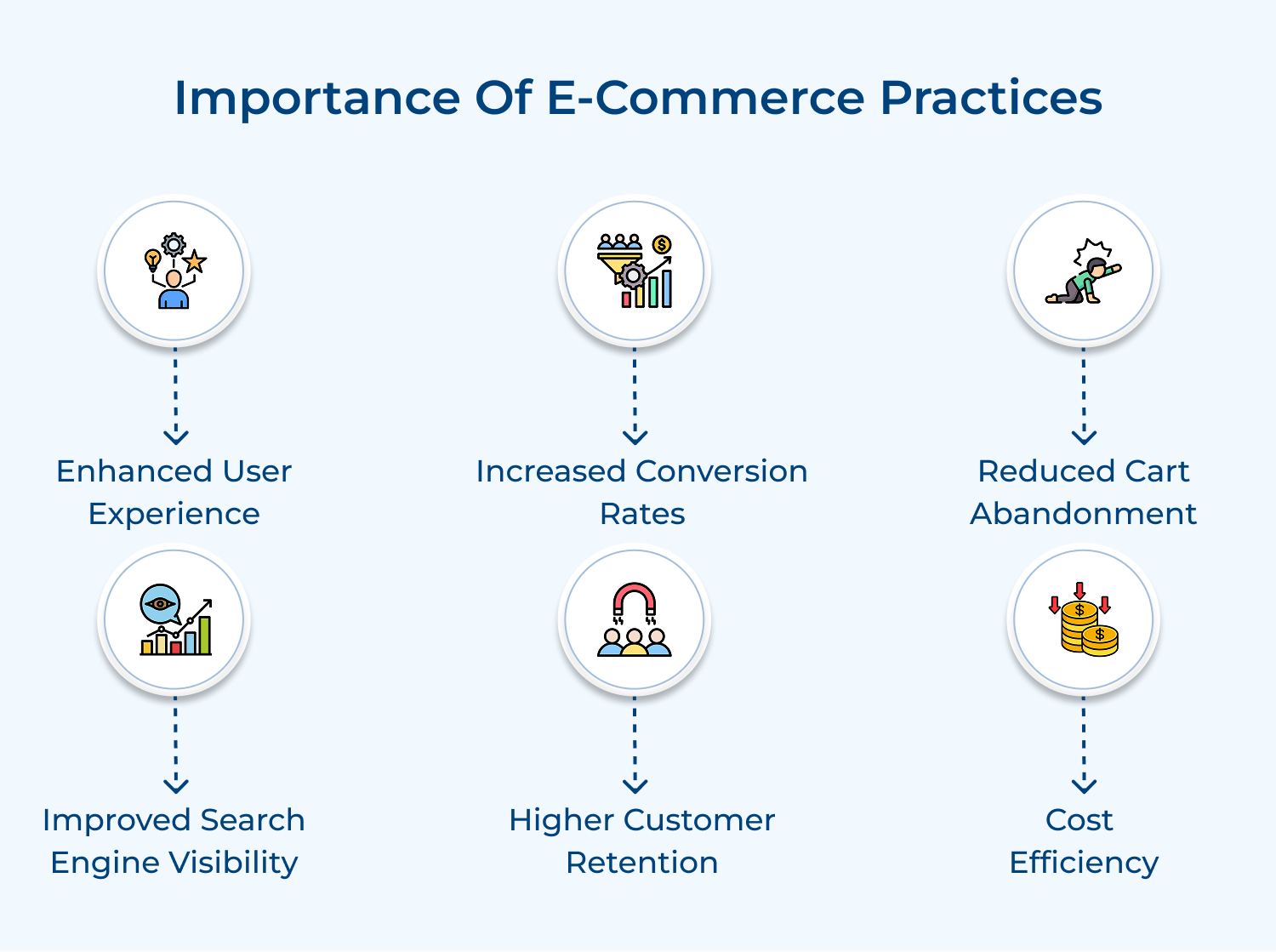
Unlocking the potential of your online store requires strategic actions that drive sales and enhance customer satisfaction. Here are the essential best practices to elevate your game:
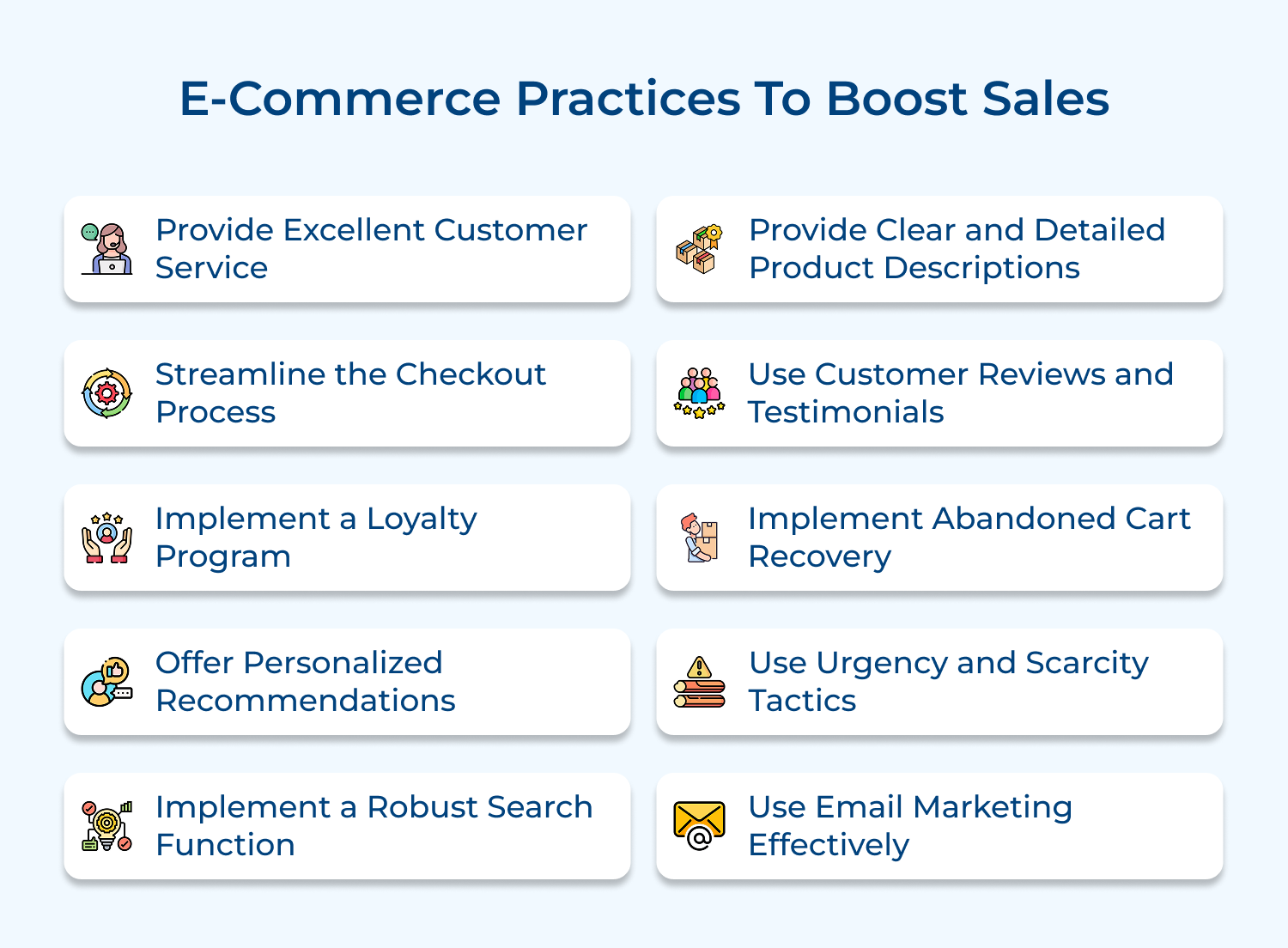
Excellent customer service builds trust, increases customer satisfaction and encourages repeat purchases. It differentiates your brand with the competition, leading to positive word-of-mouth referrals. Good customer service can turn negative experiences into positive ones, fostering customer loyalty and potentially increasing lifetime customer value.
Implement multi-channel support (email, phone, chat) for customer inquiries. Train staff to handle issues promptly and empathetically. Offer self-service options like FAQs and knowledge bases. Proactively reach out to customers for feedback. Use customer service interactions as opportunities to upsell or cross-sell when appropriate, enhancing the overall shopping experience.
Pro tips:
A streamlined checkout process reduces cart abandonment rates. It minimizes friction in the purchasing journey, leading to higher conversion rates. A smooth, fast checkout enhances user experience, encouraging repeat purchases. It also builds trust by showing professionalism and attention to customer needs, potentially increasing average order value.
Minimize the number of steps required to complete a purchase. Offer guest checkout options. Implement various payment methods, including digital wallets. Use auto-fill for returning customers. Provide clear progress indicators during checkout. Ensure mobile-friendly design for checkout pages. Offer order summaries and easy edit options throughout the process.
Pro tips:
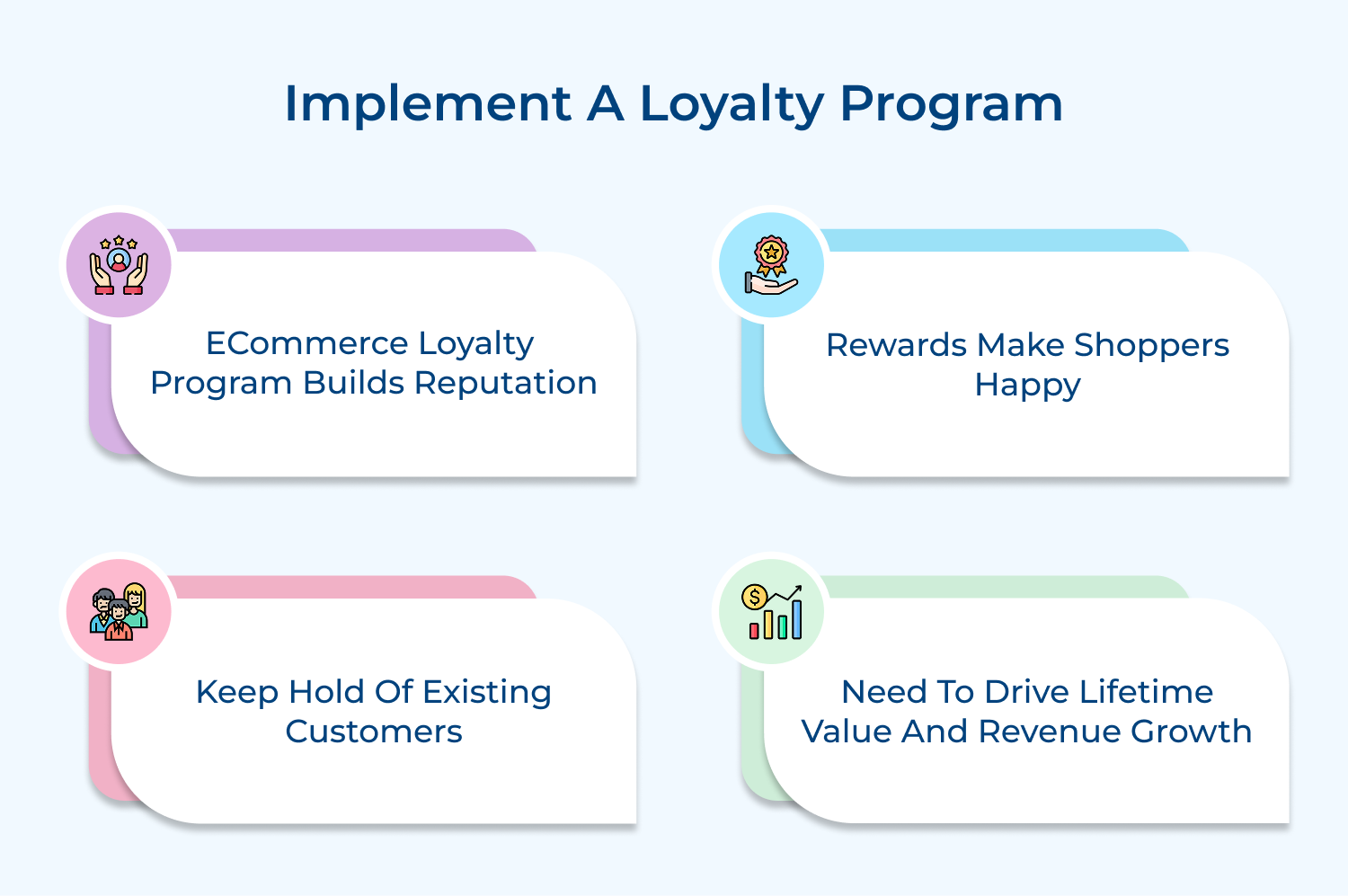
Loyalty programs incentivize repeat purchases, increasing customer retention and lifetime value. They provide valuable data on customer preferences and behaviors. Loyalty programs create emotional connections with customers, building brand advocacy. They can also differentiate your brand from competitors as well as provide a competitive advantage in customer acquisition.
Offer points for purchases that can be redeemed for discounts or products. Provide exclusive access to sales or new products for loyalty members. Implement tiered rewards systems to encourage higher spending. Use the program to gather customer data for personalized marketing. Celebrate customer milestones (e.g., birthdays, anniversaries) with special rewards.
Pro tips:
Personalized recommendations enhance the shopping experience by helping customers discover relevant products. They increase average order value through cross-selling and upselling. It can also reduce decision fatigue for customers, making the shopping process more enjoyable and efficient.
Use AI and machine learning algorithms to analyze customer browsing as well as purchase history. Implement “Customers who bought this also bought” sections. Offer personalized product bundles. Send tailored email recommendations based on past purchases. Use behavioral data to customize homepage content for returning visitors.
Pro tips:
A robust search function helps customers find desired products quickly, improving user experience and increasing conversion rates. It reduces frustration and potential site abandonment. Effective search can surface relevant products that customers might not have found through browsing, potentially increasing sales.
Implement autocomplete and predictive search features. Use natural language processing to understand search intent. Offer filtering and sorting options within search results. Provide category suggestions as well as related searches. Use machine learning to improve search relevance over time.
Pro tips:
Creating a compelling eCommerce website is key to capturing customers’ attention and driving sales. Here are the e-commerce UX best practices to follow:
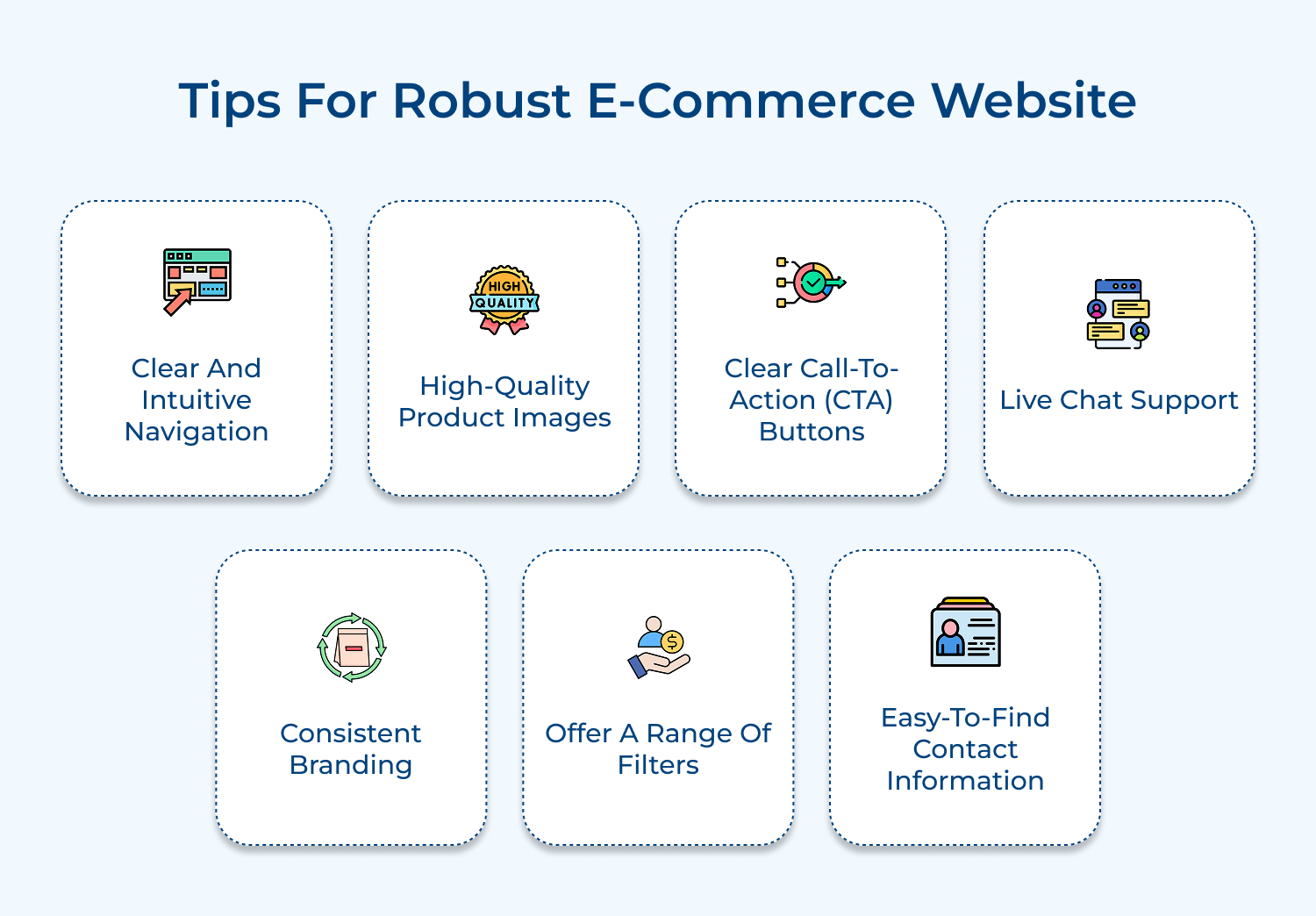
A good e-commerce design starts with easy navigation. Use clear categories, subcategories and descriptive menu labels. Add a search bar for quick access and ensure users can reach the homepage or cart from any page.
For large stores, use a structured mega menu. Always make your e-commerce platform mobile-responsive so customers can browse smoothly across all devices.
Strong visuals improve e-commerce UX. Use professional, high-resolution photos that show products from multiple angles. Include zoom and 360° views to let customers inspect details.
Keep image sizes consistent and optimized for fast loading. Add lifestyle photos to help users imagine the product in use. A balance of speed and quality ensures a better shopping experience.
Effective CTAs are key to conversions. Use bold, contrasting colors and simple text like “Add to Cart” or “Buy Now.” Make CTAs easily clickable, especially on mobile.
Place primary CTAs above the fold and use secondary ones like “Add to Wishlist” strategically. Test different button styles and positions to see what works best for your e-commerce platform.
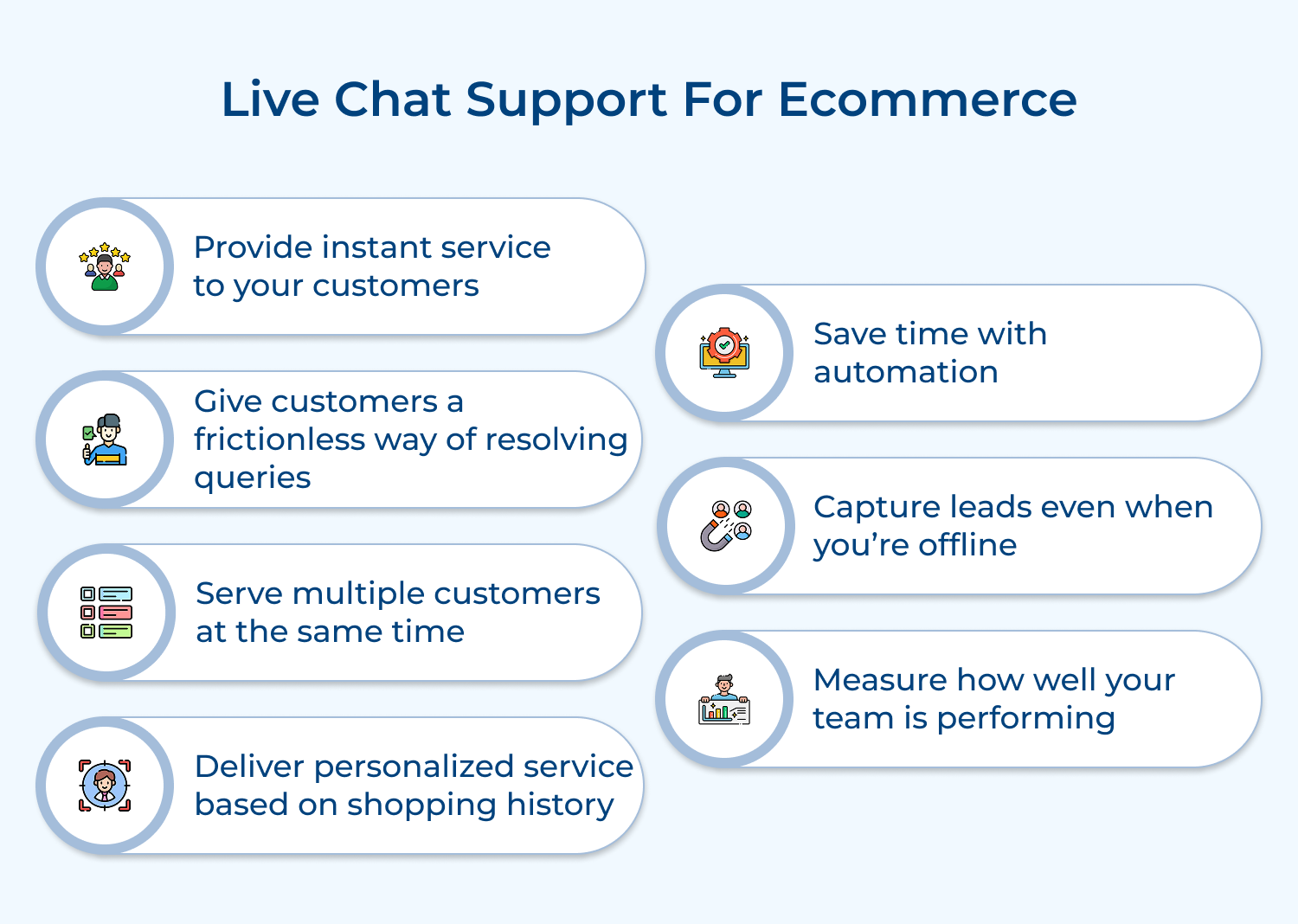
Live chat improves customer satisfaction and builds trust. Add a visible yet subtle chat icon across all pages. Use chatbots for quick, common queries and offer 24/7 or clearly timed support.
Ensure the chat works on mobile and that agents respond quickly as well as helpfully. Collect feedback through chats to identify recurring issues and improve your e-commerce UX.
Consistency builds recognition and trust. Maintain a uniform color scheme, typography and tone across your e-commerce design. Display your logo subtly but clearly.
Make sure all visuals, product descriptions and even emails reflect your brand voice. When every detail (from packaging to notifications) feels aligned, it creates a seamless and professional customer experience.
Filters simplify shopping and enhance e-commerce UX. Allow users to sort by price, color, size, or popularity using checkboxes or dropdowns. Ensure filters work smoothly on mobile and let users apply or remove multiple filters easily.
Regularly track filter usage to improve options and make finding products faster on your e-commerce platform.
Visibility builds trust. Add a “Contact Us” link in the main navigation or footer. Offer multiple contact options as well as include your physical address if relevant. Keep details updated and responsive.
Add a FAQ section for common queries. Clear, accessible contact information reassures customers and helps reduce cart abandonment on your e-commerce platform.
Discover how leading brands excel in eCommerce through innovative strategies and user-centric design. Here are some standout examples:
1. Amazon – Personalization and One-Click Ordering
Amazon is a pioneer in e-commerce best practices, particularly in personalization and streamlined checkout processes. Their recommendation engine, “Customers who bought this item also bought,” uses sophisticated algorithms to analyze user behavior and purchase history. This personalization extends to their homepage, which displays tailored product suggestions for each user.
Amazon’s patented one-click ordering system exemplifies the best practice of simplifying the checkout process. By allowing customers to purchase items with a single click, using pre-saved payment and shipping information, Amazon significantly reduces cart abandonment rates as well as enhances user experience.
2. Sephora – Omnichannel Experience and Virtual Try-On
Sephora excels in providing an omnichannel experience, seamlessly integrating their online and offline presence. Their mobile app allows customers to scan products in-store for reviews and additional information, bridging the gap between physical as well as digital shopping.
One of Sephora’s standout features is their Virtual Artist tool, which uses augmented reality (AR) to allow customers to virtually try on makeup products. This innovative use of technology addresses a major pain point in online cosmetics shopping – the inability to test products before purchase.
3. Nike – Mobile-First Design and Customization
Nike’s e-commerce site exemplifies mobile-first design, ensuring a seamless shopping experience across all devices. Their responsive design adapts fluidly to different screen sizes, maintaining functionality and aesthetic appeal on smartphones.
Nike also excels in product customization with their NIKEiD feature. This tool allows customers to personalize shoes, choosing colors, materials and even adding text. By offering this level of customization, Nike enhances customer engagement and provides a unique value proposition that sets them apart from competitors.
4. Warby Parker – Virtual Try-On and Home Try-On Program
Warby Parker, an eyewear retailer, addresses the challenge of selling items typically tried on in person through two innovative approaches. First, they offer a virtual try-on feature using AR technology, allowing customers to see how glasses look on their face using their device’s camera.
Second, they have a home try-on program where customers can select five frames to be shipped to them for free to try on at home. This program builds customers trust and reduces the risk associated with online eyewear purchases. Both of these features exemplify the best practice of mitigating common online shopping concerns.
5. Glossier – User-Generated Content and Community Building
Glossier, a beauty brand, excels in leveraging user-generated content (UGC) and building a strong community around their products. Their website prominently features customer photos and reviews, providing social proof as well as authentic product representation.
The brand encourages customers to share photos of themselves using Glossier products on social media with specific hashtags. These images are then curated and featured on the website, creating a sense of community as well as authenticity. This strategy not only provides potential customers with real-life product demonstrations but also fosters brand loyalty among existing customers.
Adopting best practices is essential for driving sales and enhancing customer satisfaction. Brands that prioritize user experience, streamline processes and build trust with their audience are better positioned to thrive in a competitive landscape. From effective website design to optimized search functionality, these practices help create seamless shopping experiences that encourage repeat business.
Businesses can not only meet but exceed customer expectations, ultimately leading to sustainable growth and increased loyalty by learning from successful brands while implementing these strategies. Embracing these best practices will pave the way for long-term success in eCommerce.

What is an ecommerce site search solution?
An ecommerce site search solution is a specialized tool integrated into online stores to help customers find products quickly and easily. It typically includes features like autocomplete, natural language processing and filtering options. Advanced solutions may incorporate AI to understand user intent, offer personalized results and learn from user behavior to improve accuracy over time. Effective site search can significantly enhance user experience and increase conversion rates.
Why does site search matter in ecommerce?
Site search matters in ecommerce because it directly impacts user experience and conversion rates. Customers who use site search often have higher purchase intent and are more likely to convert. Effective search helps customers find products quickly, reducing frustration and site abandonment. It also provides valuable data on customer preferences and search trends, which can inform inventory as well as marketing decisions.
What are three examples of best practices in the B2B e-commerce environment?
Personalized pricing and account-specific catalogs offer customized pricing as well as product selections based on client agreements. Streamlined reordering process implements features like one-click reordering and subscription options for frequently purchased items. Detailed product information provides comprehensive specifications, technical documents and bulk ordering options to meet the needs of business buyers.
What are a few facts about ecommerce?
Global e-commerce sales are projected to reach $6.3 trillion by 2024. Mobile commerce accounts for over 70% of all e-commerce transactions in some markets. The COVID-19 pandemic accelerated e-commerce growth by several years. Amazon alone accounts for nearly 40% of US e-commerce sales. Social commerce is rapidly growing with platforms like Instagram and TikTok introducing shopping features. Sustainability and ethical practices are becoming increasingly important to e-commerce consumers.
What are 3 key success factors for creating an effective e-commerce website?
User-friendly design and navigation provides intuitive layout, clear categories as well as easy-to-use search functionality to help customers find products quickly. Mobile optimization gives responsive design ensuring seamless shopping experience across all devices, given the growing prevalence of mobile shopping. Secure and streamlined checkout process leads to multiple payment options, guest checkout as well as clear security indicators to build trust while reducing cart abandonment rates.
 https://omni24.io/wp-content/uploads/2026/08/Omnichannel-Chatbots.png
1256
2400
Tushar Joshi
https://omni24.io/wp-content/uploads/2023/04/Omni-Logo-1.svg
Tushar Joshi2026-08-13 04:43:302026-08-24 09:02:01How Omnichannel Chatbots Improve Your Customer Experience
https://omni24.io/wp-content/uploads/2026/08/Omnichannel-Chatbots.png
1256
2400
Tushar Joshi
https://omni24.io/wp-content/uploads/2023/04/Omni-Logo-1.svg
Tushar Joshi2026-08-13 04:43:302026-08-24 09:02:01How Omnichannel Chatbots Improve Your Customer Experience https://omni24.io/wp-content/uploads/2026/08/Ecommerce-Chatbots-1.png
1256
2400
Tushar Joshi
https://omni24.io/wp-content/uploads/2023/04/Omni-Logo-1.svg
Tushar Joshi2026-08-12 03:57:552026-08-24 09:03:22Ecommerce Chatbots: What are They and Their Use Cases
https://omni24.io/wp-content/uploads/2026/08/Ecommerce-Chatbots-1.png
1256
2400
Tushar Joshi
https://omni24.io/wp-content/uploads/2023/04/Omni-Logo-1.svg
Tushar Joshi2026-08-12 03:57:552026-08-24 09:03:22Ecommerce Chatbots: What are They and Their Use Cases https://omni24.io/wp-content/uploads/2026/08/Omnichannel-Ecommerce.png
1256
2400
Tushar Joshi
https://omni24.io/wp-content/uploads/2023/04/Omni-Logo-1.svg
Tushar Joshi2026-08-11 04:50:362026-08-24 09:00:45How to Create an Omnichannel Ecommerce Strategy: 7 Best Ways
https://omni24.io/wp-content/uploads/2026/08/Omnichannel-Ecommerce.png
1256
2400
Tushar Joshi
https://omni24.io/wp-content/uploads/2023/04/Omni-Logo-1.svg
Tushar Joshi2026-08-11 04:50:362026-08-24 09:00:45How to Create an Omnichannel Ecommerce Strategy: 7 Best Ways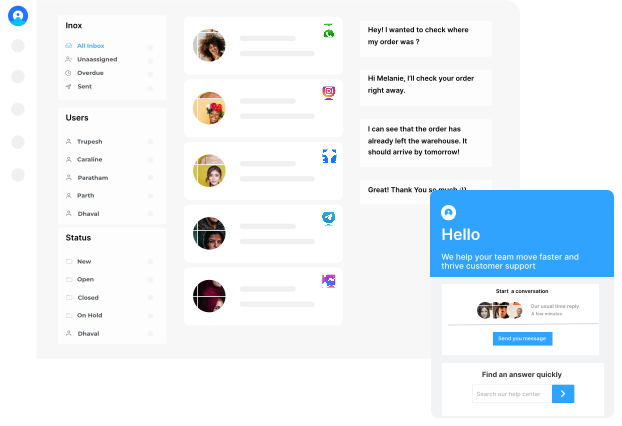
Whether it’s about acquire, engage or support – Omni24 covers all your customer engagement needs in one complete platform.

Copyright ©2026 Veemo All rights reserved.
CA, Los Angeles, Hall Ave, 19011