How to Implement a Knowledge Management Framework: 8 Key Steps
Knowledge Management Framework helps capture, organize & share information to boost collaboration, preserve knowledge and drive growth.

Knowledge Management Framework helps capture, organize & share information to boost collaboration, preserve knowledge and drive growth.
Effective knowledge management is crucial for organizational success. A well-structured knowledge management framework can be the key to unlocking your company’s full potential, fostering innovation, and maintaining a competitive edge.
The global knowledge management (KM) market is expected to reach over $3.5 trillion by 2034.
By systematically capturing or sharing valuable insights and information, businesses can enhance decision-making, improve productivity, and drive growth.
Explore the essential components of a robust knowledge management framework and how it can transform your organization.
Knowledge management framework is a structured approach to organizing, storing, sharing and utilizing an organization’s collective knowledge. It aims to enhance decision-making, innovation, and overall organizational performance through systematic knowledge processes.
A knowledge management framework typically includes key components such as knowledge creation, capture, storage and dissemination, supported by technology. By aligning these elements with business objectives, organizations can convert individual expertise into collective intelligence. It reduces duplication of efforts and ensure that valuable insights are accessible to the right people at the right time.
Key objectives:
A knowledge management framework is essential for organizations to effectively capture collective knowledge.
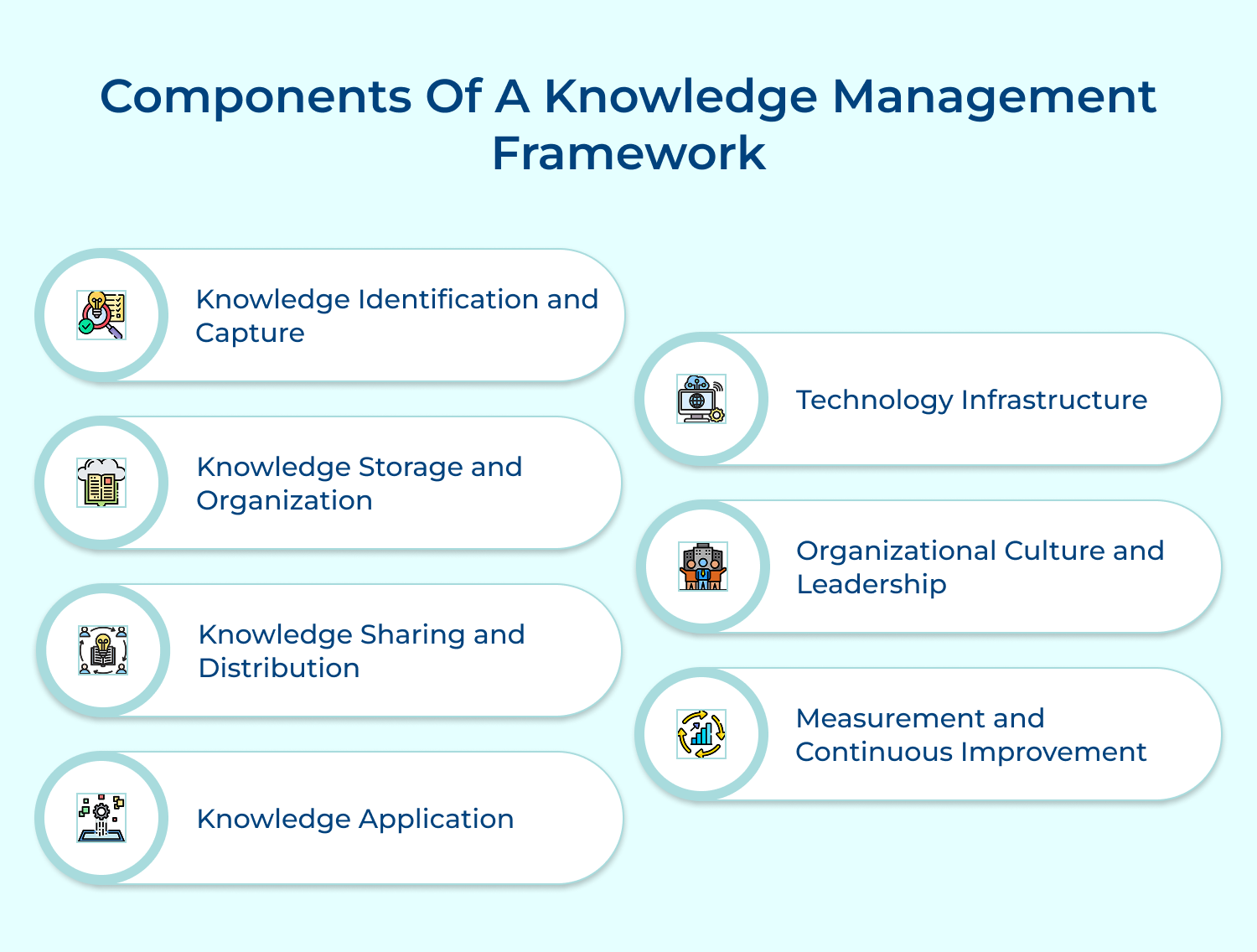
1. Knowledge Identification and Capture
The component involves identifying valuable knowledge within the organization and implementing processes to capture it systematically. It includes recognizing both explicit knowledge (documented information) and tacit knowledge.
2. Knowledge Storage and Organization
When captured, knowledge must be stored in an accessible and organized manner. The component focuses on creating a centralized repository or multiple interconnected databases to house the organization’s knowledge assets.
3. Knowledge Sharing and Distribution
The component focuses on facilitating the flow of knowledge throughout the organization. It involves creating channels that enable easy sharing of information across departments and hierarchies.
4. Knowledge Application
One of the use cases of knowledge management is to apply knowledge to improve organizational performance. This component involves creating processes or tools that enable employees to easily access and utilize relevant knowledge in their daily work.
5. Technology Infrastructure
A robust technological backbone is crucial for supporting knowledge management activities. This component includes implementing appropriate software and hardware solutions to facilitate knowledge capture, storage, sharing, and application.
6. Organizational Culture and Leadership
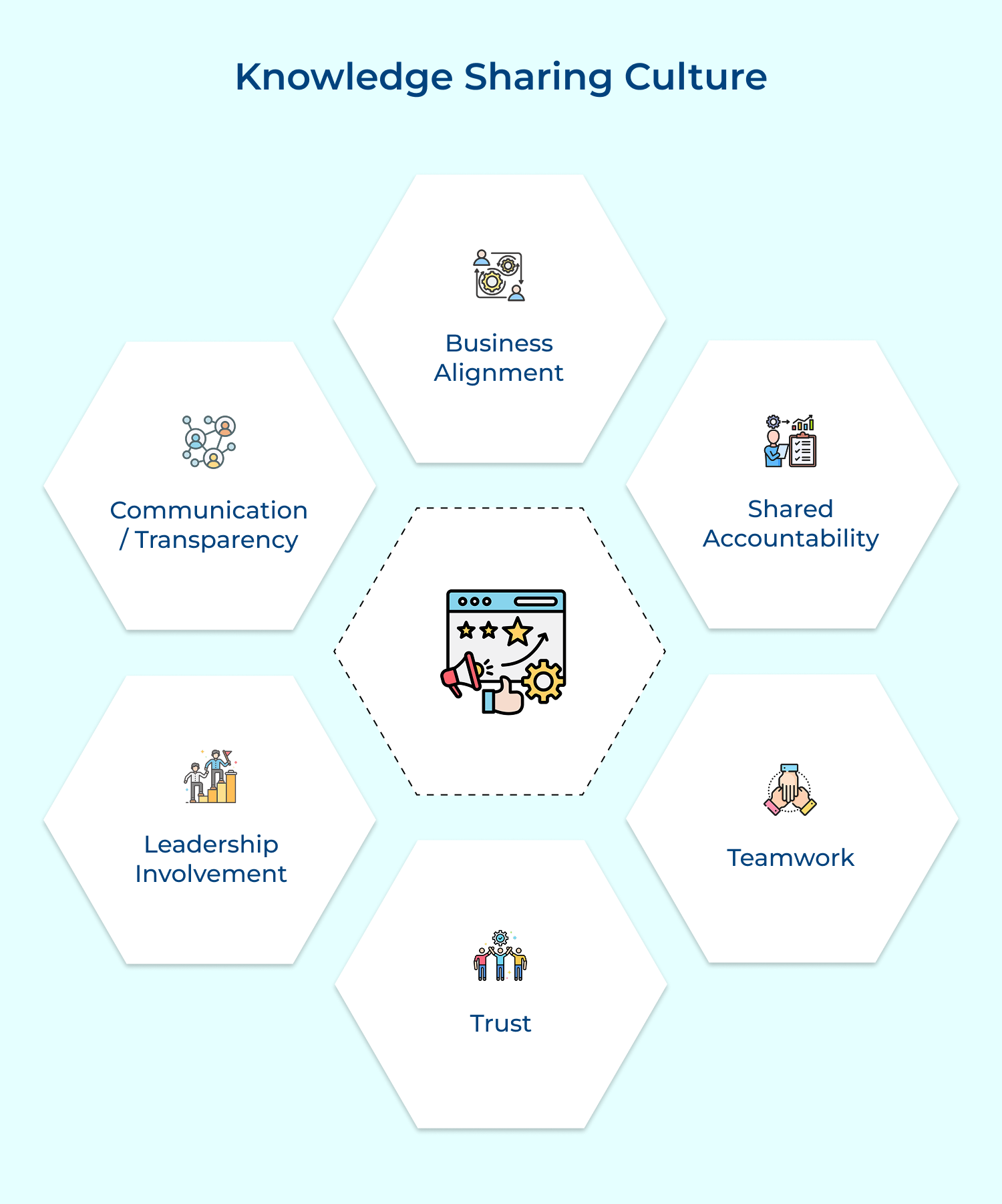
A knowledge-sharing culture, supported by leadership, is vital for the success of any knowledge management initiative. This component focuses on fostering an environment that values and rewards knowledge sharing & collaboration.
7. Measurement and Continuous Improvement
To ensure the effectiveness of the knowledge management framework, organizations need to establish metrics or processes for ongoing evaluation and refinement. The component involves regularly assessing the impact of knowledge management initiatives and making necessary adjustments.
Knowledge management frameworks come in different types, each addressing specific aspects of handling organizational knowledge. Knowing these types helps businesses select or design the framework that best fits their needs.
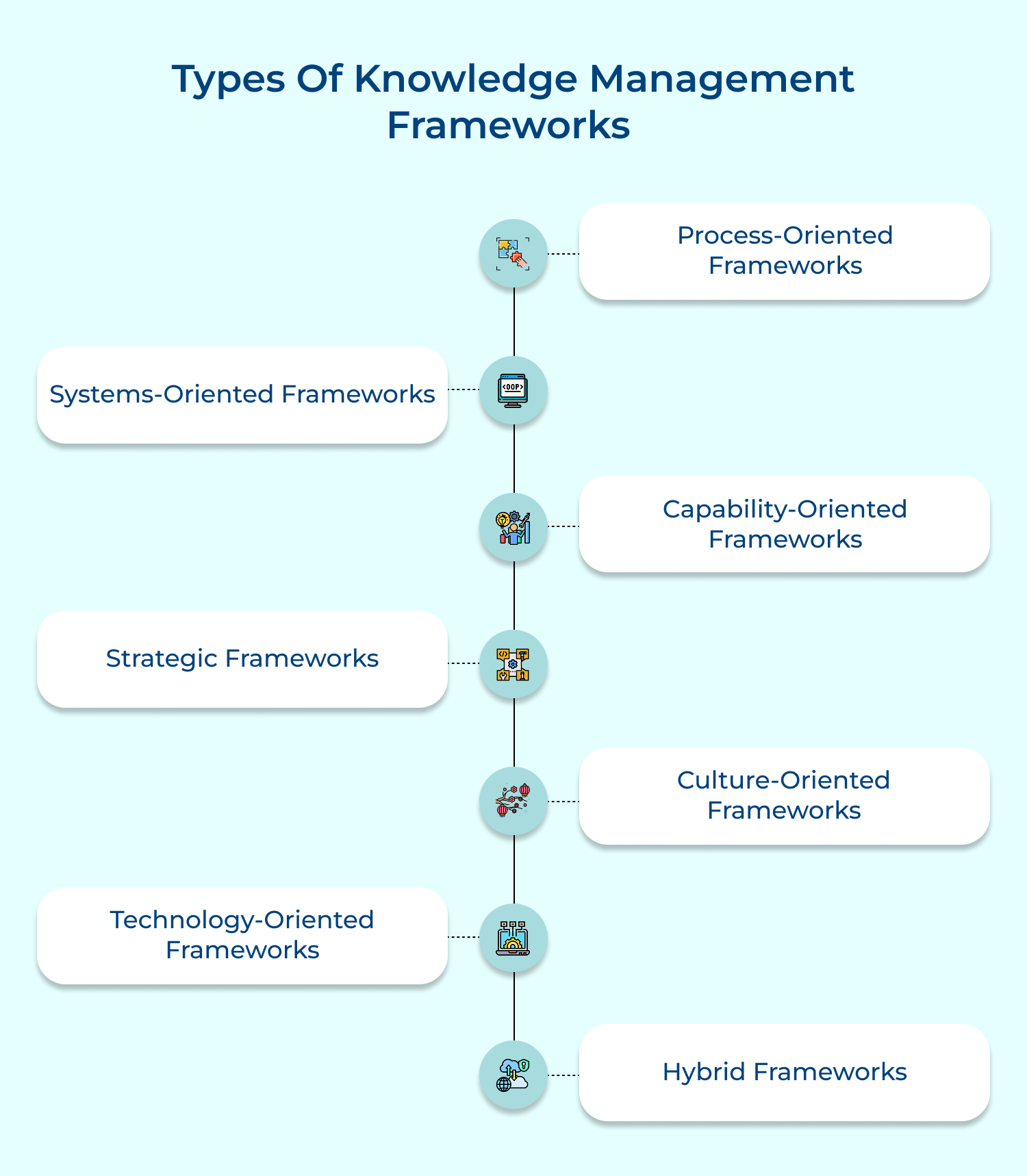
These frameworks focus on the lifecycle of knowledge within an organization. They typically include stages such as knowledge creation, capture, refinement, storage, transfer and utilization. The SECI model (Socialization, Externalization, Combination, Internalization) by Nonaka and Takeuchi is a classic example of this type.
Key features:
These frameworks view knowledge management as an integrated system within the organization. They focus on the technological infrastructure, processes and people involved in managing knowledge.
Key features:
These frameworks focus on developing organizational capabilities for effective knowledge management. They emphasize the skills, competencies and cultural aspects needed for successful knowledge management.
Key features:
These frameworks align knowledge management with the organization’s overall strategy. They focus on how knowledge can be leveraged to achieve competitive advantage and strategic objectives.
Key features:
These frameworks prioritize the cultural aspects of knowledge management. They focus on creating an environment that encourages knowledge sharing and collaboration.
Key features:
While technology is a component in most frameworks, some specifically focus on the technological aspects of knowledge management. These frameworks emphasize the selection, implementation, and use of knowledge management tools or platforms.
Key features:
Many organizations adopt hybrid frameworks that combine elements from different types to create a customized approach. These frameworks are tailored to the specific needs and context of the organization.
Key features:
A Knowledge Management Framework is crucial for organizations in a fast-paced, information-driven business environment. Its importance stems from several key factors:
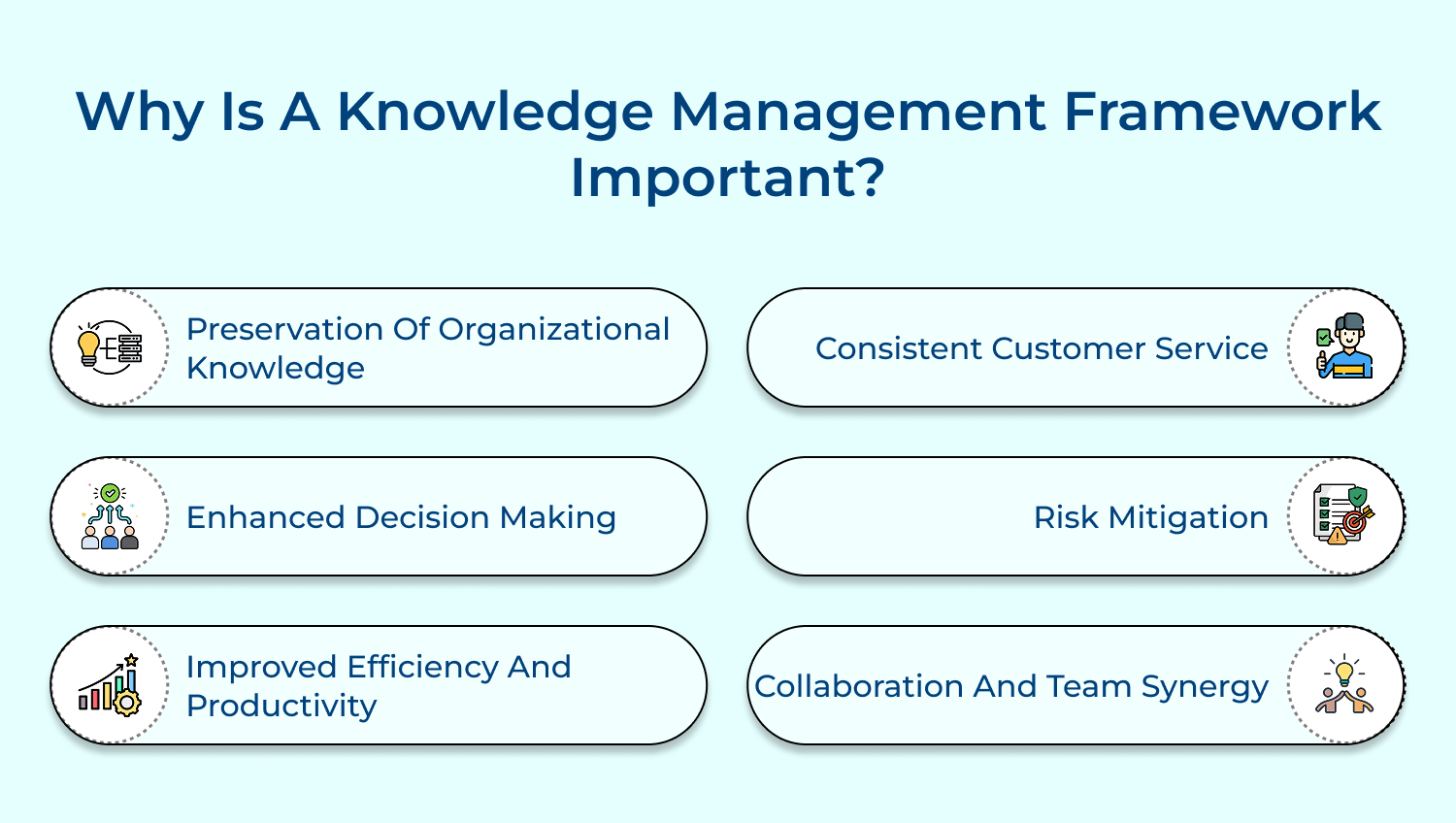
Implementing a knowledge management framework can help streamline processes and drive innovation within the organization.
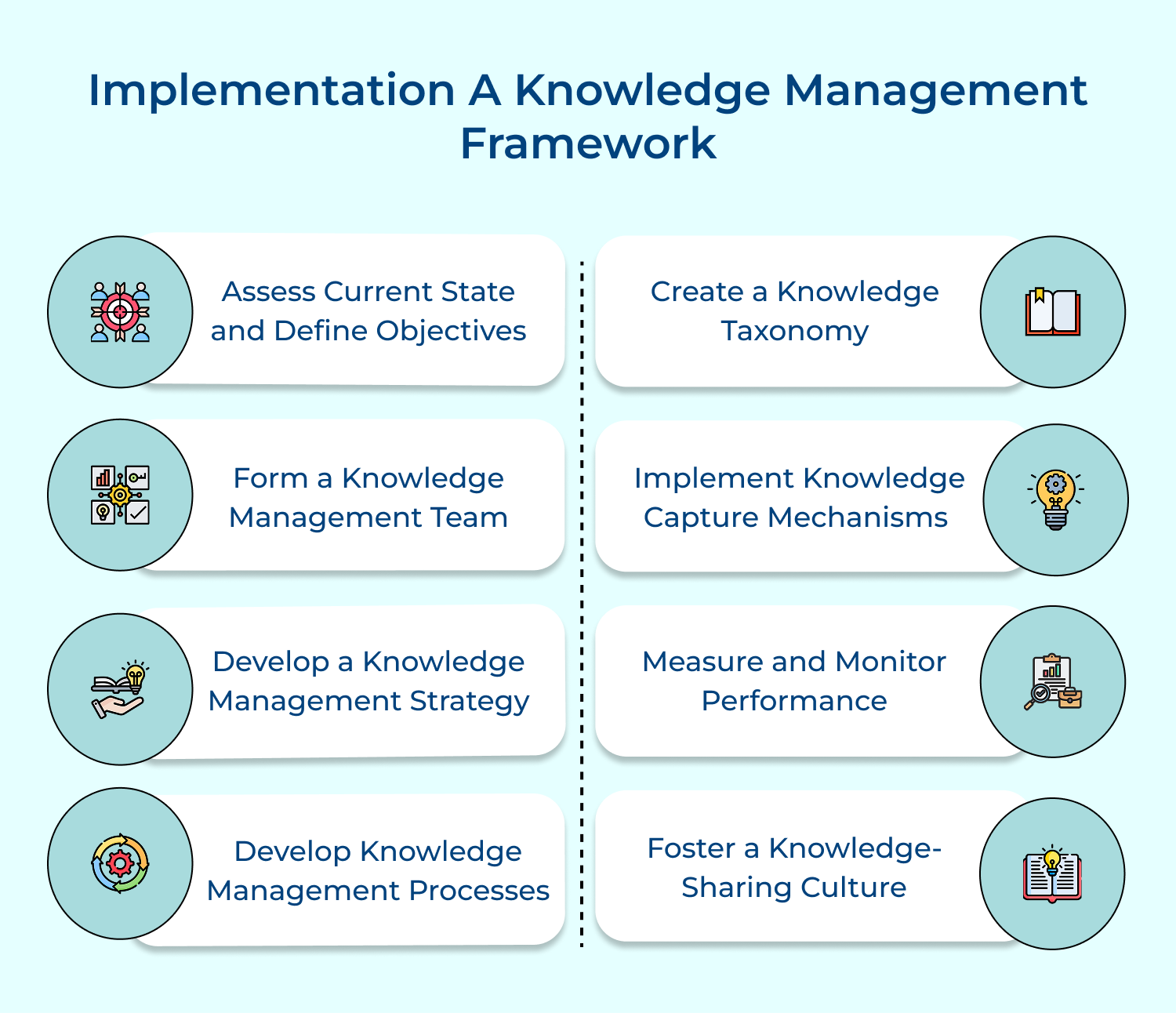
Begin by conducting a thorough assessment of your organization’s current knowledge management practices. It involves identifying what knowledge assets exist, where they’re stored, how they’re used and what gaps exist.
Engage with employees at all levels to understand their knowledge needs and challenges. Based on this assessment, define clear objectives for your knowledge management initiative. These should align with your organization’s strategic goals and address the identified needs. Objectives might include improving decision-making speed, reducing duplication of effort, or enhancing innovation capabilities.
Pro tips:
Assemble a cross-functional team to lead the implementation process. This team should include representatives from IT, HR and key business units. Consider including both technical experts who can handle the technological aspects and change management specialists who can address the cultural or behavioral changes required.
Ensure this team has strong executive sponsorship. It provides the necessary authority and resources to drive the initiative forward. The team should have a clear charter, defining their responsibilities, decision-making authority, and reporting structure.
Pro tips:
Create a comprehensive strategy that outlines how you’ll achieve your knowledge management objectives. This strategy should cover:
Ensure your strategy aligns with your organization’s overall business strategy and considers both short-term quick wins.
Pro tips:
The management process step involves implementing systematic processes for knowledge capture, storage, sharing, and application. Well-defined processes ensure consistency and efficiency in knowledge management activities across the organization.
Design and implement systematic processes for each aspect of the knowledge management lifecycle:
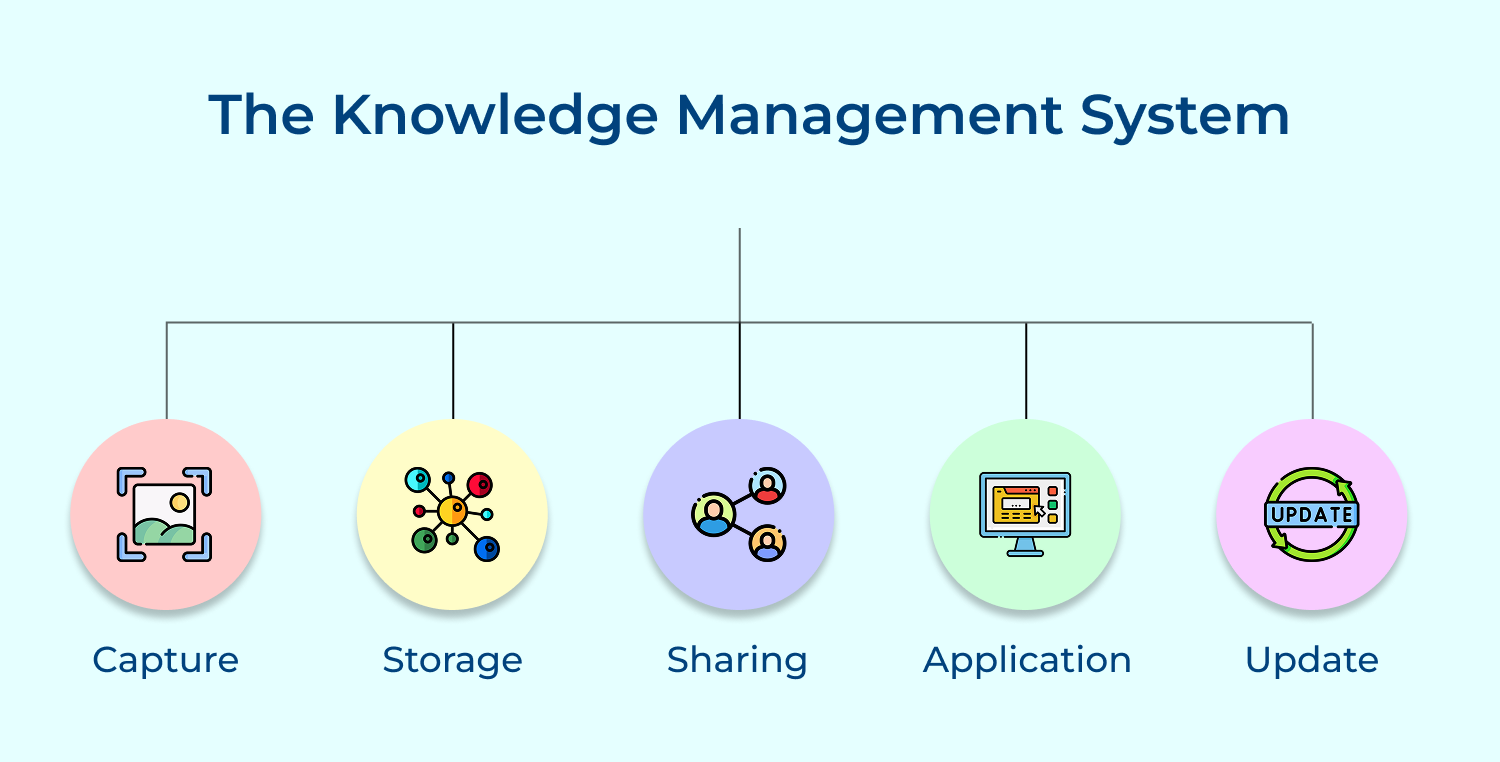
These processes should be integrated into existing workflows to ensure they become a natural part of employees’ daily activities.
Pro tips:
Develop a structured classification system for your organization’s knowledge assets. The taxonomy should be intuitive and align with how employees naturally think about or search for information. Consider using a combination of subject areas, document types & business processes in your classification system.
Involve subject matter experts in creating and refining the taxonomy to ensure it’s comprehensive. Also, build in flexibility to allow for future expansion or changes in your knowledge landscape.
Pro tips:
Set up tools or processes to systematically capture both explicit knowledge (documented information) and tacit knowledge (personal expertise & experience). It might include:
Provide clear guidelines and templates to standardize knowledge capture across the organization. Also, consider implementing incentives or recognition programs to encourage employees to contribute their knowledge.
Pro tips:
Establish key performance indicators (KPIs) to measure the effectiveness of your knowledge management framework. These might include:
Regularly review these metrics and solicit feedback from users to identify areas for improvement. Use this information to refine your processes, update your content and enhance your knowledge management tools.
Pro tips:
Creating a culture that values and rewards knowledge sharing is perhaps the most challenging but crucial aspect of implementing a knowledge management framework. It involves:
Pro tips:
A knowledge management framework is a structured approach that helps organizations organize, create, capture and distribute knowledge effectively. But what exactly makes a knowledge management framework so effective?
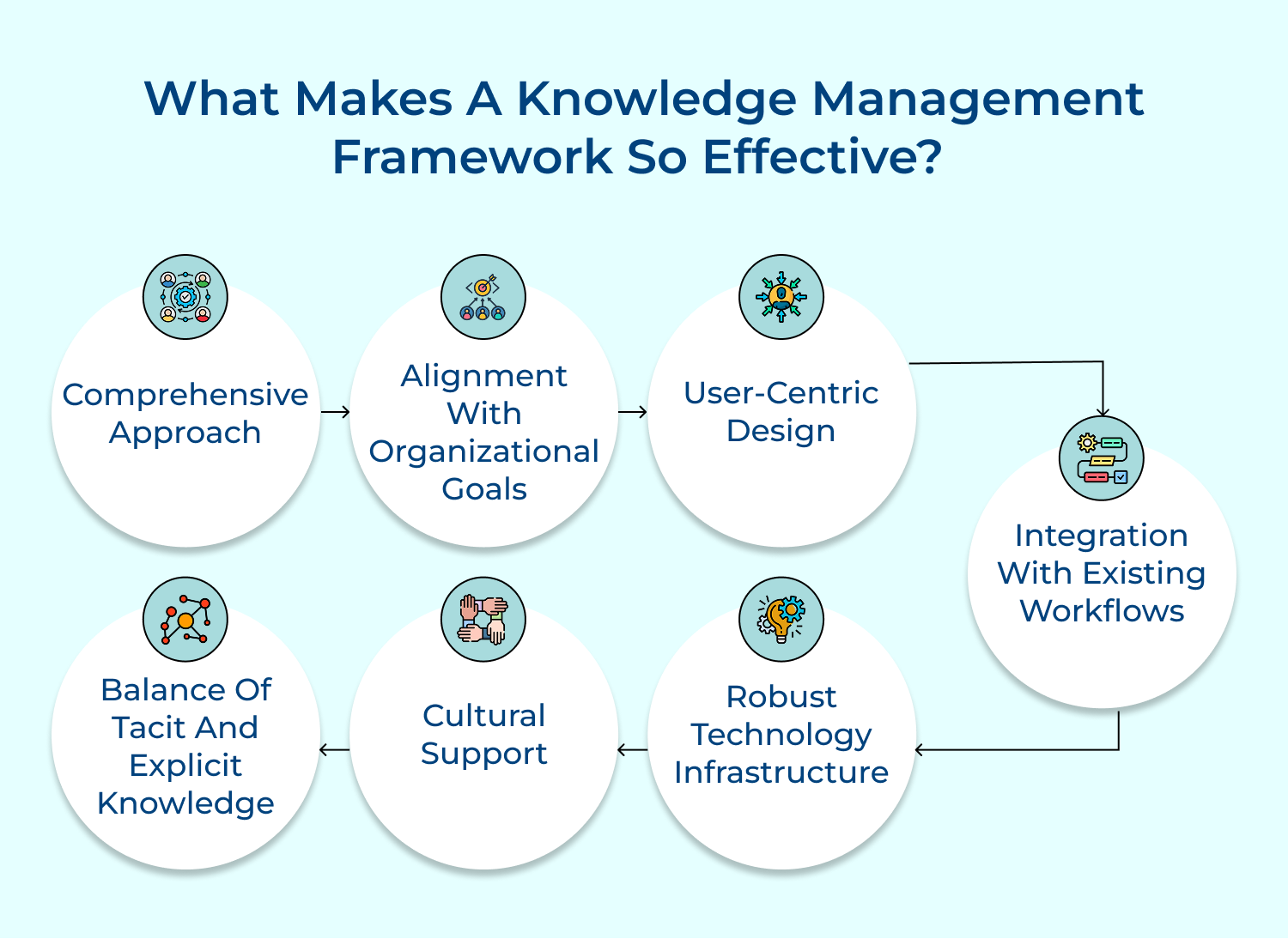
A knowledge management framework provides a structured approach to managing and sharing knowledge within an organization. Here are some examples of knowledge management frameworks that companies can adopt:
Framework: The World Bank implemented a comprehensive knowledge management framework to capture and share development knowledge globally. It focuses on three key areas: knowledge creation, knowledge sharing and knowledge application.
Impact:
This framework has allowed the World Bank to leverage its vast experience across different regions, leading to more effective poverty reduction strategies and economic development initiatives.
Framework: NASA’s framework centers on preserving critical knowledge, especially from retiring personnel. It includes methods like storytelling, mentoring programs and a robust lessons learned database.
Impact:
NASA’s approach has been crucial in maintaining continuity in long-term space exploration projects and ensuring that valuable insights from past missions inform future endeavors.
Framework: Siemens developed ShareNet, a global knowledge sharing platform that connects employees across different countries and departments. It emphasizes user-generated content and community-based problem-solving.
Impact:
ShareNet has enabled Siemens to leverage its global expertise more effectively, leading to faster product development and improved customer solutions.
Framework: Toyota’s approach focuses on continuous improvement (Kaizen) and knowledge sharing across its manufacturing network. It includes practices like quality circles and cross-functional teams.
Impact:
This framework has been a key factor in Toyota’s reputation for quality and efficiency in the automotive industry.
Framework: Ernst & Young developed the Knowledge Web, a global repository of best practices, methodologies and industry insights. It includes a network of subject matter experts and communities of practice.
Impact:
This framework has helped Ernst & Young maintain its position as a leading professional services firm by ensuring that its global workforce has access to the latest industry knowledge and best practices.
A strong knowledge management framework is essential for any organization looking to effectively capture, store and share information. By implementing a well-designed framework, companies can improve decision-making, enhance collaboration, and increase productivity.
Whether it’s through utilizing technology, creating a knowledge-sharing culture, or establishing clear processes, organizations can benefit greatly from investing in knowledge management. By understanding the different frameworks available and customizing them to fit their specific needs, businesses can stay ahead of the competition and succeed in a fast-paced digital world.

Why do organizations need a knowledge management framework?
Organizations need a knowledge management framework to effectively capture, organize, share & utilize knowledge within the organization. A knowledge management framework helps ensure that valuable knowledge is not lost when employees leave, promotes innovation and collaboration, improves decision-making processes & enhances the overall performance and competitiveness of the organization.
What are the components of a knowledge management framework?
The components of a knowledge management framework typically include knowledge creation, knowledge capture, knowledge sharing, knowledge organization & knowledge utilization. These components work together to establish a structured approach to managing knowledge within an organization and ensure that knowledge is effectively leveraged to achieve organizational goals.
What are the four dimensions of the knowledge management framework?
The four dimensions of a knowledge management framework are people, processes, technology and content. People refer to the individuals within the organization who create, share and utilize knowledge. Processes are the procedures and workflows that govern how knowledge is managed within the organization. Technology includes the tools and systems used to facilitate knowledge management activities. Content represents the actual information and data that is considered valuable knowledge within the organization.
What are the 7 types of knowledge management frameworks?
There are various types of knowledge management frameworks, each with its own approach to managing knowledge within an organization. Some common types include the SECI model, the Nonaka-Takeuchi framework, the Ba framework, the Knowledge Asset model, the Knowledge Alliance framework, the Knowledge Spiral model and the Intellectual Capital framework. Each of these frameworks offers a unique perspective on how knowledge can be captured, shared and utilized within an organization, depending on its specific goals.
 https://omni24.io/wp-content/uploads/2026/08/Omnichannel-Chatbots.png
1256
2400
Tushar Joshi
https://omni24.io/wp-content/uploads/2023/04/Omni-Logo-1.svg
Tushar Joshi2026-08-13 04:43:302026-08-24 09:02:01How Omnichannel Chatbots Improve Your Customer Experience
https://omni24.io/wp-content/uploads/2026/08/Omnichannel-Chatbots.png
1256
2400
Tushar Joshi
https://omni24.io/wp-content/uploads/2023/04/Omni-Logo-1.svg
Tushar Joshi2026-08-13 04:43:302026-08-24 09:02:01How Omnichannel Chatbots Improve Your Customer Experience https://omni24.io/wp-content/uploads/2026/08/Ecommerce-Chatbots-1.png
1256
2400
Tushar Joshi
https://omni24.io/wp-content/uploads/2023/04/Omni-Logo-1.svg
Tushar Joshi2026-08-12 03:57:552026-08-24 09:03:22Ecommerce Chatbots: What are They and Their Use Cases
https://omni24.io/wp-content/uploads/2026/08/Ecommerce-Chatbots-1.png
1256
2400
Tushar Joshi
https://omni24.io/wp-content/uploads/2023/04/Omni-Logo-1.svg
Tushar Joshi2026-08-12 03:57:552026-08-24 09:03:22Ecommerce Chatbots: What are They and Their Use Cases https://omni24.io/wp-content/uploads/2026/08/Omnichannel-Ecommerce.png
1256
2400
Tushar Joshi
https://omni24.io/wp-content/uploads/2023/04/Omni-Logo-1.svg
Tushar Joshi2026-08-11 04:50:362026-08-24 09:00:45How to Create an Omnichannel Ecommerce Strategy: 7 Best Ways
https://omni24.io/wp-content/uploads/2026/08/Omnichannel-Ecommerce.png
1256
2400
Tushar Joshi
https://omni24.io/wp-content/uploads/2023/04/Omni-Logo-1.svg
Tushar Joshi2026-08-11 04:50:362026-08-24 09:00:45How to Create an Omnichannel Ecommerce Strategy: 7 Best Ways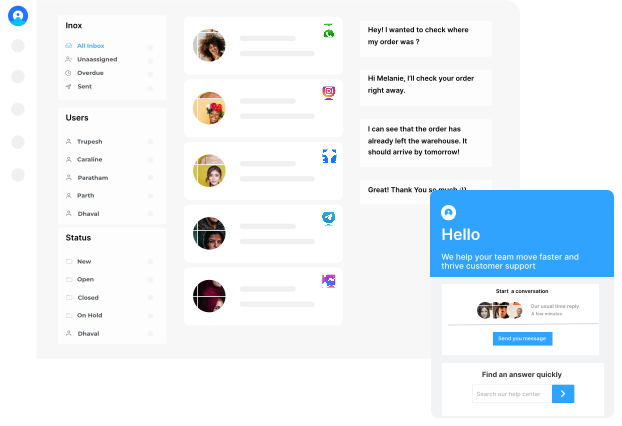
Whether it’s about acquire, engage or support – Omni24 covers all your customer engagement needs in one complete platform.

Copyright ©2026 Veemo All rights reserved.
CA, Los Angeles, Hall Ave, 19011