What is Online Reputation Management & How to Protect it?
Discover effective ORM strategies and tools. Learn best practices to manage brand perception, handle feedback and strengthen your online reputation.

Discover effective ORM strategies and tools. Learn best practices to manage brand perception, handle feedback and strengthen your online reputation.
Online reputation management (ORM) is the proactive practice of monitoring, influencing and controlling how your business is perceived in online space. An effective ORM strategy allows you to protect your reputation and attract more customers.
This comprehensive guide covers everything you need to know about ORM from the ground up. You’ll learn proven tactics for monitoring the web for any mention of your brand and using advanced sentiment analysis to prioritize responses. You’ll also gain insights into cutting-edge ORM tools and services to streamline your efforts. Let’s dive in!
Online Reputation Management (ORM) is the practice of monitoring, influencing and shaping an individual’s or organization’s online presence across various digital platforms. It involves a strategic approach to managing and controlling the narrative surrounding a brand, company or individual on the internet.
Effective ORM helps businesses and individuals shape a positive online image. Proactive reputation management builds trust and strengthens brand perception.
ORM encompasses a range of activities, including:
Reputation management is a critical aspect of modern business operations and its significance cannot be overstated. Here are six compelling reasons why reputation management matters:
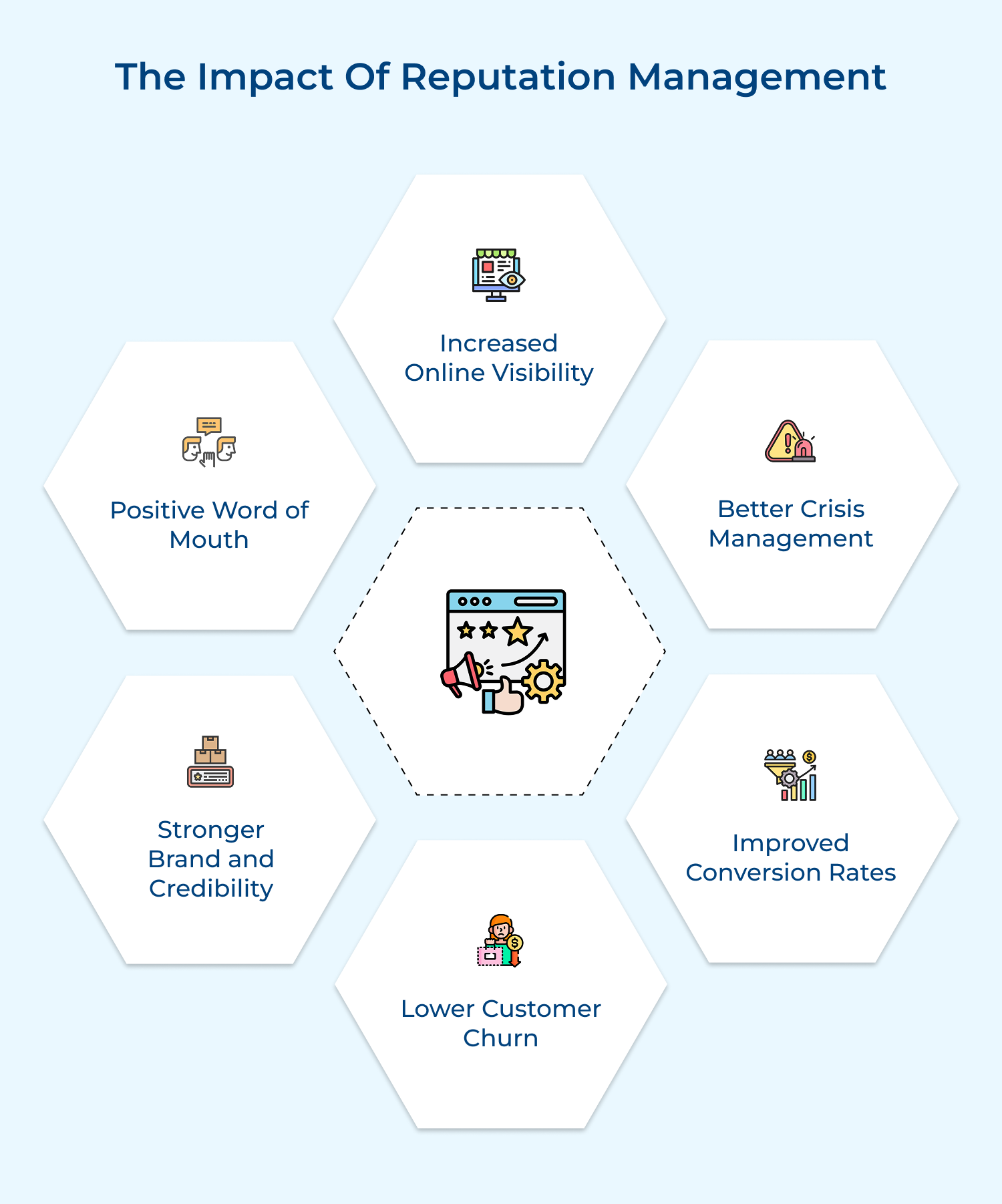
1. Increased Online Visibility
Effective reputation management strategies improve online visibility by optimizing their online footprint, engaging with customers across various platforms and leveraging positive reviews as well as testimonials.
2. Better Crisis Management
Crises can strike at any moment and how a business responds can make or break its reputation. Reputation management involves having a well-defined crisis communication plan in place to address issues promptly, transparently and with empathy.
3. Improved Conversion Rates
Positive brand reputation can significantly influence customer purchasing decisions. Consumers are more likely to convert and make purchases from businesses with a strong, trustworthy reputation. Effective reputation management strategies build and maintain a positive image, leading to higher conversion rates as well as increased revenue.
4. Lower Customer Churn
Customer retention is crucial for business success and reputation plays a vital role in this regard. Customers are more likely to remain loyal to businesses with a positive reputation, as they perceive them as reliable and trustworthy.
5. Stronger Brand and Credibility
A positive reputation is essential for building credibility in the marketplace. Customers, investors and stakeholders are more likely to trust as well as have confidence in businesses with a strong, reputable brand. Effective reputation management establishes themselves as industry leaders, enhancing their overall credibility and authority.
6. Positive Word of Mouth
Word-of-mouth marketing is one of the most powerful forms of advertising and a positive reputation can significantly amplify its impact. When customers have a positive experience with a business, they are more likely to share their experiences. It leads to increased brand awareness and potential new customers.
Response rate matters because 88% of consumers would use a business that replies to all of its reviews. Let’s explore how following best practices will bring better results:

The first step in ORM is to continuously monitor online conversations, reviews and mentions about your brand across various platforms. Utilize social listening tools and reputation monitoring software to track as well as aggregate relevant data. Thus, enabling you to stay informed and respond promptly to any potential issues or positive feedback.
Negative reviews and comments are inevitable, but how you respond can significantly impact your brand’s reputation. Develop a protocol for addressing negative feedback promptly, professionally and with empathy. Offer solutions or resolutions as well as follow up to ensure the issue has been resolved to the customer’s satisfaction.
Actively solicit positive reviews from satisfied customers by providing incentives or making it easy for them to share feedback. Encourage customers to share photos, videos, or testimonials showcasing their positive experiences with your products or services and repurpose this user-generated content across your marketing channels.
Maintain an active social media presence by consistently sharing valuable content, interacting with followers while promptly addressing customer inquiries or concerns. Collaborate with industry influencers and advocates who align with your brand values as well as resonate with your target audience to amplify your message.
Make sure your brand’s website, social media and business listings have accurate as well as updated information. Share useful and engaging content that builds authority while improving your online visibility along with reputation.
Develop a comprehensive crisis communication plan to identify potential crises that could affect your business, such as product recalls, data breaches, or public relations scandals. Have pre-approved messaging and response strategies ready for these scenarios to respond swiftly as well as consistently across all communication channels.
Cultivate a customer-centric culture within your organization by prioritizing exceptional customer service, addressing complaints promptly and continuously seeking feedback. A positive customer experience is the foundation of a strong online reputation.
Consider partnering with a reputable online reputation management service provider. These specialized agencies offer a range of services, including monitoring, content creation, review management and crisis communication, to help you effectively manage as well as protect your online reputation.
Use analytics tools to track and measure the effectiveness of your ORM efforts, identifying areas for improvement while adjusting your strategies accordingly. Stay updated with industry trends and best practices to ensure your ORM approach remains effective.
Develop a content strategy that focuses on creating high-quality, informative and engaging content that positions your brand as an authority in your industry. Consistently publishing valuable content improves your online visibility and establishes trust with your audience.
Be open and honest in your communication, acknowledge mistakes when they occur, while demonstrating a genuine commitment to addressing customer concerns. Authentic interactions and transparency can go a long way in building trust as well as building positive relationships with your audience.
Repairing a damaged online reputation is a multifaceted process that requires a combination of content creation and data-driven decision-making. Here’s how you can address:
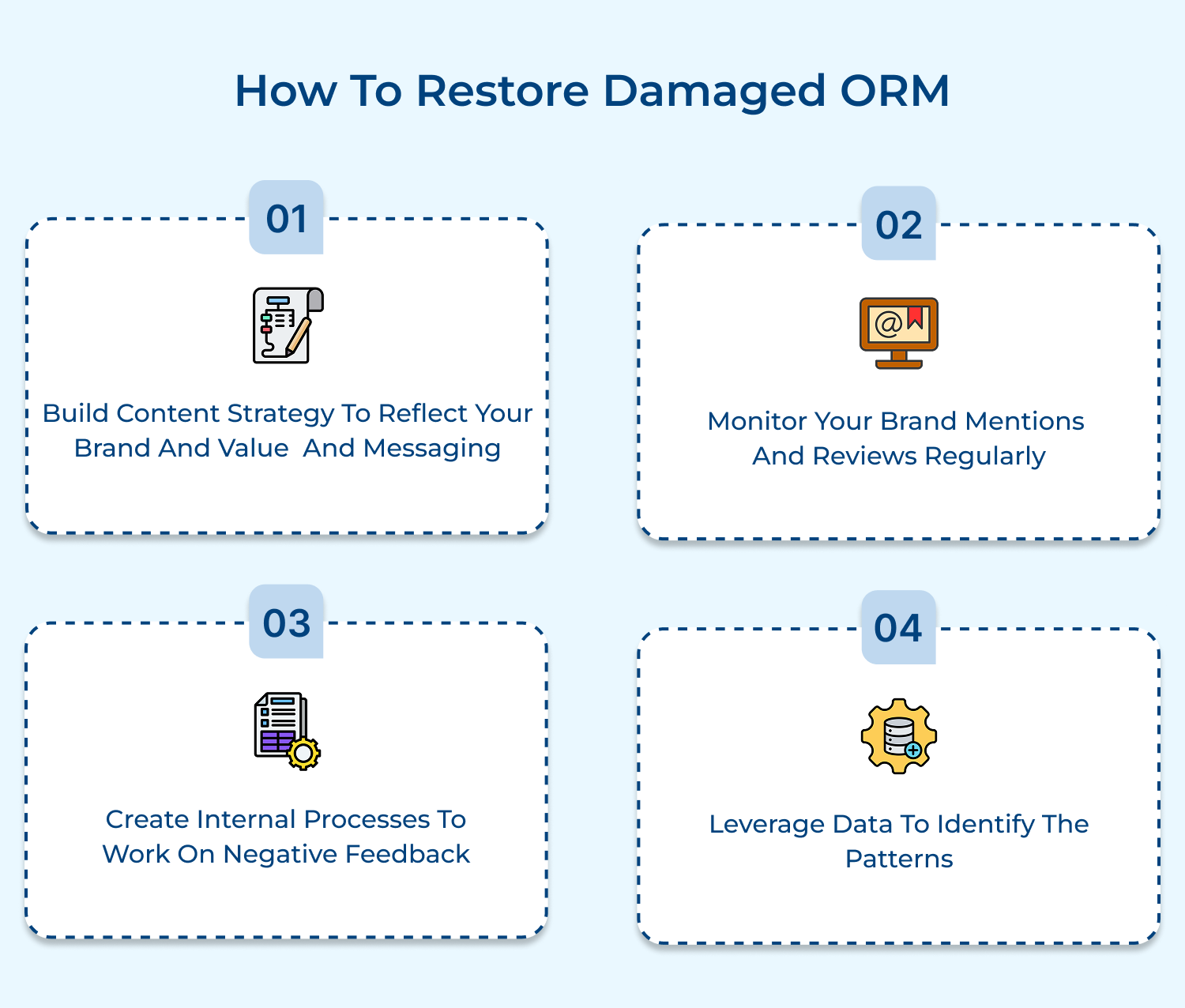
Build content strategy to reflect your brand and value and messaging: Develop a content strategy focused on creating high-quality, relevant content that highlights your brand’s strengths and values. Leverage user-generated content, testimonials and positive reviews to counteract negative narratives. Collaborate with influencers and brand advocates to amplify positive messaging.
Monitor your brand mentions and reviews regularly: Set up alerts and monitoring tools to track online mentions, conversations as well as reviews across various platforms. Respond promptly to negative content following a consistent strategy. Encourage satisfied customers to leave positive reviews and continuously analyze data for insights.
Create internal processes to work on negative feedback: Develop a clear process for handling negative feedback, with dedicated resources for monitoring, triaging and responding promptly. Establish response guidelines and escalation procedures for complex issues. Regularly review and update processes based on effectiveness.
Leverage data to Identify the patterns: Utilize data analytics tools to analyze customer feedback, reviews and online mentions. Identify patterns, trends and recurring issues. Segment data based on factors like product/service or location. Use insights to inform corrective actions and process improvements.
When it comes to choosing the best reputation management software for your business, it’s crucial to consider several key criteria. Here are six important factors to evaluate:
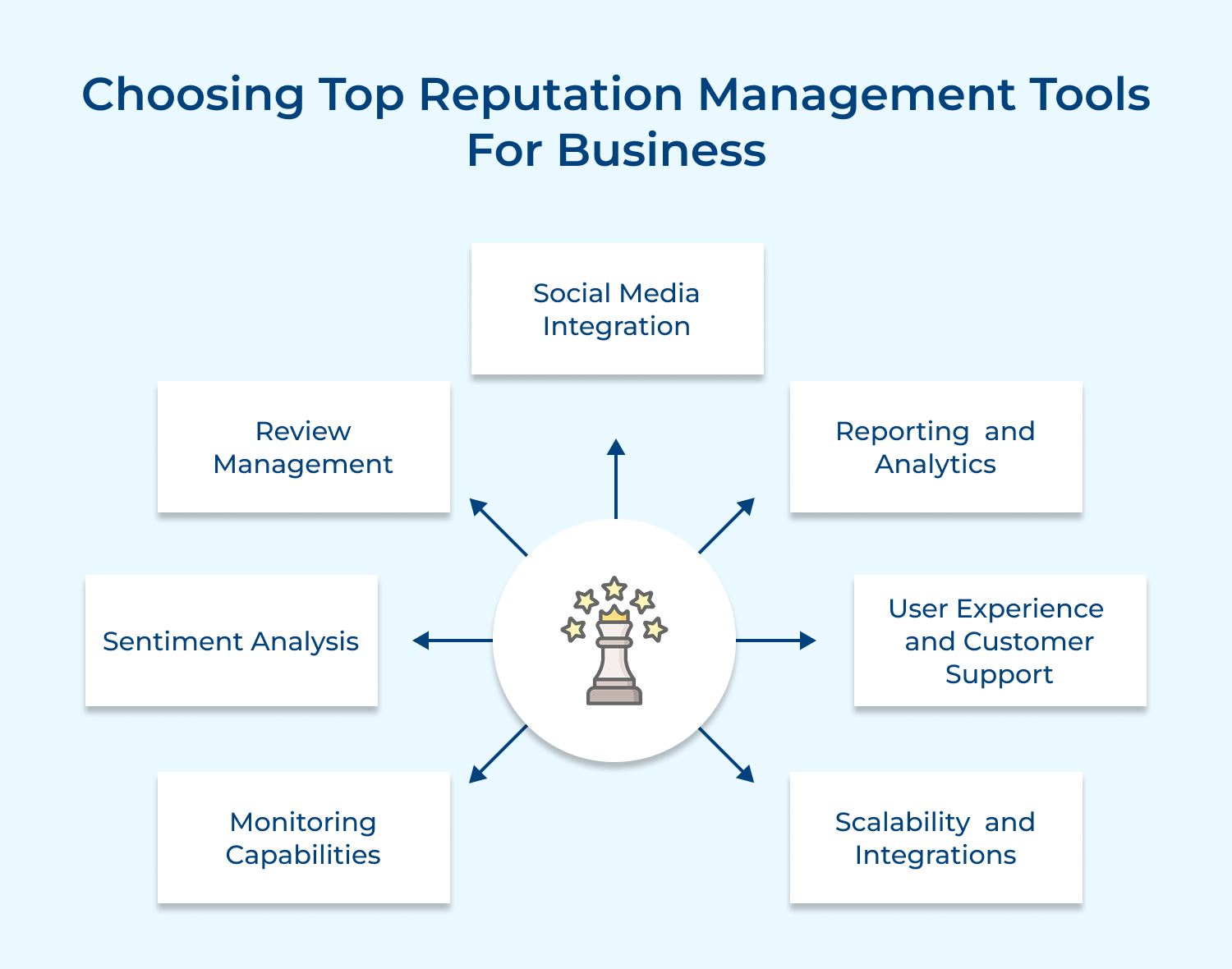
A robust reputation management software should offer comprehensive monitoring capabilities across various online channels, including review sites, social media platforms, forums, blogs and news outlets. Look for software that can effectively track and aggregate mentions of your brand, products or services. Hence, allowing you to stay informed and respond promptly to any potential issues or positive feedback.
The ability to analyze the sentiment behind online mentions is invaluable. Opt for software that employs advanced natural language processing (NLP) and machine learning algorithms to accurately detect positive, negative or neutral sentiments. This feature prioritizes and addresses negative reviews or comments more efficiently, mitigating potential reputational damage.
Online reviews play a significant role in shaping a business’s reputation. Evaluate the software’s ability to streamline the review management process, including responding to reviews, soliciting new reviews from satisfied customers and monitoring review site listings for accuracy as well as consistency.
Social media platforms are powerful channels for engaging with customers and managing your online reputation. Look for software that seamlessly integrates with popular social media platforms, allowing you to monitor conversations, respond to inquiries and leverage social listening capabilities to gain valuable insights.
Comprehensive reporting and analytics are essential for measuring the effectiveness of your reputation management efforts while making data-driven decisions. Seek software that provides detailed reports and visualizations, enabling you to track key metrics such as sentiment trends, audience engagement, as well as the impact of your reputation management strategies over time.
Consider the software’s user-friendly interface and ease of use, as this can significantly impact adoption as well as efficiency within your team. Evaluate the vendor’s customer support offerings, including training resources, documentation and responsive technical assistance, to ensure a smooth implementation as well as ongoing support.
As your business grows, your reputation management needs may evolve. Choose software that can scale seamlessly to accommodate increasing data volumes and user requirements. Consider the software’s ability to integrate with other tools or platforms you currently use, such as customer relationship management (CRM) systems or marketing automation platforms, for a streamlined and efficient workflow.
Online reputation management (ORM) has become an integral part of branding and customer engagement strategies. Here are some brand case studies that highlight the importance:
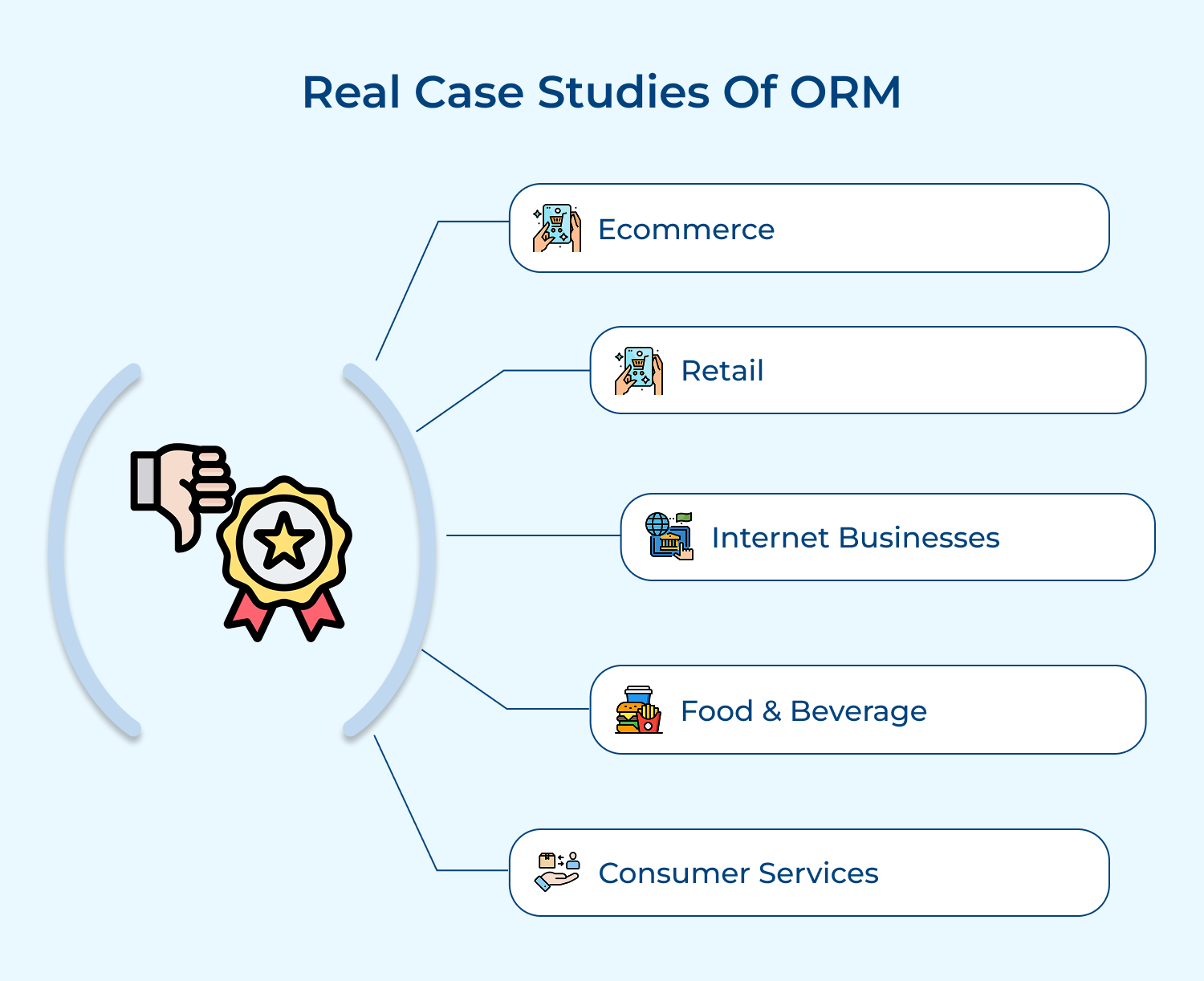
1. Ecommerce
Amazon, the e-commerce giant, has consistently prioritized online reputation management by actively monitoring and responding to customer reviews as well as feedback. The company encourages customers to leave honest reviews and provides a transparent platform for addressing concerns. Amazon’s proactive approach to ORM has contributed to its reputation for exceptional customer service and trustworthiness.
2. Retail
Lululemon, a popular athletic apparel brand, leverages ORM to enhance its brand image and customer experience. The company closely monitors social media channels and review platforms to address customer feedback promptly. Lululemon also encourages its brand ambassadors and influencers to share positive experiences, further amplifying its online reputation.
3. Internet Businesses
Airbnb, a leading online marketplace for vacation rentals, has made ORM a core part of its business model. The platform actively encourages guests and hosts to leave reviews, which are then displayed prominently on property listings. Airbnb’s transparent review system and prompt response to any issues have contributed to its strong online reputation as well as customer trust.
4. Food & Beverage
Starbucks has effectively utilized ORM strategies to manage its online reputation and customer engagement. The company actively monitors social media platforms and review sites, responding to customer feedback as well as concerns promptly. Starbucks also leverages user-generated content, such as customer photos and stories, to showcase its brand experience while building a sense of community.
5. Consumer Services
Uber, the ride-sharing service, has faced numerous reputation challenges over the years. But, the company has embraced ORM as a crucial part of its business strategy. Uber closely monitors/responds to customer reviews, addresses driver/passenger concerns and leverages social media to promote its brand as well as address any negative publicity.
A strong, positive presence can drive more customers through your doors, while a tarnished reputation can severely hamper growth and revenue. That’s why a smart, comprehensive approach to Online Reputation Management (ORM) is absolutely essential.
Omni24’s omnichannel customer experience management software provides you with the tools to efficiently monitor all review sites, listings, social media and modern review sources in a single place. Omni24 streamlines every aspect of ORM so you can focus on delivering amazing customer experiences that earn rave reviews. Don’t let your online presence go unmanaged. Build a smarter ORM strategy with Omni24 as your trusted customer experience platform.

Why is online reputation management important for businesses?
Online reputation management is important for businesses because a positive online presence attracts customers and drives sales. Negative reviews or comments can damage a company’s reputation and turn potential customers away.
How does online reputation management work?
ORM involves monitoring, addressing and influencing the online reputation of a business or individual. This can include responding to customer reviews, managing social media accounts and creating positive content to promote a company’s brand.
What tools are commonly used for online reputation management?
There are several tools available for businesses to manage their online reputation, including social media monitoring tools, review management platforms and search engine optimization (SEO) tools. These tools track mentions, respond to reviews and enhance their online presence.
Why do companies invest in online reputation management?
Companies invest in ORM to protect their brand, attract new customers and maintain a positive image online. A good reputation can help businesses stand out from competitors as well as build trust with consumers.
How can negative reviews affect your online reputation?
Negative reviews can have a significant impact on a company’s online reputation. They can deter potential customers from doing business with the company, lower search engine rankings and damage the brand’s credibility.
How can online reputation management improve customer trust?
By actively managing their online reputation, companies can show customers that they care about their feedback and are committed to providing a positive customer experience. Responding to reviews, addressing complaints and showcasing positive testimonials can help build trust with customers.
What are the challenges of online reputation management?
Some of the challenges of online reputation management include dealing with fake reviews, responding to negative feedback in a timely manner and keeping track of mentions across various online platforms. It can also be challenging to maintain a positive online reputation consistently over time.
 https://omni24.io/wp-content/uploads/2026/08/AI-Customer-Service-Agents.png
1256
2400
Webvision Solution
https://omni24.io/wp-content/uploads/2023/04/Omni-Logo-1.svg
Webvision Solution2026-09-21 04:48:512026-09-21 04:48:51How to Build an AI Customer Service Agents: 8 Key Steps
https://omni24.io/wp-content/uploads/2026/08/AI-Customer-Service-Agents.png
1256
2400
Webvision Solution
https://omni24.io/wp-content/uploads/2023/04/Omni-Logo-1.svg
Webvision Solution2026-09-21 04:48:512026-09-21 04:48:51How to Build an AI Customer Service Agents: 8 Key Steps https://omni24.io/wp-content/uploads/2026/08/Omnichannel-Conversational-AI.png
1256
2400
Tushar Joshi
https://omni24.io/wp-content/uploads/2023/04/Omni-Logo-1.svg
Tushar Joshi2026-09-16 03:51:072026-09-16 03:51:07How to Build Omnichannel Conversational AI Strategy
https://omni24.io/wp-content/uploads/2026/08/Omnichannel-Conversational-AI.png
1256
2400
Tushar Joshi
https://omni24.io/wp-content/uploads/2023/04/Omni-Logo-1.svg
Tushar Joshi2026-09-16 03:51:072026-09-16 03:51:07How to Build Omnichannel Conversational AI Strategy https://omni24.io/wp-content/uploads/2026/08/Customer-Service-Teams.png
1256
2400
Tushar Joshi
https://omni24.io/wp-content/uploads/2023/04/Omni-Logo-1.svg
Tushar Joshi2026-09-15 04:01:522026-09-15 04:02:16How to Build Customer Service Teams: 6 Key Steps
https://omni24.io/wp-content/uploads/2026/08/Customer-Service-Teams.png
1256
2400
Tushar Joshi
https://omni24.io/wp-content/uploads/2023/04/Omni-Logo-1.svg
Tushar Joshi2026-09-15 04:01:522026-09-15 04:02:16How to Build Customer Service Teams: 6 Key Steps
Whether it’s about acquire, engage or support – Omni24 covers all your customer engagement needs in one complete platform.

Copyright ©2026 Veemo All rights reserved.
CA, Los Angeles, Hall Ave, 19011