What is Conversational Messaging and Why Does It Matters?
Conversational messaging enables real-time, personalized chats on platforms, delivering instant, context-aware responses that boost customer satisfaction.

Conversational messaging enables real-time, personalized chats on platforms, delivering instant, context-aware responses that boost customer satisfaction.
Customer satisfaction is crucial for businesses to retain customers and build long-lasting relationships. The rise of technology and social media have fueled customers’ expectations of quick personalized responses from businesses.
82% of consumers prefer immediate responses from businesses, highlighting the importance of real-time engagement in conversational marketing.
Conversational messaging allows businesses to meet these expectations and provide a more efficient and engaging customer experience.
We will explore the ways in which conversational messaging can impact customer satisfaction and how businesses can leverage this communication tool to improve customer relationships and drive success.
Conversational messaging is defined as a form of communication that aims to replicate real-life conversations between individuals in a digital setting. It focuses on creating a more personal and engaging experience for users, often using chatbots or AI technology to facilitate conversations.
Conversational messaging can take place on various platforms, such as messaging apps, websites, and social media platforms. It allows businesses to interact with customers in a more interactive way, providing them with instant responses to their queries and helping to build stronger relationships with them.
Key objectives:
Conversational messaging has become an essential part of communication for businesses. It has various platforms where conversations can take place in real-time, allowing for instant and seamless communication.
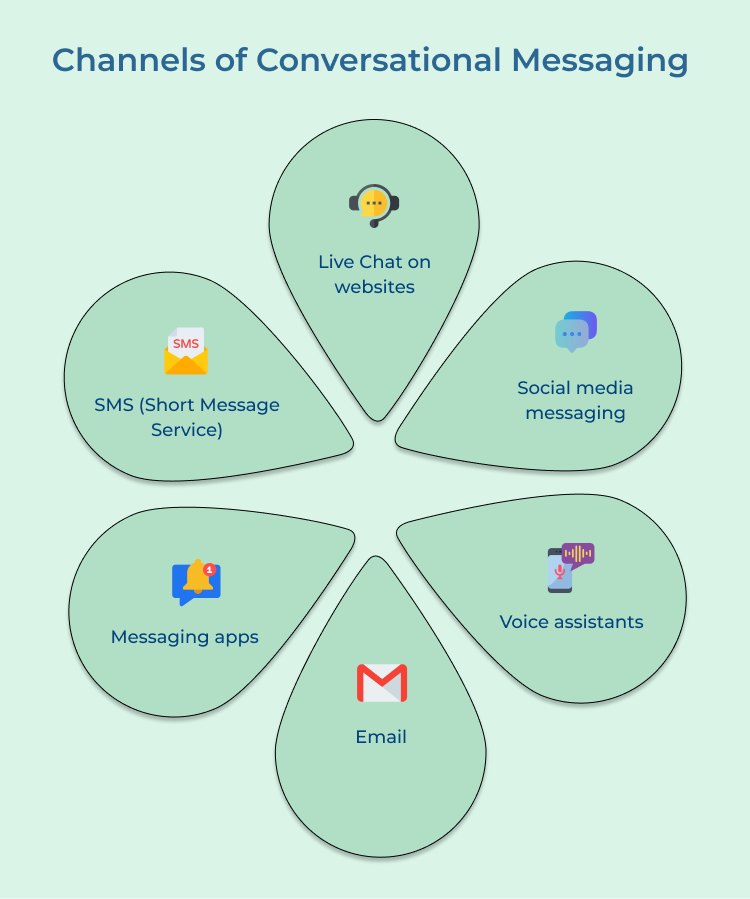
Conversational messaging is a great way for businesses to engage with their customers in a personalized manner. 9 out of 10 consumers would like the option to use messaging to contact a business.
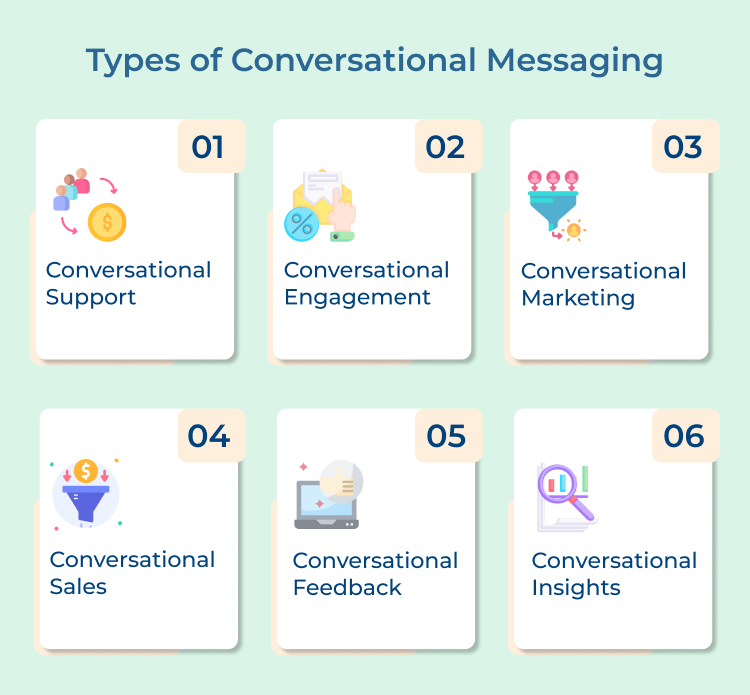
Many businesses are leveraging conversational messaging to provide customer support in a more efficient way. Customers can now easily reach out to a business via messaging apps to get help with their inquiries or complaints.
Offering customer support through conversational messaging allows businesses to provide real-time assistance to customers. It leads to faster problem resolution, improved customer satisfaction, and increased loyalty.
Conversational messaging can also be used to engage with customers in a more interactive way. Businesses can send personalized messages, updates, and promotions to customers through messaging apps to keep them engaged and informed. It builds relationships with customers and increases brand loyalty.
The conversational engagement strategy involves using messaging platforms to interact with customers via chatbots or live agents. It enhances customer experience by providing personalized recommendations, information and updates tailored to each individual.
Businesses can use conversational messaging as part of their marketing strategy to reach customers where they spend a lot of their time – on messaging apps. By sending targeted messages and offers through messaging apps, businesses can drive engagement and conversions in a more personalized way.
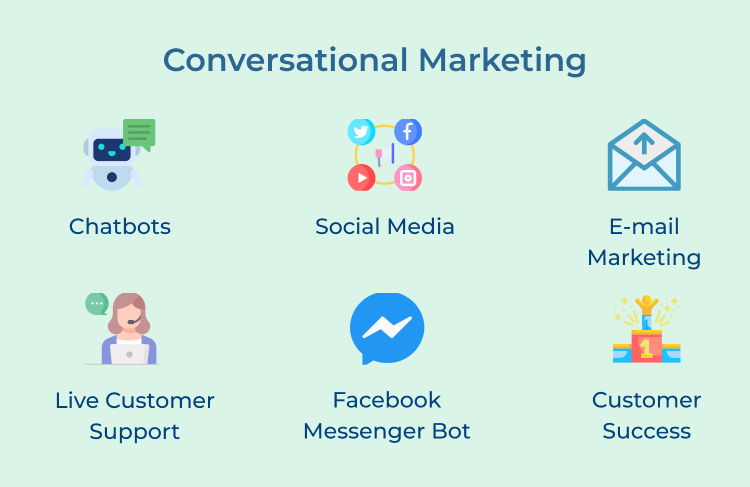
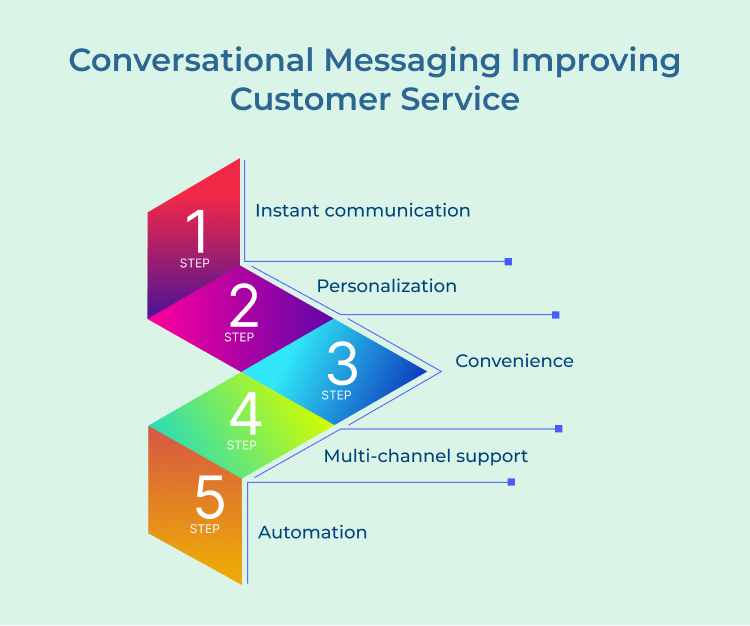
Incorporating conversational tone into your messaging can go a long way in building stronger client relationships and increasing brand loyalty.
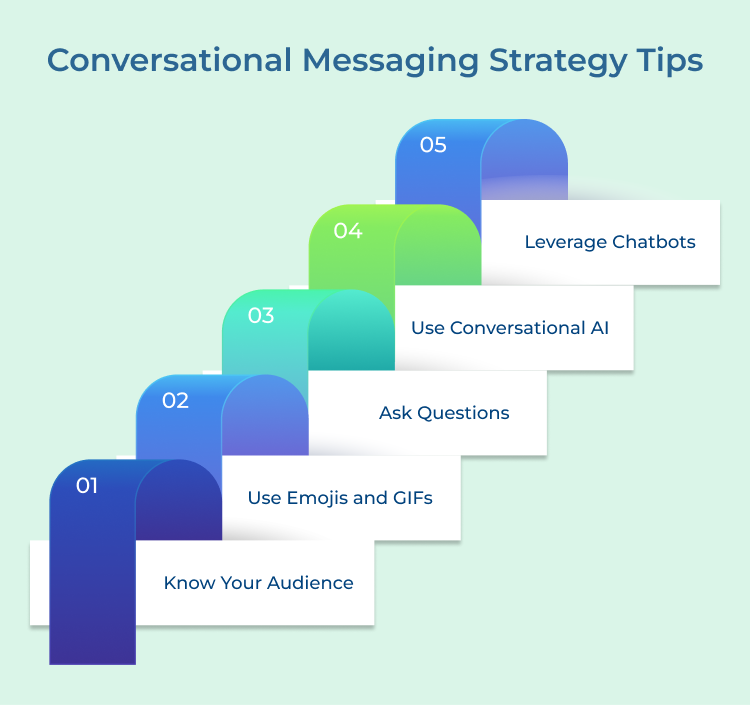
Before you can start tailoring conversational messages, you need to have a deep understanding of who your audience is. What are their pain points, interests, and communication preferences? By knowing your audience inside and out, you can tailor your messaging to resonate with them on a personal level.
Emojis or GIFs are a fun and visually engaging way to add personality to your messages. They convey emotion and tone in a way that plain text alone cannot. Just be sure to use them sparingly and in a way that aligns with your brand’s voice.
Encourage engagement by asking questions in your messages. It shows that you value your audience’s input and want to hear their thoughts. Ensure to follow up on responses to keep the conversation going.
Consider incorporating AI enabled chatbots into your messaging strategy to automate responses and provide quick customer service. Make sure to program these tools with a conversational tone that aligns with your brand.
Implementing conversational messaging strategy acts as a powerful way to transform your customer experience strategy. By utilizing this technology, businesses can engage with customers in a more personalized and efficient manner, leading to improved satisfaction.
The ability to provide immediate assistance and information through automated messaging systems can greatly enhance the overall customer experience. Customers seek instant communication and solutions, integrating conversational messaging into your CX strategy is essential for staying ahead of the competition and meeting the evolving needs of consumers.

Why is conversational messaging important?
Conversational messaging helps businesses create a more engaging and personalized experience for their customers. By using messaging platforms, businesses can have real-time conversations with customers, answer questions, provide support, and even make sales. This type of communication is more convenient for customers and builds stronger relationships with them.
What is a conversational messaging platform?
A conversational messaging platform is a tool that businesses use to communicate with customers in a conversational manner. These platforms can include chatbots, live chat features, SMS messaging, social media messaging, and more. By using these platforms, businesses can provide immediate responses, gather valuable data, and create a more interactive experience for their customers.
What are the best practices of conversational messaging?
Some best practices for conversational messaging include being prompt and responsive, using a friendly tone, personalizing messages, providing helpful information, and being transparent about automated responses. It’s important to listen to customers, ask for feedback, and continuously improve the conversational experience based on their preferences and needs.
Why does conversational messaging matter to businesses?
Conversational messaging is important for businesses because it improves customer satisfaction, drives sales, and builds brand loyalty. By using conversational messaging platforms effectively, businesses can streamline communication, provide better support, and create a more memorable and enjoyable experience for their customers.
 https://omni24.io/wp-content/uploads/2026/08/AI-Customer-Service-Agents.png
1256
2400
Webvision Solution
https://omni24.io/wp-content/uploads/2023/04/Omni-Logo-1.svg
Webvision Solution2026-09-21 04:48:512026-09-21 04:48:51How to Build an AI Customer Service Agents: 8 Key Steps
https://omni24.io/wp-content/uploads/2026/08/AI-Customer-Service-Agents.png
1256
2400
Webvision Solution
https://omni24.io/wp-content/uploads/2023/04/Omni-Logo-1.svg
Webvision Solution2026-09-21 04:48:512026-09-21 04:48:51How to Build an AI Customer Service Agents: 8 Key Steps https://omni24.io/wp-content/uploads/2026/08/Omnichannel-Conversational-AI.png
1256
2400
Tushar Joshi
https://omni24.io/wp-content/uploads/2023/04/Omni-Logo-1.svg
Tushar Joshi2026-09-16 03:51:072026-09-16 03:51:07How to Build Omnichannel Conversational AI Strategy
https://omni24.io/wp-content/uploads/2026/08/Omnichannel-Conversational-AI.png
1256
2400
Tushar Joshi
https://omni24.io/wp-content/uploads/2023/04/Omni-Logo-1.svg
Tushar Joshi2026-09-16 03:51:072026-09-16 03:51:07How to Build Omnichannel Conversational AI Strategy https://omni24.io/wp-content/uploads/2026/08/Customer-Service-Teams.png
1256
2400
Tushar Joshi
https://omni24.io/wp-content/uploads/2023/04/Omni-Logo-1.svg
Tushar Joshi2026-09-15 04:01:522026-09-15 04:02:16How to Build Customer Service Teams: 6 Key Steps
https://omni24.io/wp-content/uploads/2026/08/Customer-Service-Teams.png
1256
2400
Tushar Joshi
https://omni24.io/wp-content/uploads/2023/04/Omni-Logo-1.svg
Tushar Joshi2026-09-15 04:01:522026-09-15 04:02:16How to Build Customer Service Teams: 6 Key Steps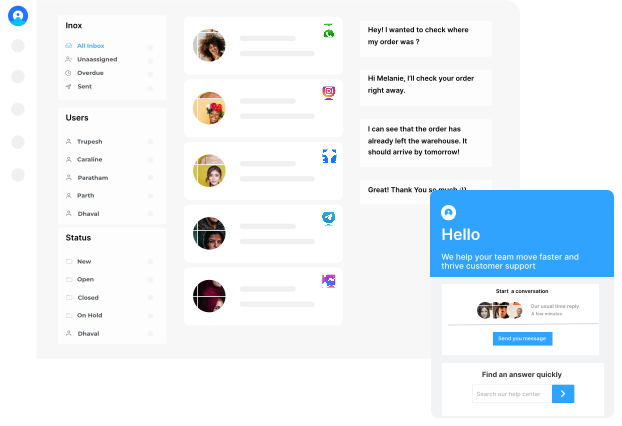
Whether it’s about acquire, engage or support – Omni24 covers all your customer engagement needs in one complete platform.

Copyright ©2026 Veemo All rights reserved.
CA, Los Angeles, Hall Ave, 19011